
10 Q
KG - 11th
8 Q
3rd - 5th
17 Q
1st - 5th
16 Q
3rd - 5th
14 Q
3rd
10 Q
3rd - 4th
6 Q
3rd
12 Q
3rd - 4th
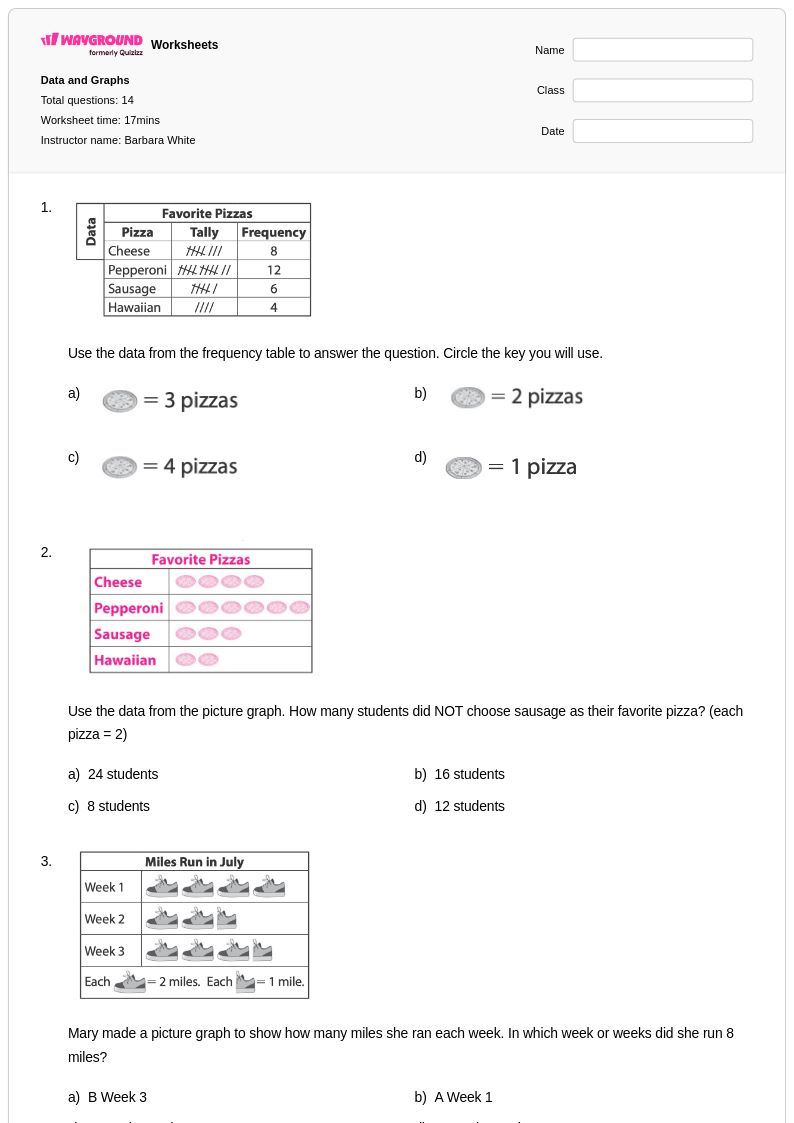
14 Q
3rd
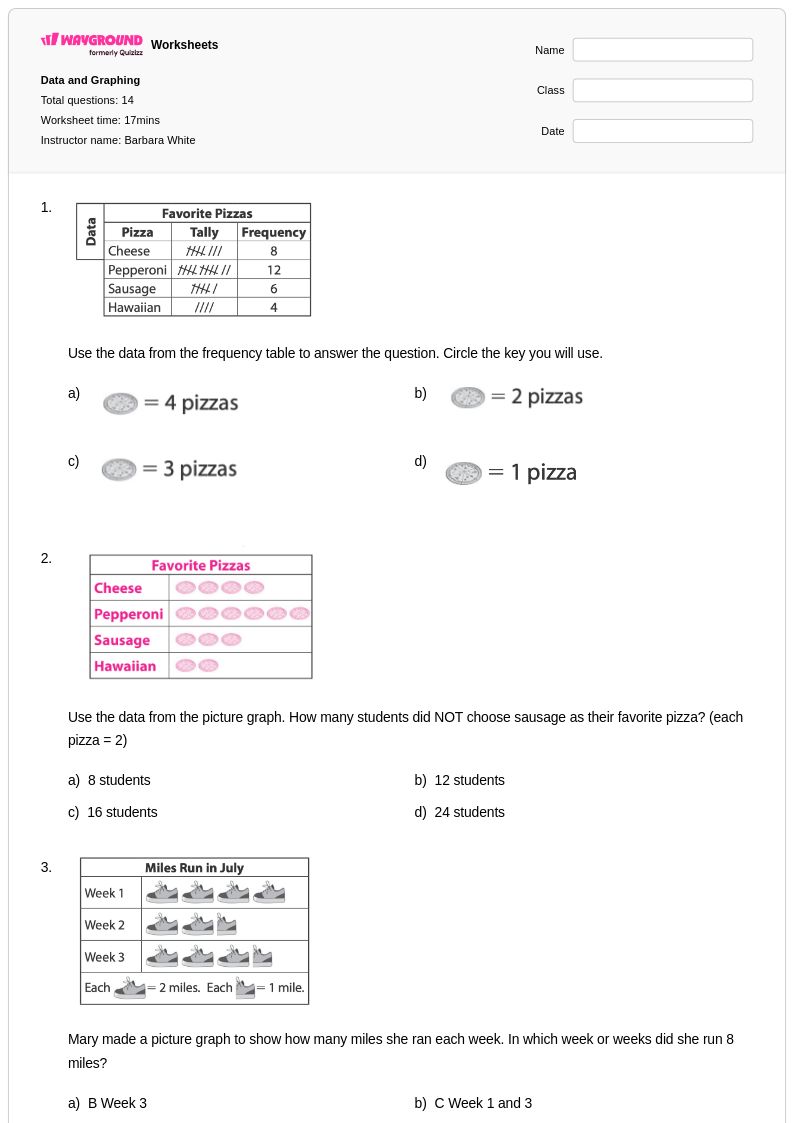
14 Q
3rd
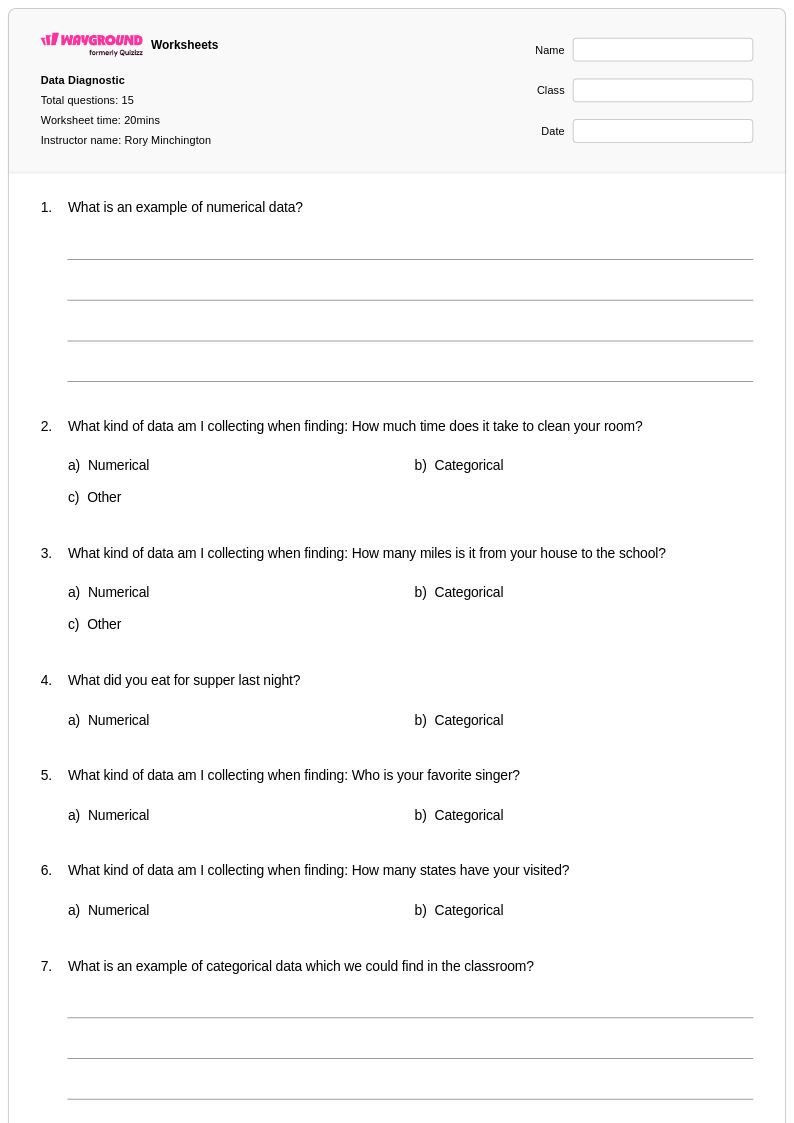
15 Q
3rd - 6th
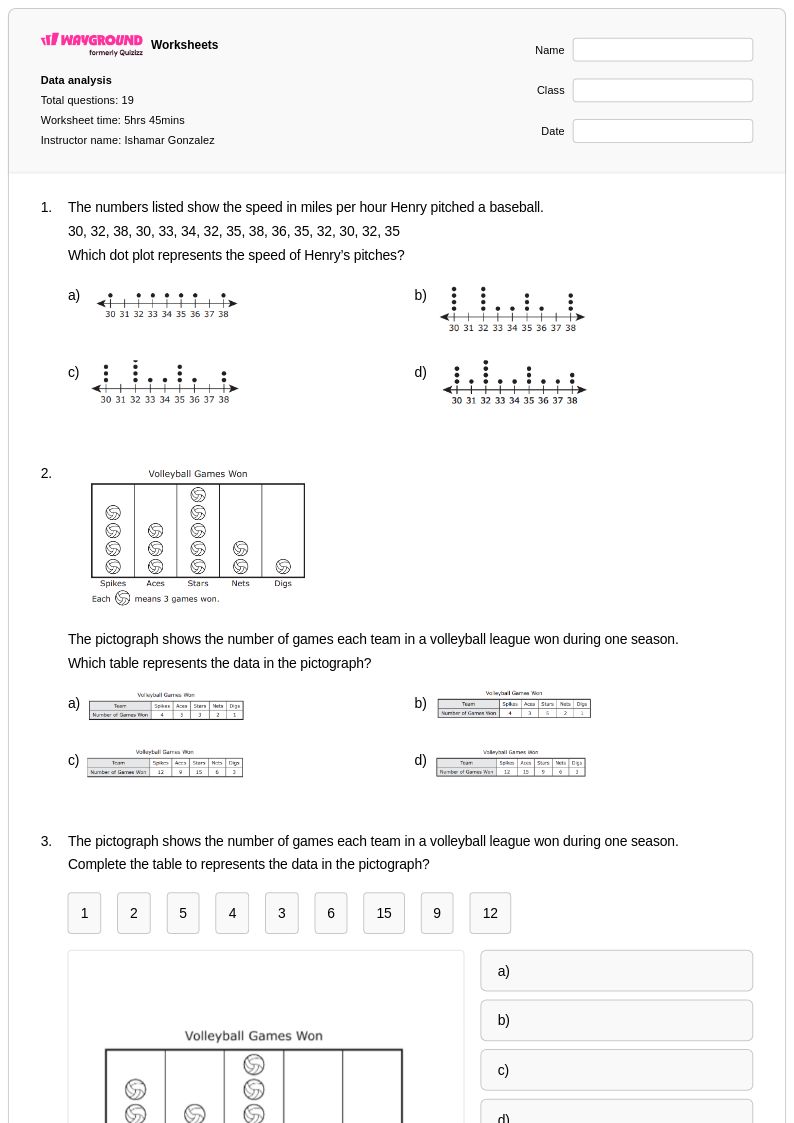
19 Q
3rd
21 Q
1st - 3rd
10 Q
3rd

20 Q
3rd
20 Q
1st - 3rd
10 Q
3rd
7 Q
3rd
11 Q
3rd
12 Q
3rd
25 Q
3rd
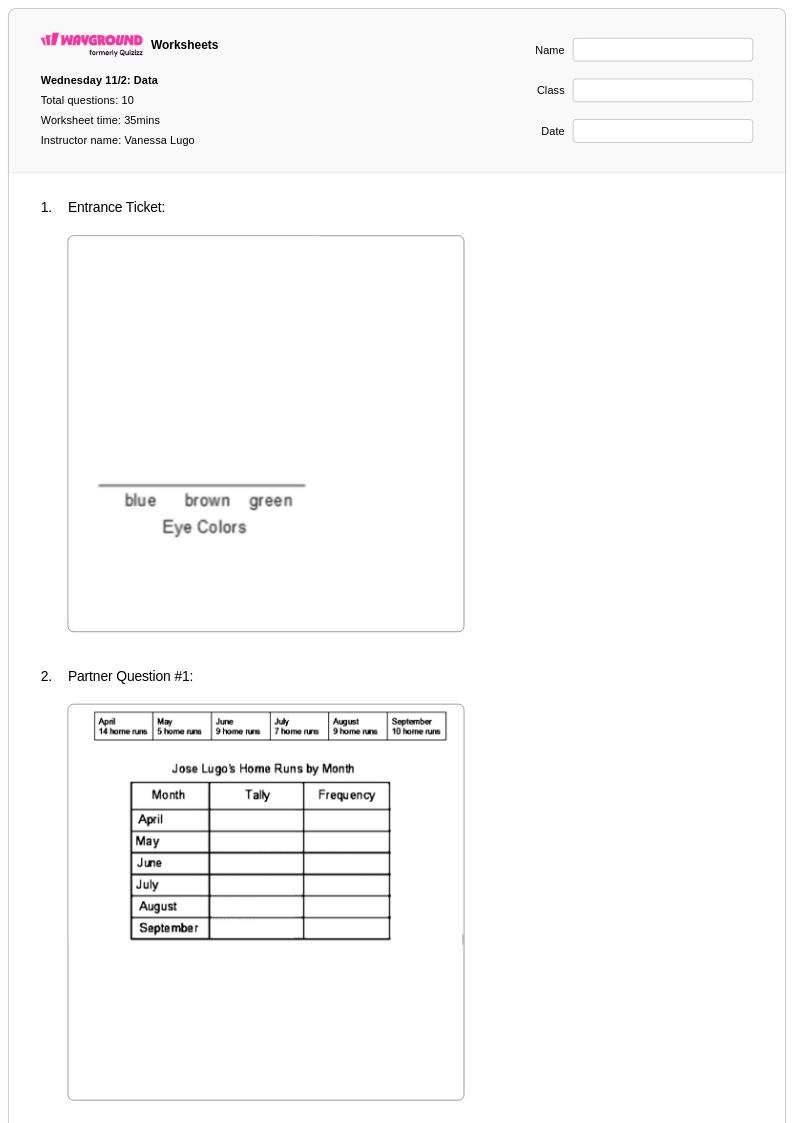
10 Q
3rd
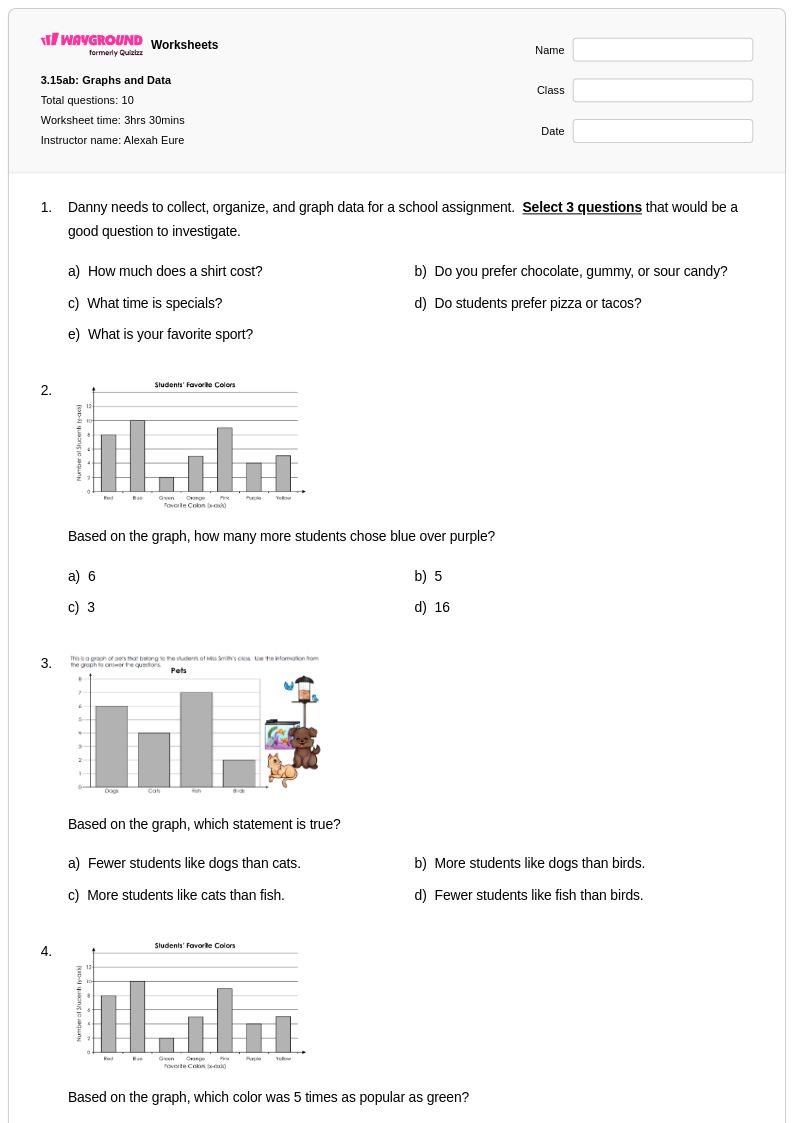
10 Q
3rd
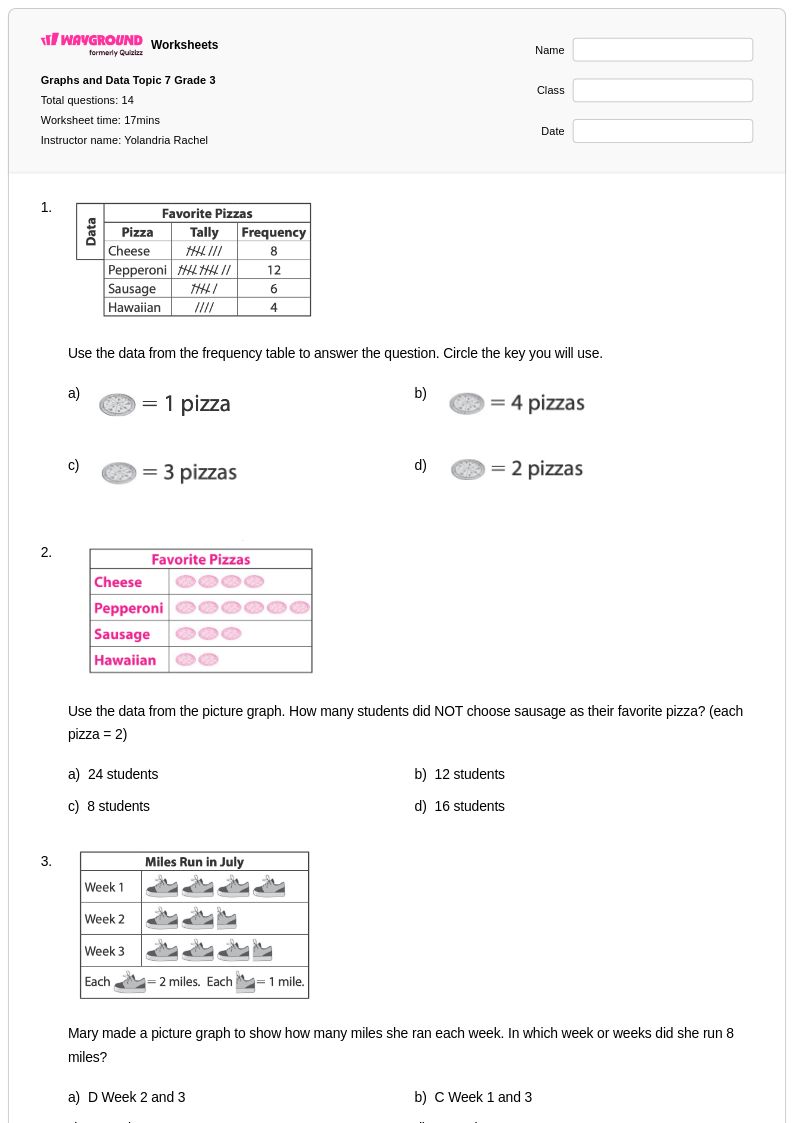
14 Q
3rd
Explore Other Subject Worksheets for year 3
Explore printable Merging Data worksheets for Year 3
Merging data worksheets for Year 3 students available through Wayground (formerly Quizizz) provide essential practice in combining and analyzing information from multiple sources, a fundamental skill in elementary mathematics education. These carefully designed printables guide young learners through the process of taking data sets from different contexts and creating unified representations that reveal meaningful patterns and relationships. Students work with age-appropriate scenarios such as combining survey results from different classrooms, merging weather data from various days, or consolidating information about favorite activities from multiple groups. Each worksheet includes comprehensive practice problems that progressively build complexity, moving from simple two-set combinations to more sophisticated multi-source data integration exercises. The accompanying answer key ensures teachers can efficiently assess student understanding while providing immediate feedback on proper merging techniques and analytical reasoning.
Wayground (formerly Quizizz) empowers educators with millions of teacher-created merging data resources specifically tailored for Year 3 mathematics instruction, featuring robust search and filtering capabilities that allow quick identification of materials aligned to specific learning objectives and curriculum standards. The platform's differentiation tools enable teachers to customize worksheets based on individual student needs, offering both remediation support for struggling learners and enrichment opportunities for advanced students ready to tackle more complex data manipulation challenges. Available in both printable pdf format and interactive digital versions, these resources seamlessly integrate into diverse classroom environments and instructional approaches. Teachers can efficiently plan comprehensive data analysis units, create targeted skill practice sessions, and develop assessment materials that accurately measure student progress in understanding how to effectively combine, compare, and interpret merged data sets within real-world mathematical contexts.
FAQs
What do 3rd graders learn about merging data?
How can I introduce data merging to my 3rd-grade class?
What are common errors for 3rd graders when combining data sets?
How can I use this Grade 3 worksheet in my classroom?
How does this topic align with Grade 3 math standards?