
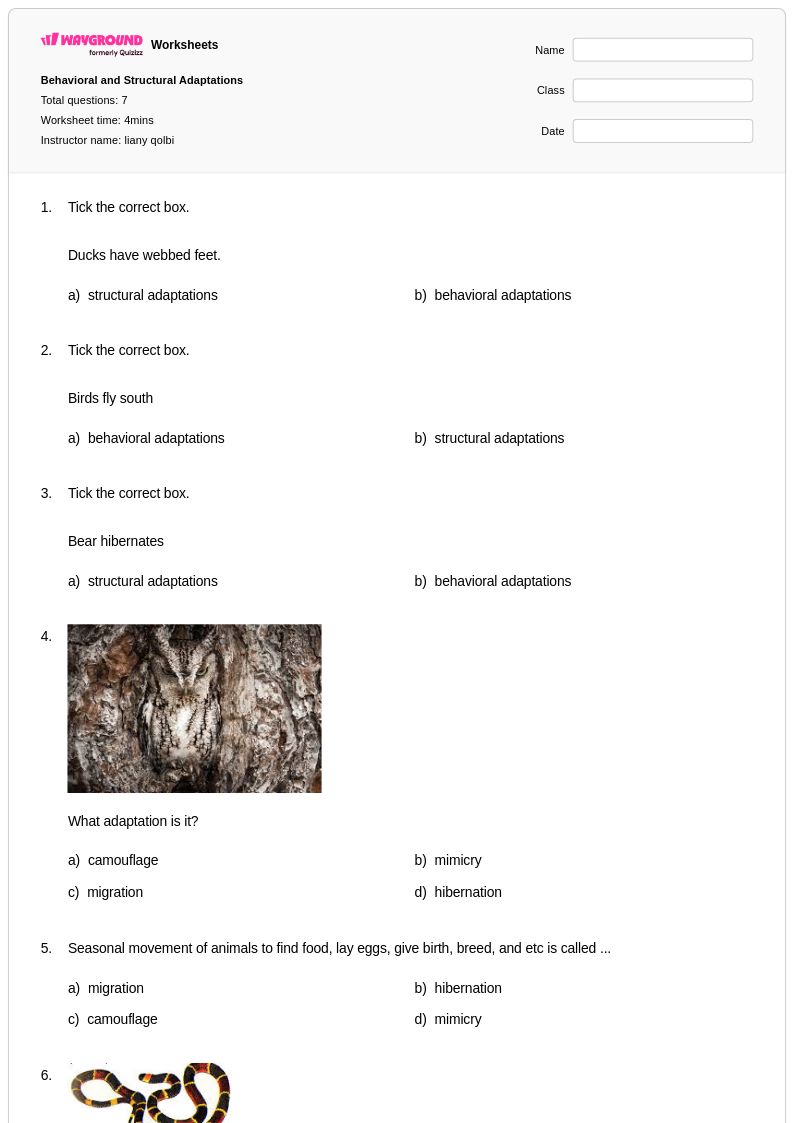
7 Q
5th
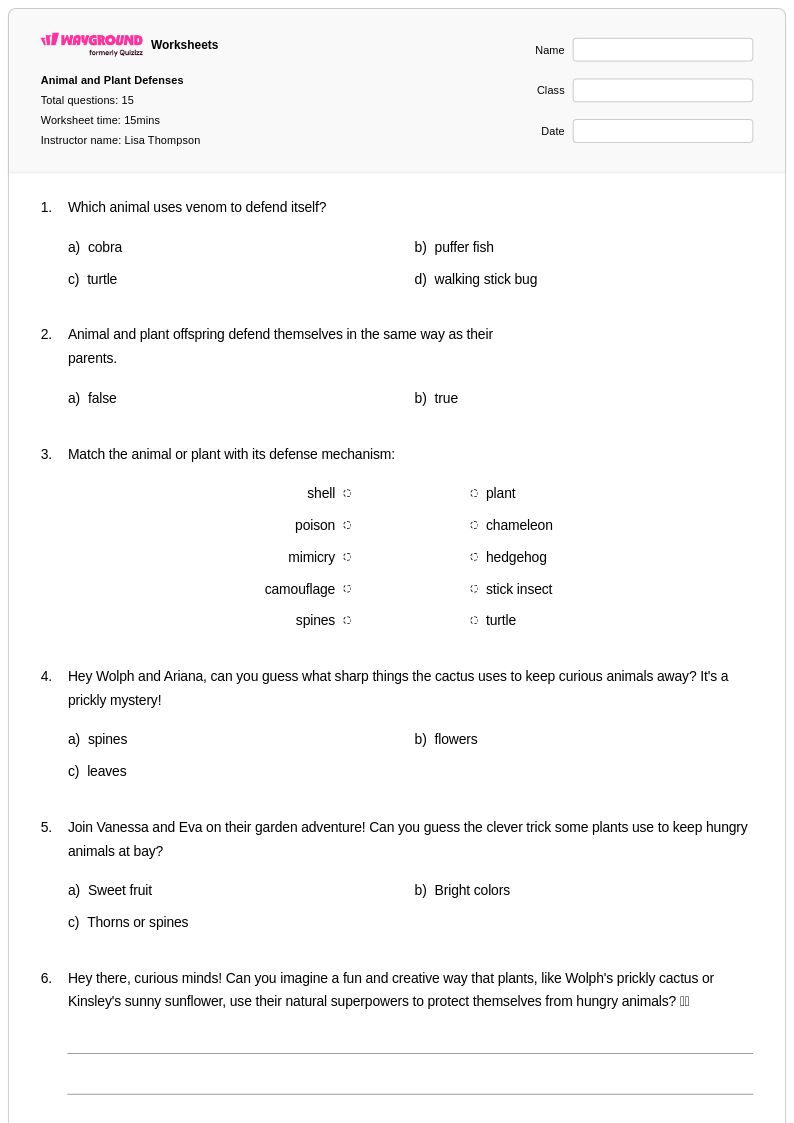
15 Q
1st - Uni
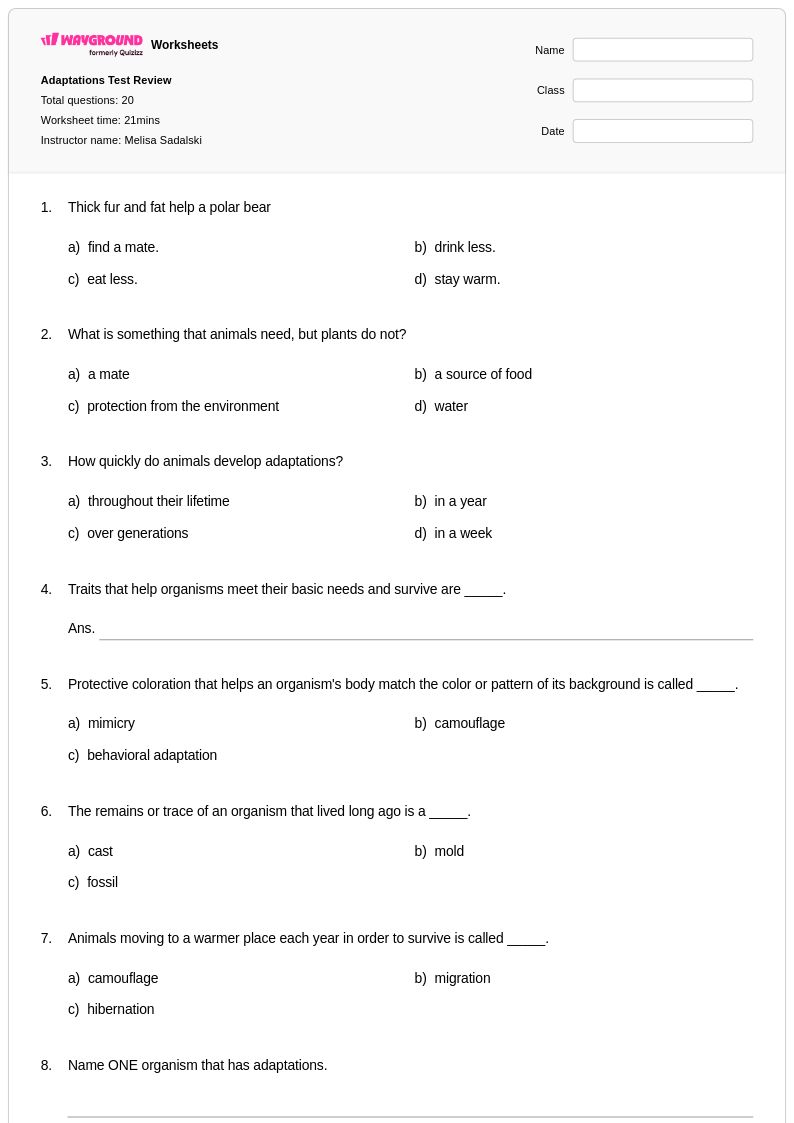
20 Q
5th
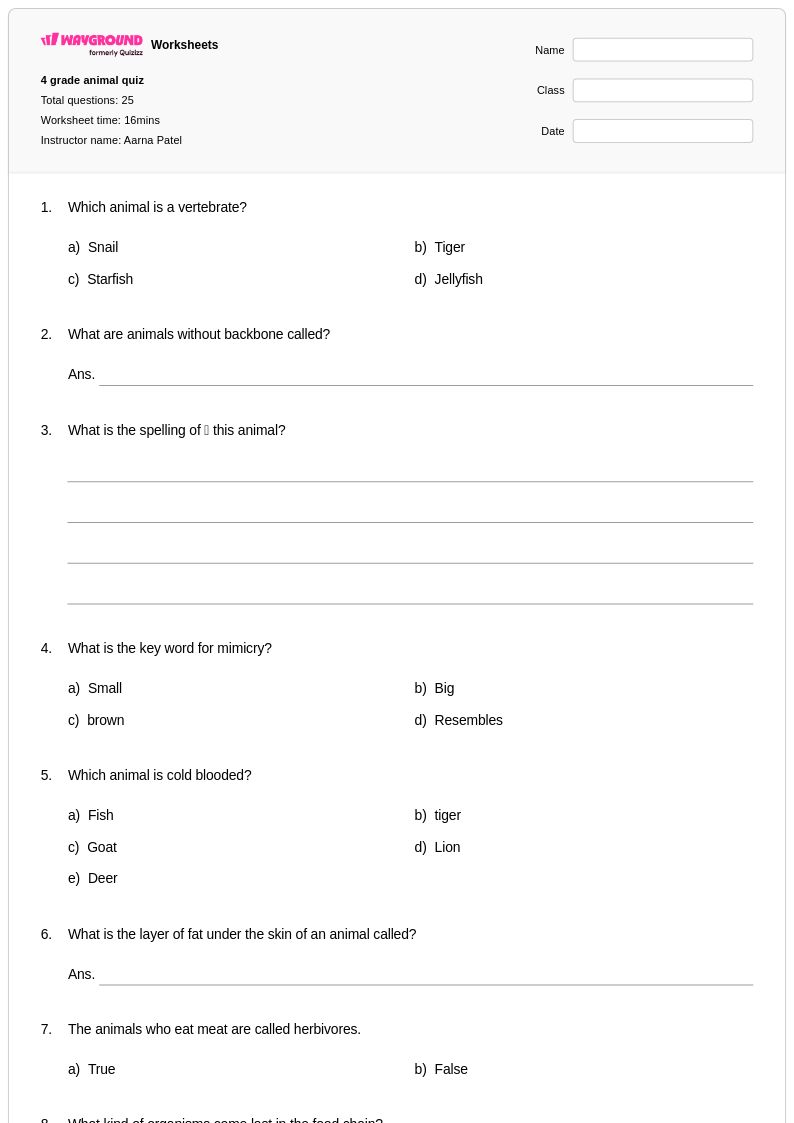
25 Q
3rd - 5th
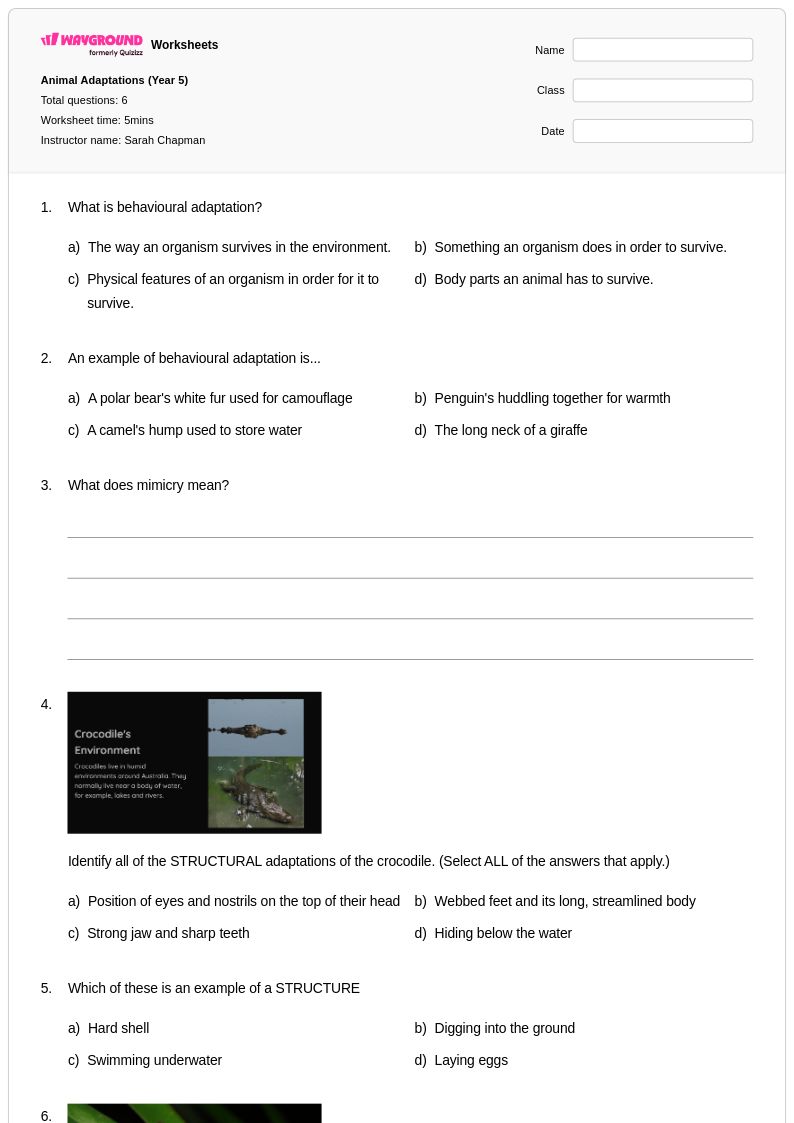
6 Q
5th
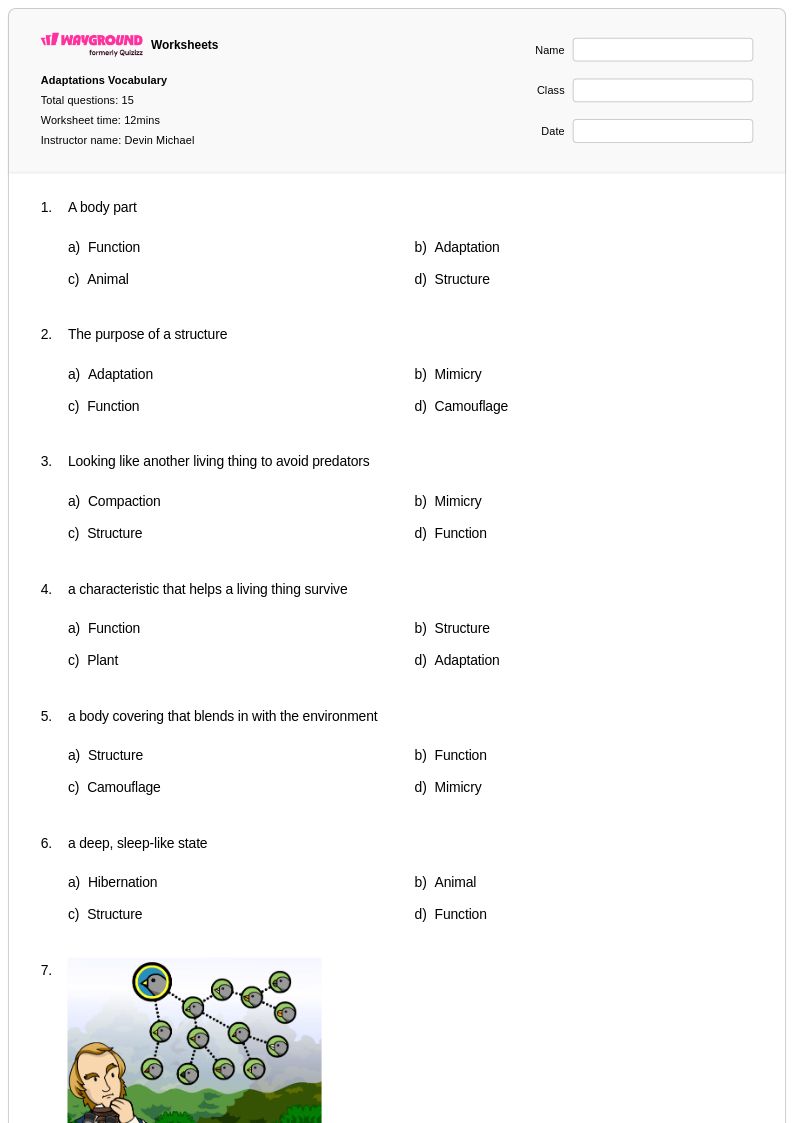
15 Q
5th
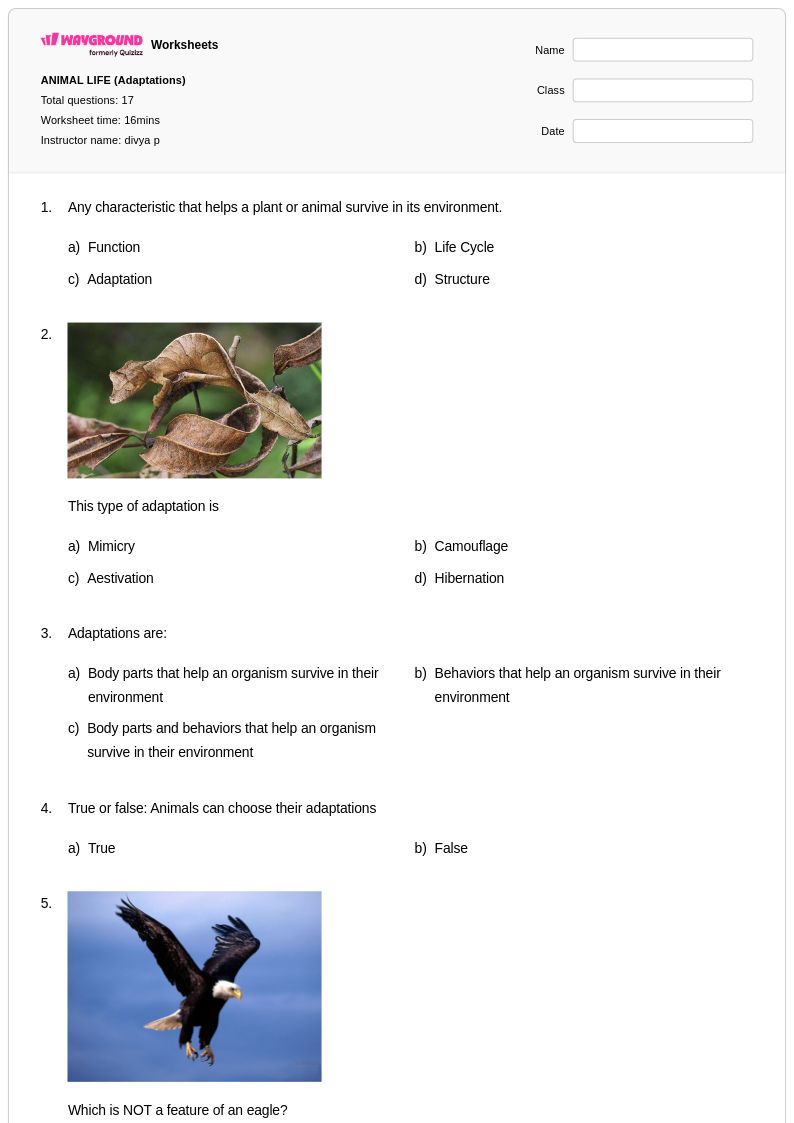
17 Q
5th
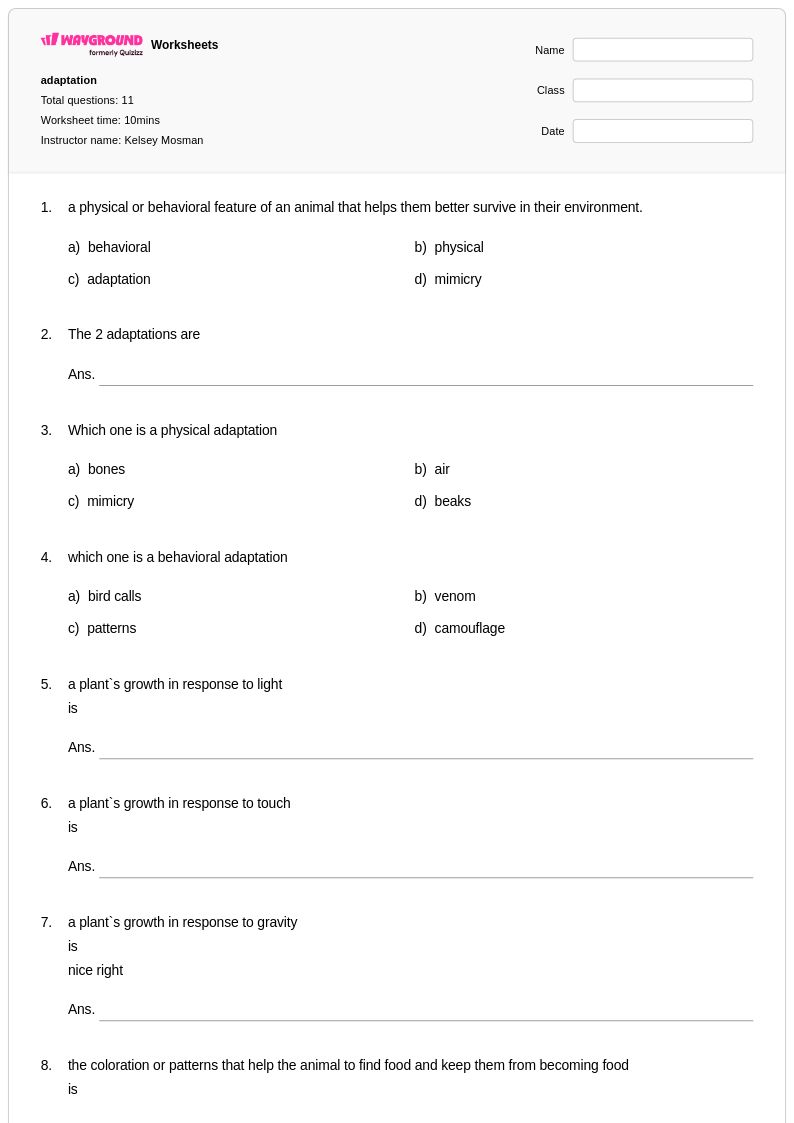
11 Q
5th - 6th
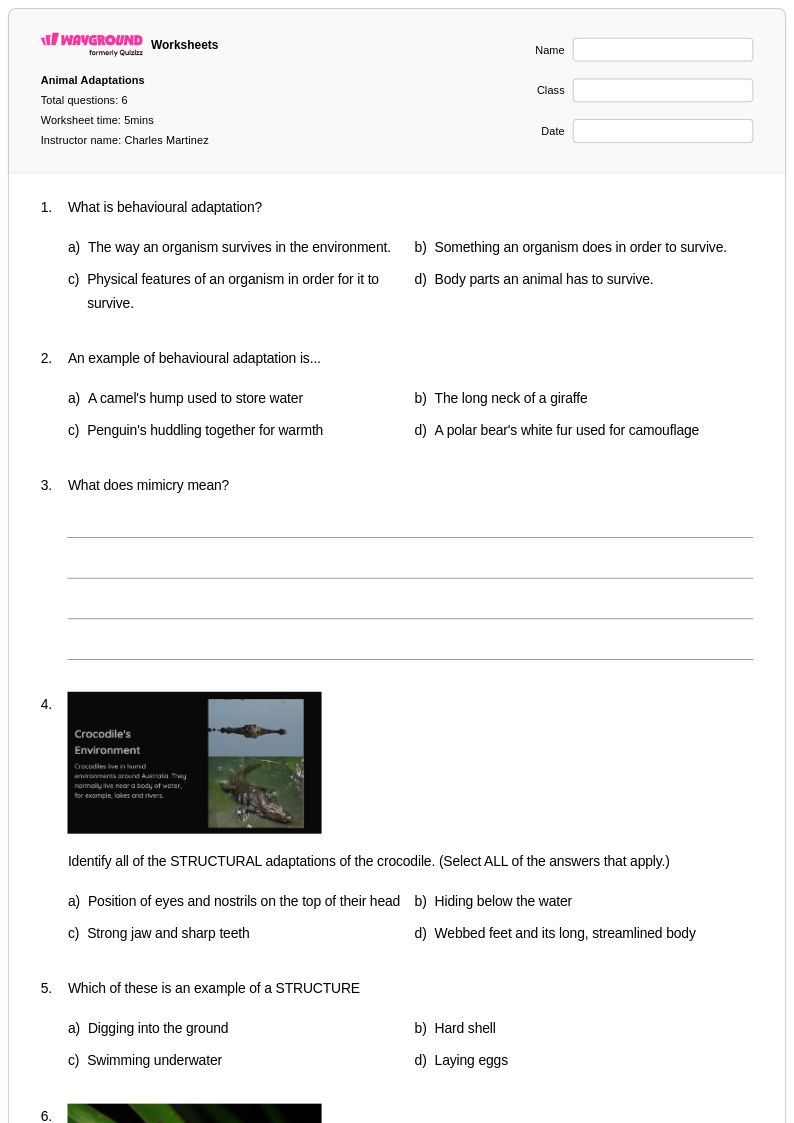
6 Q
5th
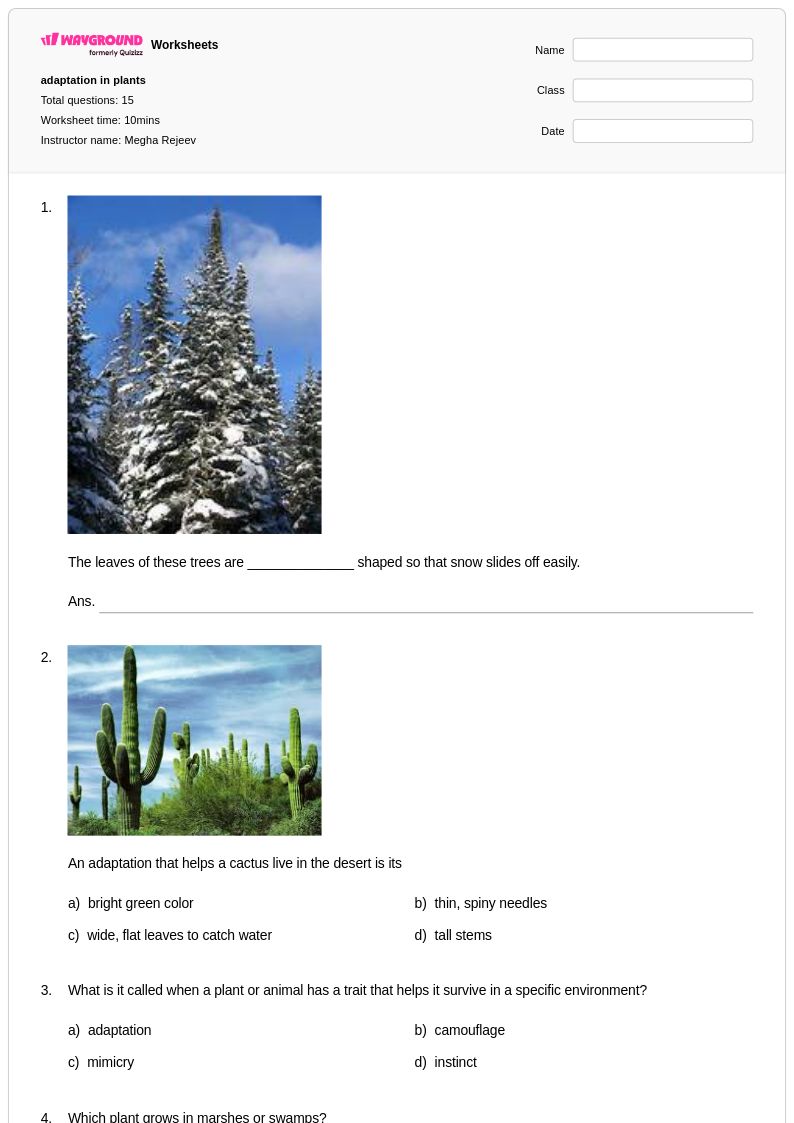
15 Q
5th
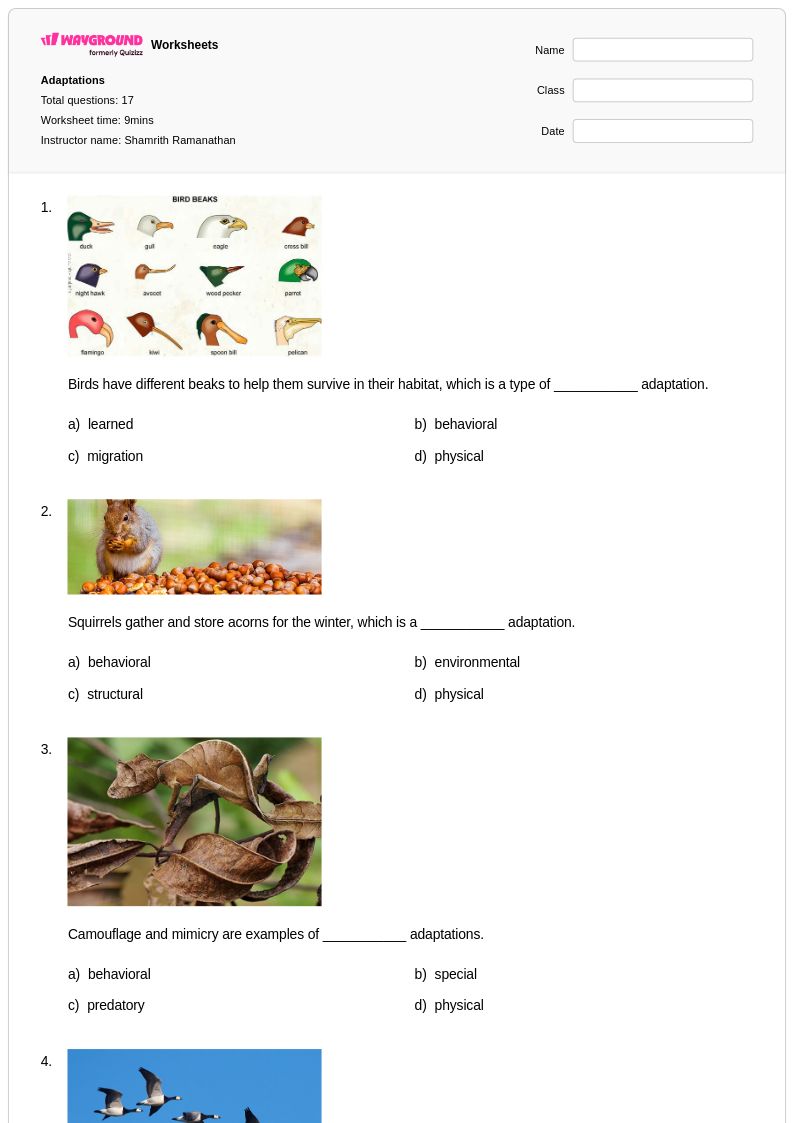
17 Q
5th - 6th
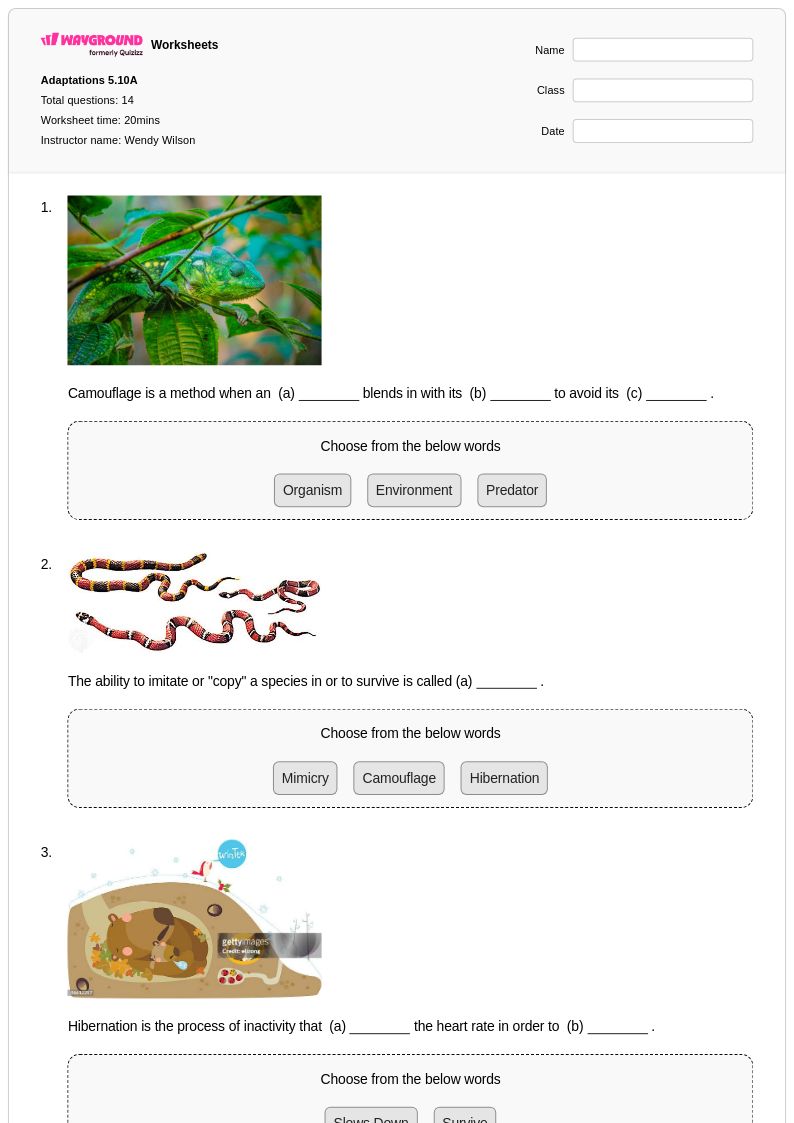
14 Q
5th
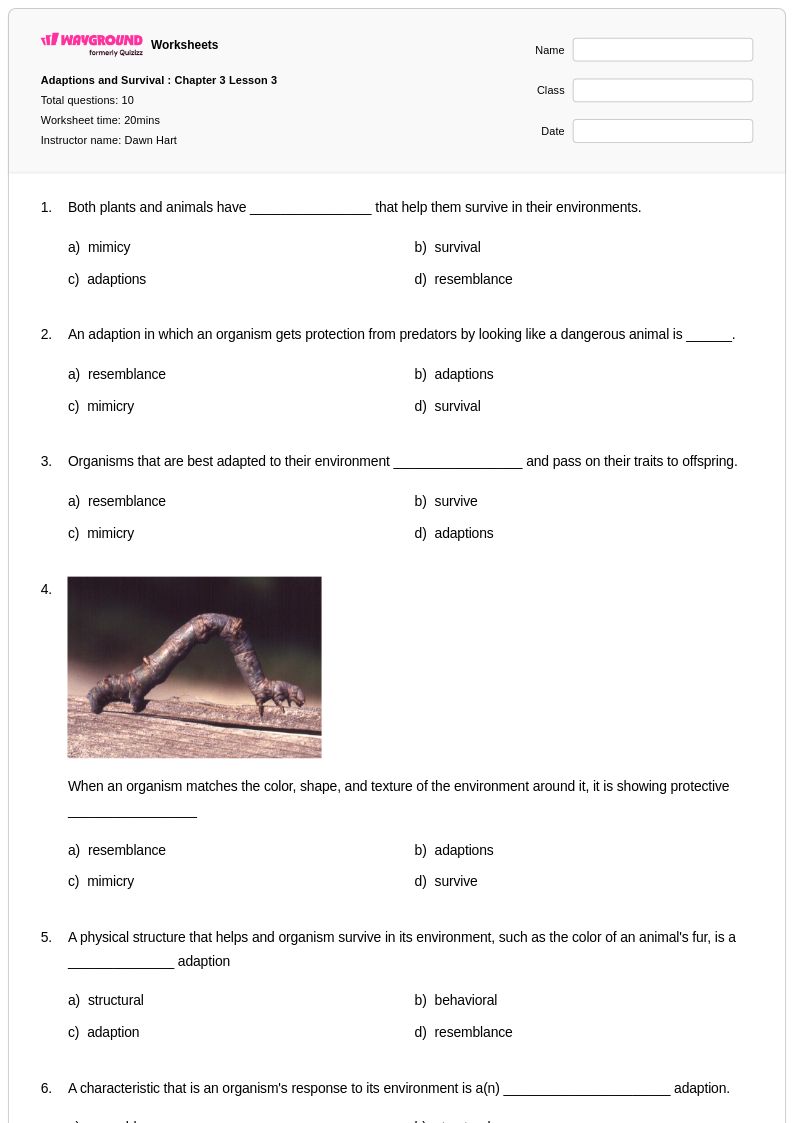
10 Q
5th

10 Q
5th
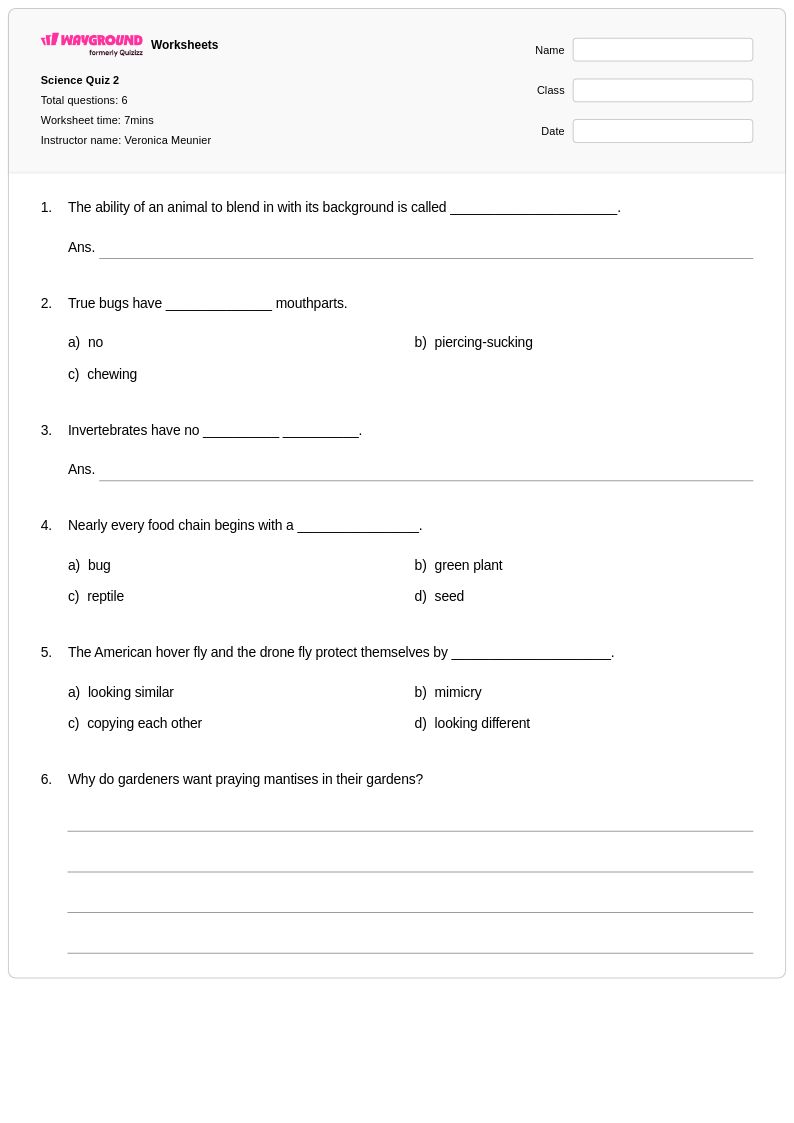
6 Q
5th
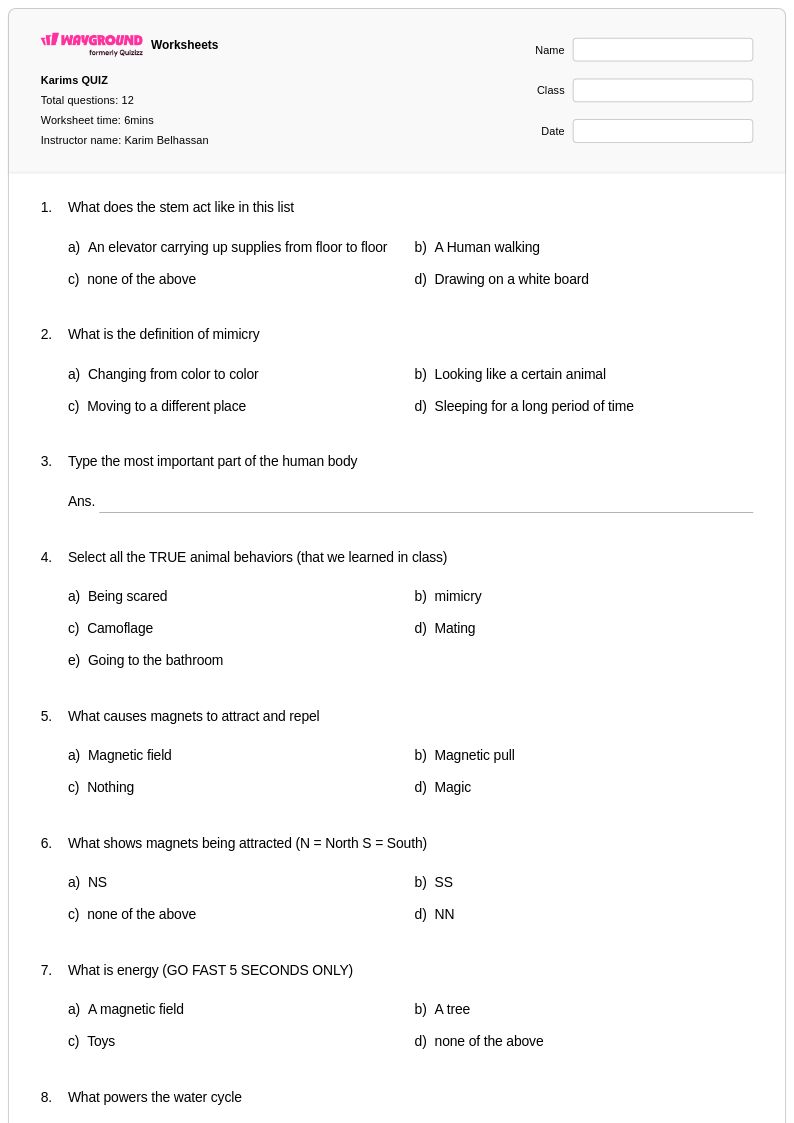
12 Q
5th
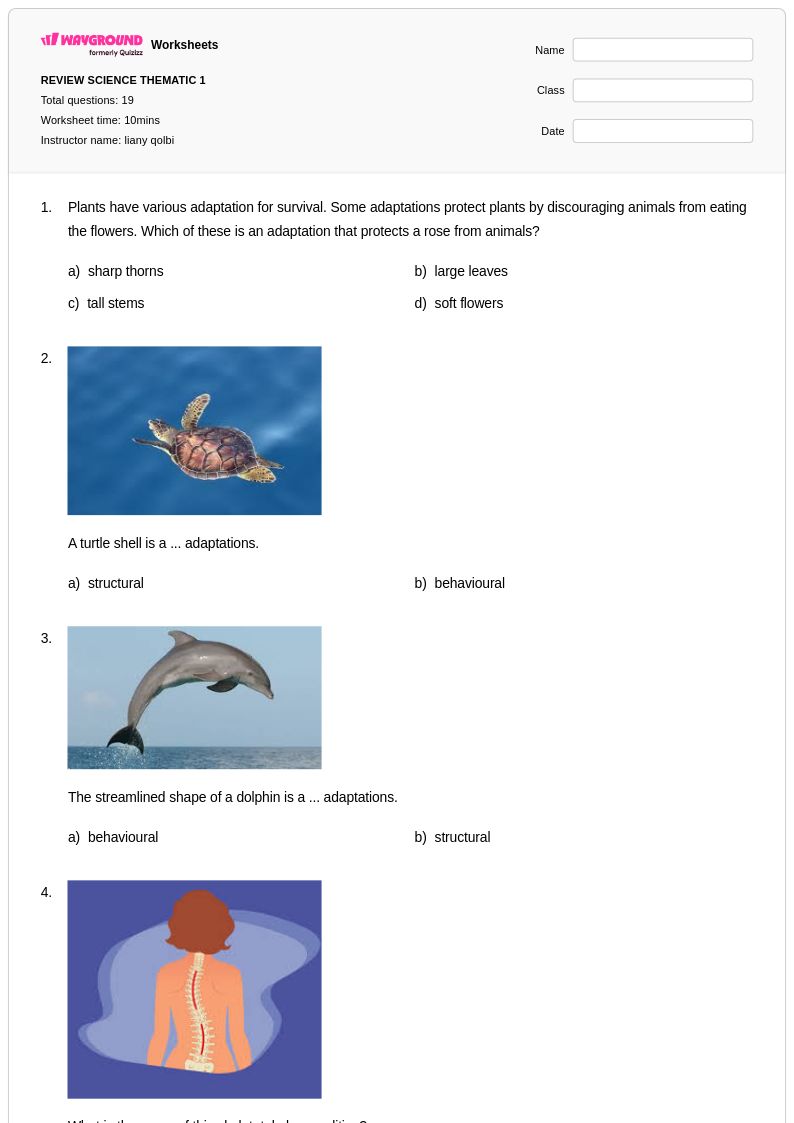
19 Q
5th
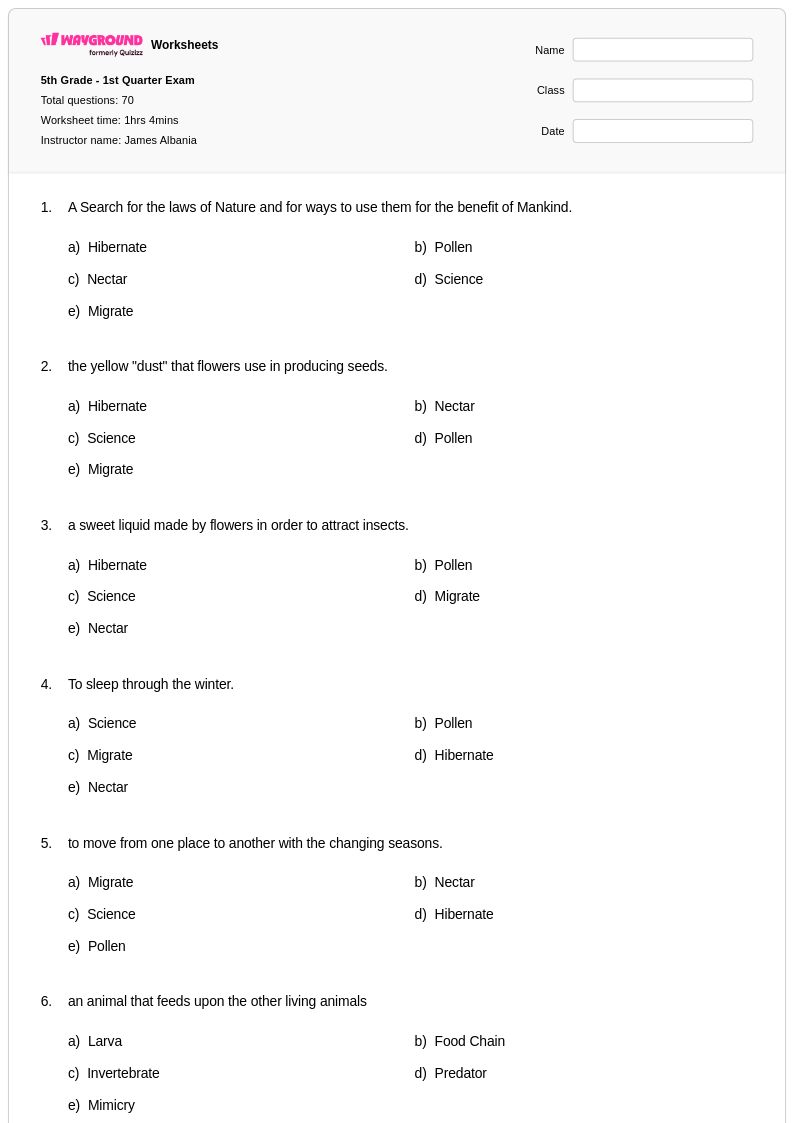
70 Q
5th
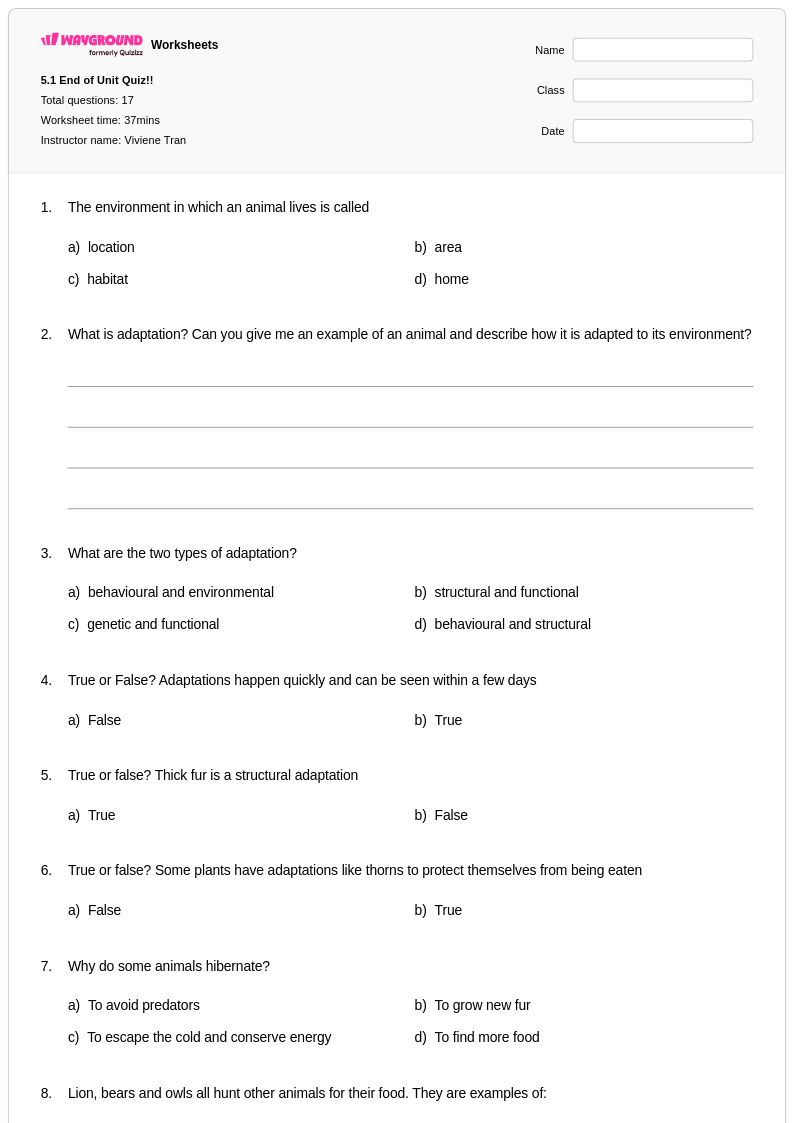
17 Q
5th
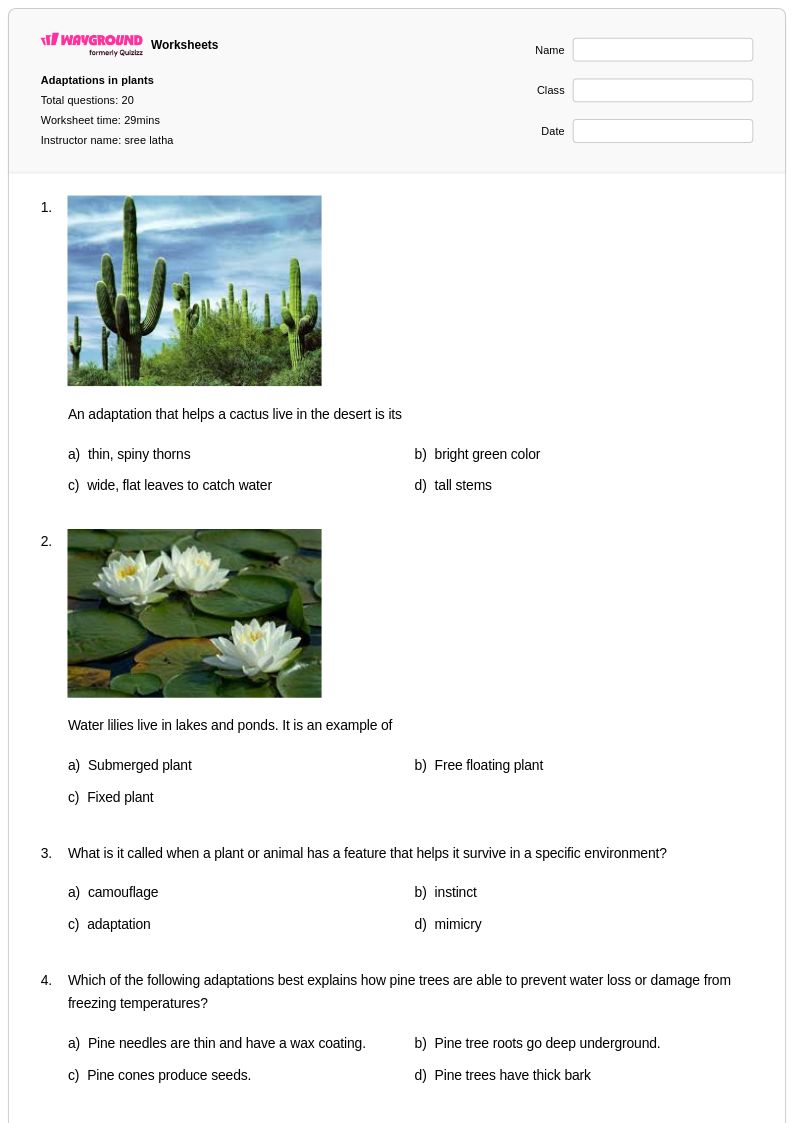
20 Q
5th
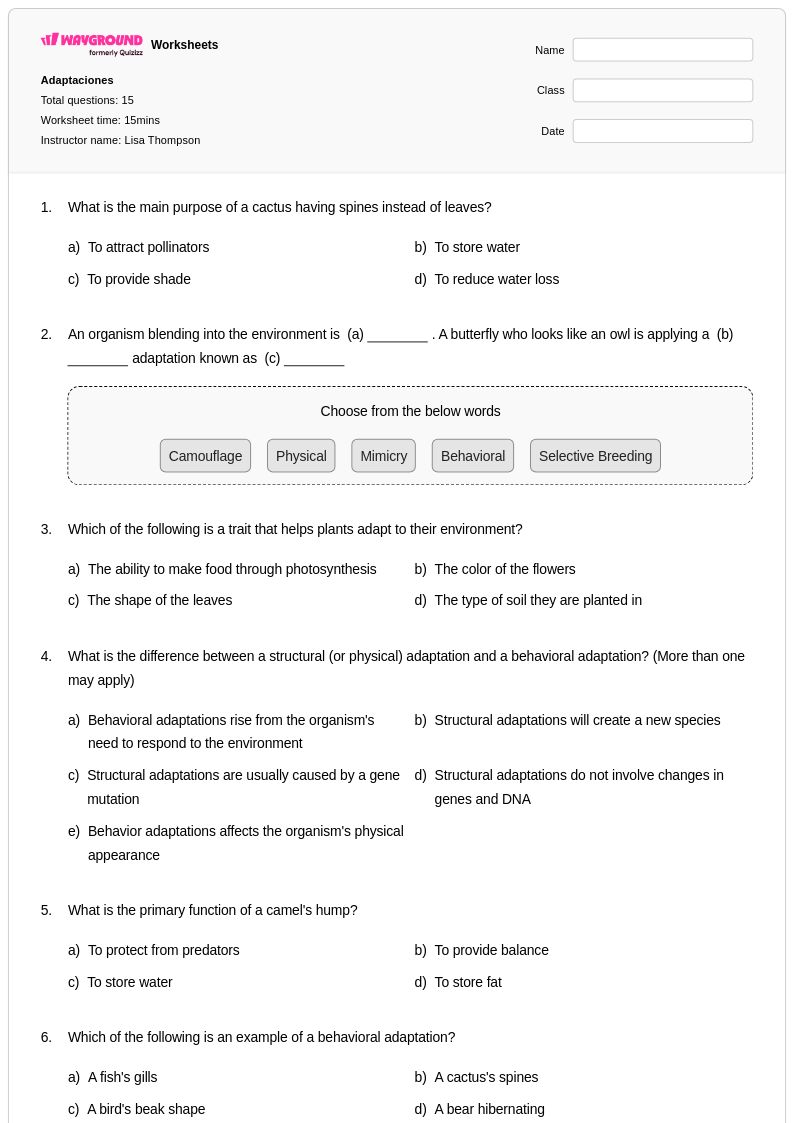
15 Q
5th - Uni
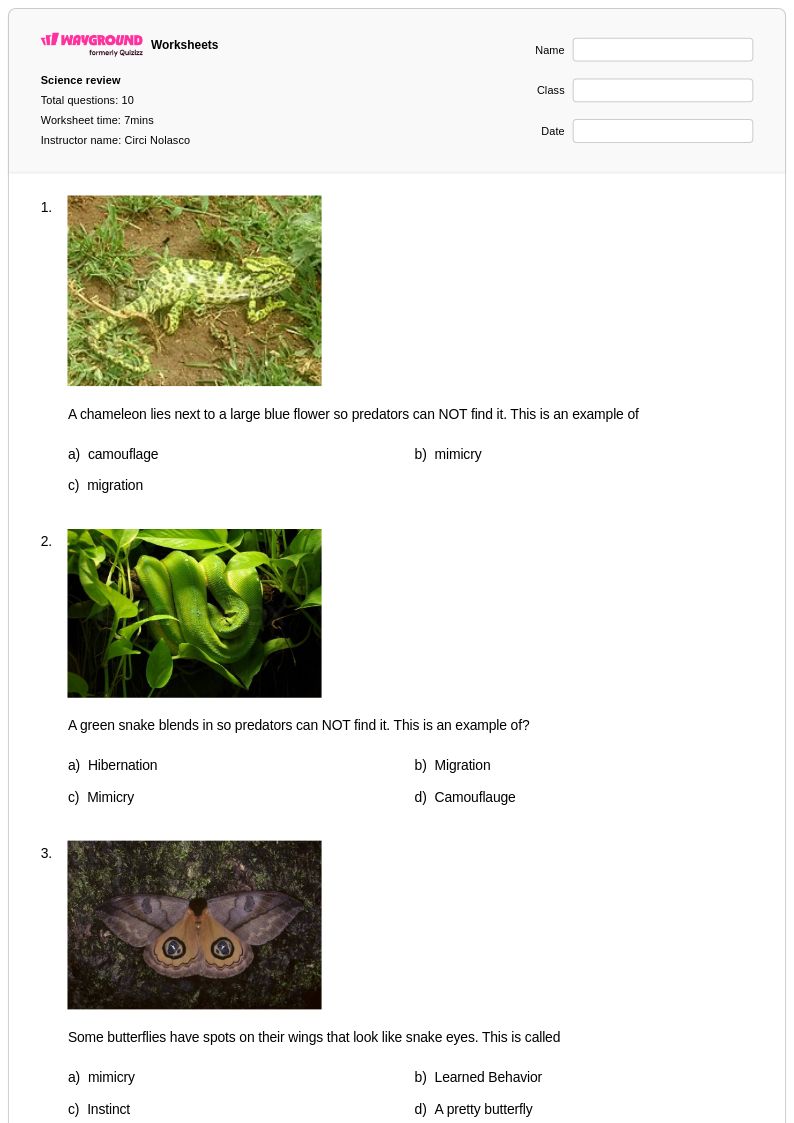
10 Q
3rd - Uni
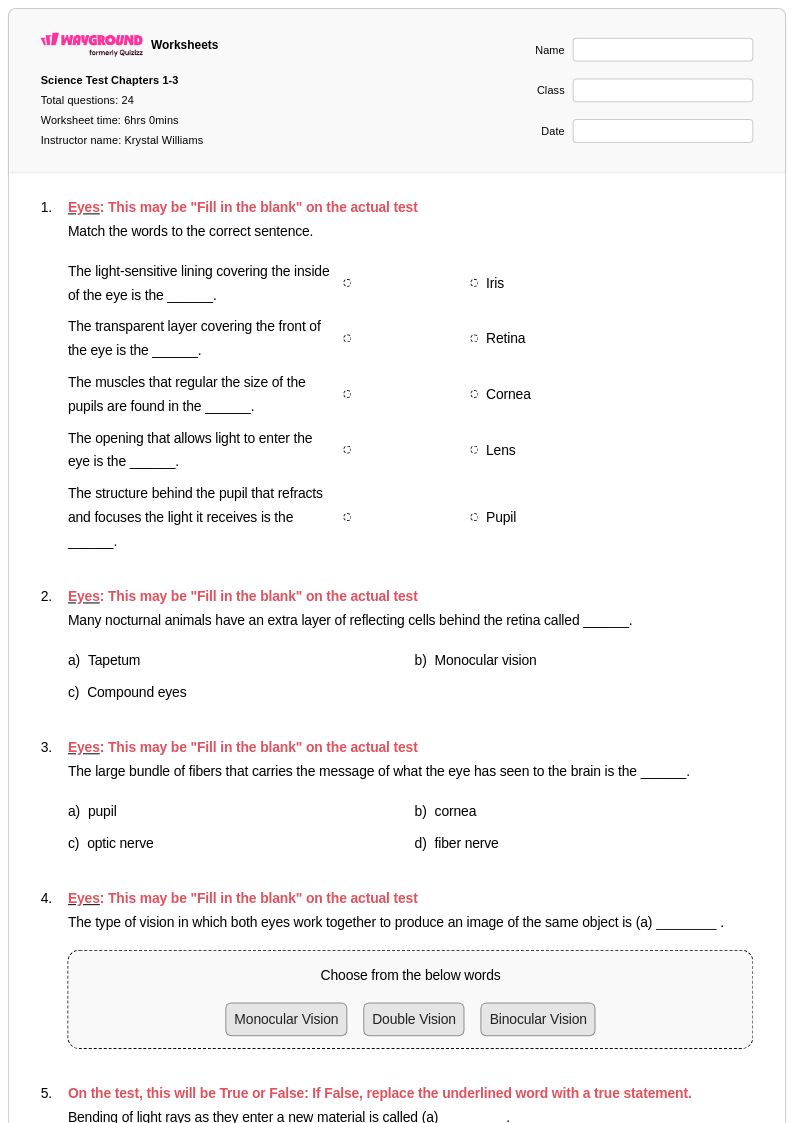
24 Q
5th
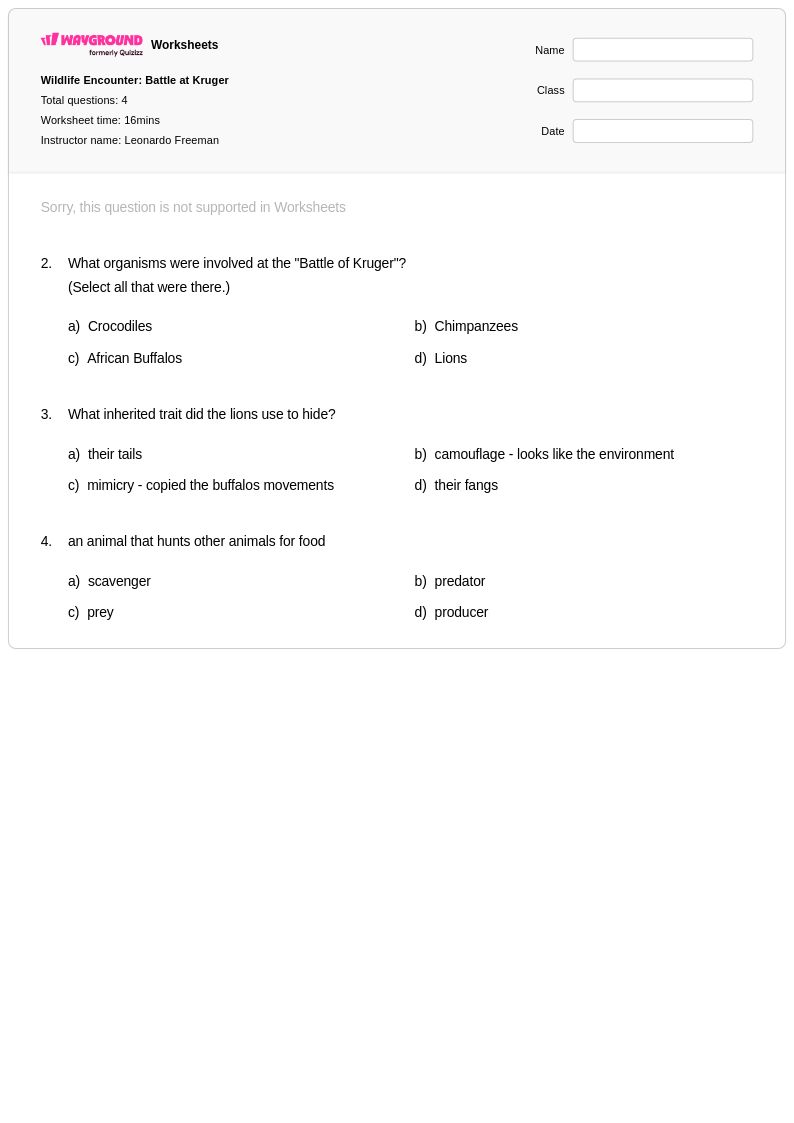
12 Q
3rd - 5th
Explore Other Subject Worksheets for year 5
Explore printable Mimicry worksheets for Year 5
Mimicry worksheets for Year 5 students available through Wayground (formerly Quizizz) provide comprehensive exploration of this fascinating biological adaptation where organisms evolve to resemble other species or objects for survival advantages. These carefully designed educational resources strengthen students' understanding of predator-prey relationships, evolutionary adaptations, and the interconnected nature of ecosystems through engaging practice problems that examine real-world examples like stick insects, monarch and viceroy butterflies, and harmless snakes that mimic venomous species. The worksheets develop critical thinking skills as students analyze different types of mimicry including Batesian mimicry, where harmless species copy dangerous ones, and Müllerian mimicry, where multiple harmful species share similar warning signals. Each printable resource includes detailed answer keys and free access to pdf formats, allowing students to practice identifying mimicry examples and explaining the evolutionary benefits these adaptations provide to various organisms.
Wayground (formerly Quizizz) empowers educators with millions of teacher-created mimicry resources that support diverse classroom needs through robust search and filtering capabilities aligned with science education standards. Teachers can easily locate Year 5 appropriate materials that match their specific curriculum requirements and differentiate instruction for students at varying skill levels through customizable worksheets available in both printable pdf and interactive digital formats. The platform's extensive collection facilitates effective lesson planning by offering multiple assessment options, from quick comprehension checks to detailed analysis activities that can be used for remediation of struggling learners or enrichment for advanced students. These flexible tools enable educators to provide targeted skill practice in biological concepts while maintaining engagement through varied question formats and real-world applications that help students connect mimicry concepts to broader ecological principles and evolutionary theory.
FAQs
How do I teach Batesian vs. Müllerian mimicry in a biology class?
What are good practice exercises for helping students understand mimicry as an evolutionary adaptation?
What misconceptions do students commonly have about mimicry in biology?
How can I use mimicry worksheets to support different skill levels in my classroom?
How do I use Wayground's mimicry worksheets in my classroom?