Free Printable Minimum Wage Worksheets for Year 12
Year 12 minimum wage printable worksheets and practice problems help students analyze economic policy impacts, labor market dynamics, and wage legislation through comprehensive PDF exercises with detailed answer keys.
Explore printable Minimum Wage worksheets for Year 12
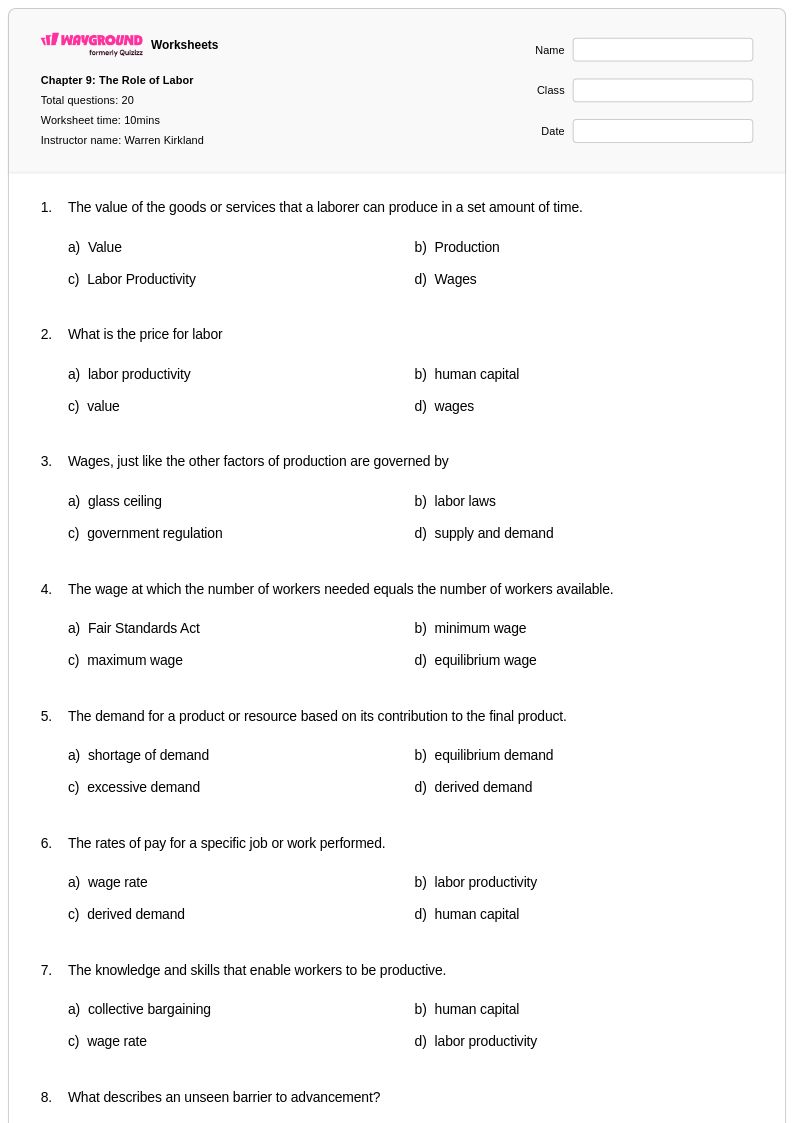
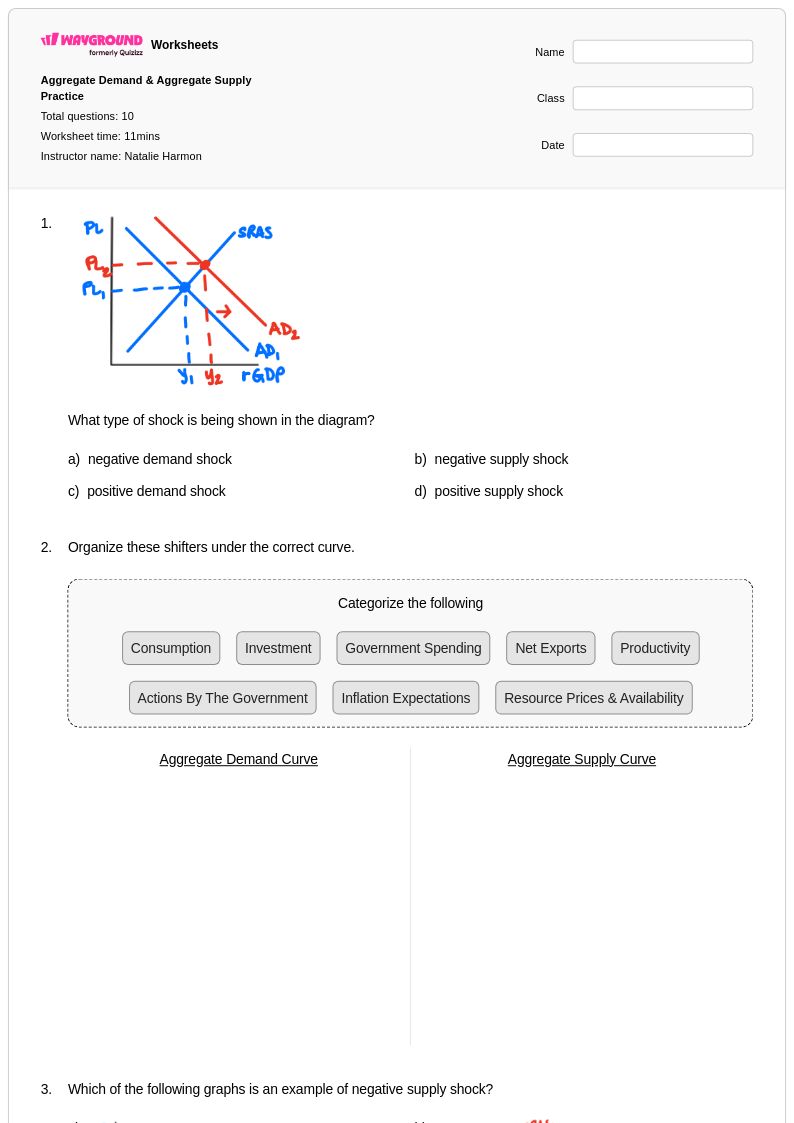
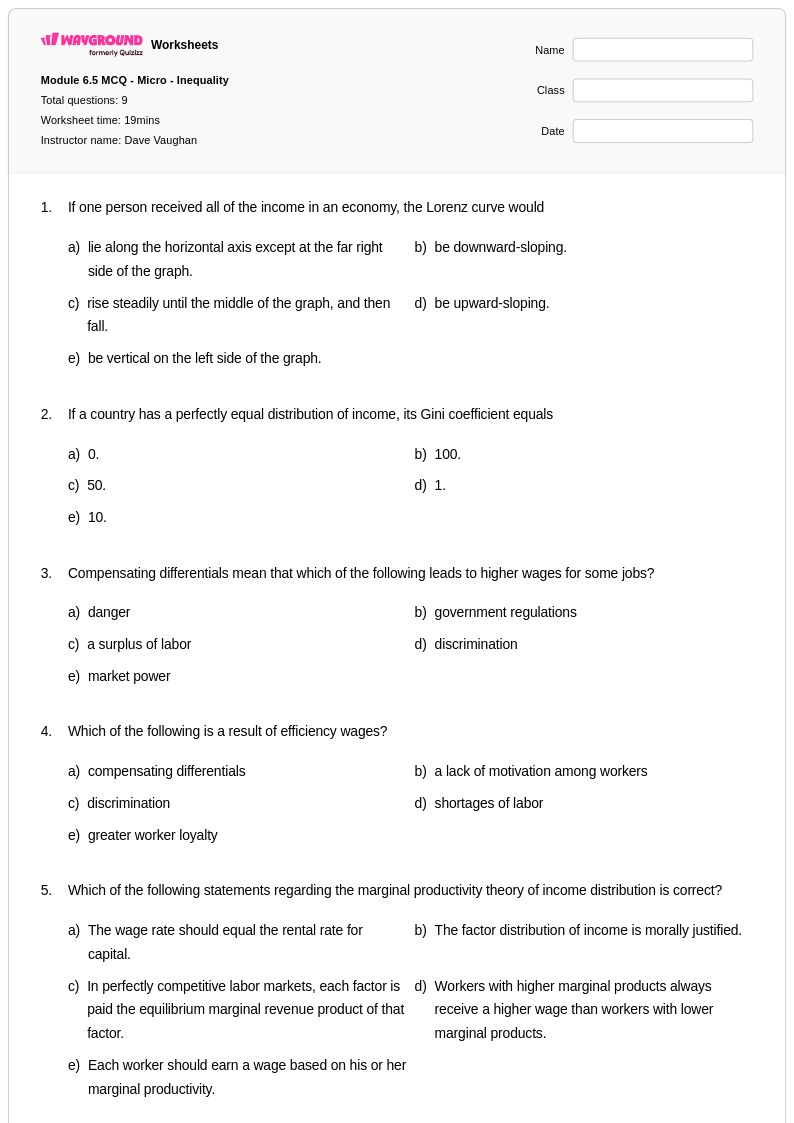
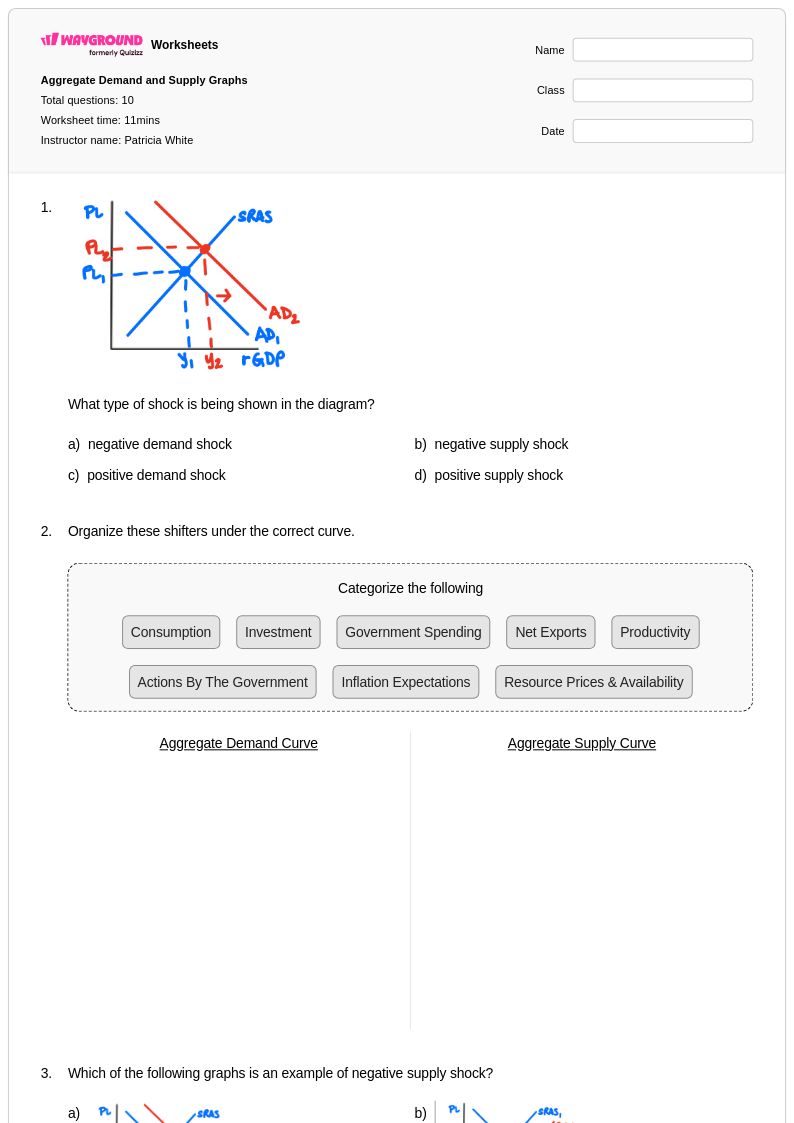
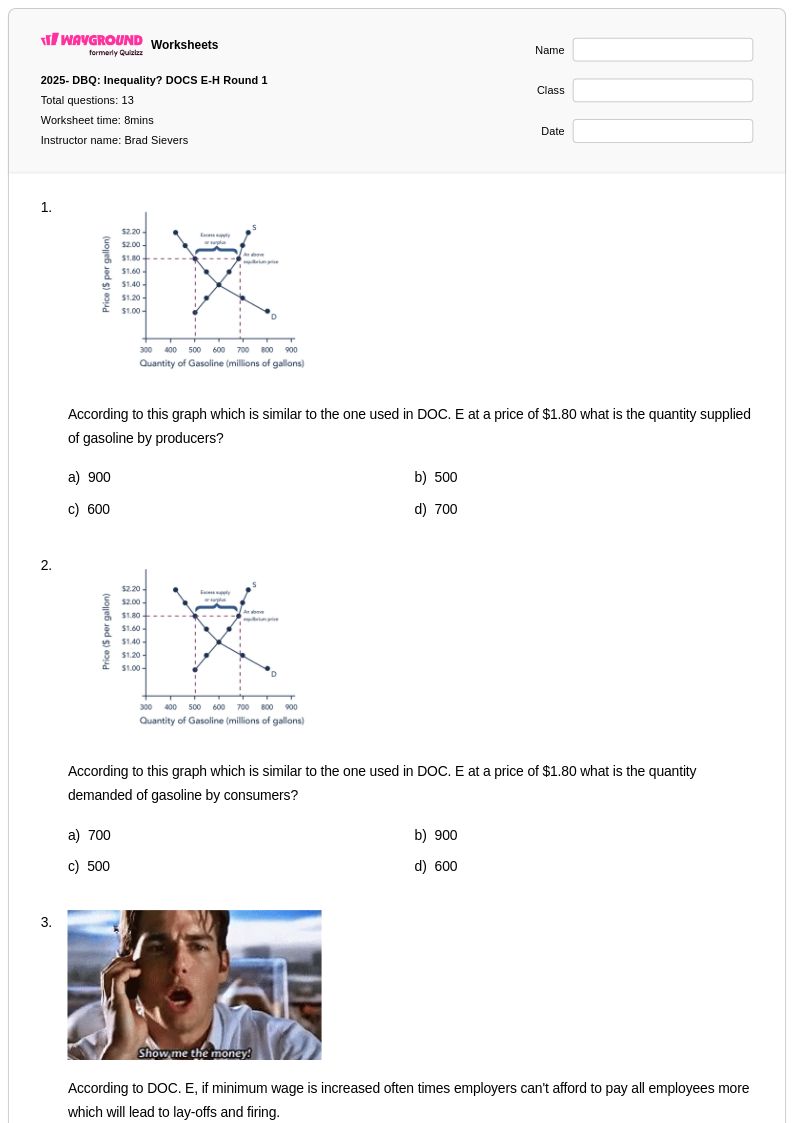
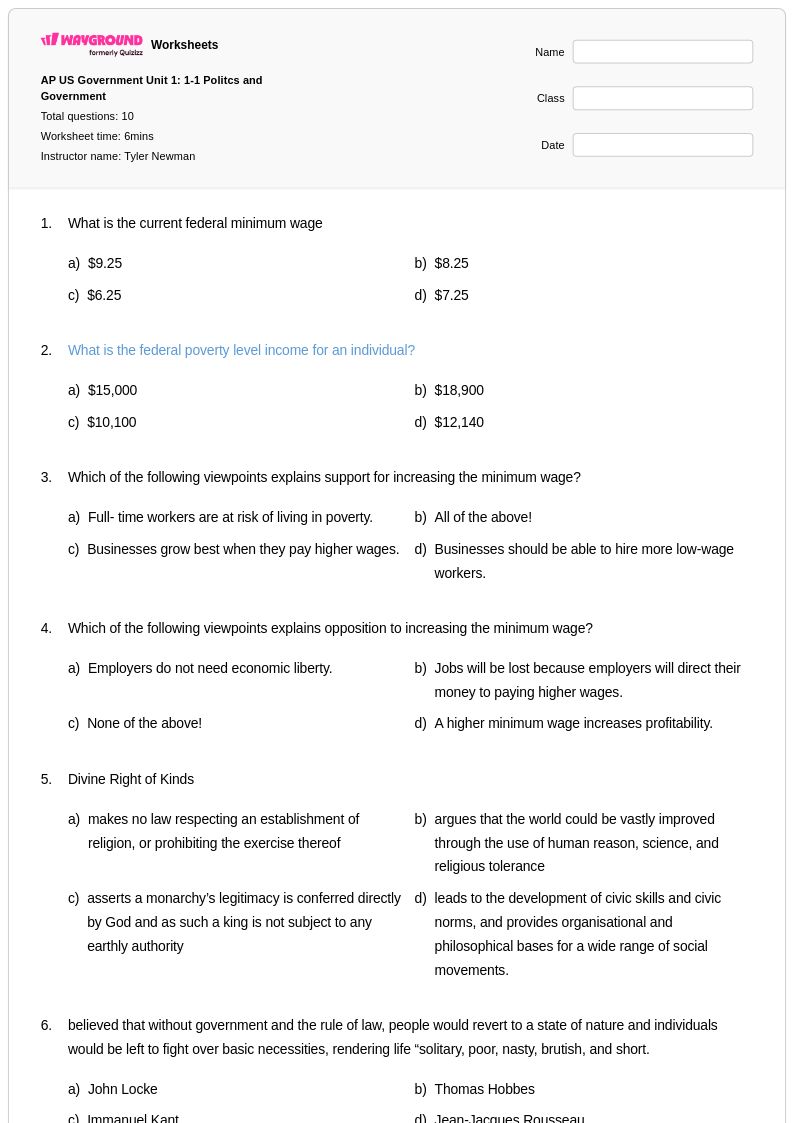
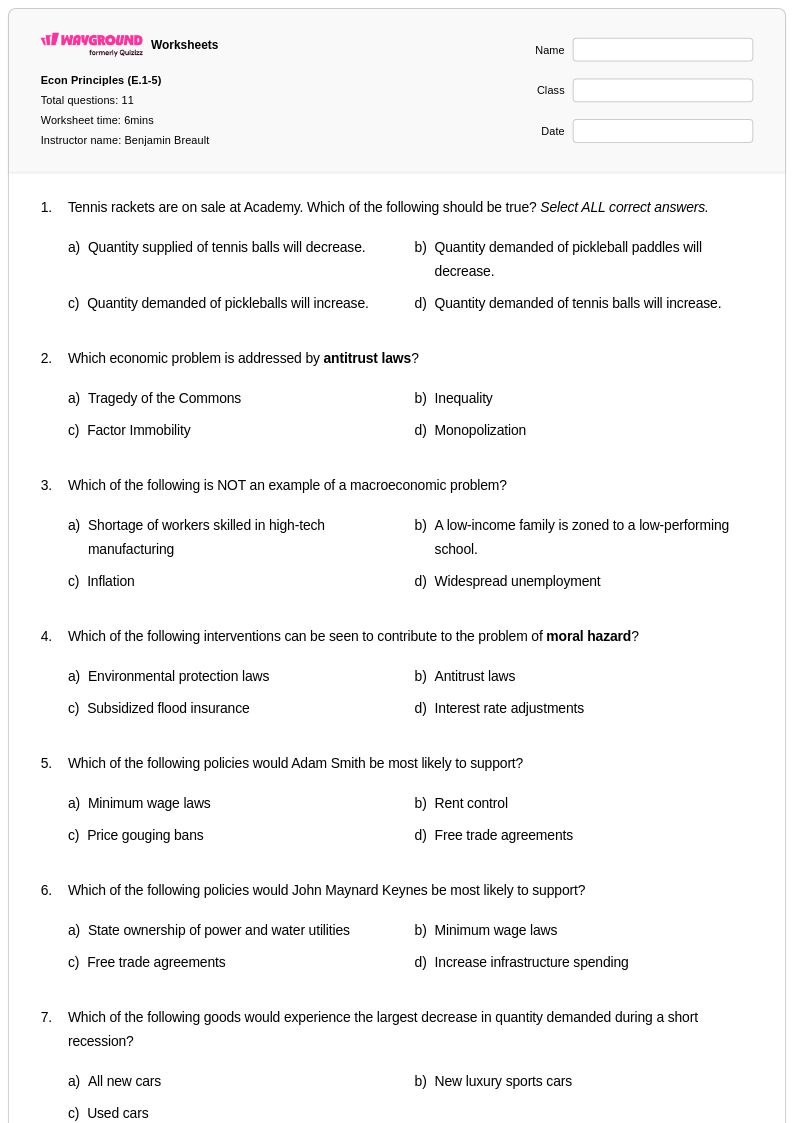
Minimum wage economics worksheets for Year 12 students through Wayground (formerly Quizizz) provide comprehensive resources for exploring this critical labor market concept at an advanced high school level. These carefully designed materials help students analyze the economic theory behind minimum wage policies, examine their real-world applications, and develop sophisticated understanding of wage floor mechanisms in modern economies. Students work through practice problems that challenge them to evaluate the effects of minimum wage increases on employment levels, business costs, and consumer prices while strengthening their ability to interpret economic data and construct evidence-based arguments. The collection includes detailed answer key materials and free printable resources that guide students through complex scenarios involving labor market equilibrium, elasticity of demand for labor, and the intersection of social policy with economic principles.
Wayground (formerly Quizizz) empowers educators with millions of teacher-created worksheet resources specifically designed to support Year 12 economics instruction on minimum wage topics. The platform's robust search and filtering capabilities allow teachers to quickly locate materials aligned with academic standards while accessing differentiation tools that accommodate diverse learning needs within the classroom. These comprehensive worksheet collections are available in both printable pdf formats and interactive digital versions, enabling flexible customization for various instructional approaches from direct teaching to independent study sessions. Teachers can seamlessly integrate these resources into their lesson planning for initial concept introduction, targeted remediation for struggling students, enrichment activities for advanced learners, and ongoing skill practice that reinforces understanding of how minimum wage policies function within broader economic systems.
FAQs
How do I teach minimum wage concepts to students?
Teaching minimum wage effectively starts with grounding students in the labor market basics: supply and demand for labor, how wages are set, and why governments intervene with wage floors. From there, move students into policy analysis by examining real-world examples of minimum wage legislation and their documented effects on employment, business costs, and consumer prices. Case studies comparing states or countries with different minimum wage levels help students evaluate competing economic arguments rather than accepting any single narrative.
What worksheets or exercises help students practice minimum wage concepts?
Effective practice exercises include wage calculation problems where students compute how a minimum wage increase affects total labor costs for a small business, as well as scenario-based questions requiring students to assess trade-offs between higher wages and potential job reductions. Worksheets that ask students to evaluate living wage calculations against regional cost-of-living data push beyond rote application and build genuine analytical skills. Practice problems grounded in real wage data or policy examples are especially useful for making abstract economics tangible.
What mistakes do students commonly make when analyzing minimum wage policies?
The most common misconception is treating minimum wage as a purely beneficial policy with no trade-offs, or conversely dismissing it entirely without engaging with distributional effects. Students often confuse minimum wage with living wage, not recognizing that these are distinct concepts with different calculation methods and policy purposes. Another frequent error is applying a single economic model rigidly, for example assuming that any minimum wage increase automatically causes proportional job losses, without accounting for factors like monopsony power, local labor market conditions, or the elasticity of labor demand.
How can I use minimum wage worksheets to support different skill levels in my class?
Minimum wage worksheets can be tiered so that foundational students work through structured calculation problems with guided steps, while more advanced students tackle open-ended policy analysis or evaluate conflicting economic data. On Wayground, teachers can apply accommodations at the individual student level, including reduced answer choices to lower cognitive load for students who need additional support, read-aloud features for accessible question delivery, and extended time settings, without other students being notified of these adjustments. This makes it practical to run differentiated practice within a single class session.
How do I use Wayground's minimum wage worksheets in my classroom?
Wayground's minimum wage worksheets are available as printable PDFs for traditional classroom use and in digital formats for technology-integrated or remote instruction, including the option to host them as a quiz directly on Wayground. Teachers can use the platform's search and filtering tools to quickly locate worksheets aligned to specific curriculum standards or skill objectives, whether the goal is targeted wage calculation practice, policy analysis, or enrichment for advanced learners. Each worksheet includes a detailed answer key, supporting both self-paced independent study and whole-class instruction.