
20 Q
5th
20 Q
4th - Uni
10 Q
2nd - 3rd
20 Q
2nd - 3rd
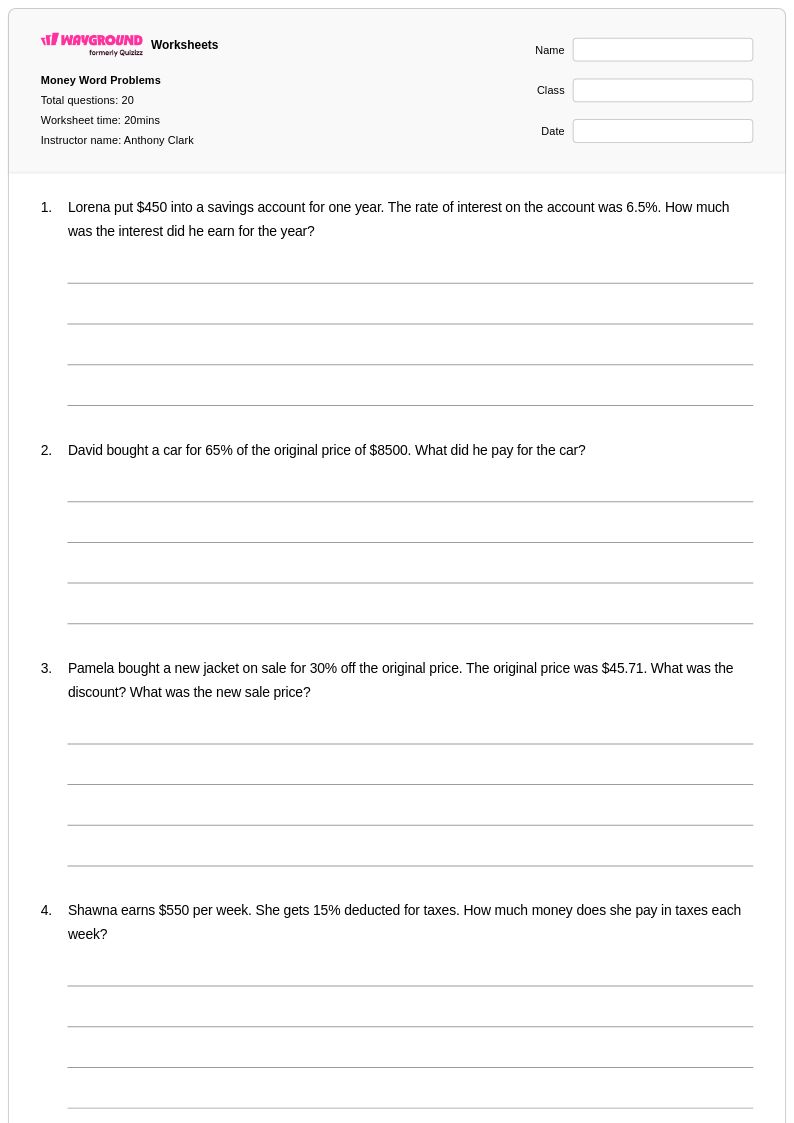
20 Q
6th - Uni
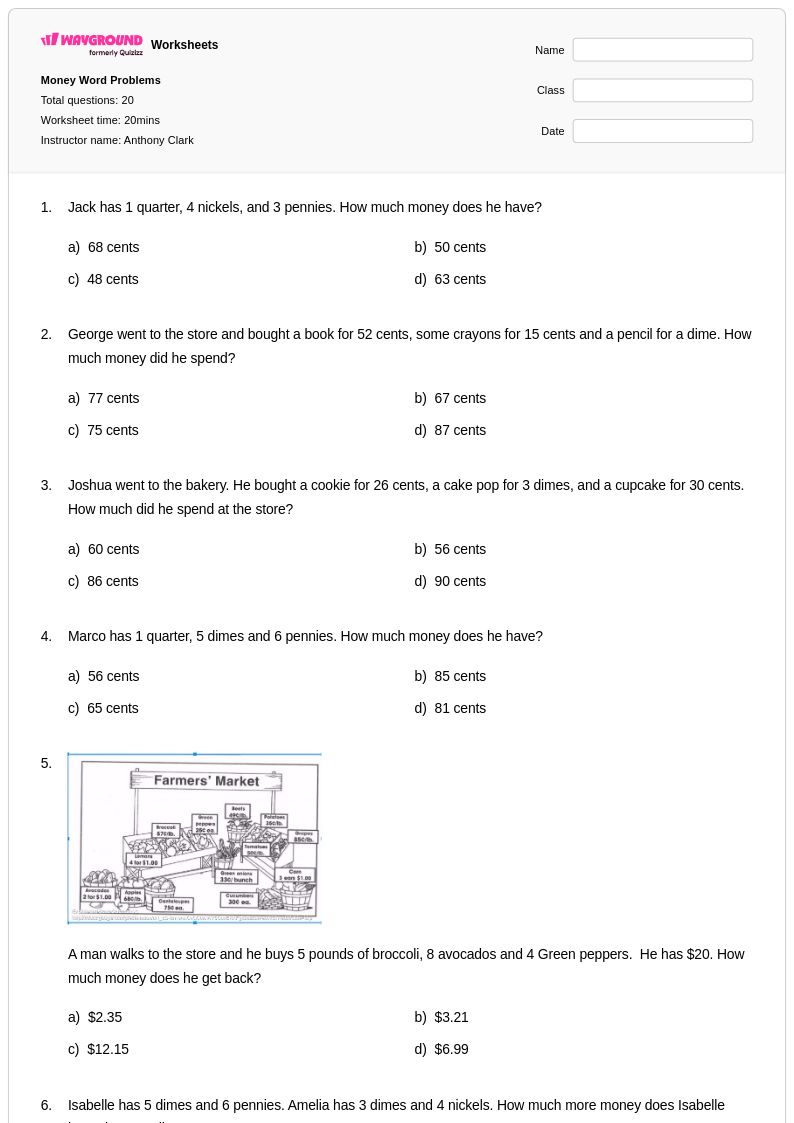
20 Q
3rd - Uni
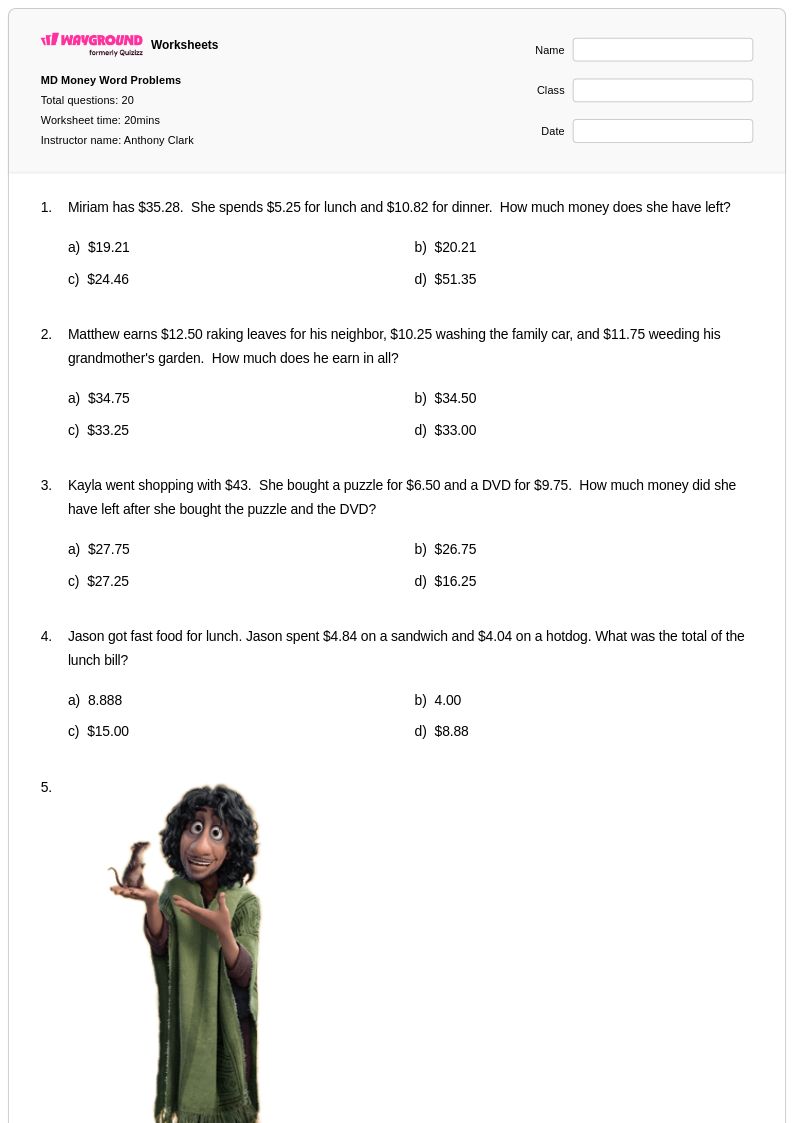
20 Q
3rd - Uni
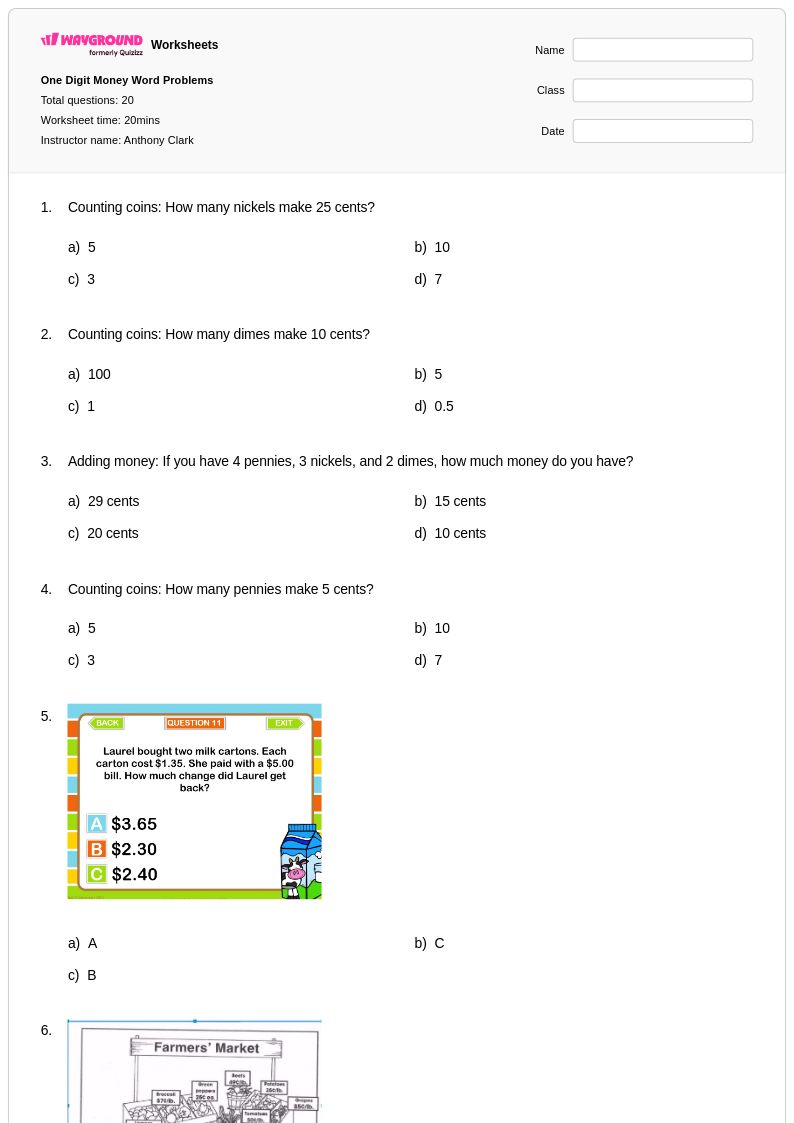
20 Q
3rd - Uni
15 Q
5th - Uni
20 Q
4th - Uni
20 Q
9th - Uni
10 Q
5th
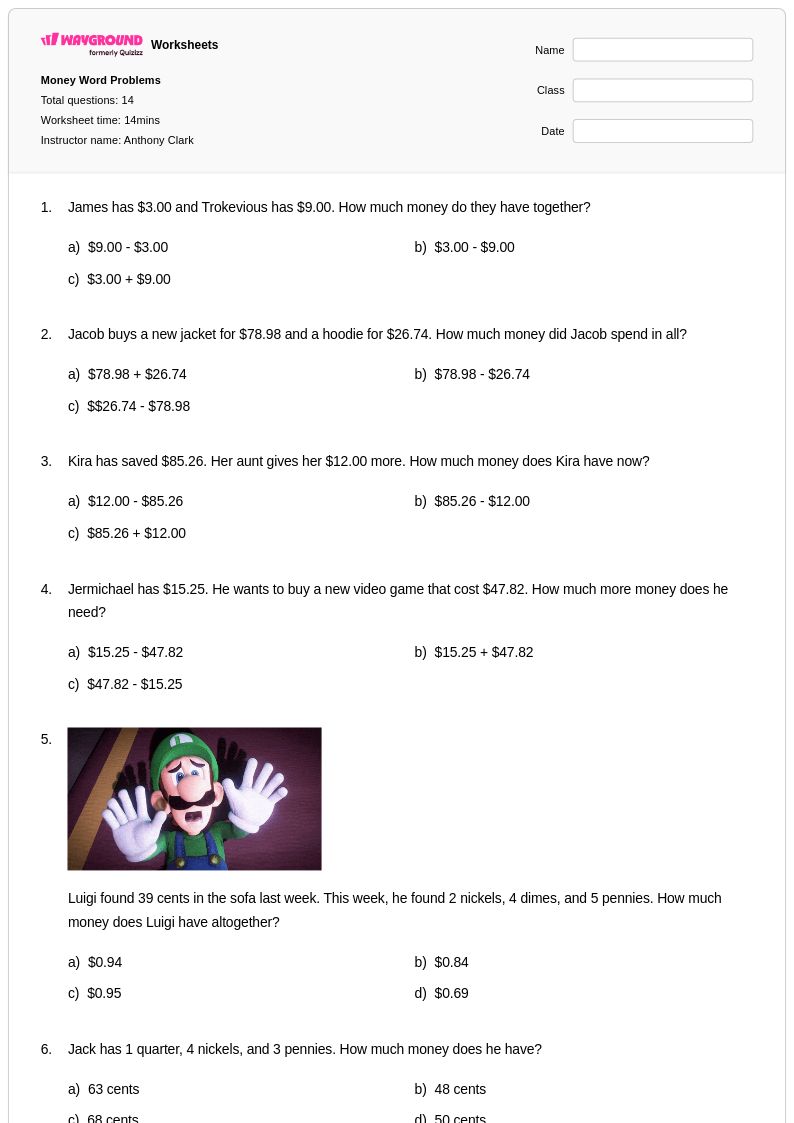
14 Q
3rd - Uni
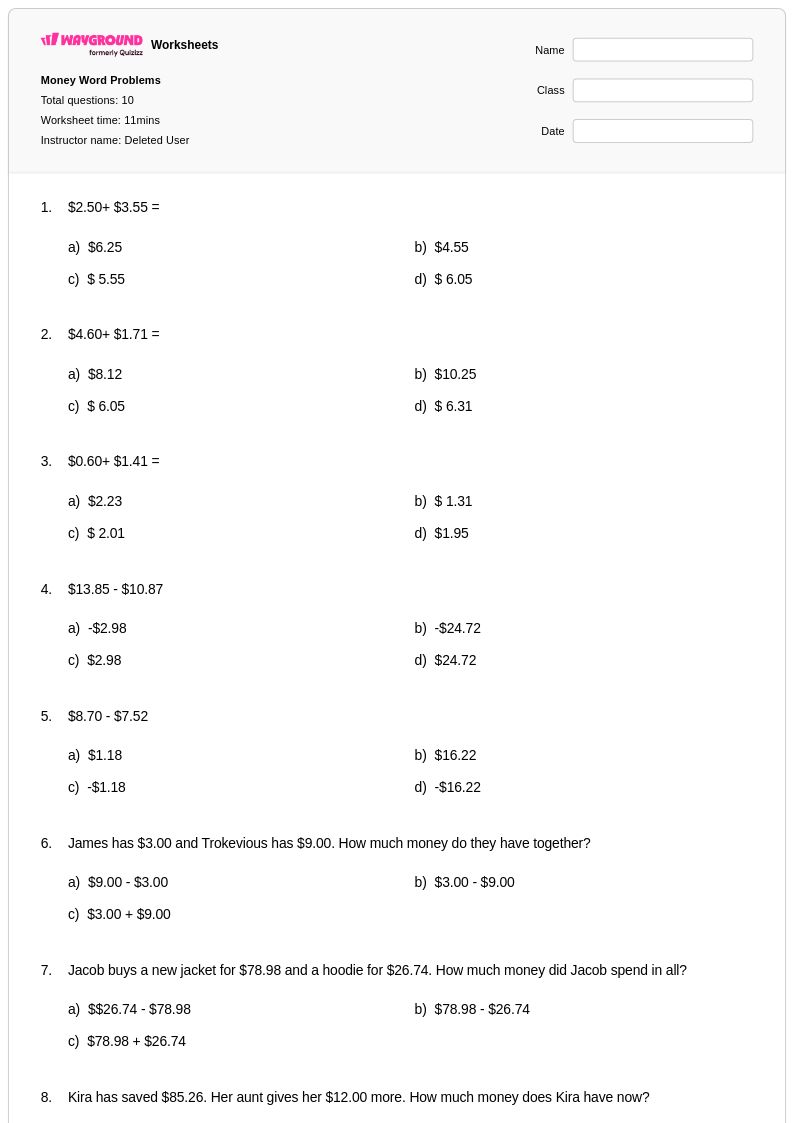
10 Q
3rd
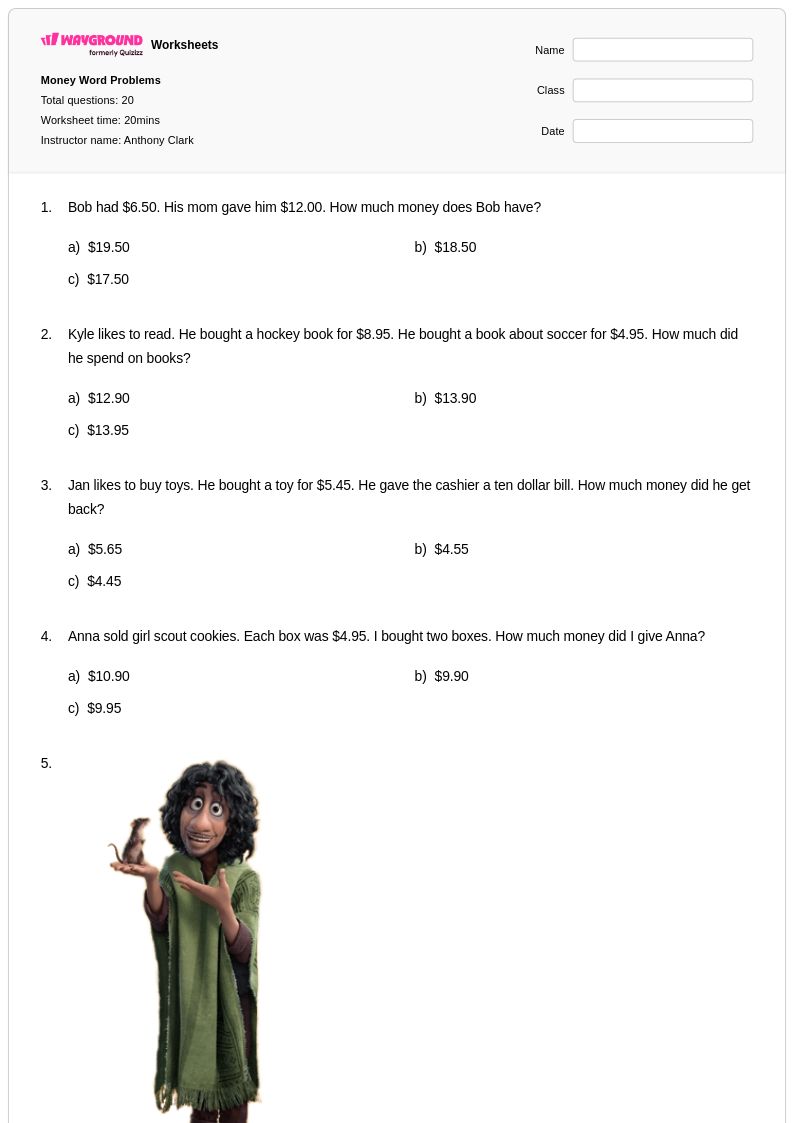
20 Q
3rd - Uni
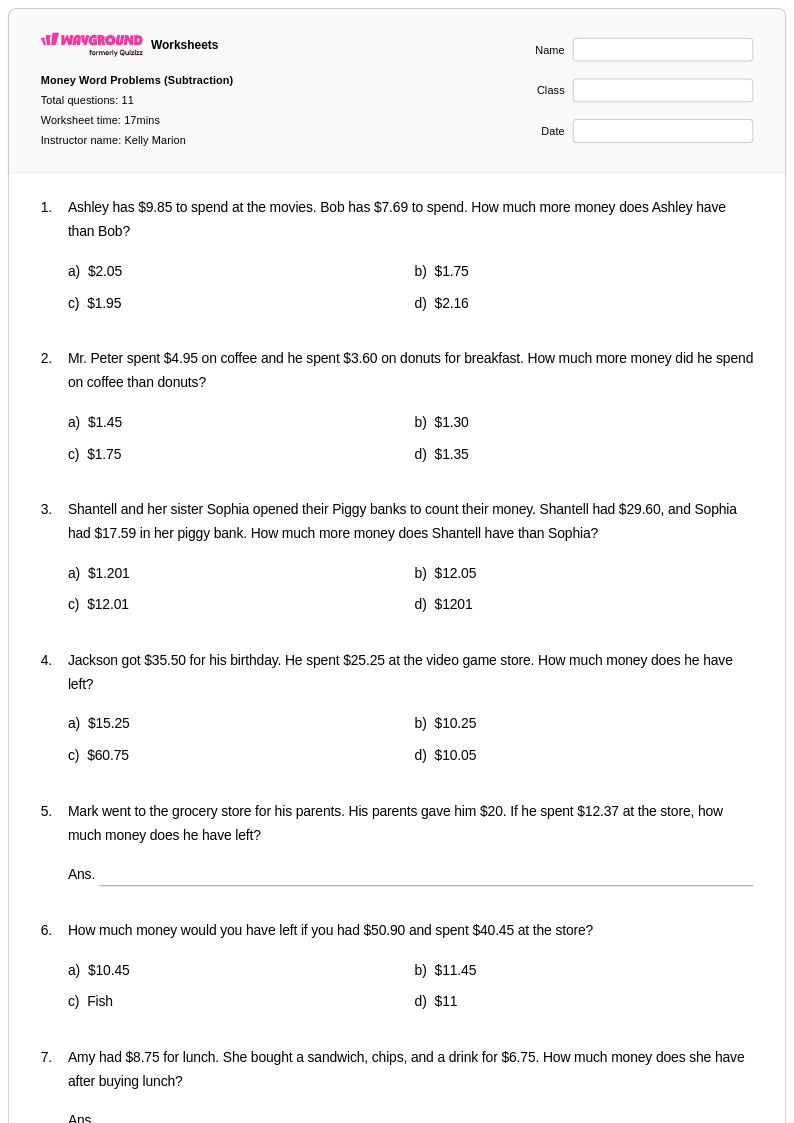
11 Q
2nd
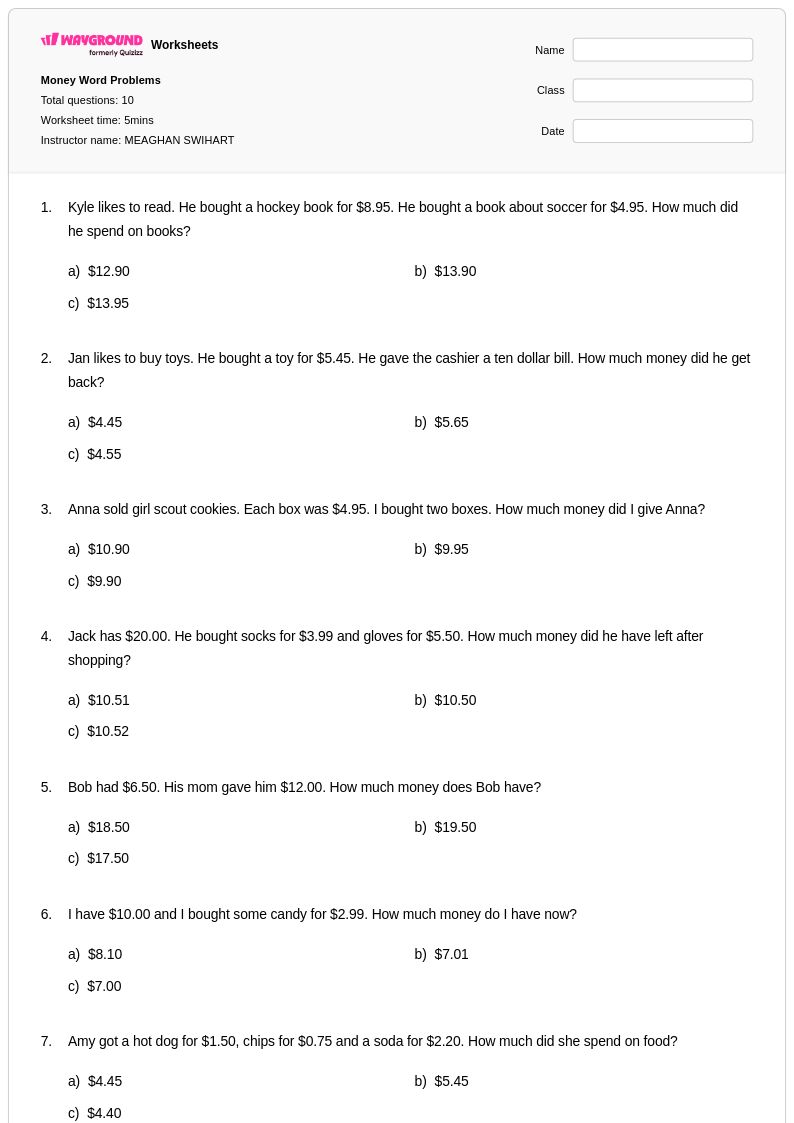
10 Q
3rd
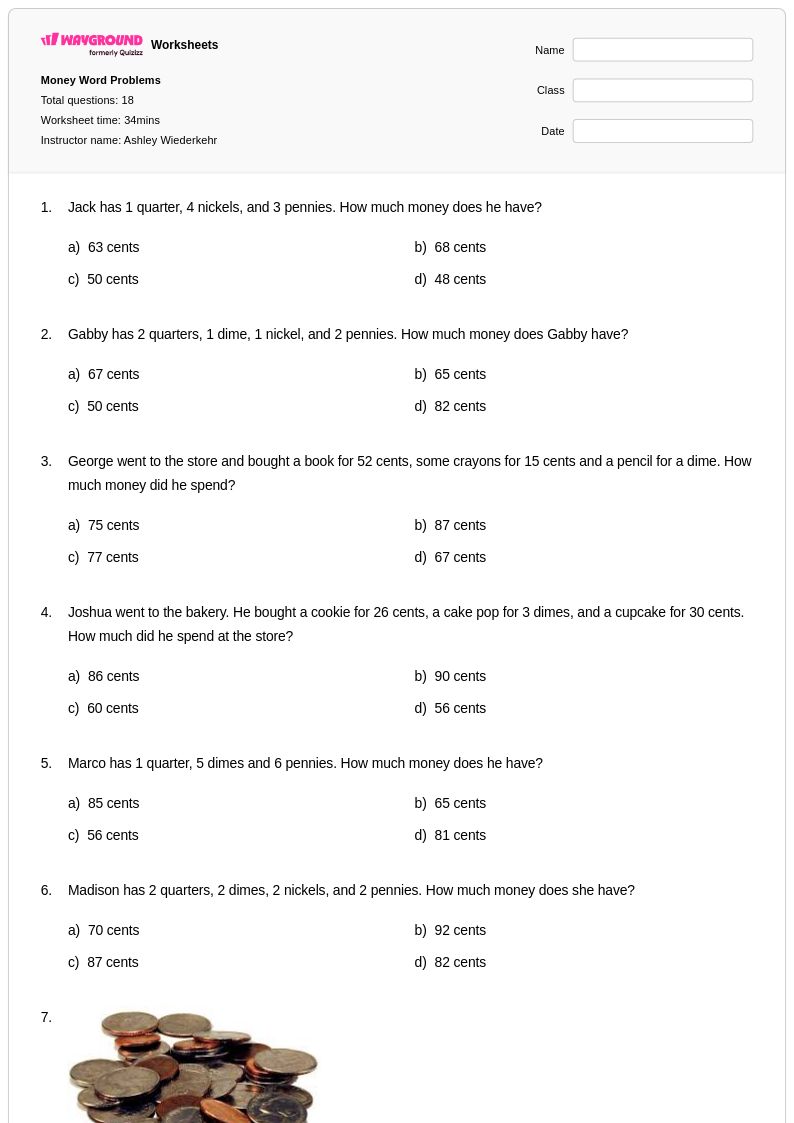
18 Q
2nd
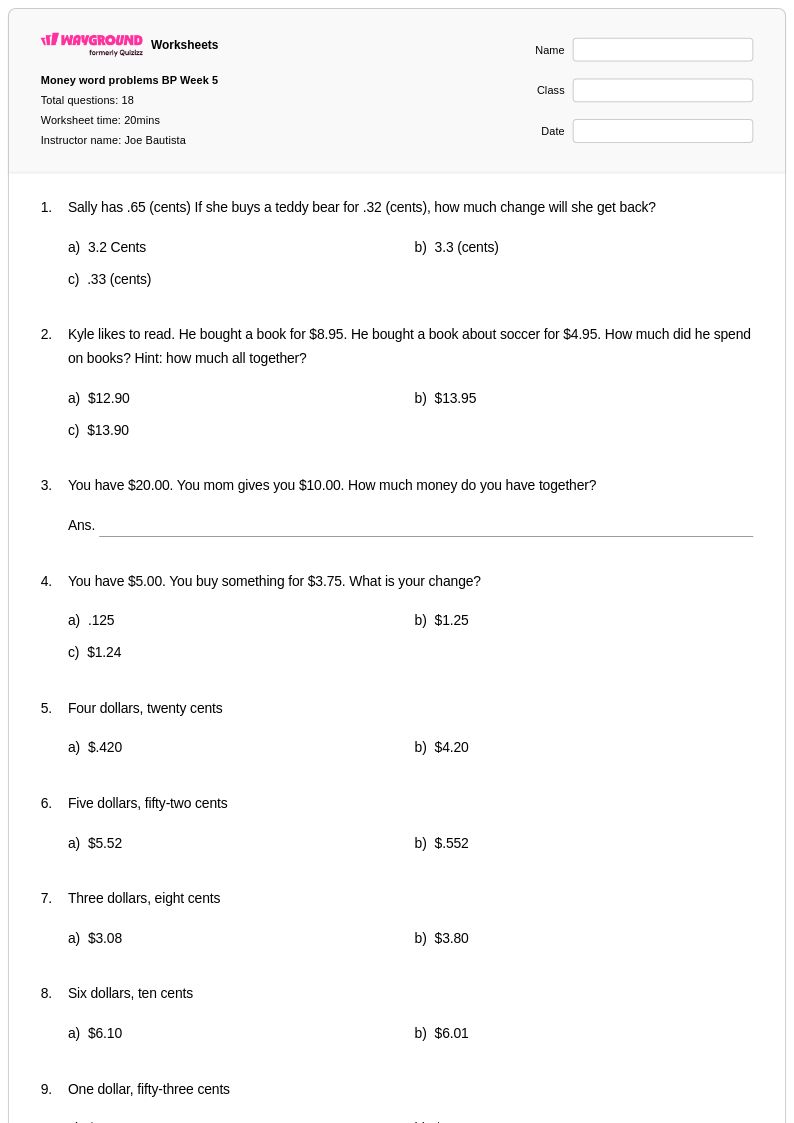
18 Q
2nd
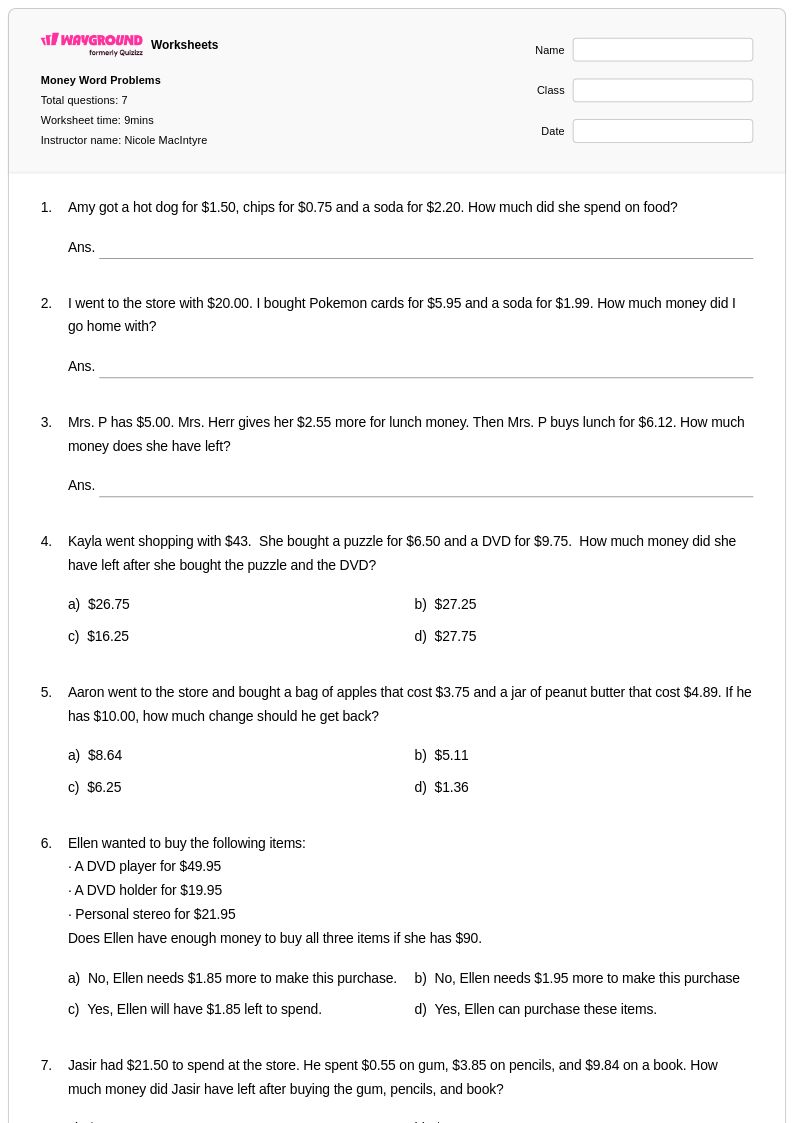
7 Q
5th
10 Q
4th
15 Q
4th - Uni
Explore Worksheets by Subjects
Explore printable Money Word Problems worksheets
Money word problems provide students with essential practice connecting mathematical concepts to real-world financial situations they encounter daily. Wayground's comprehensive collection of money word problems worksheets helps students develop critical thinking skills while mastering operations with currency, making change, calculating costs, and solving multi-step problems involving purchases, savings, and budgeting scenarios. These expertly crafted practice problems strengthen students' ability to interpret written information, identify relevant numerical data, and apply appropriate mathematical strategies to reach accurate solutions. Each worksheet comes complete with a detailed answer key, and teachers can access these valuable resources as free printables in convenient PDF format, making it simple to provide targeted practice that builds both computational fluency and problem-solving confidence.
Wayground, formerly Quizizz, empowers educators with an extensive library of millions of teacher-created money word problems resources, featuring robust search and filtering capabilities that allow instructors to quickly locate materials aligned with specific learning objectives and curriculum standards. The platform's differentiation tools enable teachers to customize worksheets to meet diverse student needs, whether providing remediation for struggling learners or enrichment challenges for advanced problem solvers. Available in both printable PDF format and interactive digital versions, these flexible resources support seamless lesson planning and can be easily integrated into classroom instruction, homework assignments, or assessment preparation. Teachers can efficiently organize skill-building practice sessions, target specific areas where students need additional support, and track progress through systematic problem-solving activities that bridge mathematical understanding with practical financial literacy concepts.
FAQs
How can I teach money word problems effectively?
What skills do these money word problem worksheets help students practice?
What are common mistakes students make with money word problems?
How can I use this money word problems worksheet with my class?
How do money word problems fit into the math curriculum?
How can I differentiate these worksheets for diverse learners?