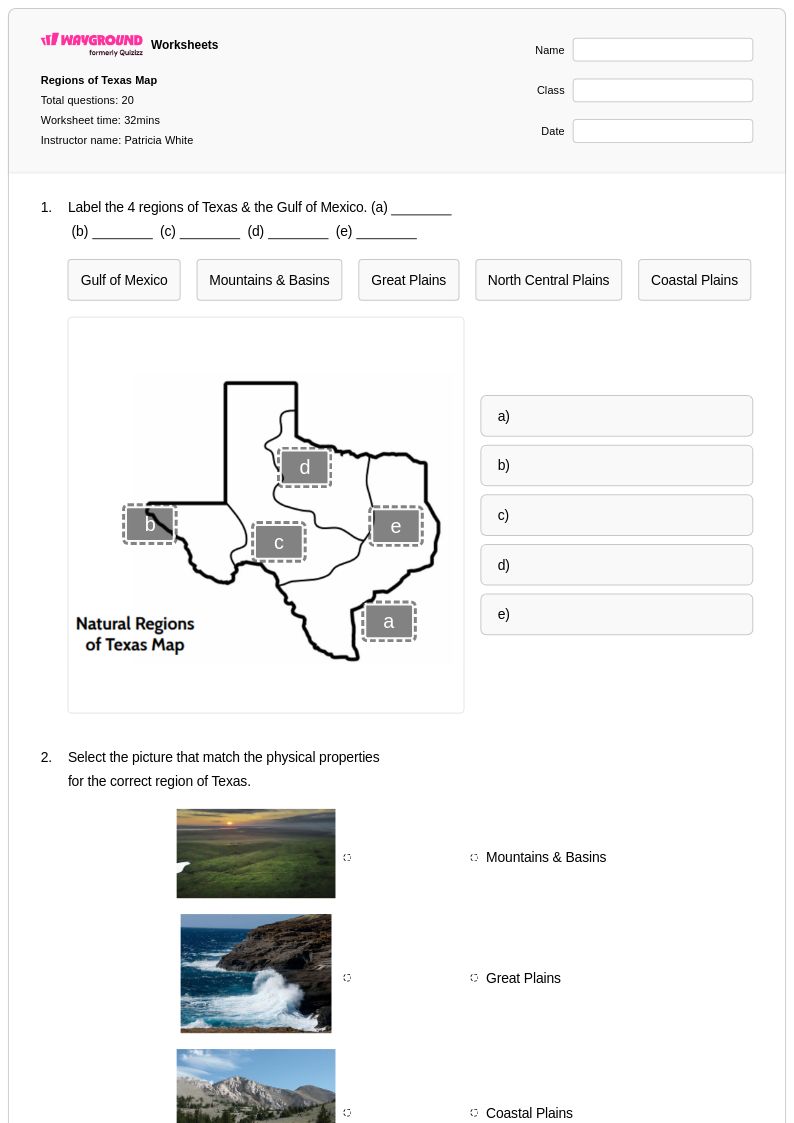
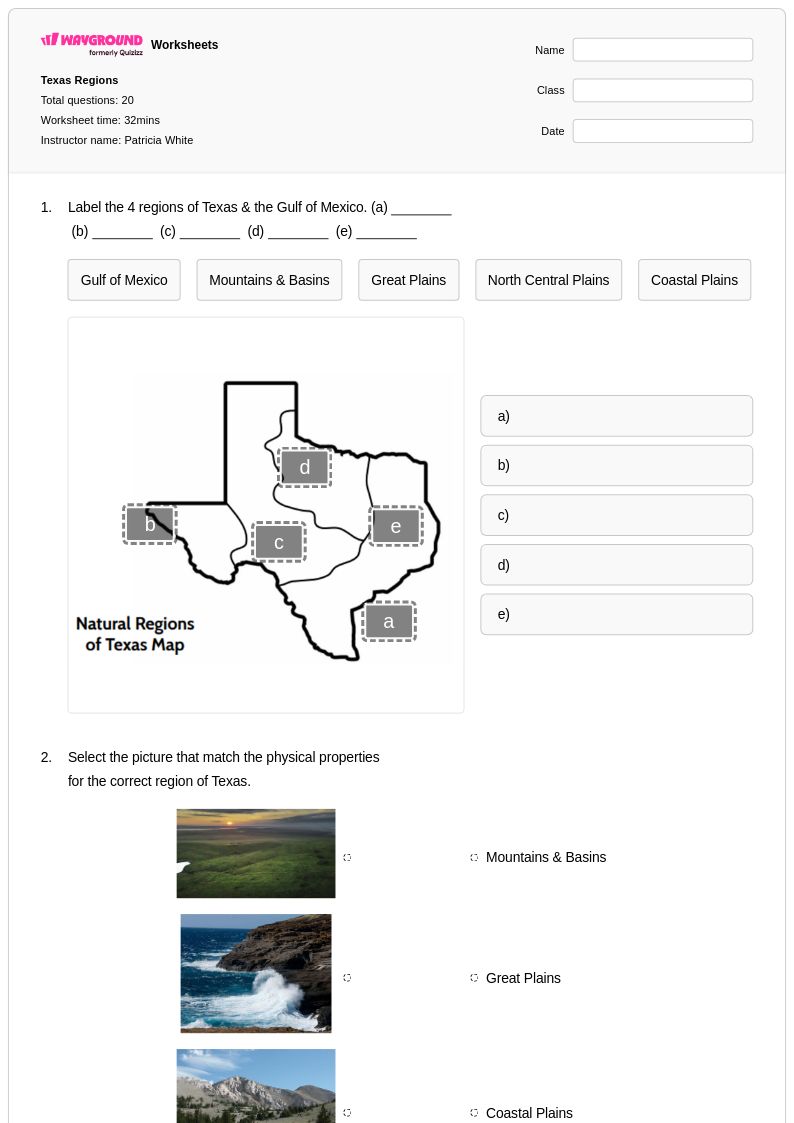
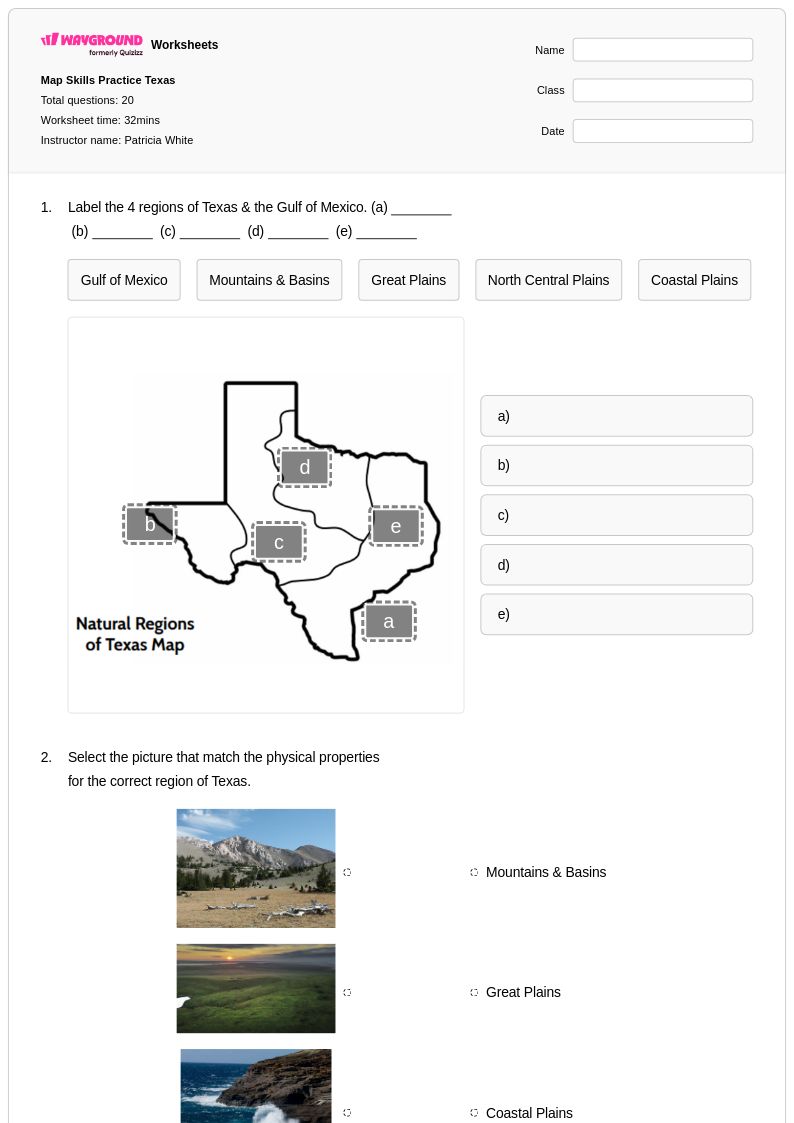
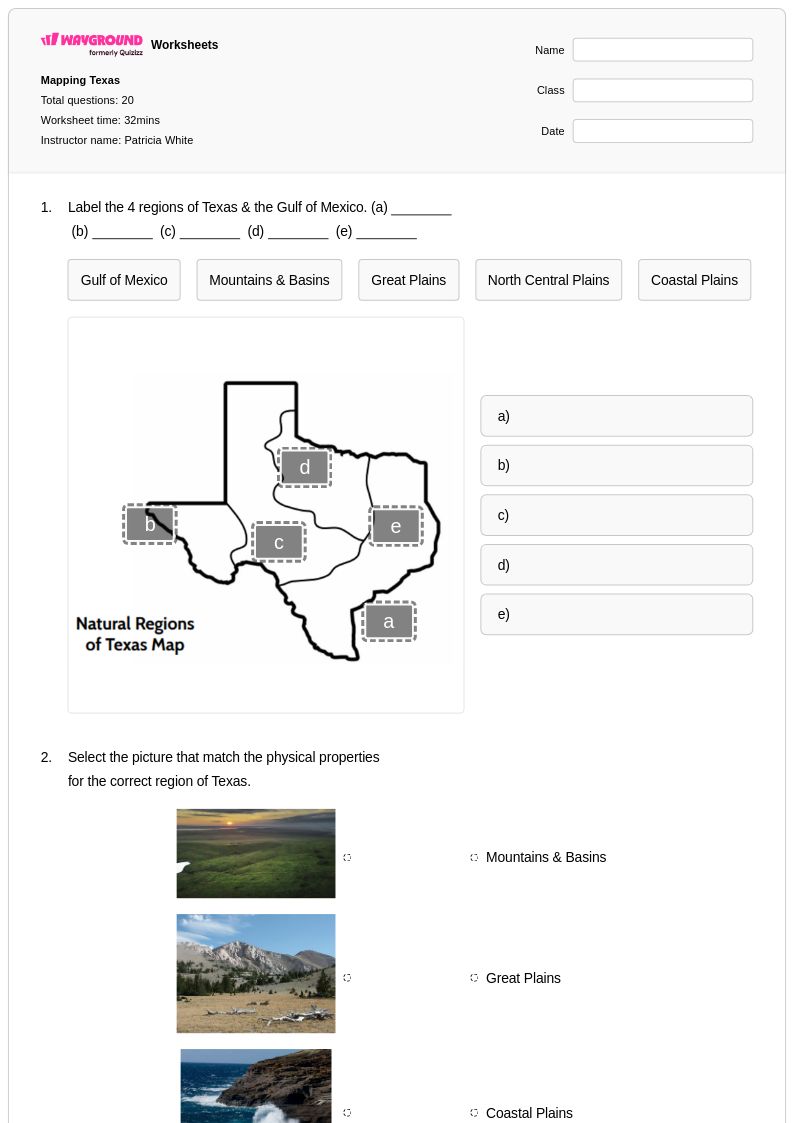
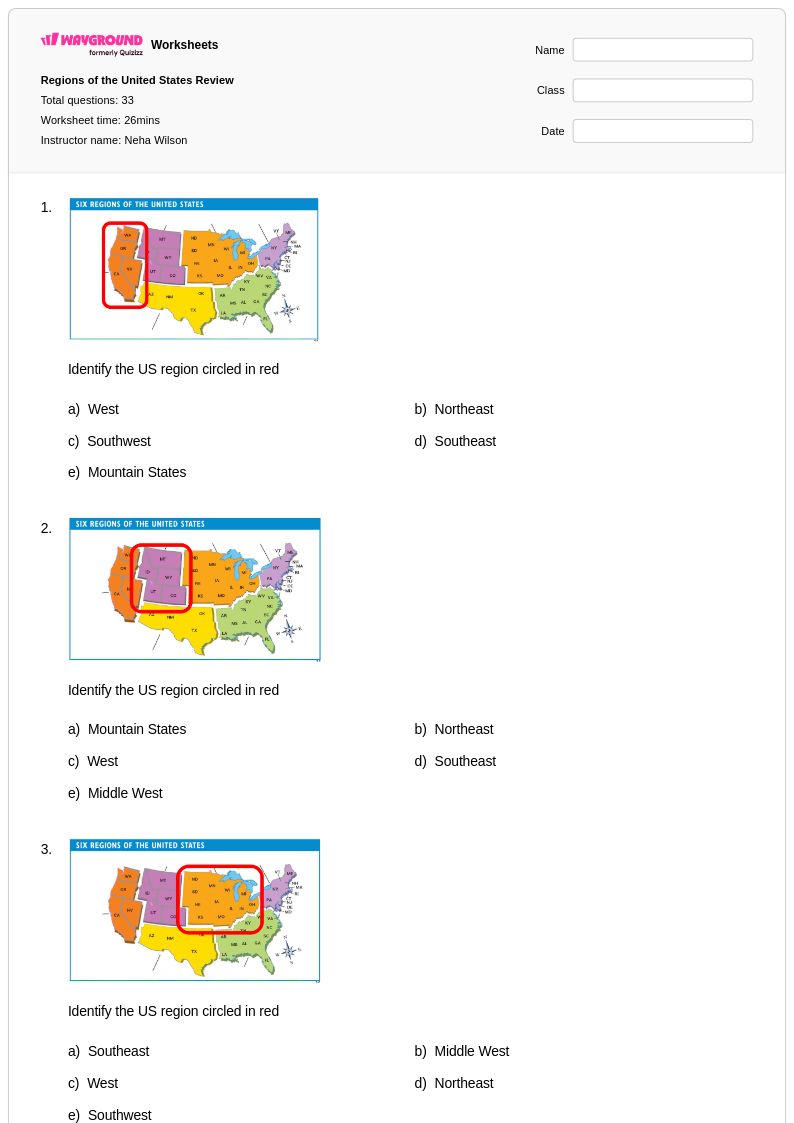
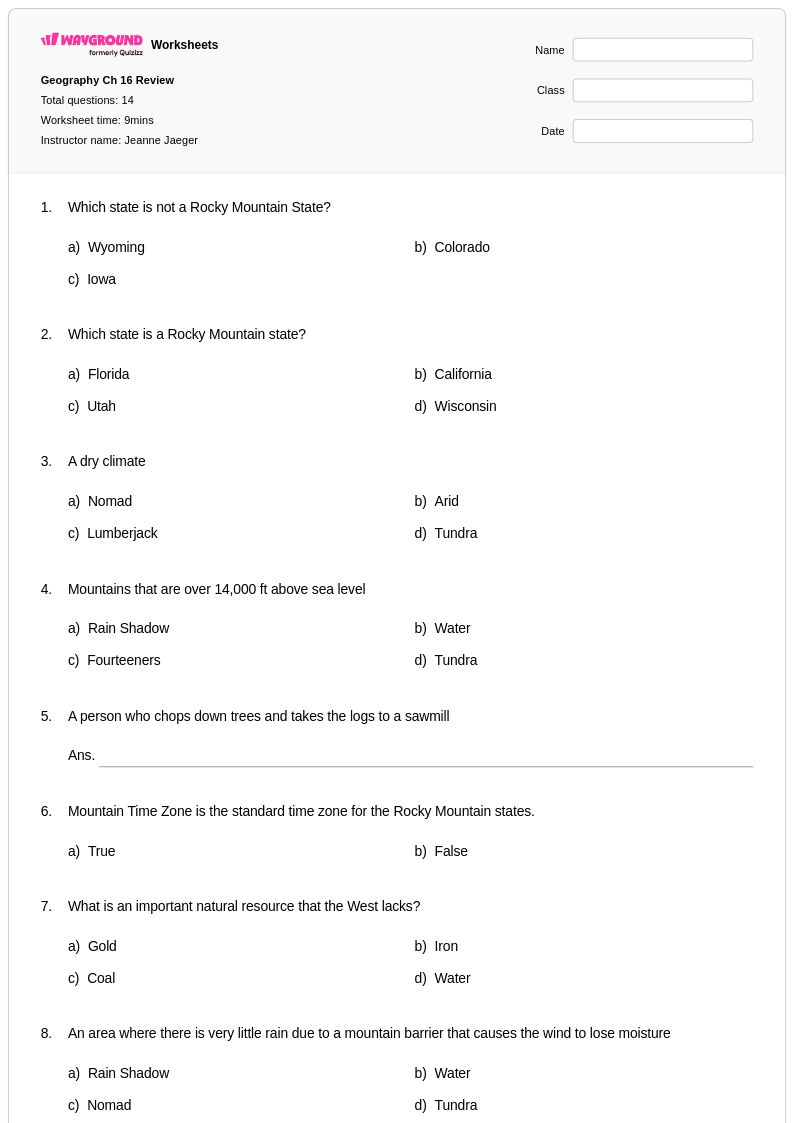
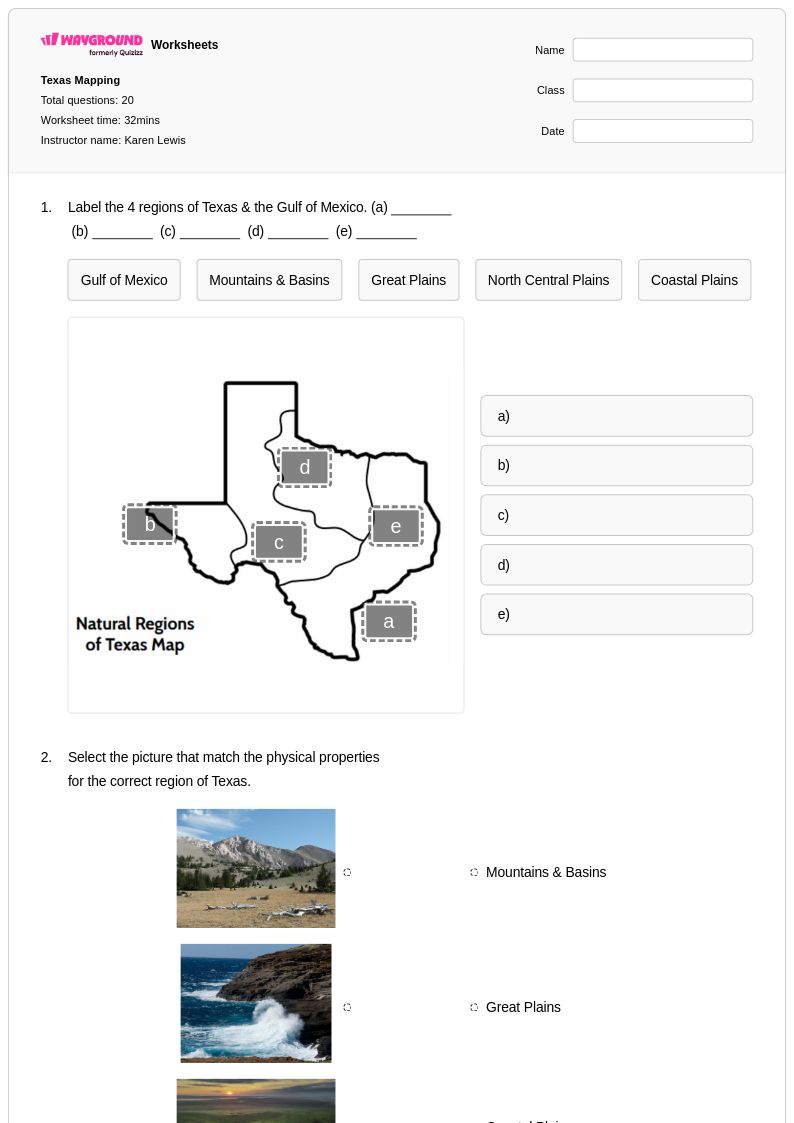
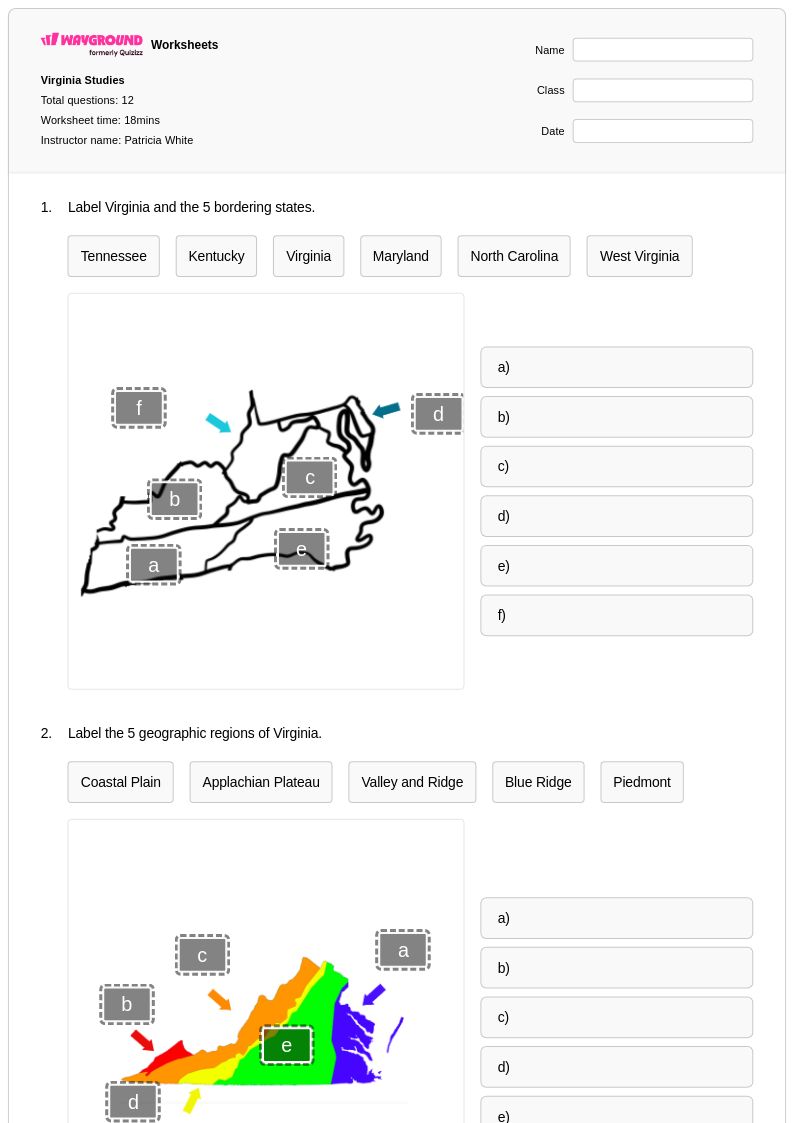
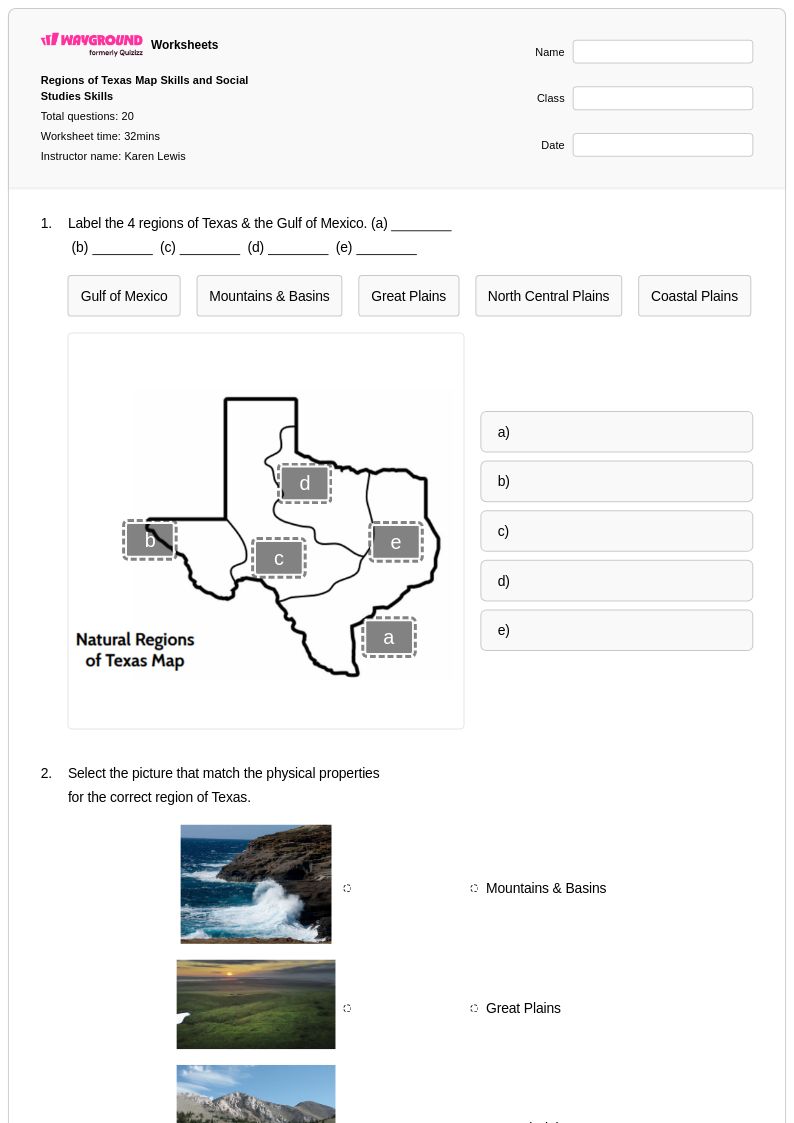
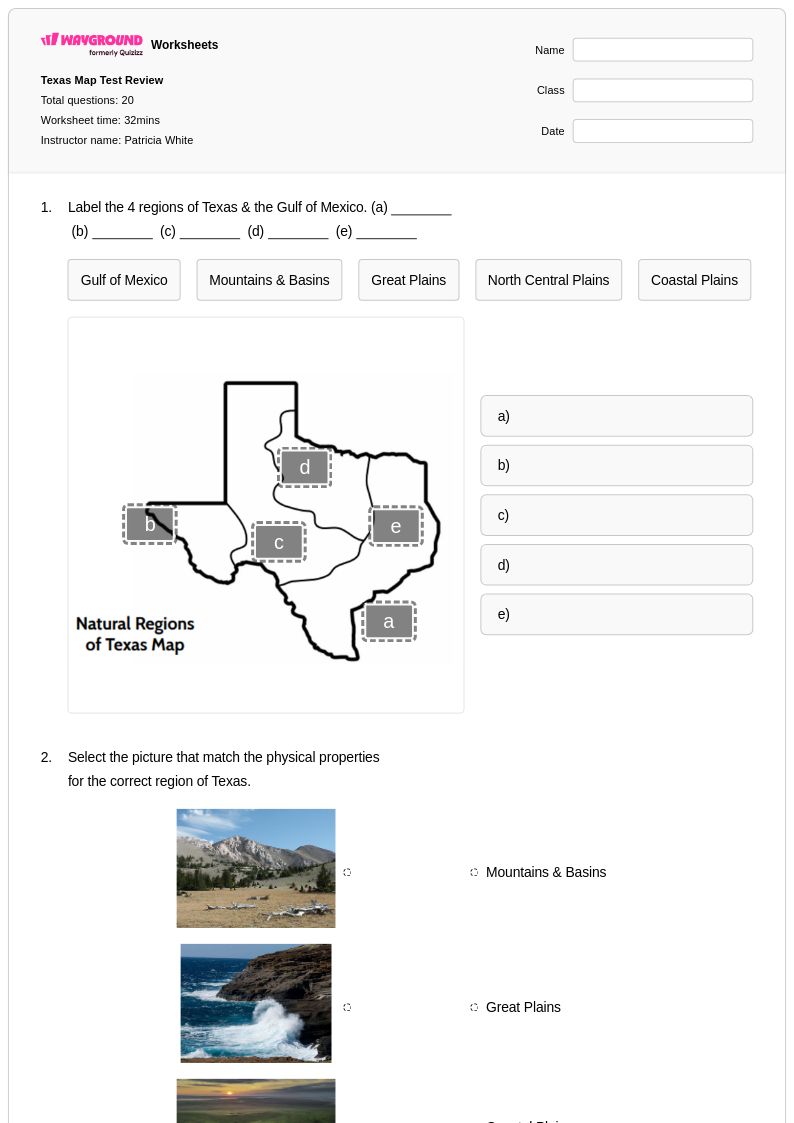
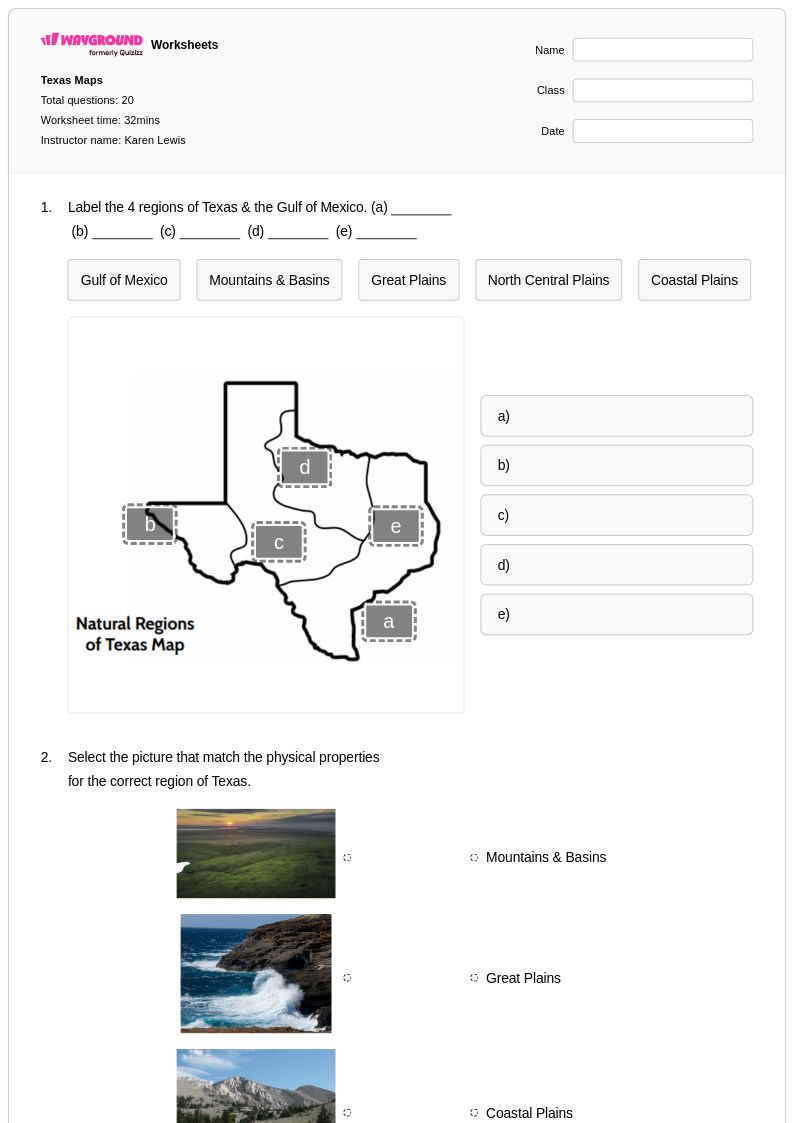
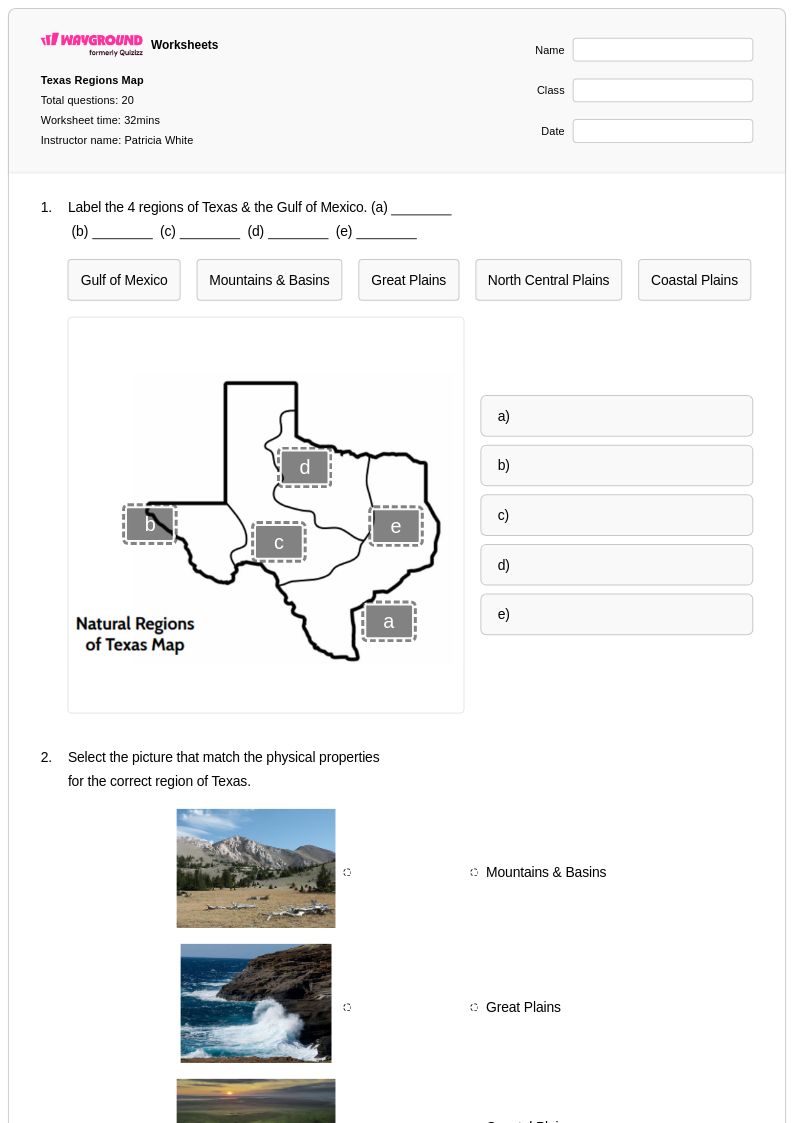
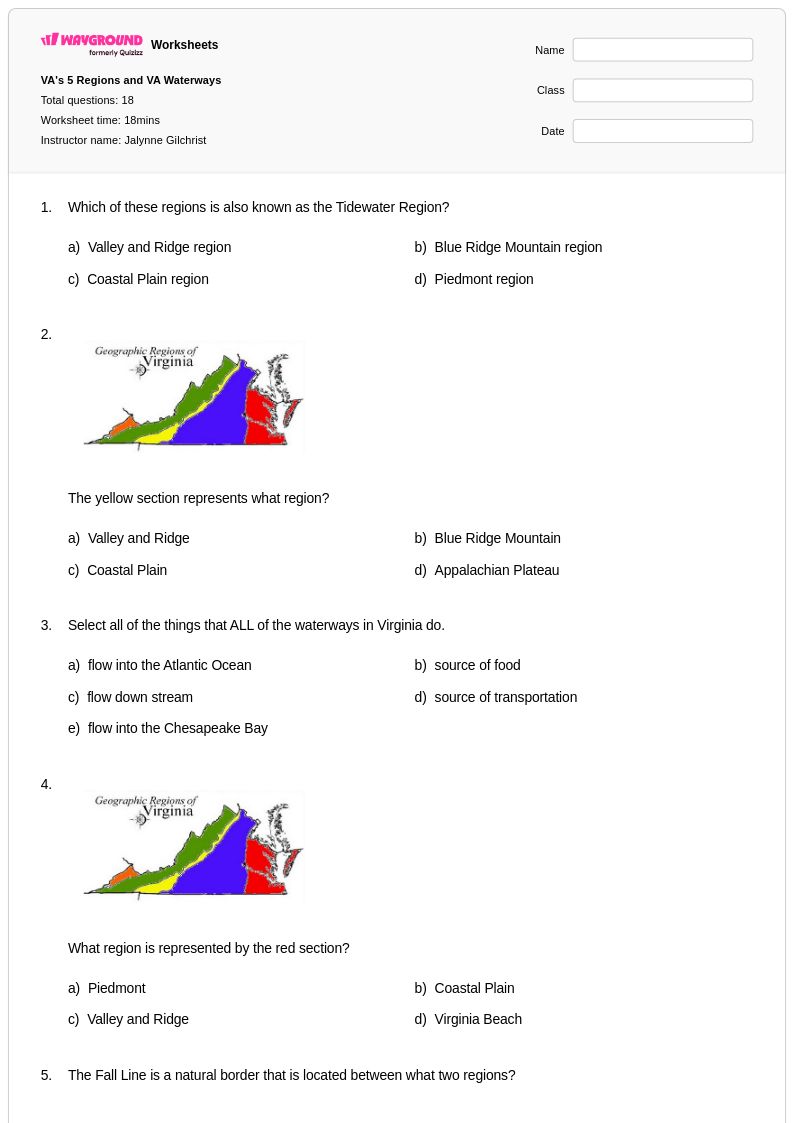
Explore Wayground's free Year 4 mountains worksheets and printables that help students discover mountain formation, types, and geographical features through engaging practice problems with answer keys included.
Mountains worksheets for Year 4 students available through Wayground (formerly Quizizz) provide comprehensive exploration of Earth's most dramatic landforms and their formation processes. These educational resources strengthen students' understanding of mountain types, including fold mountains, fault-block mountains, and volcanic mountains, while developing critical geographic analysis skills through engaging practice problems. The collection includes detailed answer keys that support independent learning and assessment, with free printables covering mountain ranges around the world, elevation concepts, and the relationship between mountains and climate patterns. Students work through activities that examine how mountains influence human settlement patterns, weather systems, and natural resource distribution, building foundational knowledge essential for advanced geographic study.
Wayground (formerly Quizizz) supports educators with an extensive collection of teacher-created mountain geography resources, drawing from millions of professionally developed materials that align with state and national social studies standards. The platform's robust search and filtering capabilities allow teachers to quickly locate age-appropriate content for Year 4 learners, while differentiation tools enable customization for diverse learning needs and skill levels. Available in both printable pdf formats and interactive digital versions, these worksheets facilitate flexible lesson planning for in-class instruction, homework assignments, and targeted remediation or enrichment activities. Teachers can modify existing materials or combine multiple resources to create comprehensive units that address specific curriculum requirements, ensuring students develop strong foundational understanding of mountain systems and their global significance.
FAQs
How do I teach mountain formation to students?
Teaching mountain formation works best when students can connect the three main formation types to the tectonic forces behind them: fold mountains form from colliding plates, fault-block mountains from fractures in the crust, and volcanic mountains from magma activity. Using cross-section diagrams alongside real-world examples like the Himalayas, Sierra Nevada, and Cascades helps students visualize processes that unfold over millions of years. Pairing visual models with structured note-taking or comparison activities reinforces the distinctions between formation types and prepares students for map and elevation work.
What exercises help students practice reading topographic maps of mountains?
Effective topographic map practice involves having students identify contour lines, calculate elevation changes between intervals, and determine slope steepness by analyzing how closely lines are spaced. Exercises that ask students to trace a hiking route and predict terrain changes, or to compare two mountain profiles side by side, build spatial reasoning alongside map literacy. Worksheets that integrate labeled diagrams with short-answer questions help students connect the abstract contour representation to real mountain terrain.
What common mistakes do students make when learning about mountain types?
The most frequent misconception is that all mountains are volcanic, since volcanic mountains are the most visually dramatic and culturally prominent. Students also commonly confuse fold mountains with fault-block mountains, failing to distinguish between compression forces and tension forces in the crust. Another error is conflating elevation with altitude effects on climate, not understanding why temperature decreases as elevation increases even in tropical mountain regions.
How does altitude affect climate and ecosystems in mountain regions?
As altitude increases, atmospheric pressure drops and temperatures decrease at a rate of roughly 3.5°F per 1,000 feet, which creates distinct vegetation zones from base to summit. This is why a single mountain can support tropical forest at its base, temperate woodland in the middle elevations, and alpine tundra near the summit. Teaching students to map these biome transitions vertically is an effective way to reinforce both climate science and ecosystem concepts simultaneously.
How do I use Wayground's mountains worksheets in my classroom?
Wayground's mountains worksheets are available as printable PDFs for traditional classroom use and in digital formats for technology-integrated learning environments, and teachers can also host them as a quiz directly on Wayground. This flexibility makes them suitable for in-class instruction, independent practice, homework assignments, or remote learning. Each worksheet includes a complete answer key, so teachers can use them for guided practice, self-assessment, or formative review without additional preparation.
How can I differentiate mountains worksheets for students with different learning needs?
On Wayground, teachers can apply individual student accommodations including extended time, read-aloud support for students who need questions read to them, and reduced answer choices to lower cognitive load for students who need it. Font size and display themes can also be adjusted through reading mode for accessibility. These settings are saved per student and reapply automatically in future sessions, so differentiation requires no repeated setup.