
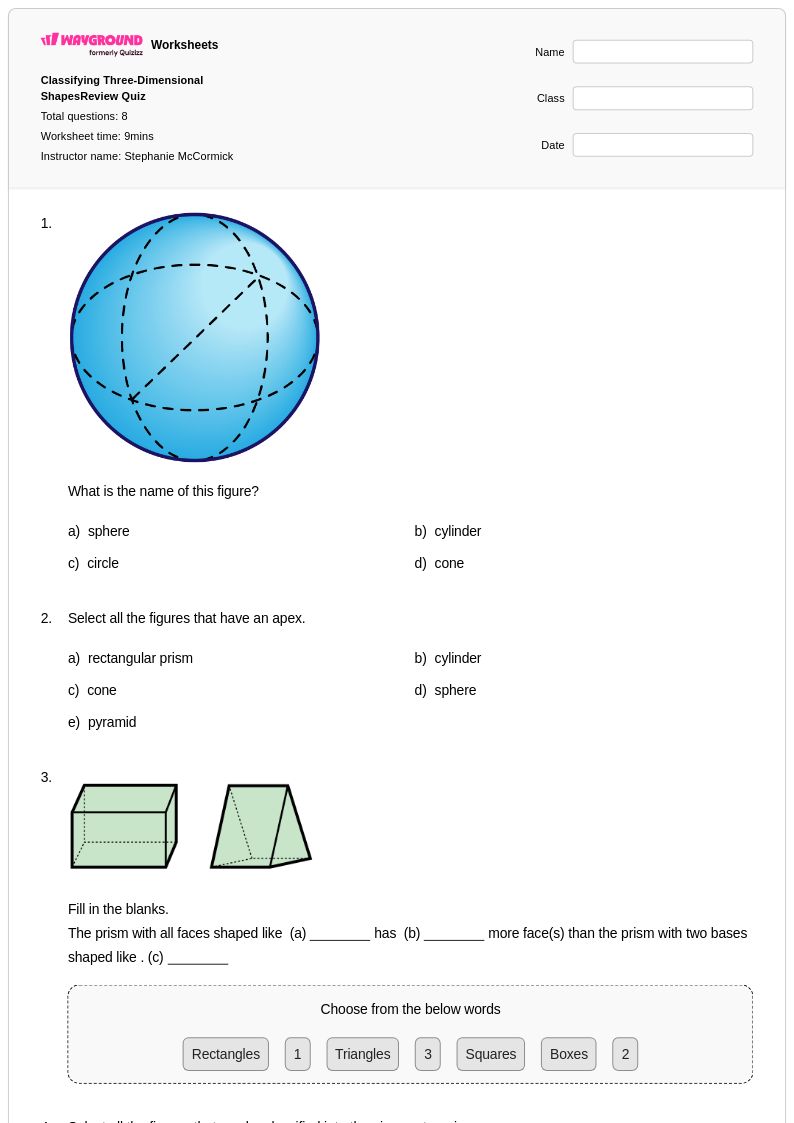
8 P
5th
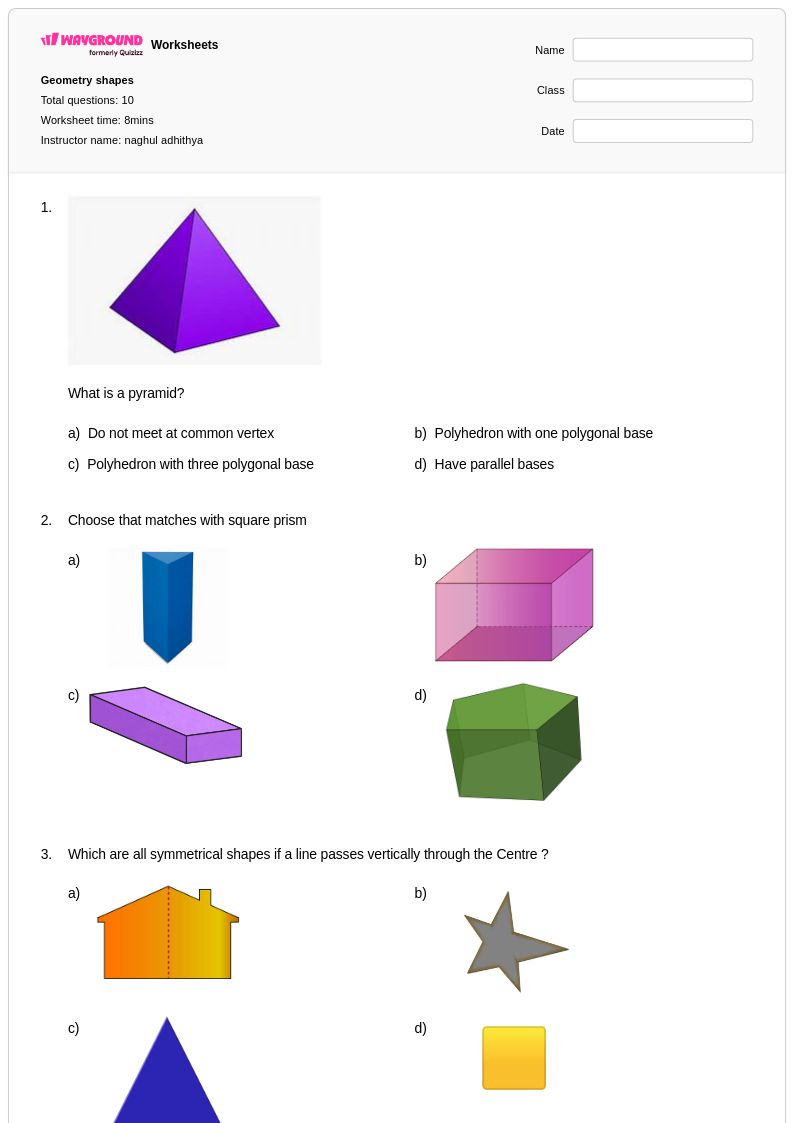
10 P
5th
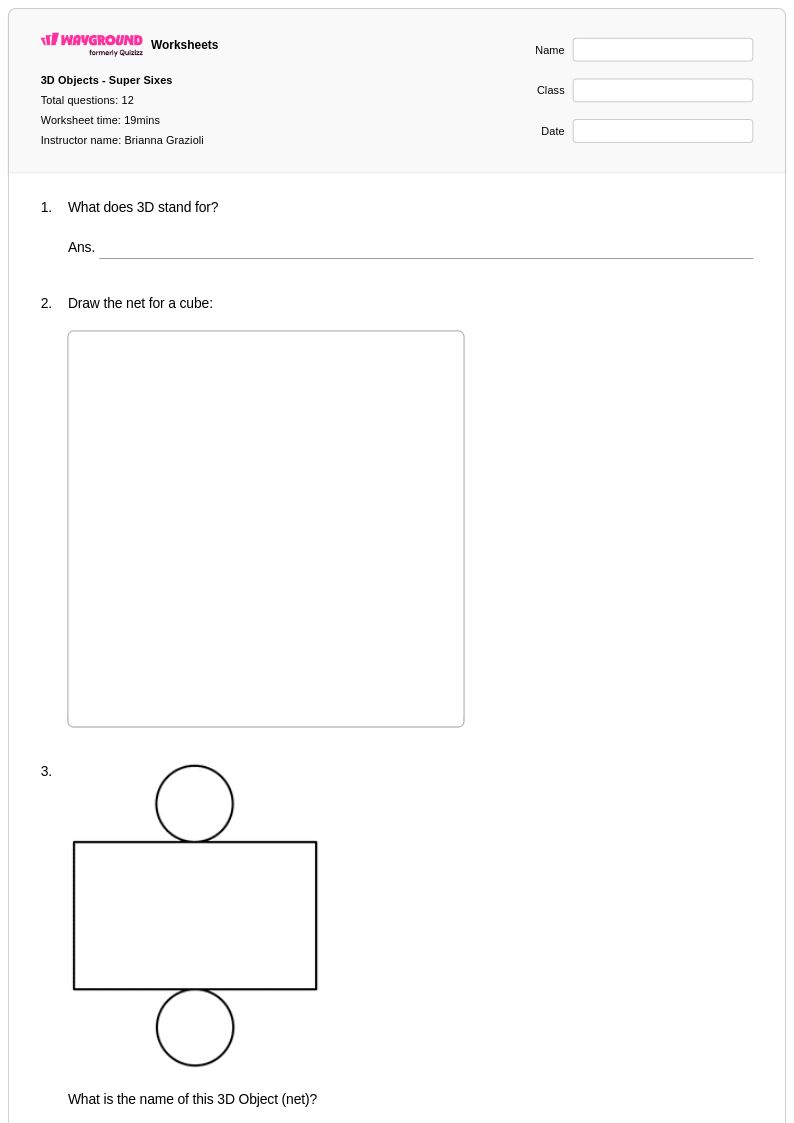
12 P
5th
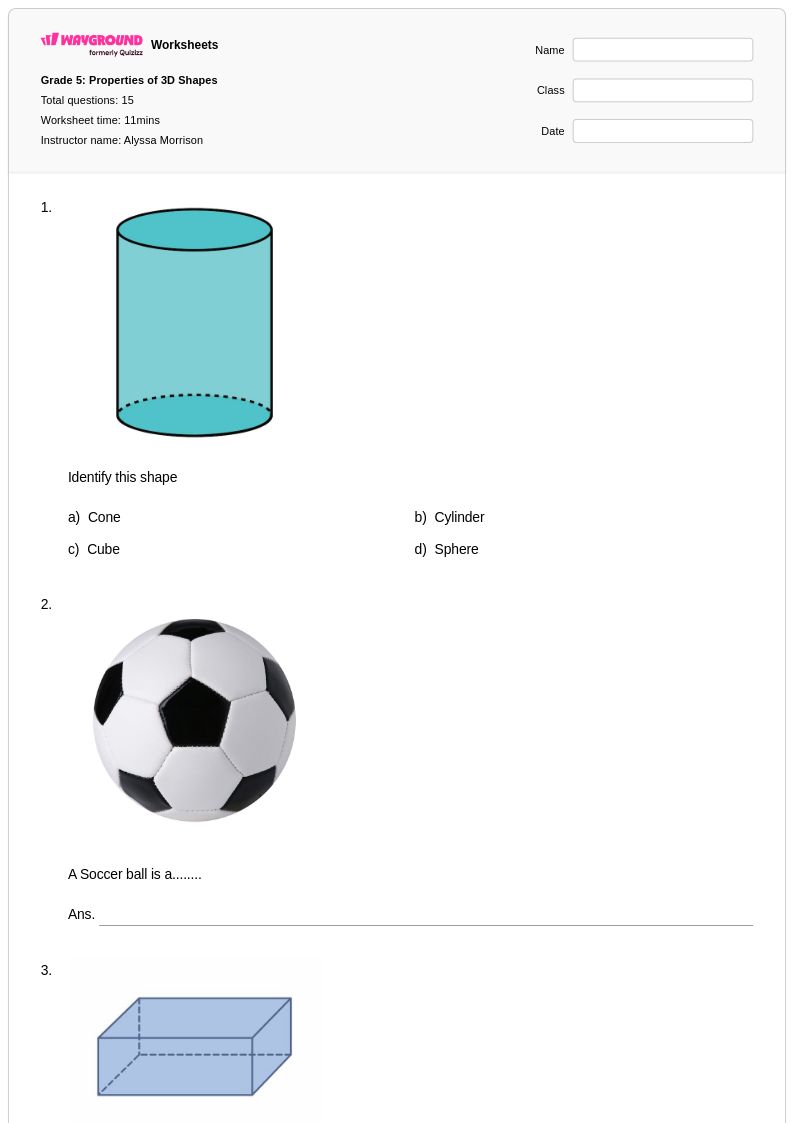
15 P
5th
10 P
5th - 6th
10 P
5th
15 P
5th - Uni
9 P
5th
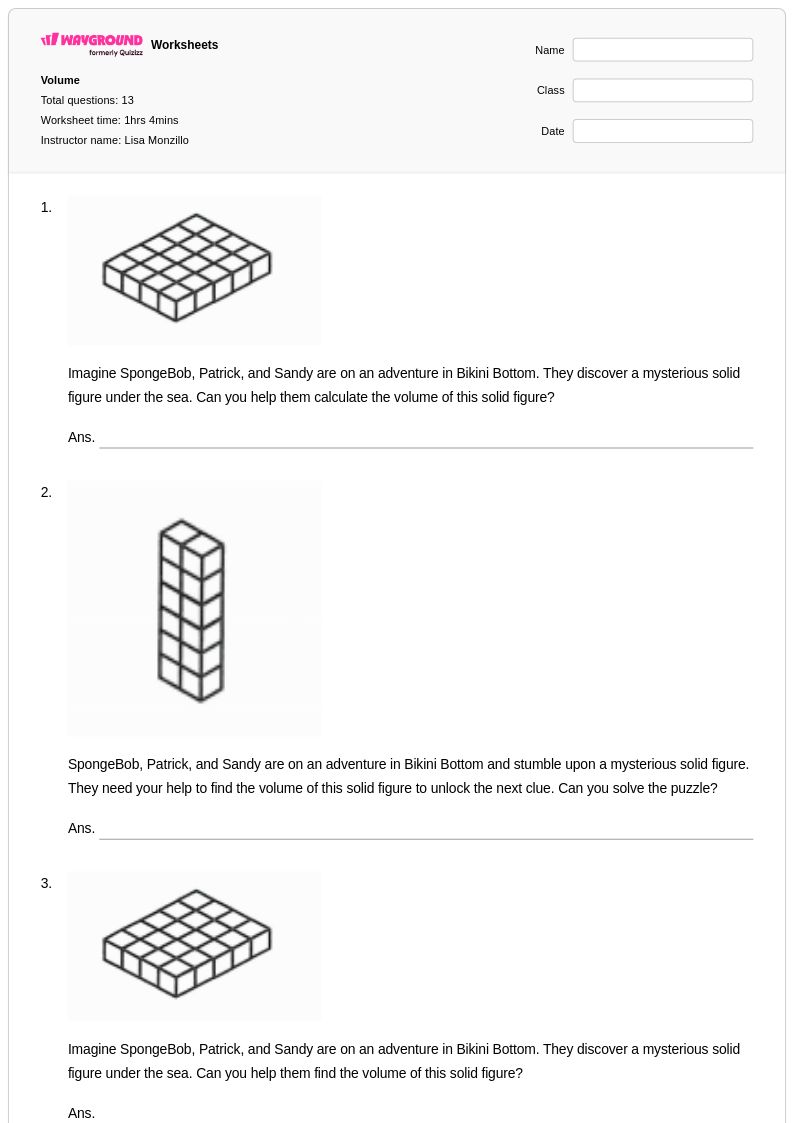
18 P
5th
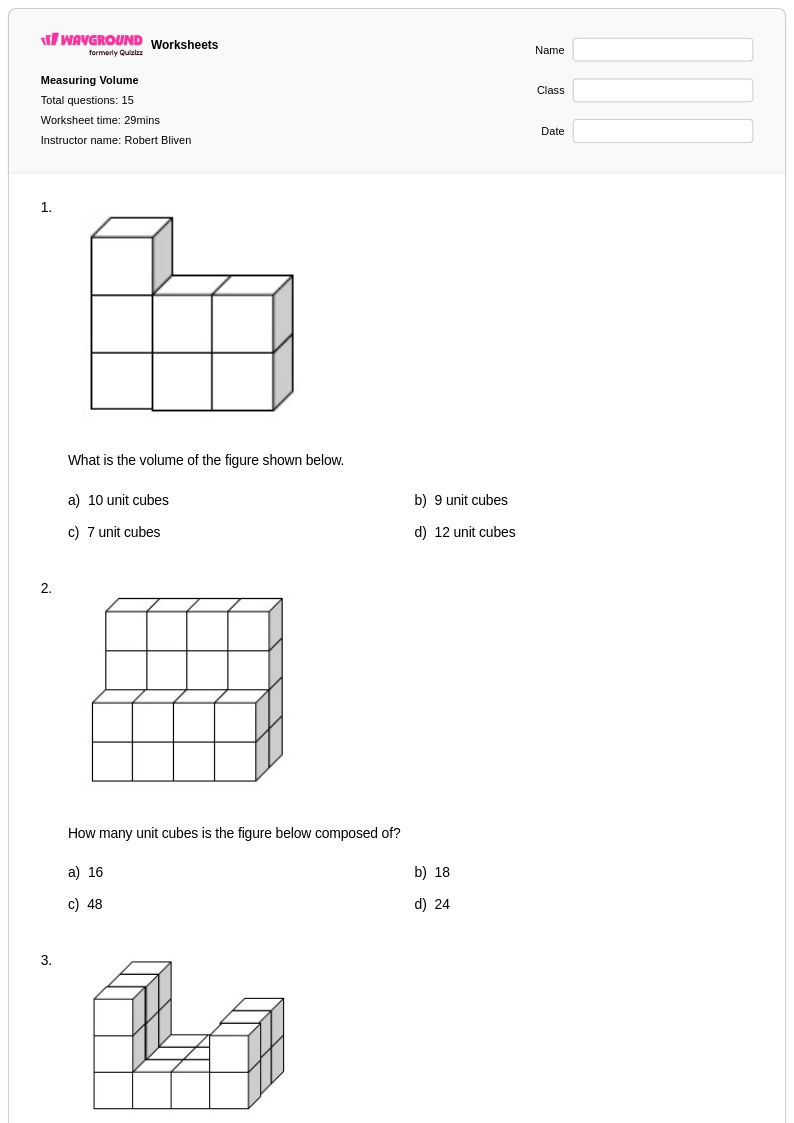
15 P
5th
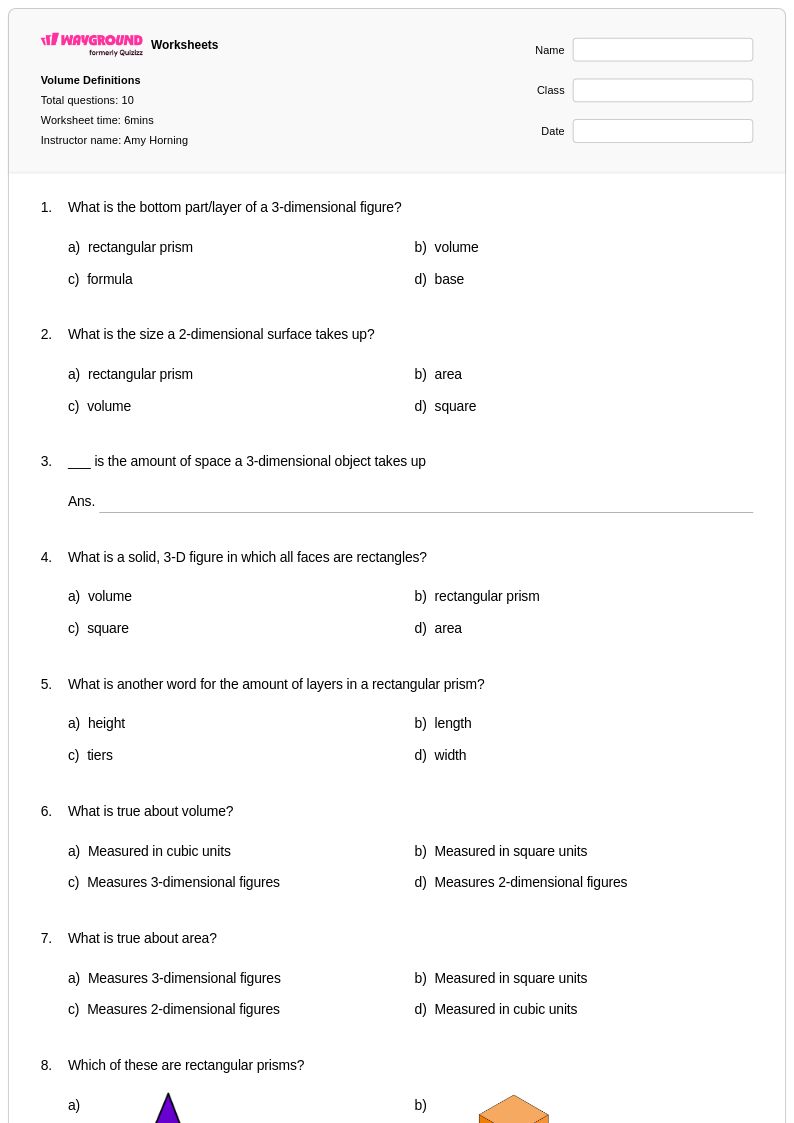
10 P
5th
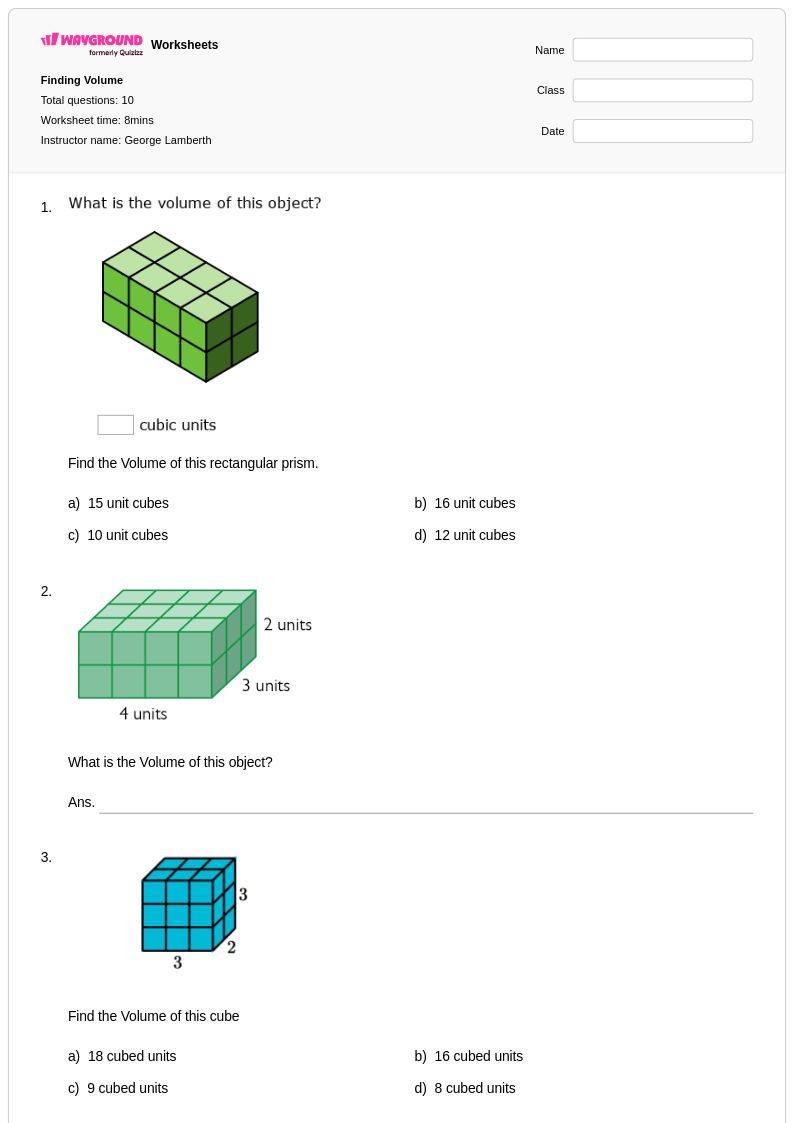
10 P
5th
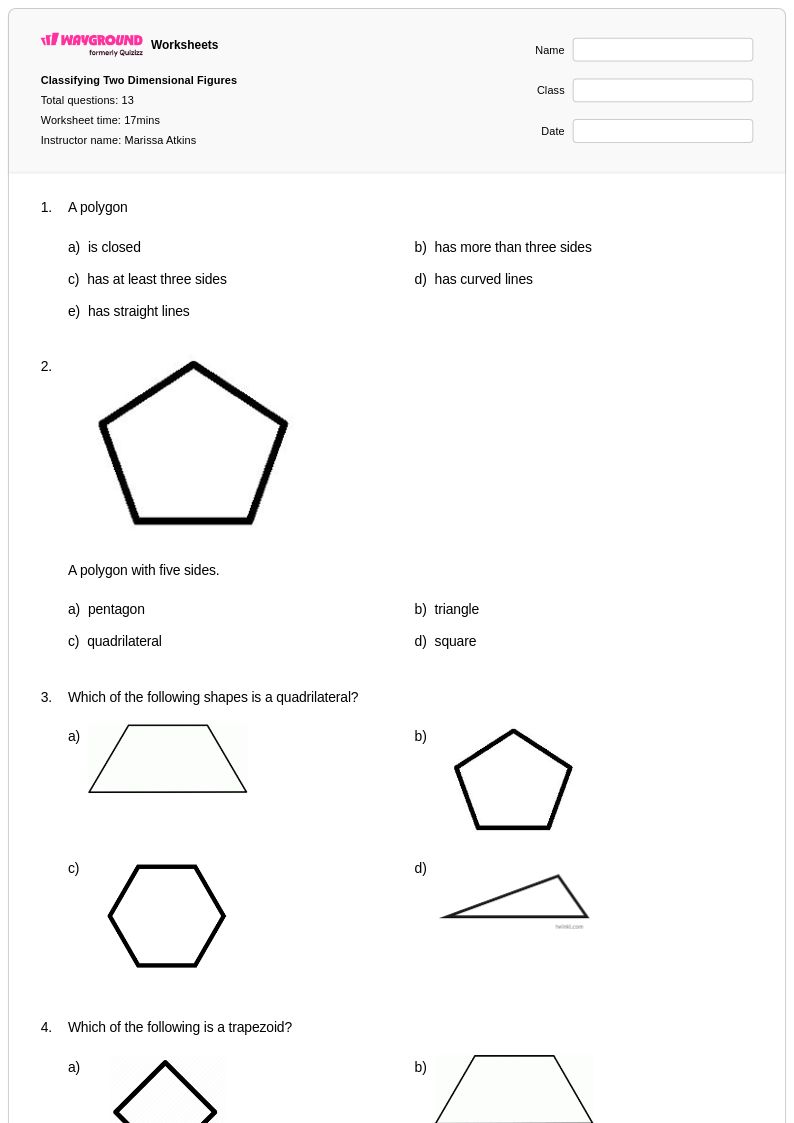
13 P
5th
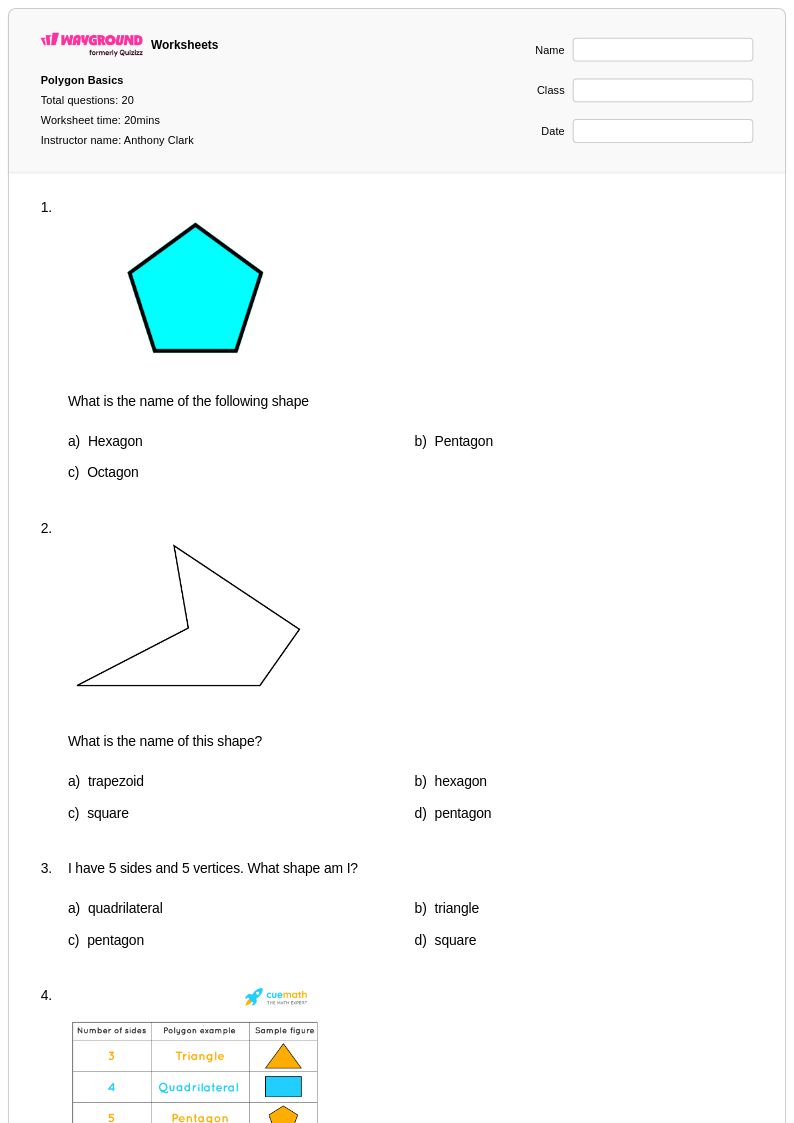
20 P
3rd - Uni
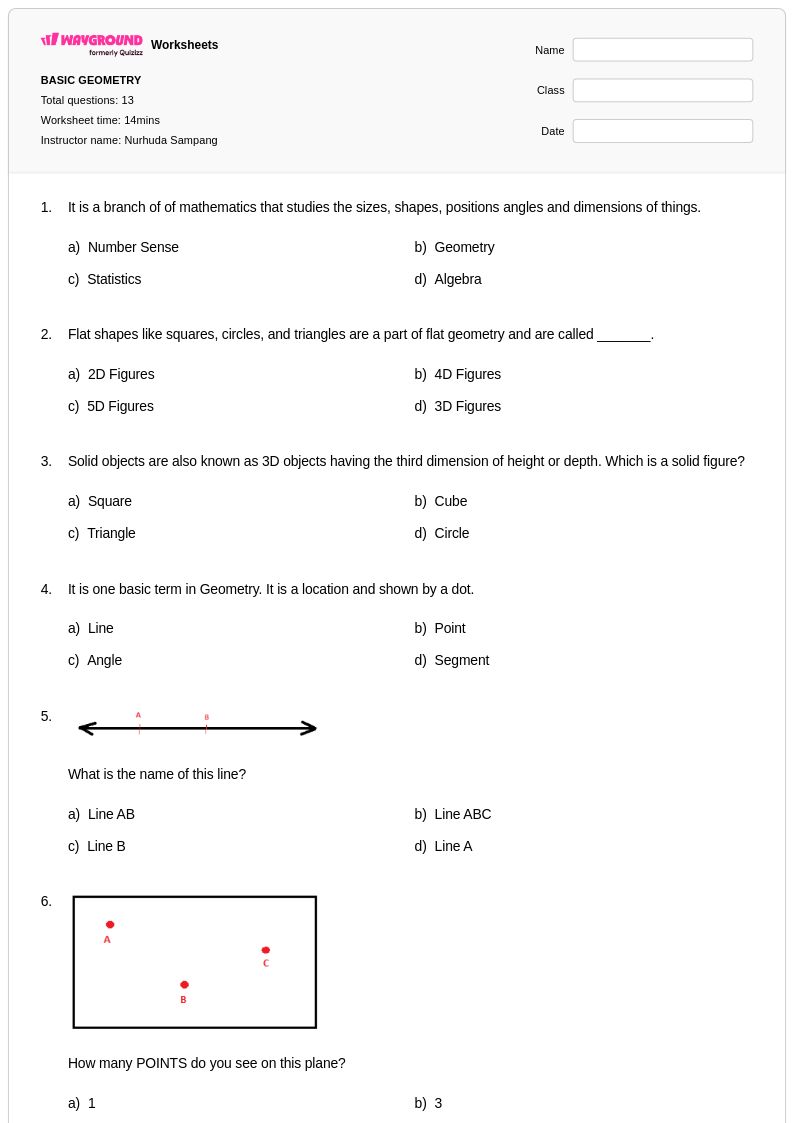
13 P
4th - 6th
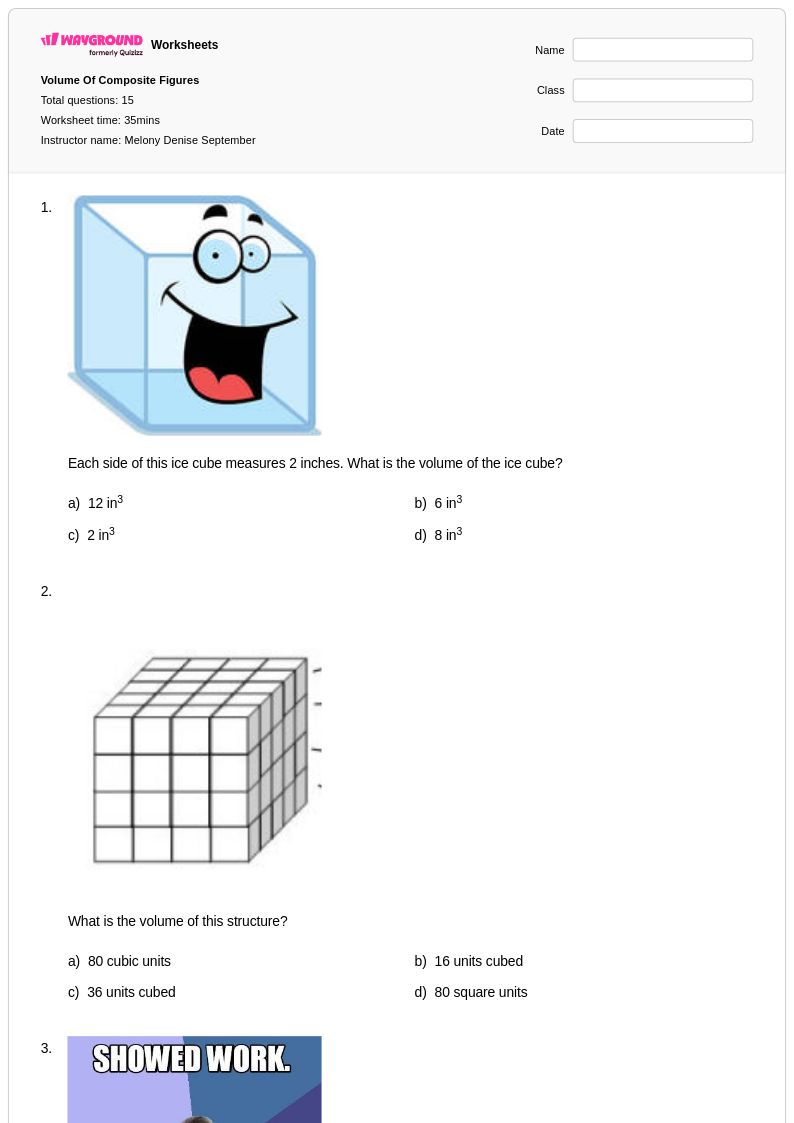
15 P
5th
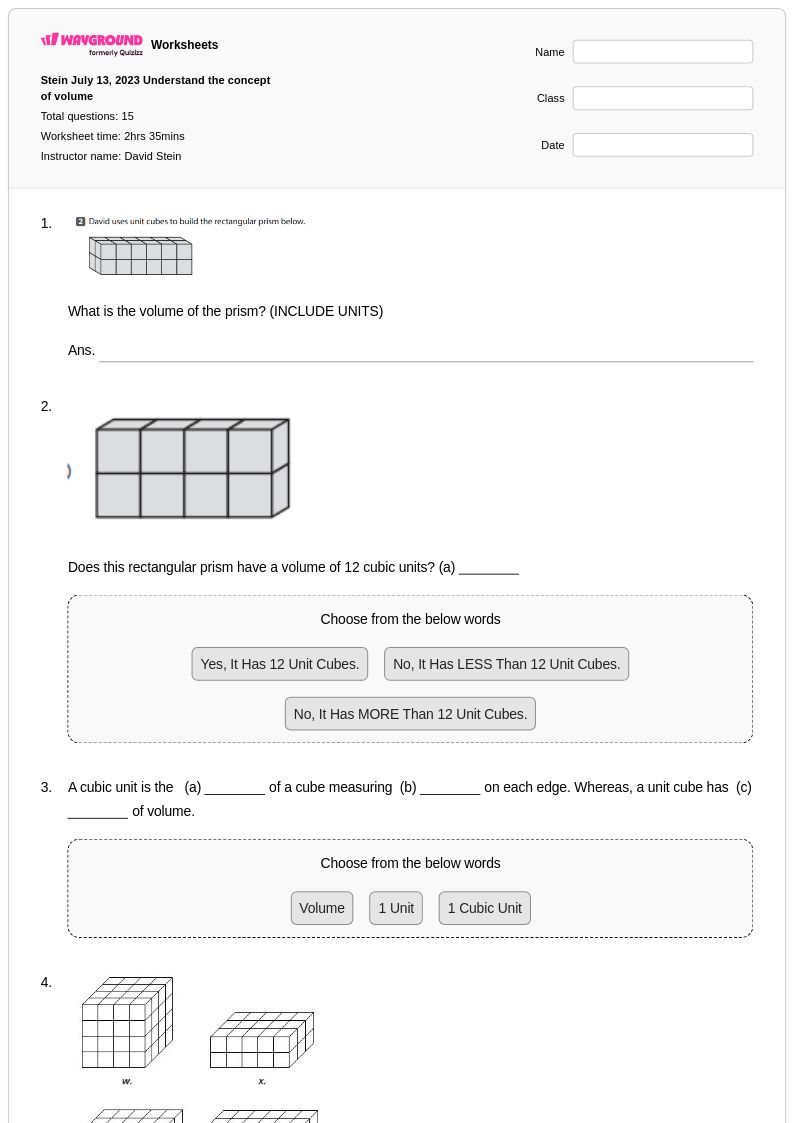
15 P
5th
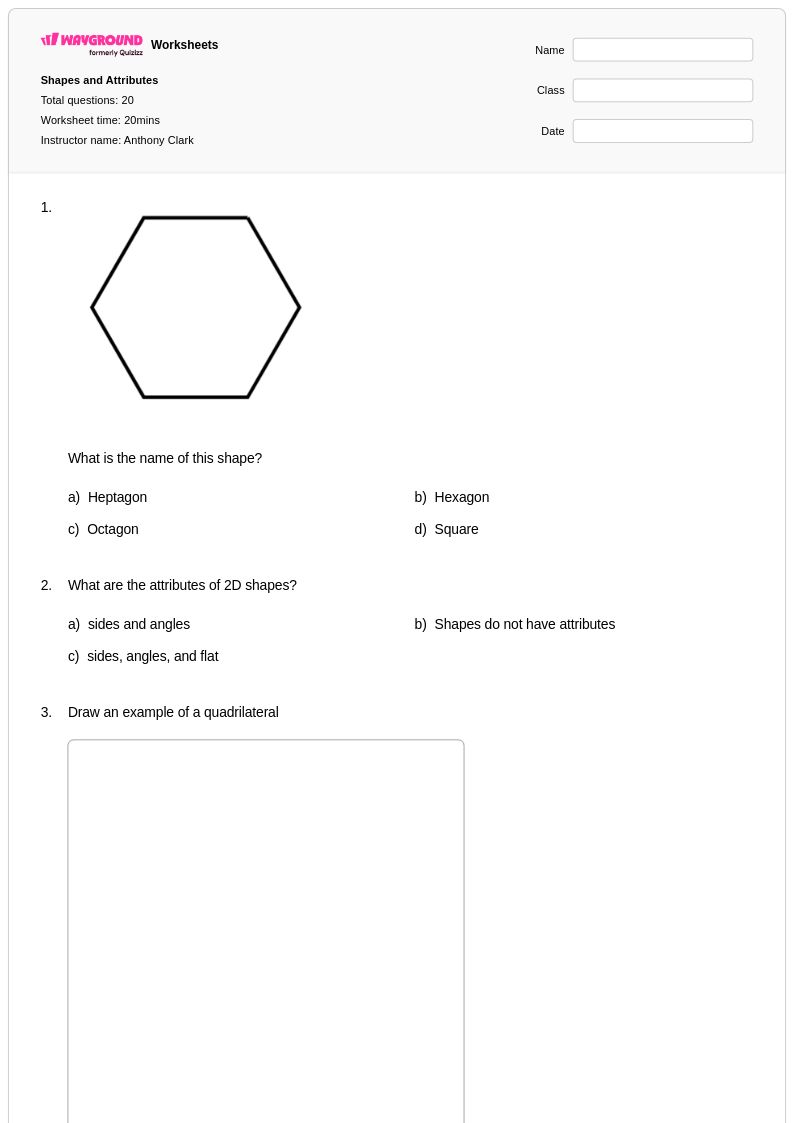
20 P
3rd - Uni
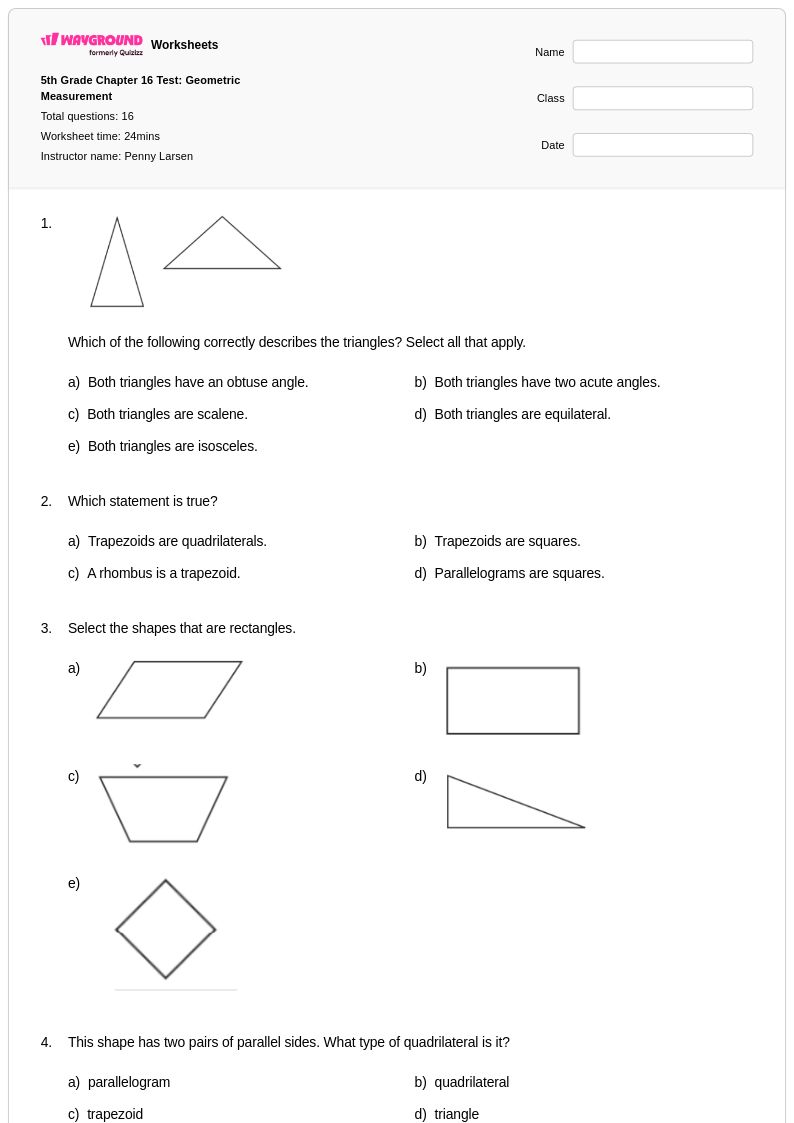
16 P
5th
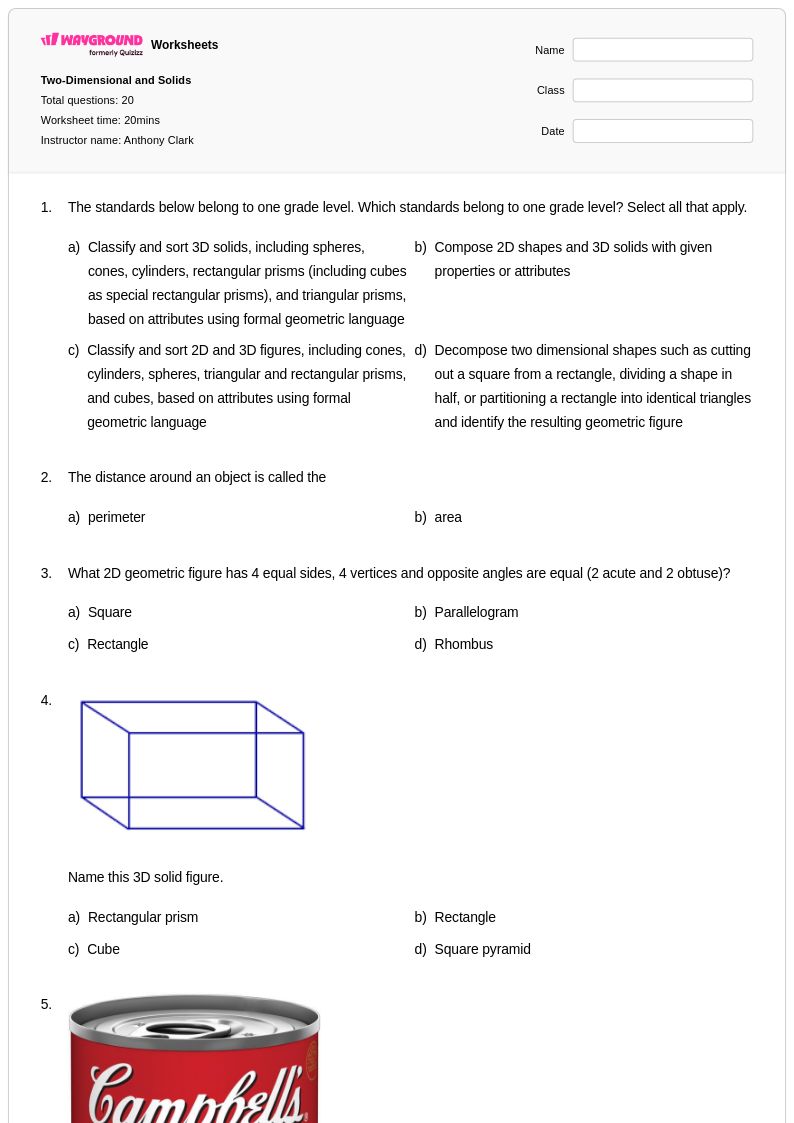
20 P
3rd - Uni
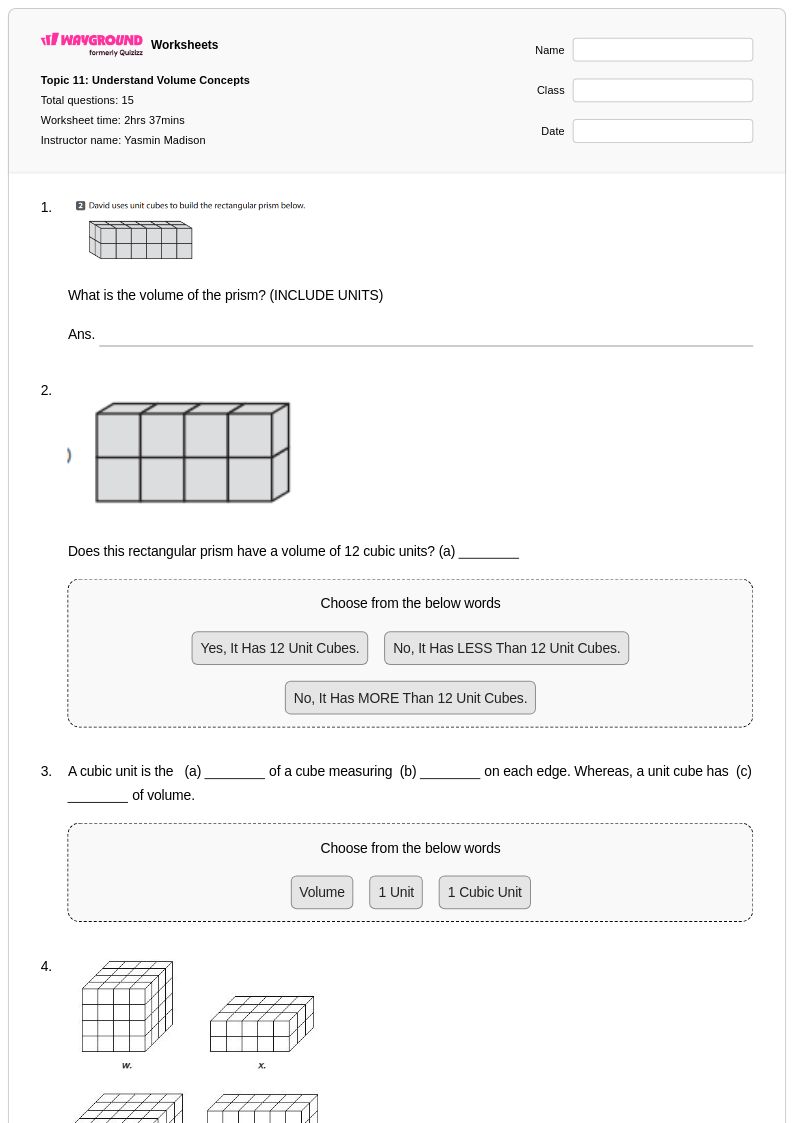
15 P
5th
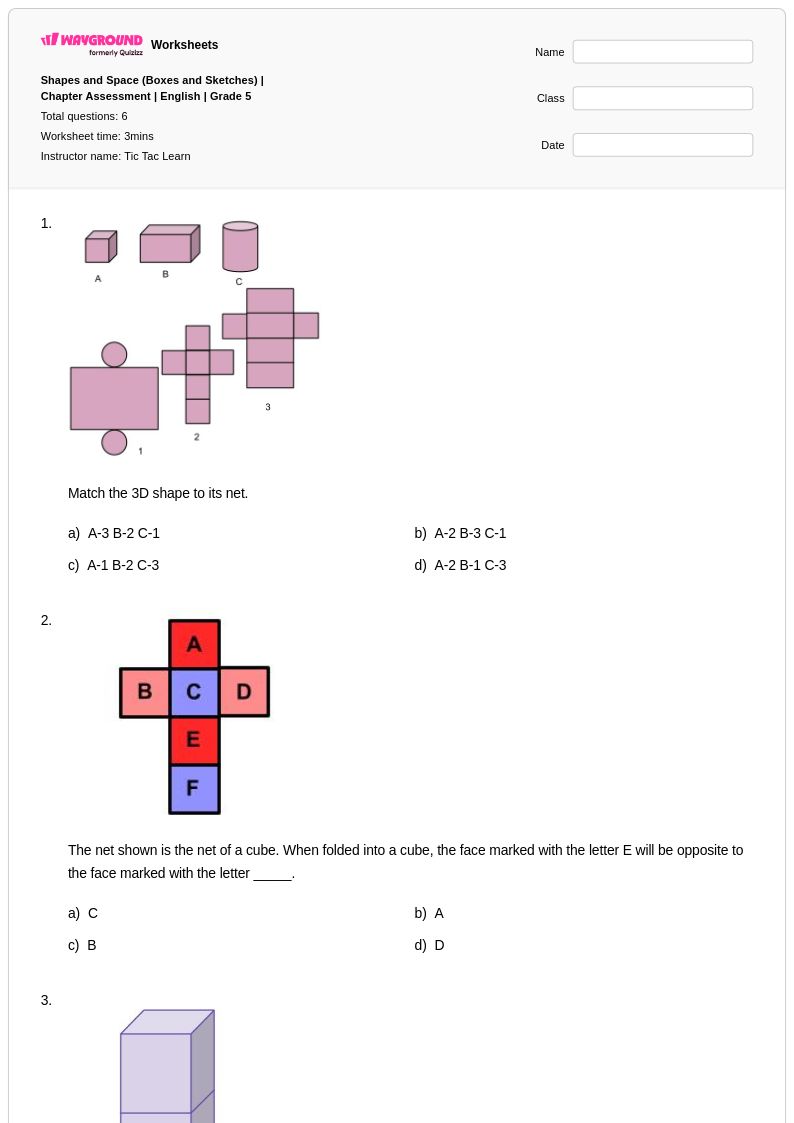
6 P
5th
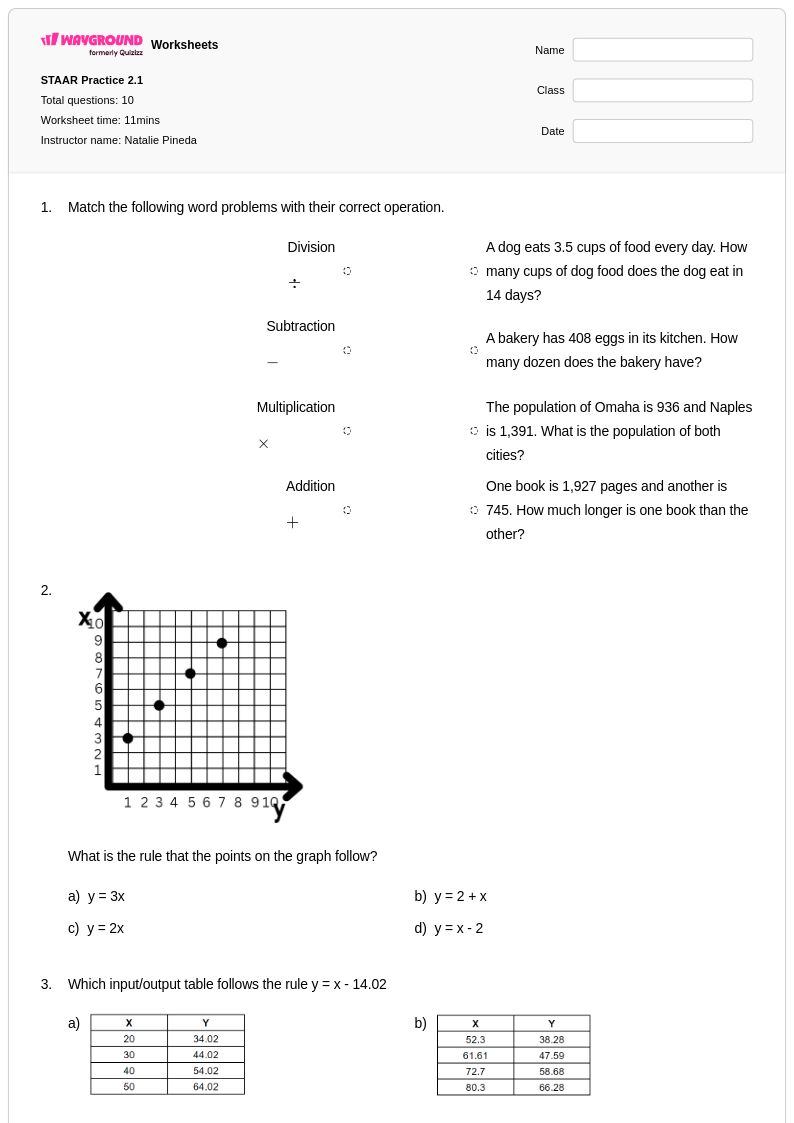
10 P
5th
Przeglądaj Nets of 3d Figures arkusze ćwiczeń według ocen
Przeglądaj inne arkusze tematyczne dla year 5
Explore printable Nets of 3d Figures worksheets for Year 5
Nets of 3D figures worksheets for Year 5 students through Wayground (formerly Quizizz) provide essential practice in visualizing and understanding how three-dimensional shapes unfold into two-dimensional patterns. These comprehensive worksheets strengthen spatial reasoning skills by challenging students to identify which nets can fold into specific 3D shapes like cubes, rectangular prisms, triangular prisms, and pyramids. Students develop critical geometric thinking as they analyze different net configurations, determine whether a given net will create a particular solid figure, and practice drawing their own nets for various three-dimensional objects. Each worksheet collection includes detailed answer keys and is available as free printables in PDF format, making them accessible resources for consistent practice with these fundamental geometry concepts that bridge two-dimensional and three-dimensional mathematical understanding.
Wayground (formerly Quizizz) empowers educators with millions of teacher-created worksheet resources specifically designed for nets of 3D figures instruction, featuring robust search and filtering capabilities that allow teachers to quickly locate materials aligned with Year 5 geometry standards. The platform's differentiation tools enable educators to customize worksheets for varying skill levels within their classrooms, while flexible formatting options provide both printable PDF versions for traditional classroom use and digital formats for interactive learning environments. These comprehensive collections support strategic lesson planning by offering graduated difficulty levels that move from basic net identification to more complex spatial visualization challenges, making them invaluable for initial skill introduction, targeted remediation for struggling learners, and enrichment opportunities for students ready to explore advanced geometric relationships between 2D patterns and 3D forms.
FAQs
How do I teach nets of 3D figures to fifth graders?
What exercises help Grade 5 students practice nets of 3D figures?
What mistakes do fifth graders make when working with nets?
How can I use these Grade 5 nets of 3D figures worksheets?
How do nets of 3D figures fit into the Grade 5 math curriculum?
How can I differentiate nets-of-3D-figures worksheets for mixed-ability classes?
What grade level are these nets of 3D figures worksheets for?