
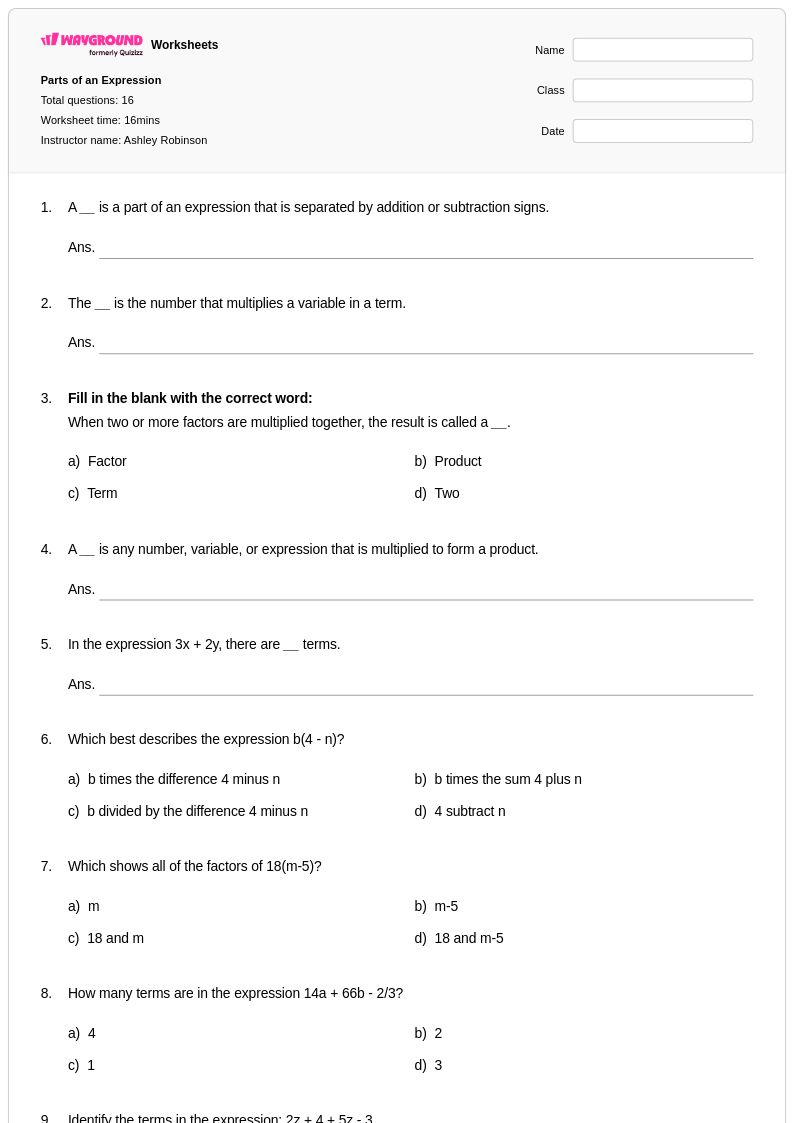
16 Q
6th
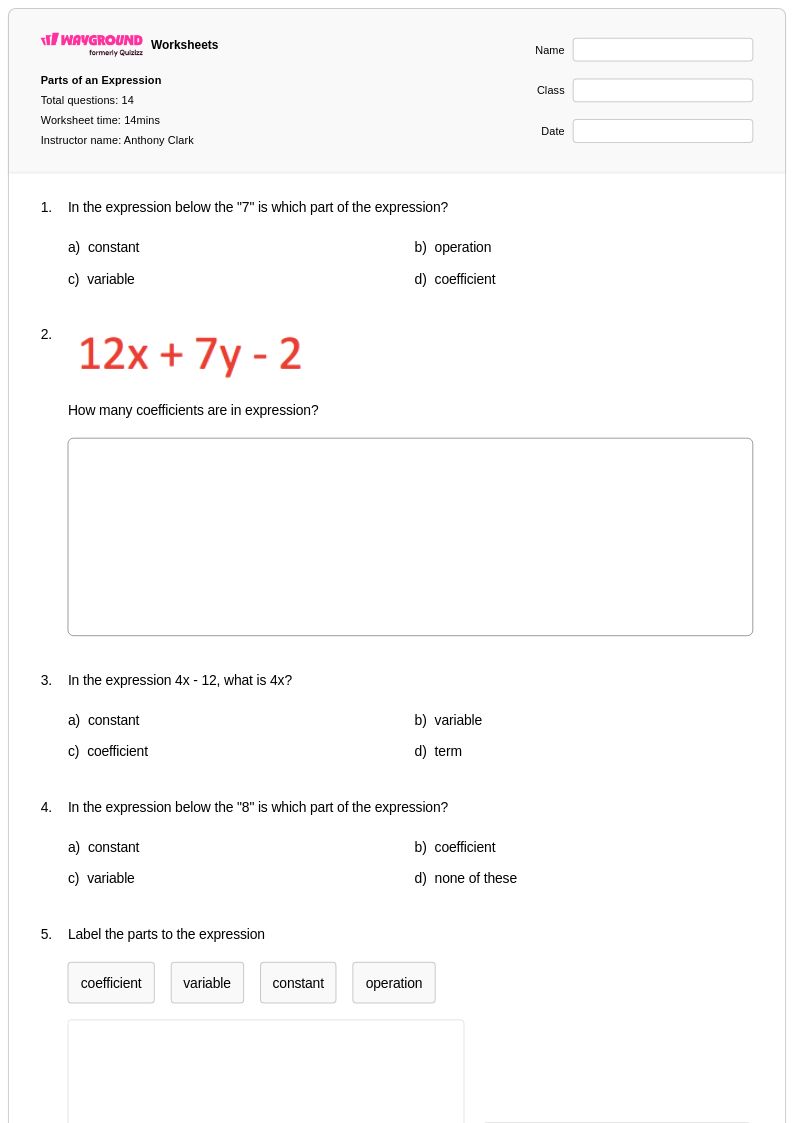
14 Q
6th - Uni
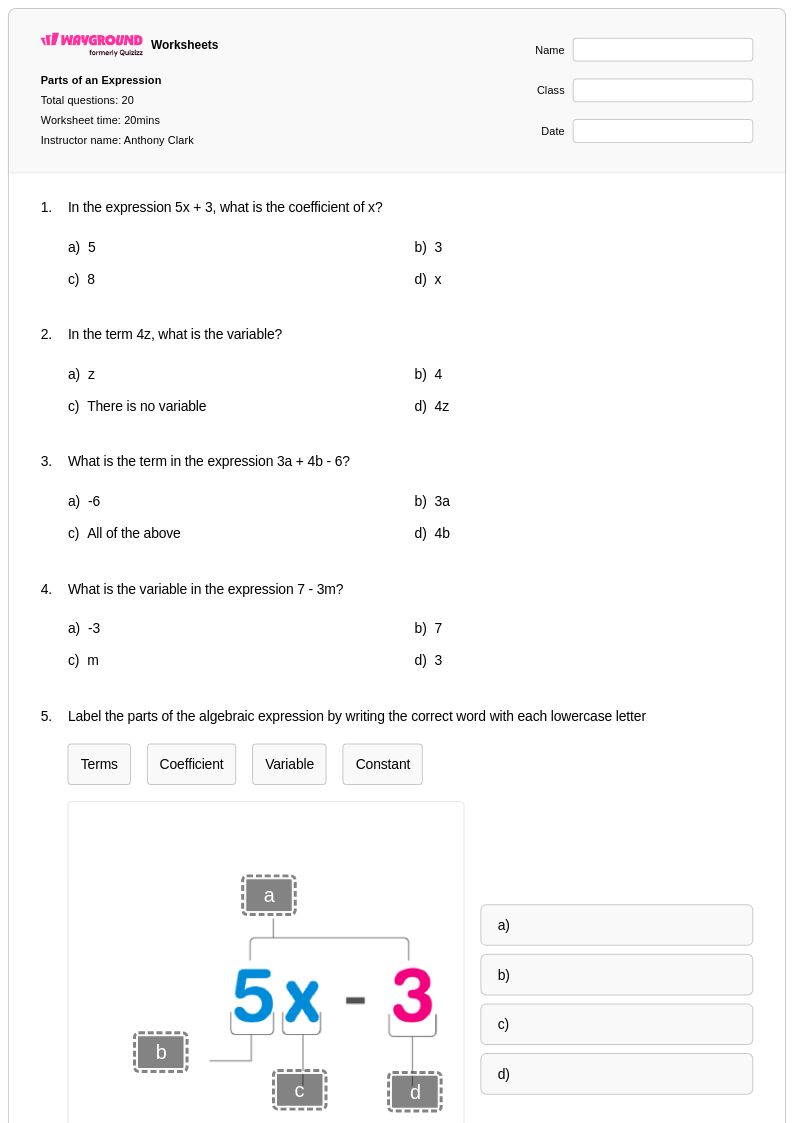
20 Q
6th - Uni
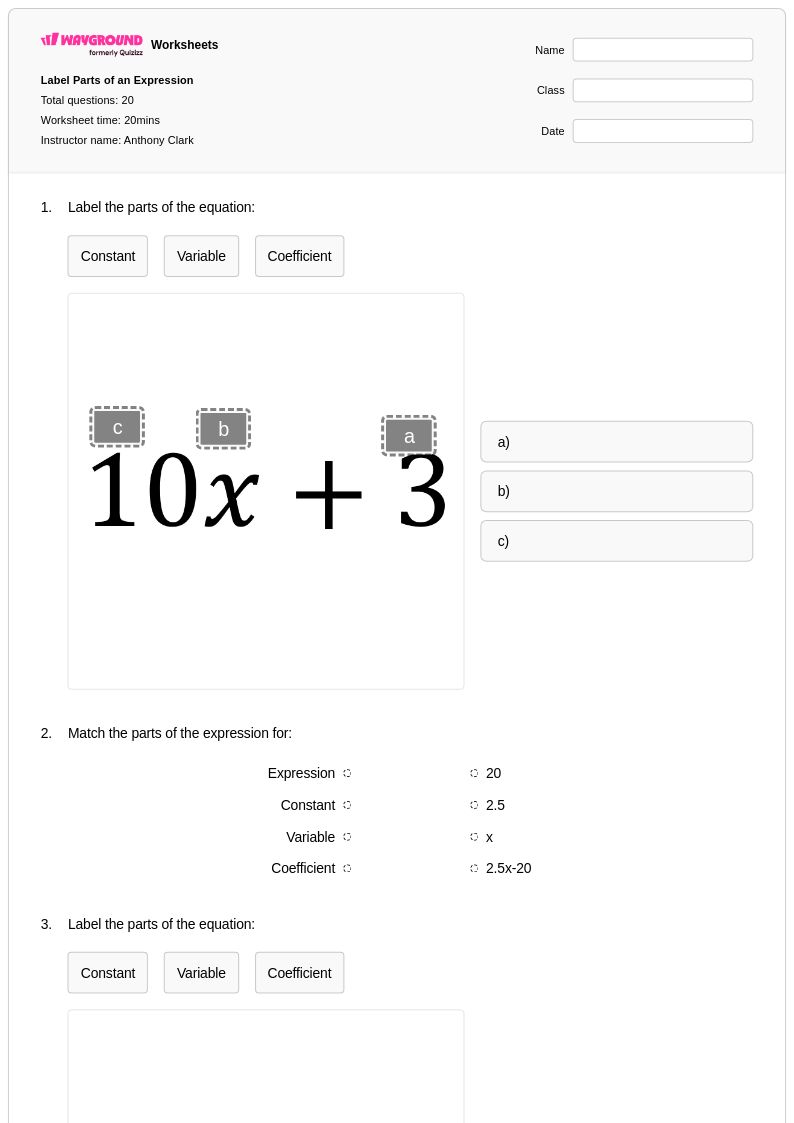
20 Q
6th - Uni
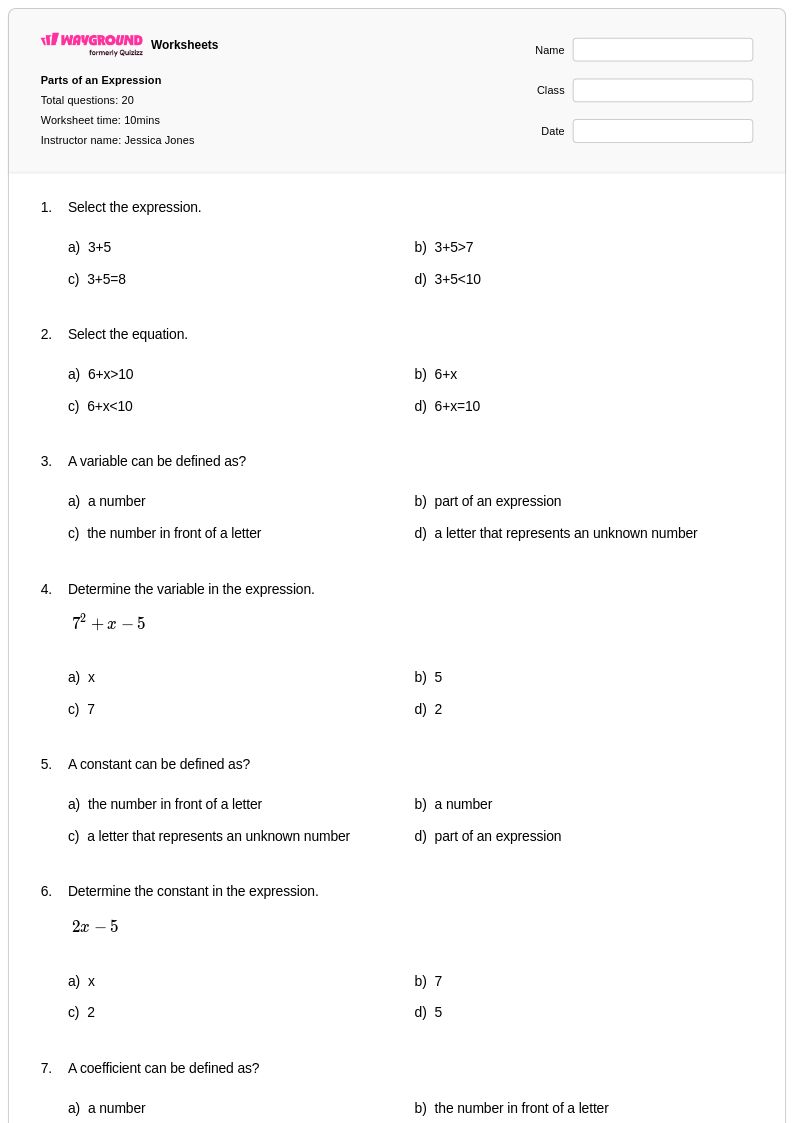
20 Q
6th
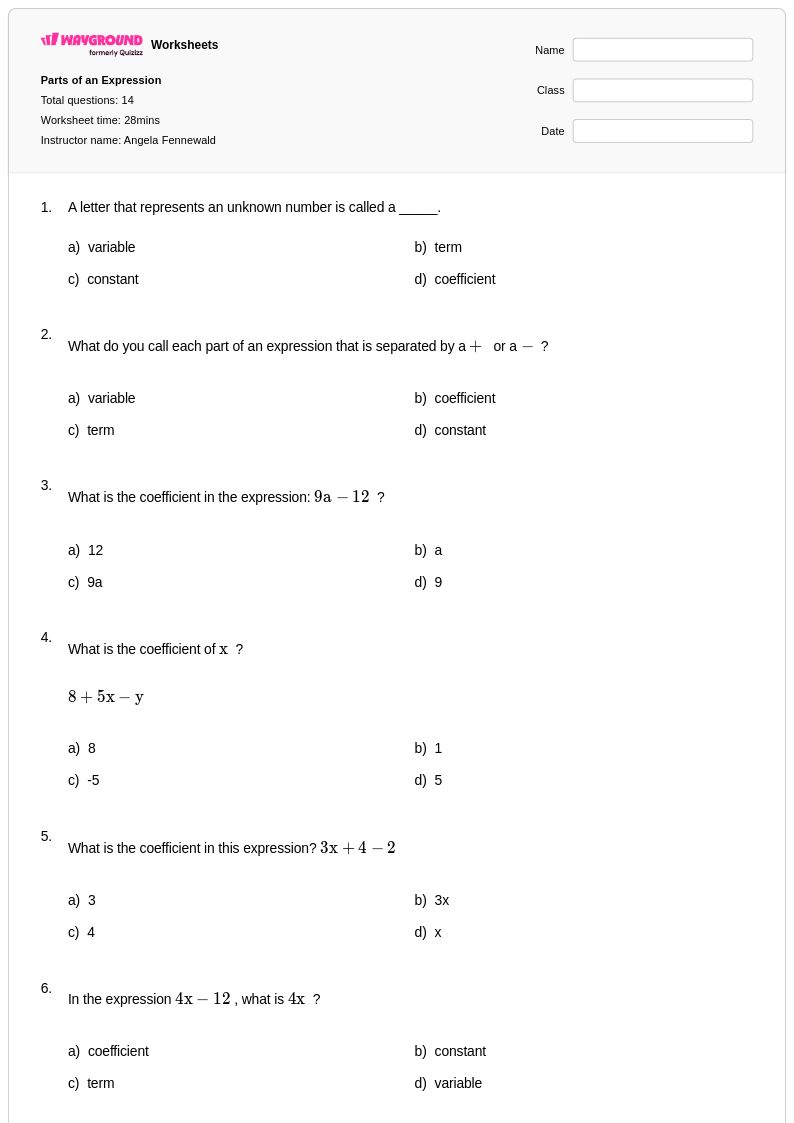
14 Q
6th
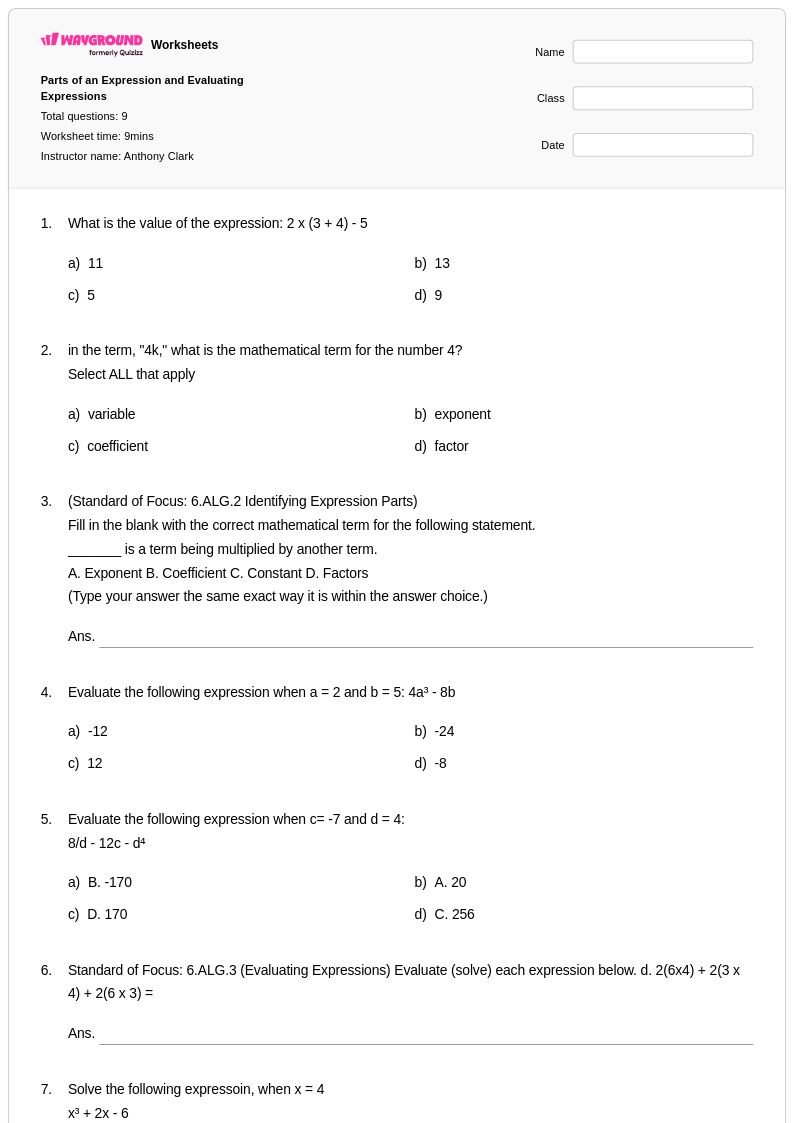
9 Q
6th - Uni
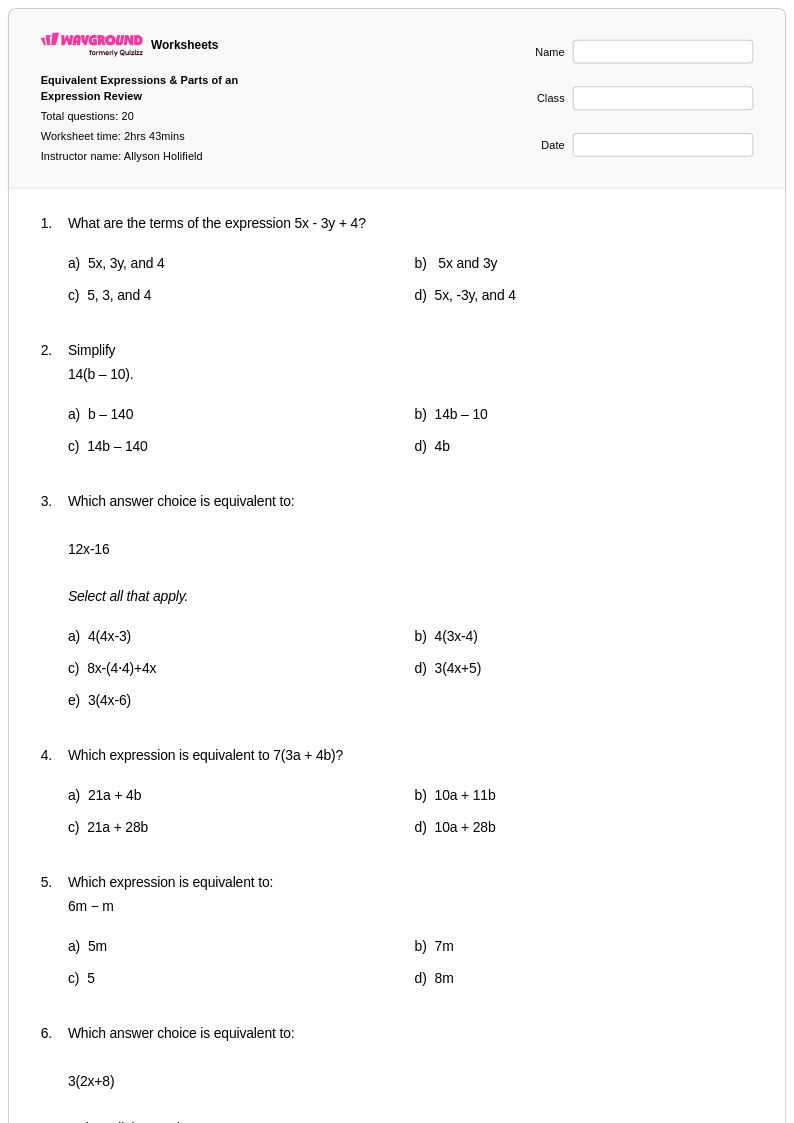
20 Q
6th
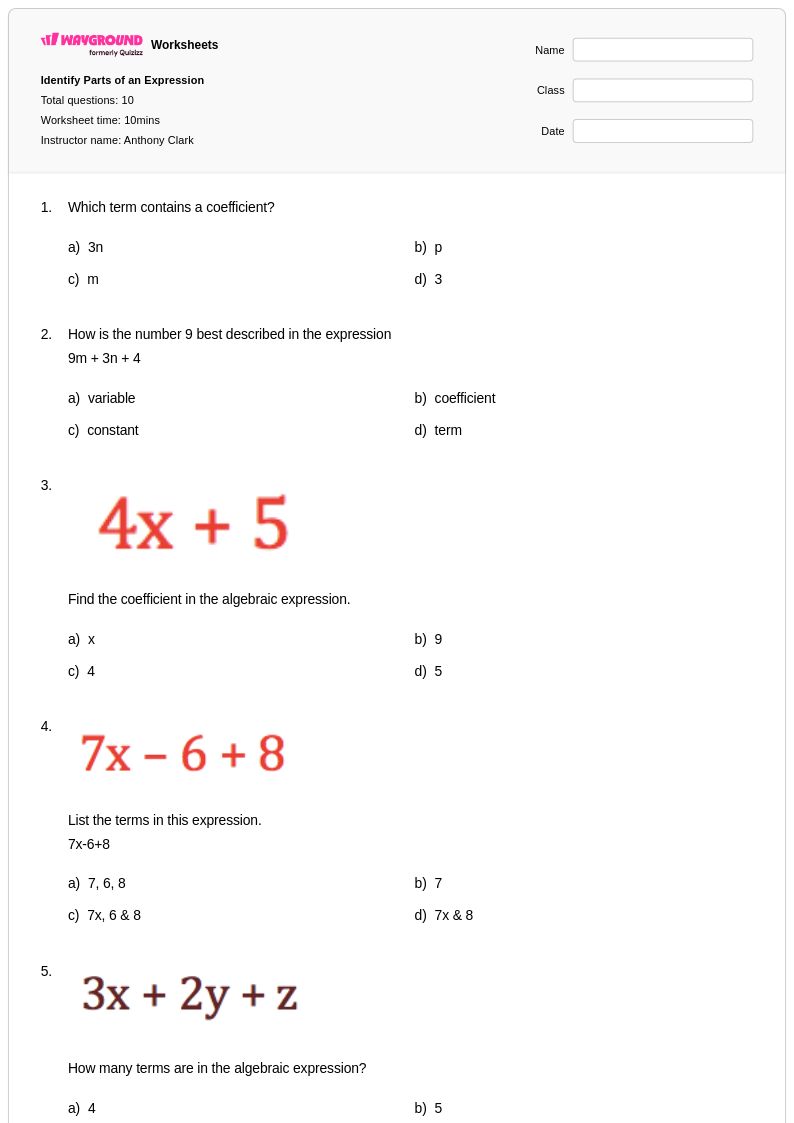
10 Q
6th - Uni
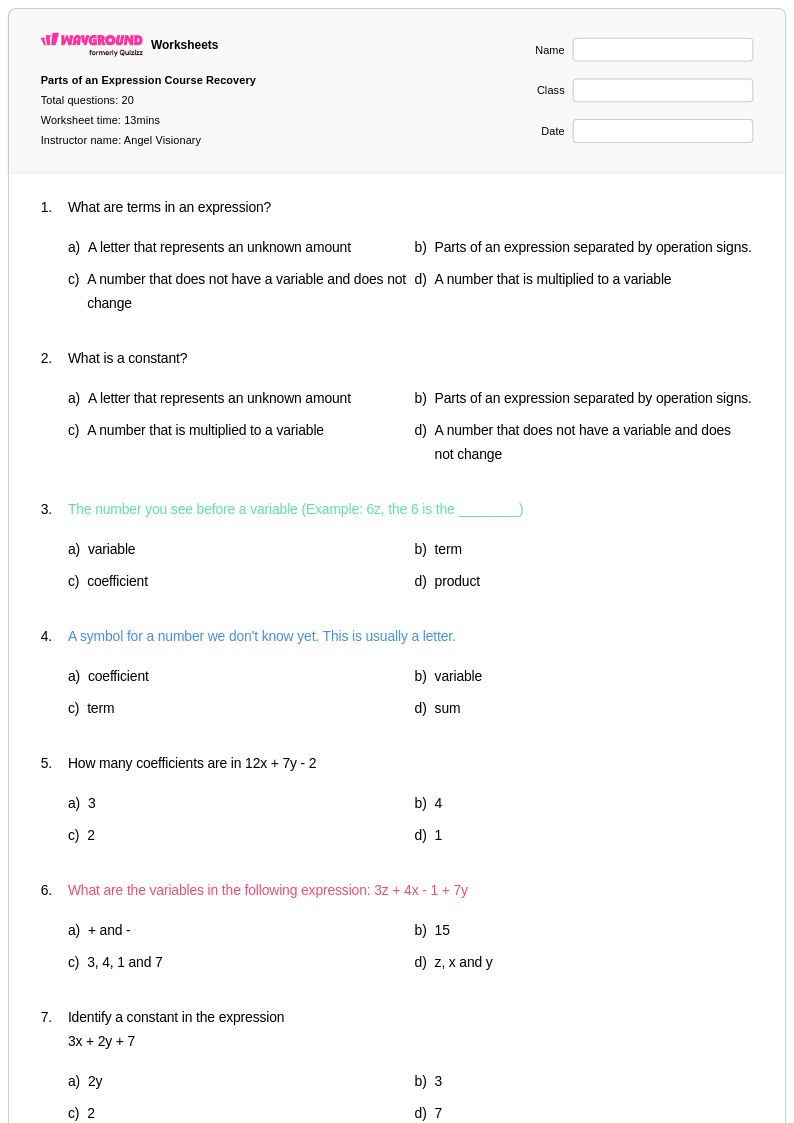
20 Q
6th
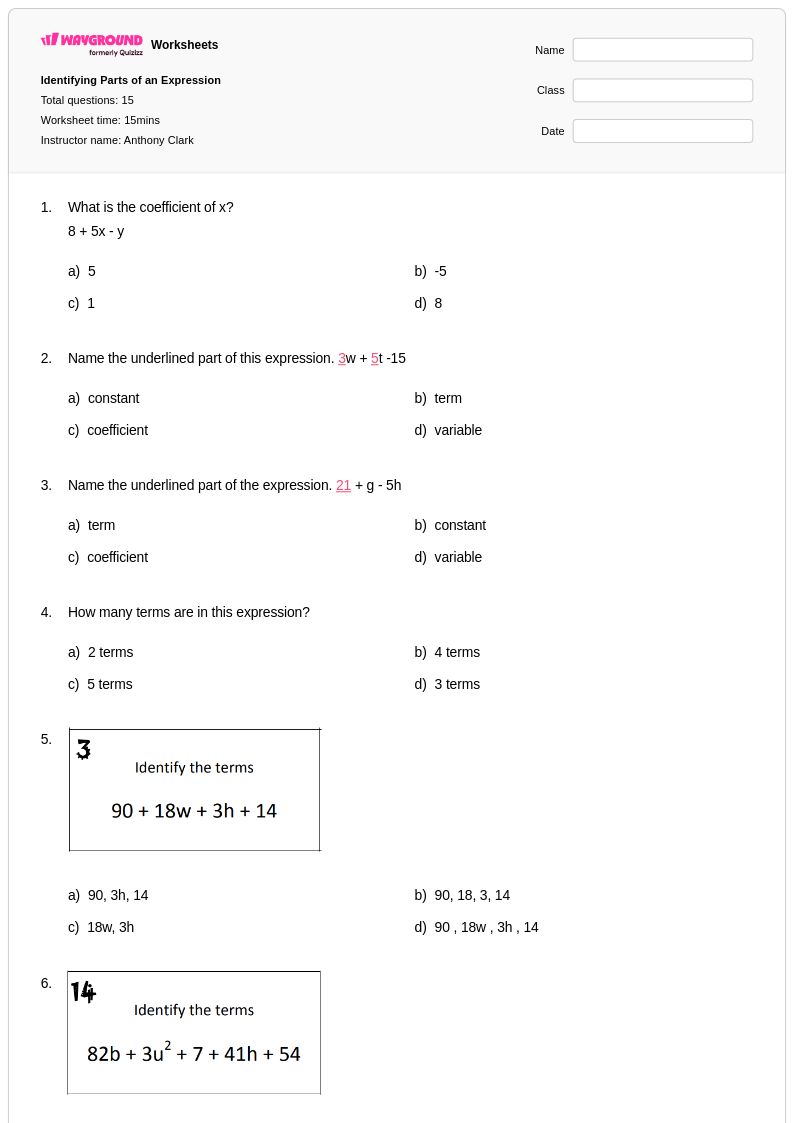
15 Q
6th - Uni
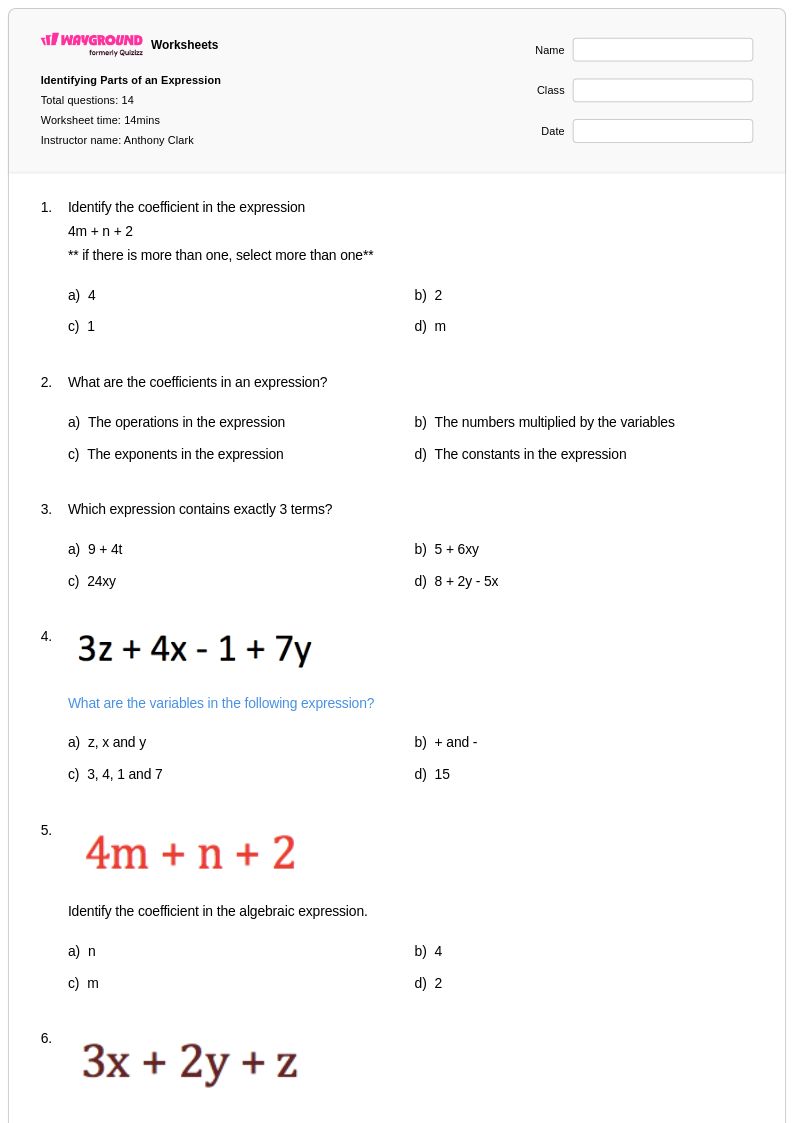
14 Q
6th - Uni
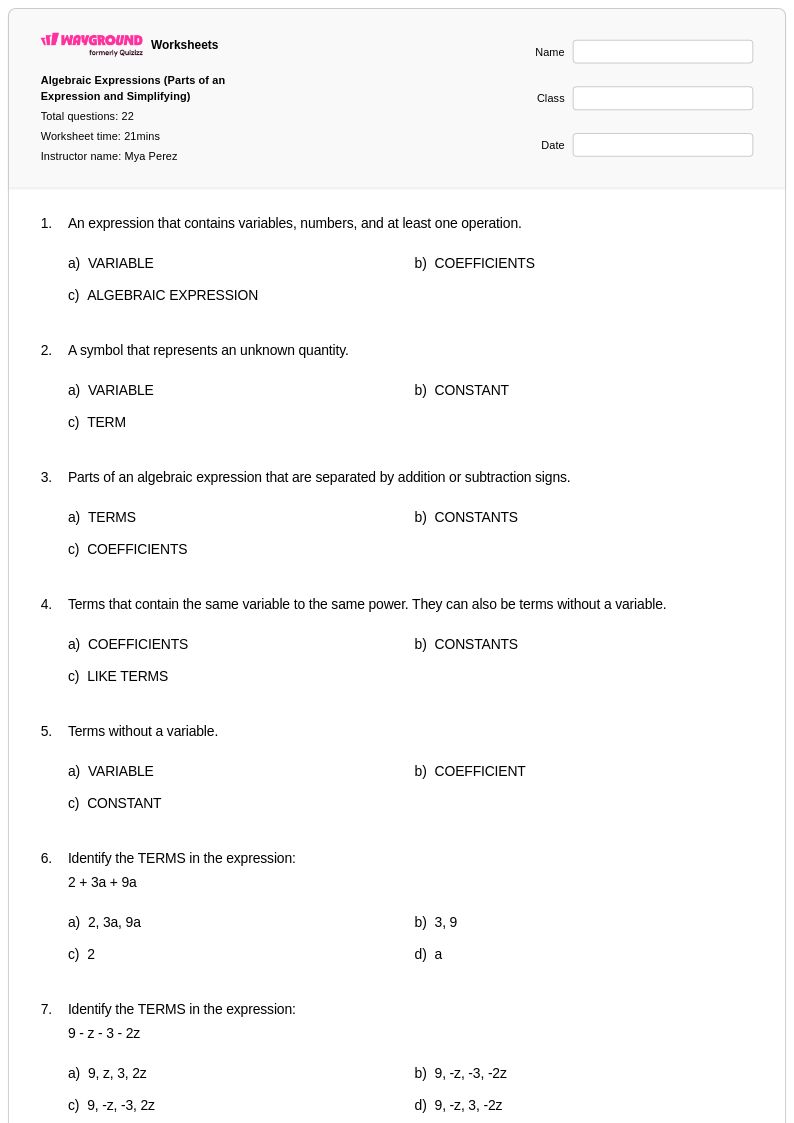
22 Q
6th - 8th
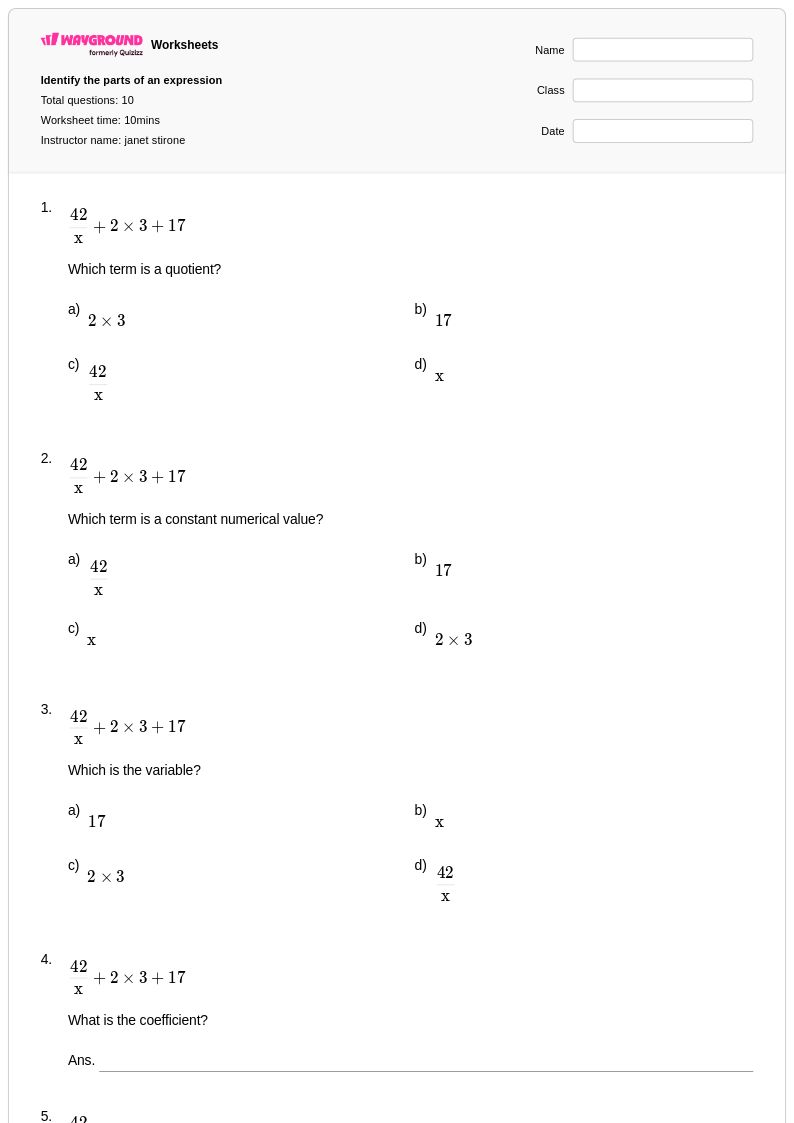
10 Q
6th
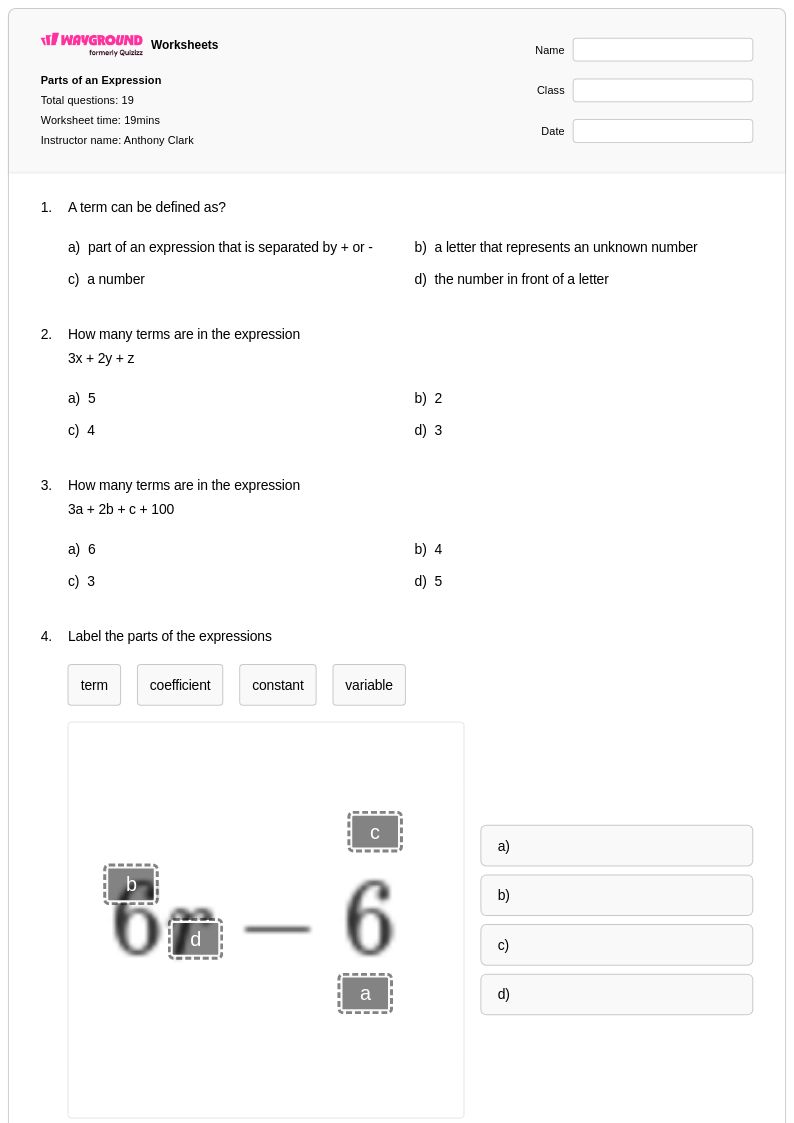
19 Q
6th - Uni
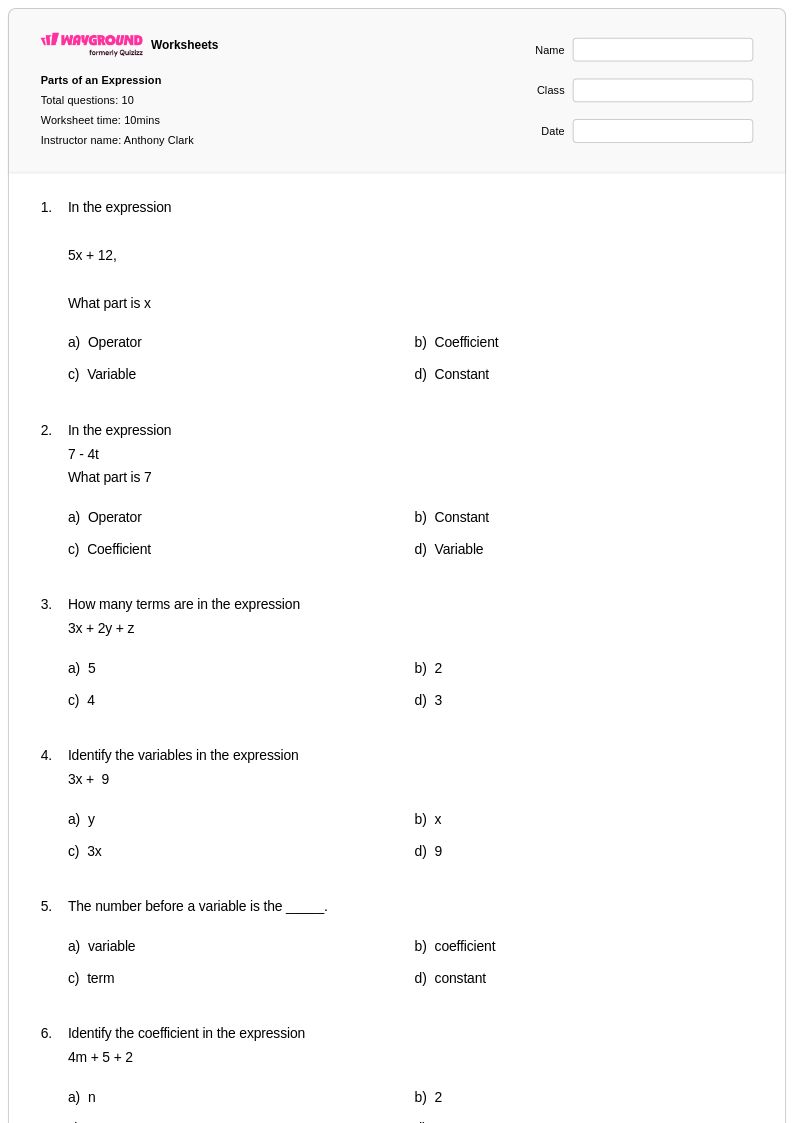
10 Q
6th - Uni
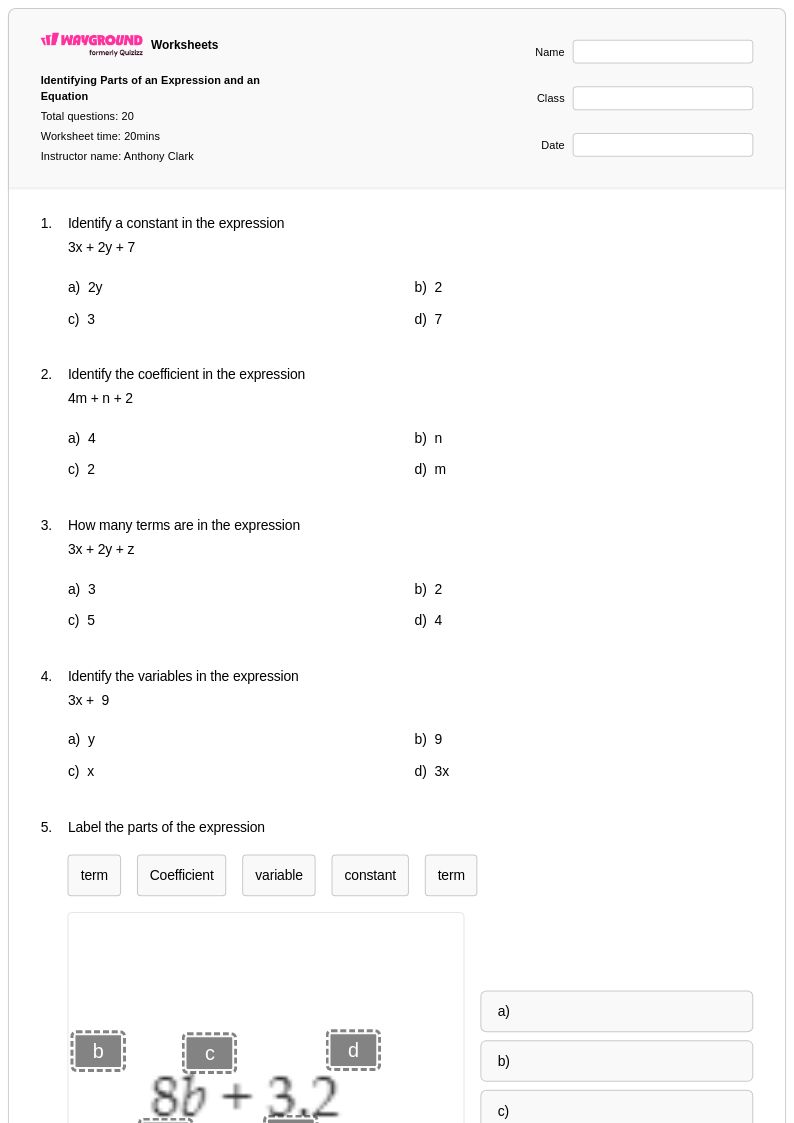
20 Q
6th - Uni
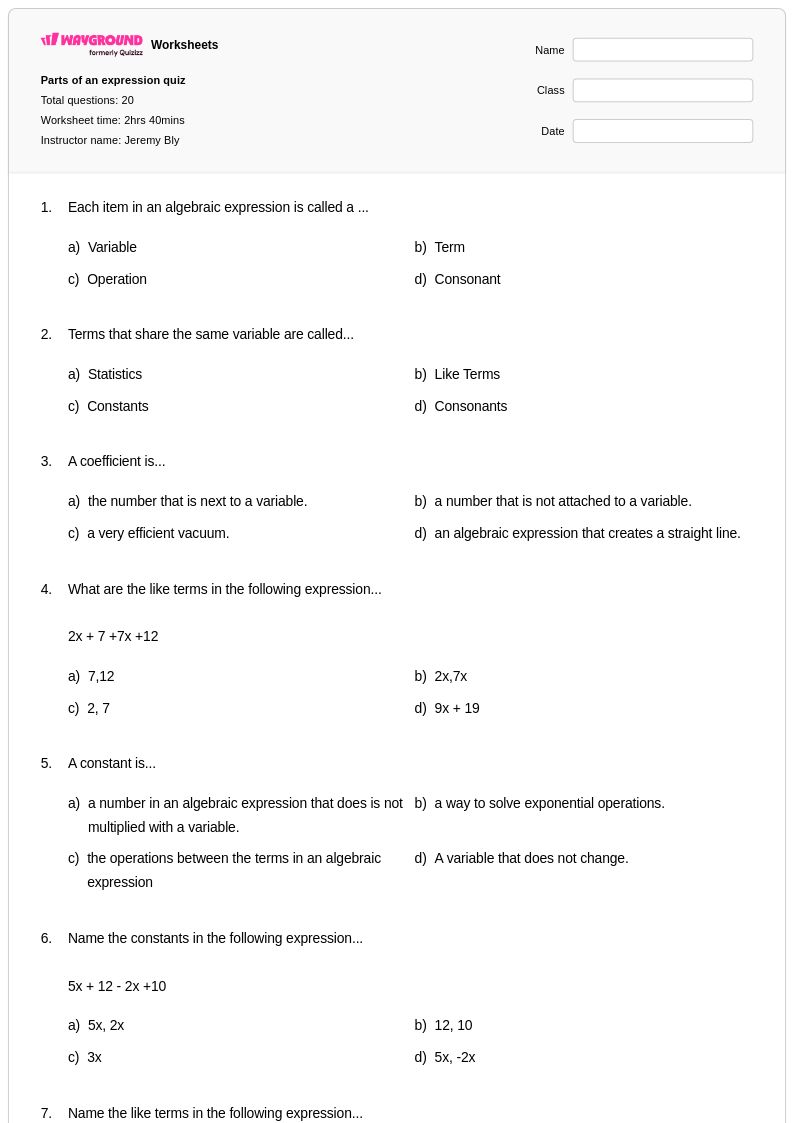
20 Q
6th - 8th
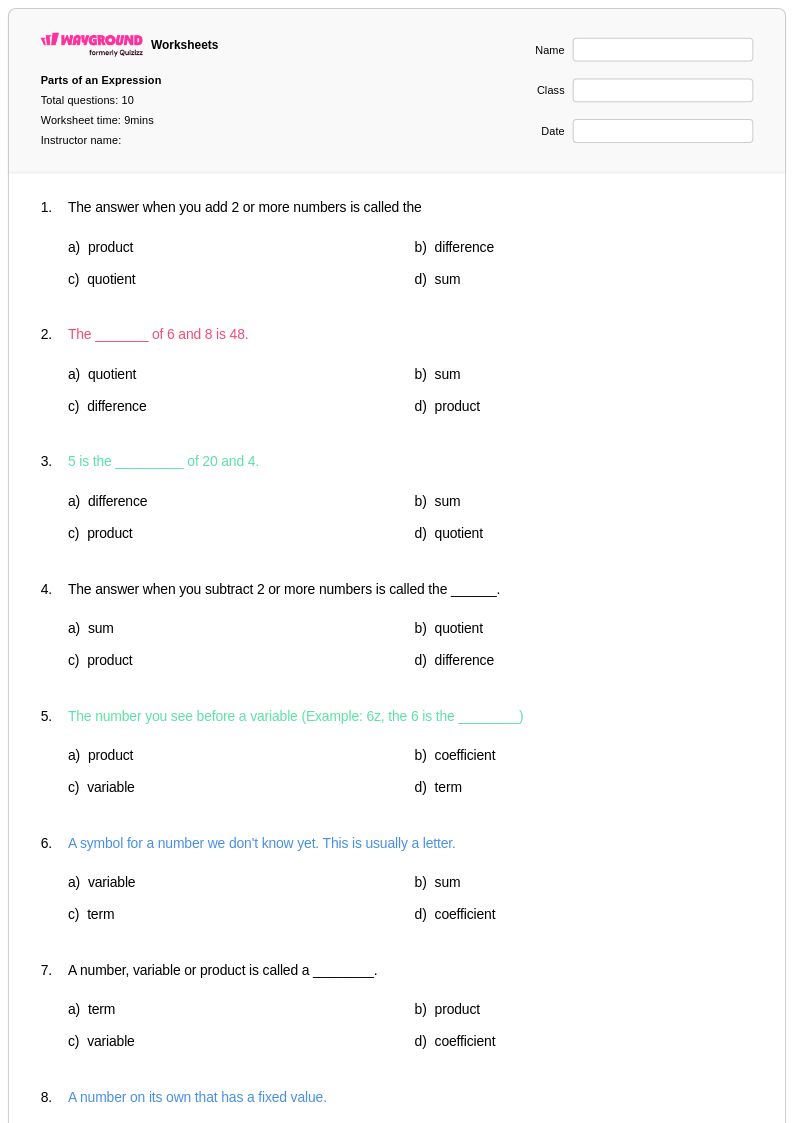
10 Q
6th
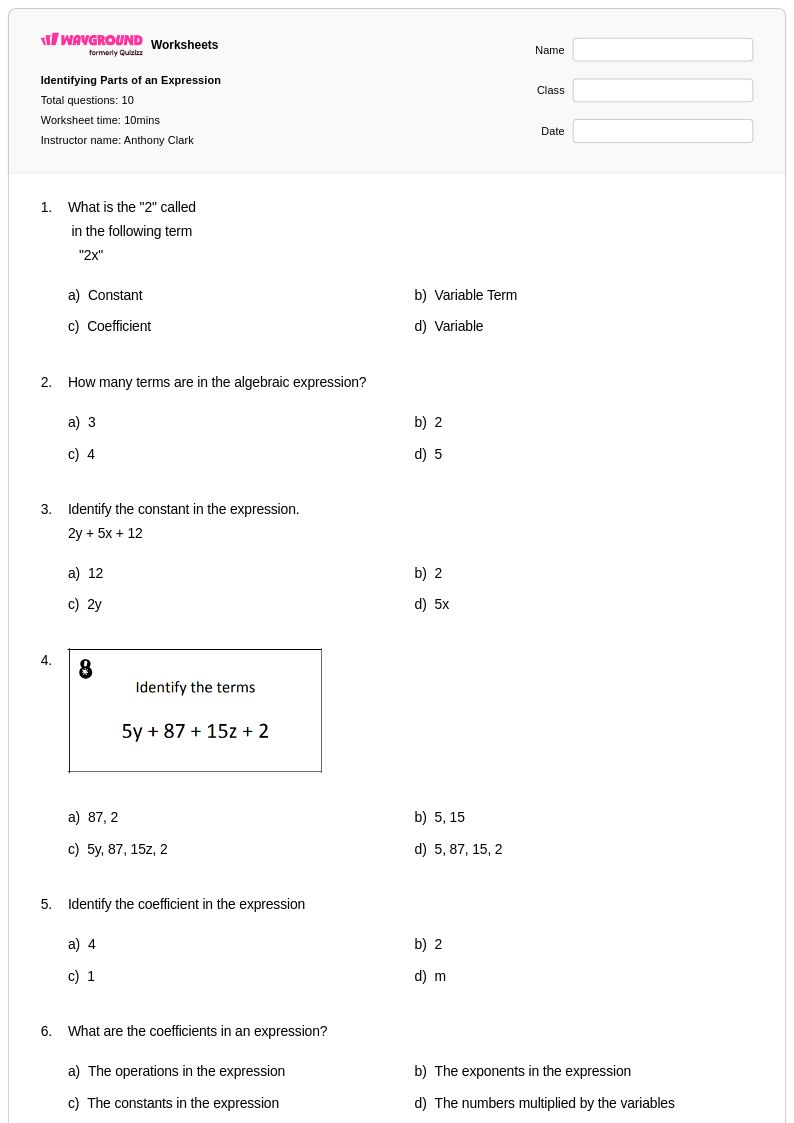
10 Q
6th - Uni
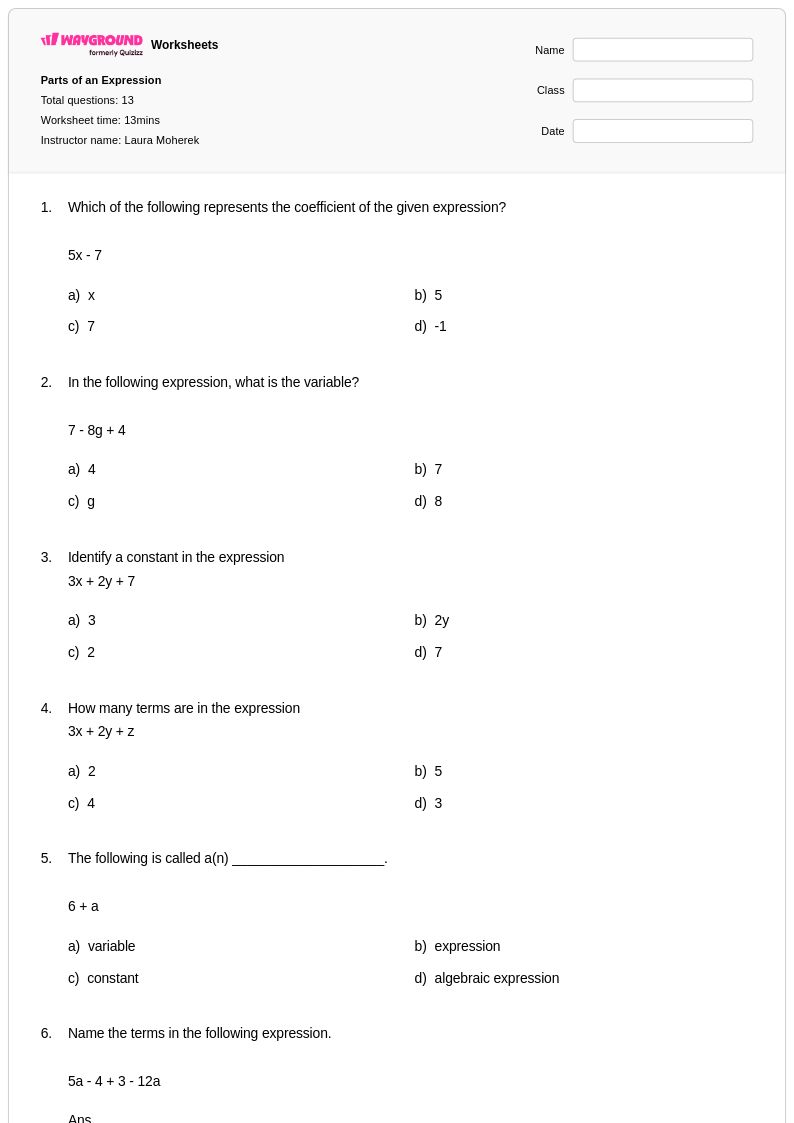
13 Q
6th
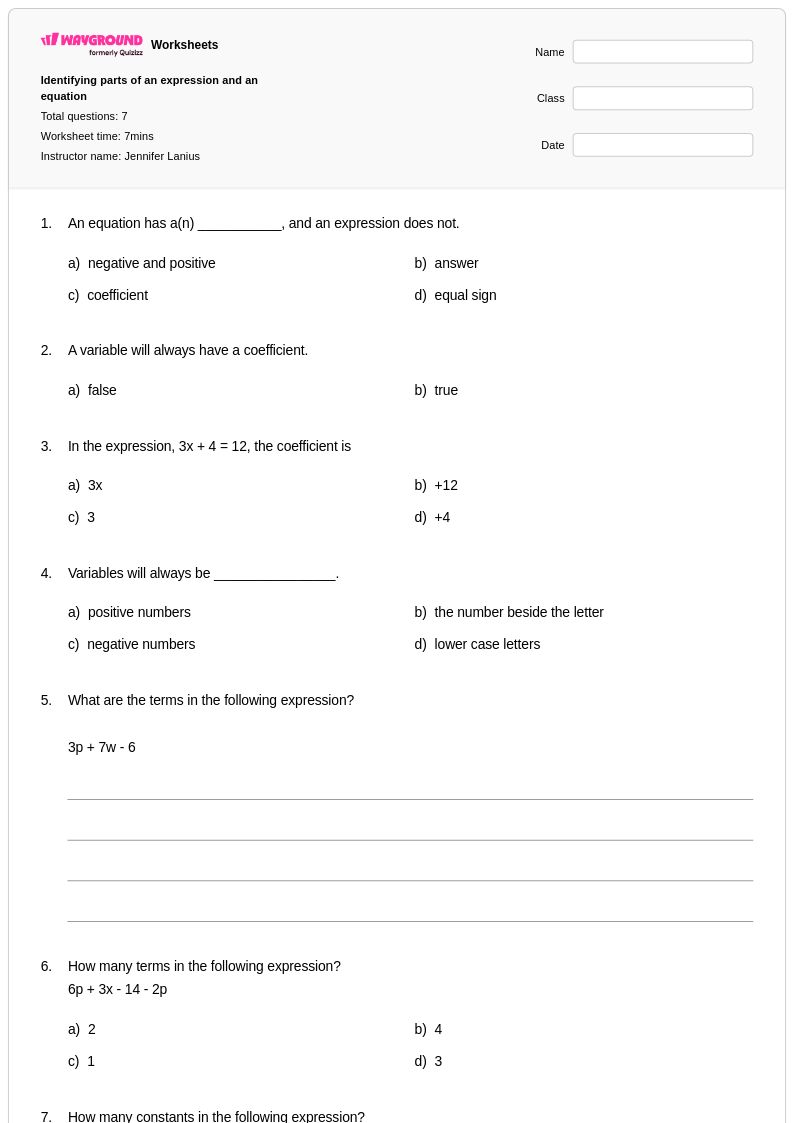
7 Q
5th - 8th
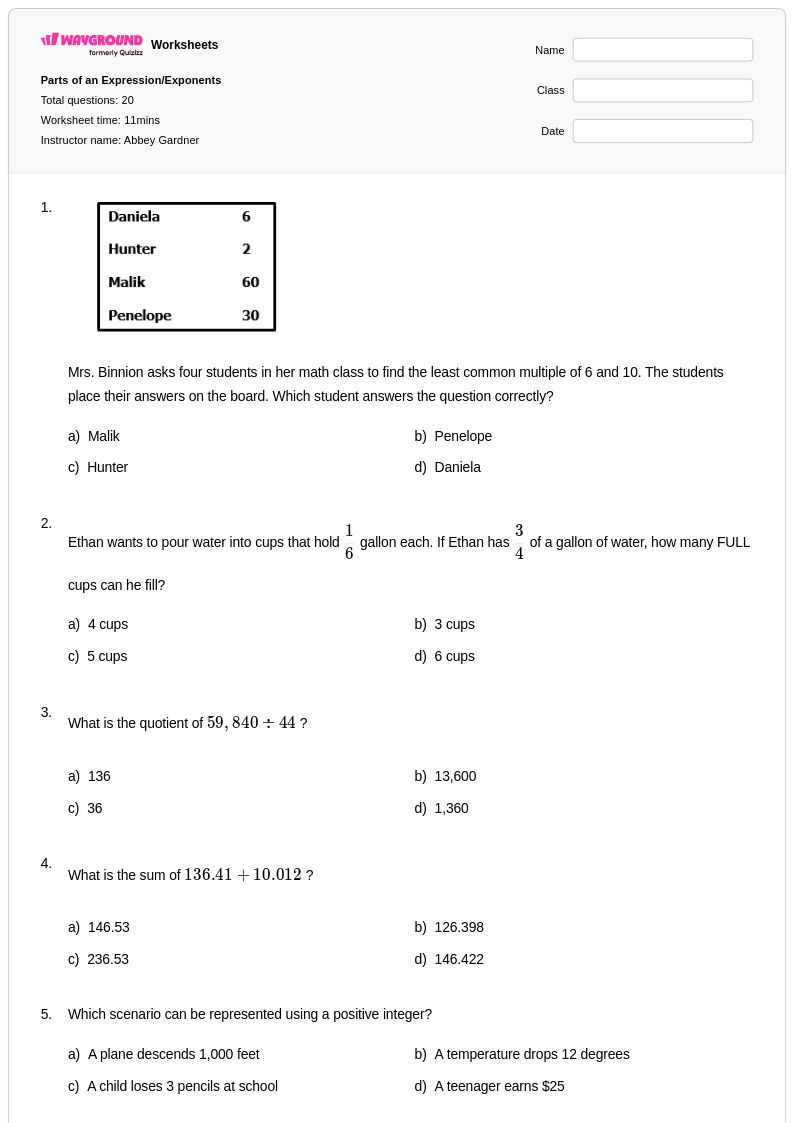
20 Q
6th
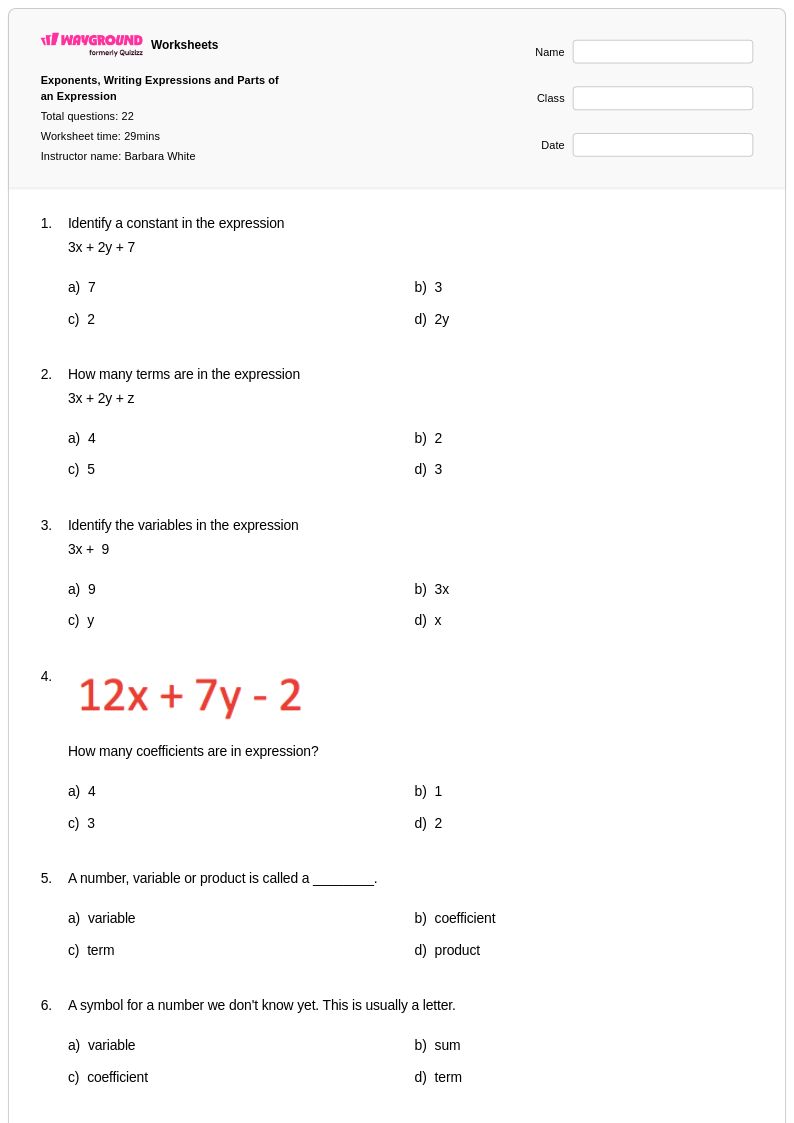
22 Q
6th
Explore Other Subject Worksheets for year 6
Explore printable Parts of an Expression worksheets for Year 6
Parts of an Expression worksheets for Year 6 students available through Wayground (formerly Quizizz) provide comprehensive practice in identifying and understanding the fundamental components that make up algebraic expressions. These carefully designed practice problems help students master essential skills including recognizing variables, coefficients, constants, and terms within mathematical expressions, while building the foundation necessary for advanced algebraic thinking. Each worksheet collection includes detailed answer keys and is available as free printables in pdf format, allowing students to develop proficiency in breaking down expressions like 3x + 7 or 5y - 2 + 8x by correctly identifying each distinct part and understanding its mathematical role.
Wayground (formerly Quizizz) supports mathematics educators with an extensive library of millions of teacher-created resources specifically focused on parts of an expression concepts for sixth-grade learners. The platform's robust search and filtering capabilities enable teachers to quickly locate worksheets that align with curriculum standards and match their students' specific learning needs. These differentiation tools allow educators to customize content for remediation or enrichment purposes, ensuring that struggling students receive targeted practice while advanced learners are appropriately challenged. Available in both printable and digital formats including downloadable pdf files, these worksheet collections streamline lesson planning and provide flexible options for homework assignments, classroom activities, and skill-building practice sessions.
FAQs
What grade do students learn the parts of an expression?
How should I introduce parts of an expression to 6th graders?
What are the best practice problems for 6th graders on this topic?
What common misconceptions do 6th graders have about expressions?
How do I use this 6th-grade worksheet in my classroom?
How does this topic align with 6th-grade math standards?