
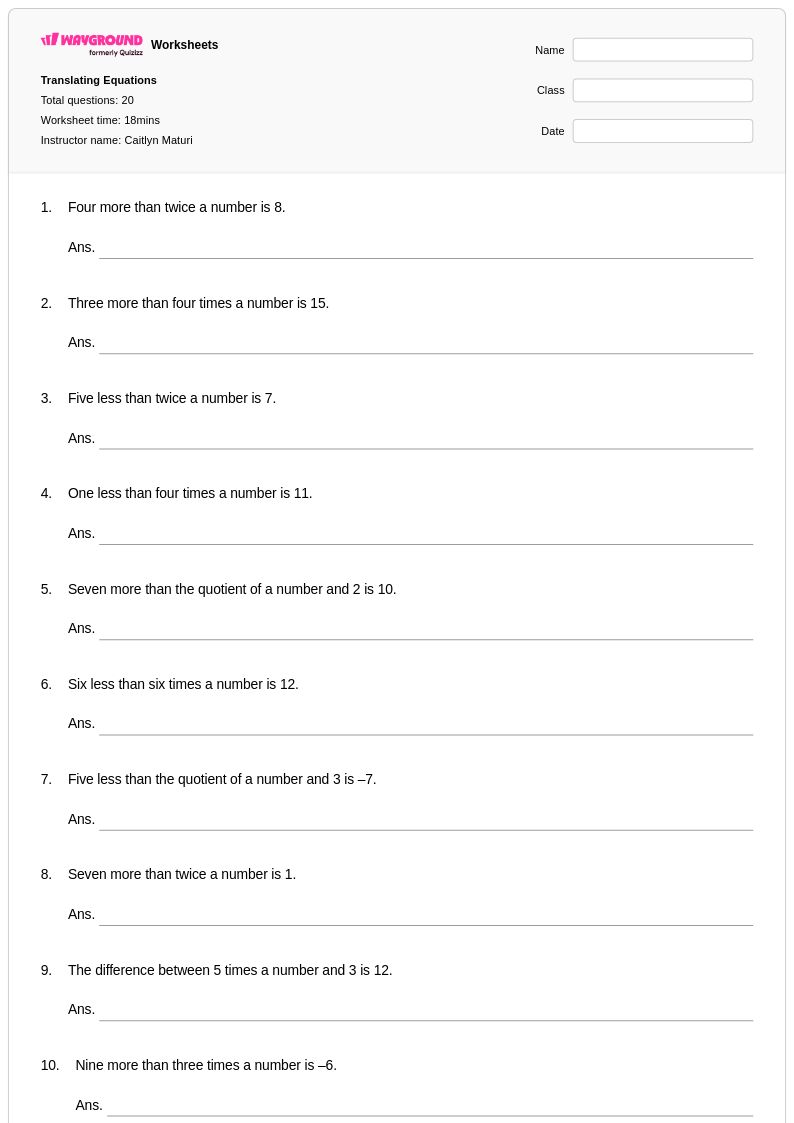
20 Q
6th - 8th
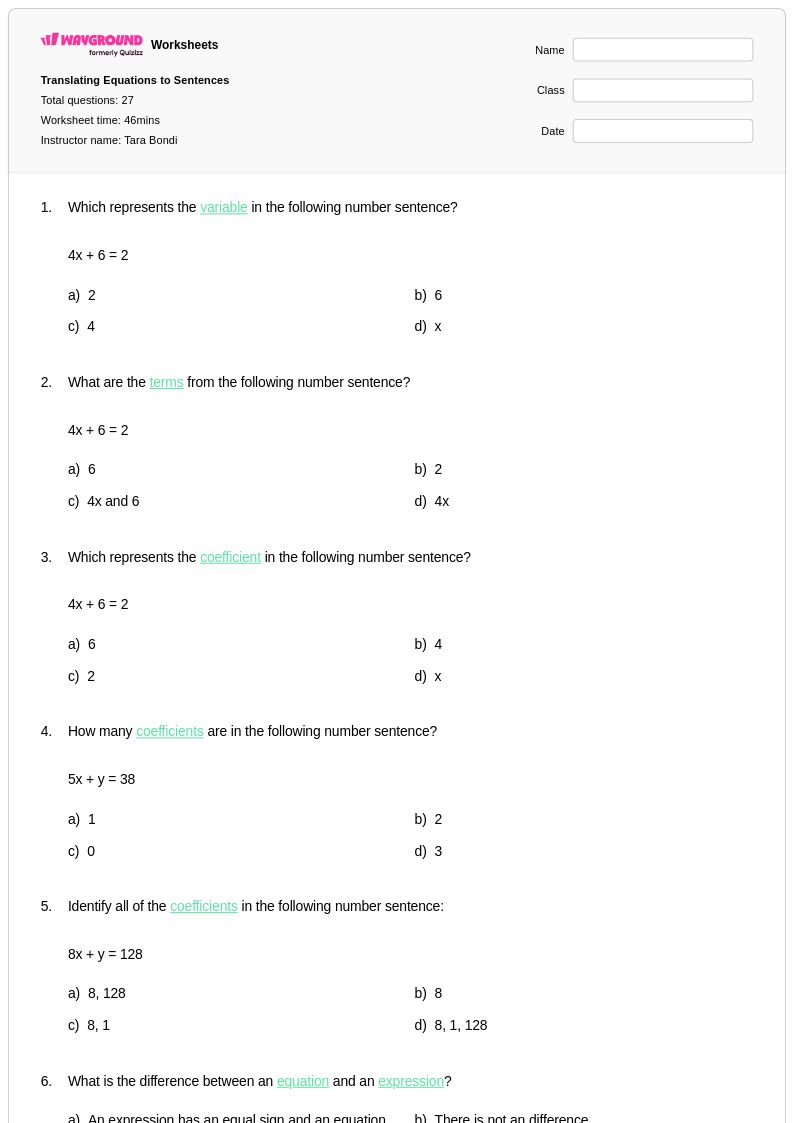
27 Q
6th
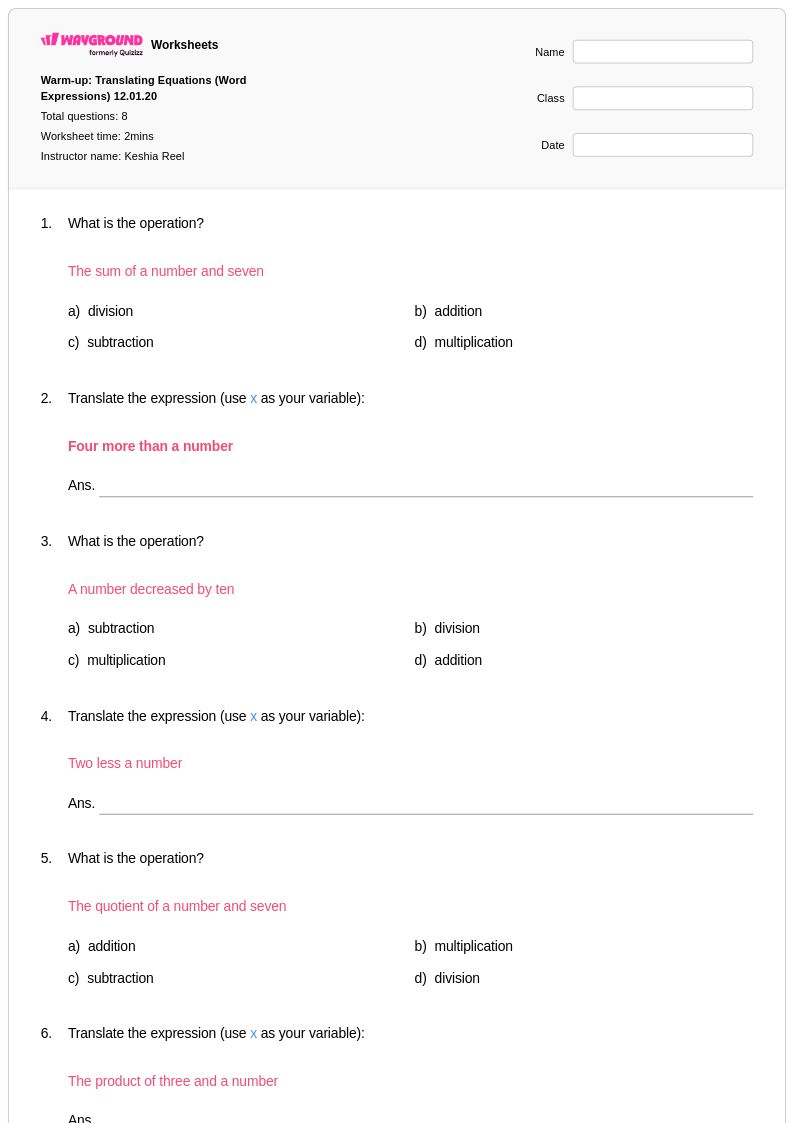
8 Q
6th - 8th
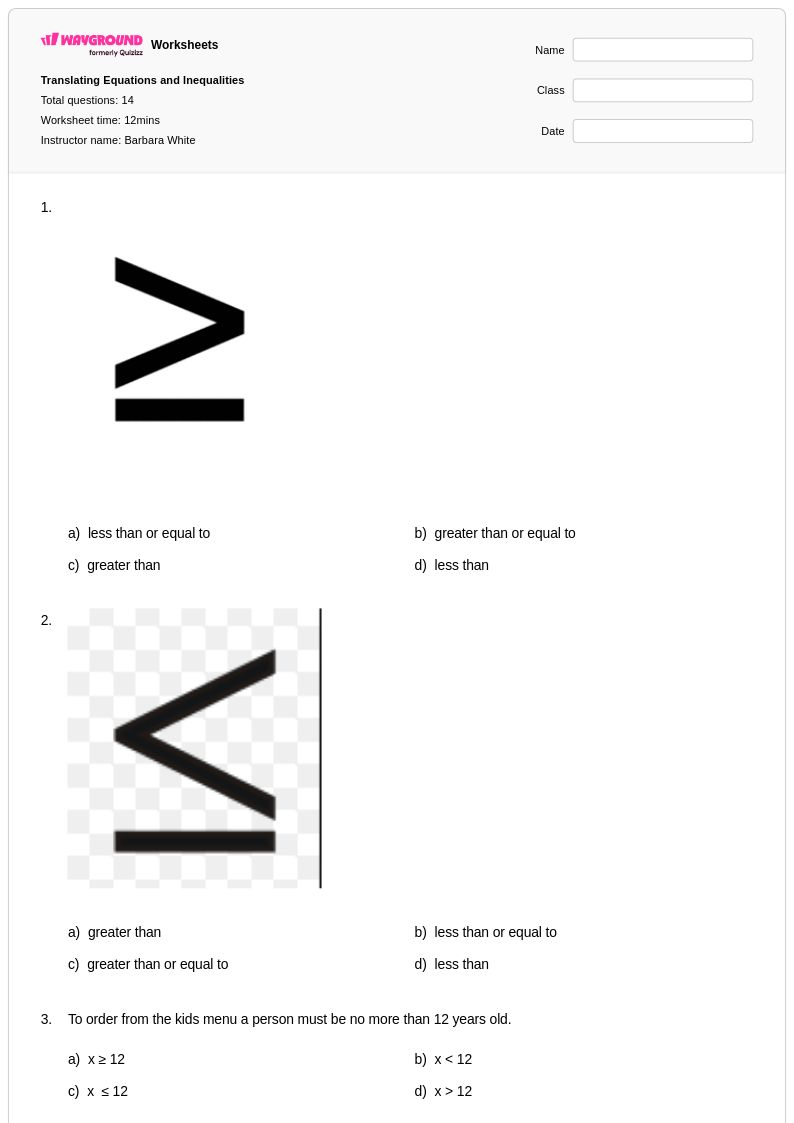
14 Q
6th
15 Q
6th - Uni
15 Q
6th
14 Q
6th
14 Q
6th - Uni
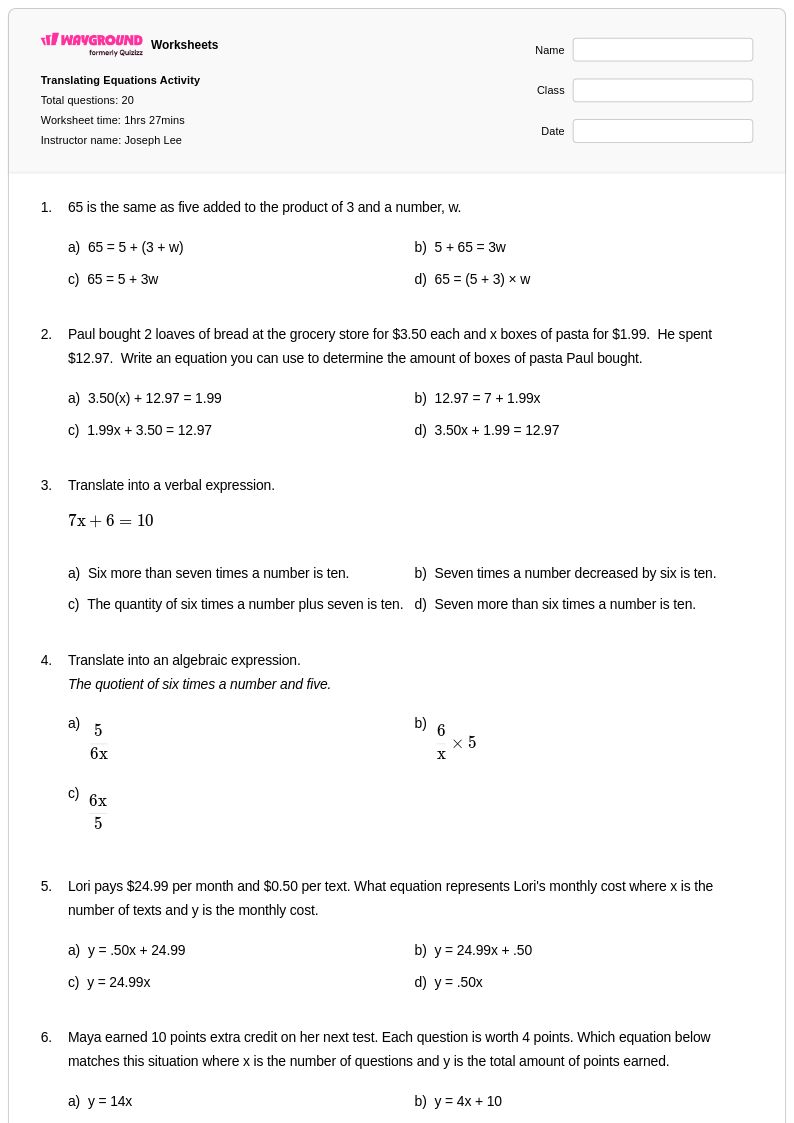
20 Q
6th - 8th
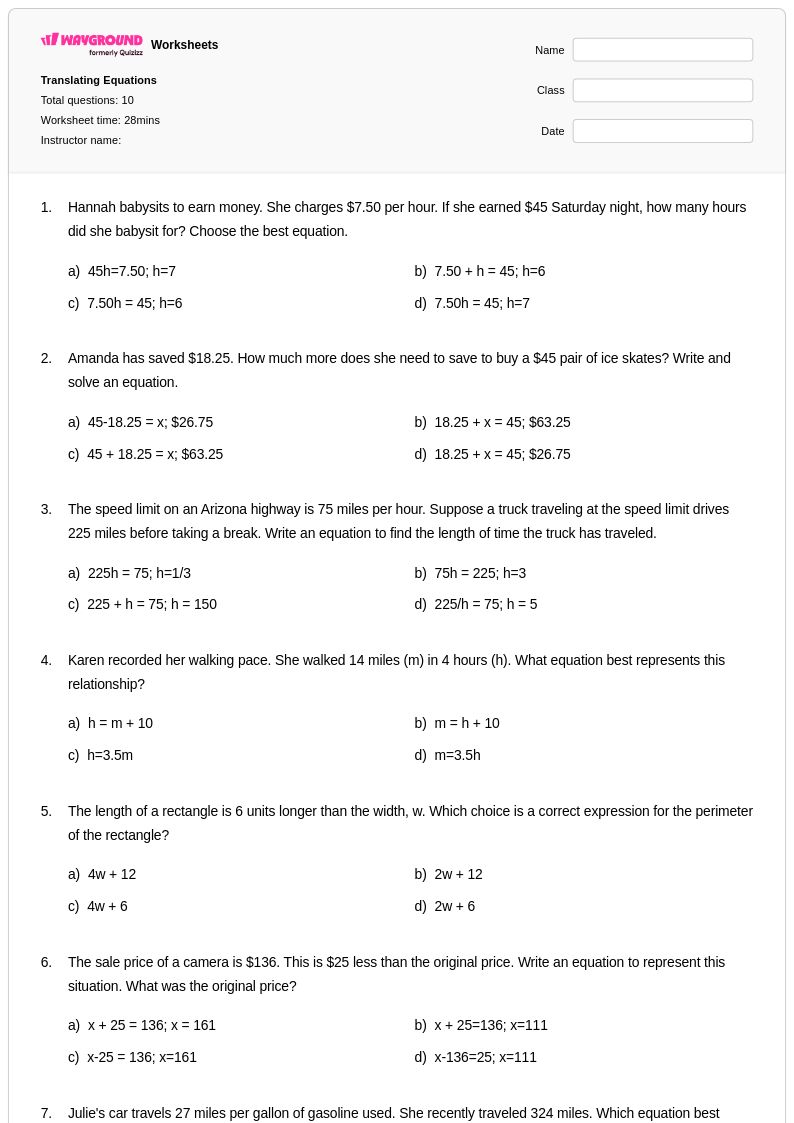
10 Q
6th - 7th
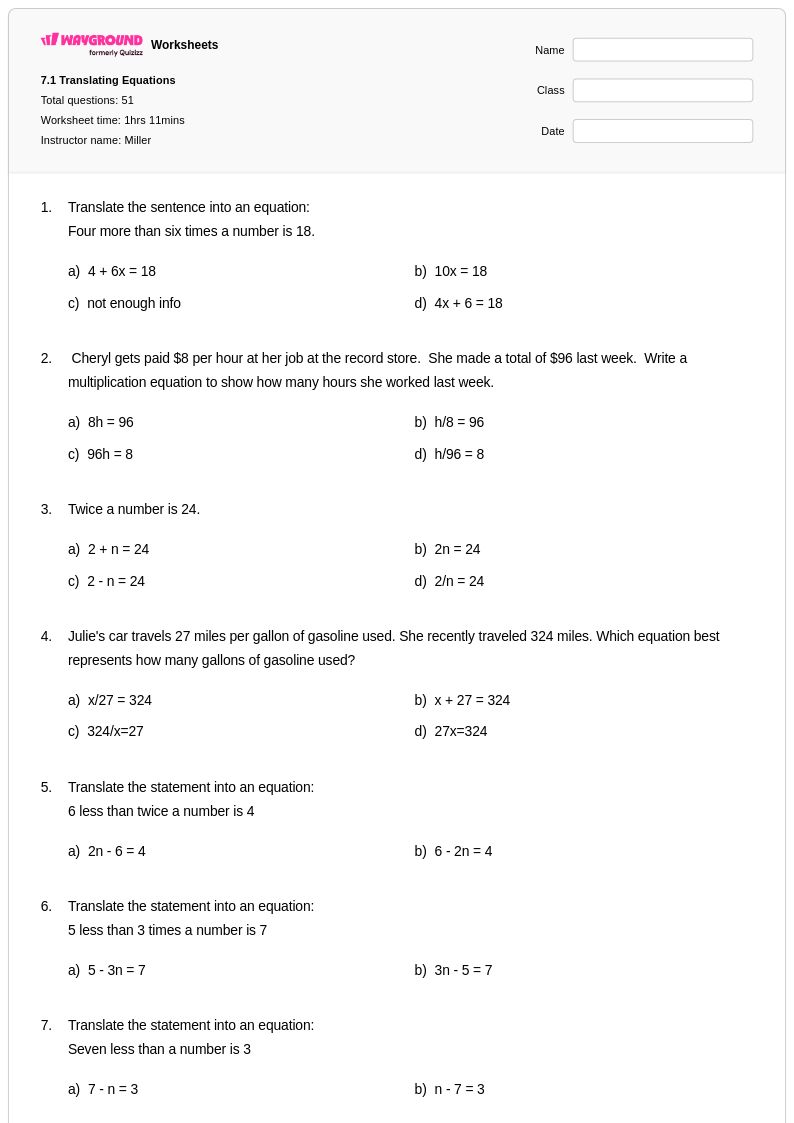
51 Q
6th
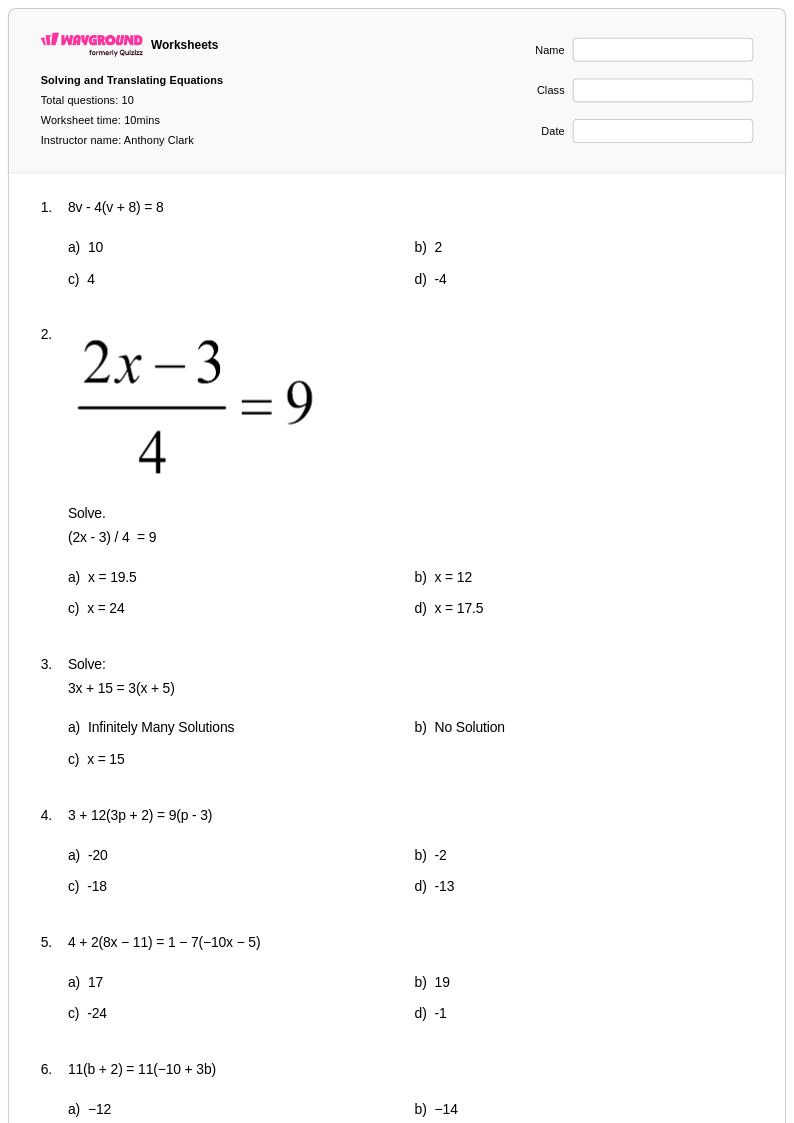
10 Q
6th - Uni
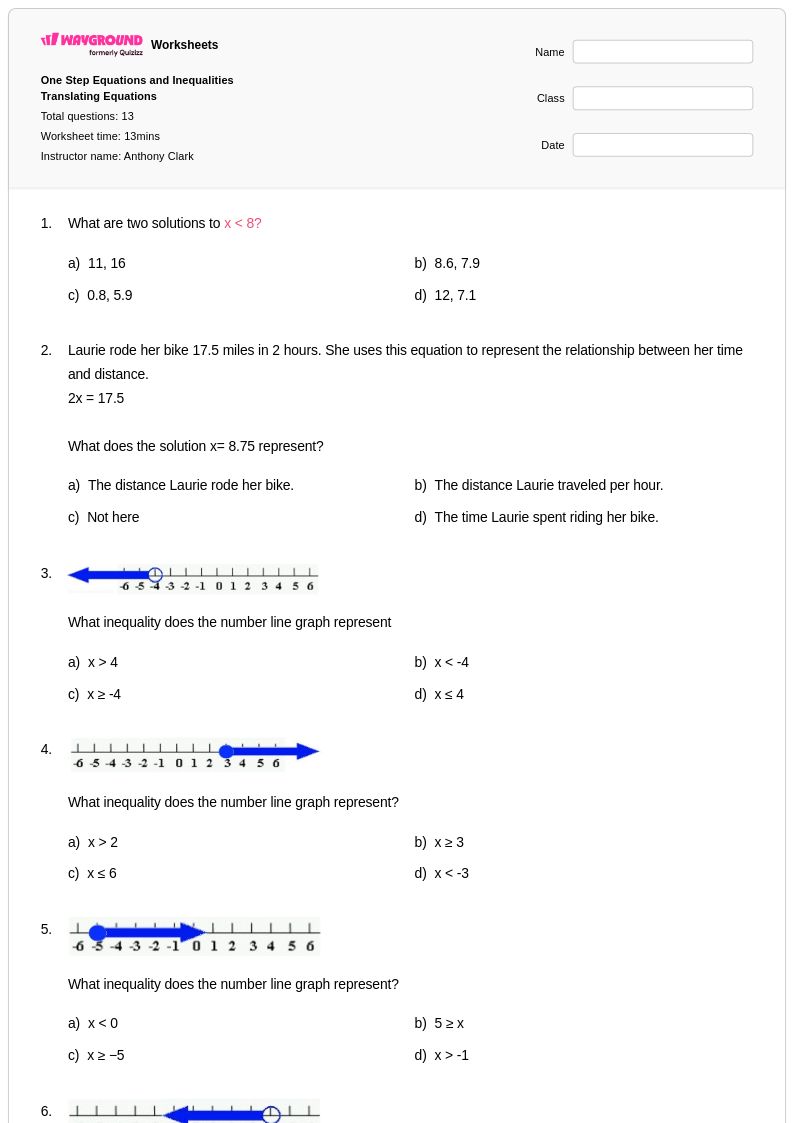
13 Q
6th - Uni
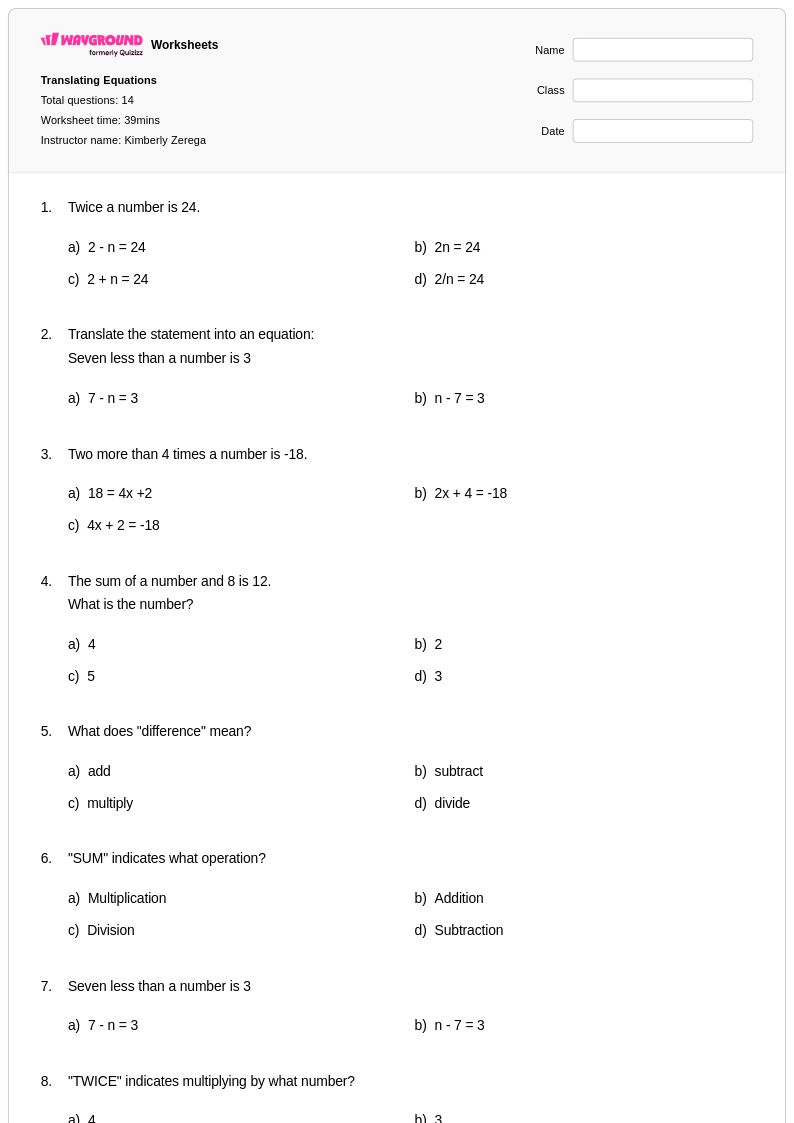
14 Q
6th
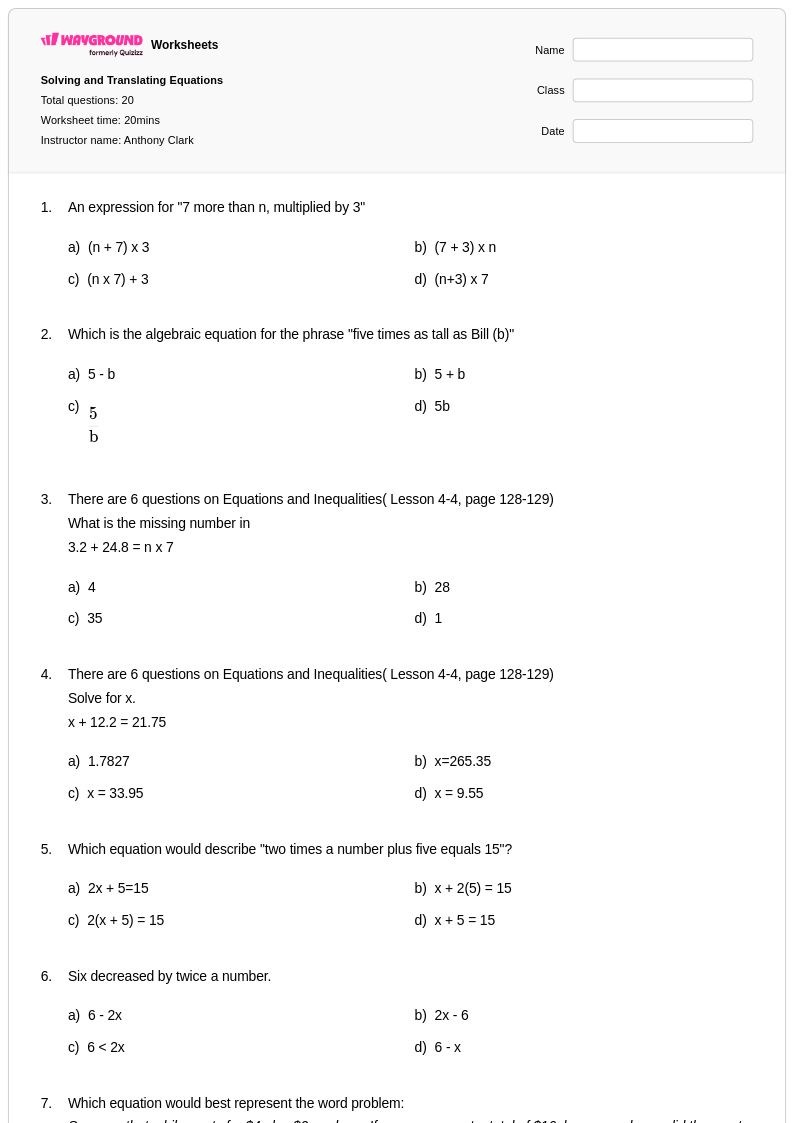
20 Q
6th - Uni
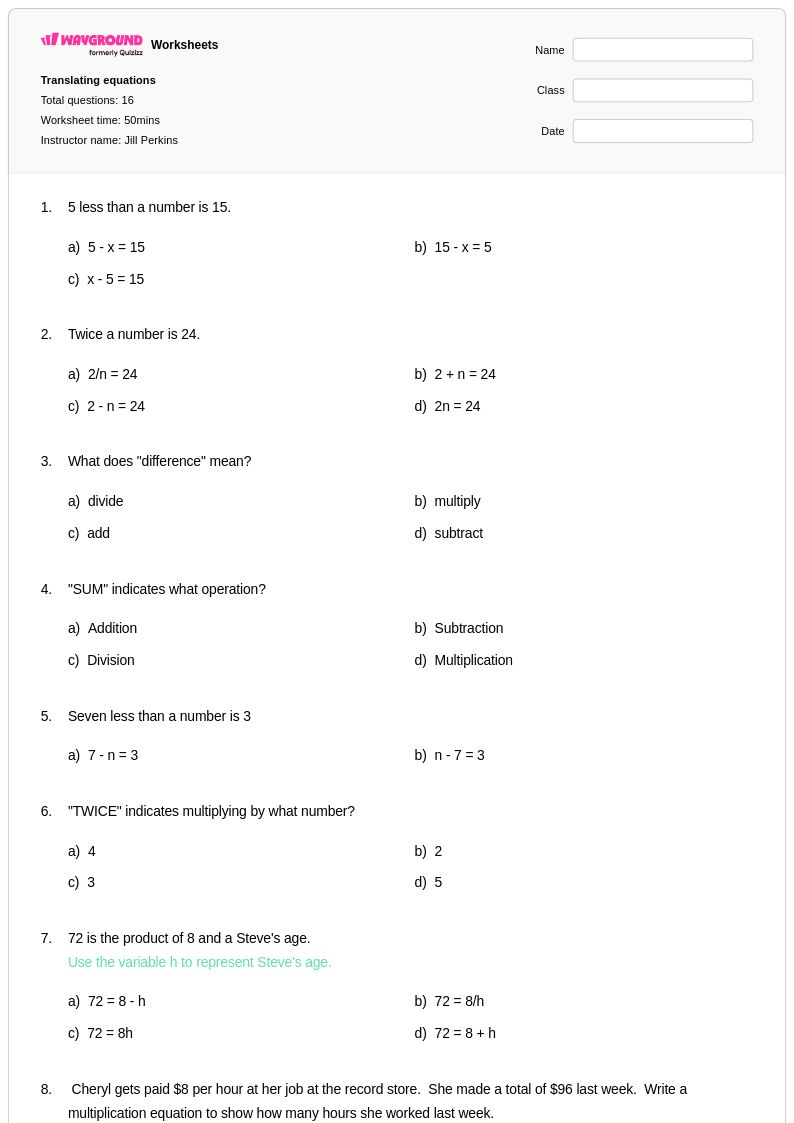
16 Q
6th
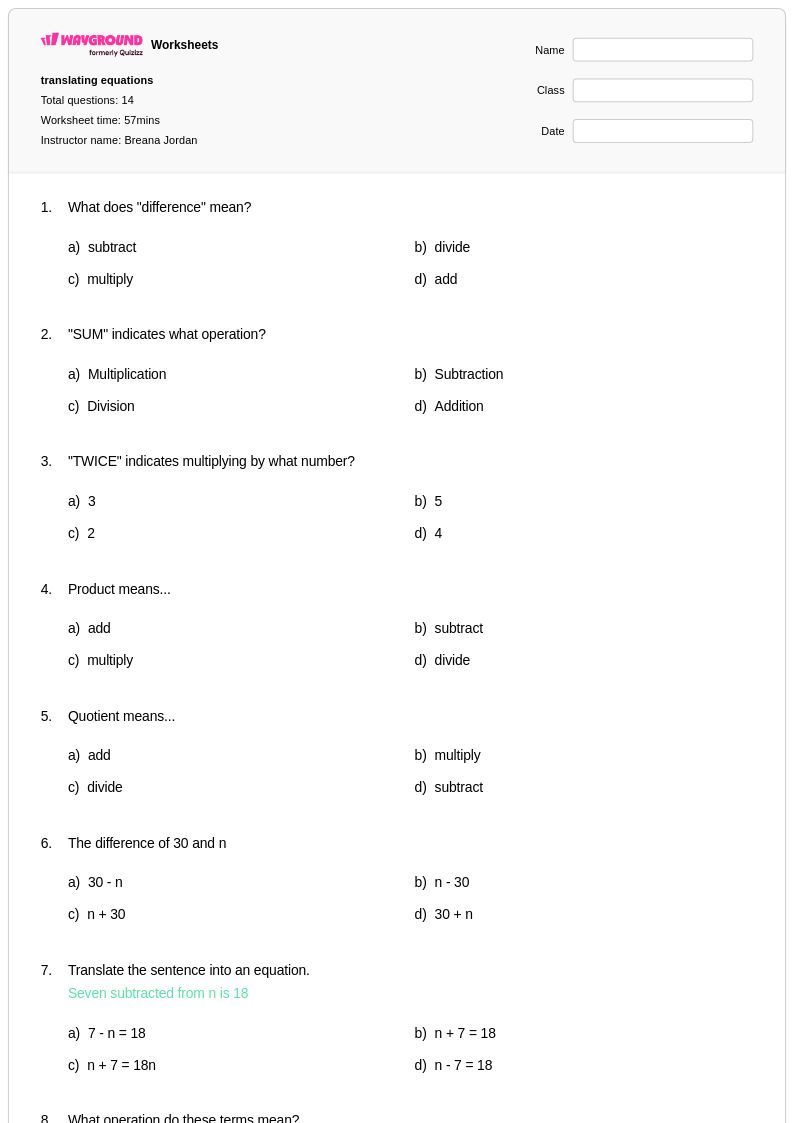
14 Q
6th
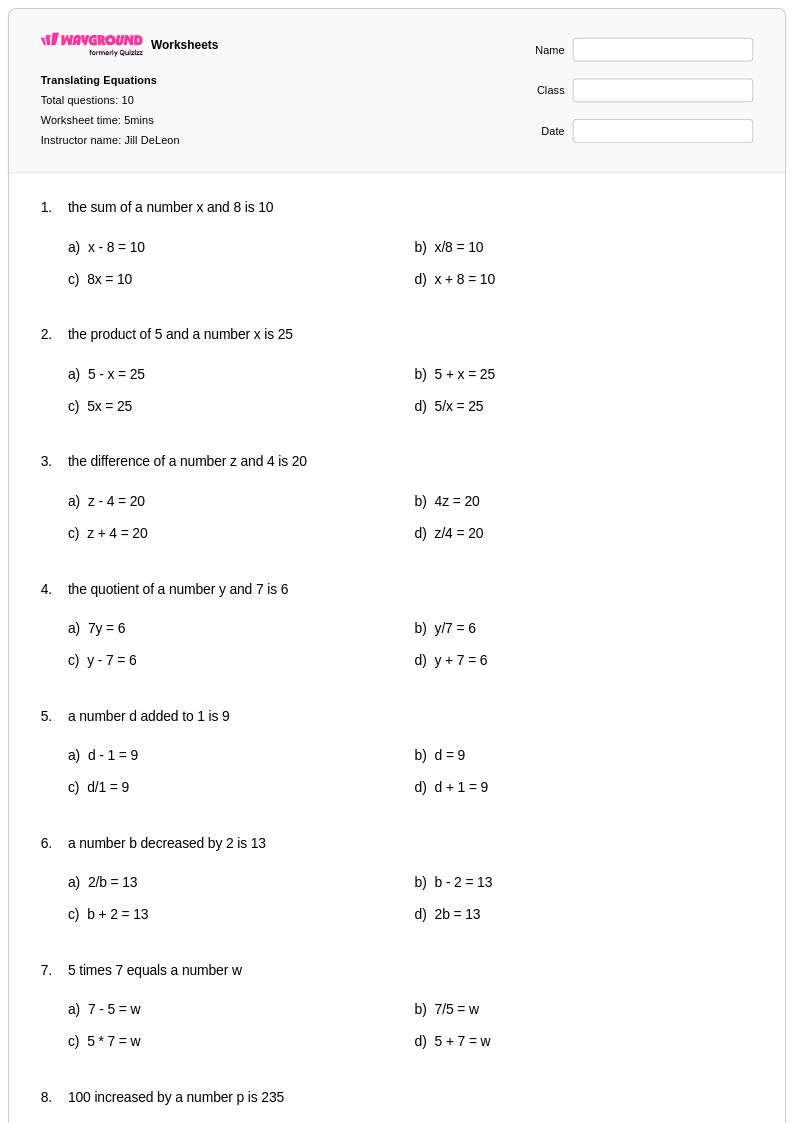
10 Q
6th
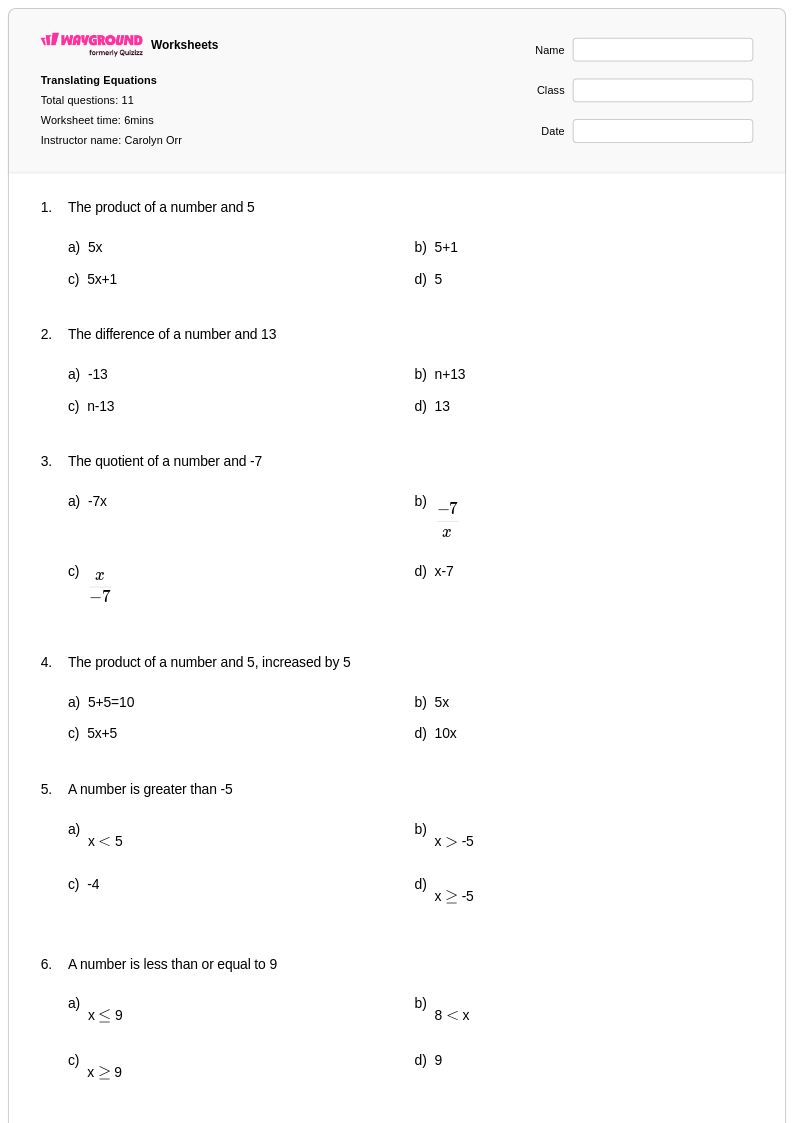
11 Q
4th - 9th
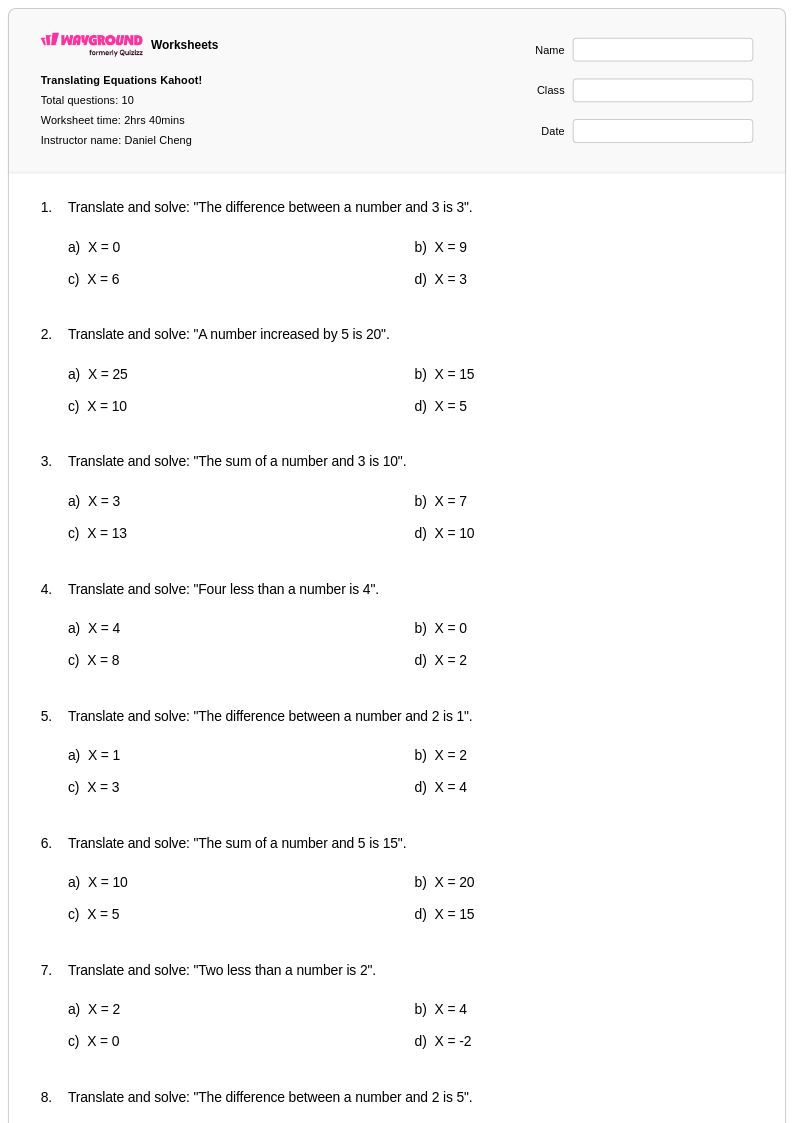
10 Q
6th
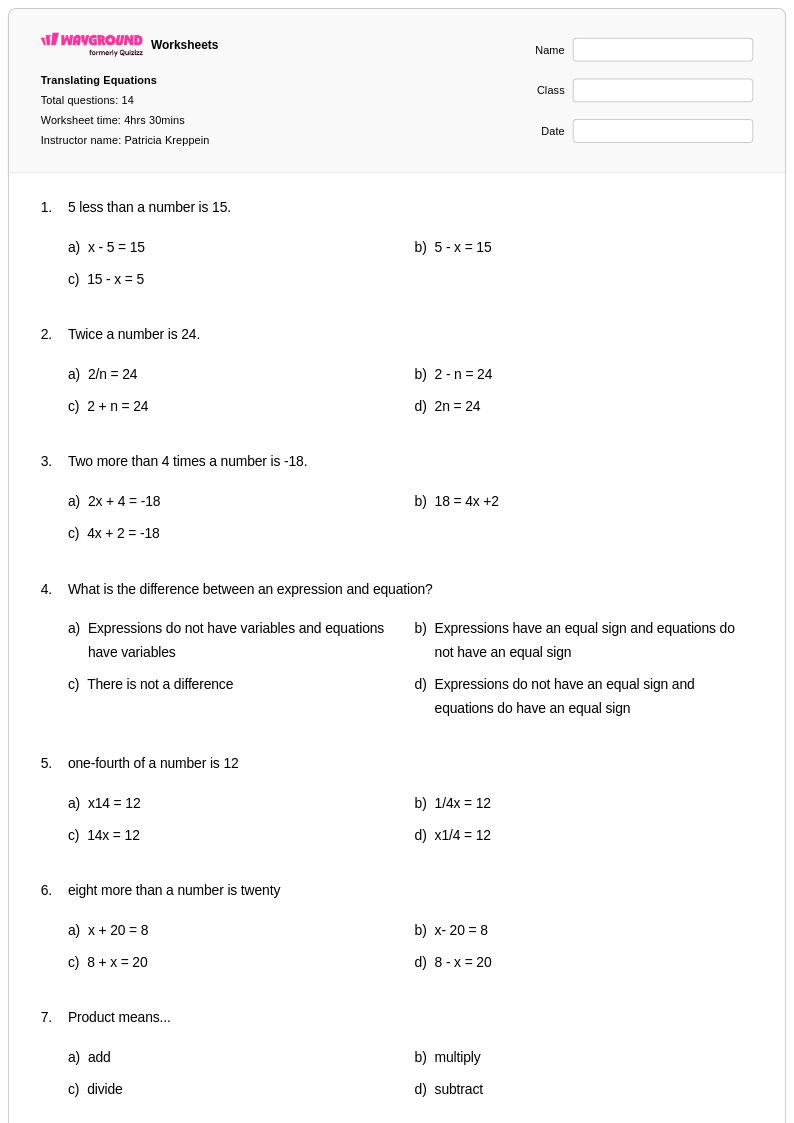
14 Q
6th
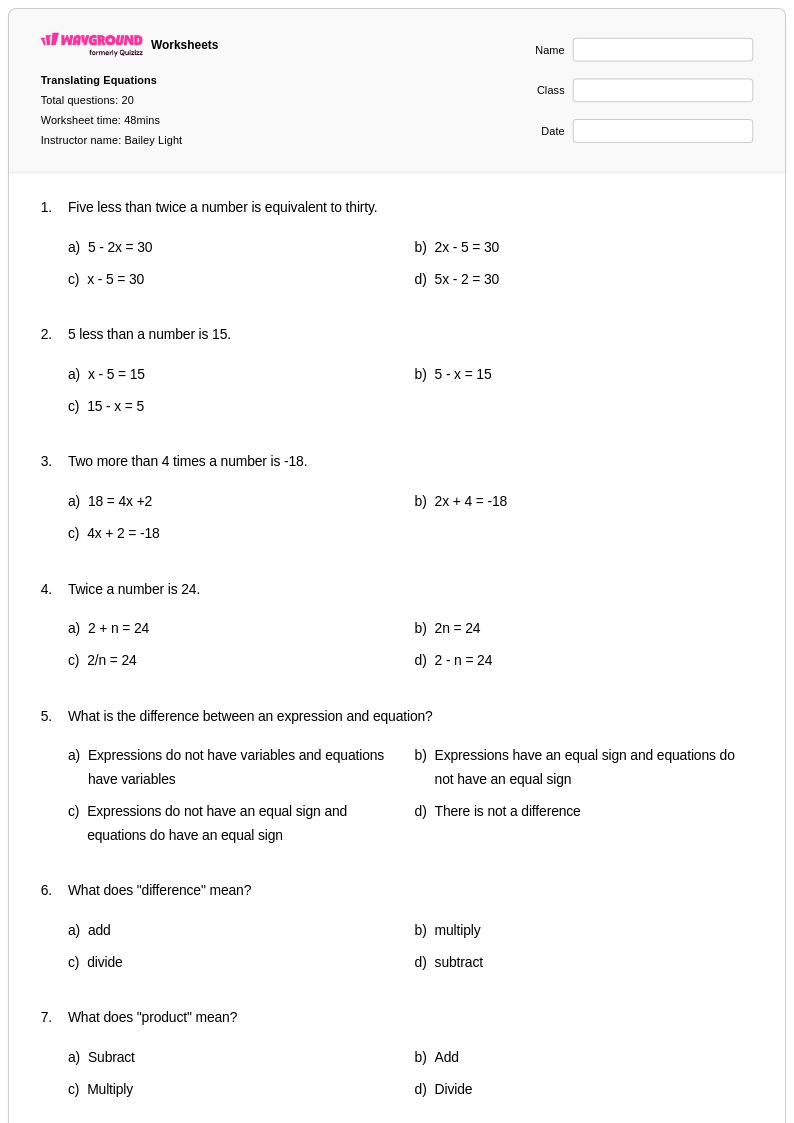
20 Q
6th - 9th
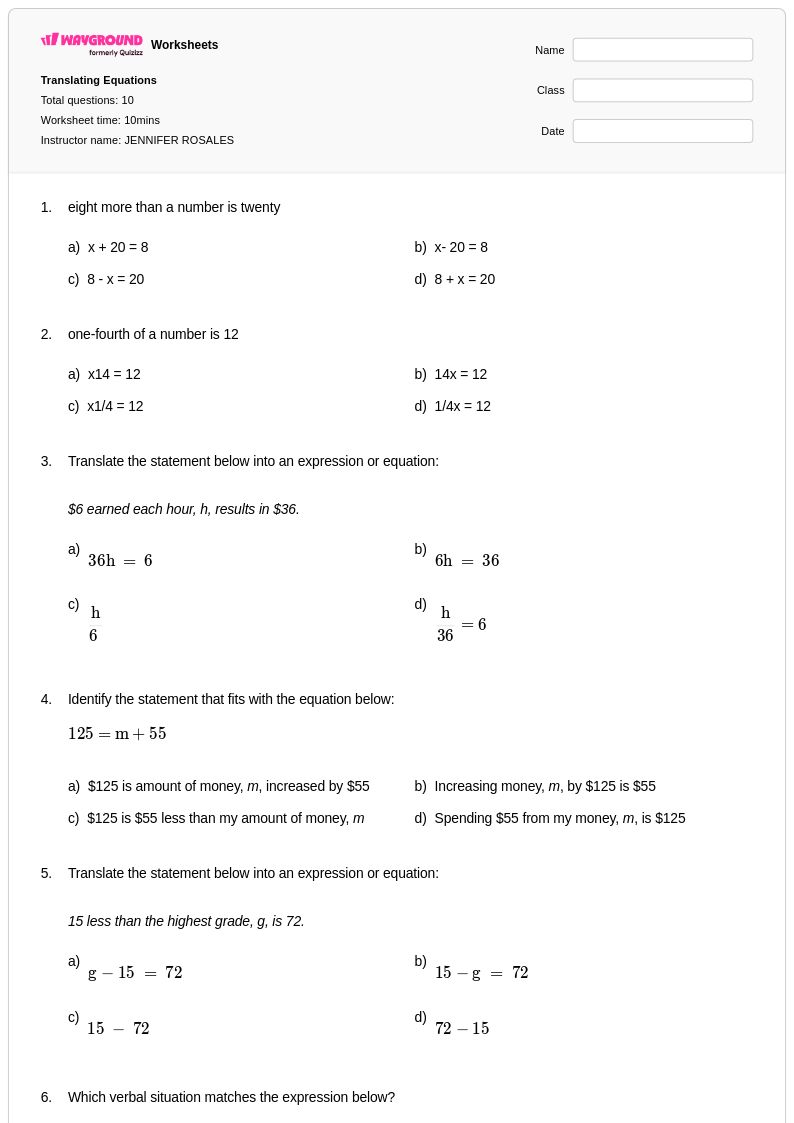
10 Q
6th
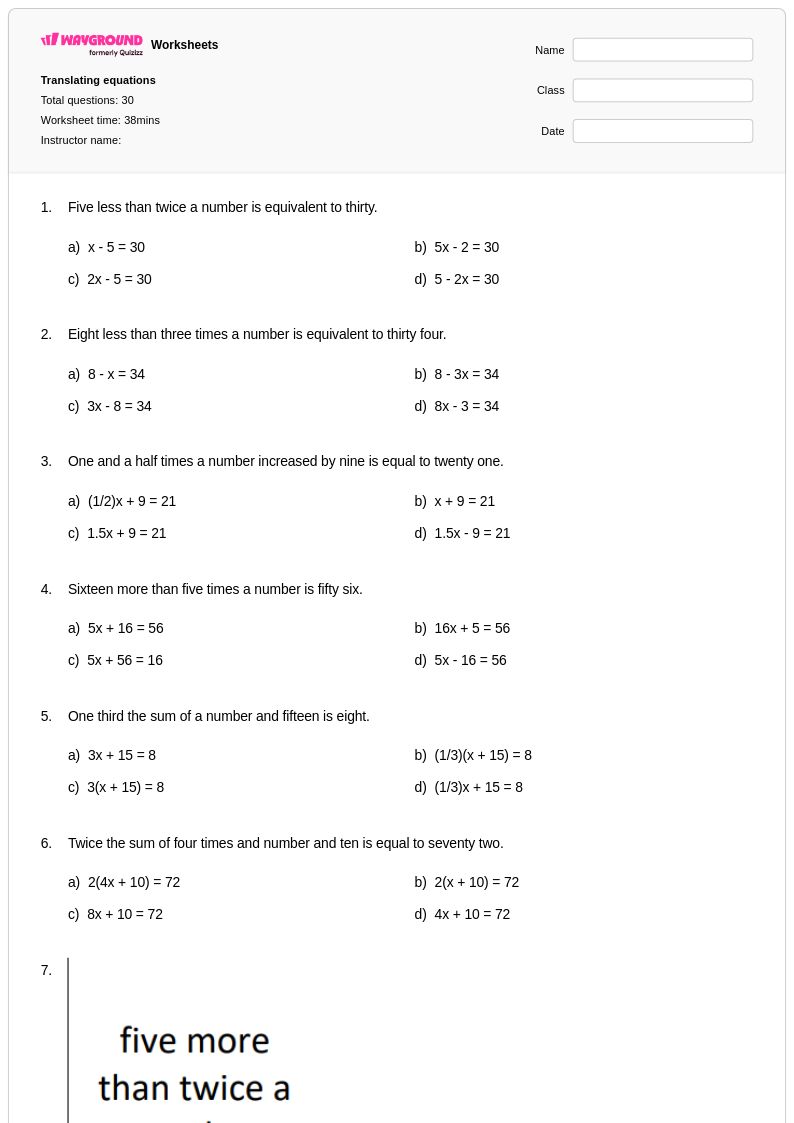
30 Q
6th - 8th
Explore Other Subject Worksheets for year 6
Explore printable Translating Equations worksheets for Year 6
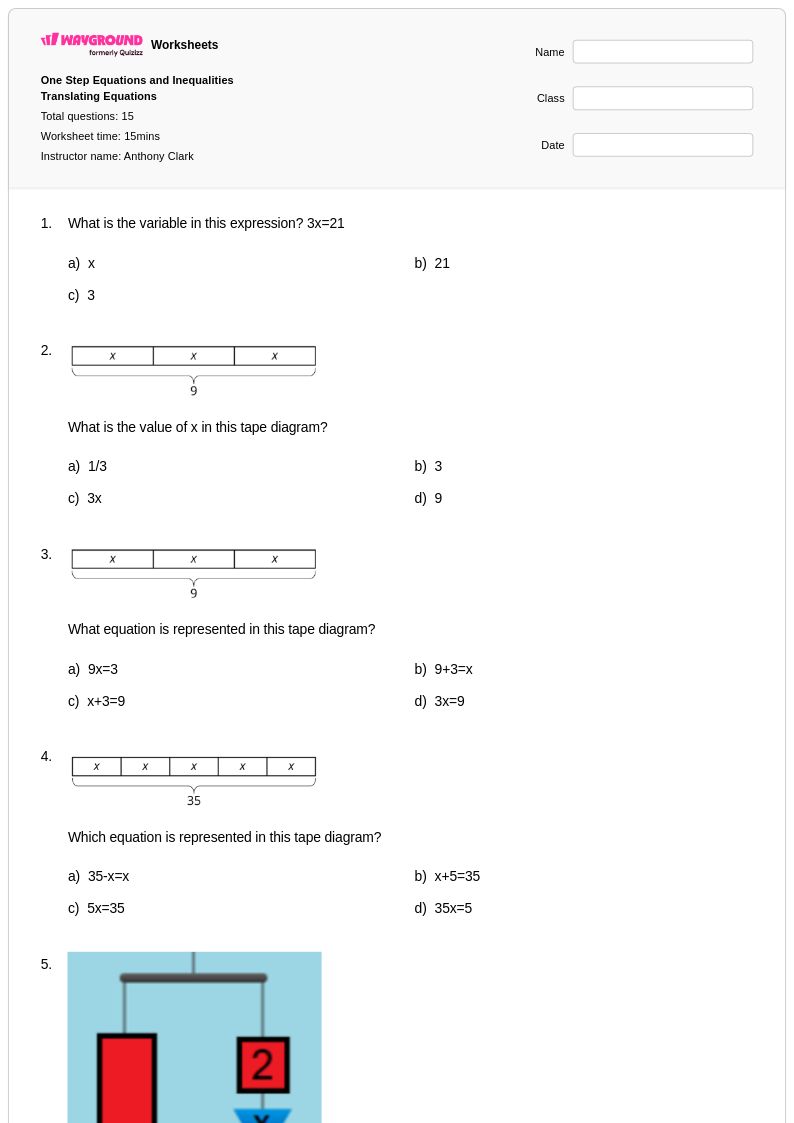
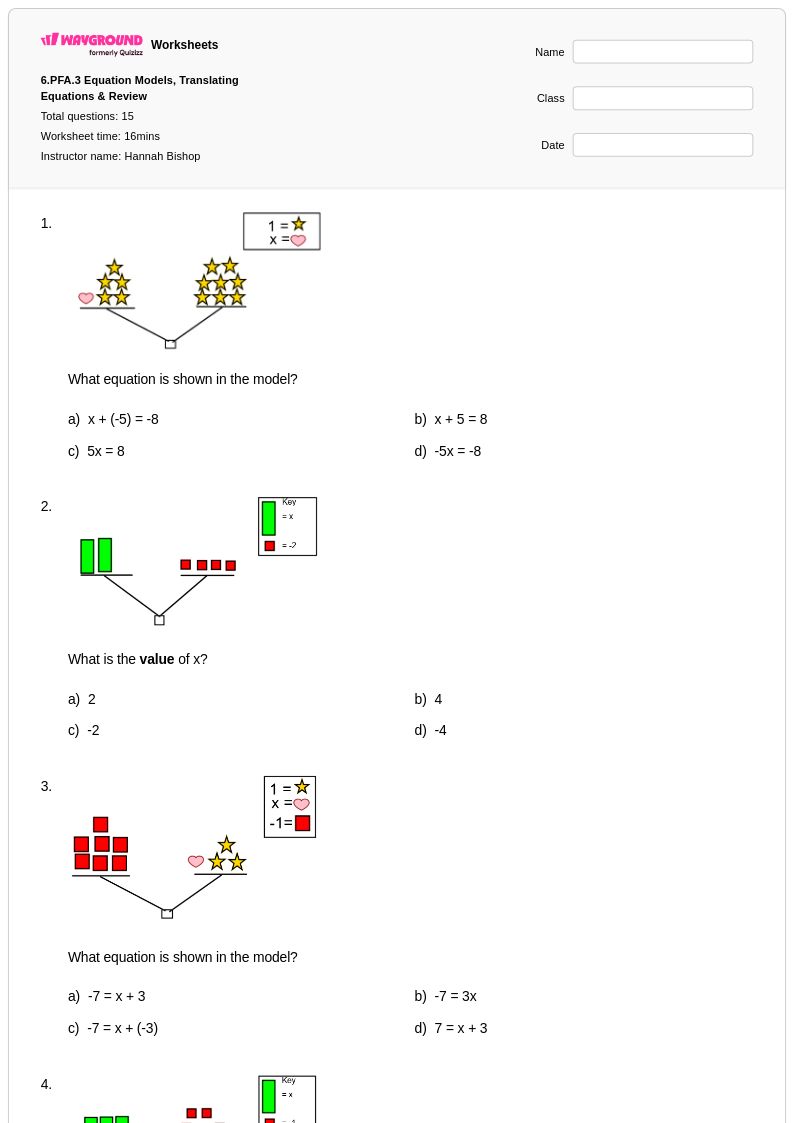
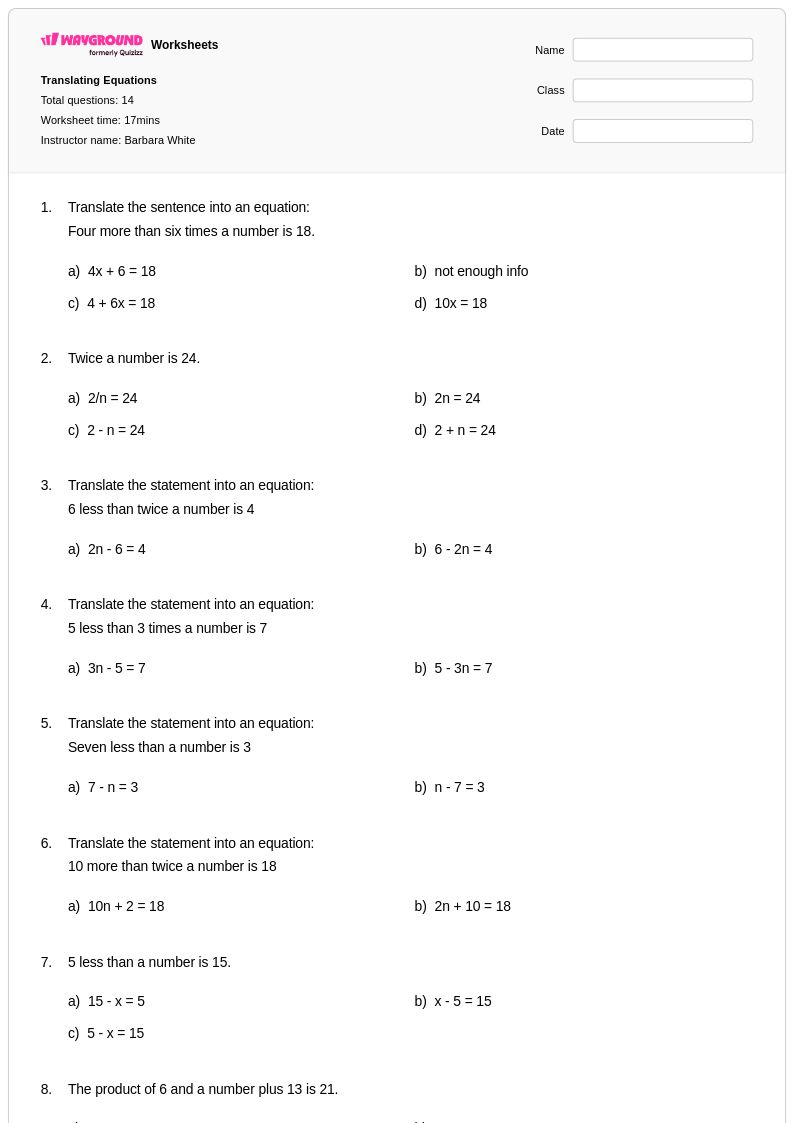
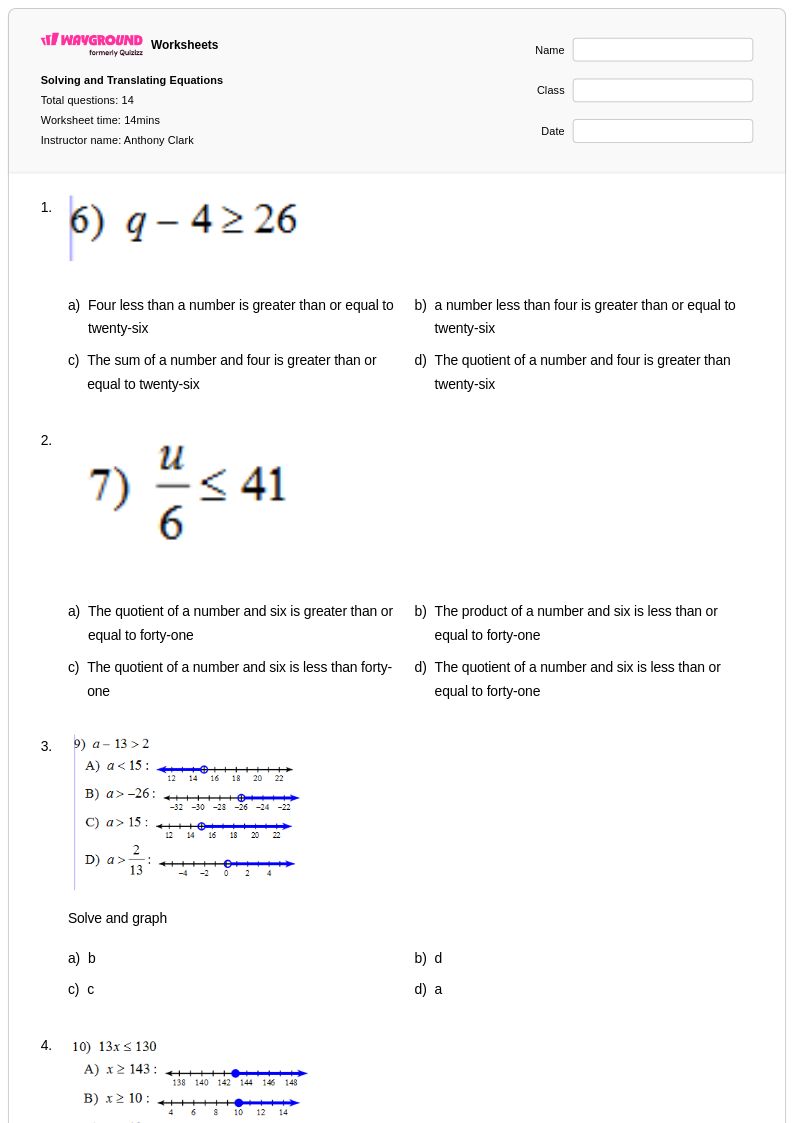
Translating equations represents a fundamental skill in Year 6 algebra that bridges the gap between verbal mathematical descriptions and symbolic representations. Wayground's comprehensive collection of translating equations worksheets provides students with systematic practice in converting word problems into algebraic expressions and equations, strengthening their ability to identify variables, constants, and mathematical operations within real-world contexts. These carefully designed practice problems guide students through the process of interpreting phrases like "three more than a number" or "twice the sum of a value and five" into their corresponding algebraic forms. Each worksheet includes detailed answer keys that help students verify their translations and understand common patterns in mathematical language, while the free printable pdf format ensures easy access for both classroom instruction and independent study.
Wayground's extensive library of teacher-created resources supports educators with millions of high-quality worksheets specifically designed for translating equations instruction at the Year 6 level. The platform's robust search and filtering capabilities allow teachers to quickly locate materials that align with specific curriculum standards and match their students' current skill levels, while built-in differentiation tools enable customization of problem complexity and scaffolding support. These translating equations worksheets are available in both digital and printable formats, providing flexibility for various teaching environments and learning preferences. Teachers can seamlessly integrate these resources into their lesson planning for initial instruction, targeted remediation for struggling learners, or enrichment activities for advanced students, ensuring that all Year 6 students develop strong foundational skills in algebraic thinking and mathematical communication.