Free Printable Direct Variation Worksheets for Year 6
Explore Wayground's comprehensive Year 6 direct variation worksheets featuring printable PDFs with practice problems and answer keys to help students master proportional relationships and linear functions.
Explore printable Direct Variation worksheets for Year 6
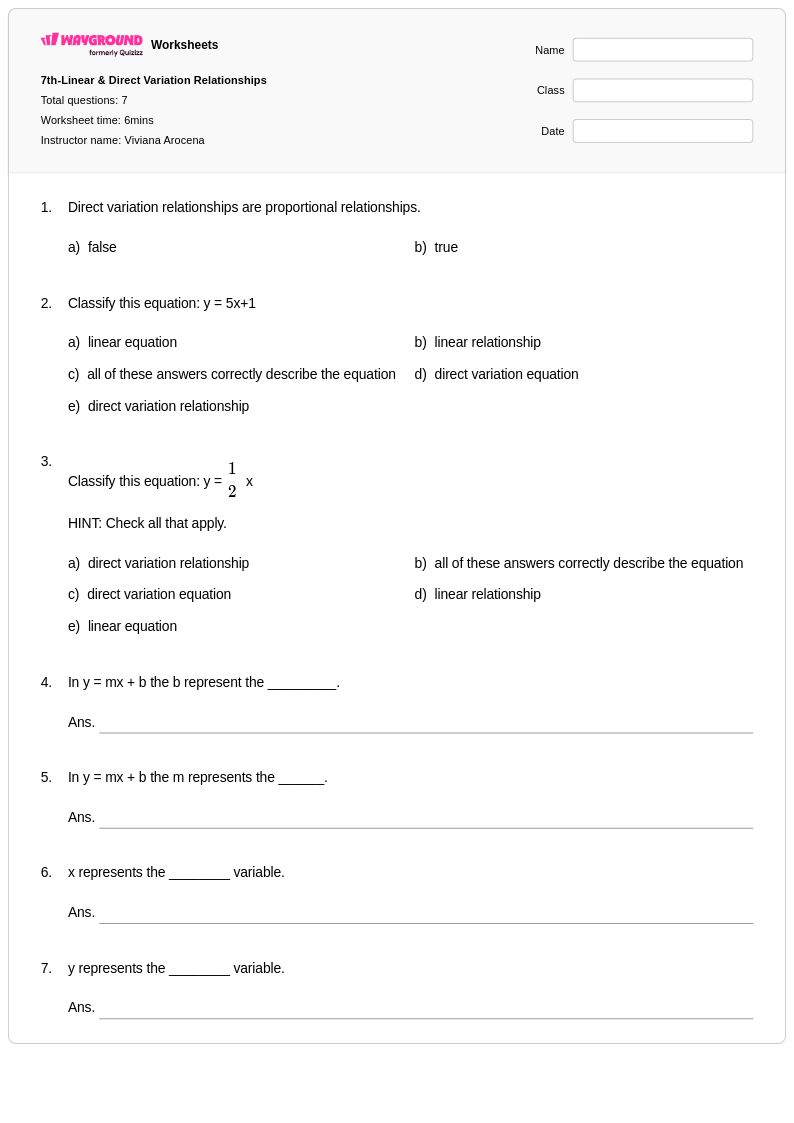
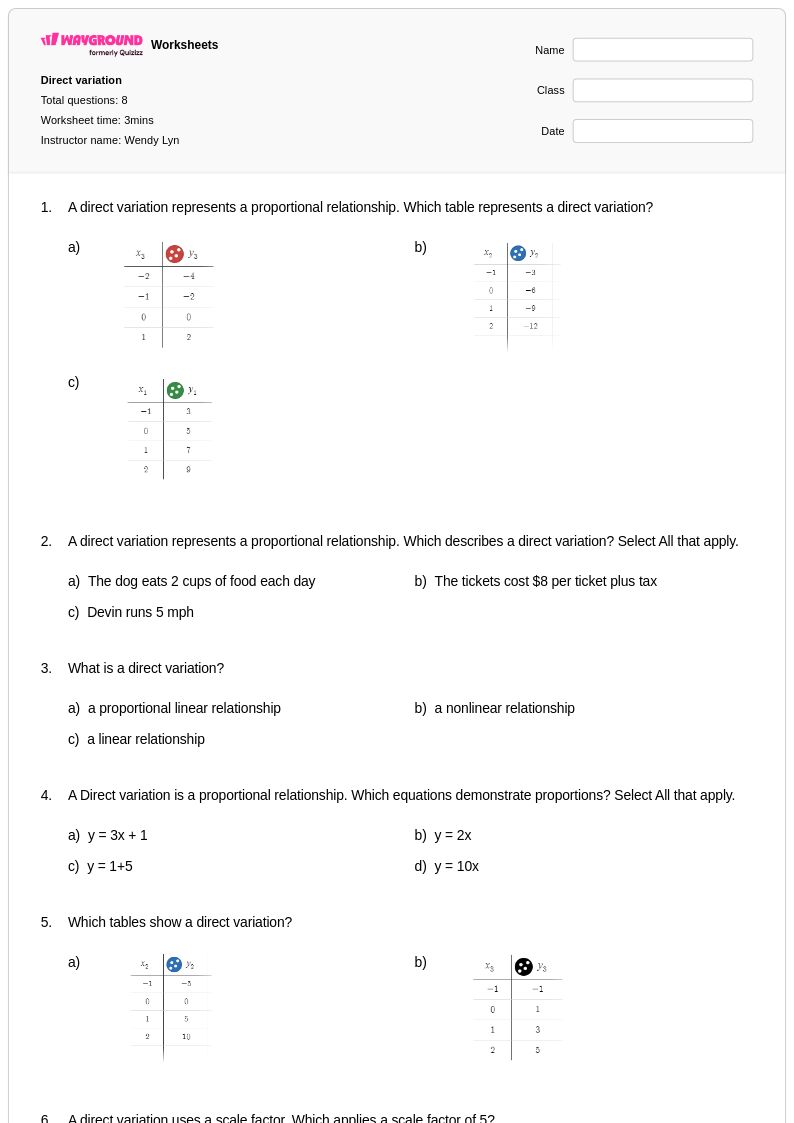
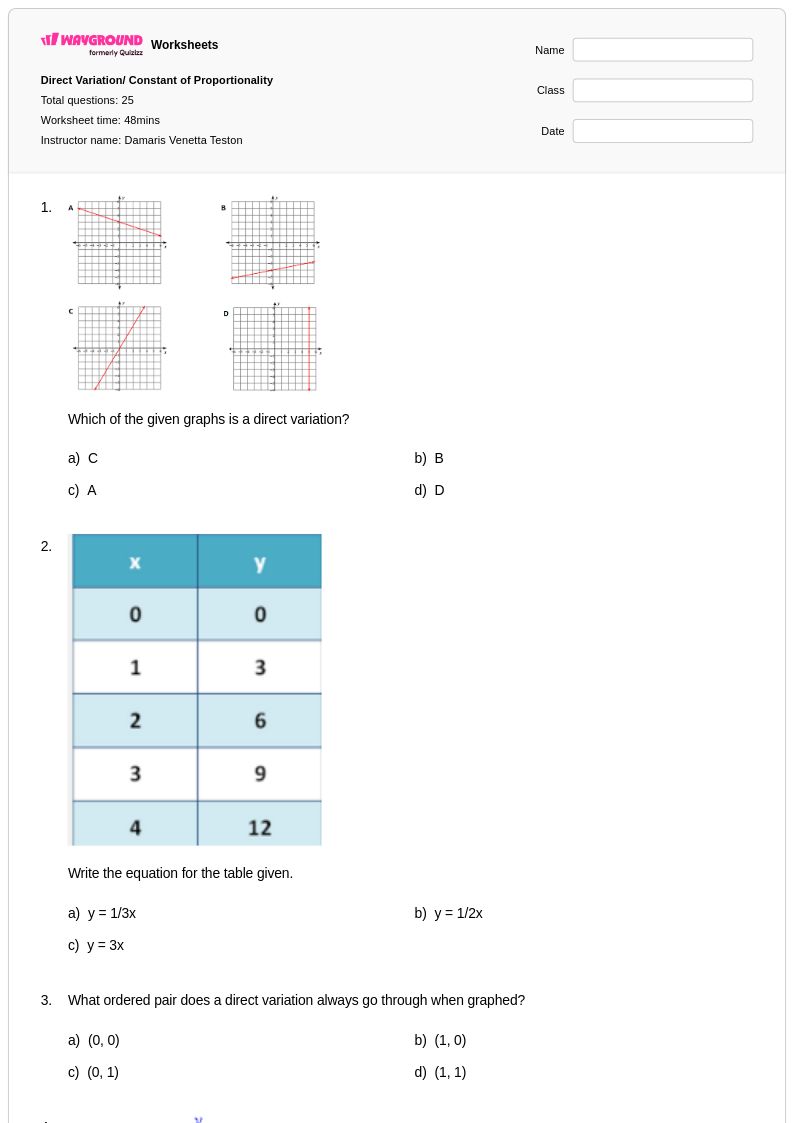
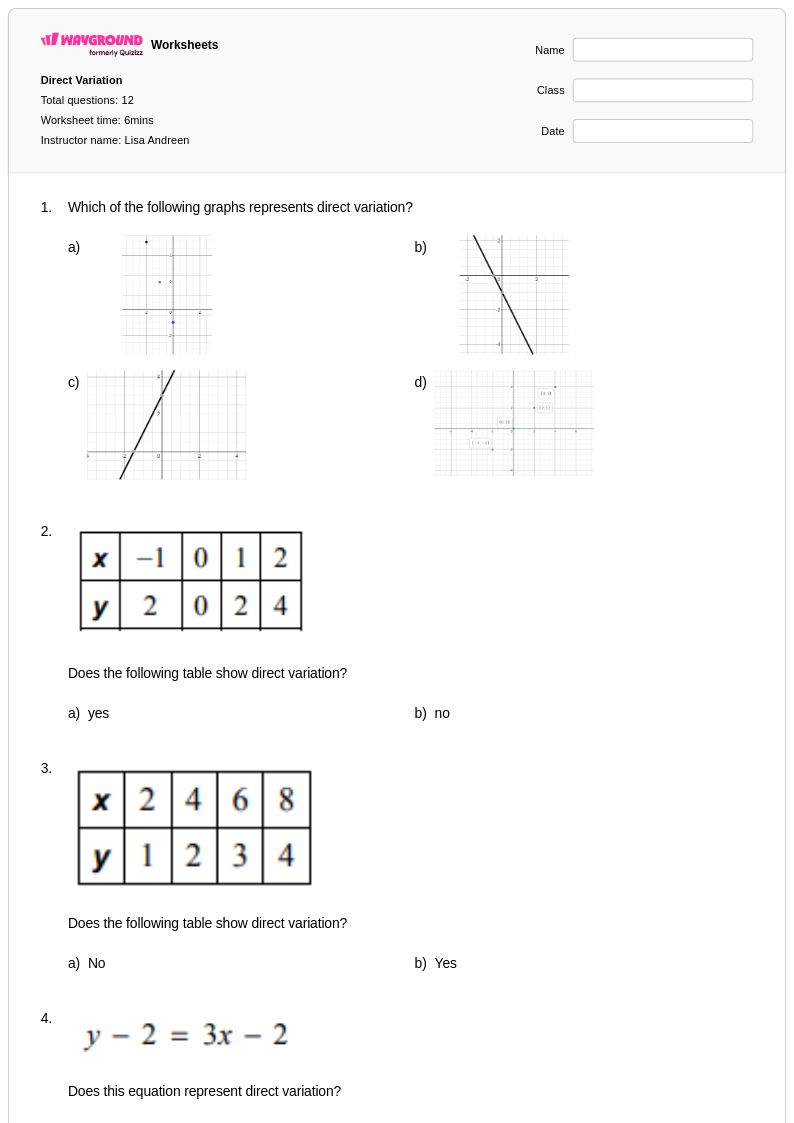
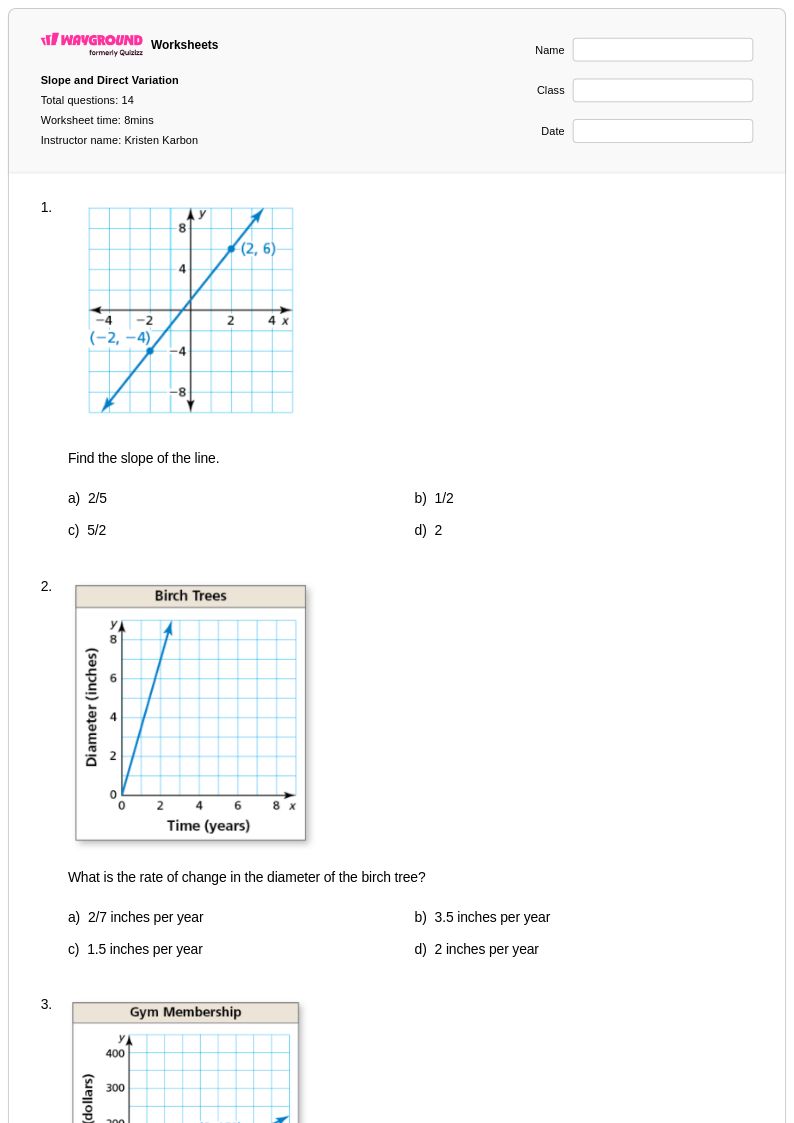
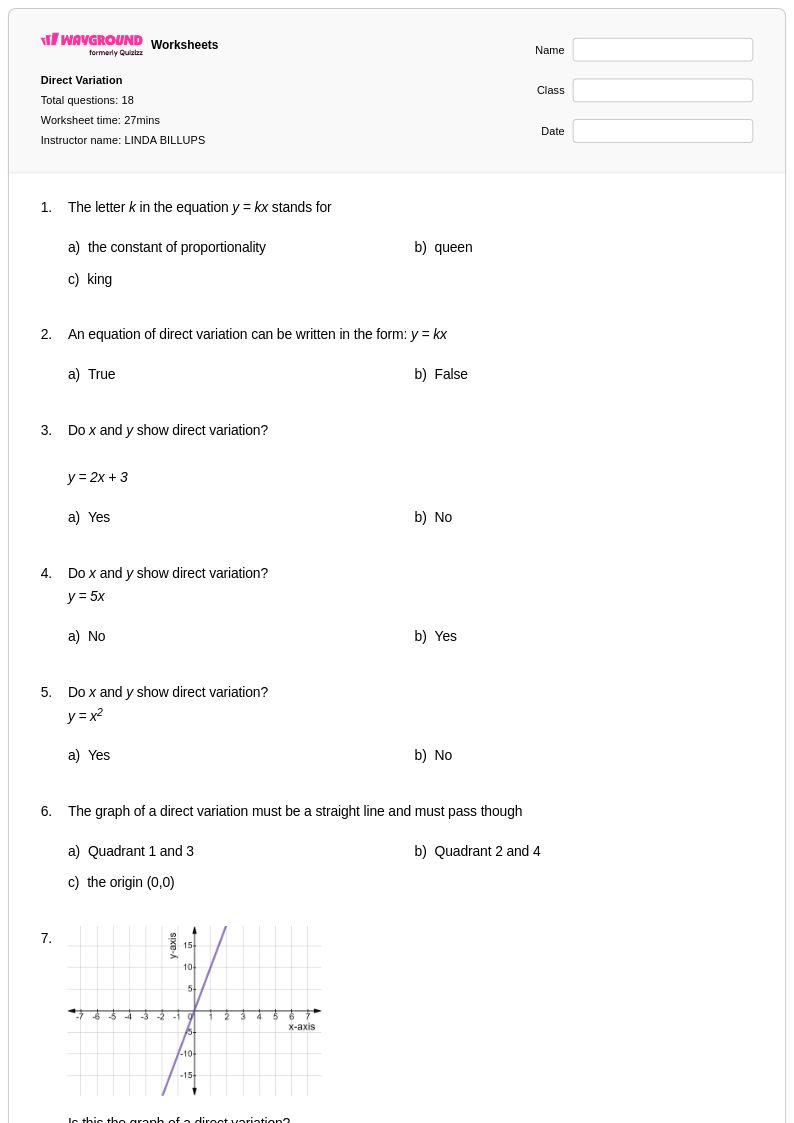
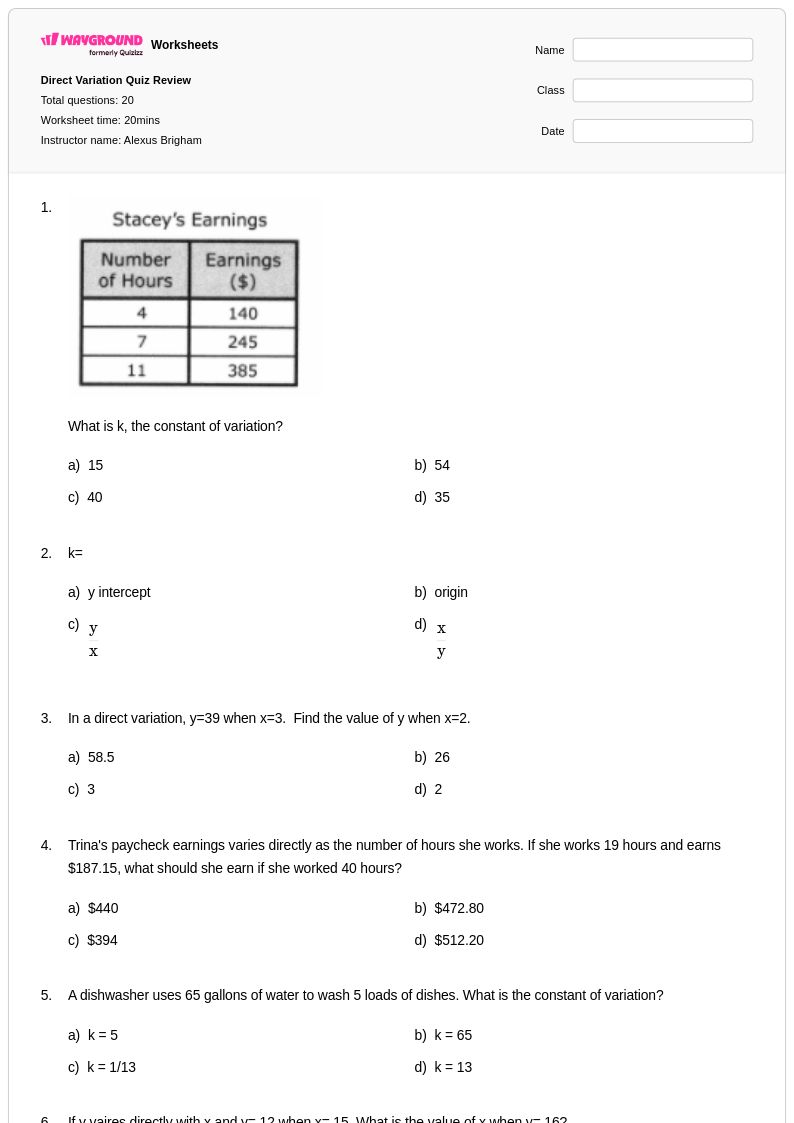
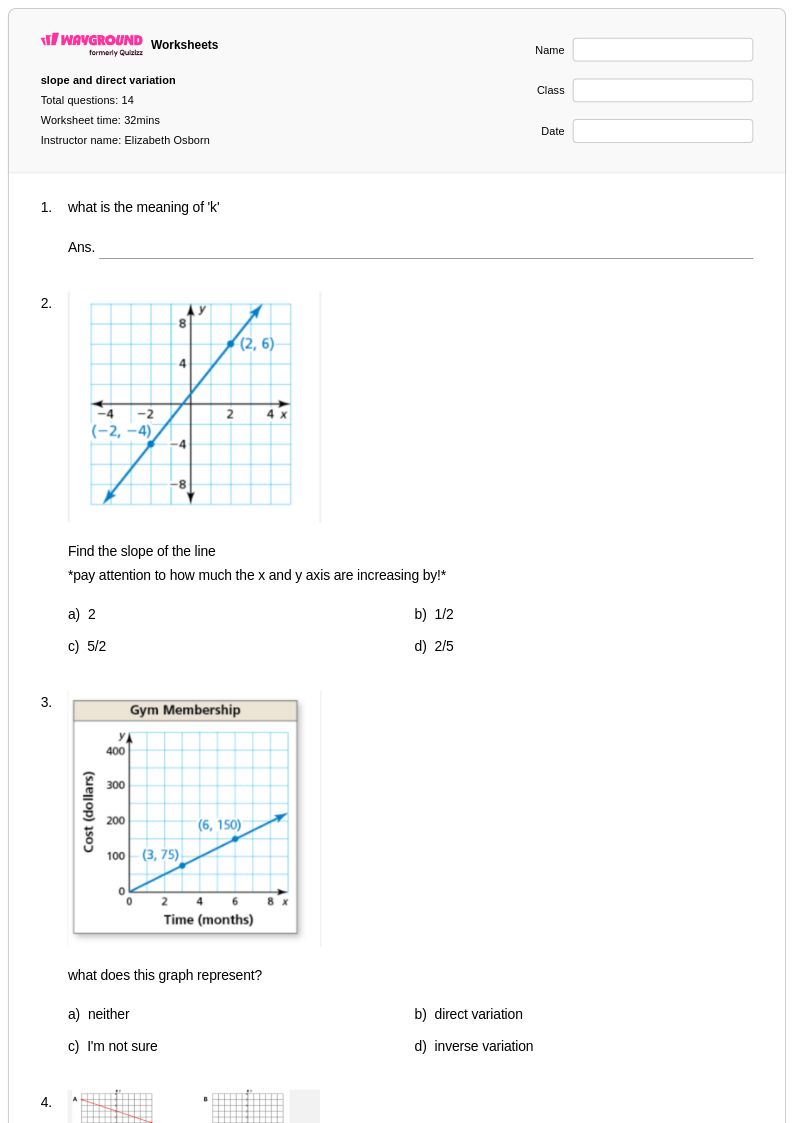
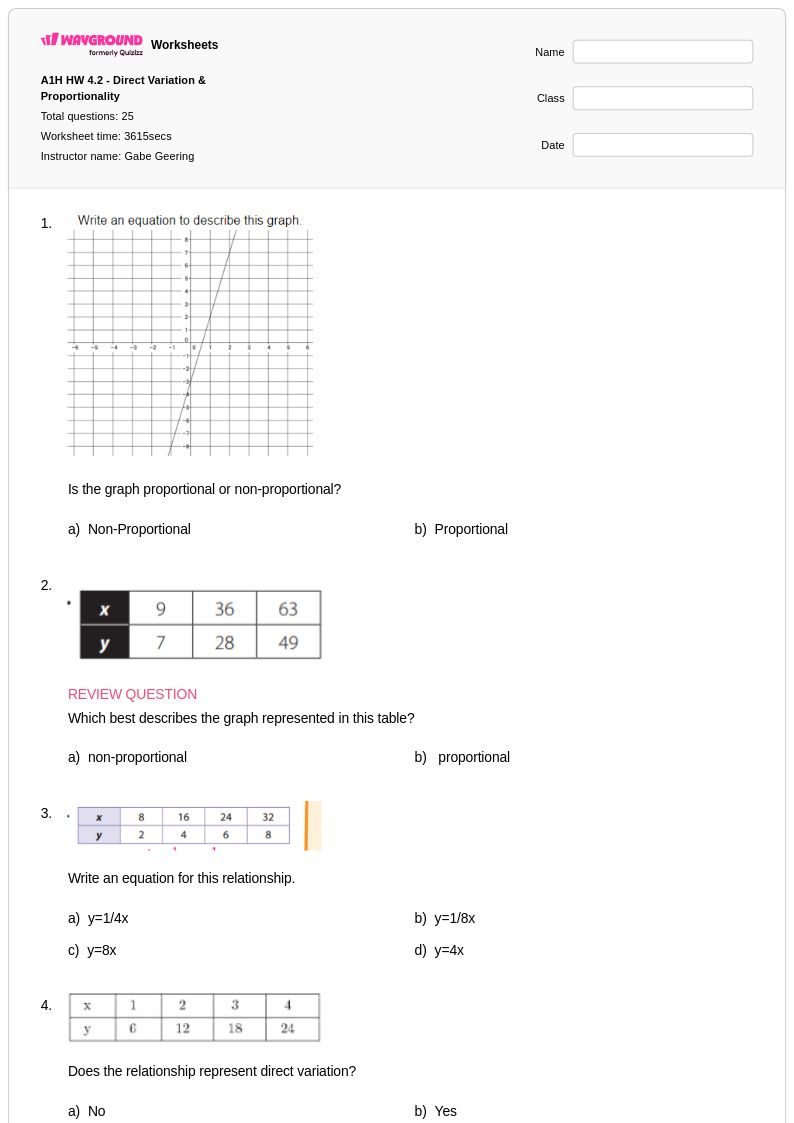
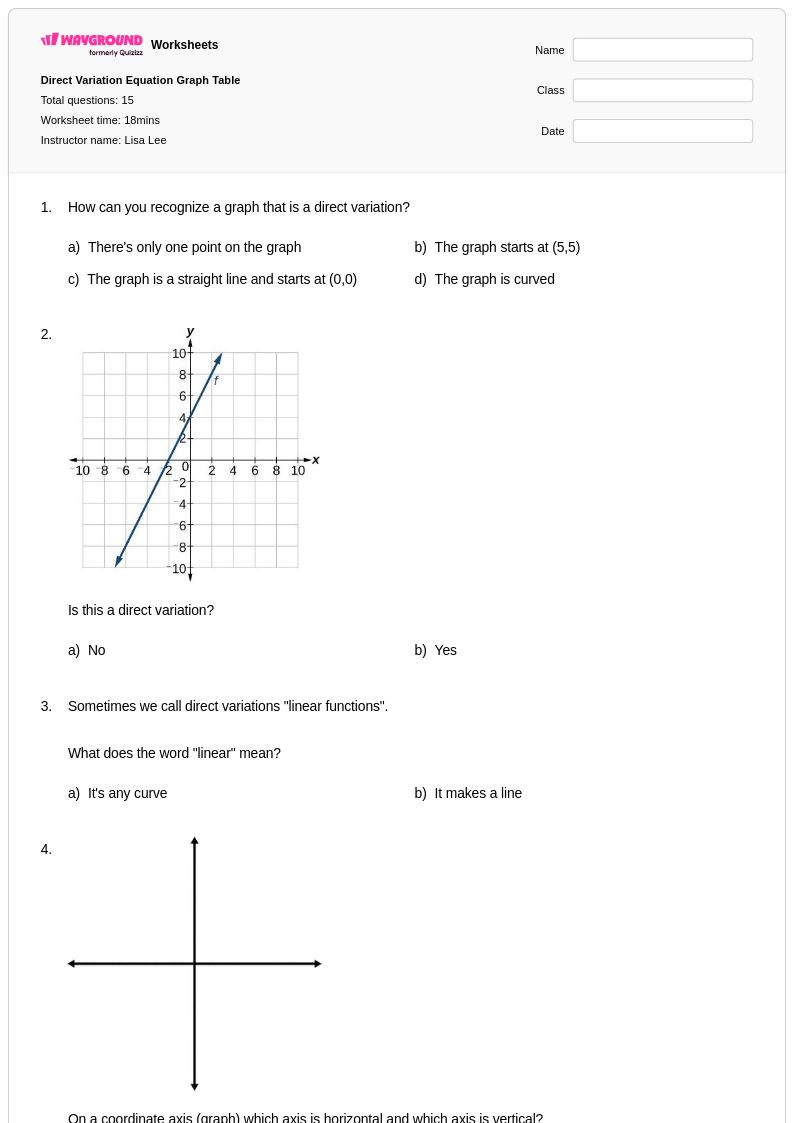
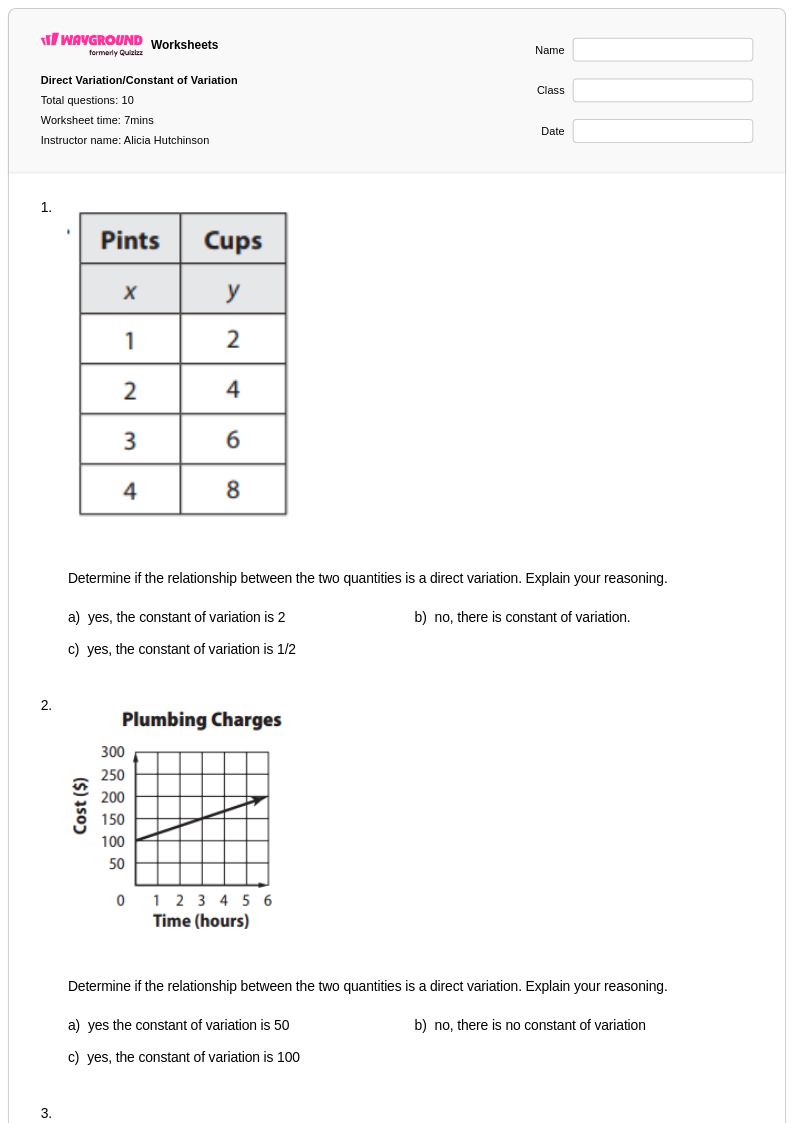
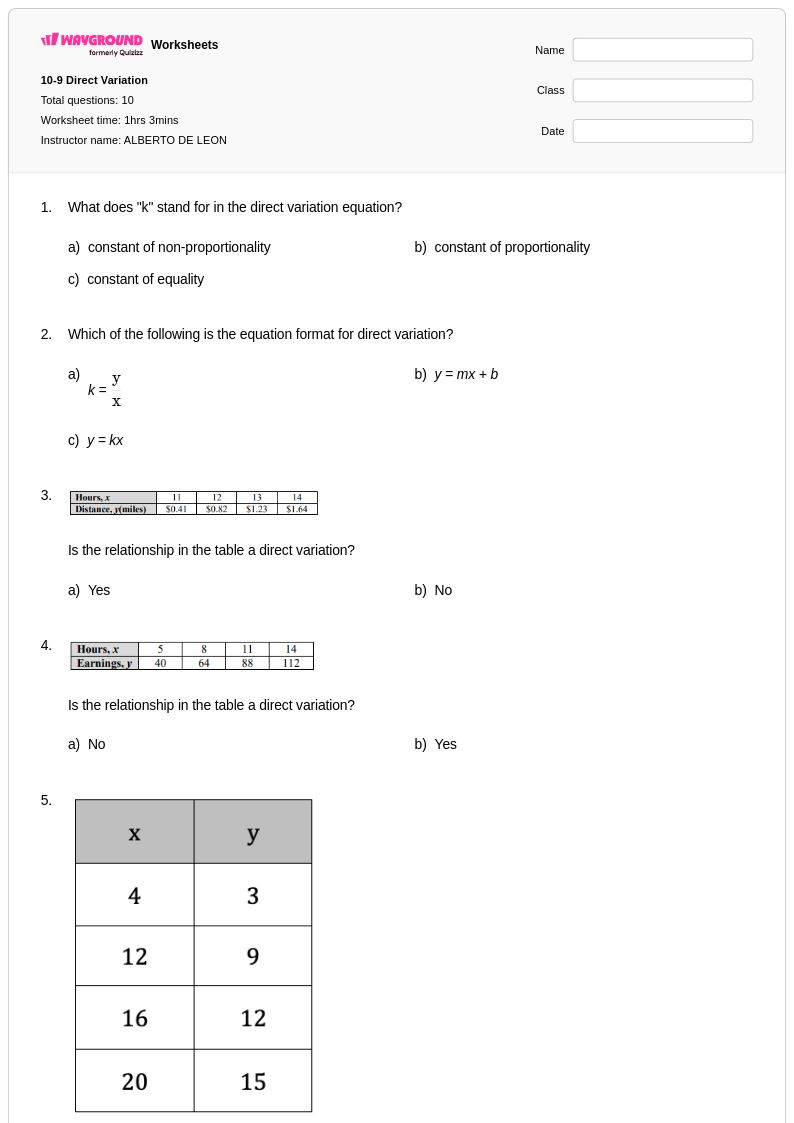
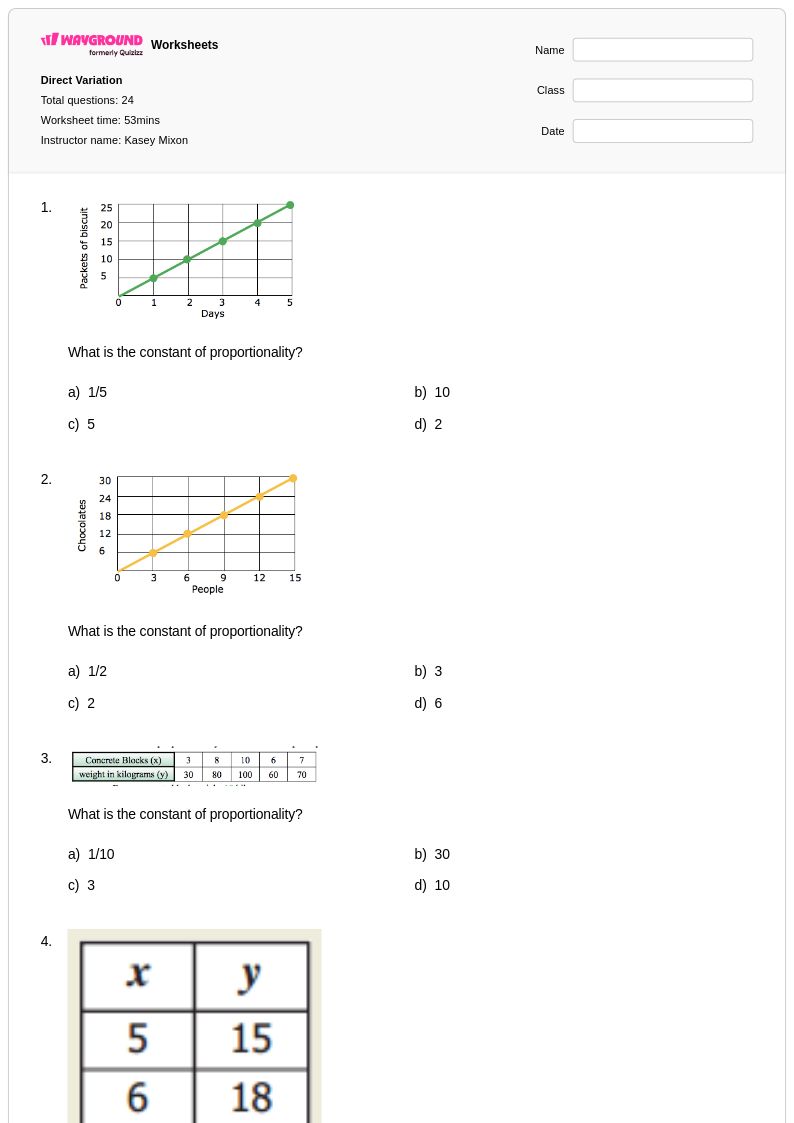
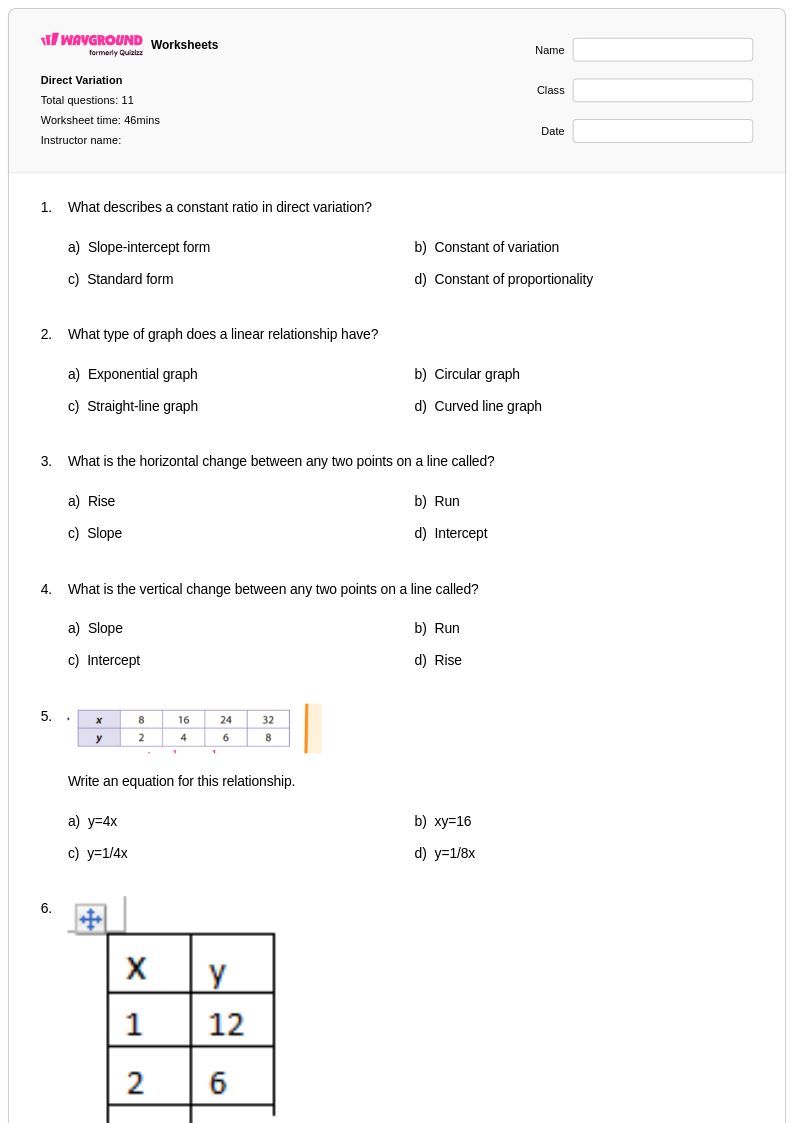
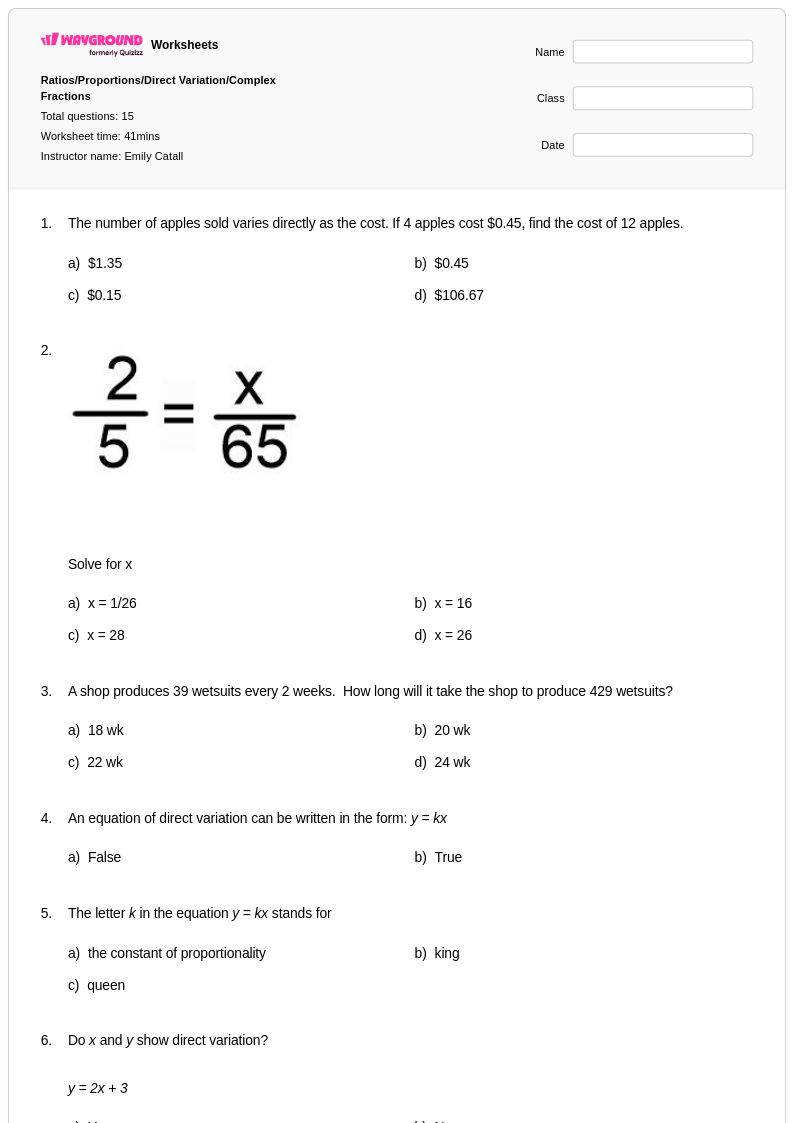
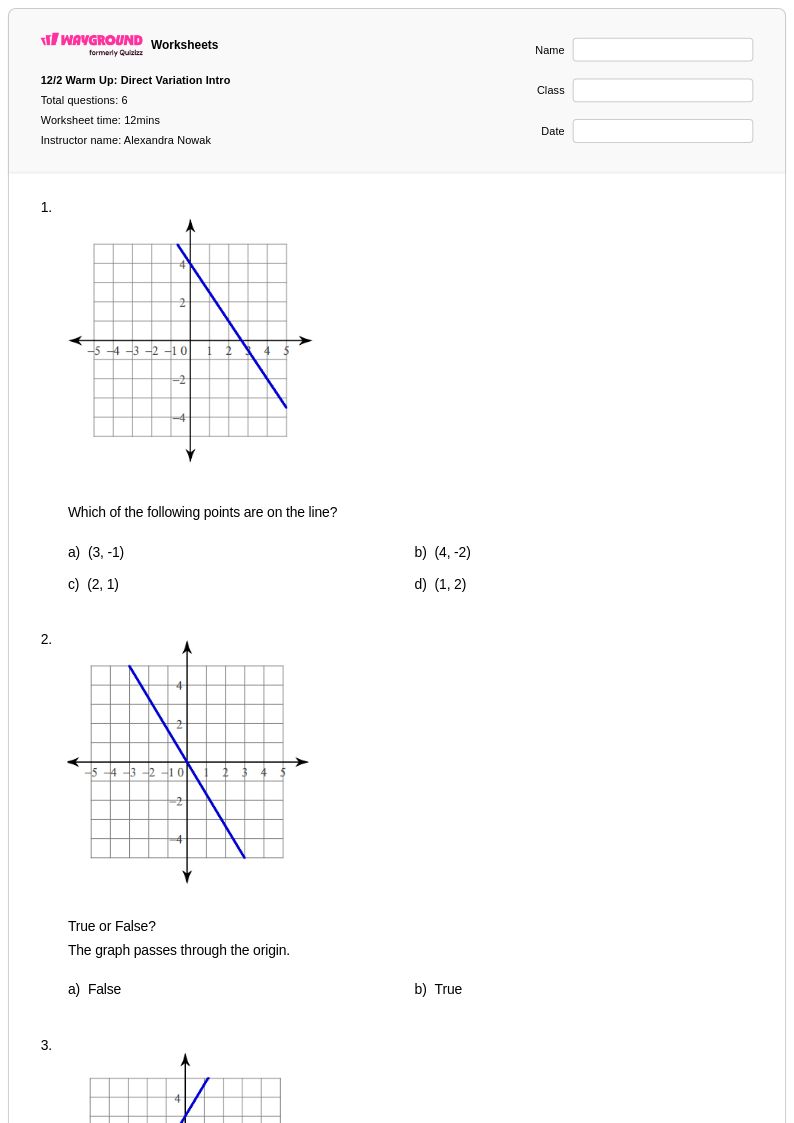
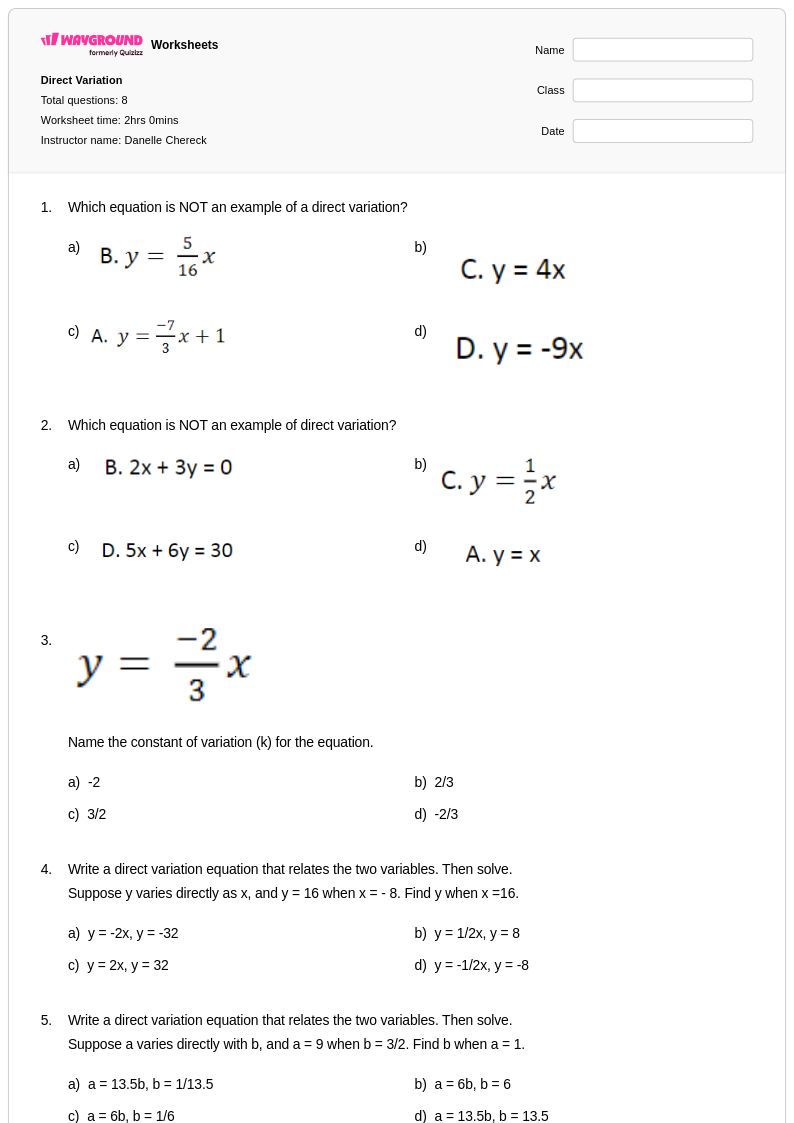
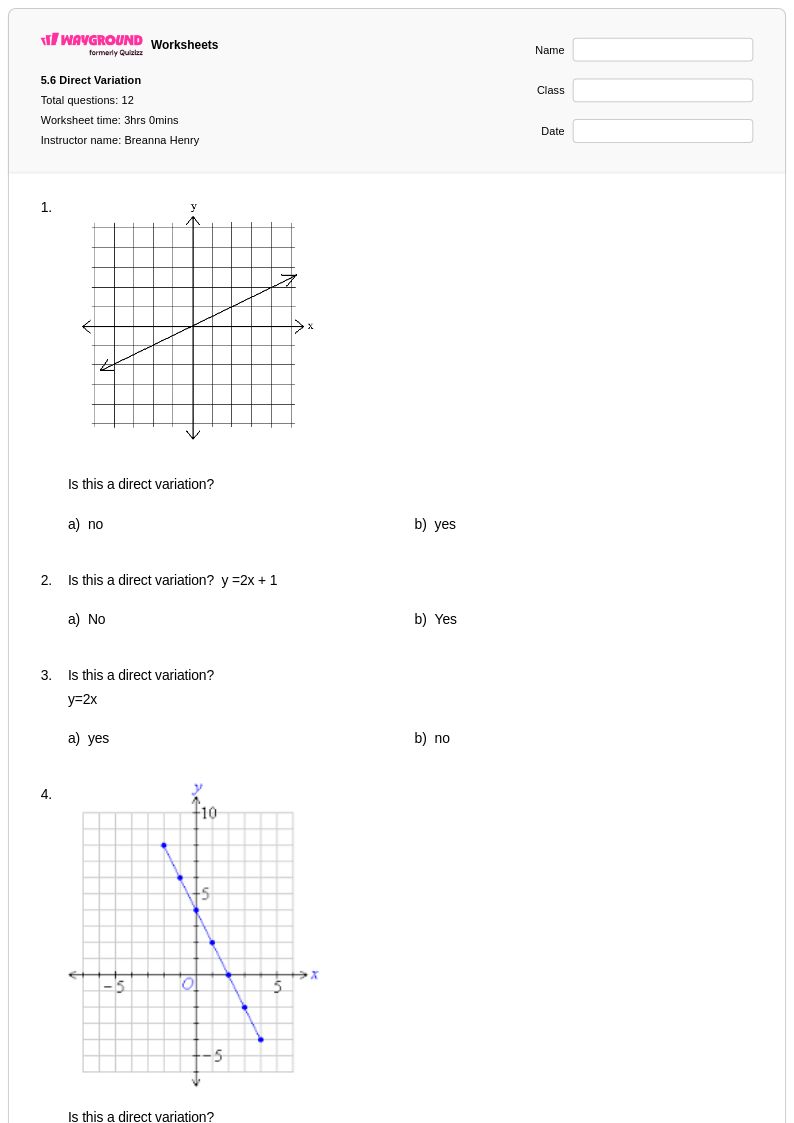
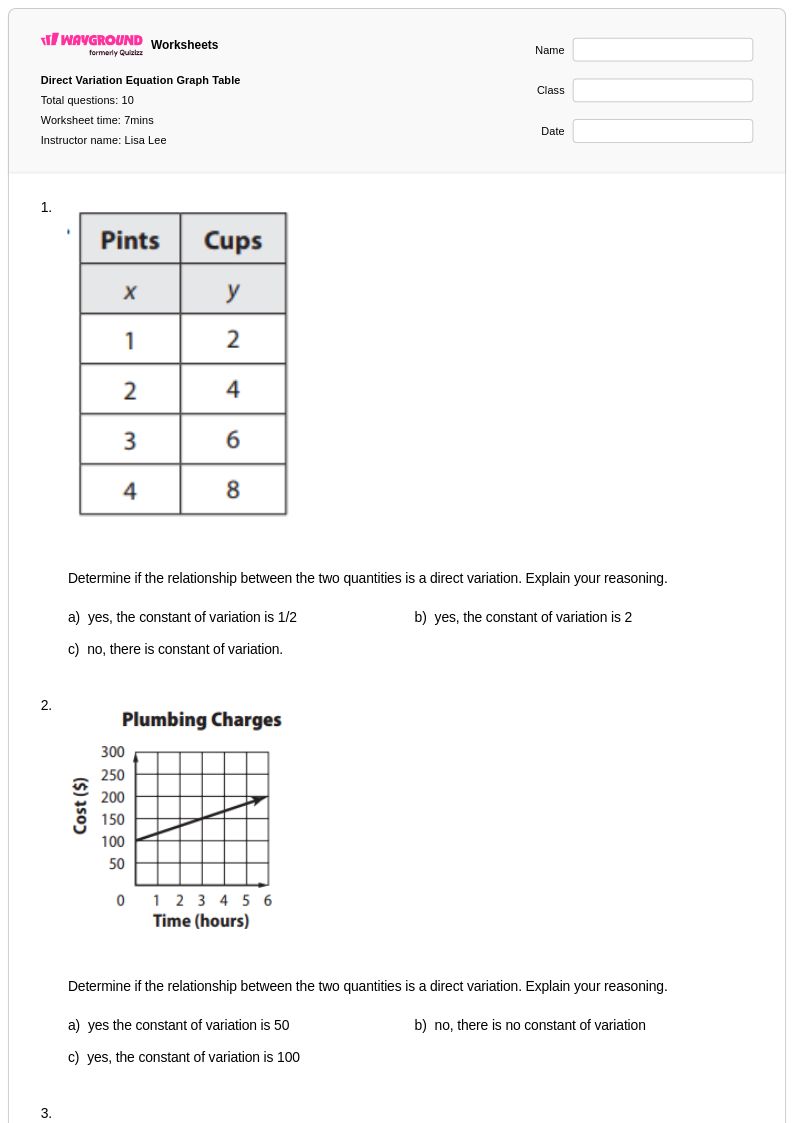
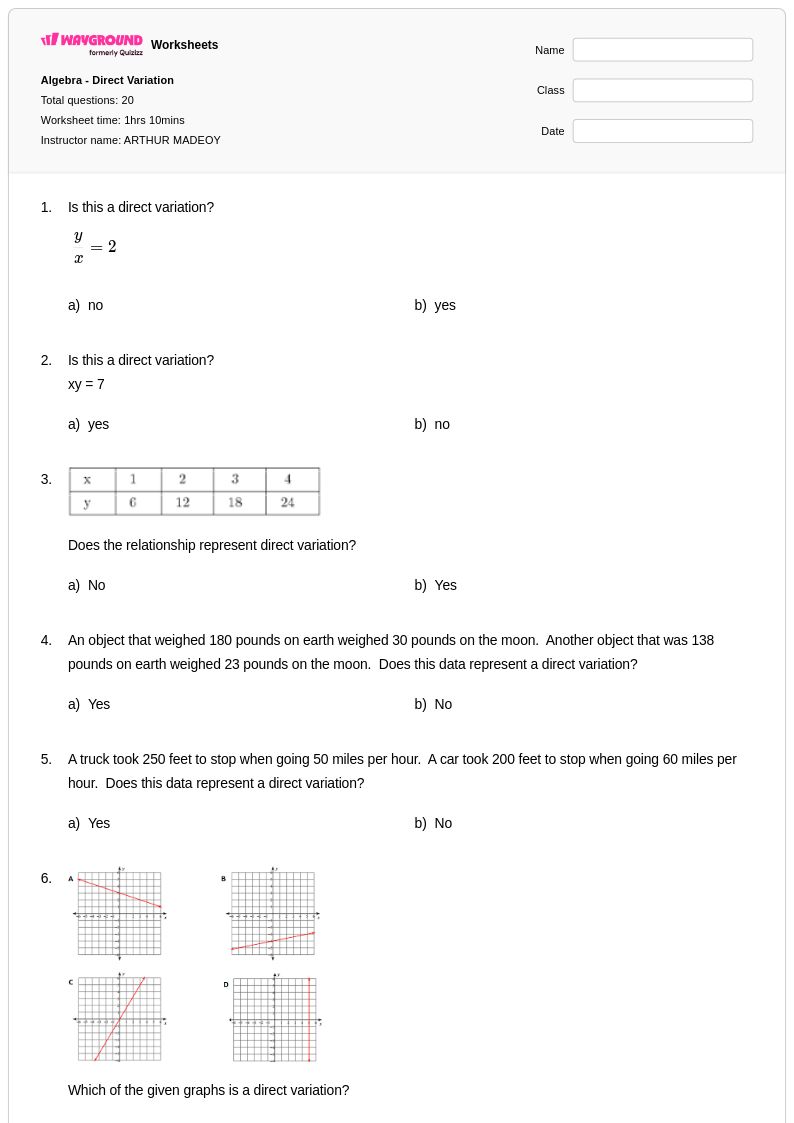
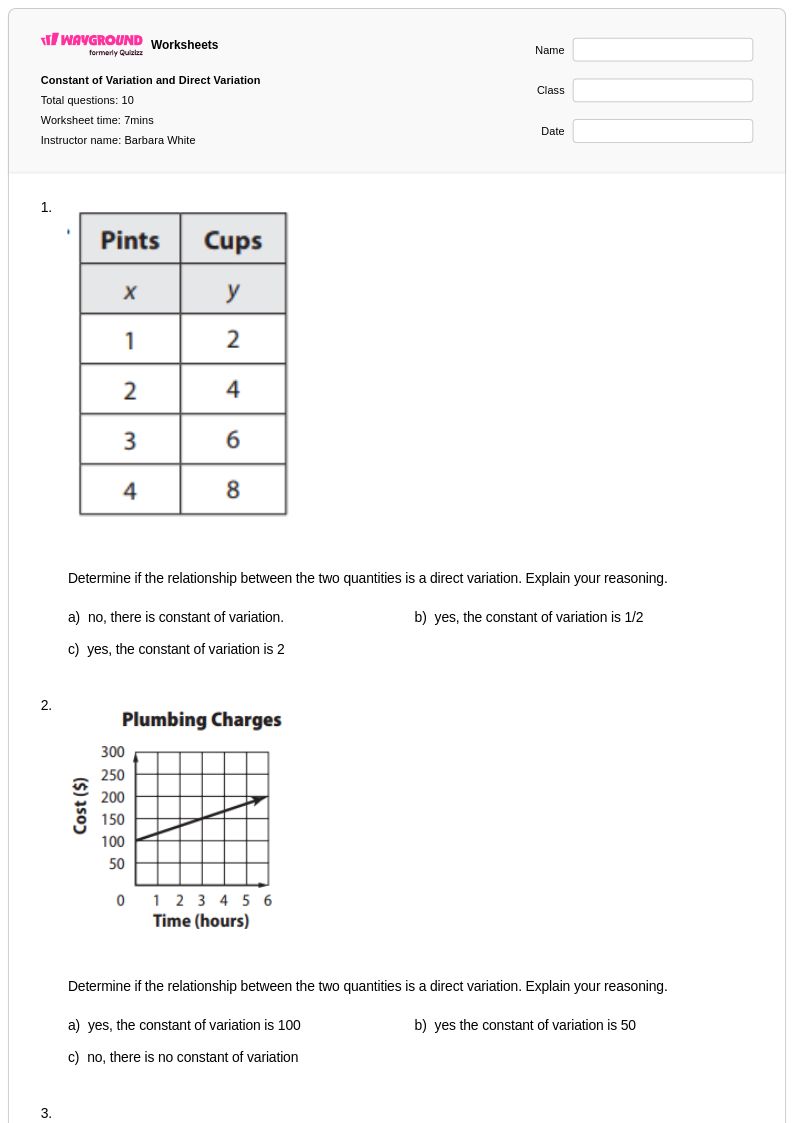
Direct variation worksheets for Year 6 through Wayground (formerly Quizizz) provide students with comprehensive practice in understanding proportional relationships where one variable changes at a constant rate relative to another. These carefully designed worksheets help sixth graders master the fundamental concept that in direct variation, as one quantity increases or decreases, the other changes proportionally, expressed through the relationship y = kx where k represents the constant of variation. Students develop critical algebraic thinking skills by working through practice problems that involve identifying direct variation relationships, calculating constants of variation, and creating tables and graphs that demonstrate these proportional connections. Each worksheet collection includes detailed answer keys and is available as free printables in convenient pdf format, allowing educators to seamlessly integrate direct variation practice into their mathematics instruction.
Wayground (formerly Quizizz) empowers teachers with an extensive library of millions of teacher-created direct variation resources specifically aligned with Year 6 mathematics standards, featuring robust search and filtering capabilities that help educators quickly locate worksheets suited to their instructional needs. The platform's differentiation tools enable teachers to customize worksheet difficulty levels and problem types to accommodate diverse learning styles and skill levels within their classrooms, while the flexibility of both printable and digital pdf formats supports various teaching environments and student preferences. These comprehensive worksheet collections streamline lesson planning by providing ready-to-use materials for initial skill introduction, targeted remediation for struggling learners, and enrichment opportunities for advanced students, ensuring that all sixth graders can build confidence and competency in recognizing and working with direct variation relationships in algebraic contexts.
FAQs
How do I introduce direct variation to 6th graders?
Sixth graders respond well to ratio tables they've already seen — distance and time, cost per item — before any algebra is introduced. Build a table together, ask students what stays the same as the numbers change, and surface the idea of a constant ratio. Once that's solid, introduce y = kx as a shorthand for what they already found. Graphing the relationship last, and pointing out that it always passes through the origin, gives students a visual anchor they can return to when the problems get harder.
What direct variation skills should 6th graders be practicing?
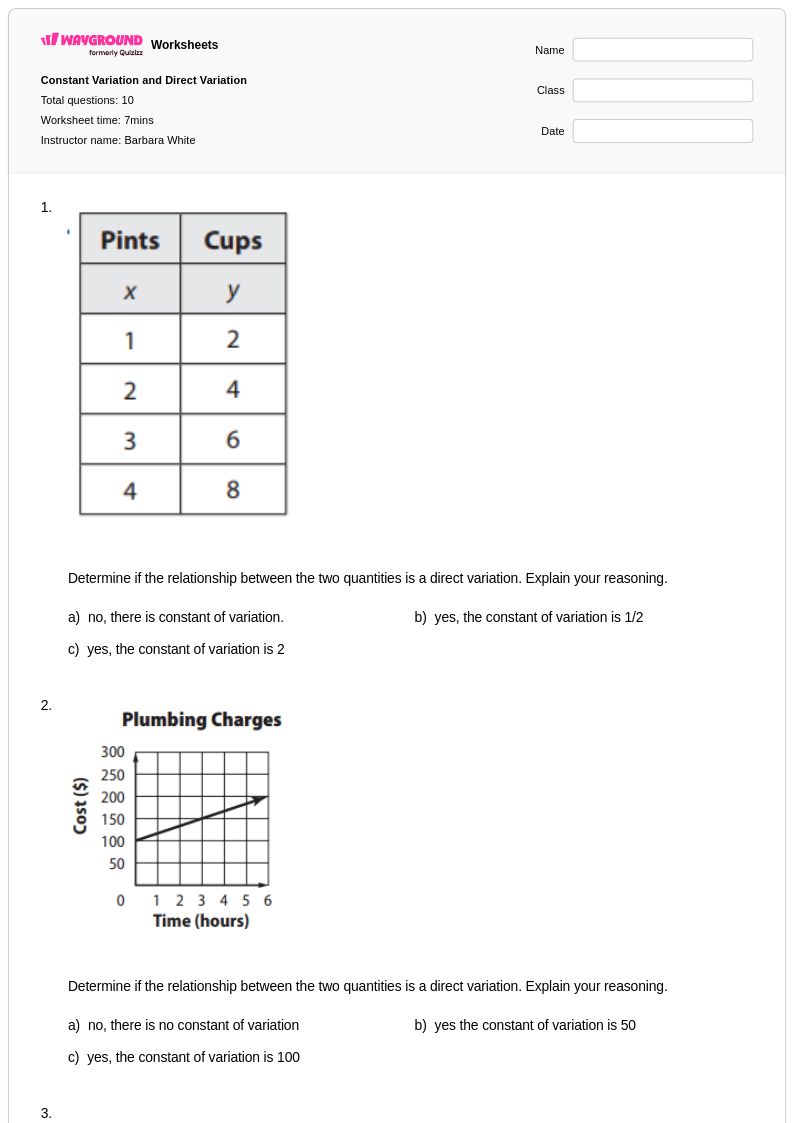
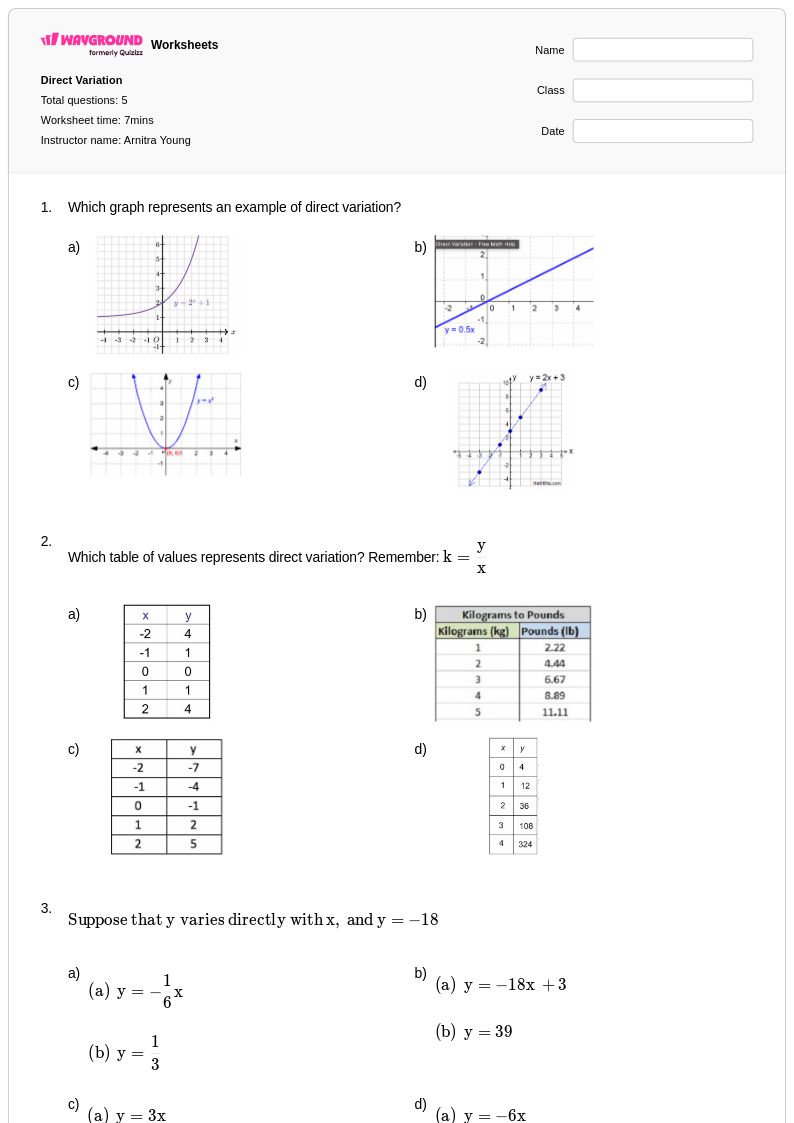
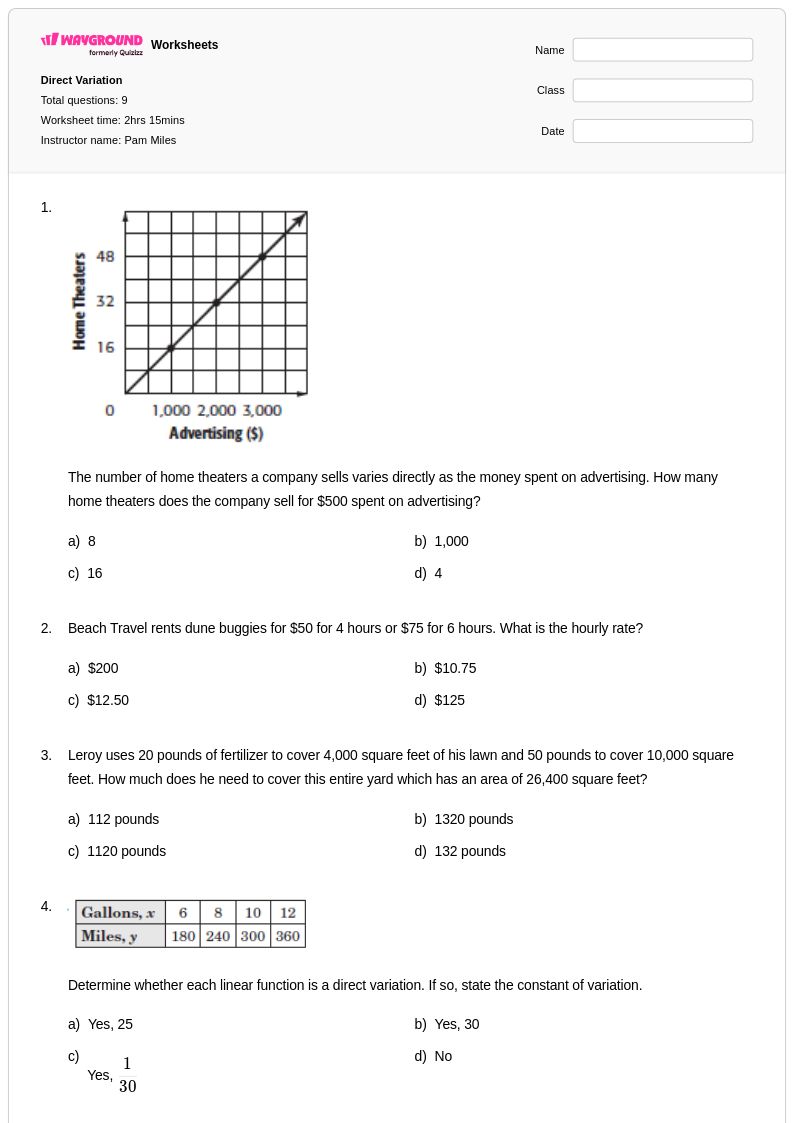
At grade 6, the core skills are: identifying whether a table of values shows a constant ratio, calculating k from a given pair of values, and writing the equation y = kx. Graphing the relationship is also appropriate here — students should be able to plot points from a table and recognize the straight line through the origin as the signature of direct variation. Wayground's grade 6 worksheets progress through these skills in order, so students aren't asked to write equations before they can reliably spot the pattern.
What misconceptions do 6th graders have about direct variation?
The most common one: students see any table where both columns increase and call it direct variation. They haven't yet internalized that the ratio between corresponding values must be constant, not just that both quantities grow. A quick fix is to include non-examples in practice — tables where the differences are constant but the ratios aren't — and ask students to explain why those don't qualify.
How do I use these grade 6 direct variation worksheets?
Assign them as a digital quiz on Wayground and students can work through problems on any device, with results available to you immediately. Prefer paper? Download the PDF — every worksheet includes a full answer key, so students can self-check as they go. Printed worksheets also work well for schools managing screen time, and the Wayground for Teachers app makes grading paper submissions straightforward by letting you scan or photograph student work.
Is direct variation part of the 6th grade Common Core math standards?
Direct variation isn't named explicitly in Common Core at grade 6, but it grows directly out of the grade 6 focus on ratios and proportional relationships. Students at this level are expected to understand unit rates, recognize constant ratios in tables, and represent proportional relationships — all of which are the conceptual groundwork for y = kx. Formally naming the relationship as direct variation and writing it as an equation typically comes in grade 7, so grade 6 practice is best framed as building the ratio fluency that makes that transition smooth.
What grade level is direct variation taught?
Direct variation is typically introduced in grades 6–7, where it connects to the proportional relationships strand, and then revisited in grades 8–9 within the context of linear functions and algebra. Grade 6 students work with the underlying concept through ratio tables and unit rates; the formal equation y = kx and the term 'constant of variation' are usually introduced in grade 7 or early grade 8.