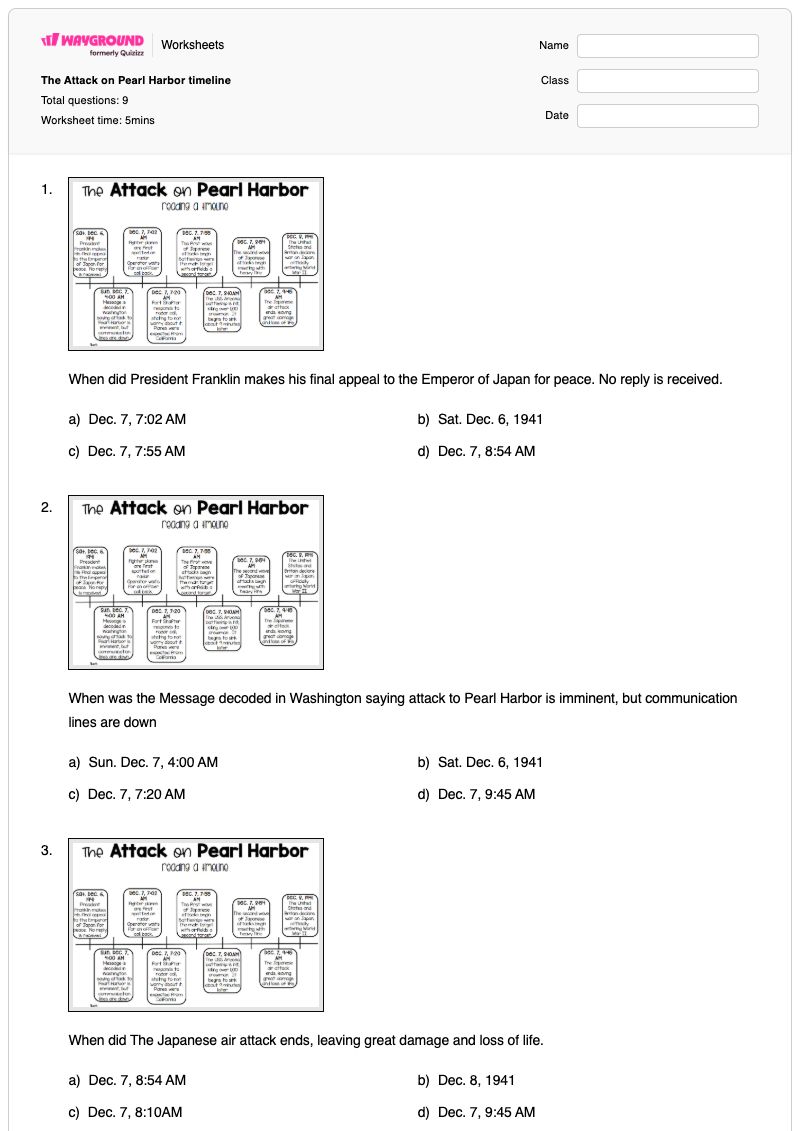
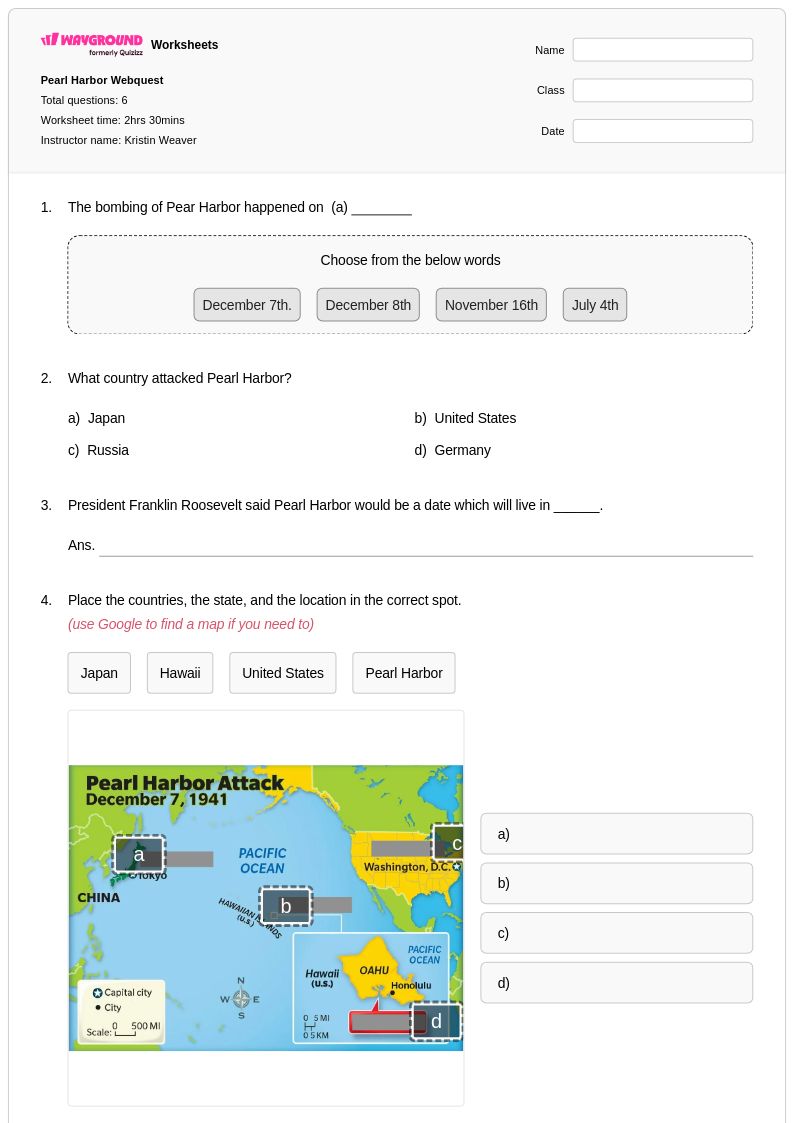
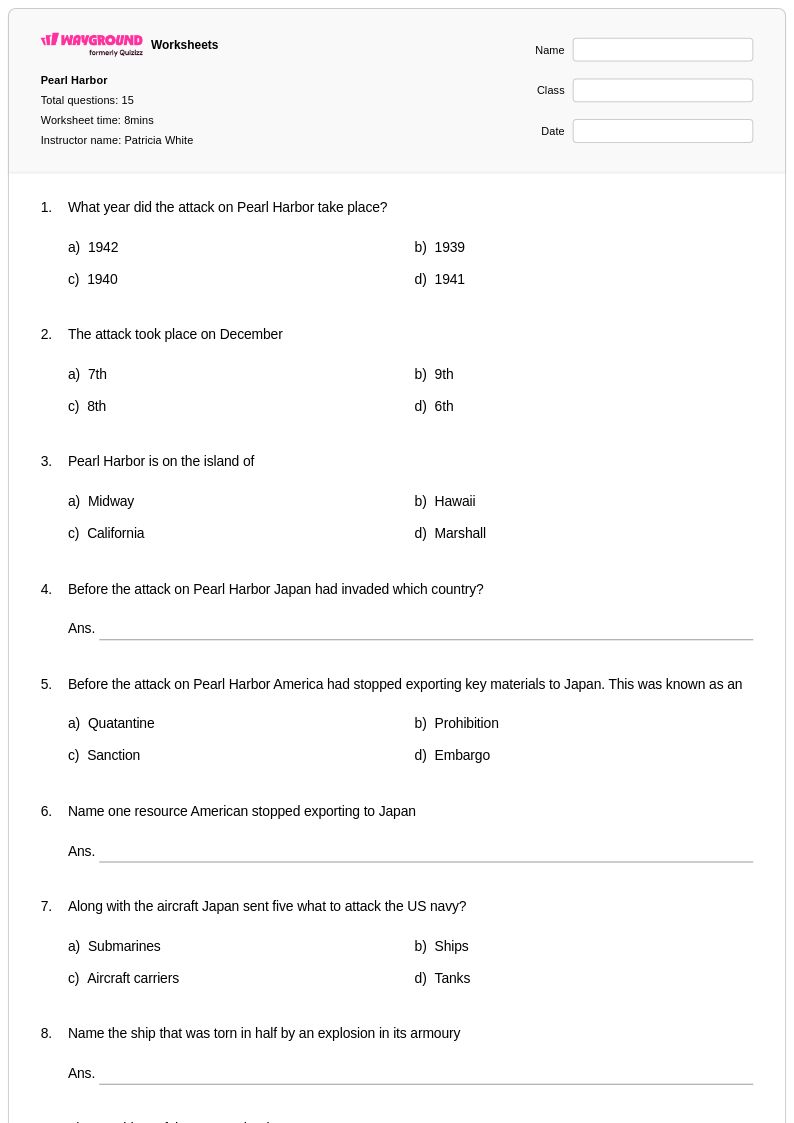
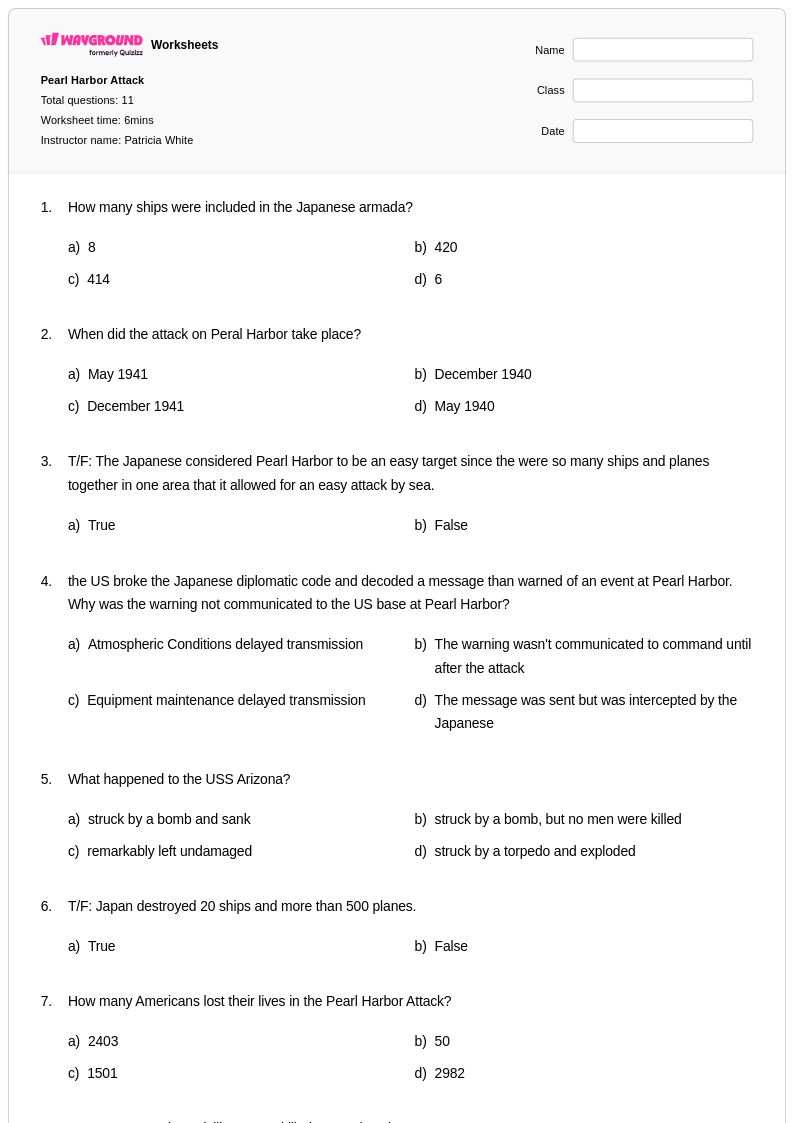
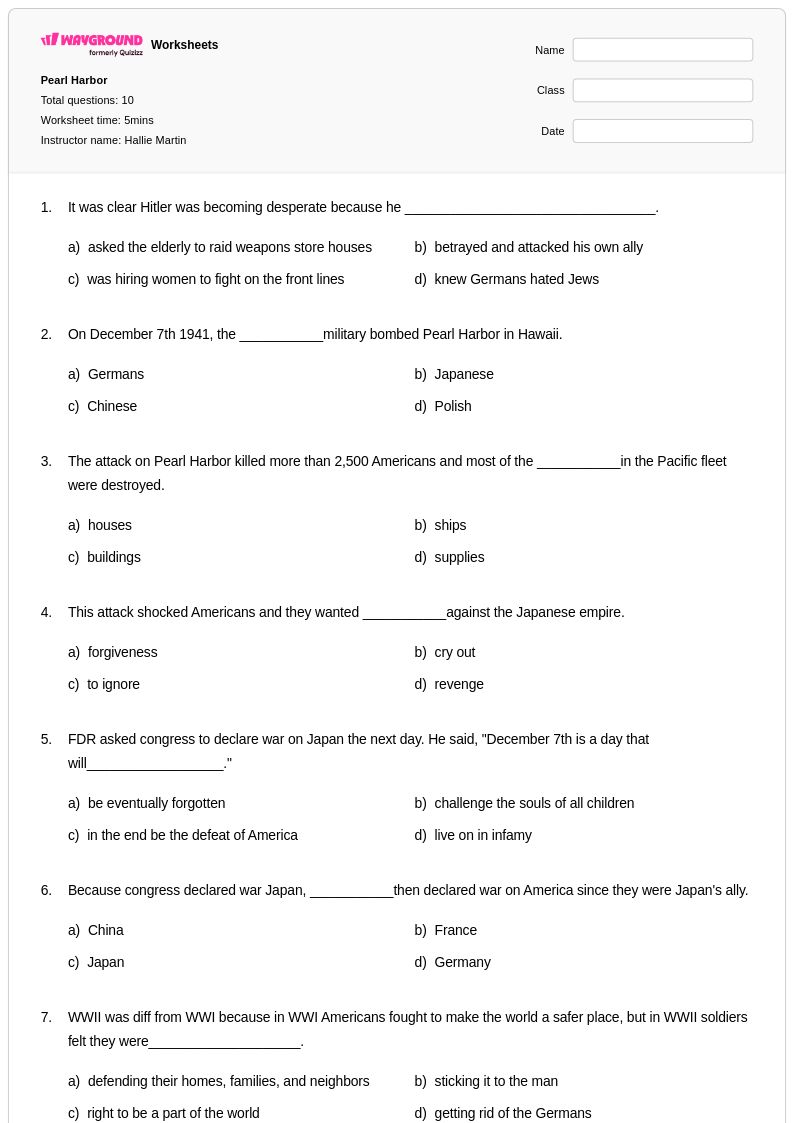
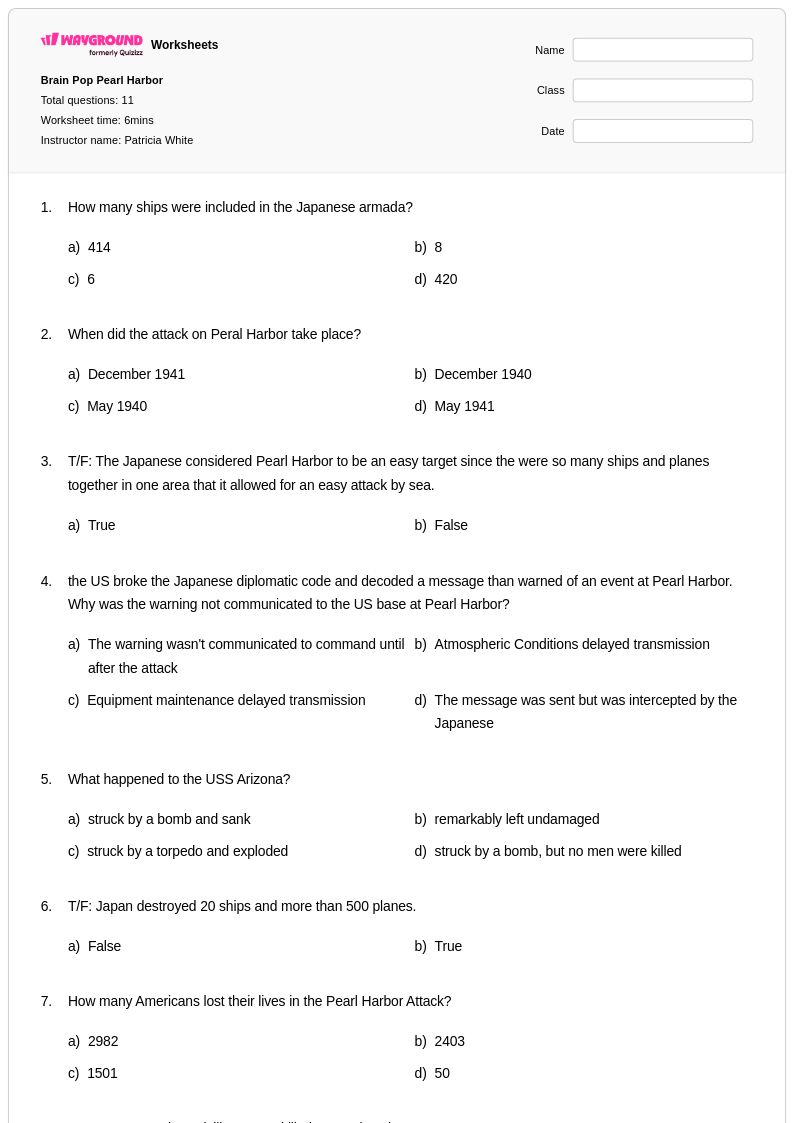
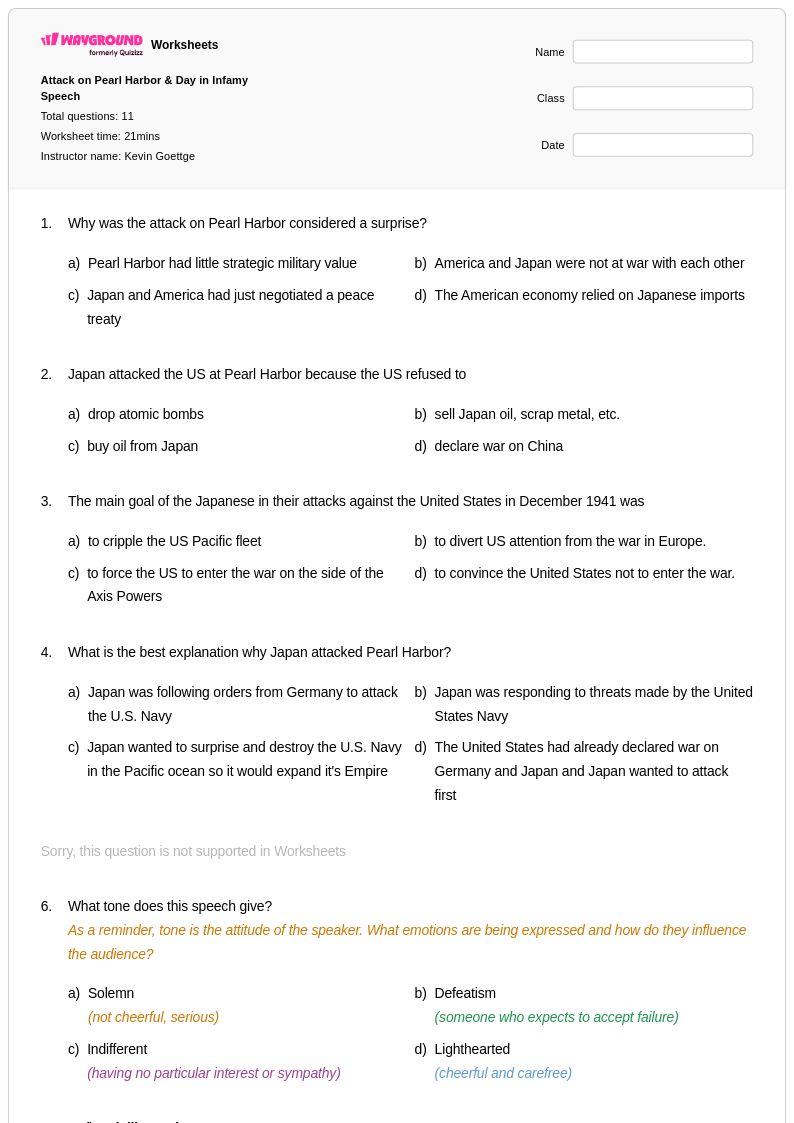
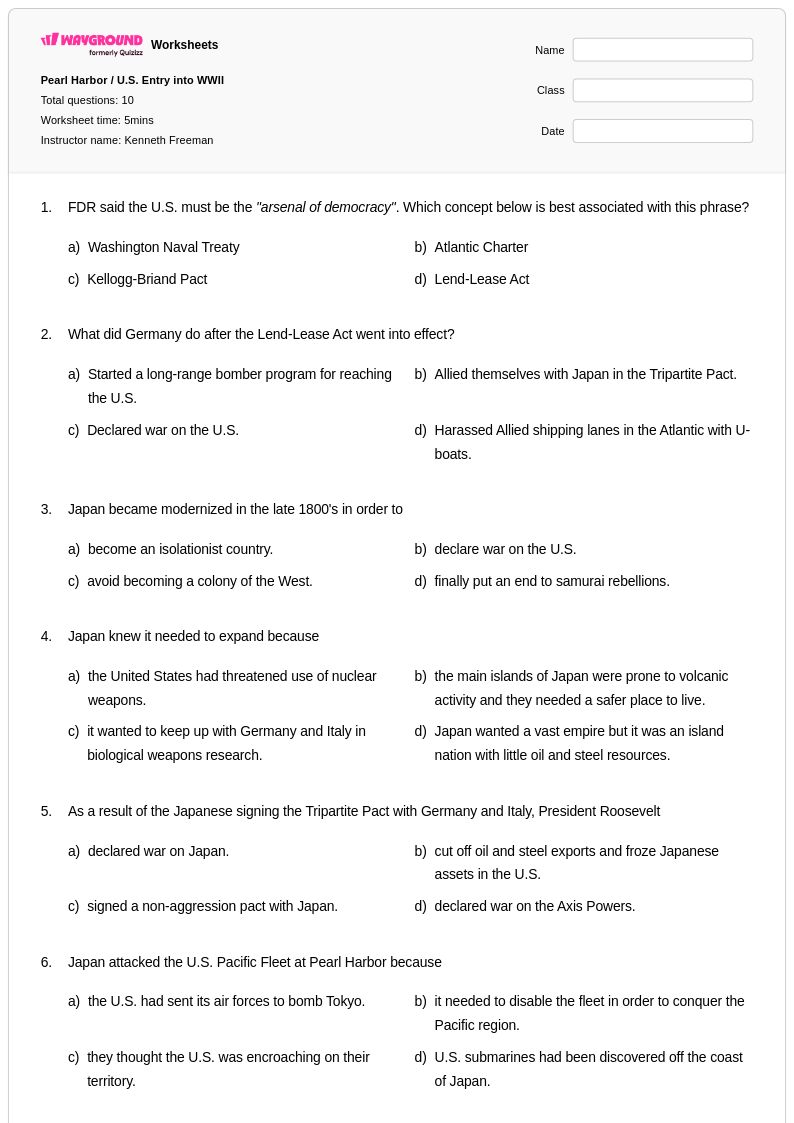
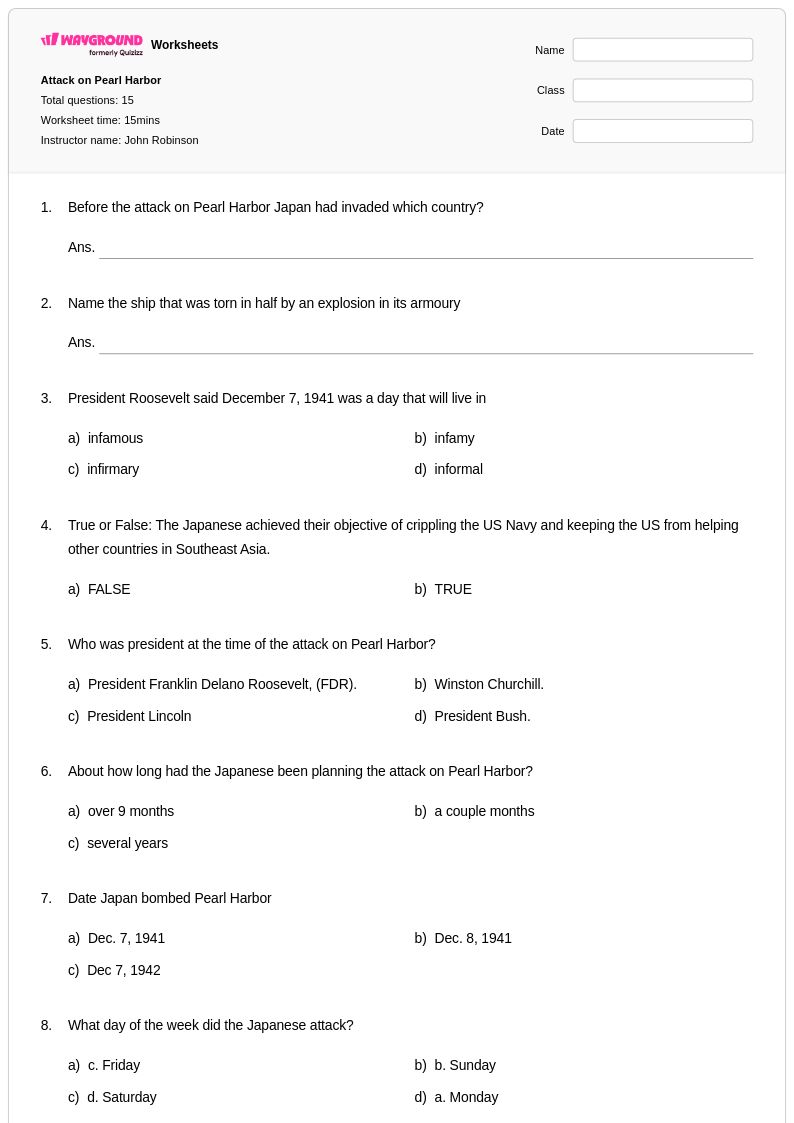
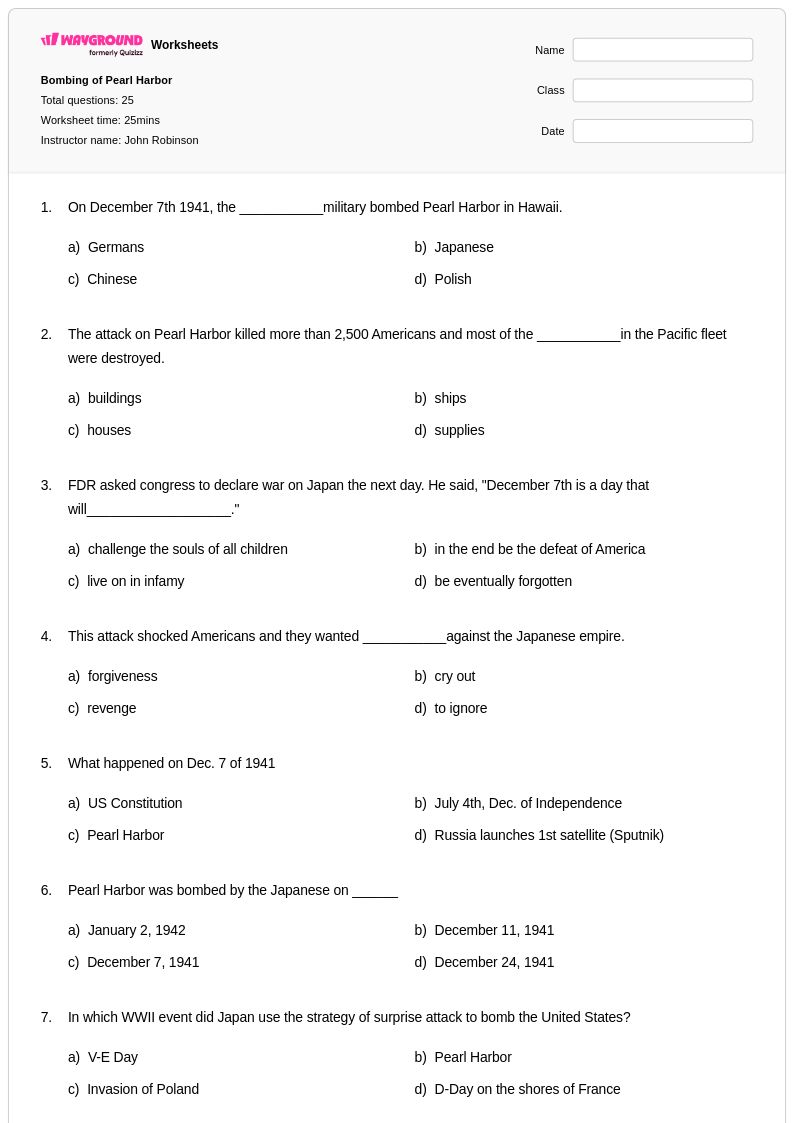
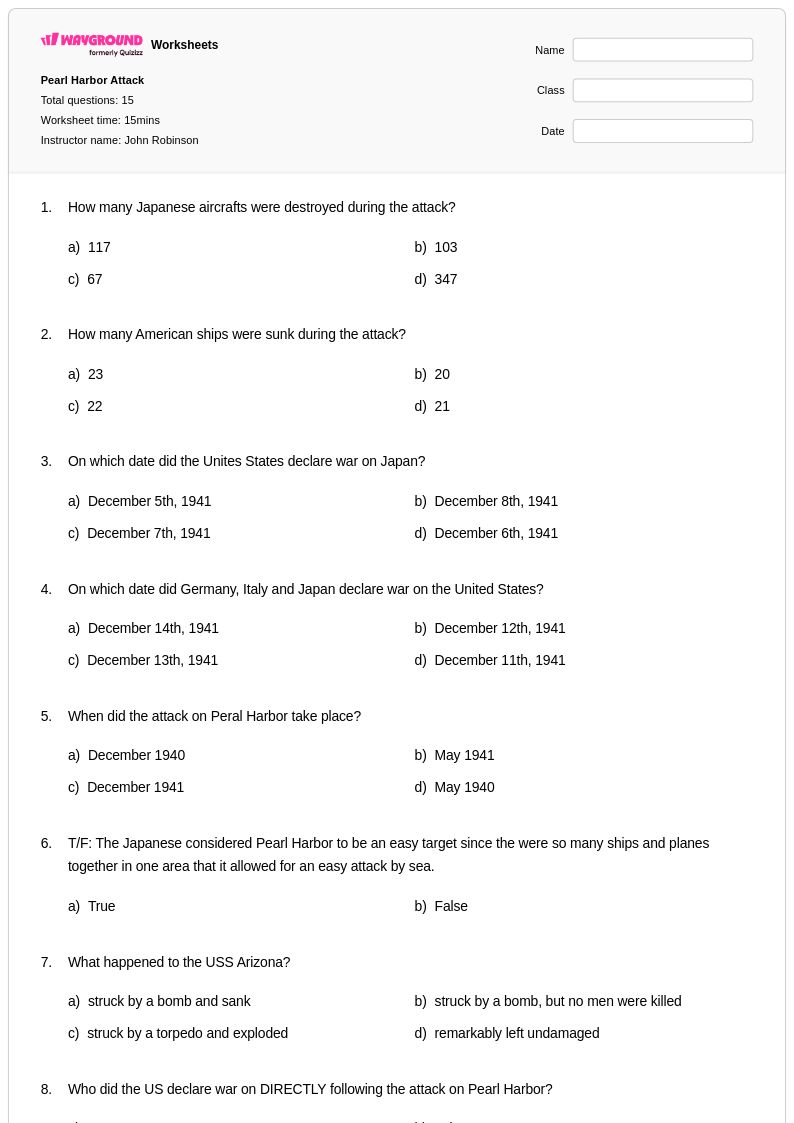
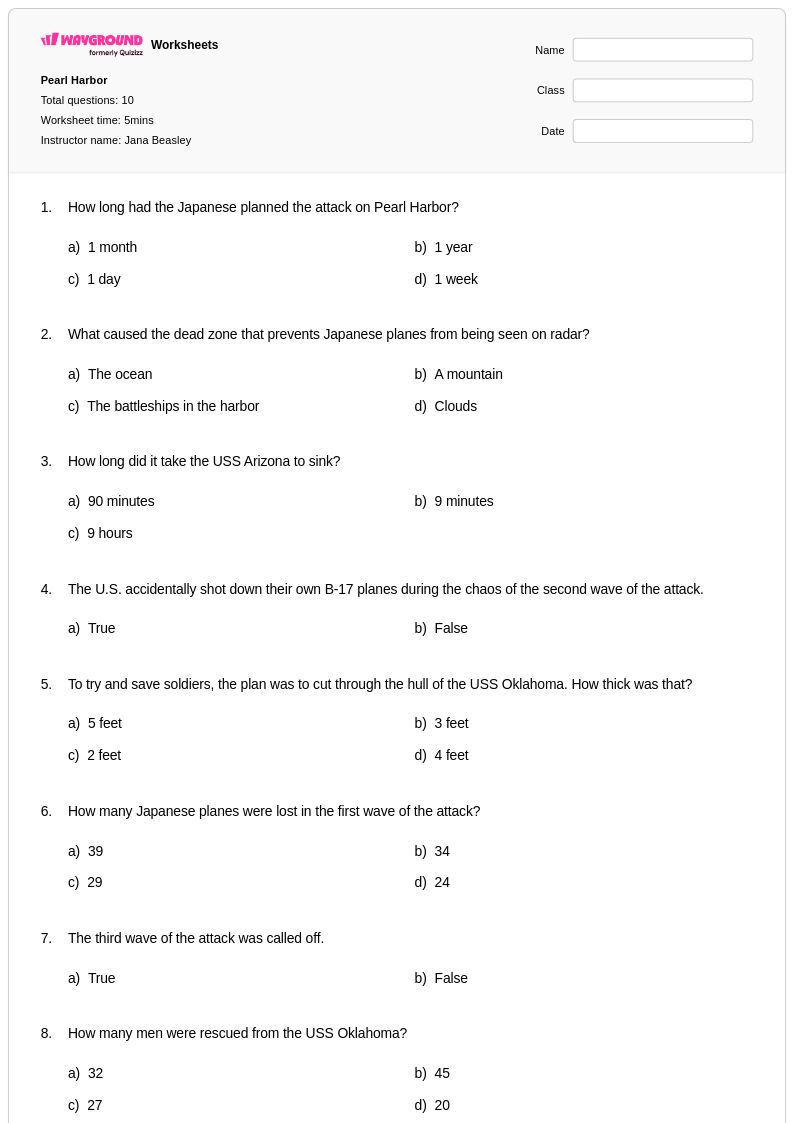
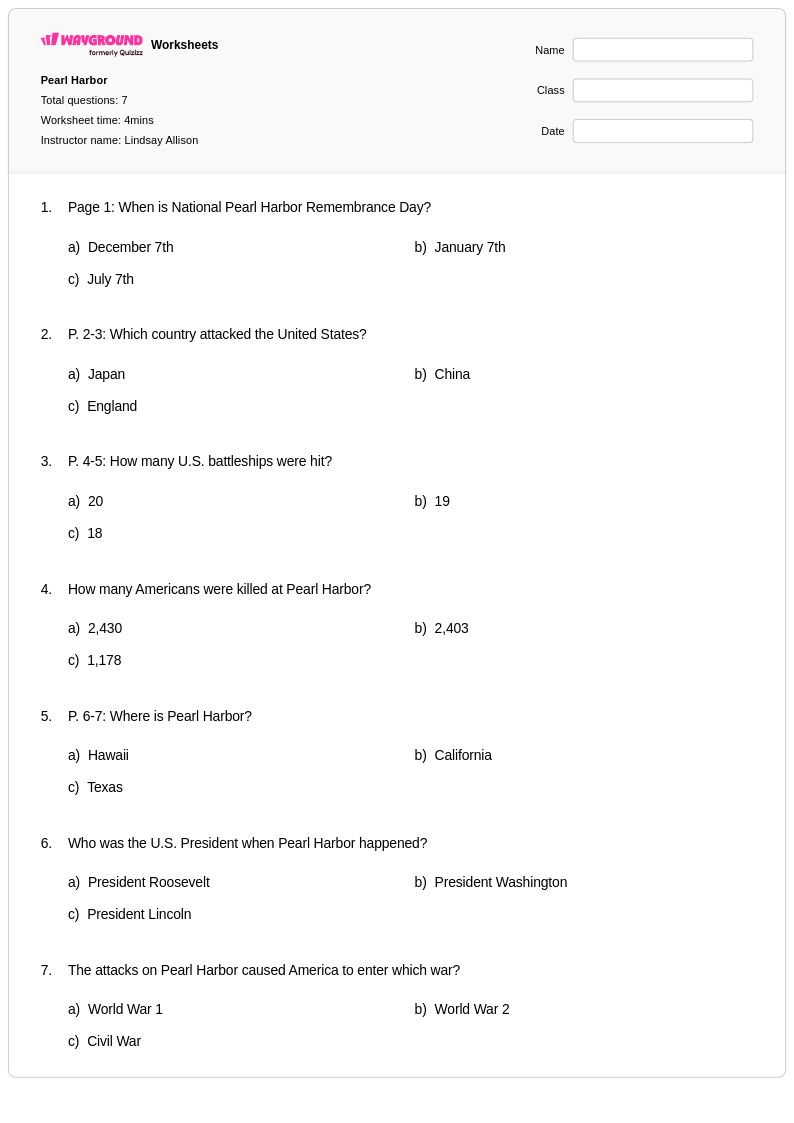
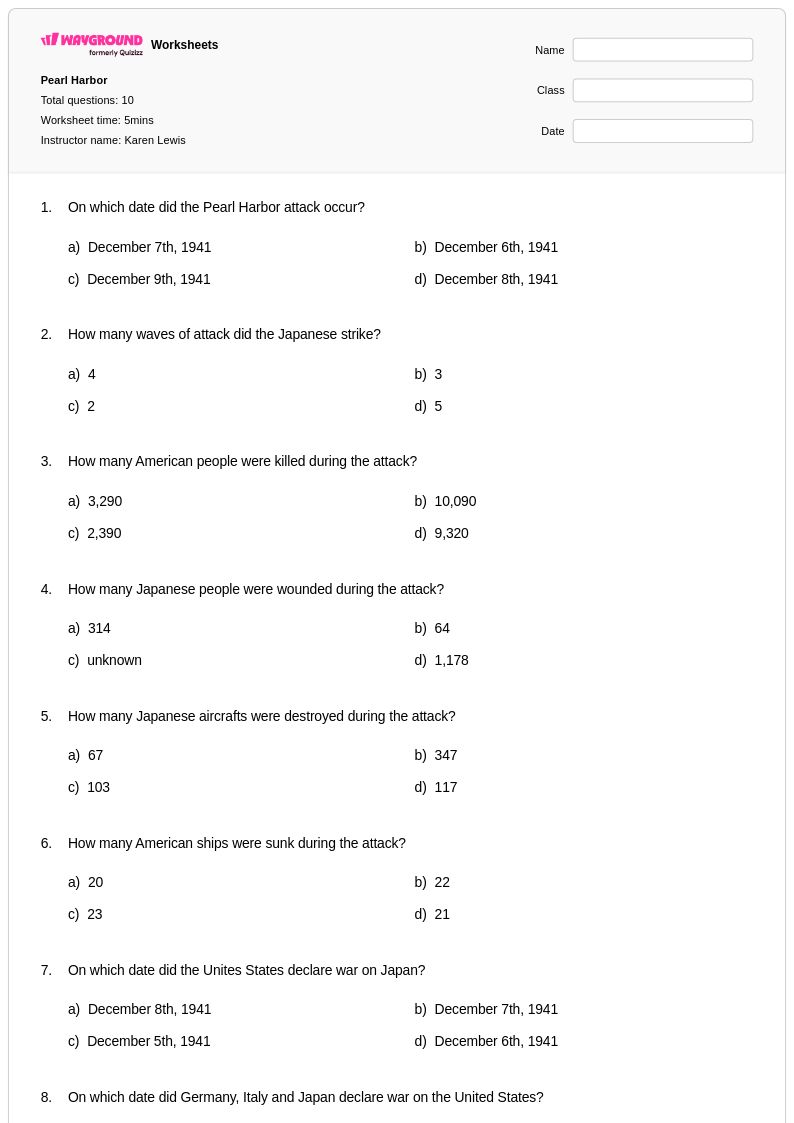
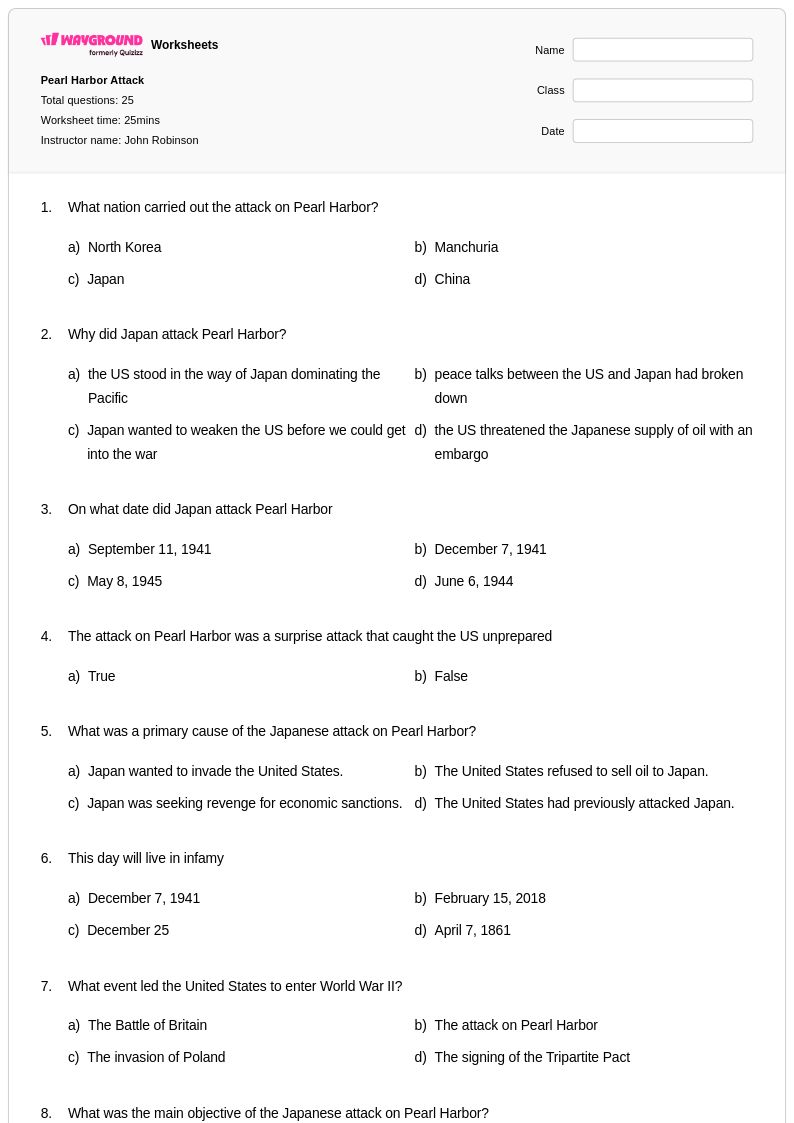
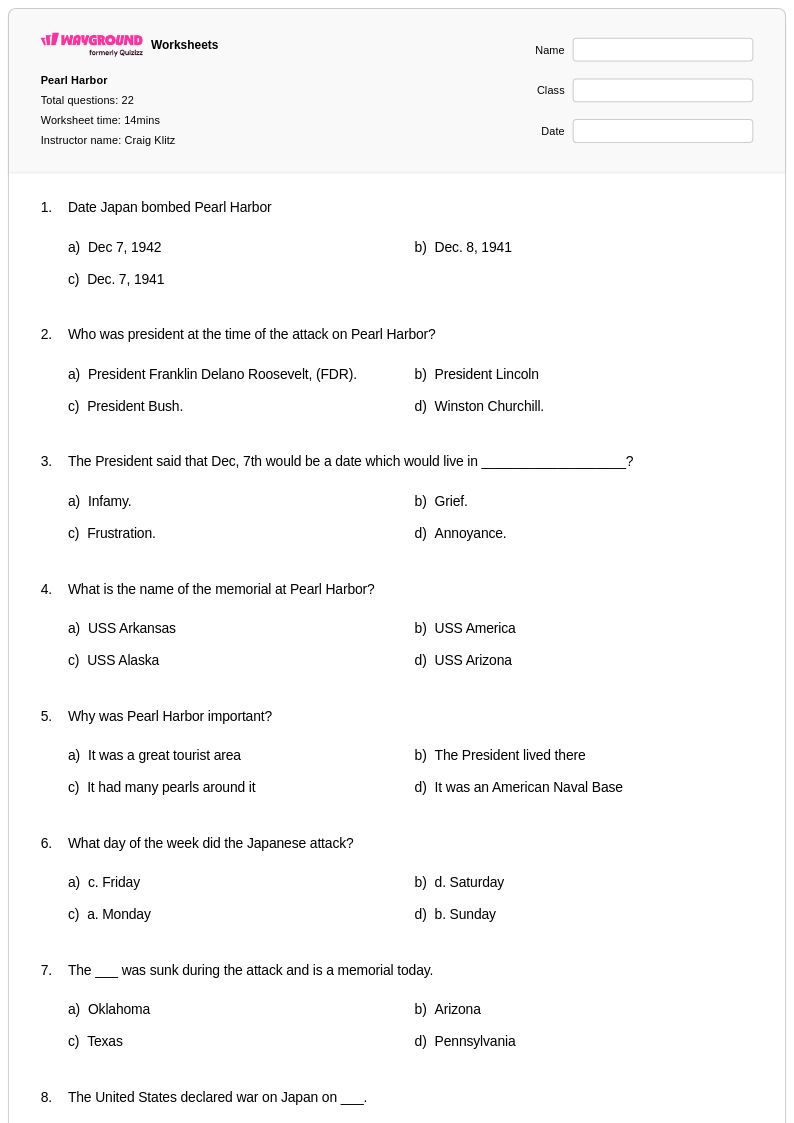
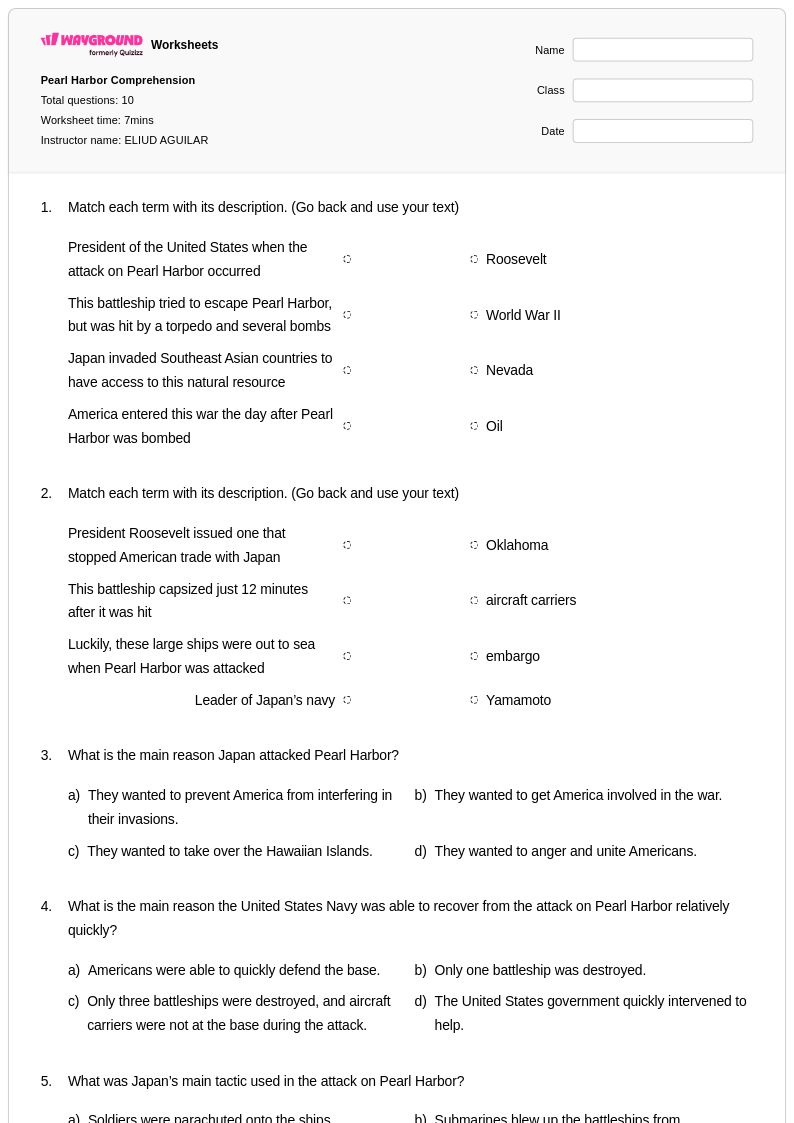
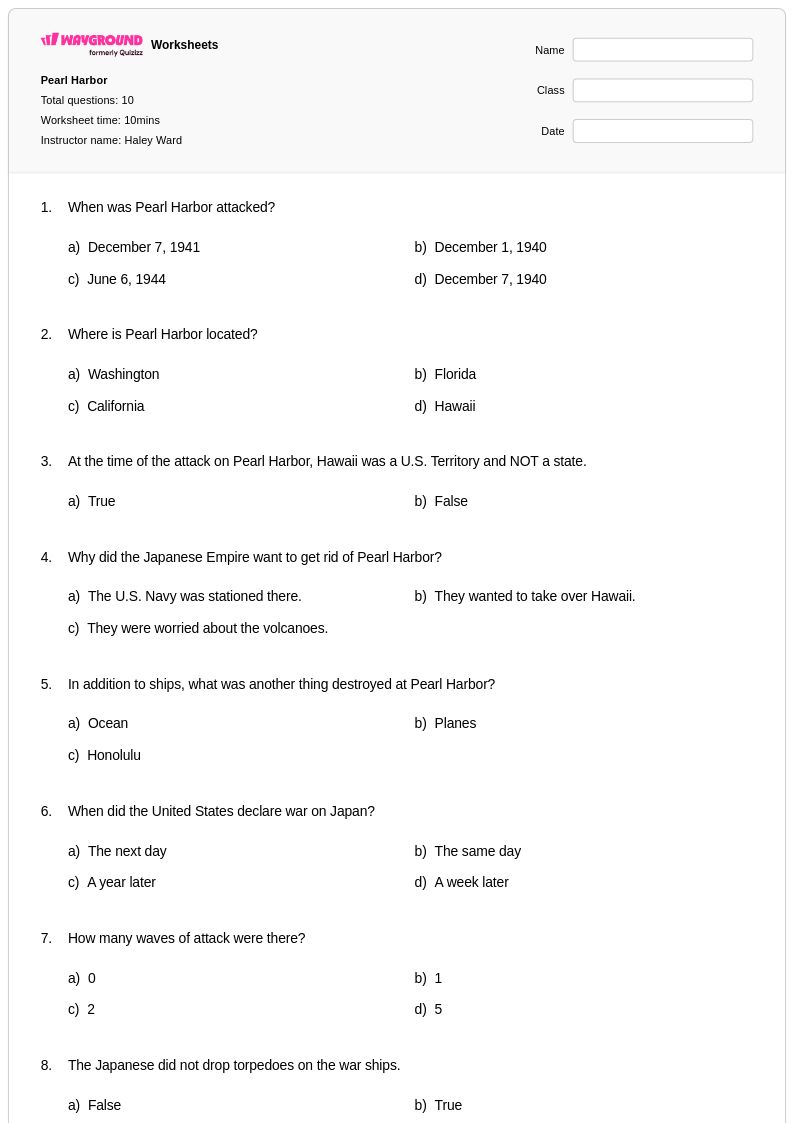
Explore Wayground's comprehensive Pearl Harbor worksheets and printables that help students analyze this pivotal World War 2 event through engaging practice problems, free PDF resources, and complete answer keys.
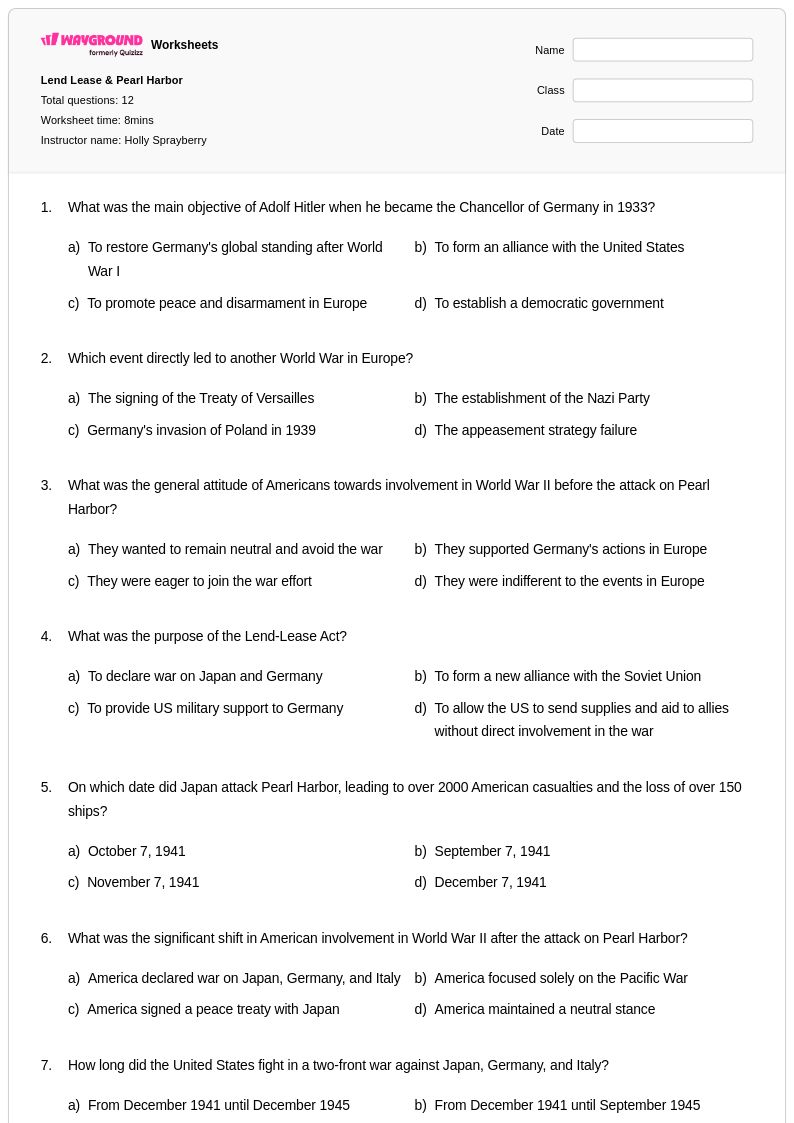
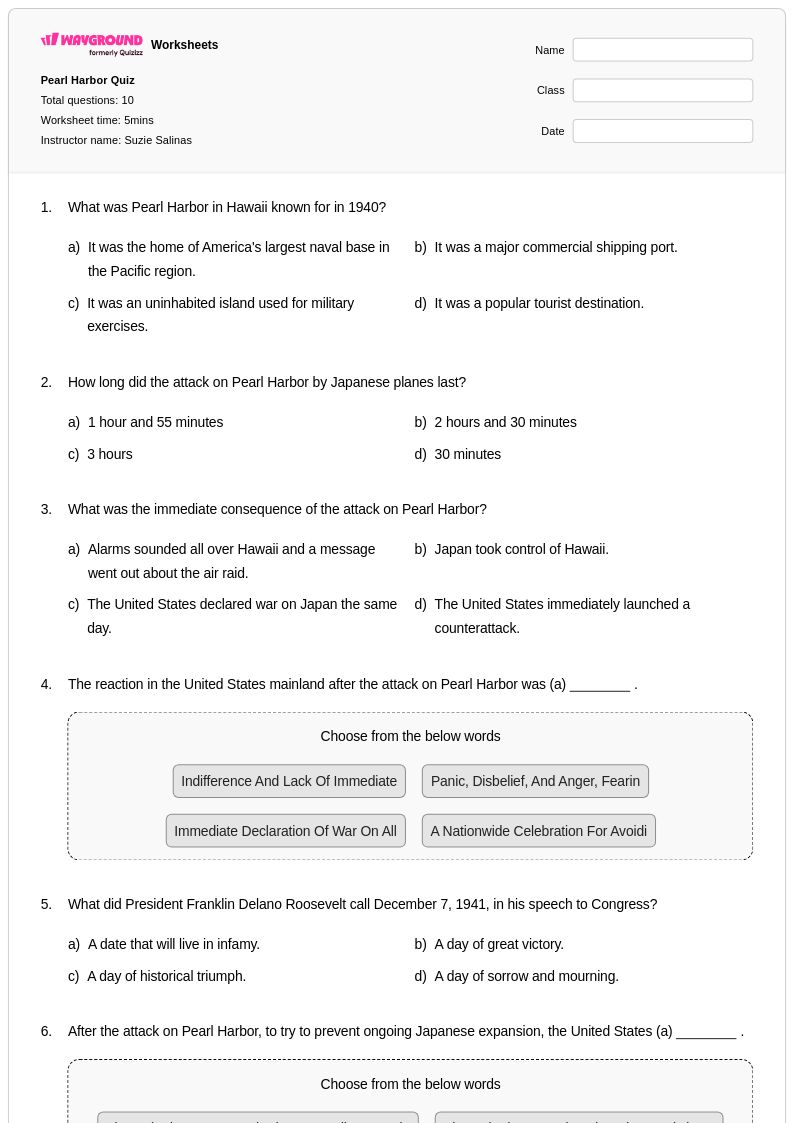
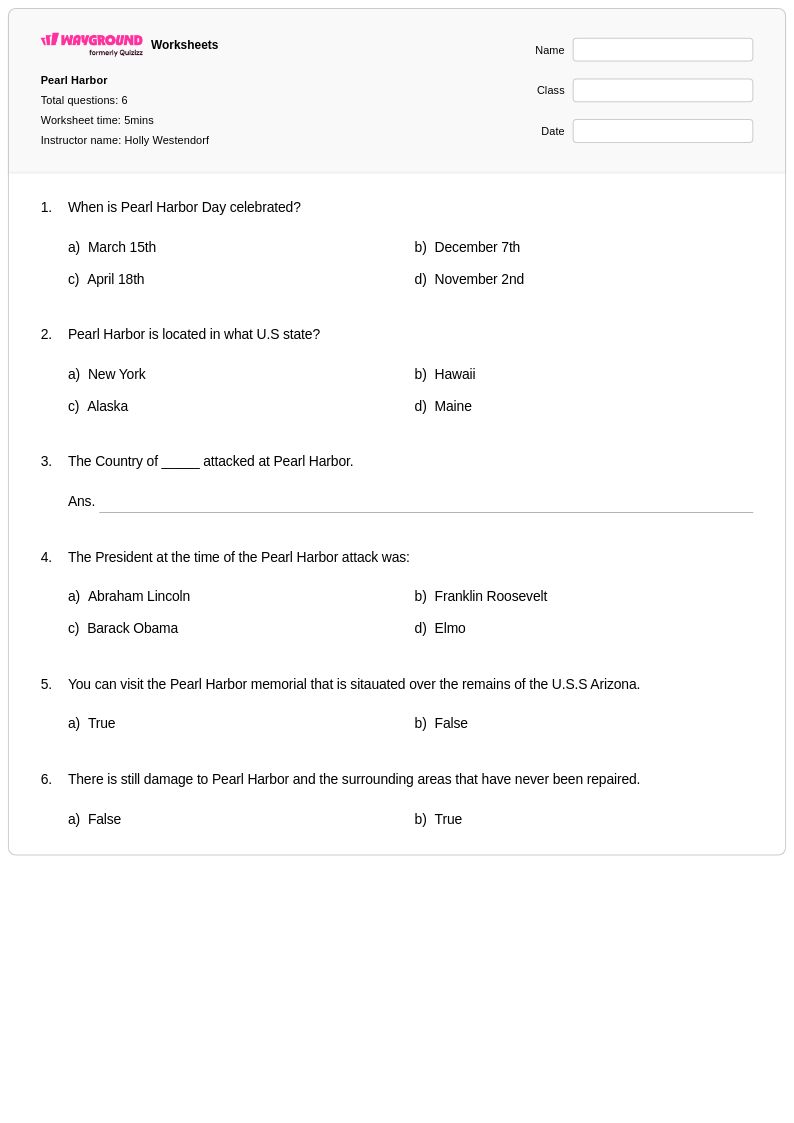
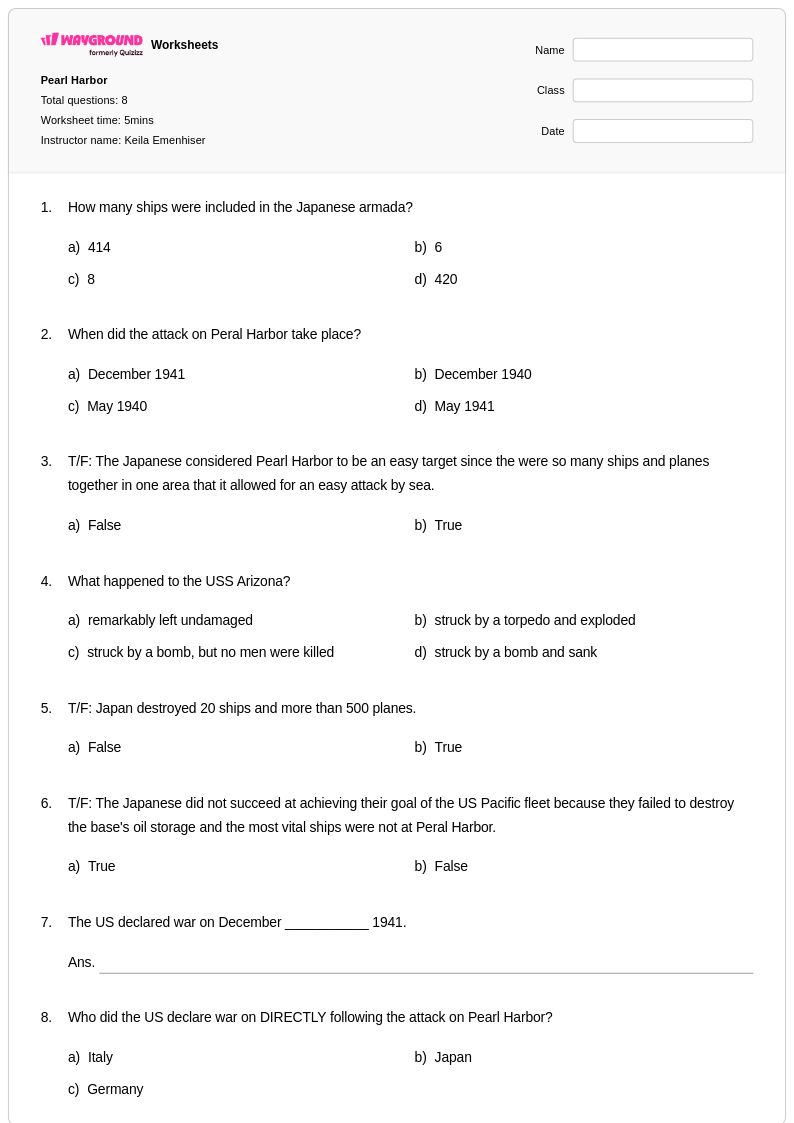
Pearl Harbor worksheets available through Wayground (formerly Quizizz) provide comprehensive educational resources that help students understand one of the most pivotal moments in American history and World War 2. These carefully designed materials guide learners through the events of December 7, 1941, examining the surprise attack's causes, immediate consequences, and lasting impact on American involvement in the global conflict. Students develop critical thinking skills as they analyze primary source documents, maps, and historical accounts while strengthening their ability to identify cause-and-effect relationships in historical events. The collection includes practice problems that challenge students to evaluate different perspectives on the attack, from American civilians and military personnel to Japanese strategists and political leaders. Each worksheet comes with a comprehensive answer key and is available as a free printable pdf, making them accessible resources for classroom instruction, homework assignments, and independent study.
Wayground (formerly Quizizz) supports educators with an extensive collection of Pearl Harbor worksheets created by millions of teachers who understand the complexities of teaching this sensitive historical topic. The platform's robust search and filtering capabilities allow instructors to quickly locate materials that align with specific curriculum standards and learning objectives, whether they need introductory content for younger students or advanced analytical exercises for high school learners. Teachers can easily customize these resources to match their classroom needs, adjusting difficulty levels and content focus to support both remediation for struggling students and enrichment opportunities for advanced learners. The flexible format options, including printable pdf versions and digital interactive materials, enable seamless integration into various instructional approaches, from traditional classroom discussions to blended learning environments, ensuring that educators have the tools necessary for effective lesson planning and meaningful skill practice around this crucial historical event.
FAQs
How do I teach the attack on Pearl Harbor in a historically accurate and sensitive way?
Teaching Pearl Harbor effectively means grounding students in context before December 7, 1941 itself — covering U.S.-Japan diplomatic tensions, the Pacific theater of World War 2, and American isolationism. Use primary sources such as FDR's 'Day of Infamy' speech, eyewitness accounts from military personnel and civilians, and period maps to help students analyze the event from multiple perspectives, including American and Japanese viewpoints. Framing the lesson around cause-and-effect relationships helps students understand why the attack happened and how it reshaped U.S. foreign policy, without reducing a complex historical moment to a single narrative.
What exercises help students practice analyzing cause and effect in the Pearl Harbor attack?
Cause-and-effect graphic organizers are especially effective for Pearl Harbor, prompting students to trace the chain from rising U.S.-Japan tensions and the oil embargo to the strategic decision to attack and America's subsequent entry into World War 2. Document analysis tasks, where students examine primary sources such as military reports or political speeches, push students to distinguish between immediate triggers and long-term causes. Perspective-taking exercises, asking students to analyze the attack through the eyes of an American sailor, a Japanese military planner, or a U.S. civilian, also deepen their ability to evaluate historical causation.
What common mistakes do students make when studying the Pearl Harbor attack?
A frequent misconception is that the Pearl Harbor attack was entirely unexpected by U.S. leadership — students often conflate the lack of a specific warning with a complete absence of prior intelligence about Japanese intentions. Another common error is treating Pearl Harbor as the sole cause of U.S. entry into World War 2, rather than the event that crystallized a shift already building through Lend-Lease and Atlantic convoy tensions. Students also tend to overlook the Japanese strategic rationale, reducing the attack to unprovoked aggression rather than examining it as a calculated, if ultimately counterproductive, military decision.
How can I use Pearl Harbor worksheets to support different reading levels in my classroom?
Pearl Harbor worksheets that include primary source documents and historical accounts can be scaffolded by pairing complex texts with guided reading questions that direct students to key details. For students who need additional support, Wayground allows teachers to enable the Read Aloud accommodation, which audio-reads questions and content aloud, and the Reduced Answer Choices setting, which limits the number of options displayed to reduce cognitive load. These accommodations can be assigned to individual students without notifying the rest of the class, so all students engage with the same material in a way that fits their needs.
How do I use Wayground's Pearl Harbor worksheets in my classroom?
Wayground's Pearl Harbor worksheets are available as printable PDFs for traditional classroom use and in digital formats for technology-integrated or blended learning environments, making them practical for both in-person and remote instruction. Teachers can also host worksheets directly as a quiz on Wayground, enabling real-time student responses and instant feedback. Each worksheet includes a complete answer key, reducing prep time and making the materials suitable for classroom instruction, homework assignments, or independent study.
How do I connect the Pearl Harbor attack to broader World War 2 curriculum standards?
Pearl Harbor sits at a natural intersection of multiple history standards, including U.S. foreign policy, causes and consequences of World War 2, and the home front experience. Connecting the attack to prior lessons on the Treaty of Versailles, the rise of Imperial Japan, and American isolationism helps students see Pearl Harbor as a turning point rather than an isolated incident. Following up with primary source analysis and comparative exercises, such as examining how different nations responded to the attack, reinforces historical thinking skills like contextualization, corroboration, and close reading.