
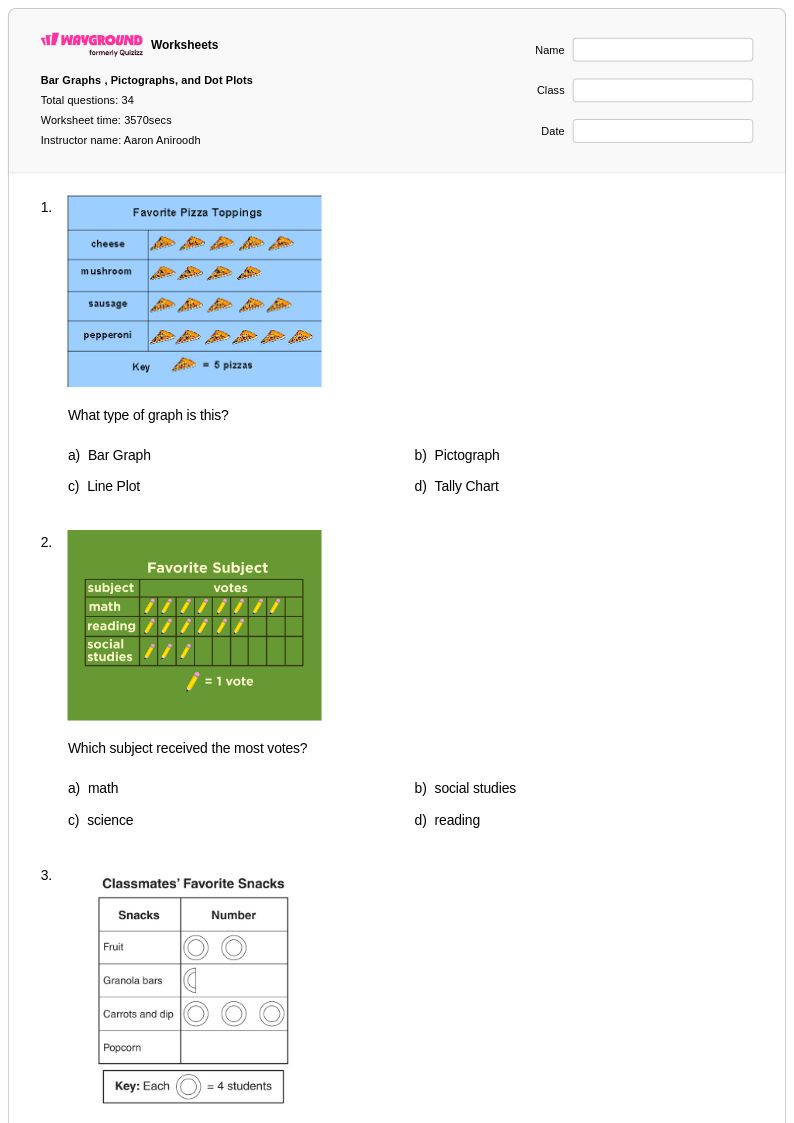
34 Q
3rd
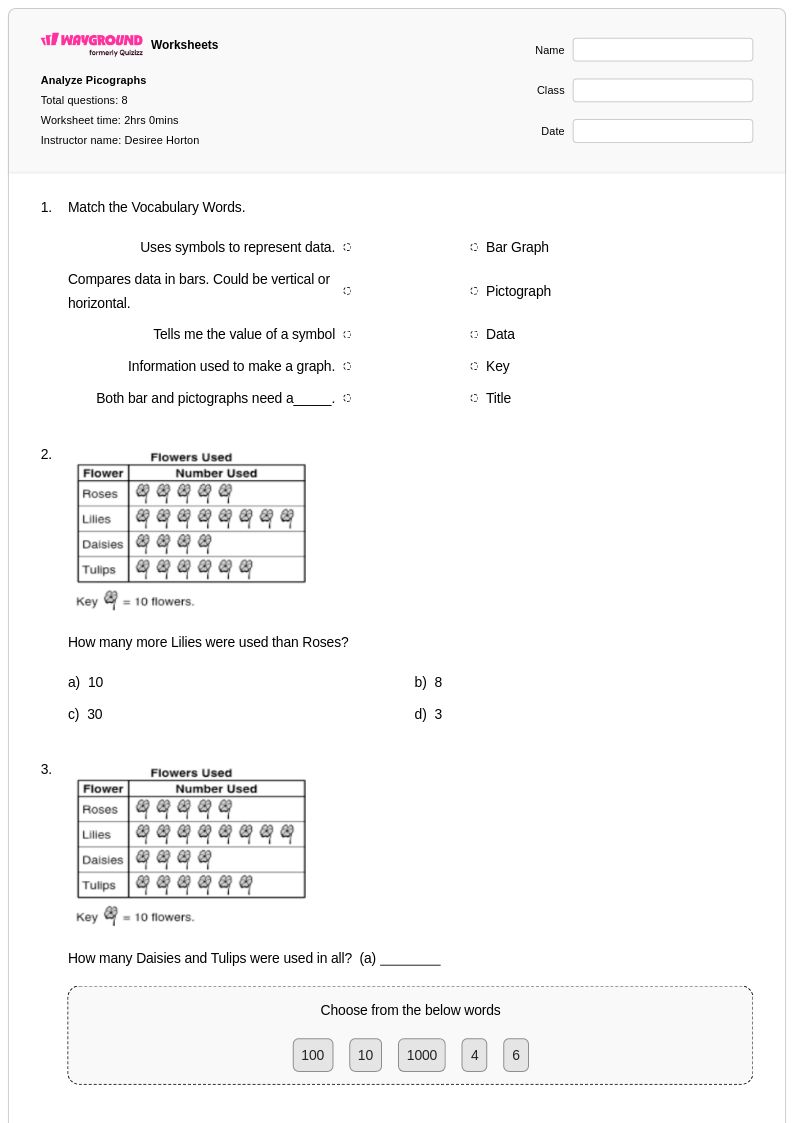
8 Q
3rd
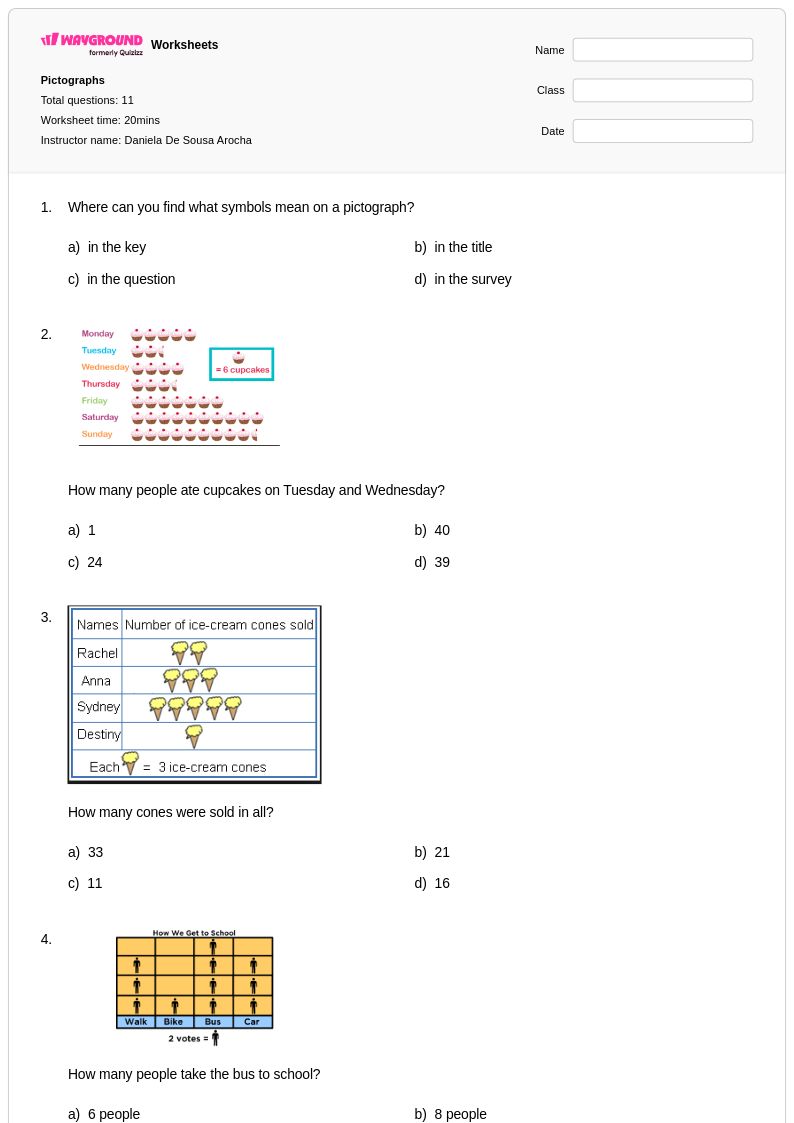
11 Q
3rd

10 Q
3rd
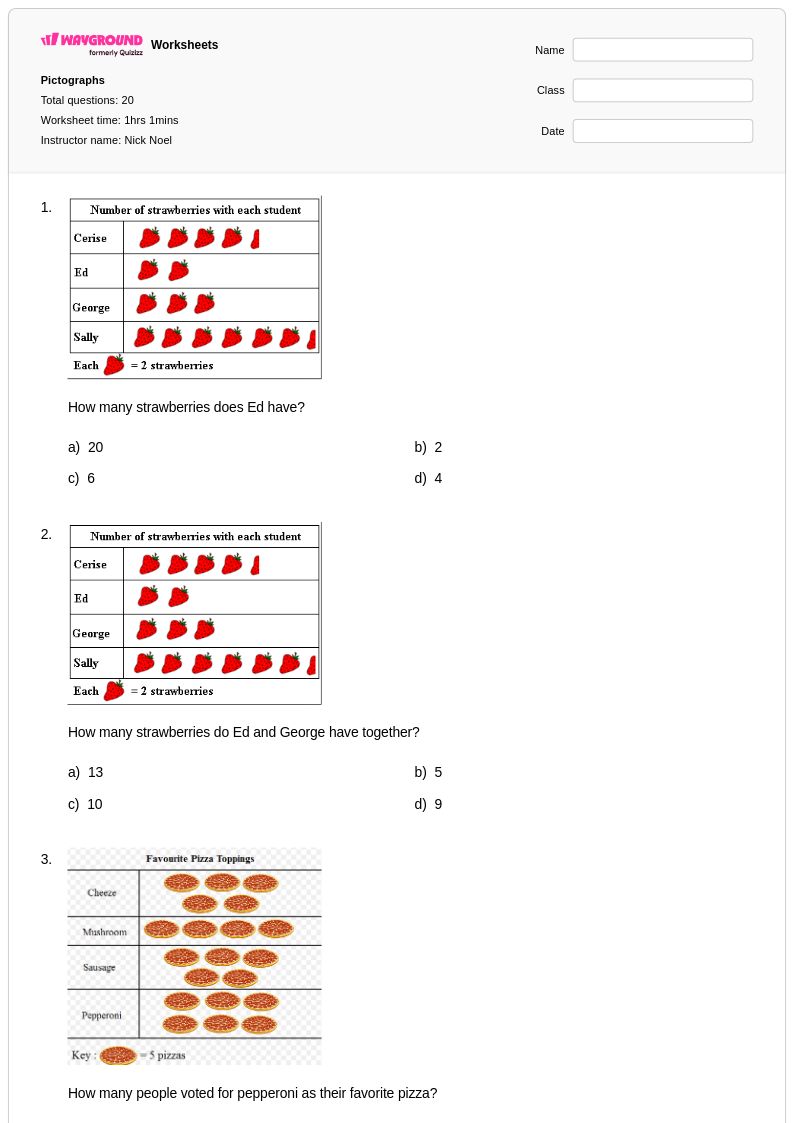
20 Q
3rd - 5th
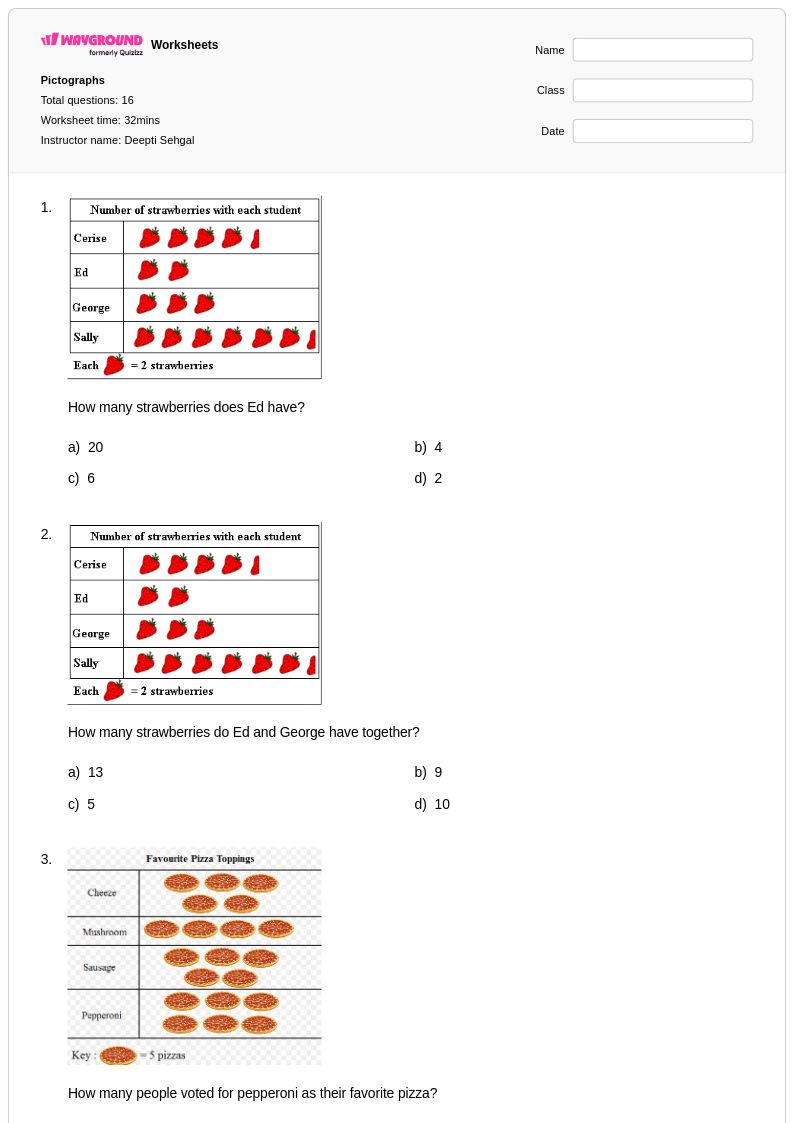
16 Q
3rd - 5th
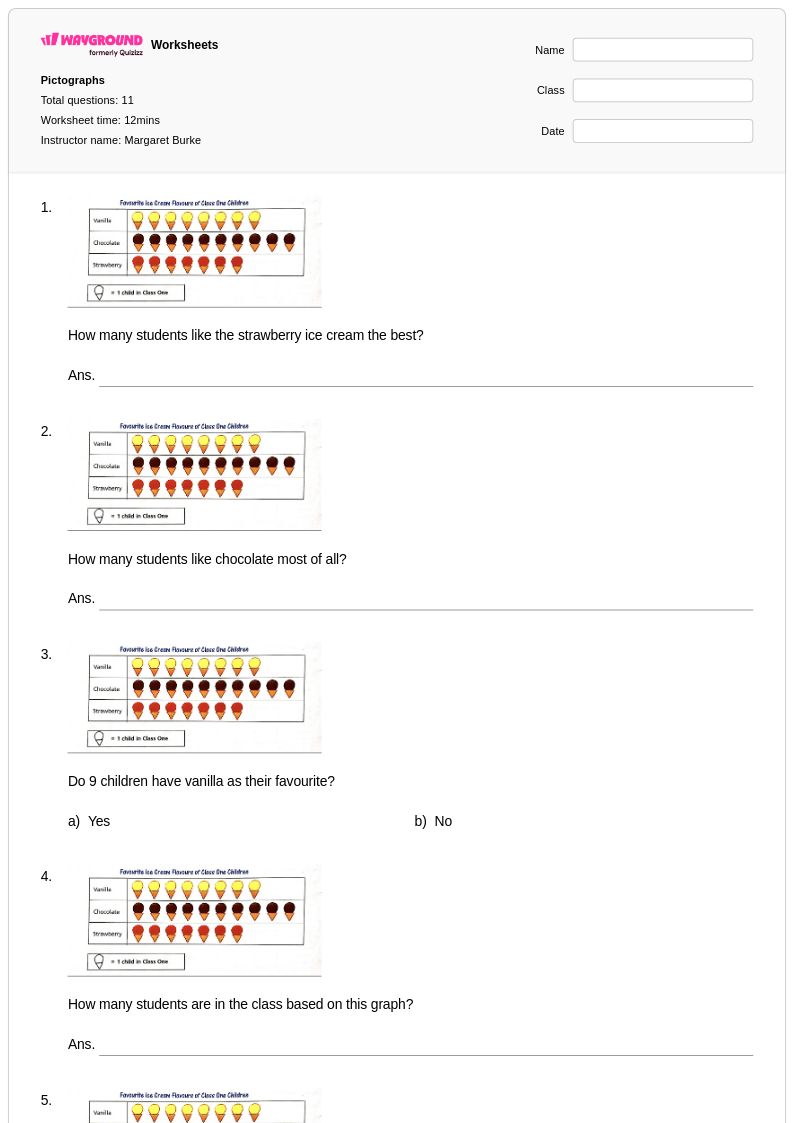
11 Q
1st - 3rd
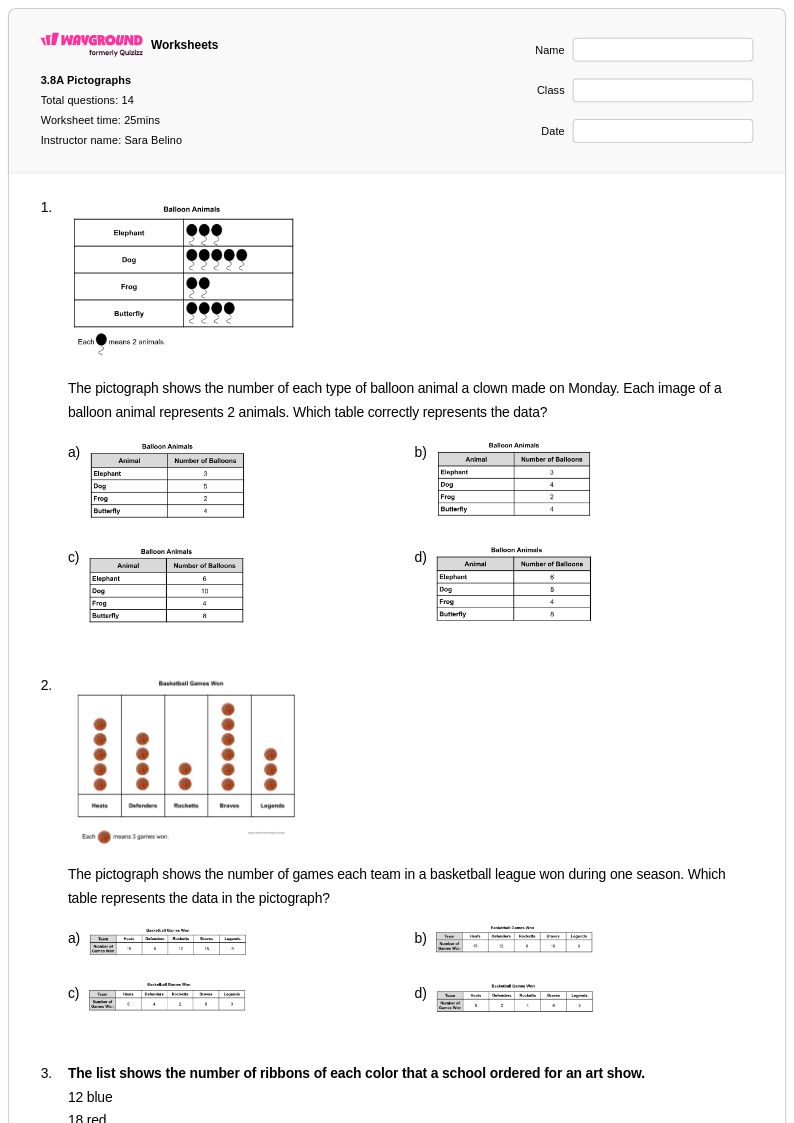
14 Q
3rd
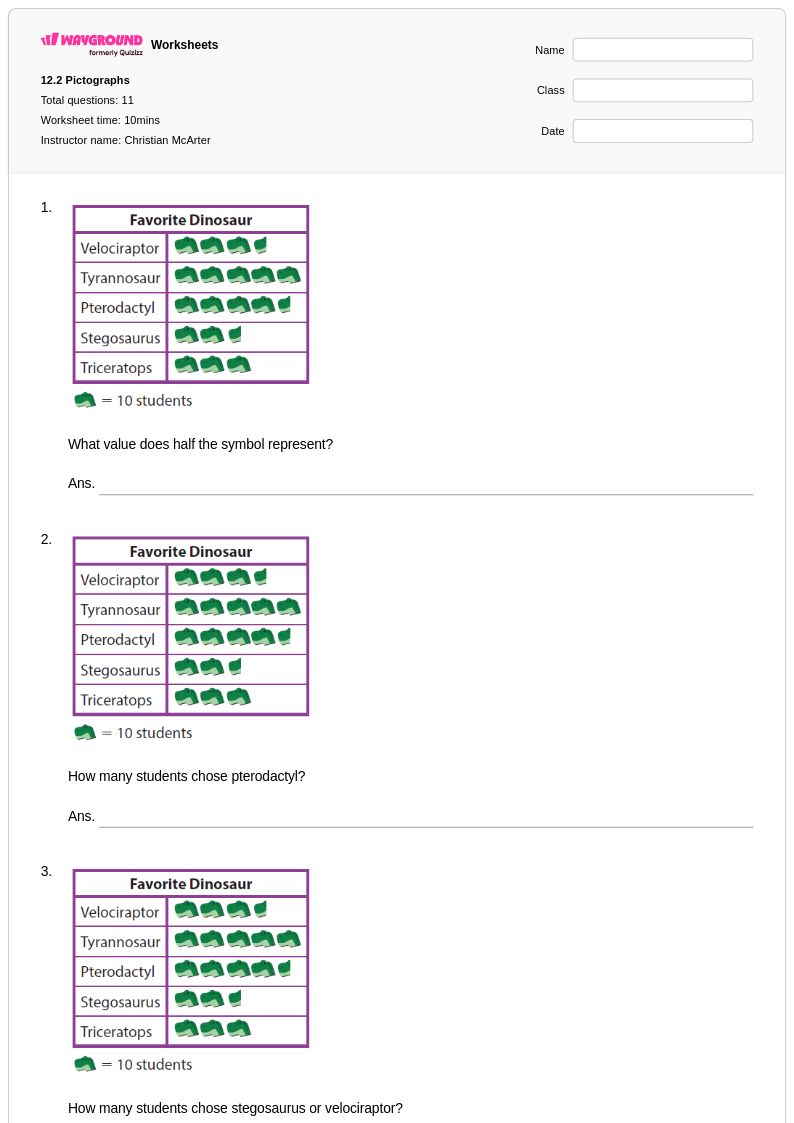
11 Q
3rd
16 Q
3rd
10 Q
3rd
20 Q
1st - 5th
10 Q
2nd - 4th
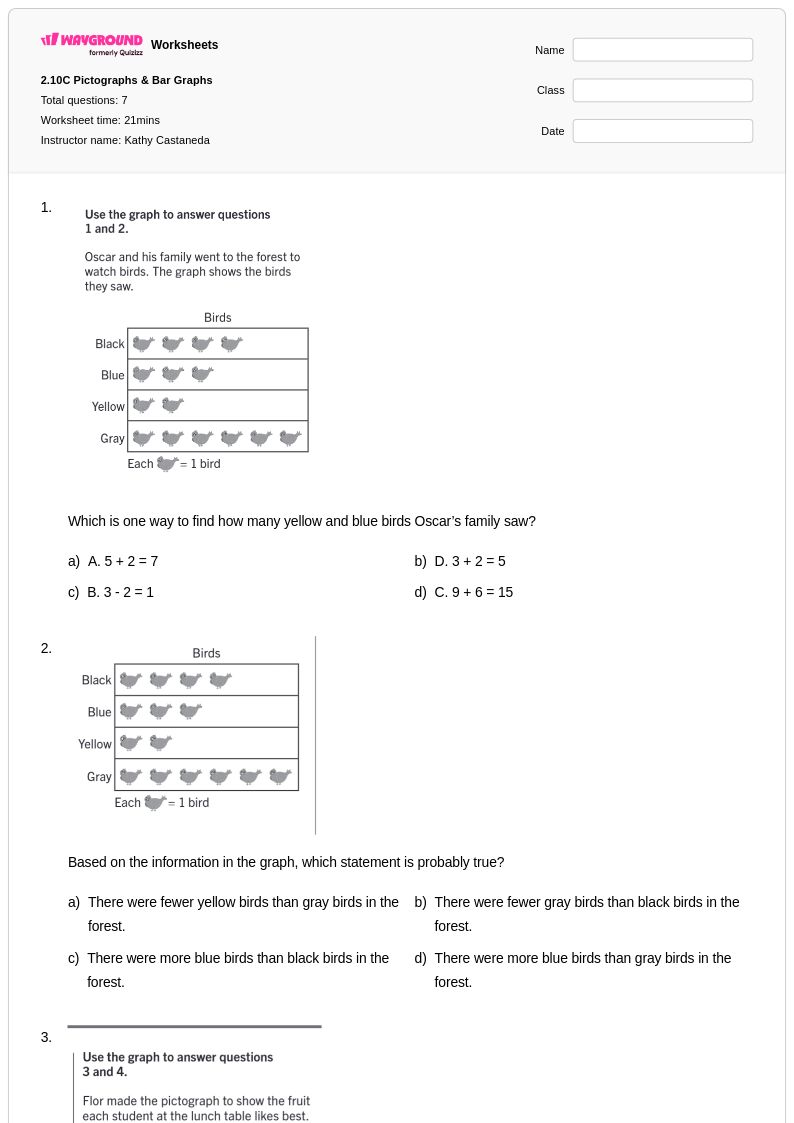
7 Q
2nd - Uni
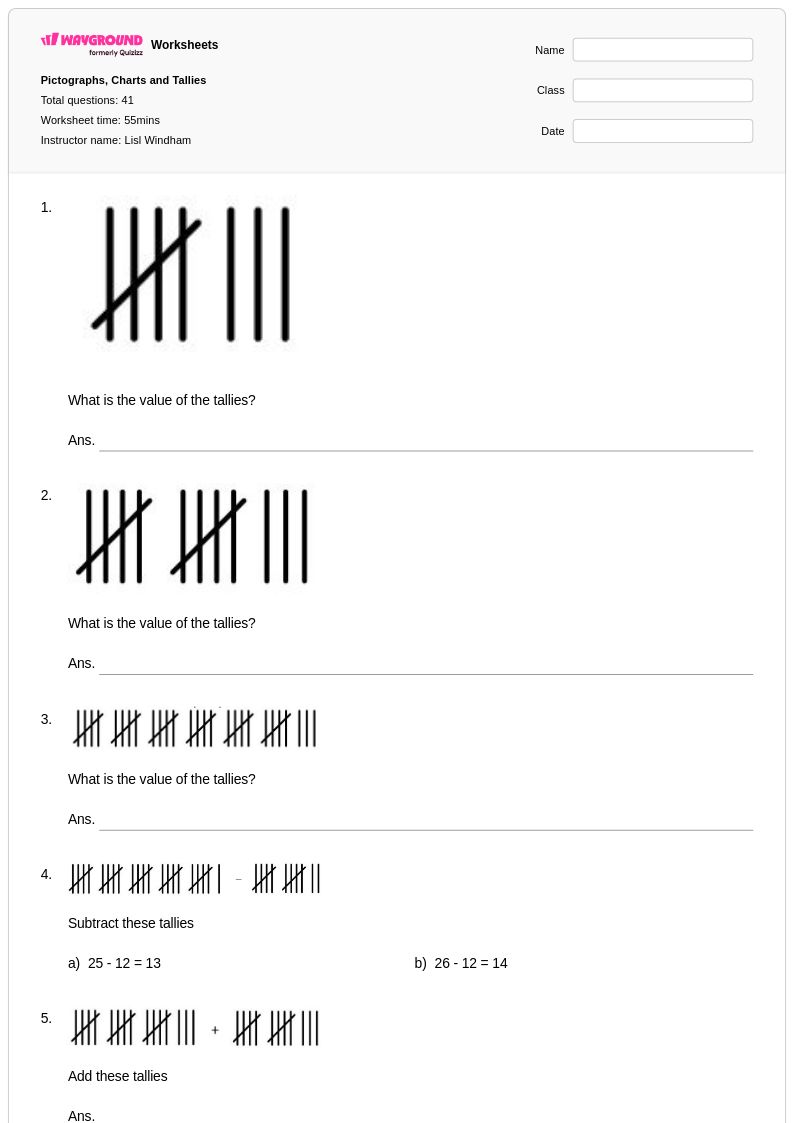
41 Q
3rd
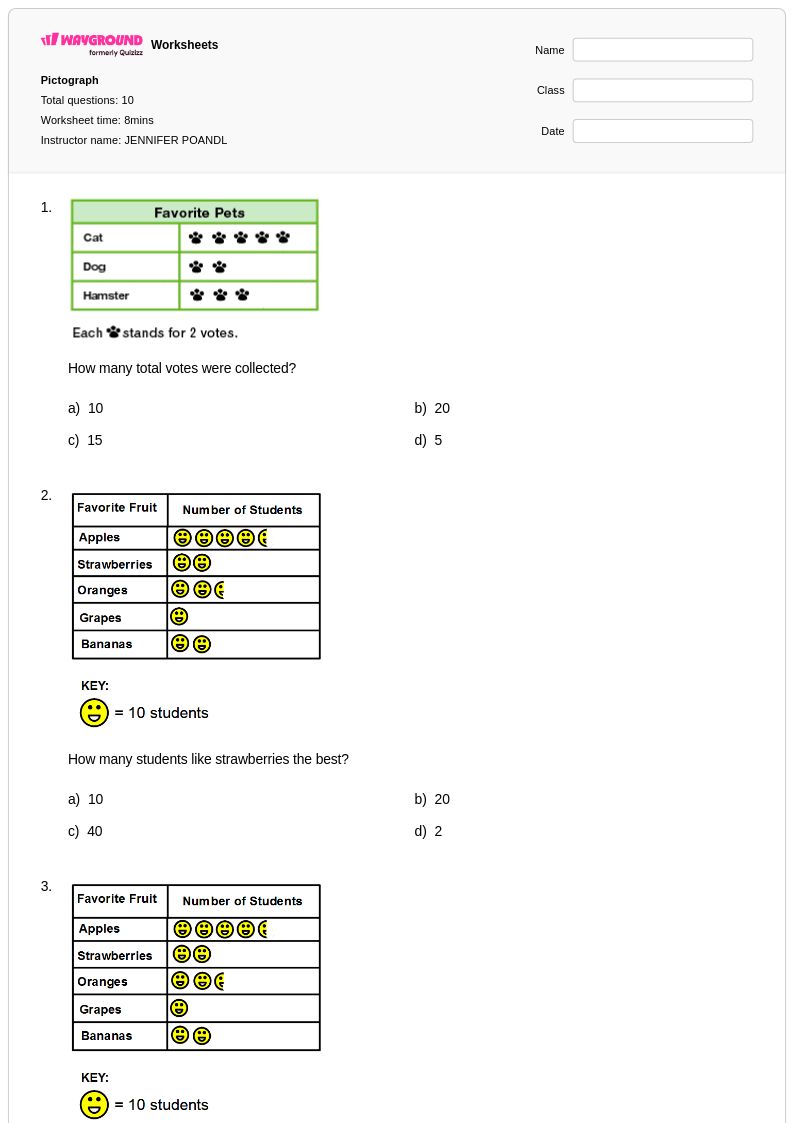
10 Q
3rd
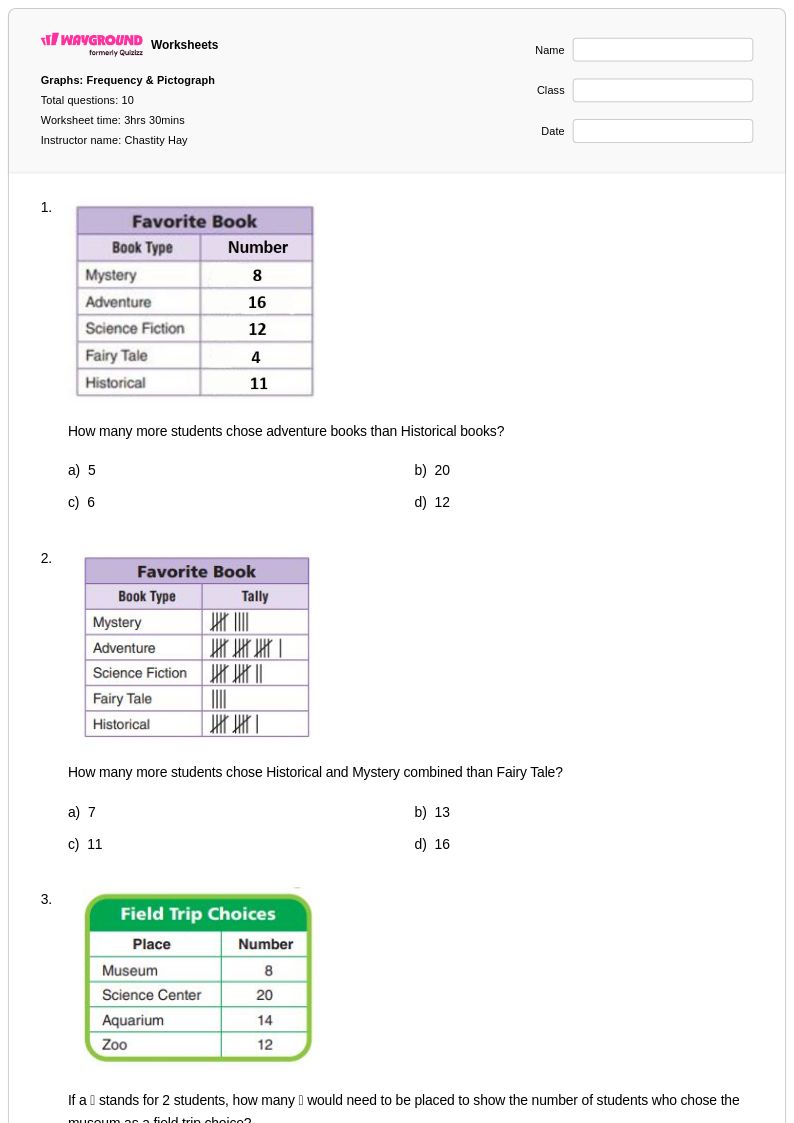
10 Q
3rd
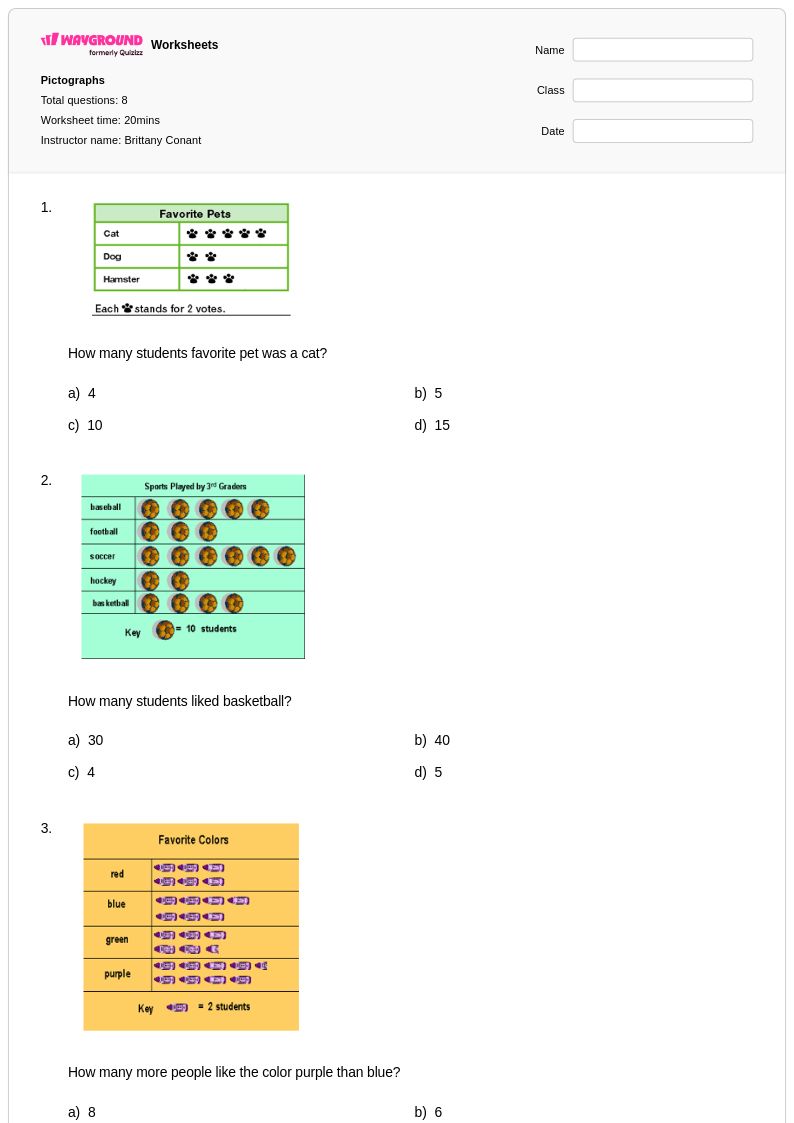
8 Q
3rd
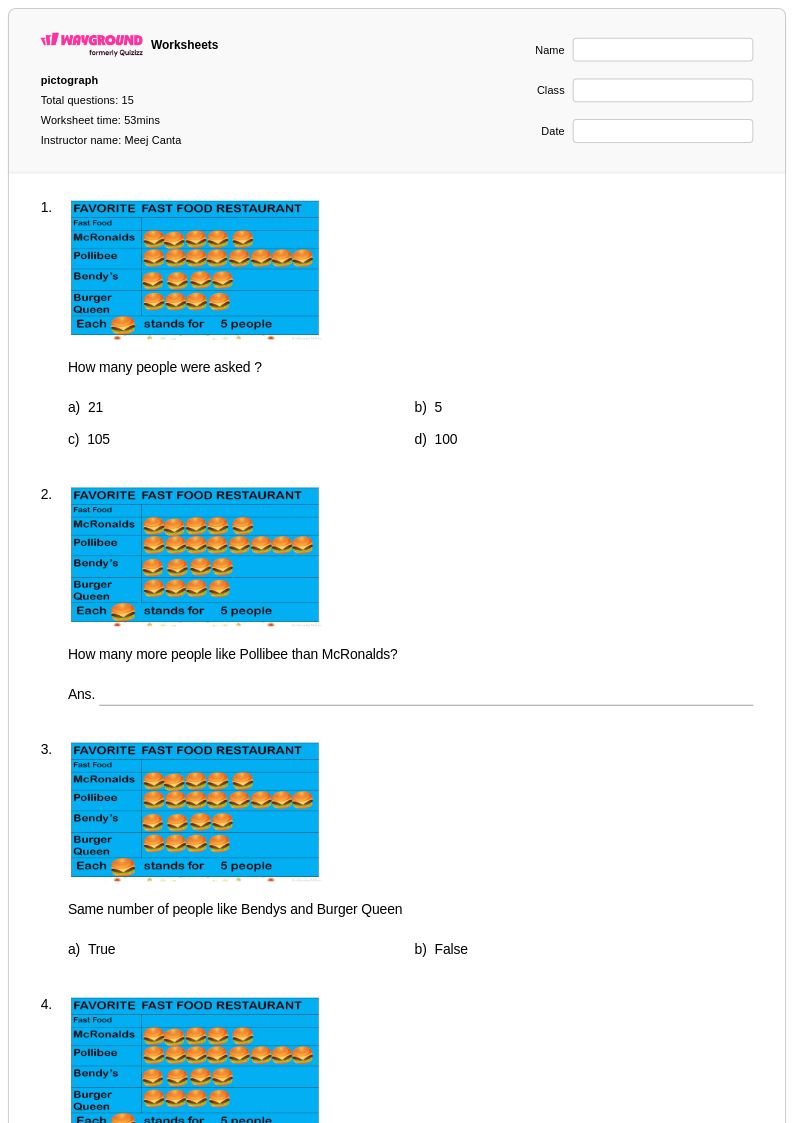
15 Q
3rd
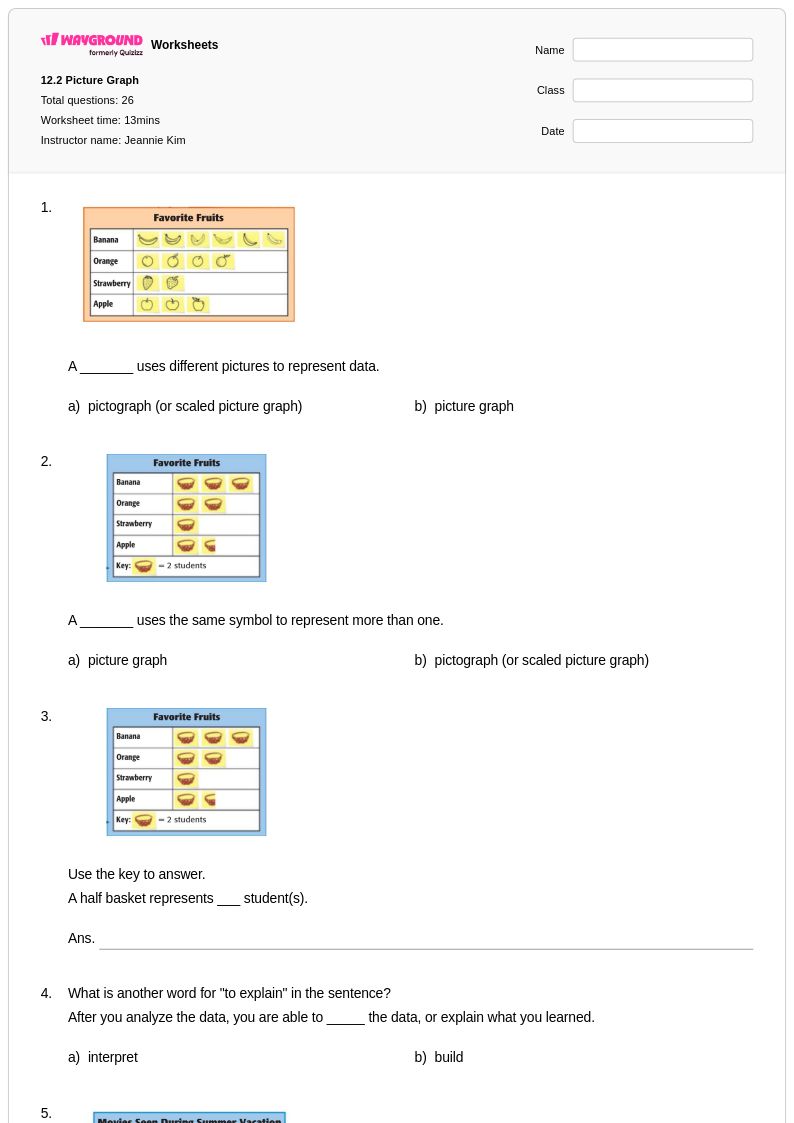
26 Q
3rd
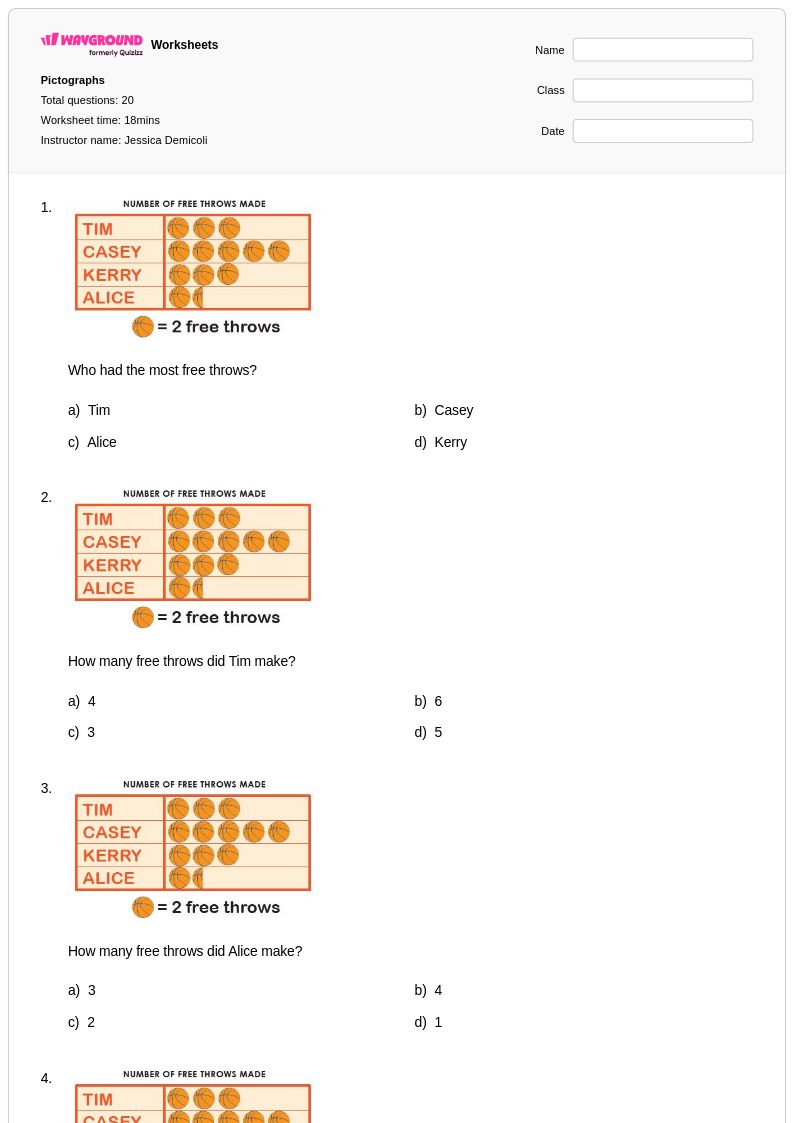
20 Q
3rd - 4th
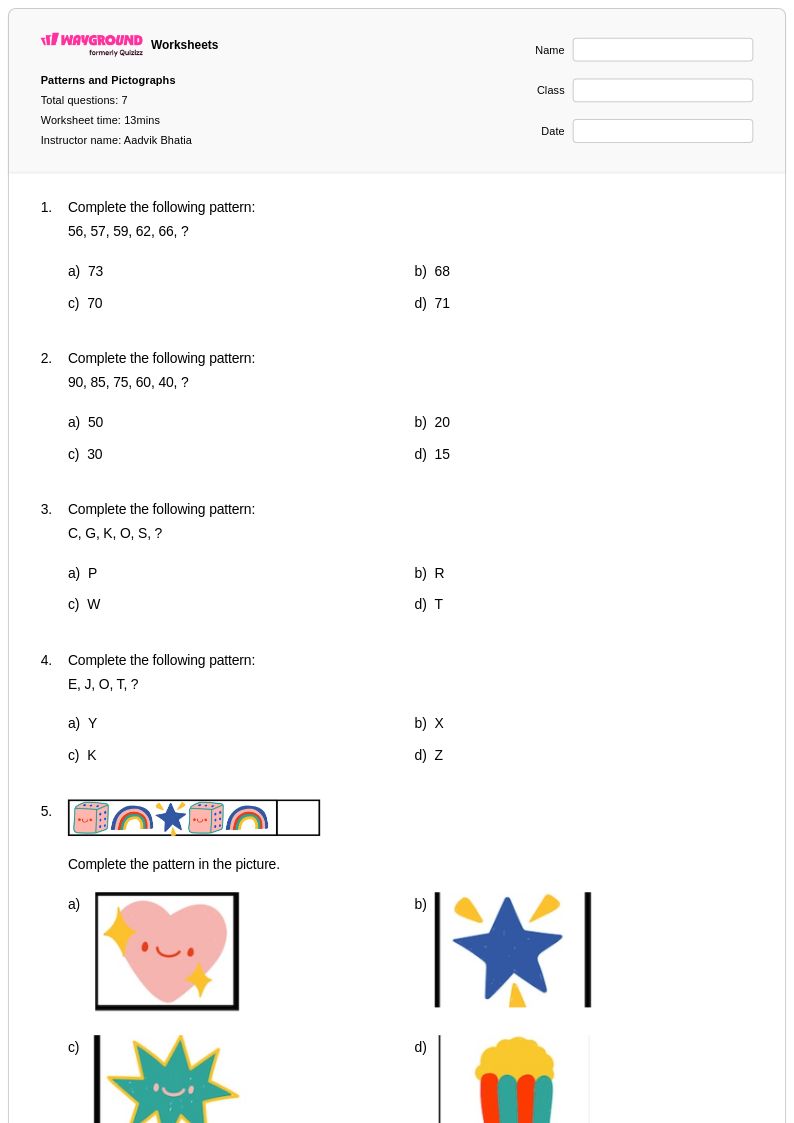
13 Q
1st - 5th
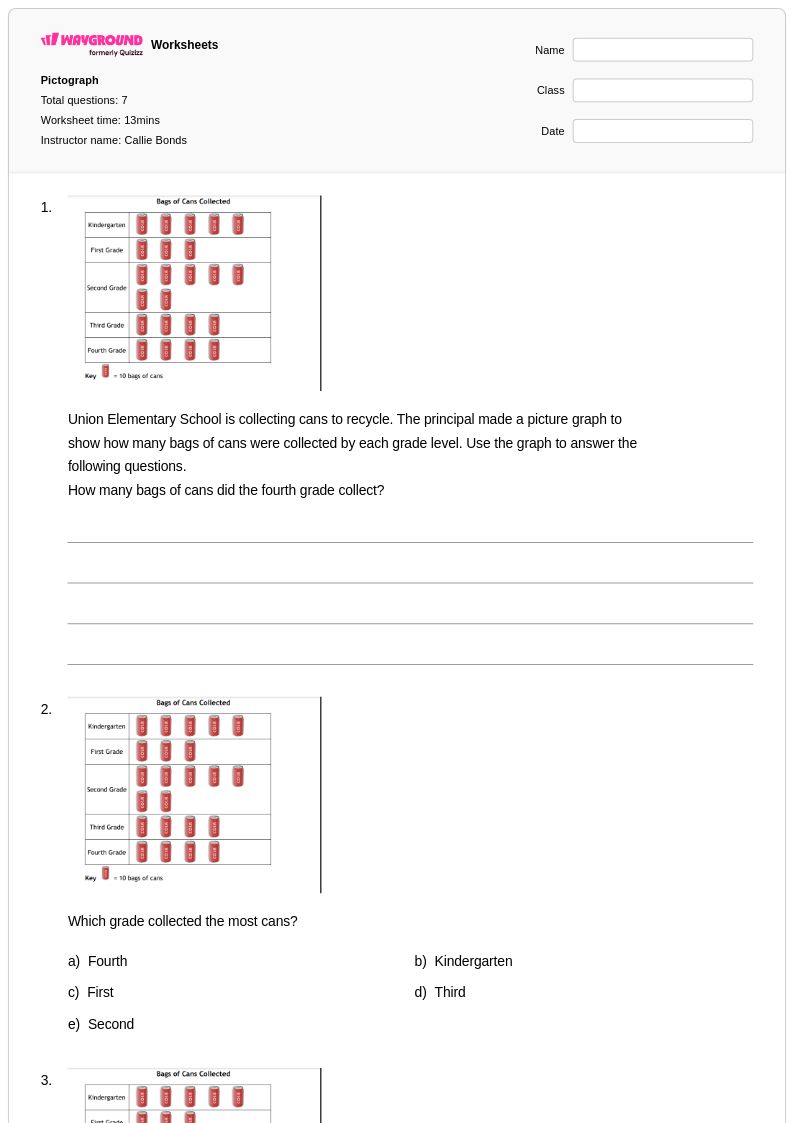
7 Q
2nd - 3rd
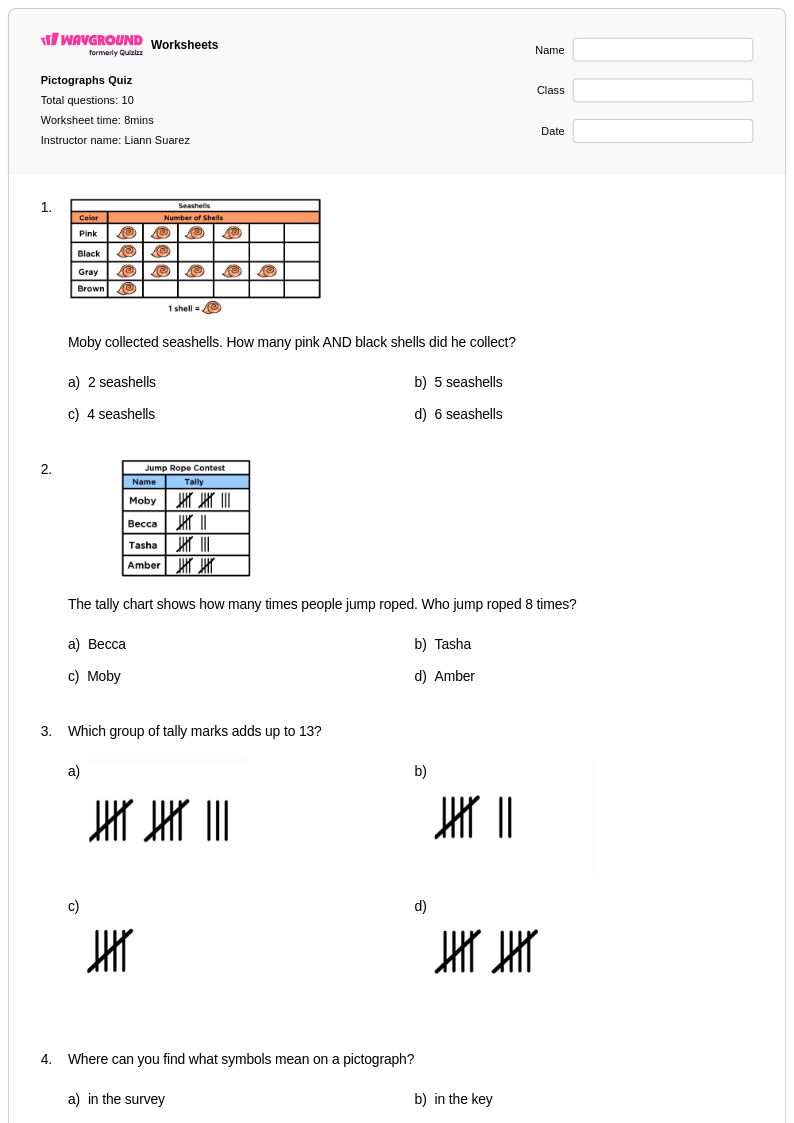
10 Q
3rd
Explore Other Subject Worksheets for year 3
Explore printable Pictographs worksheets for Year 3
Year 3 pictograph worksheets from Wayground (formerly Quizizz) provide essential practice for young mathematicians learning to interpret and create visual data representations. These comprehensive printables focus on developing foundational data literacy skills, teaching students how to read picture graphs where symbols represent specific quantities, understand keys and legends, and extract meaningful information from visual displays. The carefully designed practice problems progress from simple one-to-one correspondence pictographs to more complex examples where each symbol represents multiple units, helping third-grade students build confidence in analyzing data while strengthening their counting, comparison, and critical thinking abilities. Each worksheet includes a detailed answer key in convenient PDF format, making it easy for educators to provide immediate feedback and support student learning.
Wayground (formerly Quizizz) empowers teachers with millions of educator-created pictograph resources specifically designed for Year 3 mathematics instruction. The platform's robust search and filtering capabilities allow teachers to quickly locate worksheets that align with specific learning standards and match their students' individual skill levels, while built-in differentiation tools enable seamless customization for remediation and enrichment activities. Teachers can access these high-quality materials in both printable and digital formats, including downloadable PDFs that work perfectly for homework assignments, classroom practice, or assessment preparation. This flexibility supports diverse instructional approaches, whether teachers need quick skill practice during math centers, targeted intervention materials for struggling learners, or challenging extension activities for advanced students ready to explore more sophisticated data interpretation concepts.
FAQs
How can I challenge third graders who have mastered basic scaled pictographs?
What's a common sticking point for third graders with complex pictographs?
What kind of practice is included in these Grade 3 pictograph worksheets?
How can I use these pictograph worksheets for Grade 3?
How do these worksheets align with Grade 3 math standards?
How can I accommodate different learners with these pictograph worksheets?