Free Printable Plasmid Mapping Worksheets for Year 12
Year 12 plasmid mapping worksheets and printables help students master restriction enzyme analysis, DNA fragment interpretation, and genetic engineering techniques through comprehensive practice problems with detailed answer keys available as free PDF downloads.
Explore printable Plasmid Mapping worksheets for Year 12
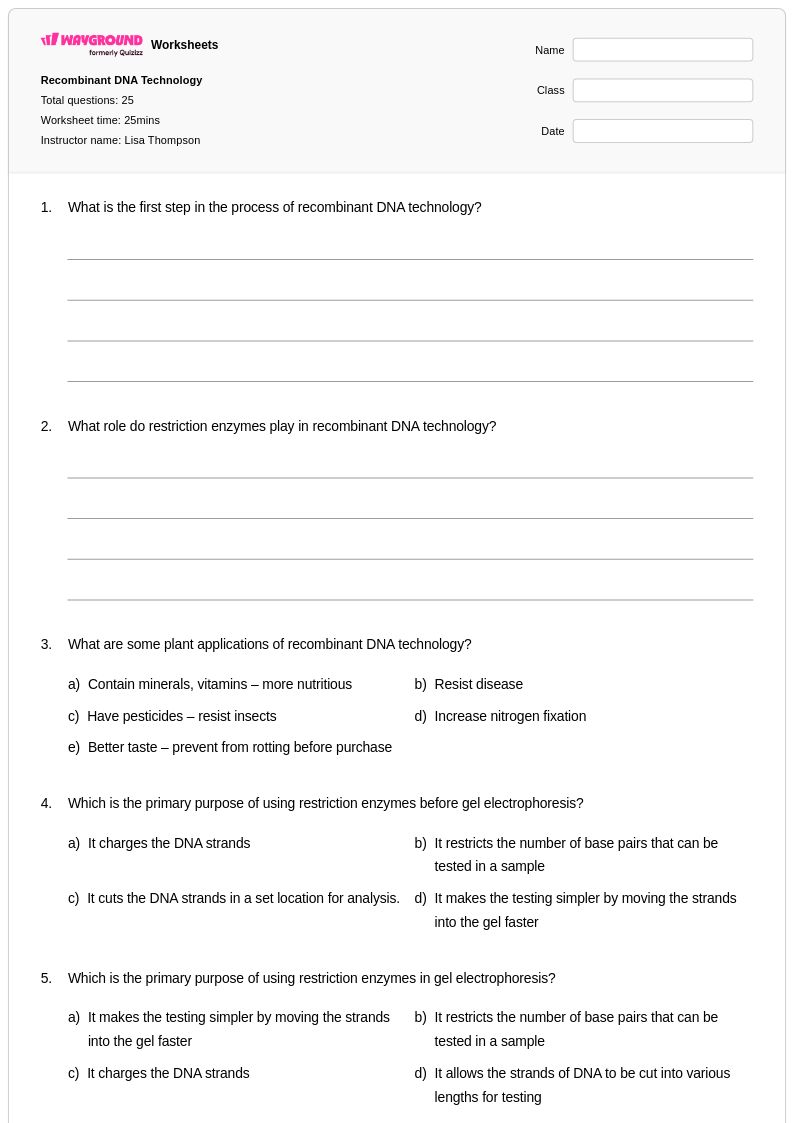
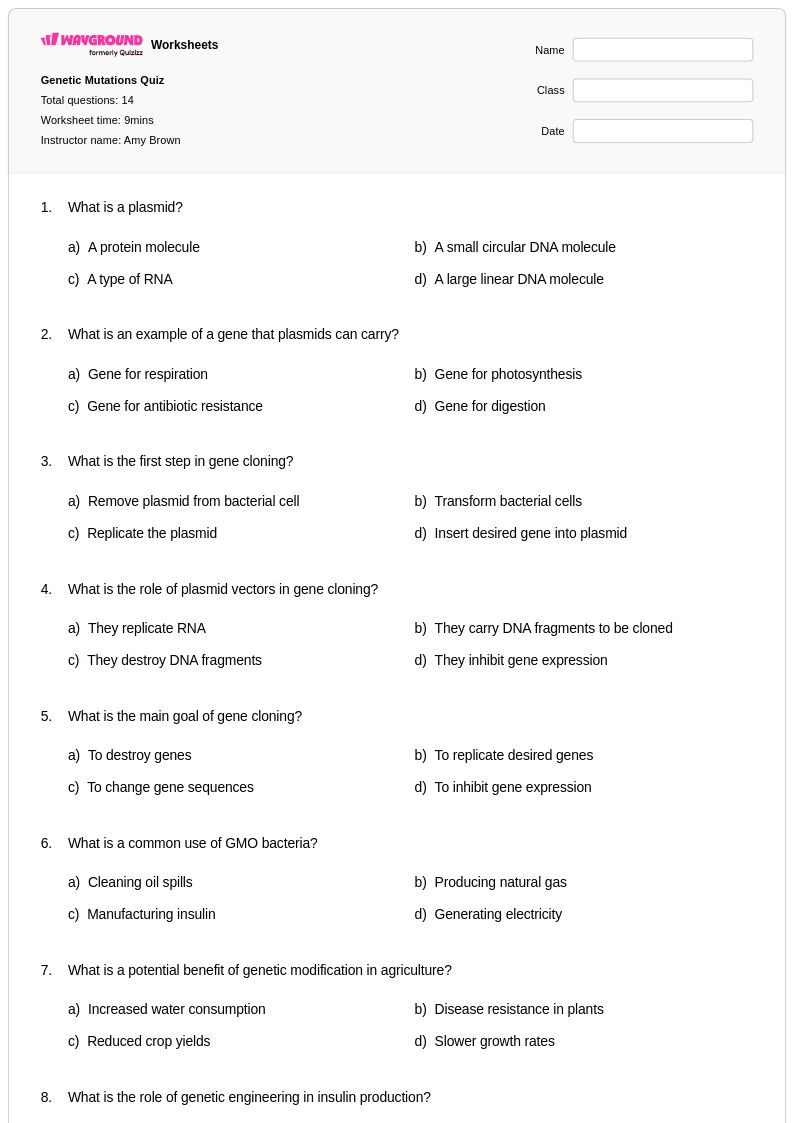
Plasmid mapping worksheets for Year 12 students available through Wayground (formerly Quizizz) provide comprehensive practice in analyzing and constructing restriction maps of bacterial plasmids, a fundamental skill in molecular biology and genetic engineering. These expertly designed printables guide students through the complex process of interpreting restriction enzyme digestion patterns, calculating fragment sizes, and determining the physical organization of DNA sequences within circular plasmid molecules. The worksheets strengthen critical analytical skills including data interpretation, logical reasoning, and problem-solving while reinforcing key concepts such as restriction enzyme specificity, electrophoresis patterns, and recombinant DNA technology. Students work through authentic practice problems that mirror laboratory scenarios, with comprehensive answer keys provided in convenient pdf format to support independent learning and self-assessment.
Wayground (formerly Quizizz) empowers educators with an extensive collection of millions of teacher-created plasmid mapping resources specifically curated for advanced high school biology instruction. The platform's robust search and filtering capabilities enable teachers to quickly locate worksheets aligned with specific curriculum standards and learning objectives, while built-in differentiation tools allow for seamless customization to meet diverse student needs and skill levels. These flexible resources are available in both printable and digital formats, including downloadable pdf versions, making them ideal for traditional classroom instruction, remote learning environments, or hybrid teaching approaches. Teachers can effectively utilize these materials for initial skill development, targeted remediation of complex molecular biology concepts, enrichment activities for advanced learners, and comprehensive review sessions before assessments, ensuring all students master this challenging yet essential component of modern biotechnology education.
FAQs
How do I teach plasmid mapping to biology students?
Effective plasmid mapping instruction typically begins with single-enzyme restriction digests before progressing to multi-enzyme analyses. Teachers should guide students through the logic of fragment size determination using gel electrophoresis data, then have them reconstruct circular maps by reconciling overlapping digest results. Connecting each step to real laboratory procedures — such as how bands appear on an agarose gel — helps students understand why mapping accuracy matters in biotechnology research.
What exercises help students practice restriction enzyme mapping?
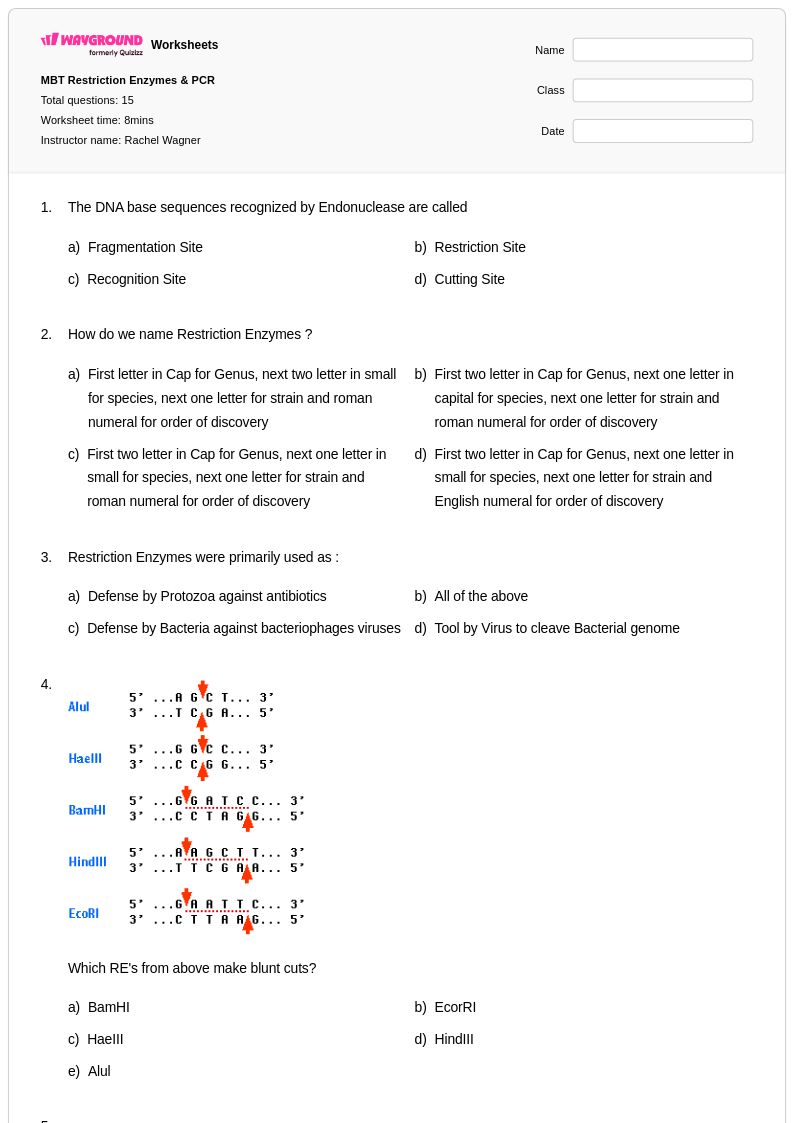
The most effective practice exercises require students to determine fragment sizes from simulated gel data, identify restriction enzyme cut sites on a circular DNA map, and predict banding patterns for hypothetical digests. Multi-enzyme problems that involve overlapping fragments are especially valuable because they force students to use logical elimination to resolve map ambiguities. Practice problems that progress from single-enzyme digests to circular permutation challenges build the layered reasoning skills students need for advanced molecular biology coursework.
What mistakes do students commonly make when constructing plasmid maps?
The most common error is treating plasmid DNA as linear rather than circular, which leads to incorrect fragment orientation and miscounted cut sites. Students also frequently confuse the number of cuts an enzyme makes with the number of fragments produced, forgetting that a circular molecule cut once yields one linear fragment, not two. A third recurring mistake is failing to reconcile single-enzyme and double-enzyme digest data, causing students to place restriction sites inconsistently around the map.
How do I use plasmid mapping worksheets in my classroom?
Plasmid mapping worksheets on Wayground are available as printable PDFs for traditional lab-adjacent classroom work and in digital formats for technology-integrated learning environments, including the option to host them as a quiz directly on Wayground. Printable versions work well as pre-lab preparation activities or post-lab analysis assignments, while digital versions allow for immediate feedback during independent or remote practice. Both formats include complete answer keys, making them straightforward to assign and grade across varied instructional settings.
How can I differentiate plasmid mapping instruction for students at different skill levels?
For students struggling with vector analysis, begin with pre-labeled circular diagrams where students only need to identify cut sites, then gradually remove scaffolding as confidence builds. Advanced learners can be challenged with multi-enzyme problems involving three or more enzymes, circular permutation, and incomplete digest scenarios that require experimental design thinking. Wayground's filtering tools allow teachers to locate worksheets matched to specific complexity levels, supporting both remediation and enrichment within the same course.
At what point in a molecular biology or biotechnology course should plasmid mapping be introduced?
Plasmid mapping is best introduced after students have a working understanding of DNA structure, restriction enzymes, and the basics of gel electrophoresis, typically in the latter half of a molecular biology or advanced biotechnology unit. Introducing mapping before these prerequisites are solid often leads to procedural memorization rather than conceptual understanding. Once students can interpret gel results and understand why enzymes cut at specific recognition sequences, plasmid mapping problems become a meaningful integration of those skills.