Free Printable Present Simple Tense Worksheets for Year 6
Master the Present Simple Tense with Wayground's comprehensive Year 6 English worksheets, featuring printable PDFs, free practice problems, and detailed answer keys to help students confidently learn this fundamental verb tense.
Explore printable Present Simple Tense worksheets for Year 6
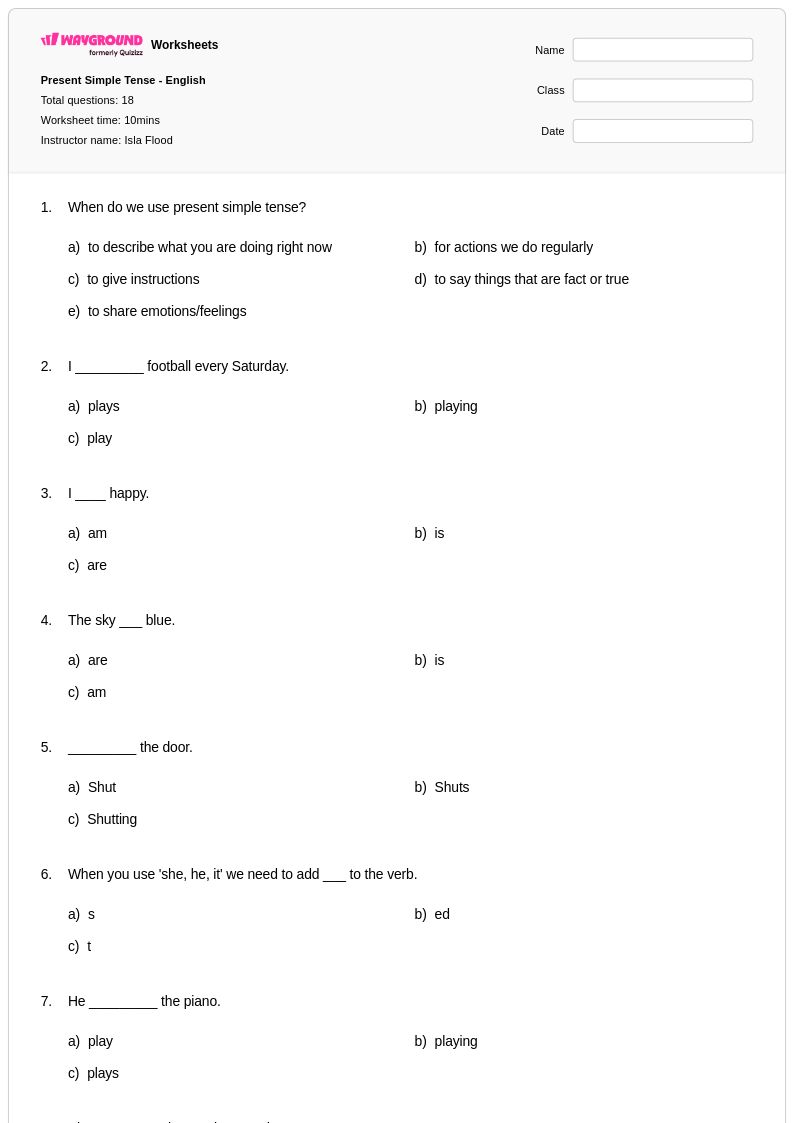
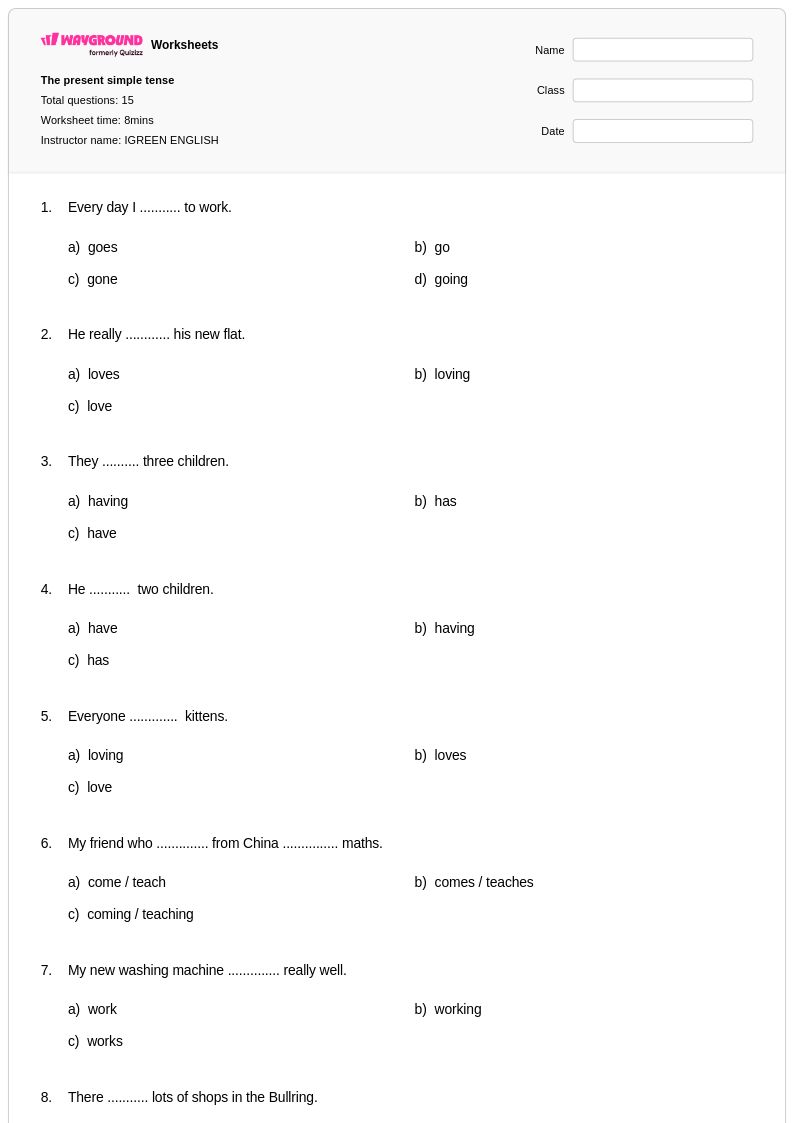
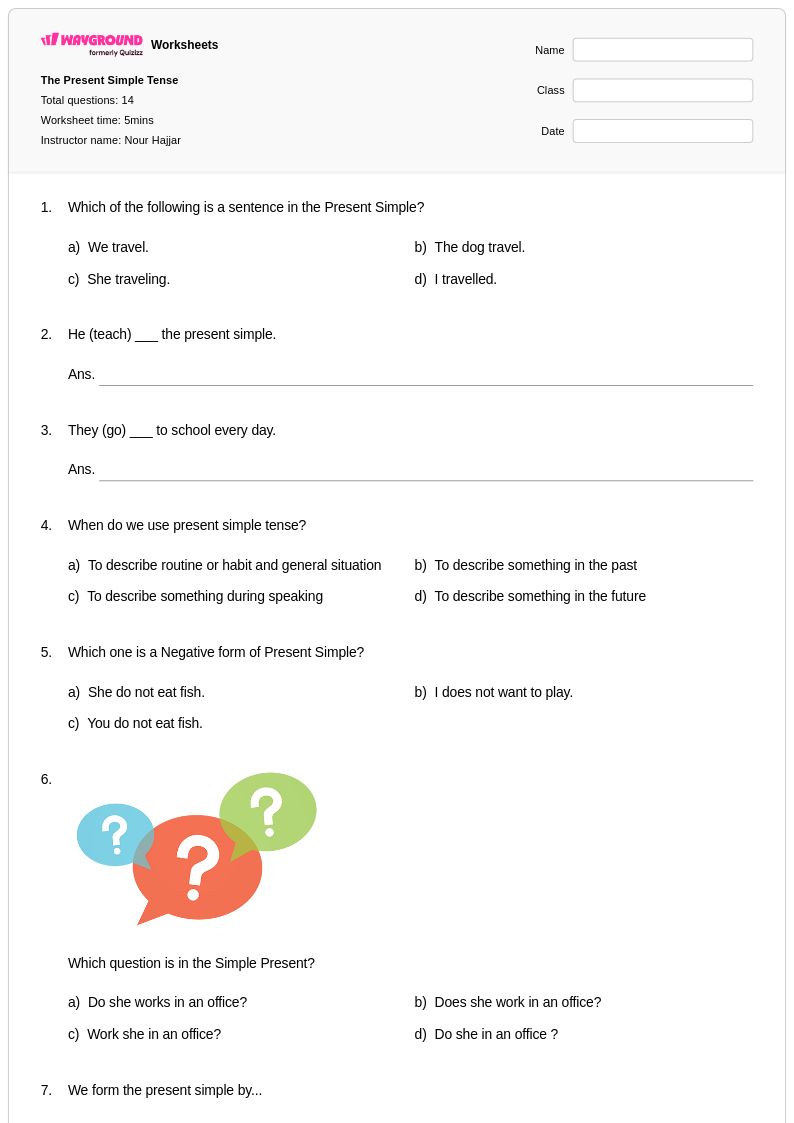
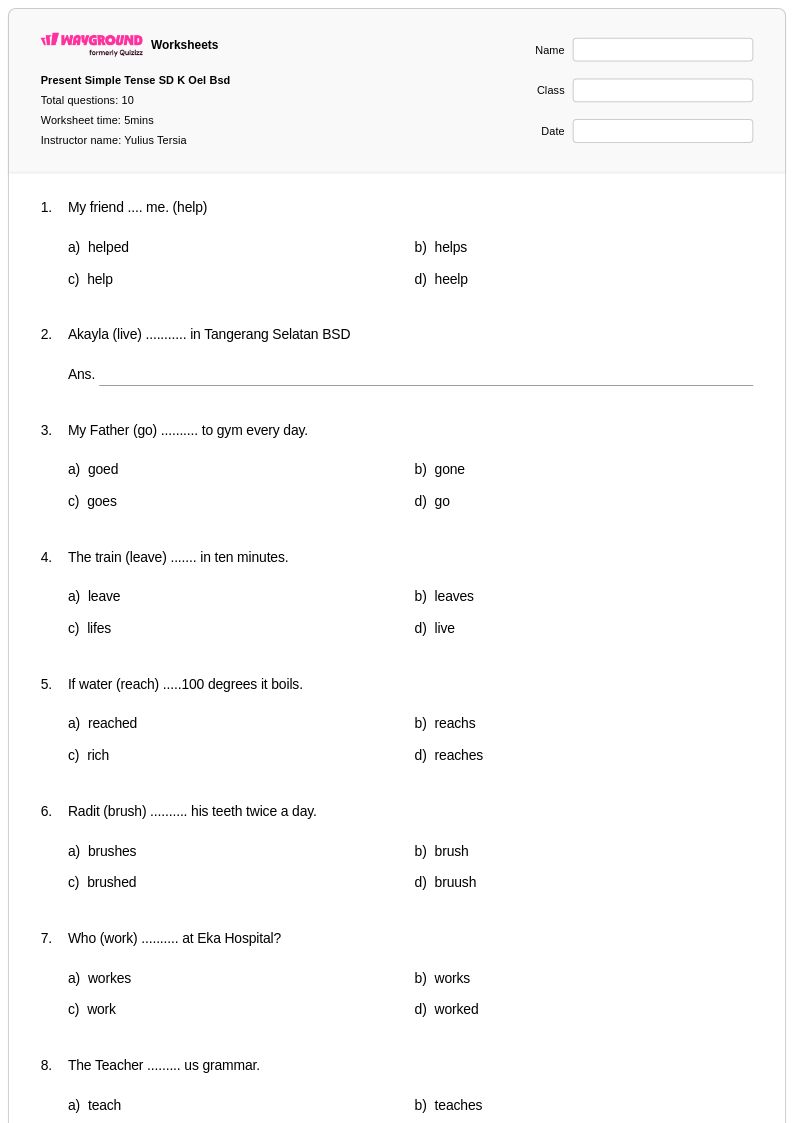
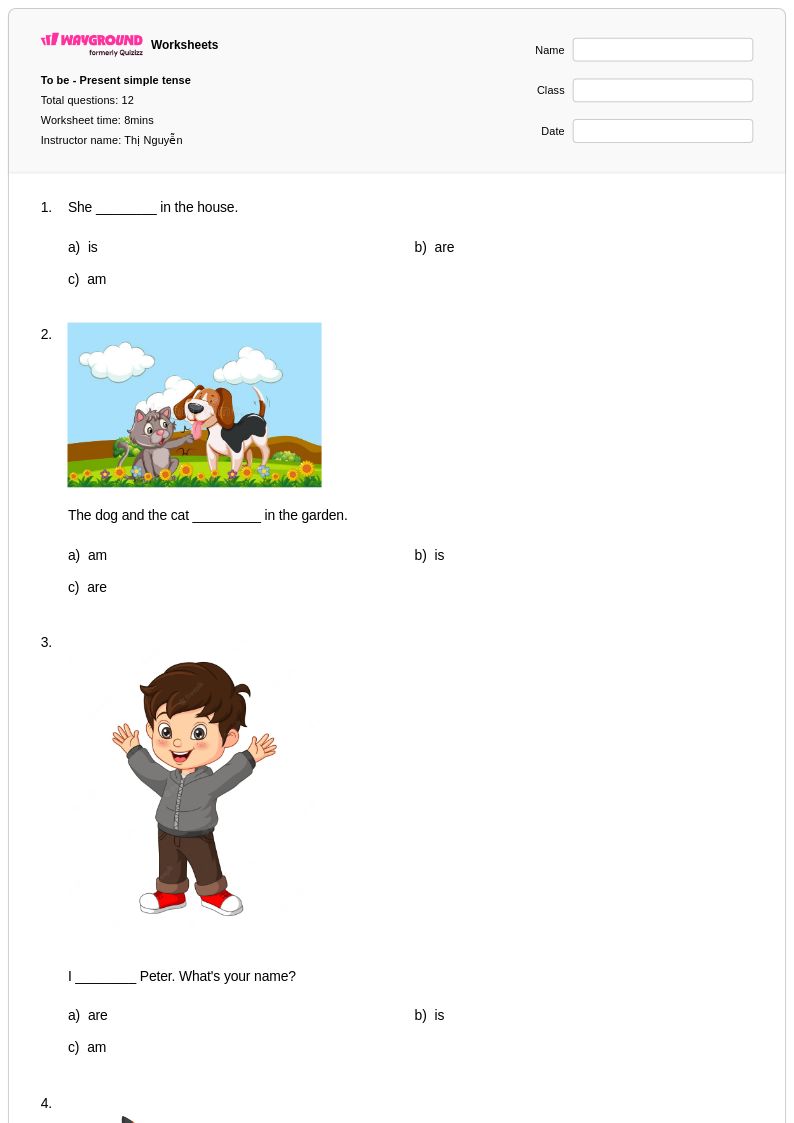
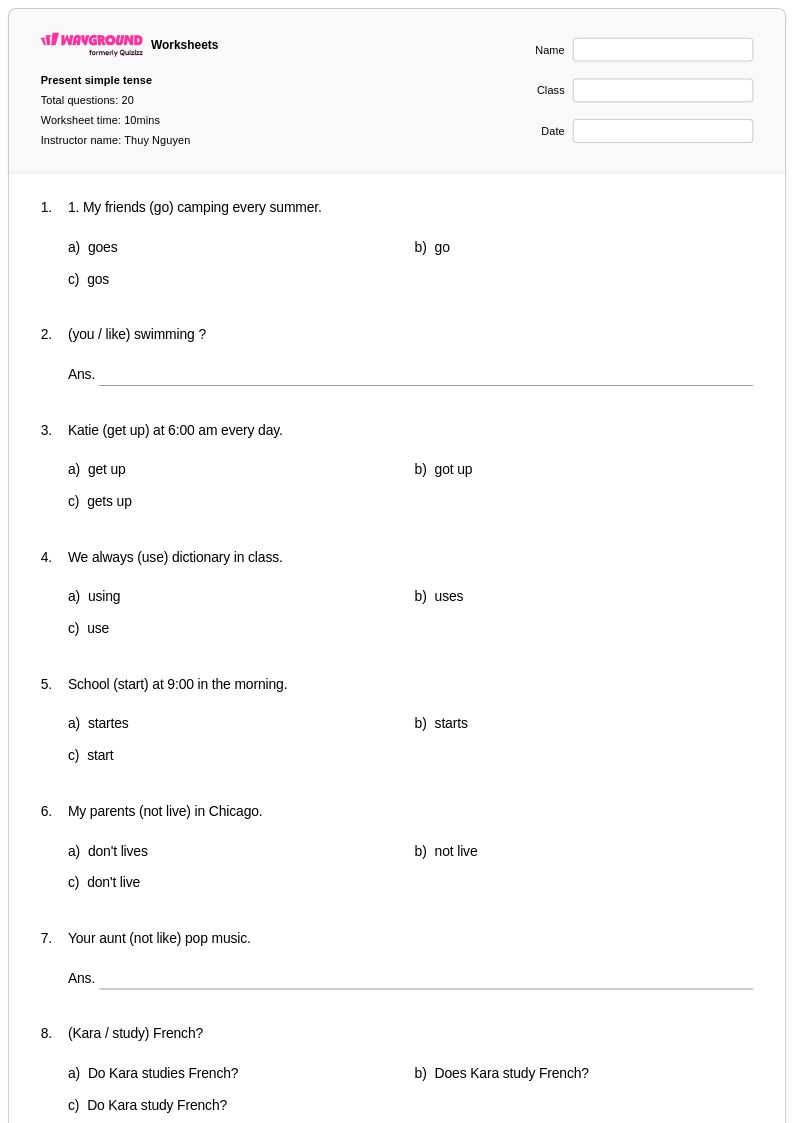
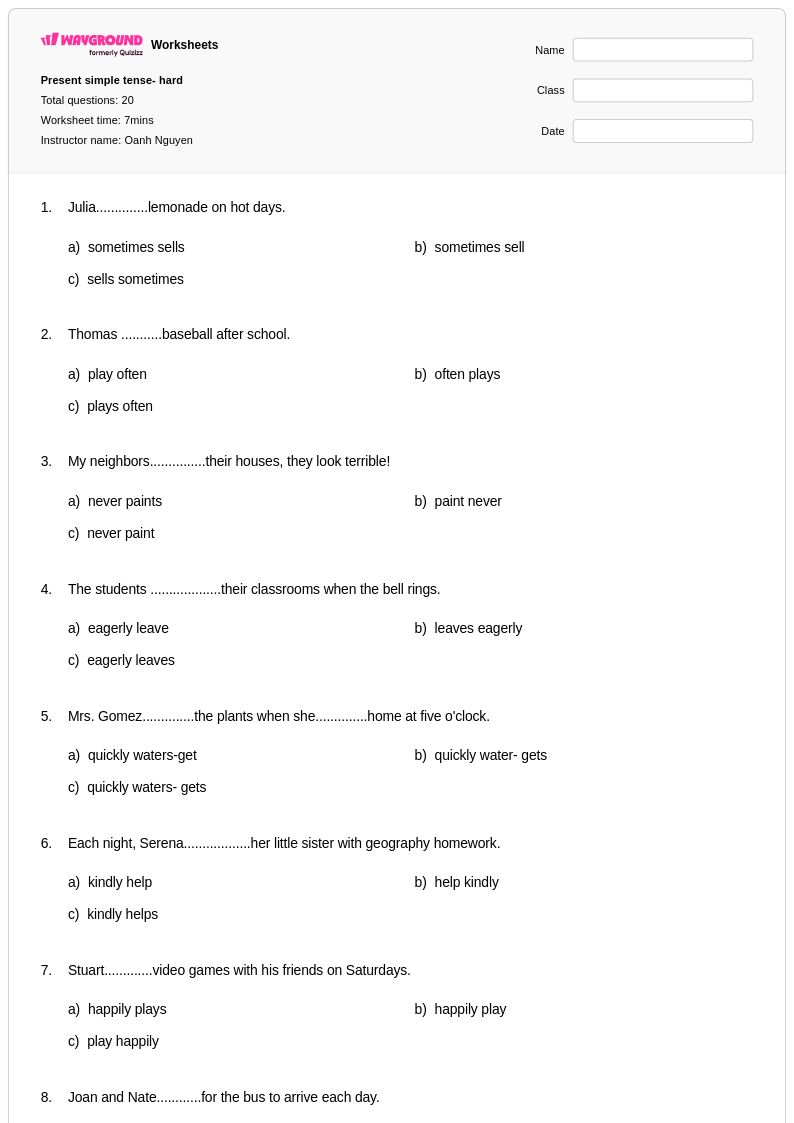
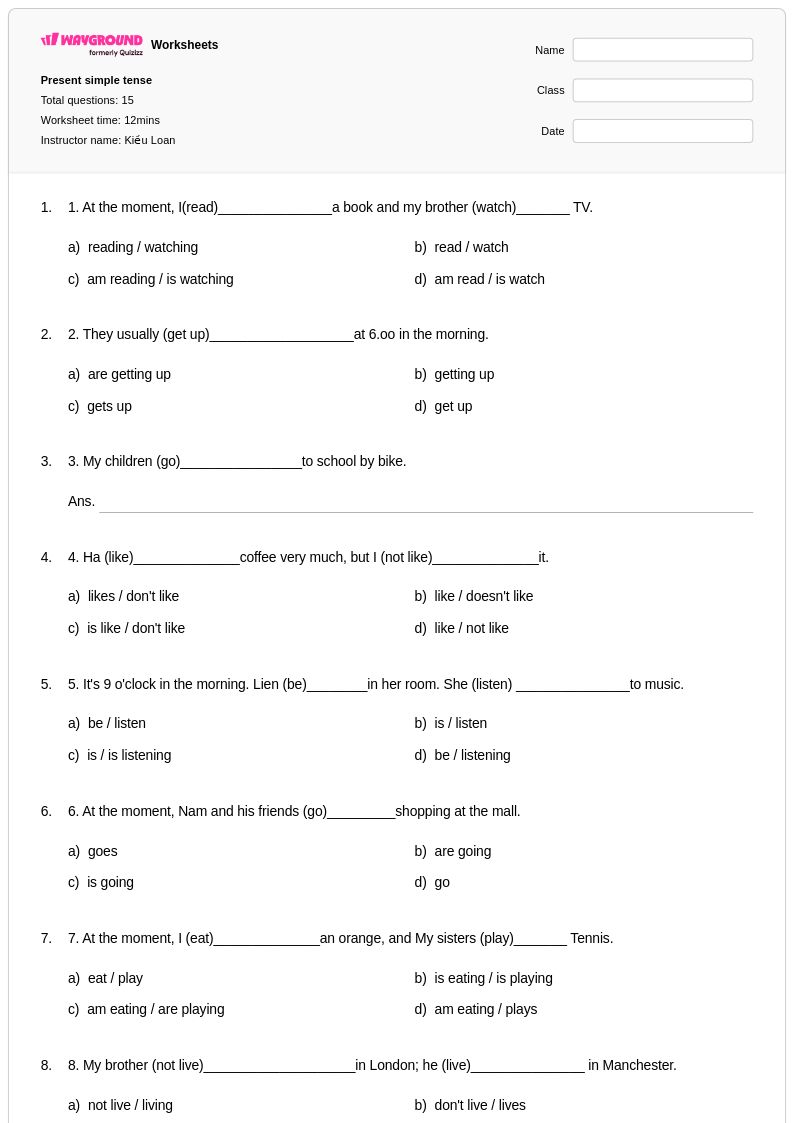
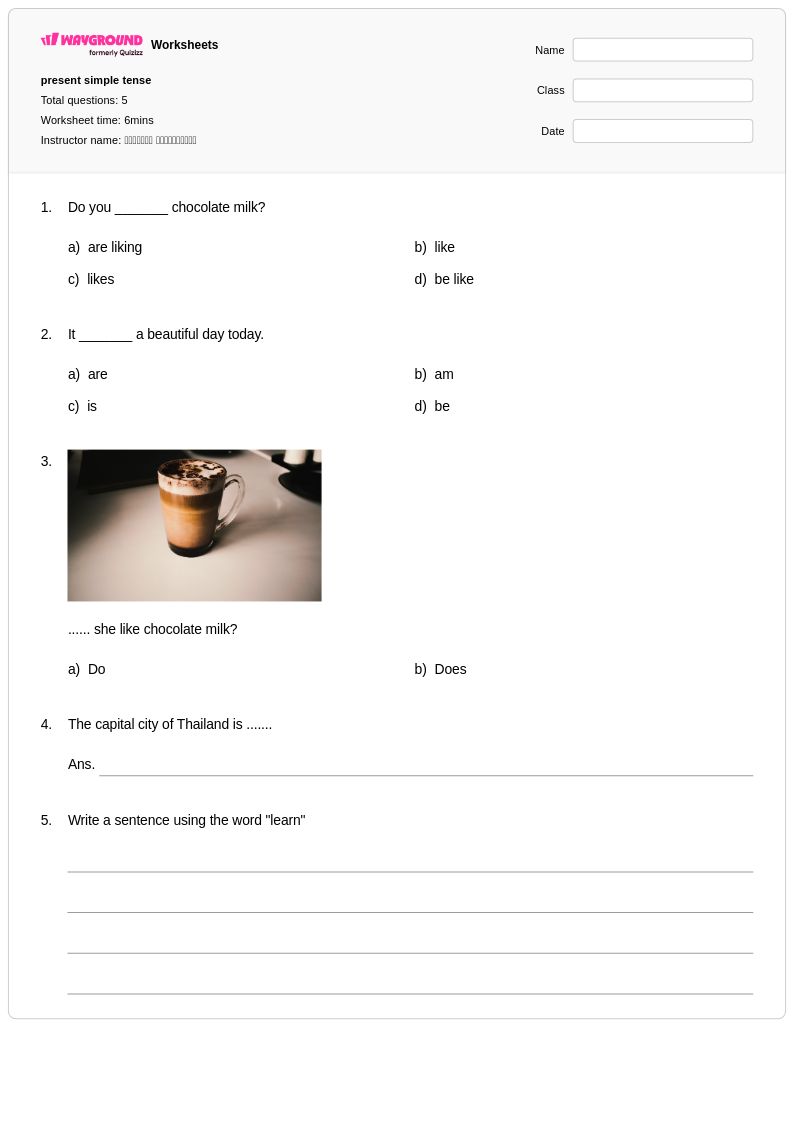
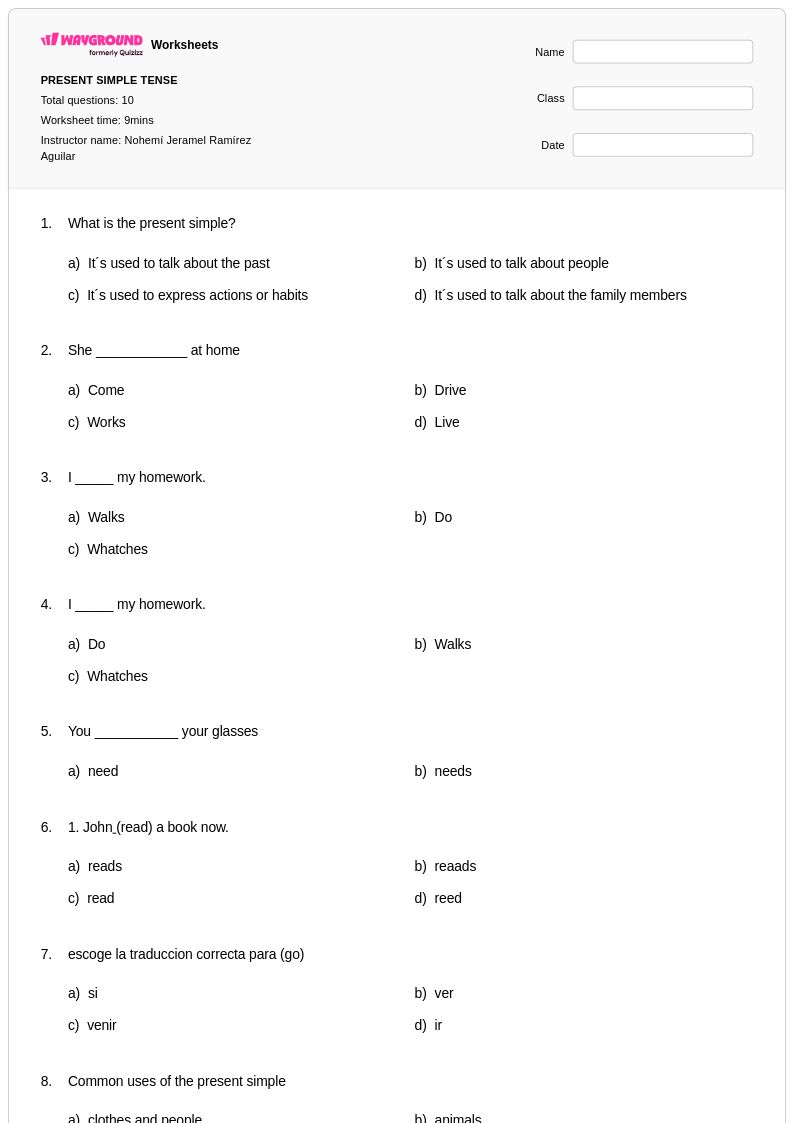
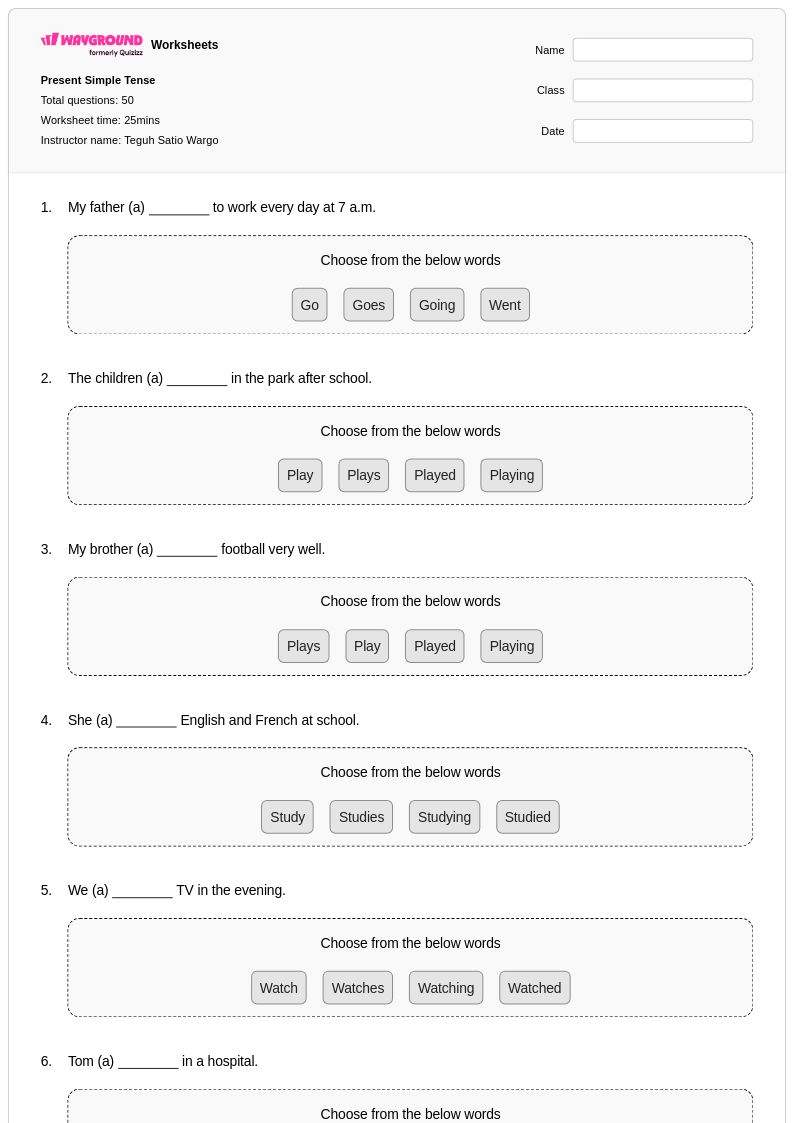
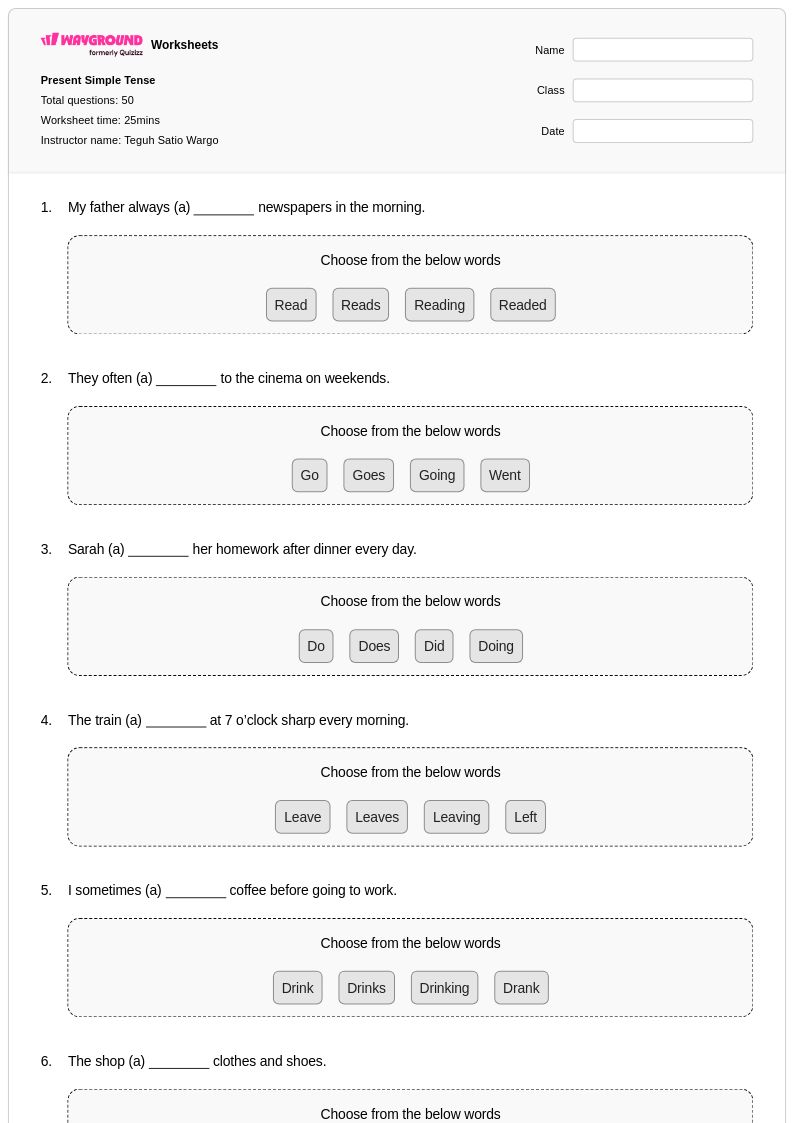
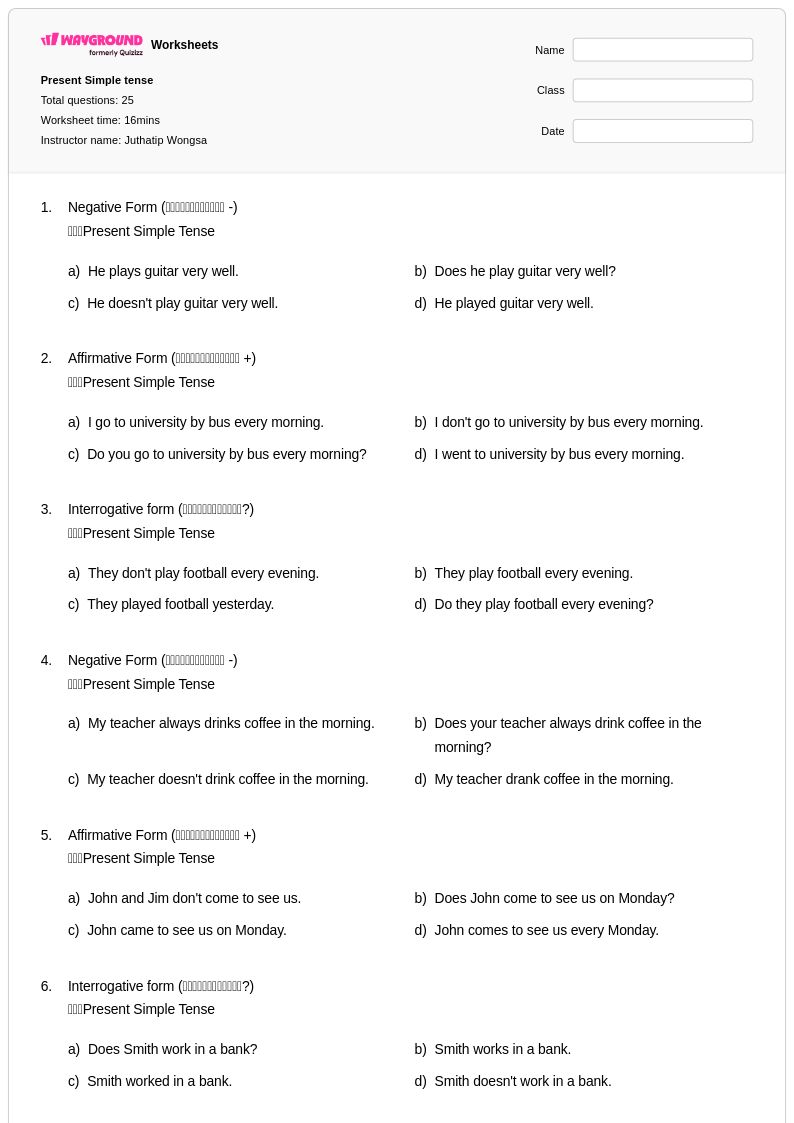
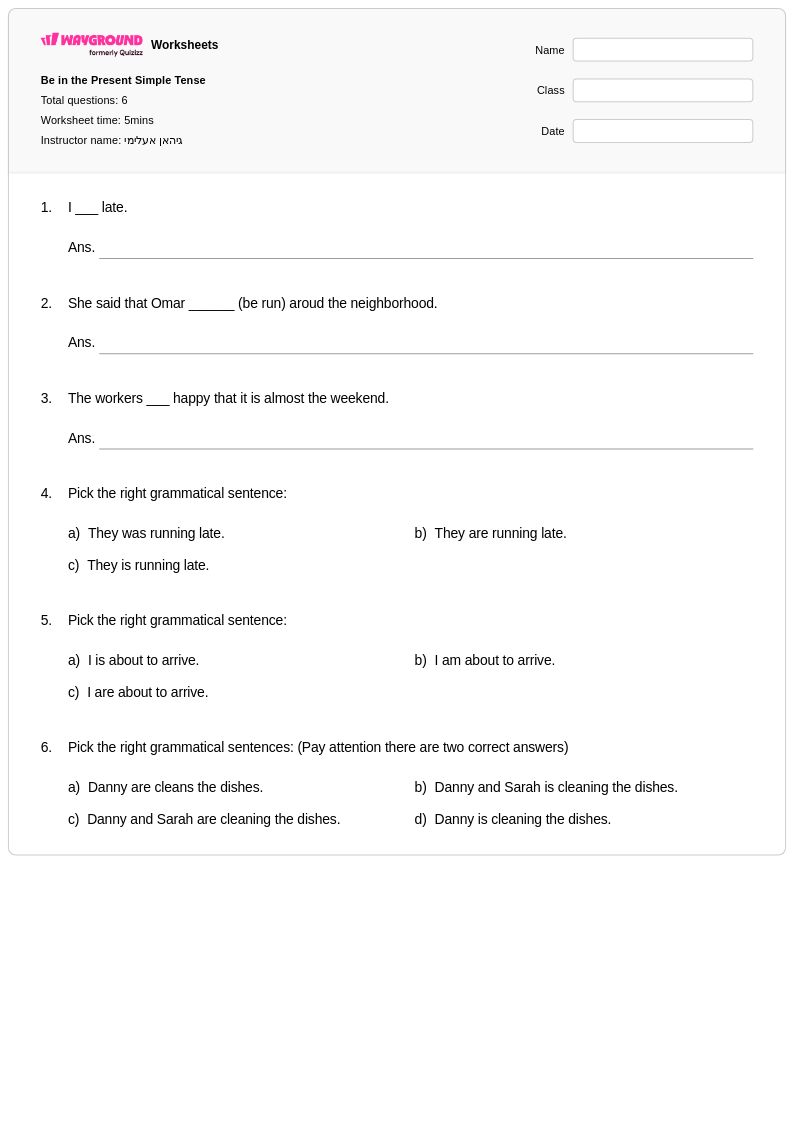
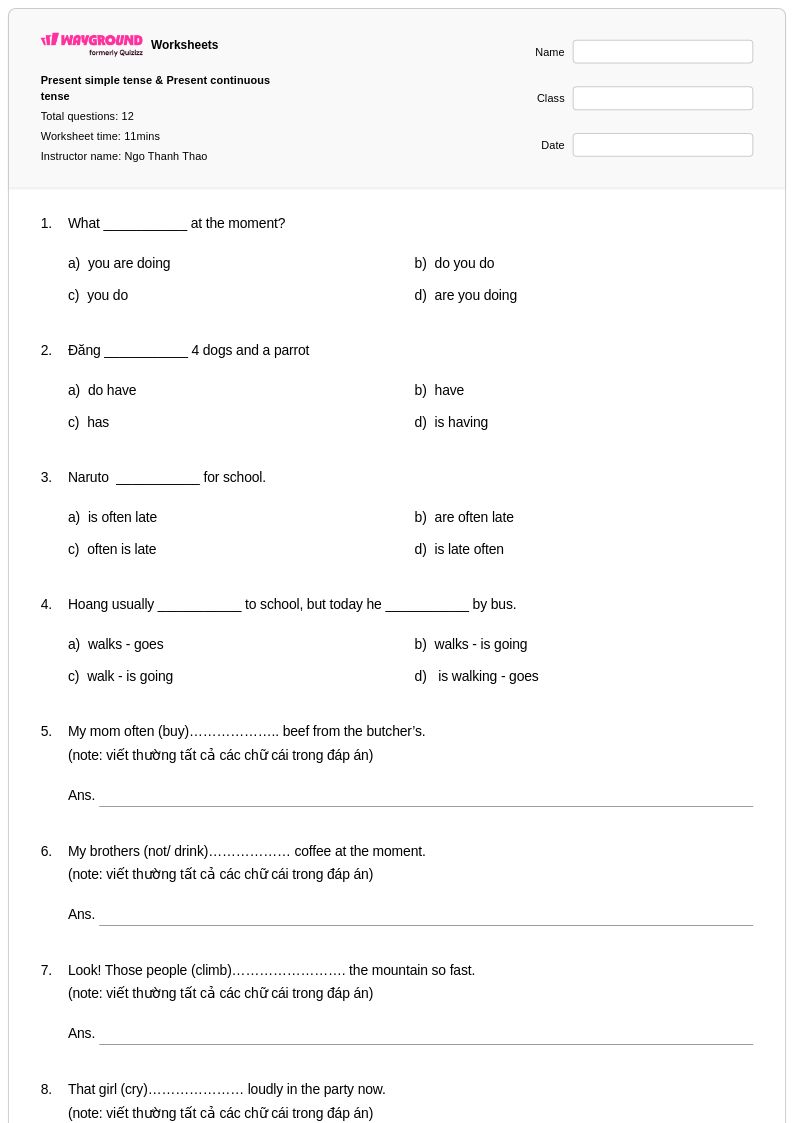
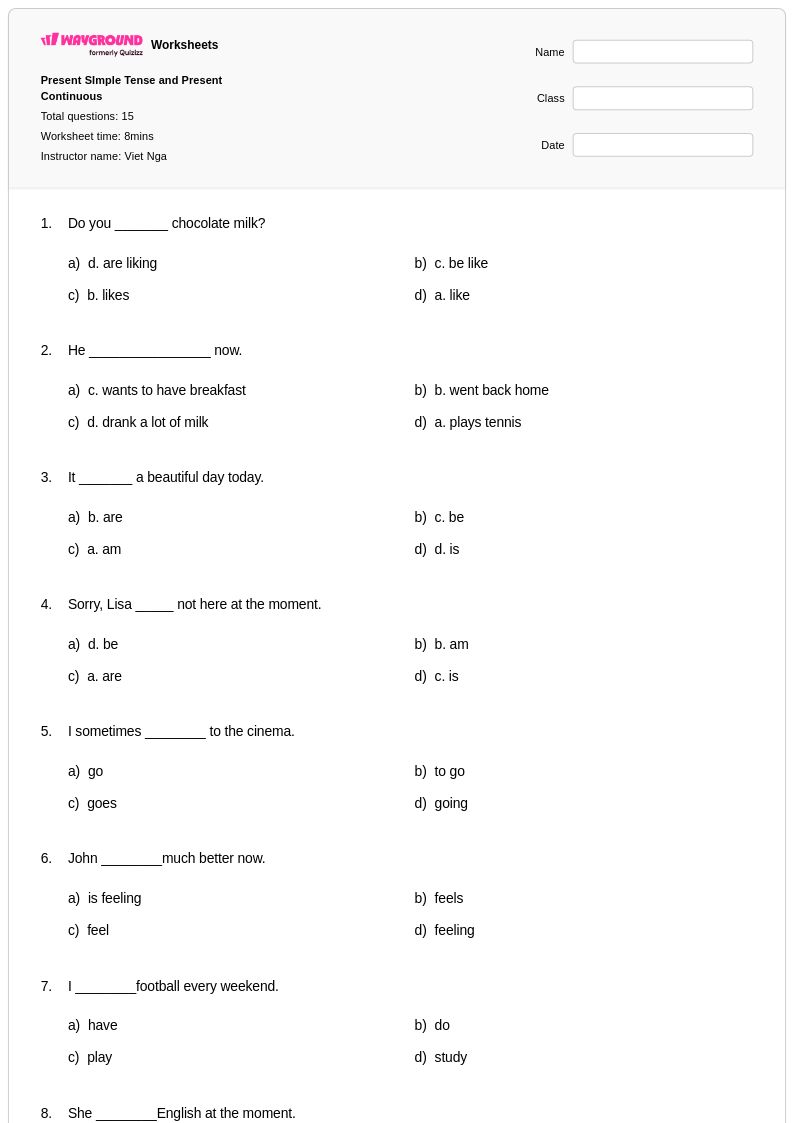
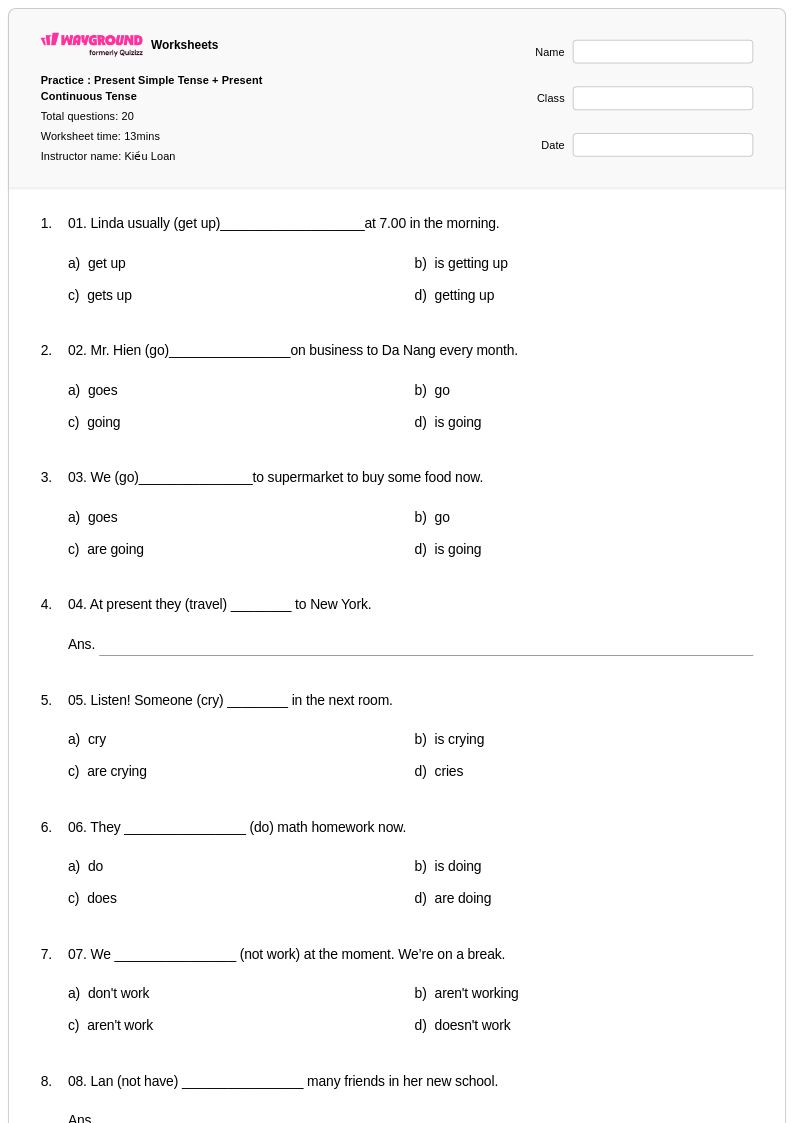
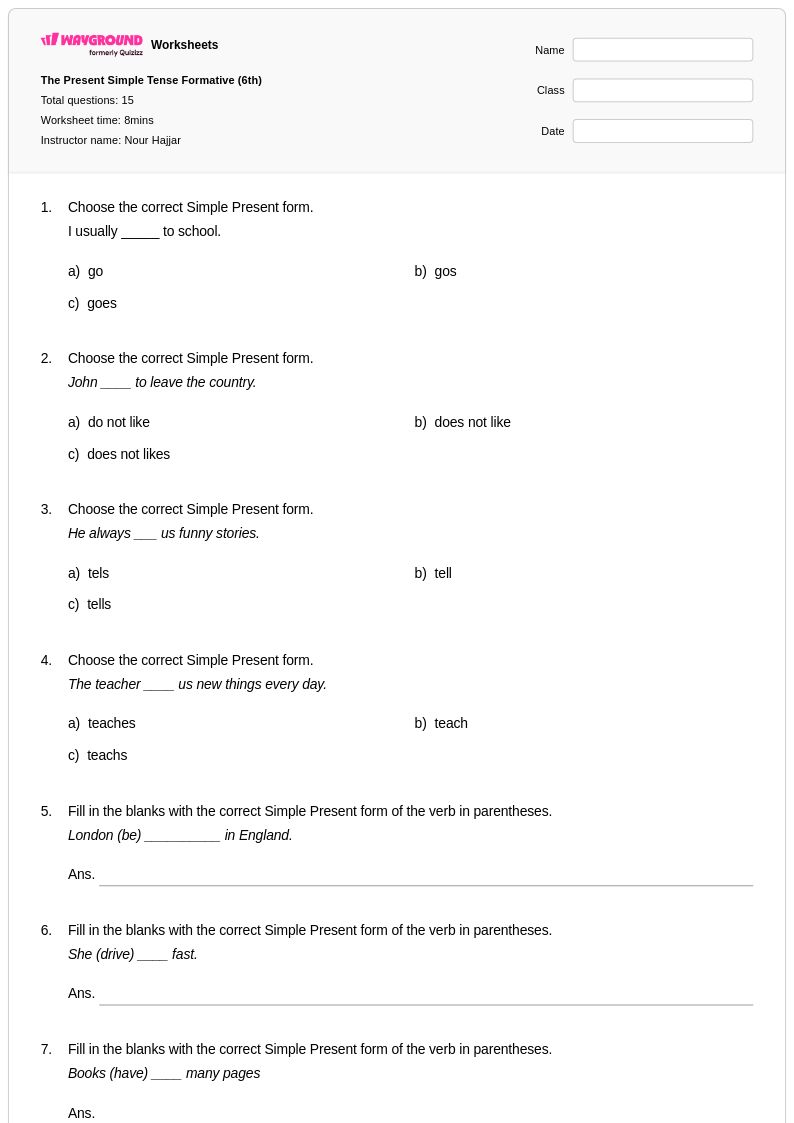
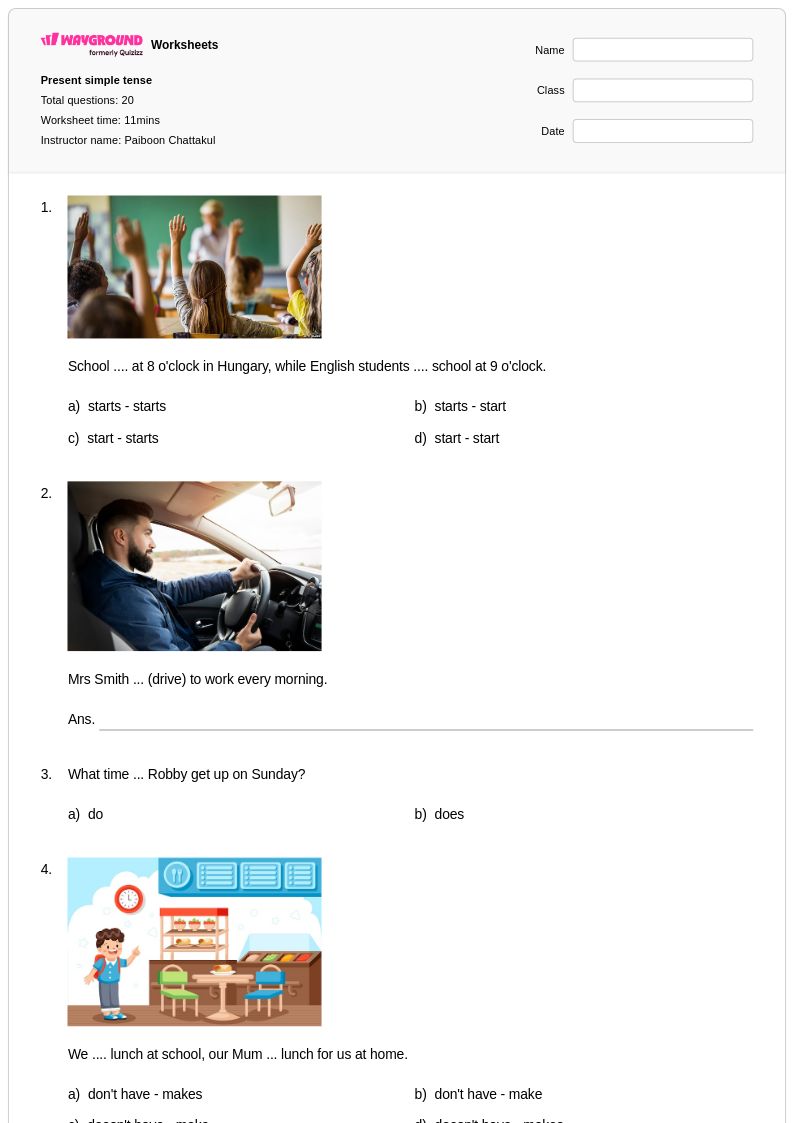
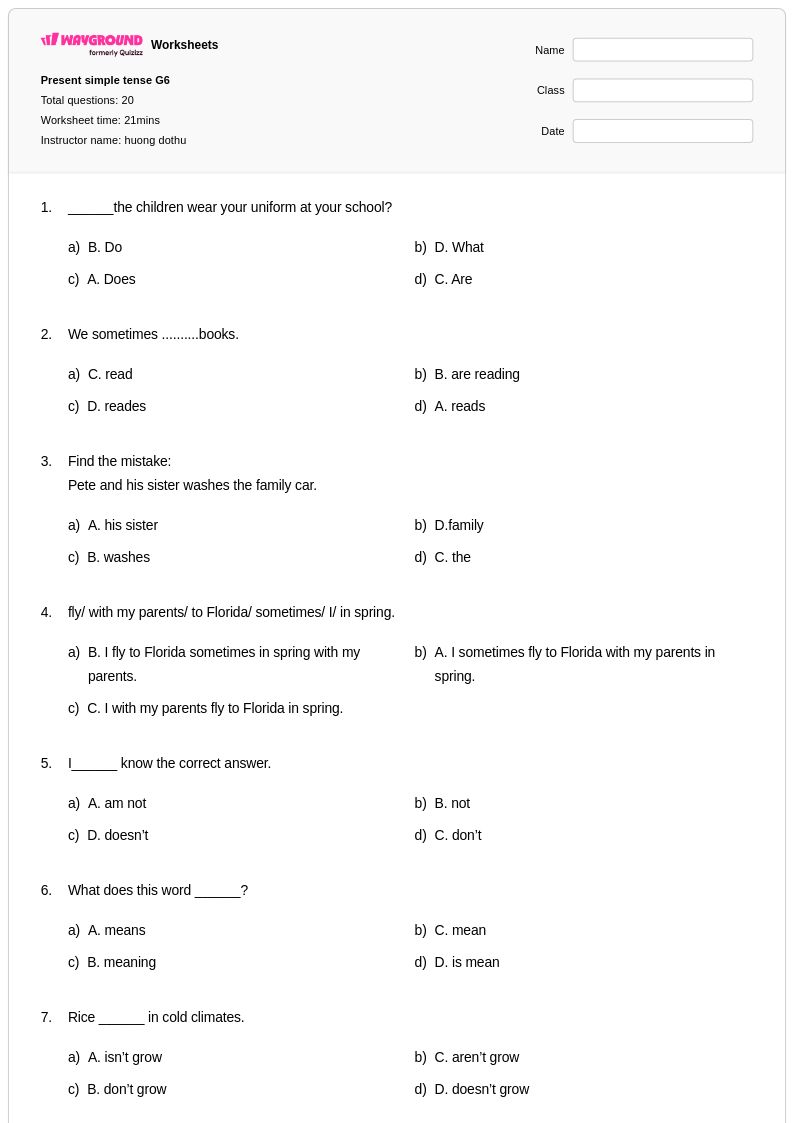
Present simple tense worksheets available through Wayground (formerly Quizizz) provide Year 6 students with comprehensive practice in mastering one of English grammar's most fundamental verb forms. These carefully crafted printables focus on helping students understand when and how to use present simple tense for habitual actions, general truths, and scheduled events, while strengthening their ability to form correct positive, negative, and interrogative sentences. The worksheet collection includes diverse practice problems that cover subject-verb agreement rules, proper use of auxiliary verbs "do" and "does," and common irregular verbs, with each free resource featuring a complete answer key to support independent learning and immediate feedback. Students work through engaging exercises that reinforce the distinction between present simple and other tenses, building essential grammar skills through structured practice that progresses from basic sentence formation to more complex applications in context.
Wayground (formerly Quizizz) supports educators with an extensive library of millions of teacher-created present simple tense worksheets specifically designed for Year 6 English instruction. The platform's robust search and filtering capabilities allow teachers to quickly locate resources aligned with curriculum standards and student proficiency levels, while differentiation tools enable customization of content difficulty and complexity to meet diverse classroom needs. These versatile materials are available in both printable pdf format and interactive digital versions, providing flexibility for in-class instruction, homework assignments, remediation sessions, and enrichment activities. Teachers can efficiently plan targeted grammar lessons, assess student understanding, and provide additional skill practice opportunities using these professionally developed resources that seamlessly integrate into existing English language arts curricula and support data-driven instructional decisions.
FAQs
How do I teach present simple tense to English language learners?
Start by anchoring present simple tense to concrete, recurring situations students recognize, such as daily routines, universal facts, and permanent conditions. Introduce affirmative sentences first, then layer in negatives using 'do not' and 'does not,' and finally interrogatives with 'do' and 'does.' Using visual timelines helps students distinguish present simple from progressive tenses, which is one of the most common points of confusion at this stage.
What exercises help students practice present simple tense?
Effective practice exercises include sentence completion tasks, subject-verb agreement drills, and paragraph construction activities that require students to apply the tense across different sentence types. Moving from structured exercises, such as fill-in-the-blank with given verbs, to more open-ended tasks like writing about personal habits builds fluency progressively. Mixing affirmative, negative, and interrogative formats within the same exercise reinforces all three structures simultaneously.
What mistakes do students commonly make with present simple tense?
The most frequent error is omitting the third-person singular '-s' ending, particularly in affirmative sentences with 'he,' 'she,' and 'it.' Students also confuse when to use 'do' versus 'does' in questions and negative statements, often applying 'do' universally regardless of subject. A subtler error is overusing present simple for actions happening right now, which requires present progressive instead, reflecting a misunderstanding of when each tense applies.
How do I help students understand when to use present simple versus present continuous?
Present simple describes habitual actions, general truths, and permanent states, while present continuous describes actions happening at the moment of speaking or temporary situations. Concrete examples are essential: 'She works at a hospital' versus 'She is working late tonight' illustrates the distinction clearly. Providing students with time expressions associated with each tense, such as 'always' and 'every day' for present simple, helps reinforce correct usage through pattern recognition.
How can I use present simple tense worksheets in my classroom?
Present simple tense worksheets on Wayground are available as printable PDFs for traditional classroom use and in digital formats for technology-integrated or remote learning environments, giving teachers flexibility in how they deploy them. Teachers can use them for skill introduction, guided practice, homework assignments, or formative assessment, and worksheets can also be hosted as a quiz directly on Wayground. Wayground's accommodation tools allow teachers to assign extended time, read-aloud support, or reduced answer choices to individual students, ensuring diverse learners can engage with the same material at an appropriate level.
How do I differentiate present simple tense practice for mixed-ability classes?
For lower-proficiency students, begin with sentence-level exercises focused on a single skill, such as third-person singular conjugation, before introducing combined tasks. Higher-proficiency students benefit from paragraph construction or error-correction activities that require them to evaluate multiple grammar rules at once. On Wayground, teachers can apply individual accommodations such as reduced answer choices or read-aloud support to specific students without affecting the rest of the class, making differentiation practical within a single assignment.