Free Printable Present Tense Verbs Worksheets for Year 3
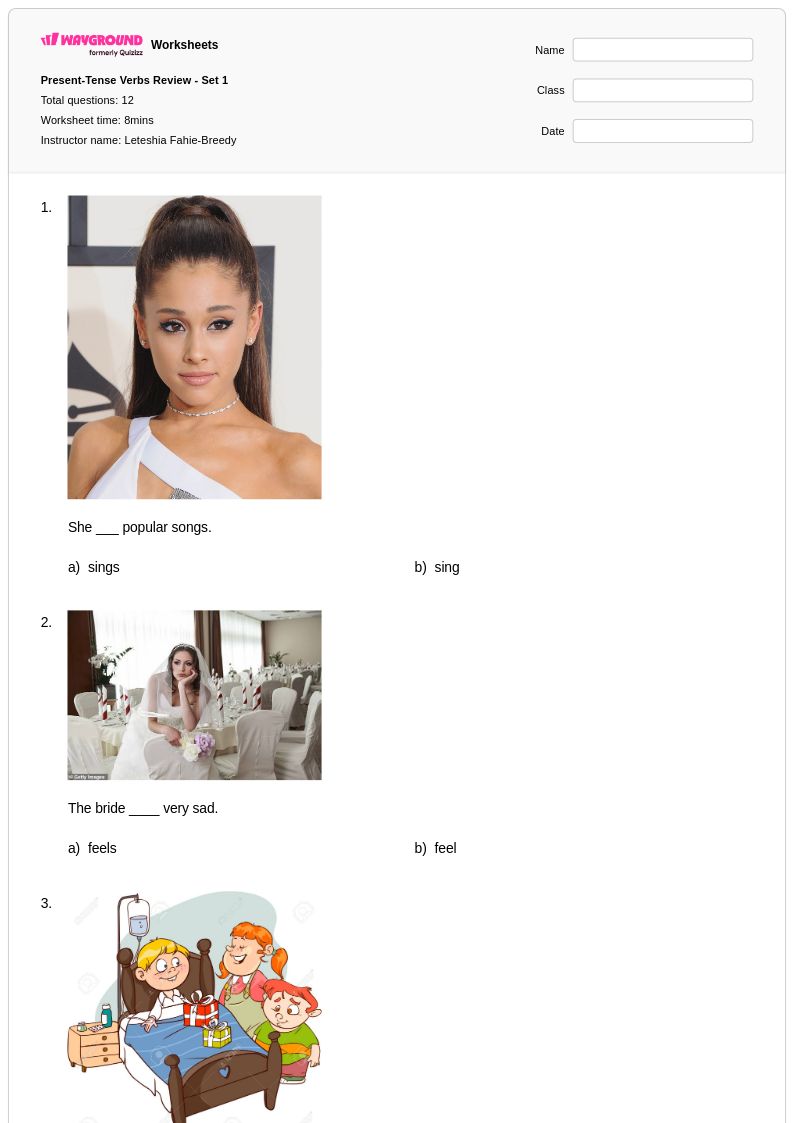
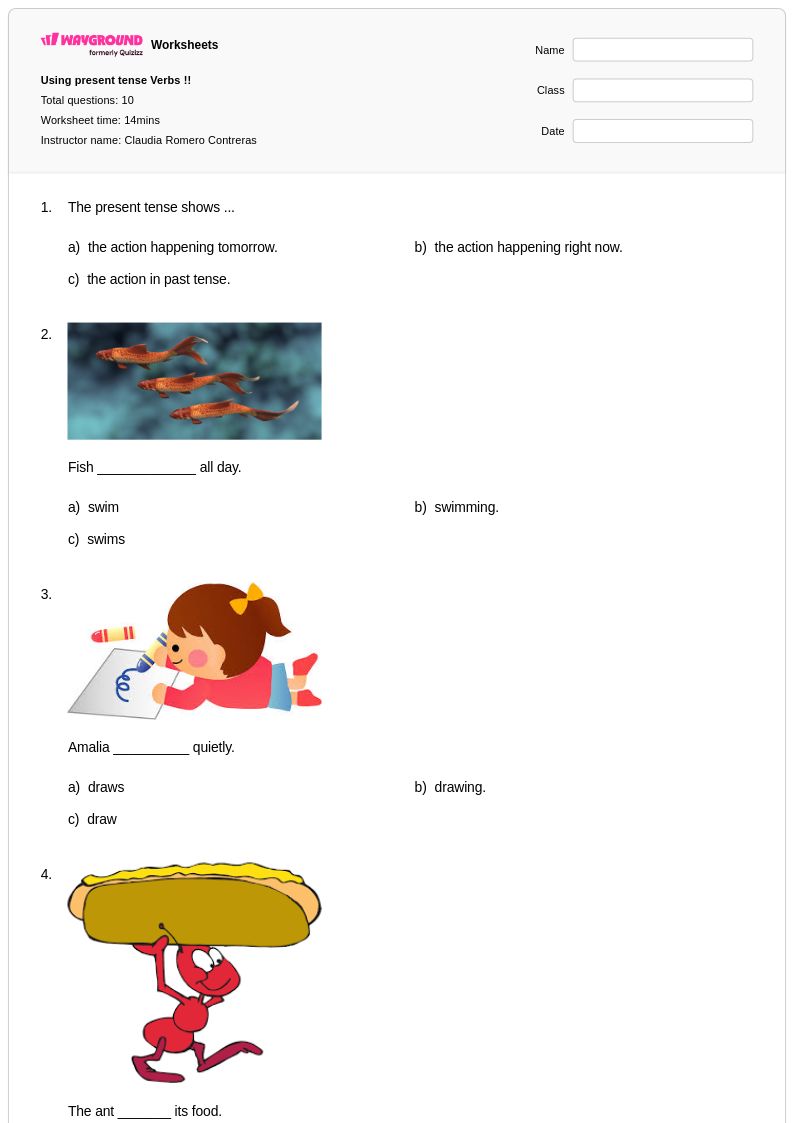
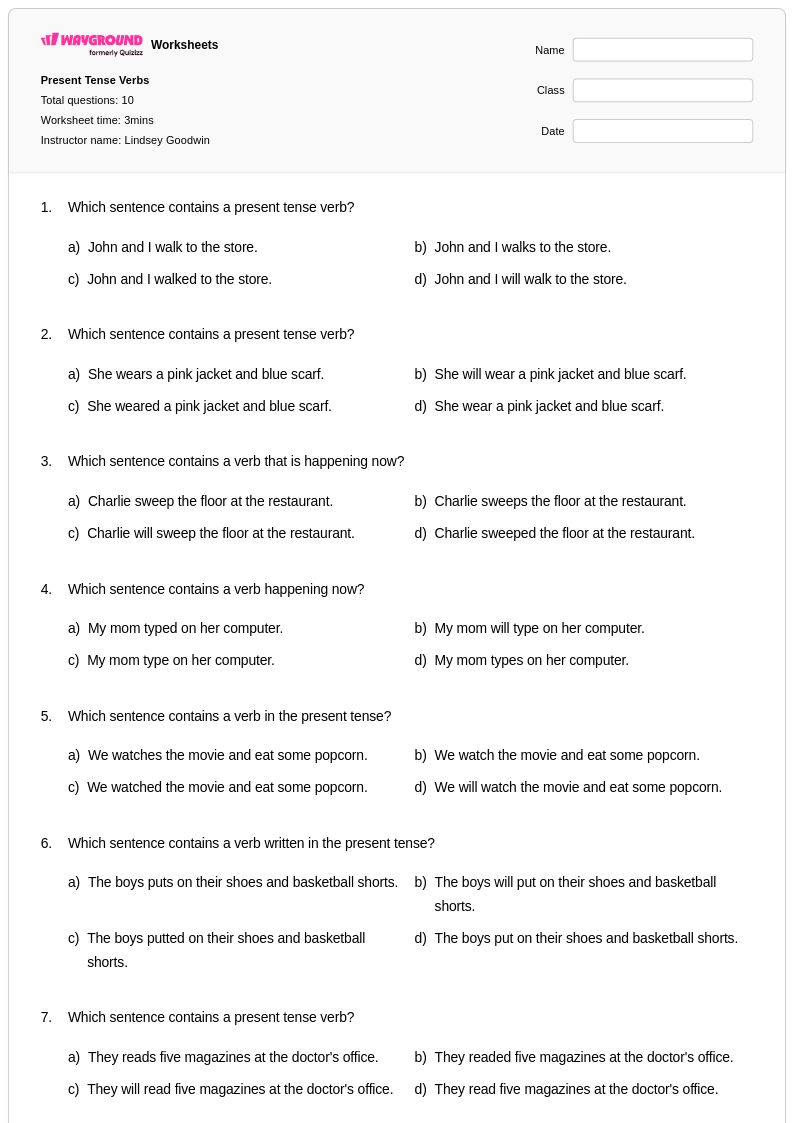
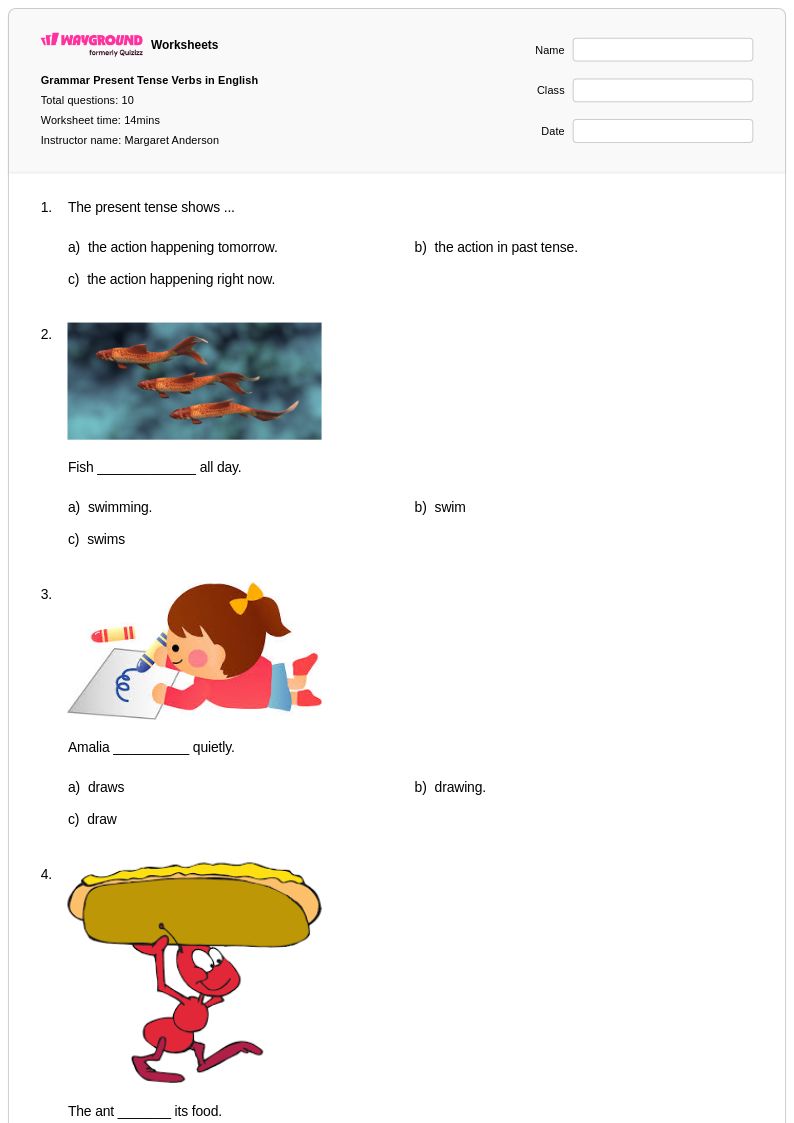
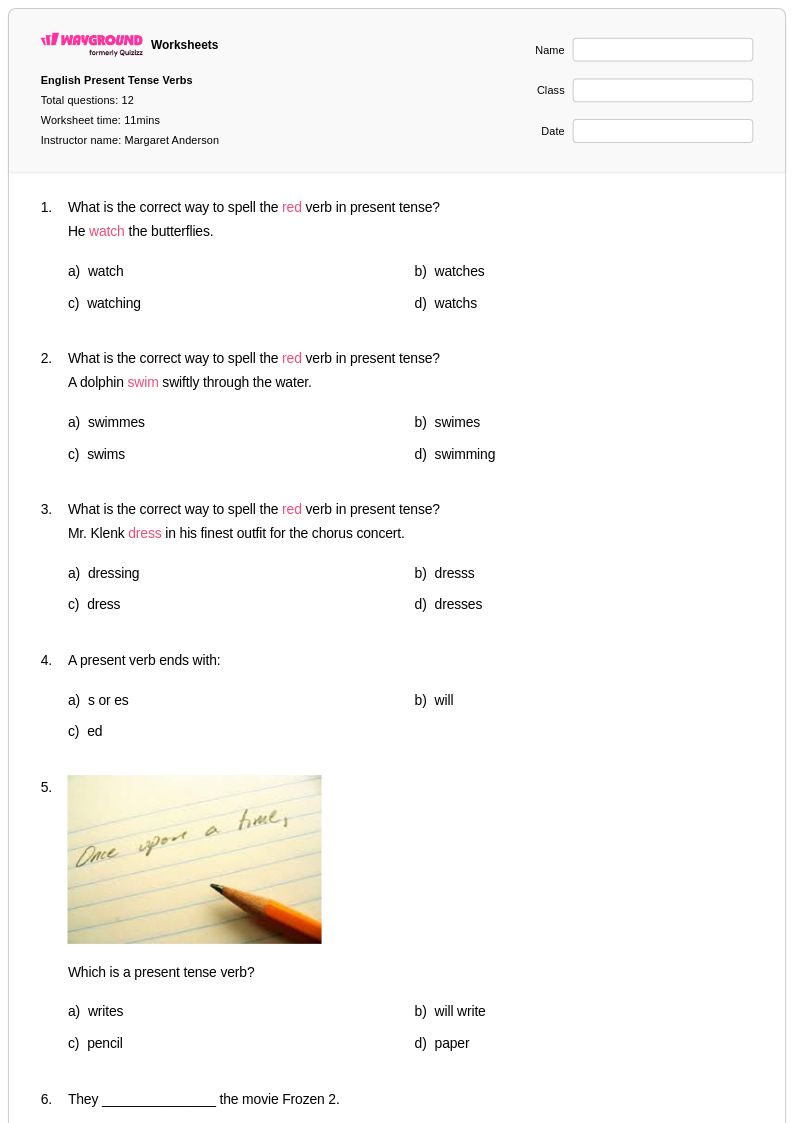
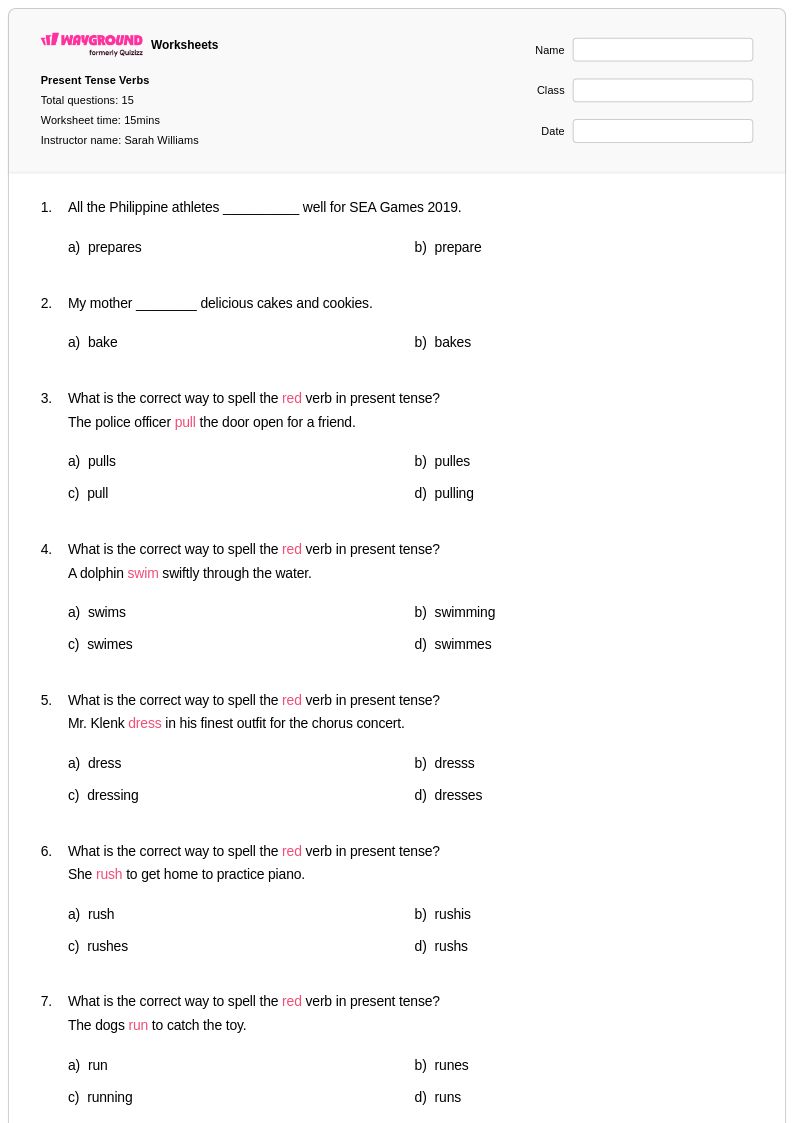
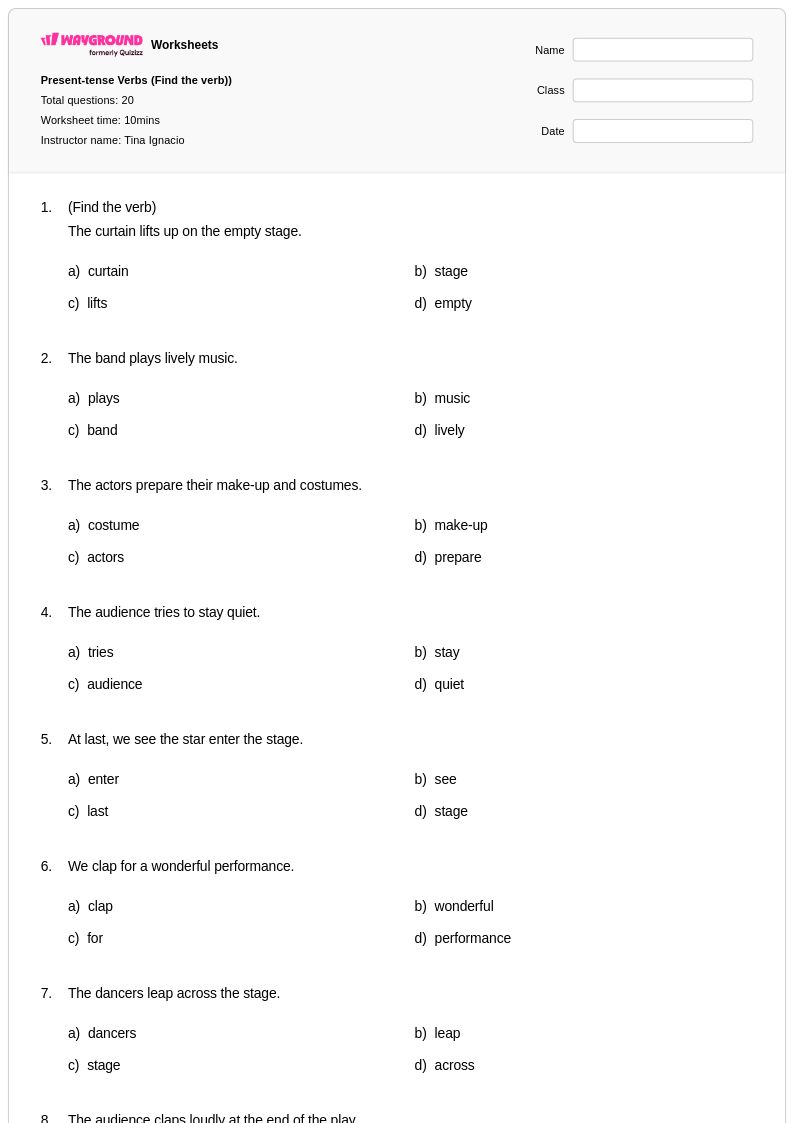
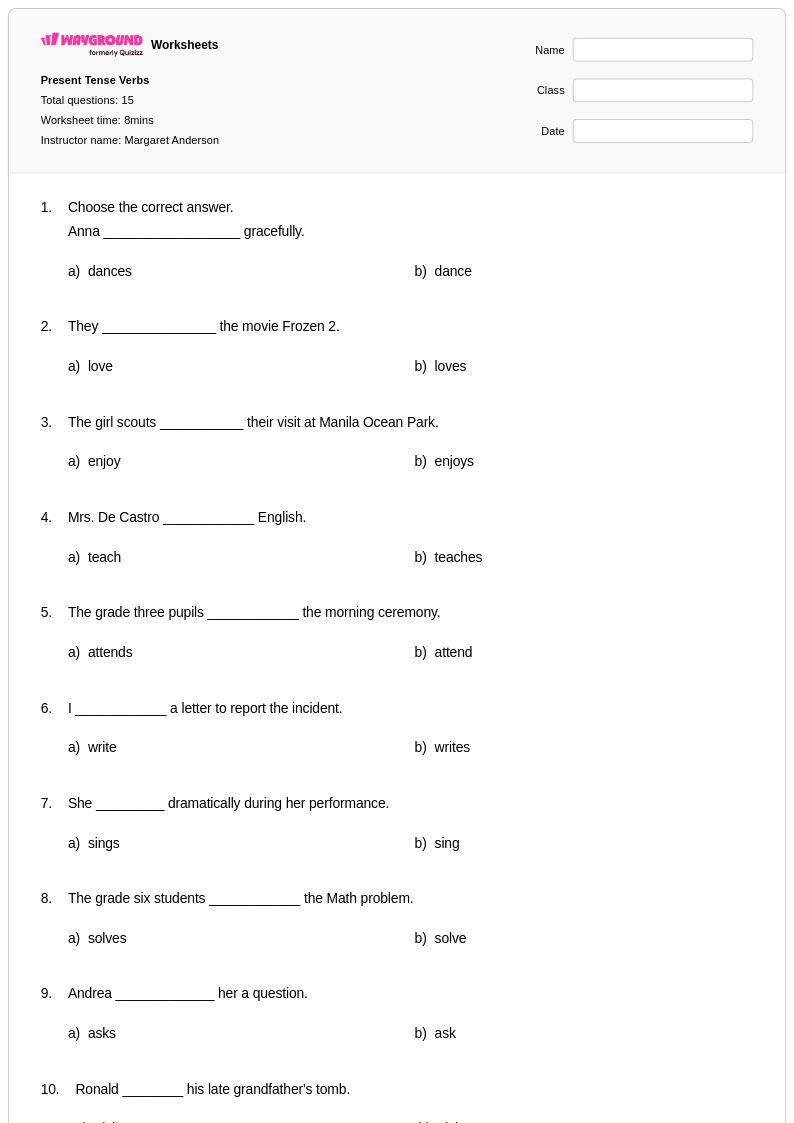
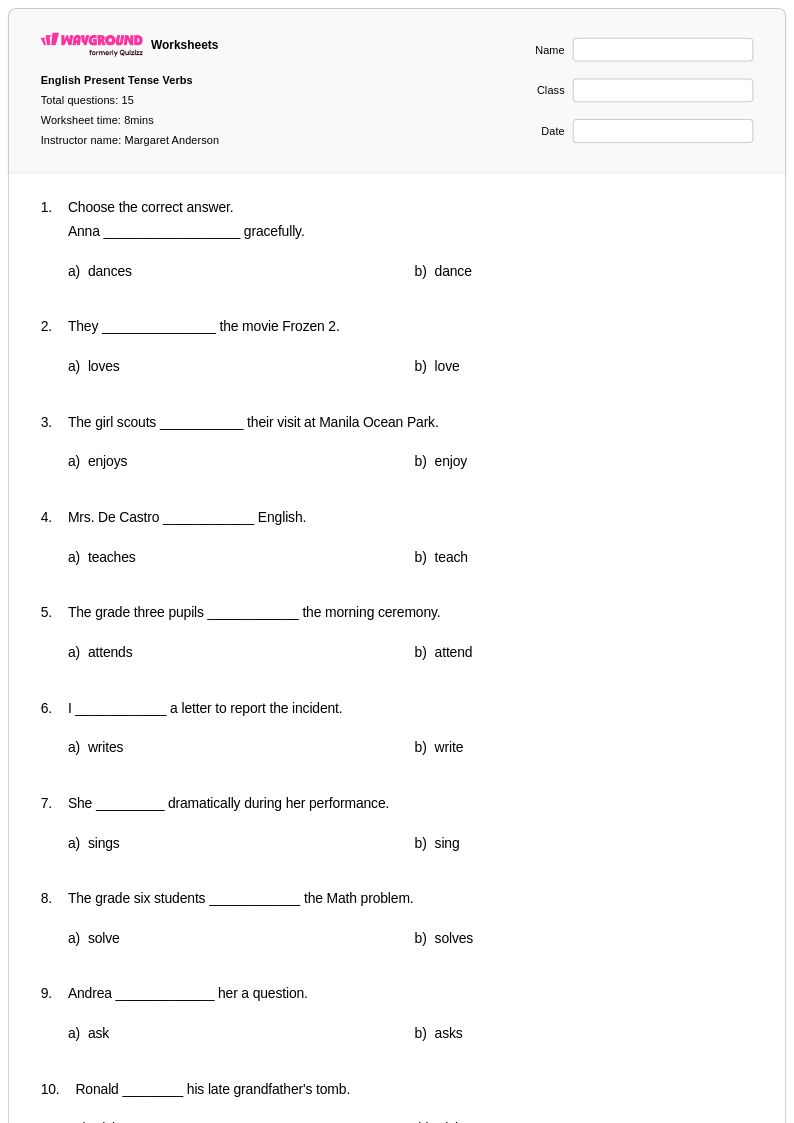
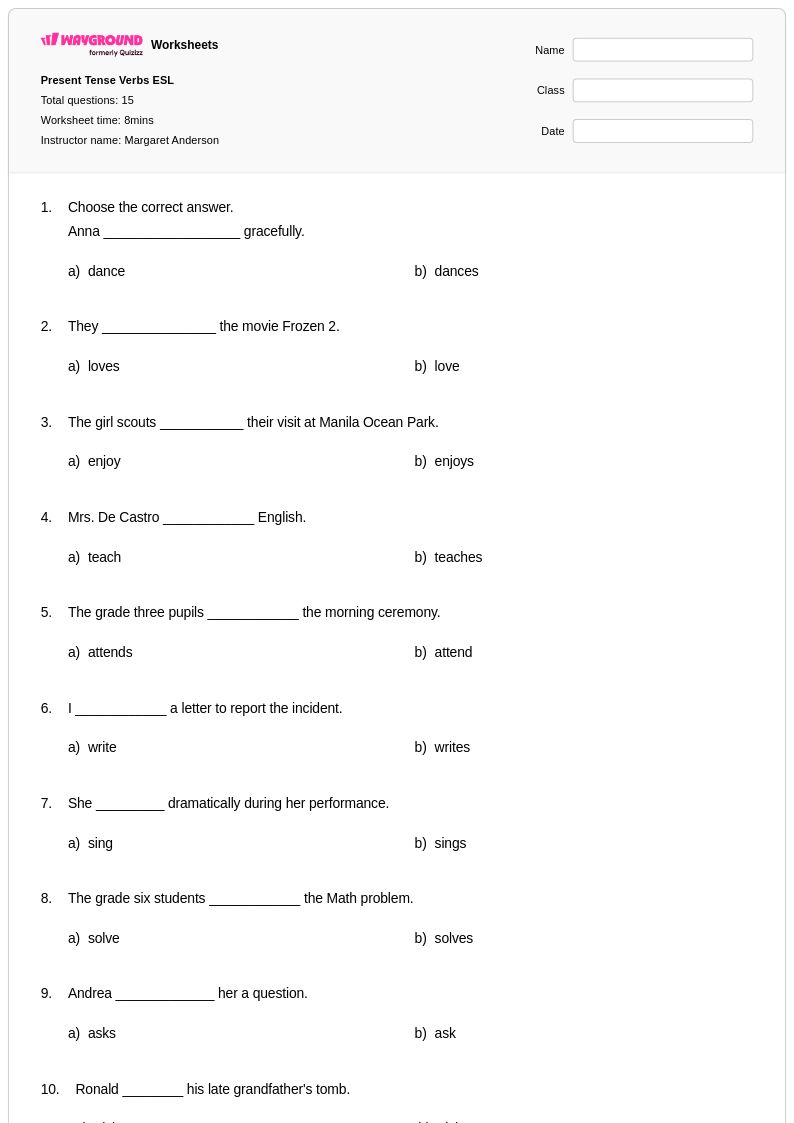
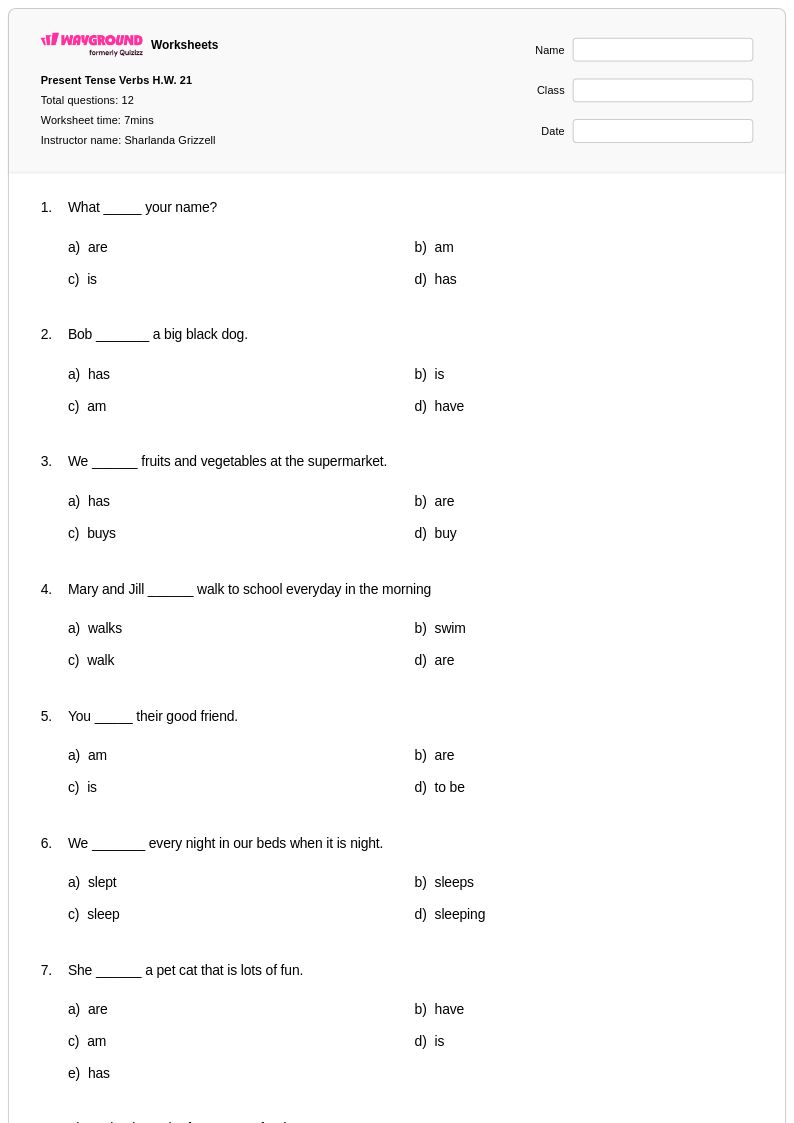
Wayground's Year 3 present tense verbs worksheets provide free printables and practice problems with answer keys to help students master identifying and using verbs in their current form.
Explore printable Present Tense Verbs worksheets for Year 3
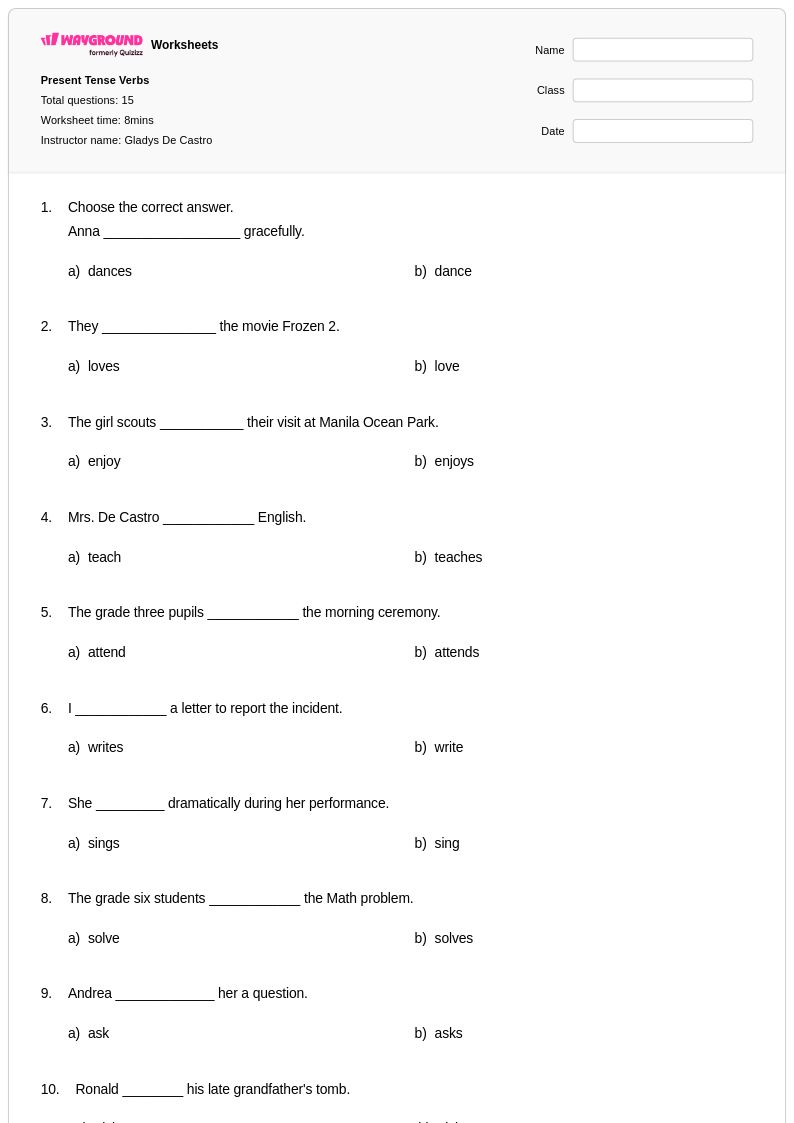
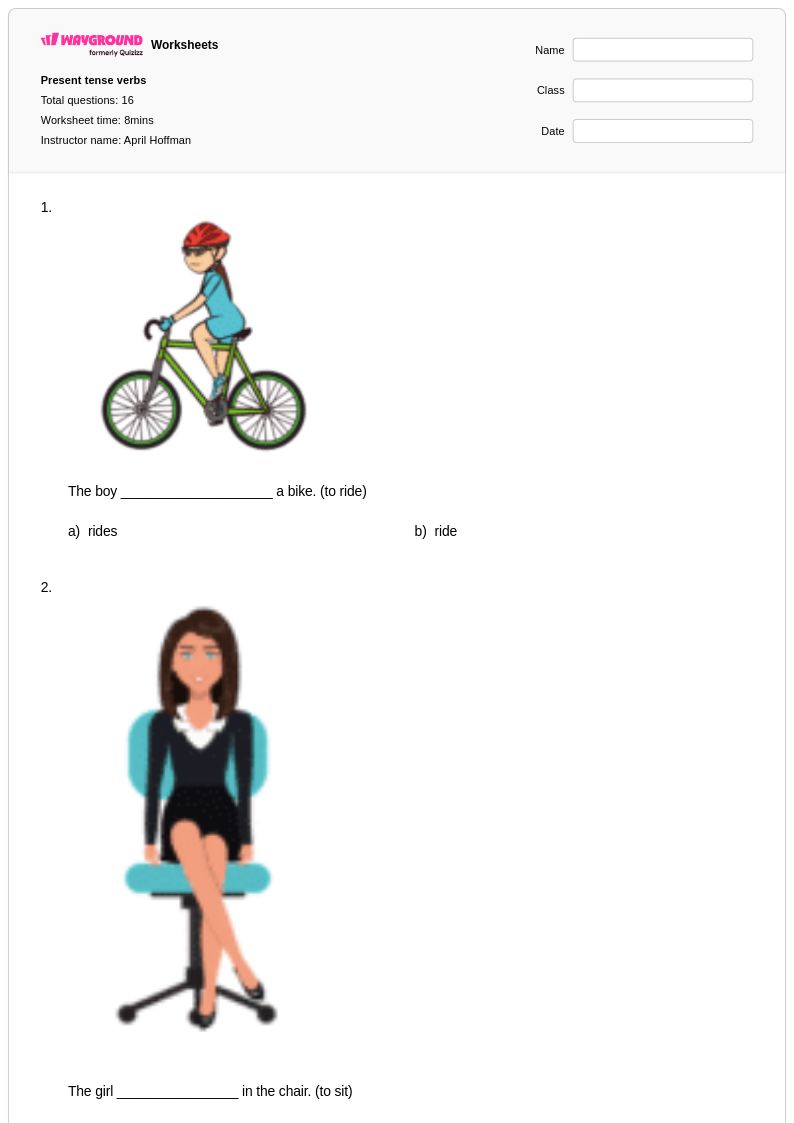
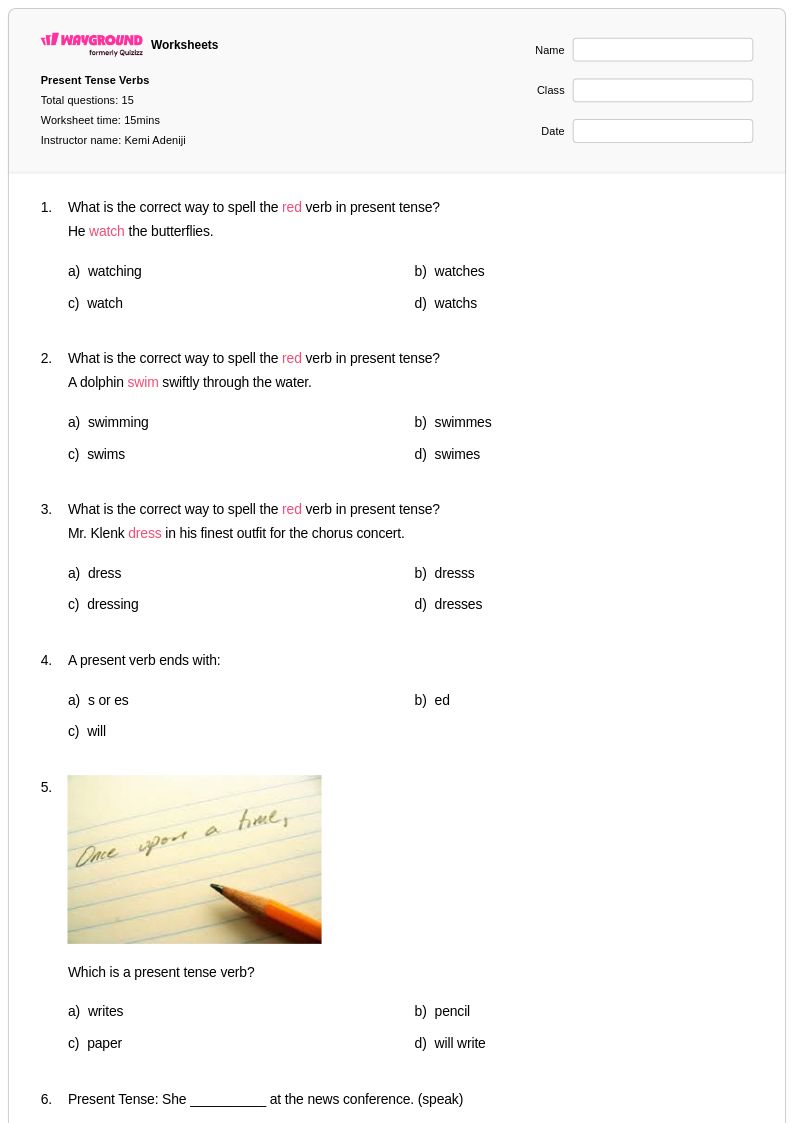
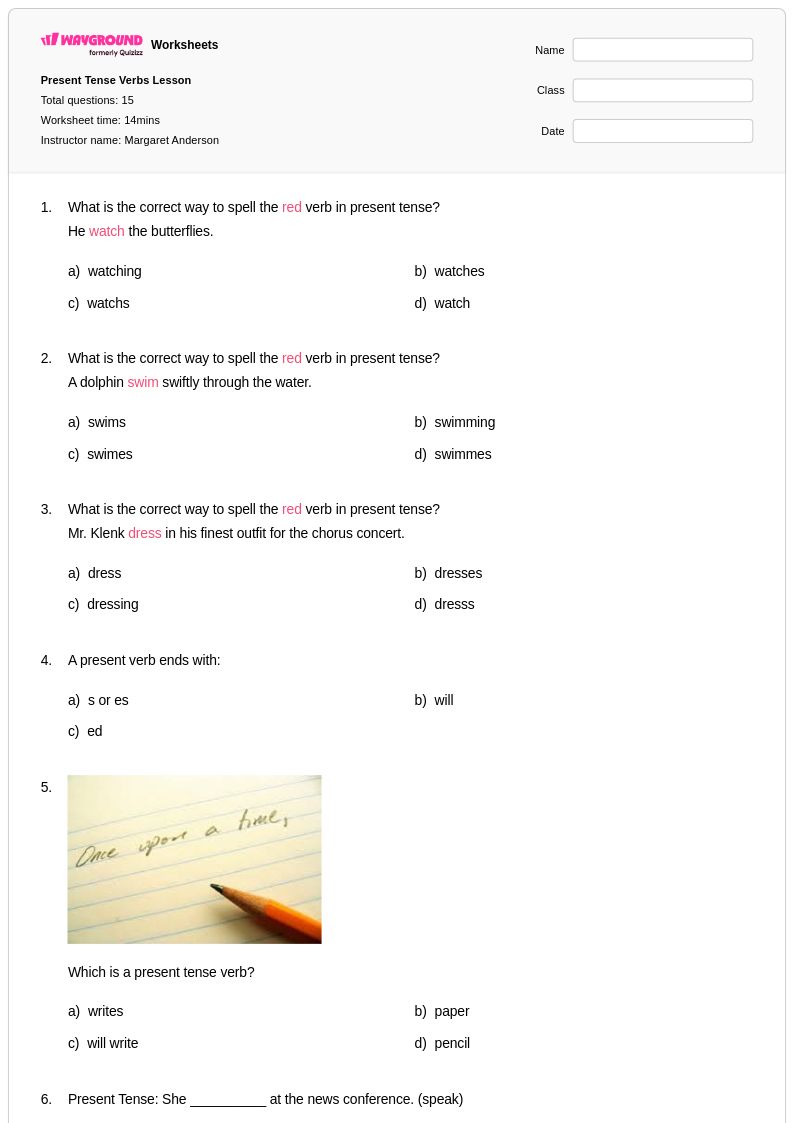
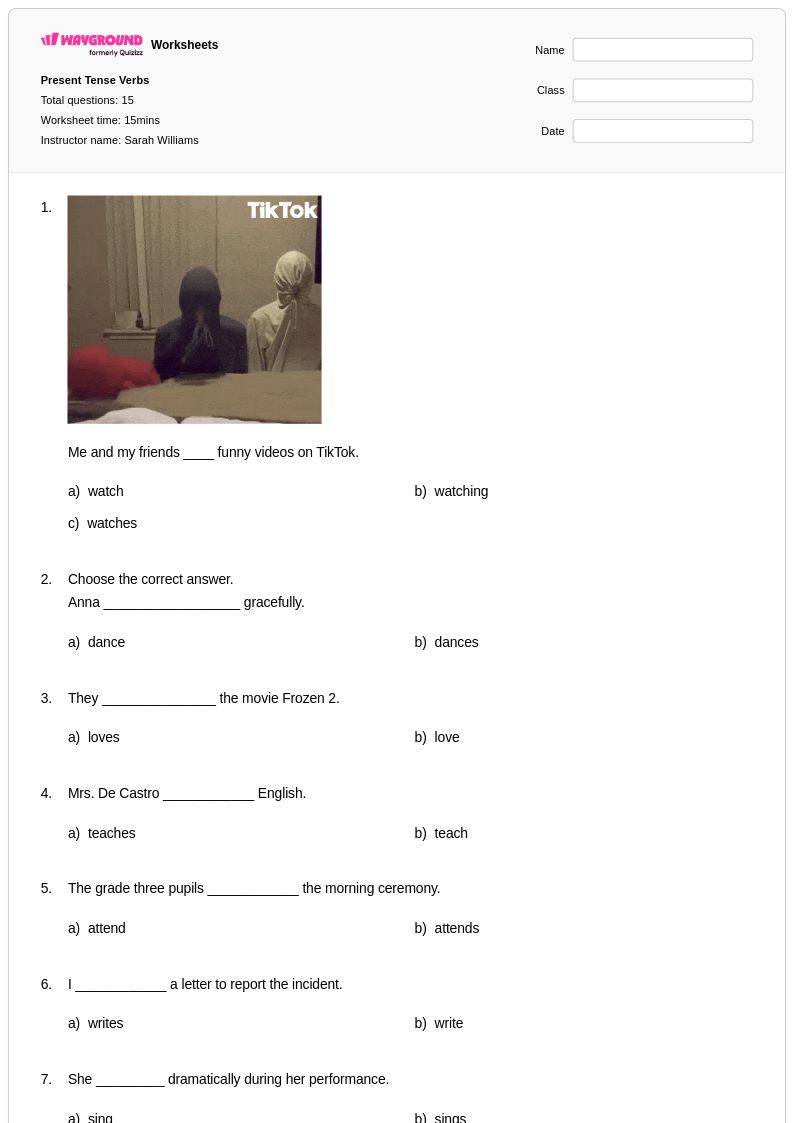
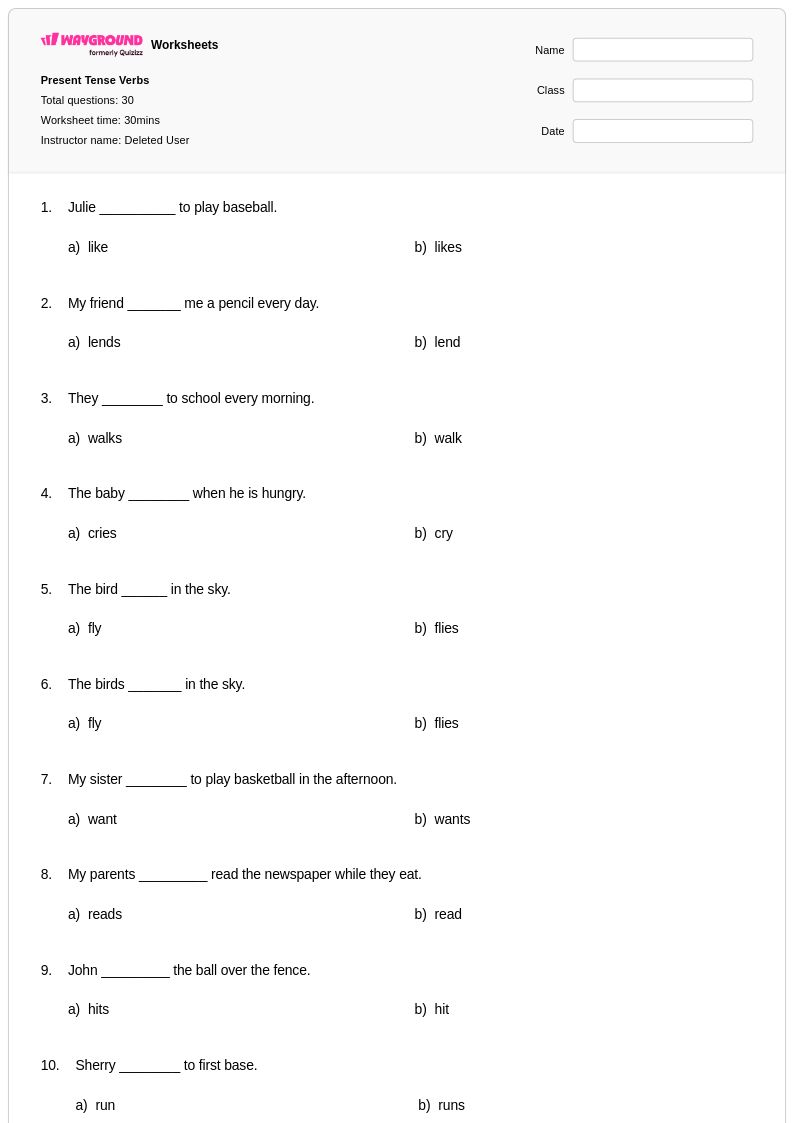
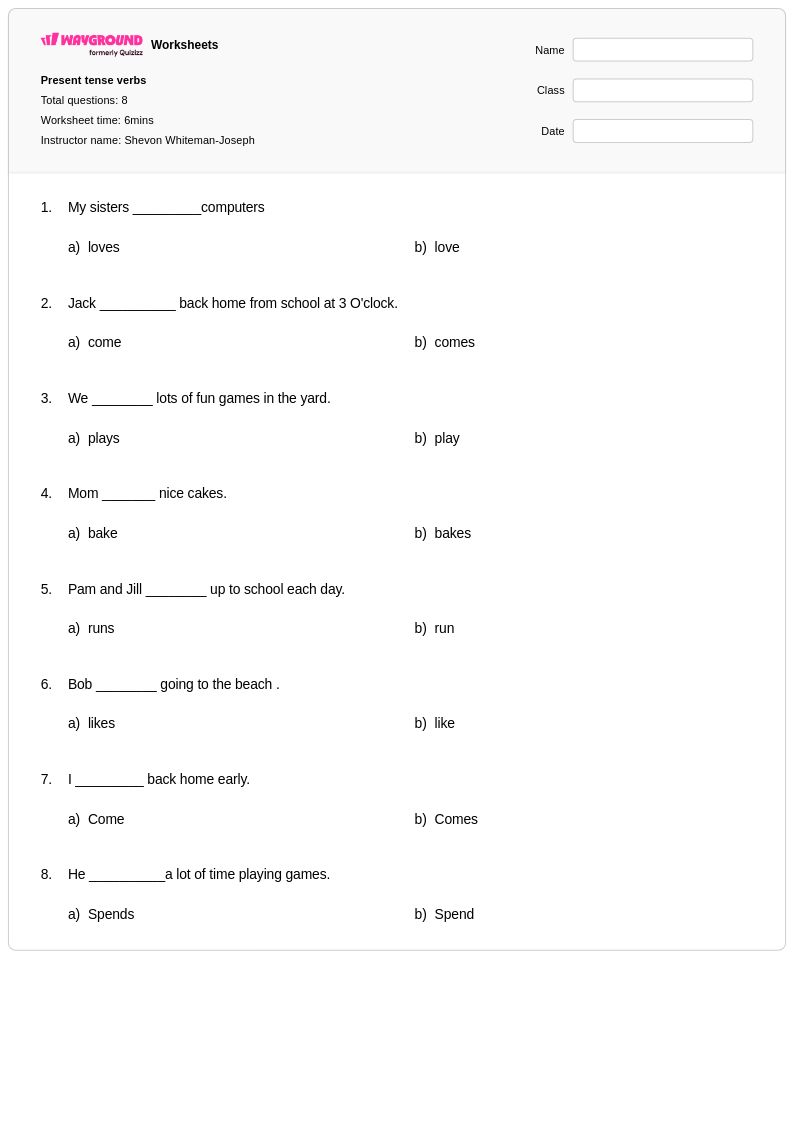
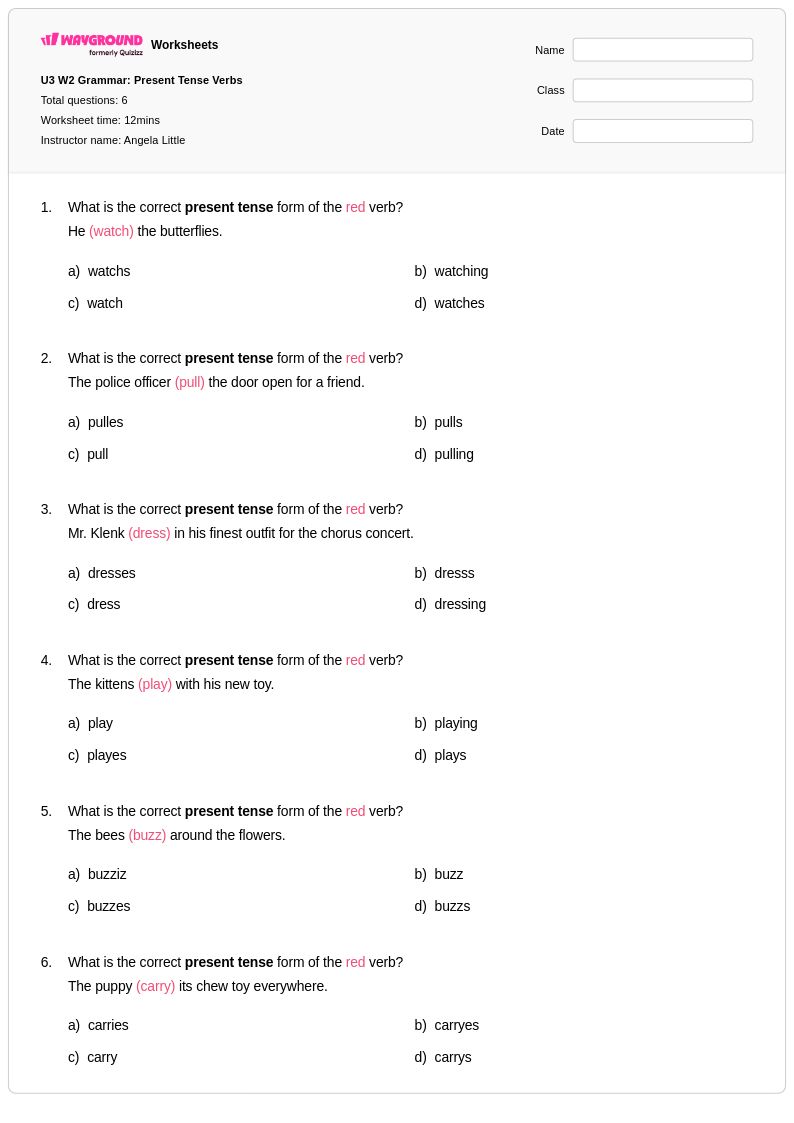
Present tense verbs form the foundation of Year 3 students' grammar development, and Wayground's comprehensive worksheet collection provides educators with expertly crafted resources to strengthen this essential skill. These worksheets guide third-grade learners through identifying, forming, and correctly using present tense verbs in various contexts, from simple action words to more complex subject-verb agreement patterns. Students engage with practice problems that reinforce proper verb conjugation, helping them distinguish between singular and plural verb forms while building confidence in their writing and speaking abilities. Each worksheet comes with a detailed answer key, making assessment and self-correction straightforward, and all materials are available as free printables in convenient PDF format for seamless classroom integration.
Wayground's platform empowers teachers with access to millions of educator-created resources specifically designed for present tense verb instruction at the Year 3 level. The robust search and filtering system allows instructors to quickly locate worksheets that align with specific standards and match their students' varied learning needs. Teachers can easily differentiate instruction by selecting from multiple difficulty levels and formats, whether they need digital activities for interactive lessons or printable PDFs for independent practice and homework assignments. This flexibility supports comprehensive lesson planning while providing valuable tools for targeted remediation and enrichment opportunities, ensuring every third-grade student receives appropriate skill practice to master present tense verb usage effectively.
FAQs
How do I teach present tense verbs to students who are just learning grammar?
Start by distinguishing the three main present tense forms: simple present (she walks), present continuous (she is walking), and present perfect (she has walked). Use consistent, real-world sentence examples so students can hear and see each form in context before practicing in isolation. Anchoring each form to a specific use case — habitual actions, ongoing actions, or recently completed actions — helps students internalize the differences rather than memorize rules abstractly.
What are the most common mistakes students make with present tense verbs?
The most frequent errors involve subject-verb agreement, particularly with third-person singular subjects where students omit the -s ending (e.g., writing 'she walk' instead of 'she walks'). Students also confuse simple present with present continuous, using one where the other is grammatically required. Irregular verb forms — such as 'go/goes' or 'have/has' — are another persistent source of errors, especially for English language learners.
What exercises help students practice subject-verb agreement in the present tense?
Fill-in-the-blank exercises that isolate subject-verb pairs are particularly effective because they force students to identify the subject before selecting the correct verb form. Sentence correction tasks, where students identify and fix agreement errors in context, build editing skills alongside grammatical accuracy. Combining both exercise types across a practice set ensures students can both produce and recognize correct present tense usage.
How do I differentiate present tense verb practice for students at different skill levels?
For struggling learners, focus first on simple present with regular verbs and clear singular or plural subjects before introducing irregular forms or more complex constructions. Advanced students benefit from tasks that require them to choose between present tense forms in nuanced contexts, such as distinguishing present continuous from simple present based on meaning. On Wayground, teachers can apply reduced answer choices for students who need additional support and assign extended time per question, allowing each student to engage with the same material at an appropriate challenge level.
How do I use Wayground's present tense verb worksheets in my classroom?
Wayground's present tense verb worksheets are available as printable PDFs, making them straightforward to distribute for in-class practice or homework, and in digital formats suited for technology-integrated classrooms. Teachers can also host the worksheets as an interactive quiz directly on Wayground, which enables real-time student responses and automatic grading. The included answer keys support both independent student review and efficient teacher grading across both formats.
How do I address present tense verb errors in student writing rather than just on worksheets?
After completing structured worksheet practice, have students apply the same skills in a short writing task — a paragraph describing a daily routine works well for simple present, while describing an ongoing project suits present continuous. Ask students to underline every verb they use and verify its form before submitting, which builds self-editing habits. Targeted feedback that references the specific present tense rule being violated is more effective than general corrections.