Enhance Year 7 programming skills with Wayground's comprehensive collection of free worksheets, printables, and practice problems covering coding fundamentals, algorithms, and problem-solving techniques with detailed answer keys.
Explore printable Programming worksheets for Year 7
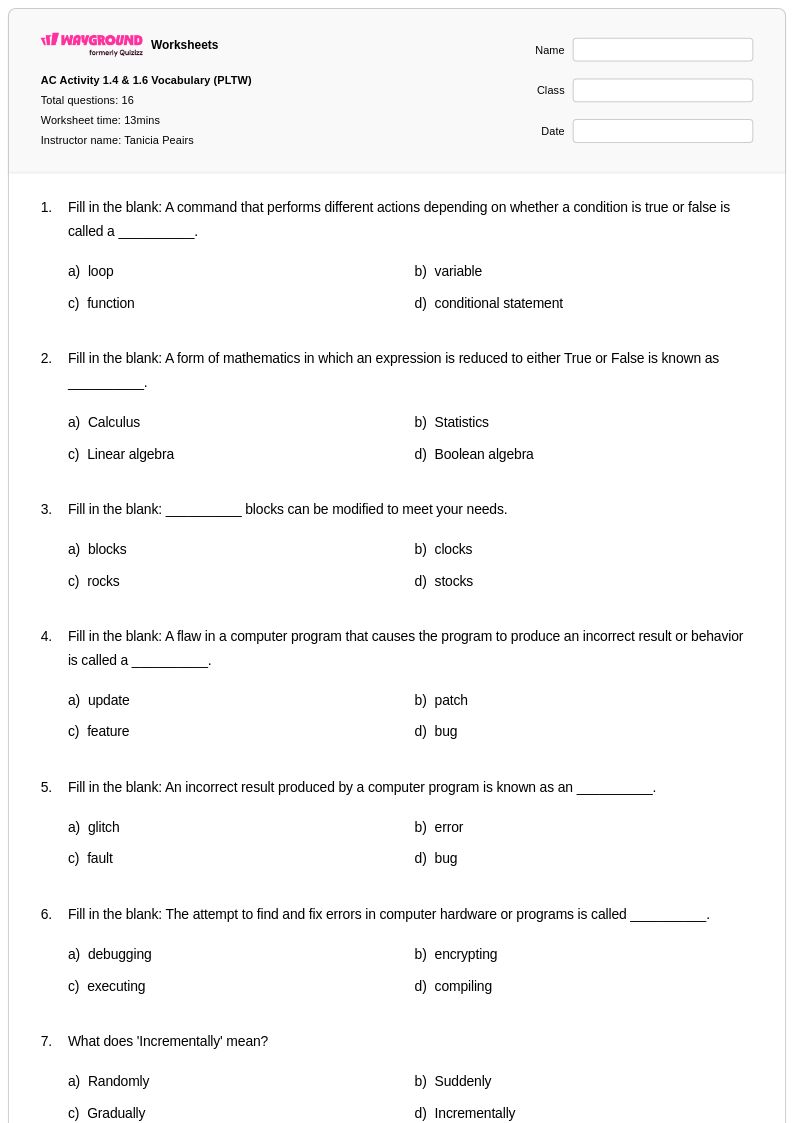
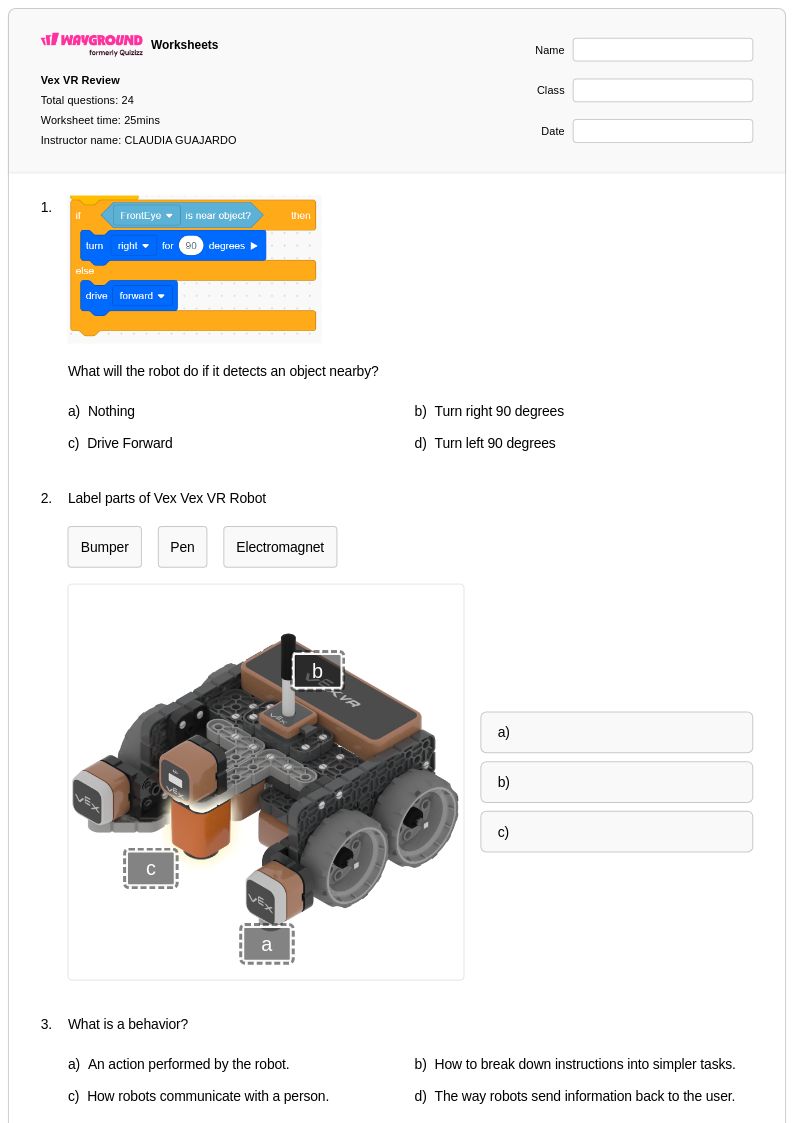
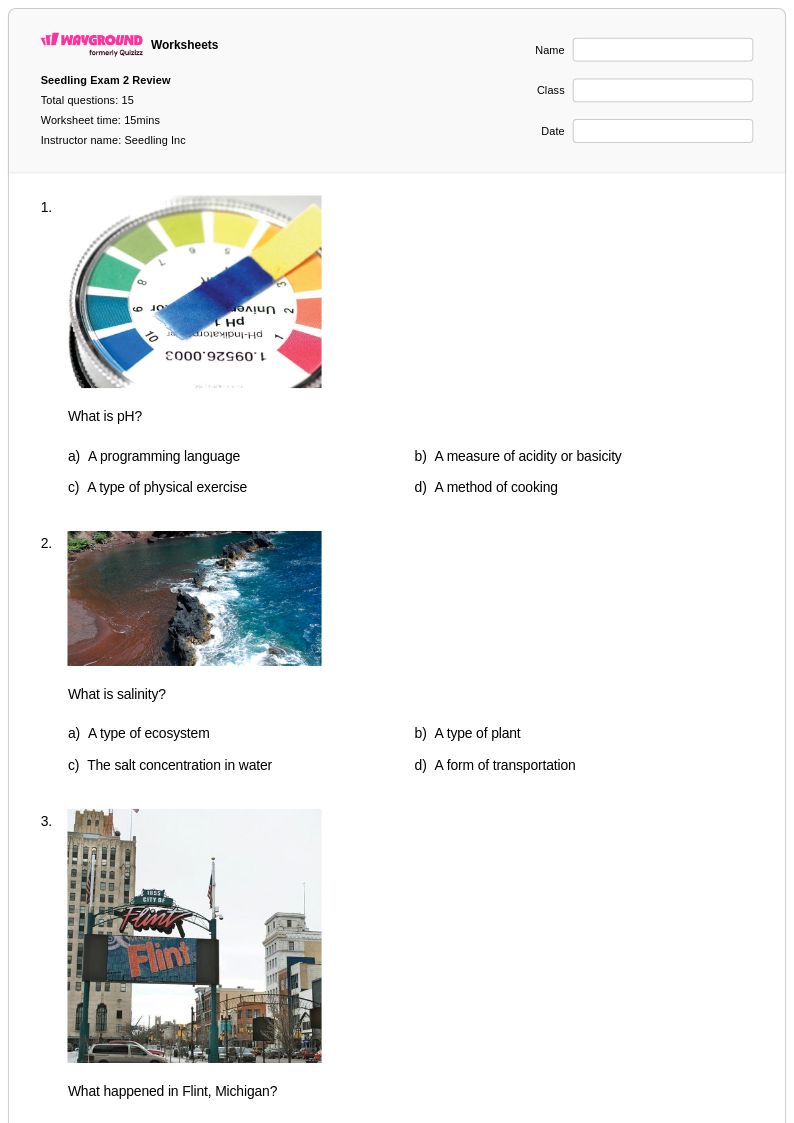
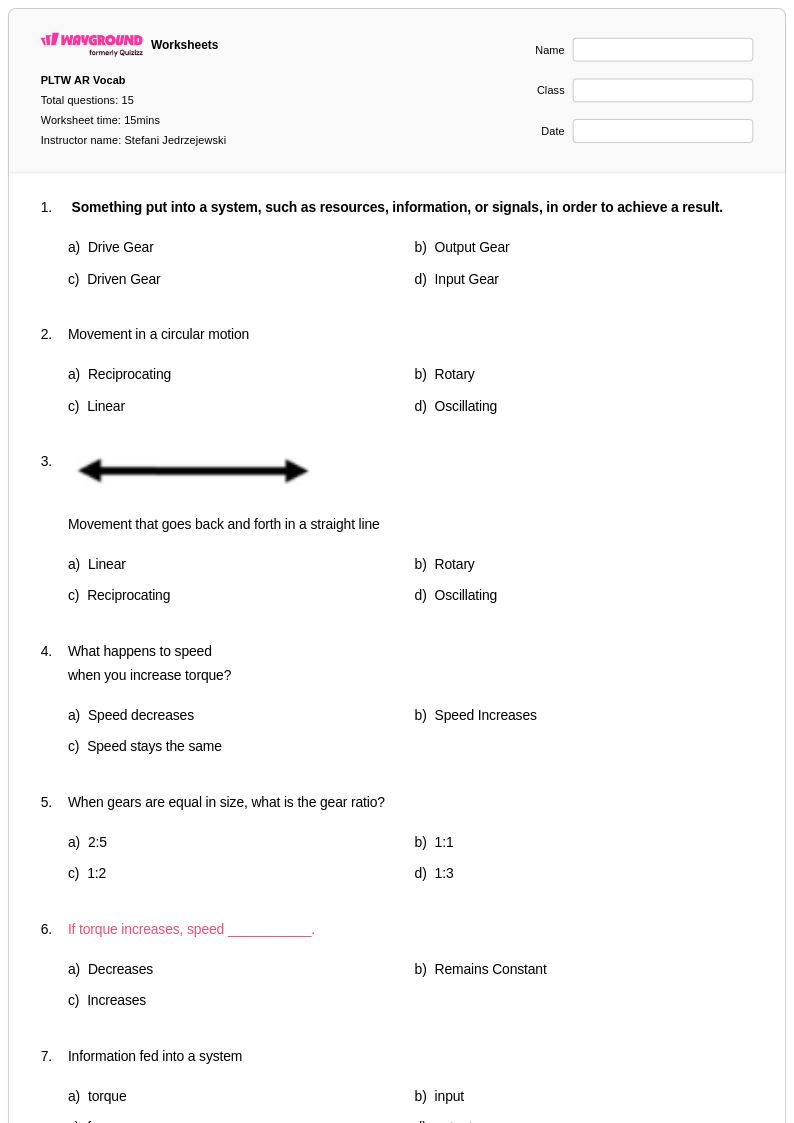
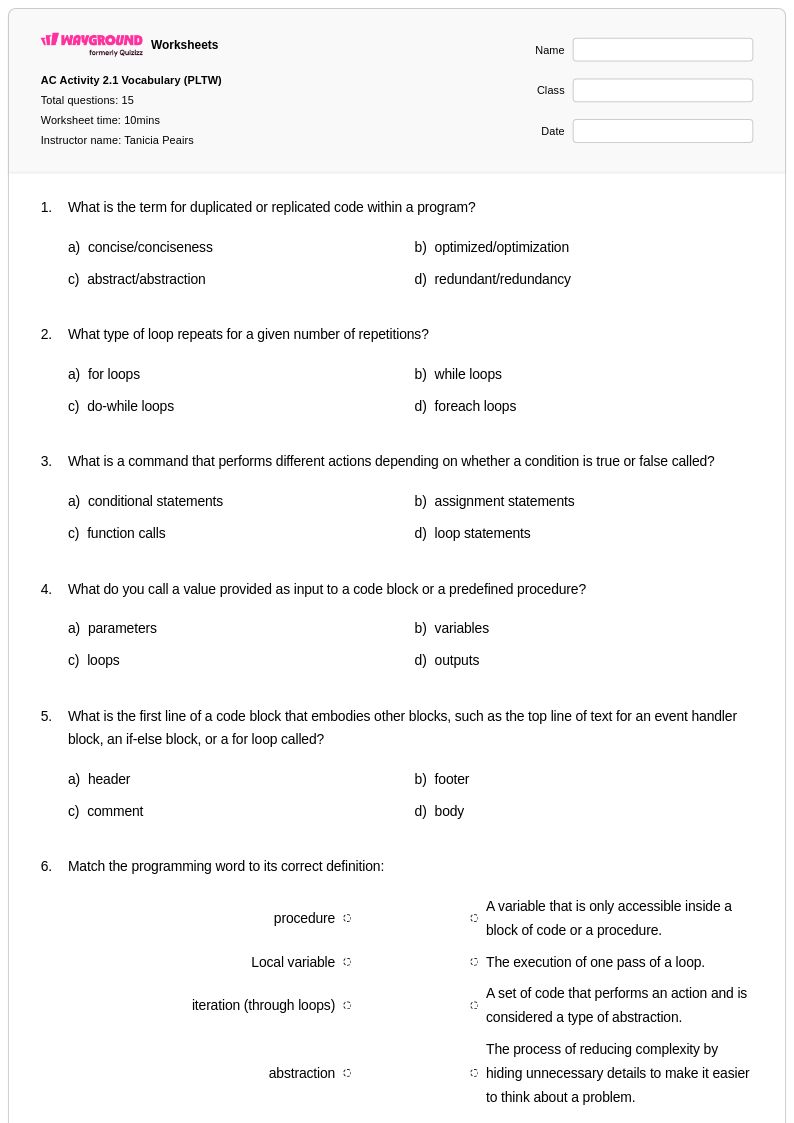
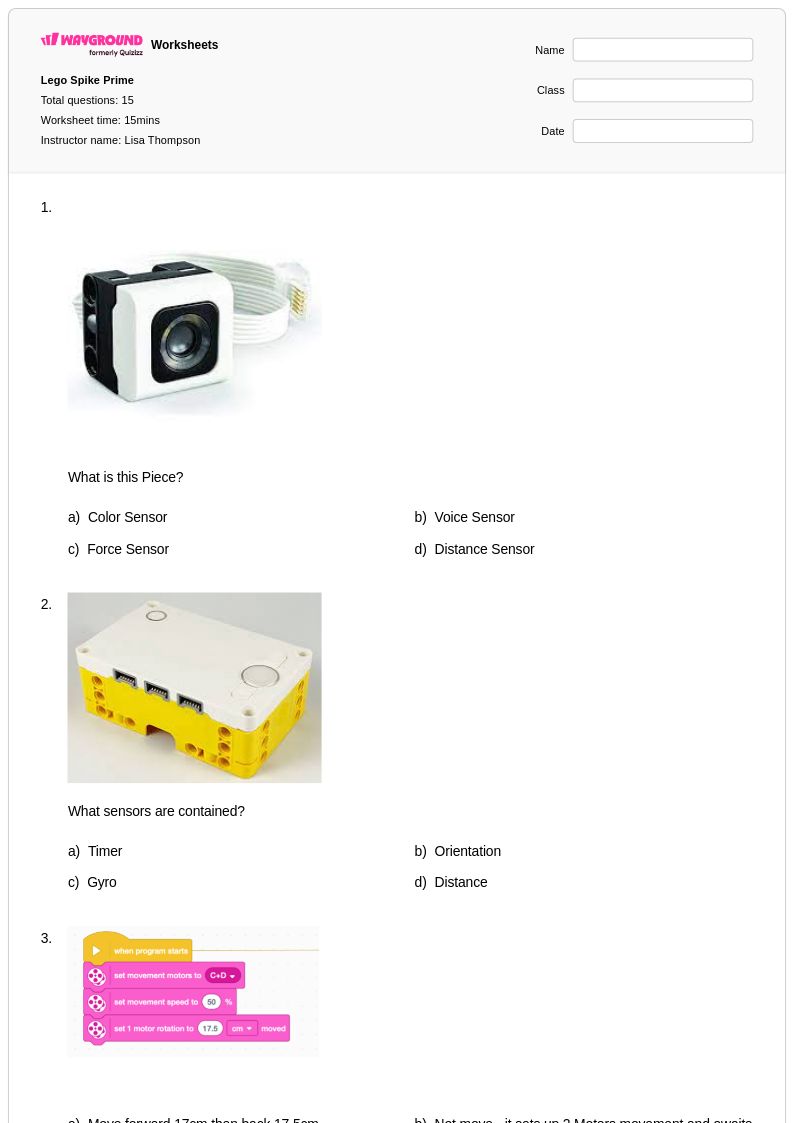
Programming worksheets for Year 7 students available through Wayground (formerly Quizizz) provide comprehensive practice opportunities that build foundational coding skills and computational thinking abilities. These carefully designed resources help seventh-grade learners master essential programming concepts including algorithm design, basic syntax understanding, logical reasoning, and problem-solving strategies. The worksheet collections feature systematic practice problems that progress from simple command sequences to more complex programming challenges, with complete answer keys that enable both independent learning and instructor-guided instruction. Students benefit from engaging exercises that translate abstract programming principles into concrete, manageable tasks, while the free printable format ensures accessibility for diverse classroom environments and individual study sessions.
Wayground (formerly Quizizz) empowers educators with millions of teacher-created programming worksheets specifically curated for Year 7 instruction, featuring robust search and filtering capabilities that allow precise alignment with curriculum standards and learning objectives. The platform's extensive collection supports differentiated instruction through customizable difficulty levels, enabling teachers to provide targeted remediation for struggling students while offering enrichment opportunities for advanced learners. These versatile resources are available in both printable pdf format and interactive digital versions, facilitating seamless integration into various teaching approaches whether for whole-class instruction, small group activities, or individual skill practice. Teachers can efficiently plan programming units, assess student progress, and reinforce computational thinking skills through this comprehensive collection of professionally developed educational materials.
FAQs
How do I teach programming concepts to beginners?
Start by building computational thinking before introducing syntax — use flowcharts and pseudocode to help students plan logic before writing a single line of code. Introduce programming through concrete, visual problems like tracing through an algorithm step by step, then gradually move to code completion exercises where students fill in missing syntax rather than writing from scratch. Sequencing, debugging, and pattern recognition are the three core skills beginners need to develop early and consistently.
What exercises help students practice coding concepts without a computer?
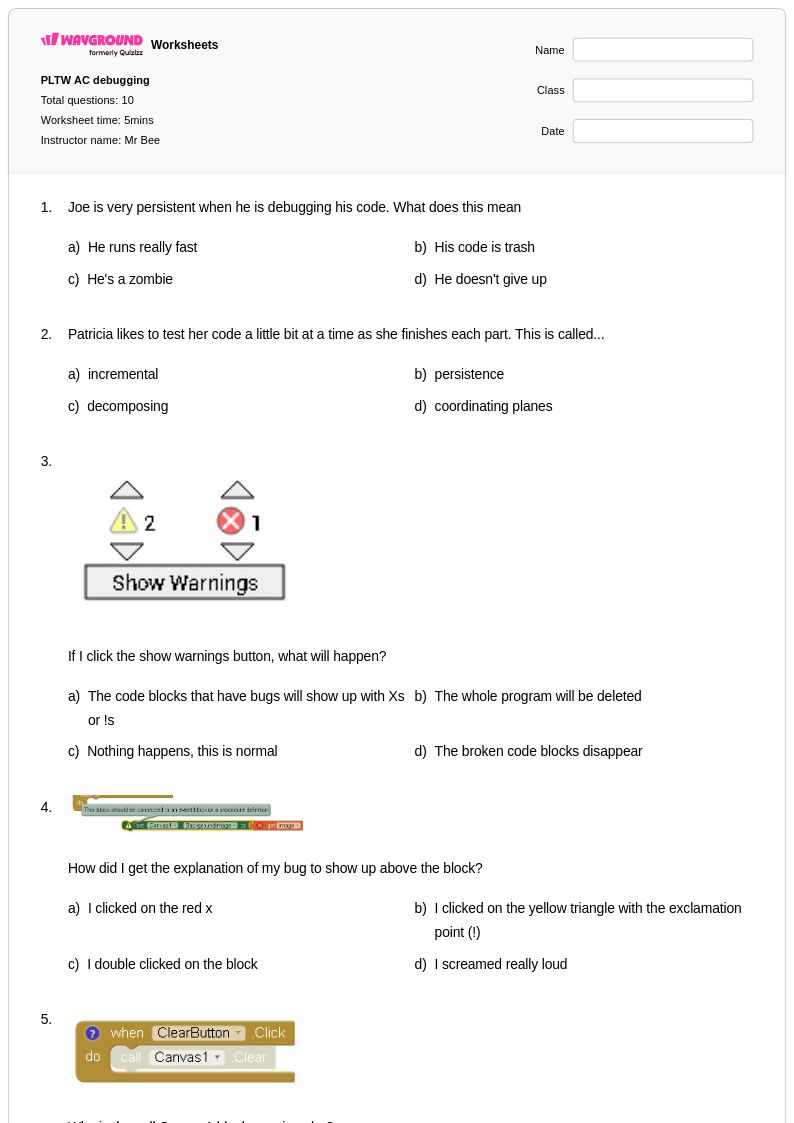
Unplugged activities like algorithm design challenges, syntax error identification, and code tracing exercises are highly effective for building programming intuition offline. Worksheets that present partially written code for students to complete or debug reinforce both logical reasoning and language-specific syntax in a structured, low-stakes format. These paper-based practice problems also help students slow down and think through each step, which is a skill that directly transfers to writing and debugging code on a screen.
What mistakes do students commonly make when learning programming?
The most common errors fall into two categories: syntax mistakes, like missing semicolons, mismatched brackets, or incorrect capitalization, and logic errors, where the code runs but produces the wrong output. Students frequently confuse assignment operators with equality operators and struggle to trace what a variable holds at each step of execution. Targeted debugging exercises that ask students to identify and correct pre-written errors are one of the most effective ways to address both error types simultaneously.
How can I differentiate programming instruction for students at different skill levels?
Differentiation in programming instruction works best when you vary task complexity rather than the concept itself — all students can work on debugging, but some debug one-line errors while others tackle multi-step logic problems. Wayground supports student-level accommodations including reduced answer choices to lower cognitive load and Read Aloud for students who need questions read to them, which is especially helpful during assessment. For advanced learners, enrichment problems that ask students to extend or optimize a working program push deeper thinking without requiring entirely different materials.
How do I use Wayground's programming worksheets in my classroom?
Wayground's programming worksheets are available as printable PDFs for traditional classroom use and in digital formats for technology-integrated environments, giving teachers flexibility regardless of their setup. You can also host a worksheet as a quiz directly on Wayground, which allows you to track student responses and review results in real time. Each worksheet includes a detailed answer key, so these materials work equally well for guided practice during class, independent study, or targeted remediation sessions.
How do I assess whether students understand programming logic versus just memorizing syntax?
The clearest way to assess logic understanding is through tracing and prediction tasks — give students a complete block of code and ask them to write what the output will be without running it. Students who rely on memorization will struggle here, while students who understand logic will walk through each step correctly. Debugging exercises that require students to explain why an error occurred, not just fix it, also reveal the depth of conceptual understanding versus surface-level pattern matching.