Free Printable Progressive Era Worksheets for Year 7
Discover Year 7 Progressive Era worksheets and printables that help students explore key reforms, social movements, and political changes in early 20th century America through engaging practice problems and comprehensive answer keys.
Explore printable Progressive Era worksheets for Year 7
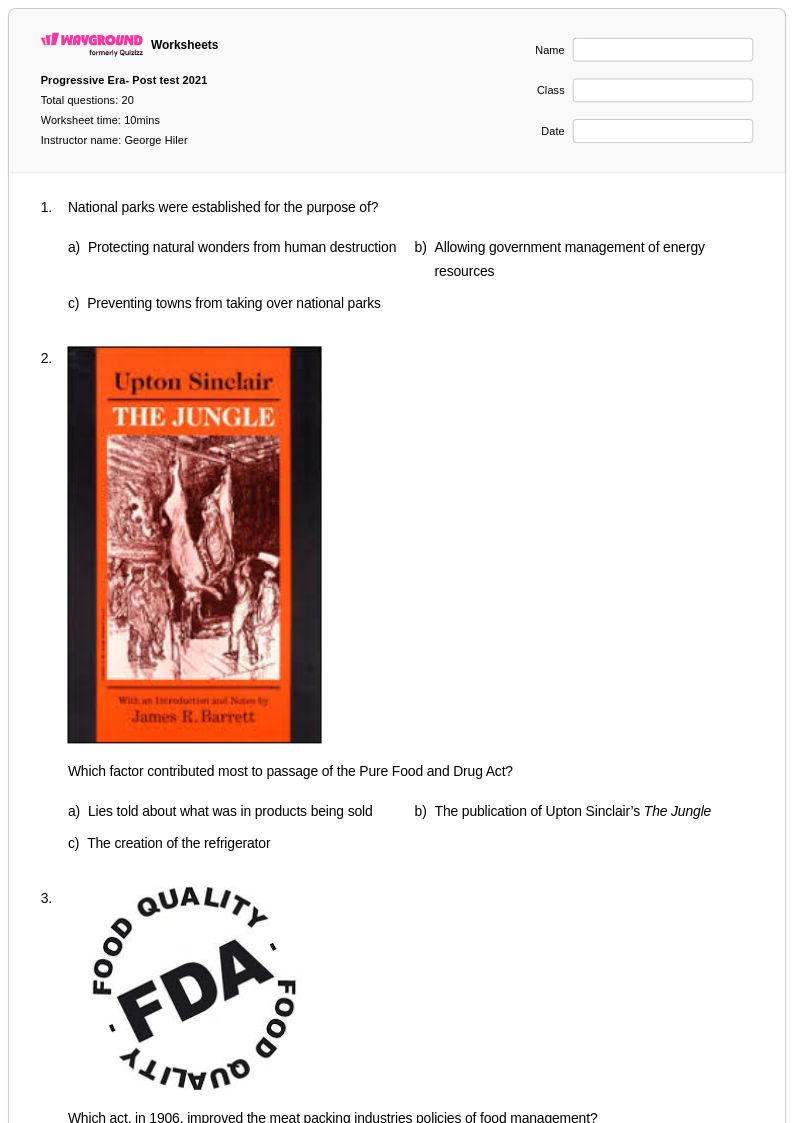
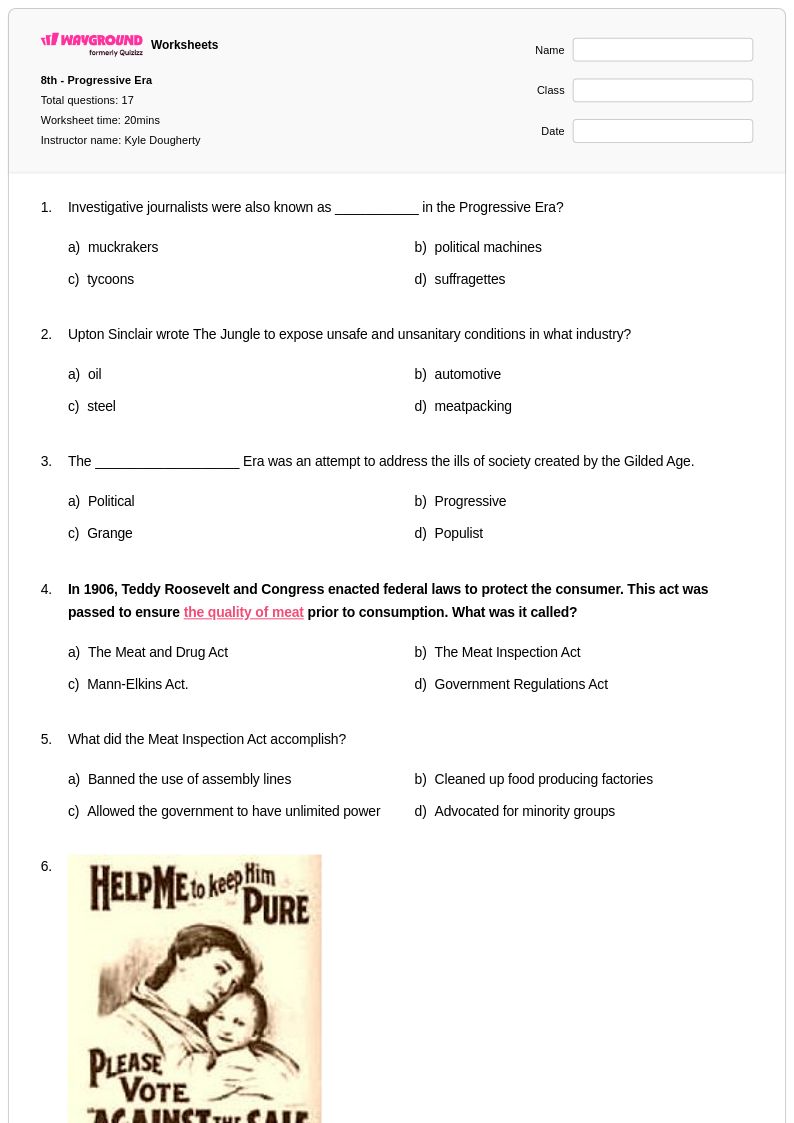
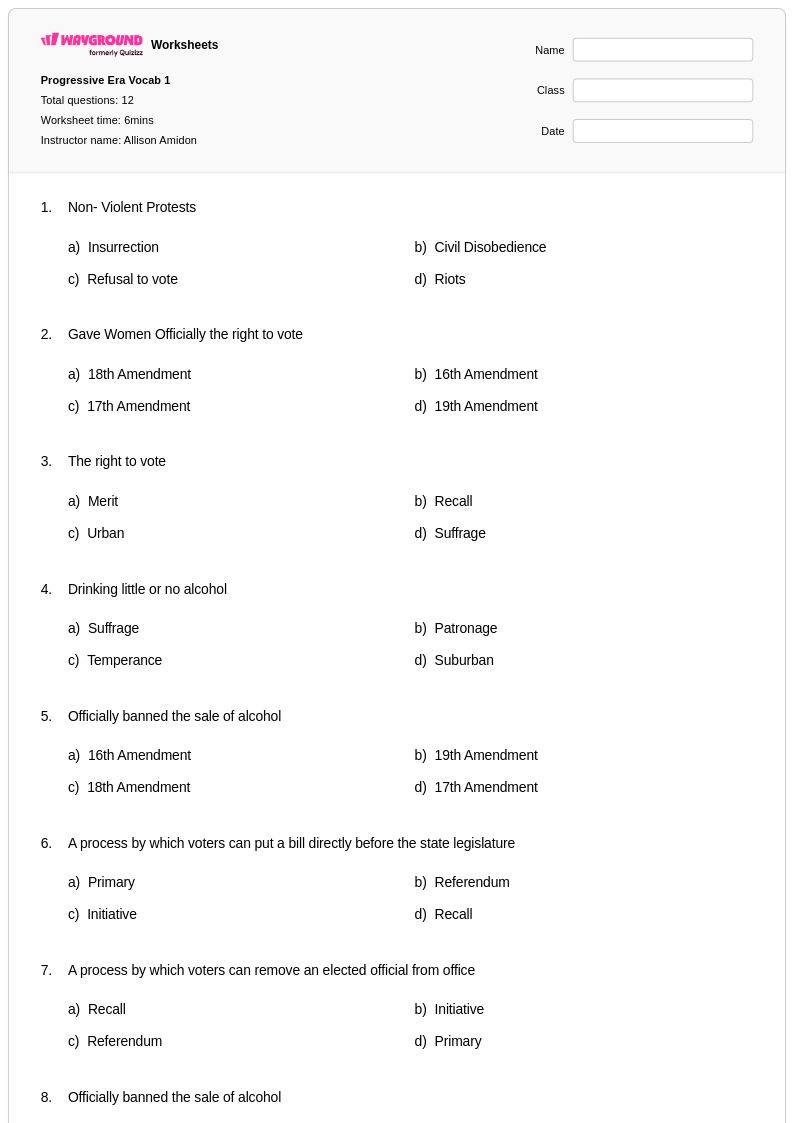
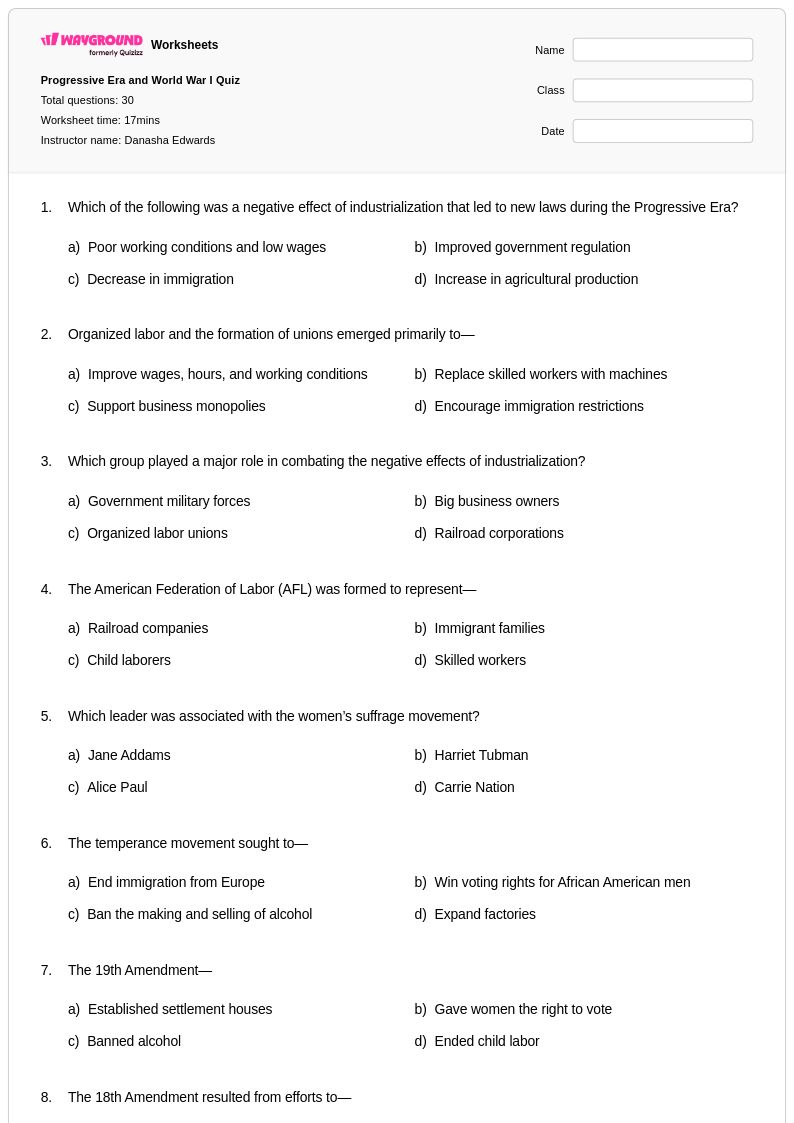
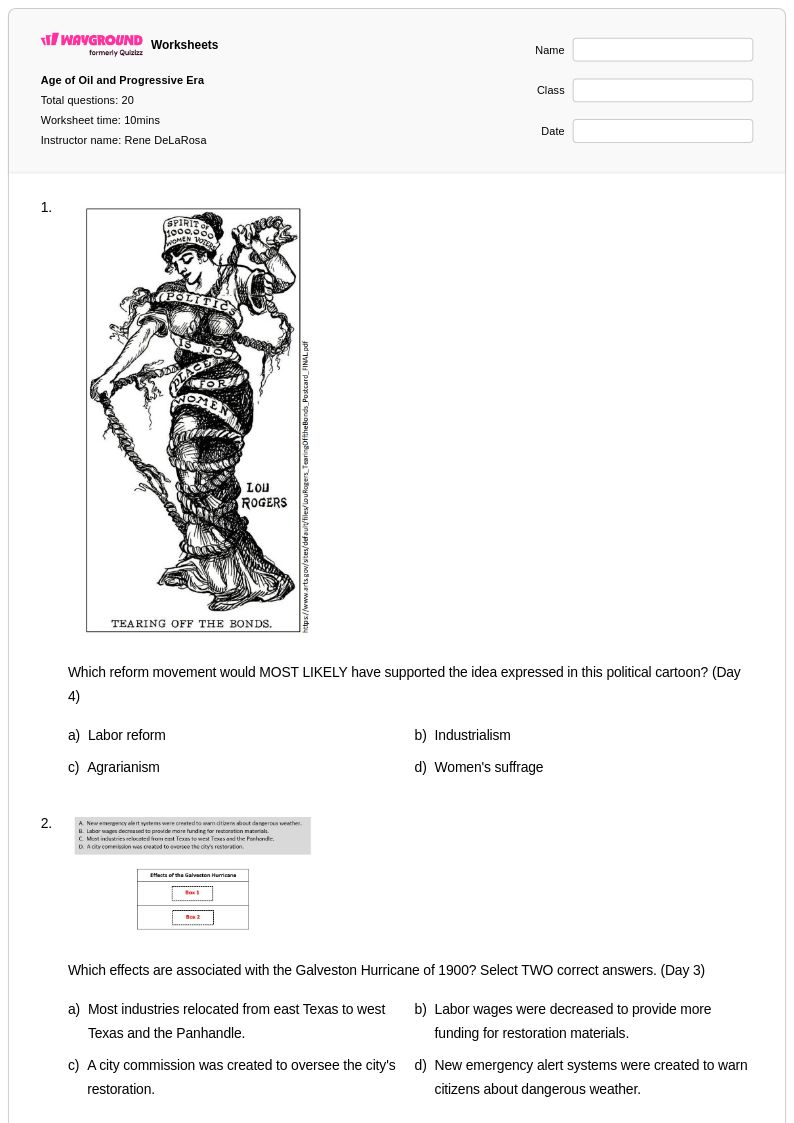
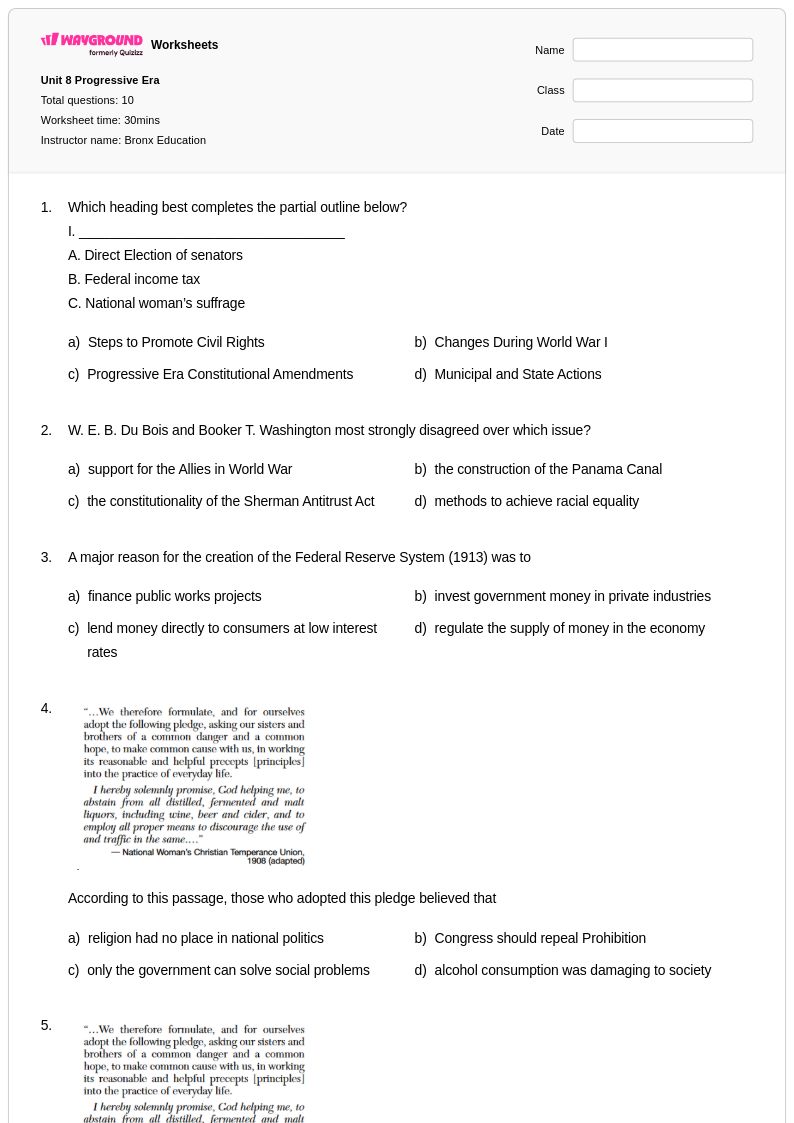
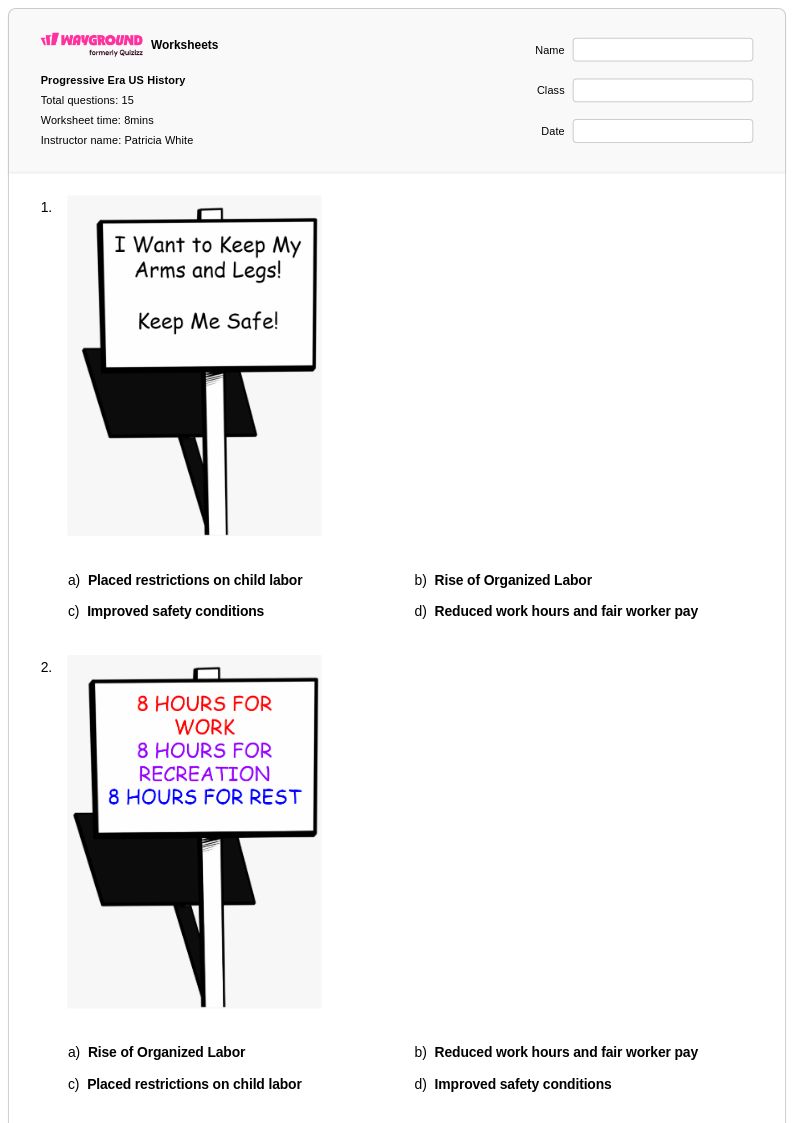
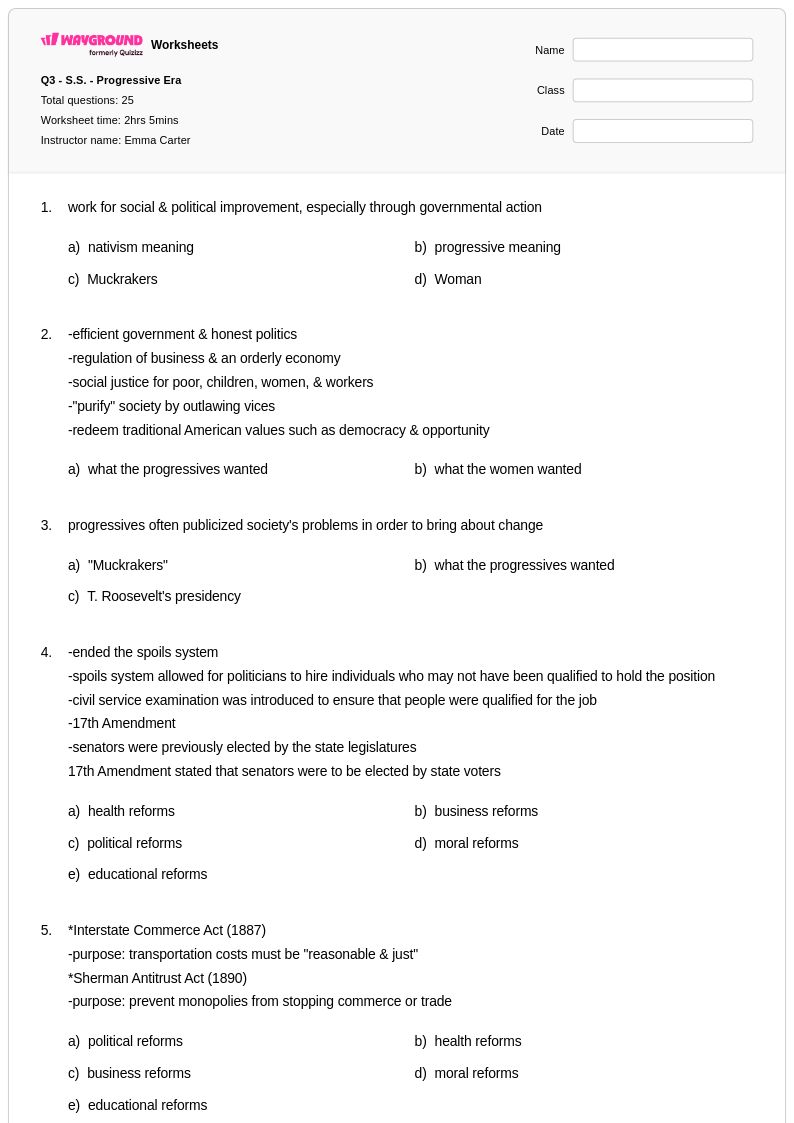
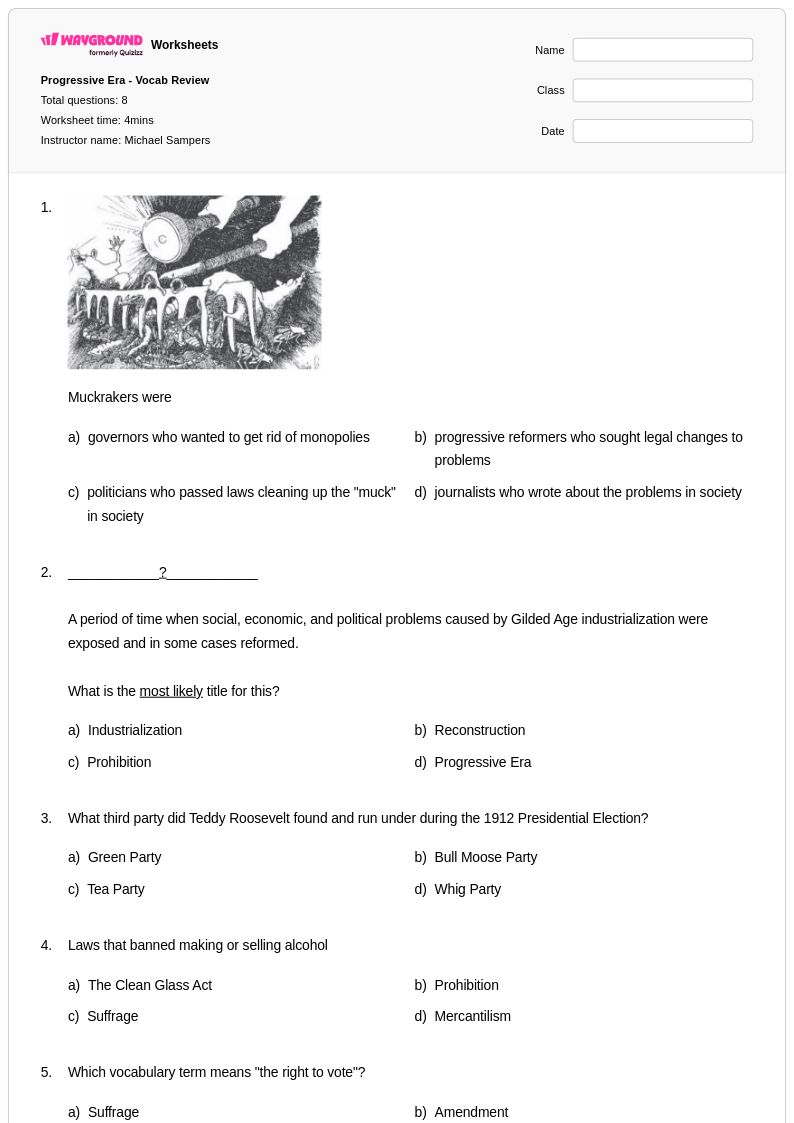
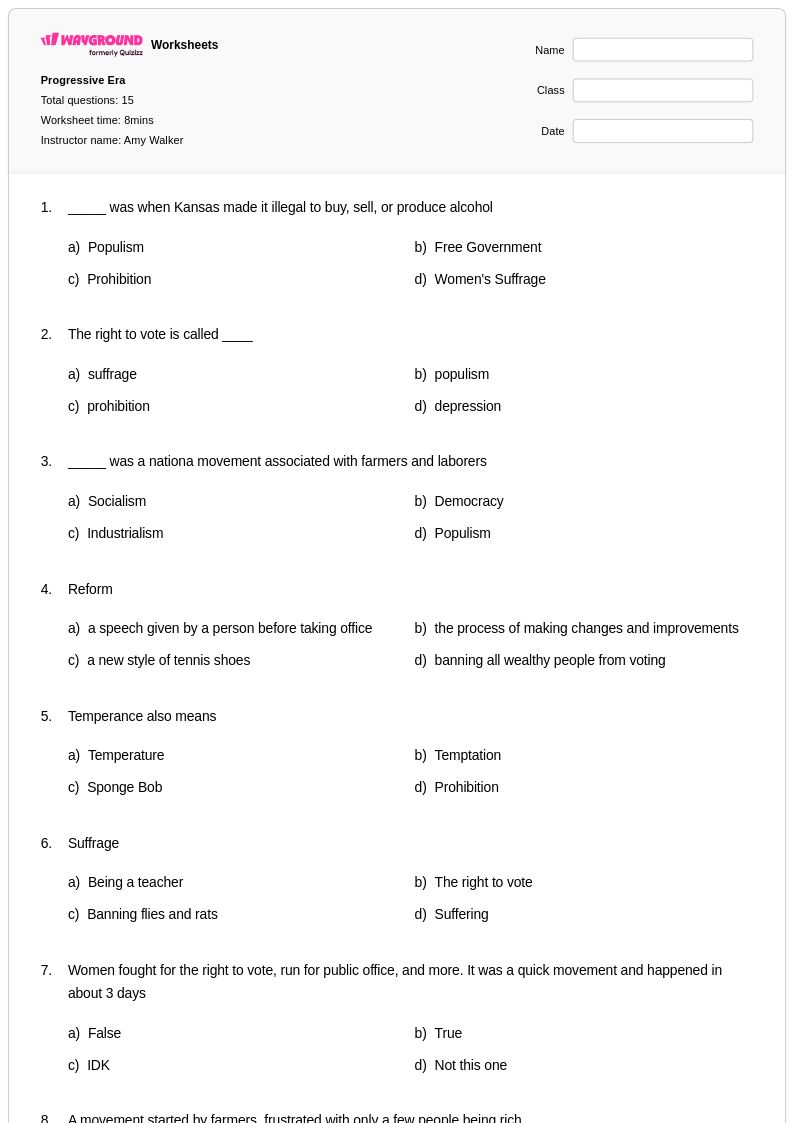
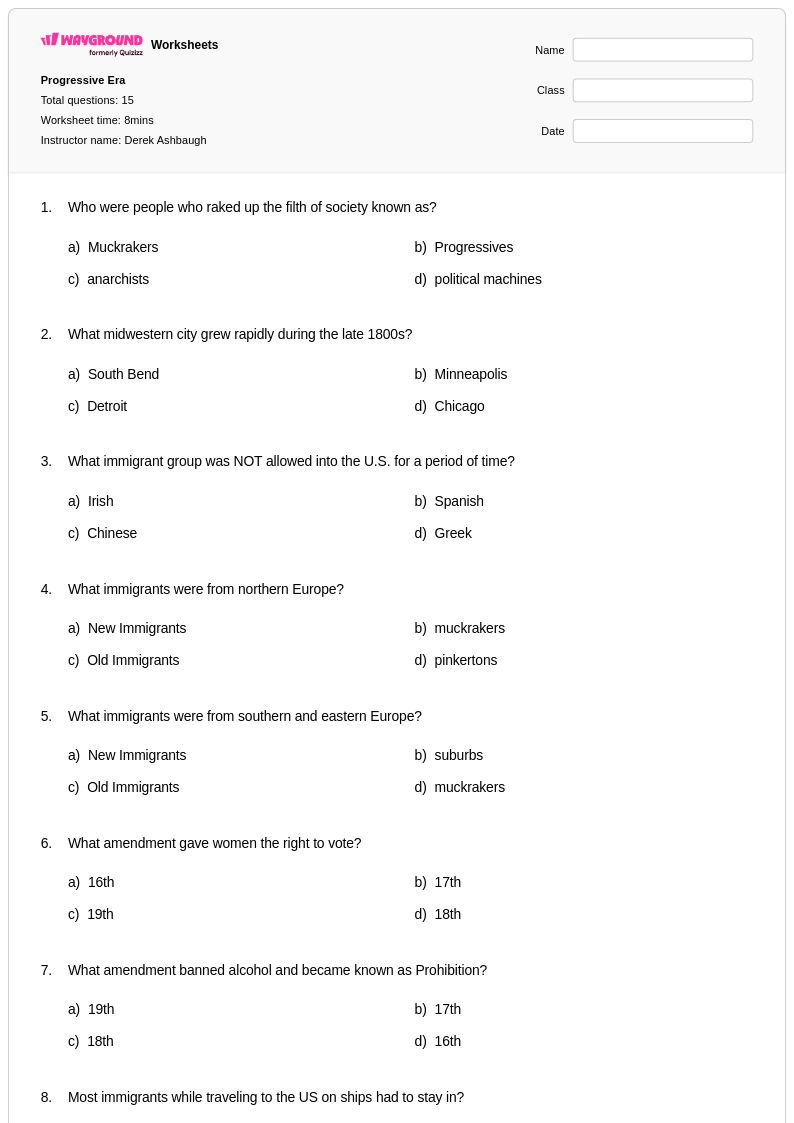
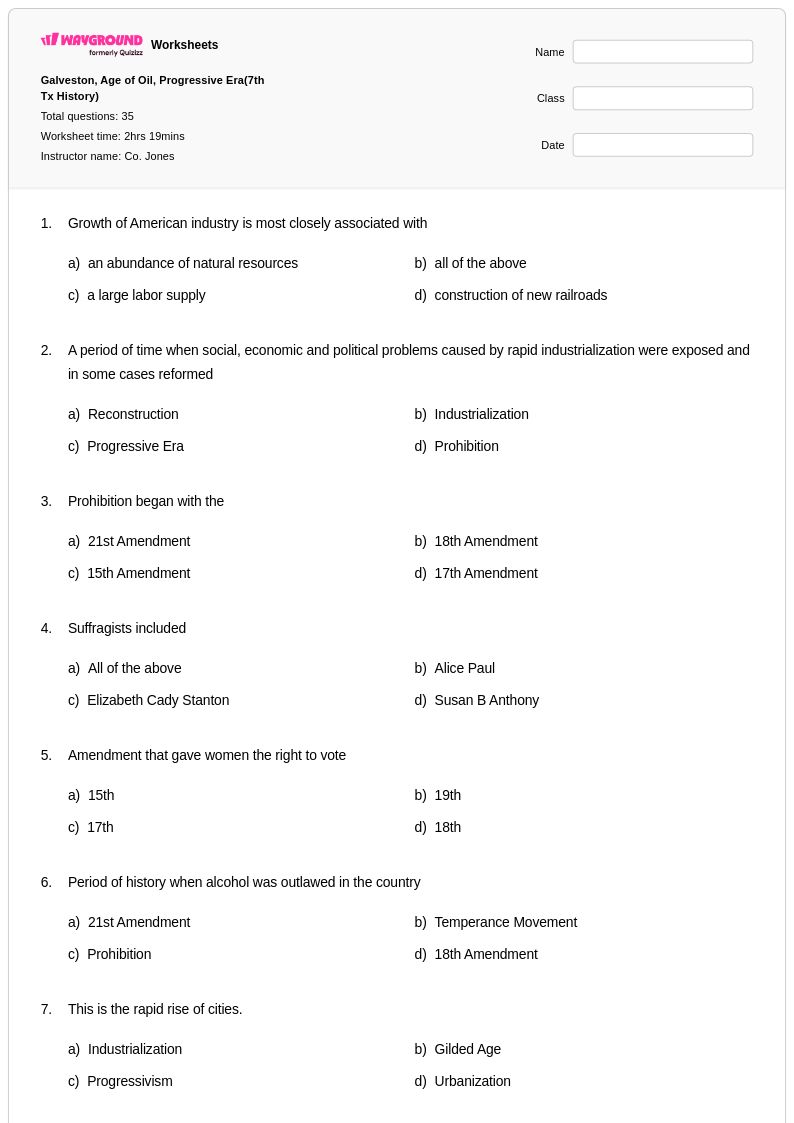
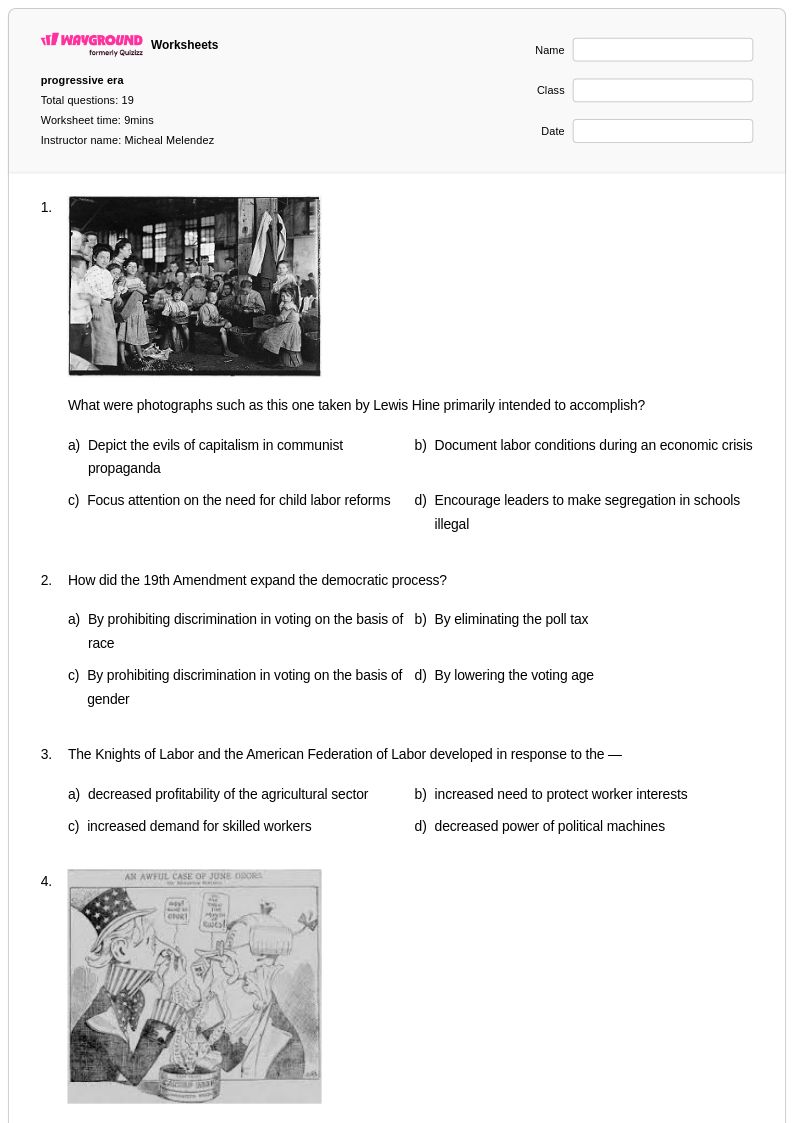
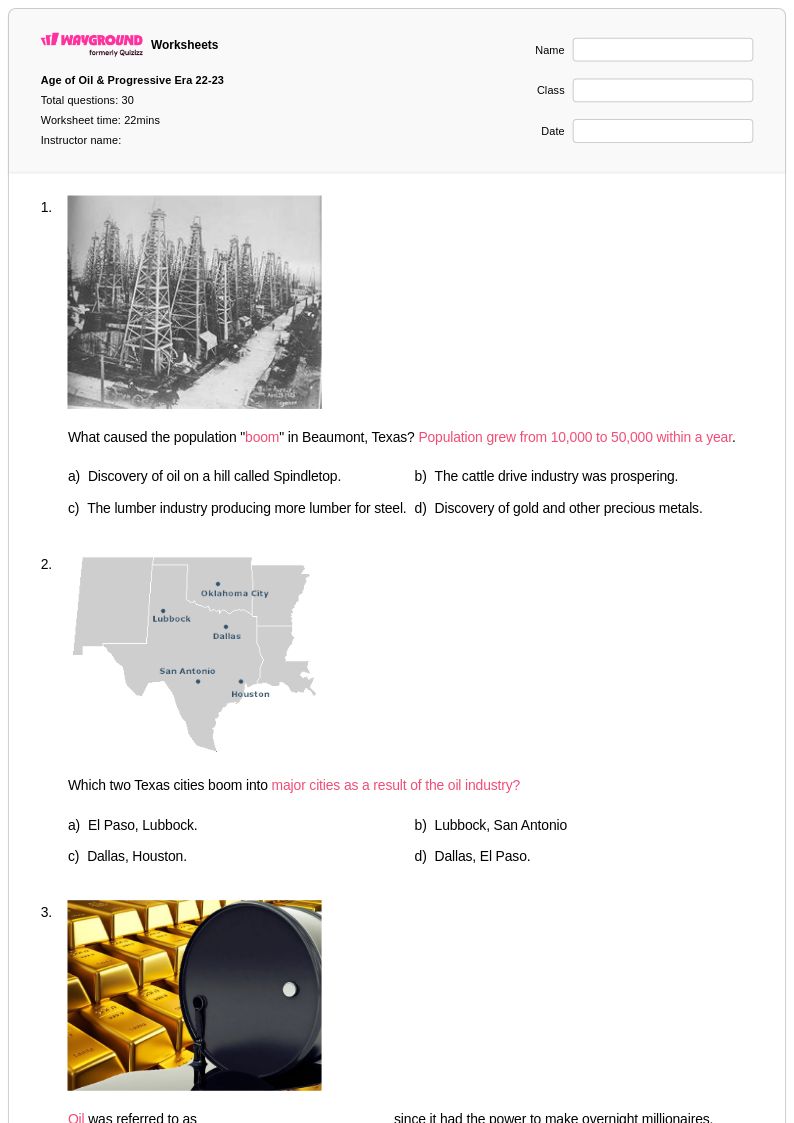
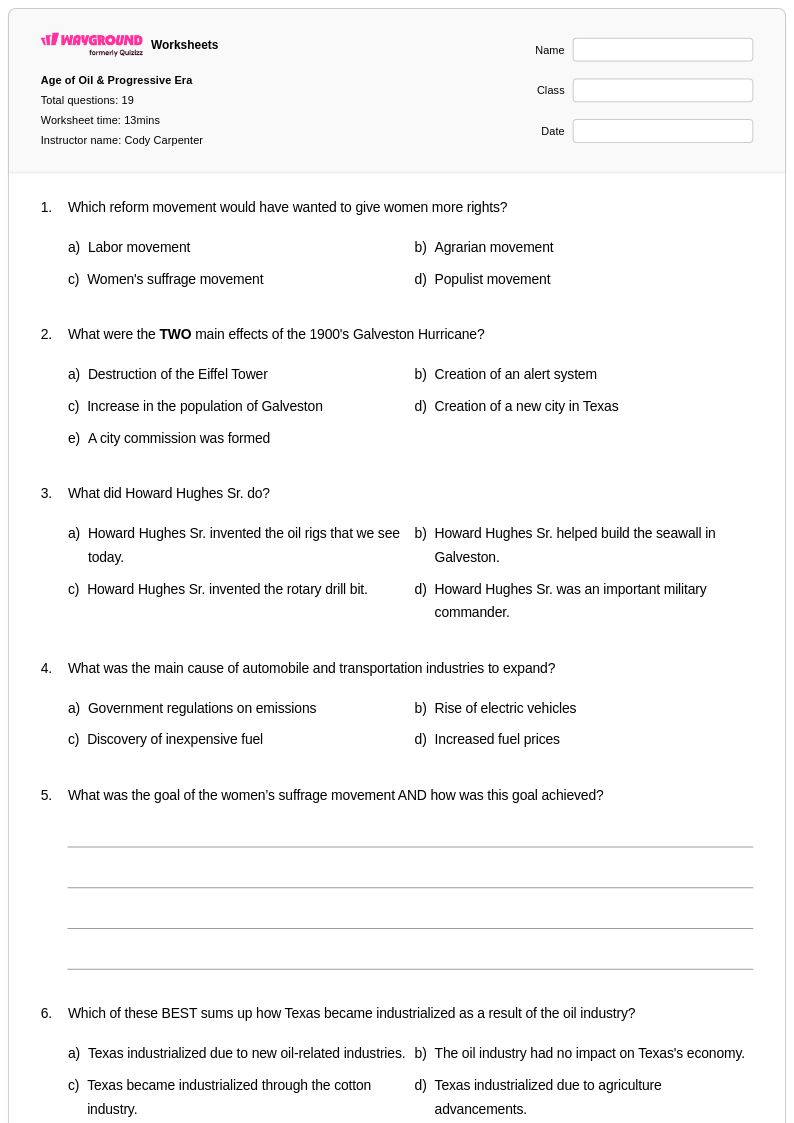
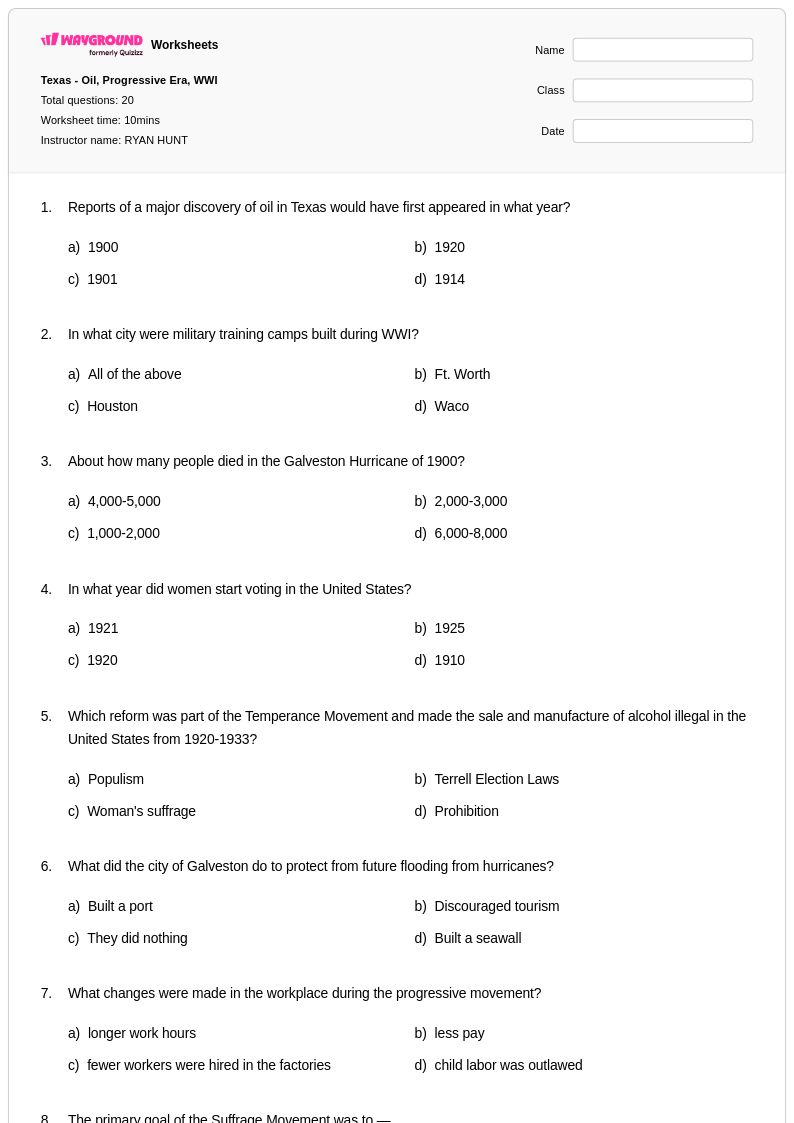
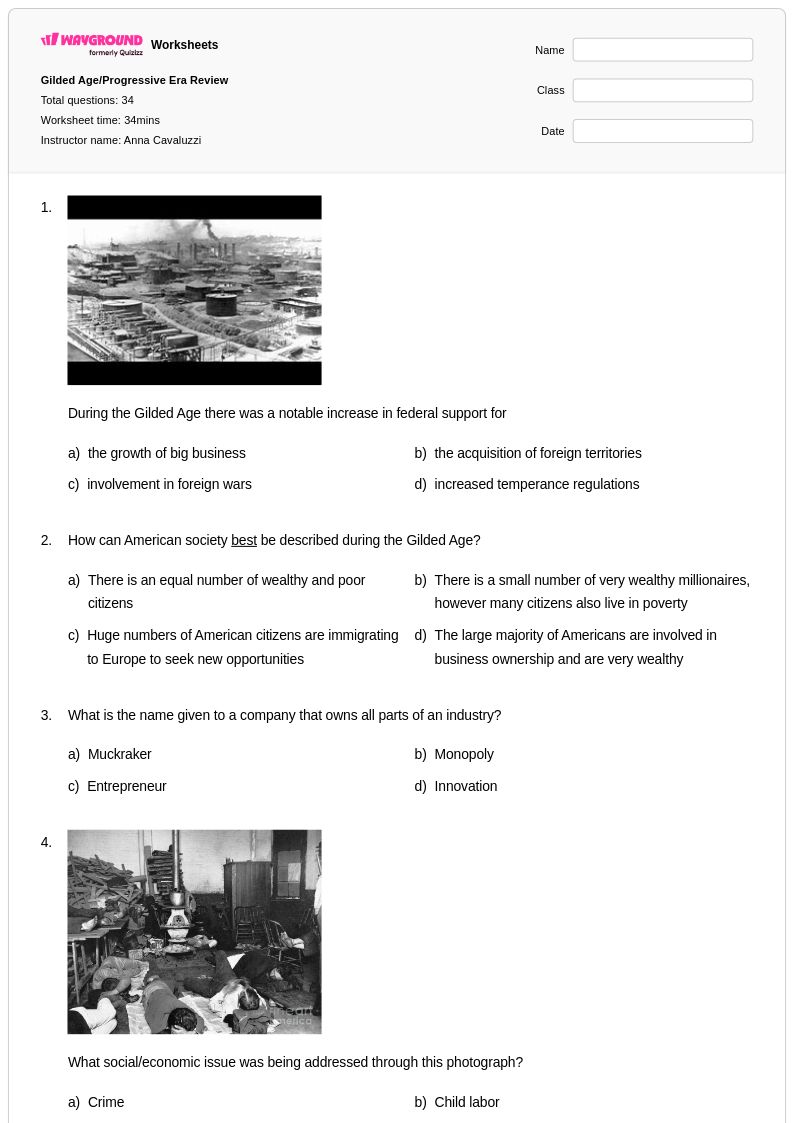
Progressive Era worksheets for Year 7 students available through Wayground (formerly Quizizz) provide comprehensive coverage of this transformative period in American history from the 1890s through the 1920s. These educational resources help seventh-grade students develop critical thinking skills as they analyze the social, political, and economic reforms that characterized this era of unprecedented change. The worksheets feature practice problems that guide students through examining key topics such as muckraking journalism, trust-busting policies, women's suffrage, labor movements, and conservation efforts under leaders like Theodore Roosevelt and Woodrow Wilson. Each printable resource includes detailed answer keys that support both independent study and classroom instruction, while the free pdf format ensures easy accessibility for teachers and students alike.
Wayground's extensive collection draws from millions of teacher-created resources specifically designed to support Progressive Era instruction at the Year 7 level. The platform's robust search and filtering capabilities allow educators to quickly locate materials aligned with state and national social studies standards, ensuring that worksheet selections directly support curriculum objectives. Teachers can easily differentiate instruction by selecting from various difficulty levels and question formats, while the flexible customization tools enable modification of existing materials to meet specific classroom needs. Whether used for initial skill practice, targeted remediation, or enrichment activities, these digital and printable resources streamline lesson planning and provide students with multiple opportunities to master essential concepts about Progressive Era reforms and their lasting impact on American society.
FAQs
How do I teach the Progressive Era to middle and high school students?
Teaching the Progressive Era effectively means anchoring abstract reforms to concrete human stories. Start with muckraking journalism — Upton Sinclair's 'The Jungle' or Ida Tarbell's investigation of Standard Oil — to show students why reform was necessary. From there, build outward to legislation like the Sherman Antitrust Act, the 17th Amendment, and the Pure Food and Drug Act, helping students trace how public pressure translated into political change. Framing the era around the question 'Who had power, and who was fighting to get it?' gives students a through-line that connects suffrage, labor rights, conservation, and trust-busting into a coherent narrative.
What exercises help students practice analyzing Progressive Era reforms?
The most effective practice exercises ask students to evaluate cause-and-effect relationships between industrial-era problems and the specific reforms that addressed them. Document analysis tasks using excerpts from muckraking articles, political cartoons, or primary legislation push students to practice historical thinking rather than simple recall. Reform comparison charts — where students categorize changes as social, political, or economic — build the analytical vocabulary students need for essay writing and standardized assessments.
What are the most common mistakes students make when learning about the Progressive Era?
The most frequent misconception is treating the Progressive Era as uniformly positive, when in reality many reforms excluded African Americans, immigrants, and the poor. Students also frequently conflate Progressivism with socialism, misunderstanding that most Progressive reformers sought to preserve capitalism by regulating its excesses rather than replacing it. A third common error is treating the era as a single unified movement, when it was actually a loosely connected set of campaigns with different leaders, goals, and outcomes.
How do I assess whether students understand the key political changes of the Progressive Era?
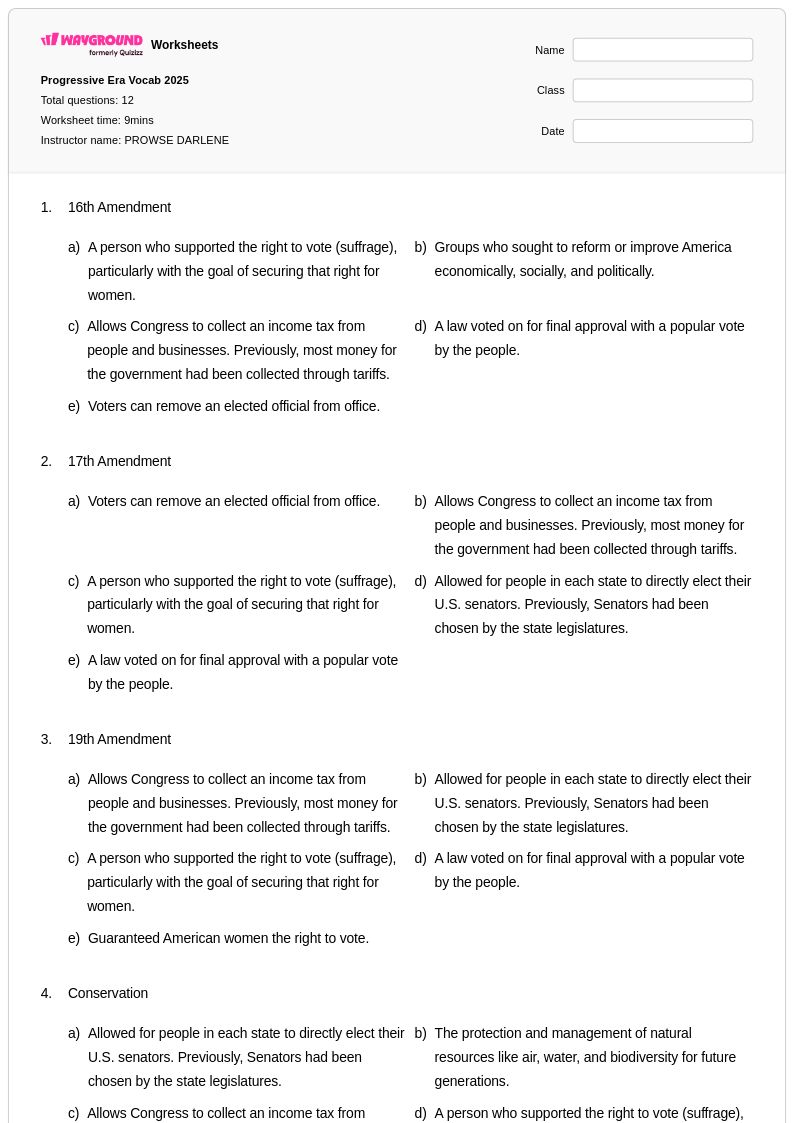
Strong assessments for this period ask students to explain the purpose of specific constitutional amendments — particularly the 16th, 17th, 18th, and 19th — and connect each to the reform pressures that produced it. Short-answer questions that require students to identify a reform, name the problem it addressed, and evaluate its effectiveness reveal far more than multiple-choice recall. Checking whether students can distinguish between federal and state-level Progressive reforms also surfaces gaps in their understanding of how political power operated during this period.
How can I use Progressive Era worksheets from Wayground in my classroom?
Wayground's Progressive Era worksheets are available as printable PDFs for traditional classroom use and in digital formats for technology-integrated or remote learning environments, and teachers can also host them as a quiz directly on Wayground. The practice problems guide students through key concepts including muckraking journalism, trust-busting, women's suffrage, and conservation, with each worksheet collection including detailed answer keys. For students who need additional support, Wayground's accommodation tools — including read aloud, extended time, and reduced answer choices — can be applied at the individual student level without disrupting the rest of the class.
How do I differentiate Progressive Era instruction for students at different skill levels?
For below-grade-level learners, focus on a smaller number of high-impact reforms with clear before-and-after framing — child labor laws and food safety legislation are accessible entry points. Advanced students benefit from comparing the Progressive Era to earlier Gilded Age politics and later New Deal policies, placing reform in a longer arc of American governance. On Wayground, teachers can assign accommodations such as read aloud for struggling readers or reduced answer choices for students who need lower cognitive load, while other students complete the standard version without any notification of the modifications.