
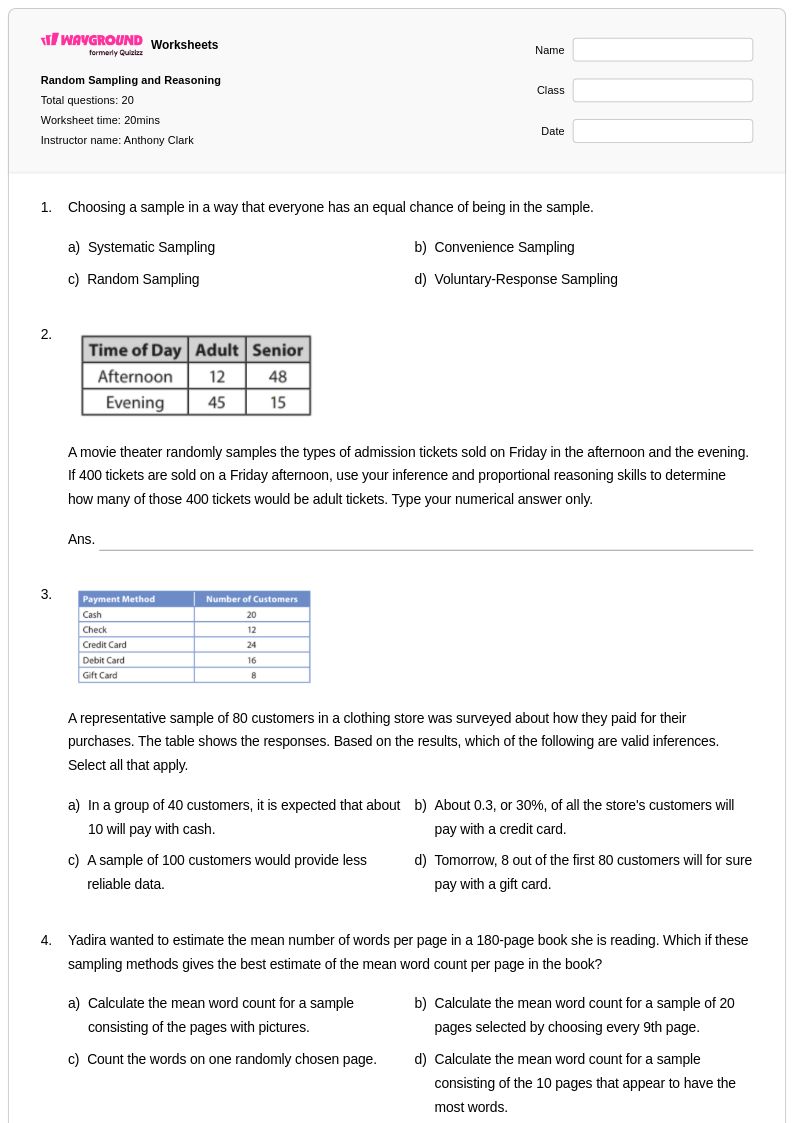
20 Q
7th - Uni
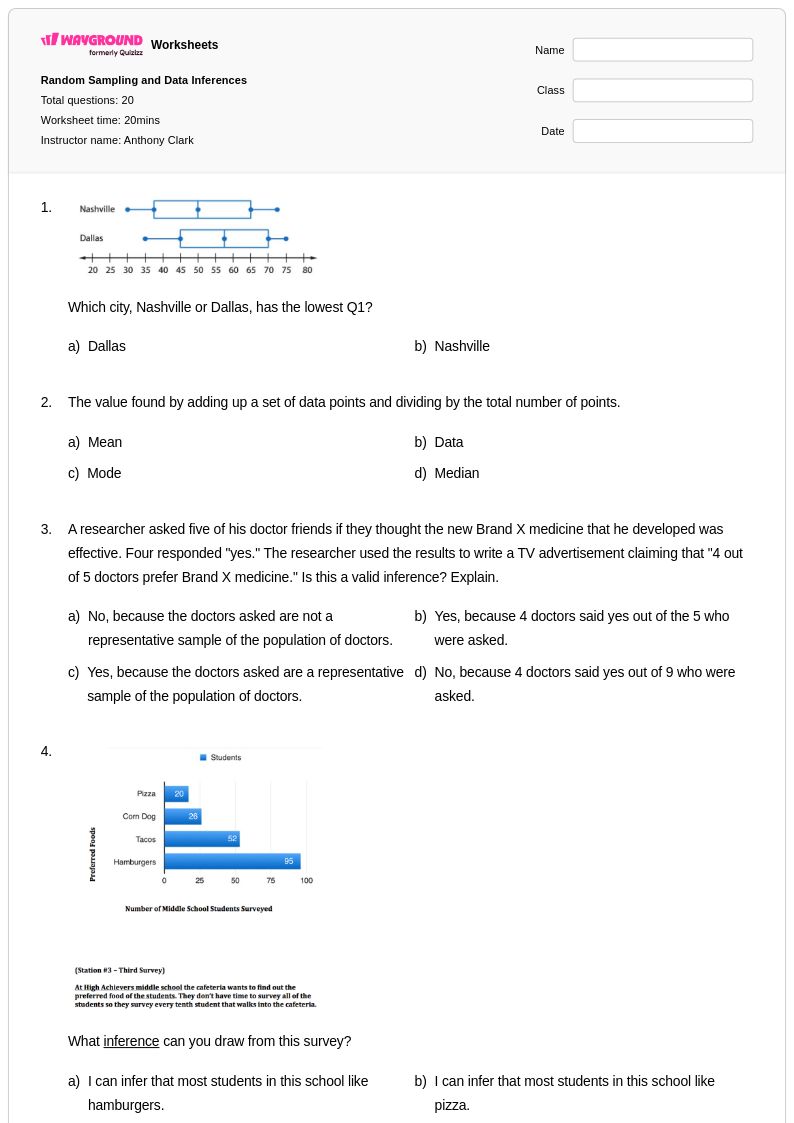
20 Q
7th - Uni
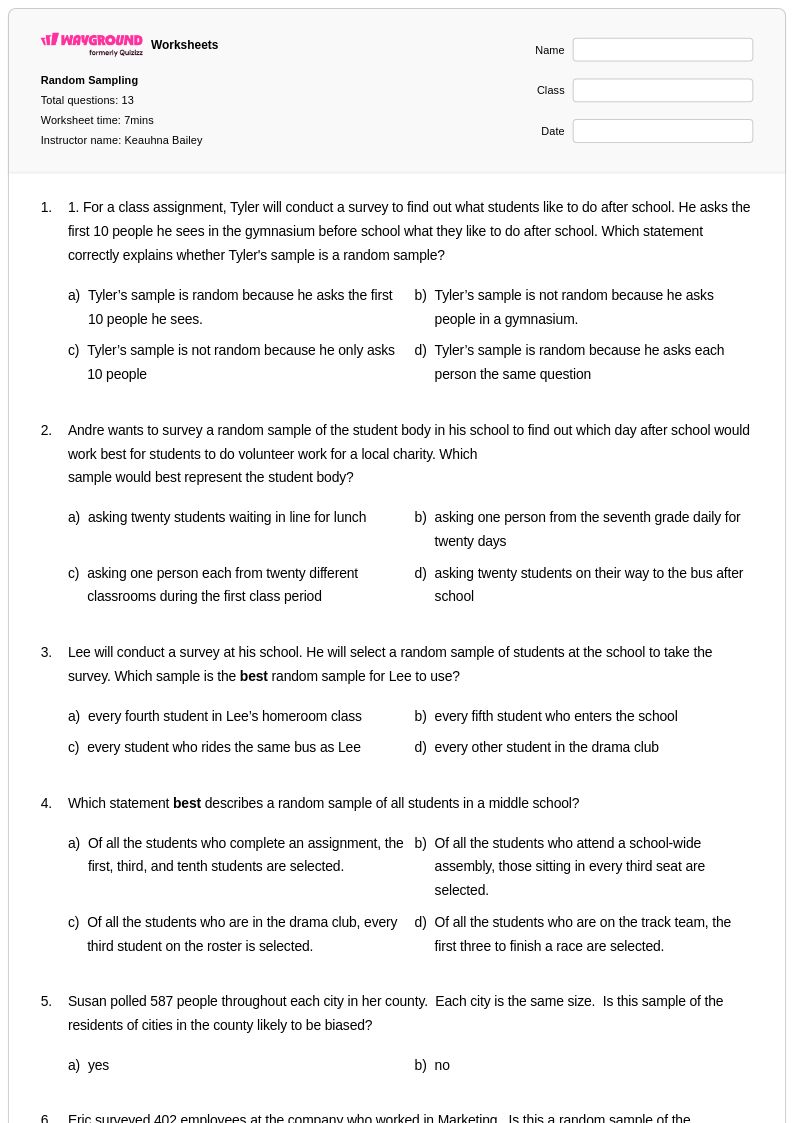
13 Q
8th
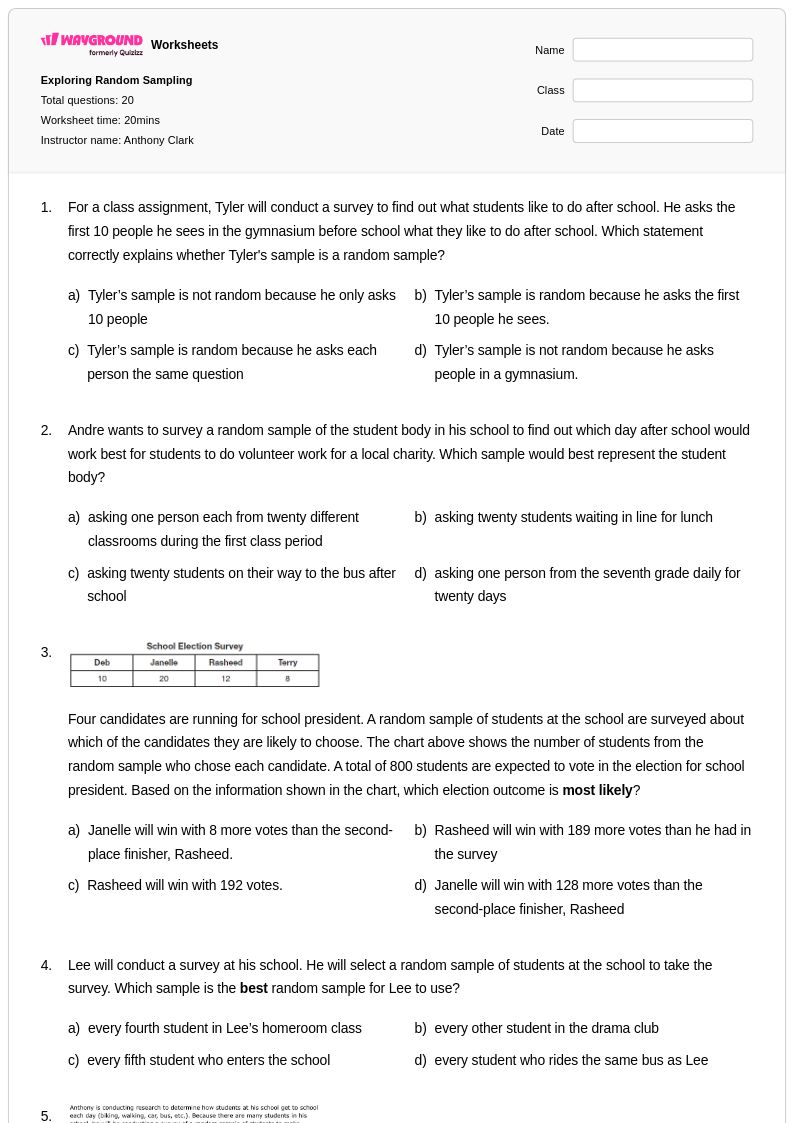
20 Q
7th - Uni
20 Q
7th - Uni
20 Q
7th - Uni
20 Q
7th - Uni
17 Q
7th - Uni
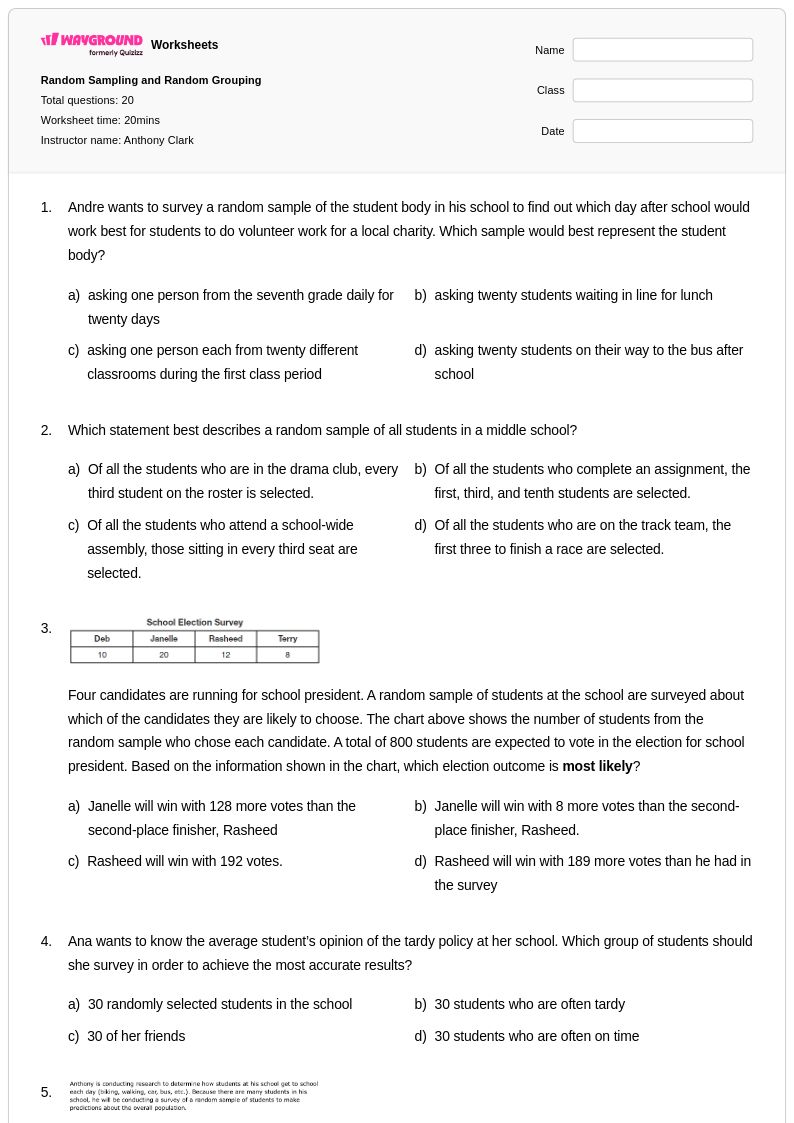
20 Q
7th - Uni
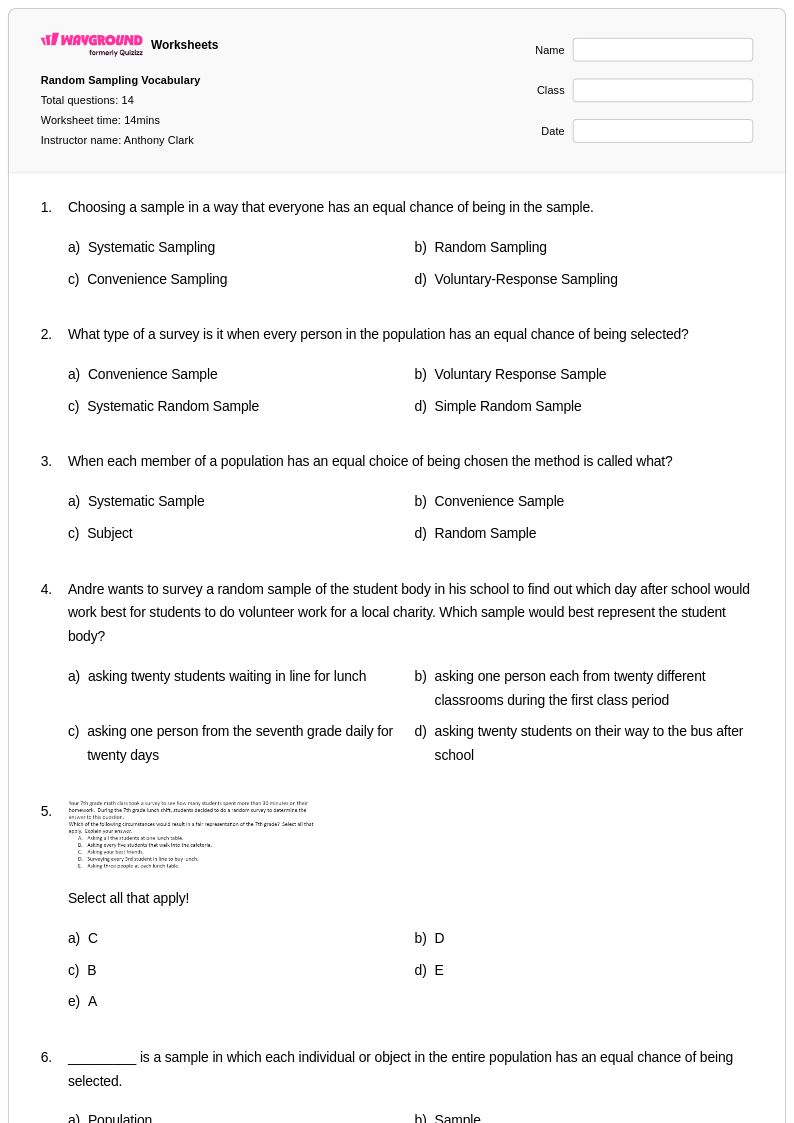
14 Q
7th - Uni
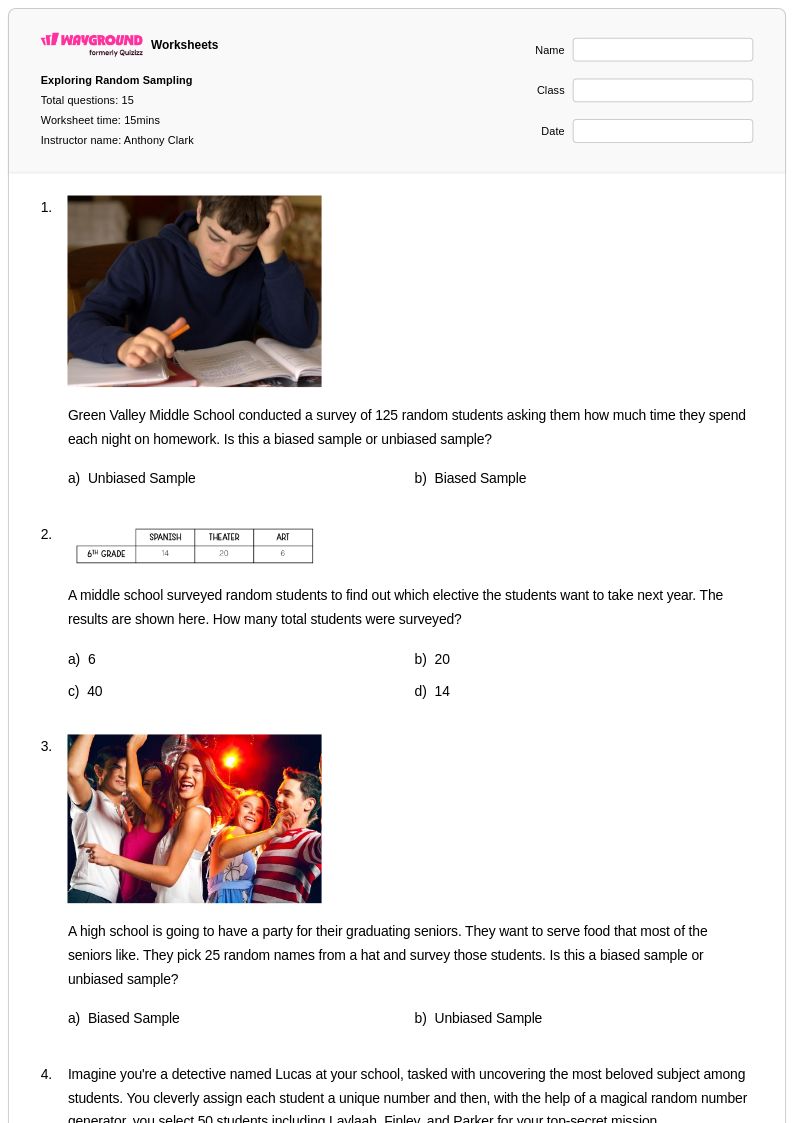
15 Q
7th - Uni
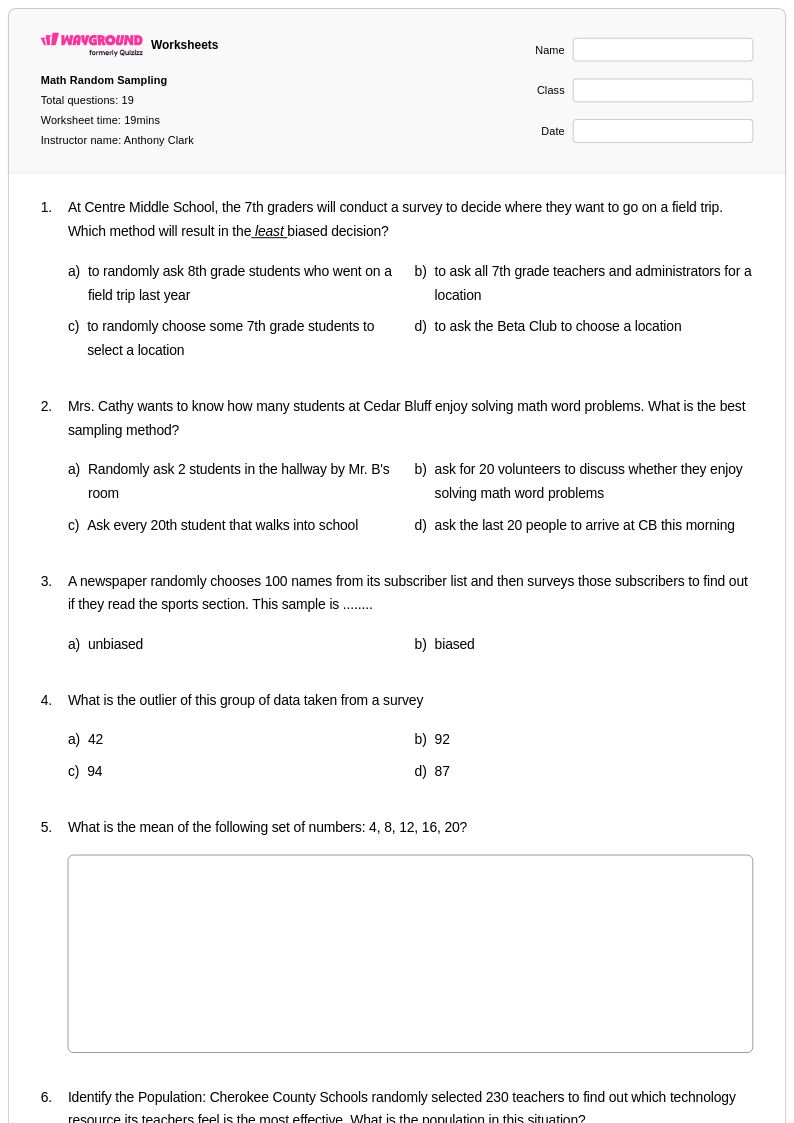
19 Q
7th - Uni
20 Q
7th - Uni
20 Q
8th
20 Q
7th - Uni
17 Q
7th - Uni
16 Q
7th - 9th
14 Q
7th - Uni
12 Q
7th - 8th
20 Q
6th - 8th
8 Q
7th - Uni
Explore Other Subject Worksheets for year 8
Explore printable Random Sampling worksheets for Year 8
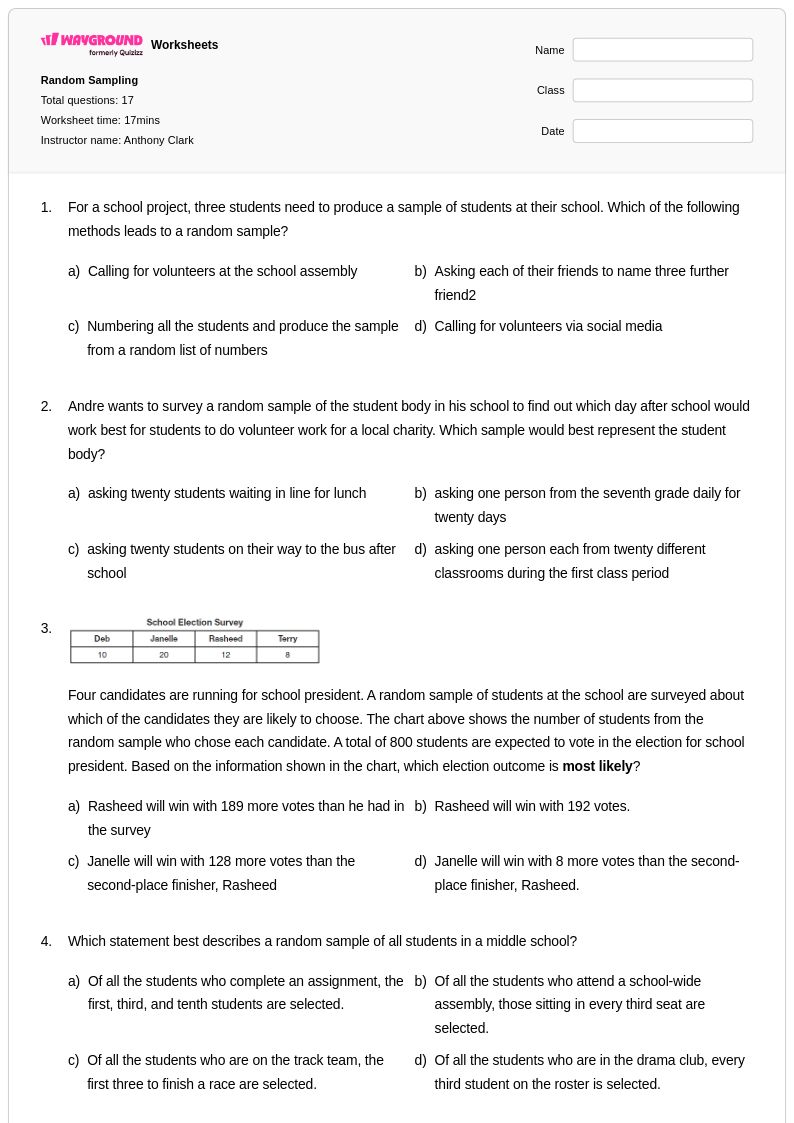
Random sampling worksheets for Year 8 students available through Wayground (formerly Quizizz) provide comprehensive practice in understanding how representative samples are selected from larger populations. These educational resources strengthen critical statistical reasoning skills by guiding students through the fundamental principles of unbiased sampling methods, including simple random sampling, systematic sampling, and stratified sampling techniques. The worksheets feature carefully structured practice problems that help students distinguish between random and non-random sampling methods, analyze potential sources of bias, and evaluate the validity of conclusions drawn from sample data. Each worksheet includes detailed answer keys that enable students to check their understanding of sampling concepts, while the free printable format allows for flexible classroom implementation and independent study sessions.
Wayground (formerly Quizizz) supports mathematics educators with an extensive collection of teacher-created random sampling worksheets that can be easily accessed through robust search and filtering capabilities. The platform's millions of educational resources are designed to align with curriculum standards and provide teachers with powerful differentiation tools to meet diverse learning needs in Year 8 classrooms. These customizable worksheets are available in both digital and printable PDF formats, allowing educators to seamlessly integrate random sampling practice into their lesson planning whether for whole-class instruction, small group work, or individual remediation. The flexible nature of these resources enables teachers to provide targeted skill practice for students who need additional support while offering enrichment opportunities for advanced learners to explore more complex sampling scenarios and statistical applications.
FAQs
What is the role of random sampling in Grade 8 math?
How can I connect sampling to the 8th-grade curriculum?
What new sampling concepts might an 8th grader learn?
What distinguishes an 8th grader's understanding from a 7th grader's?
How can I use this random sampling worksheet in my classroom?
How does this topic fit with 8th-grade math standards?