
25 Q
8th - 10th
25 Q
8th - 10th
10 Q
8th
10 Q
8th - 10th
10 Q
7th - 12th
20 Q
7th - Uni
14 Q
7th - Uni
20 Q
6th - Uni
10 Q
7th - 12th
30 Q
8th
20 Q
6th - Uni
27 Q
8th
14 Q
8th - 11th
9 Q
8th - 10th
10 Q
8th - 12th
15 Q
7th - 10th
15 Q
6th - Uni
6 Q
8th - 12th
20 Q
8th
19 Q
8th - 10th
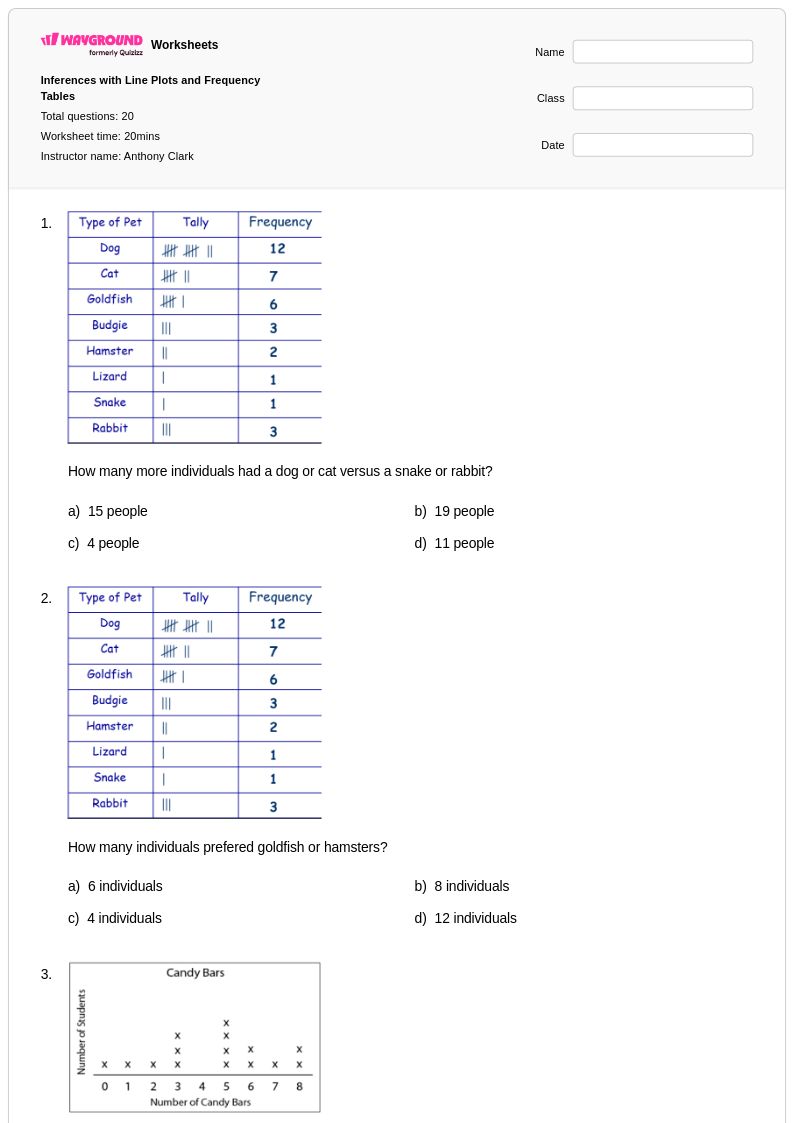
20 Q
6th - Uni
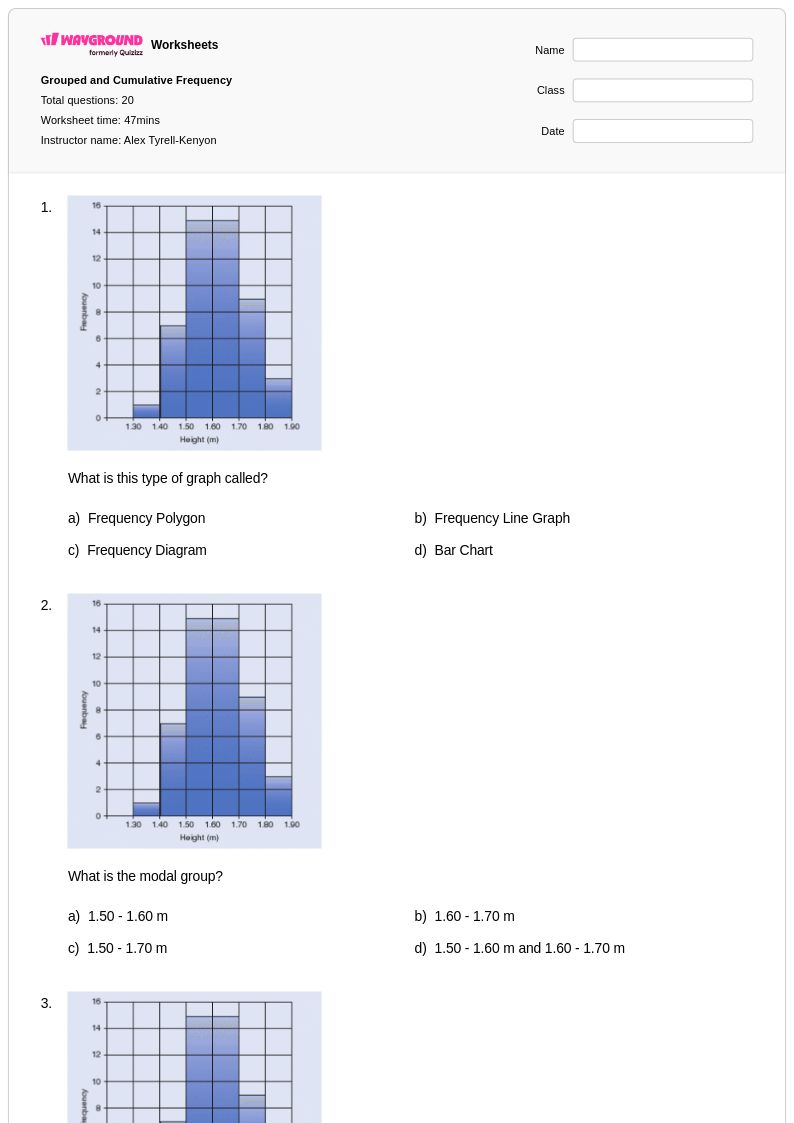
20 Q
6th - 10th
13 Q
8th
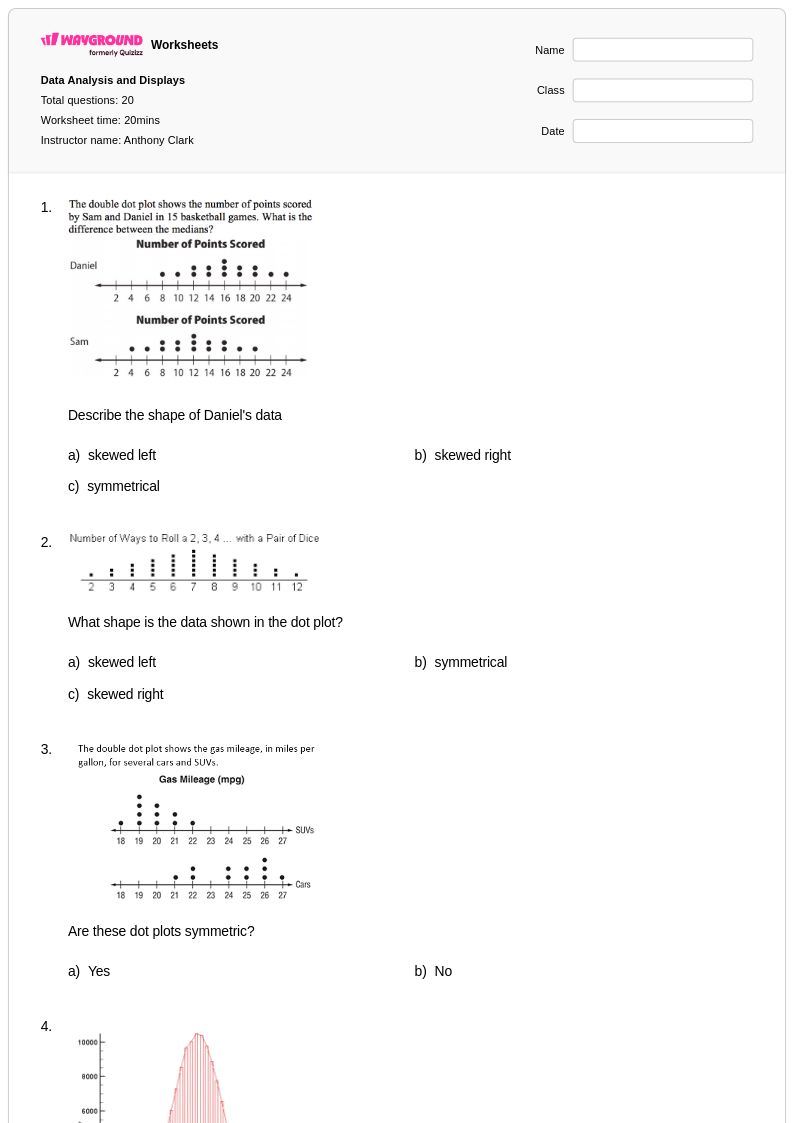
20 Q
8th - Uni
Explore Other Subject Worksheets for year 8
Explore printable Frequency Distribution worksheets for Year 8
Year 8 frequency distribution worksheets available through Wayground (formerly Quizizz) provide comprehensive practice in organizing, analyzing, and interpreting data sets through systematic tabular arrangements. These carefully designed resources strengthen students' abilities to construct frequency tables, calculate relative and cumulative frequencies, and determine appropriate class intervals for grouped data. The worksheets feature diverse practice problems that challenge eighth-grade students to work with real-world data scenarios, from survey results to scientific measurements, while developing critical skills in data classification and pattern recognition. Each printable resource includes detailed answer keys that support independent learning and self-assessment, with free access to both basic frequency tables and more complex grouped frequency distributions in convenient PDF format.
Wayground's extensive collection of teacher-created frequency distribution materials offers educators millions of high-quality resources with robust search and filtering capabilities that align with grade 8 mathematics standards. The platform's differentiation tools enable teachers to customize worksheets based on individual student needs, whether providing foundational practice with simple tally charts or challenging advanced learners with multi-step frequency analysis problems. Available in both printable PDF format and interactive digital versions, these resources support flexible lesson planning and accommodate diverse classroom environments. Teachers can efficiently access materials for skill practice, targeted remediation of data organization concepts, and enrichment activities that extend learning beyond basic frequency counting to include statistical interpretation and graphical representation of frequency data.
FAQs
What new concepts are introduced in Grade 8 frequency distribution worksheets?
What is a good way to explain cumulative frequency to 8th graders?
What skills do these Grade 8 worksheets help students practice?
Where do 8th graders usually get stuck when calculating cumulative frequency?
How can I use this worksheet to check for understanding?
How does this topic connect to the Grade 8 math curriculum?