
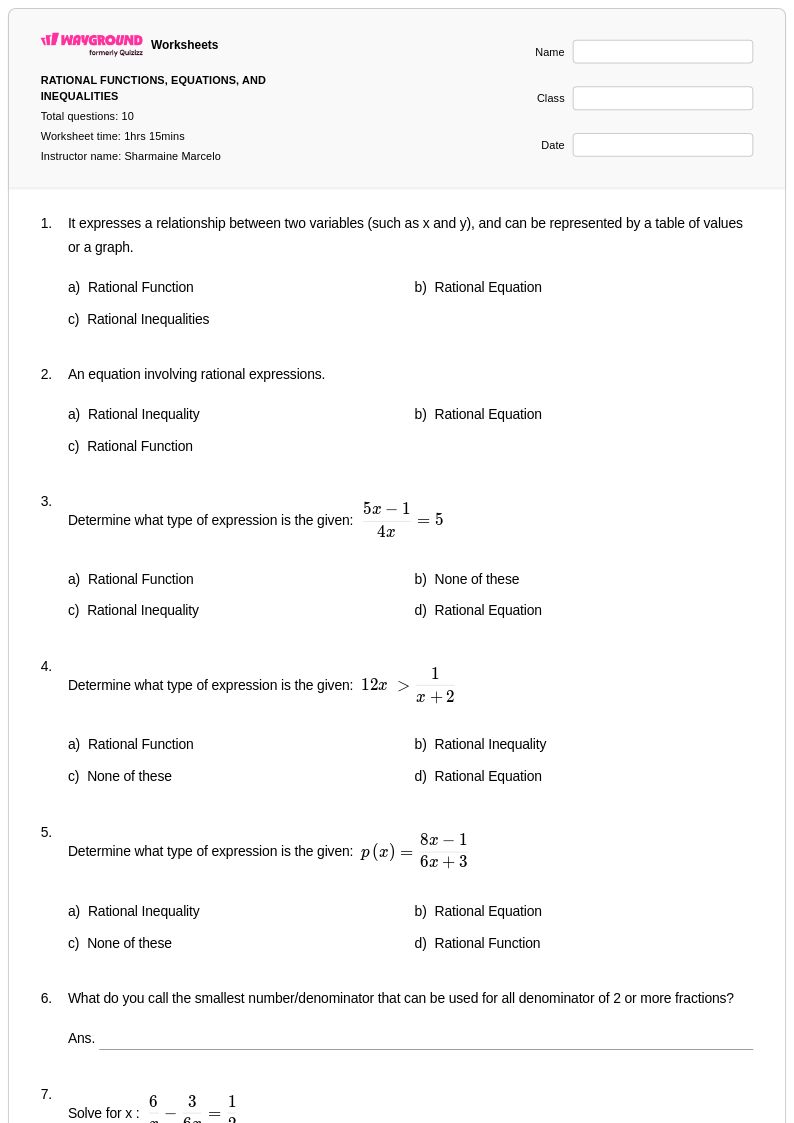
10 T
7th - 11th
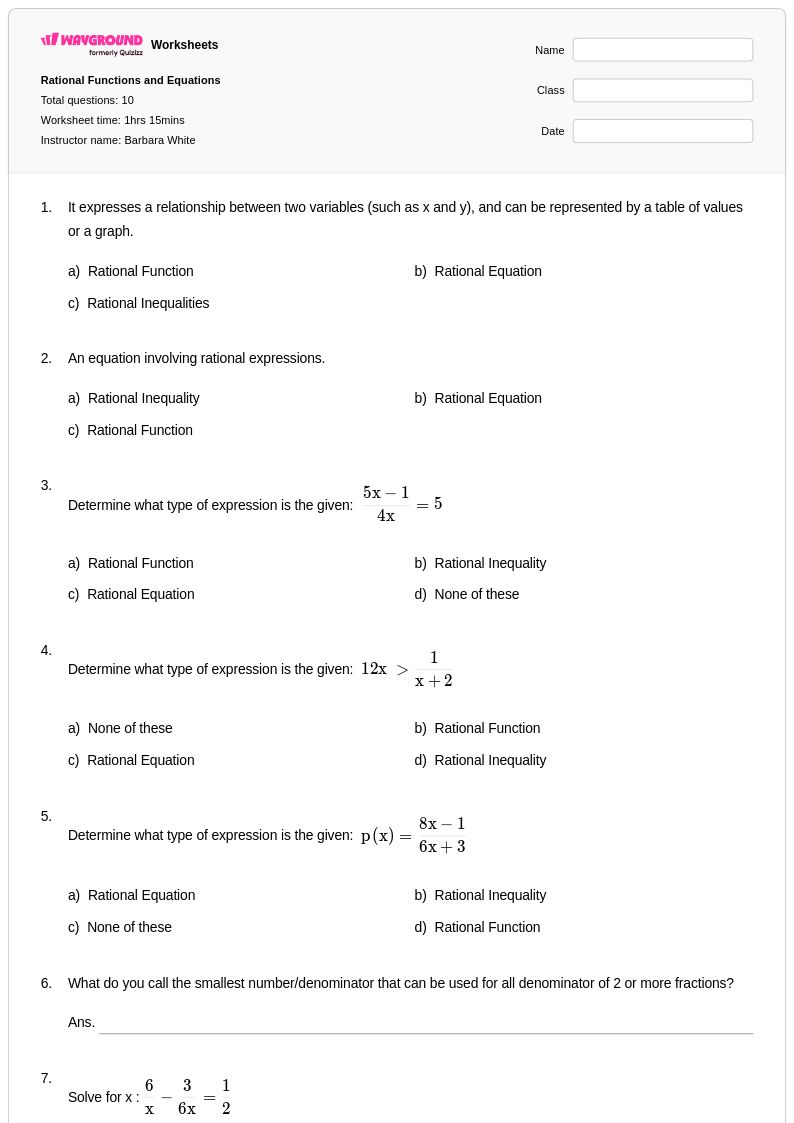
10 T
7th - 11th
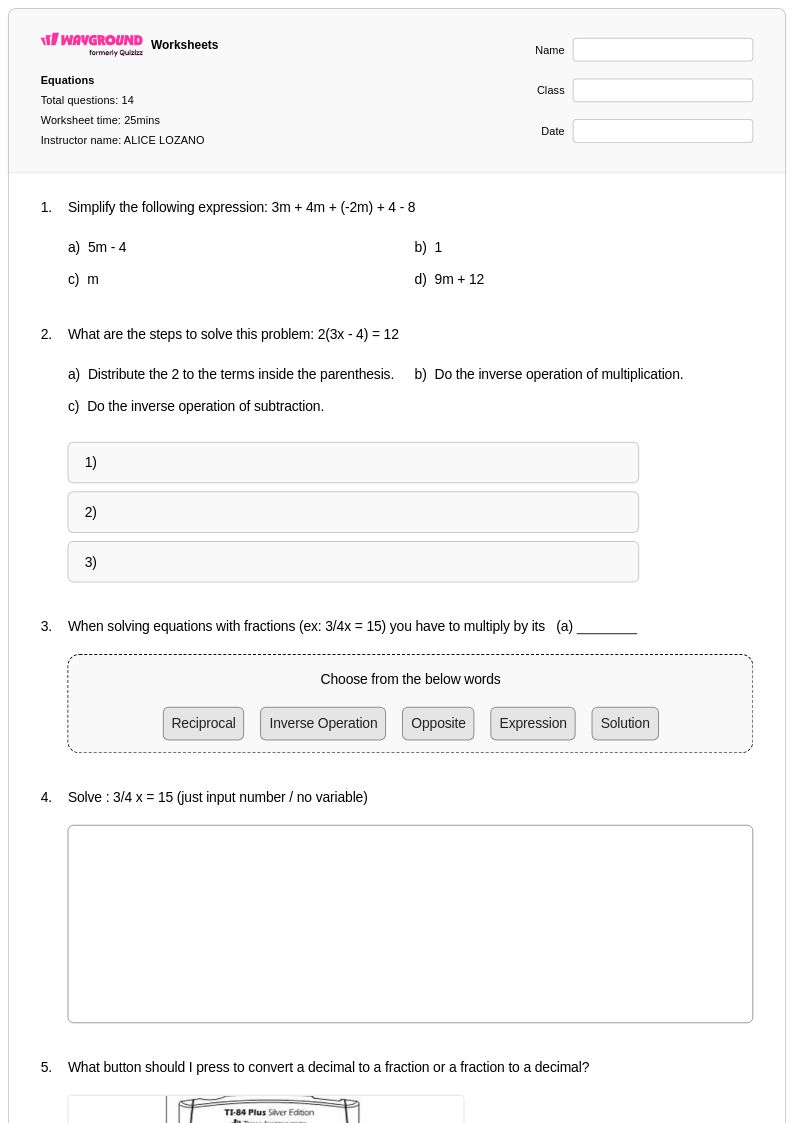
14 T
8th
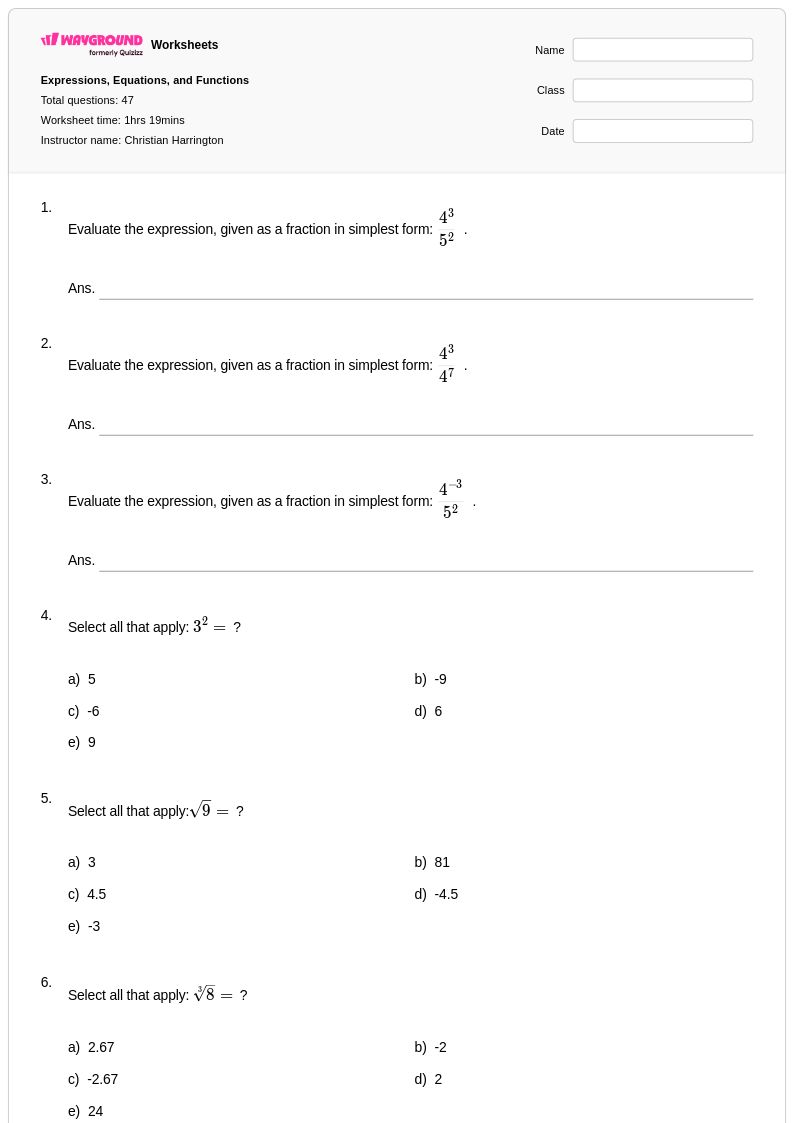
47 T
8th
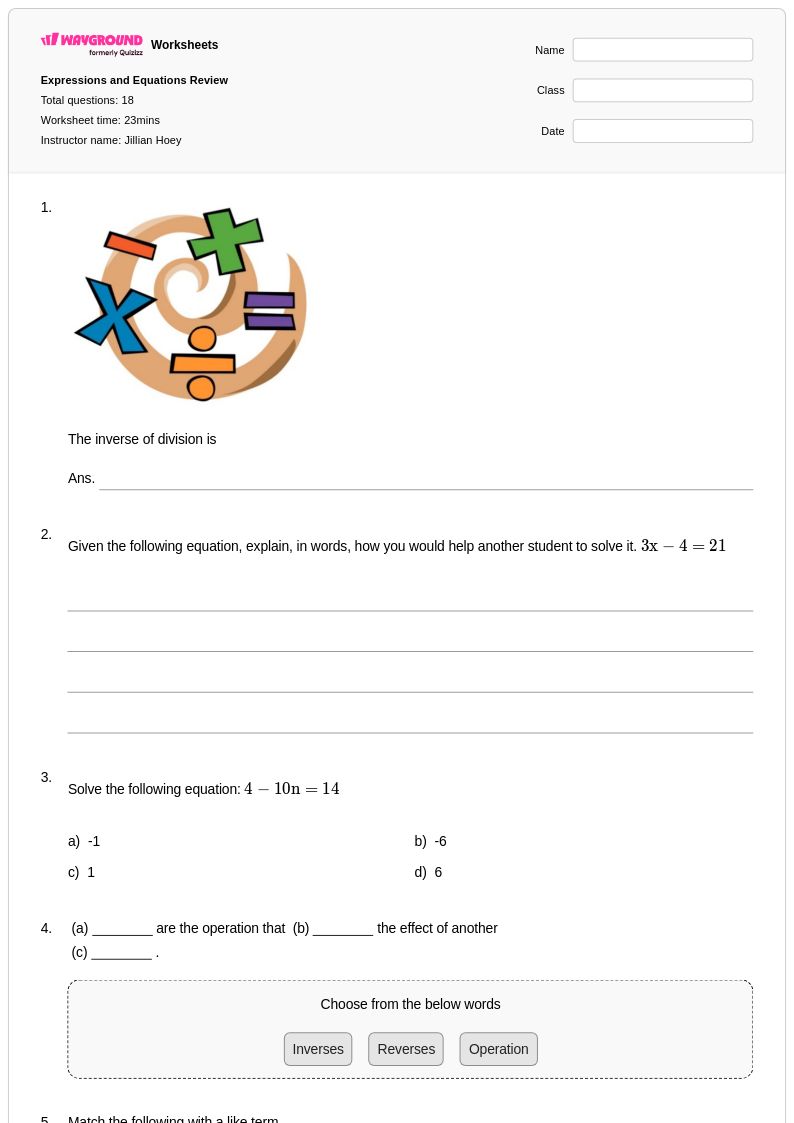
18 T
8th
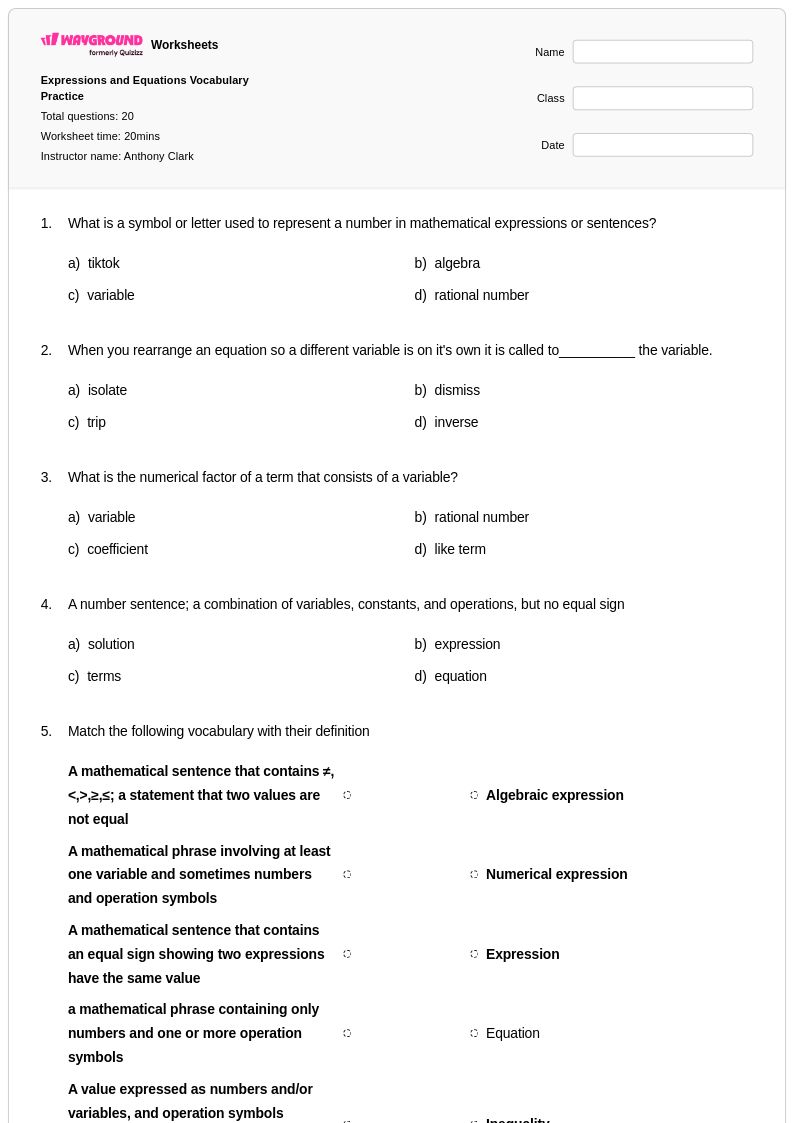
20 T
6th - Uni
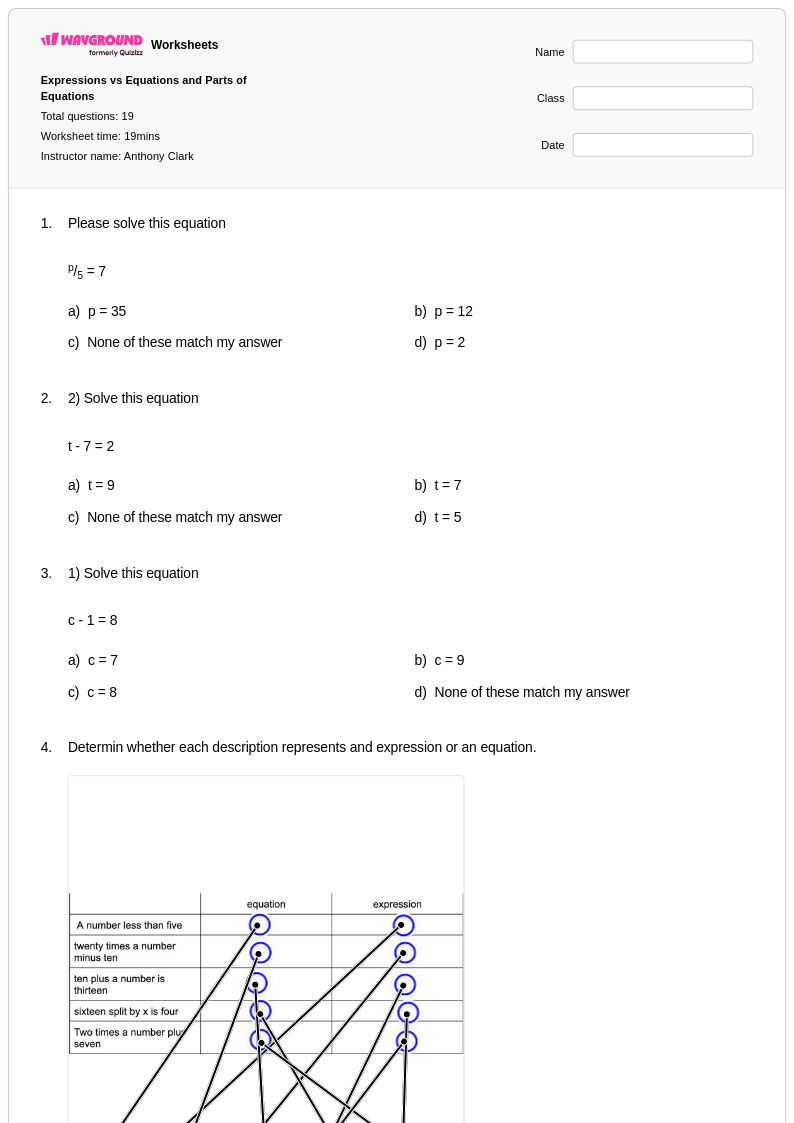
19 T
6th - Uni
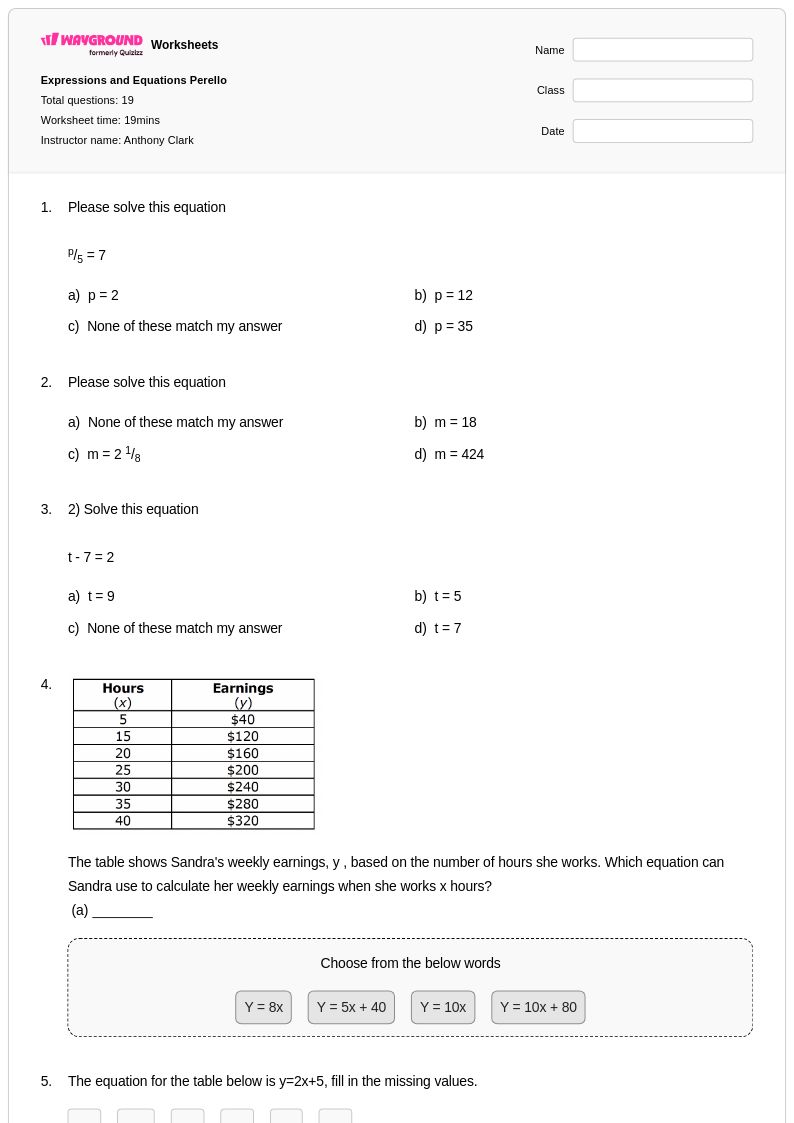
19 T
6th - Uni
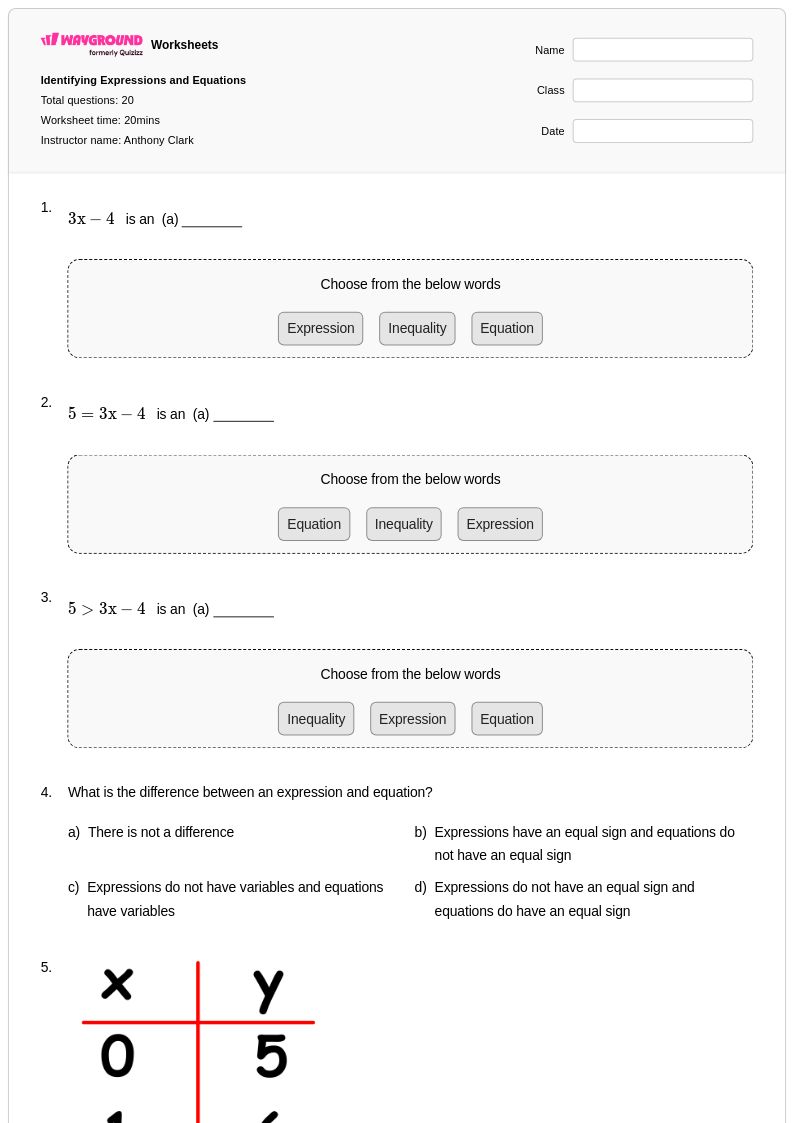
20 T
8th - Uni
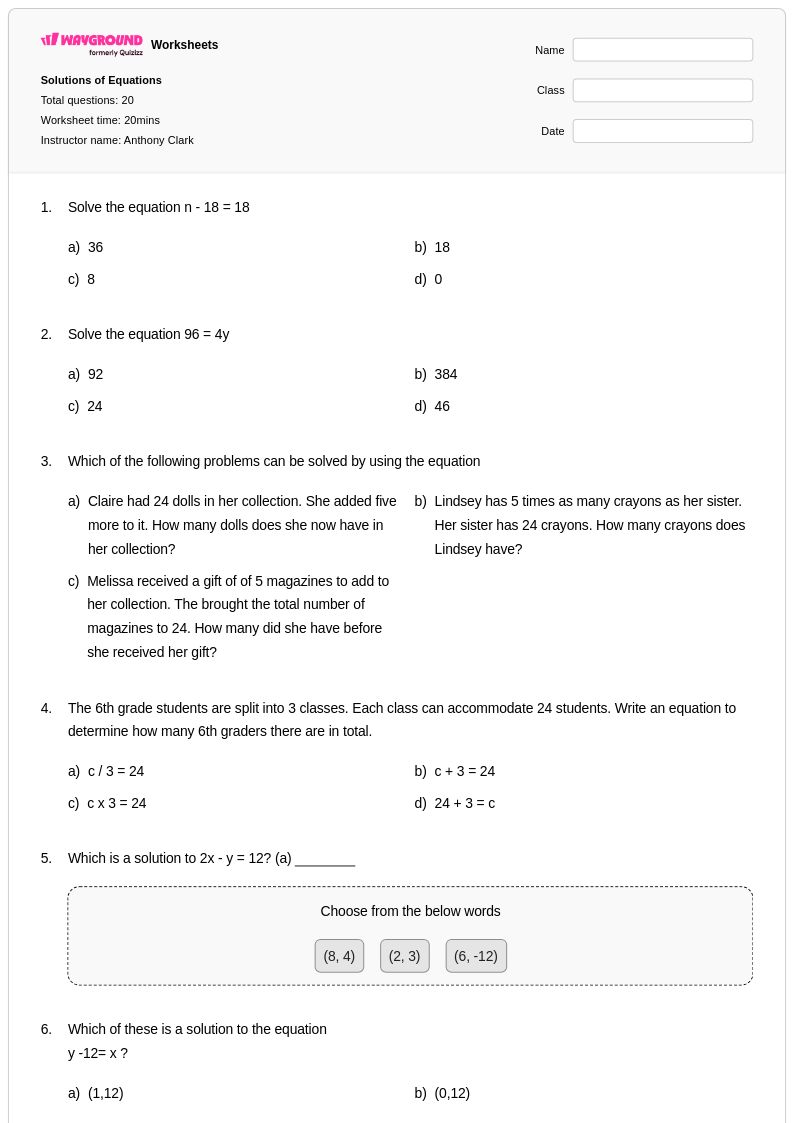
20 T
6th - Uni
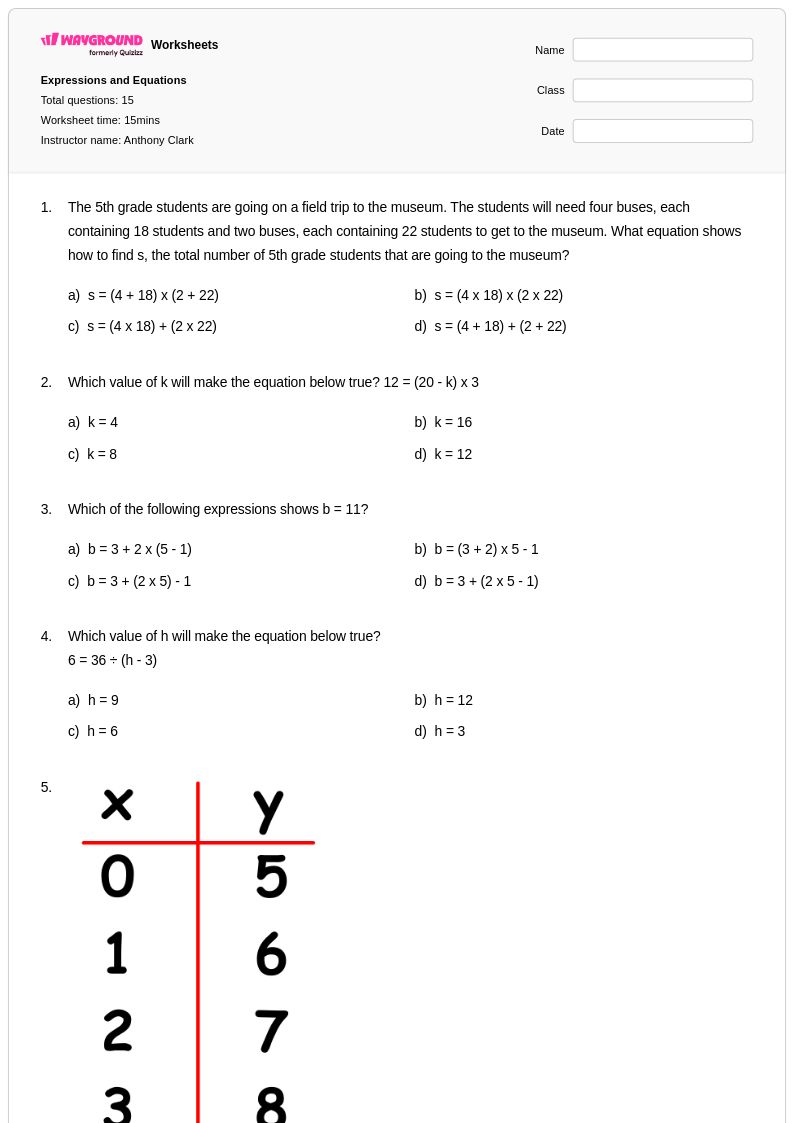
15 T
5th - Uni
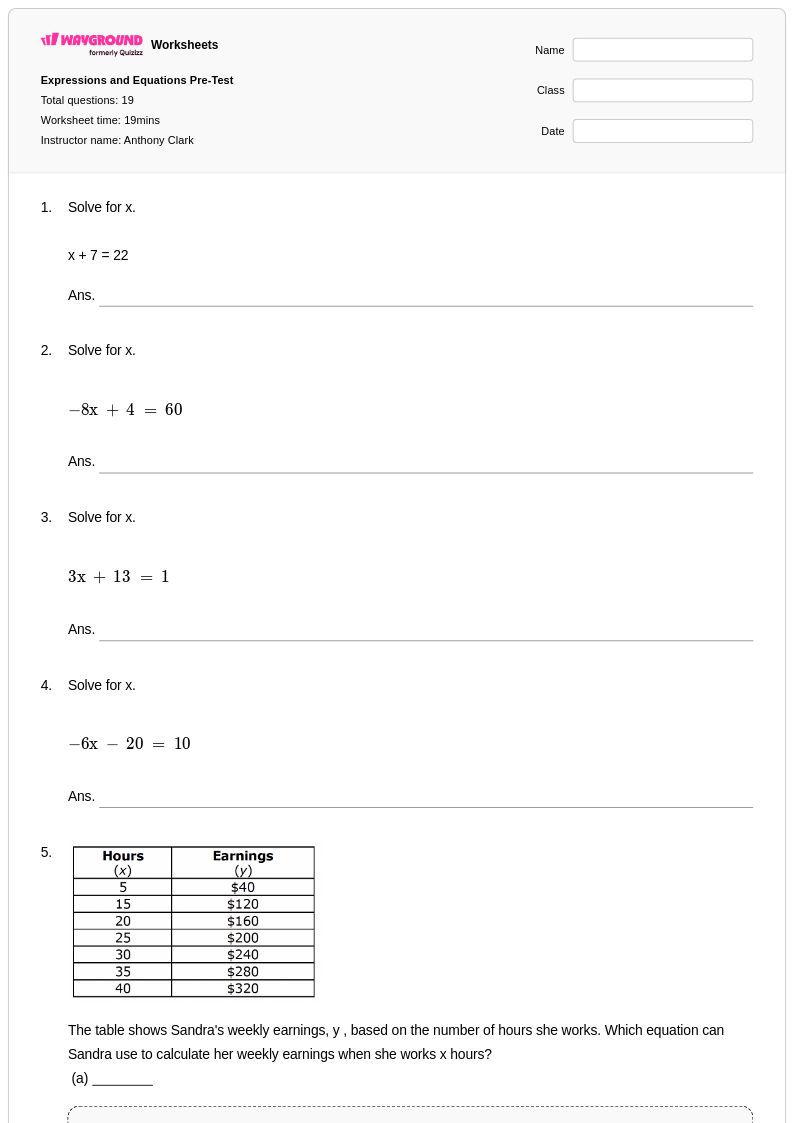
19 T
7th - Uni
20 T
6th - Uni
20 T
8th
20 T
8th - Uni
19 T
6th - Uni
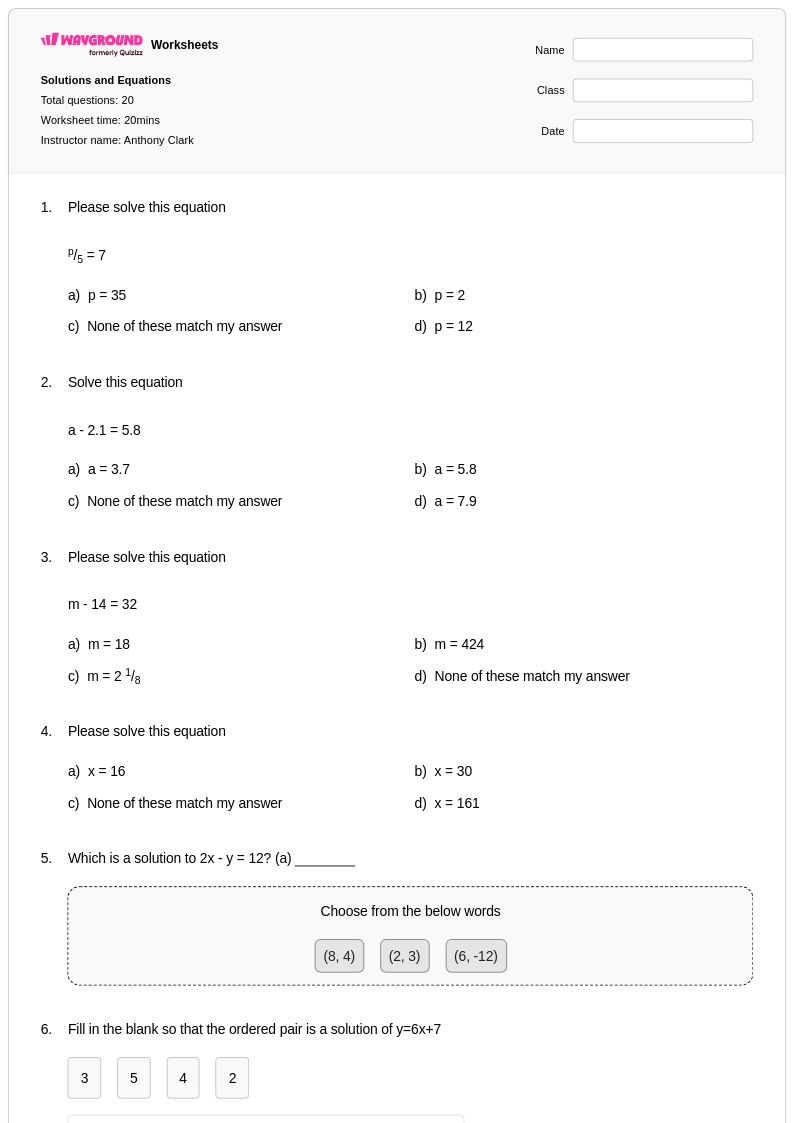
20 T
6th - Uni
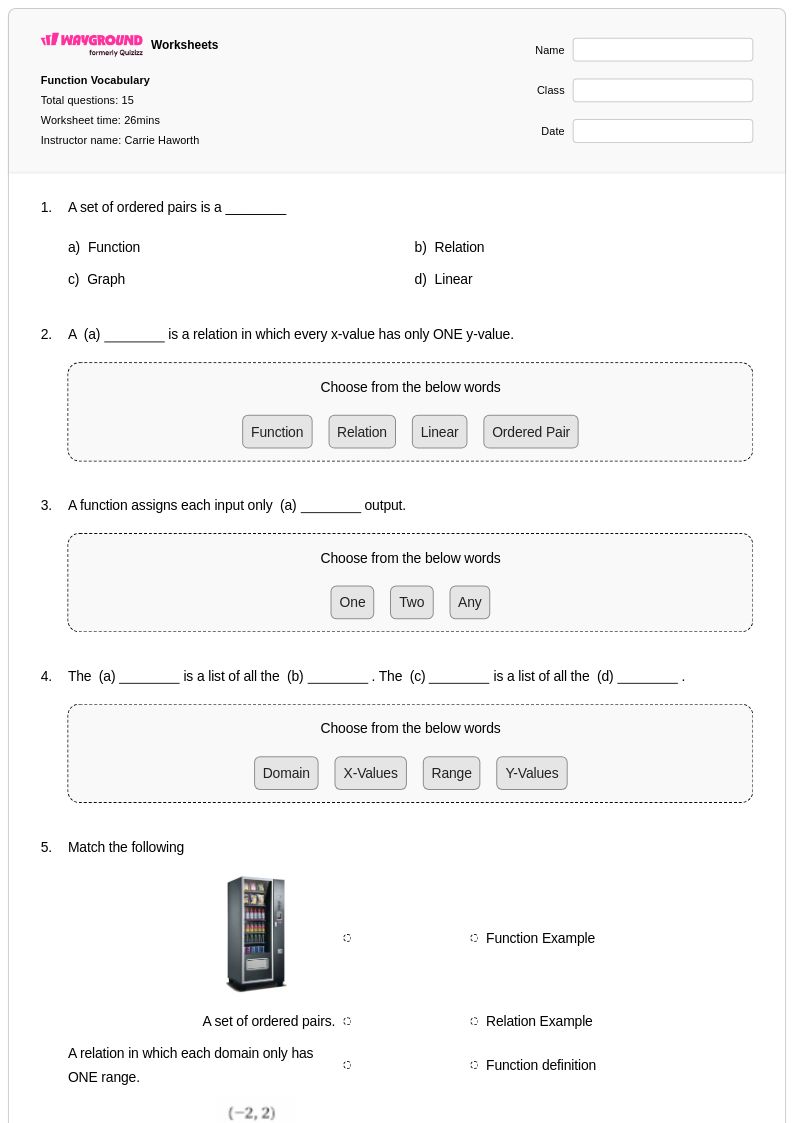
15 T
8th
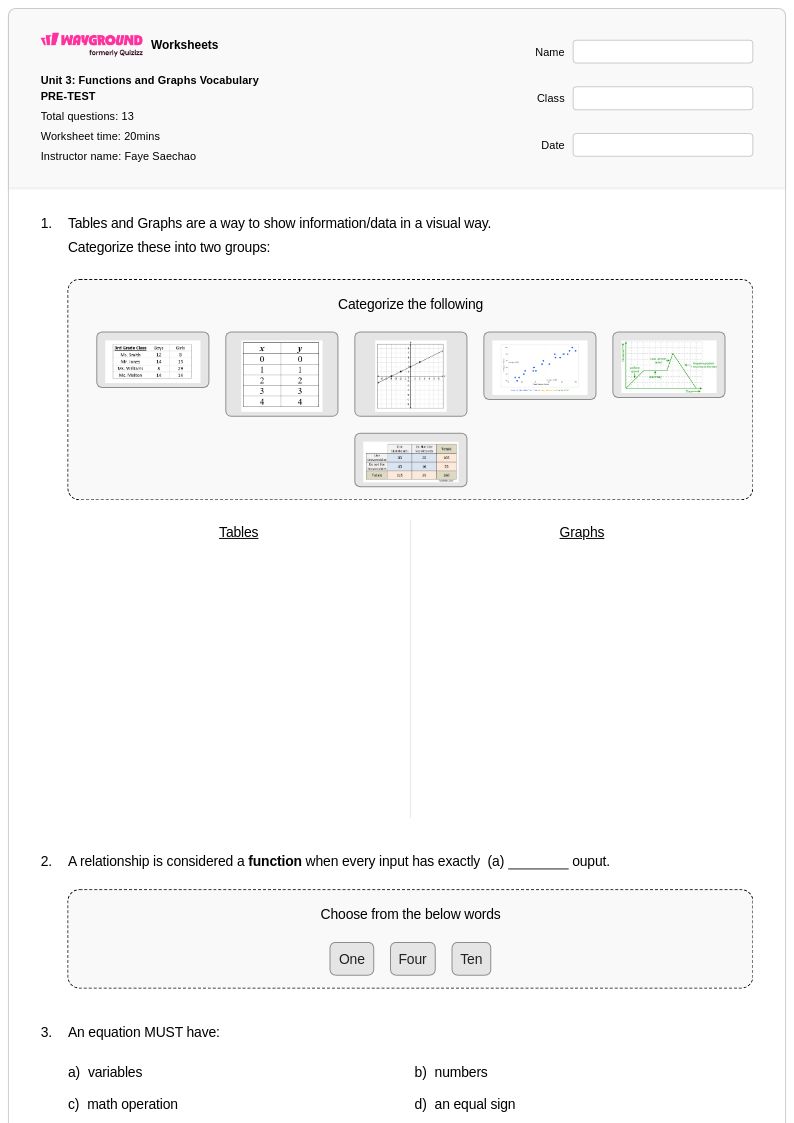
13 T
8th
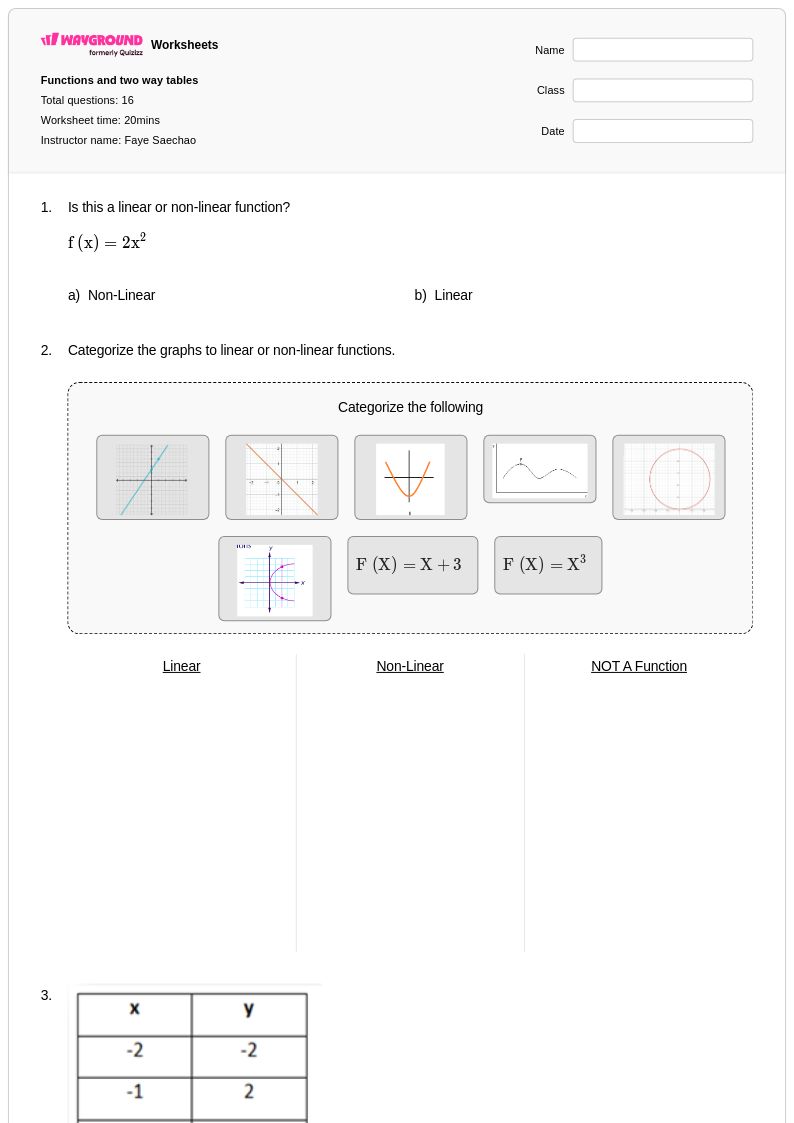
16 T
8th
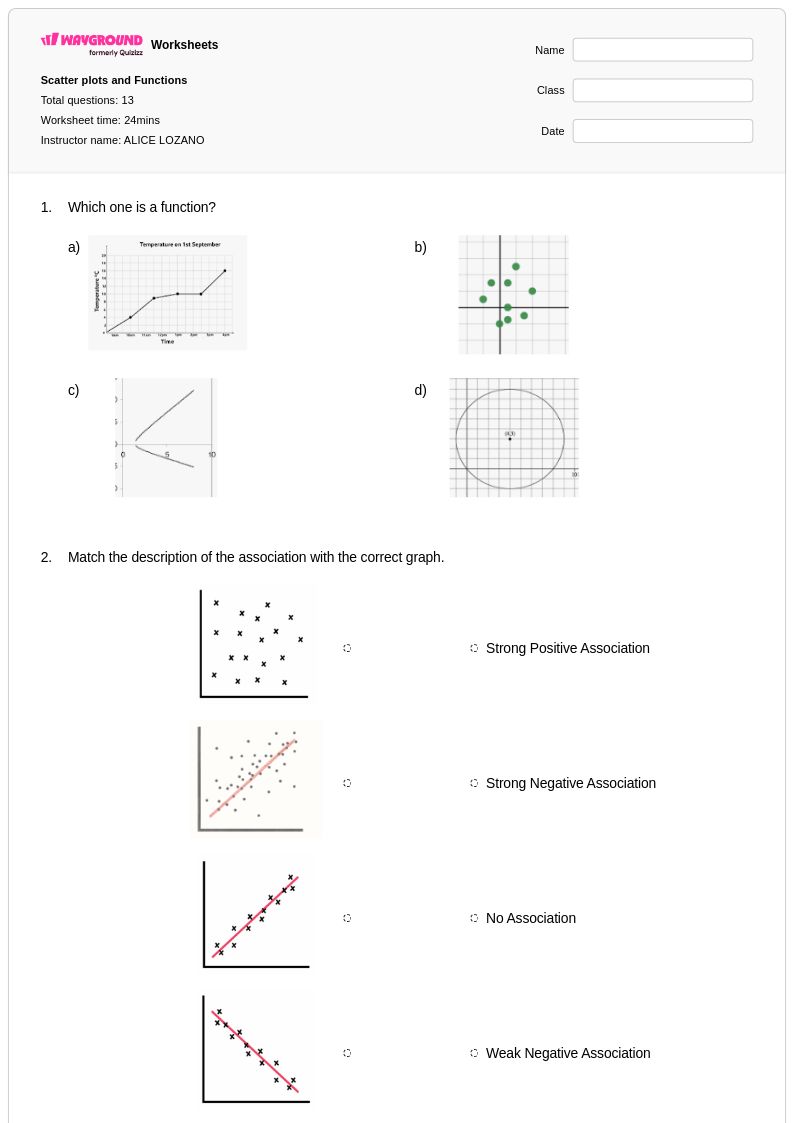
13 T
8th
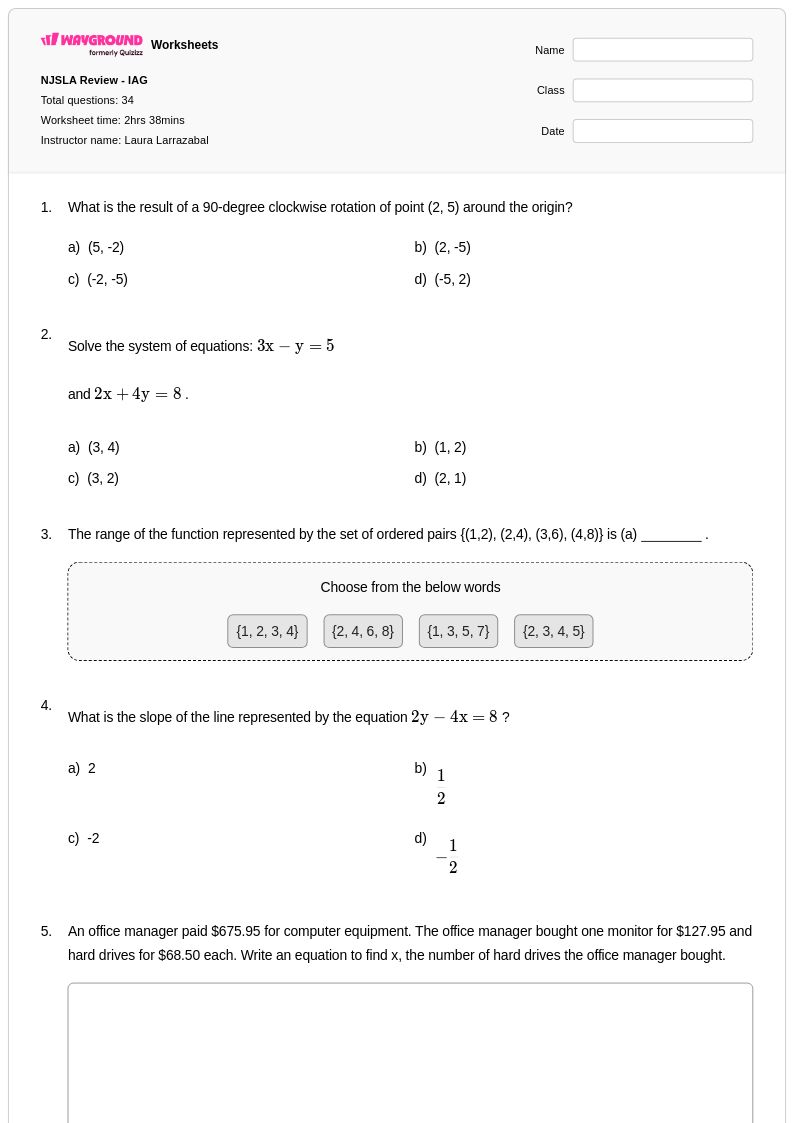
34 T
8th
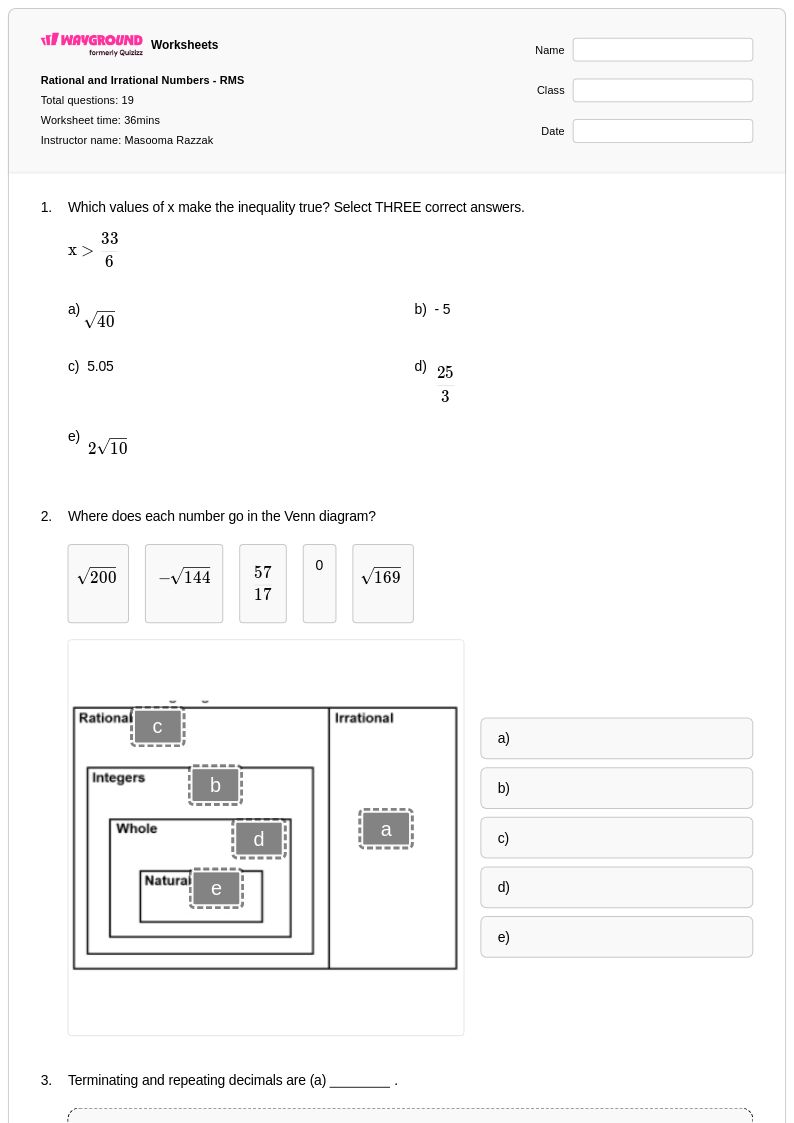
19 T
8th
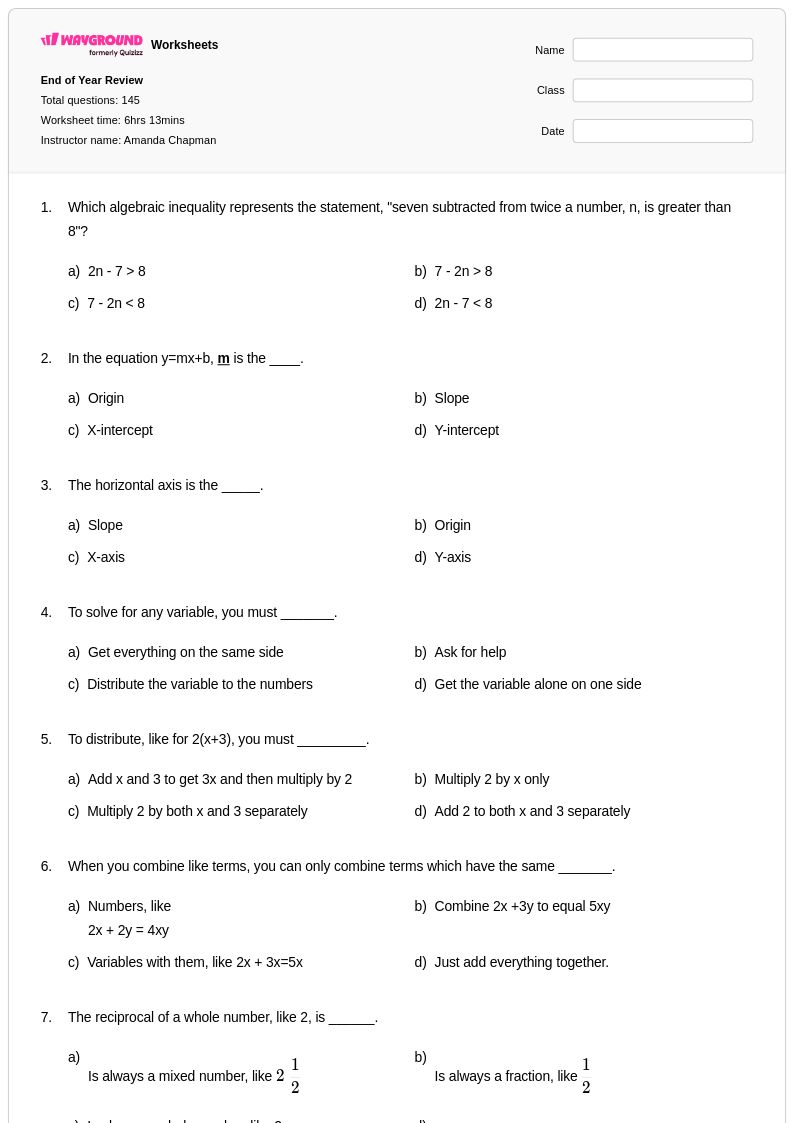
145 T
8th
Jelajahi Rational Expressions Equations and Functions Lembar Kerja berdasarkan Nilai
Jelajahi Lembar Kerja Mata Pelajaran Lainnya untuk year 8
Explore printable Rational Expressions Equations and Functions worksheets for Year 8
Rational expressions equations and functions worksheets for Year 8 students through Wayground (formerly Quizizz) provide comprehensive practice in manipulating algebraic fractions and understanding their behavior as mathematical functions. These carefully structured worksheets strengthen essential skills including simplifying rational expressions, solving rational equations, identifying domain restrictions, and analyzing the graphical representations of rational functions. Students work through practice problems that progress from basic simplification techniques to more complex applications involving operations with rational expressions and function transformations. Each worksheet includes a complete answer key and is available as a free printable pdf, making it easy for educators to incorporate these resources into their algebra curriculum while providing students with immediate feedback on their mathematical reasoning.
Wayground (formerly Quizizz) supports mathematics teachers with an extensive collection of rational expressions worksheets created by millions of educators who understand the unique challenges Year 8 students face when transitioning to advanced algebraic concepts. The platform's robust search and filtering capabilities allow teachers to locate materials that align with specific curriculum standards and match their students' skill levels, whether they need remediation with basic fraction operations or enrichment through complex rational function analysis. Teachers can customize these digital and printable resources to differentiate instruction, modify difficulty levels, and adapt content for individual learning needs. This flexibility enables educators to create targeted practice sessions, design comprehensive review materials, and develop assessment tools that effectively measure student progress in understanding rational expressions equations and functions.
FAQs
Is this topic appropriate for 8th grade?
How should I introduce rational expressions to 8th graders?
What are common errors for 8th graders learning this topic?
What kind of practice is best for introducing this topic in Grade 8?
How does this topic relate to the 8th-grade curriculum?
How do I use this worksheet with my 8th-grade class?