
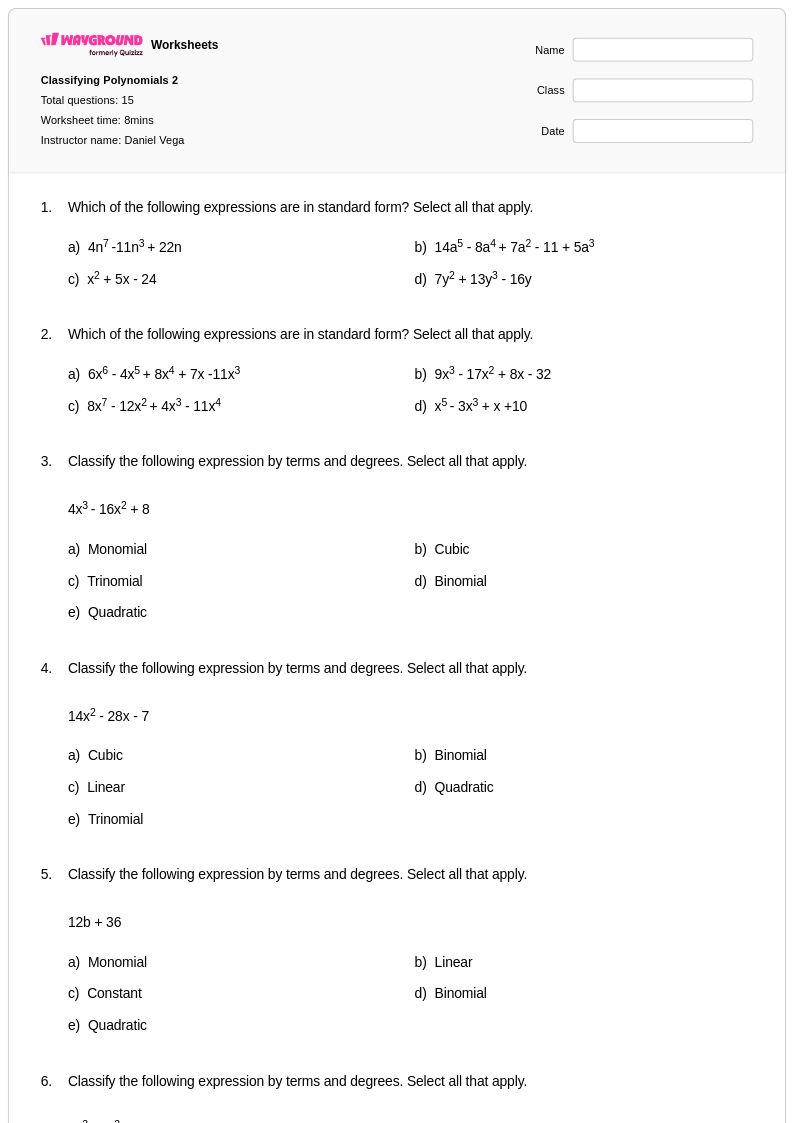
15 Q
8th - 10th
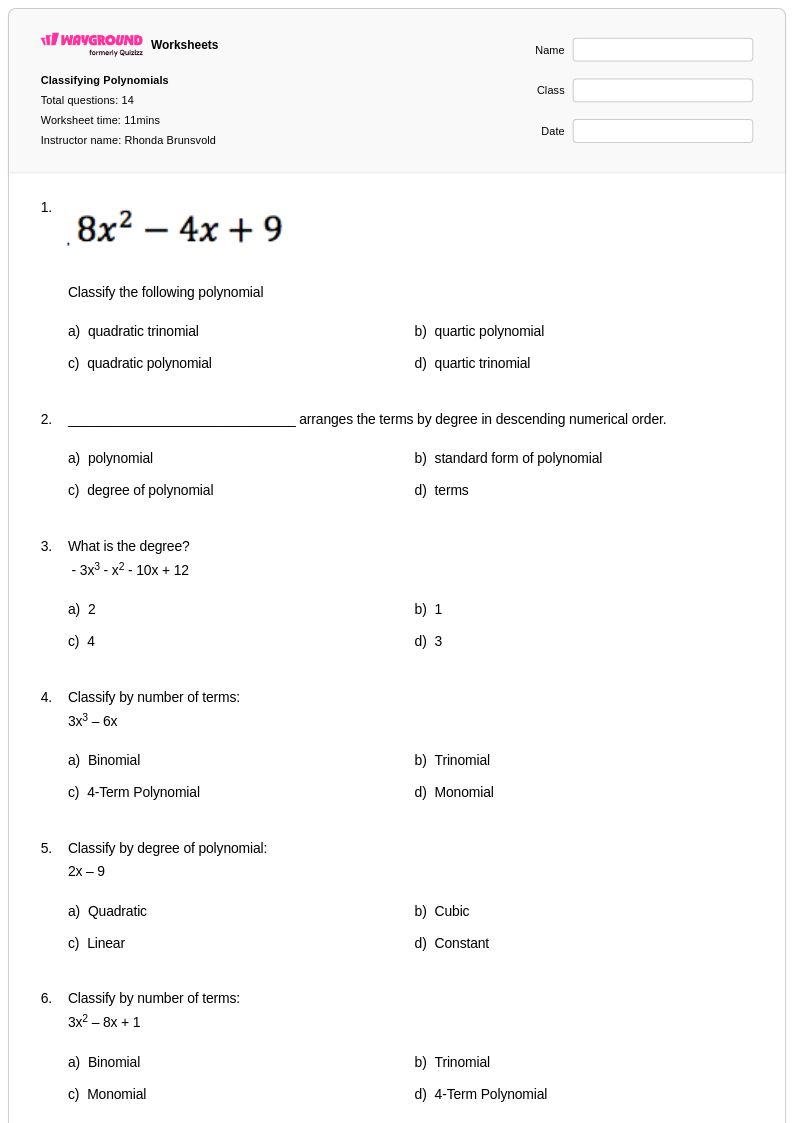
14 Q
8th
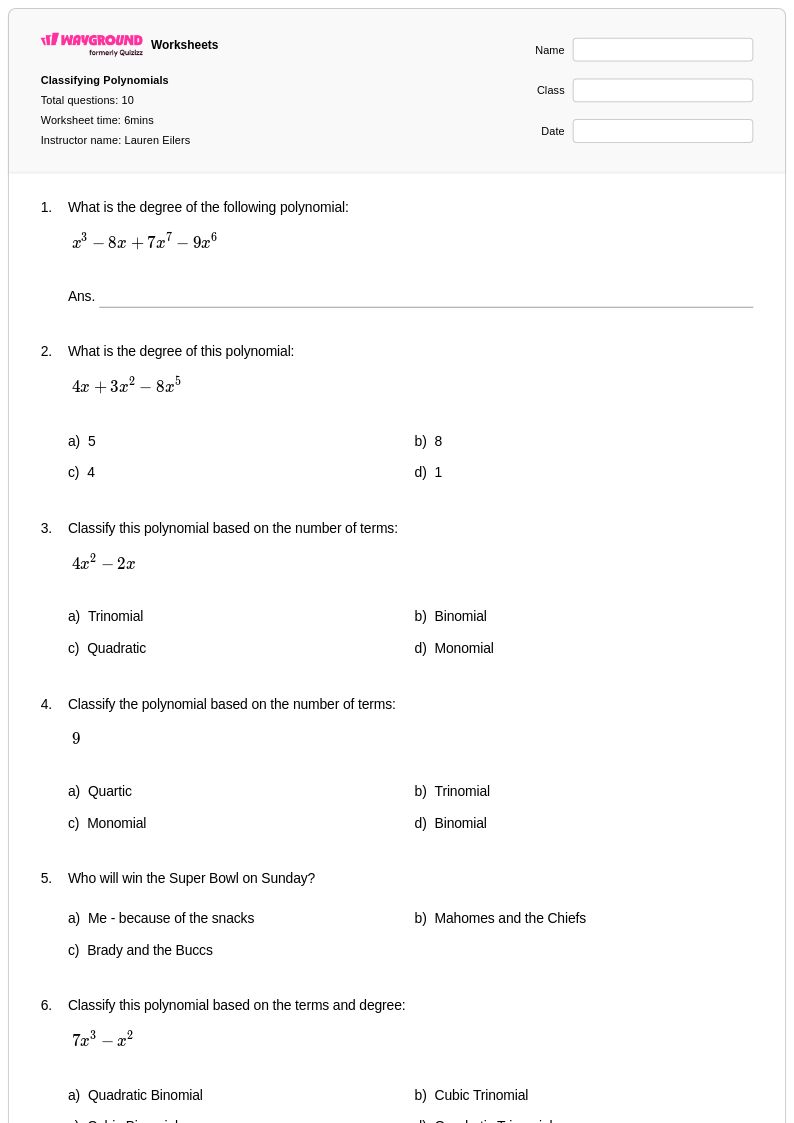
10 Q
8th - 9th
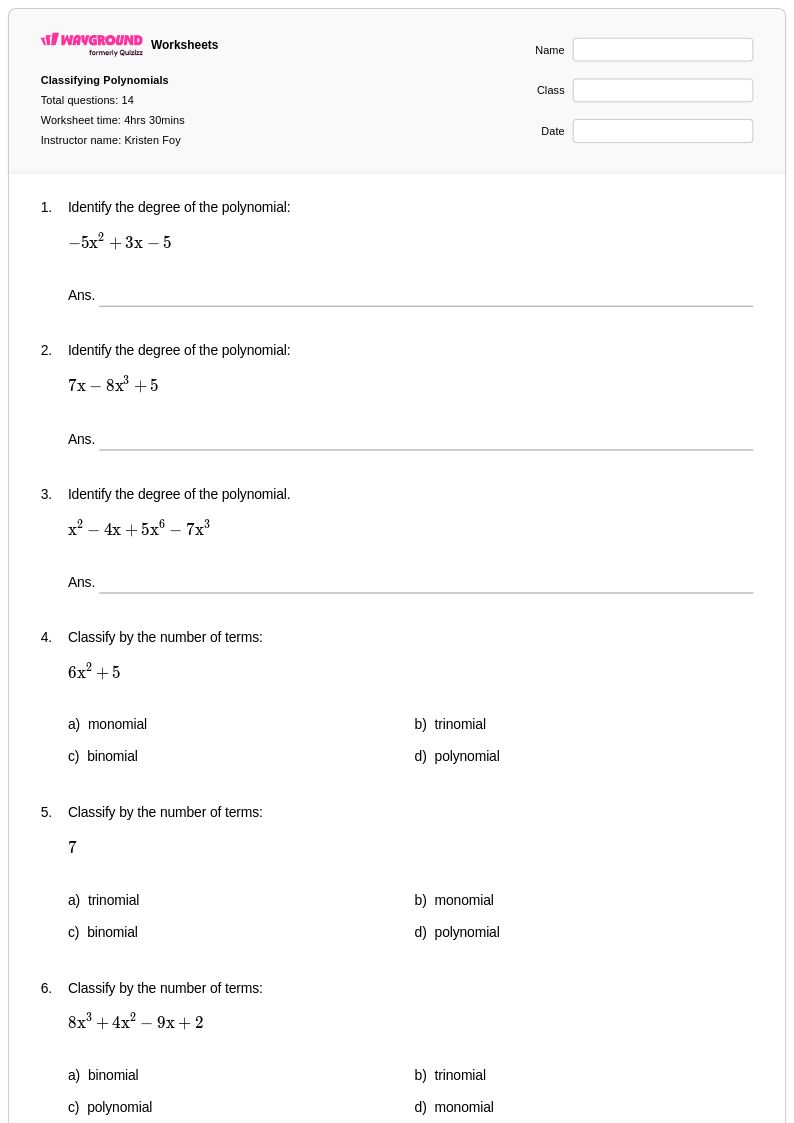
14 Q
7th - 11th
16 Q
8th - 10th
16 Q
8th - 9th
18 Q
8th
22 Q
8th
15 Q
8th
16 Q
8th - 10th
10 Q
8th
9 Q
8th
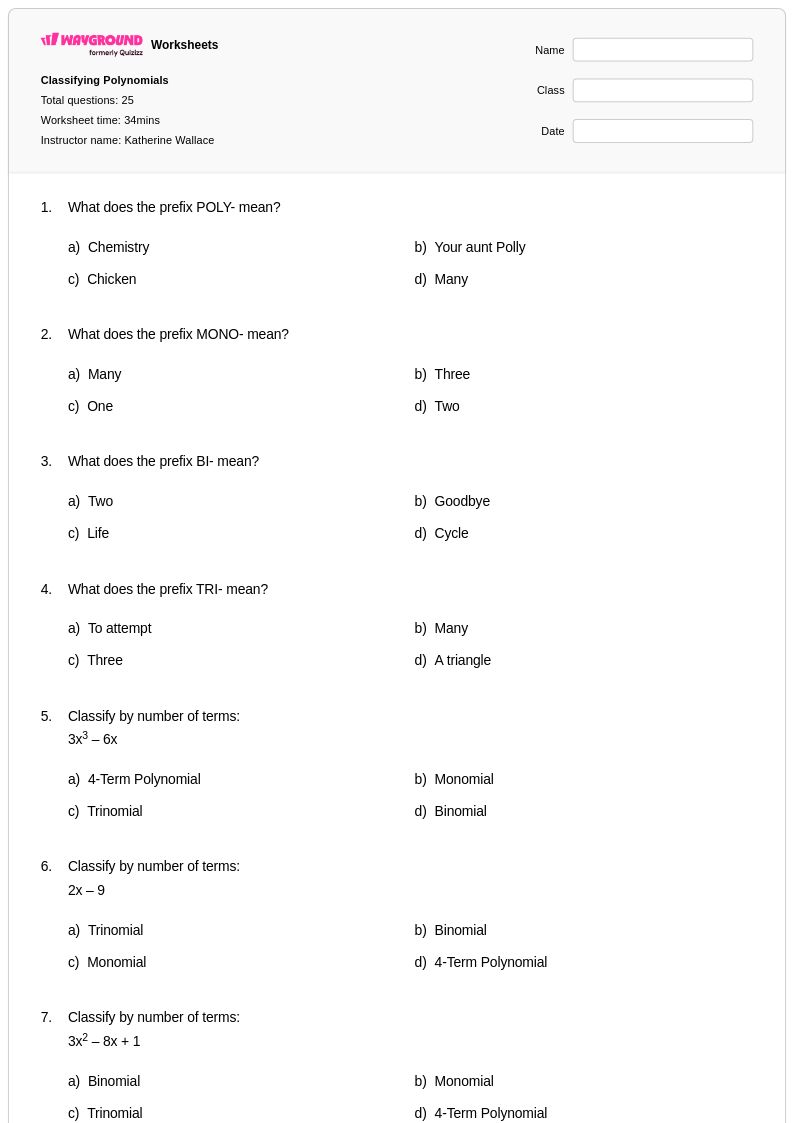
25 Q
8th - 9th
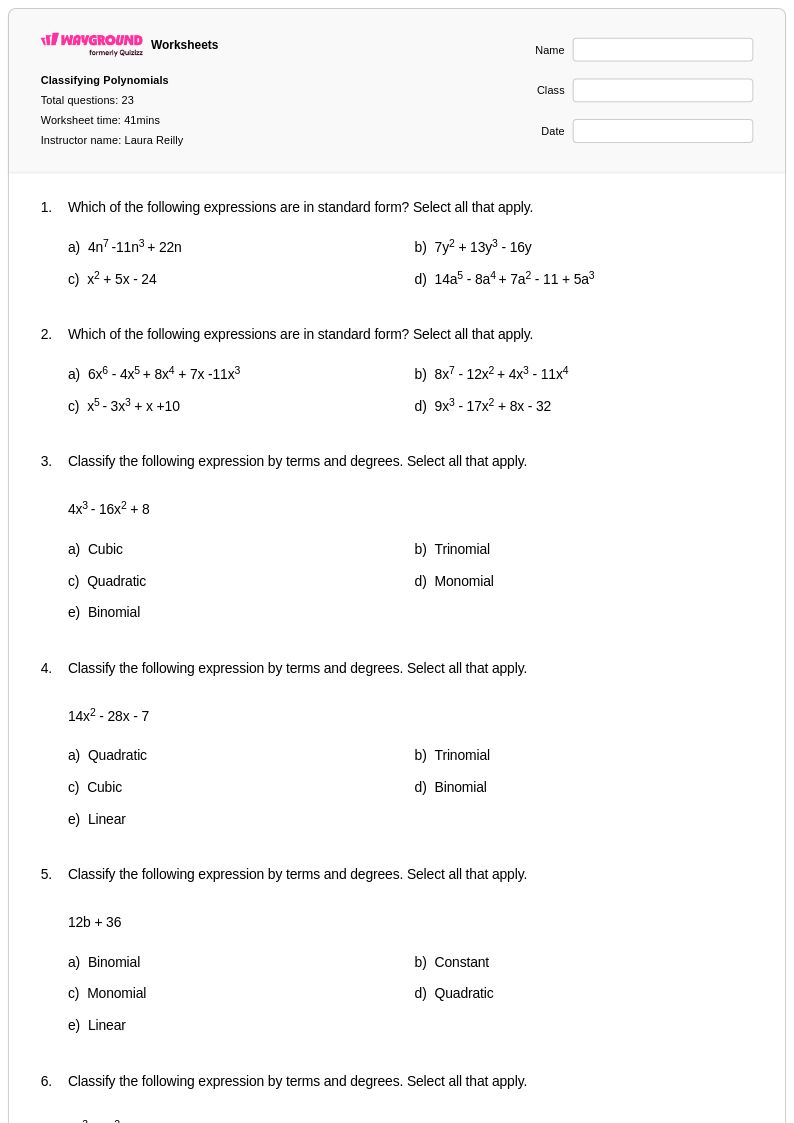
23 Q
8th - 9th
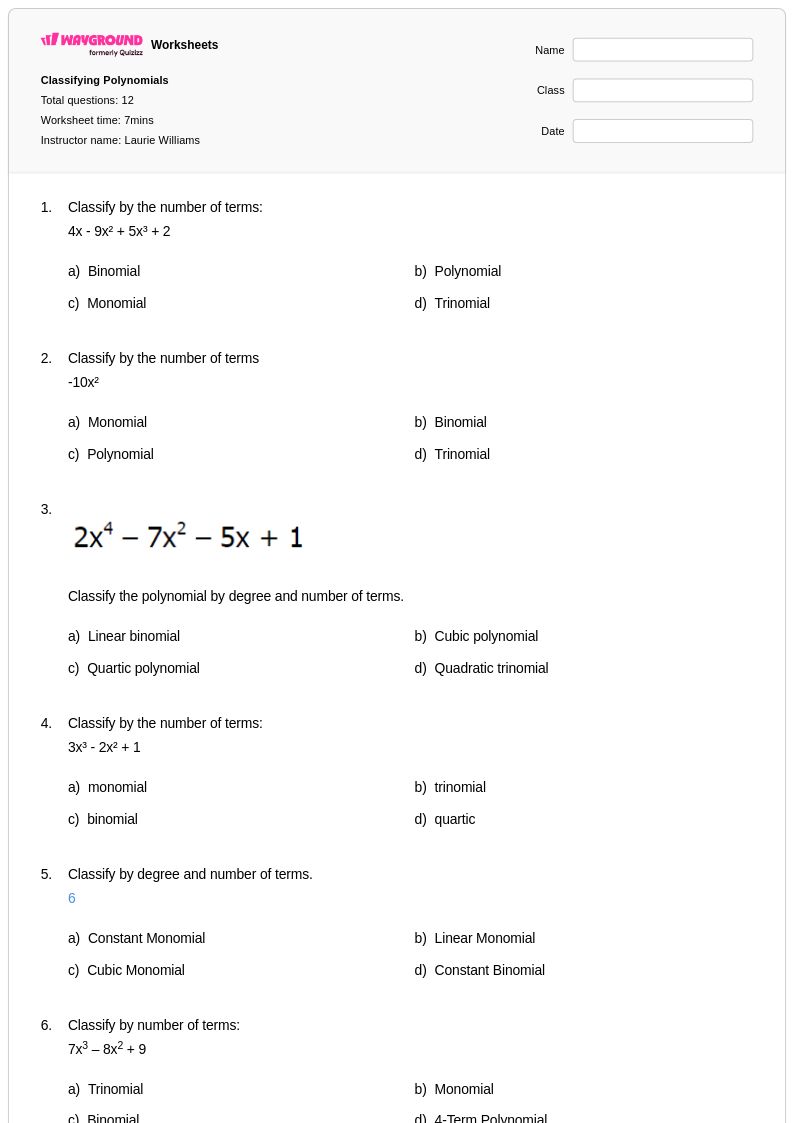
12 Q
KG - Uni
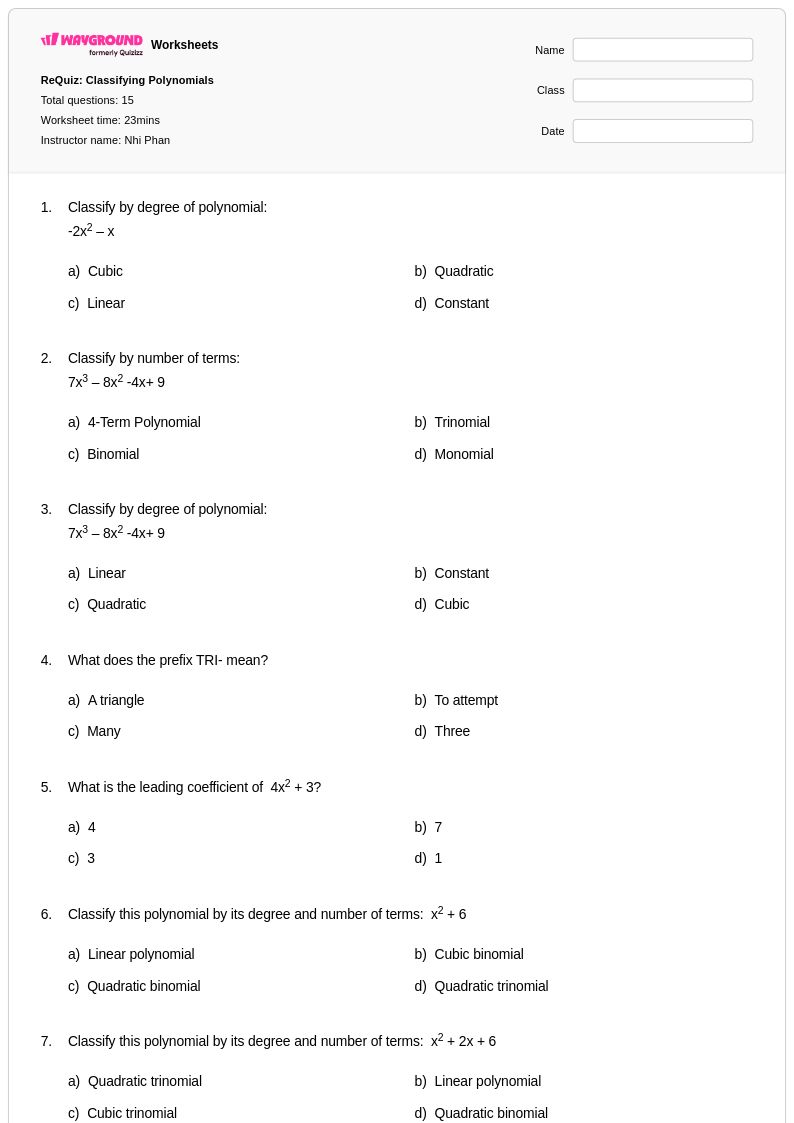
15 Q
7th - 9th
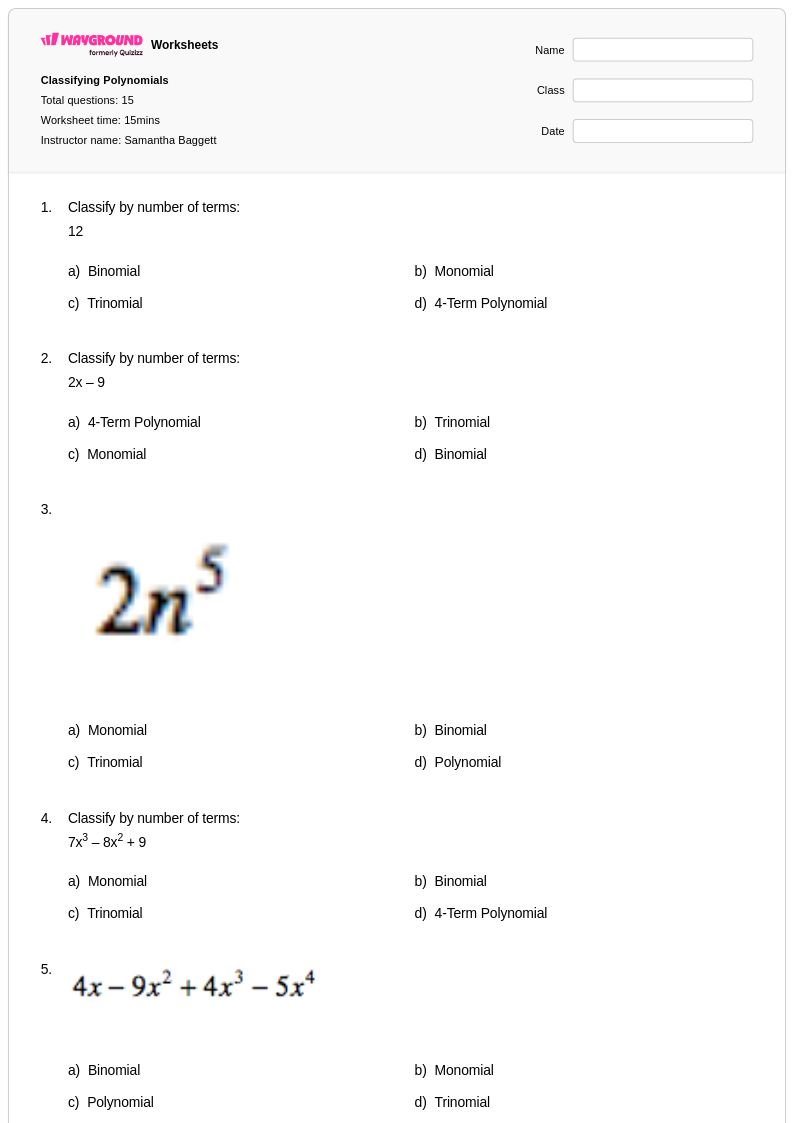
15 Q
8th - 9th
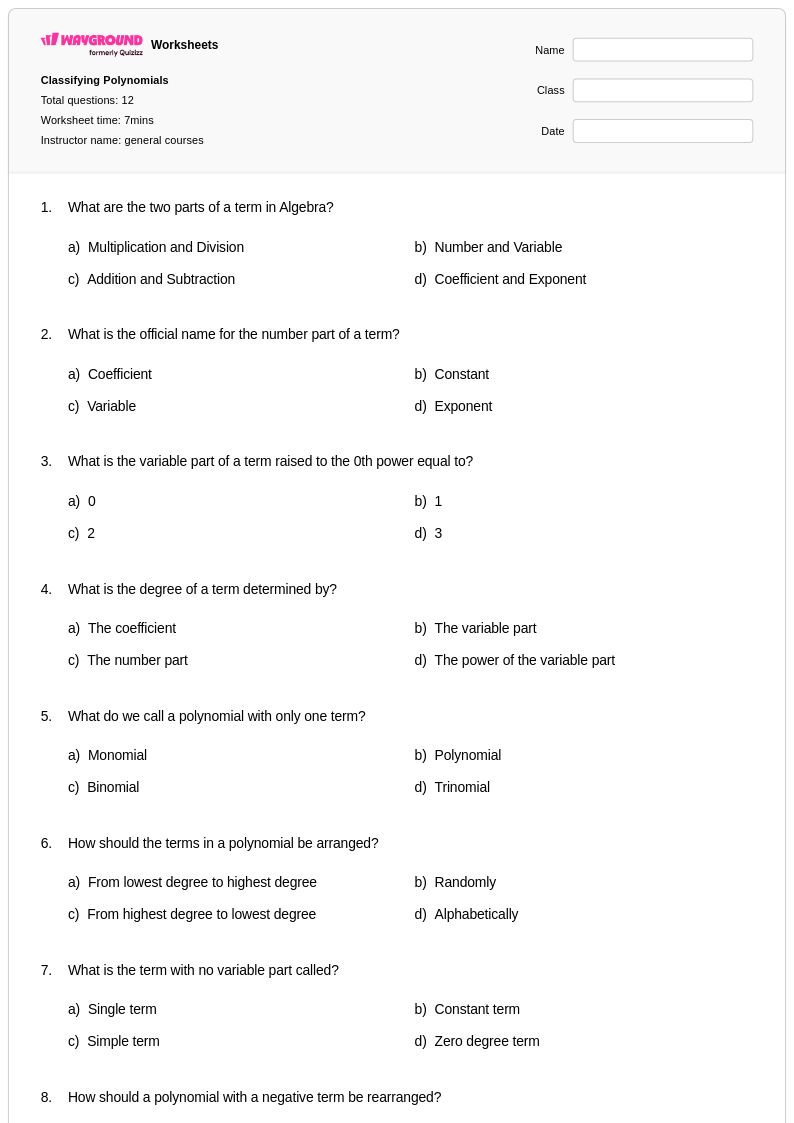
12 Q
8th
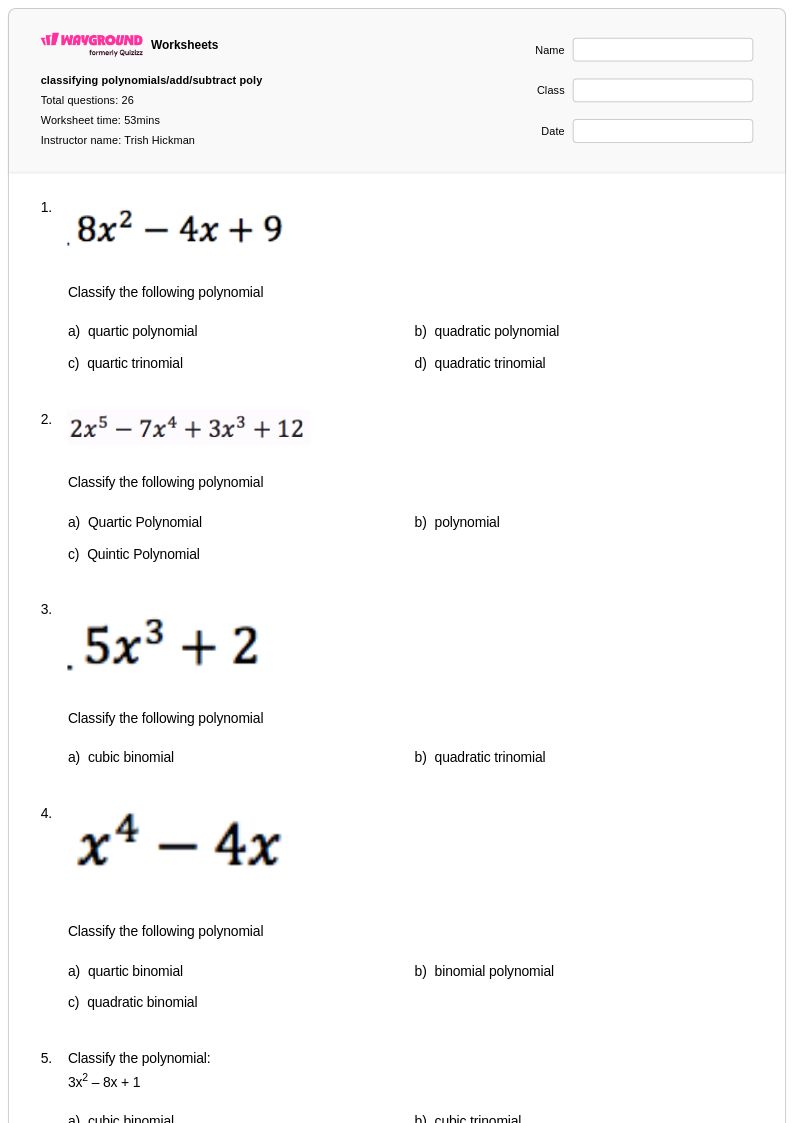
26 Q
8th
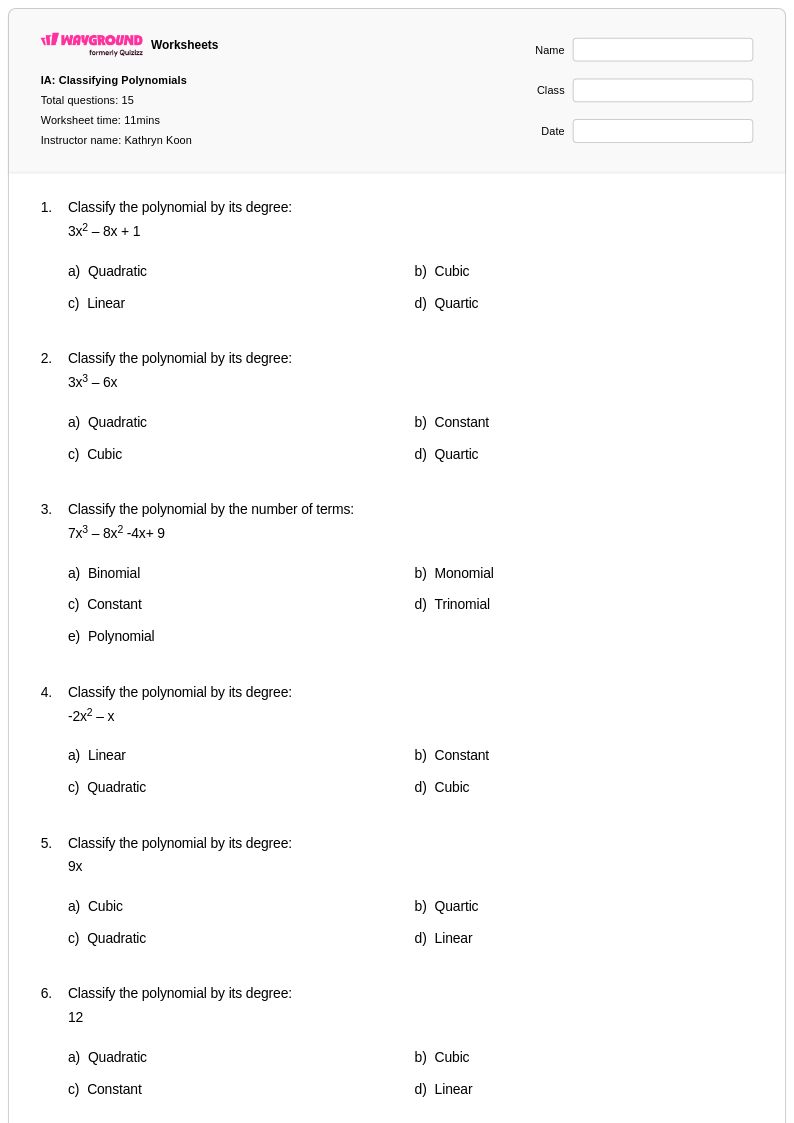
15 Q
8th
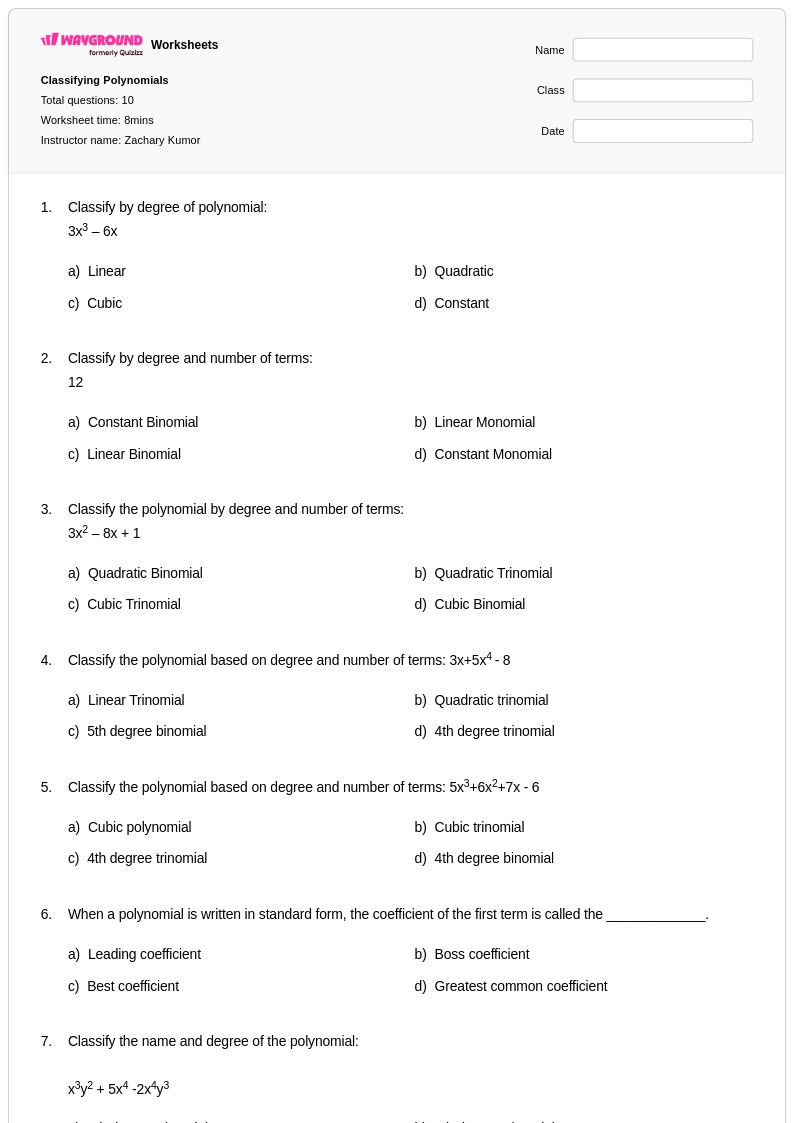
10 Q
8th - 10th
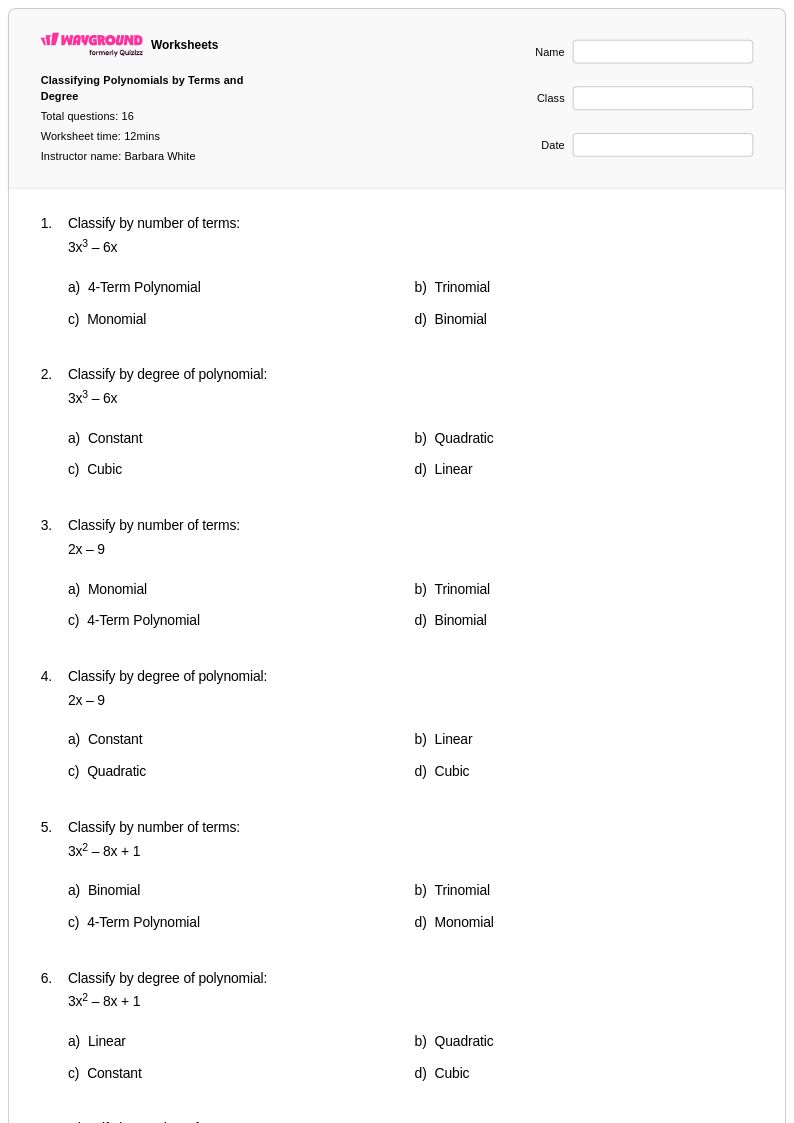
16 Q
7th - 10th
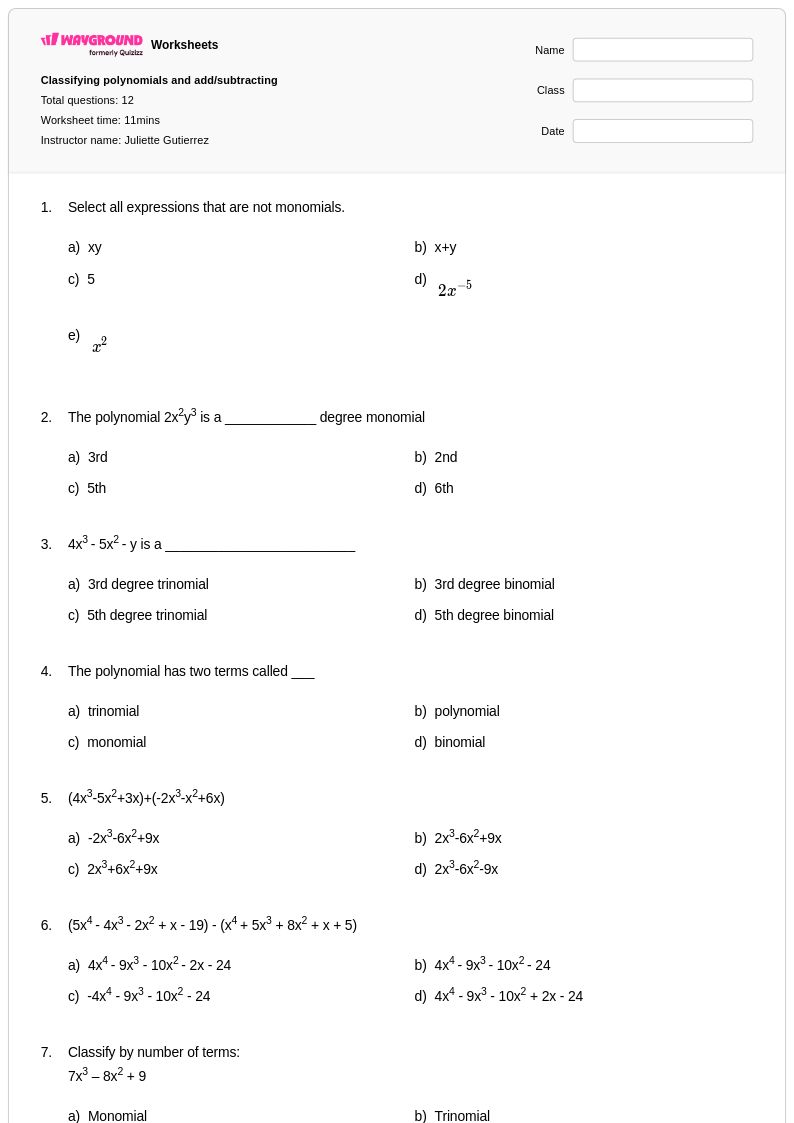
12 Q
8th - 9th
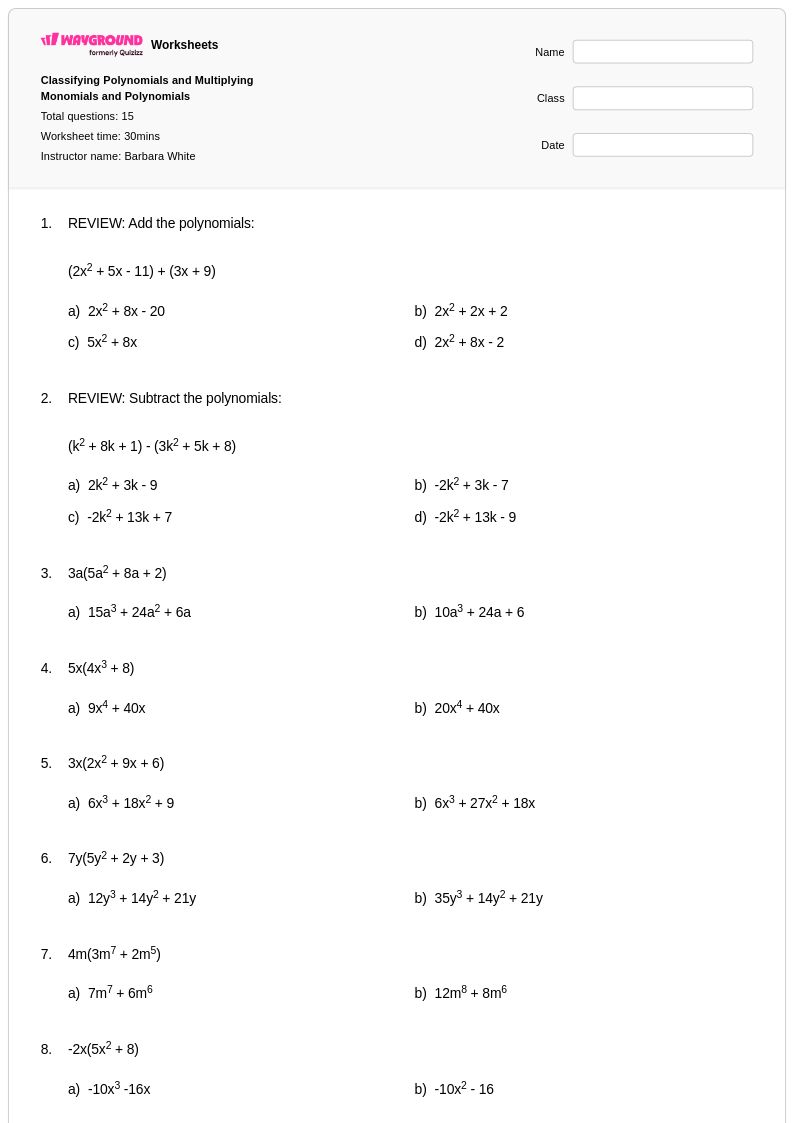
15 Q
7th - 10th
Explore Other Subject Worksheets for year 8
Explore printable Classifying Polynomials worksheets for Year 8
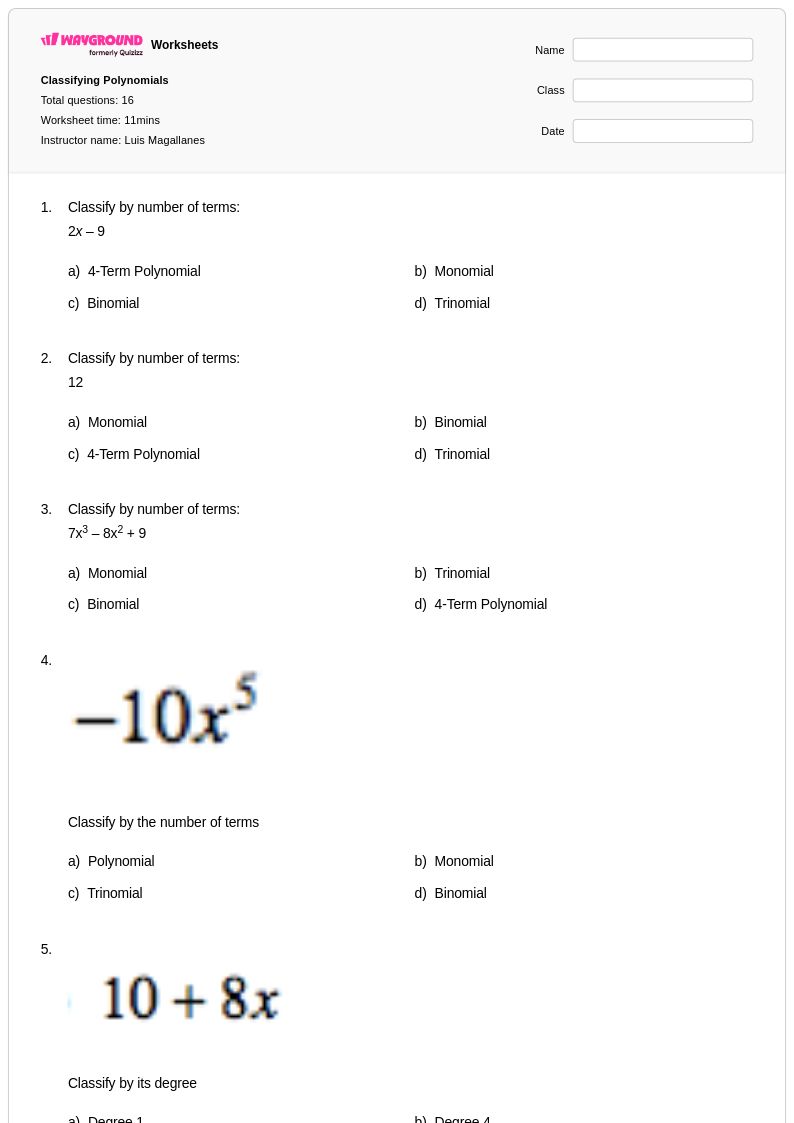
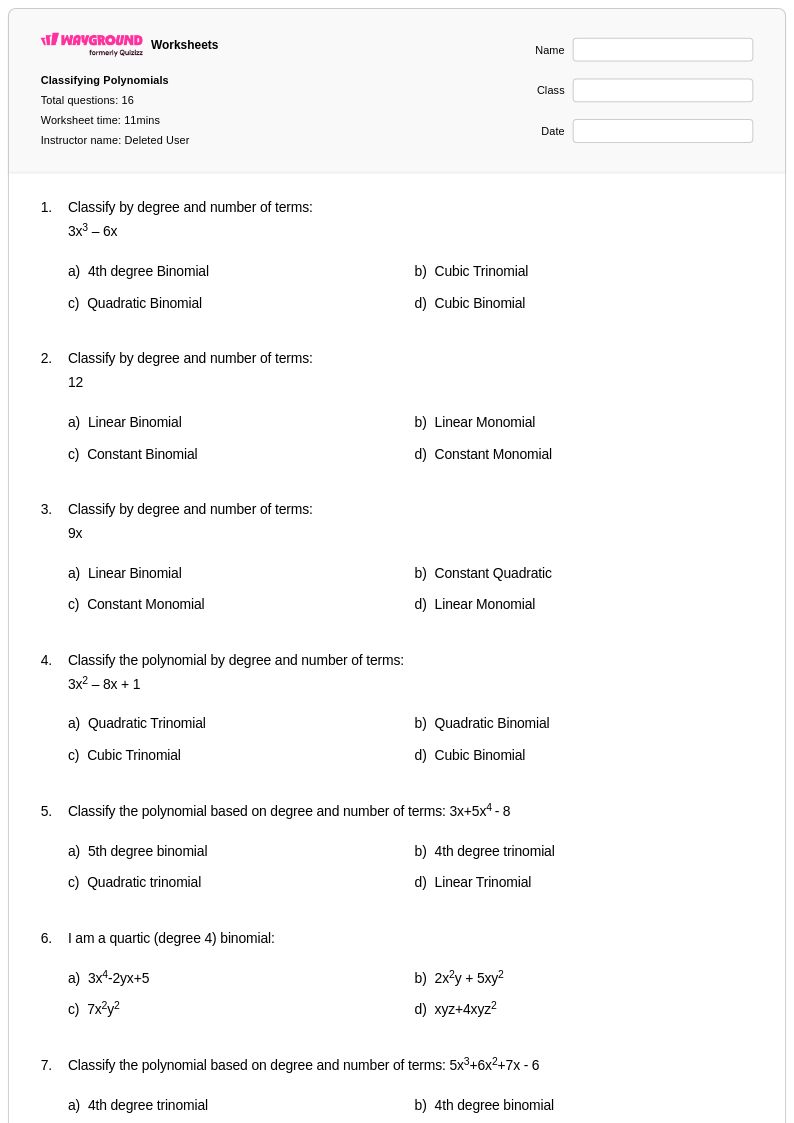
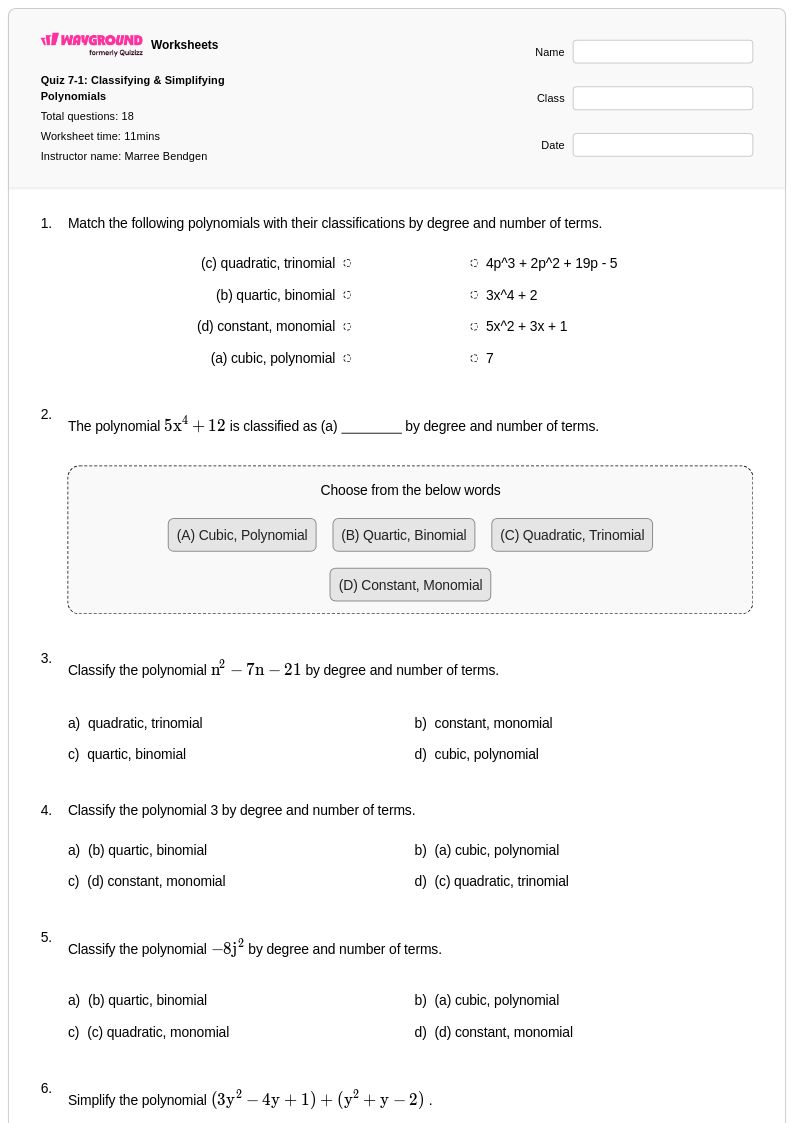
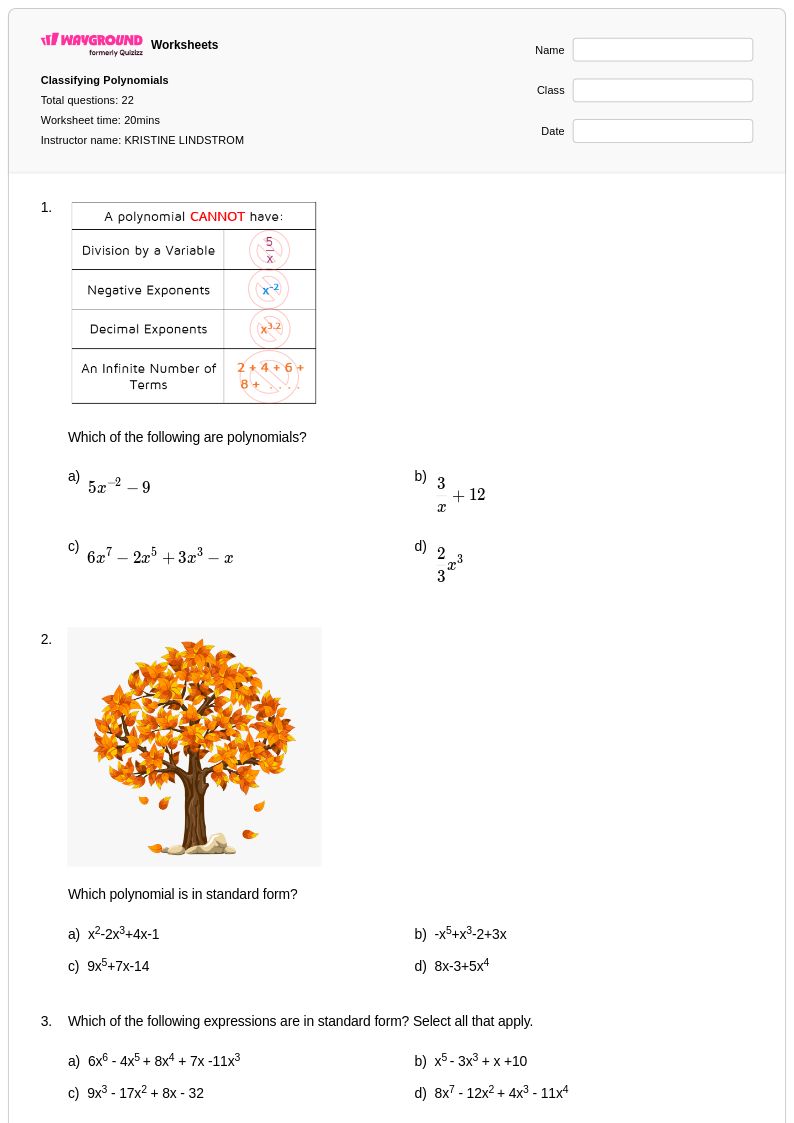
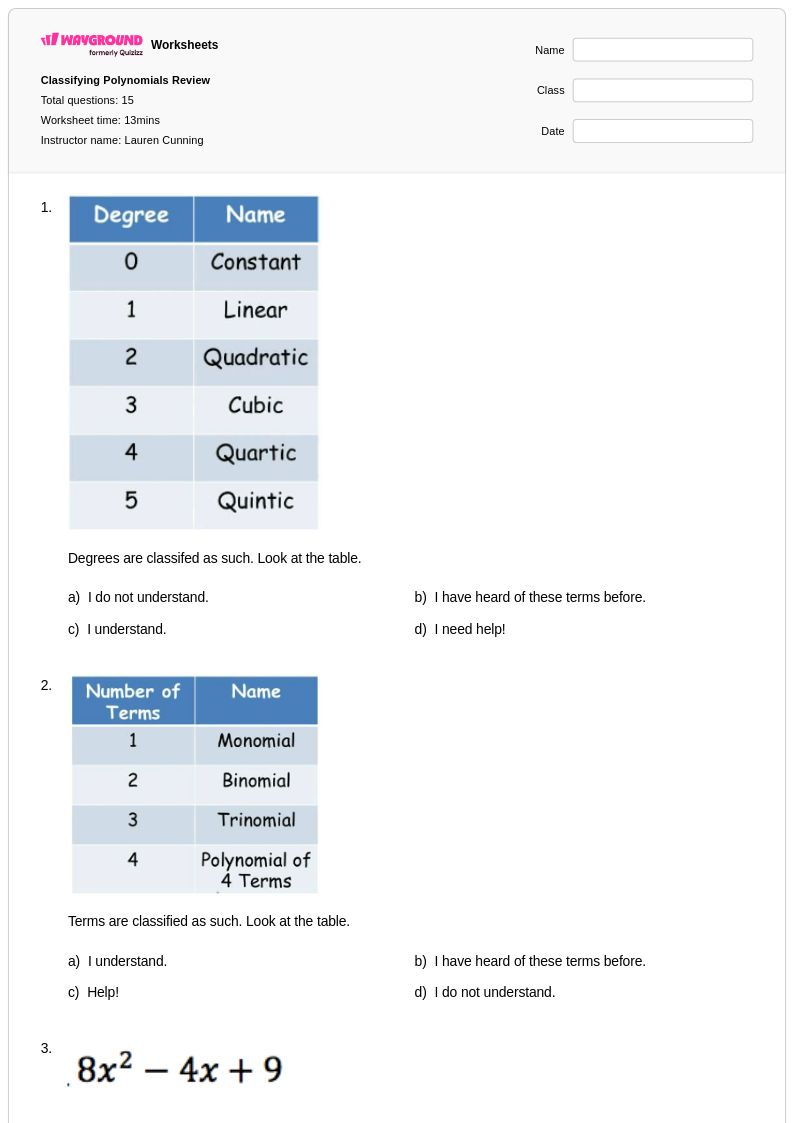
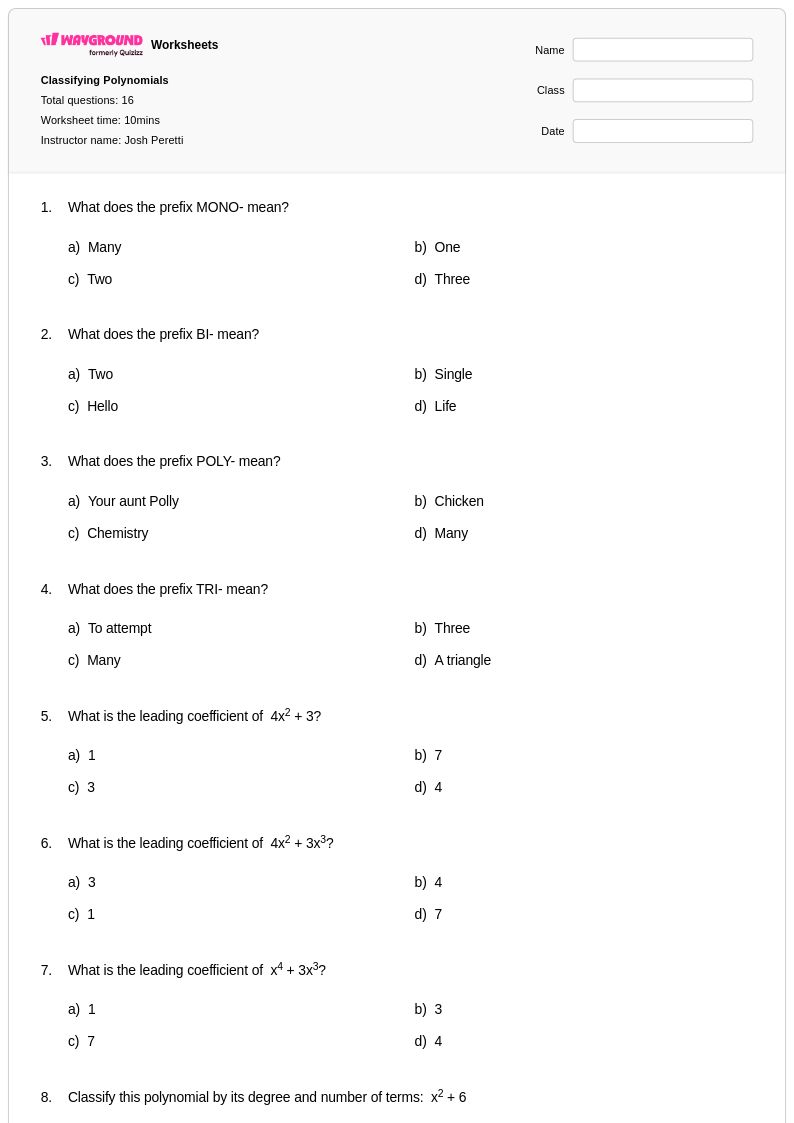
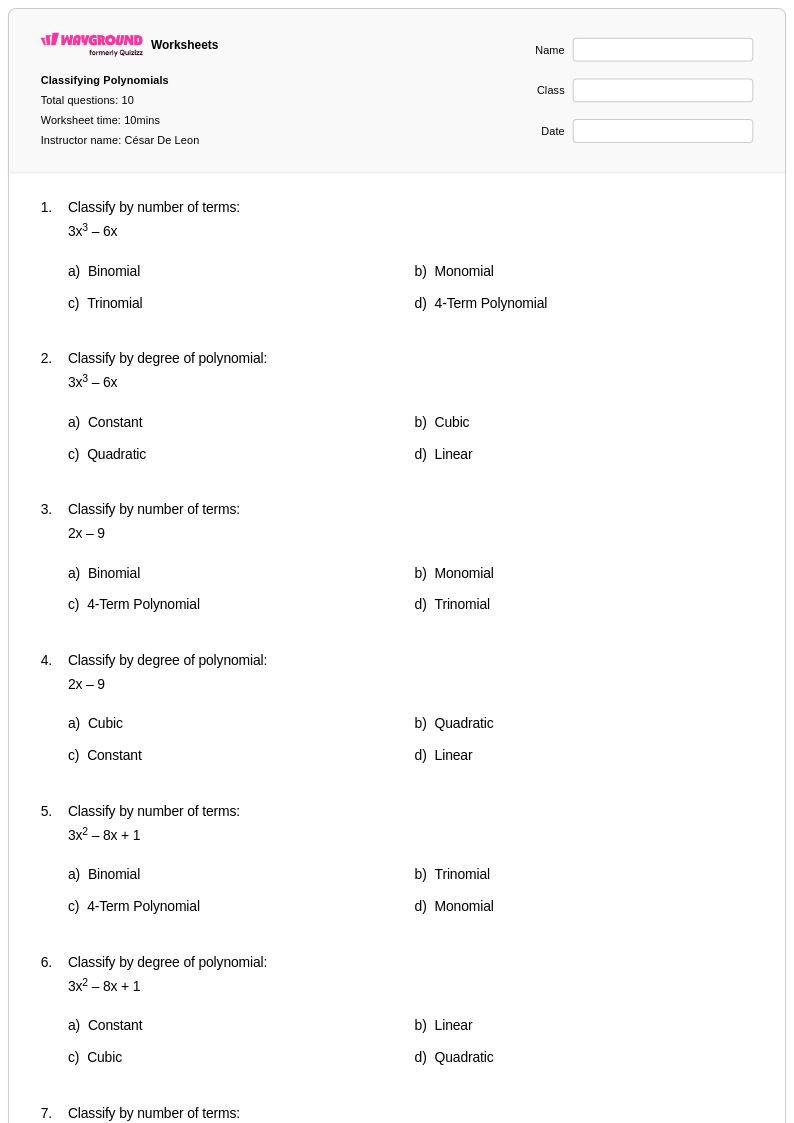
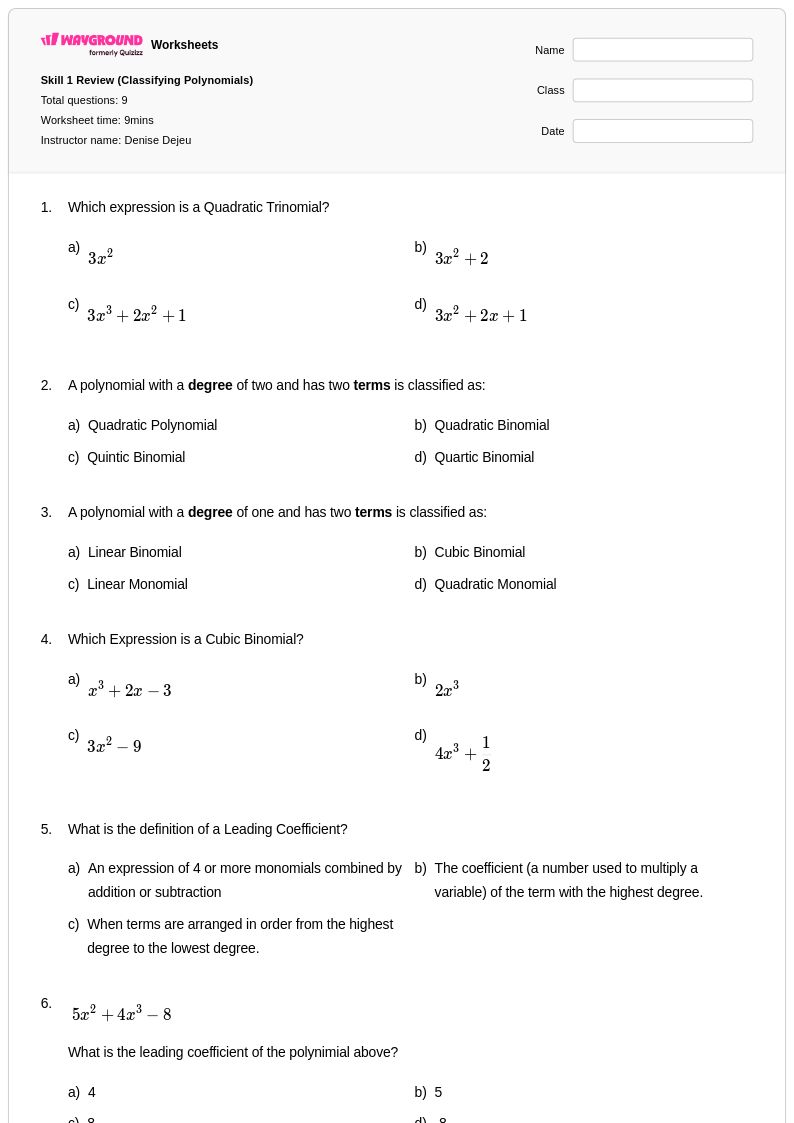
Classifying polynomials represents a fundamental skill in Year 8 algebra that establishes the foundation for advanced mathematical concepts students will encounter throughout their academic journey. Wayground's extensive collection of classifying polynomials worksheets provides comprehensive practice problems that guide eighth-grade students through identifying polynomial types by degree, number of terms, and coefficient patterns. These carefully structured worksheets strengthen critical analytical skills as students learn to distinguish between monomials, binomials, trinomials, and higher-order polynomials while recognizing linear, quadratic, cubic, and quartic expressions. Each worksheet includes detailed answer keys that support independent learning and self-assessment, with free printable pdf formats ensuring accessibility for both classroom instruction and home practice. The systematic approach embedded in these practice materials helps students develop pattern recognition abilities and algebraic reasoning skills essential for success in higher-level mathematics courses.
Wayground's robust platform empowers teachers with millions of educator-created resources specifically designed to support Year 8 algebra instruction, featuring advanced search and filtering capabilities that allow educators to locate precisely the right classifying polynomials materials for their students' needs. The comprehensive worksheet collections align with state and national mathematics standards, providing teachers with confidence that their instructional materials meet rigorous academic requirements while offering built-in differentiation tools to accommodate diverse learning styles and ability levels. Teachers can seamlessly customize existing worksheets or create entirely new materials using the platform's flexible design features, with resources available in both digital and printable pdf formats to support various classroom environments and teaching preferences. These versatile tools streamline lesson planning while providing targeted options for remediation, enrichment, and ongoing skill practice, enabling educators to address individual student needs and ensure mastery of polynomial classification concepts before progressing to more complex algebraic topics.
FAQs
How do I teach classifying polynomials in Grade 8?
What exercises help Grade 8 students practice classifying polynomials?
What mistakes do Grade 8 students make when classifying polynomials?
How can I use a Grade 8 classifying polynomials worksheet from Wayground?
How does classifying polynomials support the Grade 8 Common Core math progression?
How can I differentiate a Grade 8 classifying polynomials worksheet?
What polynomial classifications should Grade 8 students recognize?