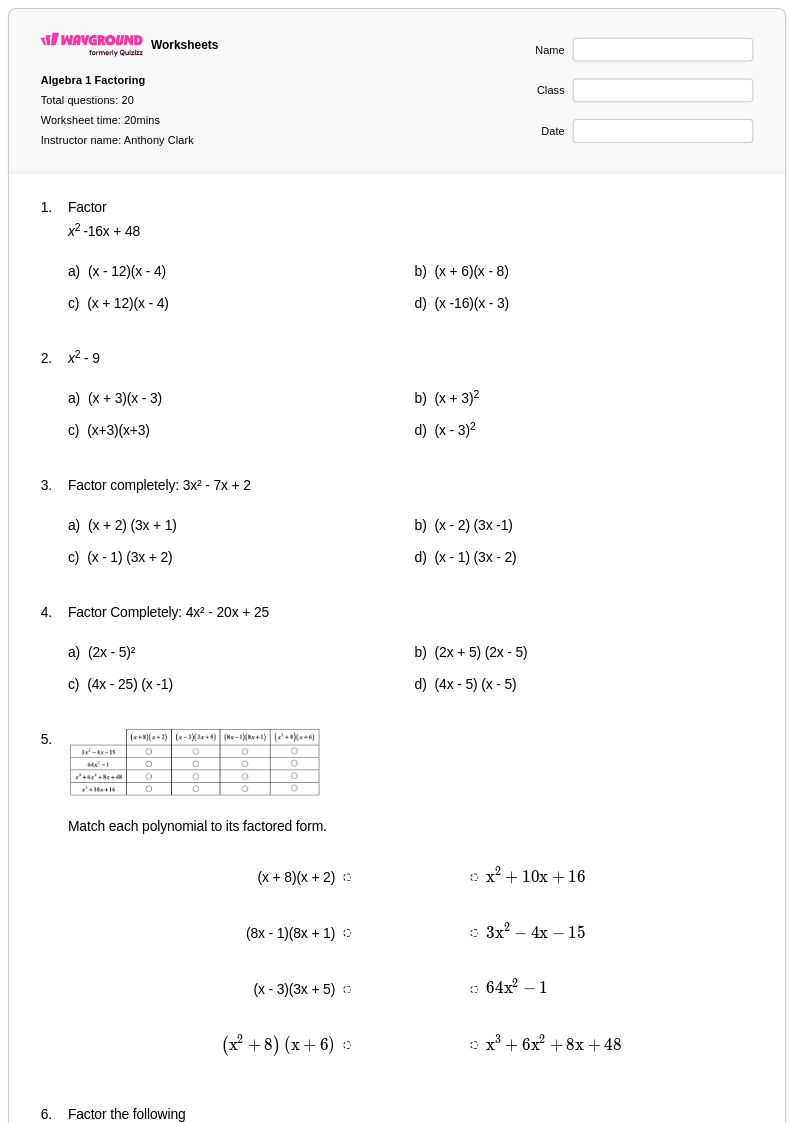
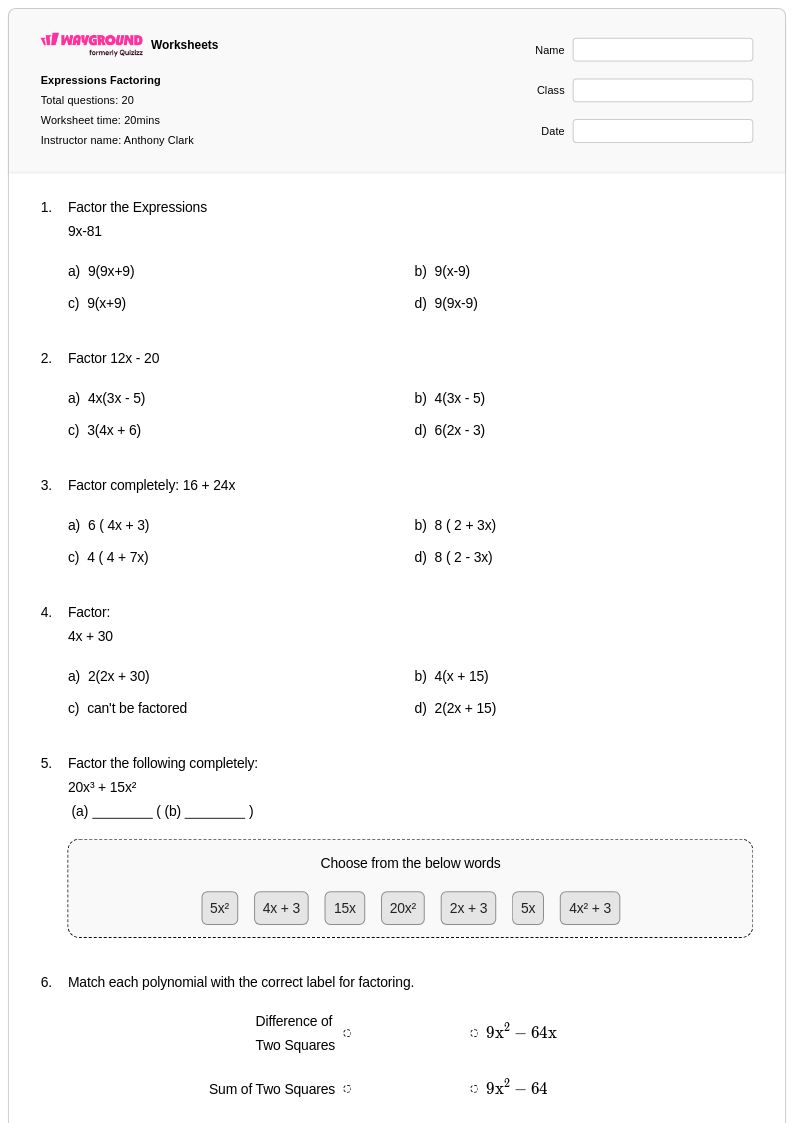
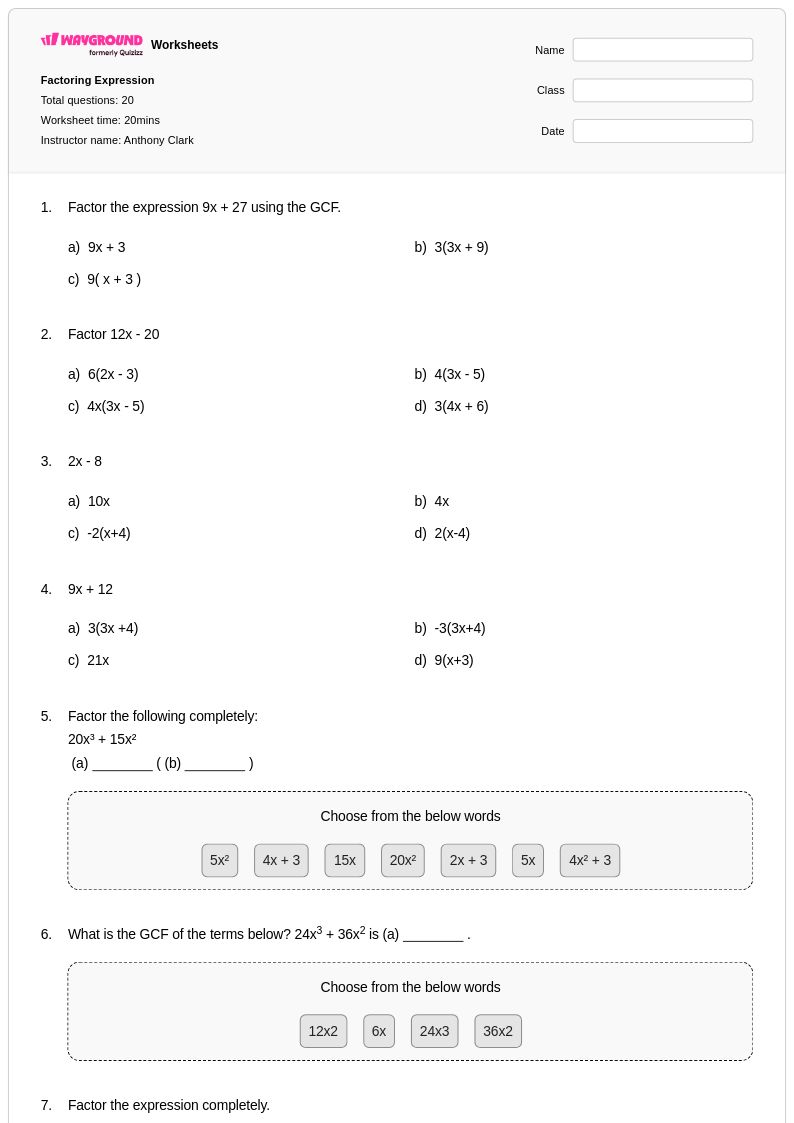
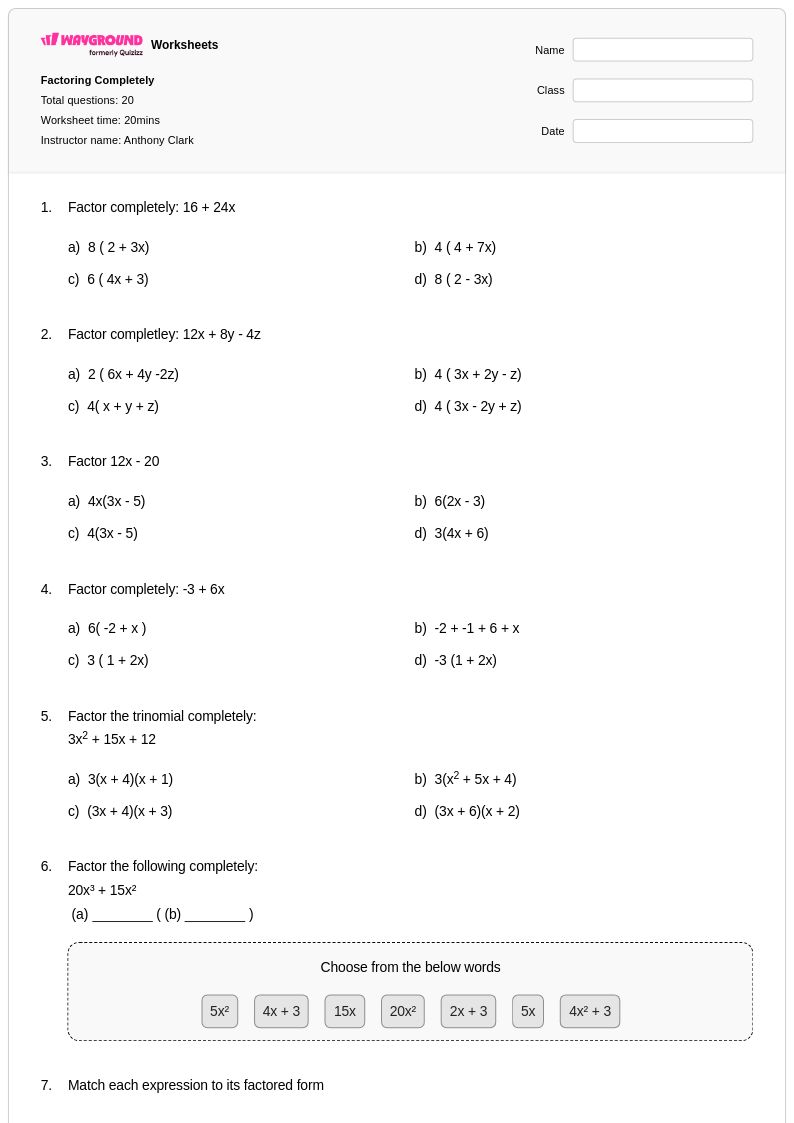
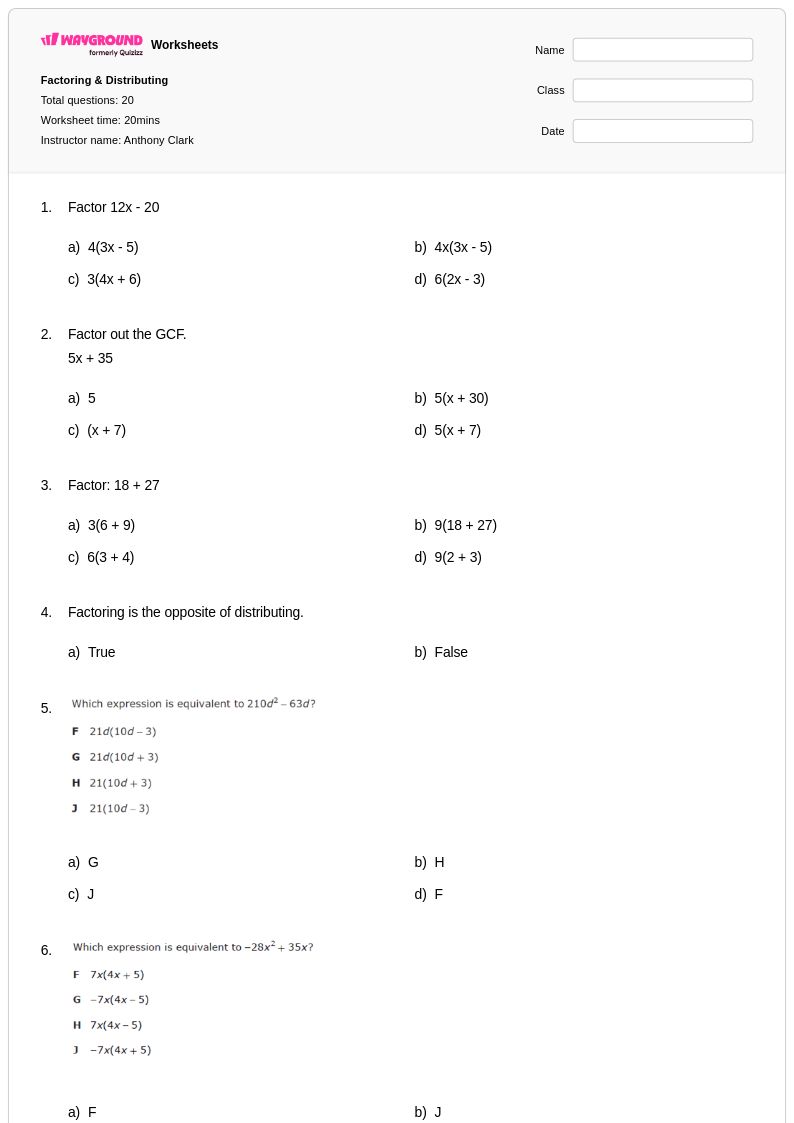
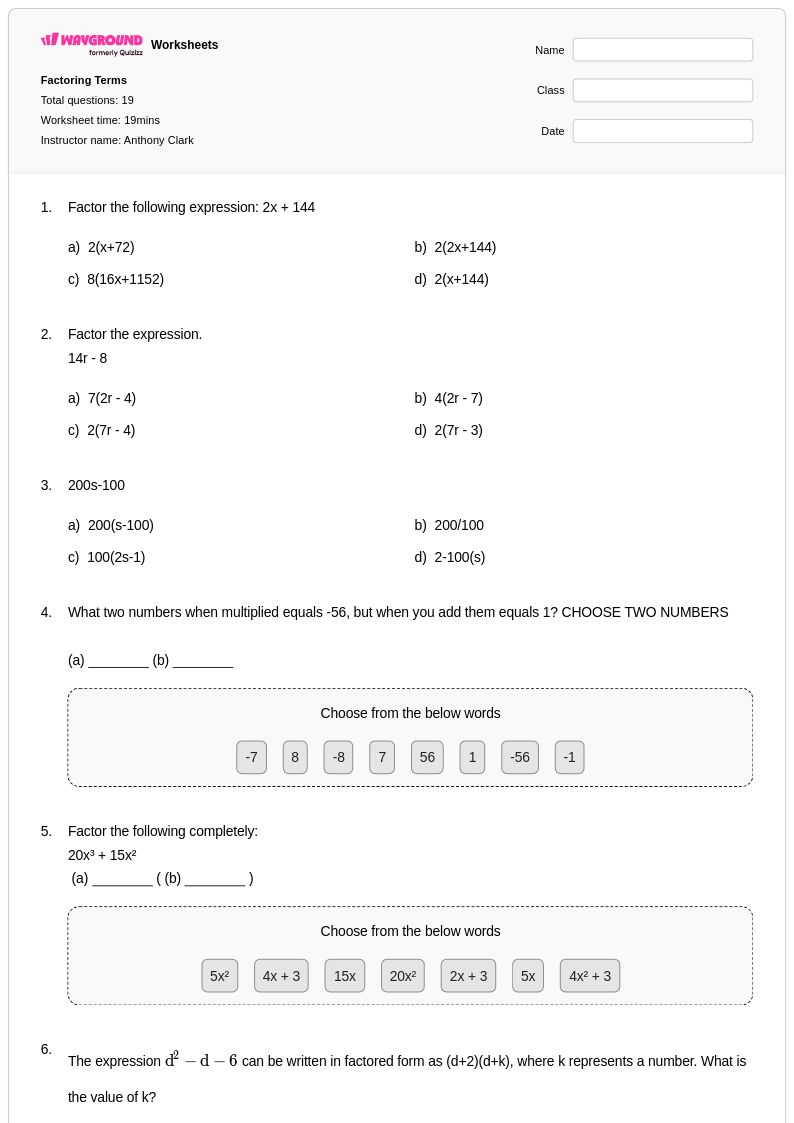
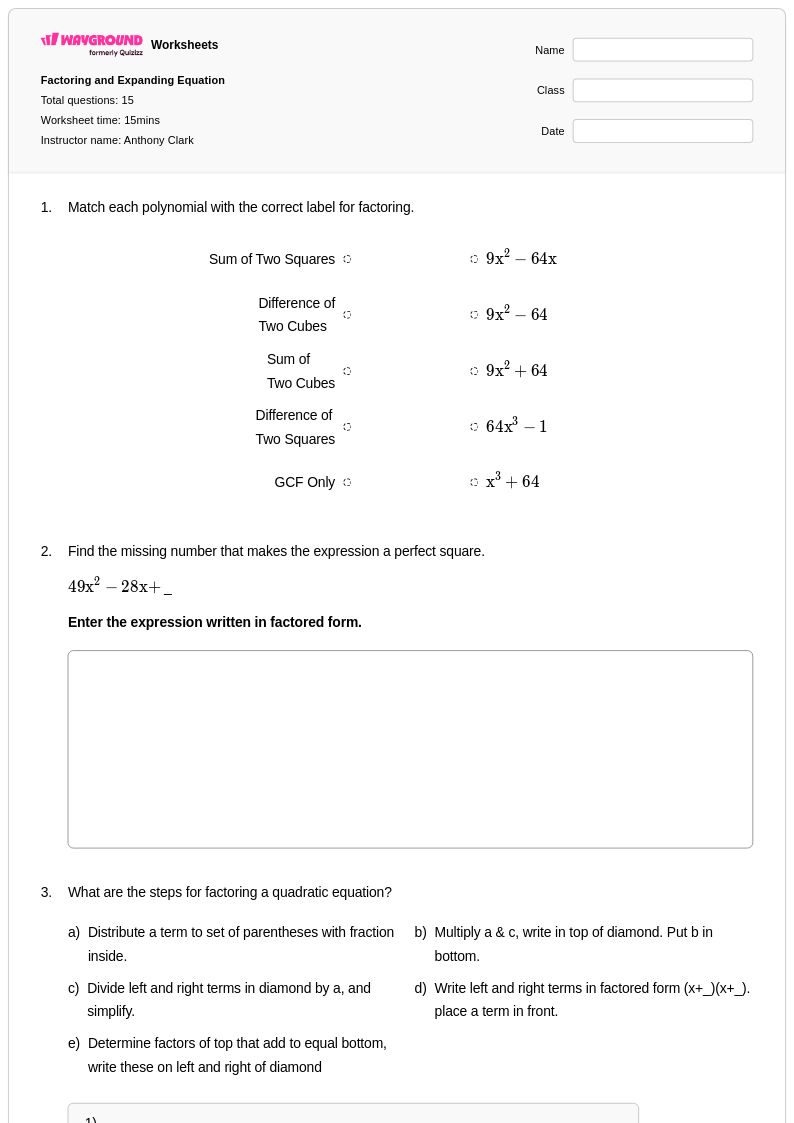
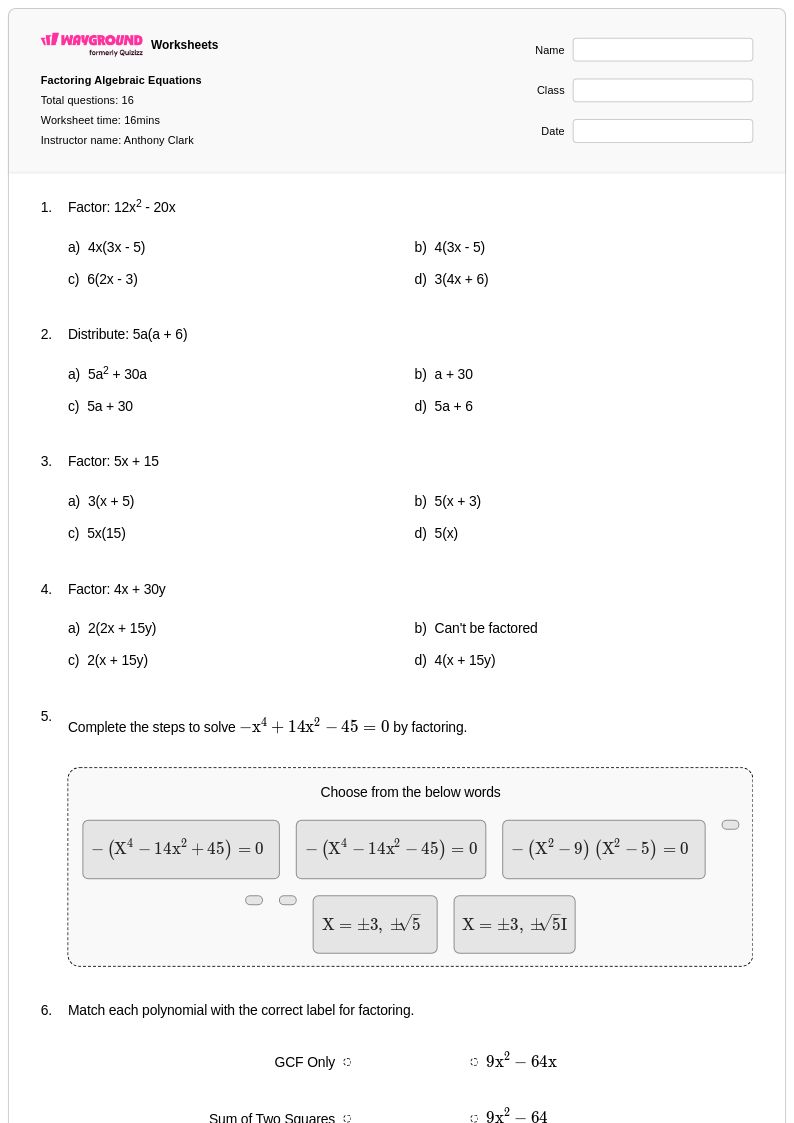
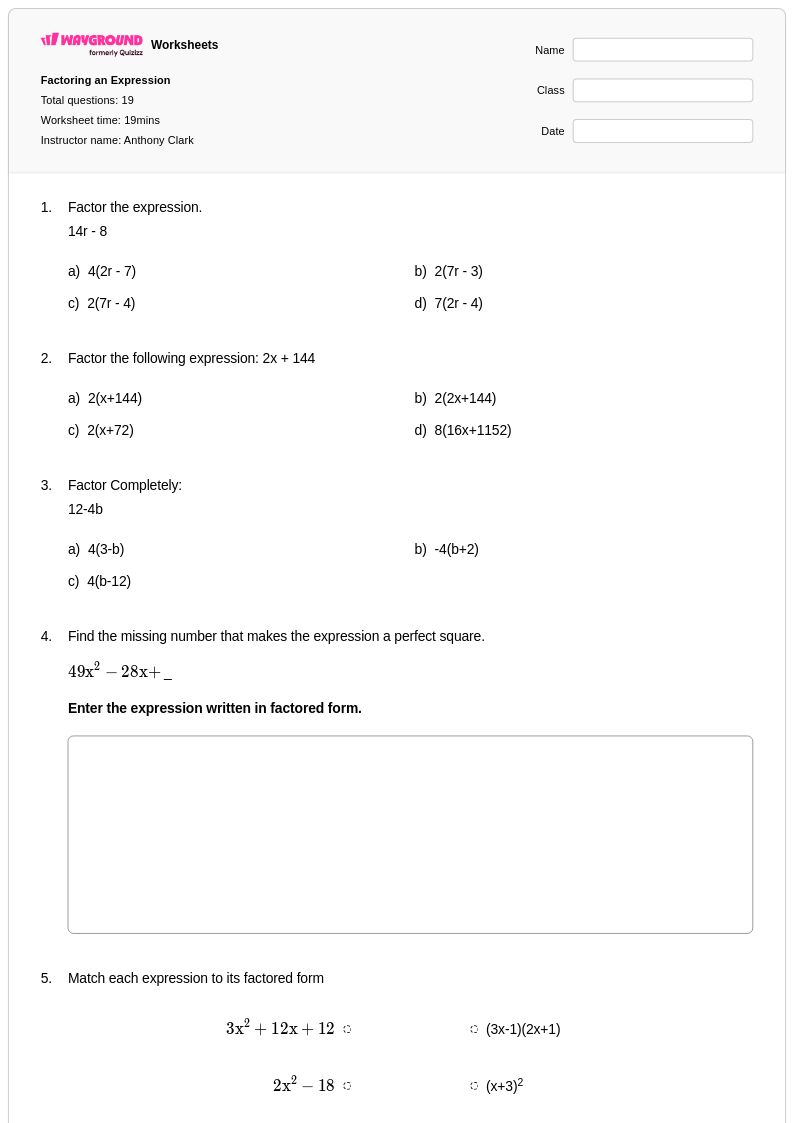
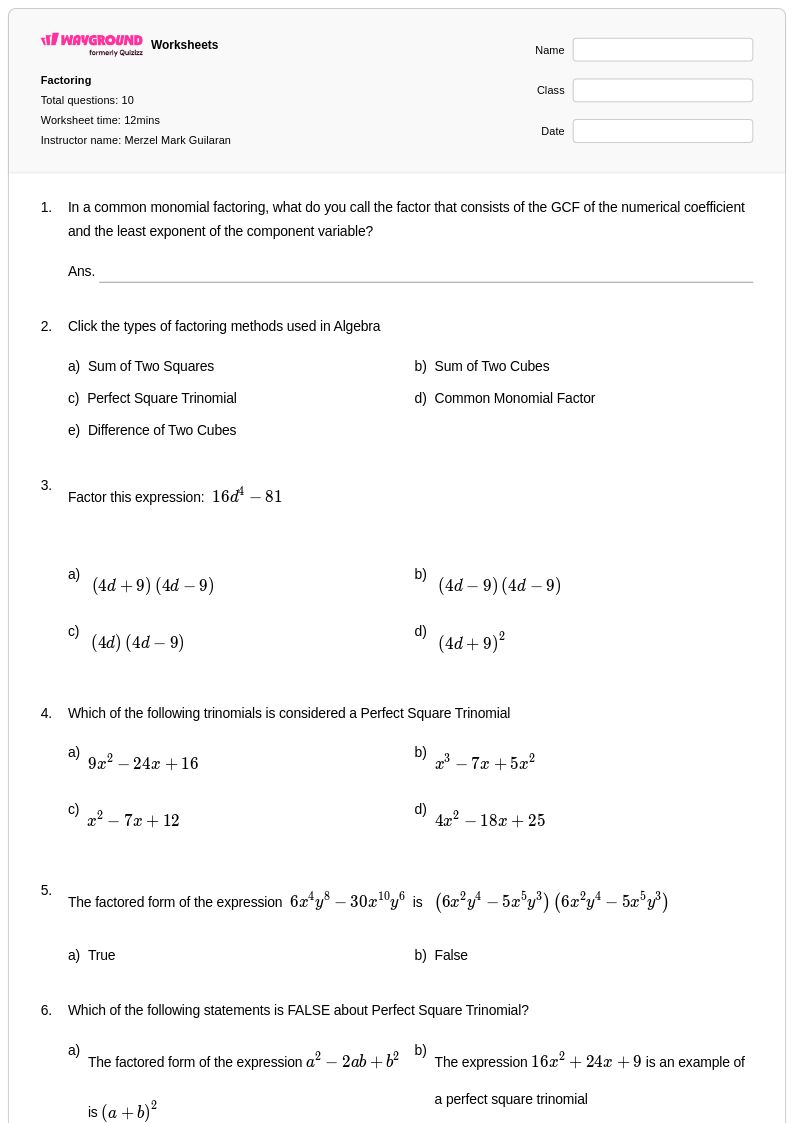
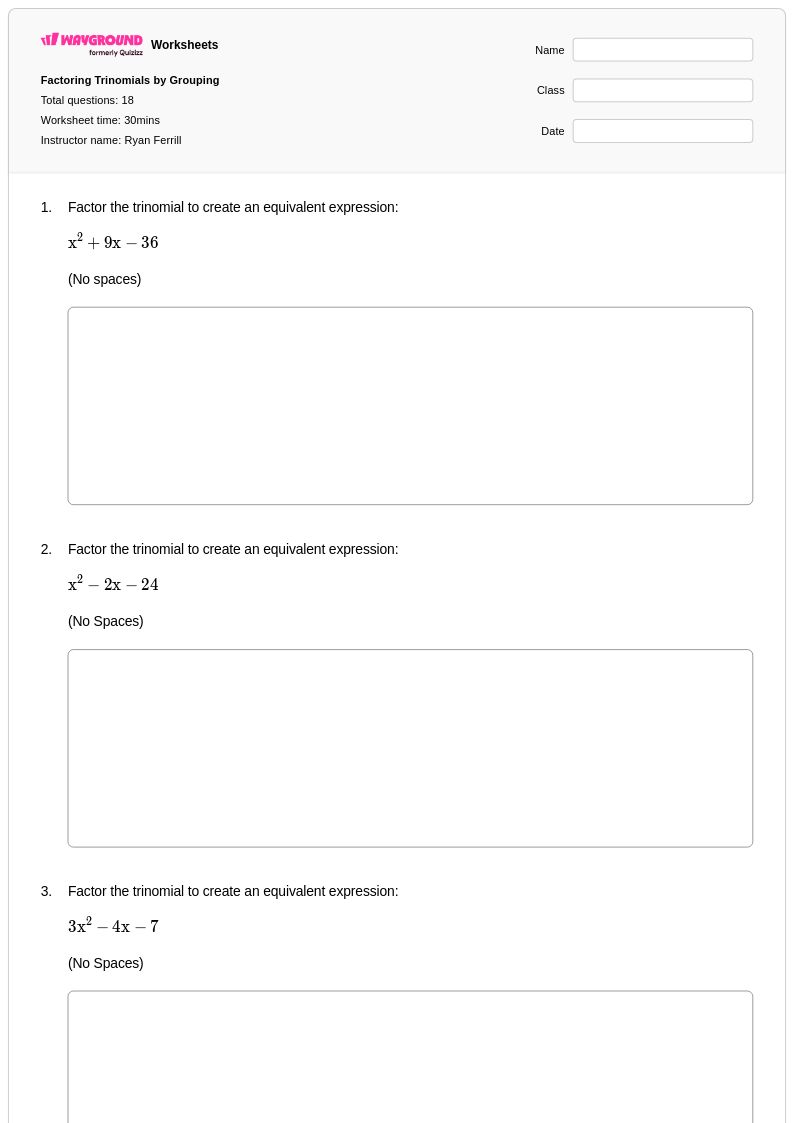
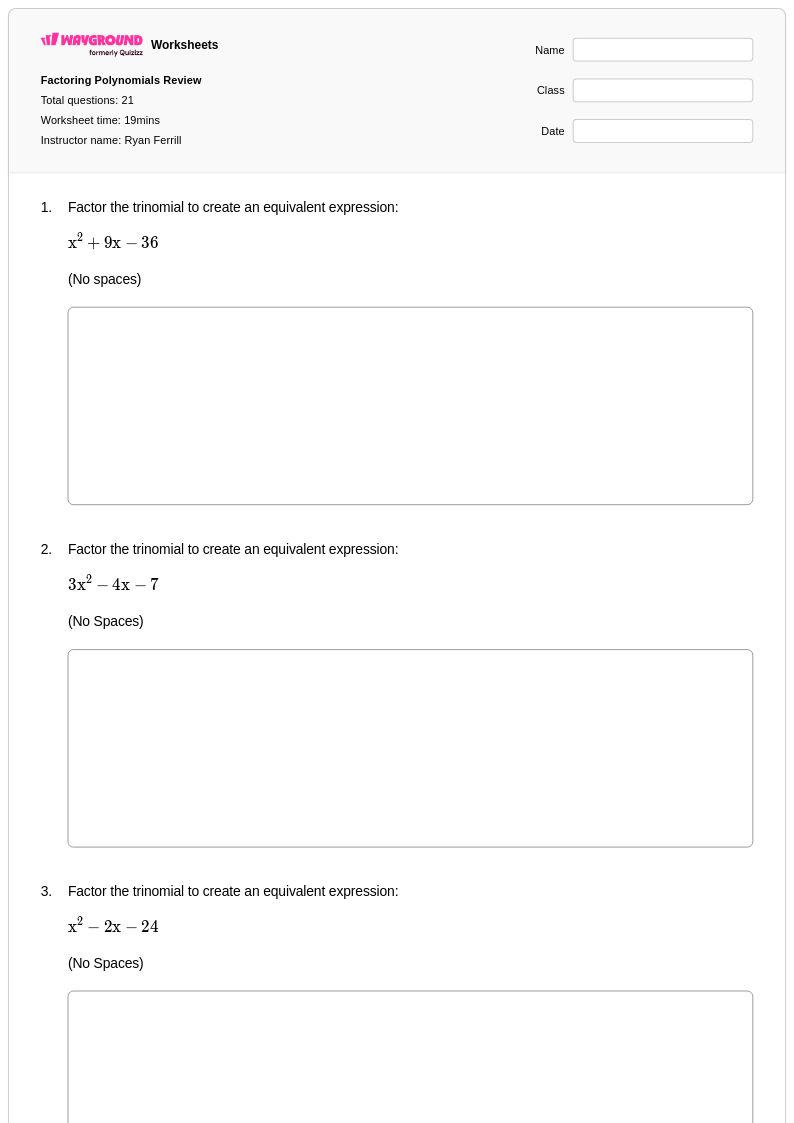
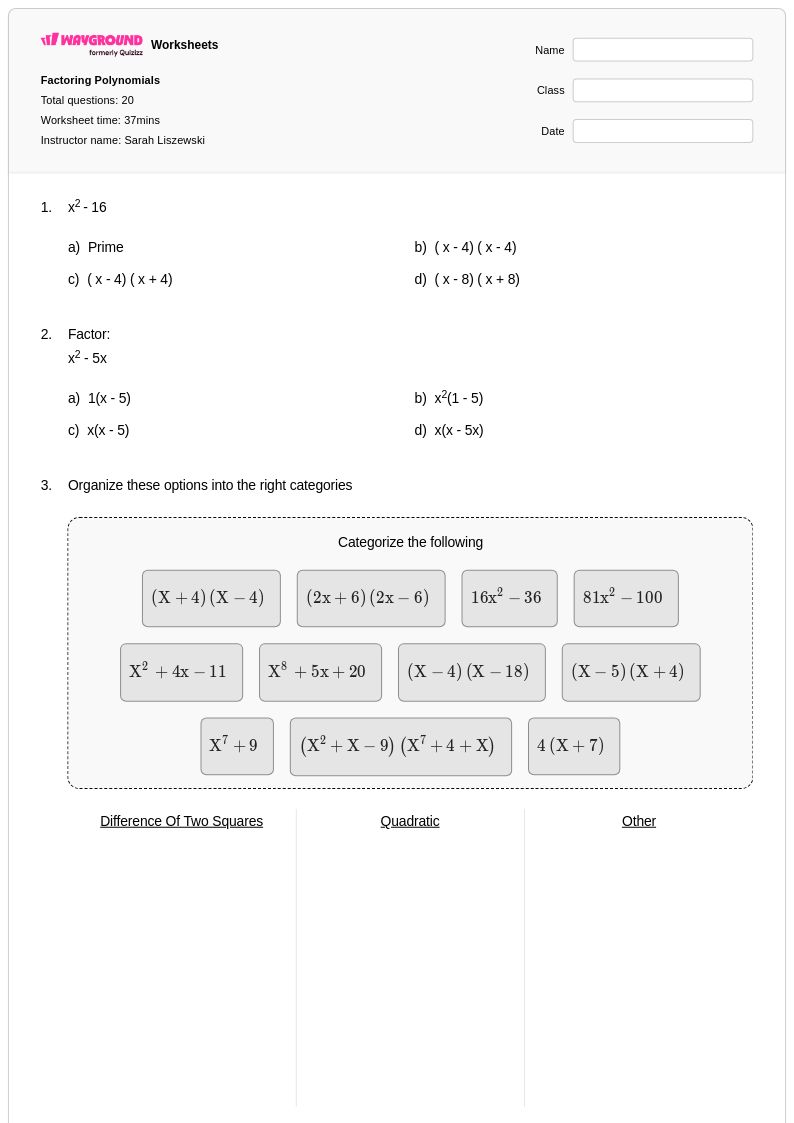
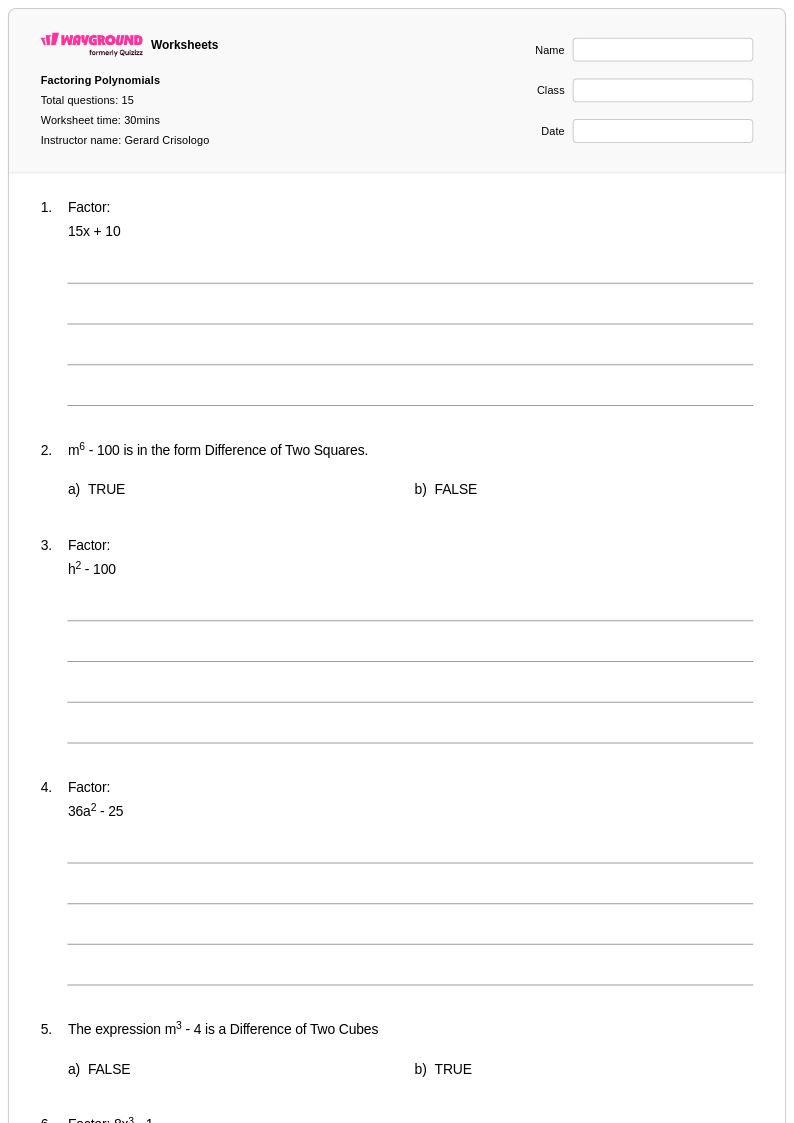
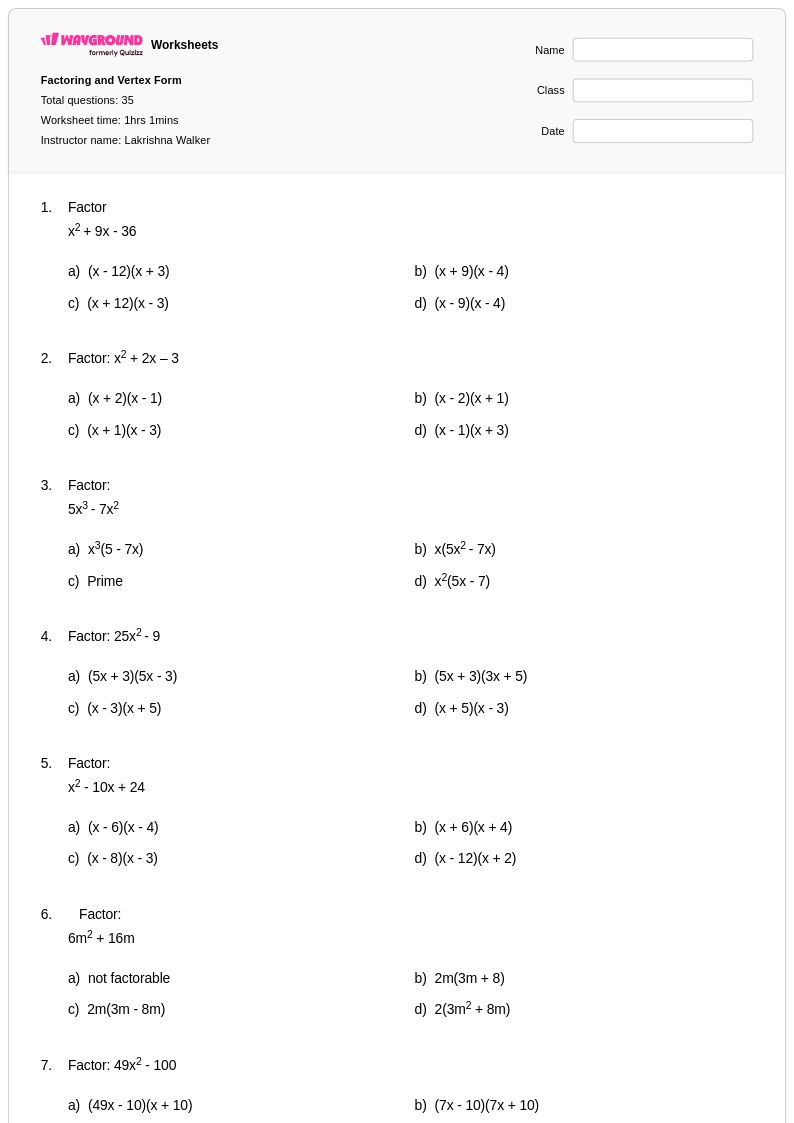
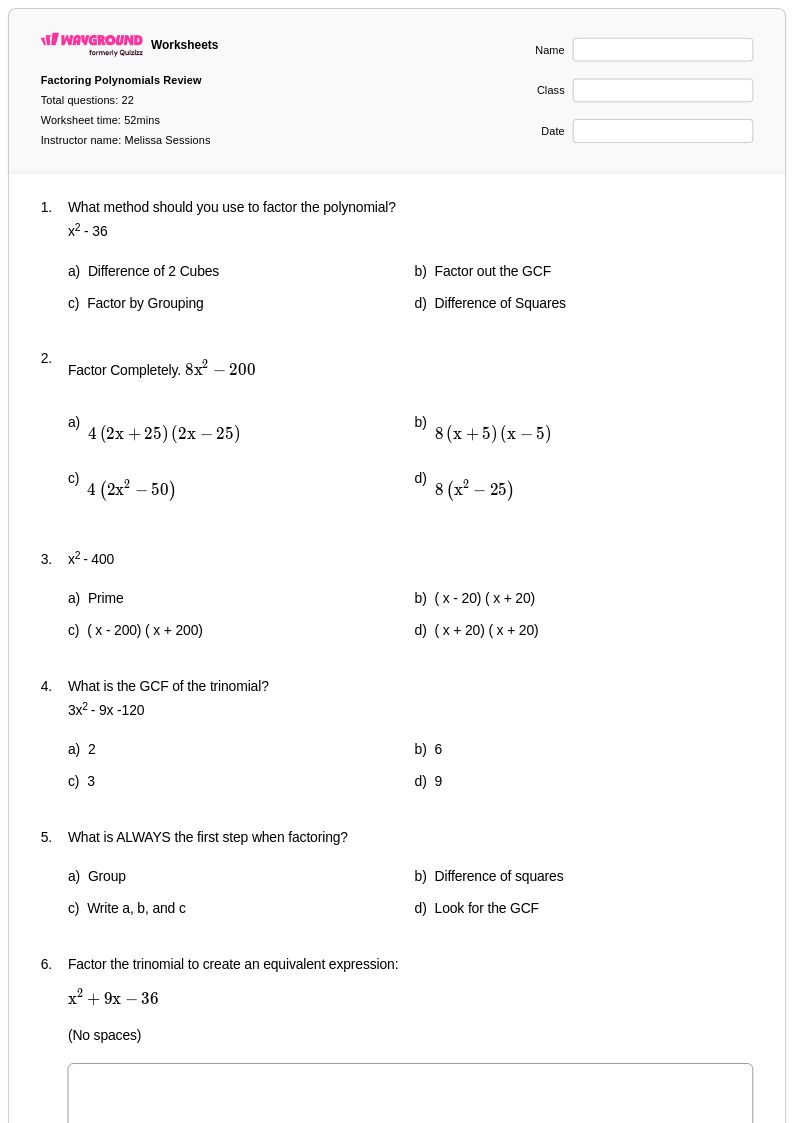
Year 8 factoring worksheets from Wayground provide comprehensive practice problems and printables with answer keys to help students master algebraic factoring techniques through free PDF resources.
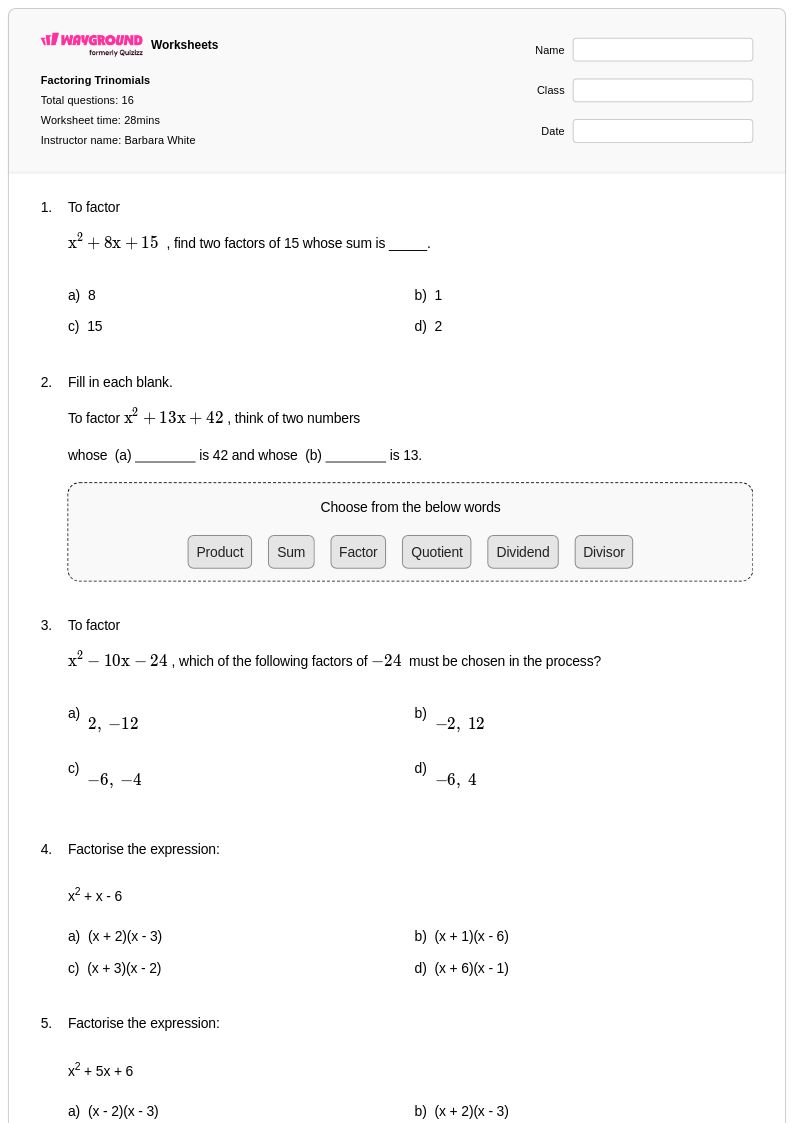
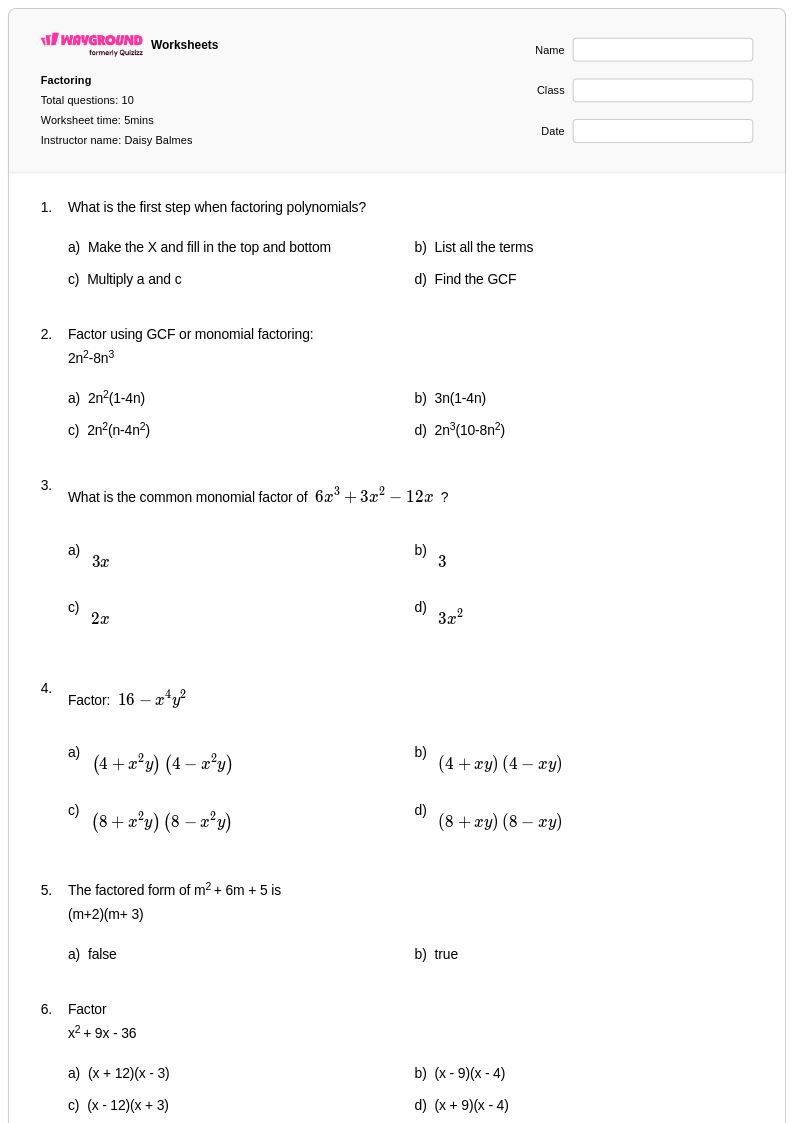
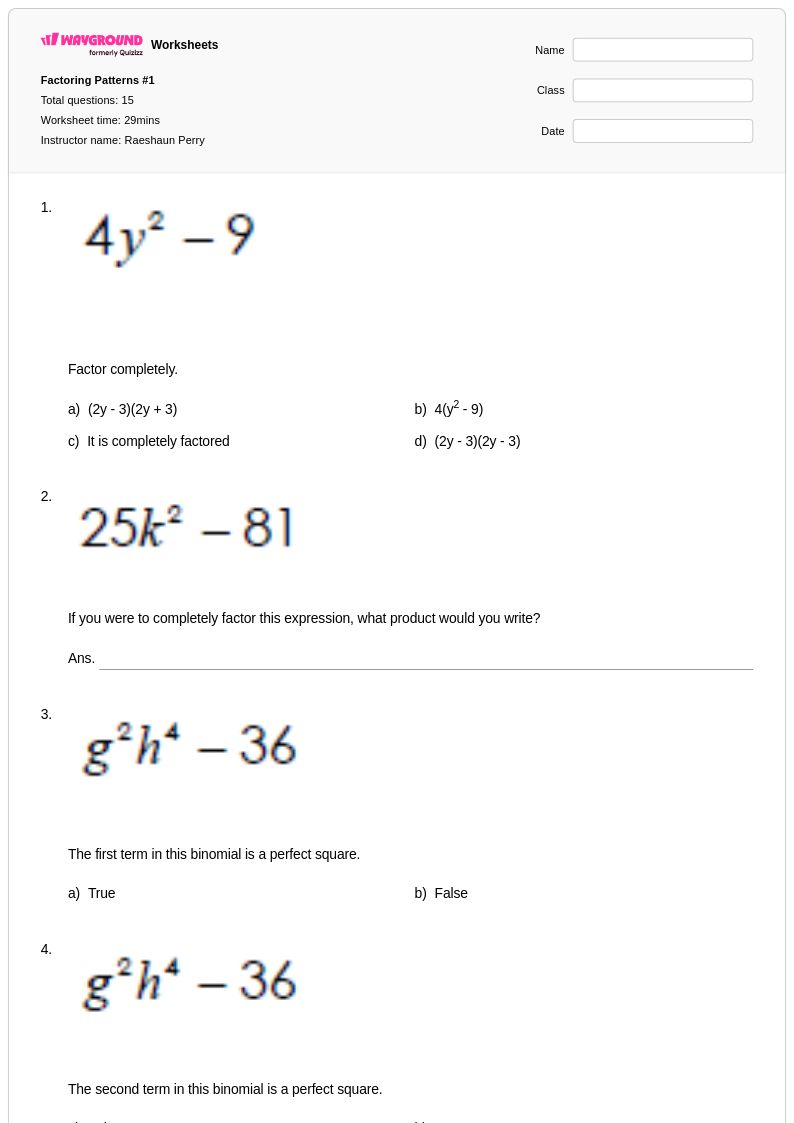
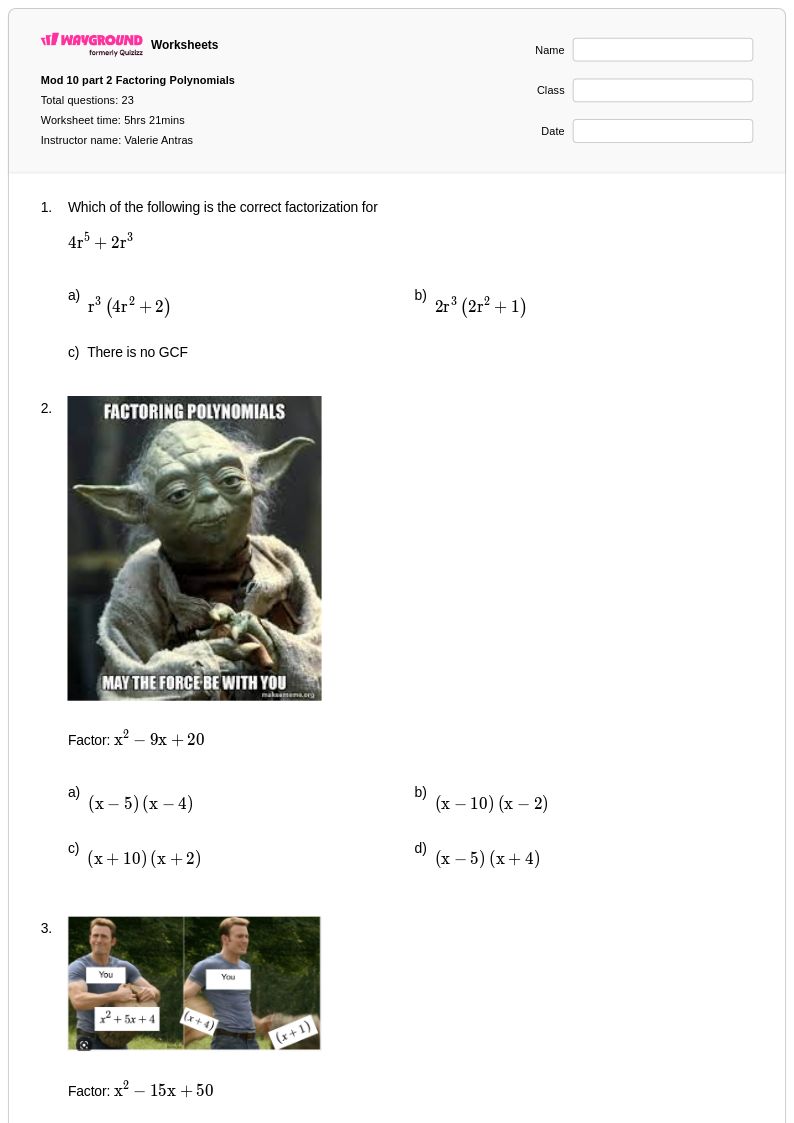
Factoring worksheets for Year 8 students available through Wayground (formerly Quizizz) provide comprehensive practice with one of algebra's most fundamental skills. These carefully designed resources help students master essential factoring techniques including finding greatest common factors, factoring trinomials, and working with difference of squares. Each worksheet collection includes detailed answer keys that support both independent study and classroom instruction, while the free printable format ensures accessibility for all learning environments. The practice problems progress systematically from basic factoring concepts to more complex algebraic expressions, allowing eighth-grade students to build confidence and fluency in manipulating polynomial expressions through repeated, structured practice.
Wayground (formerly Quizizz) empowers educators with millions of teacher-created factoring resources that streamline lesson planning and differentiated instruction for Year 8 algebra classes. The platform's robust search and filtering capabilities allow teachers to quickly locate worksheets aligned with specific standards and skill levels, while customization tools enable easy modification of existing materials to meet diverse student needs. These factoring worksheet collections are available in both printable pdf formats for traditional paper-and-pencil work and digital formats for technology-enhanced learning environments. Teachers can efficiently implement these resources for initial skill introduction, targeted remediation for struggling learners, enrichment activities for advanced students, or regular practice sessions that reinforce algebraic factoring concepts throughout the school year.
FAQs
How do I teach factoring to 8th graders?
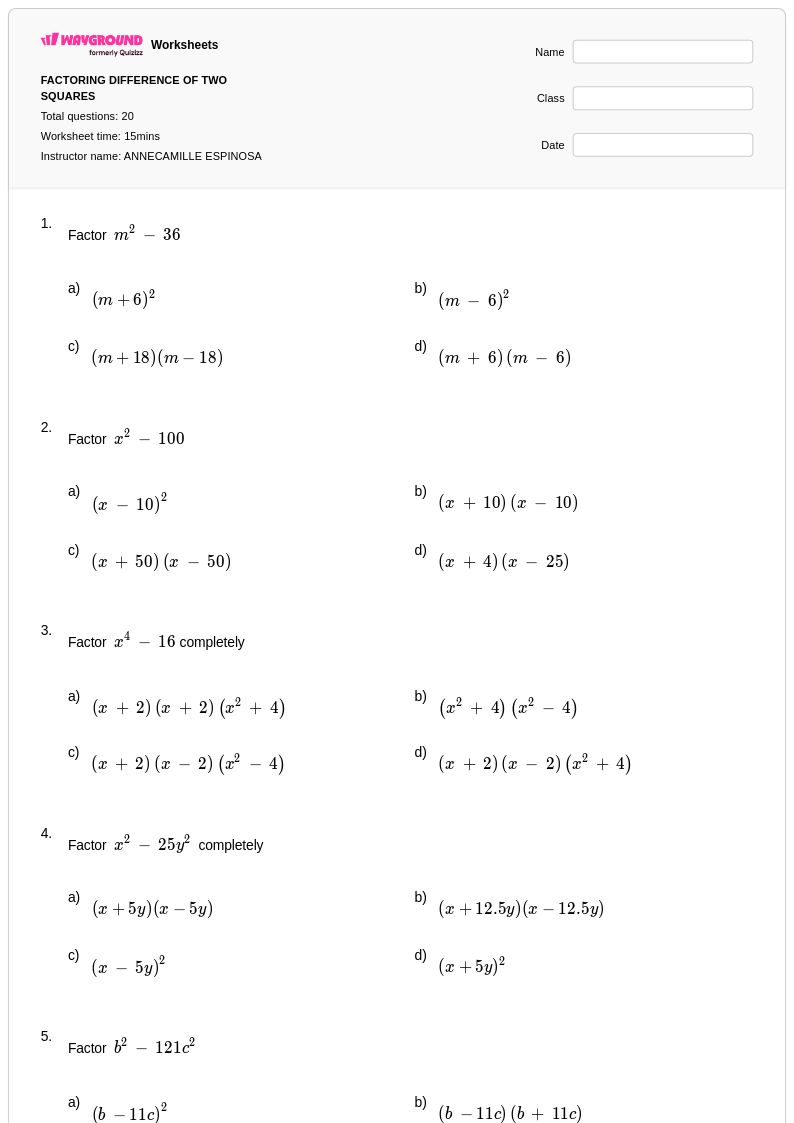
By Grade 8, students should move beyond GCF into factoring trinomials and recognizing difference of squares. The key teaching move is connecting factoring to multiplication they've already done: if students have expanded (x + 4)(x − 4) and gotten x² − 16, then factoring x² − 16 is just running that process in reverse. Spend time on pattern recognition before introducing procedures — students who see the structure factor more reliably than students who memorize steps.
What factoring techniques should 8th graders practice?
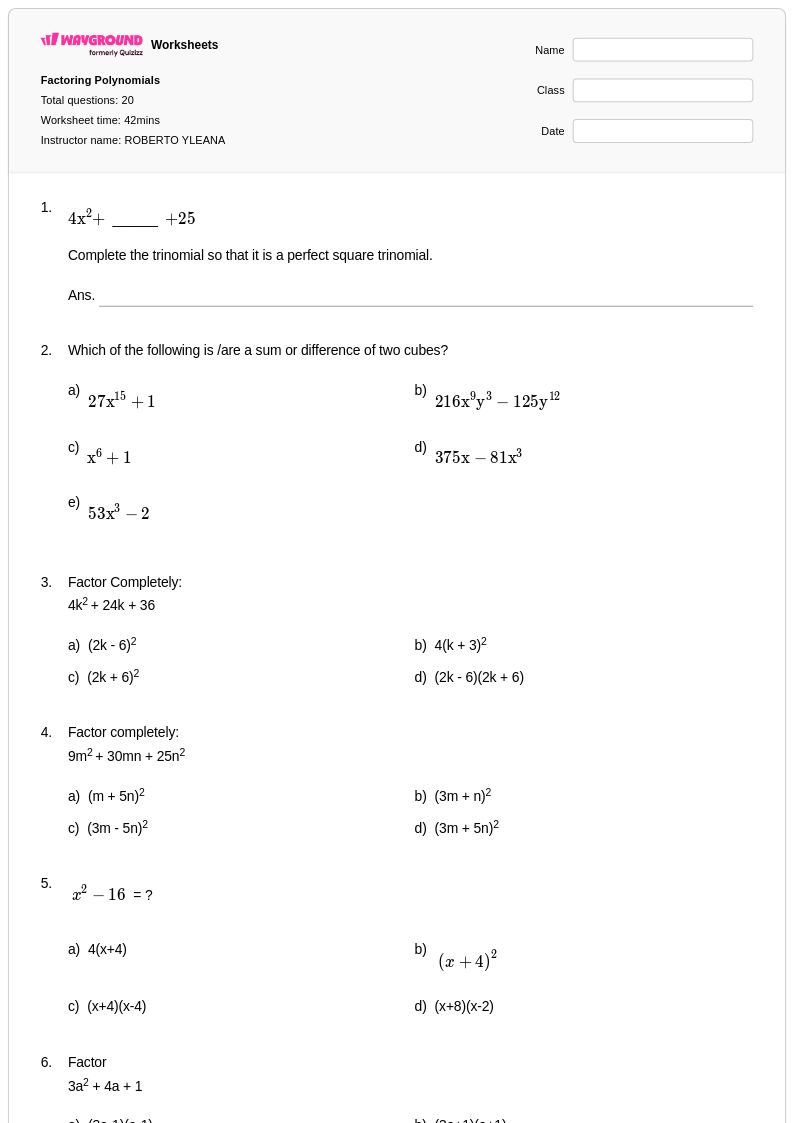
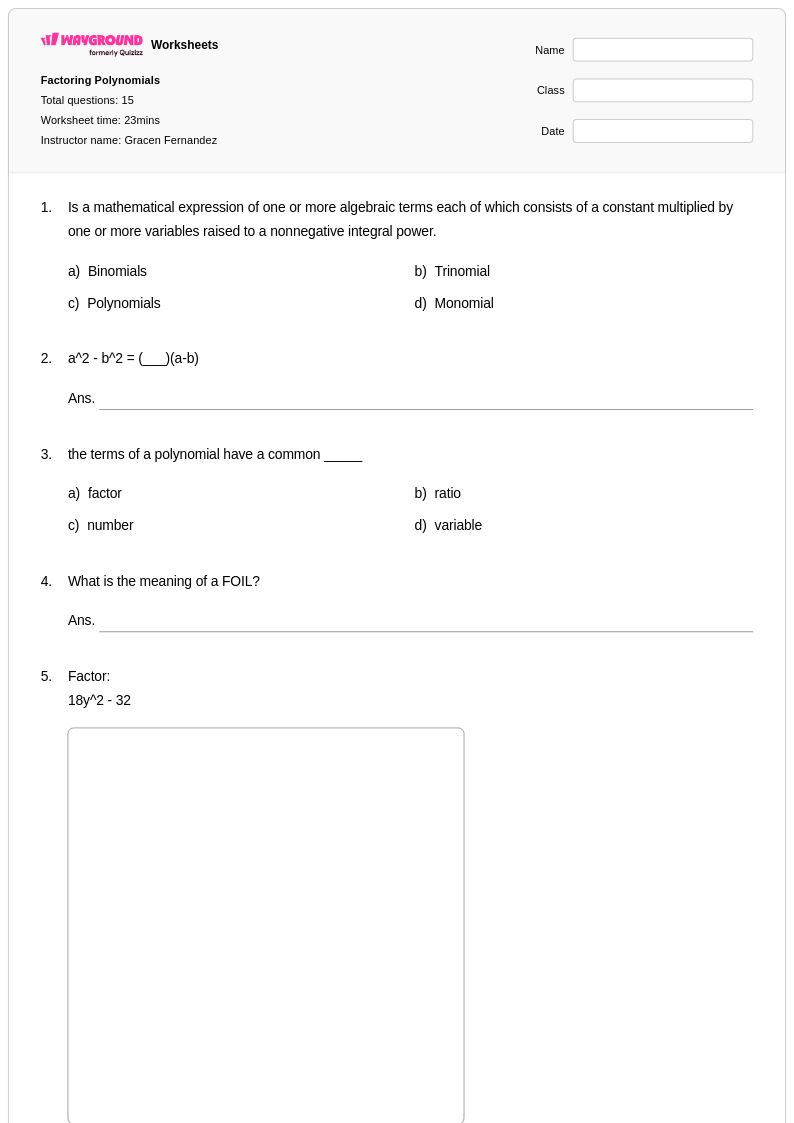
Grade 8 factoring practice should cover three areas: GCF extraction (including from multi-term polynomials), factoring simple trinomials where the leading coefficient is 1, and difference of squares. The AC method is worth introducing for students ready to tackle trinomials with a leading coefficient other than 1. Wayground's Grade 8 worksheets progress from basic to complex within each technique, so students build fluency before mixing methods.
What errors do 8th graders typically make when factoring?
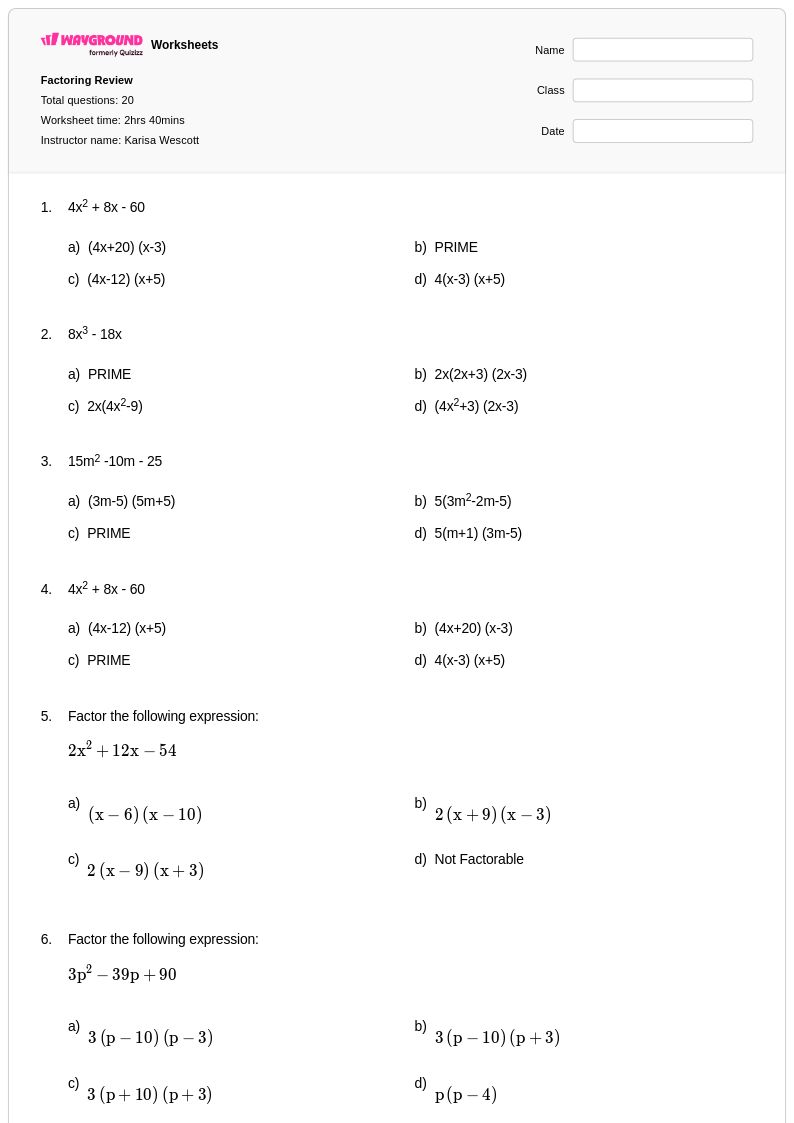
Sign errors in trinomial factoring are the most persistent problem at this level — students frequently choose factor pairs with the right product but the wrong sum. Difference of squares is another trouble spot: students either don't recognize the pattern or forget that both factors involve a sum and a difference, not two differences. Having students expand their answers to verify is the most reliable error-catching habit you can build.
How do I use Wayground's Grade 8 factoring worksheets?
Every worksheet includes a complete answer key, which makes them efficient for both homework and in-class practice. For paper-based classrooms, print the PDF and use the Wayground for Teachers app to scan and grade student submissions — it's faster than hand-scoring a full class set. If your students are working on devices, host the same worksheet as a digital quiz on Wayground for instant feedback.
How does factoring fit into the 8th grade Common Core math progression?
Common Core positions 8th grade as the transition point where students move from arithmetic reasoning about factors into algebraic manipulation of polynomial expressions. Factoring at this level builds directly from the properties of operations students used in earlier grades and feeds into solving quadratic equations in high school algebra — specifically, factoring is the foundation for solving equations like x² + 5x + 6 = 0 by setting each factor equal to zero.
What is the AC method, and when should 8th graders use it?
The AC method is a factoring strategy for trinomials of the form ax² + bx + c where a ≠ 1. Multiply a and c, find two numbers that multiply to that product and add to b, split the middle term using those numbers, then factor by grouping. For most 8th graders, it's most useful once they've mastered factoring trinomials with a leading coefficient of 1 — introducing it too early adds procedural complexity before students have the pattern recognition to use it efficiently.