
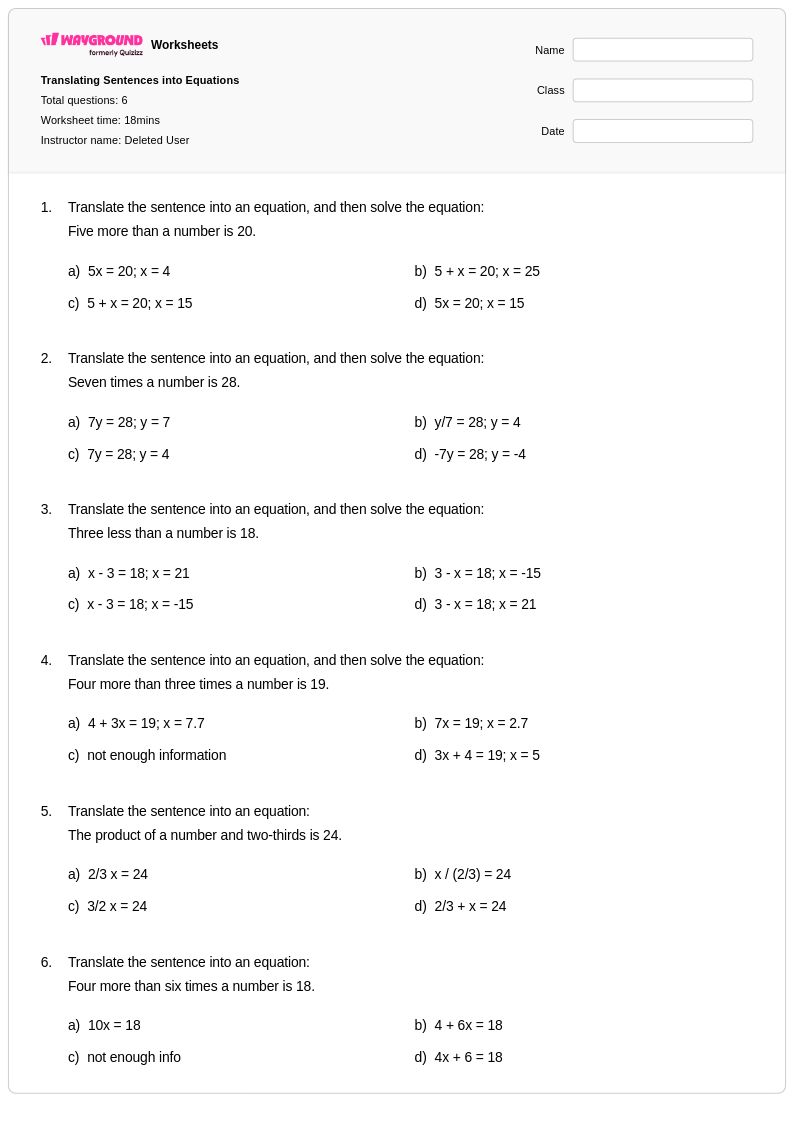
6 Q
KG - Uni
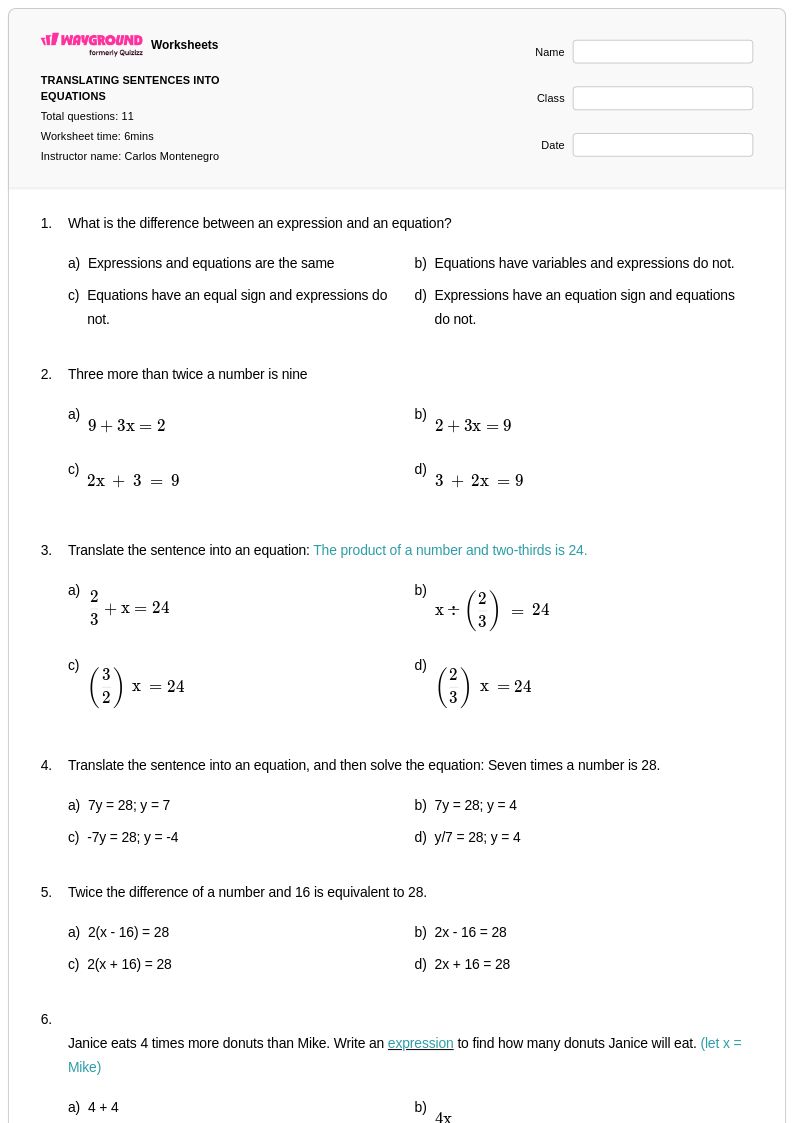
11 Q
6th - 8th
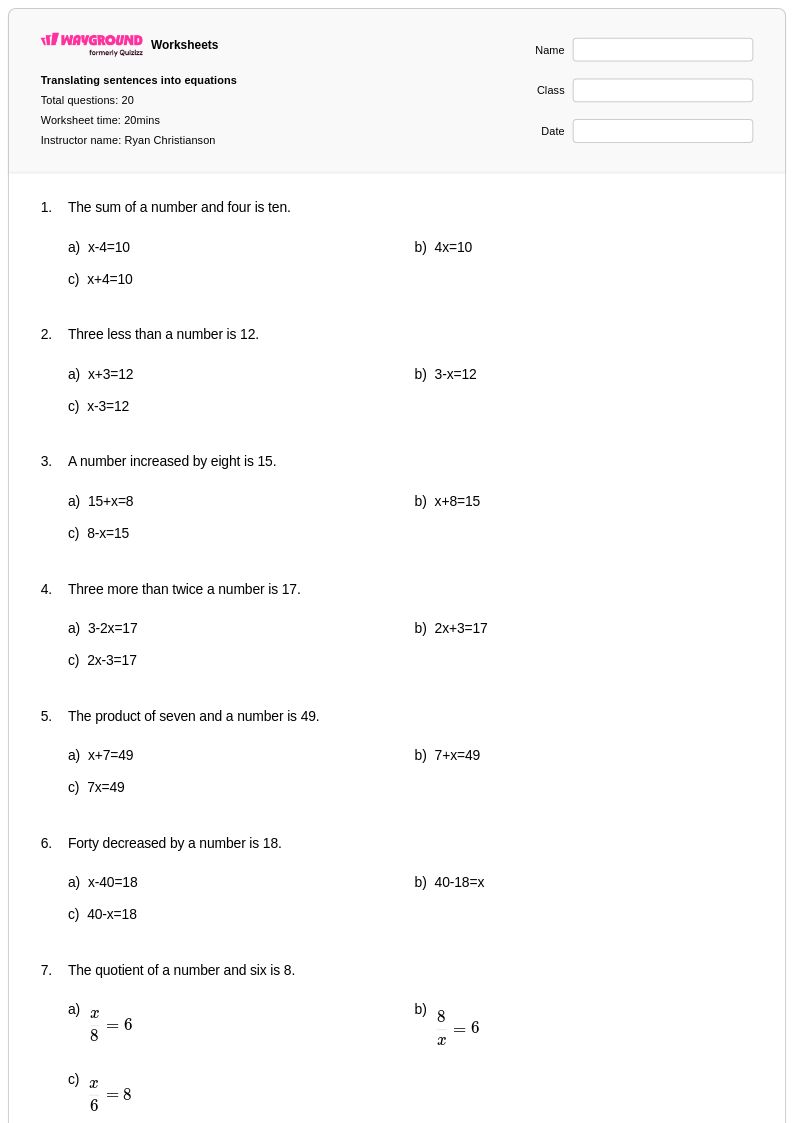
20 Q
8th
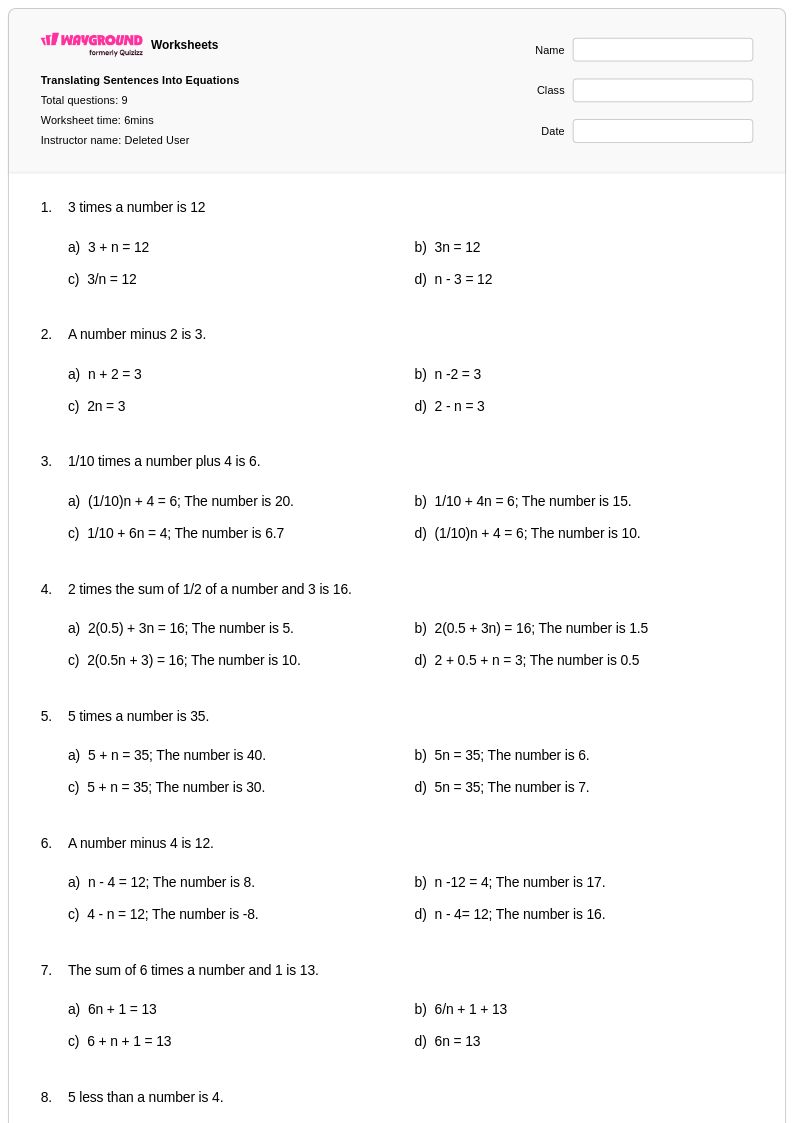
9 Q
7th - 9th
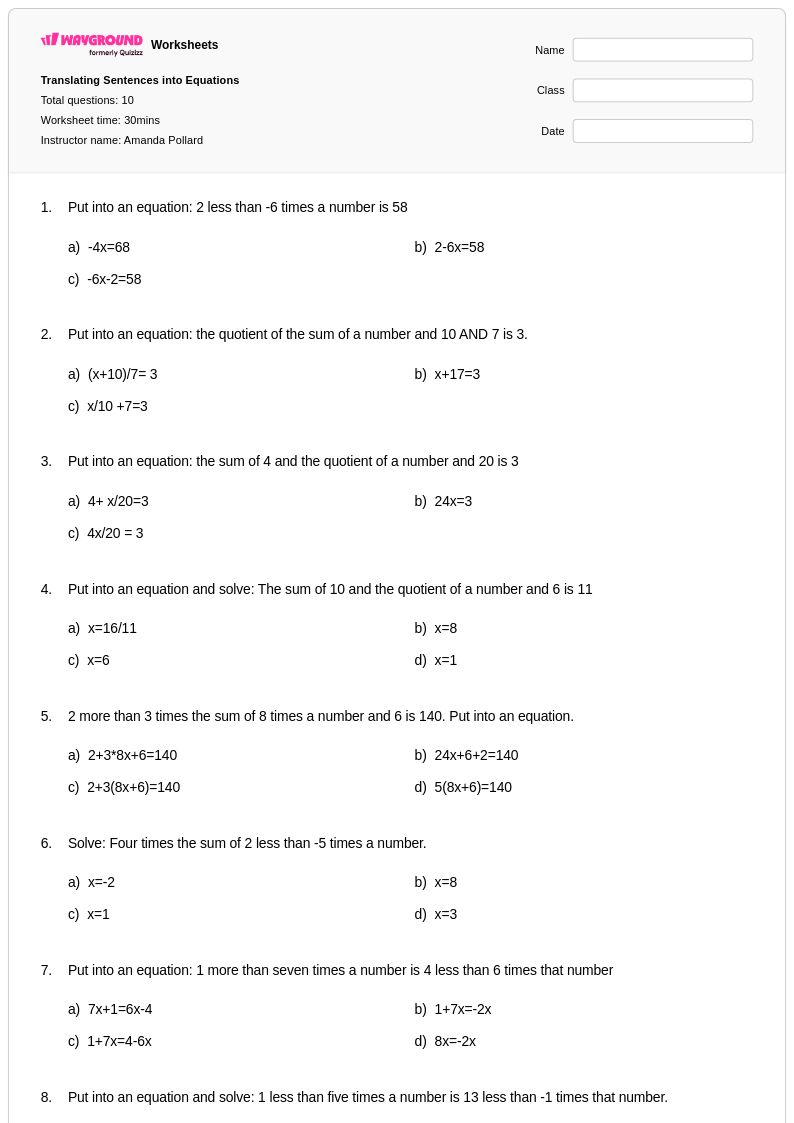
10 Q
8th - 9th
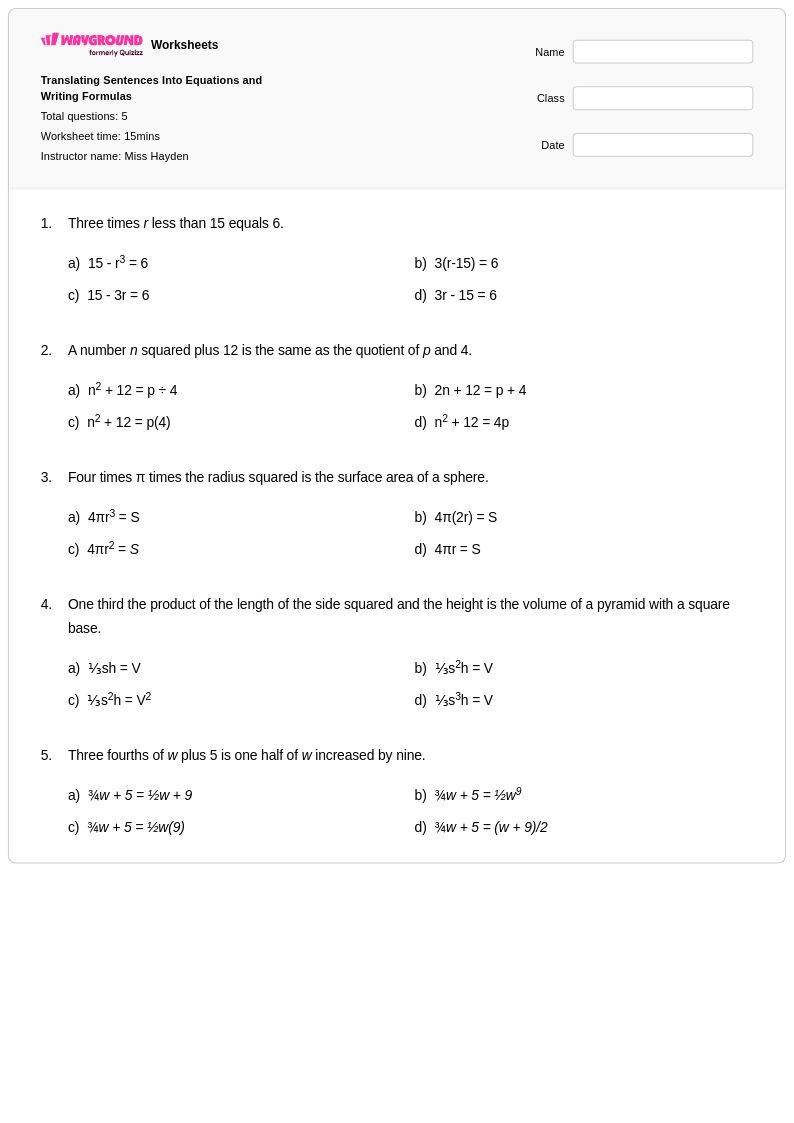
5 Q
7th - 9th
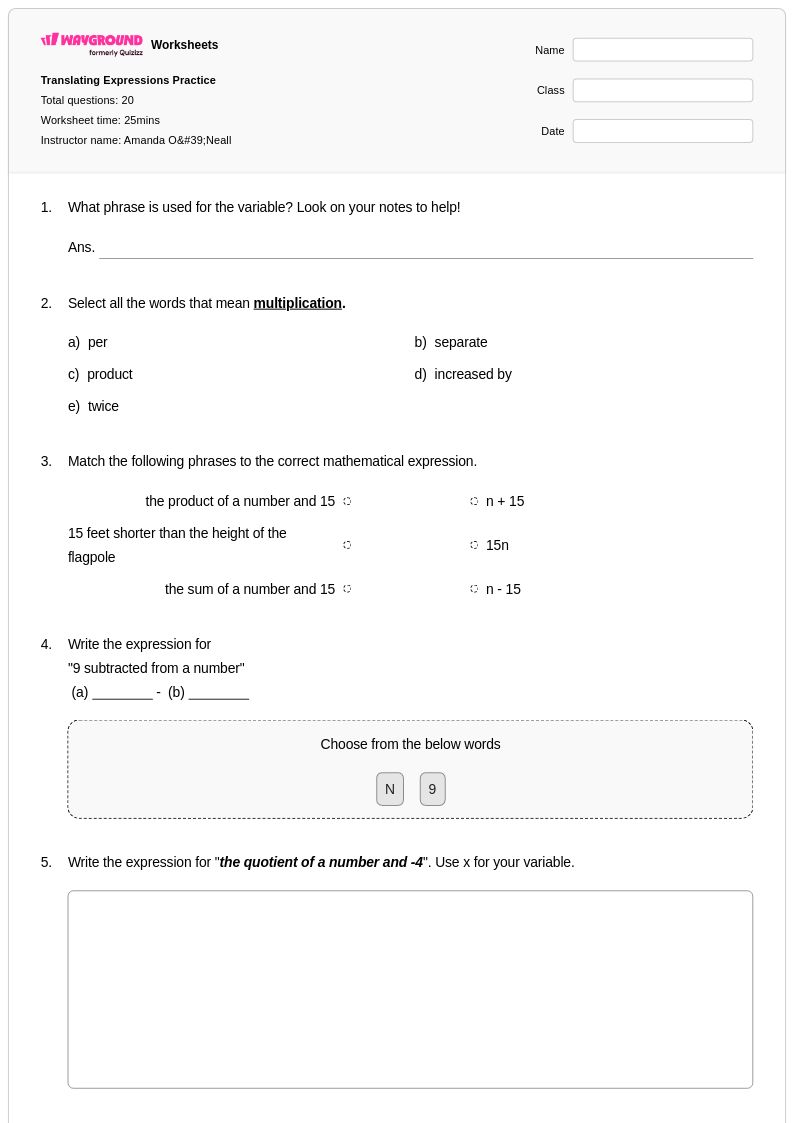
20 Q
7th - Uni
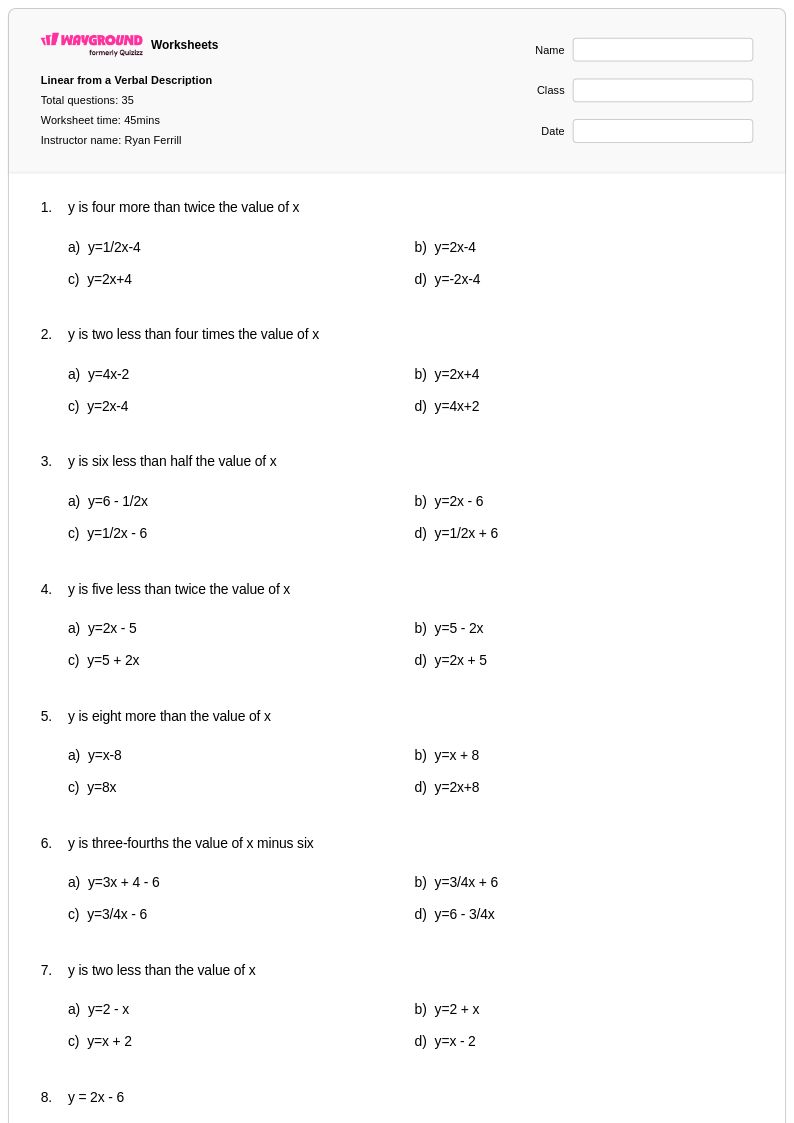
35 Q
8th
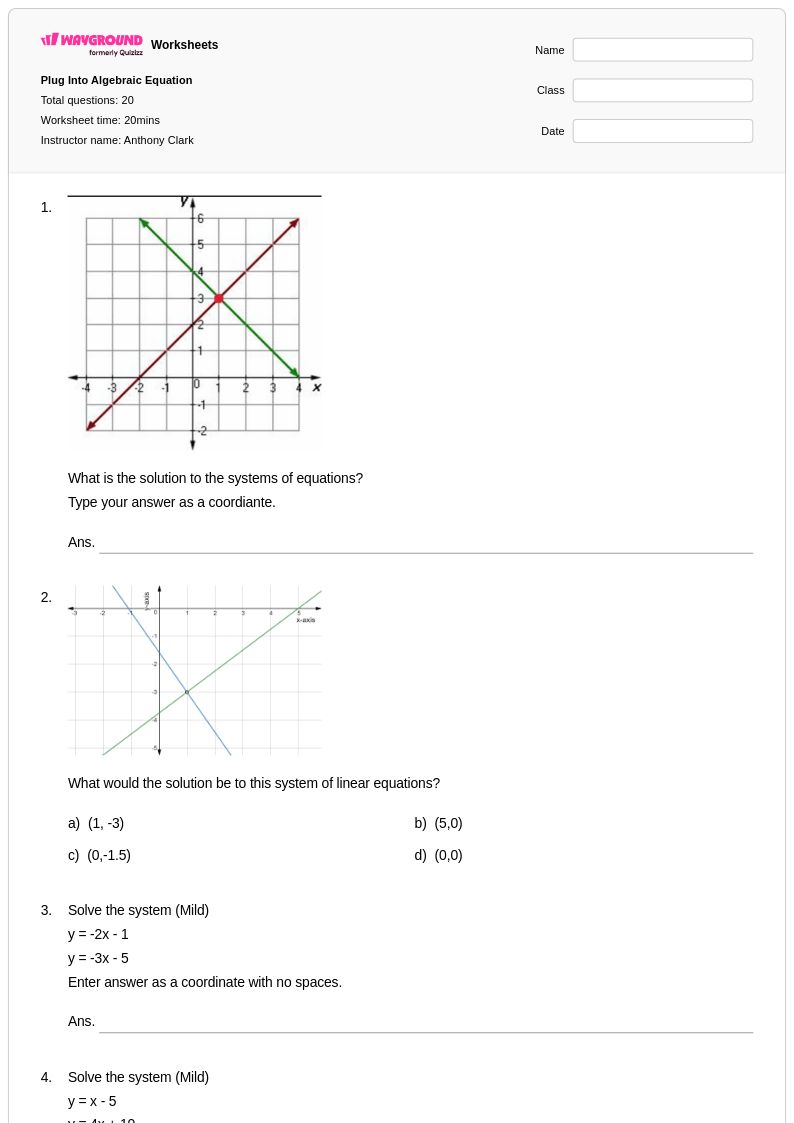
20 Q
8th - Uni
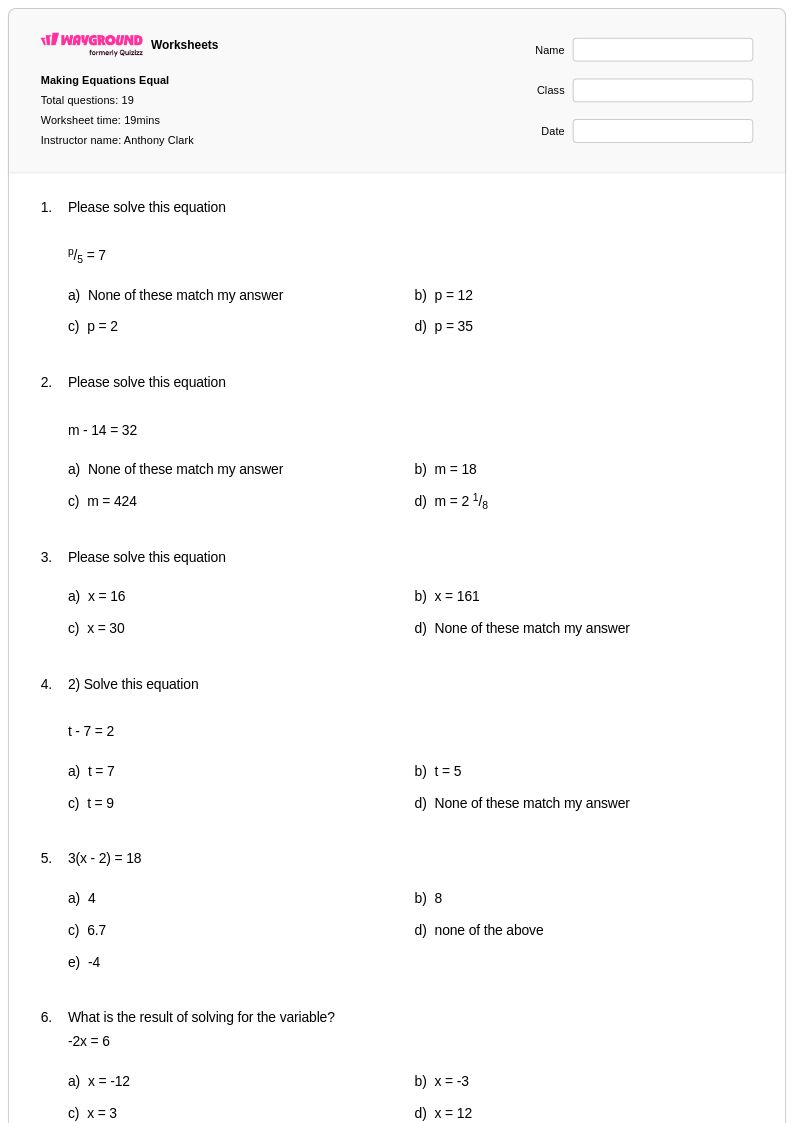
19 Q
8th - Uni
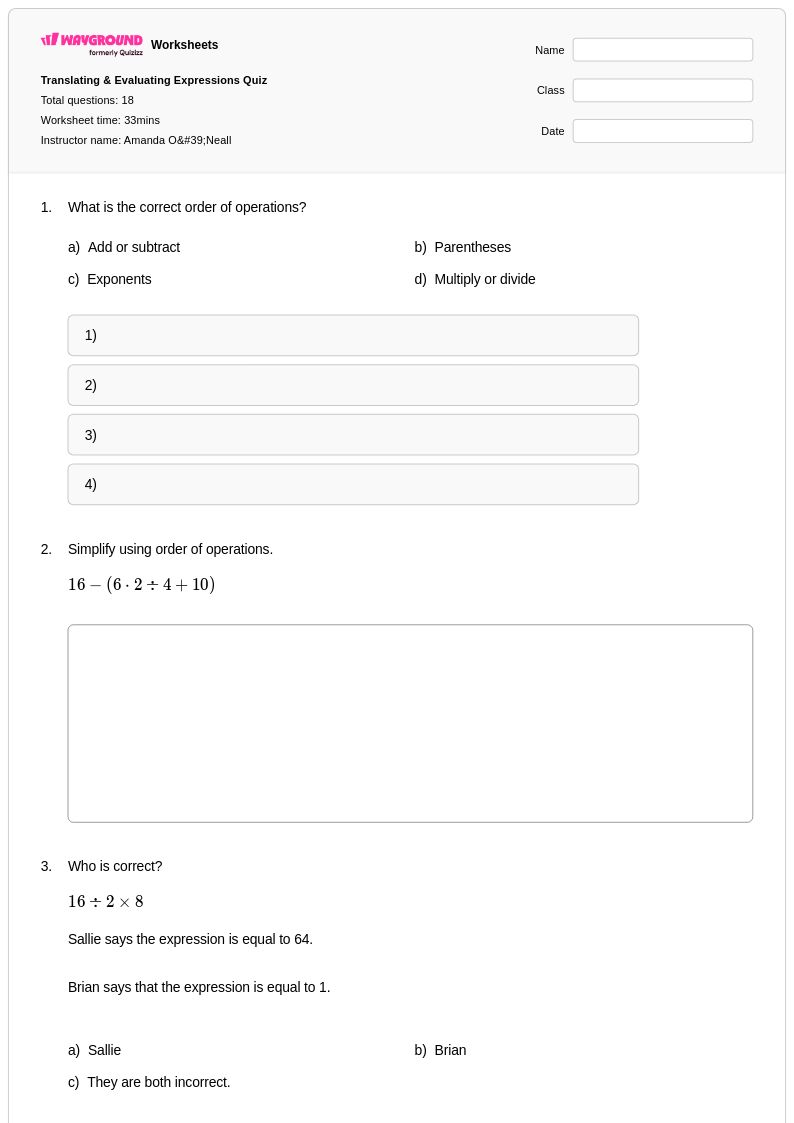
18 Q
6th - Uni
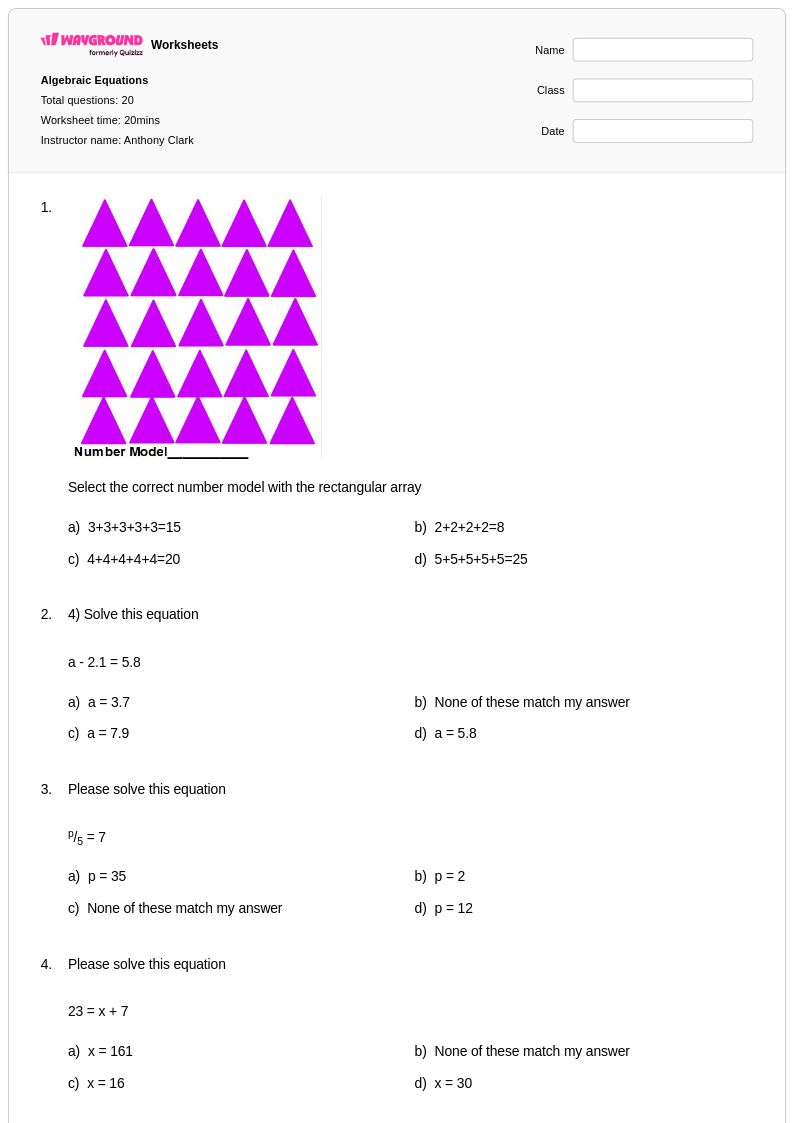
20 Q
6th - Uni
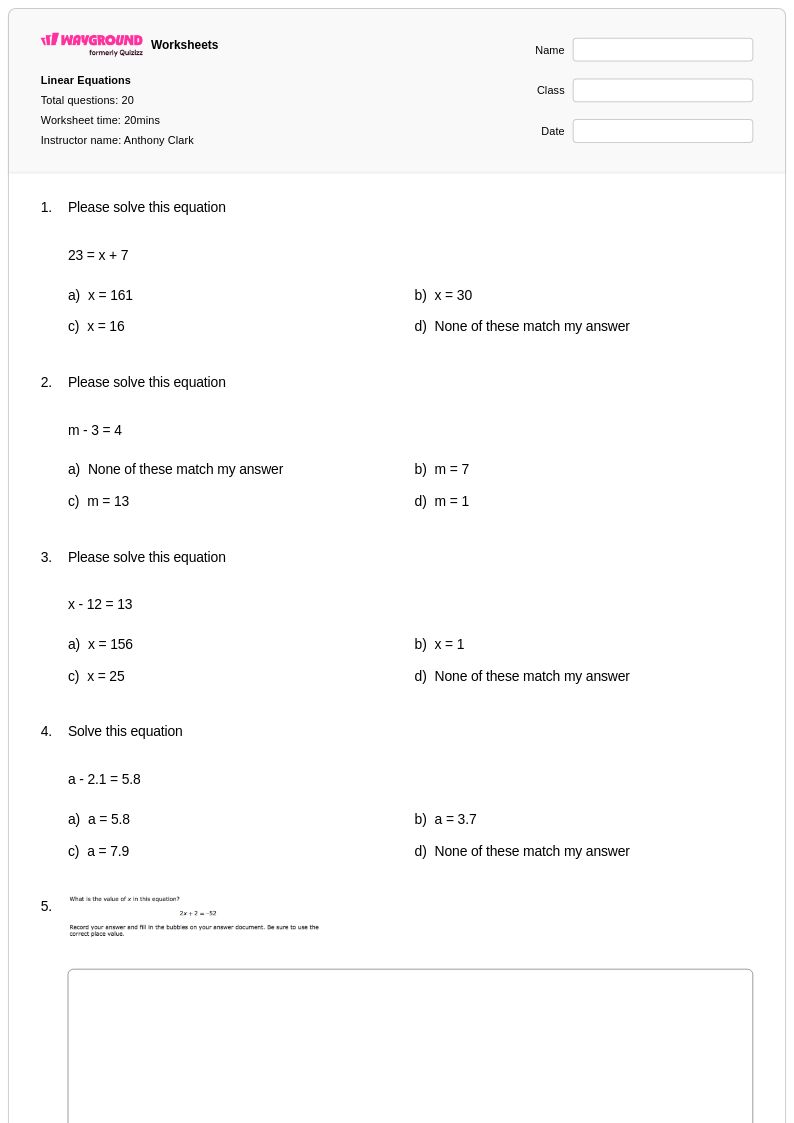
20 Q
6th - Uni
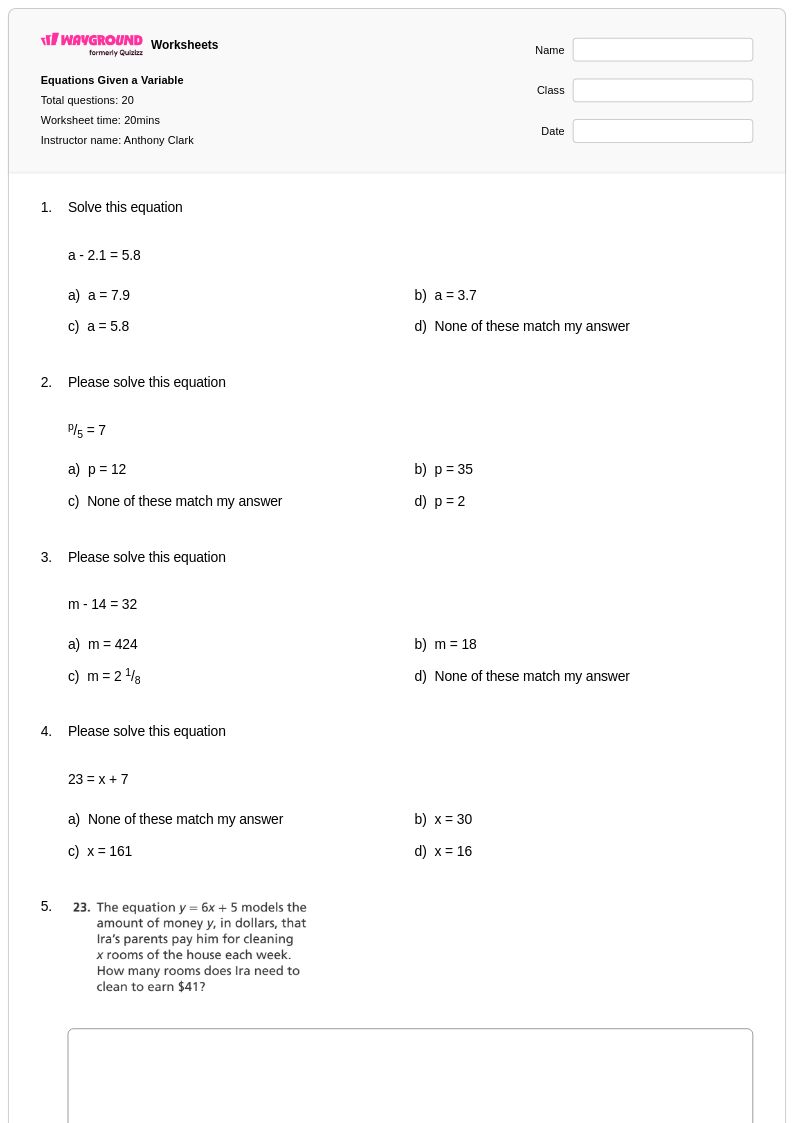
20 Q
6th - Uni
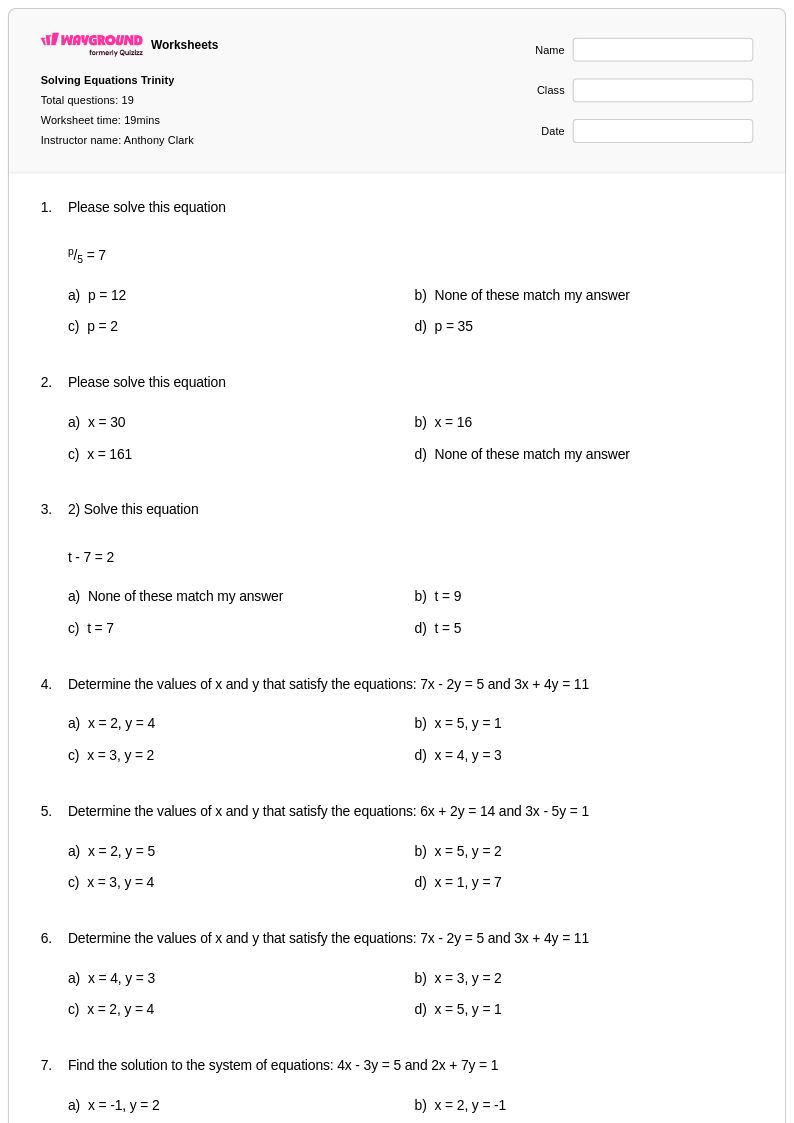
19 Q
8th - Uni
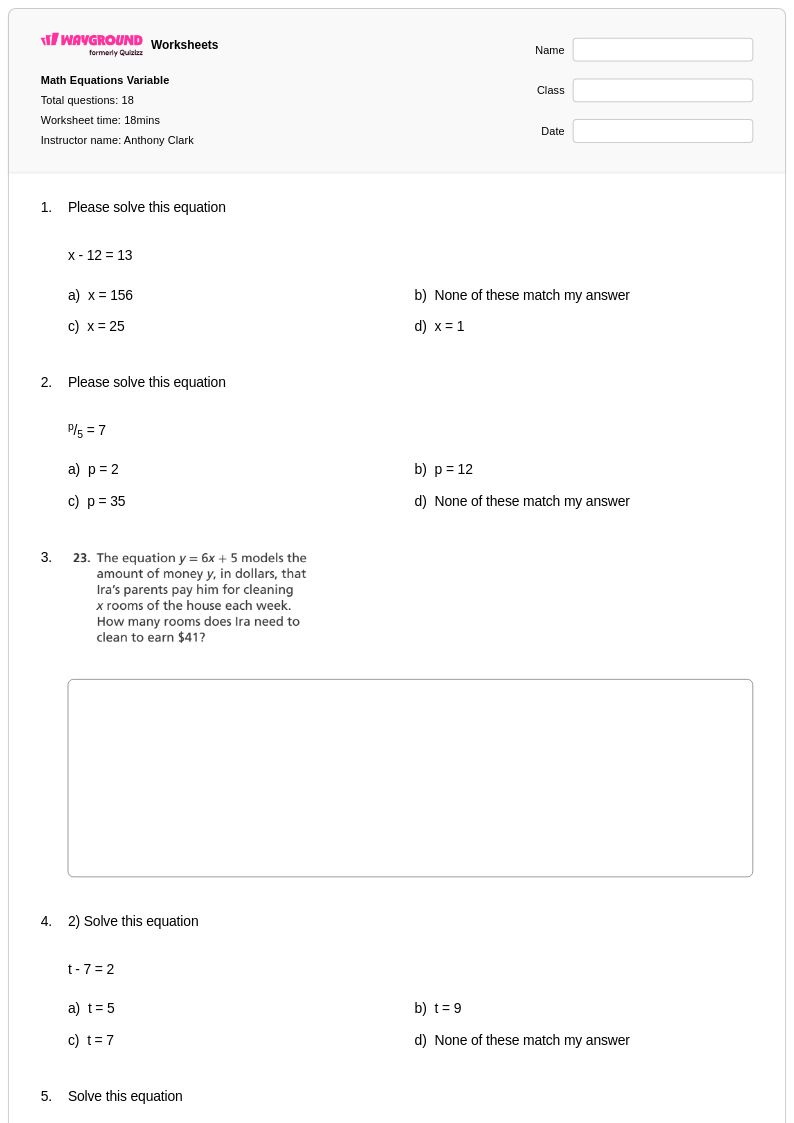
18 Q
6th - Uni
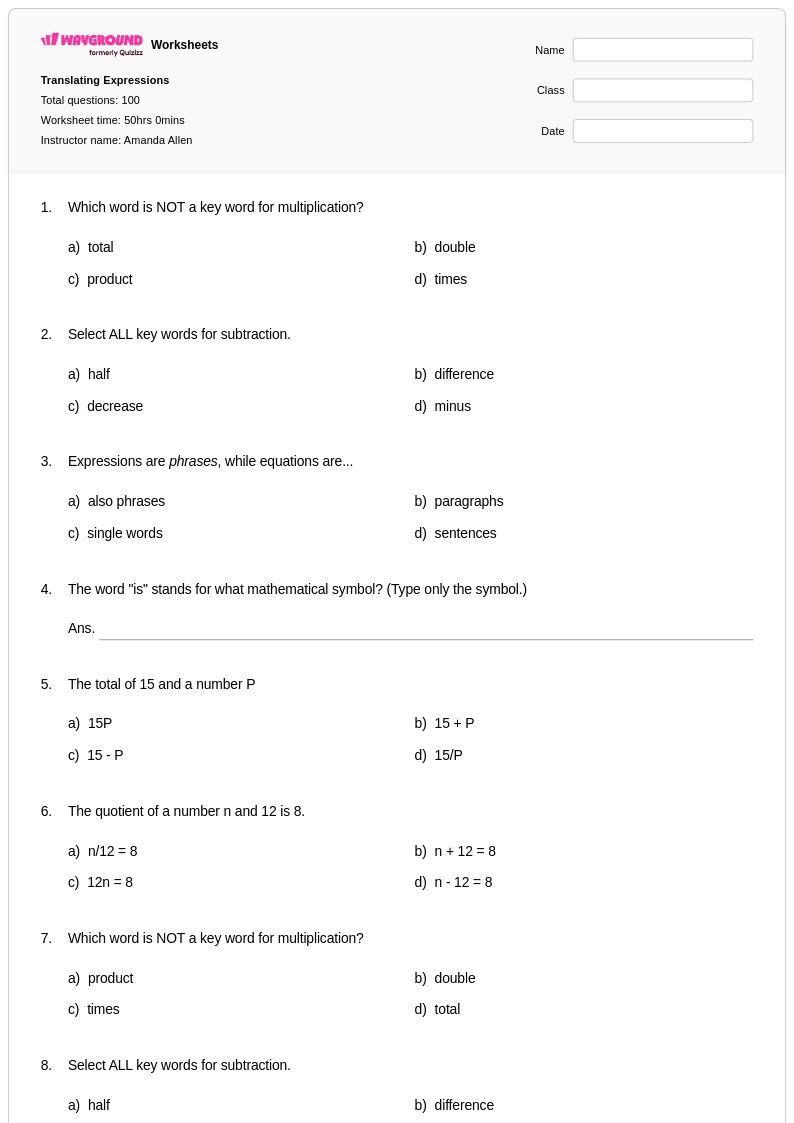
100 Q
6th - 8th
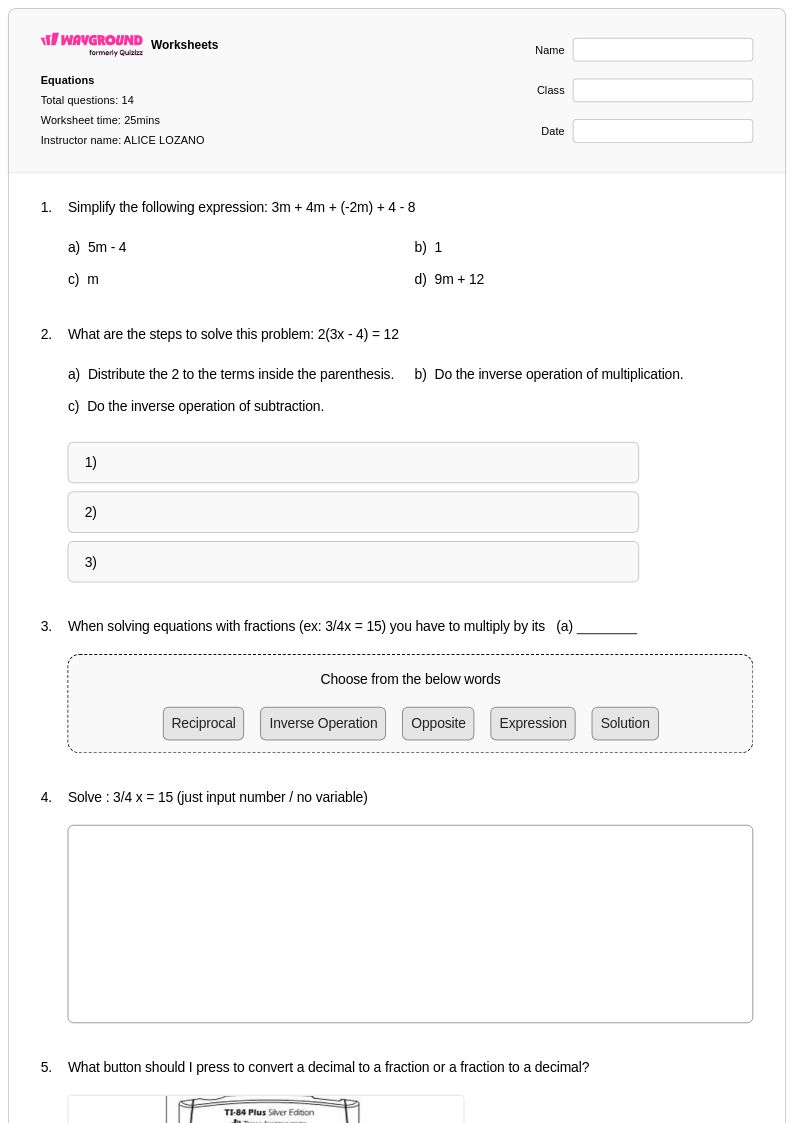
14 Q
8th
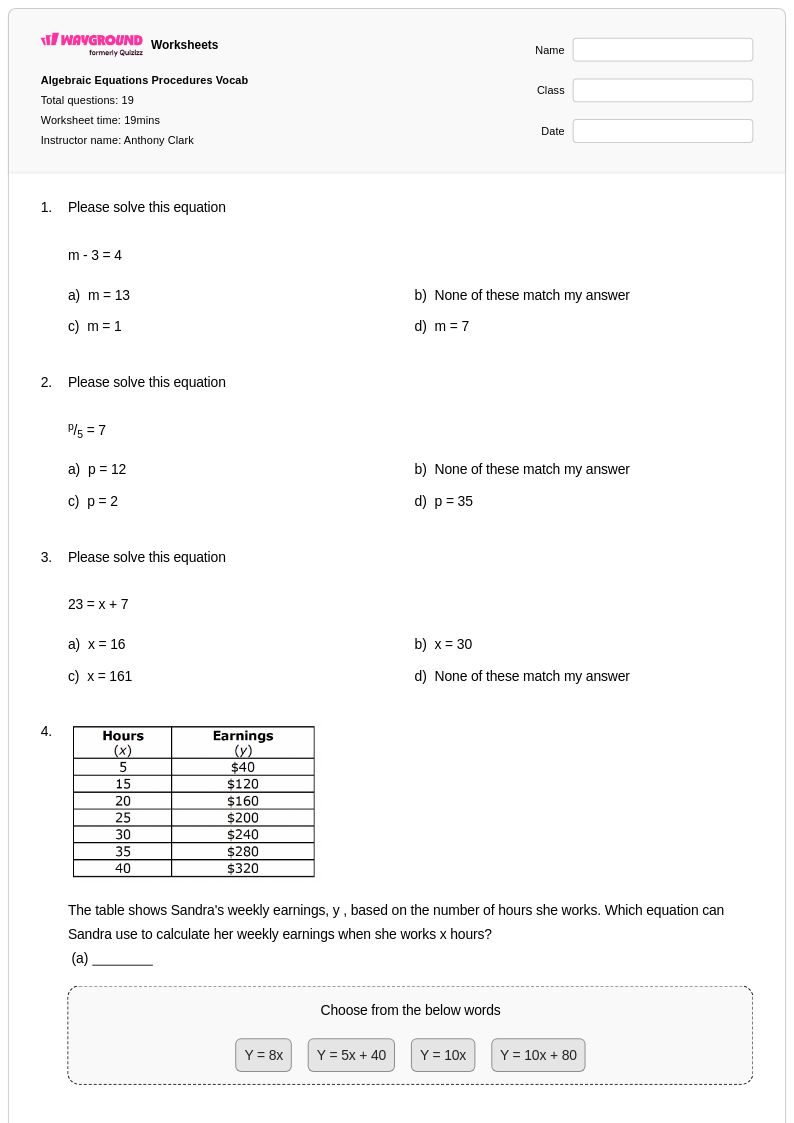
19 Q
6th - Uni
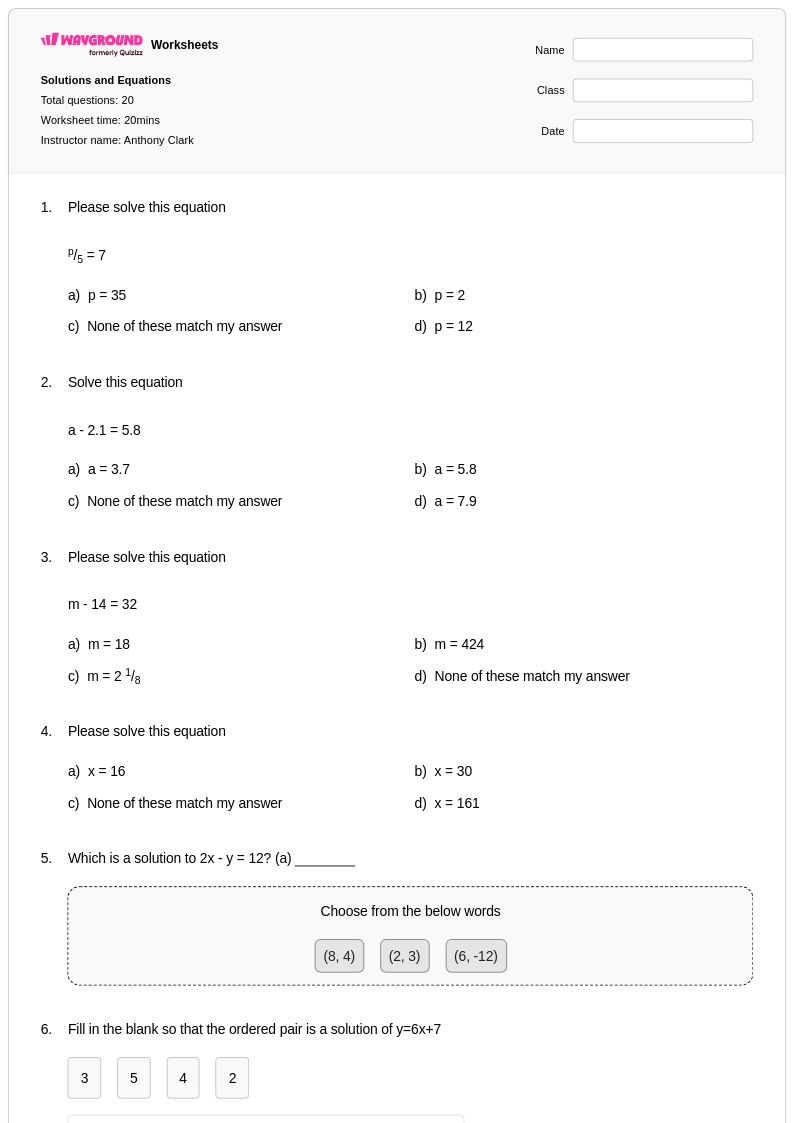
20 Q
6th - Uni
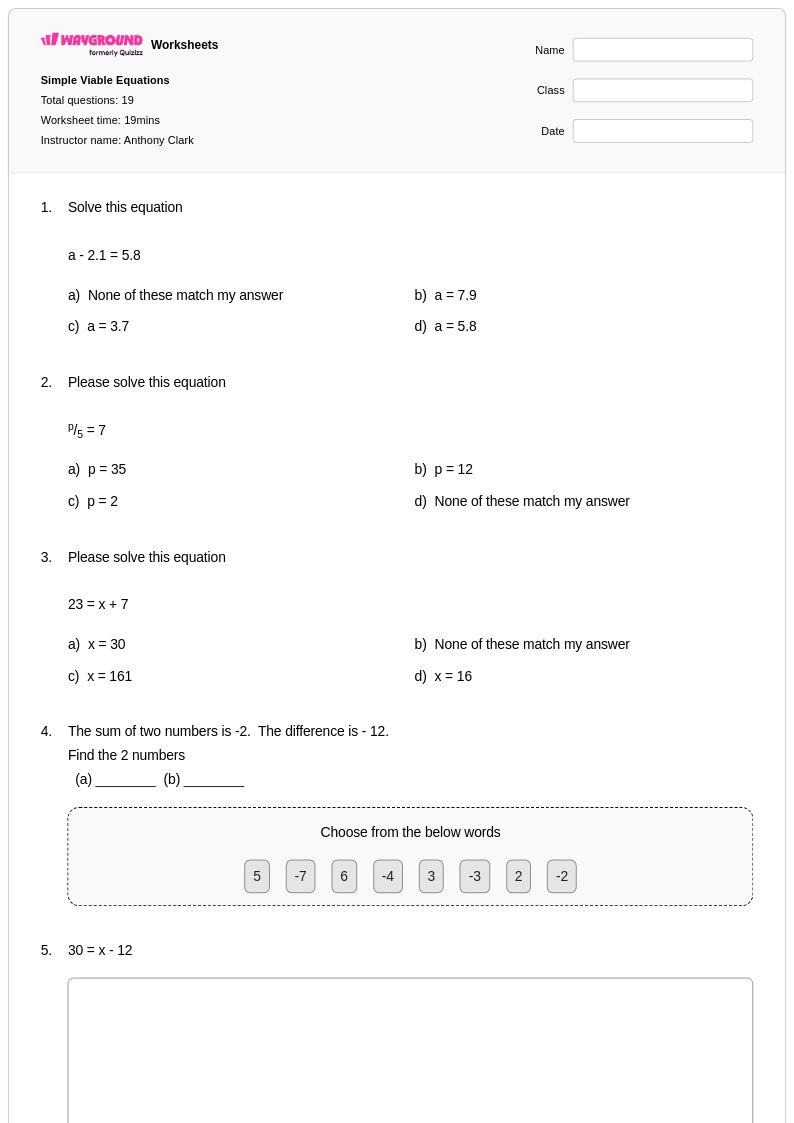
19 Q
7th - Uni
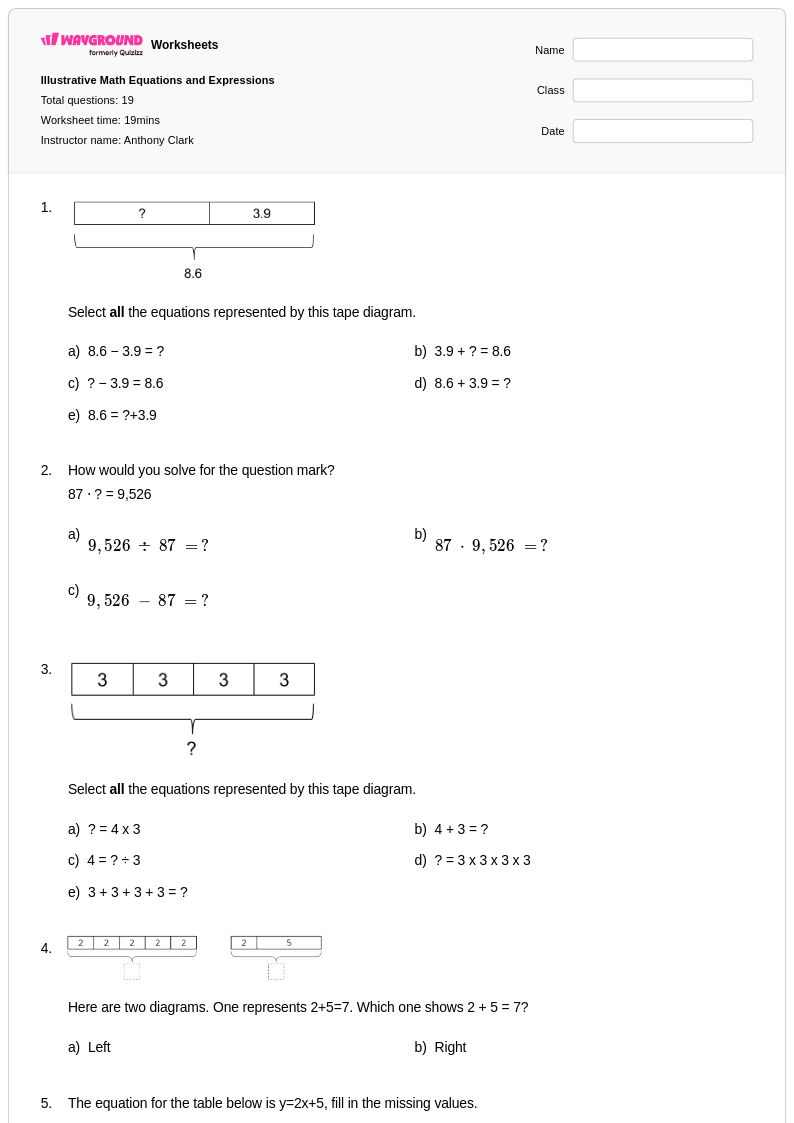
19 Q
6th - Uni
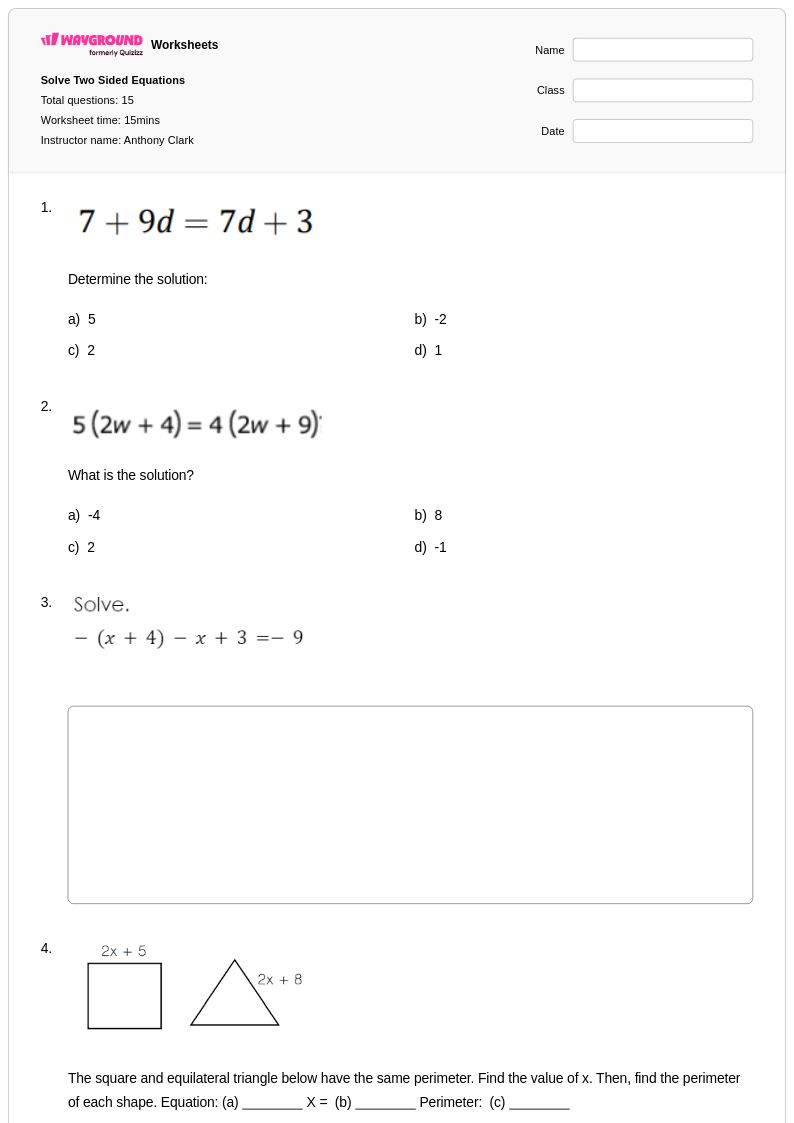
15 Q
8th - Uni
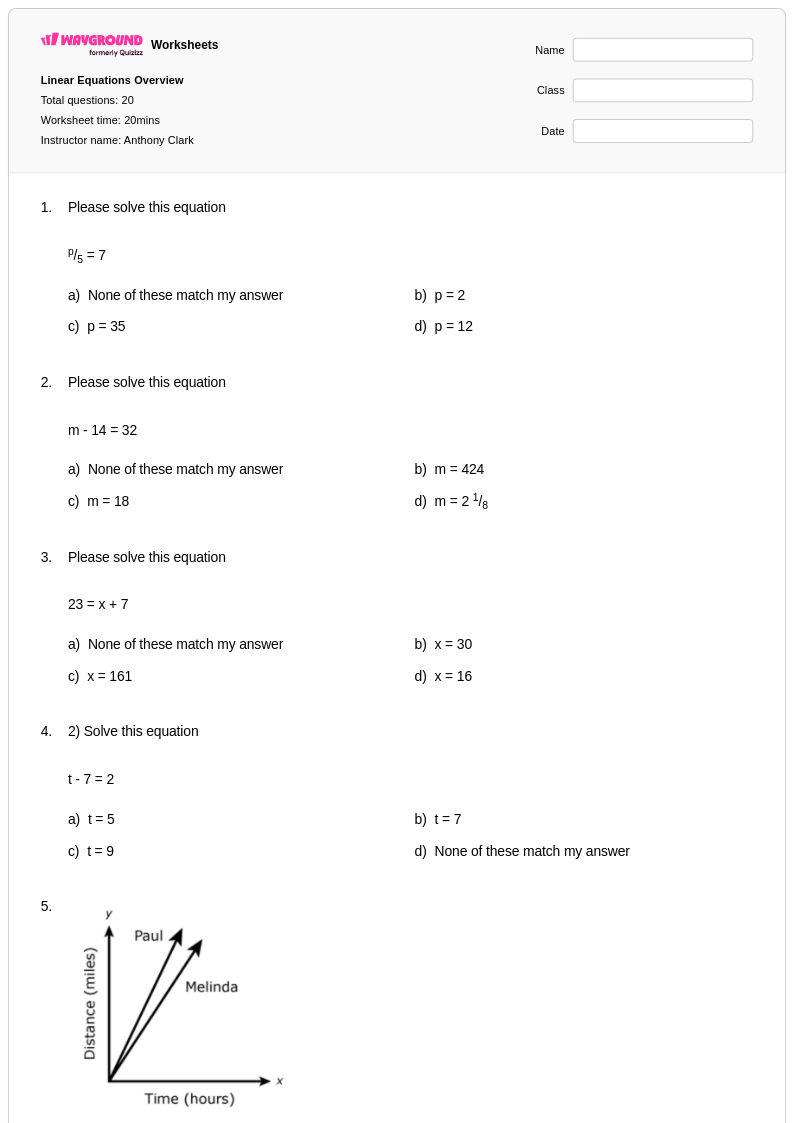
20 Q
8th - Uni
Explore Translating Sentences Into Equations Worksheets by Grades
Explore Other Subject Worksheets for year 8
Explore printable Translating Sentences Into Equations worksheets for Year 8
Translating sentences into equations represents a fundamental skill in Year 8 algebra that bridges the gap between verbal reasoning and mathematical expression. Wayground's comprehensive collection of worksheets focuses specifically on helping students master this critical transition by providing systematic practice in converting word problems and descriptive statements into algebraic equations. These carefully designed resources strengthen students' ability to identify key mathematical relationships within written text, recognize operation indicators, and translate abstract concepts into symbolic form. Each worksheet includes varied practice problems that progress from simple one-step translations to more complex multi-step scenarios, supported by detailed answer keys that guide students through the solution process. Available as free printables in convenient PDF format, these resources ensure students develop confidence in mathematical translation skills essential for advanced algebraic problem-solving.
Wayground's extensive library supports mathematics educators with millions of teacher-created resources specifically targeting the nuances of translating sentences into equations for Year 8 students. The platform's robust search and filtering capabilities enable teachers to quickly locate worksheets aligned with curriculum standards while offering differentiation tools that accommodate diverse learning needs within the classroom. These flexible resources are available in both printable PDF formats for traditional instruction and digital formats for technology-enhanced learning environments, allowing seamless integration into various teaching approaches. Teachers can customize existing materials or combine multiple worksheets to create targeted practice sessions for skill reinforcement, remediation for struggling learners, or enrichment challenges for advanced students, making lesson planning more efficient while ensuring comprehensive coverage of this essential algebraic concept.