
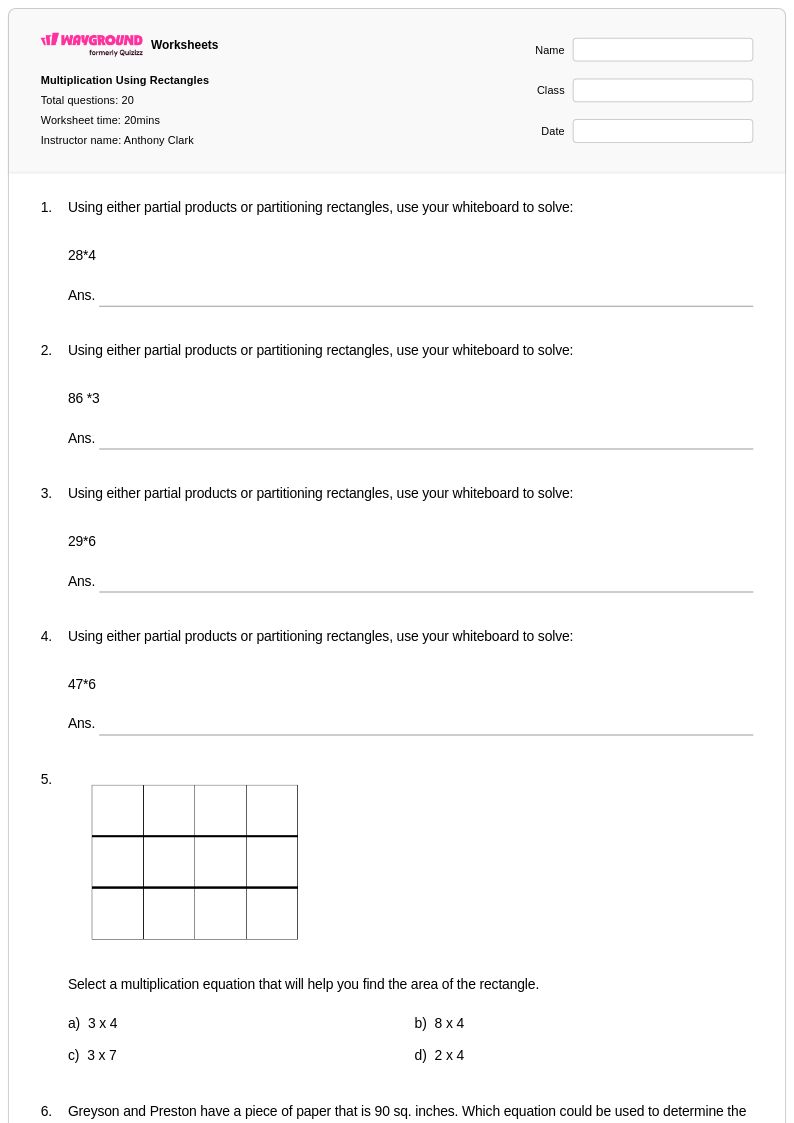
20 Q
3rd - Uni
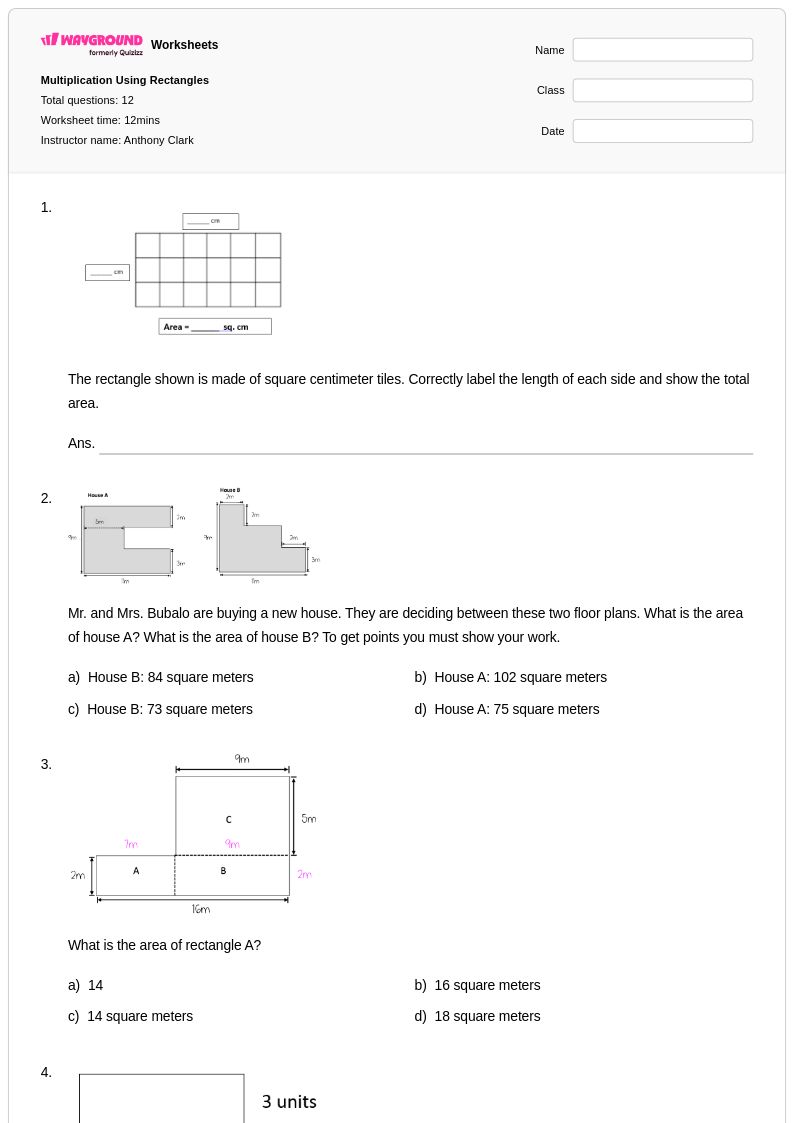
12 Q
3rd - Uni
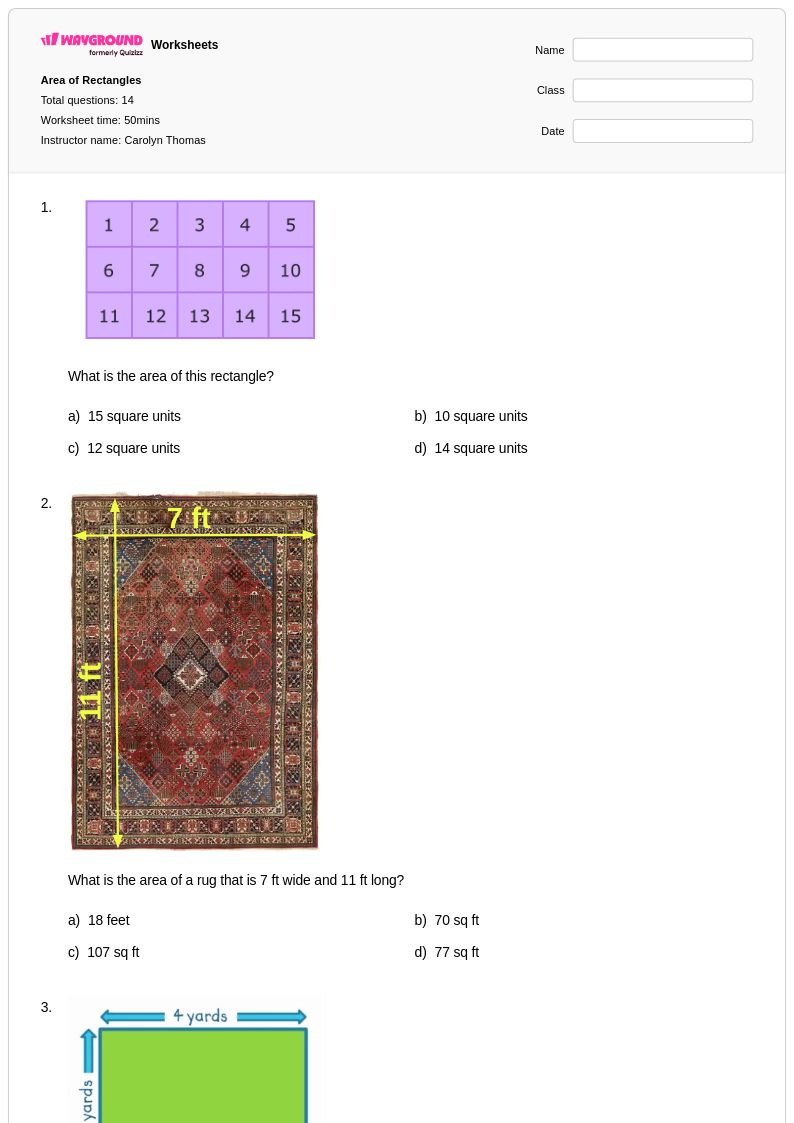
14 Q
3rd
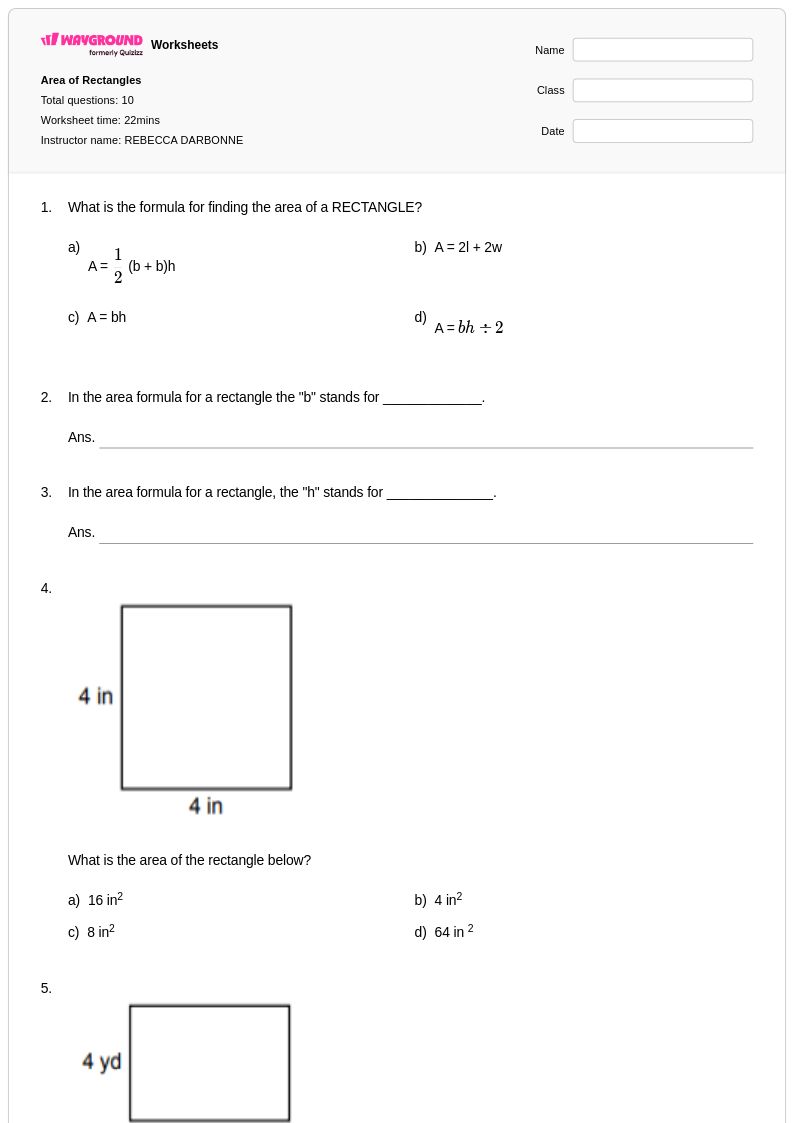
10 Q
3rd - 7th
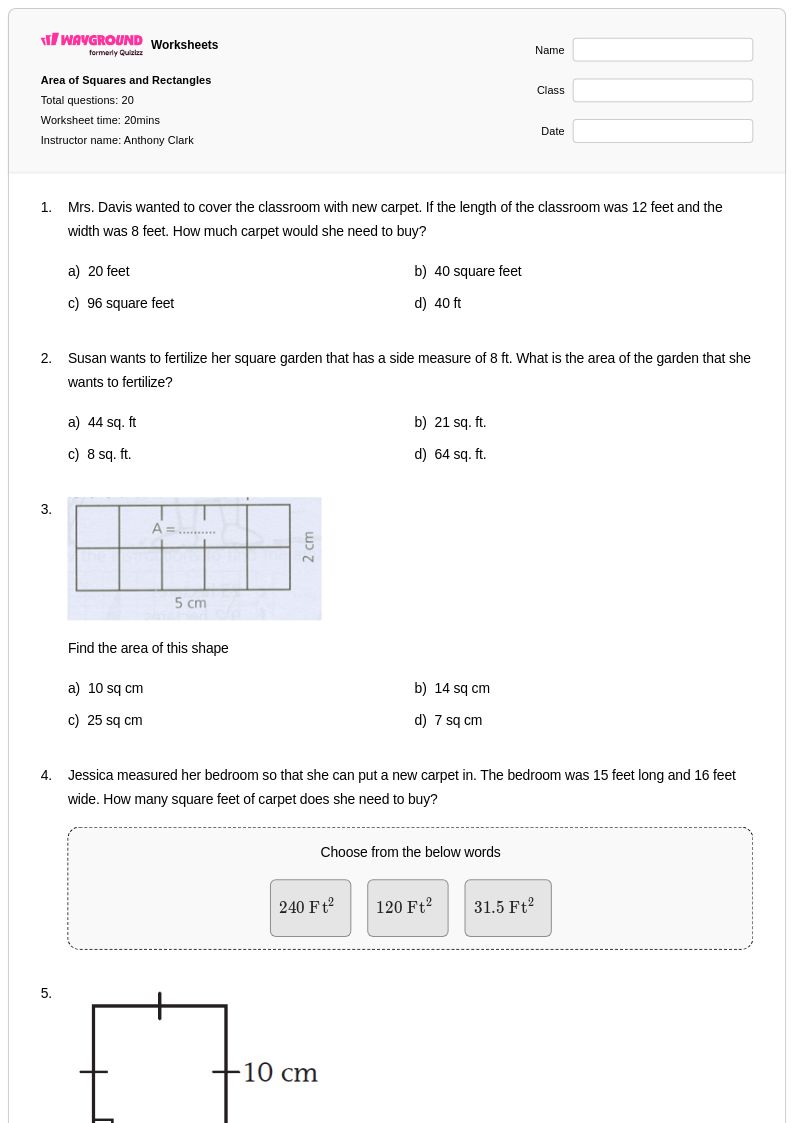
20 Q
3rd - Uni
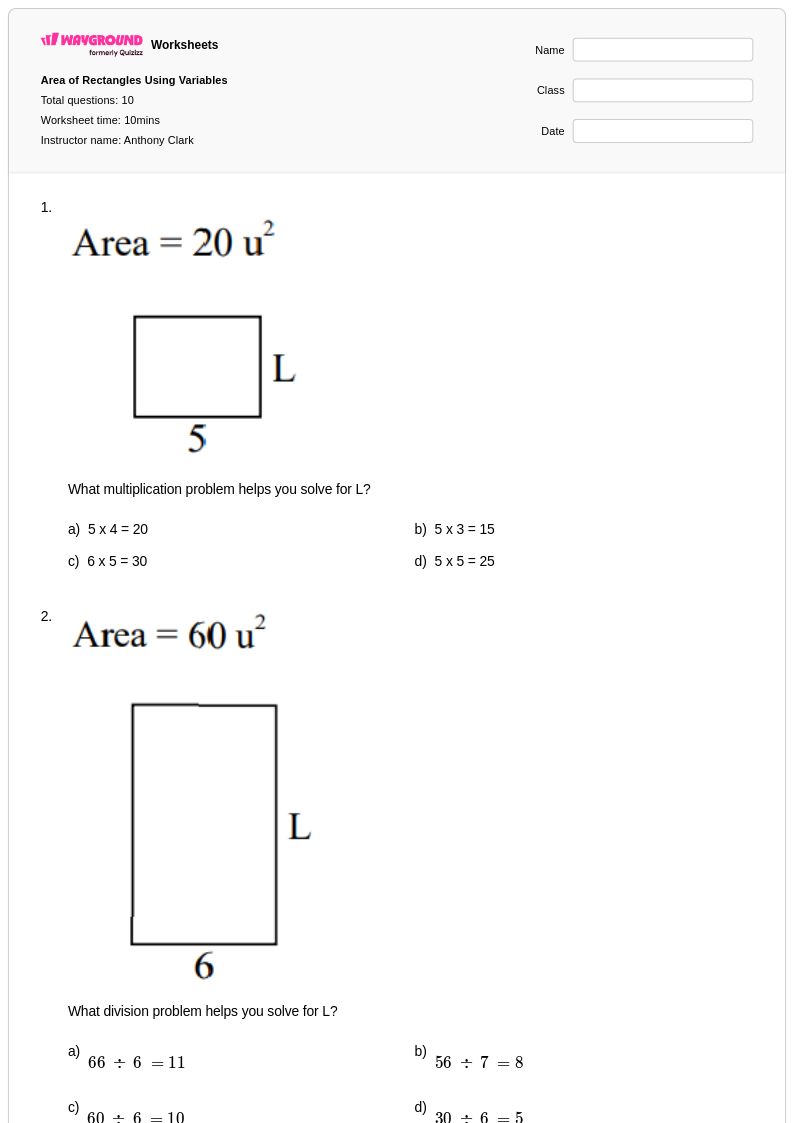
10 Q
3rd - Uni
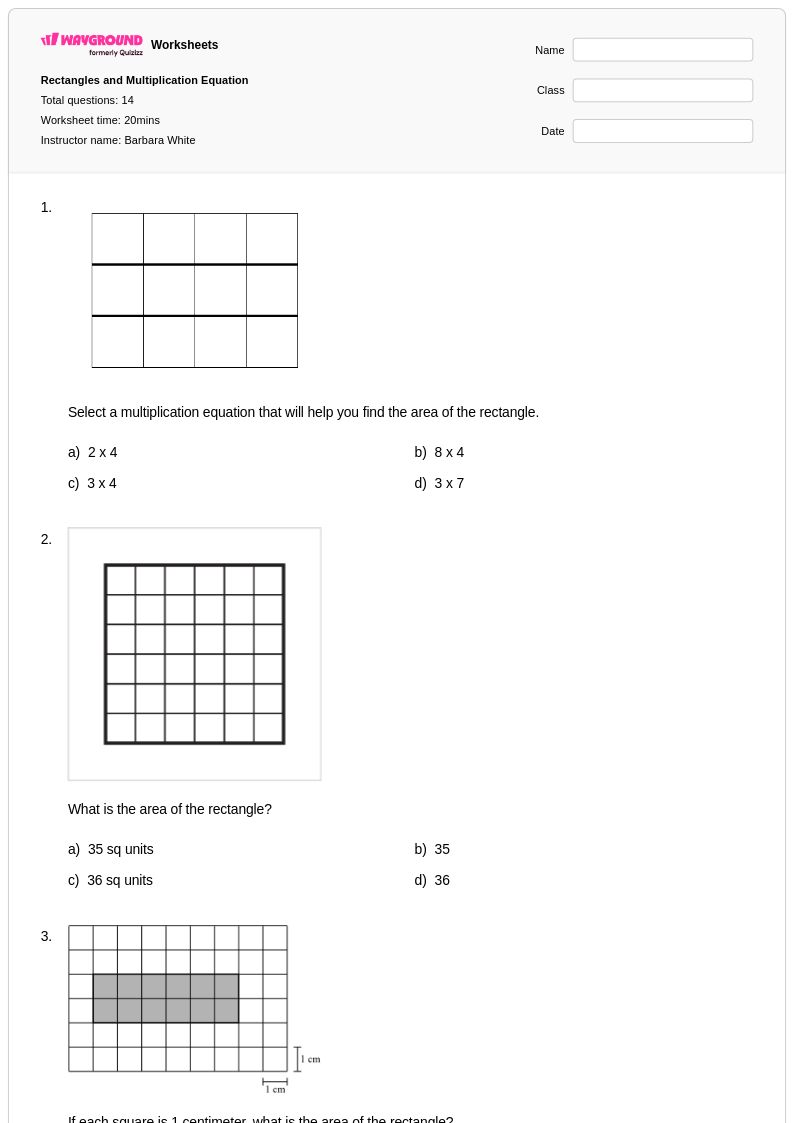
14 Q
3rd
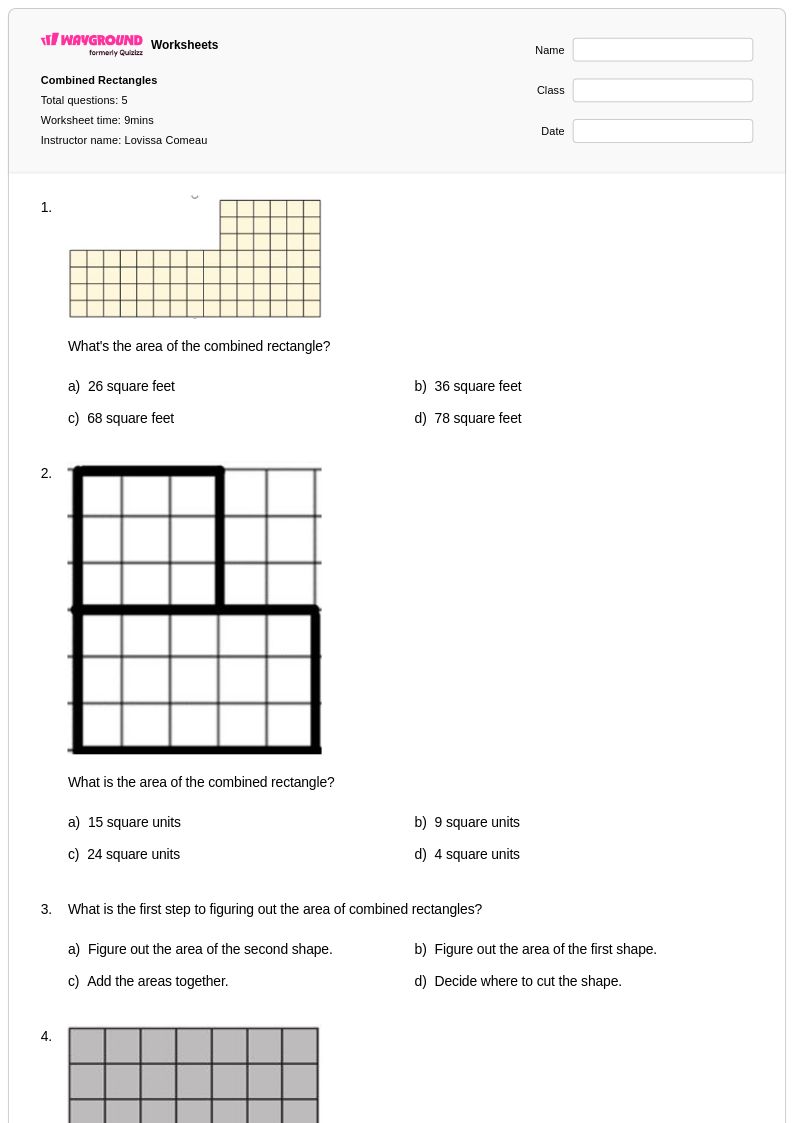
5 Q
3rd
10 Q
3rd
21 Q
3rd
20 Q
1st - Uni
8 Q
3rd - Uni
17 Q
3rd
12 Q
3rd
18 Q
3rd
20 Q
3rd
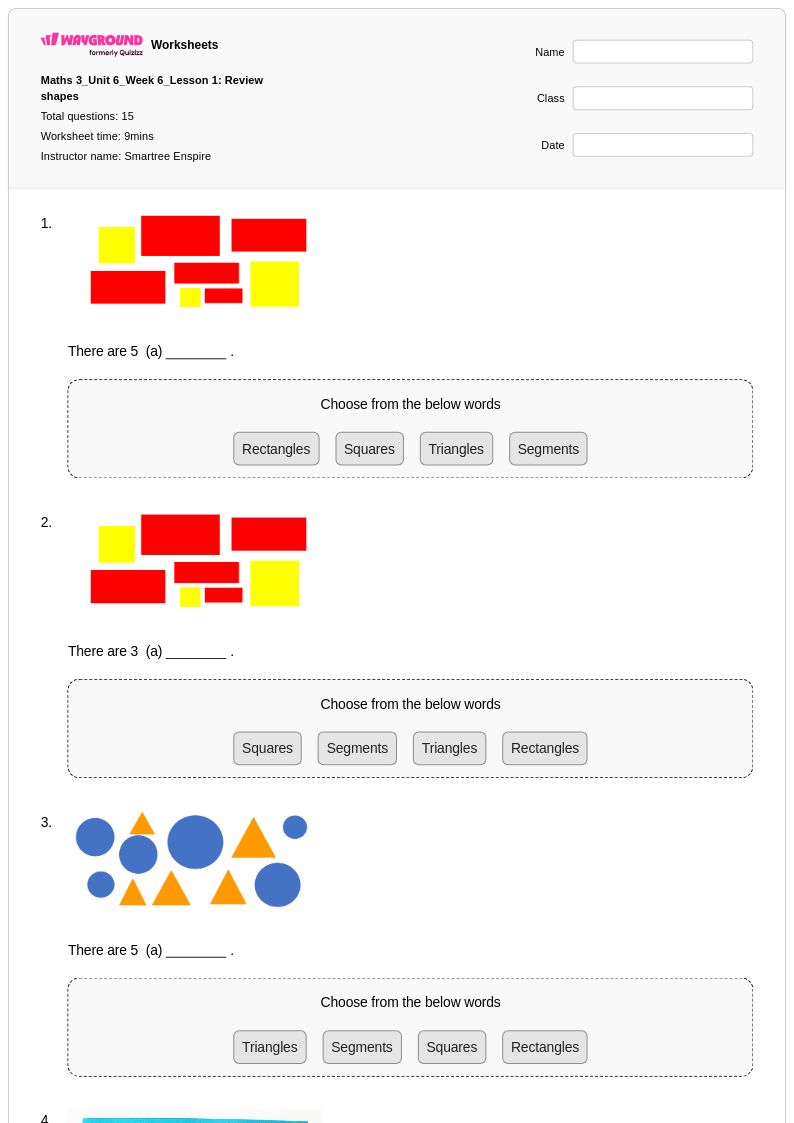
15 Q
3rd
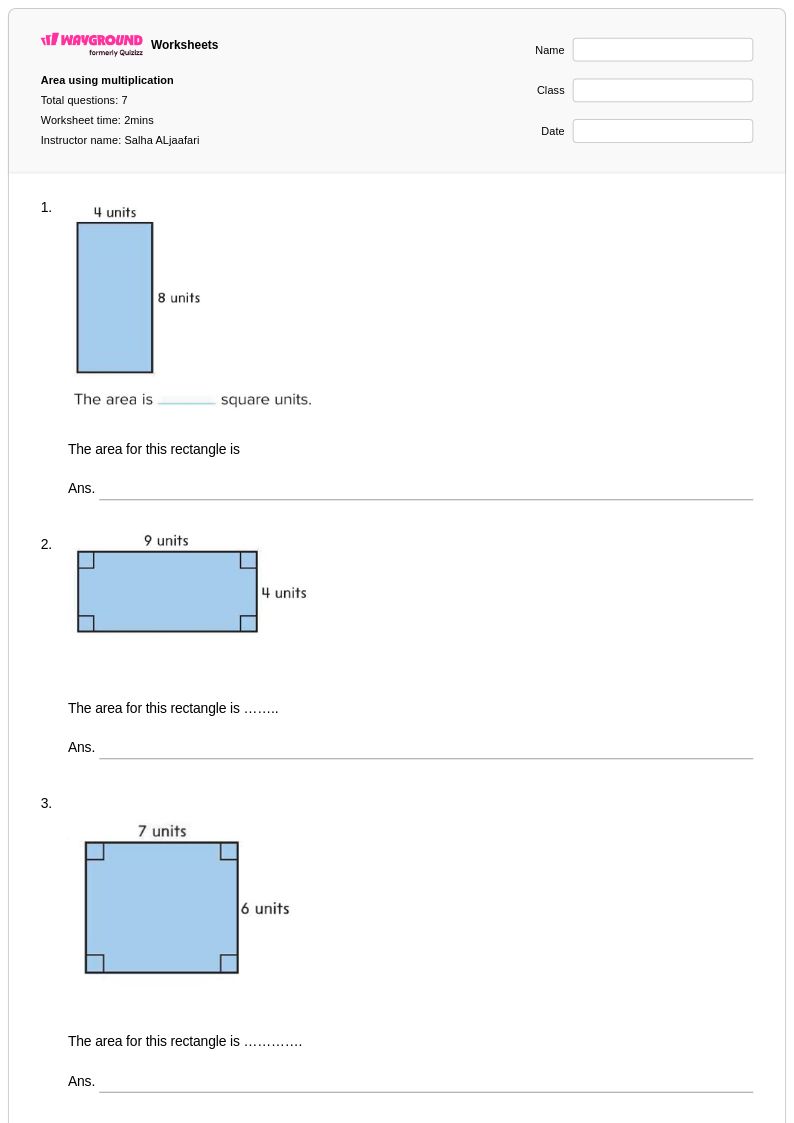
7 Q
3rd
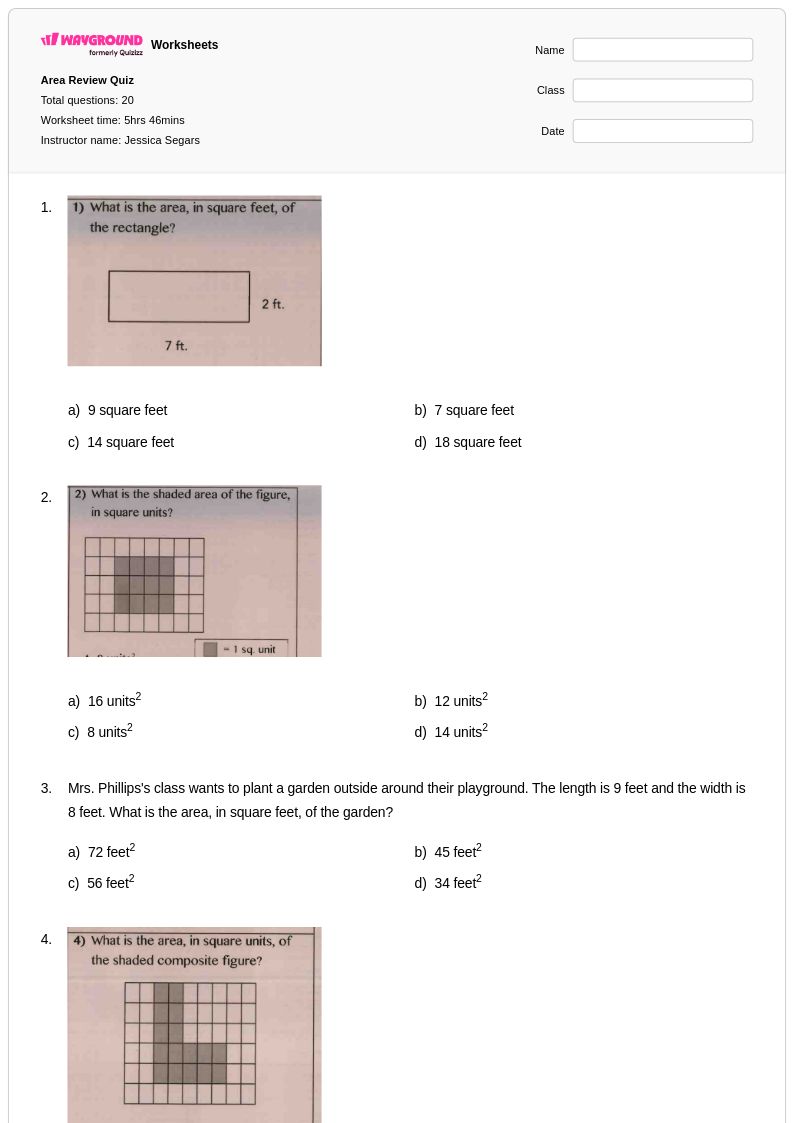
20 Q
3rd
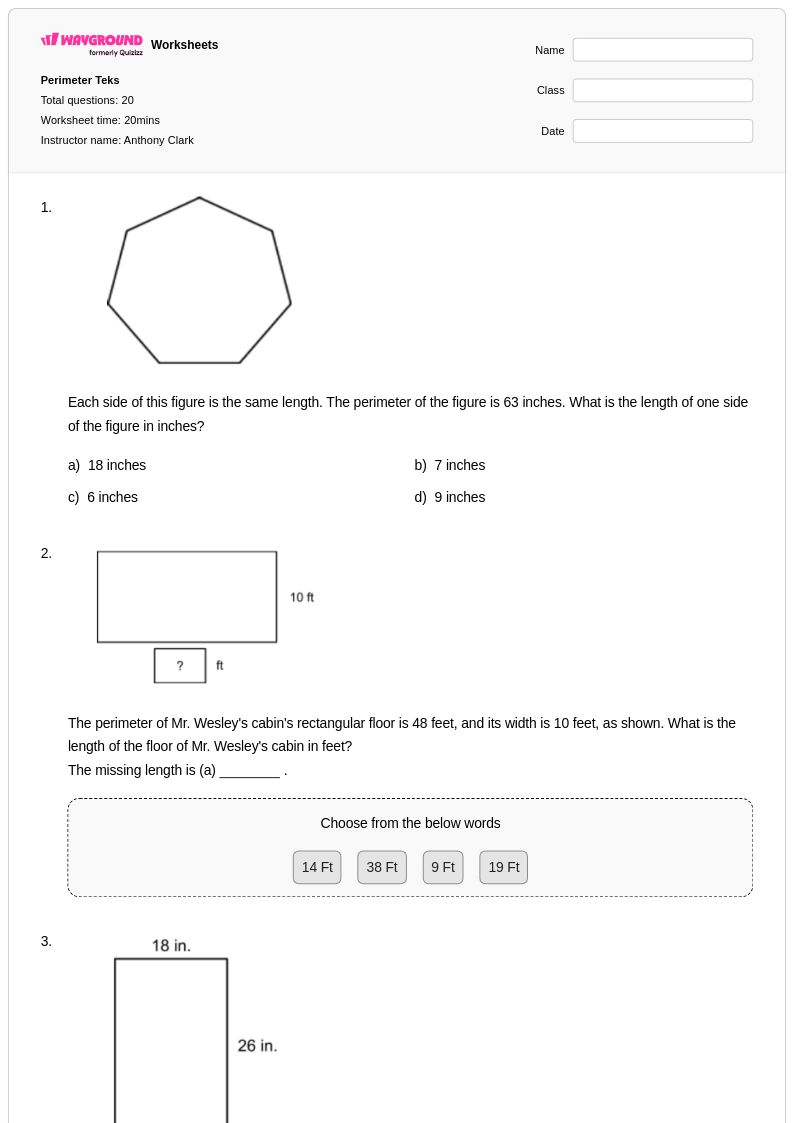
20 Q
3rd - Uni
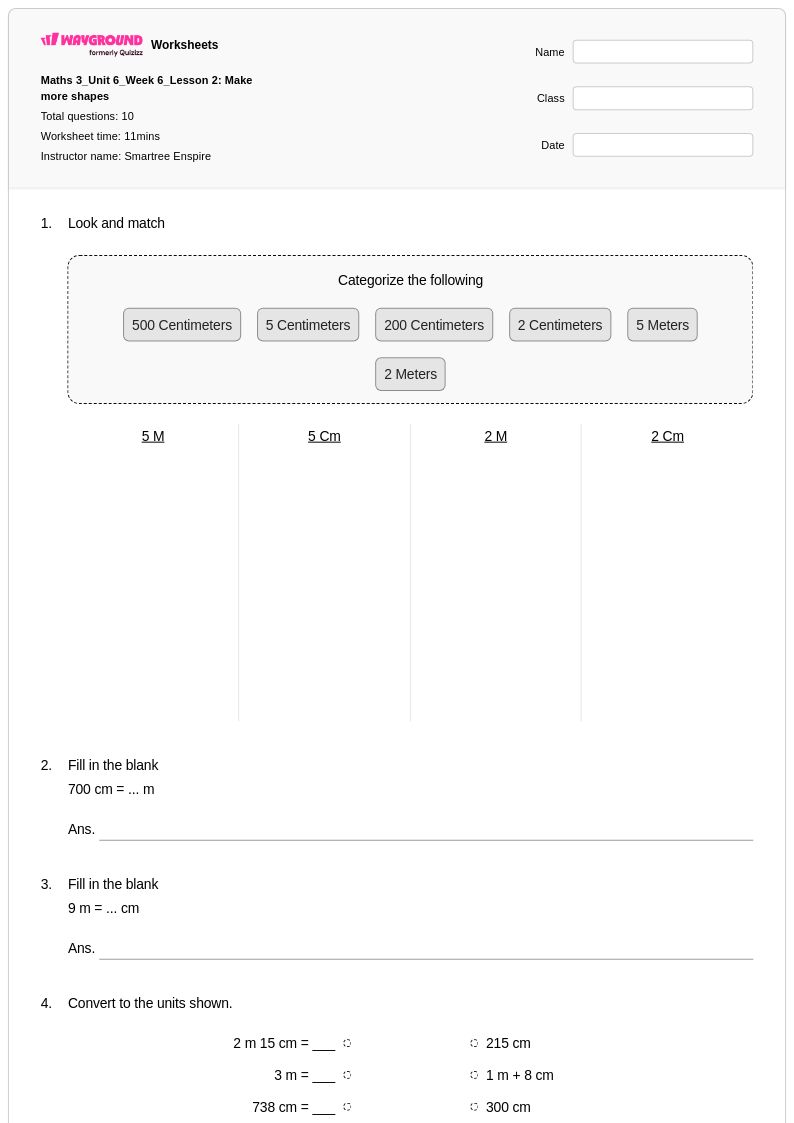
10 Q
3rd
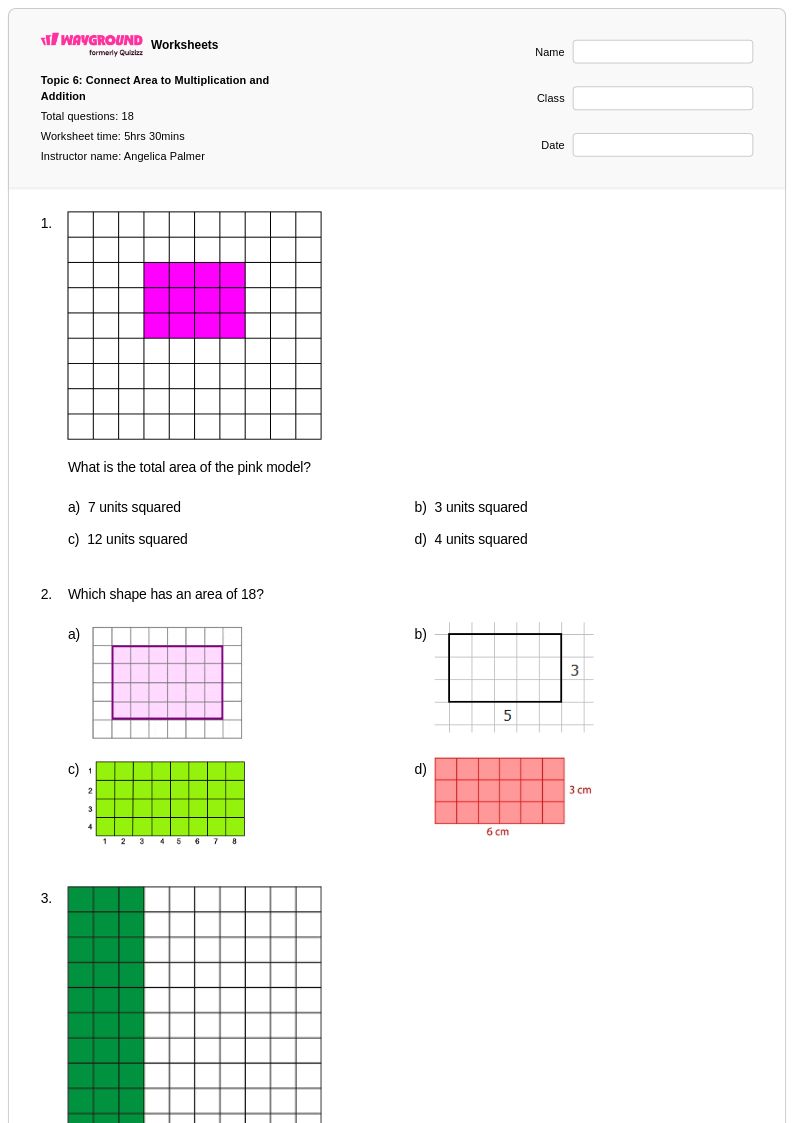
18 Q
3rd
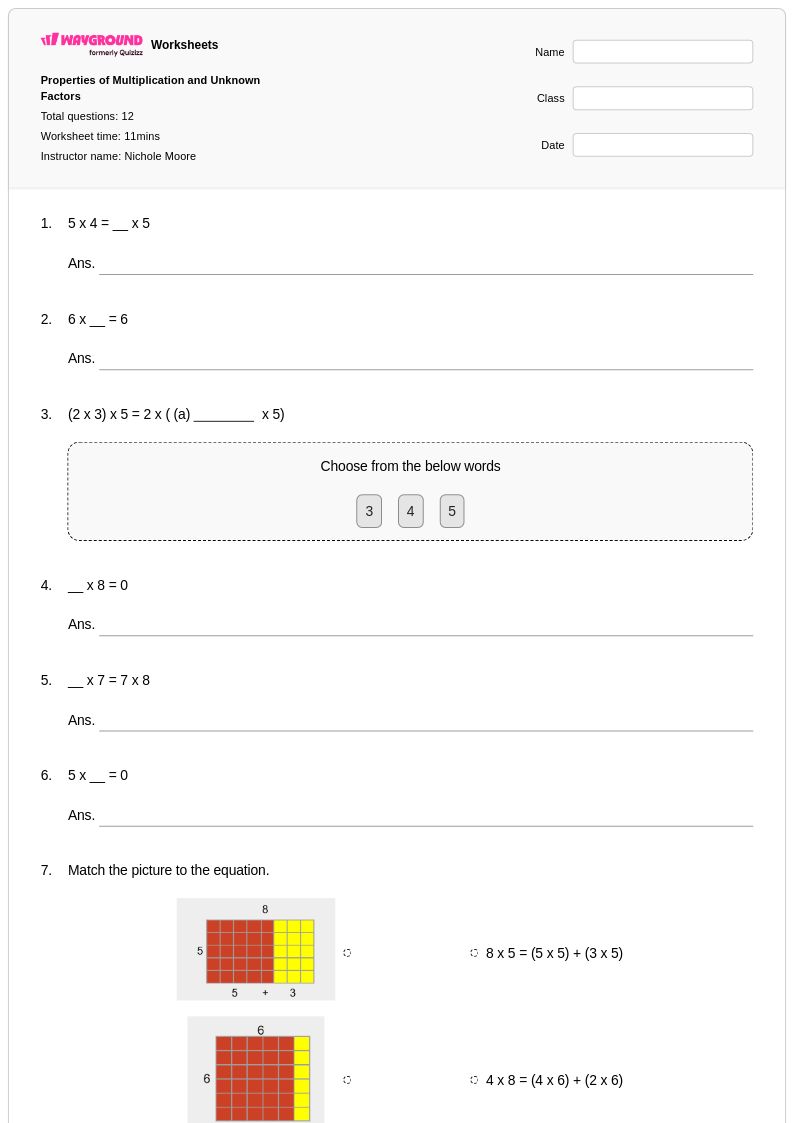
12 Q
3rd
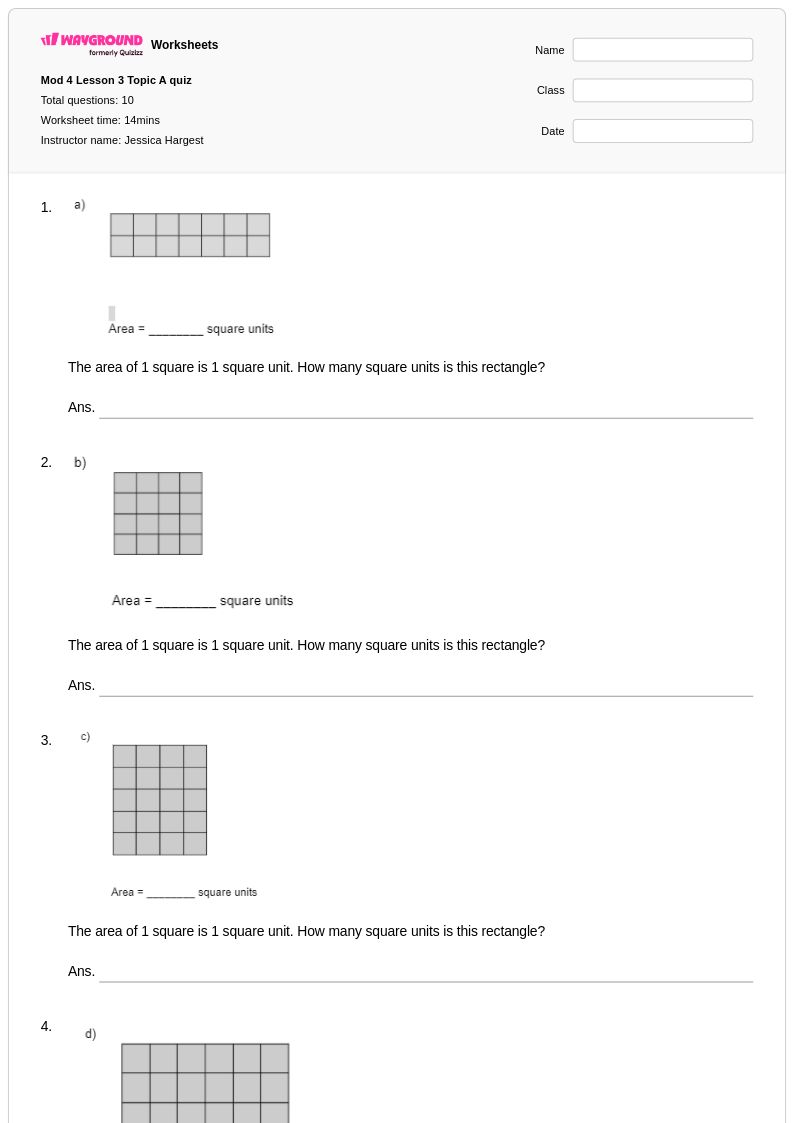
10 Q
2nd - 4th
Explore Other Subject Worksheets for year 3
Explore printable Rectangles worksheets for Year 3
Rectangles worksheets for Year 3 students available through Wayground (formerly Quizizz) provide comprehensive practice with one of the most fundamental quadrilaterals in geometry. These carefully designed worksheets help young learners identify rectangles by their defining characteristics, including four right angles and opposite sides that are equal in length. Students strengthen essential geometric reasoning skills as they distinguish rectangles from other shapes, measure rectangle dimensions, and solve problems involving rectangular objects in real-world contexts. Each worksheet collection includes detailed answer keys and is available as free printable pdf resources, making it easy for educators to incorporate meaningful practice problems into daily instruction while building students' spatial awareness and mathematical vocabulary.
Wayground (formerly Quizizz) supports teachers with an extensive library of millions of teacher-created rectangle worksheets specifically designed for Year 3 mathematics instruction. The platform's robust search and filtering capabilities allow educators to quickly locate materials that align with specific learning standards and match their students' skill levels. Teachers benefit from built-in differentiation tools that enable them to customize worksheets for remediation or enrichment purposes, ensuring every student receives appropriate challenge and support. These versatile resources are available in both printable and digital formats, including downloadable pdf options, giving educators the flexibility to seamlessly integrate rectangle practice into lesson planning, homework assignments, or assessment preparation while addressing diverse learning preferences and classroom technology capabilities.
FAQs
What is the main focus for rectangles in 3rd grade math?
How do I introduce the concept of area using rectangles?
What exercises build 3rd graders' understanding of area and rectangles?
What is the most common error 3rd graders make with rectangles?
How can I use these 3rd grade rectangle worksheets for practice or assessment?
How do 3rd grade lessons on rectangles relate to the Common Core?
How can I differentiate practice for students learning about area?