Enhance Year 12 biology mastery with Wayground's comprehensive replication worksheets featuring printable PDFs, practice problems, and answer keys that help students understand DNA replication processes and molecular mechanisms.
Explore printable Replication worksheets for Year 12
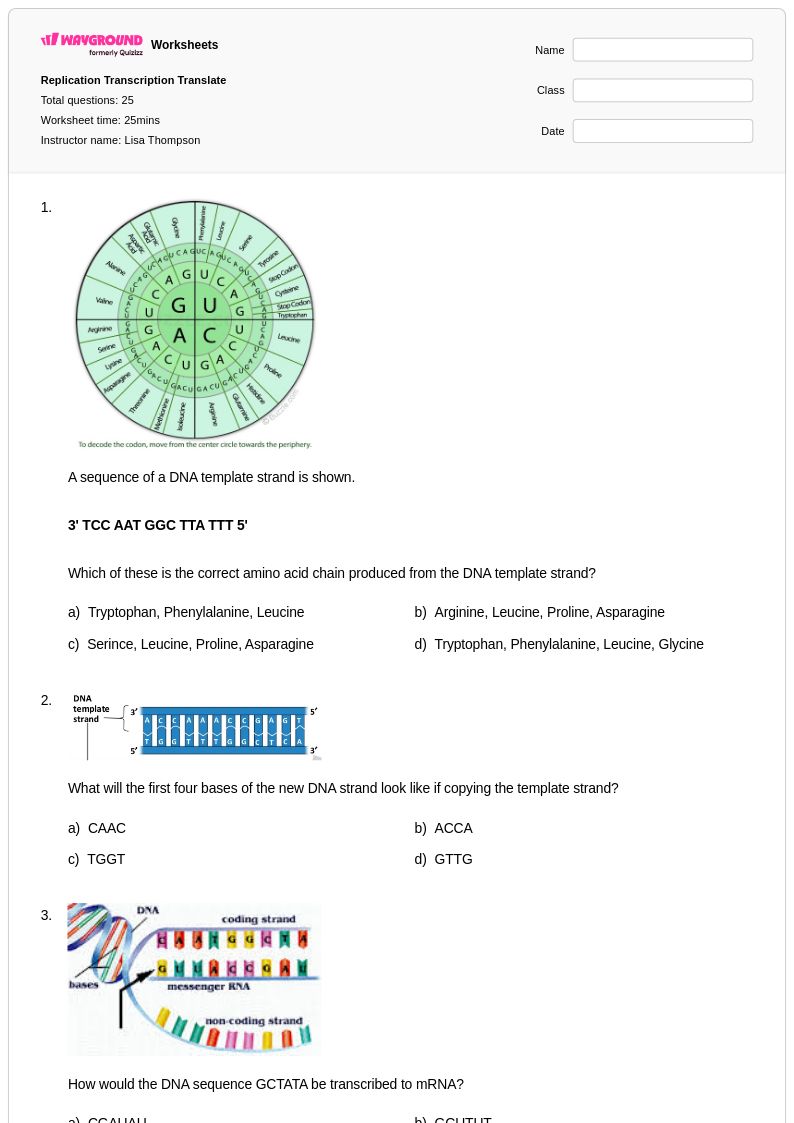
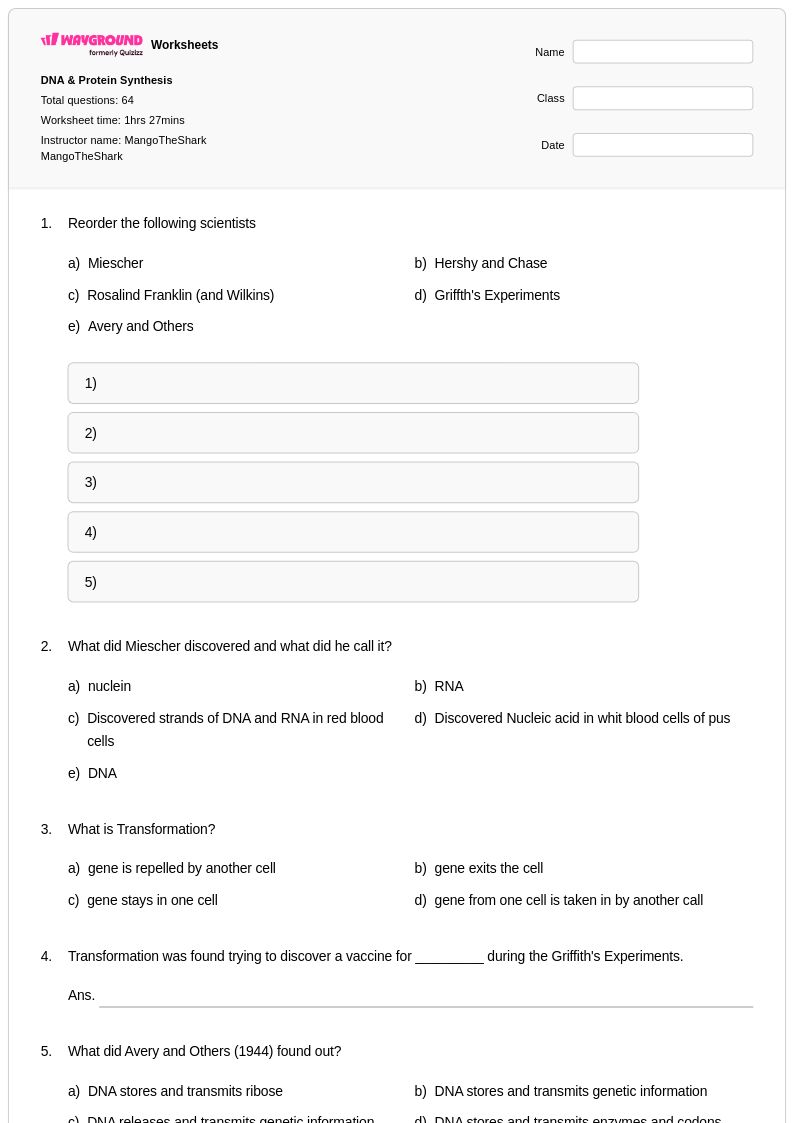
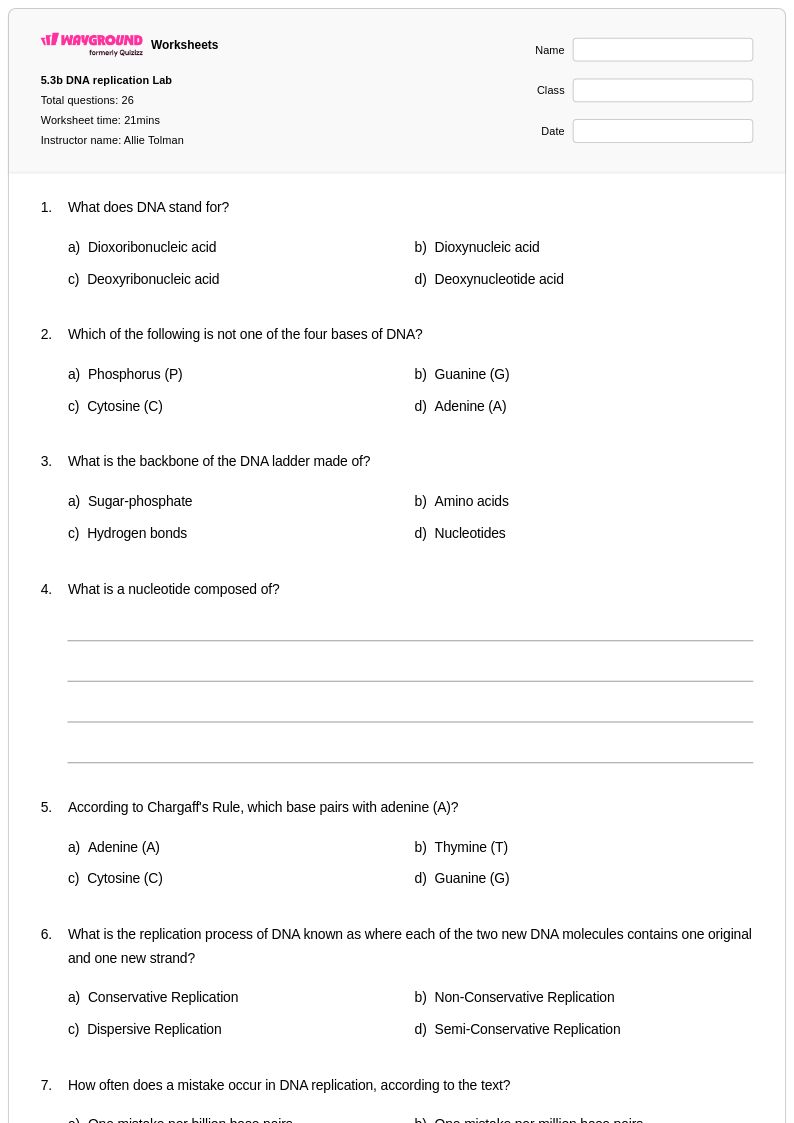
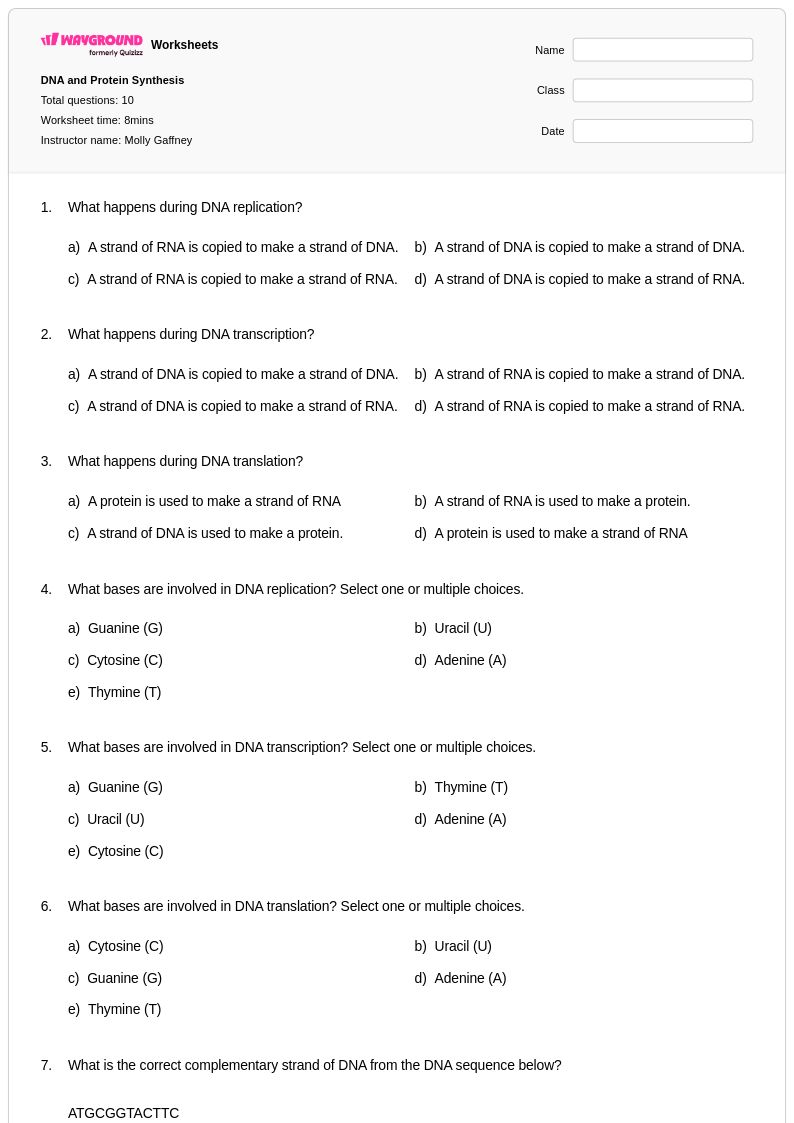
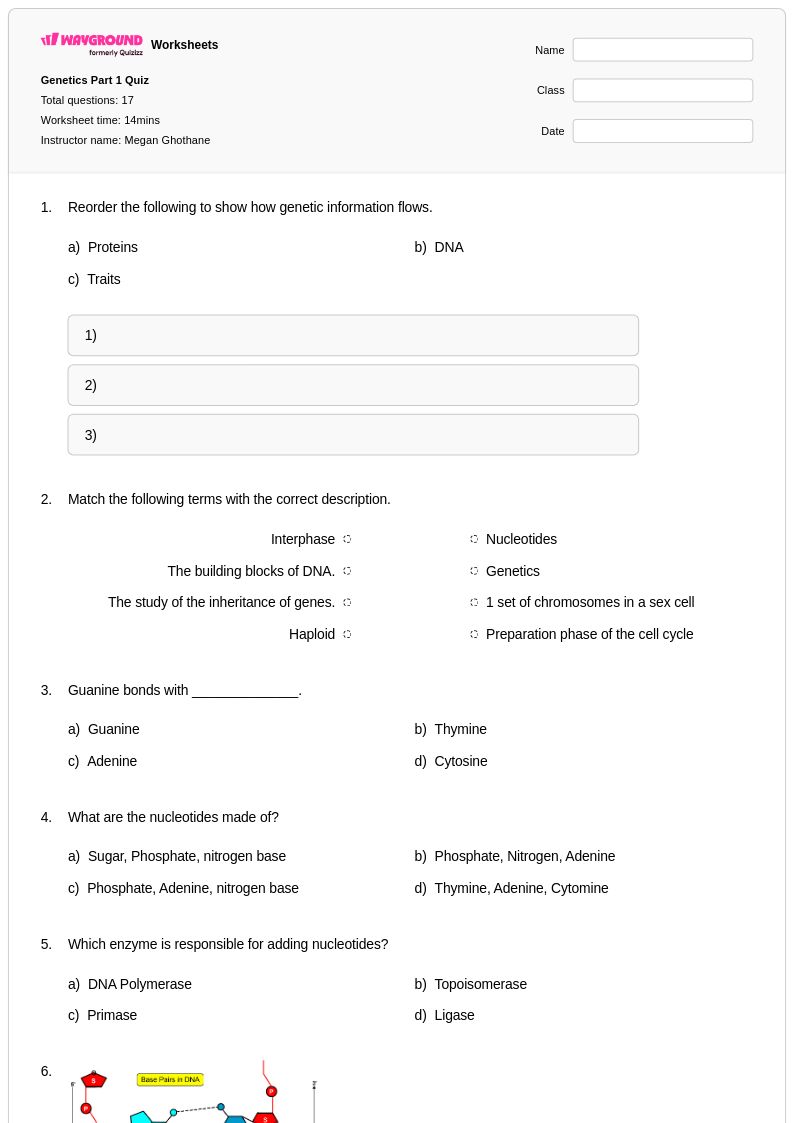
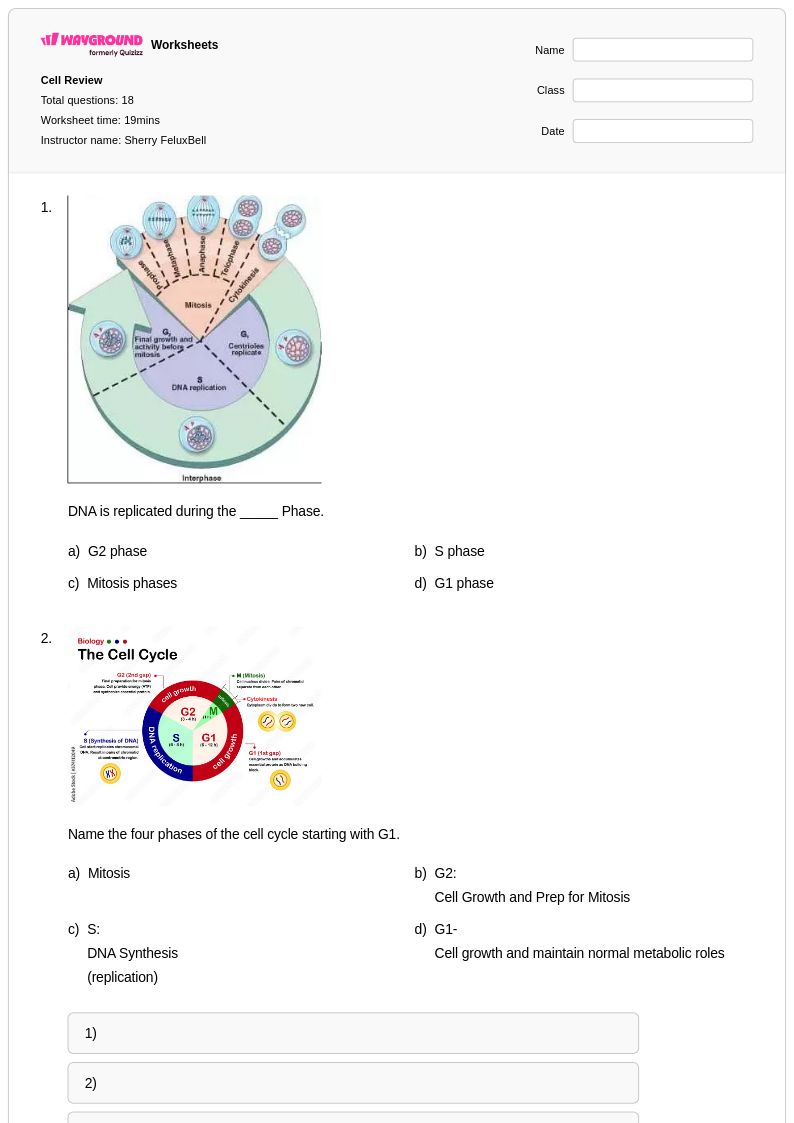
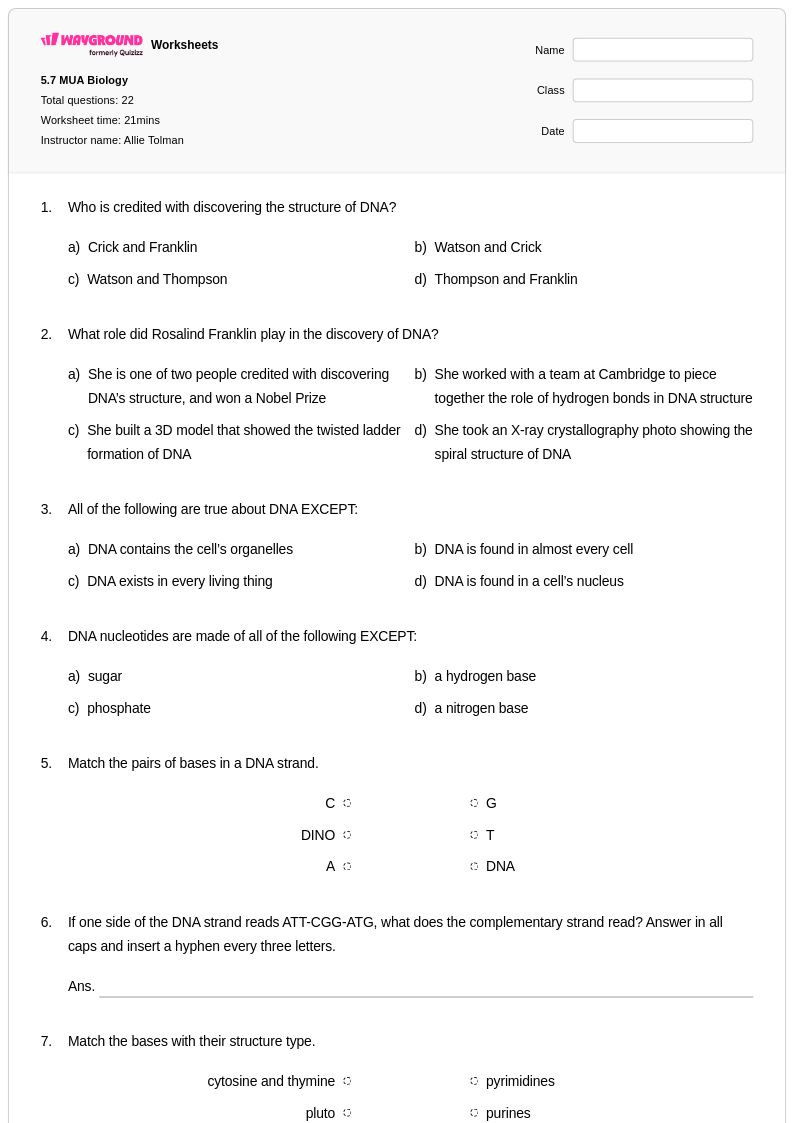
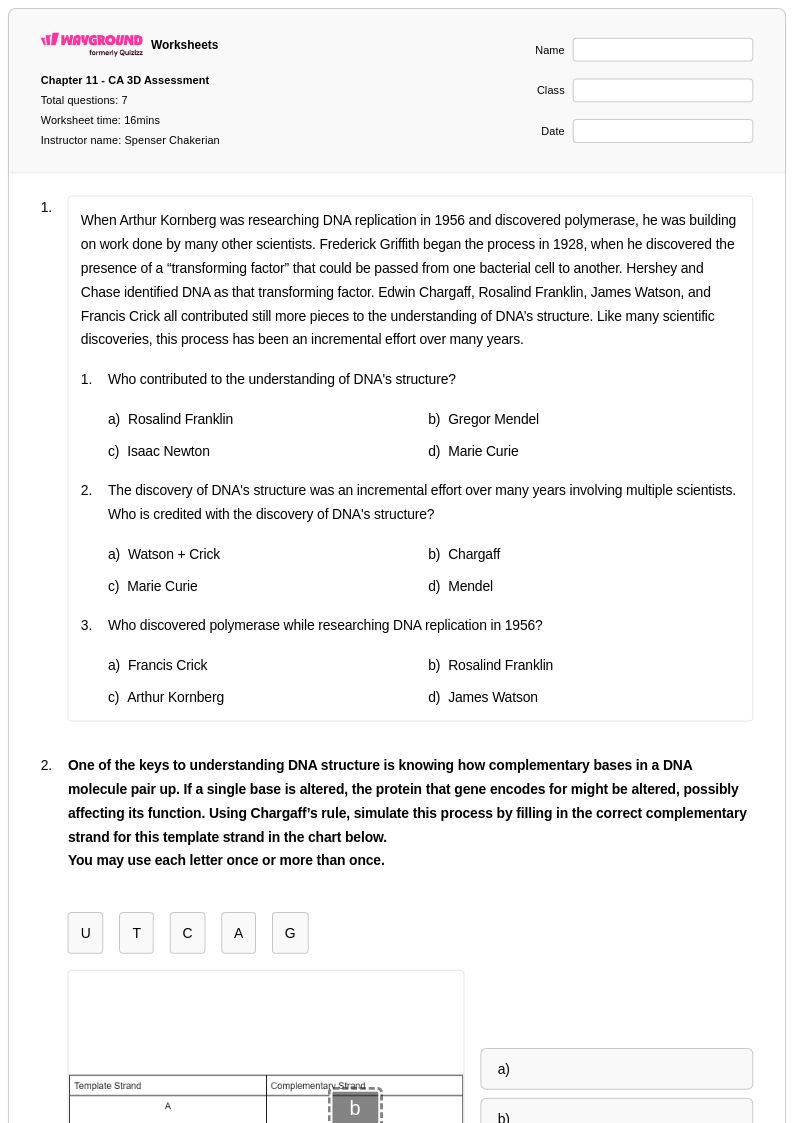
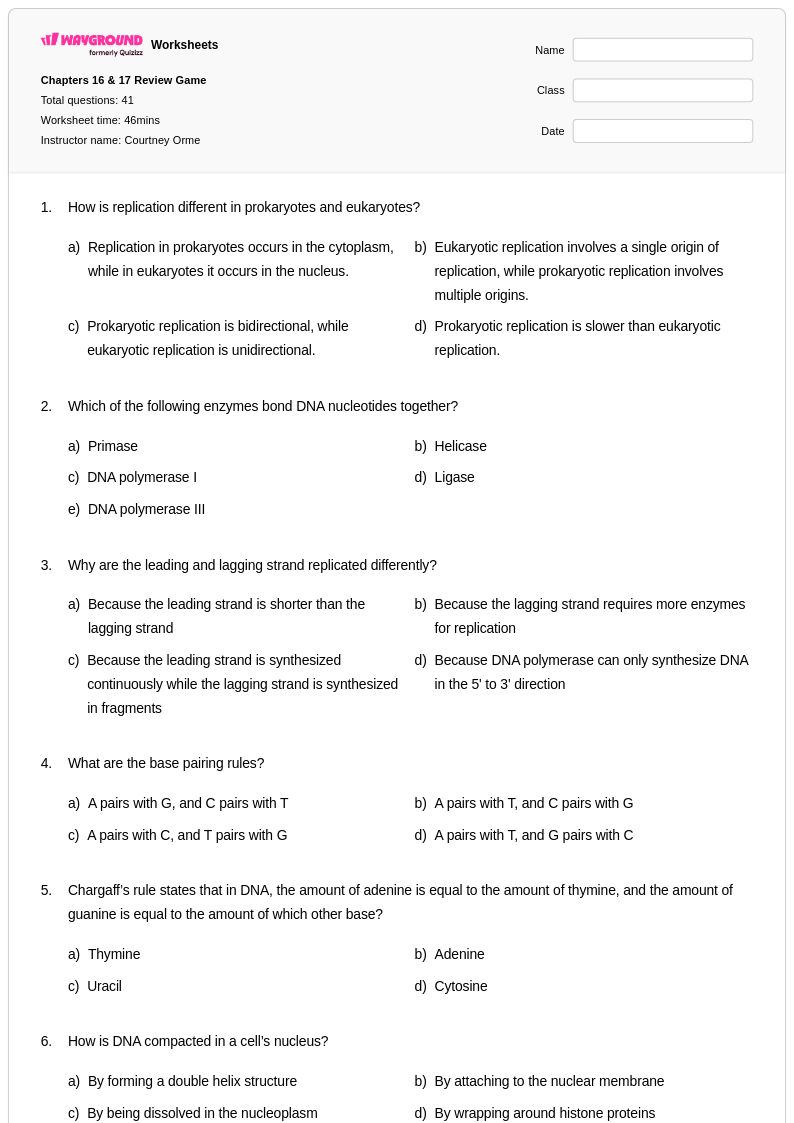
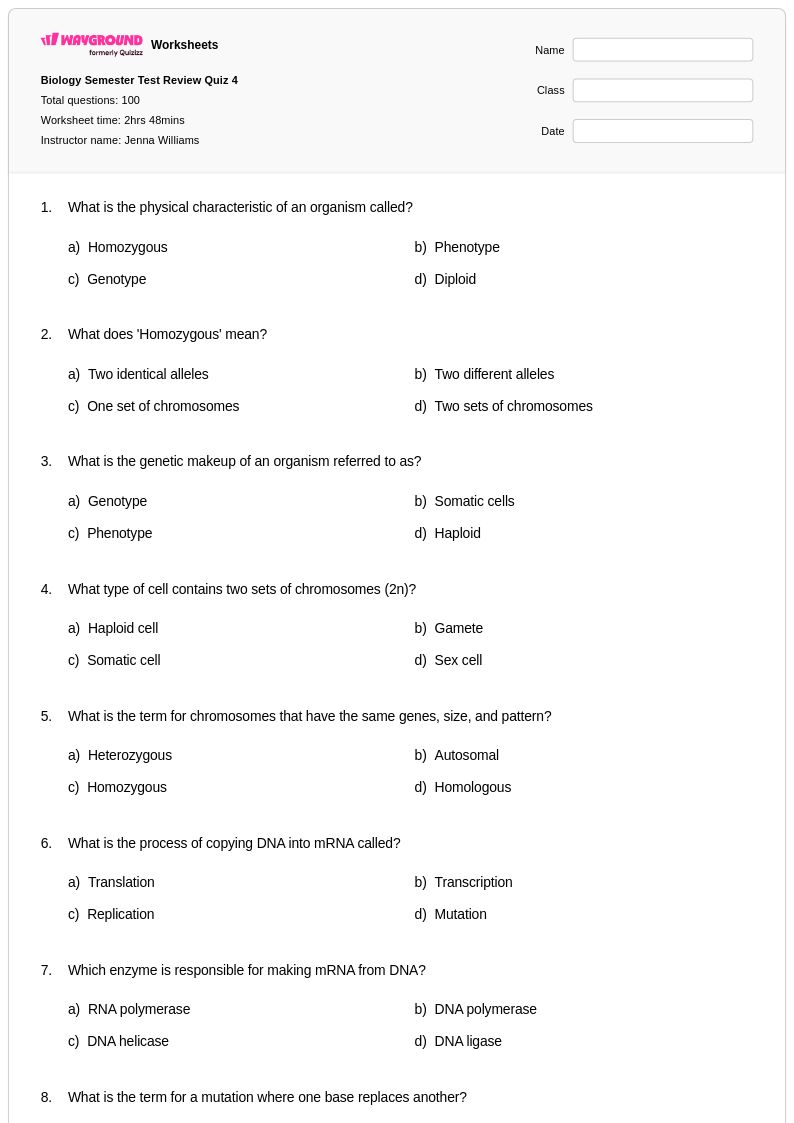
Replication worksheets for Year 12 biology students available through Wayground (formerly Quizizz) provide comprehensive coverage of DNA replication processes, molecular mechanisms, and cellular biology concepts essential for advanced high school study. These expertly designed worksheets strengthen critical thinking skills through detailed practice problems that explore semiconservative replication, enzyme functions including DNA polymerase and helicase, leading and lagging strand synthesis, and Okazaki fragment formation. Students engage with complex scenarios involving replication errors, proofreading mechanisms, and the relationship between DNA structure and replication fidelity. Each worksheet includes a complete answer key and is available as a free printable pdf, allowing students to work through challenging problems that reinforce understanding of molecular biology principles and prepare them for college-level coursework.
Wayground (formerly Quizizz) supports biology educators with an extensive collection of millions of teacher-created replication worksheets that streamline lesson planning and enhance instructional effectiveness. The platform's robust search and filtering capabilities enable teachers to quickly locate materials aligned with specific curriculum standards and learning objectives, while differentiation tools allow for seamless customization based on individual student needs and ability levels. These replication-focused resources are available in both printable and digital pdf formats, providing flexibility for classroom instruction, homework assignments, laboratory supplements, and assessment preparation. Teachers utilize these comprehensive worksheet collections for targeted skill practice, remediation of challenging molecular concepts, and enrichment activities that deepen student understanding of DNA replication's role in cellular reproduction and genetic inheritance.
FAQs
How do I teach DNA replication to high school biology students?
Start by building students' understanding of DNA structure before introducing replication mechanics, since students cannot follow enzyme activity without knowing what DNA looks like. Use the replication fork as a visual anchor to organize the roles of helicase, primase, and DNA polymerase spatially. Distinguishing leading strand synthesis from lagging strand synthesis early prevents the most common source of confusion, and connecting the proofreading function of DNA polymerase to the concept of genetic fidelity gives students a meaningful reason to care about accuracy.
What are common misconceptions students have about DNA replication?
One of the most persistent misconceptions is that both strands of DNA are synthesized continuously in the same direction, when in fact the lagging strand is synthesized discontinuously as Okazaki fragments. Students also frequently confuse DNA helicase with DNA polymerase, conflating the unwinding step with the synthesis step. Another common error is misunderstanding semiconservative replication: students often assume the new DNA molecule contains entirely new strands rather than one original and one newly synthesized strand.
What practice exercises help students understand the steps of DNA replication?
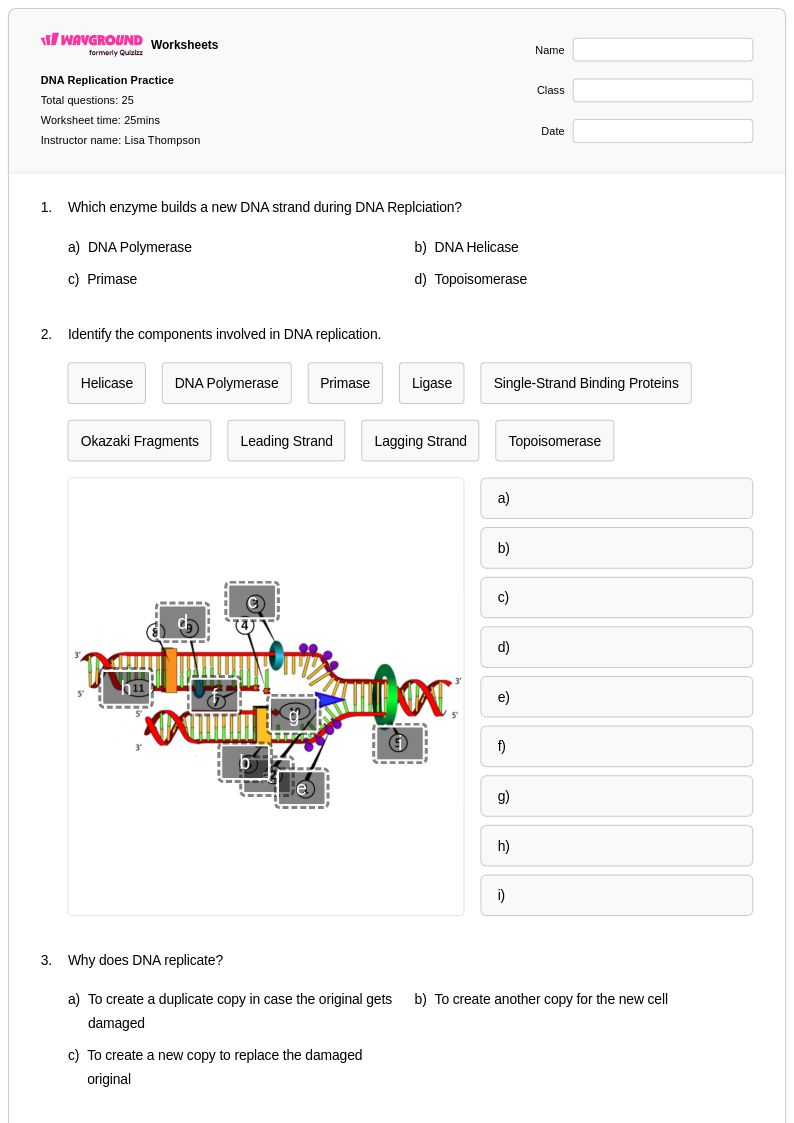
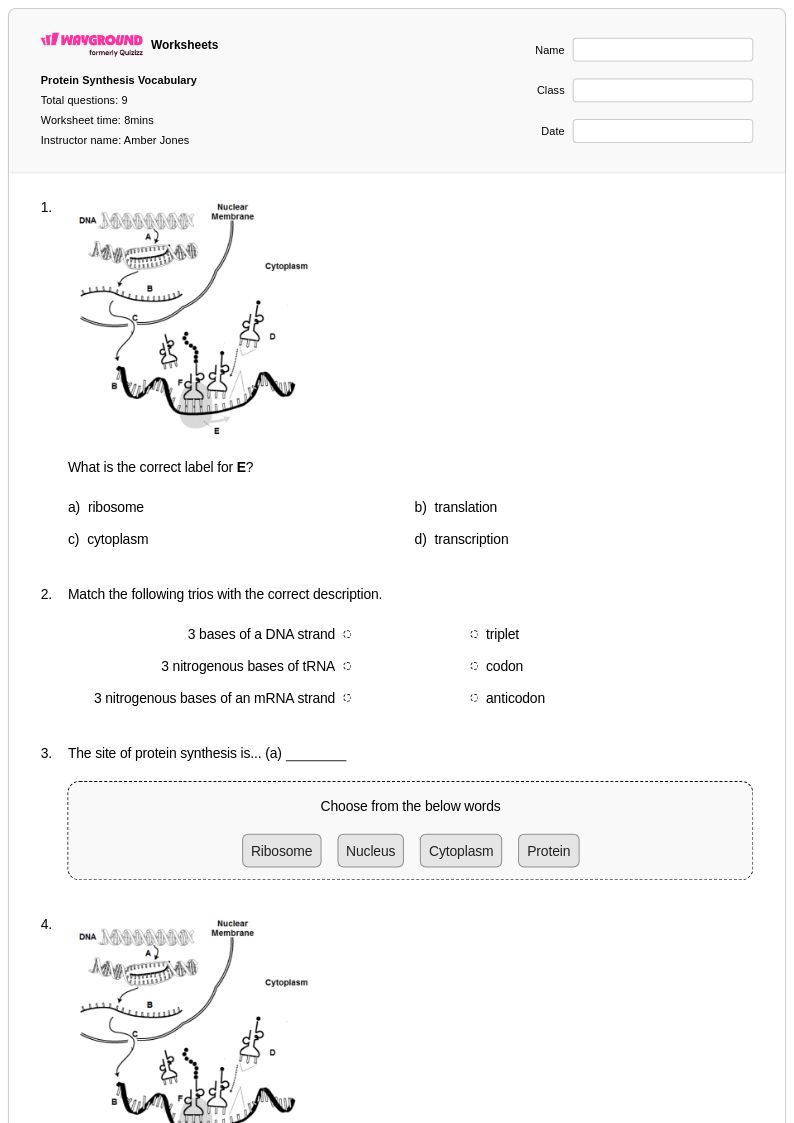
Sequencing exercises that ask students to order the molecular events at the replication fork are highly effective because they require active recall rather than passive recognition. Labeling diagrams of the replication fork, including the leading strand, lagging strand, Okazaki fragments, and key enzymes, reinforces spatial understanding of a process that is easy to memorize superficially but hard to apply. Practice problems that ask students to explain why errors in replication lead to mutations connect the mechanism to broader genetic consequences.
How do I use DNA replication worksheets in my classroom?
DNA replication worksheets on Wayground are available as printable PDFs for traditional classroom use and in digital formats for technology-integrated or remote learning environments, and they can also be hosted as a quiz directly on the Wayground platform. Printable versions work well for guided notes or structured lab follow-ups, while digital formats allow for self-paced review and immediate feedback. Each worksheet includes a complete answer key, making them efficient tools for both in-class instruction and independent student practice.
How can I differentiate DNA replication instruction for students with different biology backgrounds?
For students who are new to molecular biology, scaffolded worksheets that introduce DNA structure before replication mechanics reduce cognitive overload and build foundational understanding first. For advanced students, enrichment problems involving error rates, mutation consequences, or comparisons between prokaryotic and eukaryotic replication add conceptual depth. On Wayground, teachers can apply accommodations such as read aloud support, reduced answer choices, and extended time to individual students, ensuring that differentiation is handled efficiently without disrupting the rest of the class.
How does DNA replication connect to other biology concepts students need to know?
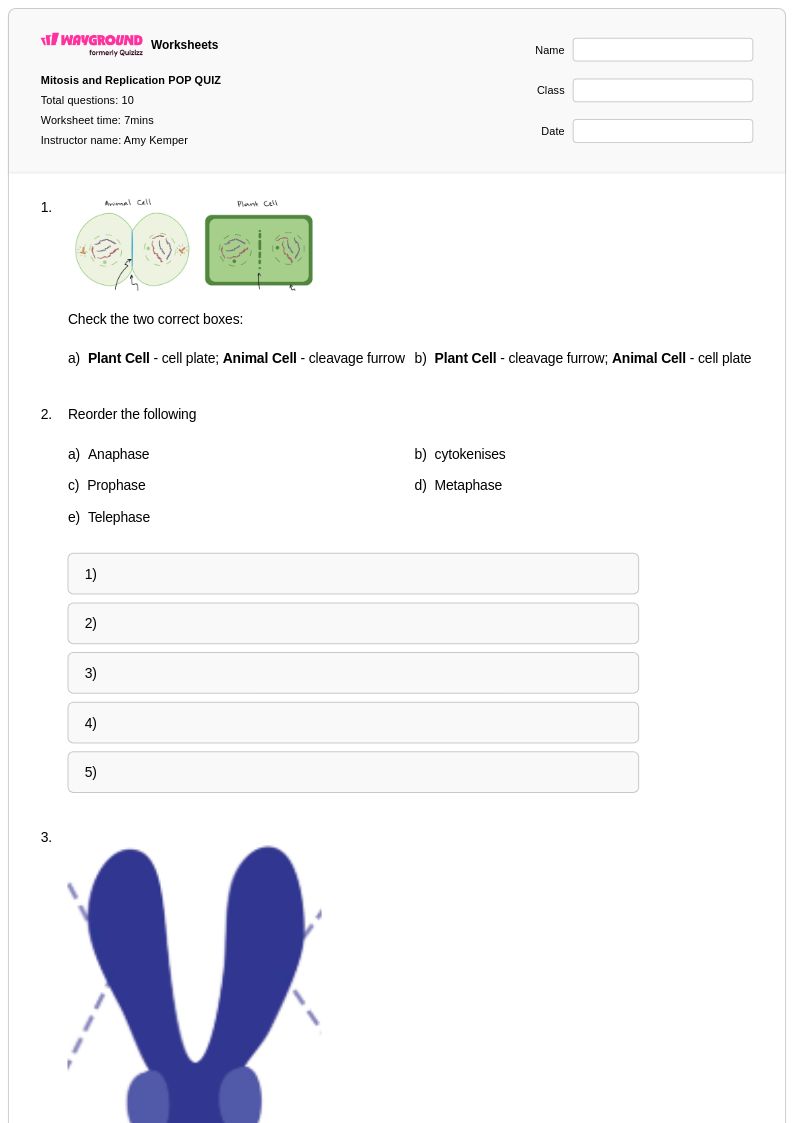
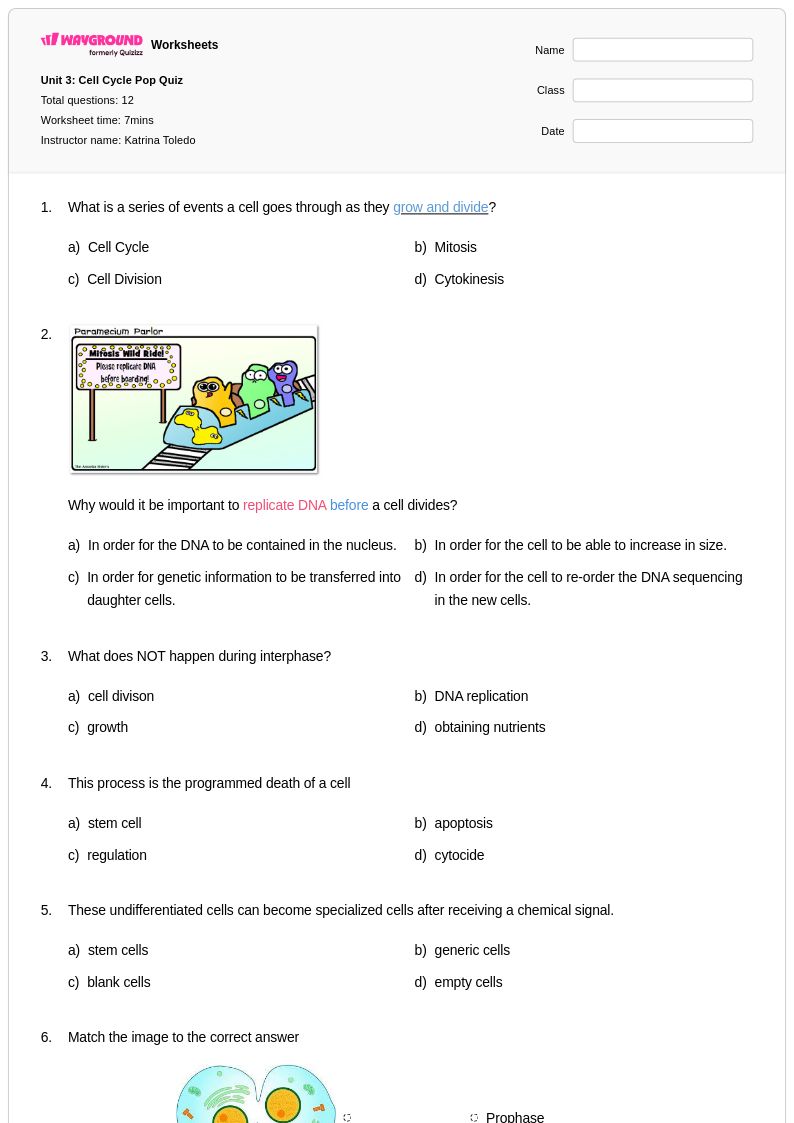
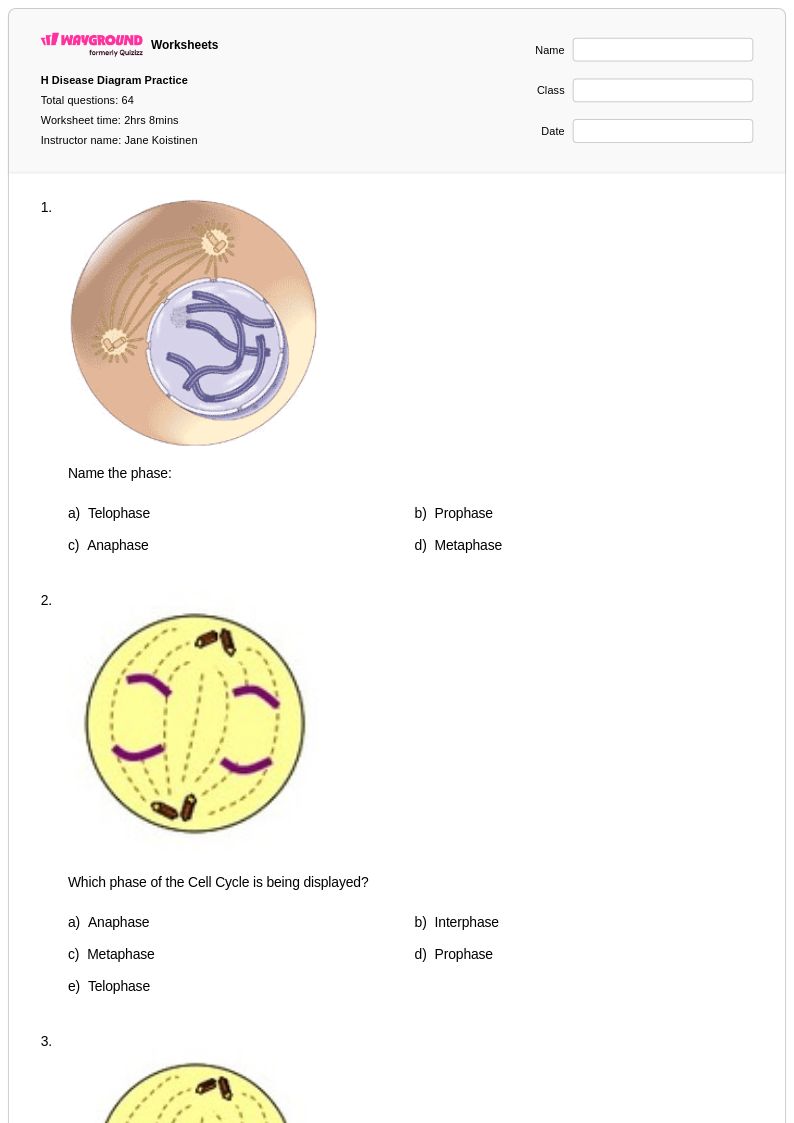
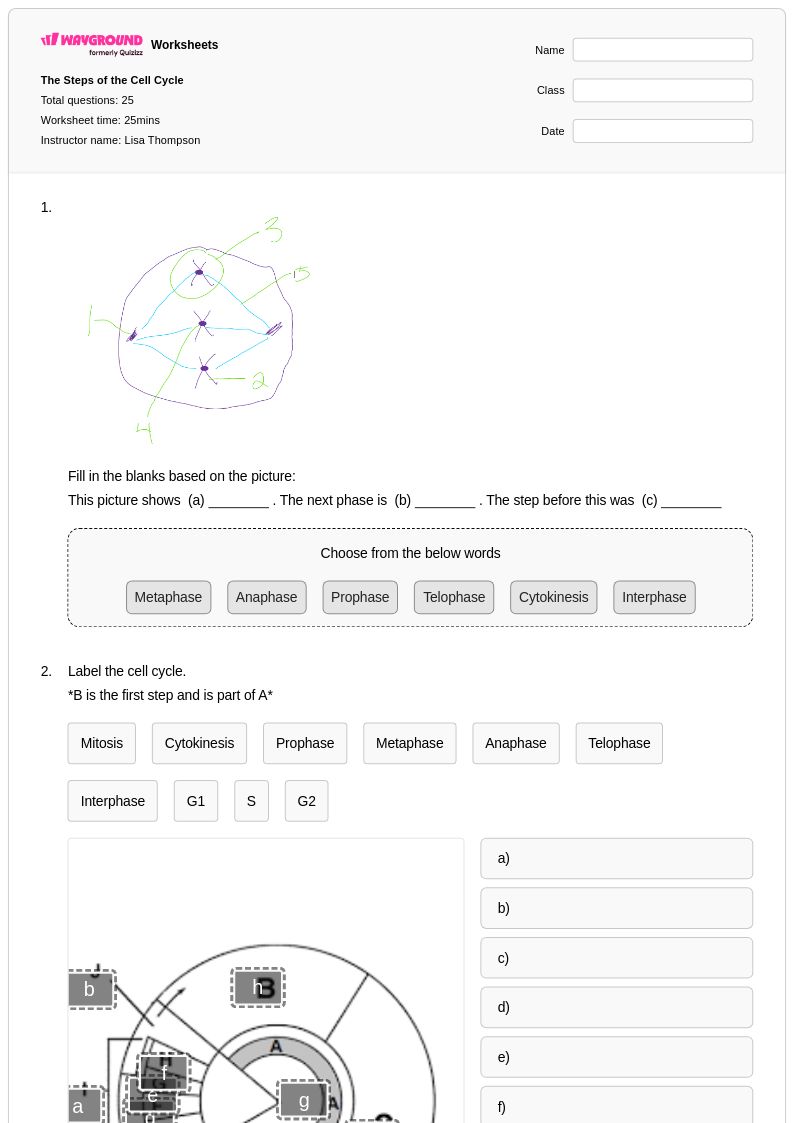
DNA replication is a prerequisite concept for understanding mitosis and meiosis, since accurate chromosome duplication depends entirely on successful replication. It also connects directly to genetics and heredity because errors during replication are a primary source of mutations that can alter gene expression. Understanding the proofreading role of DNA polymerase links replication to cell biology and cancer biology, making it a high-leverage topic that unlocks multiple downstream units.