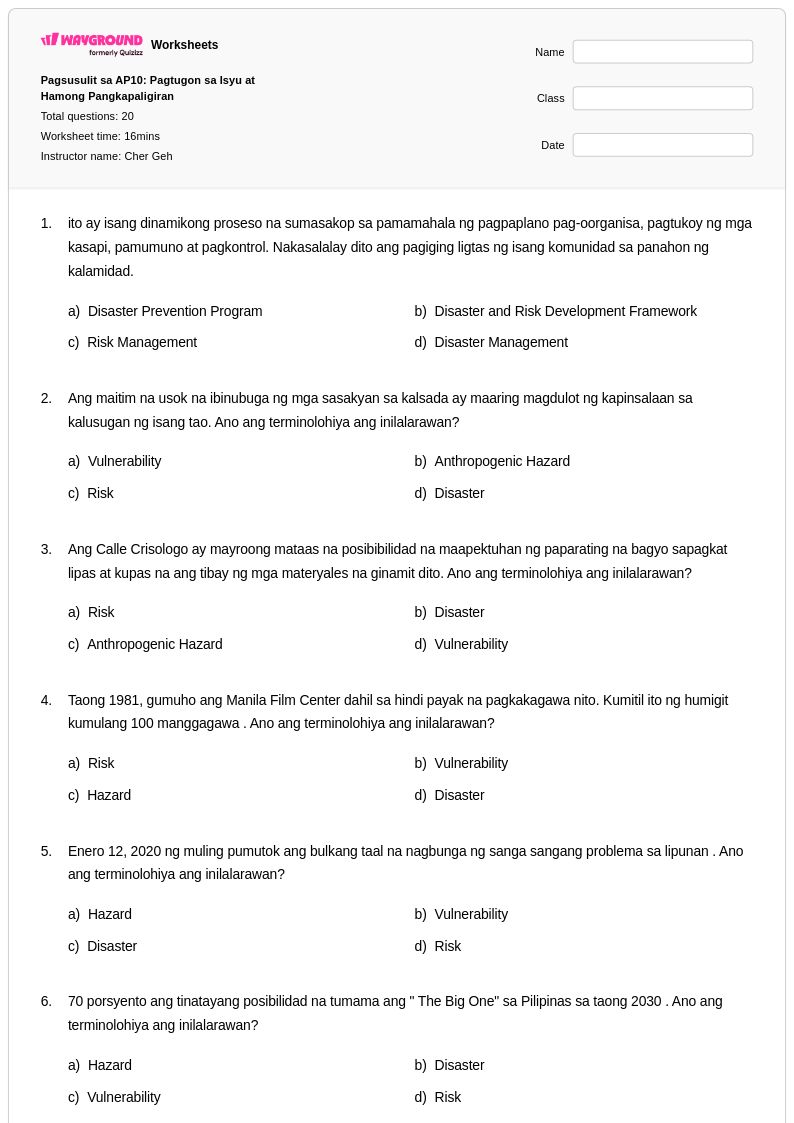
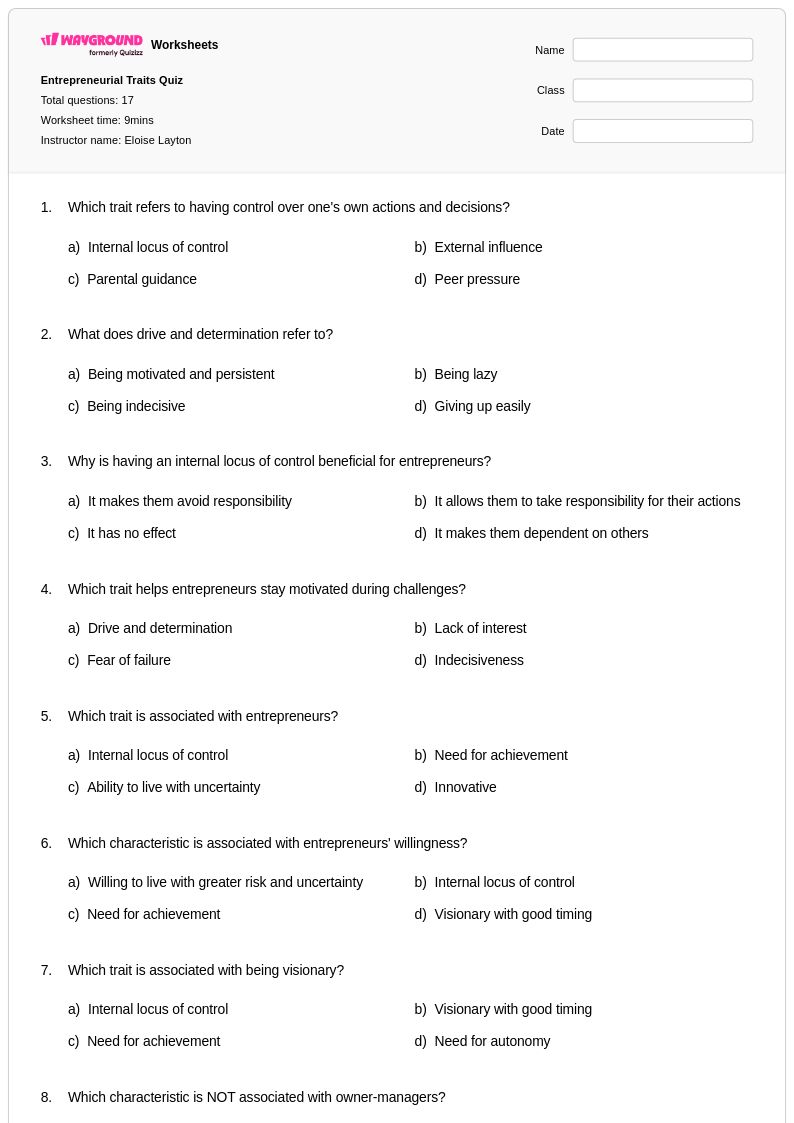
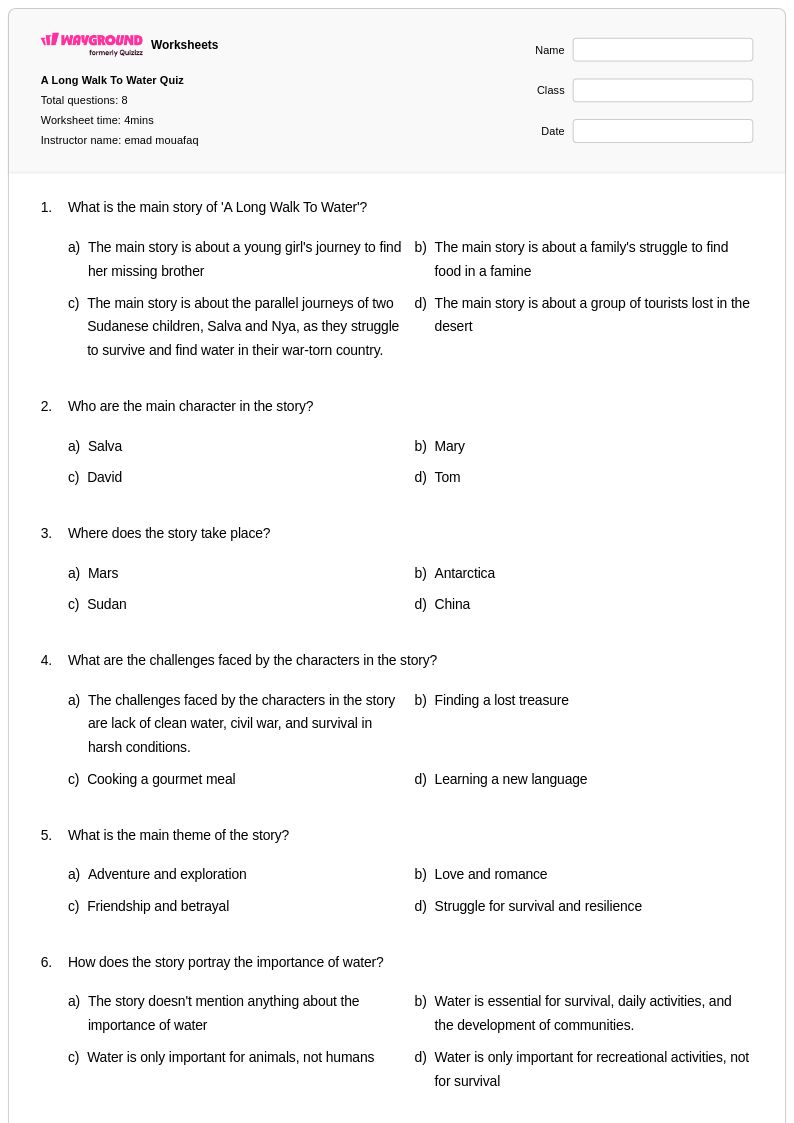
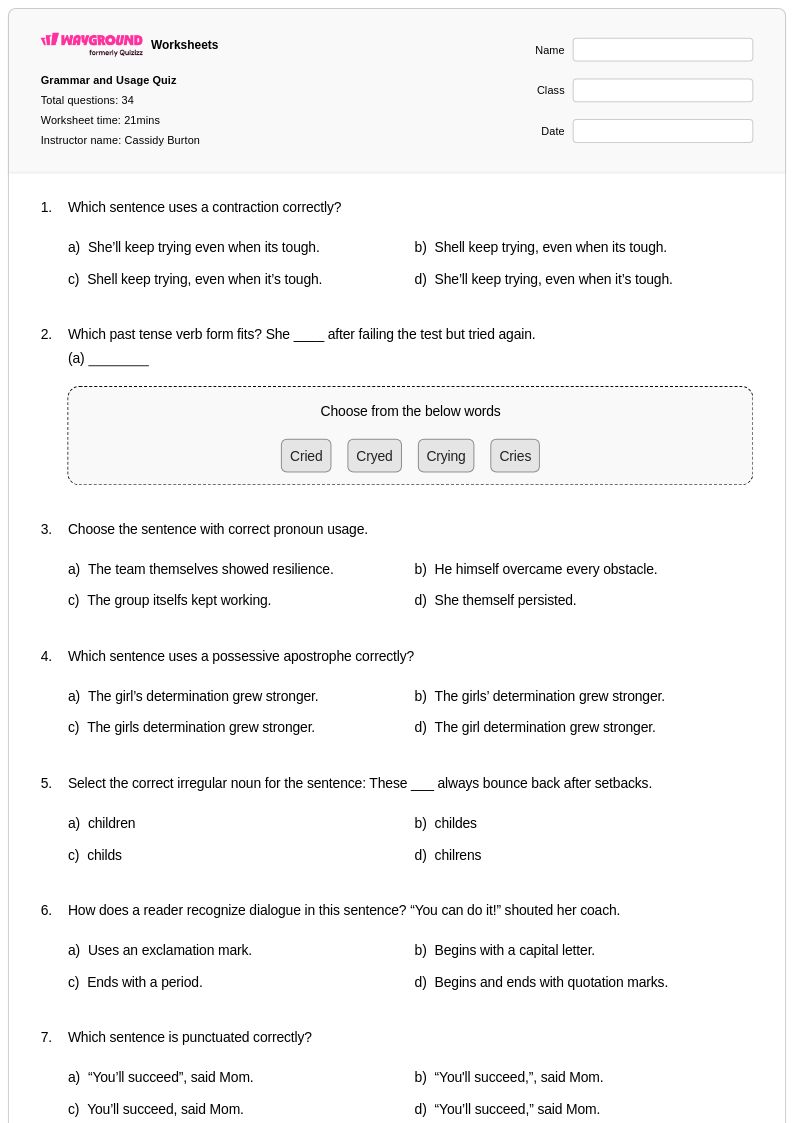
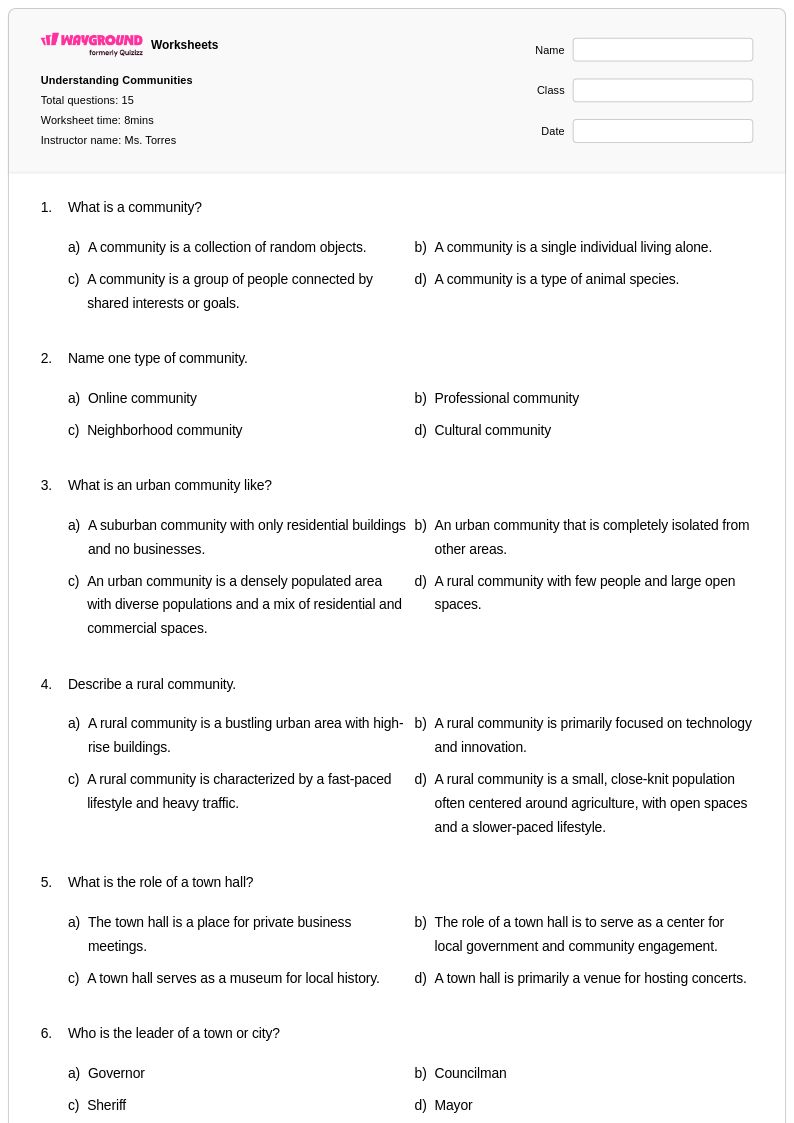
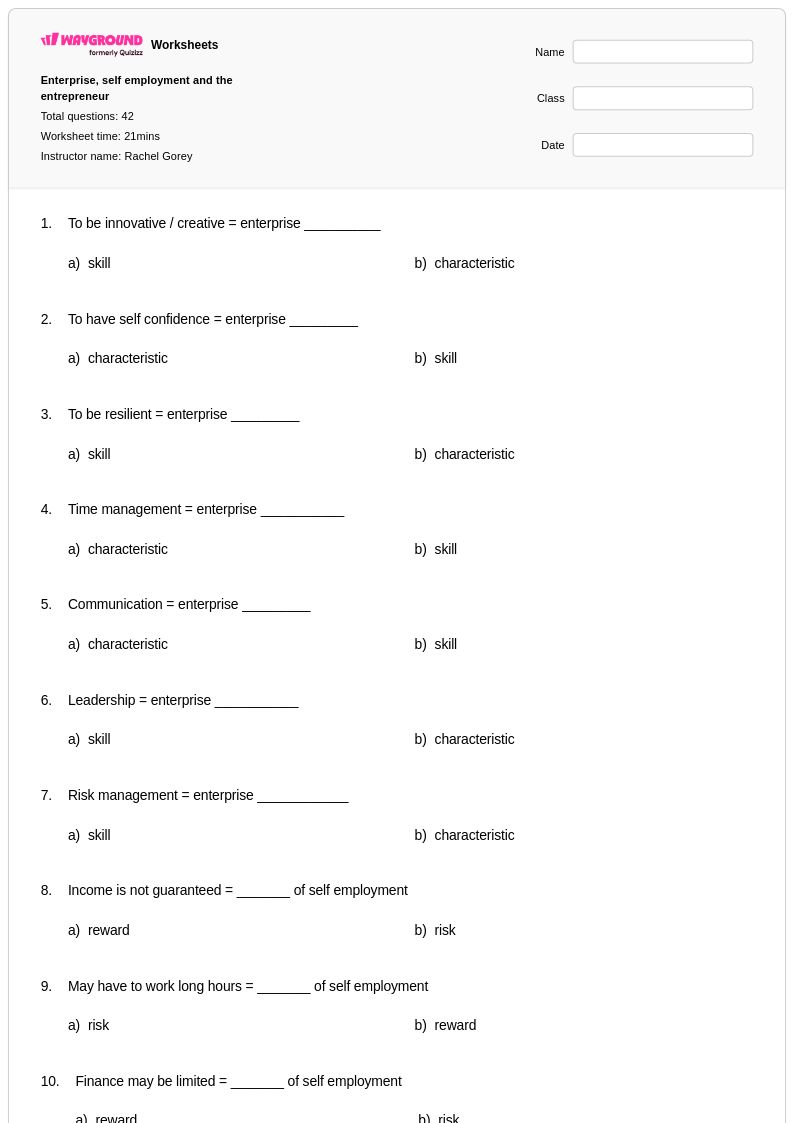
Year 3 resilience worksheets and printables from Wayground help students develop emotional strength and coping skills through engaging practice problems, free PDF activities, and comprehensive answer keys.
Explore printable Resilience worksheets for Year 3
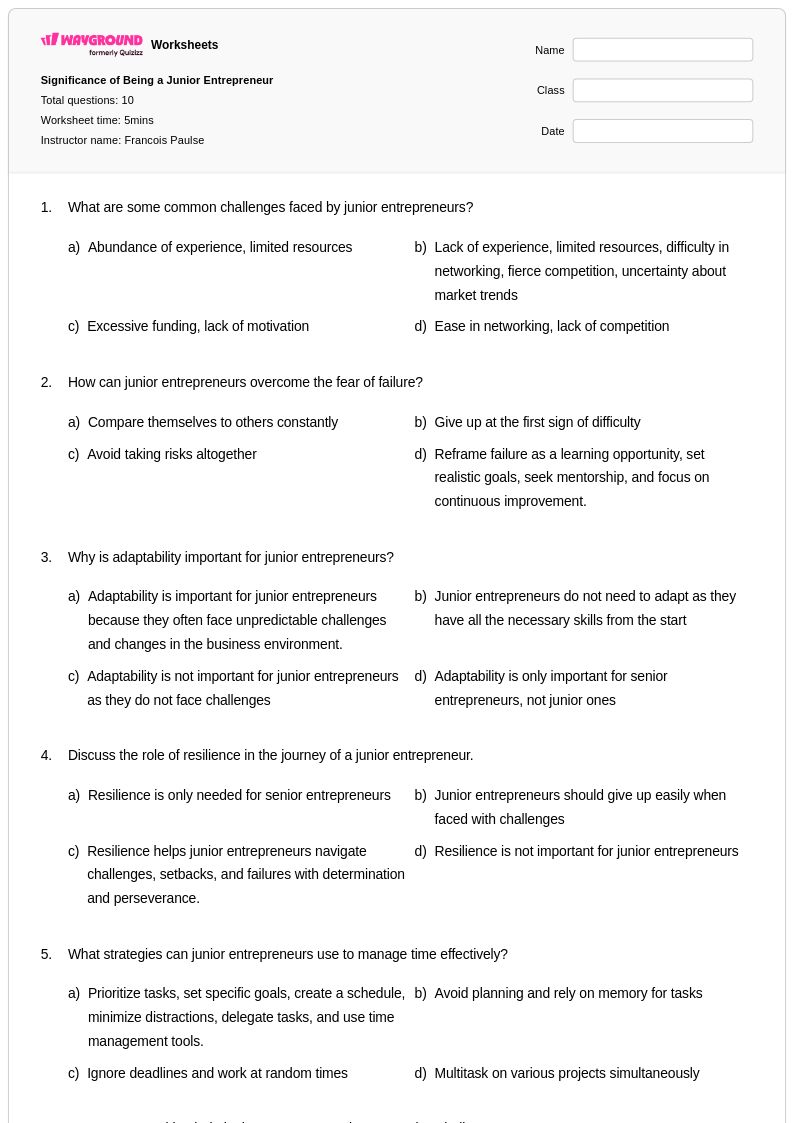
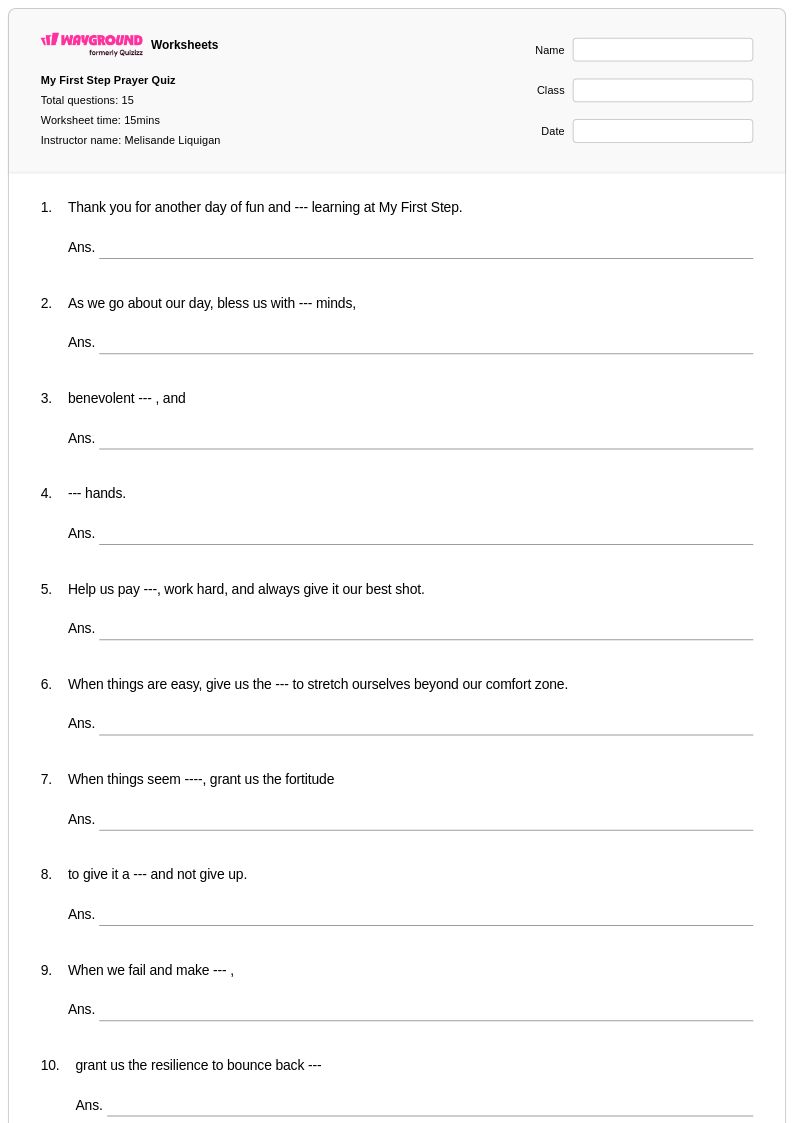
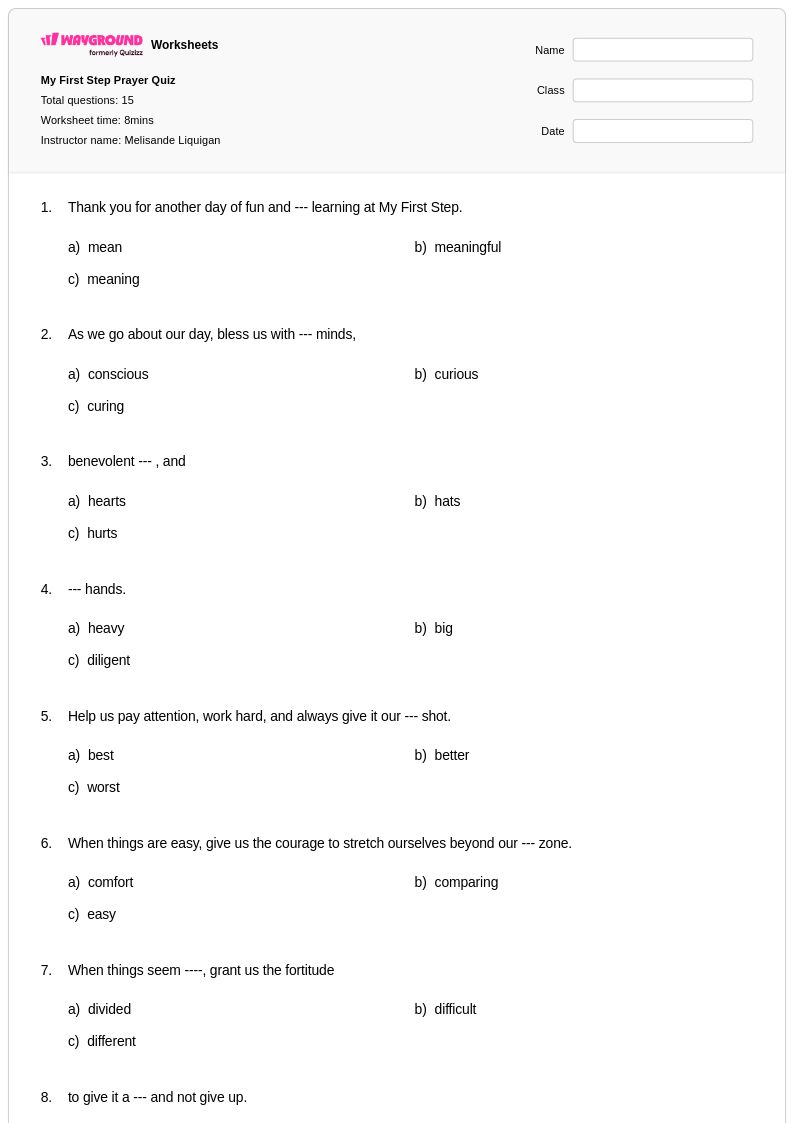
Resilience worksheets for Year 3 students available through Wayground (formerly Quizizz) provide essential social-emotional learning opportunities that help young learners develop the mental strength and adaptability needed to overcome challenges and bounce back from setbacks. These carefully crafted educational resources focus on building core resilience skills including problem-solving strategies, emotional regulation techniques, positive self-talk, and the ability to seek help when needed. Students engage with age-appropriate scenarios and practice problems that simulate real-world situations where resilience is crucial, such as dealing with disappointment, trying again after failure, or adapting to change. Each worksheet collection includes comprehensive answer keys and is available as free printables in convenient pdf format, making it easy for educators to incorporate resilience-building activities into their social studies curriculum while supporting students' overall emotional development.
Wayground (formerly Quizizz) empowers teachers with an extensive library of millions of teacher-created resilience worksheets specifically designed for Year 3 social studies instruction, featuring robust search and filtering capabilities that allow educators to quickly locate materials aligned with specific learning standards and classroom objectives. The platform's sophisticated differentiation tools enable teachers to customize worksheets based on individual student needs, whether for remediation support or enrichment activities, while maintaining focus on core resilience concepts. These versatile resources are available in both printable and digital formats, including downloadable pdf versions, giving educators the flexibility to seamlessly integrate resilience instruction into various learning environments. Teachers can efficiently plan comprehensive social-emotional learning units, provide targeted skill practice opportunities, and support students' personal growth through structured activities that build confidence and emotional intelligence alongside academic achievement.
FAQs
How do I teach resilience to students in the classroom?
Teaching resilience works best when it is embedded in daily routines rather than treated as a standalone lesson. Effective strategies include guided reflection after setbacks, modeling positive self-talk, and using structured scenarios that ask students to identify coping strategies and problem-solving steps. Connecting resilience concepts to real classroom experiences, such as handling a difficult assignment or a social conflict, helps students internalize the skills rather than simply memorizing definitions.
What activities help students practice resilience and coping strategies?
Practice activities that are most effective for resilience include scenario-based reflection prompts, emotional regulation exercises, and growth mindset journaling. Structured worksheets that present real-world challenges and ask students to identify their emotional response, evaluate their options, and articulate a coping plan build the habit of applying resilience strategies deliberately. Repeated exposure to these formats helps students develop automatic responses to adversity over time.
What common misconceptions do students have about resilience?
One of the most persistent misconceptions is that resilience means not feeling upset or struggling, when in reality it describes the ability to recover and adapt after difficulty. Students often conflate resilience with toughness or emotional suppression, which can prevent them from seeking support or acknowledging their feelings. Worksheets that explicitly distinguish between healthy coping and avoidance help correct this misunderstanding early.
How can I use resilience worksheets to support social-emotional learning in my class?
Resilience worksheets integrate naturally into SEL curricula by providing structured, discussion-ready scenarios that address perseverance, stress management, and growth mindset. They can be used as warm-up reflection activities, discussion starters, or independent practice following a direct lesson on coping strategies. Wayground's resilience worksheets are available as printable PDFs for traditional classroom use and in digital formats for technology-integrated settings, and can also be hosted as a quiz on Wayground to track student responses.
How do I differentiate resilience instruction for students with varying emotional needs?
Differentiation for resilience instruction may involve adjusting the complexity of scenarios presented, providing sentence starters for reflection prompts, or reducing the number of response choices for students who experience cognitive overload. On Wayground, teachers can apply individual accommodations such as read aloud support, reduced answer choices, and extended time to specific students without alerting the rest of the class, making it practical to support diverse learners within a single activity.
At what grade level should resilience skills be introduced?
Resilience skills can and should be introduced as early as kindergarten, with the language and complexity of activities scaled to match developmental stage. Young learners benefit from simple scenarios about sharing or losing a game, while older students can engage with more nuanced situations involving academic pressure, peer conflict, or long-term goal setting. Wayground's resilience worksheets span all grade levels, allowing teachers to select materials that match their students' developmental and emotional readiness.