Free Printable Semicolon Usage Worksheets for Year 8
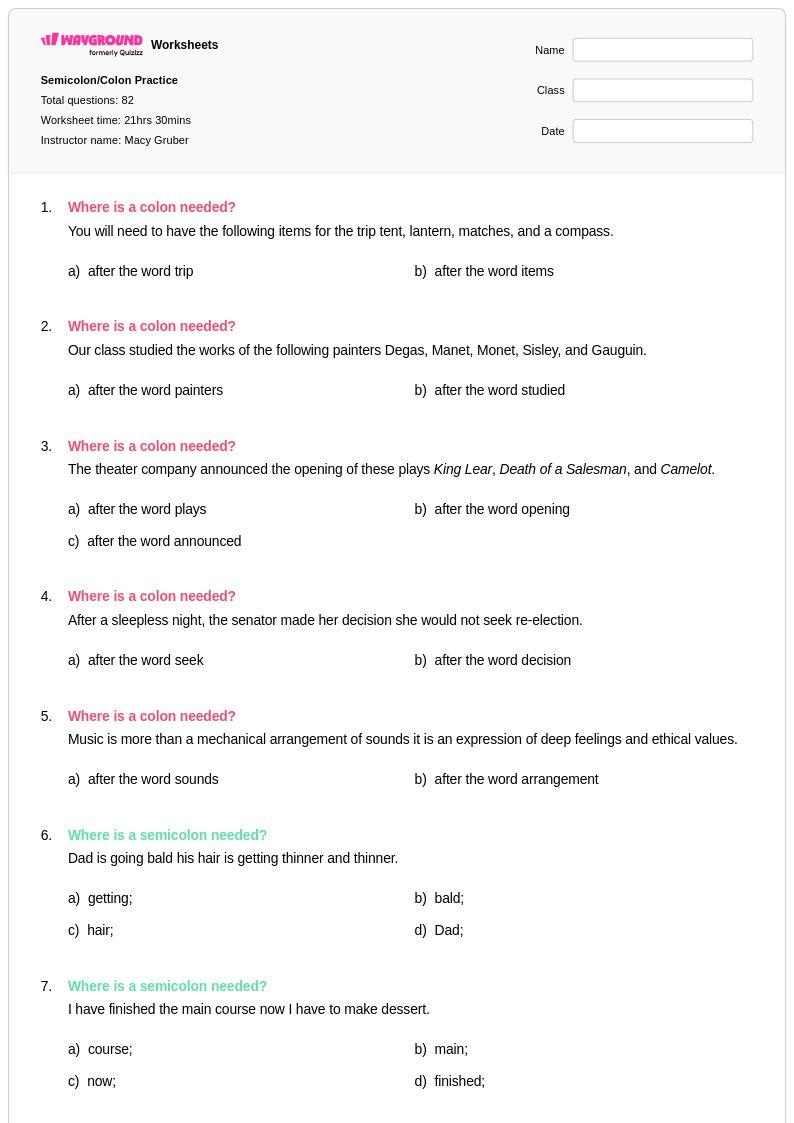
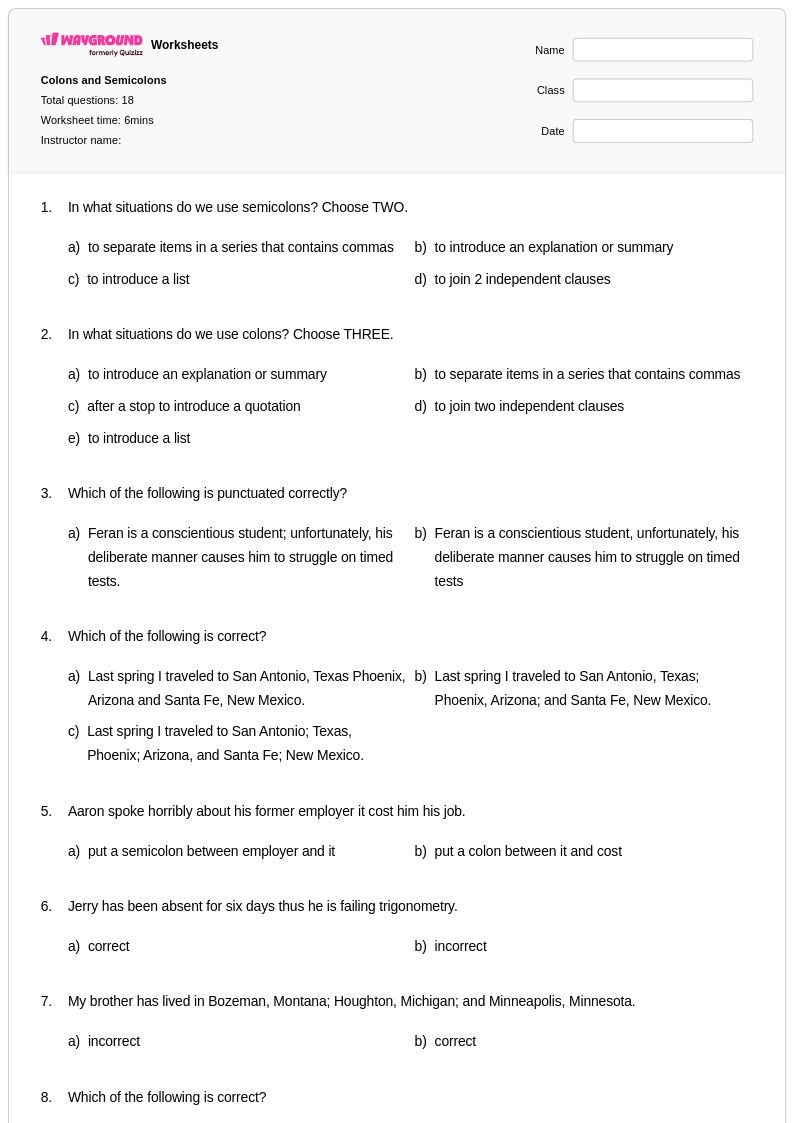
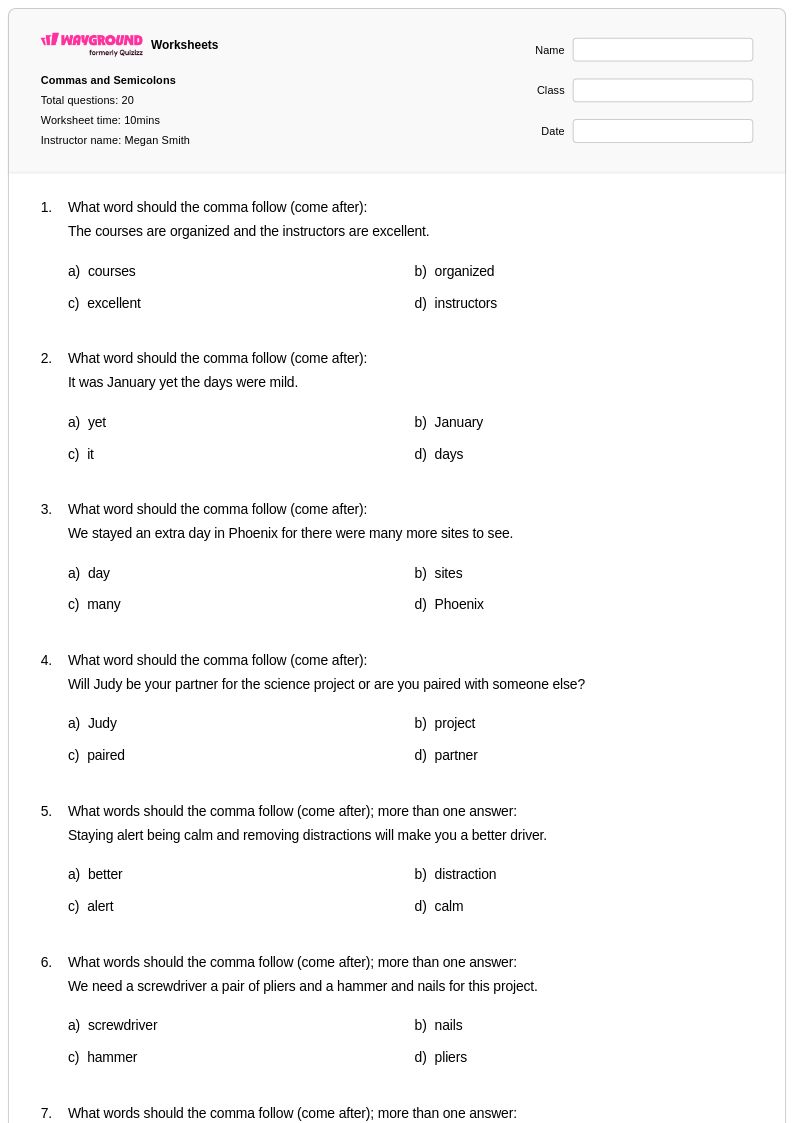
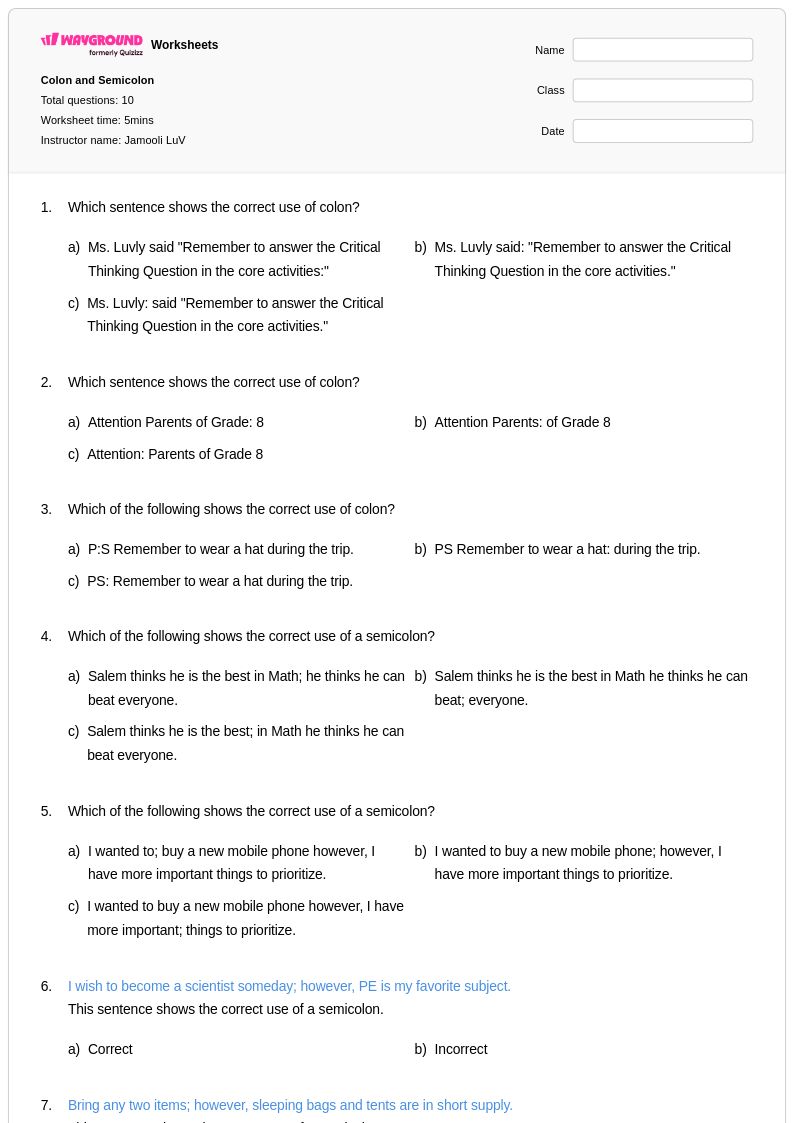
Year 8 semicolon usage worksheets from Wayground help students master proper punctuation through engaging printables, practice problems, and comprehensive answer keys available as free PDF downloads.
Explore printable Semicolon Usage worksheets for Year 8
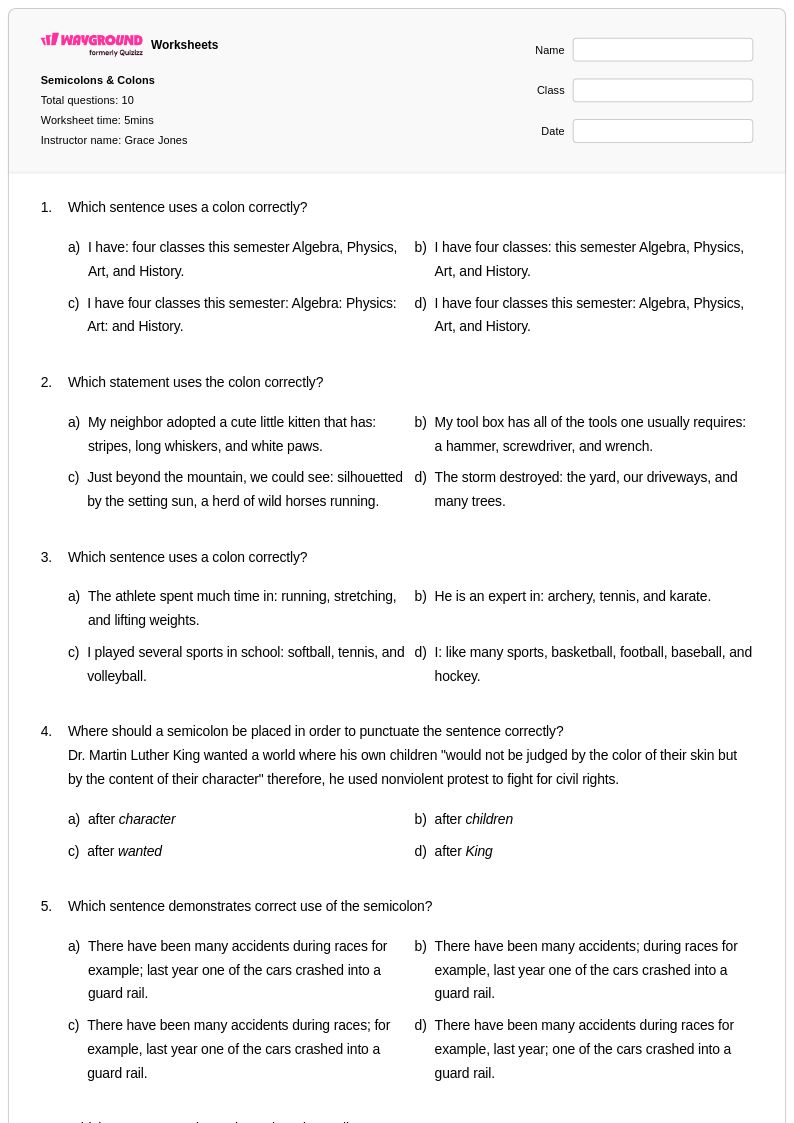
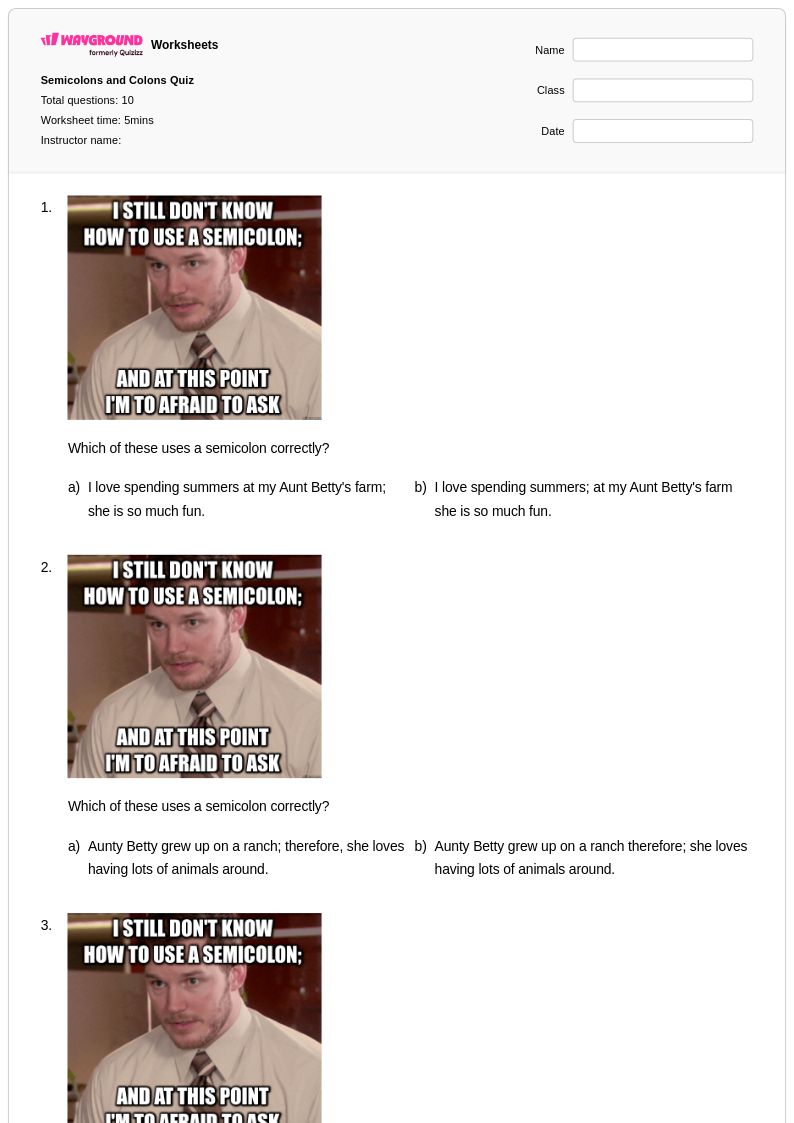
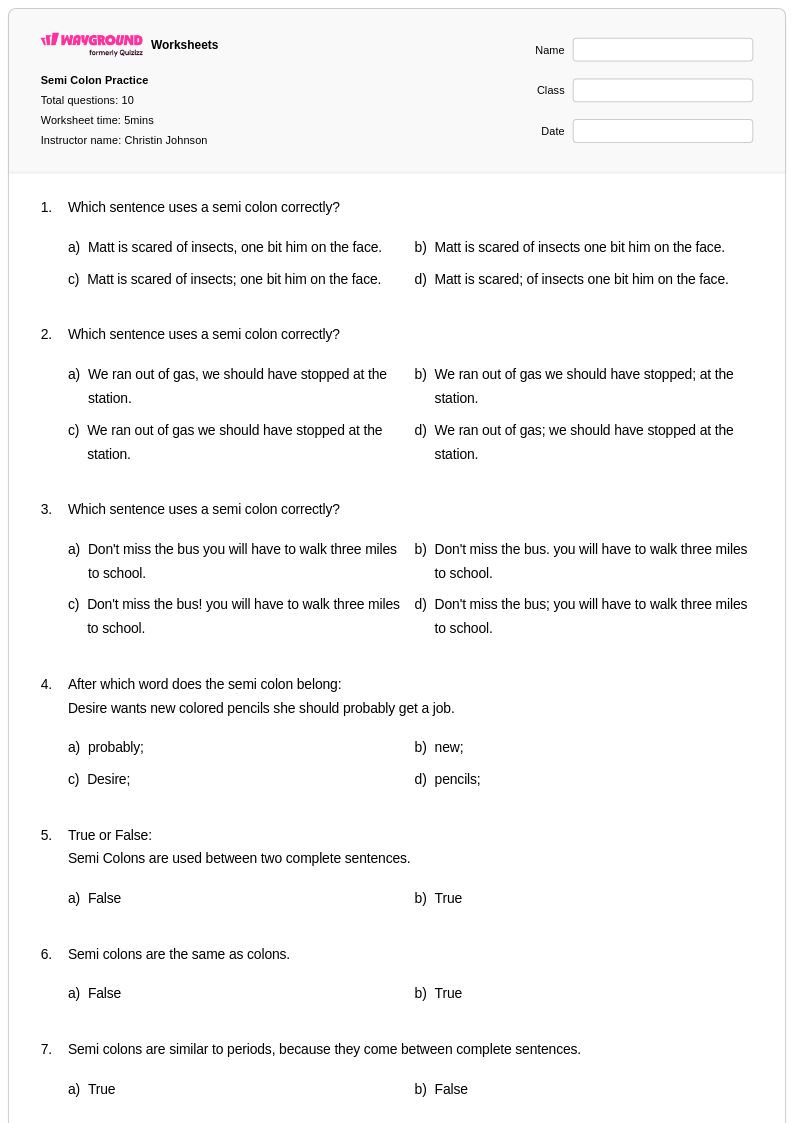
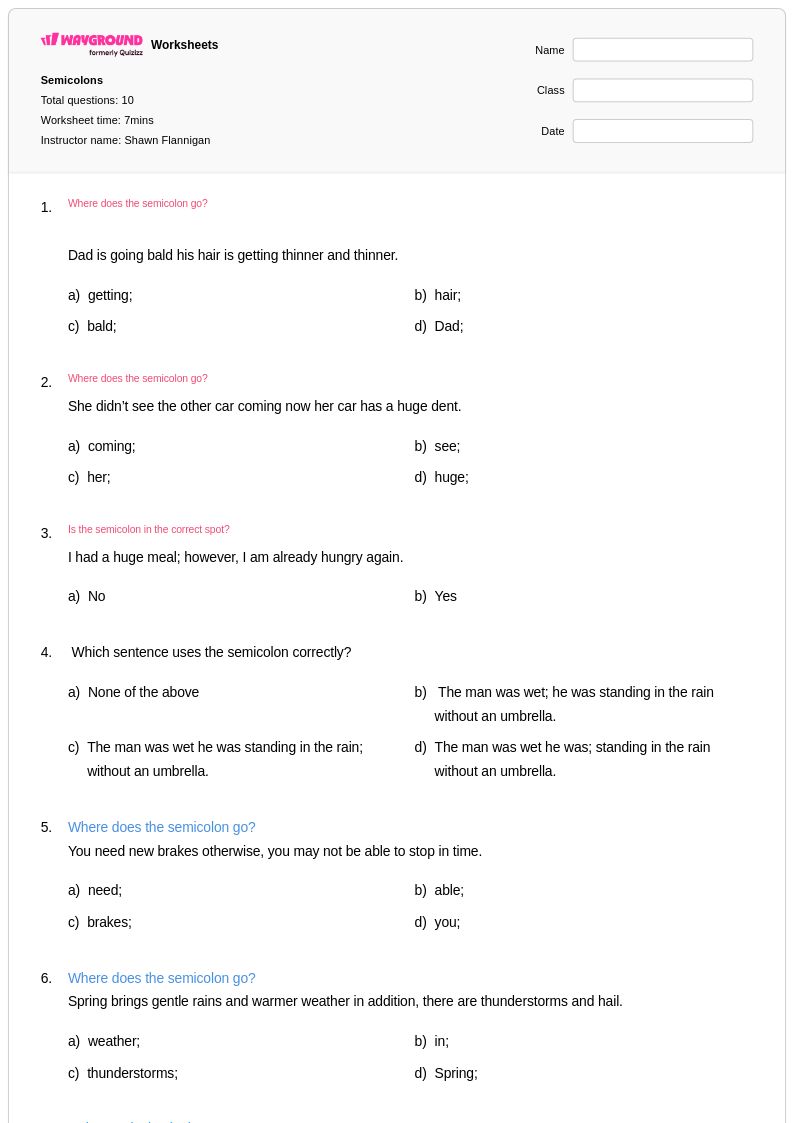
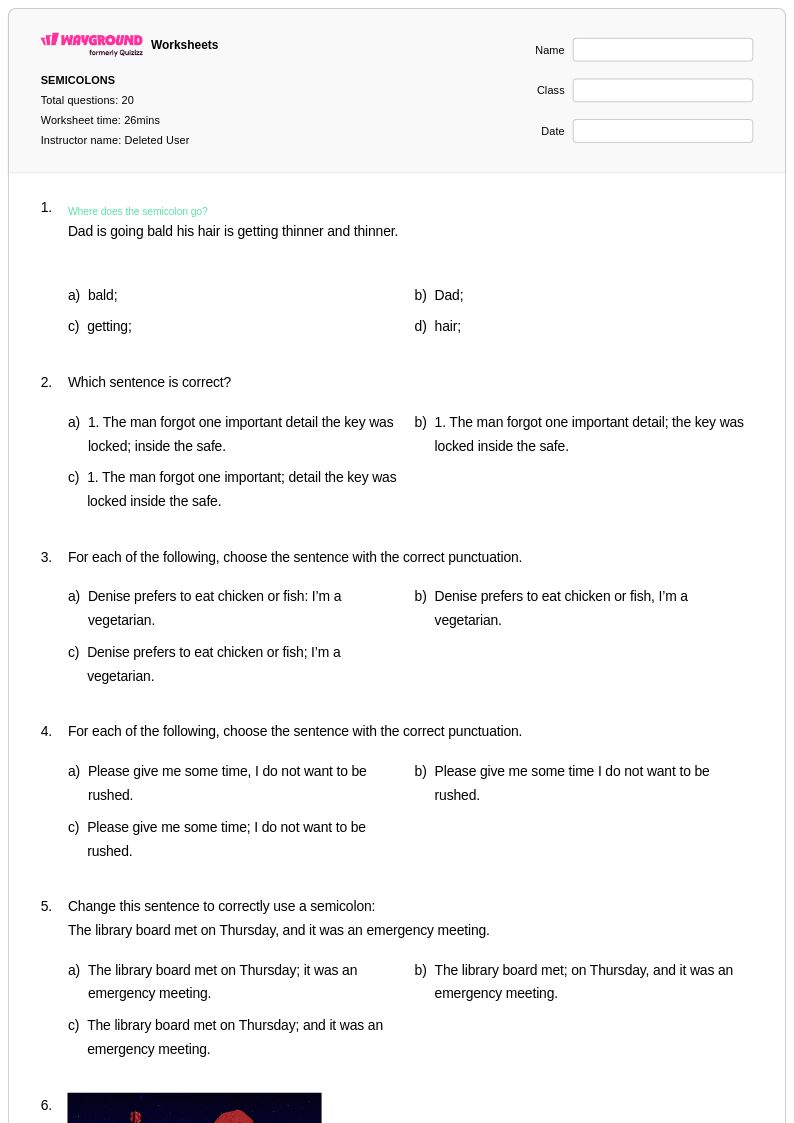
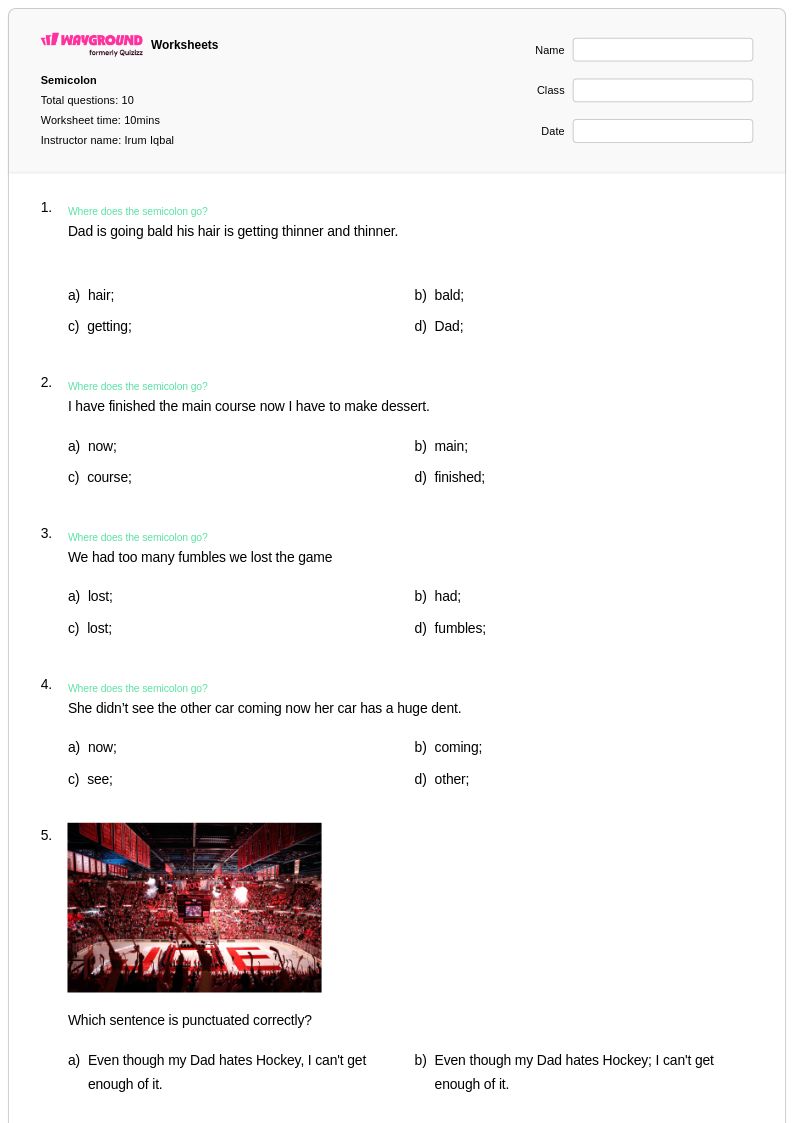
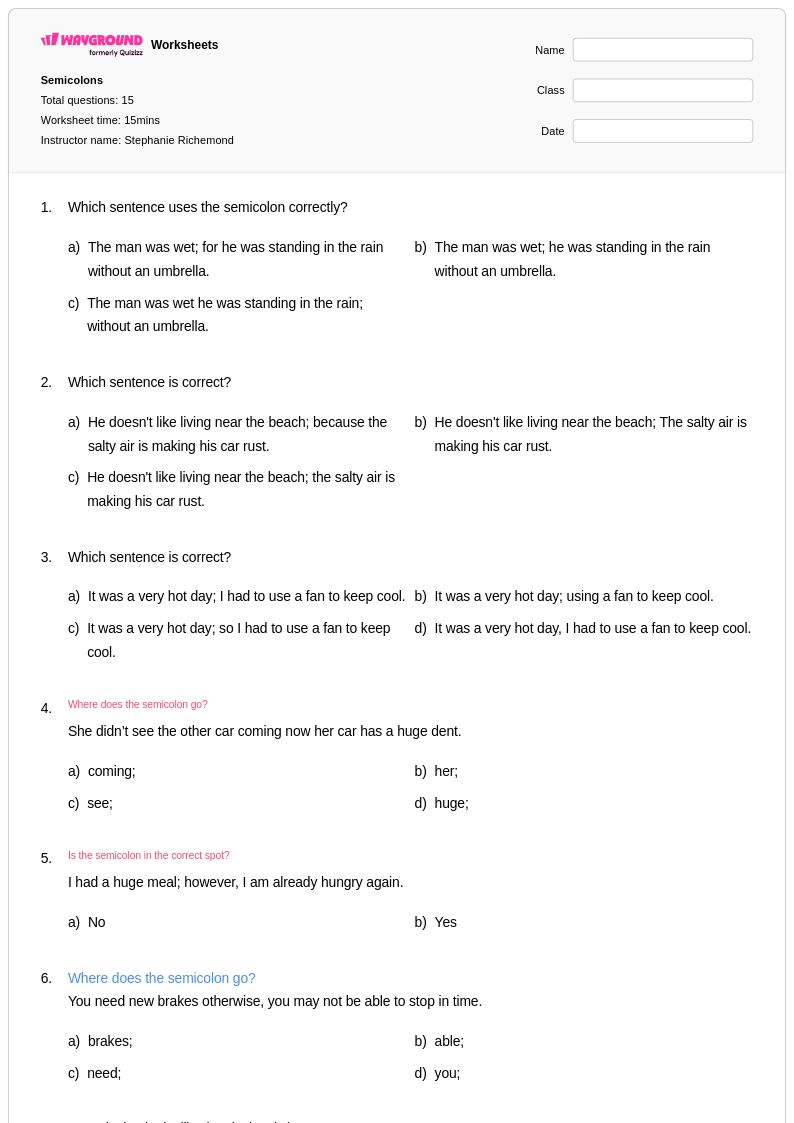
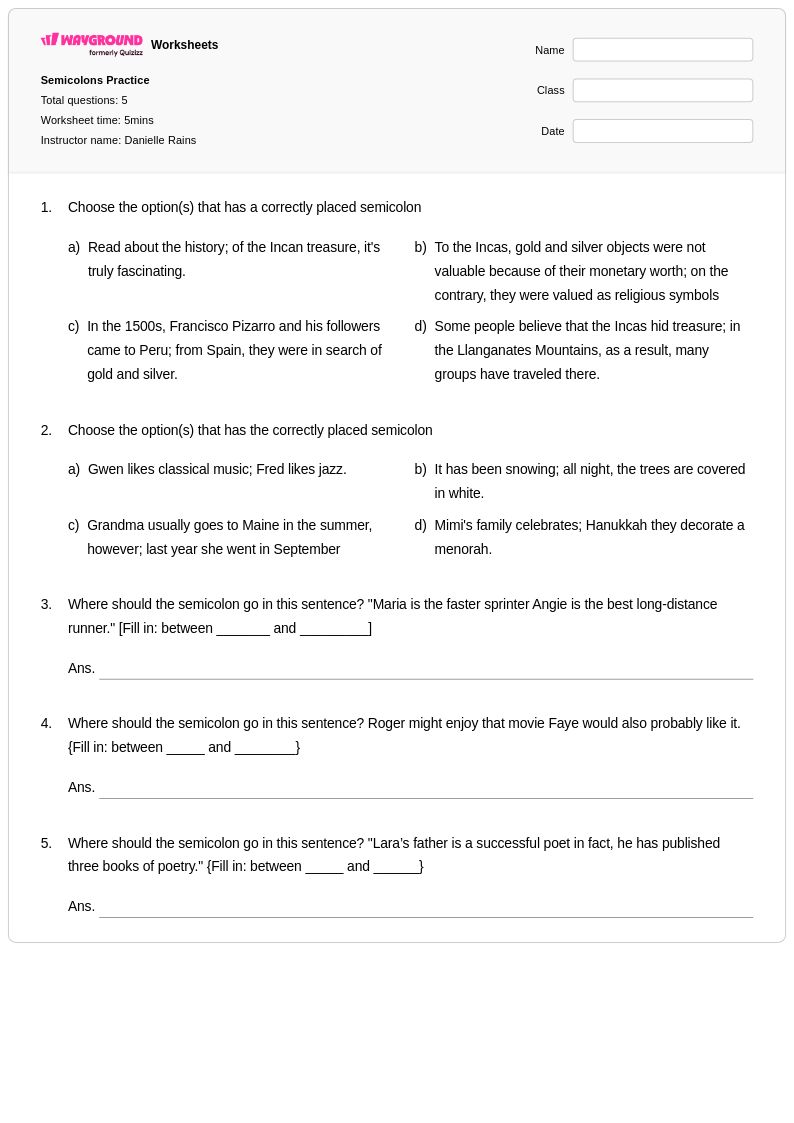
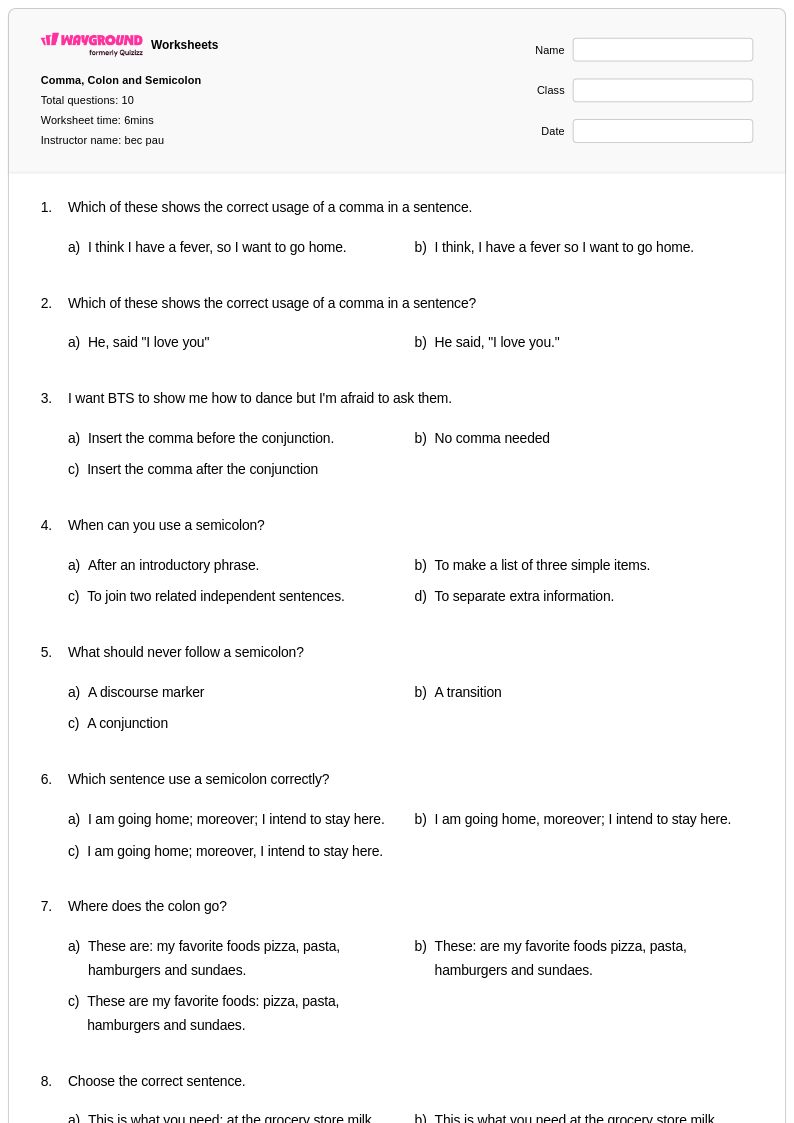
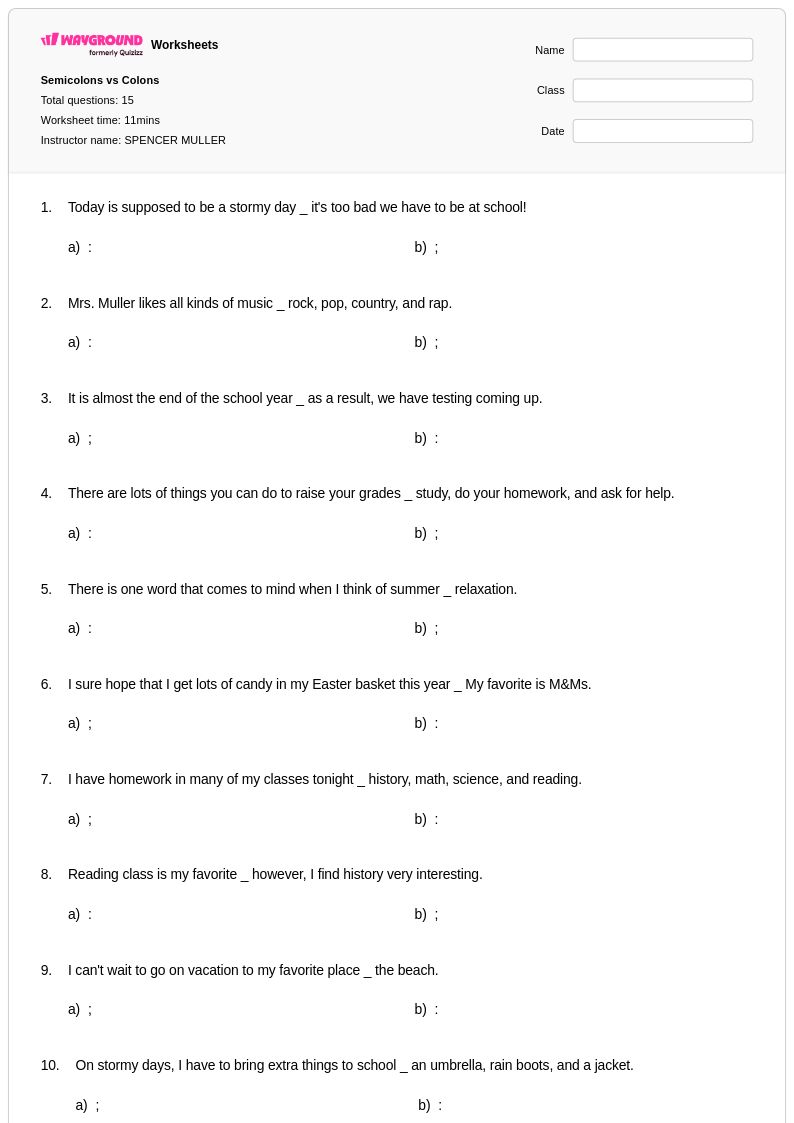
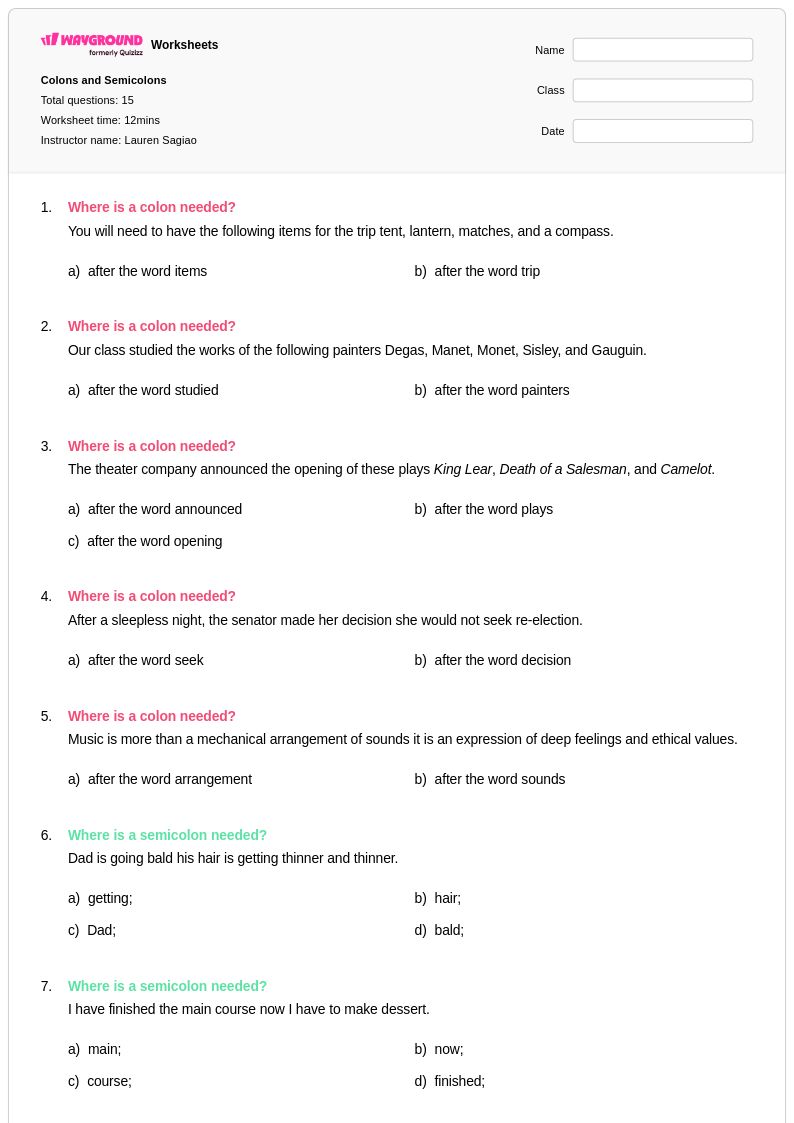
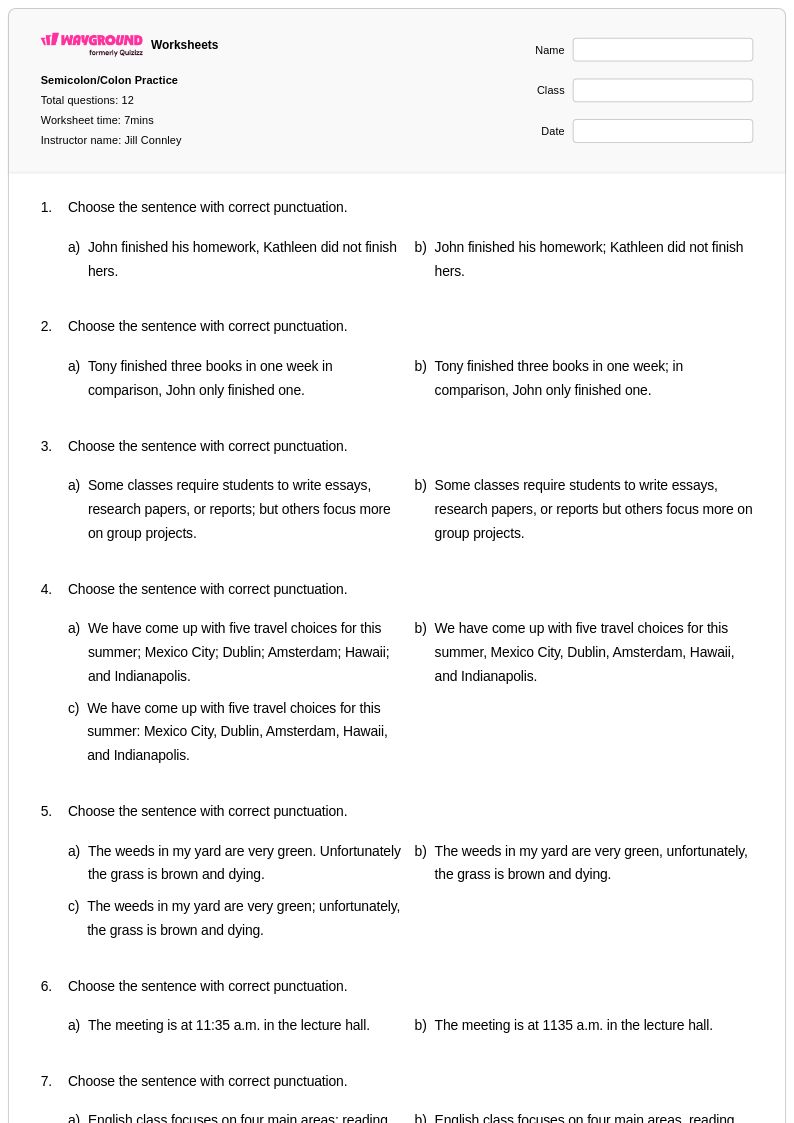
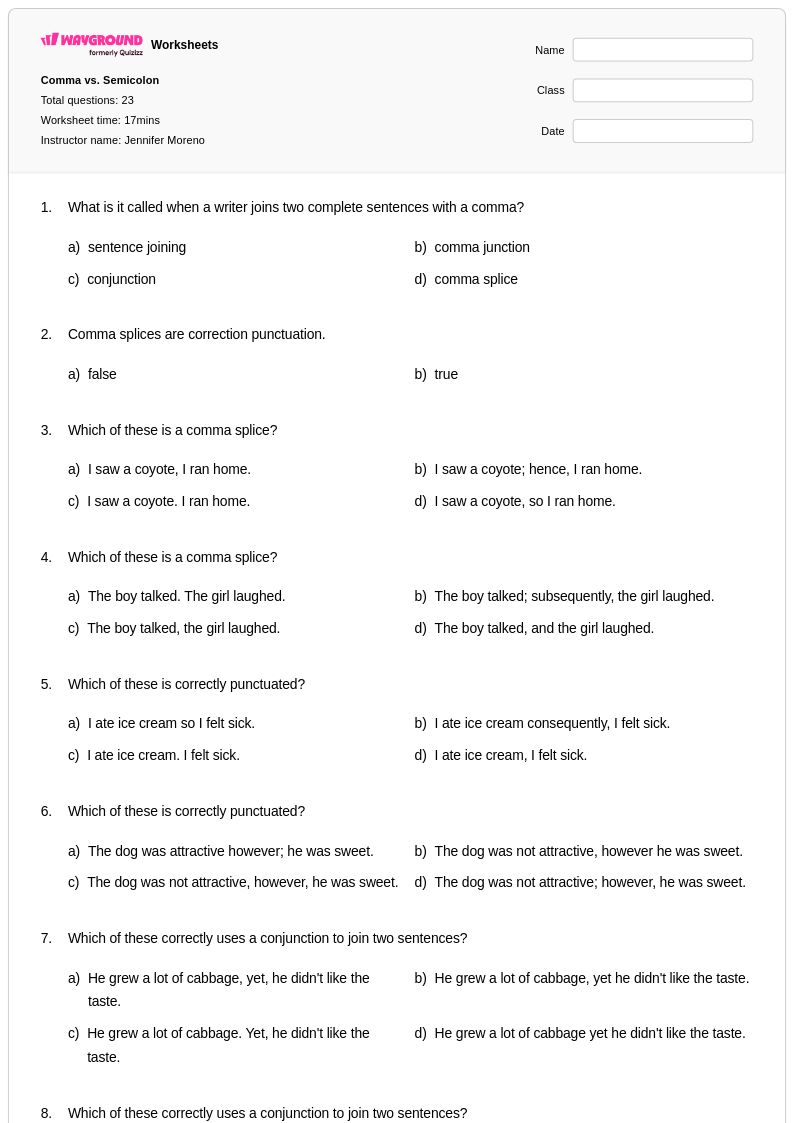
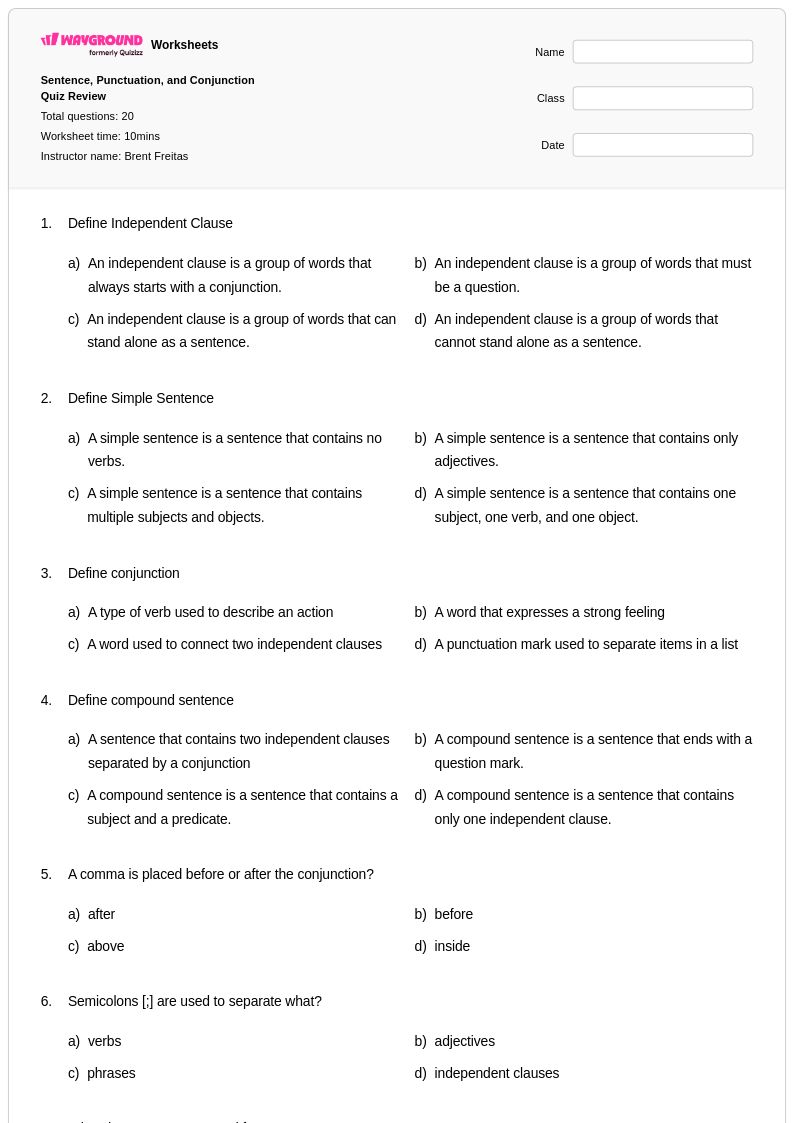
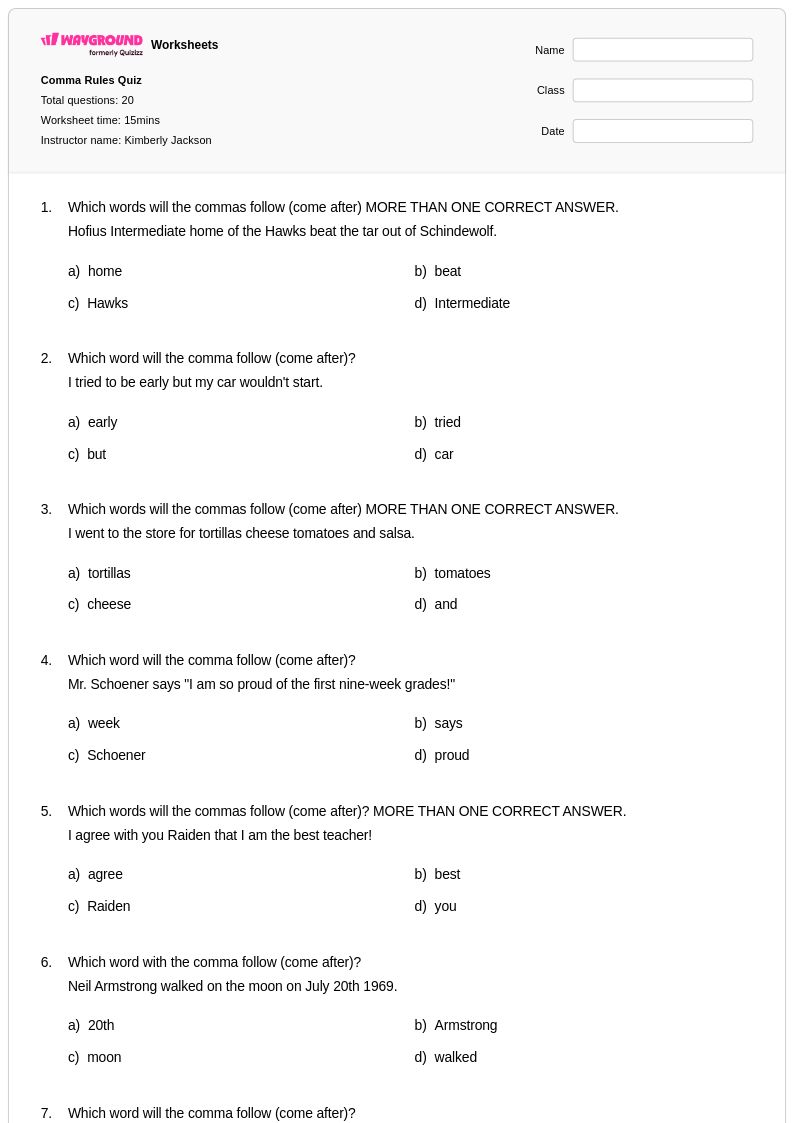
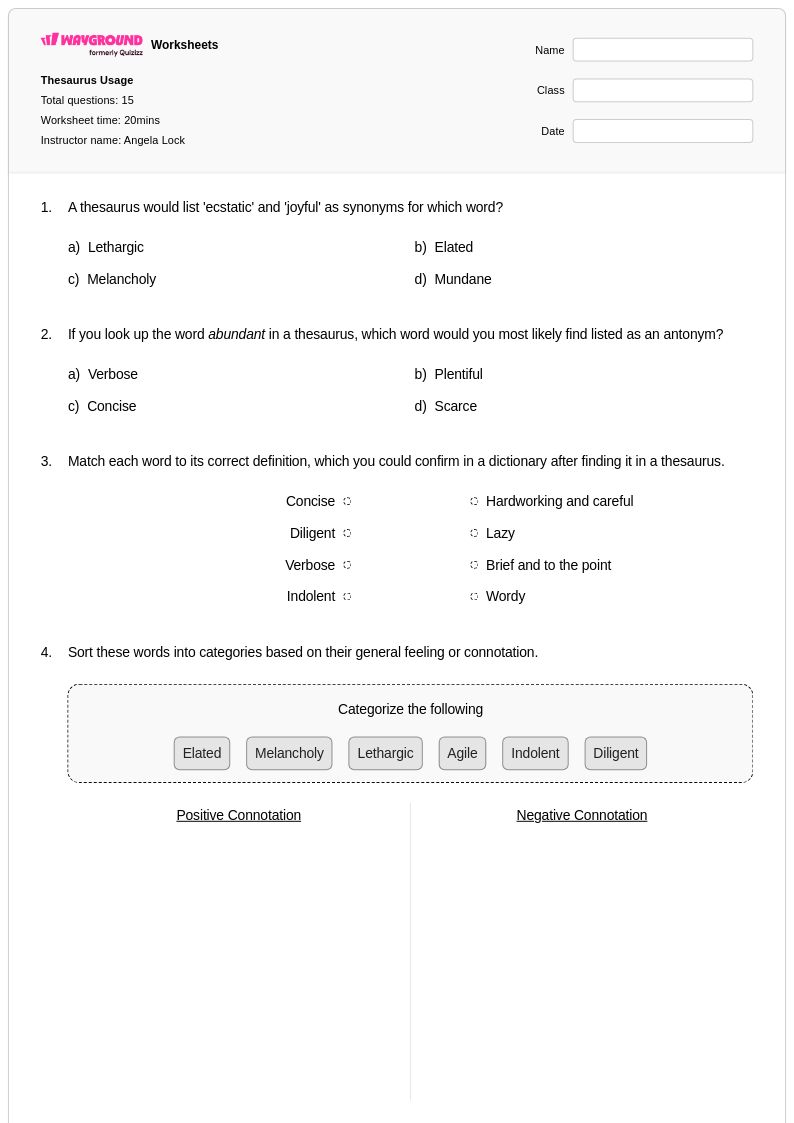
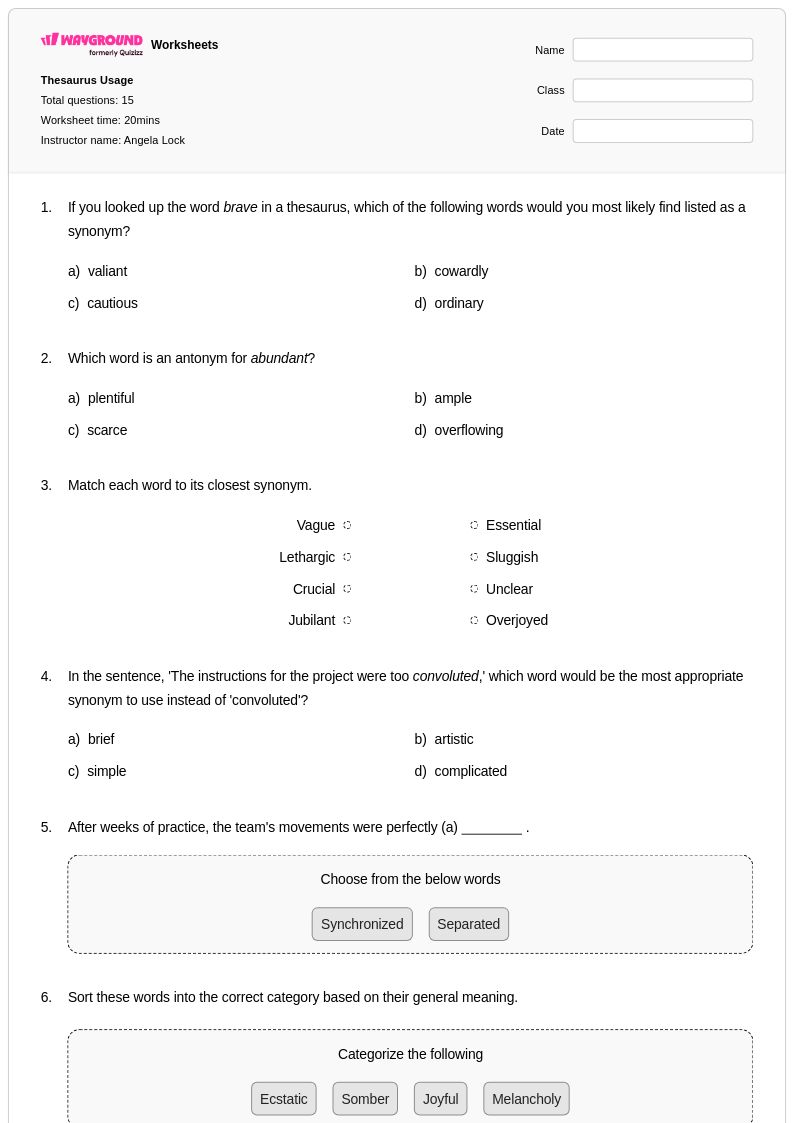
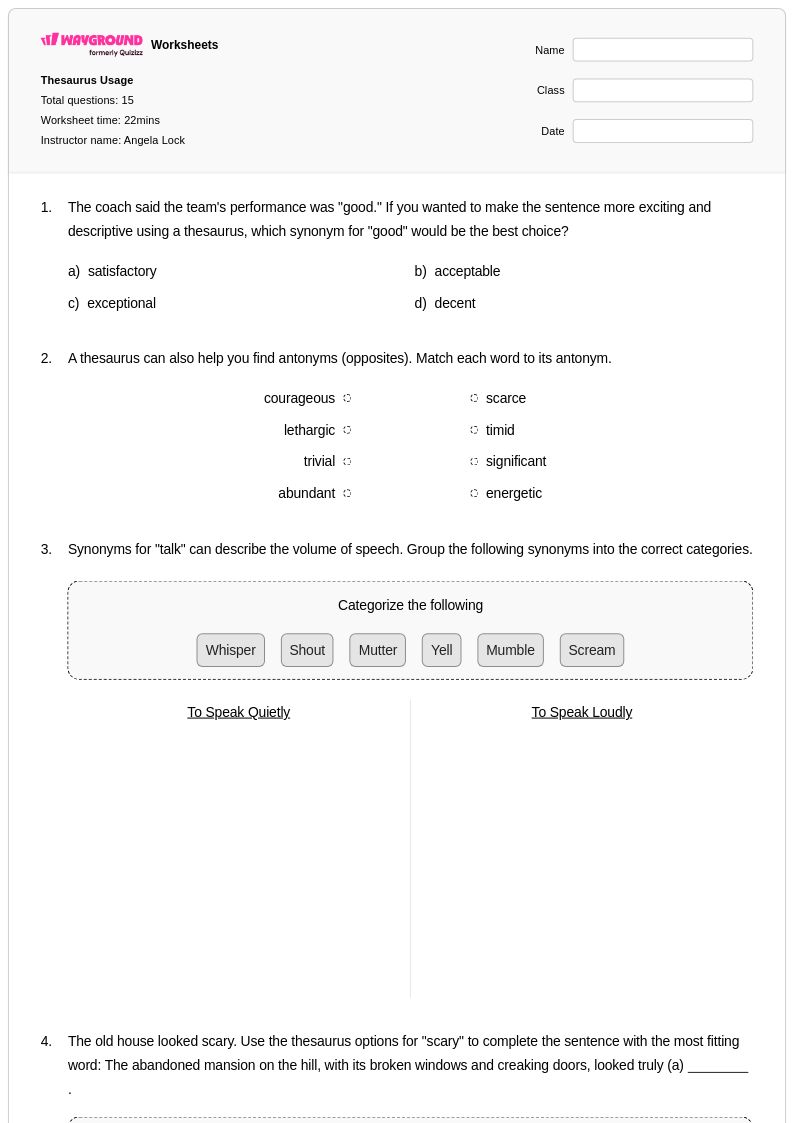
Semicolon usage worksheets for Year 8 students available through Wayground (formerly Quizizz) provide comprehensive practice with one of English grammar's most sophisticated punctuation marks. These expertly designed resources help eighth-grade students master the art of connecting independent clauses, separating complex items in series, and creating more nuanced sentence structures that elevate their academic writing. Each worksheet collection includes detailed answer keys and free printable pdf options, allowing students to work through practice problems that progressively build their understanding of when semicolons are appropriate versus when commas or periods should be used instead. The materials systematically address common semicolon errors while strengthening students' ability to recognize the subtle relationships between clauses that make semicolon usage both powerful and grammatically correct.
Wayground (formerly Quizizz) empowers educators with millions of teacher-created semicolon usage resources that can be easily searched, filtered, and customized to meet diverse classroom needs. The platform's robust differentiation tools allow teachers to modify worksheet difficulty levels, ensuring that struggling students receive foundational practice while advanced learners tackle complex sentence combining exercises. These semicolon worksheets align with grade-appropriate language arts standards and are available in both printable pdf format for traditional classroom use and digital formats for interactive learning experiences. Teachers can seamlessly integrate these resources into their grammar instruction for initial skill introduction, targeted remediation sessions, or enrichment activities that challenge students to apply semicolon rules in sophisticated writing contexts, ultimately supporting comprehensive punctuation mastery across all students.
FAQs
How do I teach semicolon usage to students who are new to it?
Start by ensuring students have a solid understanding of independent clauses, since a semicolon's primary job is to join two closely related ones without a conjunction. Introduce semicolons in contrast to periods and commas so students understand the spectrum of separation they provide. A useful classroom strategy is to give students pairs of short sentences and ask them to decide whether the ideas are related enough to merit a semicolon rather than a period. Once students are comfortable with clause-joining, introduce the second main use: separating list items that already contain commas.
What exercises best help students practice semicolon usage?
The most effective practice exercises ask students to identify whether a semicolon is correctly placed in a given sentence, rather than simply filling in blanks, because this builds the evaluative judgment they need for their own writing. Sentence-combining tasks, where students merge two related independent clauses using a semicolon, are also highly effective. Complex list exercises, where students must choose between commas and semicolons based on the content of each list item, round out a well-structured practice sequence.
What are the most common mistakes students make with semicolons?
The most frequent error is using a semicolon to join a dependent clause to an independent clause, treating it like a stronger comma rather than understanding it requires two complete thoughts on either side. Students also commonly confuse semicolons with colons, using a semicolon before a list or explanation where a colon is correct. A third persistent mistake is placing a semicolon before a coordinating conjunction such as 'and' or 'but', which is redundant since the conjunction already links the clauses.
How do I help students know when to use a semicolon versus a period or a comma?
Teach students to ask two diagnostic questions: Are both parts complete sentences? And are the ideas closely enough related that a full stop would feel abrupt? If both answers are yes, a semicolon is appropriate. A period works when the ideas are complete but the writer wants a clear pause; a comma is only correct between independent clauses when paired with a coordinating conjunction. Practicing this decision-making process explicitly, rather than memorizing rules in isolation, helps students apply it consistently in their own writing.
How can I use Wayground's semicolon usage worksheets in my classroom?
Wayground's semicolon usage worksheets are available as printable PDFs, making them easy to distribute in traditional classroom settings, and in digital formats for technology-integrated or remote learning environments. Teachers can also host them as a quiz directly on Wayground, which allows for immediate feedback and progress tracking. Each worksheet includes detailed answer keys that explain the reasoning behind correct semicolon placement, so they work equally well for guided instruction, independent practice, or homework assignments.
How can I differentiate semicolon practice for students at different skill levels?
For students who are still building foundational grammar skills, reduce cognitive load by starting with exercises that focus solely on clause-joining before introducing complex list scenarios. On Wayground, teachers can apply accommodations such as reduced answer choices for students who need additional support, or enable Read Aloud so that sentence-level exercises are accessible to students with reading difficulties. Advanced learners can be challenged with editing tasks that require them to revise run-on sentences or misused commas by applying semicolons correctly within longer writing passages.