
Recommended Topics for you
- Complete Sentences
- Run on Sentences
- Scrambled Sentences
- Sentences and Fragments
- Simple, Compound, and Complex Sentences
- Types of Sentences
- Unscrambling Sentences
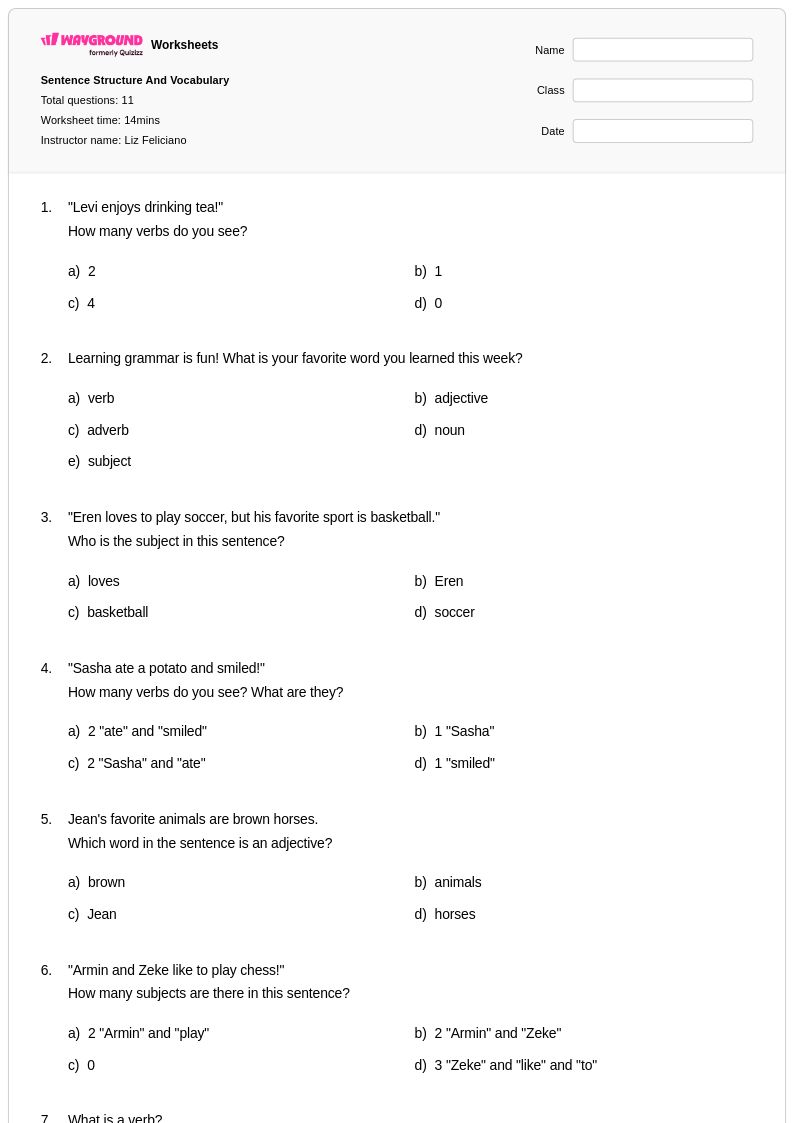
11 Q
2nd - 5th
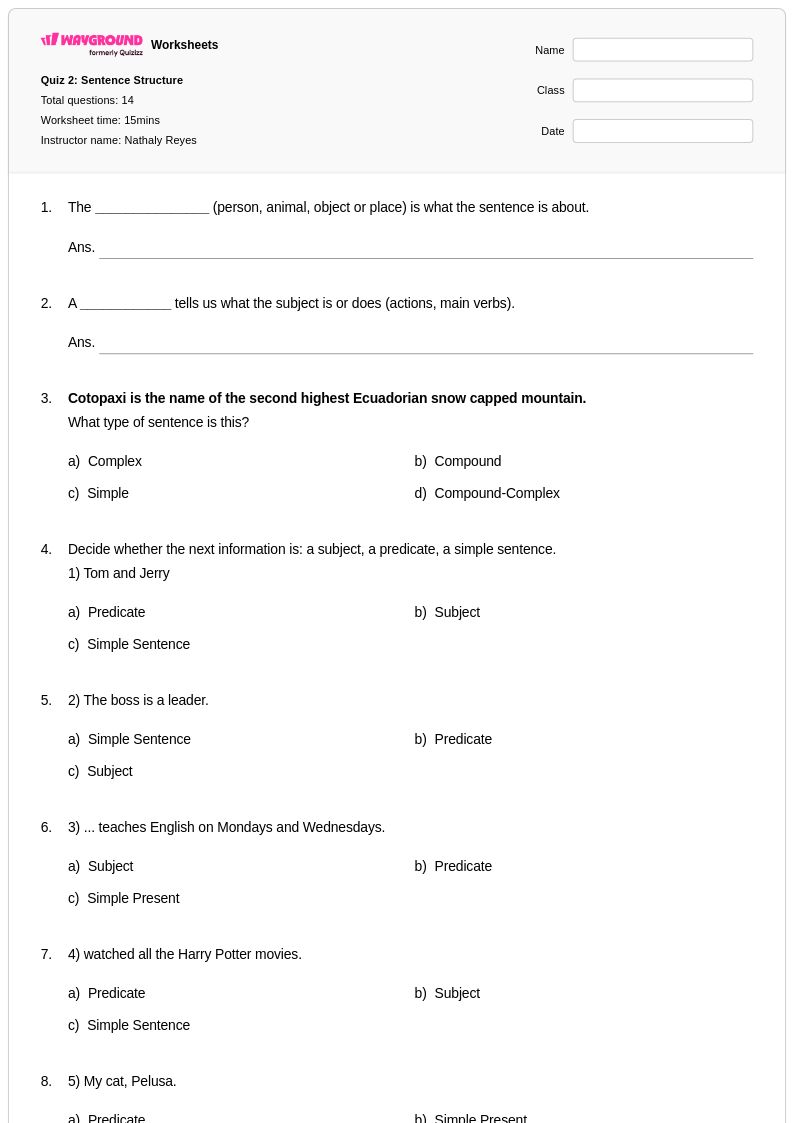
14 Q
1st - Uni
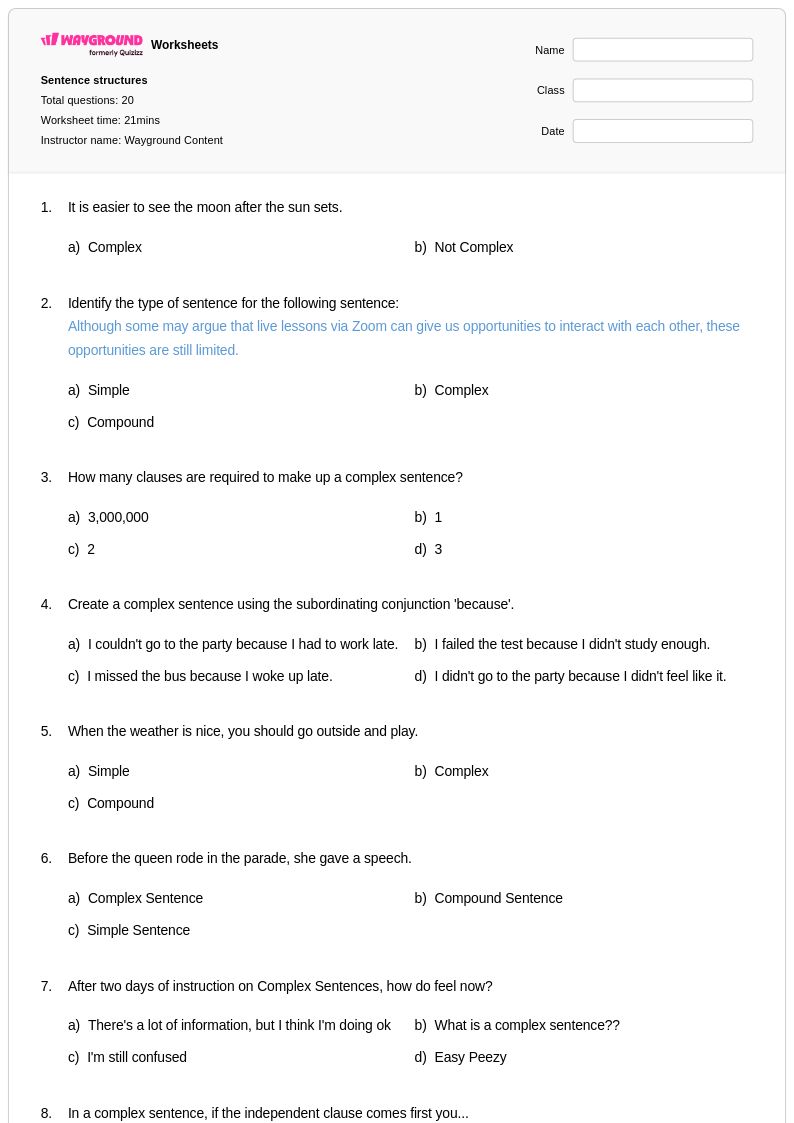
20 Q
1st - 7th
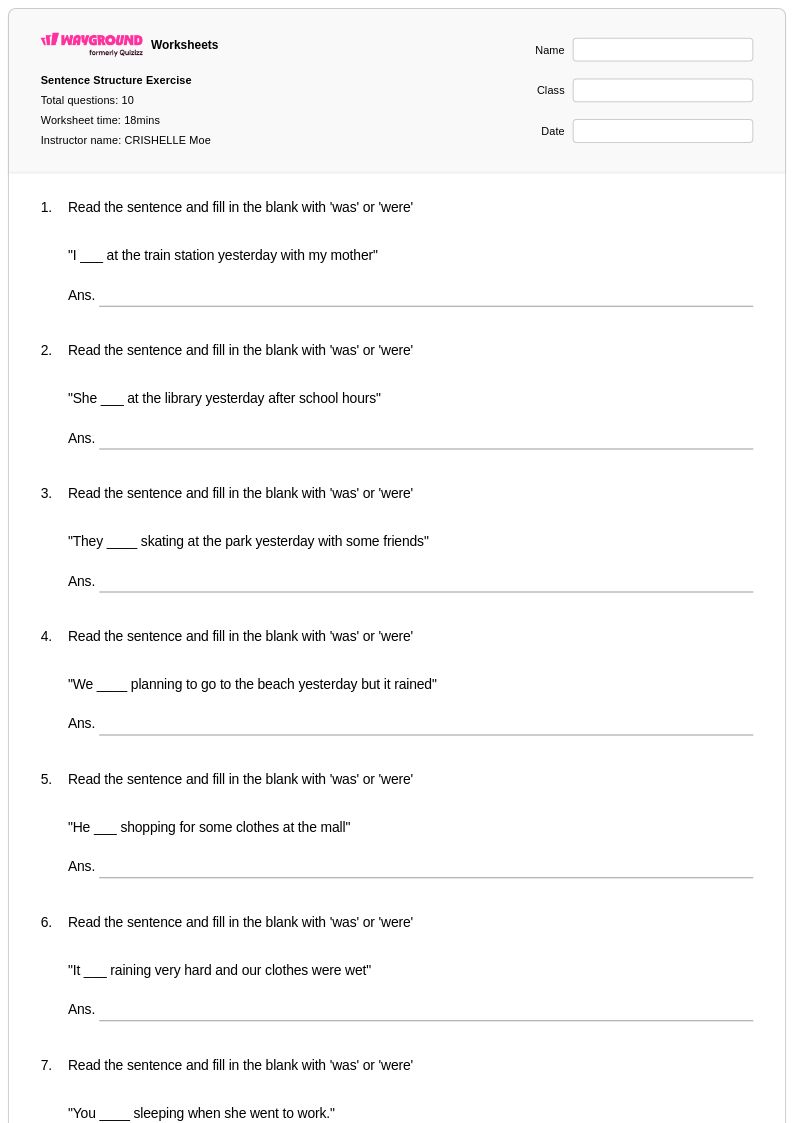
10 Q
3rd - 4th
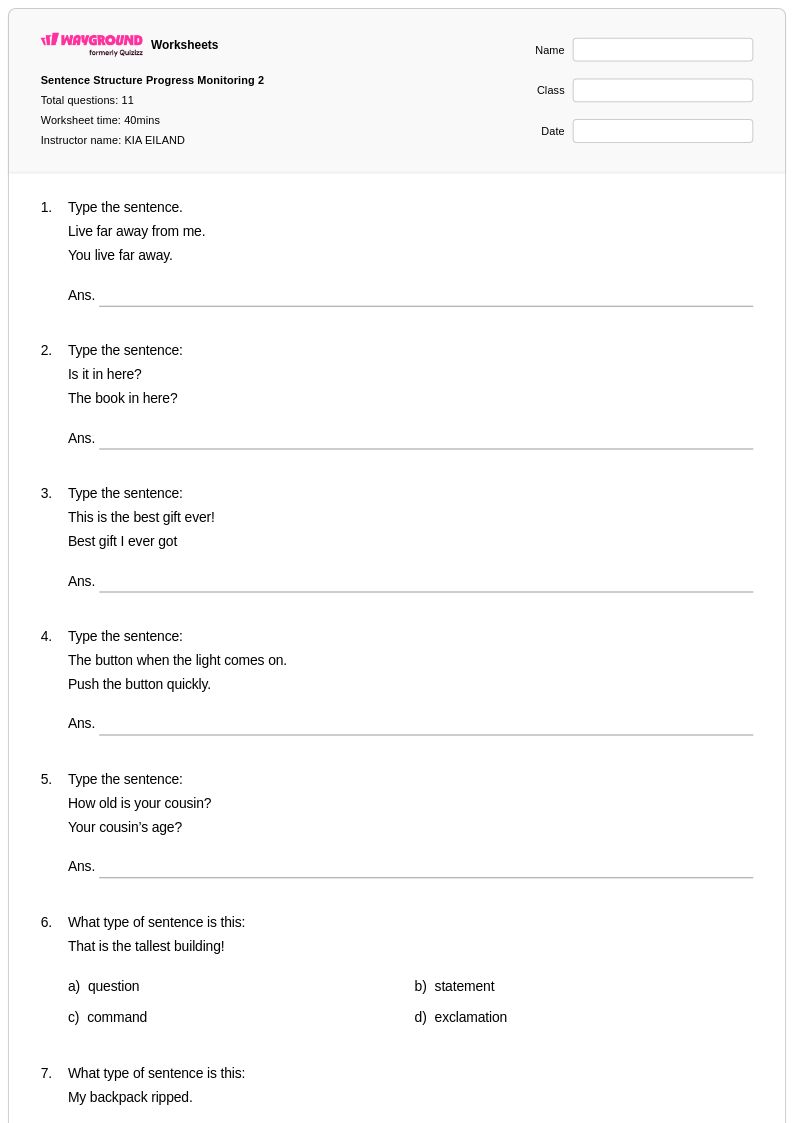
11 Q
1st - 5th
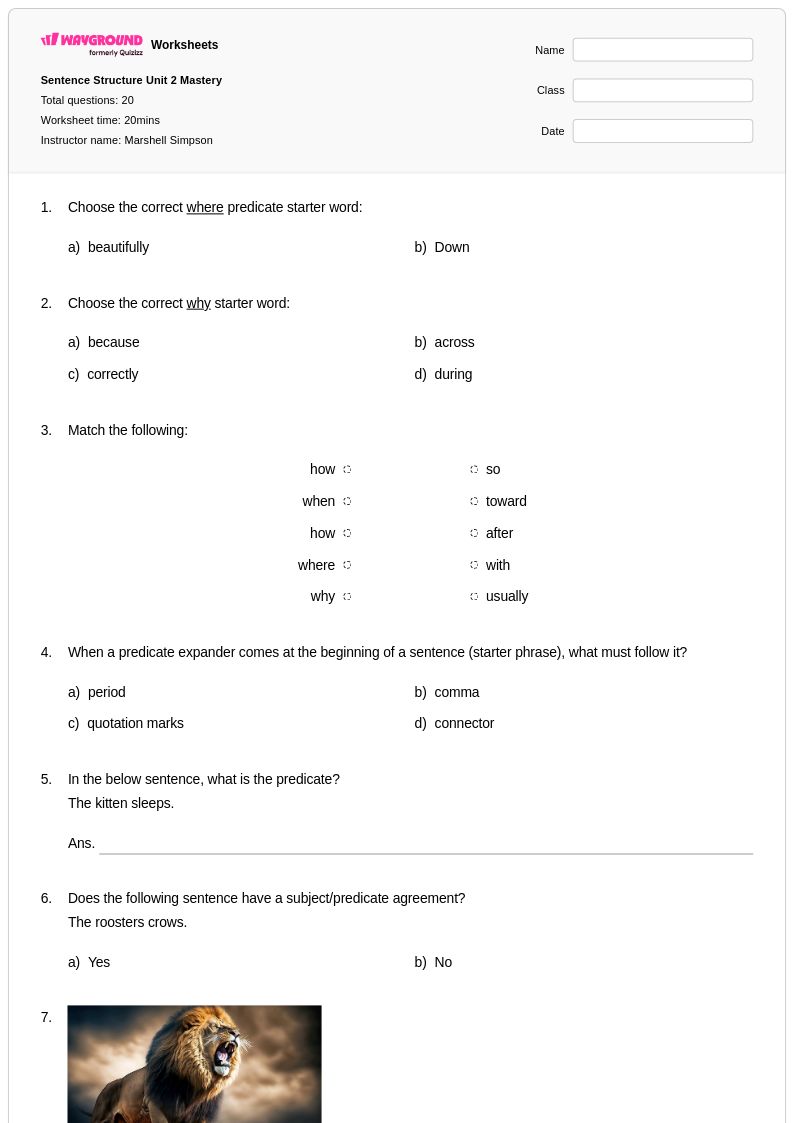
20 Q
1st - 5th
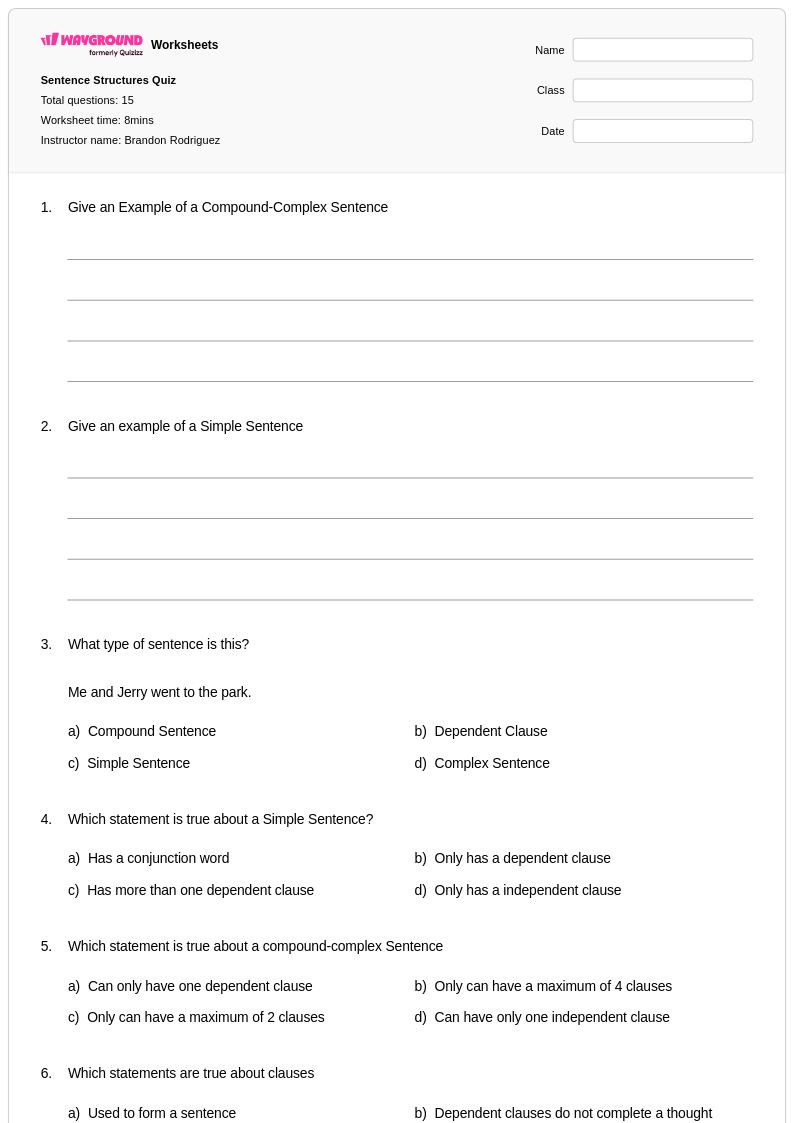
15 Q
KG - Uni
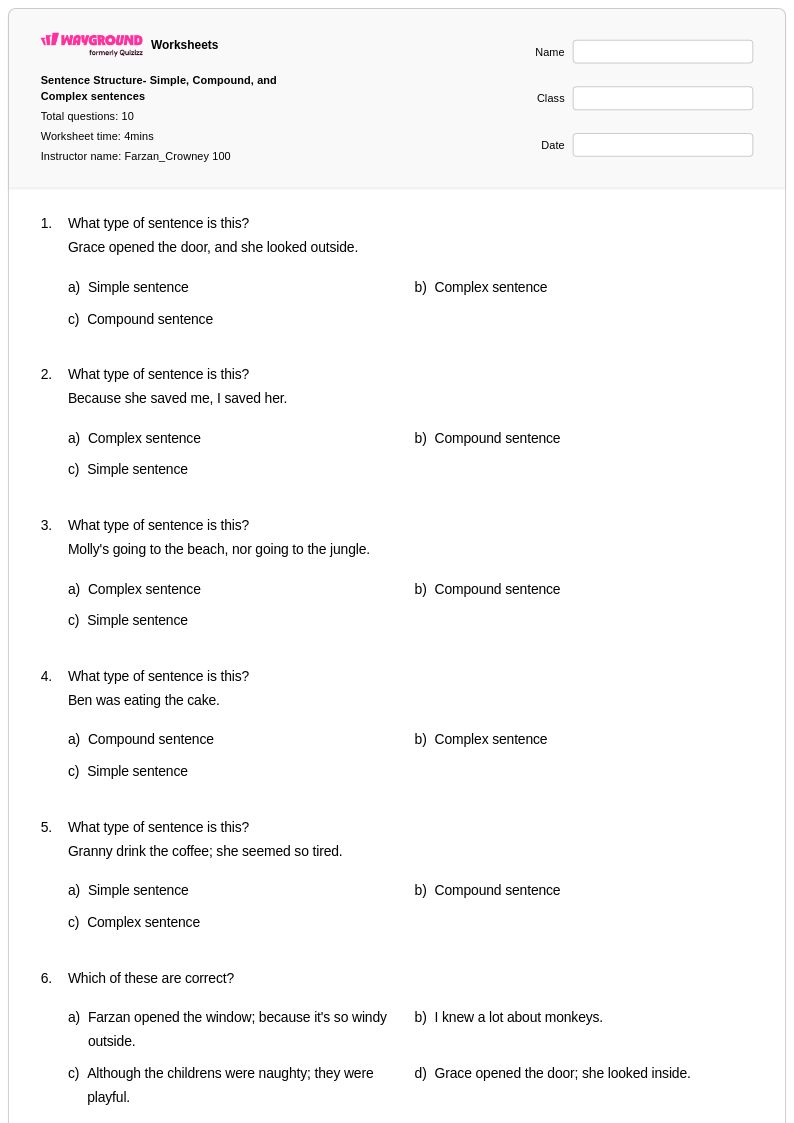
10 Q
3rd - 5th
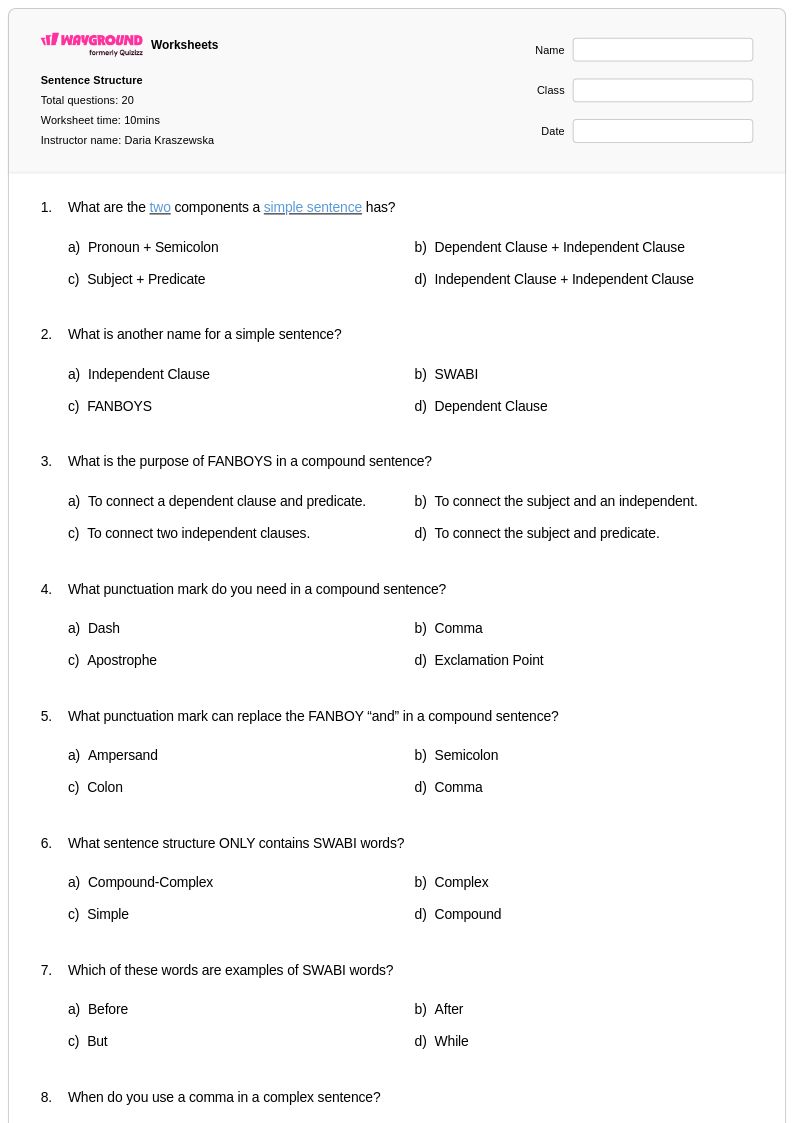
20 Q
3rd - 12th
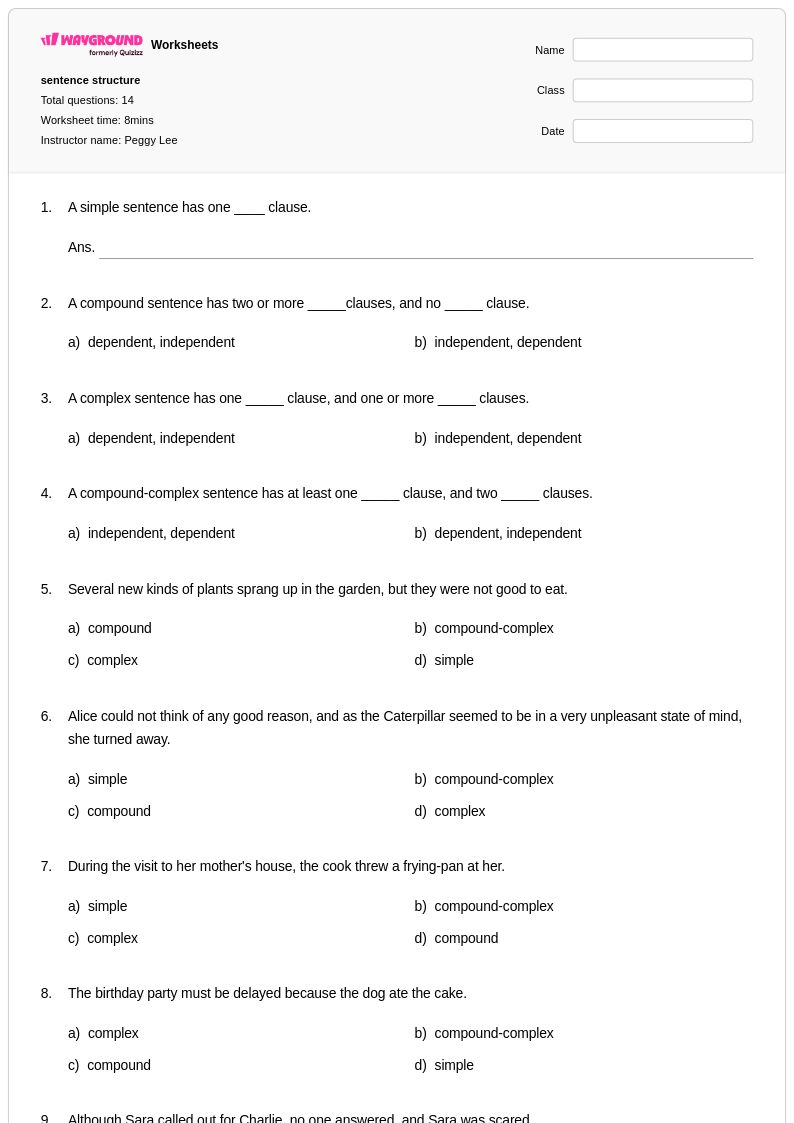
14 Q
9th - 12th
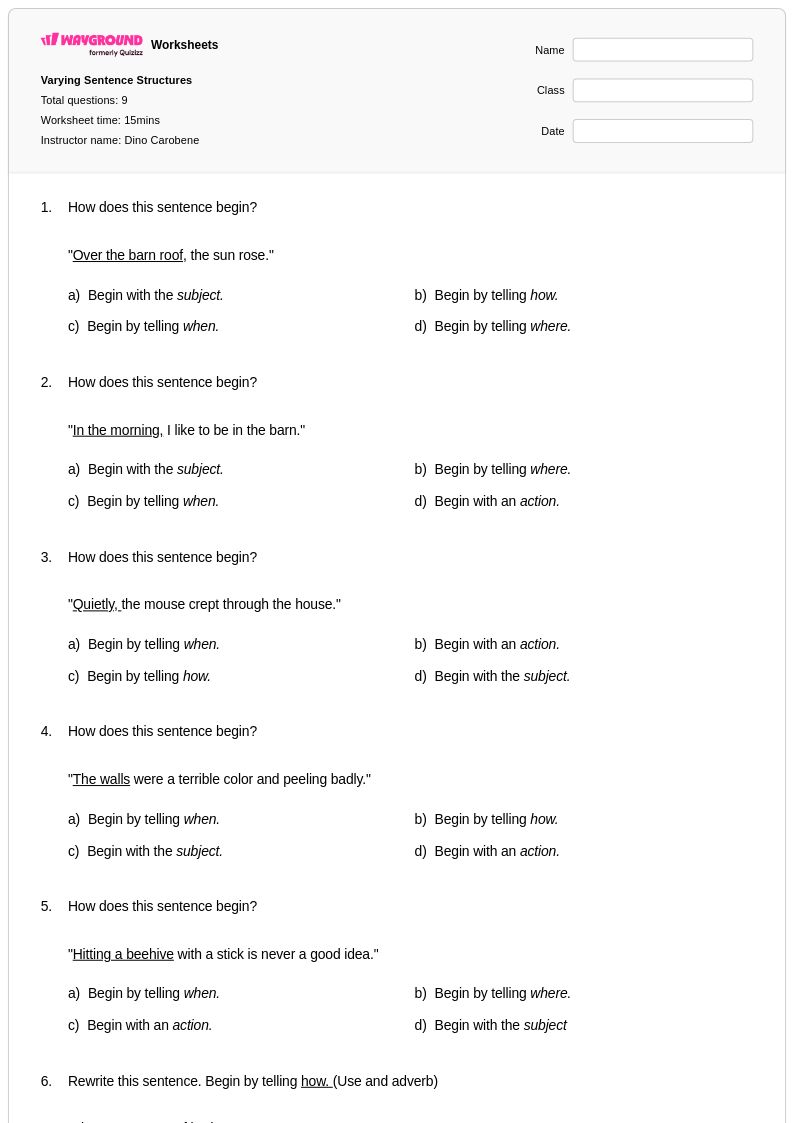
9 Q
3rd
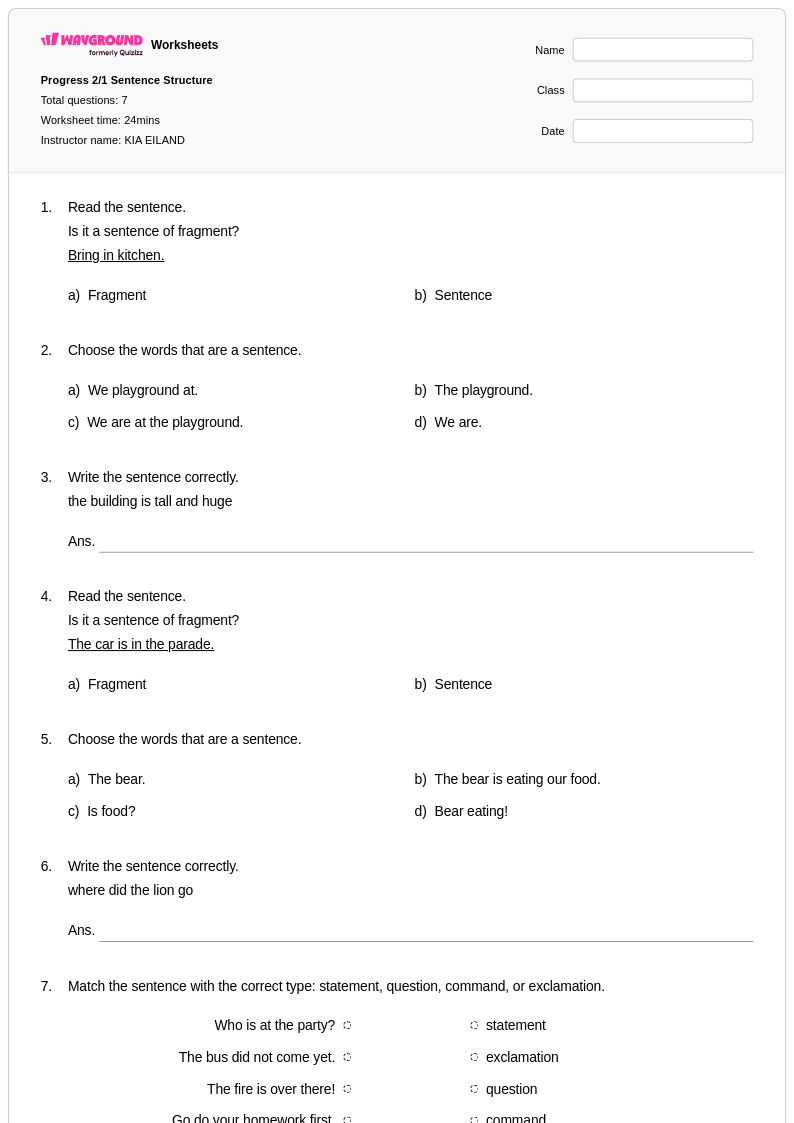
7 Q
1st - 5th
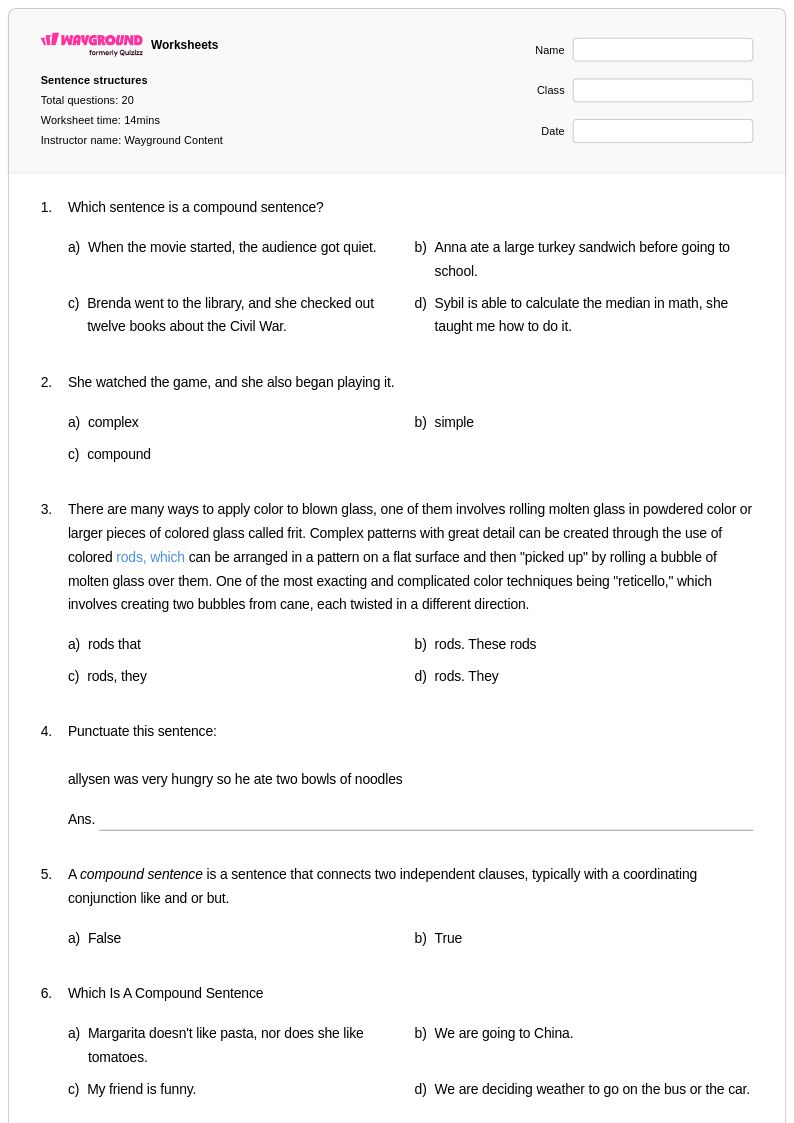
20 Q
1st - 10th
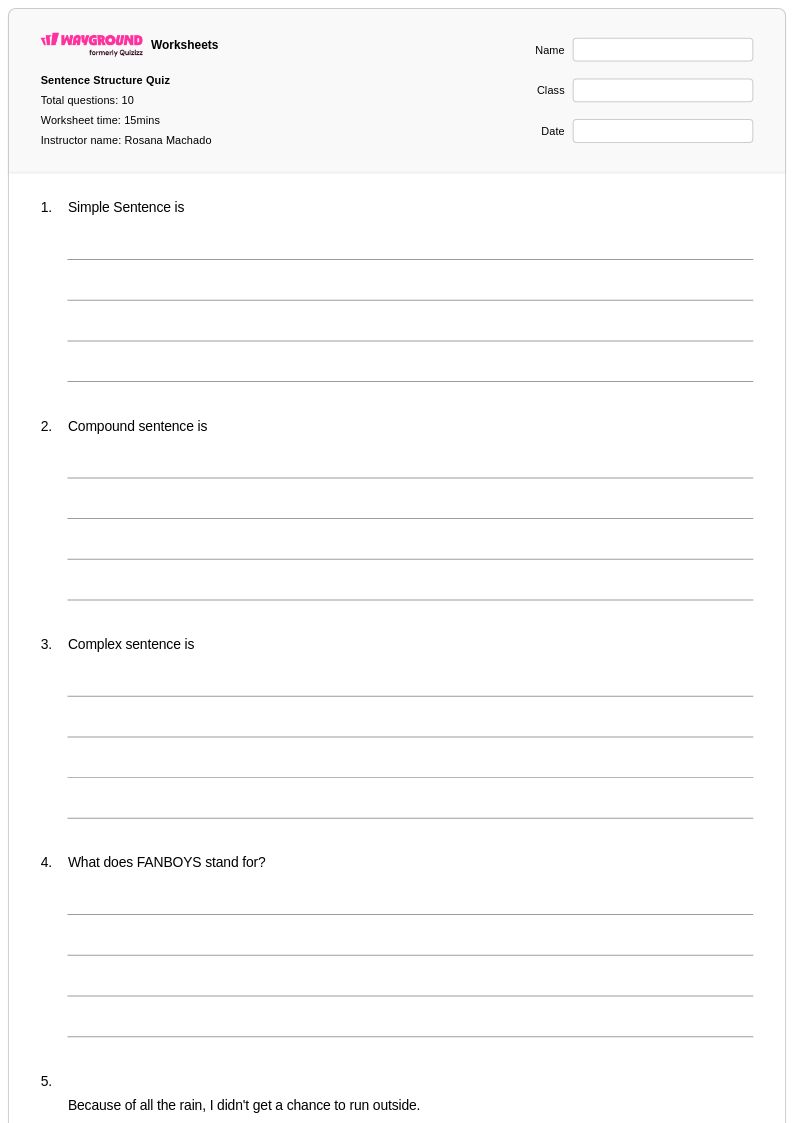
10 Q
3rd - 8th
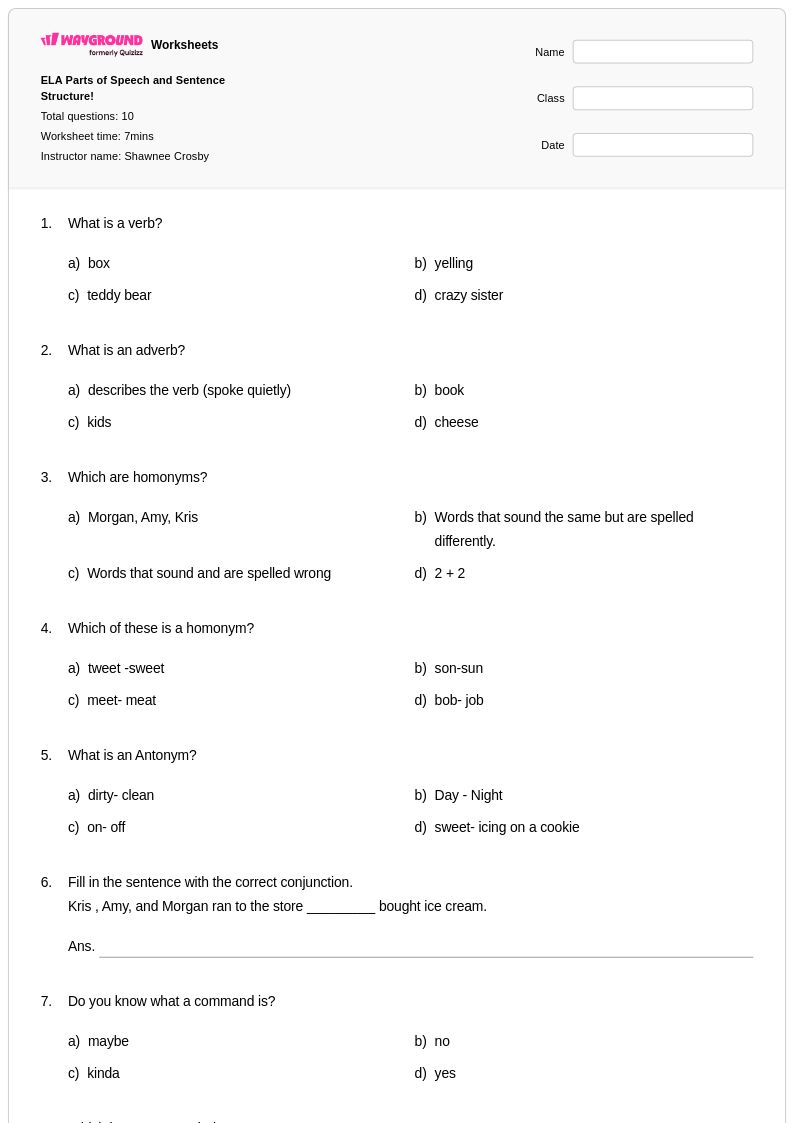
10 Q
3rd - 4th
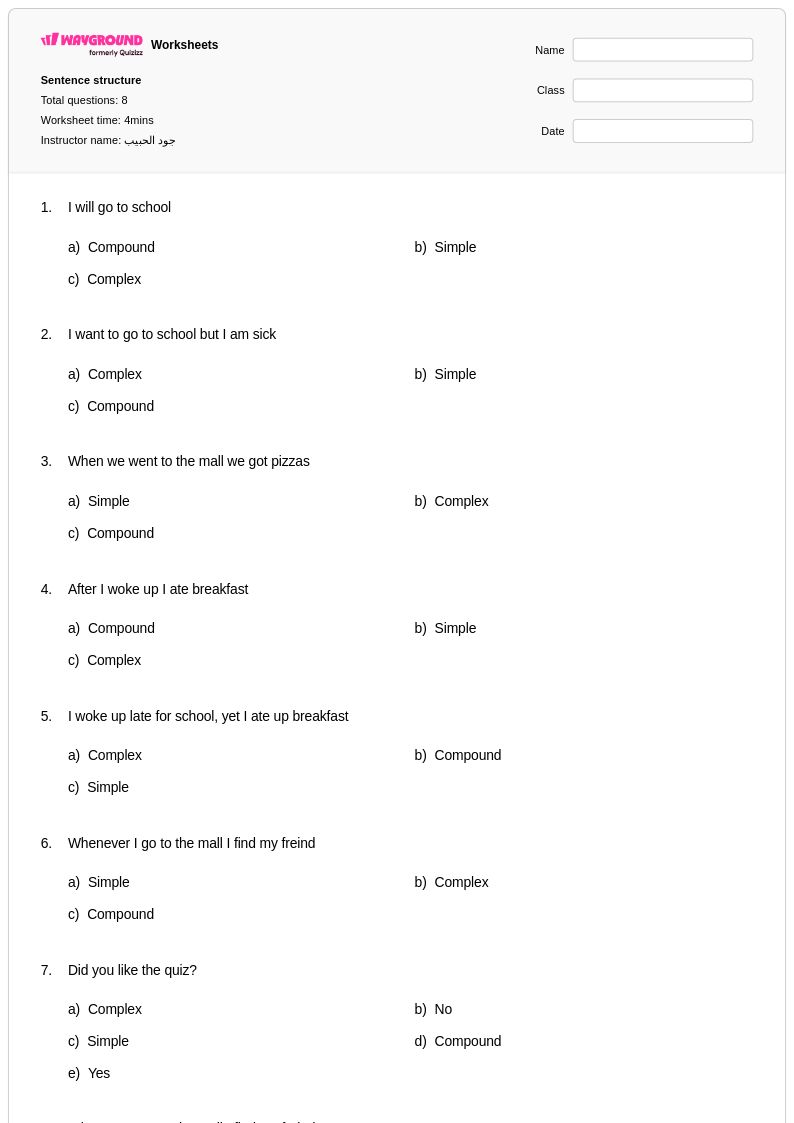
8 Q
1st - 4th
50 Q
KG - 12th
15 Q
3rd
20 Q
1st - 10th
6 Q
3rd - Uni
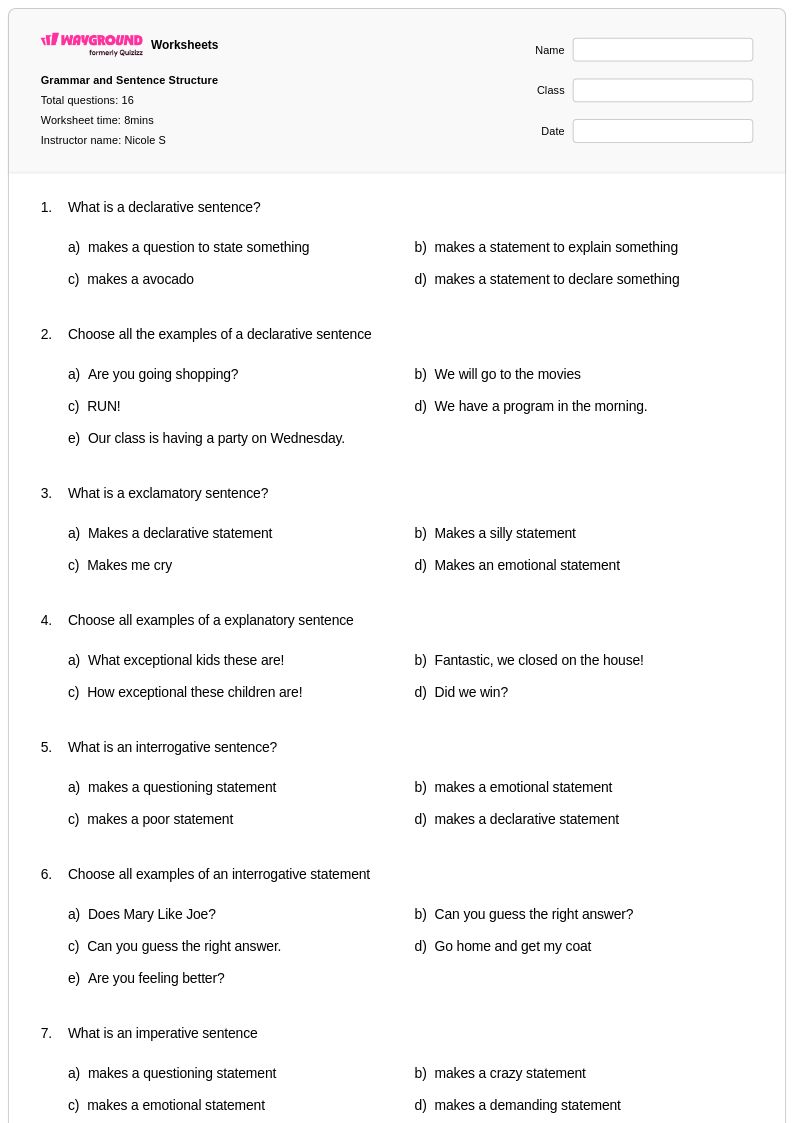
16 Q
3rd - 5th
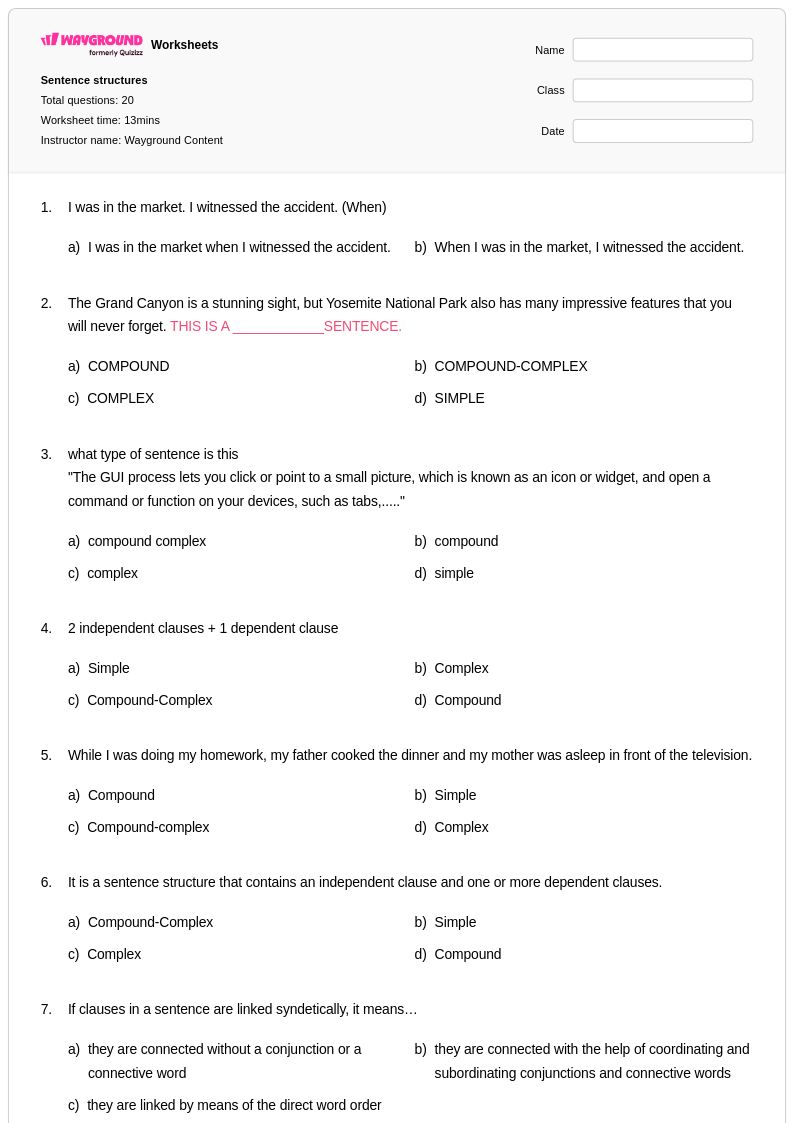
20 Q
1st - 7th
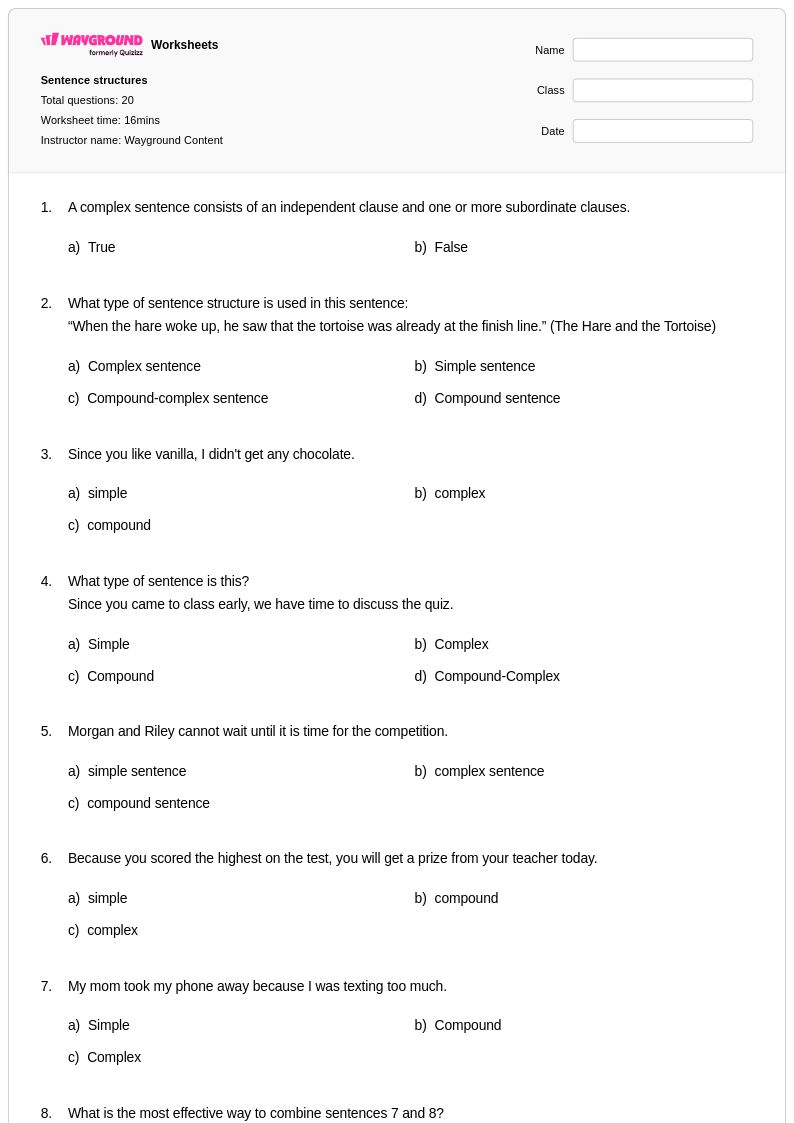
20 Q
1st - 7th
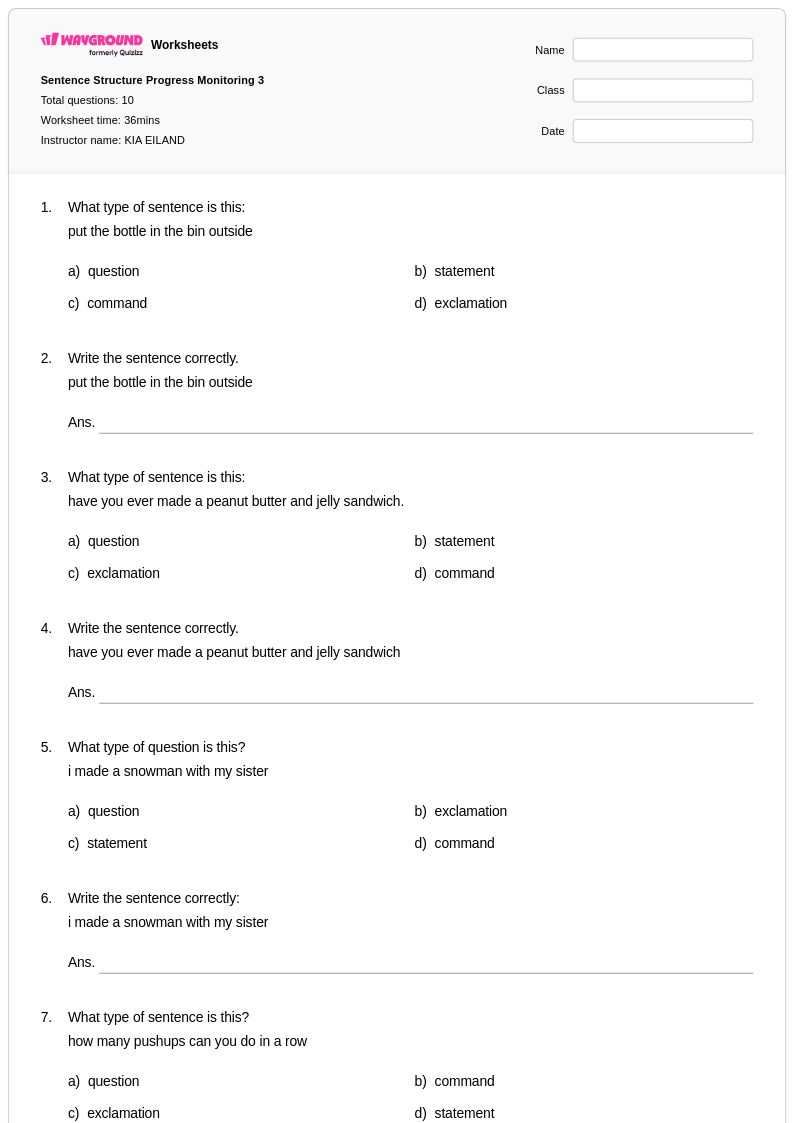
10 Q
1st - 5th
Explore Sentence Structure Worksheets by Grades
Explore Sentence Structure Worksheets for year 3 by Topic
Explore Other Subject Worksheets for year 3
Explore printable Sentence Structure worksheets for Year 3
Sentence structure worksheets for Year 3 students through Wayground (formerly Quizizz) provide comprehensive practice in building well-formed sentences that communicate ideas clearly and effectively. These carefully designed resources help third-grade learners master fundamental concepts including subject-predicate relationships, complete versus incomplete sentences, and the proper arrangement of words to create meaningful statements and questions. Students develop essential skills in identifying sentence fragments, combining simple sentences, and understanding how different sentence types serve various purposes in writing. Each worksheet includes structured practice problems that guide learners through progressive skill-building exercises, with answer keys available to support both independent study and teacher-led instruction. These free printable resources offer systematic practice in recognizing and constructing grammatically correct sentences, establishing the foundation for more advanced writing skills.
Wayground (formerly Quizizz) empowers educators with millions of teacher-created sentence structure worksheets specifically aligned to Year 3 learning standards and developmental needs. The platform's robust search and filtering capabilities enable teachers to quickly locate resources that match their specific instructional goals, whether focusing on basic sentence completion, compound sentence formation, or punctuation within sentence structures. Advanced differentiation tools allow educators to customize worksheets for diverse learning needs, providing appropriate challenge levels for both remediation and enrichment activities. Teachers can access these resources in multiple formats, including downloadable PDF versions for traditional classroom use and digital formats for interactive learning experiences. This flexibility supports comprehensive lesson planning while enabling targeted skill practice that helps students master the building blocks of effective written communication through varied and engaging sentence structure exercises.
FAQs
How do I teach sentence structure to students who struggle with grammar basics?
What worksheets or exercises help students practice sentence structure effectively?
What are the most common mistakes students make with sentence structure?
How do I help students understand the difference between phrases and clauses?
How can I use sentence structure worksheets to support students at different skill levels?
How do I use Wayground's sentence structure worksheets in my classroom?