Free Printable Sequencing Events in Nonfiction Worksheets for Year 3
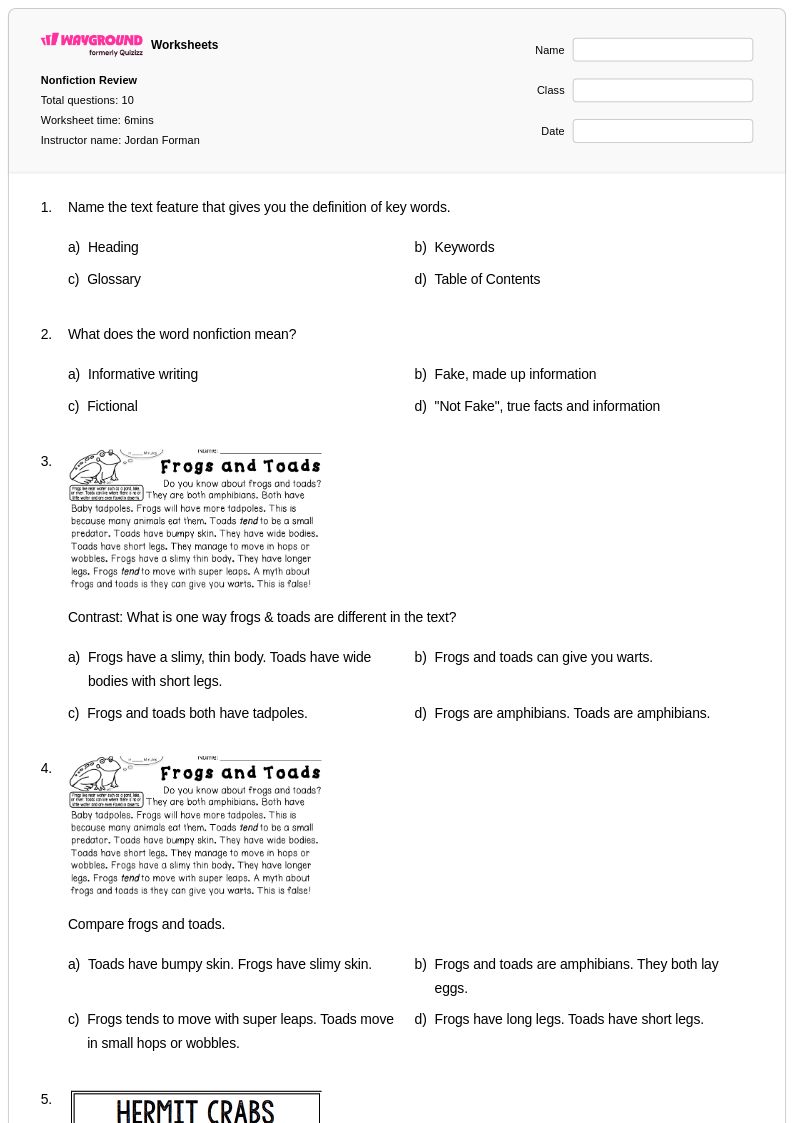
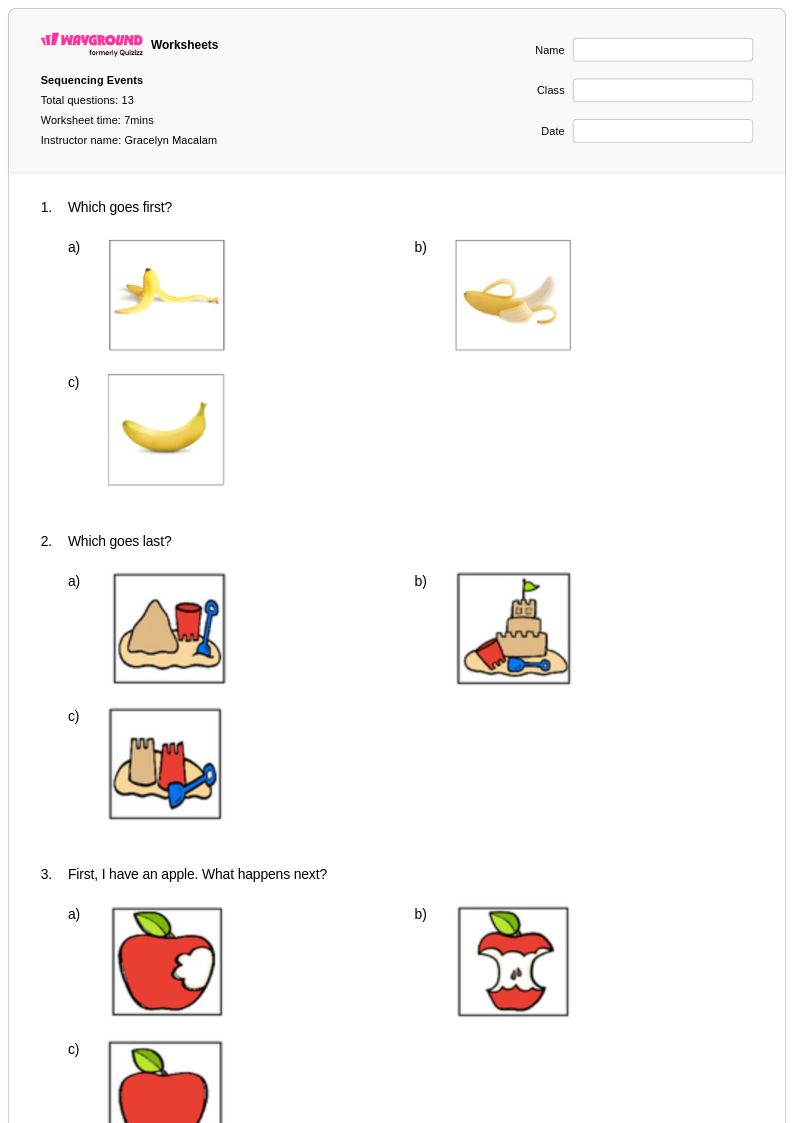
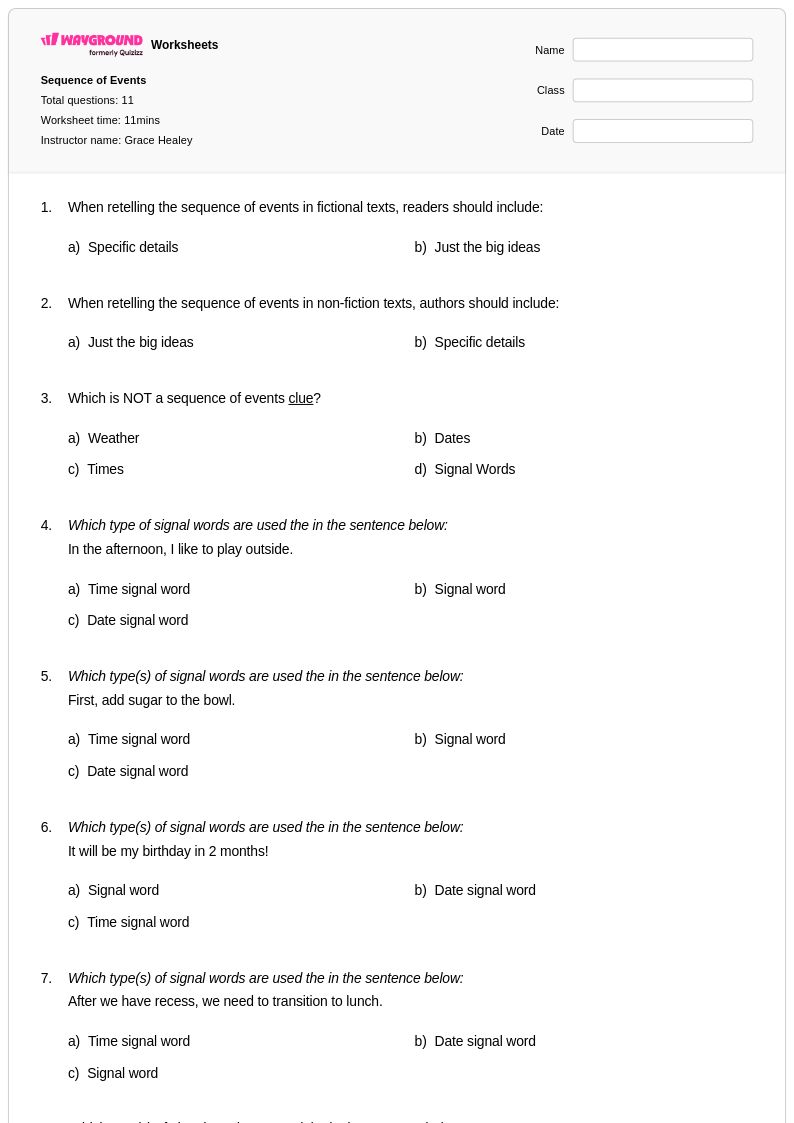
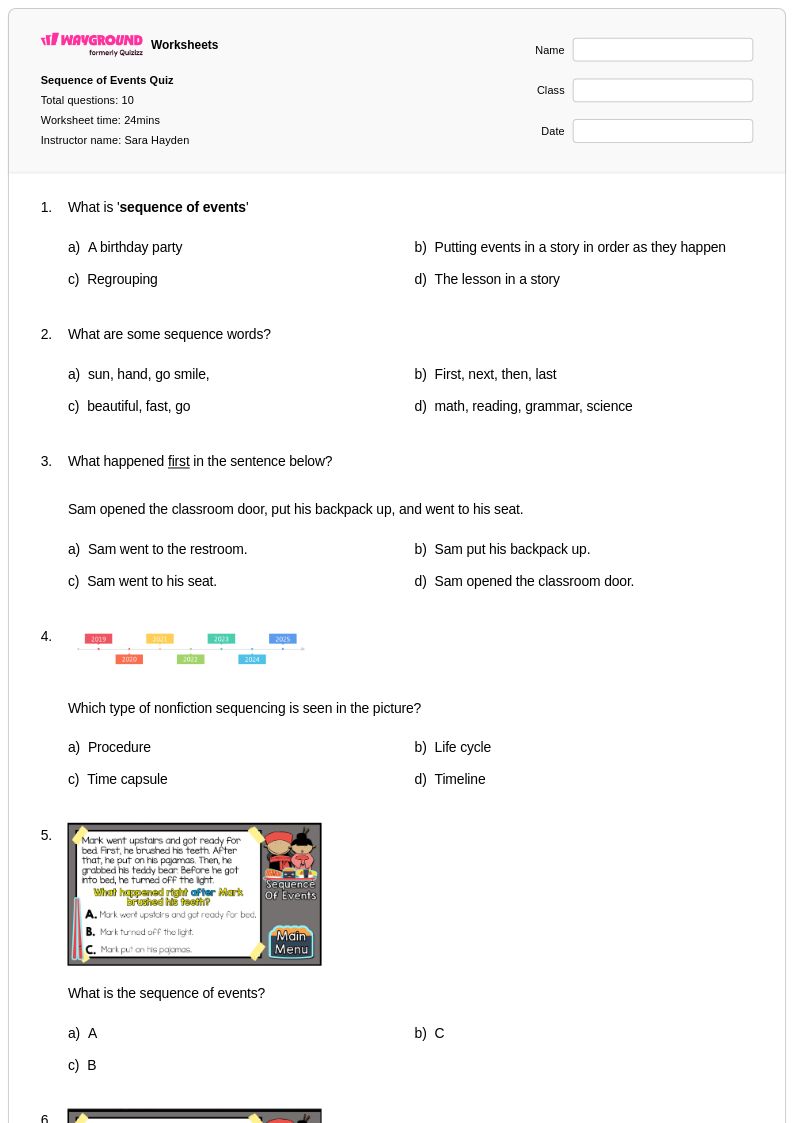
Enhance Year 3 students' reading comprehension with Wayground's free sequencing events in nonfiction worksheets, featuring printable PDFs, engaging practice problems, and complete answer keys to master chronological order skills.
Explore printable Sequencing Events in Nonfiction worksheets for Year 3
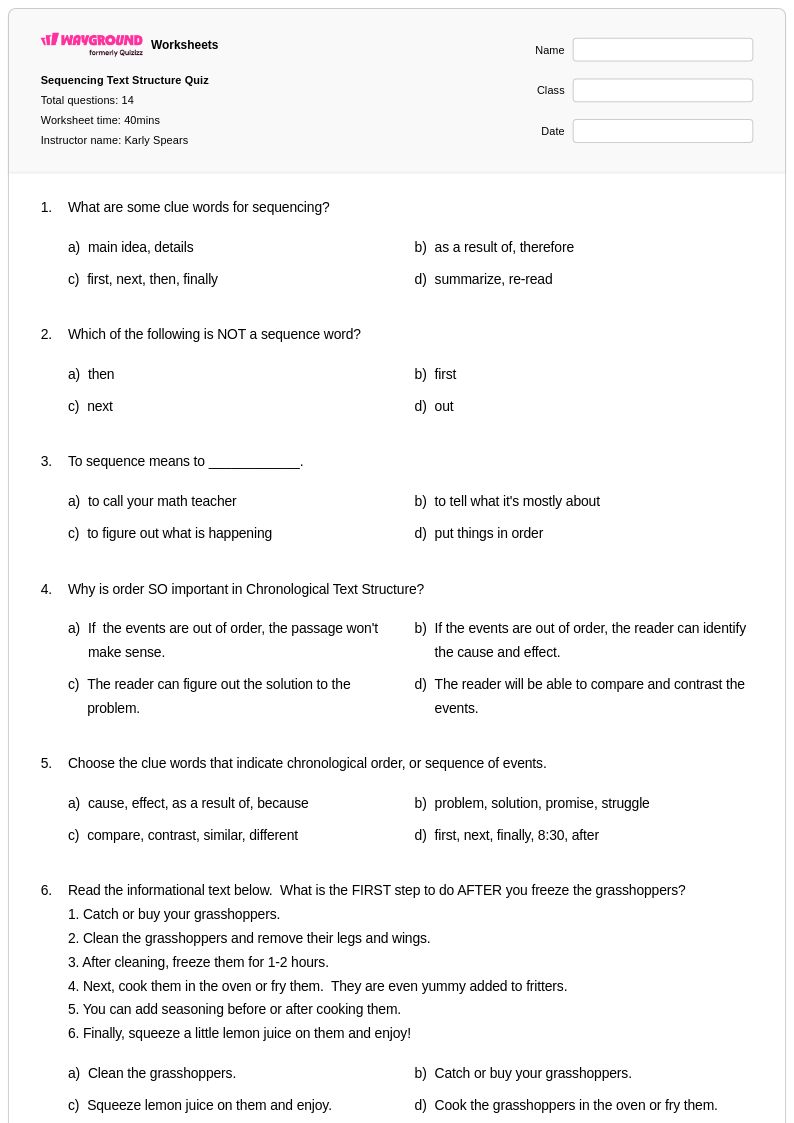
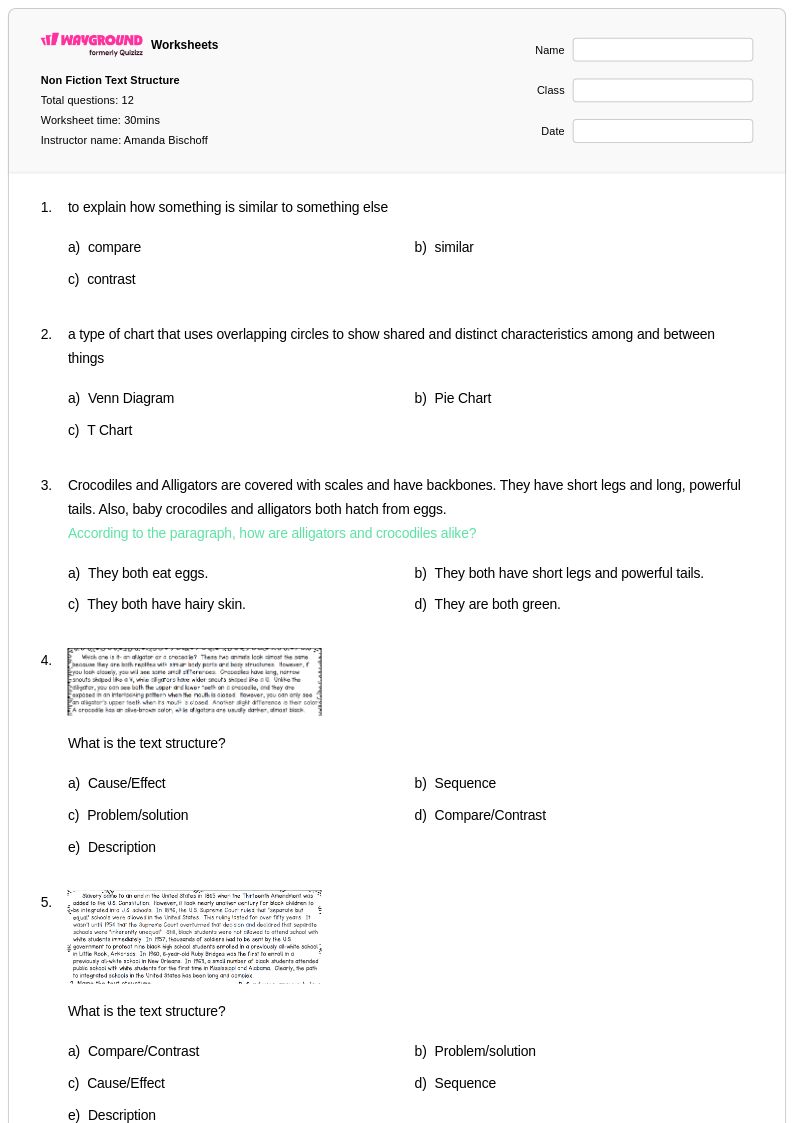
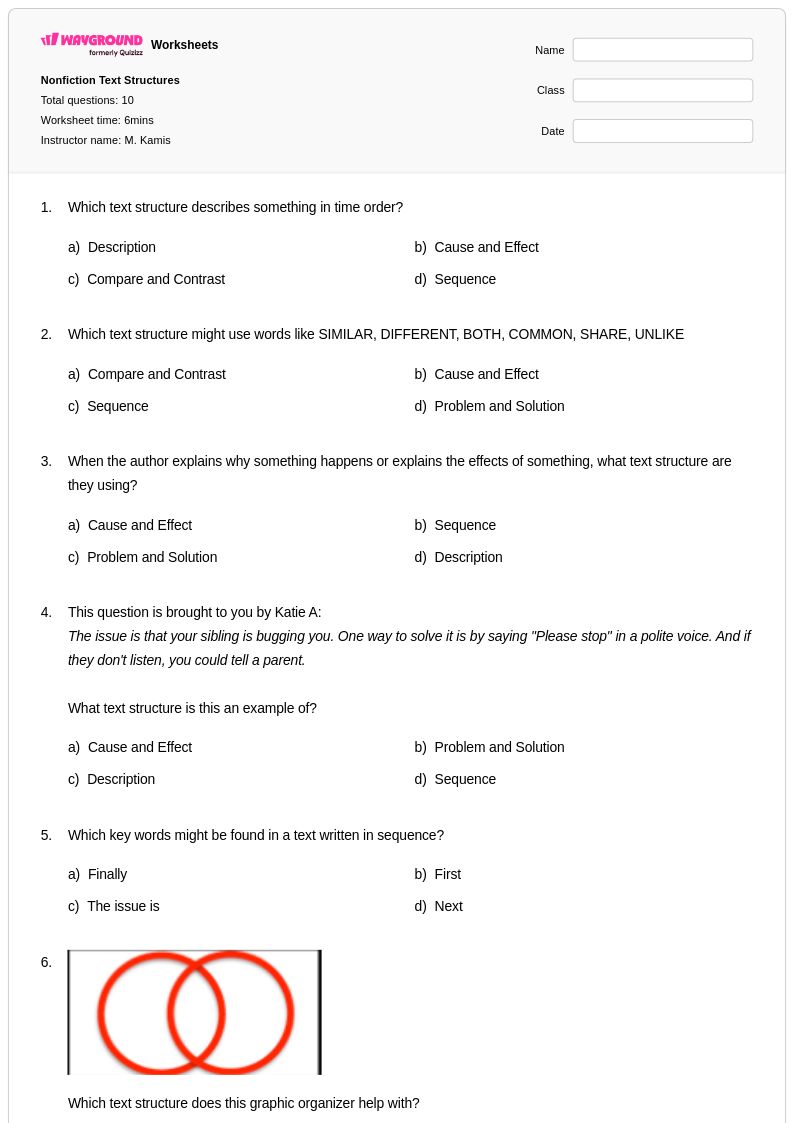
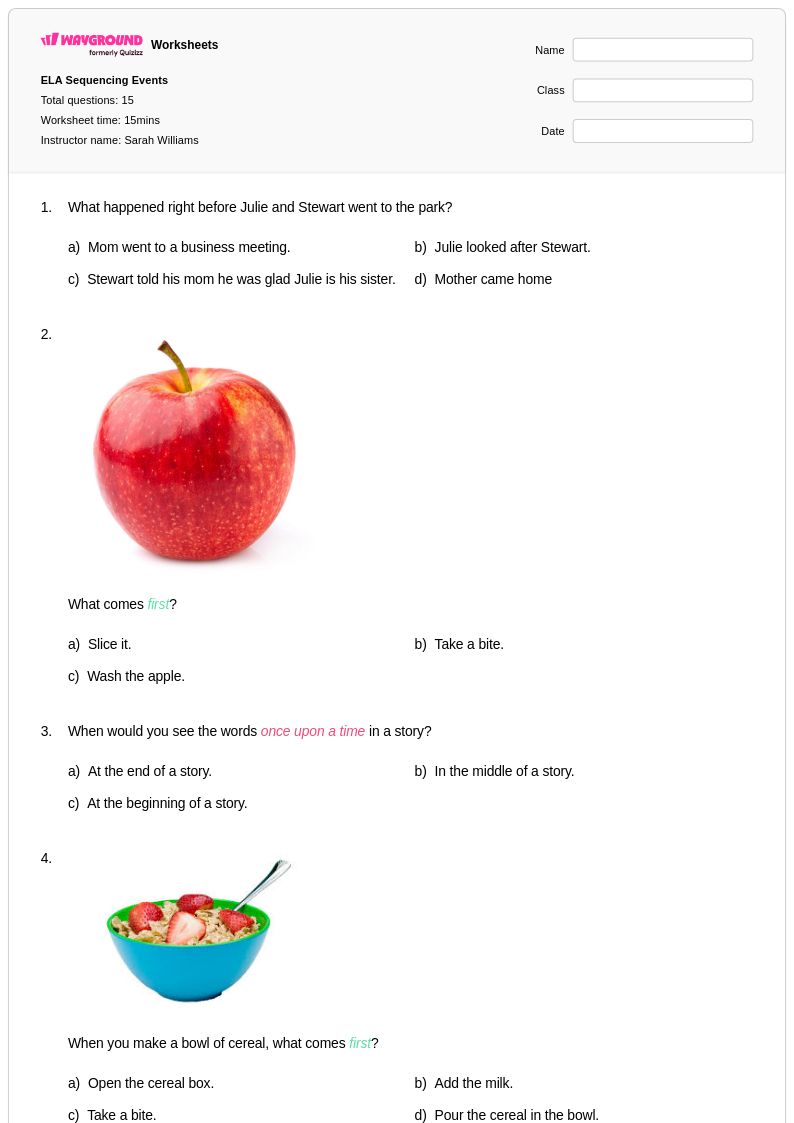
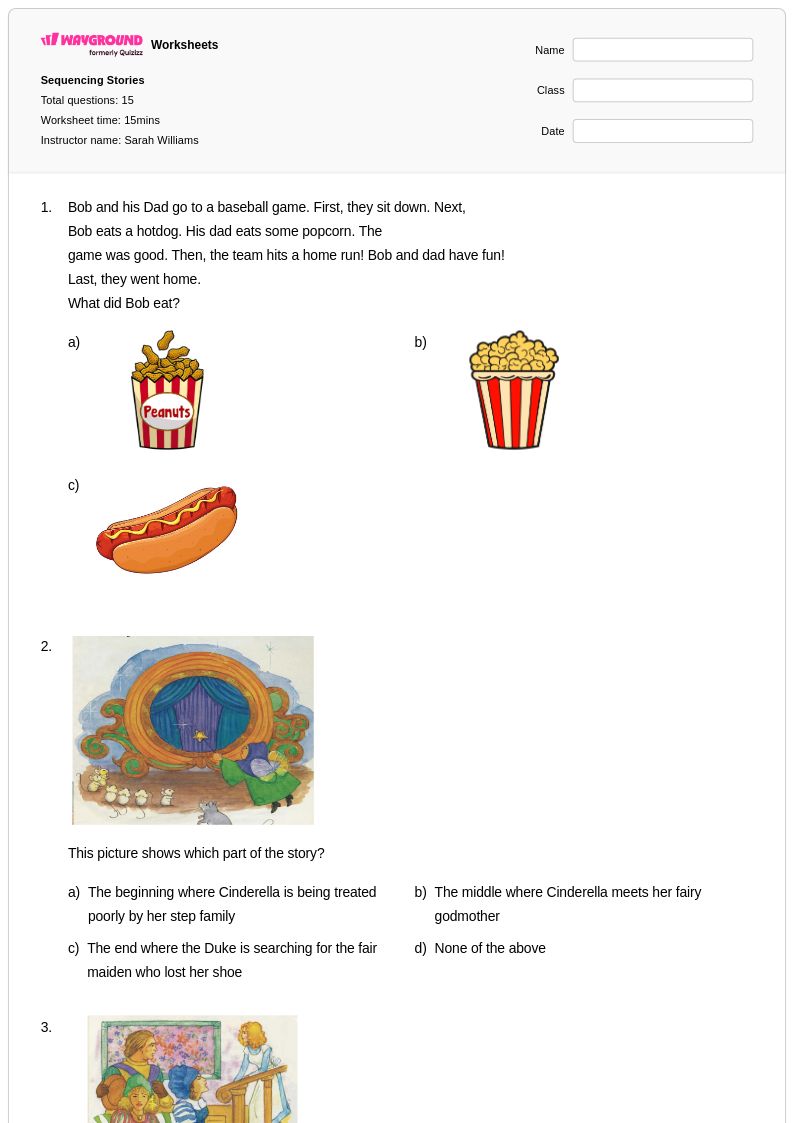
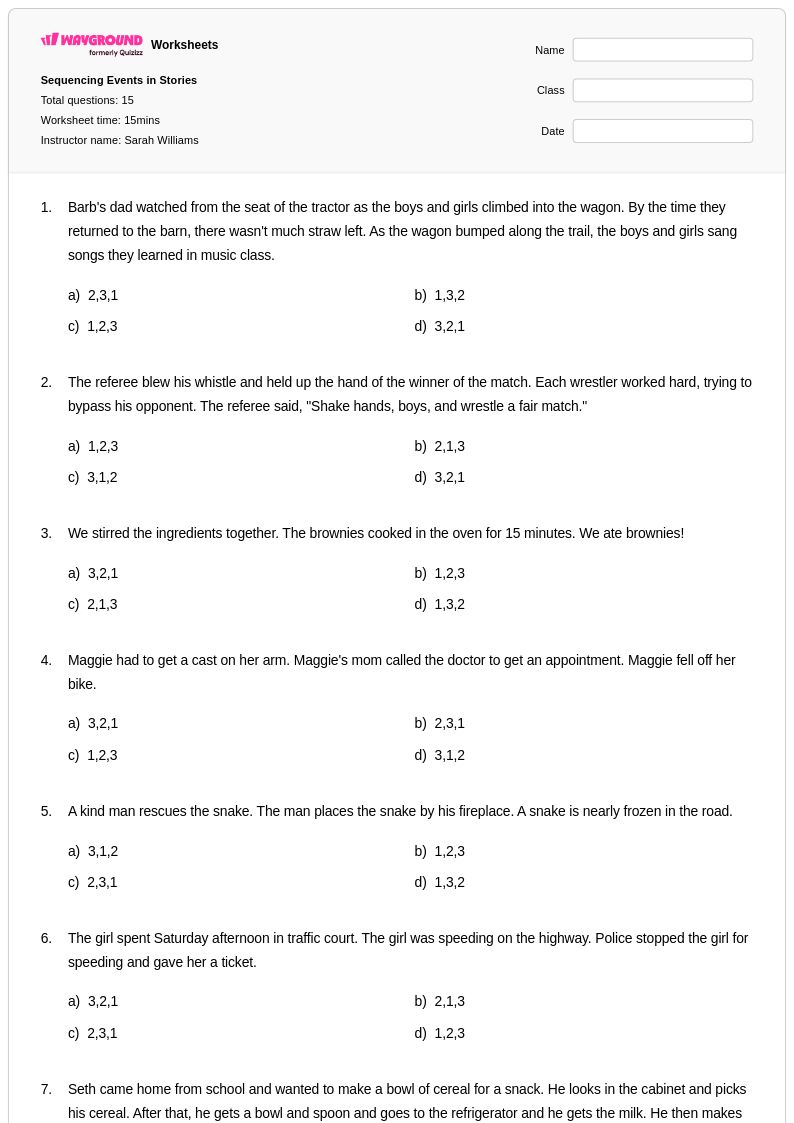
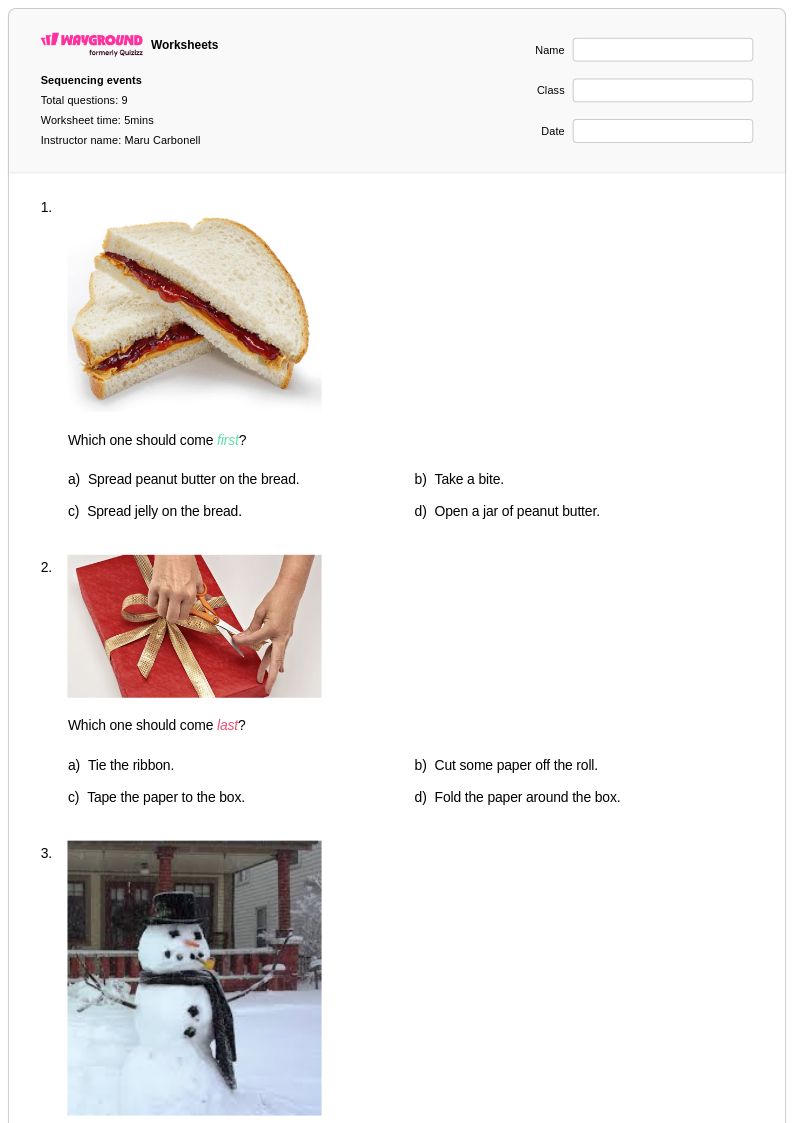
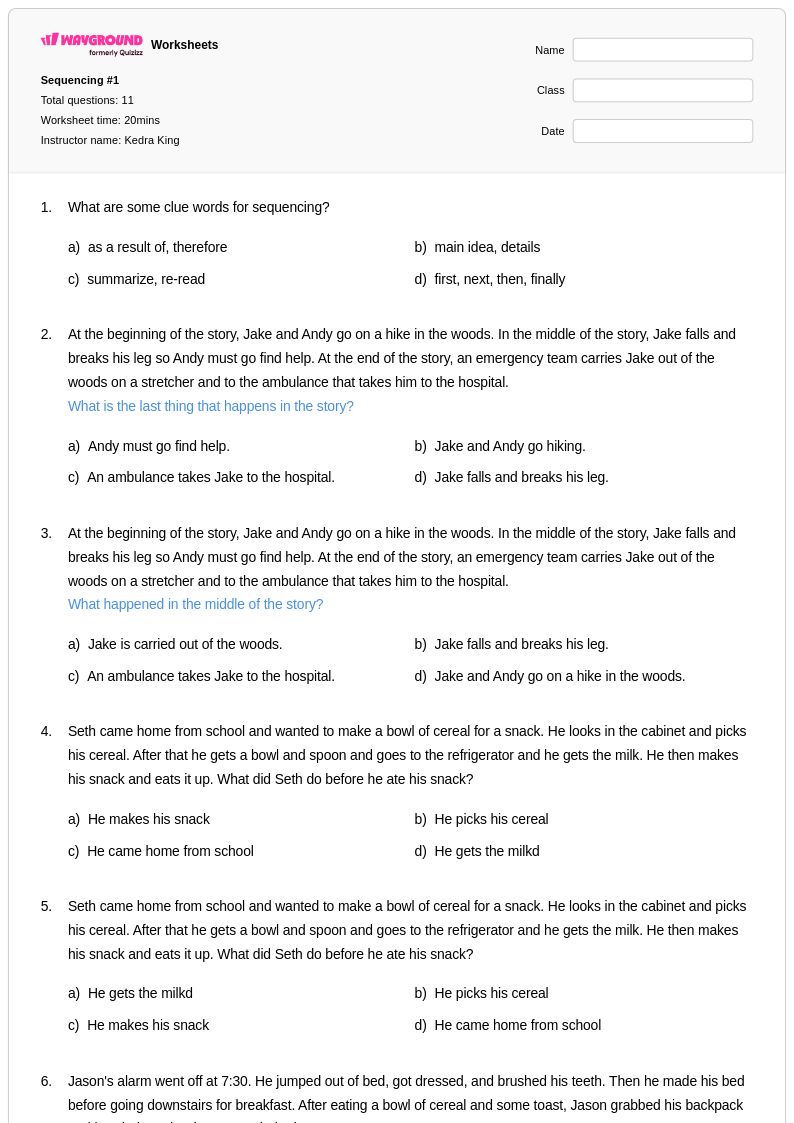
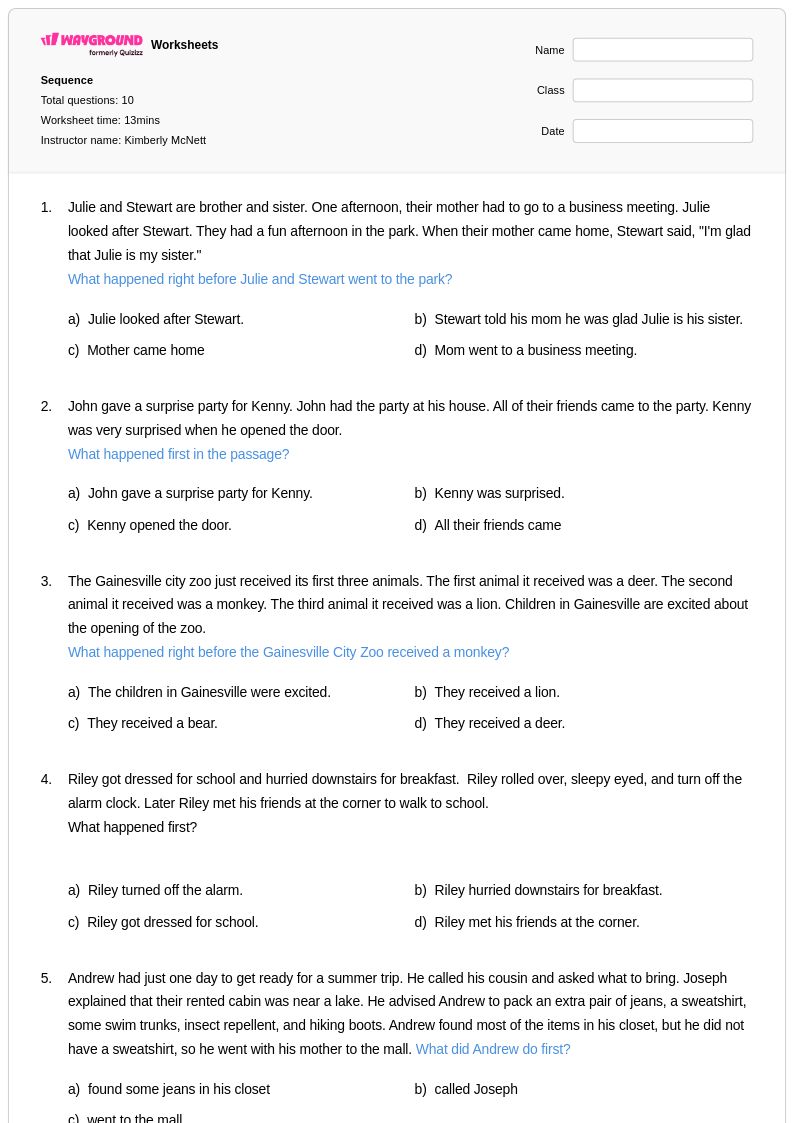
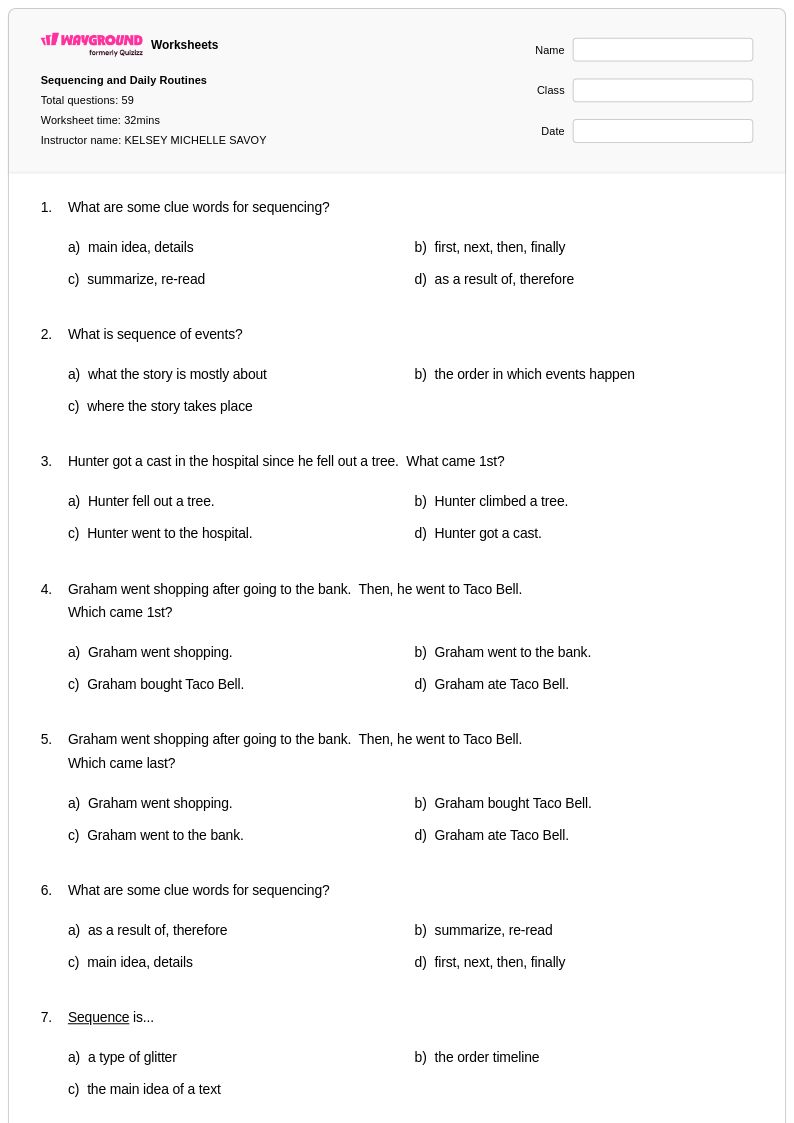
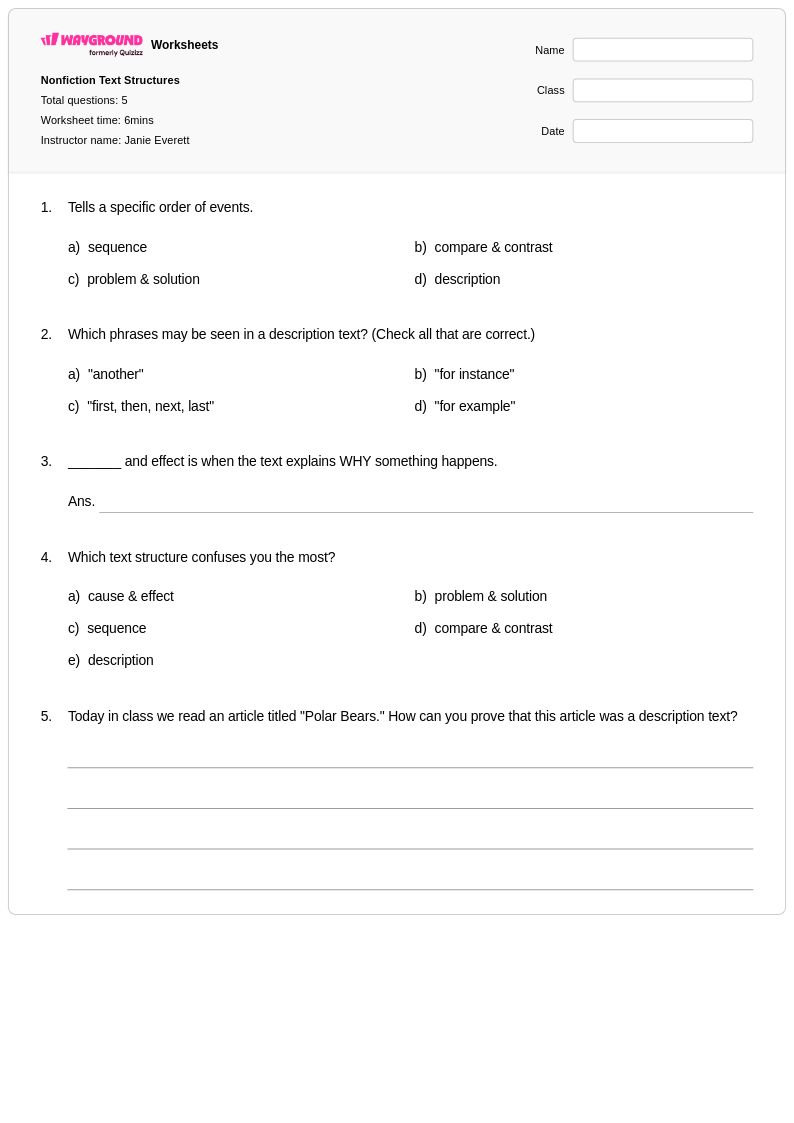
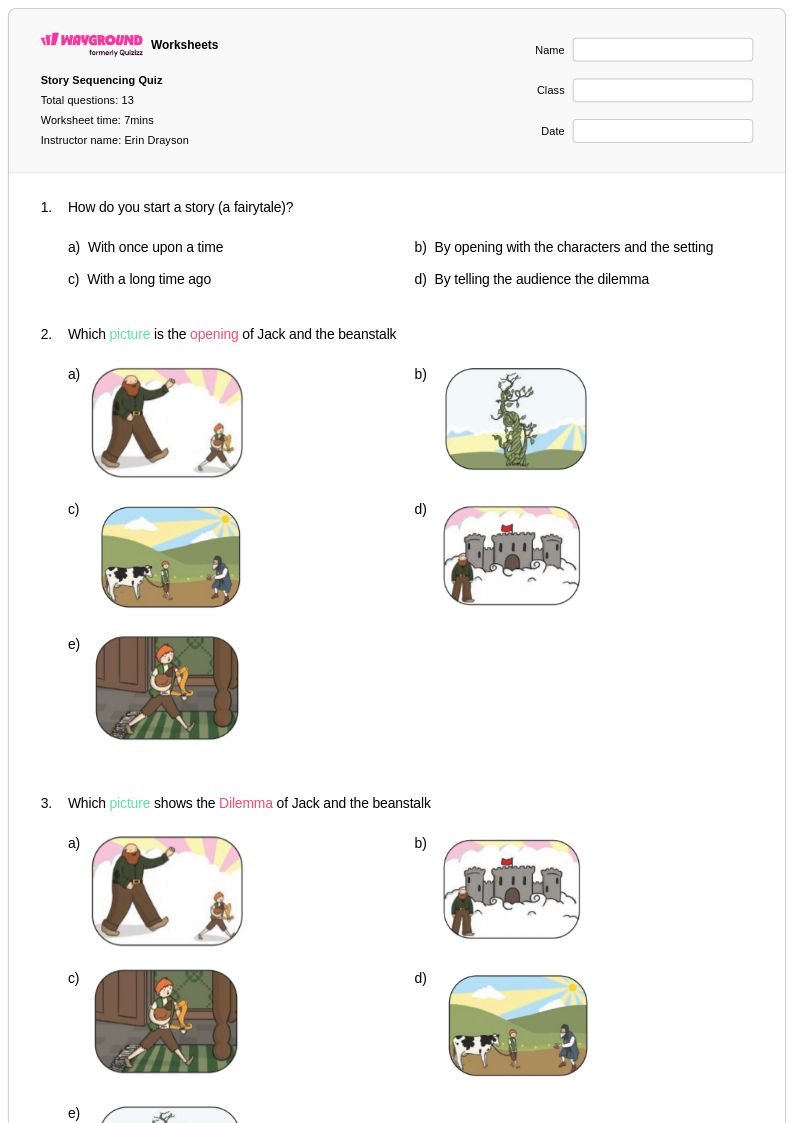
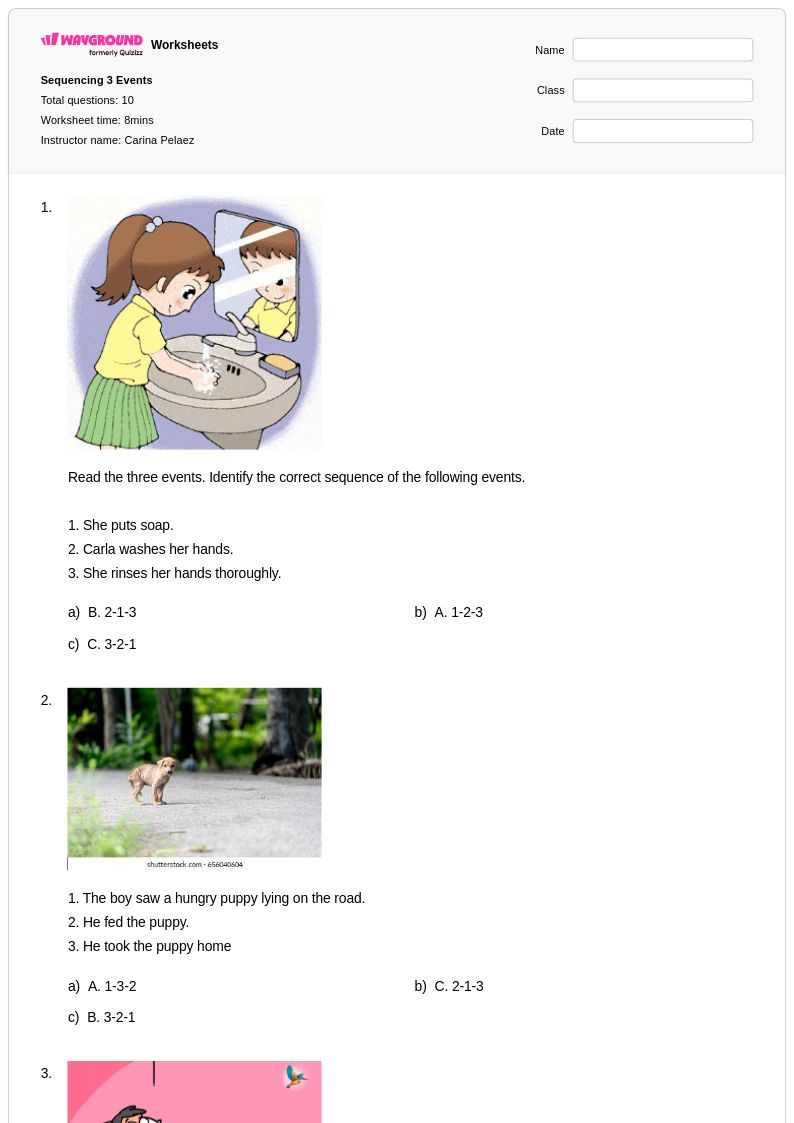
Sequencing Events in Nonfiction worksheets for Year 3 through Wayground provide essential practice for developing critical reading comprehension skills that form the foundation of academic success. These carefully designed resources help third-grade students identify chronological order, understand cause-and-effect relationships, and recognize temporal signal words within informational texts. Each worksheet collection includes comprehensive materials such as engaging nonfiction passages about science topics, historical events, and real-world processes, accompanied by detailed answer keys that support both independent practice and guided instruction. Students work through practice problems that require them to arrange events in logical sequence, identify transitional phrases, and demonstrate understanding of how authors organize factual information. These free printables cover diverse nonfiction genres including biography, science articles, and procedural texts, ensuring students develop transferable sequencing skills across multiple content areas.
Wayground supports educators with an extensive library of millions of teacher-created resources specifically designed for sequencing events in nonfiction instruction at the Year 3 level. The platform's robust search and filtering capabilities enable teachers to quickly locate worksheets aligned with specific learning standards and differentiate instruction based on individual student needs. Teachers can access materials in both printable pdf format for traditional classroom use and digital formats for technology-integrated learning environments. The flexible customization tools allow educators to modify existing worksheets, adjust difficulty levels, and create targeted practice sessions for remediation or enrichment purposes. This comprehensive approach to resource management streamlines lesson planning while providing multiple pathways for skill practice, enabling teachers to address diverse learning styles and support students in mastering the critical ability to understand sequential organization in informational texts.
FAQs
How do I teach students to sequence events in nonfiction texts?
Start by explicitly teaching signal words and phrases that indicate chronological order, such as 'first,' 'then,' 'next,' 'finally,' 'before,' and 'as a result.' Model the skill using a short, familiar nonfiction passage by thinking aloud as you identify the sequence of events and place them on a timeline. Gradually release responsibility by having students practice with increasingly complex texts, including historical accounts, scientific processes, and biographical narratives, before working independently.
What exercises help students practice sequencing events in nonfiction?
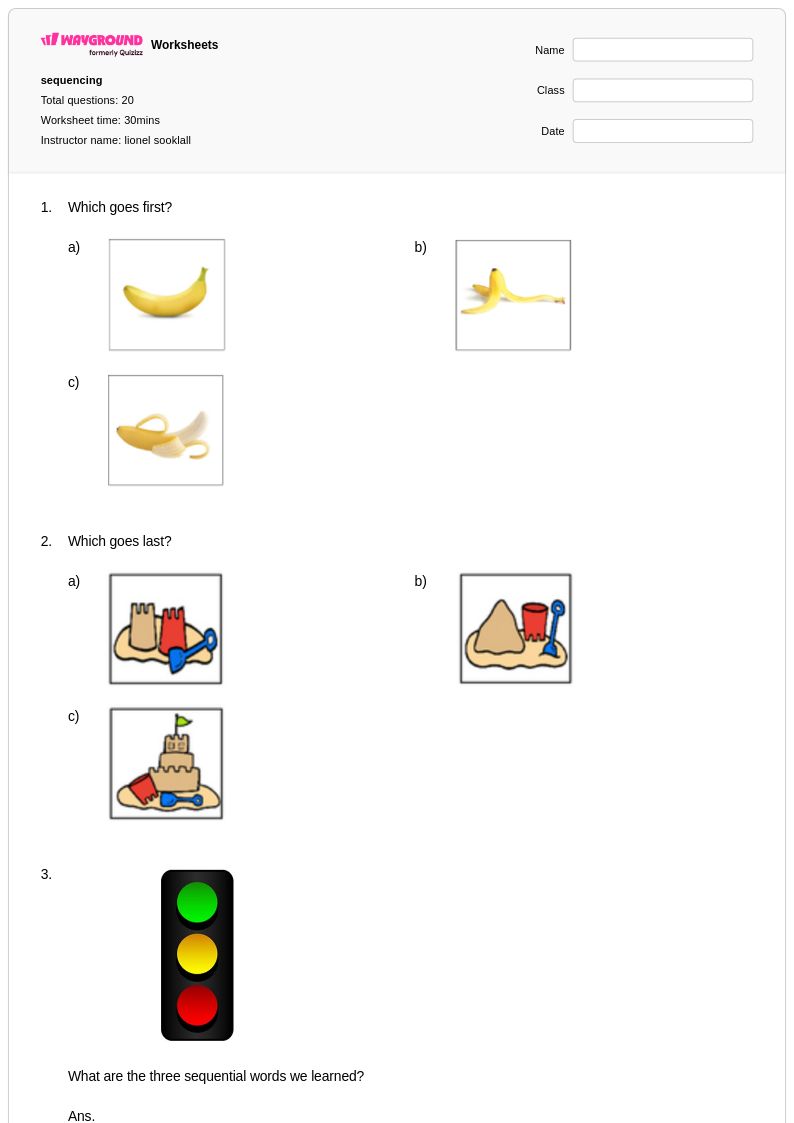
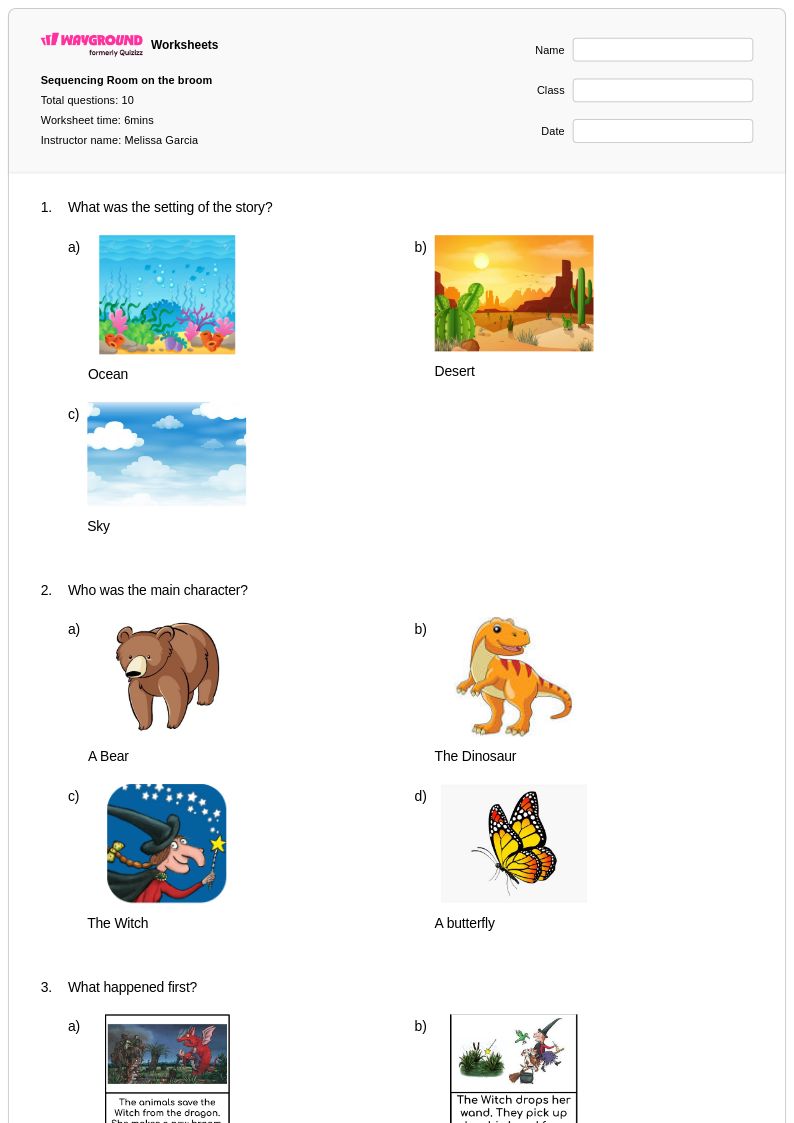
Effective practice exercises include arranging scrambled sentences or events from a nonfiction passage in the correct order, identifying temporal signal words within a text, and creating timelines based on informational reading. Cut-and-sort activities work especially well because they require students to actively engage with the logic of the sequence rather than simply answering multiple-choice questions. Pairing these exercises with a range of nonfiction formats, from procedural texts to historical accounts, helps students transfer the skill across contexts.
What mistakes do students commonly make when sequencing events in nonfiction?
A frequent error is confusing the order in which events are mentioned in the text with the actual chronological order in which they occurred, especially when an author uses flashbacks or non-linear structures. Students also tend to rely on surface-level signal words without fully understanding the passage, leading them to misplace events that lack obvious markers. Another common misconception is treating all cause-and-effect relationships as sequential ones, which can disrupt the logic of a constructed timeline.
How do I differentiate sequencing instruction for struggling readers?
For struggling readers, reduce the number of events students must sequence at one time and use shorter, highly structured nonfiction passages with clear signal words. Graphic organizers such as numbered flow charts can provide scaffolding before students attempt open-ended sequencing tasks. On Wayground, teachers can enable Read Aloud so questions and passage content are read to students who need support, and Reduced Answer Choices can lower cognitive load for students who are still building confidence with the skill.
How do I use Wayground's sequencing events in nonfiction worksheets in my classroom?
Wayground's sequencing events in nonfiction worksheets are available as printable PDFs for traditional classroom use and in digital formats for technology-integrated learning environments, including the option to host them as a quiz directly on Wayground. Each worksheet includes a complete answer key, making them practical for independent practice, small group instruction, or homework assignments. Teachers can use the platform's search and filtering tools to quickly locate worksheets that match a specific nonfiction format or difficulty level, and digital sessions can be customized with student-level accommodations such as extended time or Read Aloud.
How does sequencing nonfiction connect to broader reading comprehension skills?
Understanding sequence in nonfiction texts builds a student's ability to identify cause-and-effect relationships, follow procedural directions, and trace the development of an argument or event over time. These are foundational comprehension skills that appear across academic disciplines, from tracking steps in a science experiment to analyzing the progression of a historical event. When students can recognize how a nonfiction author has organized information chronologically, they are better equipped to summarize, synthesize, and critically evaluate informational texts.