Free Printable Shays' Rebellion Worksheets for Year 10
Explore Year 10 Shays' Rebellion worksheets and free printables from Wayground that help students analyze this pivotal post-Revolutionary War uprising through engaging practice problems and comprehensive answer keys.
Explore printable Shays' Rebellion worksheets for Year 10
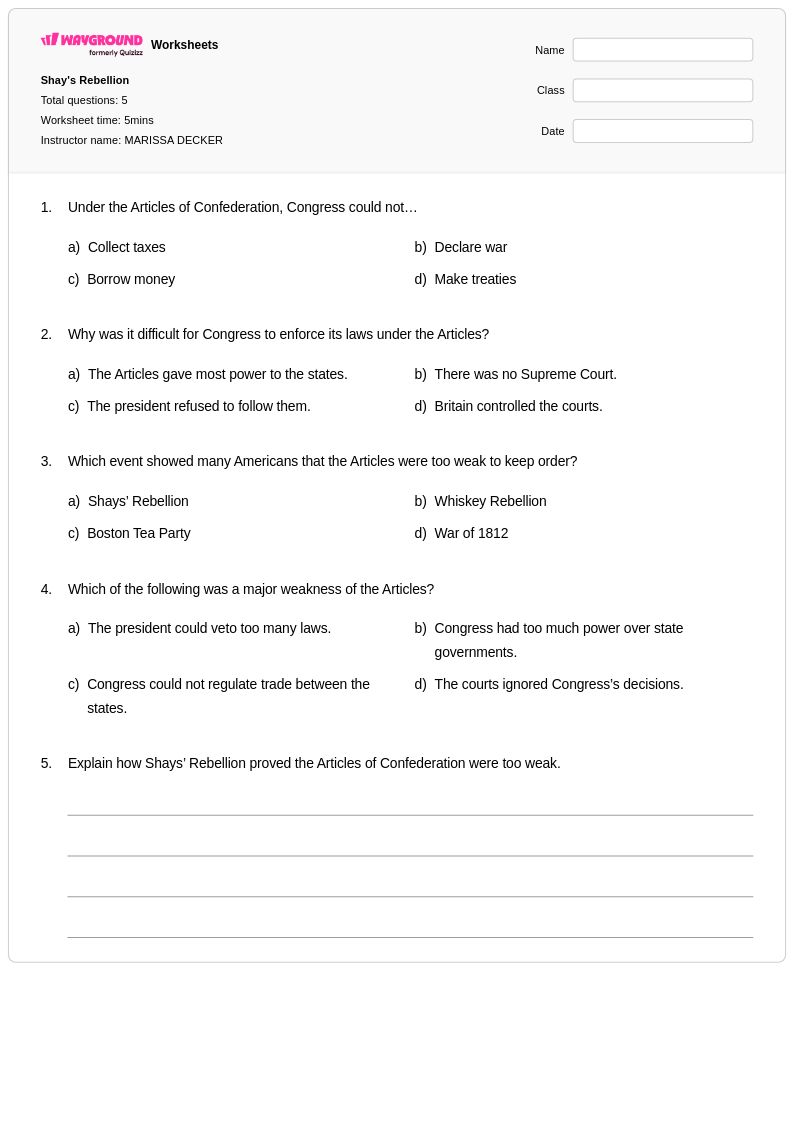
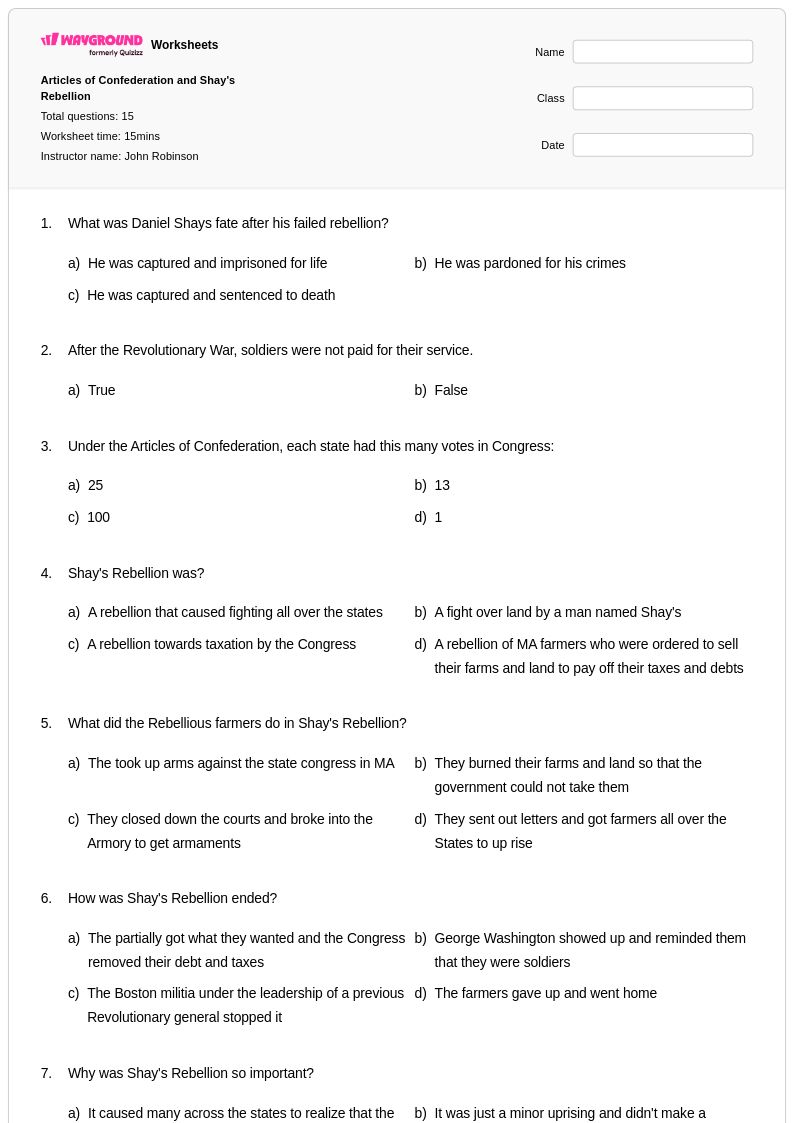
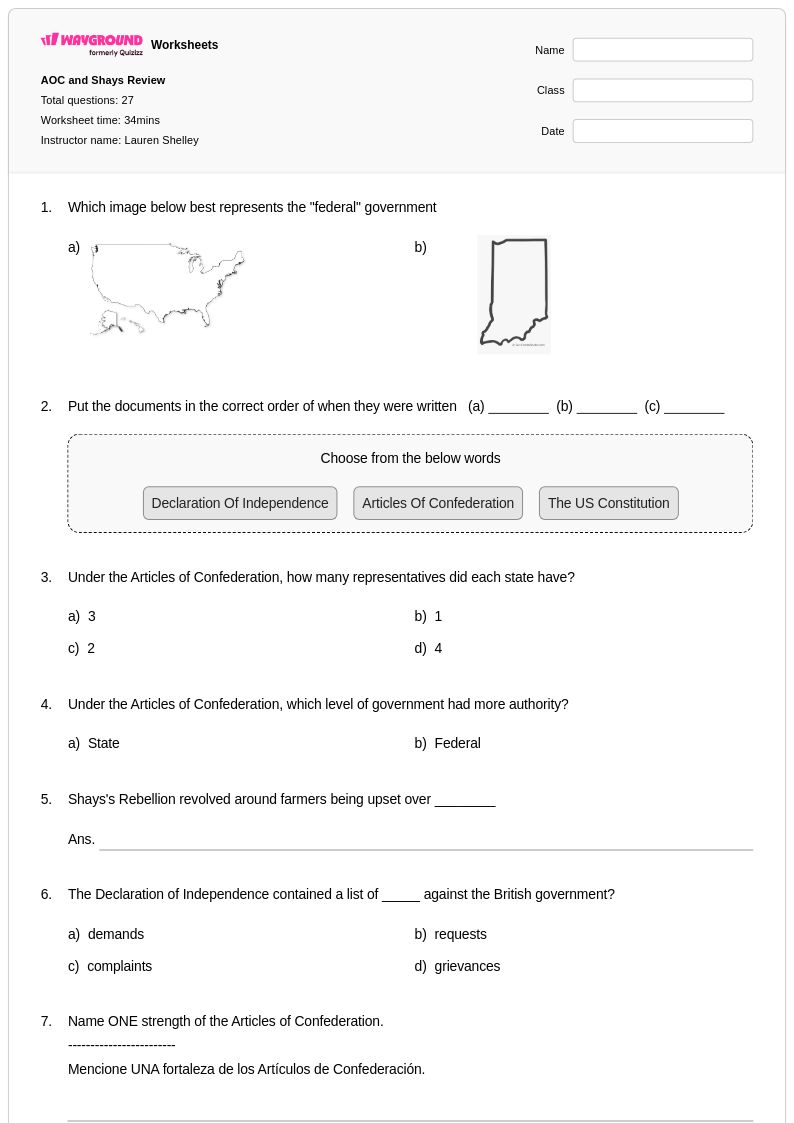
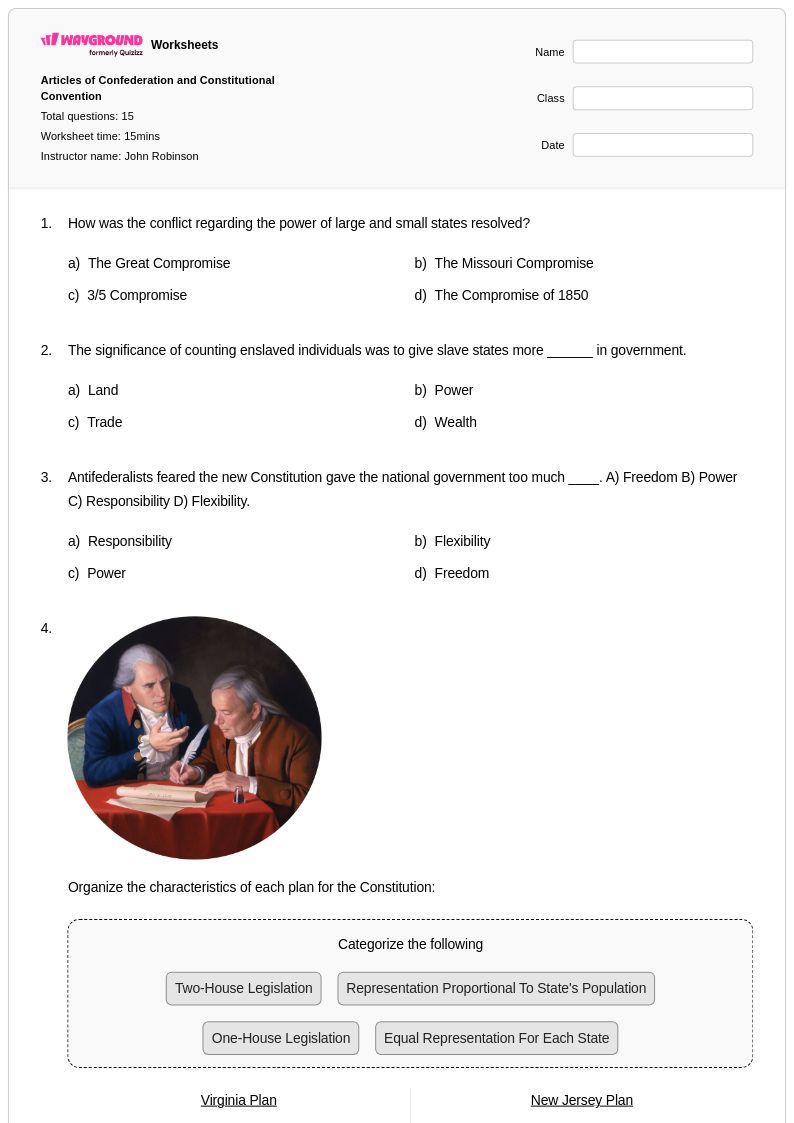
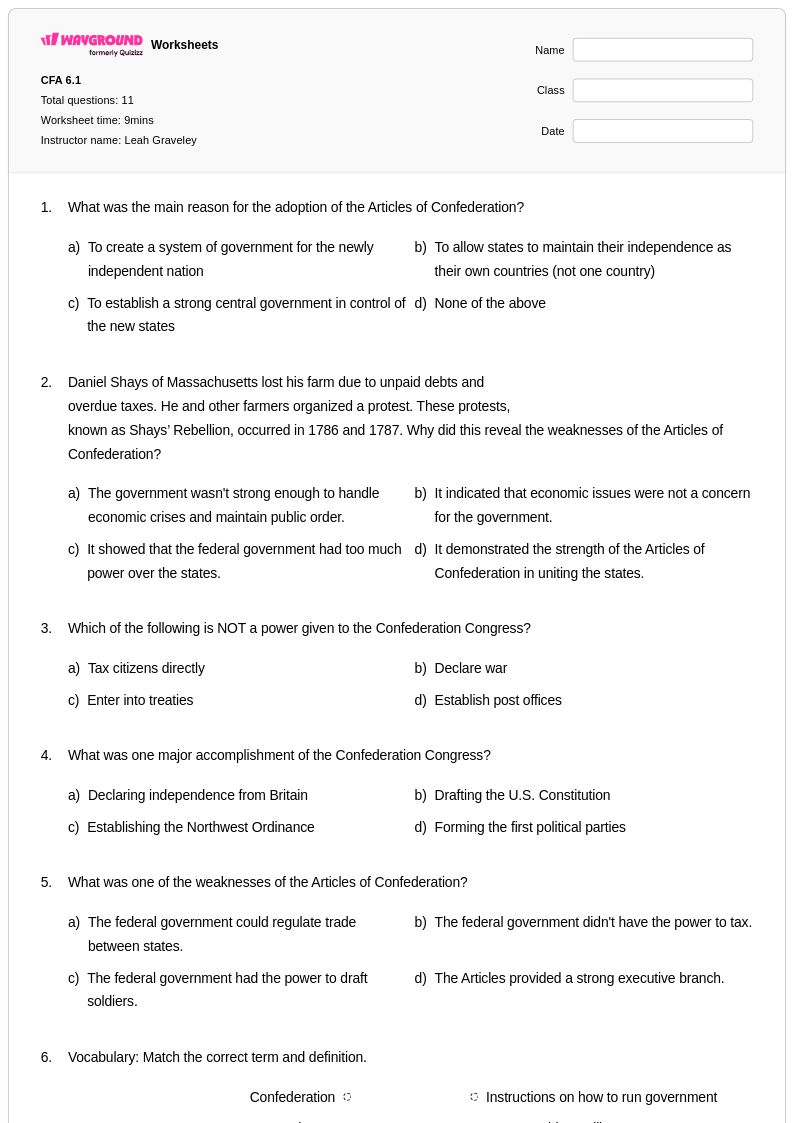
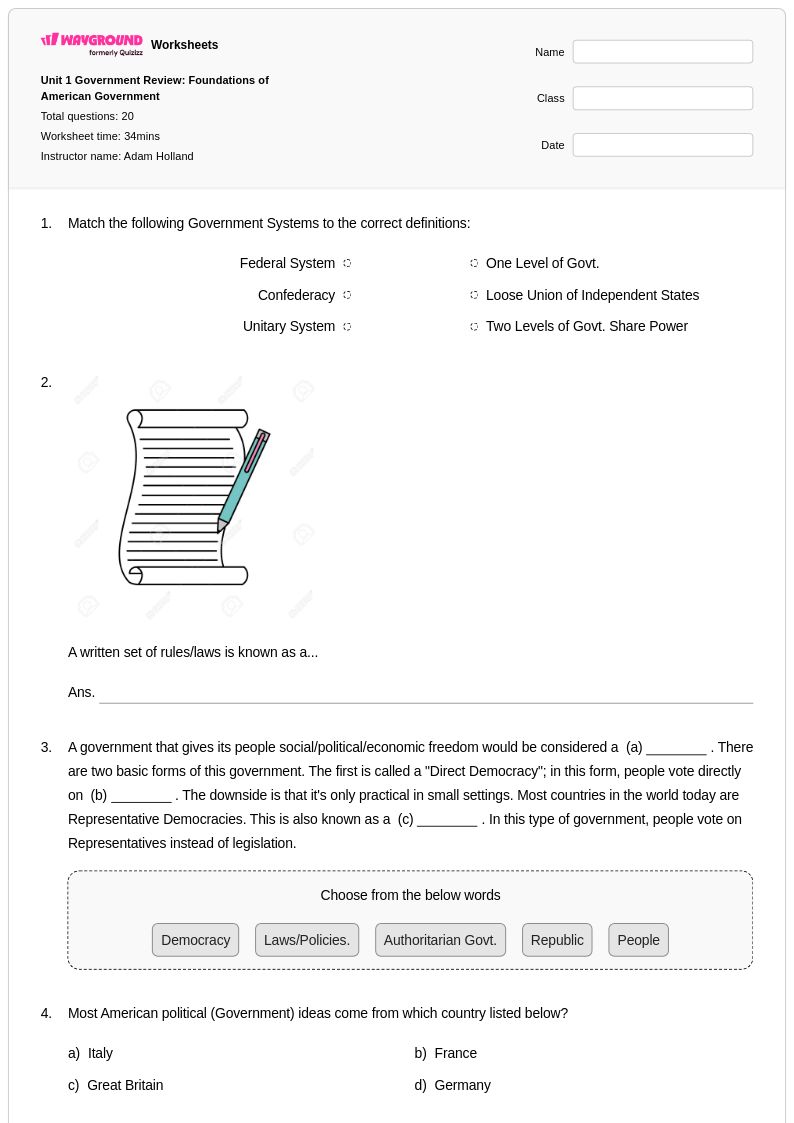
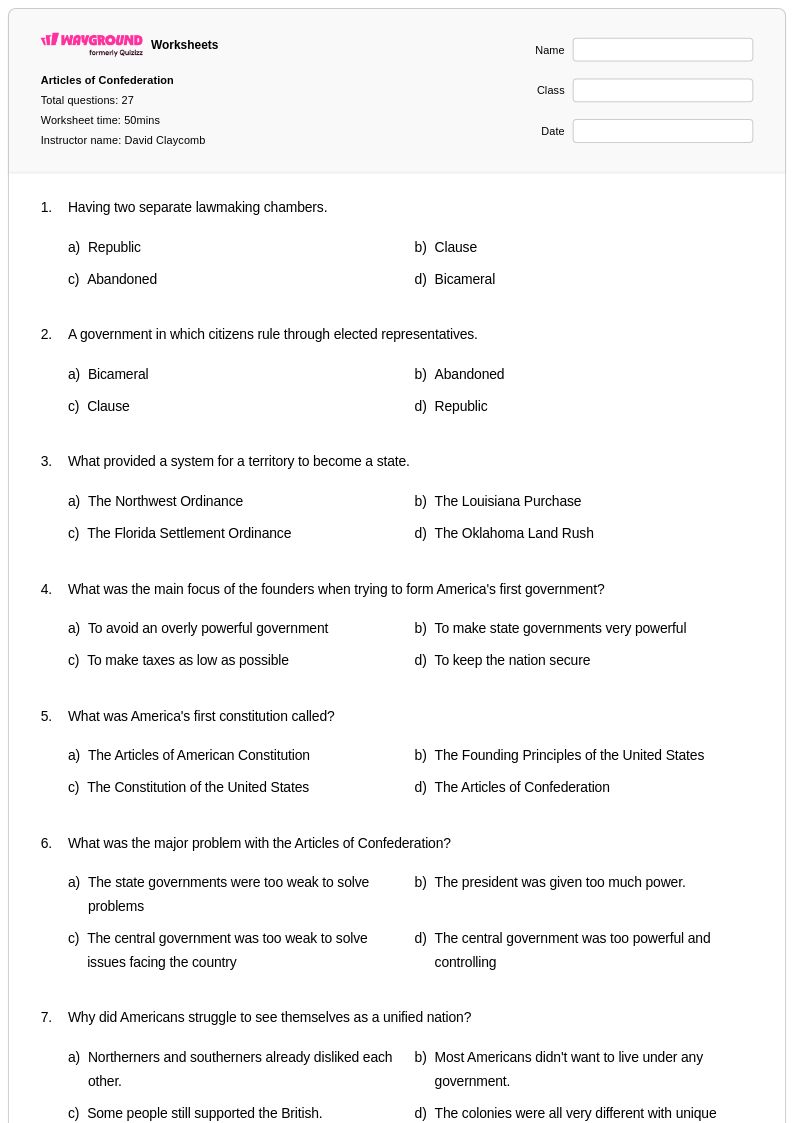
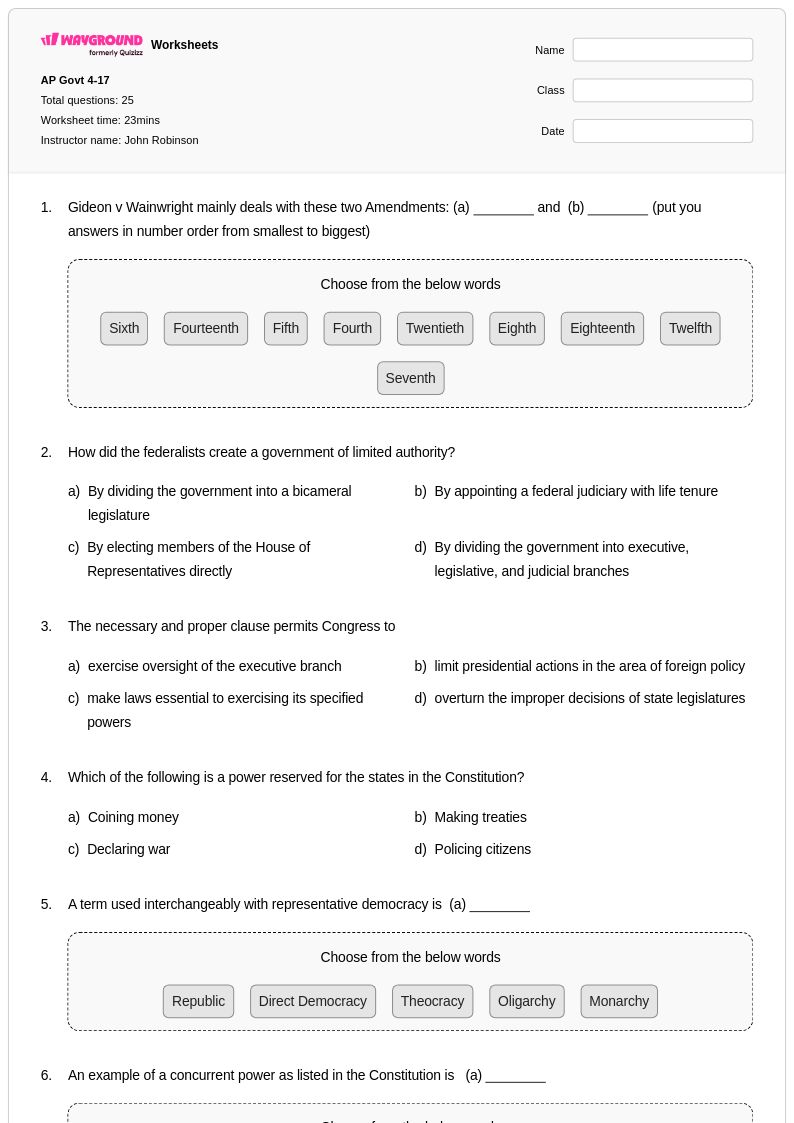
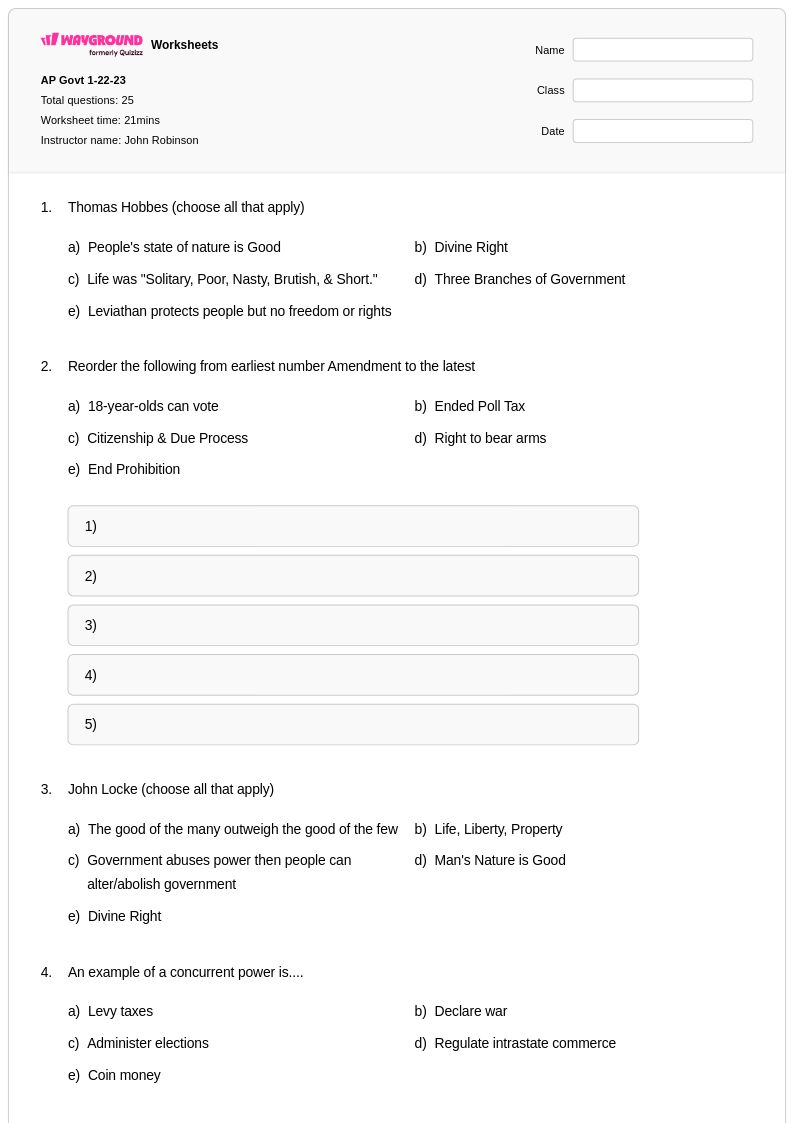
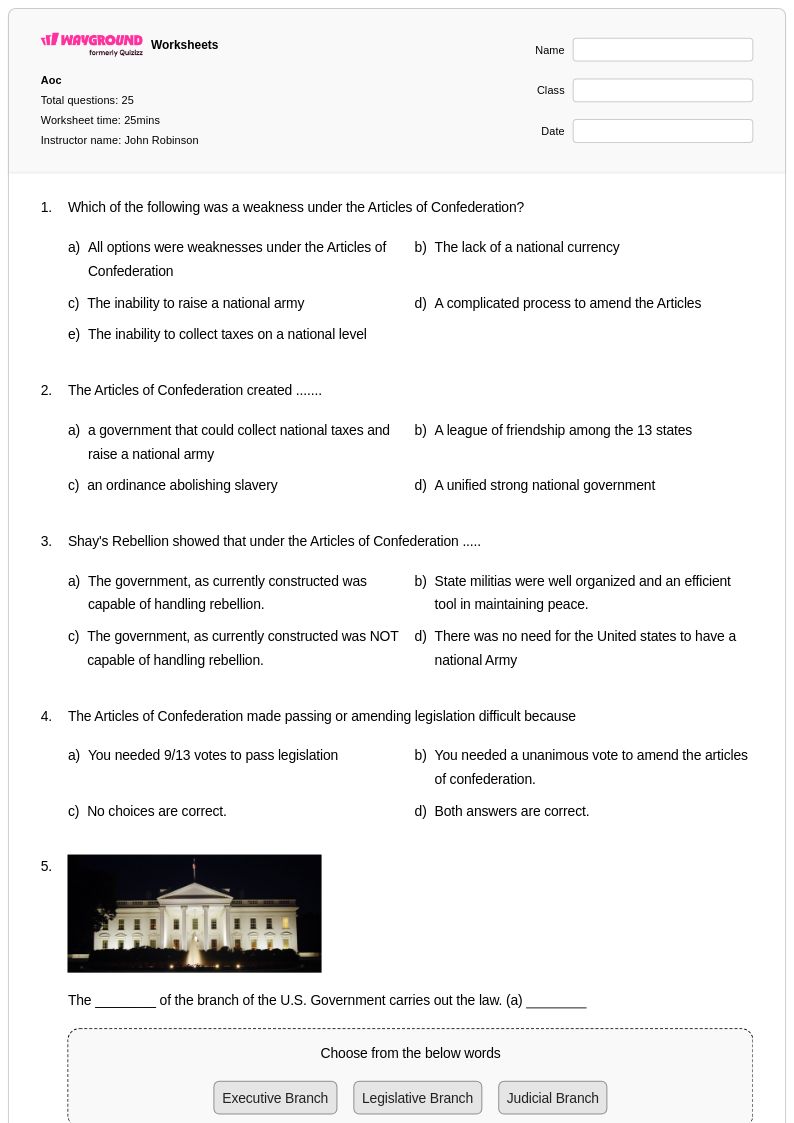
Shays' Rebellion worksheets for Year 10 students available through Wayground (formerly Quizizz) provide comprehensive coverage of this pivotal post-Revolutionary War uprising that exposed the weaknesses of the Articles of Confederation. These educational resources help students analyze the economic and political factors that led Daniel Shays and other Massachusetts farmers to rebel against tax collectors and court proceedings in 1786-1787. The worksheets strengthen critical thinking skills by requiring students to examine primary source documents, evaluate cause-and-effect relationships, and assess how this rebellion influenced the Constitutional Convention of 1787. Students work through practice problems that connect Shays' Rebellion to broader themes of government authority, economic inequality, and the transition from the Articles of Confederation to the U.S. Constitution. Each worksheet includes a comprehensive answer key and is available as a free printable pdf, making them accessible for both classroom instruction and independent study.
Wayground (formerly Quizizz) supports educators with an extensive collection of teacher-created Shays' Rebellion resources, drawing from millions of high-quality materials that align with national and state social studies standards. The platform's advanced search and filtering capabilities allow teachers to quickly locate worksheets that match their specific grade level requirements and learning objectives for this crucial period in early American history. These differentiation tools enable educators to customize content for varying skill levels, ensuring that all Year 10 students can engage meaningfully with the complex political and economic issues surrounding Shays' Rebellion. The flexible format options, including both printable and digital pdf versions, facilitate seamless integration into lesson planning while supporting remediation for struggling learners and enrichment opportunities for advanced students who want to explore deeper connections between this rebellion and the broader constitutional crisis of the 1780s.
FAQs
How do I teach Shays' Rebellion to middle or high school students?
Start by grounding students in the economic context of post-Revolutionary War Massachusetts, including debt, taxation, and the inability of the federal government to respond under the Articles of Confederation. From there, trace the sequence of events leading to Daniel Shays' leadership of the uprising and the government's armed response. Connecting the rebellion directly to the Constitutional Convention of 1787 helps students see it not as an isolated event but as a turning point in the founding era.
What primary sources can I use when teaching Shays' Rebellion?
Effective primary sources include letters between founding figures such as George Washington and Henry Knox expressing alarm at the uprising, as well as Thomas Jefferson's contrasting response, which famously downplayed the rebellion. Petitions from Massachusetts farmers and newspaper accounts from 1786 to 1787 give students direct access to the economic grievances that drove the conflict. Analyzing these documents helps students practice close reading and build an evidence-based argument about the rebellion's significance.
What exercises help students practice analyzing the causes and effects of Shays' Rebellion?
Cause-and-effect graphic organizers work well for helping students map the chain from post-war debt and tax enforcement to the armed uprising and ultimately to calls for a stronger federal government. Worksheets that ask students to categorize contributing factors as economic, political, or social push them to think analytically rather than just recall facts. Practice problems that ask students to connect the rebellion's outcomes to specific provisions debated at the Constitutional Convention deepen understanding of its long-term significance.
What misconceptions do students commonly have about Shays' Rebellion?
A common misconception is that Shays' Rebellion was a minor local disturbance rather than a nationally significant crisis. Students often underestimate how seriously the uprising alarmed national leaders and how directly it accelerated the push to replace the Articles of Confederation. Another frequent error is conflating Daniel Shays with a revolutionary hero figure, when in fact he was a debt-burdened farmer whose rebellion was suppressed, even though its political consequences were profound.
How do I use Wayground's Shays' Rebellion worksheets in my classroom?
Wayground's Shays' Rebellion worksheets are available as printable PDFs for traditional classroom use and in digital formats for technology-integrated or remote learning environments, and teachers can also host them as a quiz directly on Wayground. Each worksheet includes detailed answer keys, making them practical for both instruction and independent practice without extra teacher prep. For students who need additional support, Wayground's accommodation tools allow teachers to enable features such as read aloud or reduced answer choices at the individual student level.
How does Shays' Rebellion connect to the Constitutional Convention, and how do I teach that connection?
Shays' Rebellion directly exposed the inability of the federal government under the Articles of Confederation to maintain domestic order or compel states to act, which energized delegates to pursue a stronger central government at the 1787 Constitutional Convention. Teaching this connection works best when students first analyze what powers the Articles lacked, then examine how specific provisions of the Constitution, such as the power to suppress insurrections and regulate commerce, were shaped by that experience. A structured comparison activity between the Articles and the Constitution helps make the cause-and-effect relationship concrete.