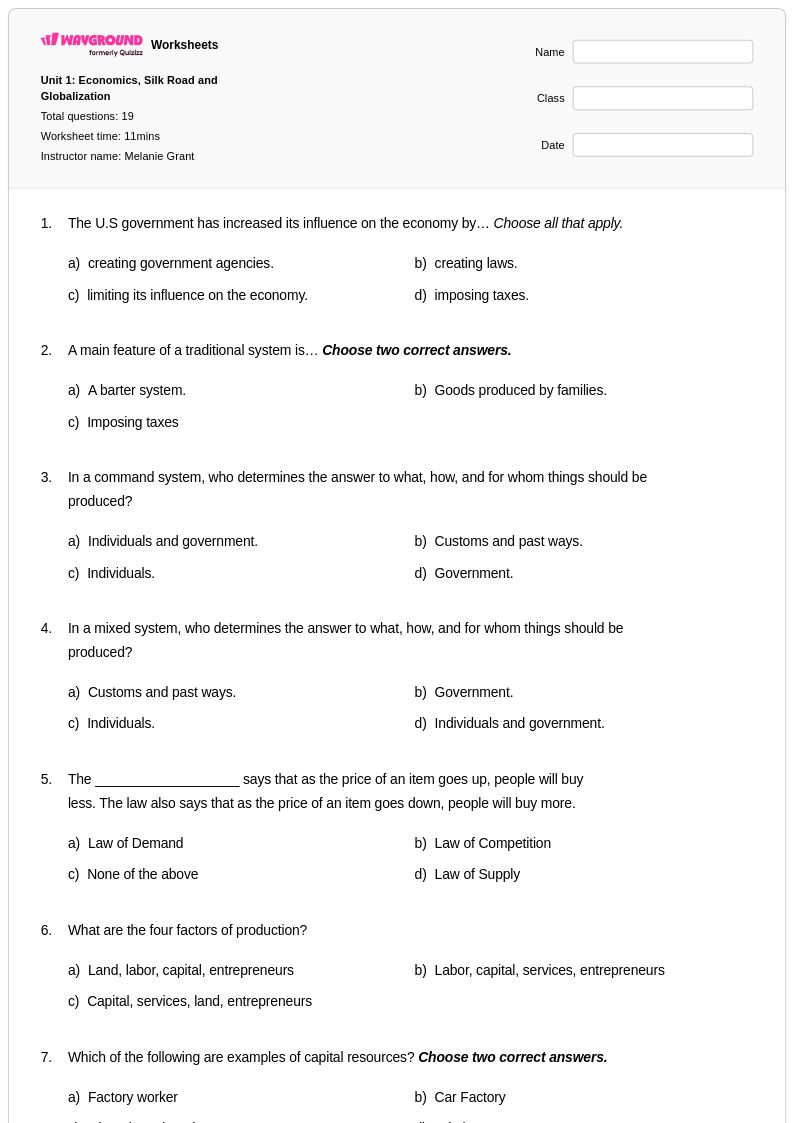
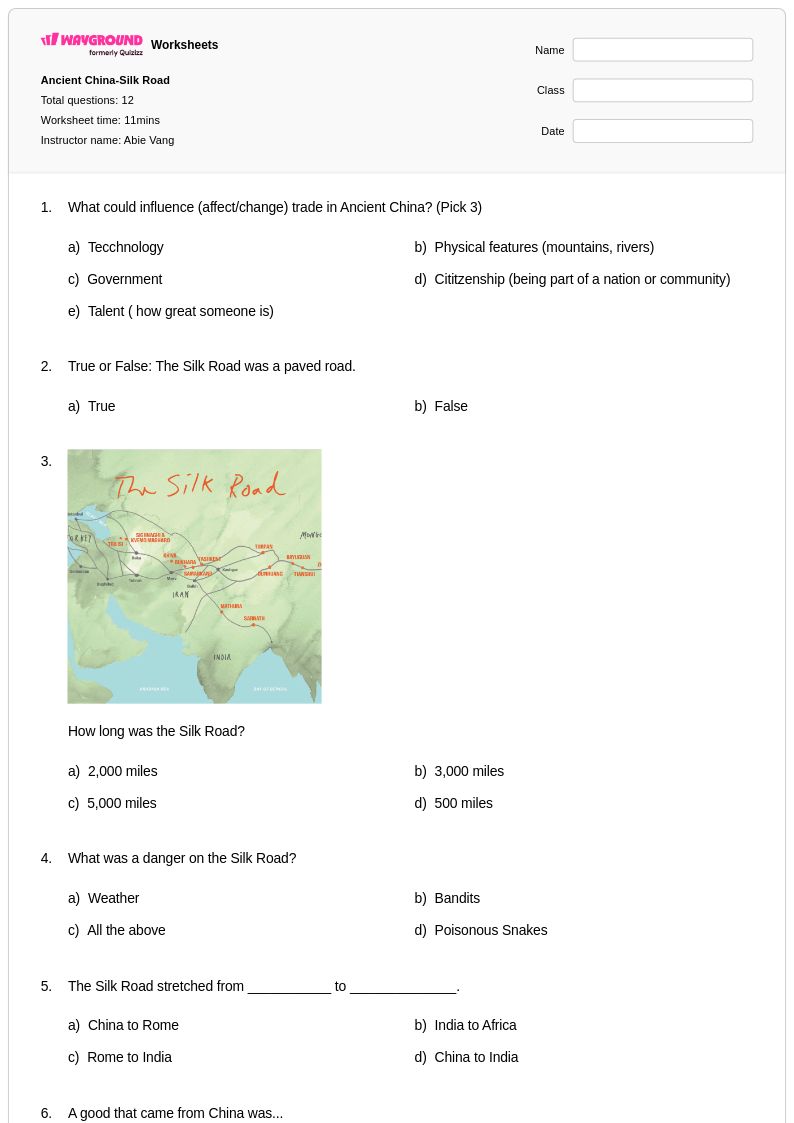
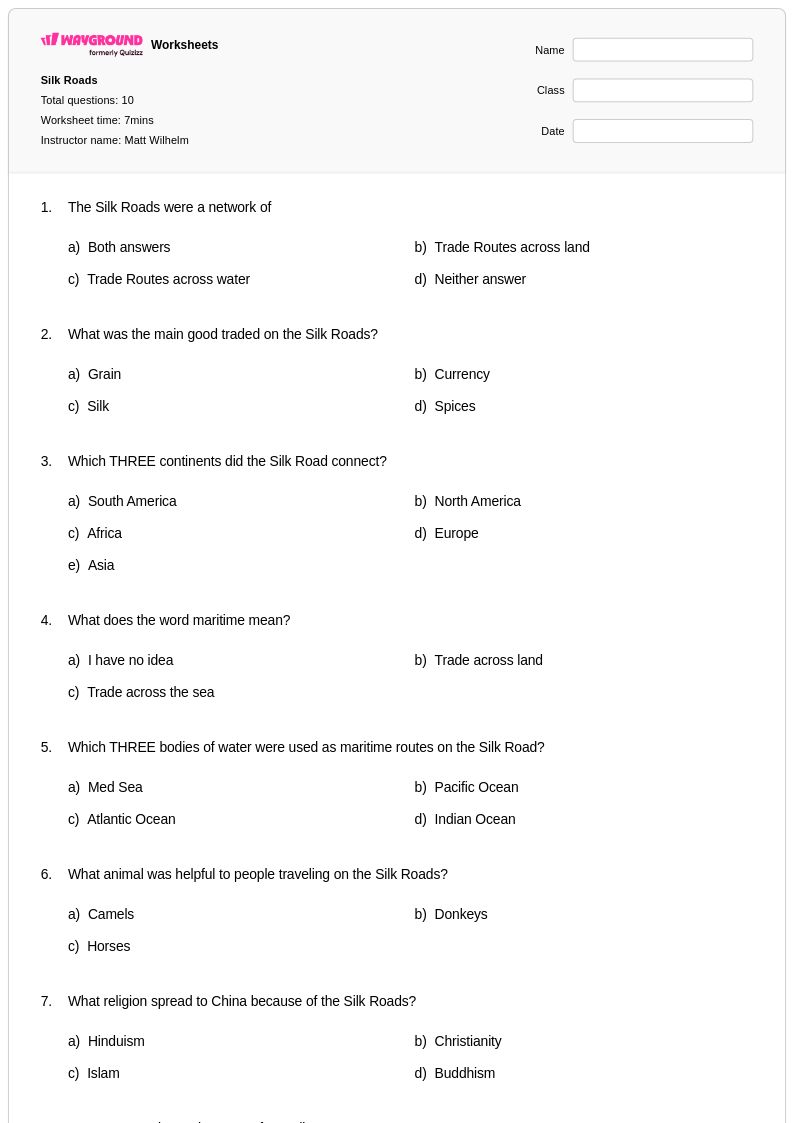
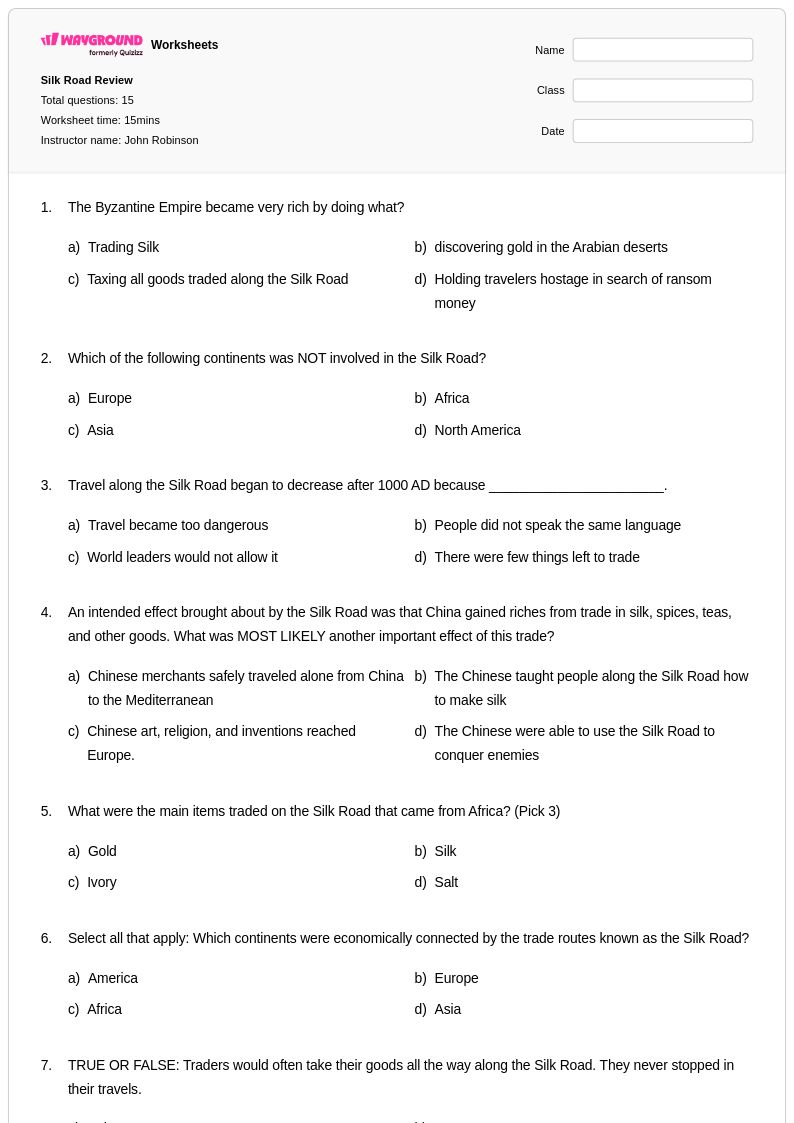
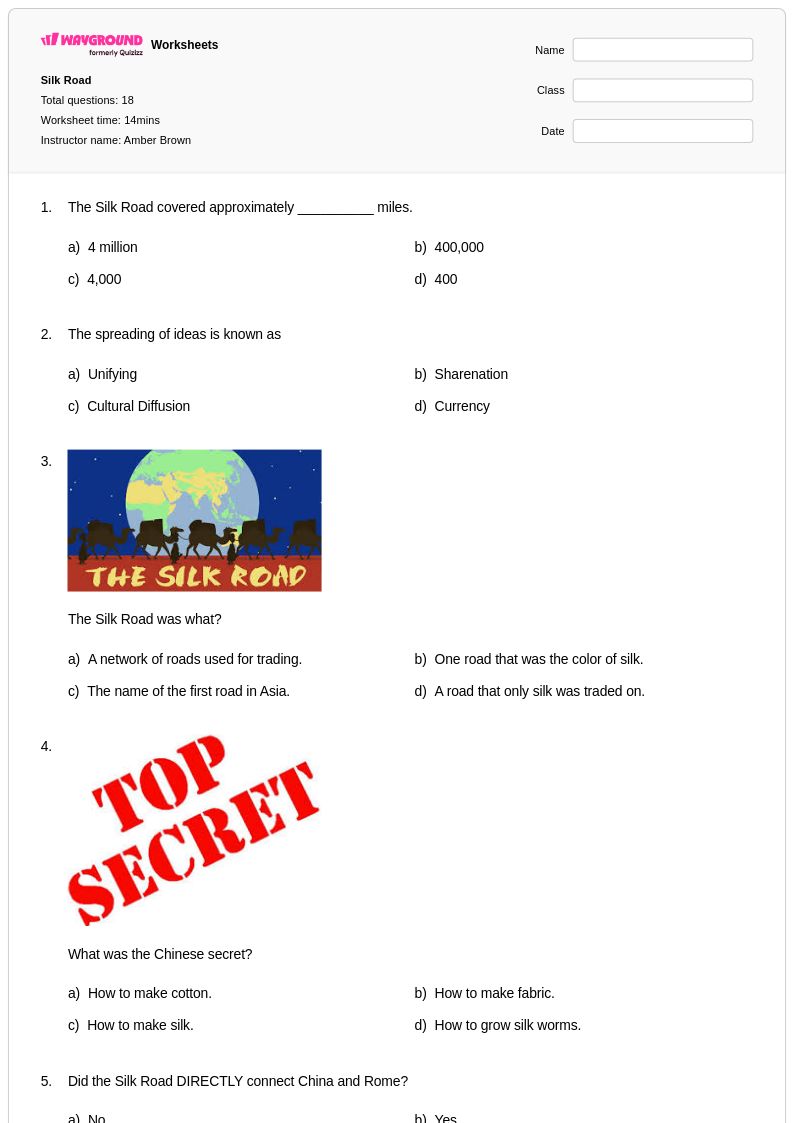
Explore Wayground's free Silk Road worksheets and printables that help students discover ancient trade routes, cultural exchanges, and historical connections through engaging practice problems with comprehensive answer keys.
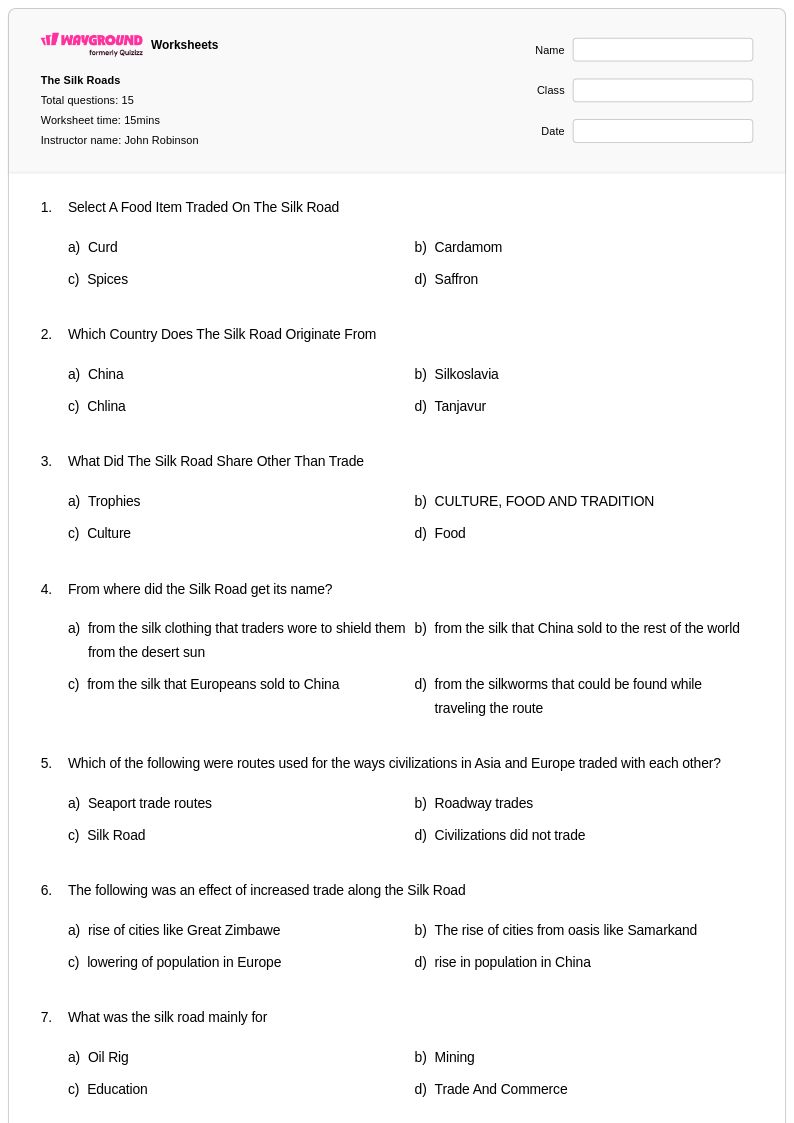
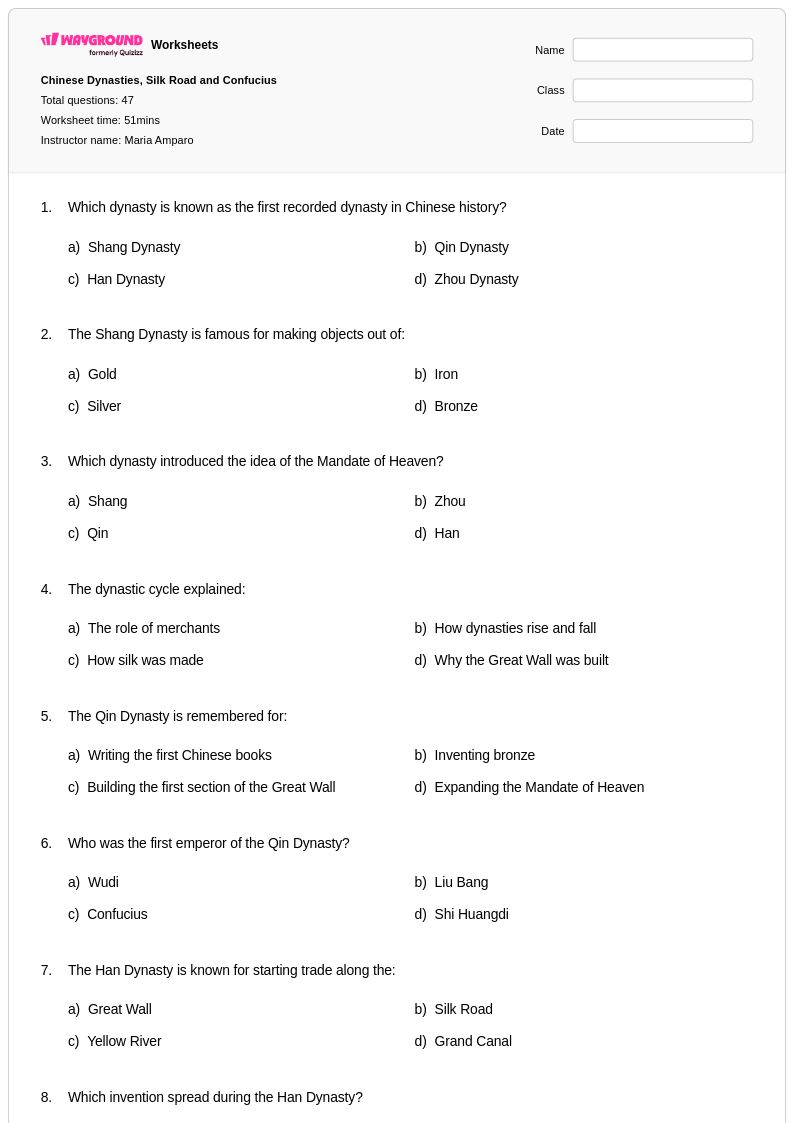
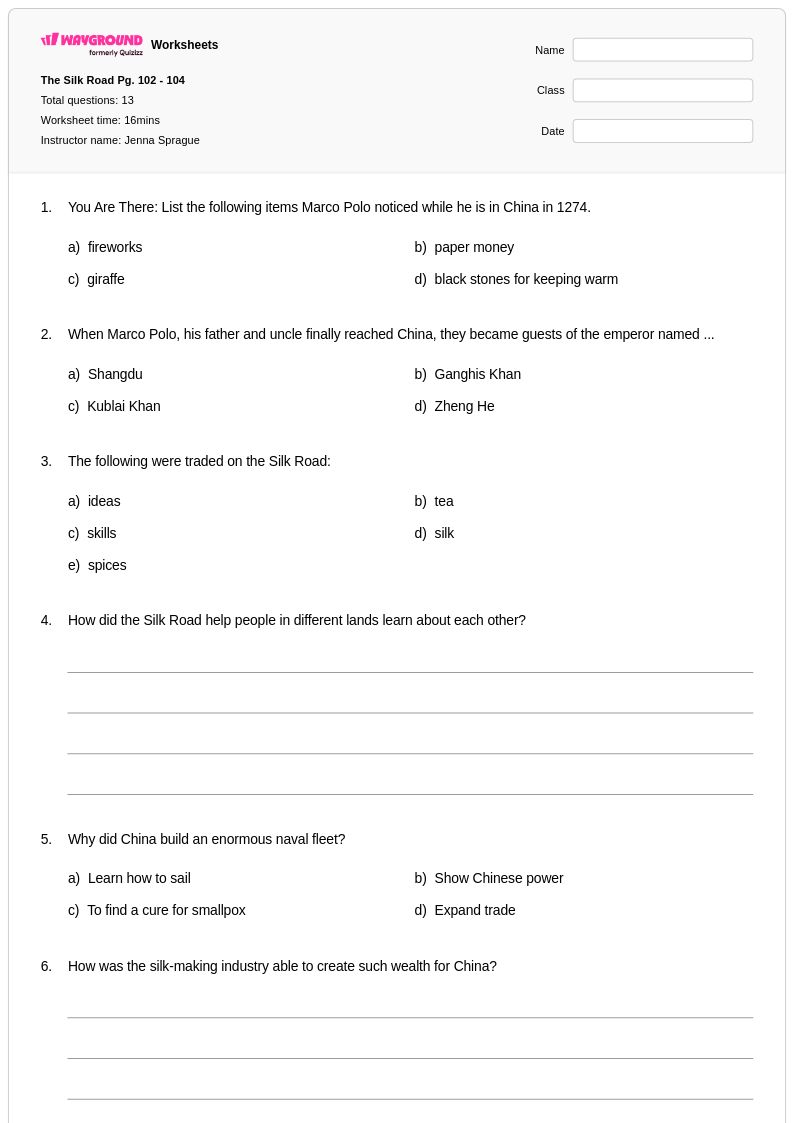
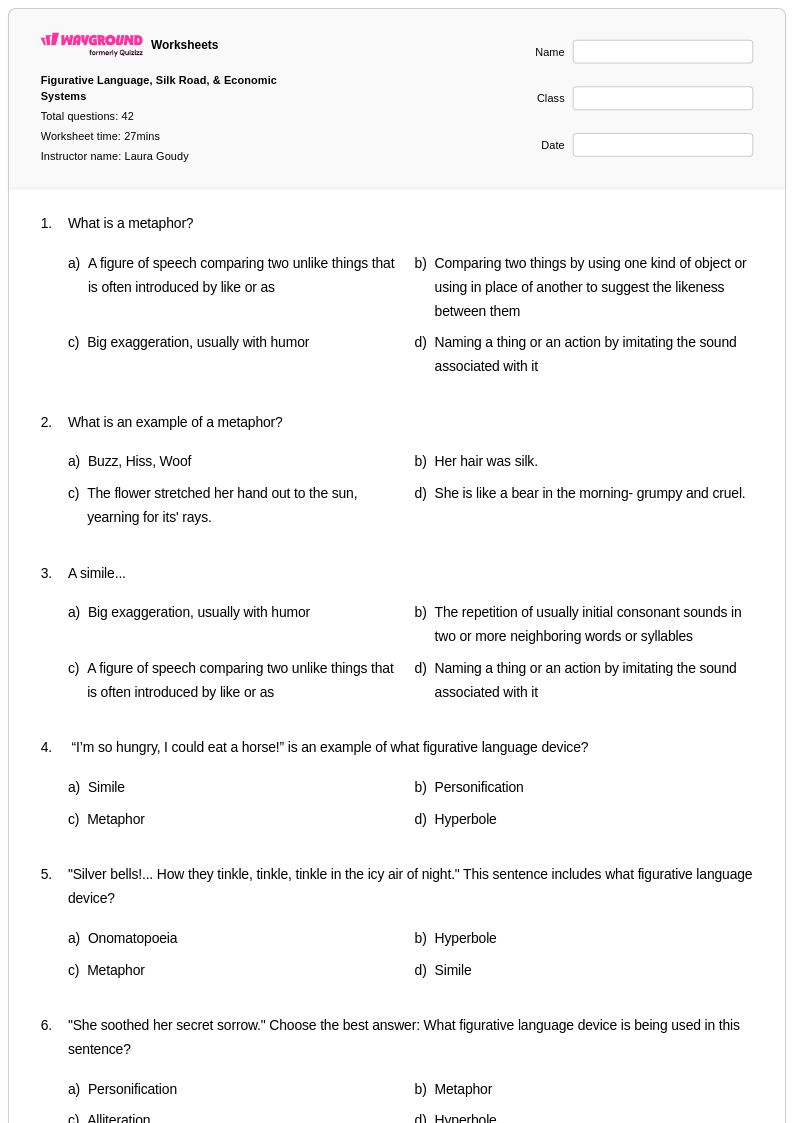
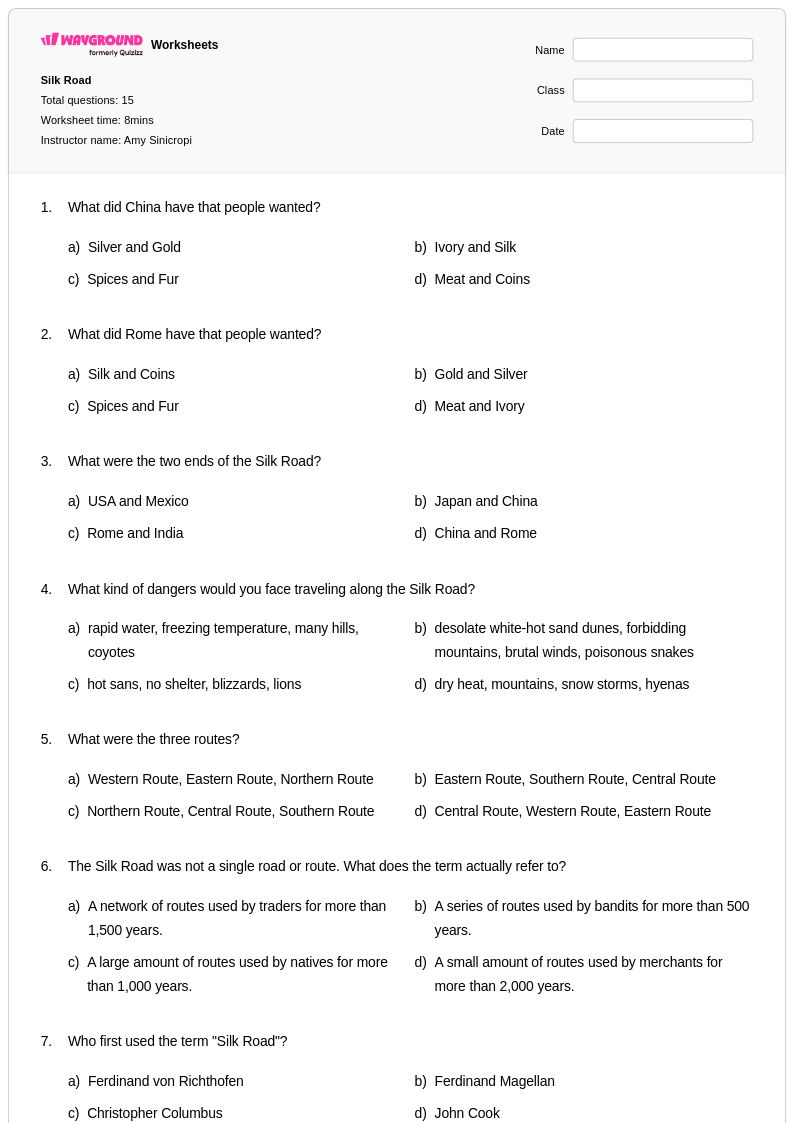
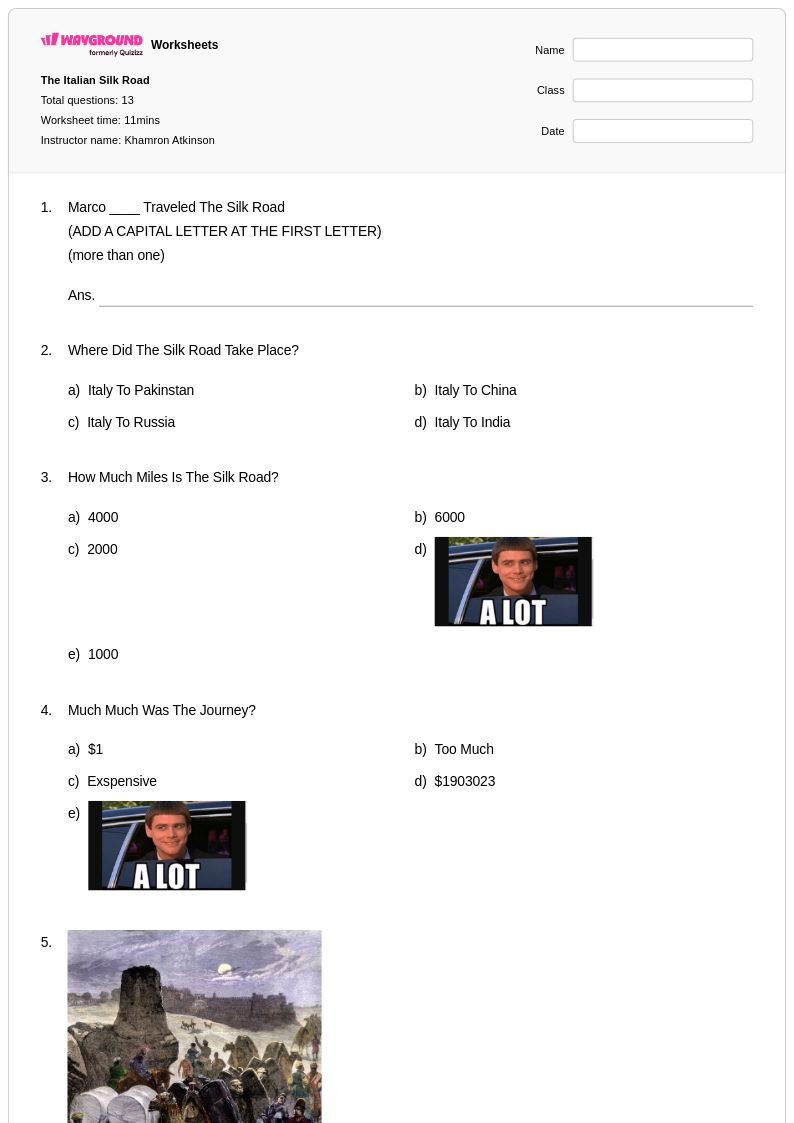
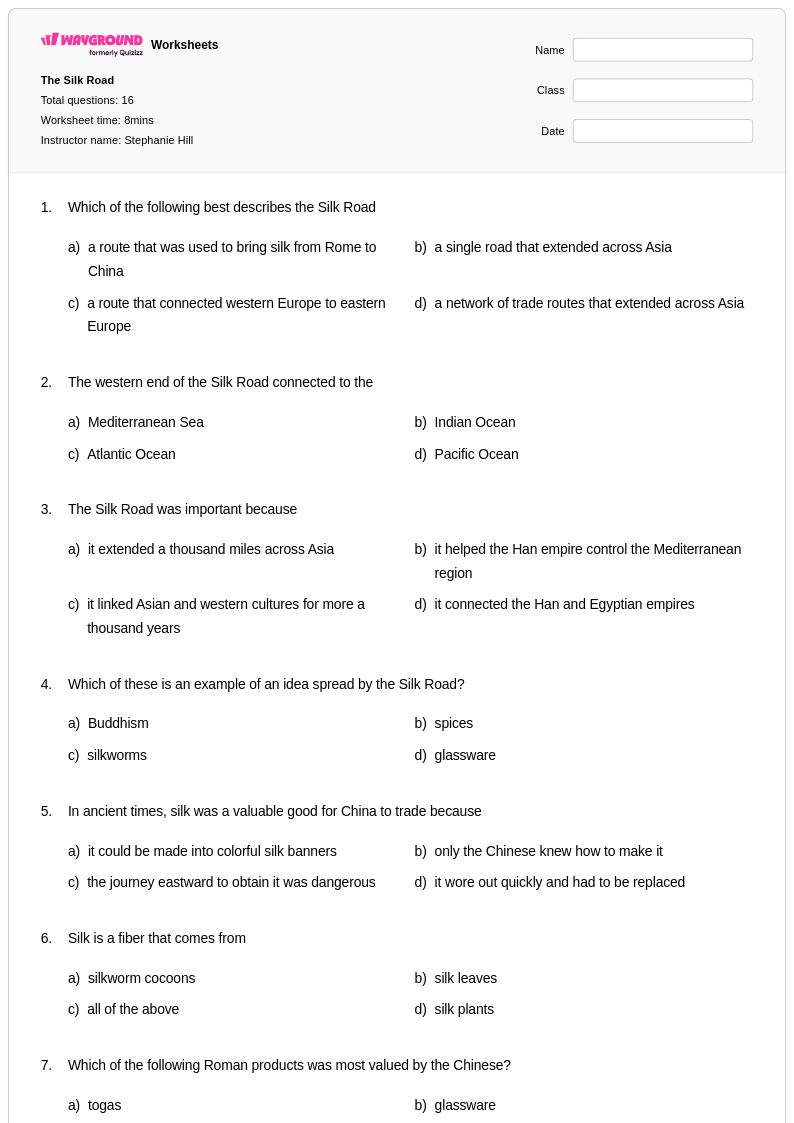
Silk Road worksheets available through Wayground (formerly Quizizz) provide comprehensive educational materials that explore this ancient network of trade routes connecting East and West. These expertly crafted resources strengthen students' understanding of cultural exchange, economic systems, and historical cause-and-effect relationships by examining how the Silk Road facilitated the movement of goods, ideas, religions, and technologies across continents. Each worksheet collection includes detailed answer keys to support accurate assessment, while free printable materials offer flexible classroom implementation. The practice problems and activities guide learners through complex historical concepts, from analyzing the impact of silk and spice trade on medieval economies to evaluating how the Silk Road influenced the spread of Buddhism, Islam, and other belief systems across Asia and Europe.
Wayground (formerly Quizizz) empowers educators with millions of teacher-created Silk Road resources that feature robust search and filtering capabilities, enabling quick identification of materials aligned with specific historical standards and learning objectives. The platform's differentiation tools allow teachers to customize worksheets for diverse learning needs, while flexible formatting options provide both printable pdf versions for traditional classroom use and digital formats for modern learning environments. These comprehensive features streamline lesson planning by offering ready-to-use materials for skill practice, targeted remediation for students struggling with complex historical connections, and enrichment activities that challenge advanced learners to analyze primary sources and evaluate the long-term consequences of trans-Eurasian trade networks on world civilizations.
FAQs
How do I teach the Silk Road to middle or high school students?
Teaching the Silk Road effectively means framing it as more than a trade route — it was a network of cultural, religious, and technological exchange that shaped civilizations across Asia, the Middle East, and Europe. Start by grounding students in geography, then build outward to examine what goods were traded, why they mattered economically, and what ideas traveled alongside them. Using cause-and-effect analysis helps students understand why the Silk Road's decline had lasting consequences for global trade and cultural contact.
What kinds of activities help students practice Silk Road concepts?
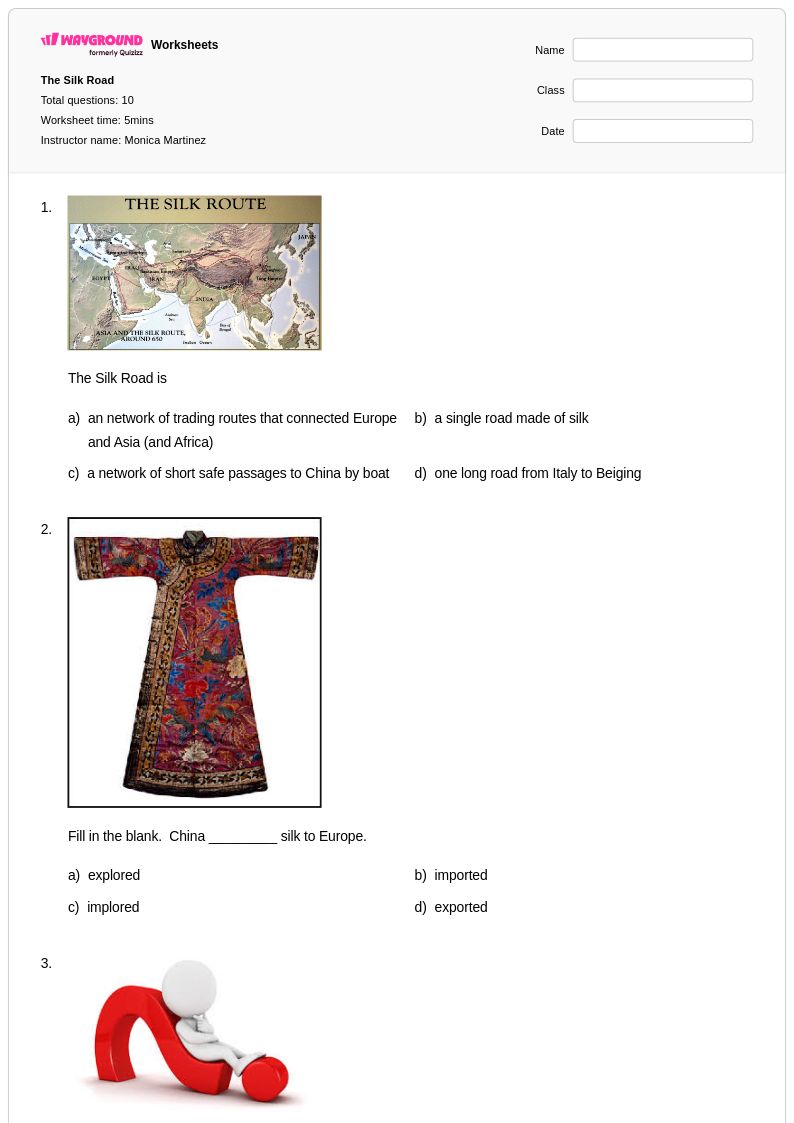
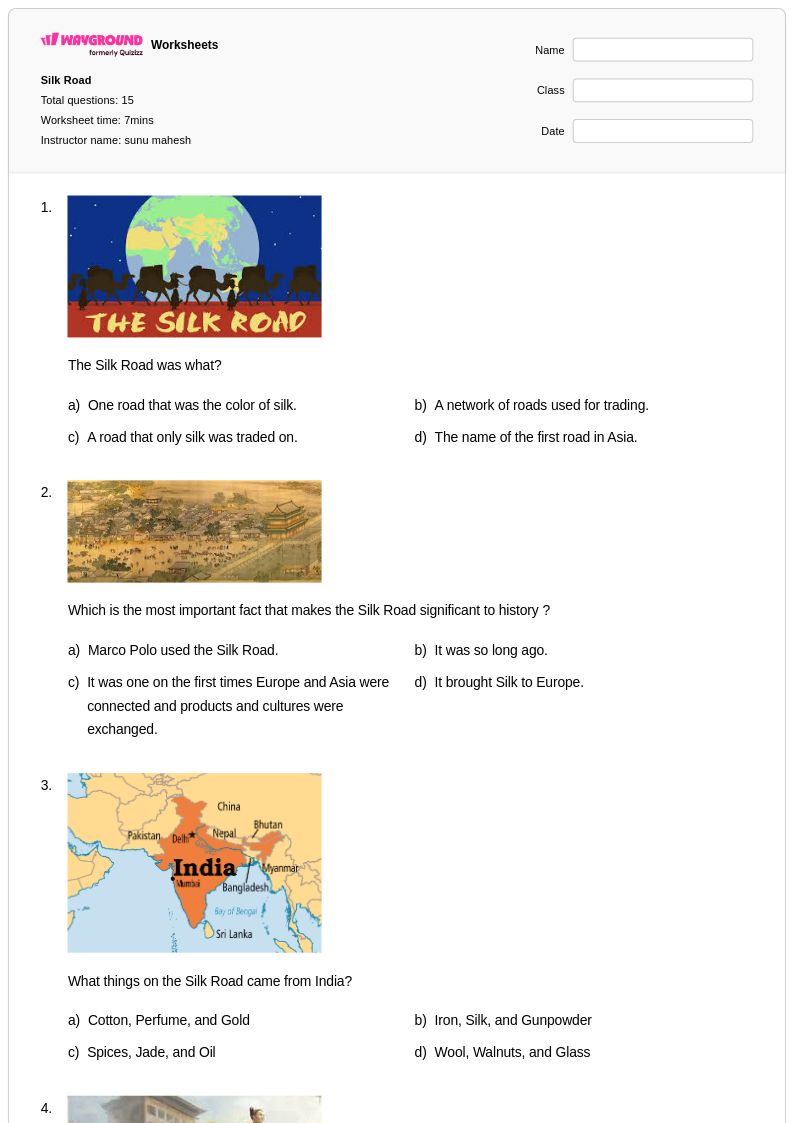
Effective practice activities include analyzing maps of the trade routes, matching goods to their regions of origin, and connecting the spread of religions like Buddhism and Islam to specific overland and maritime paths. Cause-and-effect exercises that ask students to evaluate how silk and spice trade influenced medieval economies give the content real analytical depth. Worksheets that combine source-based questions with vocabulary and geography tasks reinforce multiple skill areas at once.
What misconceptions do students commonly have about the Silk Road?
One of the most common misconceptions is that the Silk Road was a single, well-defined road — students are often surprised to learn it was a vast network of overland and maritime routes spanning thousands of miles. Another frequent error is assuming silk was the only important commodity; students often underestimate the role of spices, glassware, paper, and disease in shaping the route's historical impact. Many students also struggle to grasp that most merchants only traveled short segments of the route, with goods passing through many hands before reaching their final destination.
How do I assess whether students understand cultural diffusion through the Silk Road?
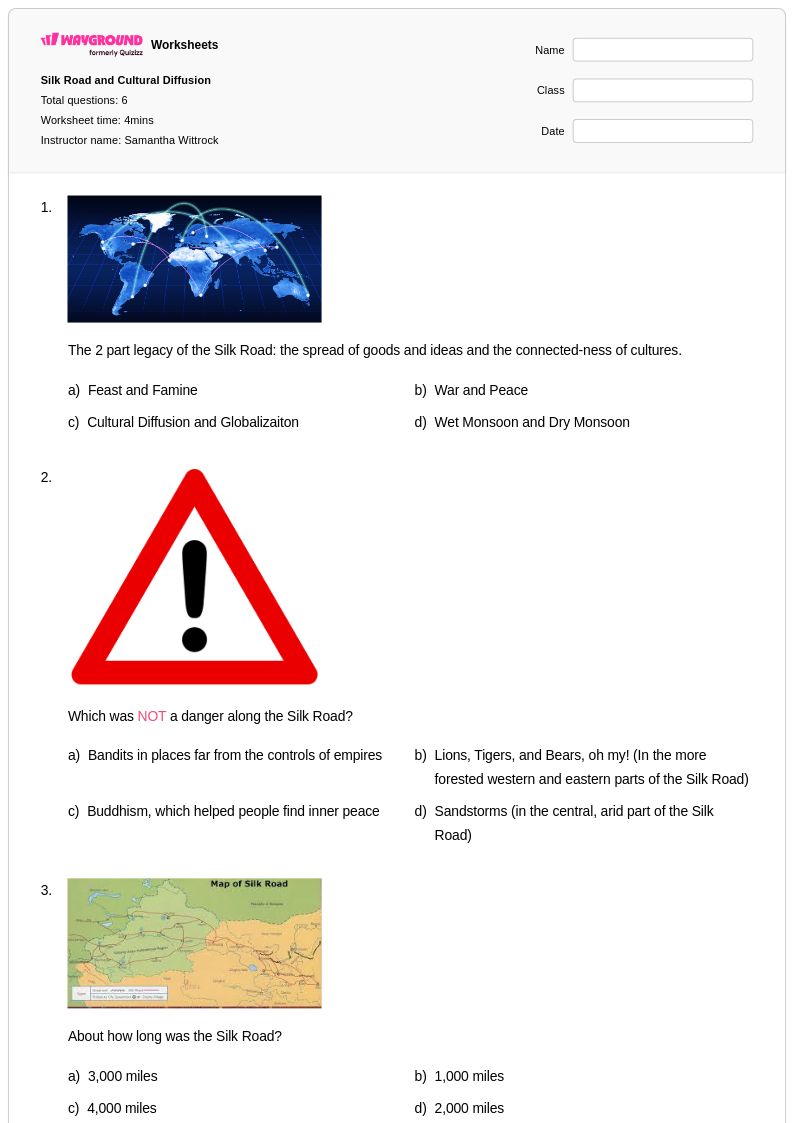
Look for whether students can identify specific examples of cultural diffusion — such as the spread of Buddhism into Central Asia or the transmission of papermaking technology from China to the Islamic world — rather than describing diffusion in abstract terms. A strong response connects a specific good or idea to a region it transformed, explains the mechanism of spread, and situates it within a broader historical consequence. Short-answer questions that require students to evaluate long-term impact, rather than just recall facts, are the most reliable indicators of genuine understanding.
How can I use Silk Road worksheets from Wayground in my classroom?
Wayground's Silk Road worksheets are available as printable PDFs for traditional classroom use and in digital formats for technology-integrated learning environments, making them practical for both in-person and remote instruction. Teachers can also host worksheets as a quiz directly on Wayground, allowing for real-time student response and immediate feedback. Each worksheet includes a comprehensive answer key, reducing prep time and supporting accurate assessment of student understanding.
How do I differentiate Silk Road instruction for students with different learning needs?
For students who need additional support, reducing the complexity of source texts and focusing on concrete cause-and-effect relationships — such as how specific trade goods drove economic systems — can make the content more accessible. Wayground supports individual student accommodations including read-aloud functionality for students who benefit from audio support, reduced answer choices to lower cognitive load, and extended time settings that can be configured per student without alerting the rest of the class. These settings are reusable across sessions, making it straightforward to support diverse learners consistently over a unit.