Free Printable Space Exploration Worksheets for Year 12
Explore Year 12 space exploration worksheets and printables through Wayground that help students master rocket technology, satellite systems, and interplanetary missions with comprehensive practice problems and answer keys.
Explore printable Space Exploration worksheets for Year 12
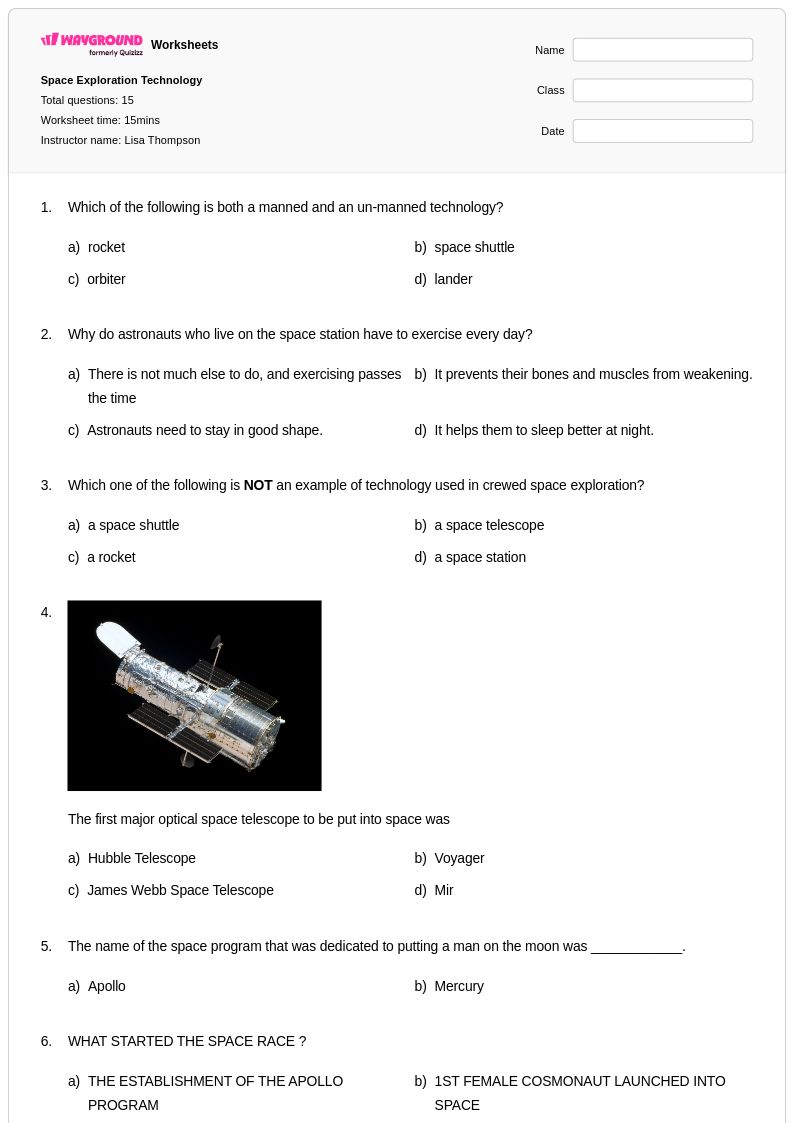
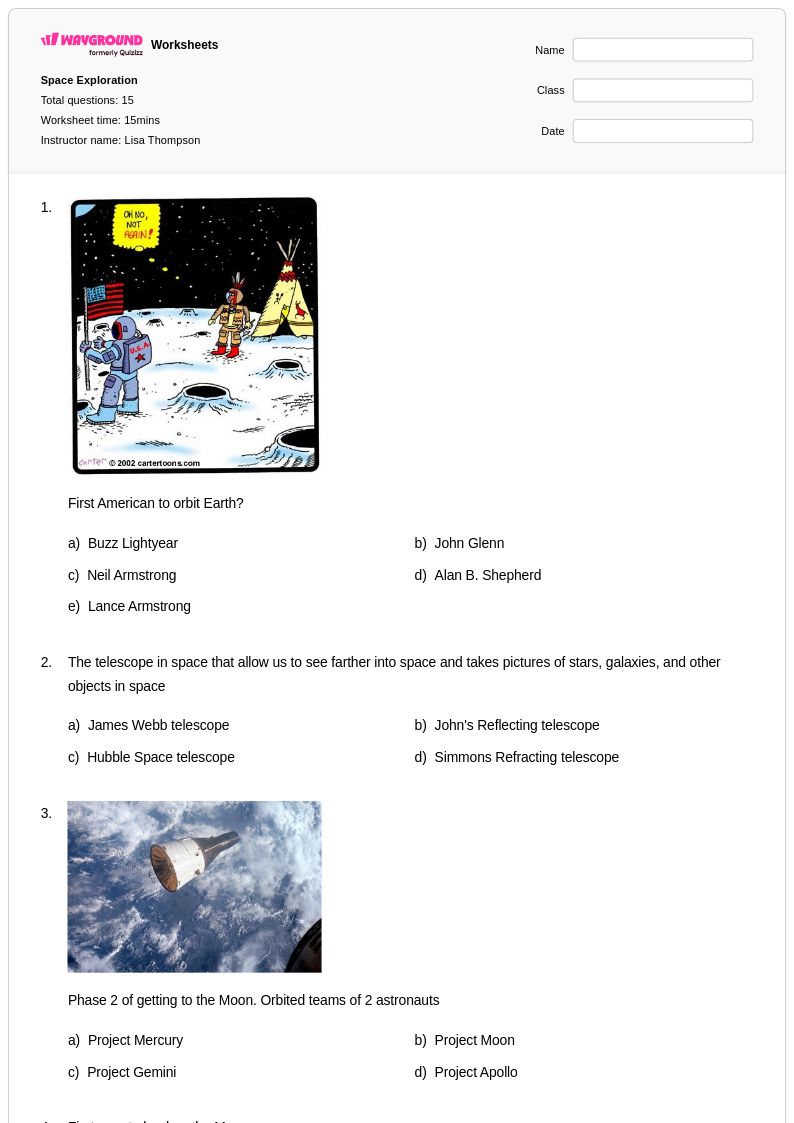
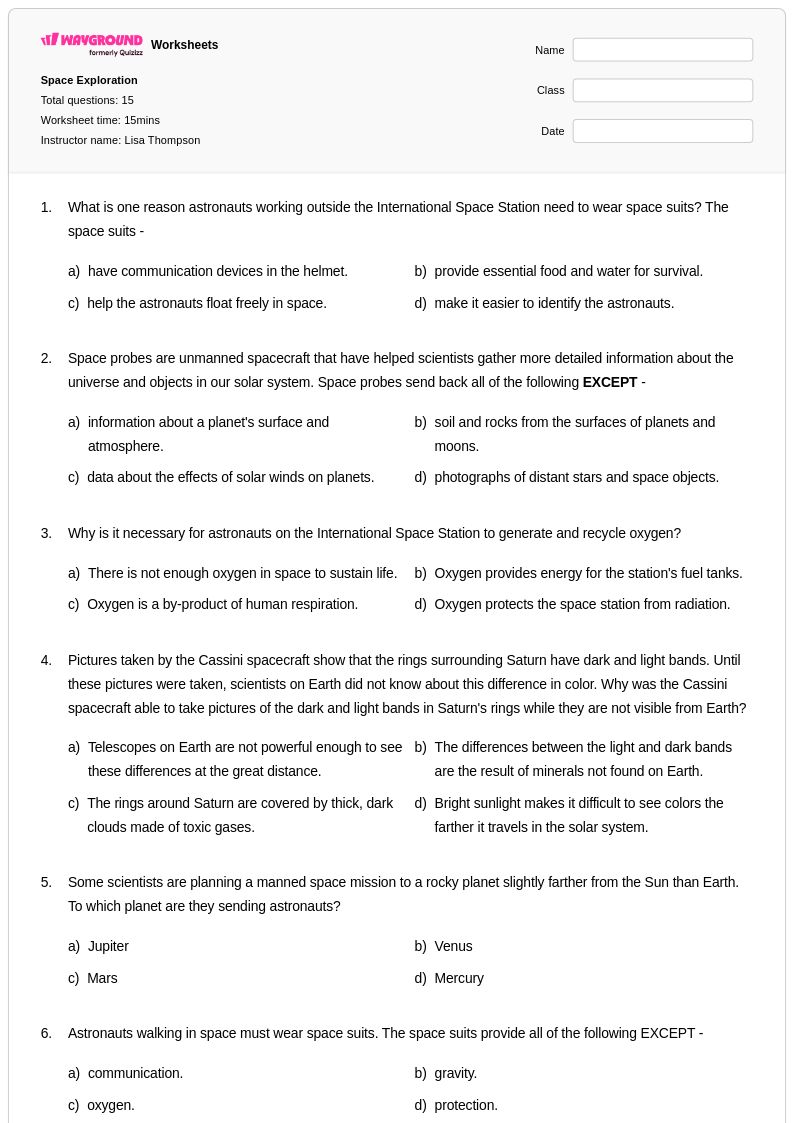
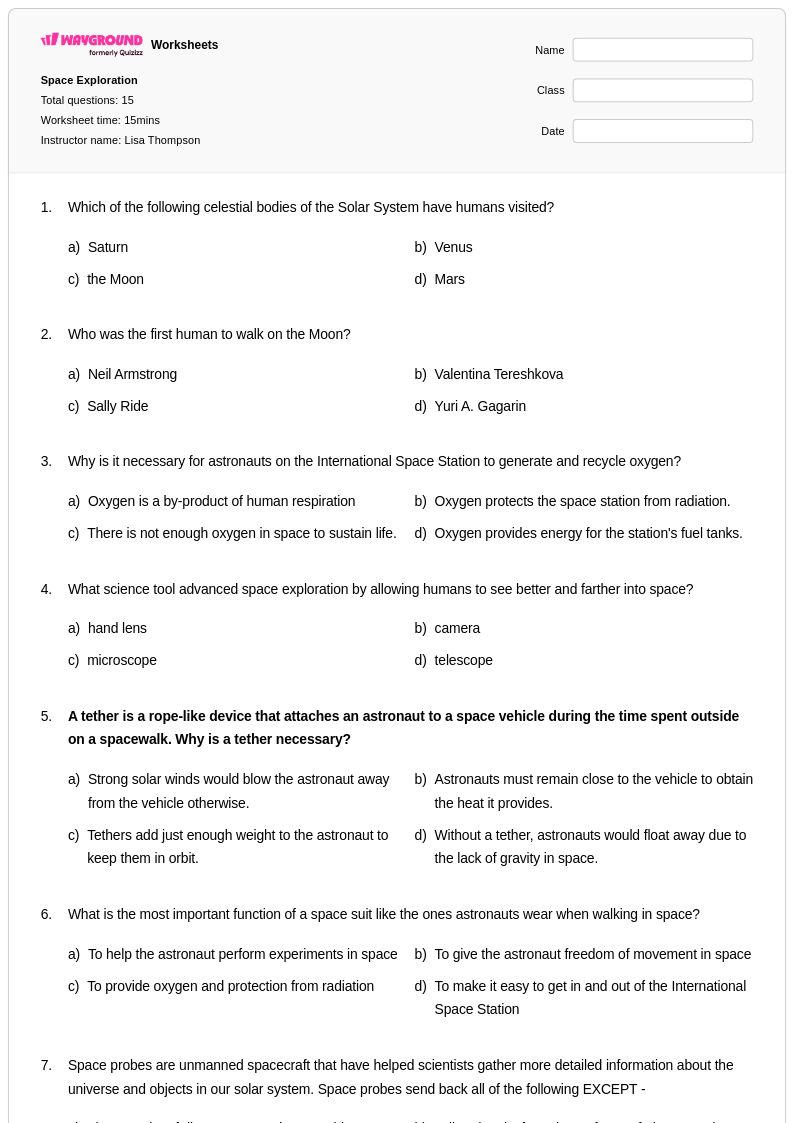
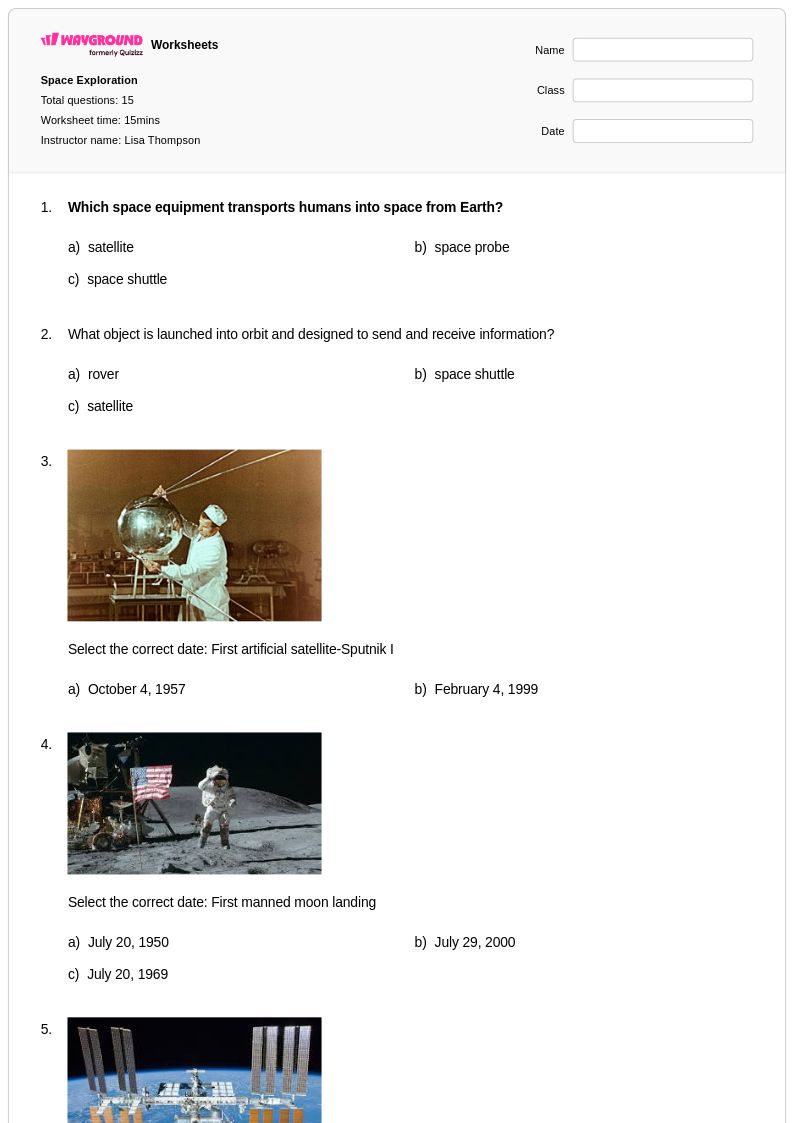
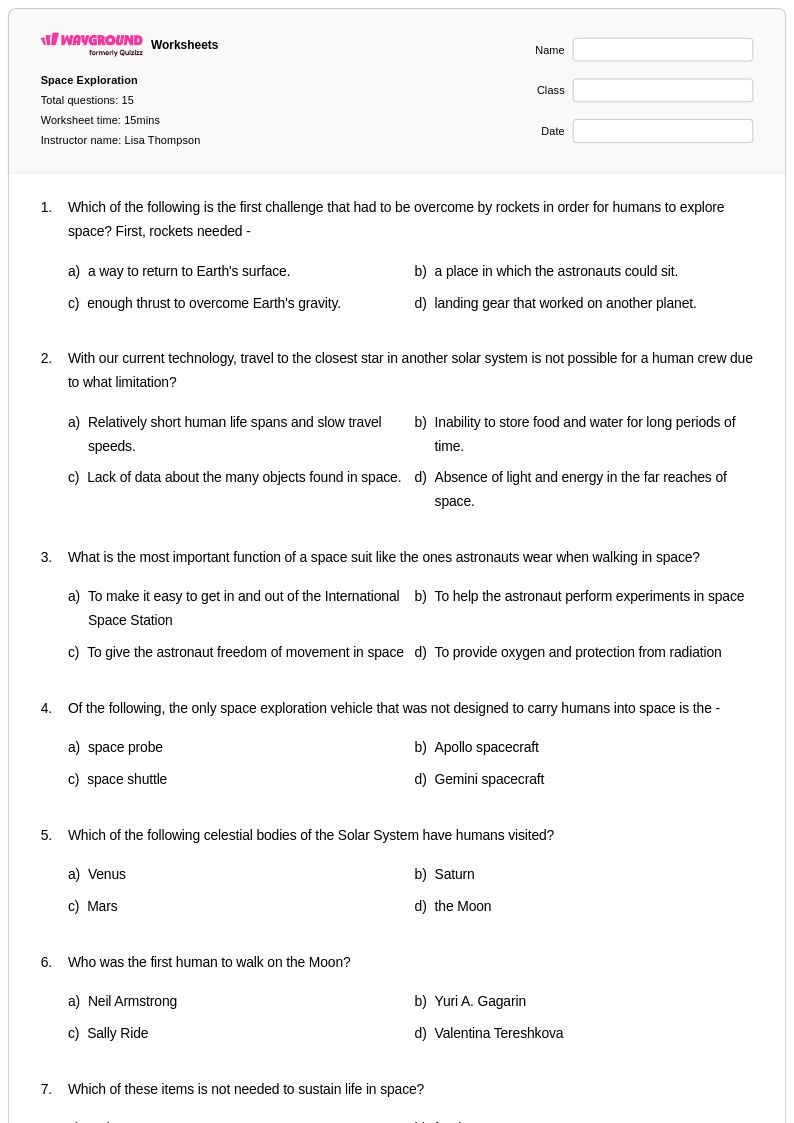
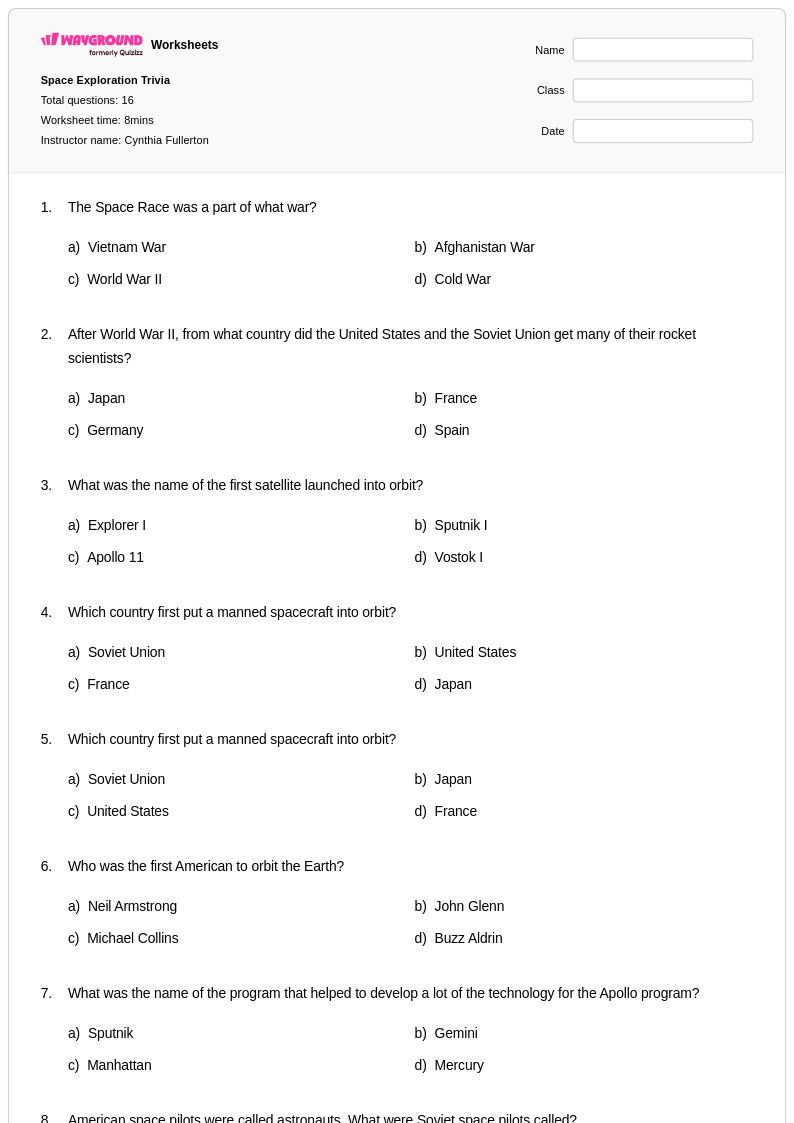
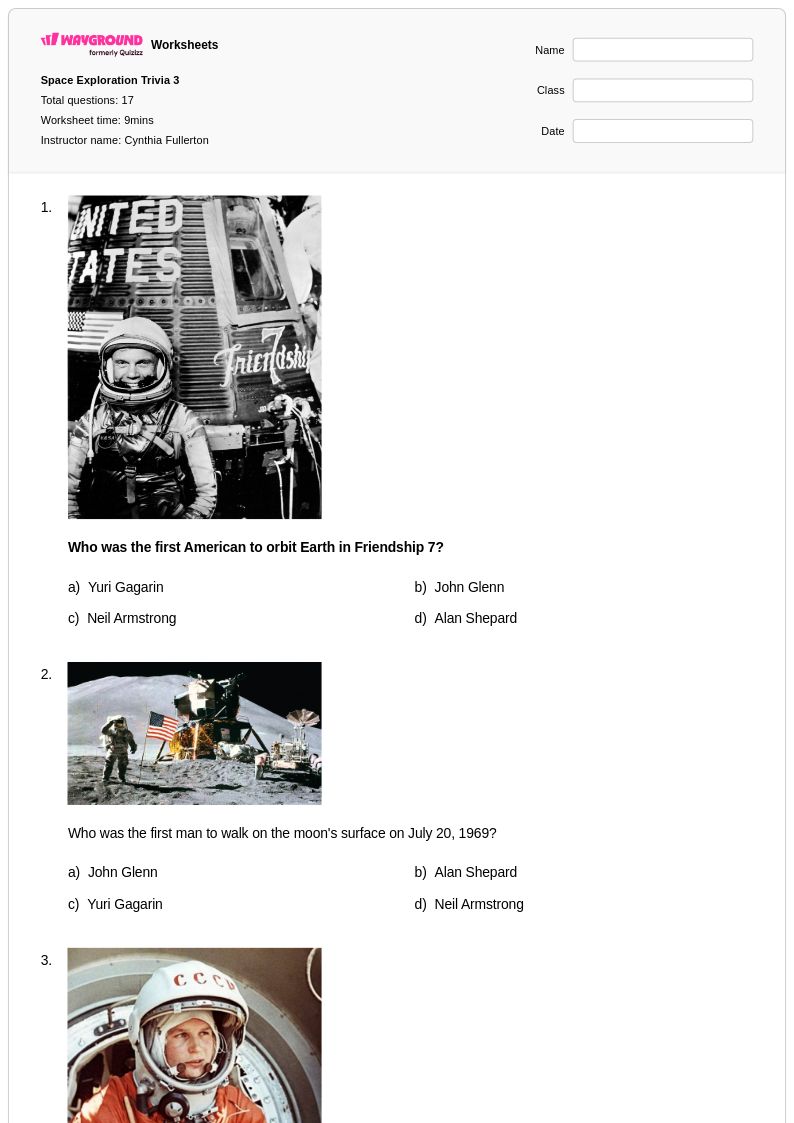
Space exploration worksheets for Year 12 students available through Wayground (formerly Quizizz) provide comprehensive coverage of humanity's journey beyond Earth's atmosphere, from early rocket development to contemporary missions exploring Mars, the outer planets, and deep space phenomena. These educational resources strengthen critical thinking skills by engaging students with complex topics including orbital mechanics, propulsion systems, space technology applications, and the scientific discoveries that have emerged from decades of space missions. Each worksheet collection includes detailed answer keys and practice problems that challenge students to analyze mission data, evaluate the costs and benefits of space programs, and understand the technological innovations that have made space exploration possible. The free printables and pdf formats ensure accessibility while maintaining the rigorous academic standards expected at the Year 12 level.
Wayground's extensive library of teacher-created space exploration resources offers educators millions of expertly developed materials with sophisticated search and filtering capabilities that align with national science standards and curriculum requirements. Teachers can easily differentiate instruction by accessing worksheets that range from foundational concepts about space agencies and historic missions to advanced topics covering astrobiology, space colonization ethics, and cutting-edge research in astrophysics. The platform's flexible customization tools allow educators to modify existing materials or combine multiple resources to create targeted practice sessions for remediation or enrichment activities. Whether delivered as printable pdf worksheets for traditional classroom use or integrated into digital learning environments, these comprehensive collections support effective lesson planning while providing students with meaningful opportunities to explore the scientific, technological, and societal impacts of space exploration initiatives.
FAQs
How do I teach space exploration concepts to students?
Effective space exploration instruction builds from foundational physics — such as rocket propulsion and orbital mechanics — before moving into mission analysis and broader topics like Mars colonization and satellite technology. Anchoring lessons in real missions (Apollo, Artemis, Mars rovers) gives students concrete reference points that make abstract scientific principles more accessible. Pairing direct instruction with structured practice problems helps students connect factual knowledge to analytical thinking, which is essential for understanding how and why space travel works.
What exercises help students practice space exploration topics?
Practice problems that ask students to analyze specific missions, evaluate technological innovations, or apply principles like orbital mechanics are more effective than recall-only tasks. Scenario-based problems — such as calculating fuel requirements or comparing spacecraft designs — develop both content knowledge and scientific reasoning. Worksheets that span multiple subtopics, from propulsion systems to astronomical discoveries, ensure students build a well-rounded understanding of space science rather than isolated facts.
What mistakes do students commonly make when learning about space exploration?
A frequent misconception is confusing gravity with the absence of air — students often believe astronauts float in space because there is no gravity, rather than understanding that they are in continuous free fall. Students also tend to underestimate the engineering complexity of space missions, treating spacecraft technology as straightforward rather than the result of precise scientific calculation. Worksheets that require students to explain the reasoning behind mission decisions, not just identify facts, help surface and correct these gaps.
How do I differentiate space exploration worksheets for students at different levels?
For struggling learners, reducing the complexity of problems — for example, focusing on a single mission or one principle at a time — prevents cognitive overload while preserving core content. Advanced students benefit from open-ended problems that ask them to evaluate trade-offs in mission design or predict outcomes of technological changes. On Wayground, teachers can apply individual accommodations such as reduced answer choices or read-aloud support for specific students, while the rest of the class works through standard settings without disruption.
How do I use Wayground's space exploration worksheets in my classroom?
Wayground's space exploration worksheets are available as printable PDFs for traditional classroom use and in digital formats for technology-integrated or remote learning environments. Teachers can also host worksheets as a live or assigned quiz directly on the Wayground platform, giving students an interactive experience while automatically collecting results. The included answer keys make grading straightforward, and the ability to search and filter by topic — from rocket propulsion to Mars colonization — means teachers can quickly find resources that align with their current unit.
How can space exploration worksheets support interdisciplinary learning?
Space exploration naturally connects physics, engineering, geography, history, and even policy, making it one of the strongest topics for interdisciplinary instruction. Worksheets that cover satellite technology can reinforce coordinate systems and data interpretation from math, while mission history connects to social studies standards around scientific progress and geopolitical context. Using space exploration as a thread across subjects helps students see scientific inquiry as a real-world practice rather than a siloed classroom activity.