Free Printable Static Electricity Worksheets for Year 12
Year 12 static electricity worksheets and printables help students master electrostatic forces, charge distribution, and electric fields through comprehensive practice problems with detailed answer keys available as free PDF downloads.
Explore printable Static Electricity worksheets for Year 12
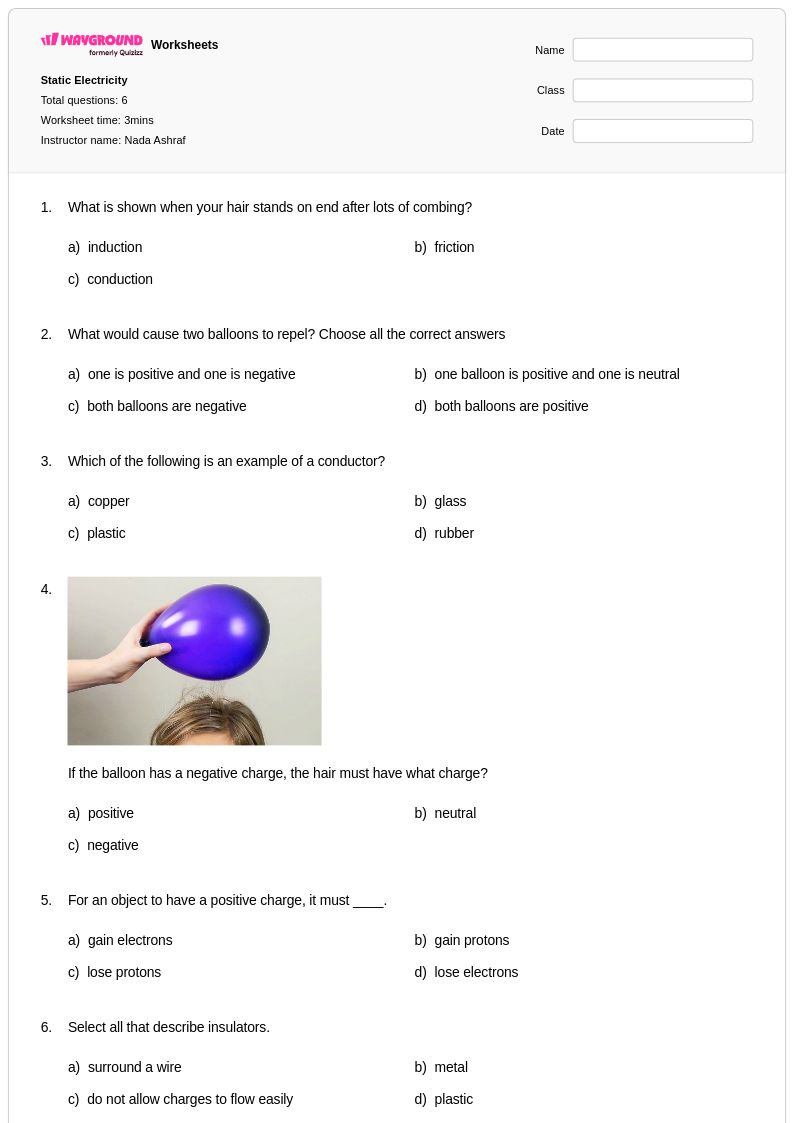
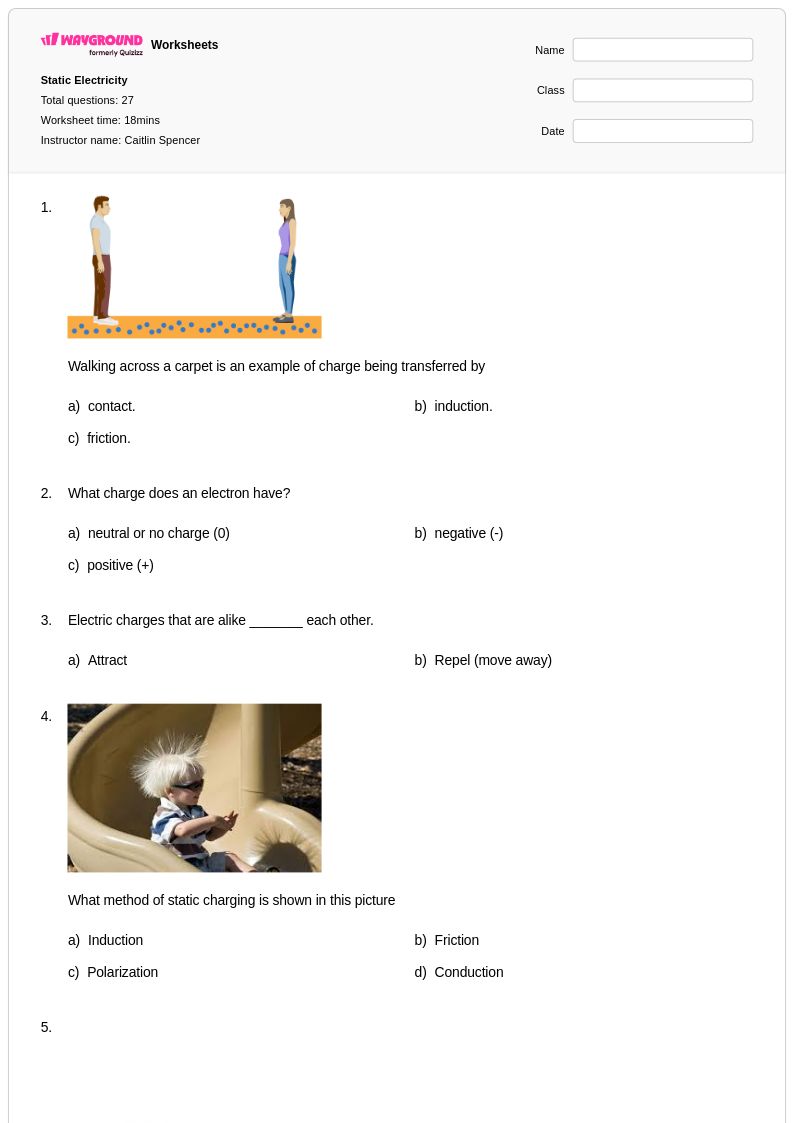
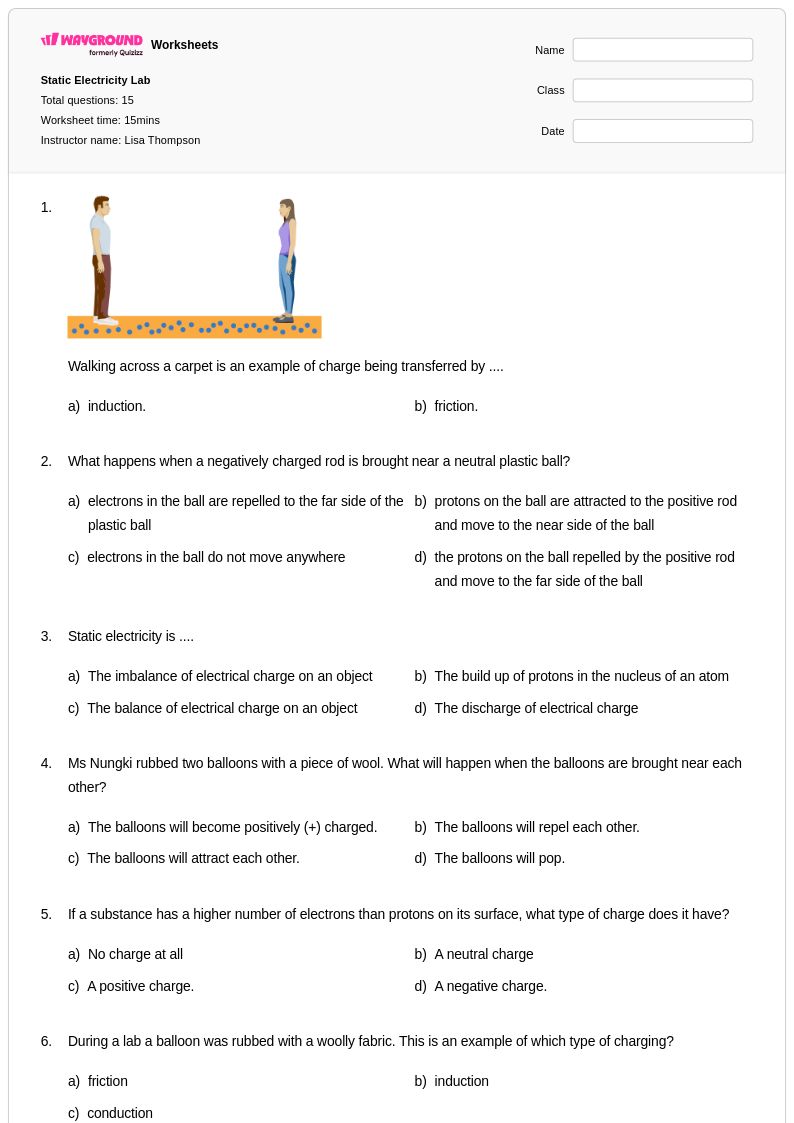
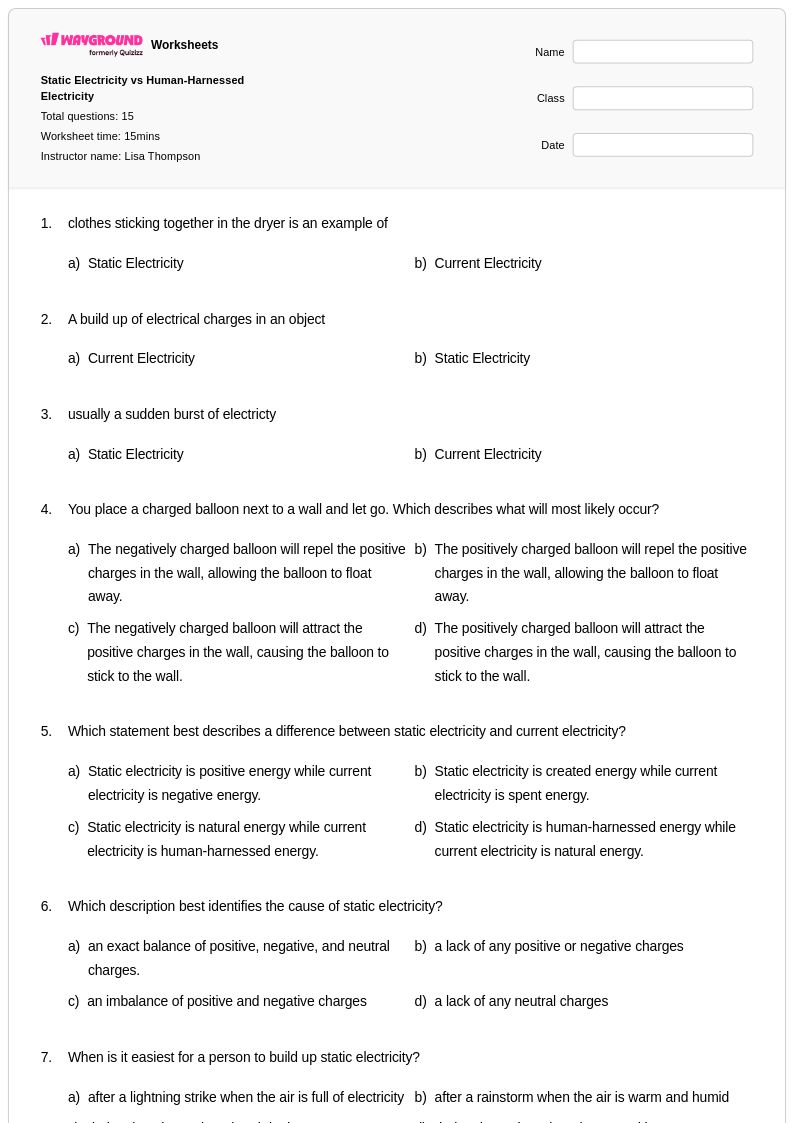
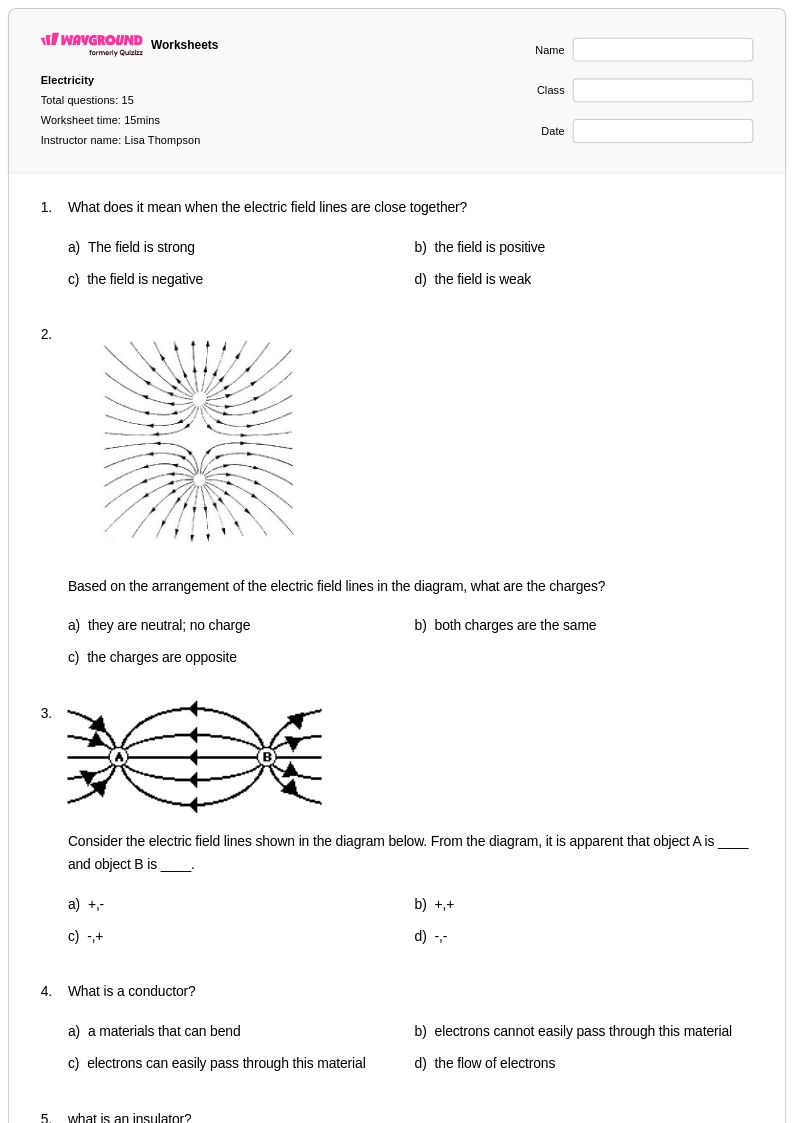
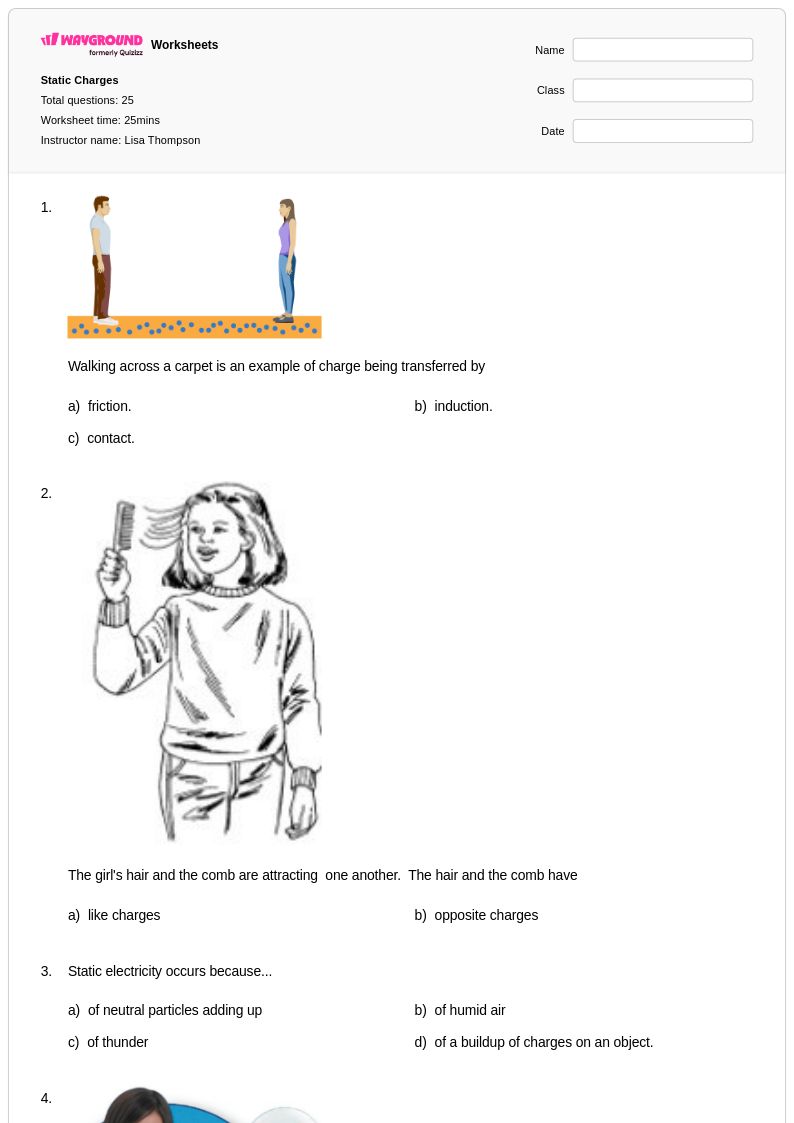
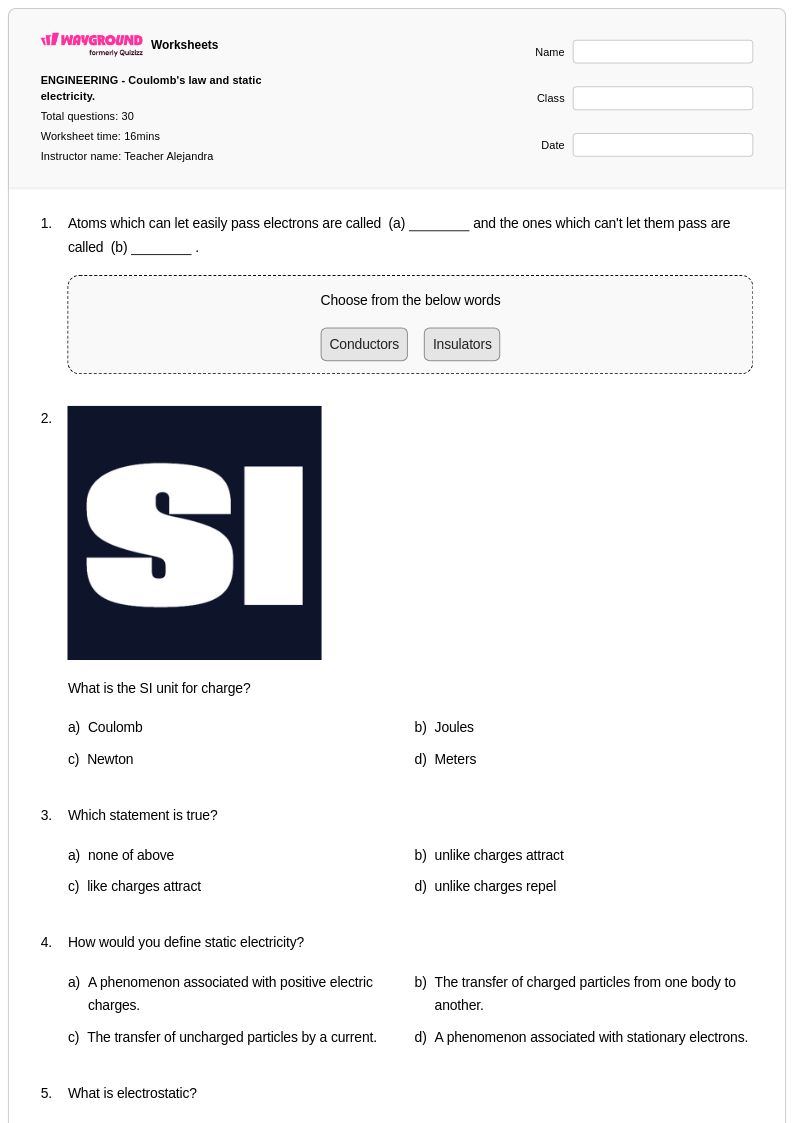
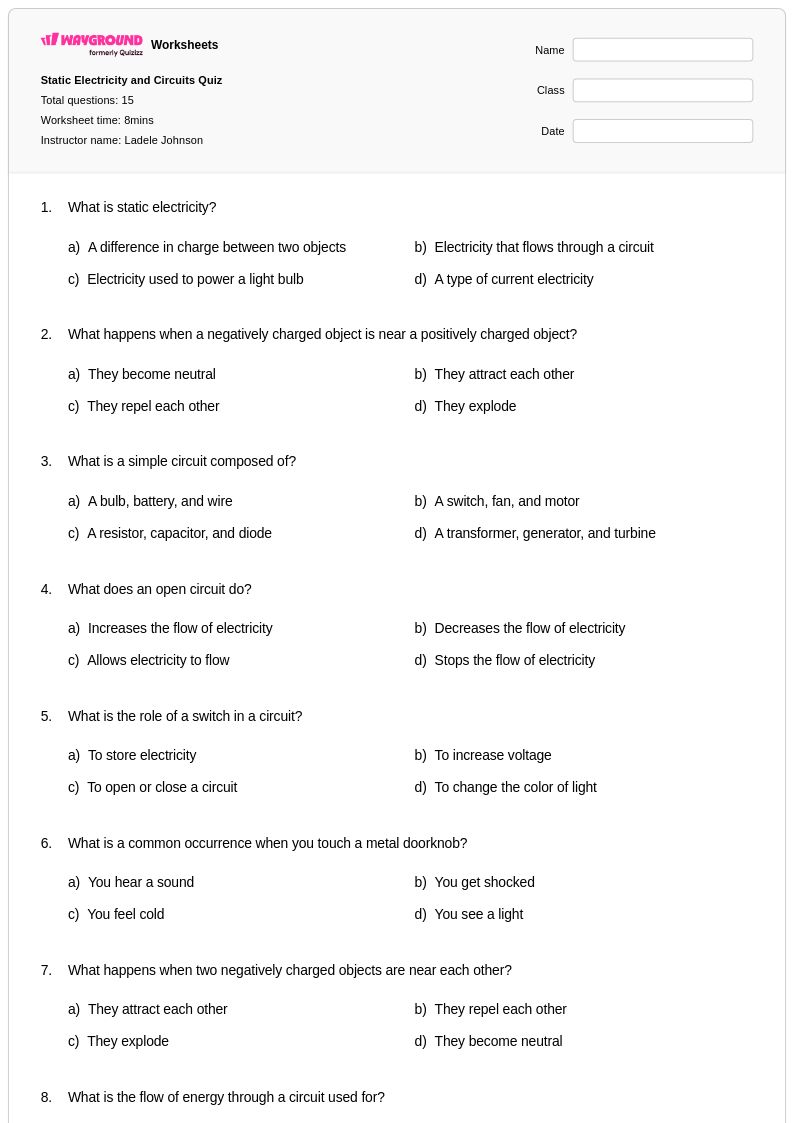
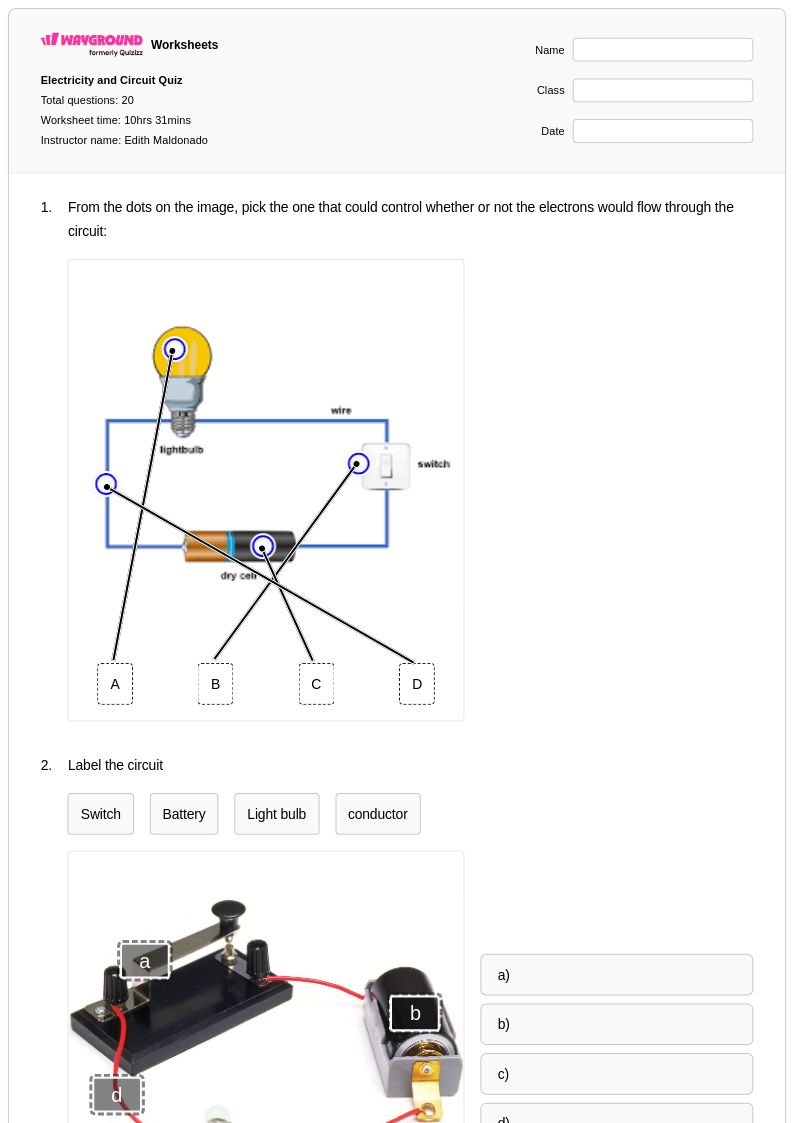
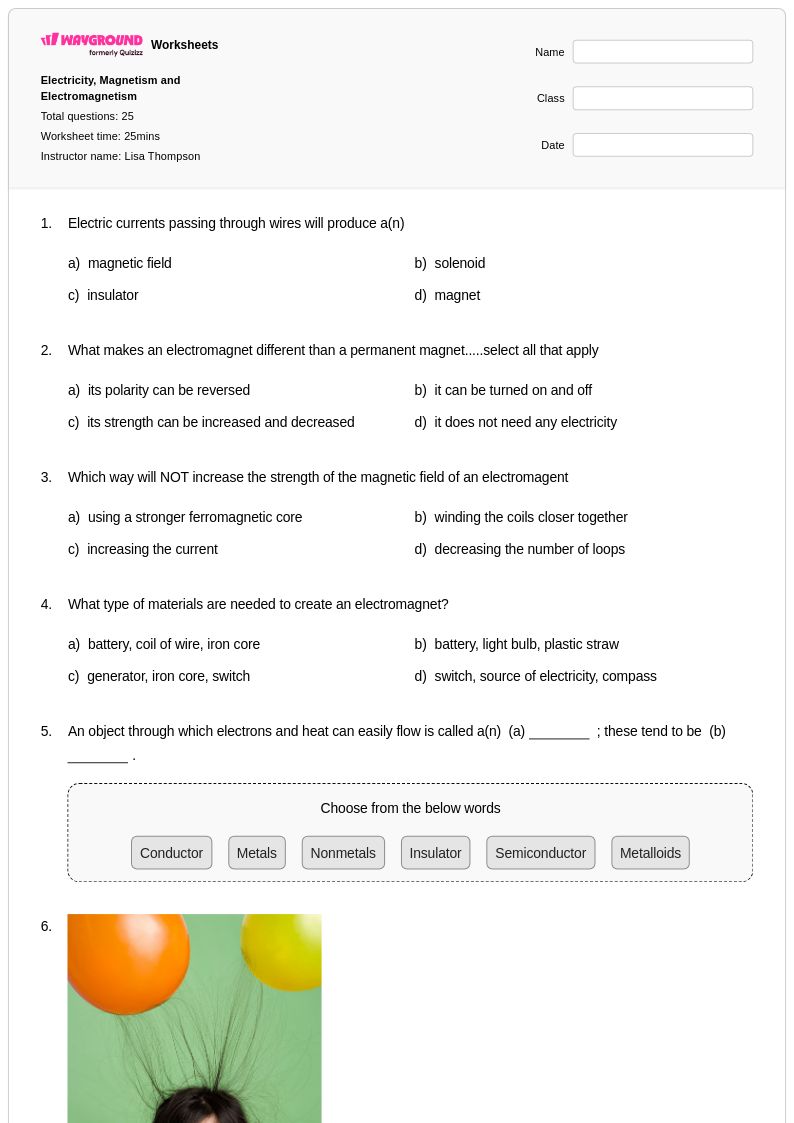
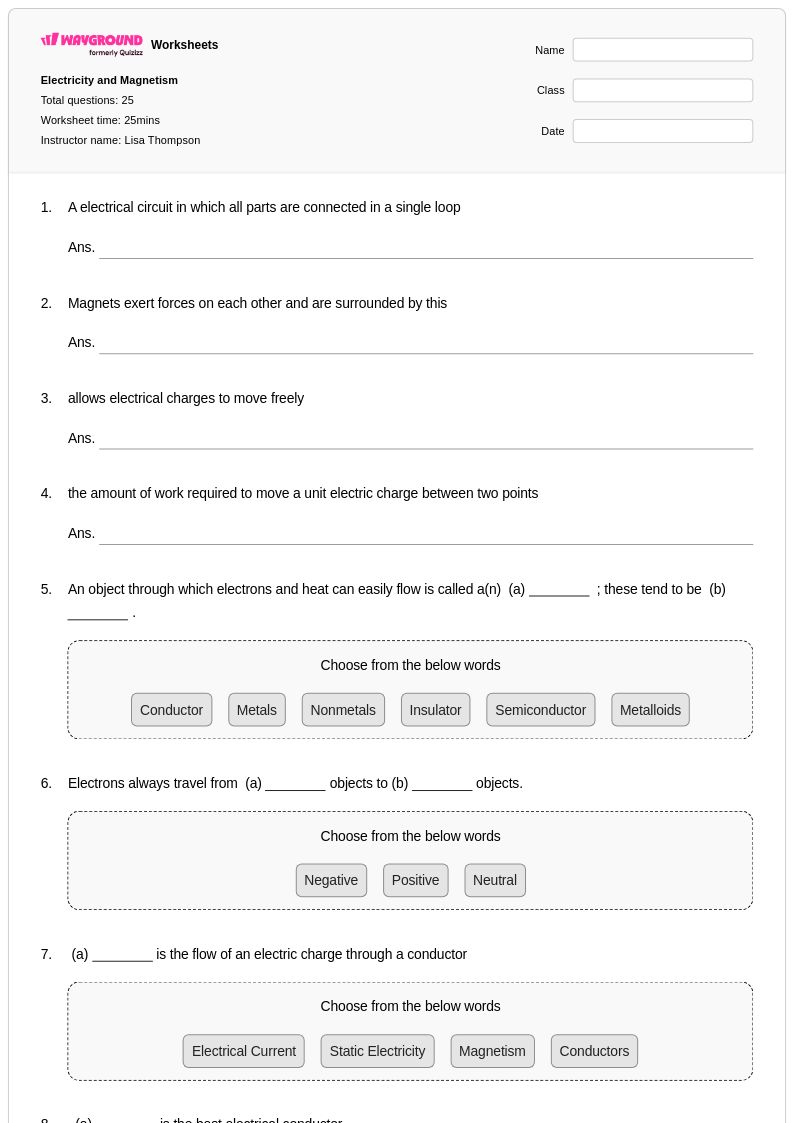
Static electricity worksheets for Year 12 students available through Wayground (formerly Quizizz) provide comprehensive coverage of electrostatic principles essential for advanced physics understanding. These carefully designed resources help students master complex concepts including electric fields, potential difference, capacitance, and electrostatic induction through structured practice problems that build from foundational charge interactions to sophisticated applications in real-world scenarios. Each worksheet collection includes detailed answer keys that support independent learning and self-assessment, while the free printable format ensures accessibility for diverse classroom environments. Students develop critical analytical skills as they work through problems involving Coulomb's law calculations, electric field mapping, and capacitor behavior, strengthening their ability to apply mathematical models to physical phenomena.
Wayground (formerly Quizizz) empowers educators with millions of teacher-created static electricity resources that streamline lesson planning and enhance student engagement in Year 12 physics courses. The platform's robust search and filtering capabilities allow teachers to quickly locate worksheets aligned with specific curriculum standards and learning objectives, while built-in differentiation tools enable seamless customization for varying student ability levels. These comprehensive collections are available in both digital and printable pdf formats, providing flexibility for traditional classroom instruction, remote learning environments, and hybrid educational models. Teachers can efficiently implement targeted remediation for students struggling with electrostatic concepts, provide enrichment opportunities for advanced learners, and create consistent skill practice opportunities that reinforce theoretical knowledge through practical problem-solving applications.
FAQs
How do I teach static electricity to middle or high school students?
Start with tangible, observable phenomena like balloon experiments and Van de Graaff generators to ground abstract concepts in real experience. From there, build toward charge distribution, electrostatic forces, and Coulomb's law using structured problem sets that connect hands-on observations to mathematical reasoning. Scaffolding the progression from qualitative understanding to quantitative analysis helps students develop a durable mental model of how charges behave.
What topics should a static electricity worksheet cover?
A well-designed static electricity worksheet should address charge distribution, electrostatic forces, Coulomb's law, and electric fields around charged objects. Strong practice materials also connect these principles to real-world phenomena like lightning formation and common classroom demonstrations. Including both conceptual questions and calculation problems ensures students can apply theory, not just recall definitions.
What mistakes do students commonly make when learning about static electricity?
One of the most common errors is confusing the direction of electric force with the direction of electric field lines, particularly when negative charges are involved. Students also frequently misapply Coulomb's law by forgetting that force depends on both charges and the square of the distance between them. Targeted practice problems that isolate these variables can help students recognize and correct these error patterns before assessments.
How can I differentiate static electricity instruction for students at different skill levels?
For students who are still building foundational understanding, focus on qualitative charge interactions and everyday static phenomena before introducing equations. Advanced learners can be challenged with electric potential, capacitance, and multi-charge field diagrams. Wayground supports this kind of differentiation with tools that let teachers customize materials by skill level, and individual student accommodations such as reduced answer choices and read-aloud support can be applied without disrupting the rest of the class.
How do I use Wayground's static electricity worksheets in my classroom?
Wayground's static electricity worksheets are available as both printable PDFs and in digital formats, making them usable in traditional classroom settings as well as technology-integrated environments. Teachers can also host worksheets as interactive quizzes directly on Wayground, enabling real-time engagement and immediate feedback. Each worksheet includes a complete answer key, so teachers can use these materials for guided practice, independent work, or formative assessment without additional preparation.
How do I help students who are struggling with Coulomb's law calculations?
Students often struggle with Coulomb's law because they conflate the formula with Newton's gravitational law or mishandle unit conversions, particularly with microcoulombs. Breaking the calculation into explicit steps, such as identifying each variable before substituting values, reduces procedural errors. Practice problems that vary only one quantity at a time help students isolate the effect of charge magnitude versus distance, building proportional reasoning alongside calculation fluency.