Free Printable Subordinate Clauses Worksheets for Year 8
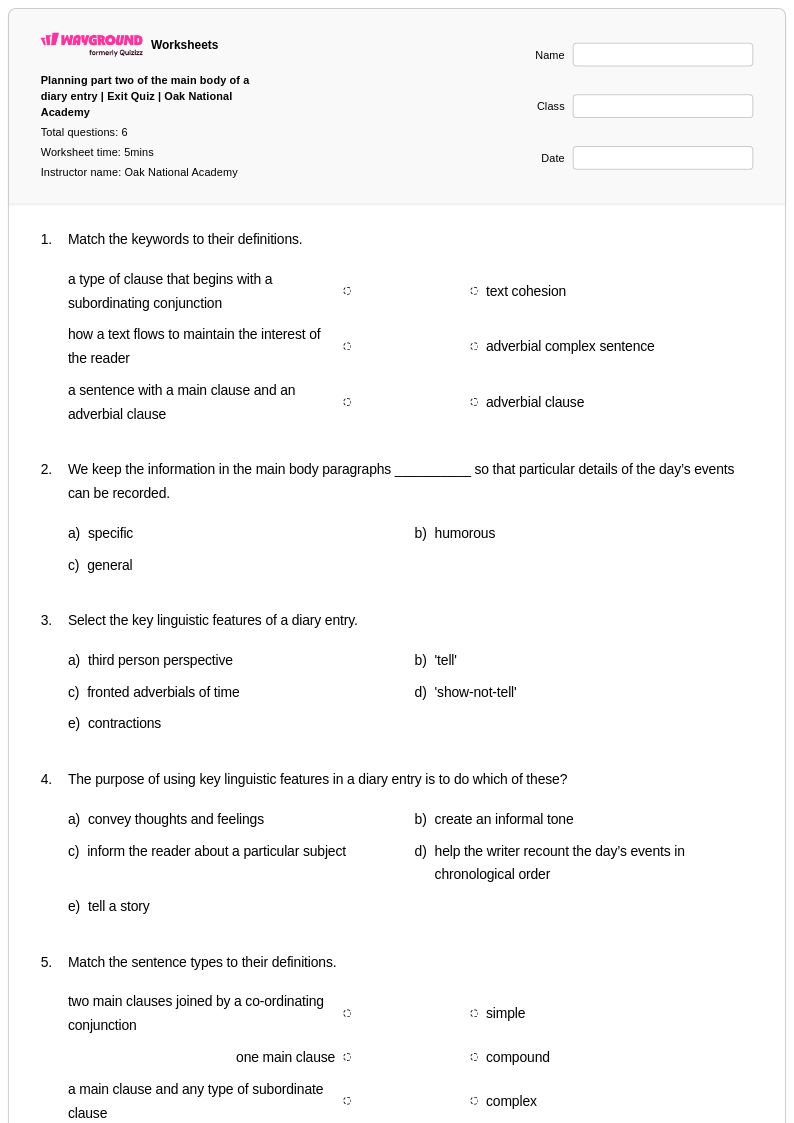
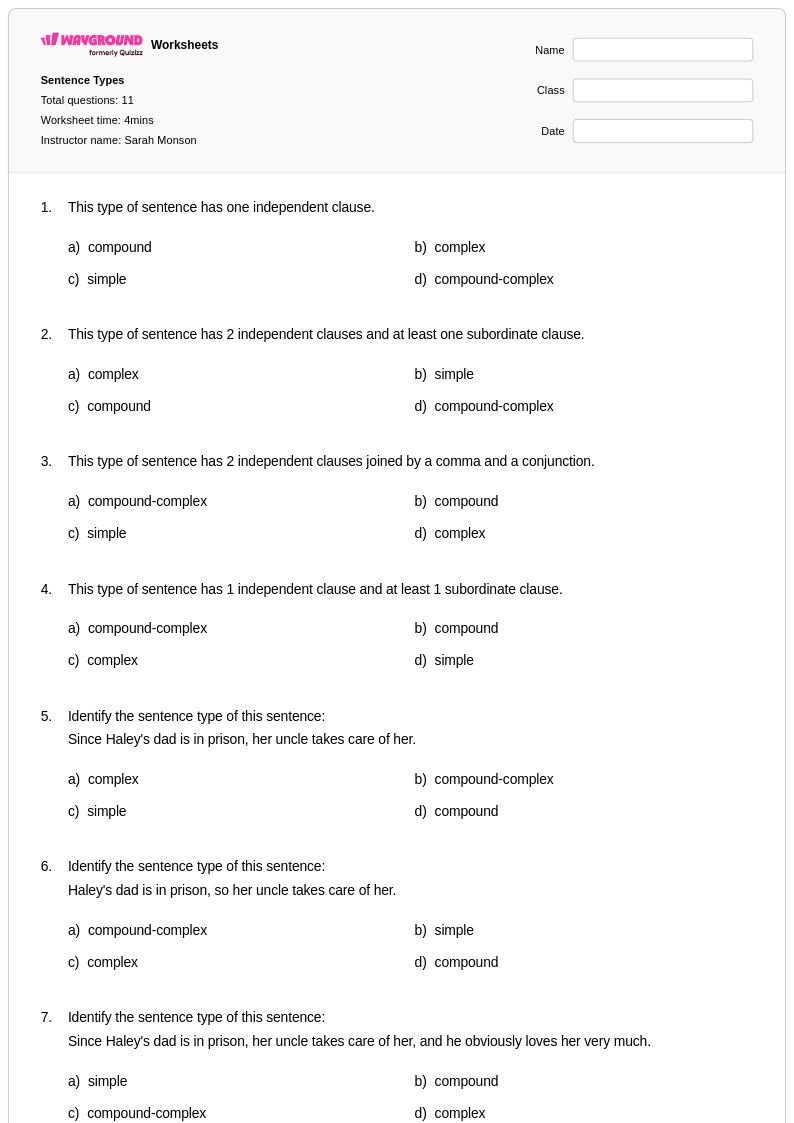
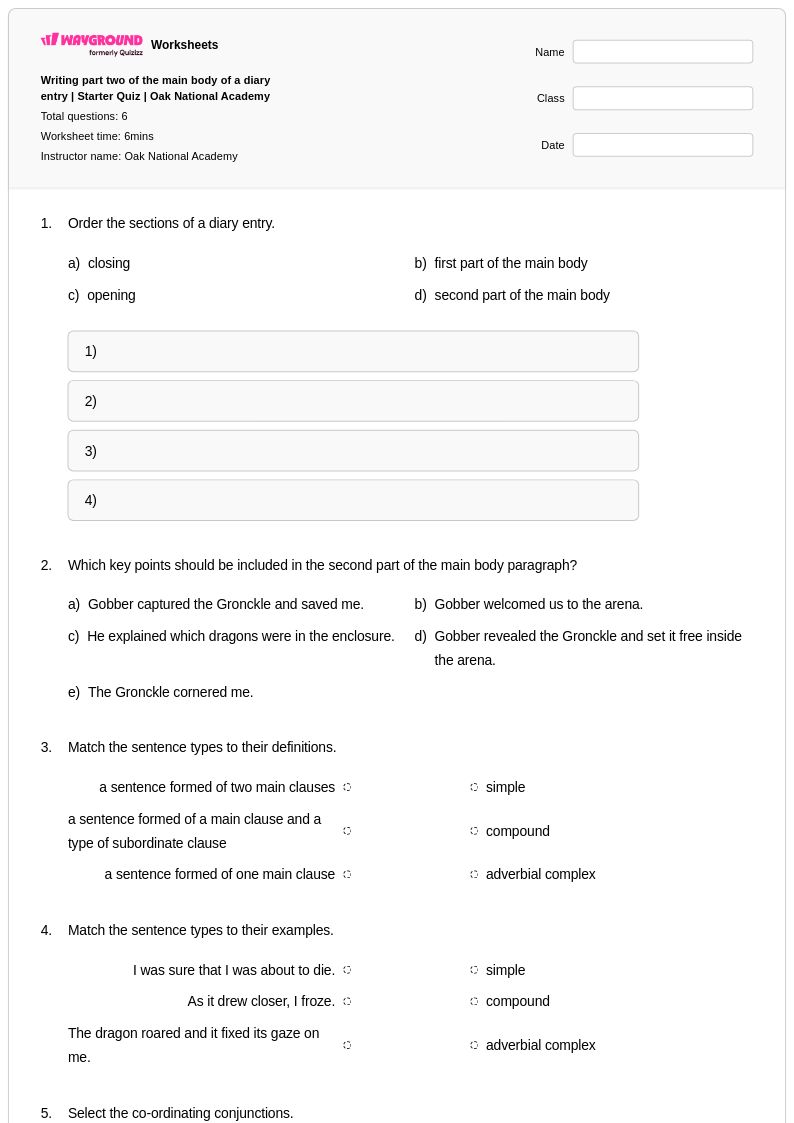
Year 8 subordinate clauses worksheets from Wayground help students master complex sentence structure through engaging printables with practice problems and answer keys available as free PDF downloads.
Explore printable Subordinate Clauses worksheets for Year 8
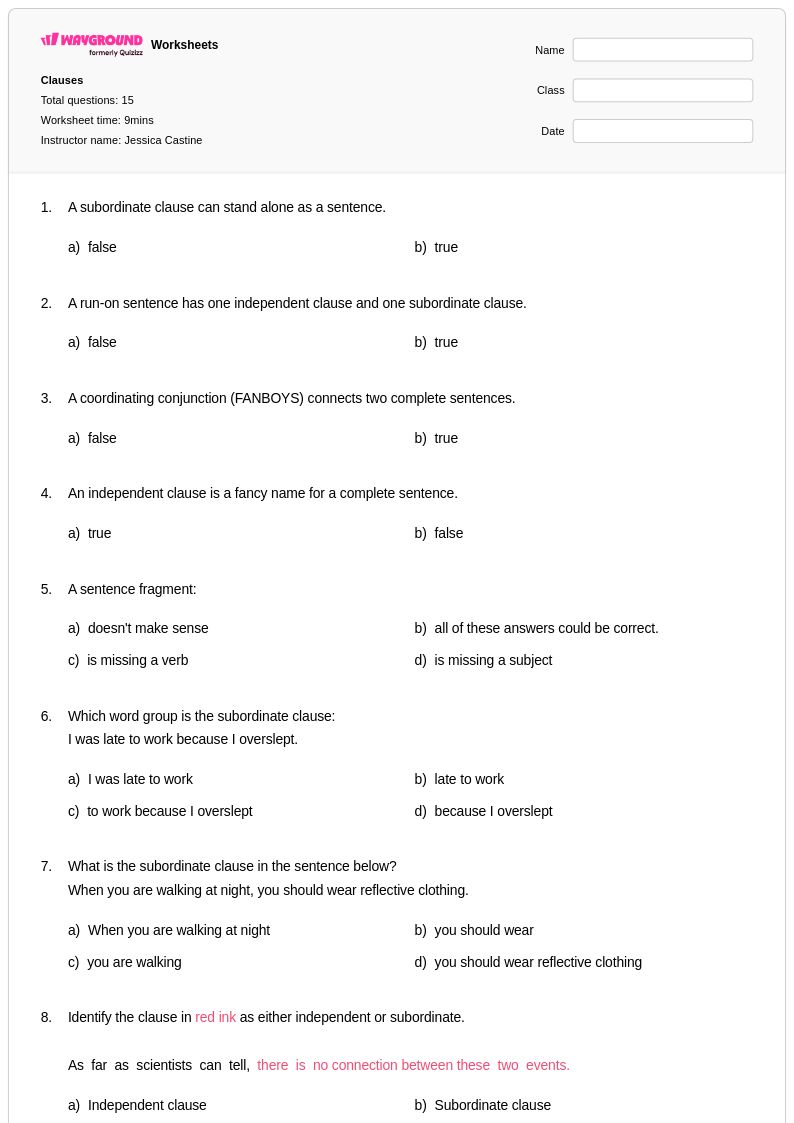
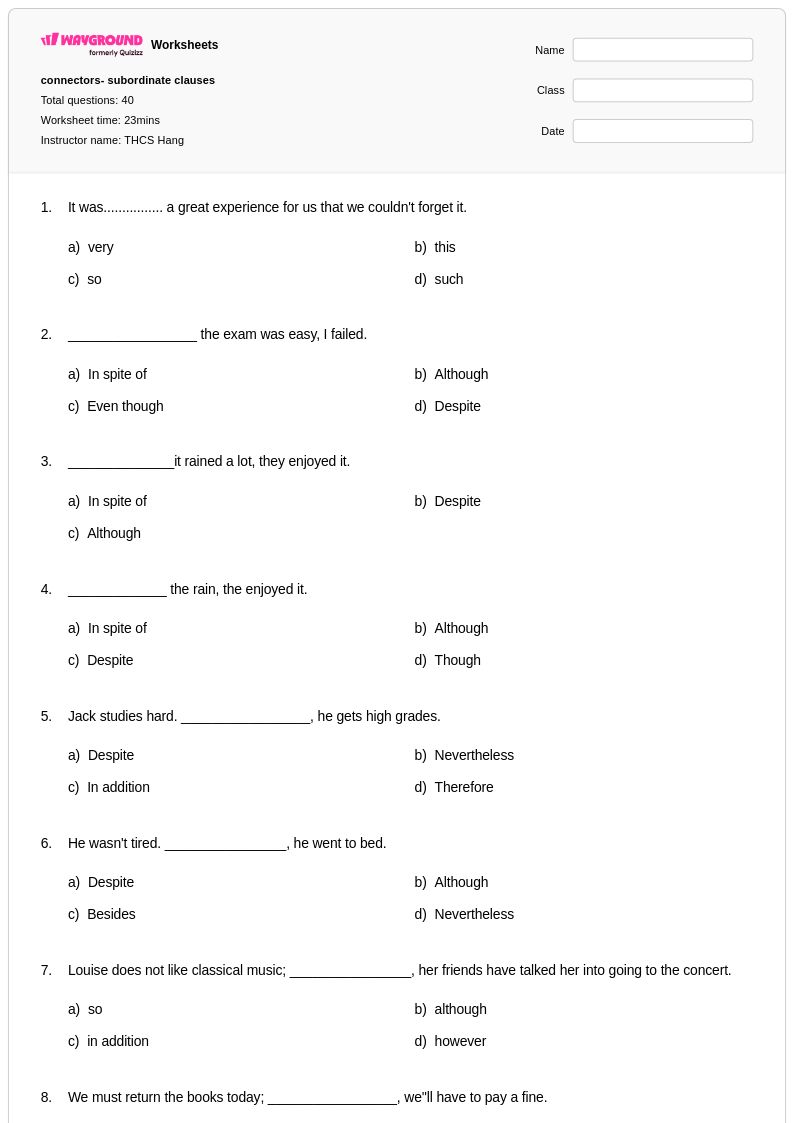
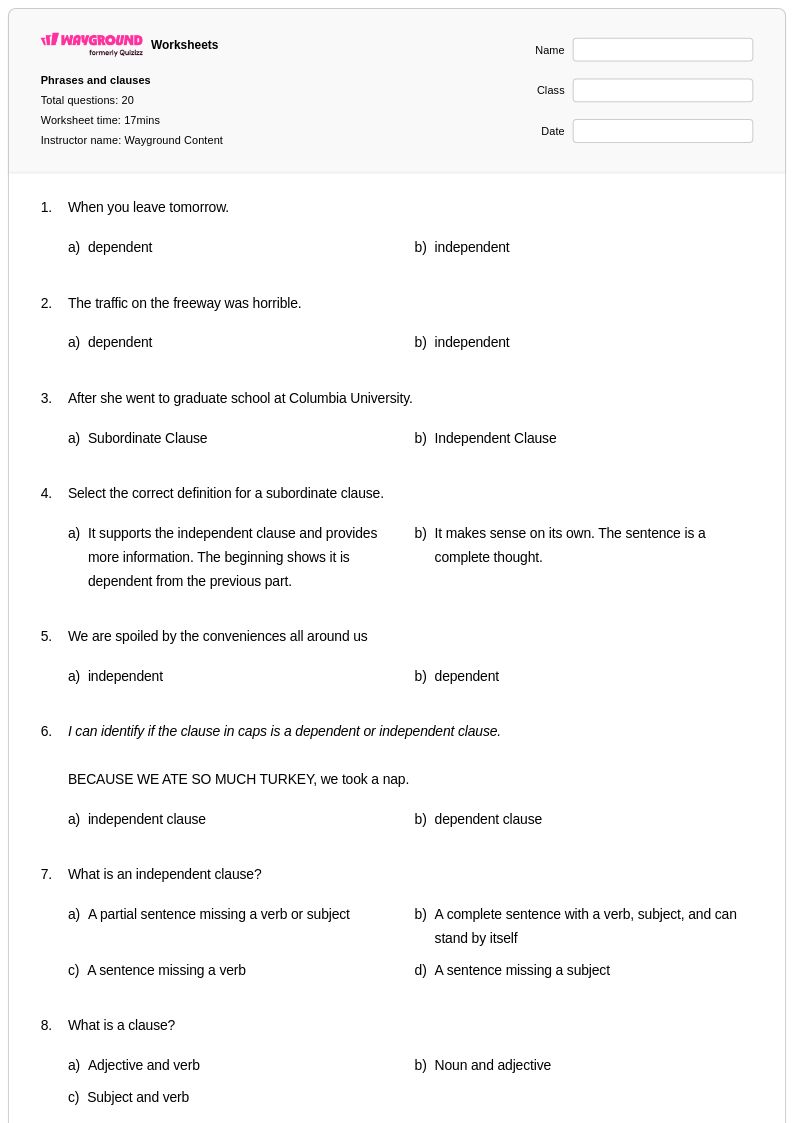
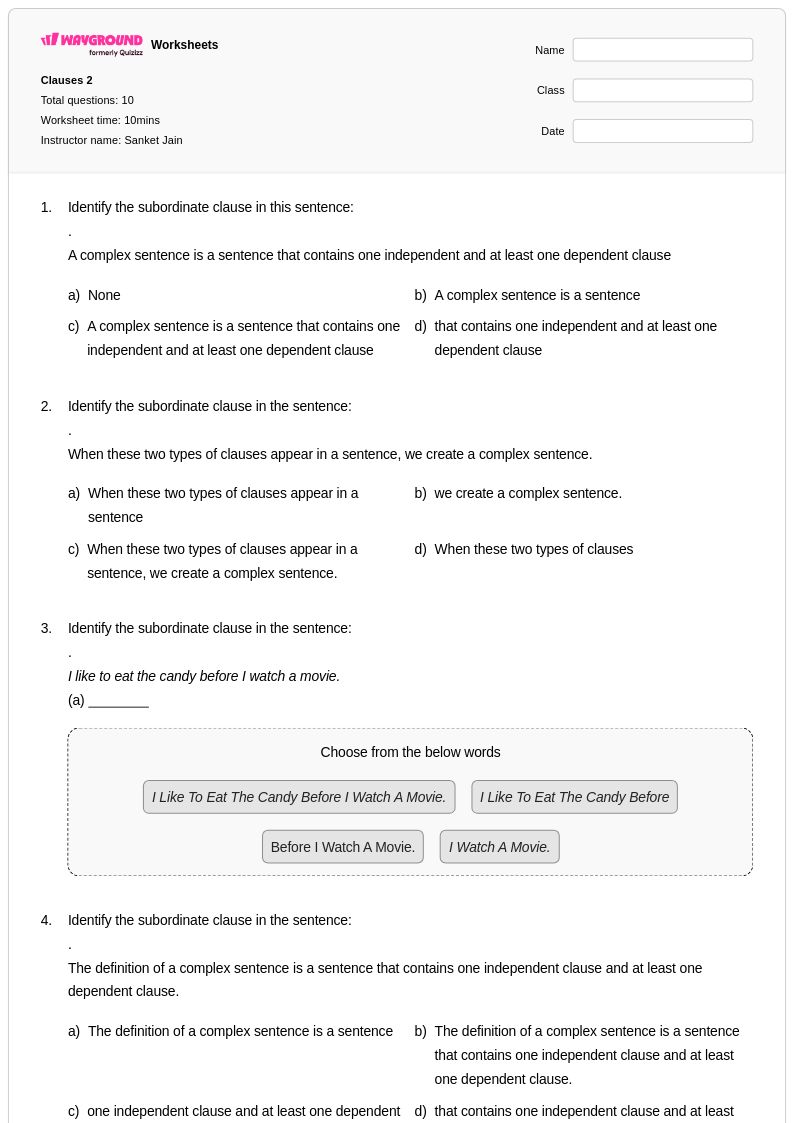
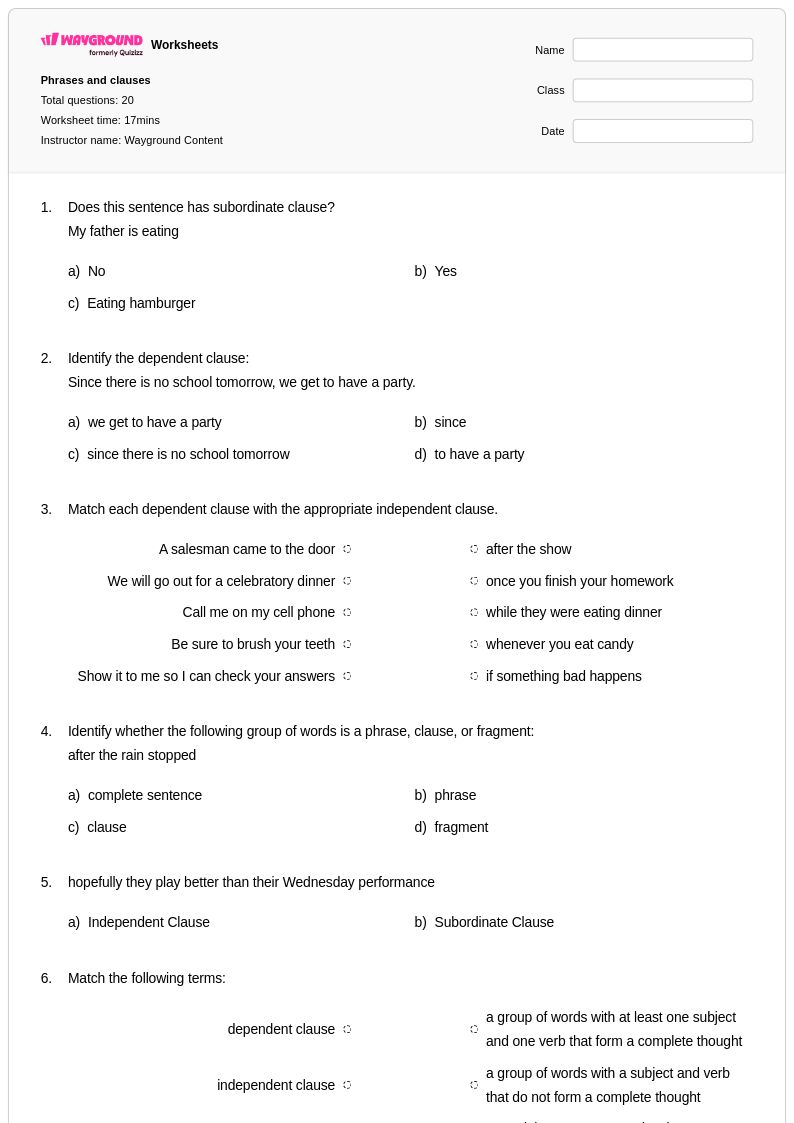
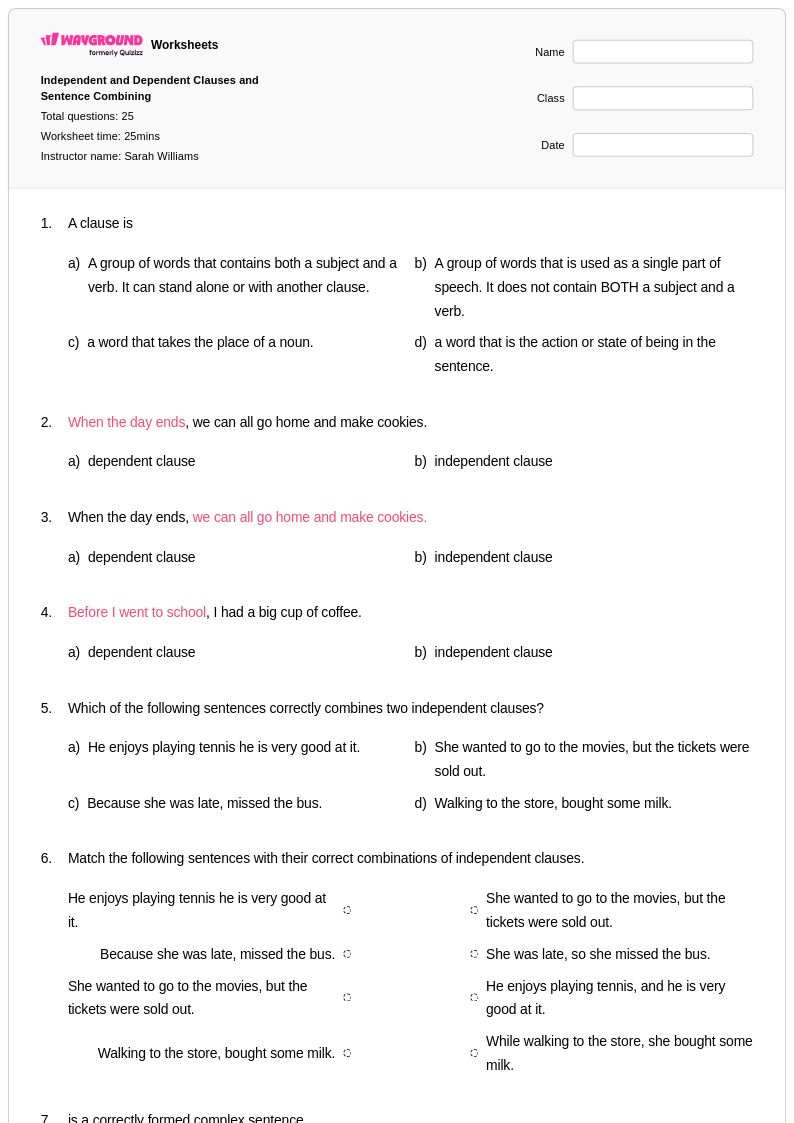
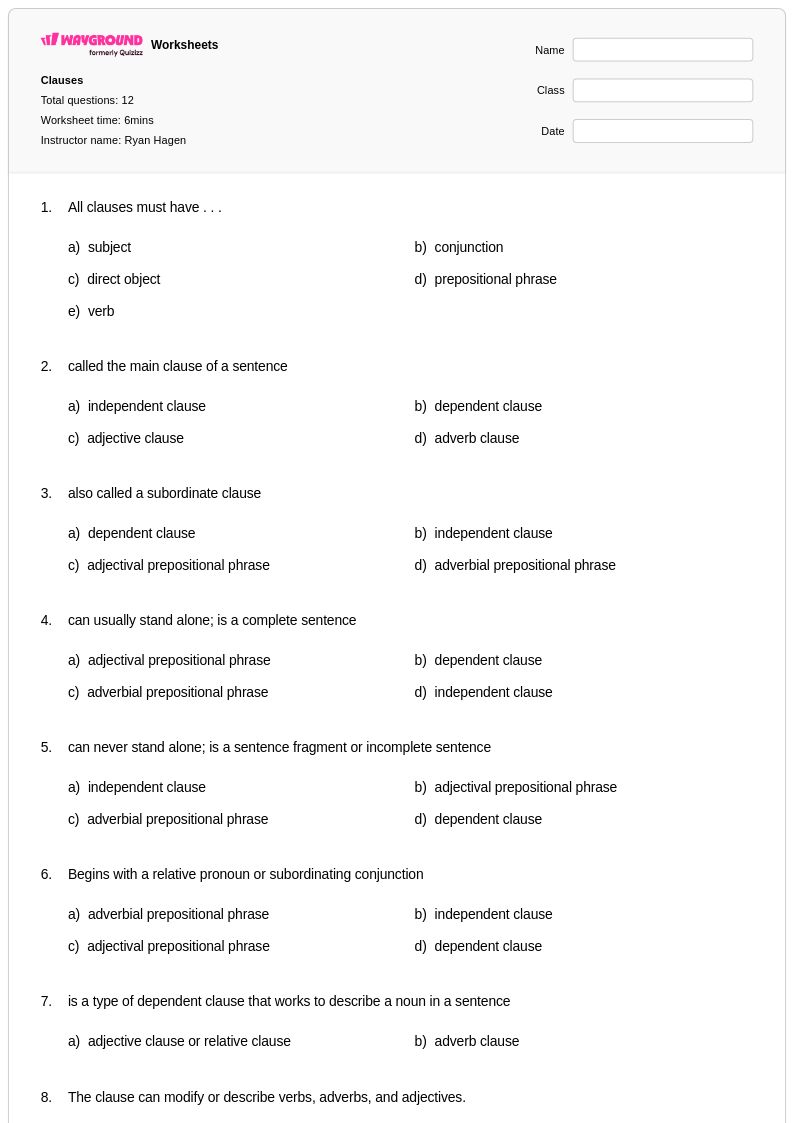
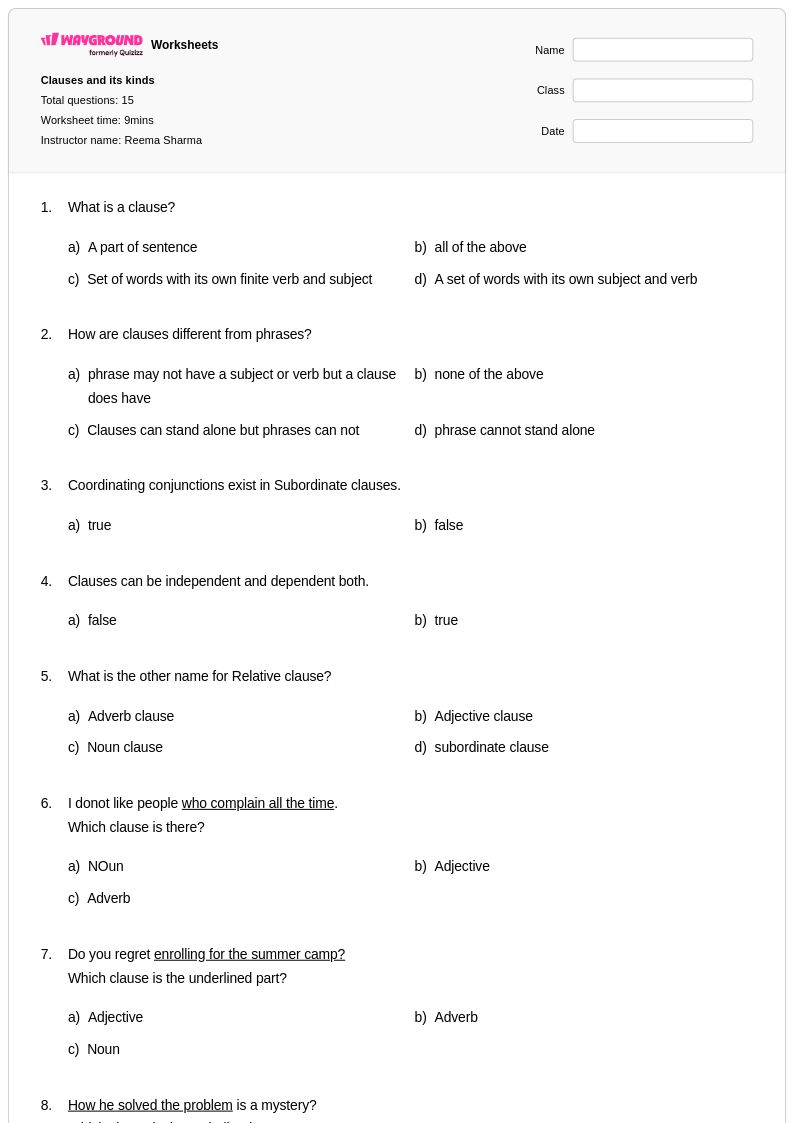
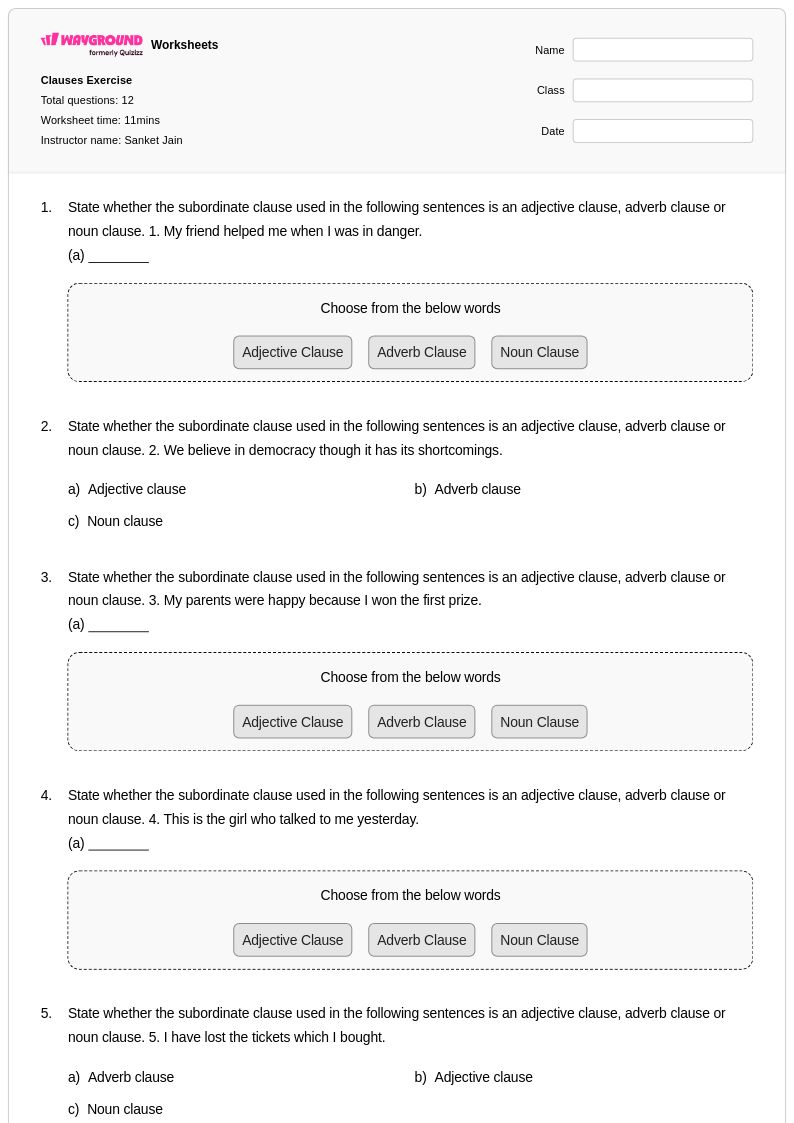
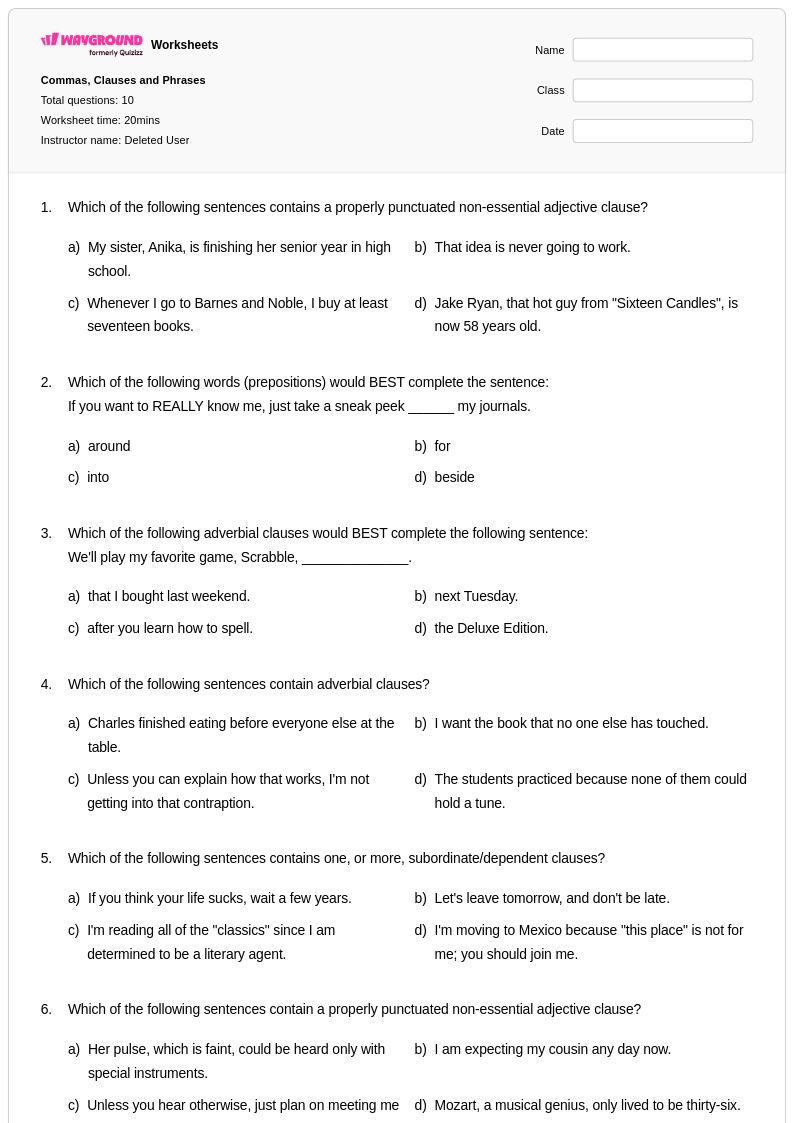
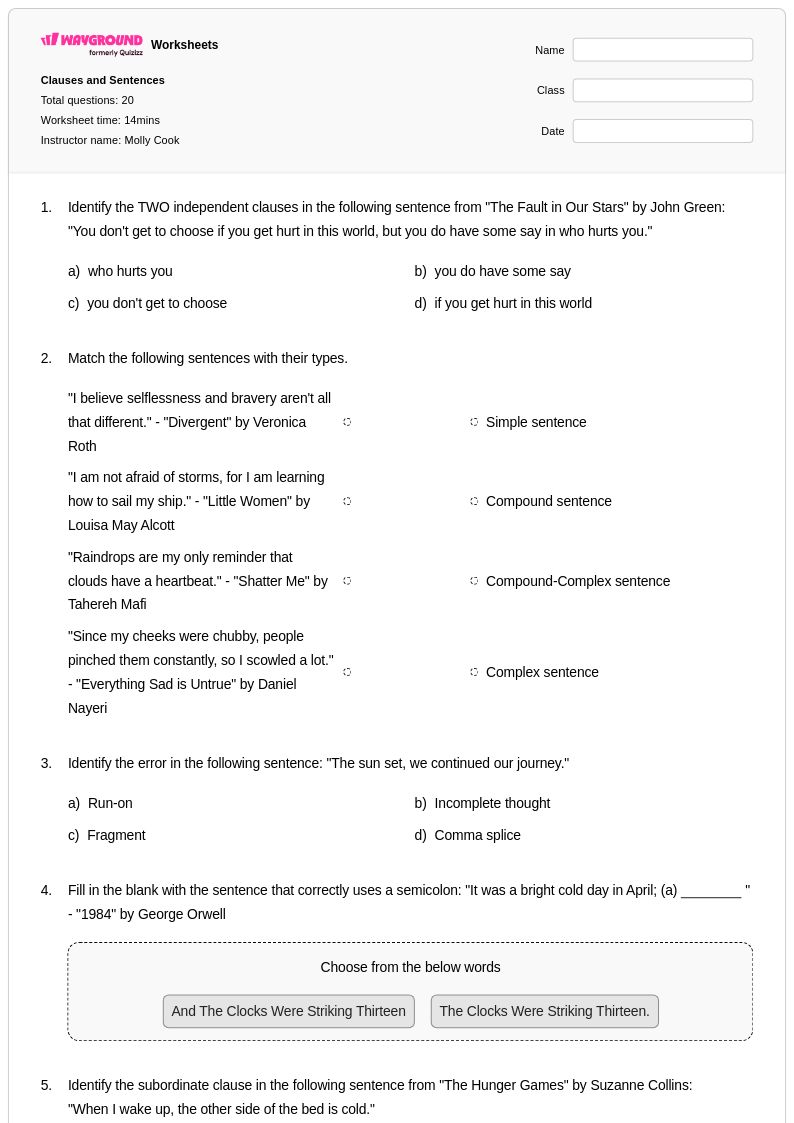
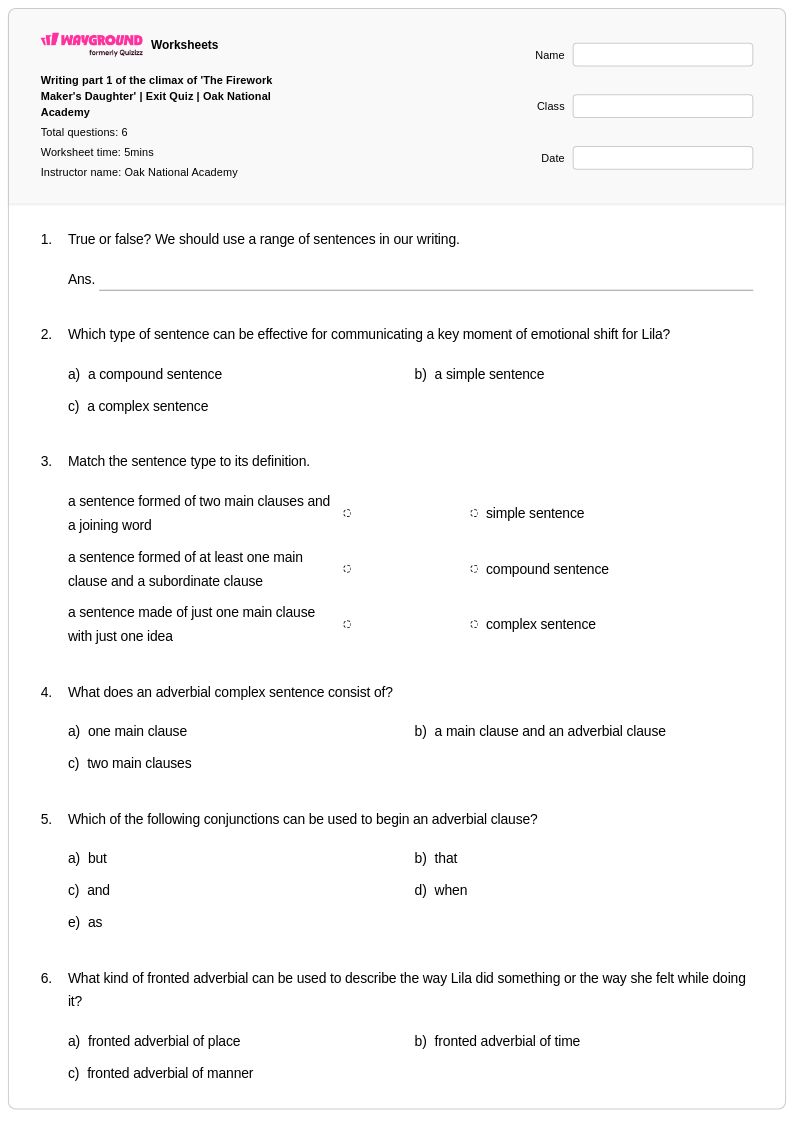
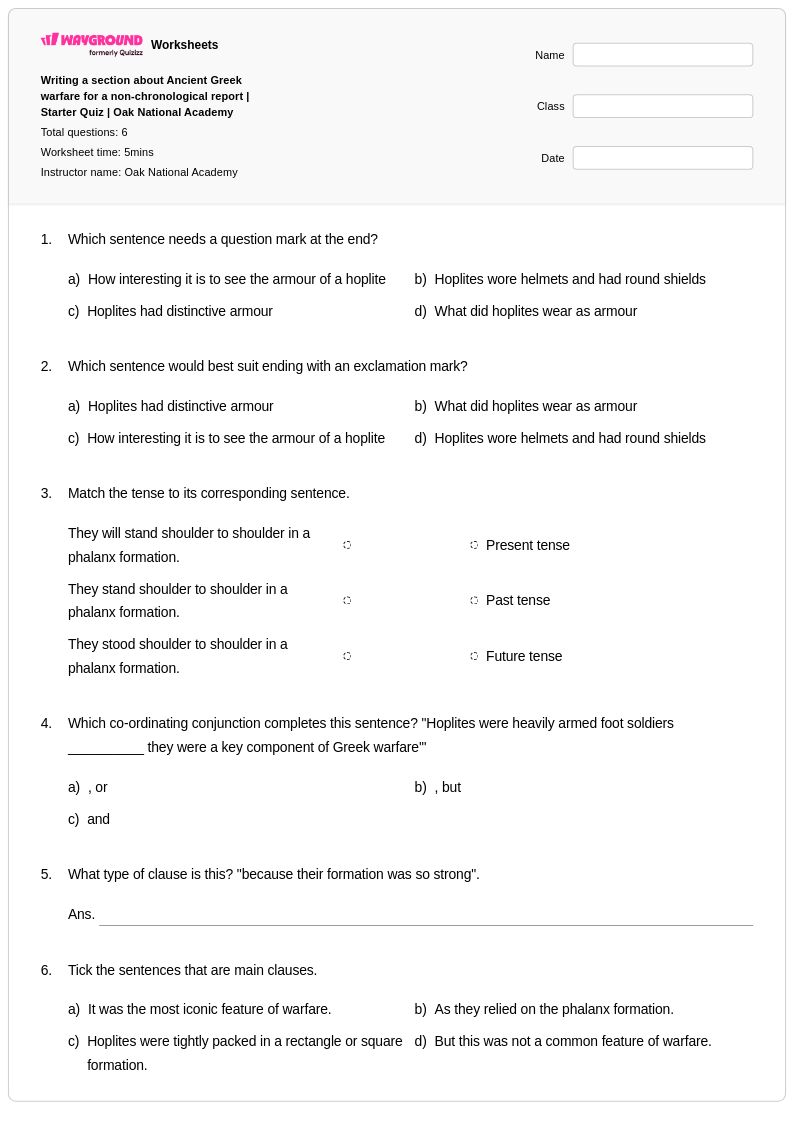
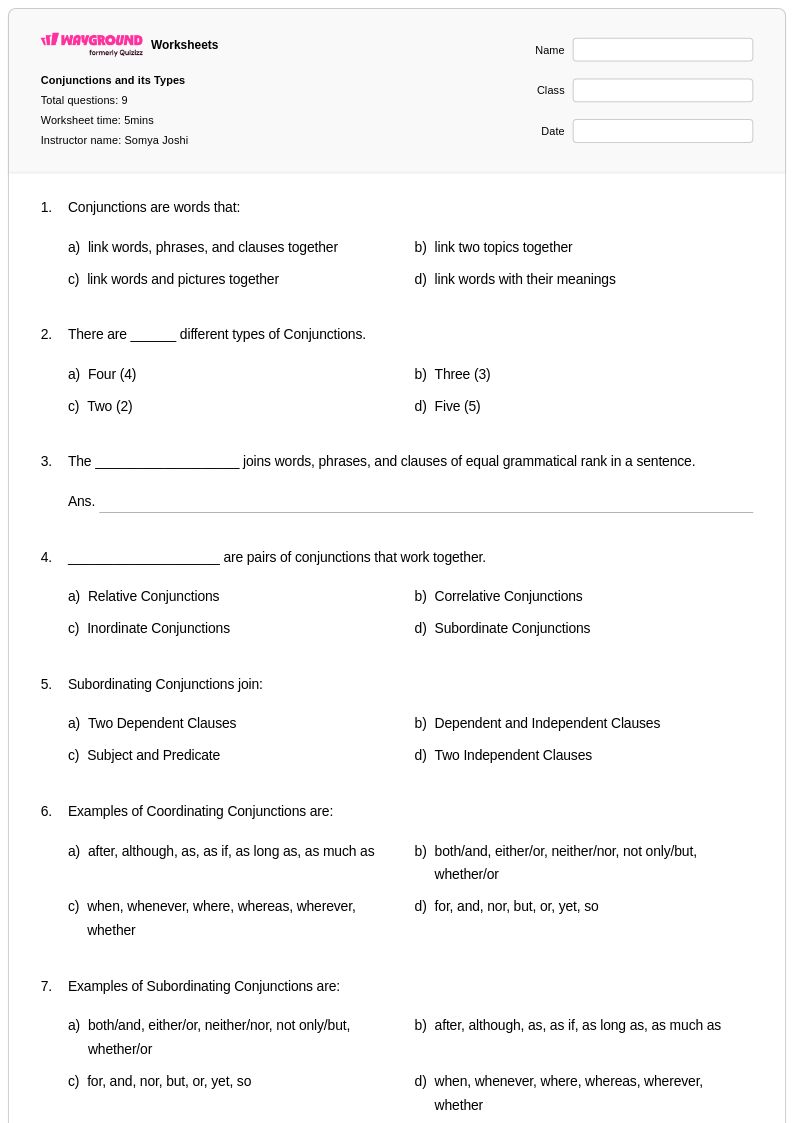
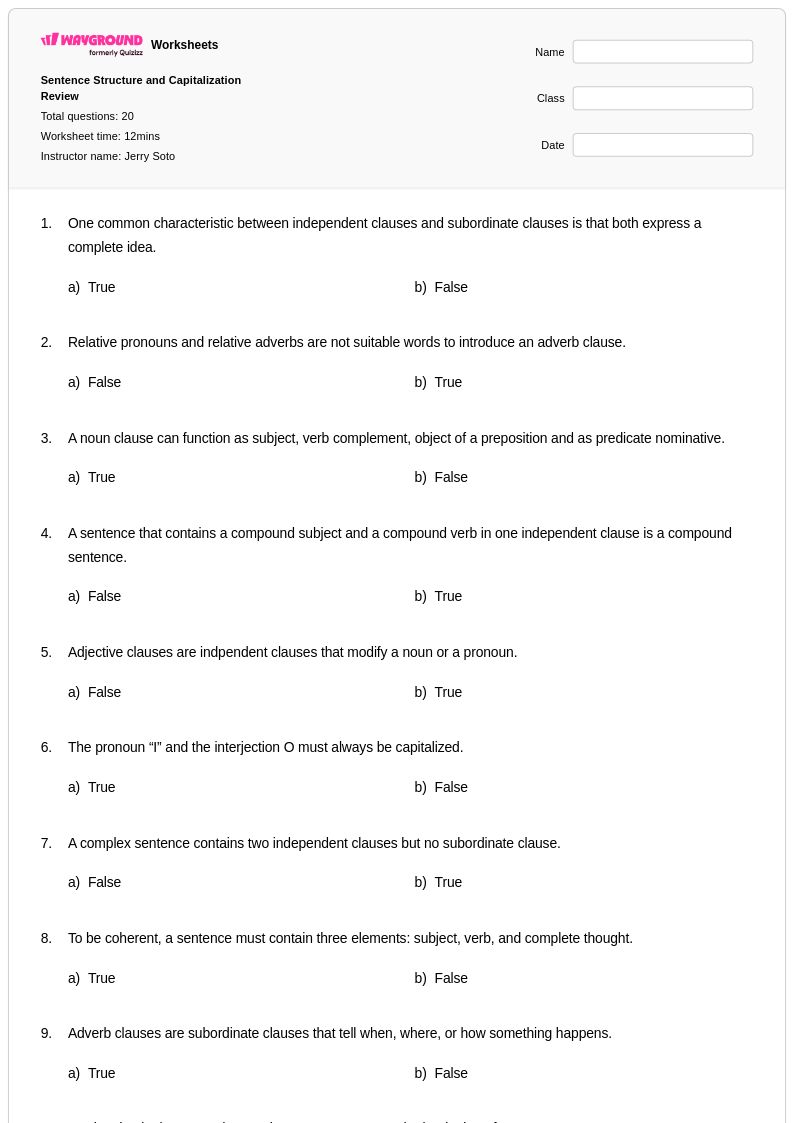
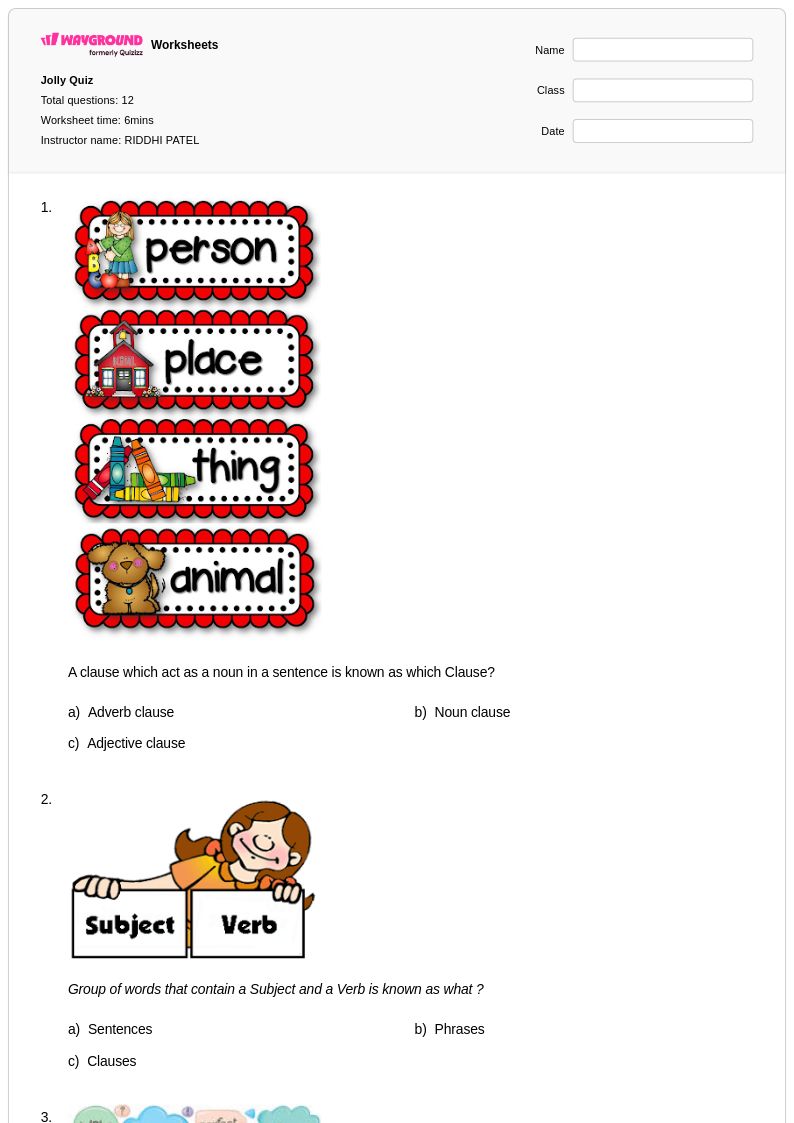
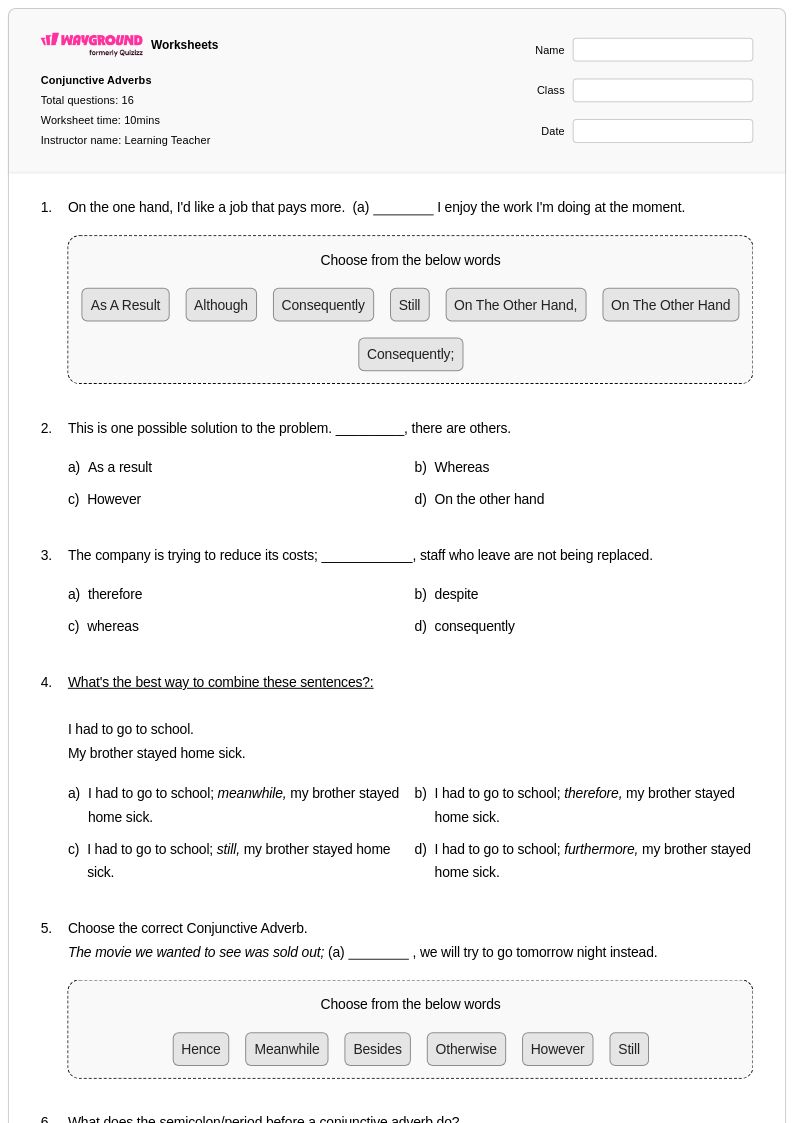
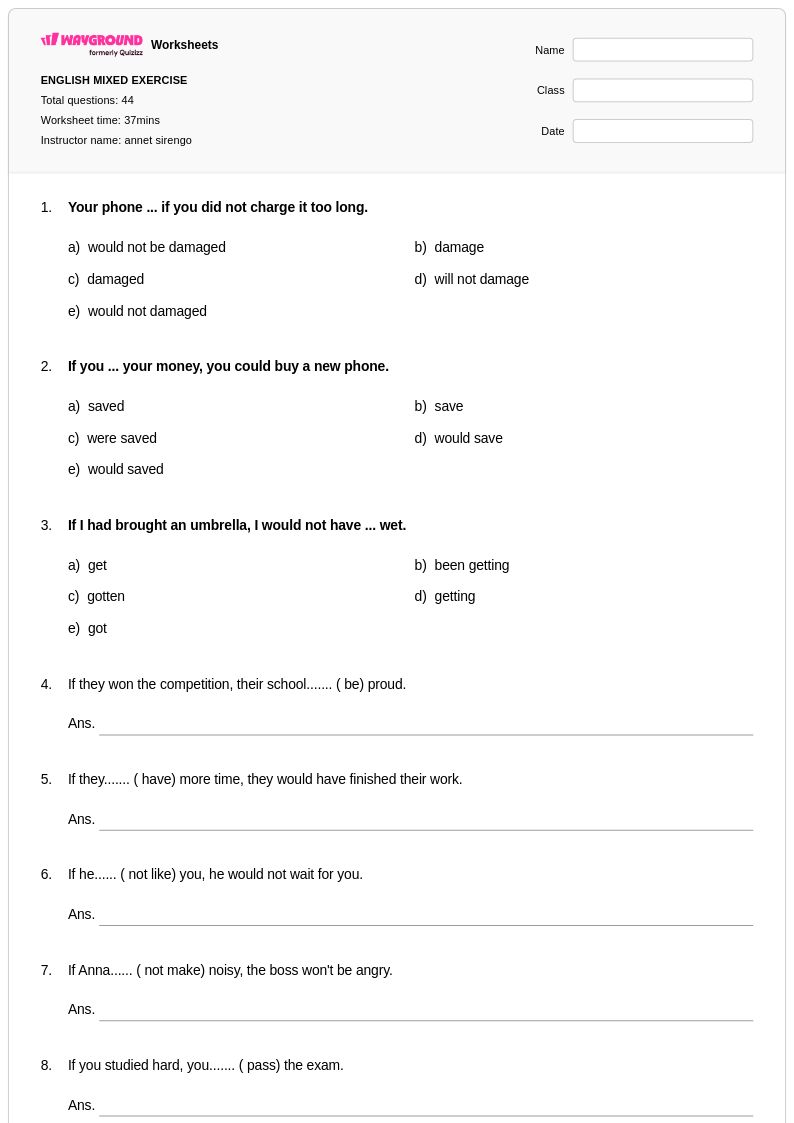
Subordinate clauses represent a fundamental component of advanced sentence structure that Year 8 students must master to develop sophisticated writing skills. Wayground's comprehensive collection of subordinate clause worksheets provides targeted practice in identifying, creating, and properly punctuating dependent clauses that cannot stand alone as complete sentences. These educational resources strengthen students' understanding of how subordinate clauses function as sentence components, including adverbial clauses that modify verbs or entire sentences, adjectival clauses that describe nouns, and nominal clauses that serve as subjects or objects. Each worksheet includes detailed practice problems that guide students through recognizing subordinating conjunctions, relative pronouns, and other clause markers, while comprehensive answer keys enable both independent study and classroom instruction. These free printables systematically build competency in complex sentence construction, helping eighth-grade learners transition from simple sentence patterns to the multi-layered grammatical structures expected in academic writing.
Wayground's extensive platform, formerly known as Quizizz, empowers educators with millions of teacher-created subordinate clause resources that streamline lesson planning and differentiated instruction. The platform's robust search and filtering capabilities allow teachers to quickly locate materials aligned with specific learning standards and tailored to diverse student needs within the Year 8 curriculum. These versatile worksheet collections support both remediation for students struggling with dependent clause concepts and enrichment opportunities for advanced learners ready to explore sophisticated sentence combining techniques. Available in both printable PDF formats for traditional classroom use and interactive digital versions for technology-enhanced learning environments, these resources offer flexible customization options that enable teachers to modify content difficulty, adjust problem types, and create targeted skill practice sessions. This comprehensive approach ensures that educators can effectively address the varied learning styles and academic levels present in middle school English classrooms while maintaining focus on essential subordinate clause mastery.
FAQs
How do I teach subordinate clauses to students who struggle with sentence structure?
Start by ensuring students can reliably identify a complete independent clause before introducing subordination. Then introduce a small set of common subordinating conjunctions (because, although, when, if) and have students practice attaching dependent clauses to simple sentences they already understand. Showing the same idea expressed as two simple sentences versus one complex sentence helps students see the stylistic payoff of subordination, which motivates engagement with the grammar.
What exercises help students practice identifying subordinate clauses?
Clause-underlining tasks, sentence-combining exercises, and error-correction activities are among the most effective formats for practicing subordinate clause identification. Having students underline the subordinate clause and circle the subordinating conjunction in a range of sentences builds pattern recognition. Sentence-combining tasks, where students merge two simple sentences into one complex sentence, reinforce both identification and construction skills simultaneously.
What are the most common mistakes students make with subordinate clauses?
The most frequent error is treating a subordinate clause as a standalone sentence, producing a sentence fragment such as 'Because she was tired.' Students also commonly misplace the comma when the subordinate clause opens the sentence, omitting it after the dependent clause before the independent clause begins. A third recurring issue is confusing relative clauses (who, which, that) with other subordinate clause types, leading to incorrect punctuation around non-restrictive clauses.
How can I differentiate subordinate clause instruction for students at different skill levels?
For students who are still building foundational skills, focus exclusively on adverbial subordinate clauses using a short list of high-frequency subordinating conjunctions before introducing adjectival or noun clauses. Advanced learners can be challenged with sentence-combining tasks that require them to embed multiple subordinate clauses within a single sentence or to identify clause type and function. On Wayground, teachers can apply reduced answer choices for students who need additional support, lowering cognitive load while keeping practice meaningful, and the platform's filtering tools make it straightforward to assign skill-appropriate materials to different groups.
How do I use Wayground's subordinate clauses worksheets in my classroom?
Wayground's subordinate clauses worksheets are available as printable PDFs for traditional classroom use and in digital formats for technology-integrated environments, and they can also be hosted as a quiz directly on the Wayground platform. Every worksheet includes a complete answer key, making them suitable for guided practice, independent work, homework, or quick formative assessment. Teachers can use Wayground's search and filtering tools to select worksheets that match specific clause types, such as adverbial, adjectival, or noun clauses, and align them with current curriculum standards.
What is the difference between a subordinate clause and an independent clause?
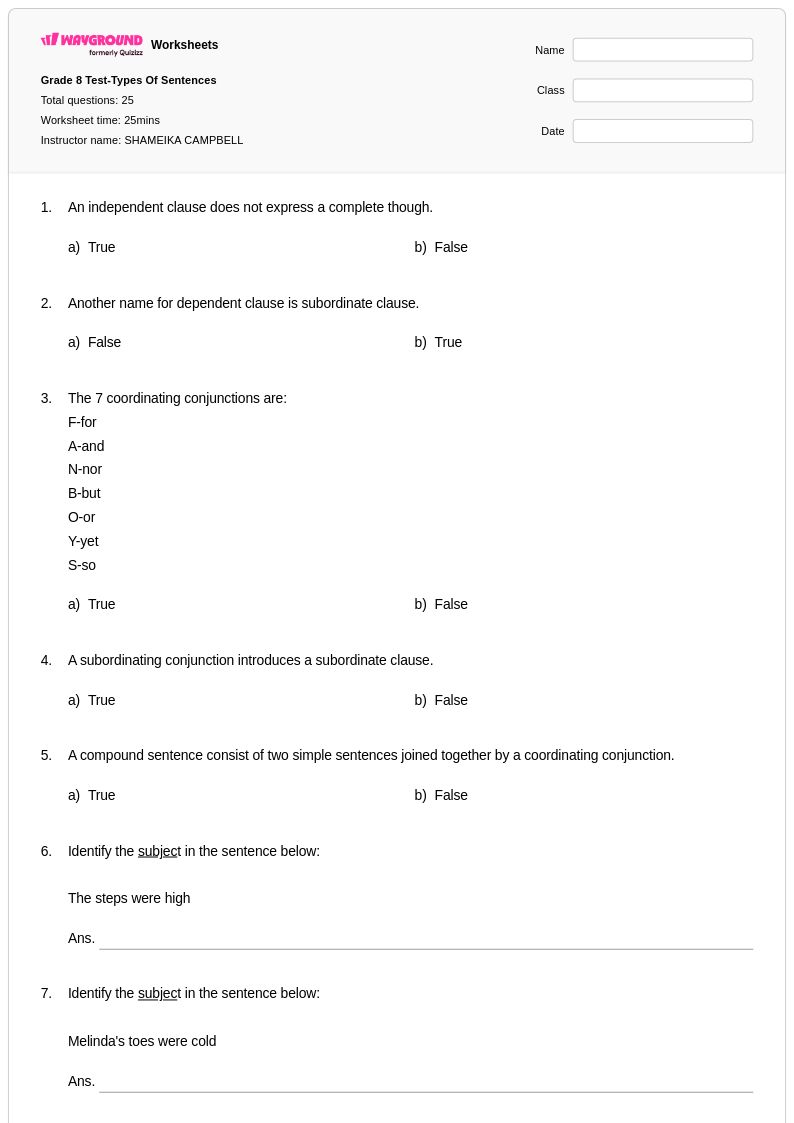
An independent clause expresses a complete thought and can stand alone as a sentence, while a subordinate (or dependent) clause contains a subject and verb but cannot stand alone because it is introduced by a subordinating conjunction or relative pronoun. For example, 'She left early' is an independent clause, but 'because she was tired' is a subordinate clause that requires an independent clause to complete its meaning. Teaching students to test for this 'can it stand alone?' distinction is the most reliable entry point into subordinate clause instruction.