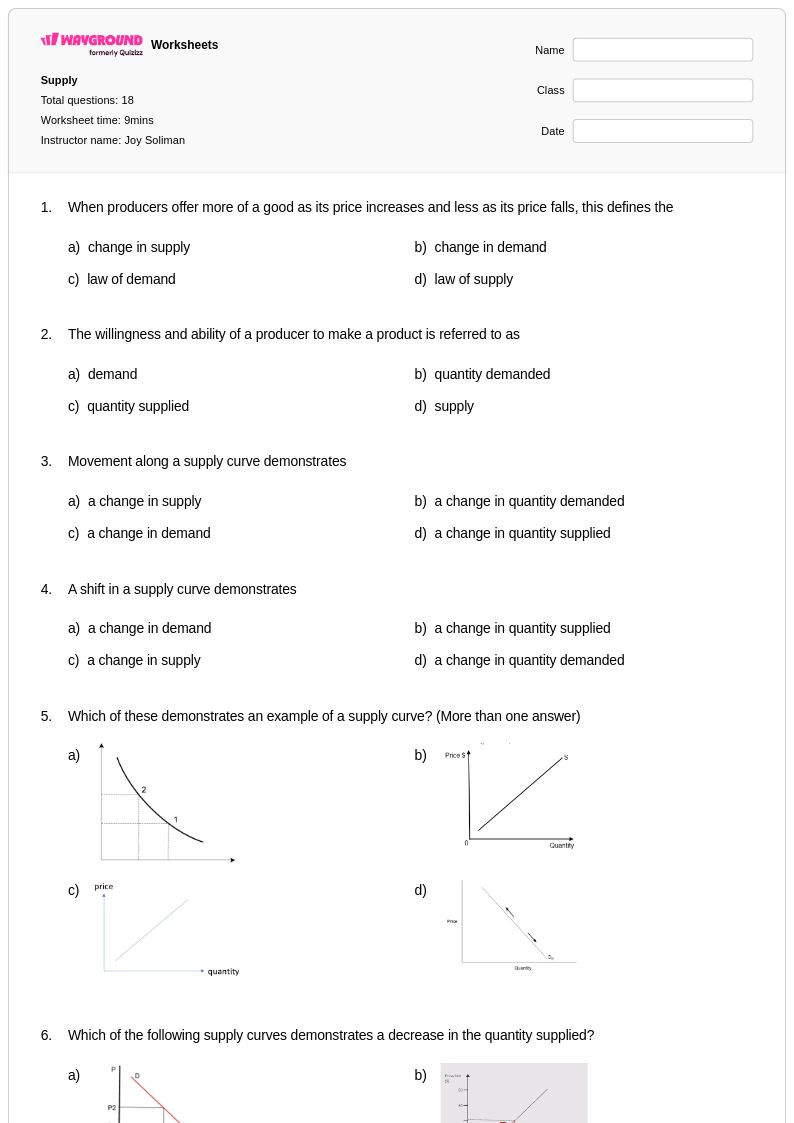
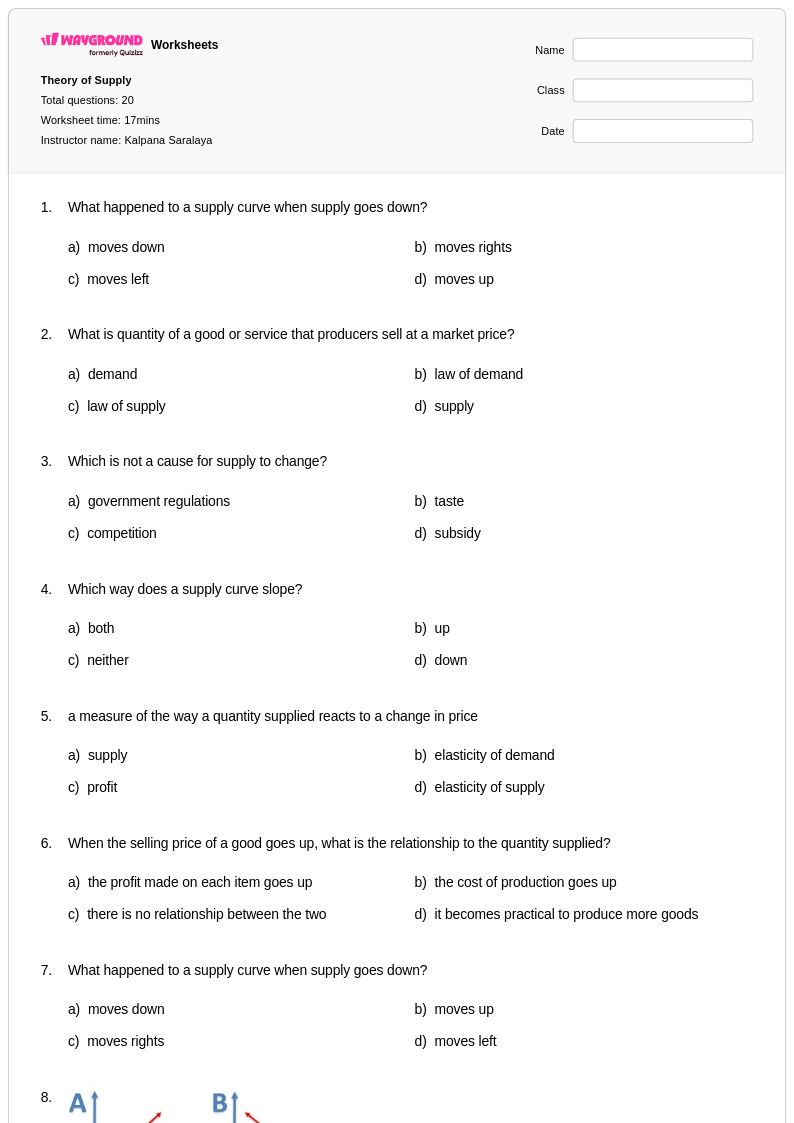
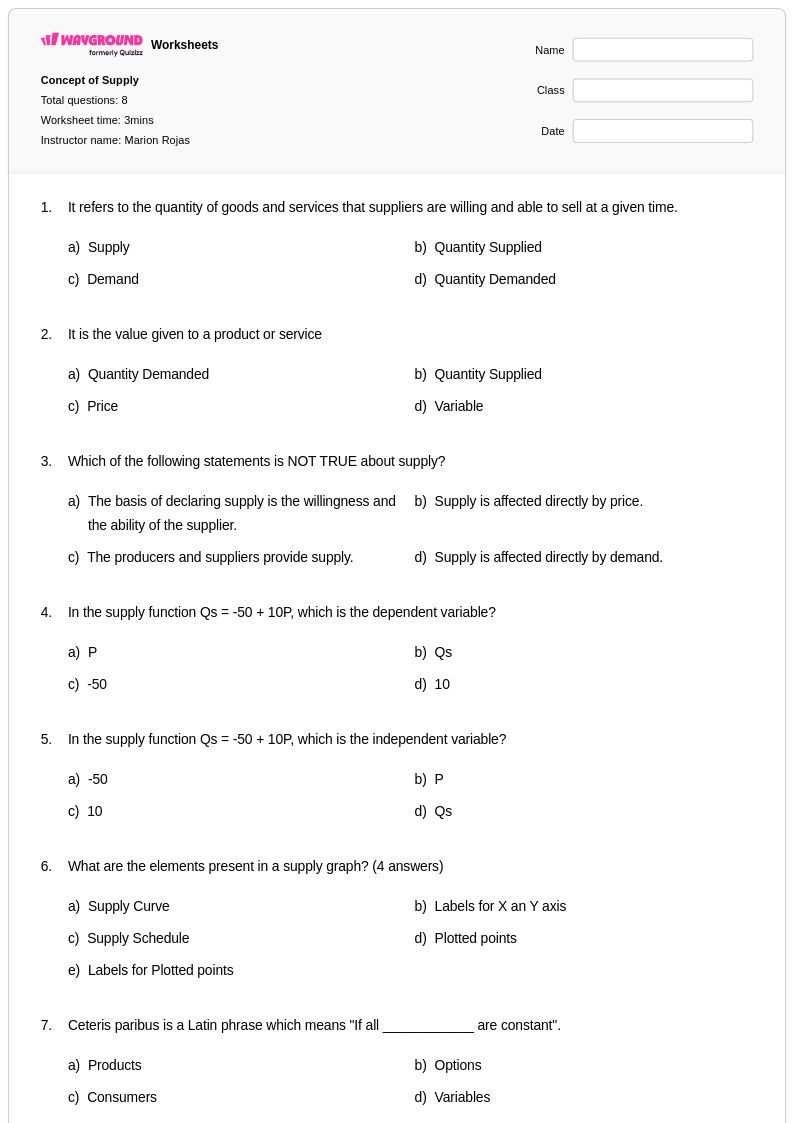
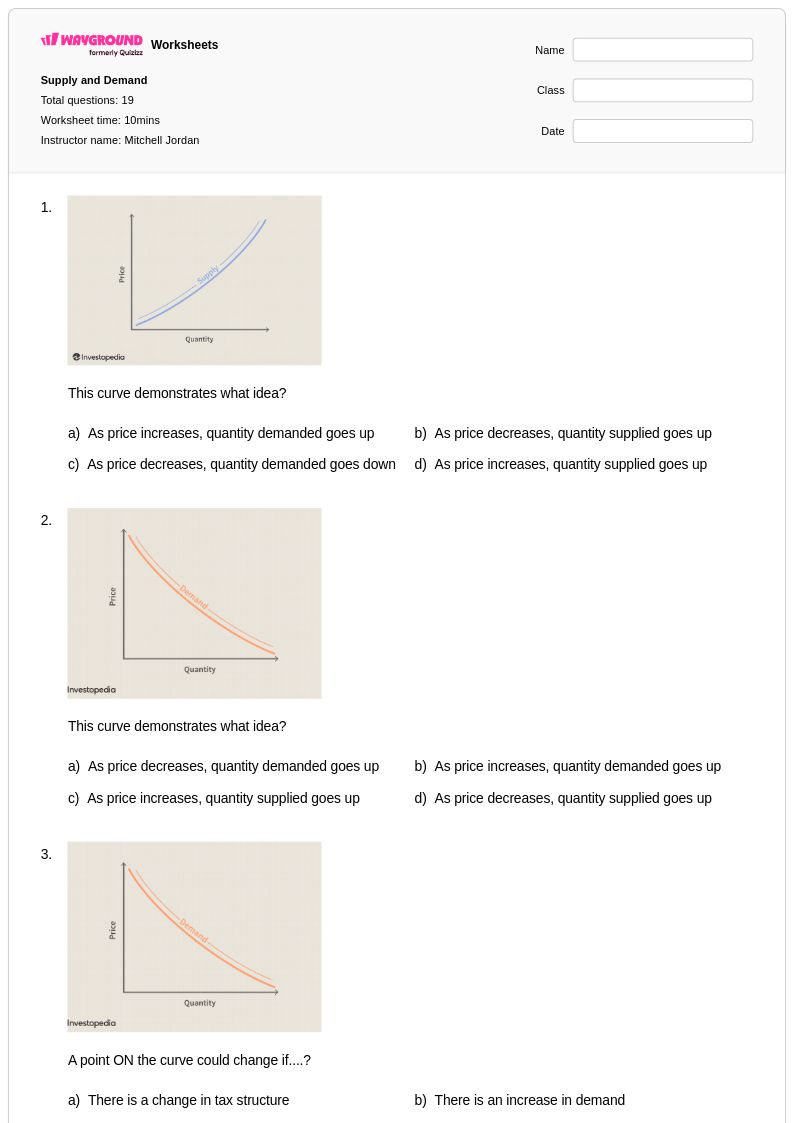
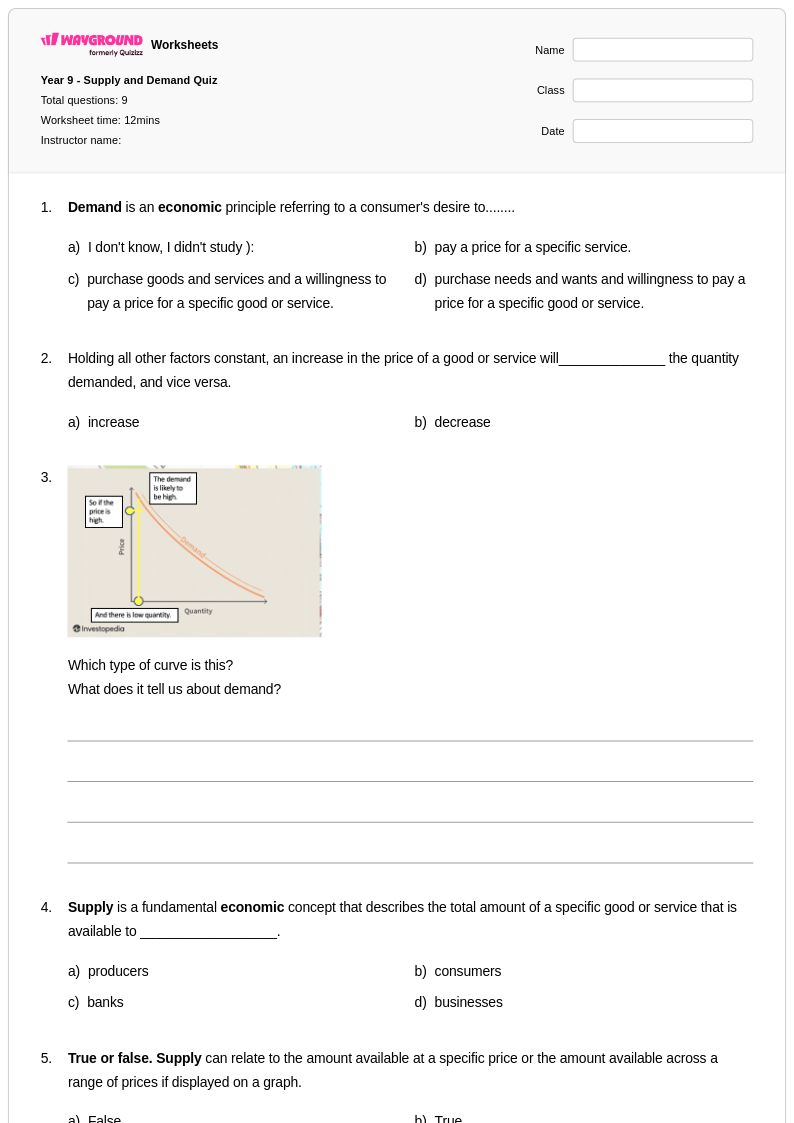
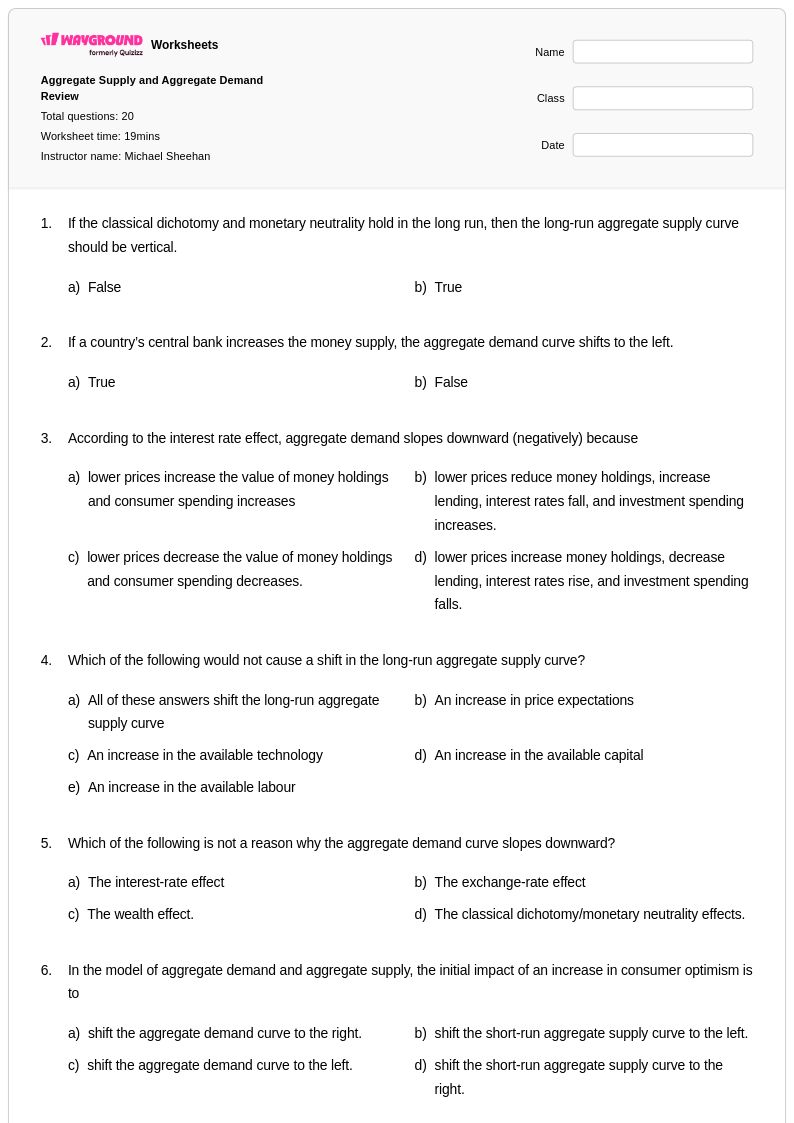
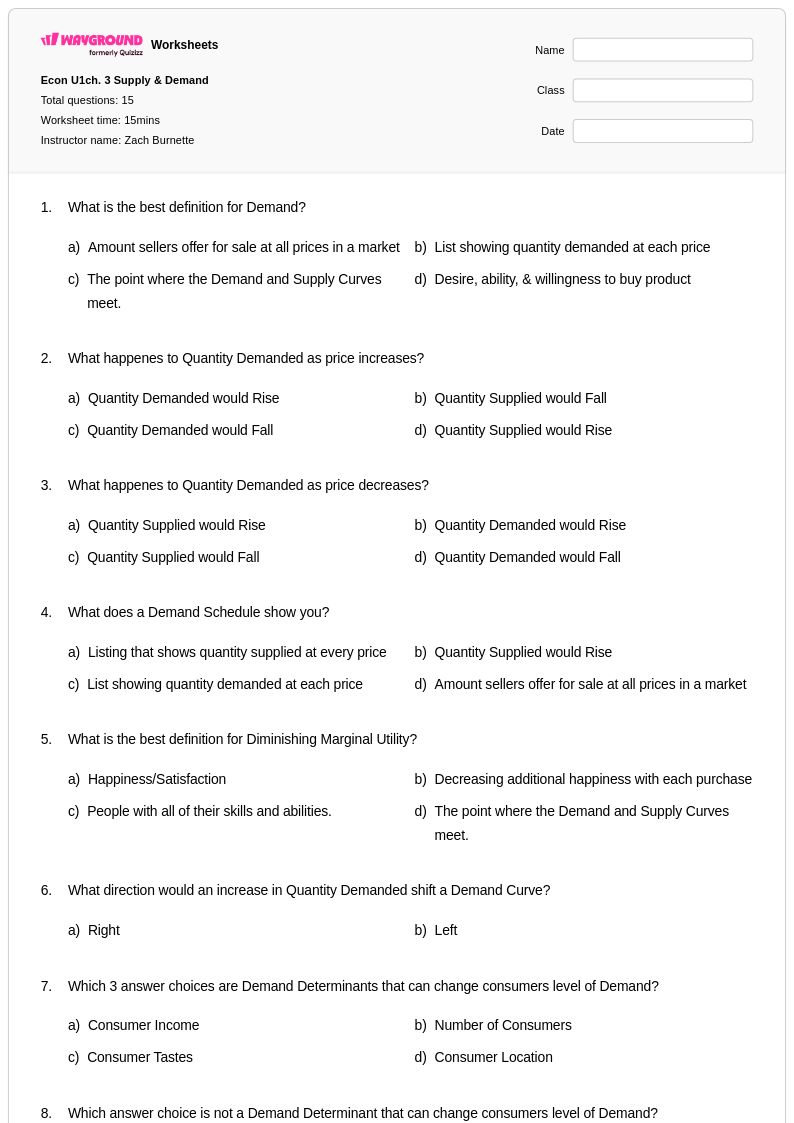
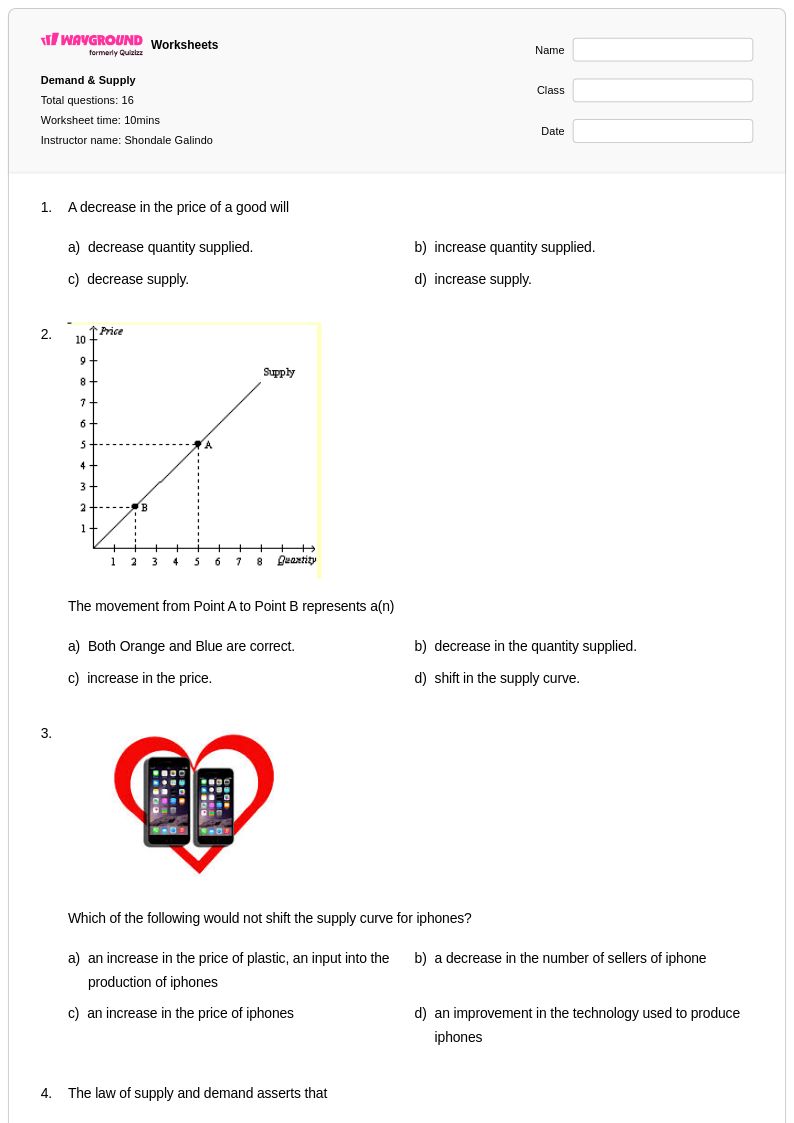
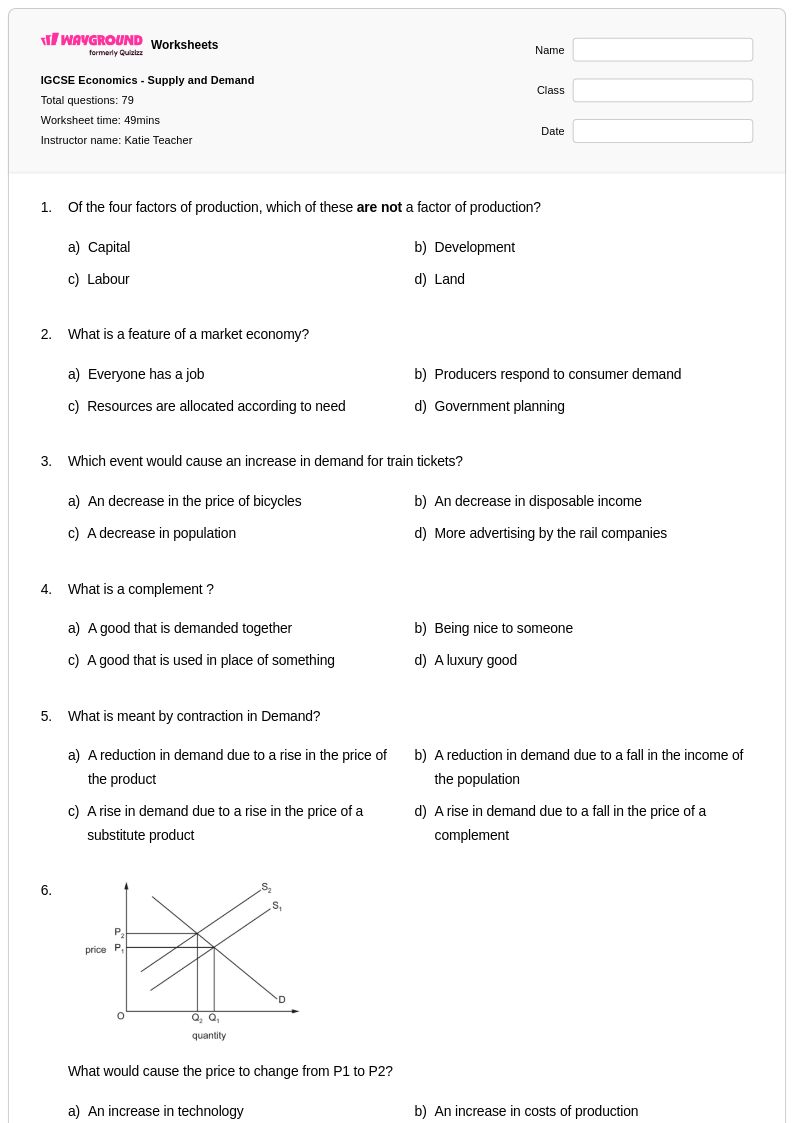
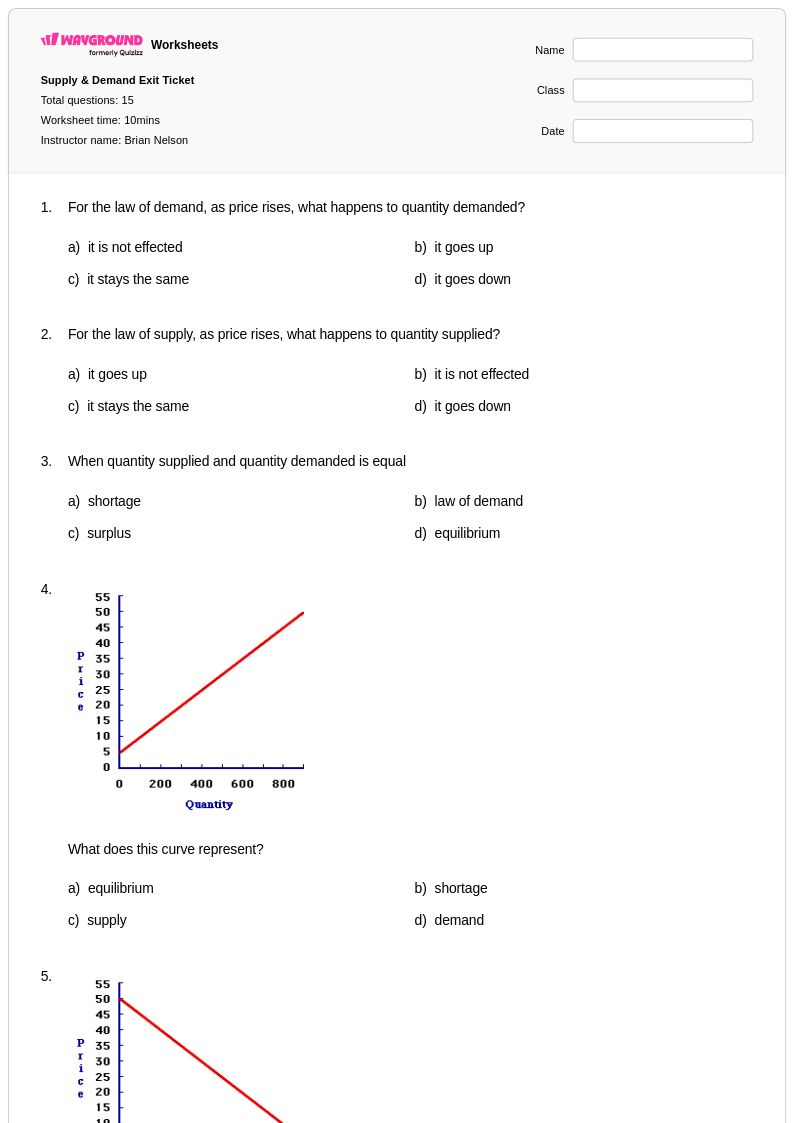
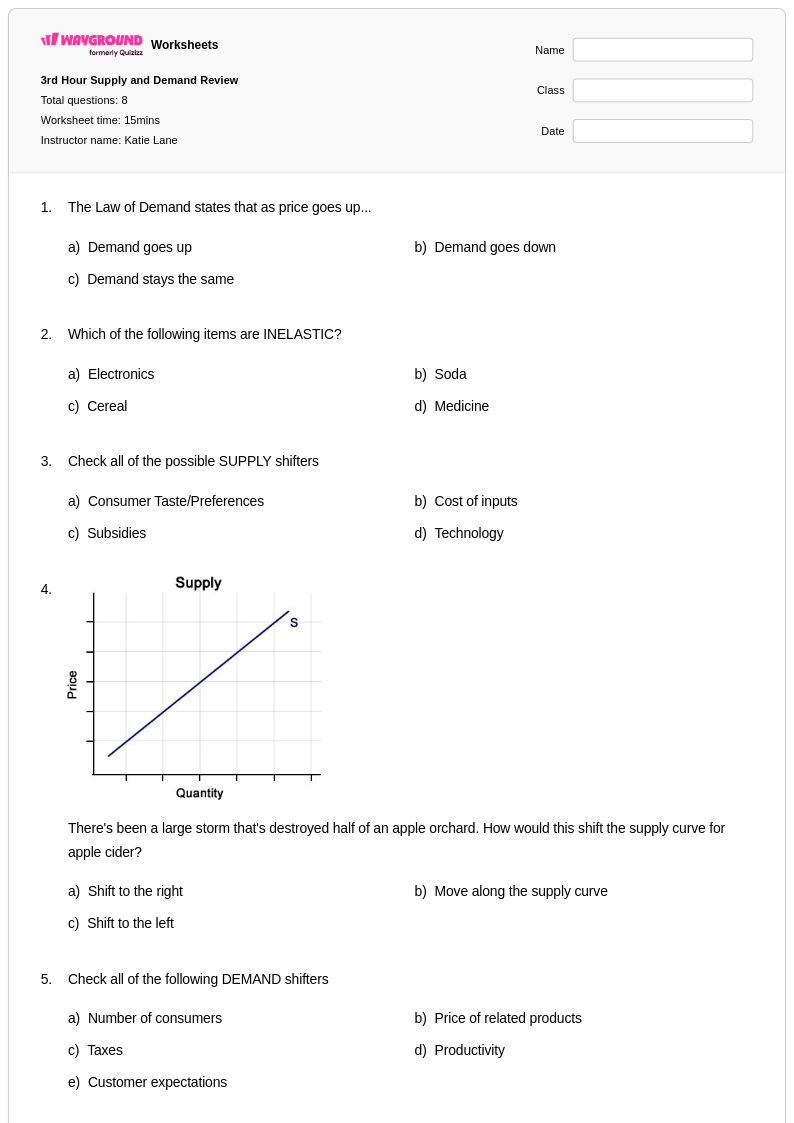
Explore Wayground's free Year 9 supply curve worksheets and printables that help students master economic principles through engaging practice problems, downloadable PDFs, and comprehensive answer keys.
Explore printable Supply Curve worksheets for Year 9
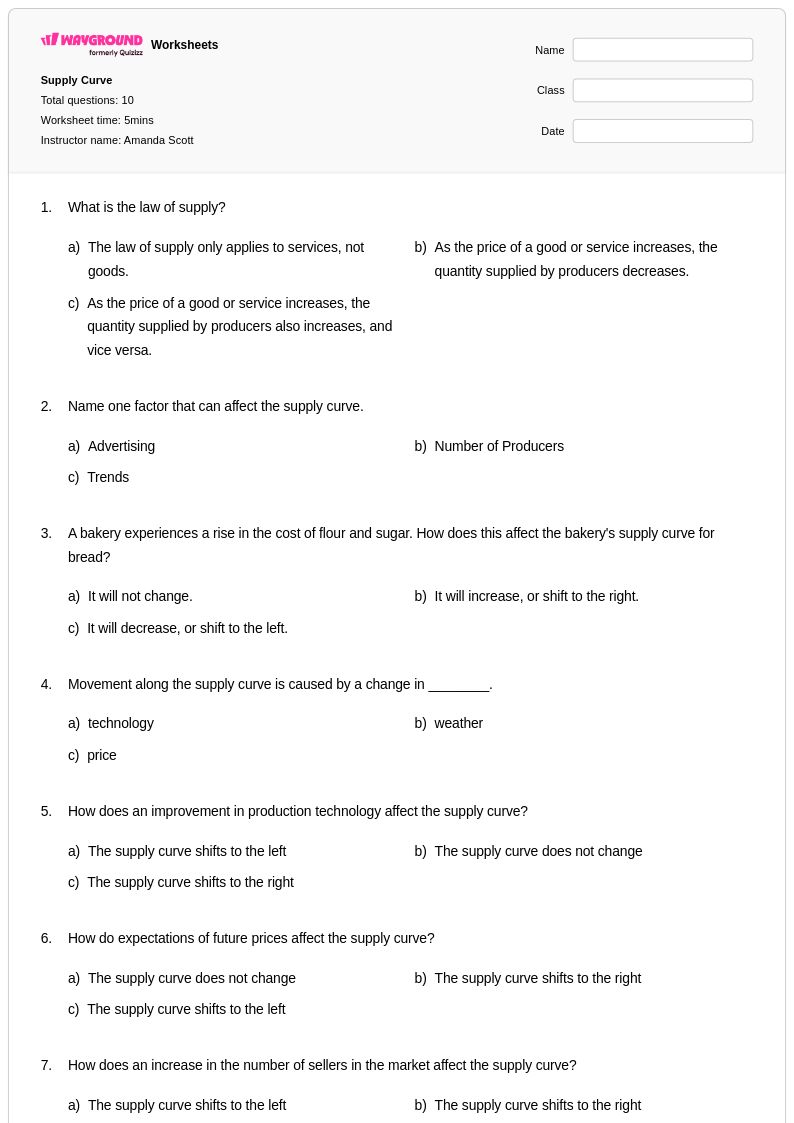
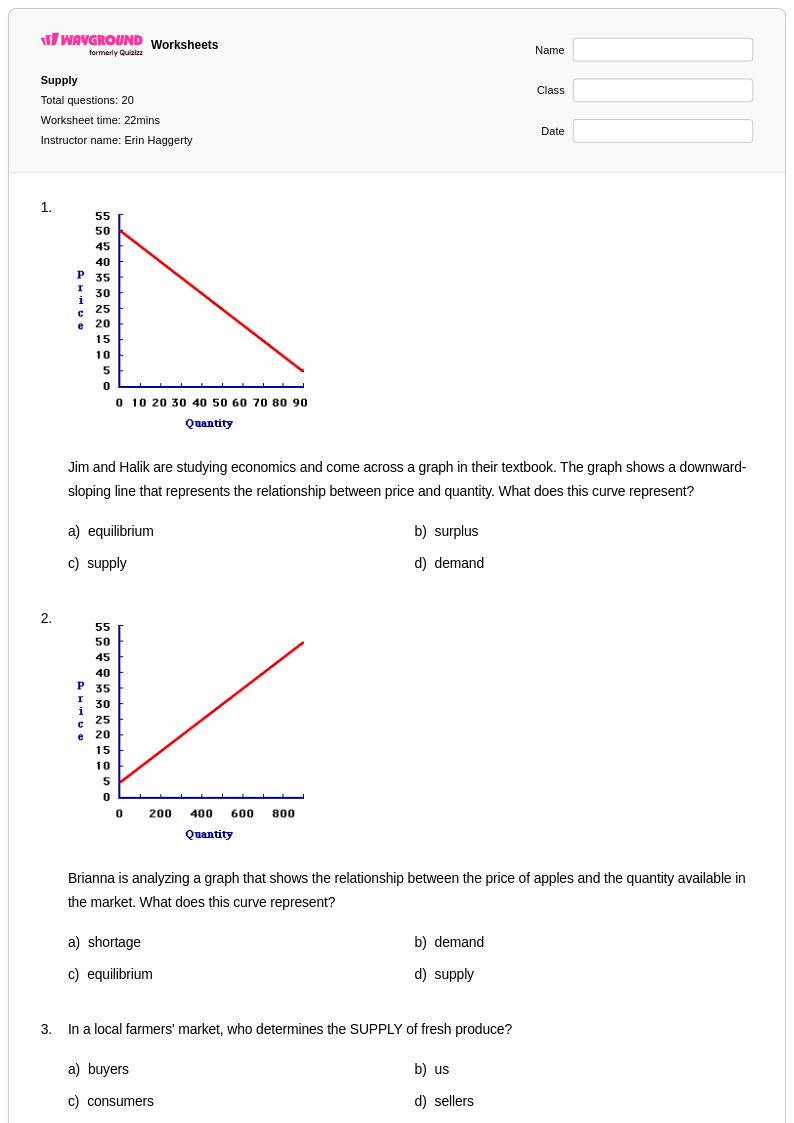
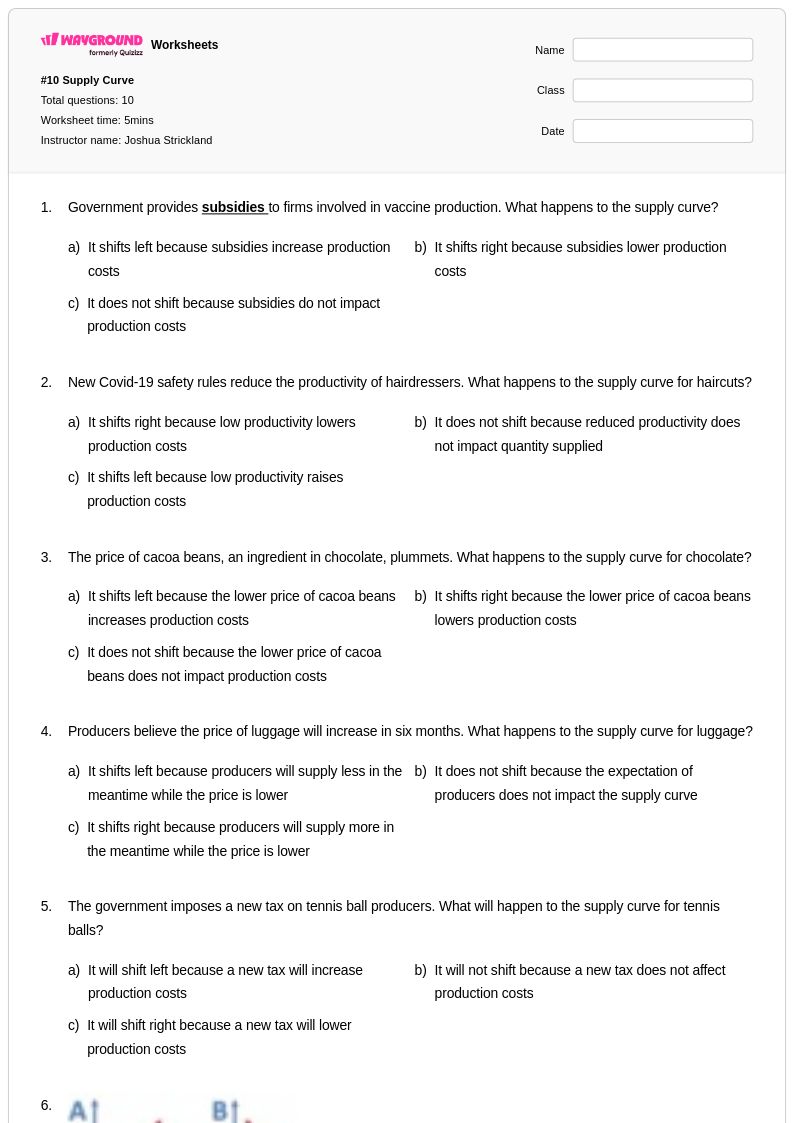
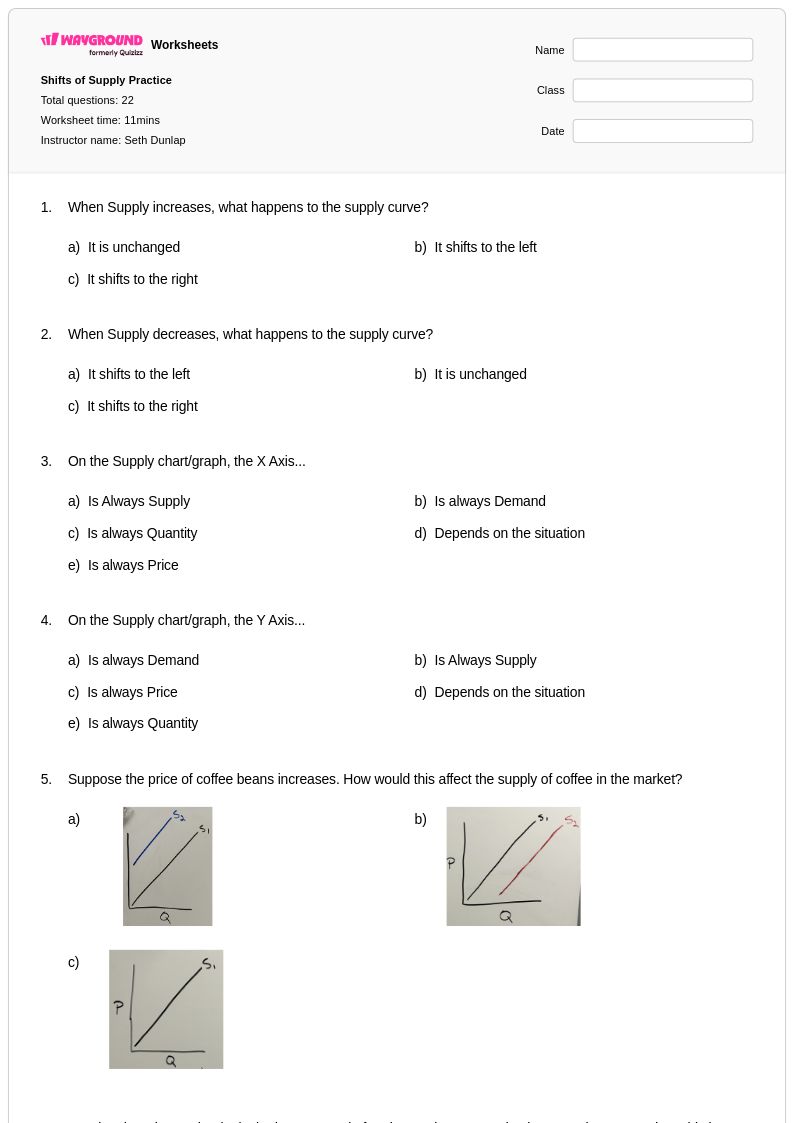
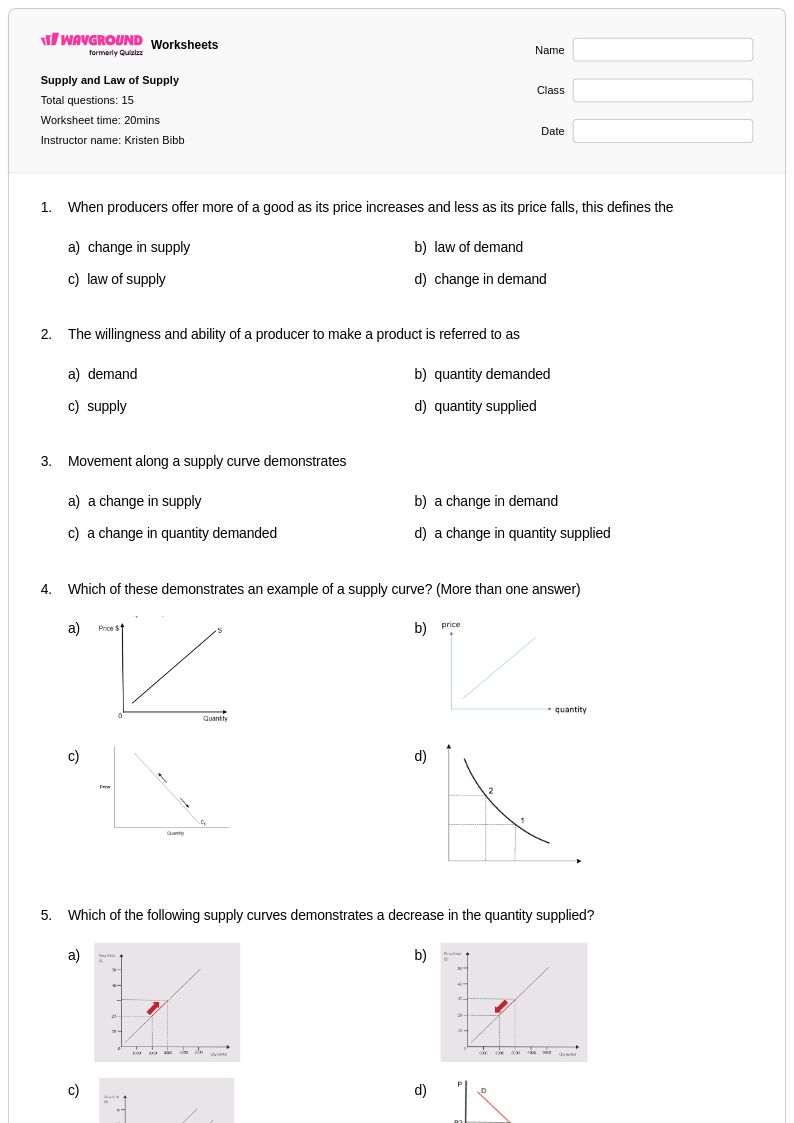
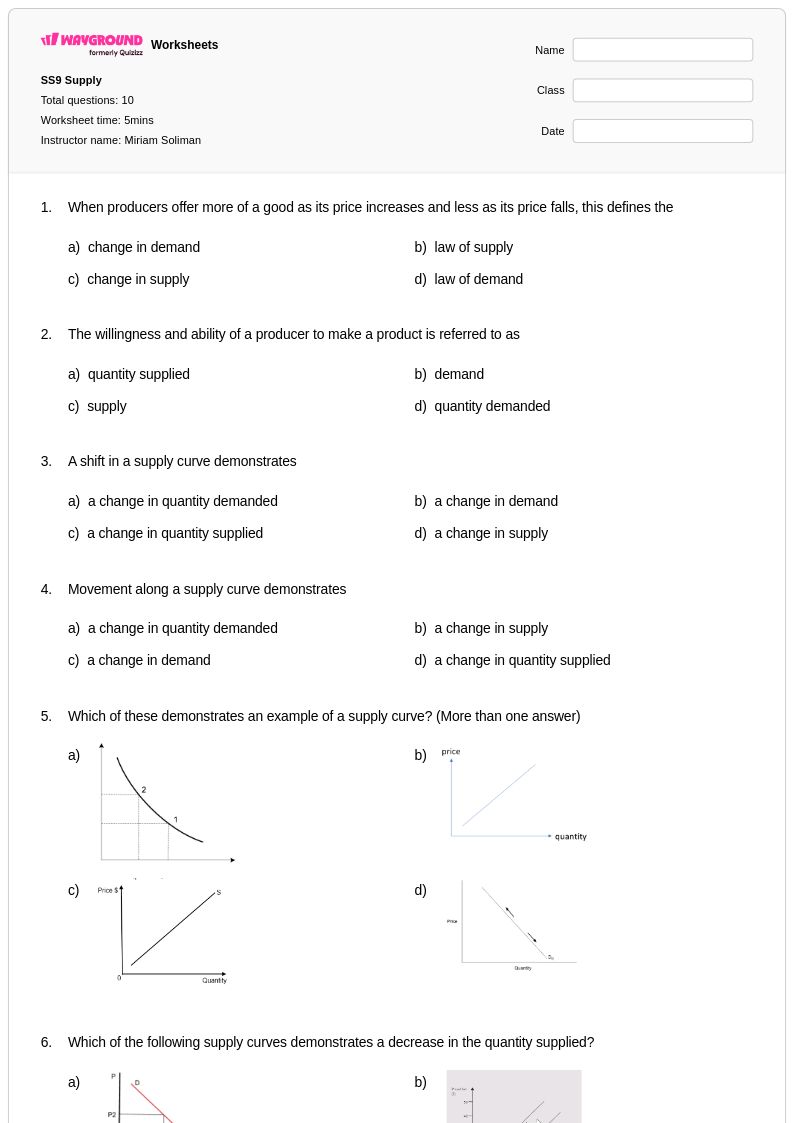
Supply curve worksheets for Year 9 economics provide students with essential practice in understanding how producers respond to price changes in the marketplace. These comprehensive resources help ninth-grade students master the fundamental economic principle that higher prices typically lead to increased quantity supplied, while lower prices result in decreased production levels. The worksheets strengthen critical analytical skills through practice problems that require students to interpret supply curve graphs, calculate supply schedules, and analyze real-world scenarios where supply shifts occur due to factors like production costs, technology changes, or government regulations. Each worksheet includes detailed answer keys that guide students through step-by-step solutions, making these free printables valuable for both classroom instruction and independent study.
Wayground, formerly Quizizz, supports economics educators with an extensive collection of teacher-created supply curve resources that address diverse learning needs in Year 9 classrooms. The platform's millions of worksheets offer robust search and filtering capabilities, allowing teachers to quickly locate materials that align with specific curriculum standards and learning objectives. These differentiation tools enable instructors to customize content difficulty levels, ensuring that advanced learners receive challenging market analysis scenarios while struggling students access foundational supply concepts with additional scaffolding. Available in both printable pdf format and interactive digital versions, these resources streamline lesson planning while providing flexible options for skill practice, targeted remediation of economic misconceptions, and enrichment activities that connect supply curve theory to contemporary market examples.
FAQs
How do I teach the supply curve to students who have never studied economics before?
Start by grounding the supply curve in a relatable scenario, such as asking students how many hours they would work at different wage rates. From there, introduce the formal definition: a supply curve illustrates the relationship between price and quantity supplied, holding all other factors constant. Once students understand the basic upward slope, introduce the distinction between movements along the curve (caused by price changes) and shifts of the entire curve (caused by changes in factors like production costs or technology). Building from concrete examples before abstract graphs helps students retain the conceptual logic behind the curve.
What practice exercises help students master reading and interpreting supply curves?
Effective practice exercises include having students plot supply schedules onto graphs, identify whether a given change causes a movement along the curve or a shift, and predict how specific events (such as a rise in input costs or an improvement in technology) would affect a supply curve's position. Problems that ask students to calculate supply elasticity and interpret what it means for producer behavior reinforce both quantitative and conceptual skills. Mixing real-world market scenarios with traditional graph construction problems ensures students can apply their knowledge in multiple contexts.
What mistakes do students most commonly make when working with supply curves?
The most common error is confusing a shift in the supply curve with a movement along it. Students frequently mislabel a price change as a supply shift, when in fact a price change only moves the quantity supplied along an existing curve. Another frequent mistake is reversing the direction of shifts: for example, assuming that higher production costs increase supply rather than decrease it. Students also sometimes confuse supply with quantity supplied, treating them as interchangeable terms when they have distinct meanings in economic analysis.
How can I use supply curve worksheets to differentiate instruction for students at different skill levels?
For struggling students, begin with structured worksheets that provide a partially completed supply schedule or a labeled graph template, reducing cognitive load while building familiarity with the format. Advanced learners can be challenged with problems that require them to derive supply functions algebraically, calculate price elasticity of supply, or analyze how simultaneous shifts in multiple factors affect equilibrium. On Wayground, teachers can apply accommodations such as reduced answer choices or read-aloud support to individual students, so differentiated practice can happen within the same assignment without singling anyone out.
How do I use Wayground's supply curve worksheets in my classroom?
Wayground's supply curve worksheets are available as printable PDFs for traditional classroom use and in digital formats for technology-integrated environments, giving teachers flexibility in how they deploy them. Teachers can also host a worksheet directly as a quiz on Wayground, allowing students to complete it interactively while the platform tracks responses. Each worksheet includes a complete answer key, so teachers can use them for independent practice, guided instruction, formative assessment, or homework without additional preparation.