Free Printable Types of Loans Worksheets for Year 9
Explore Wayground's free Year 9 types of loans worksheets and printables that help students master different lending options, interest rates, and borrowing principles through engaging practice problems with comprehensive answer keys.
Explore printable Types of Loans worksheets for Year 9
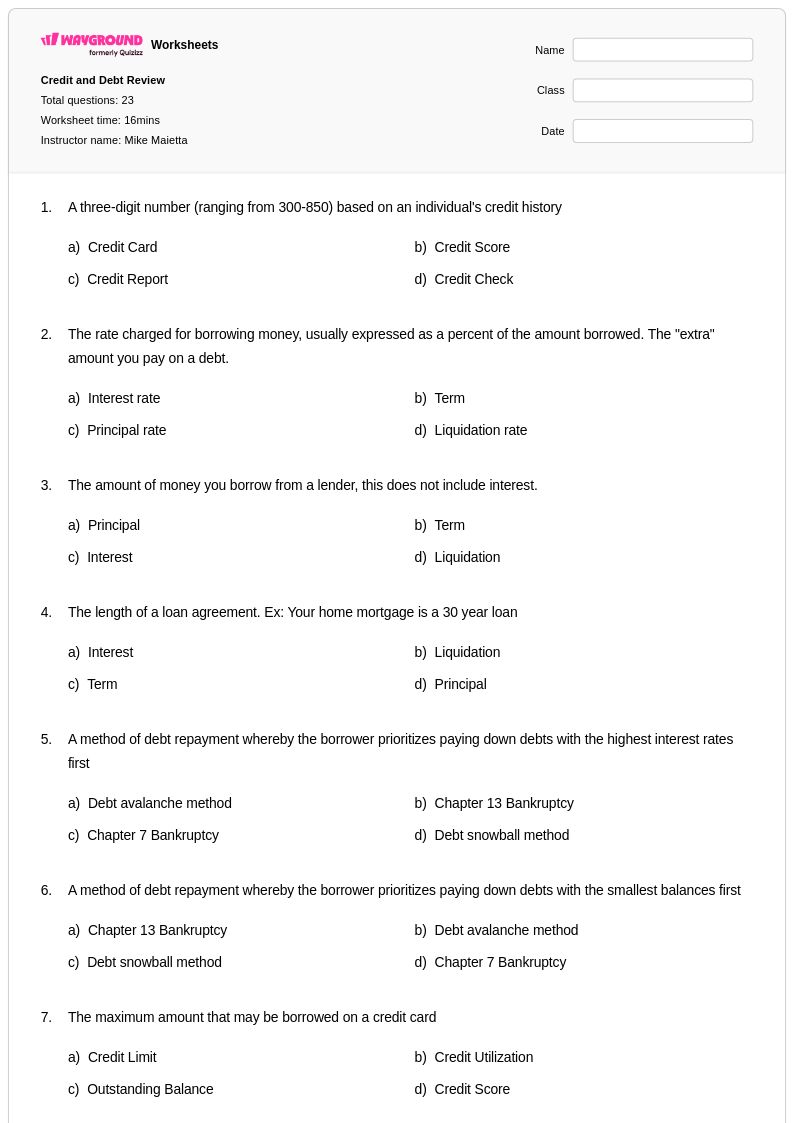
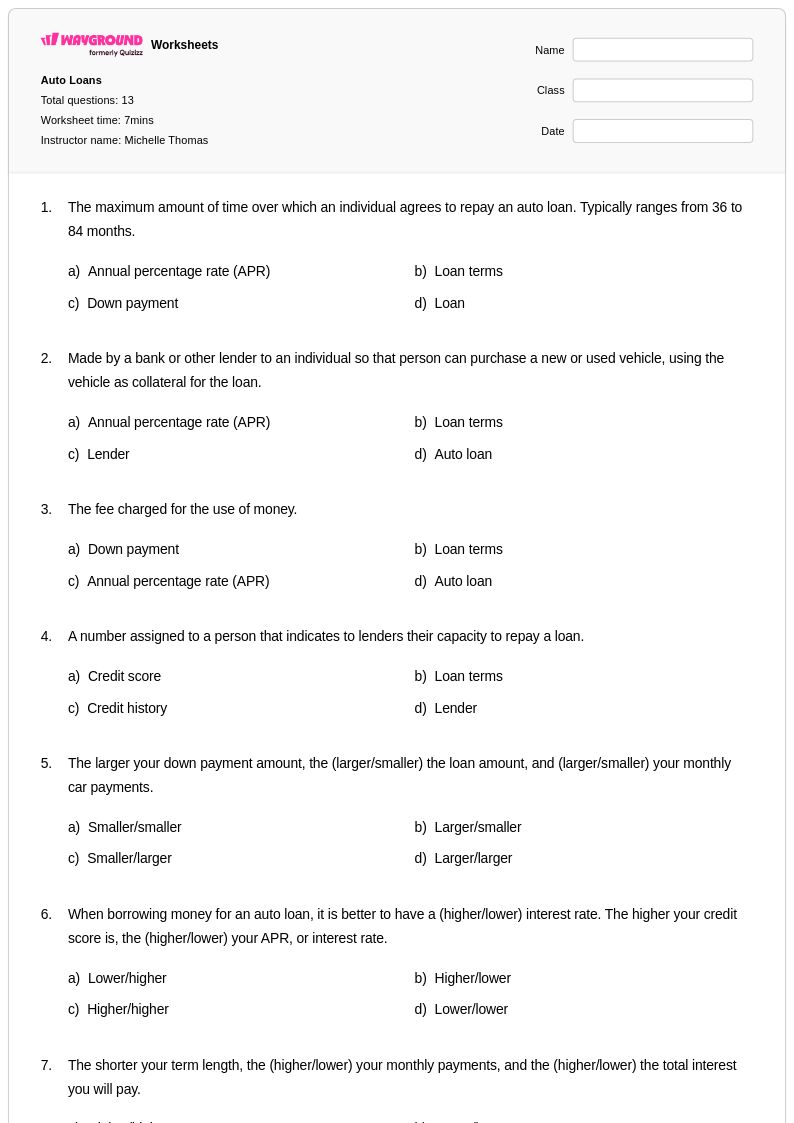
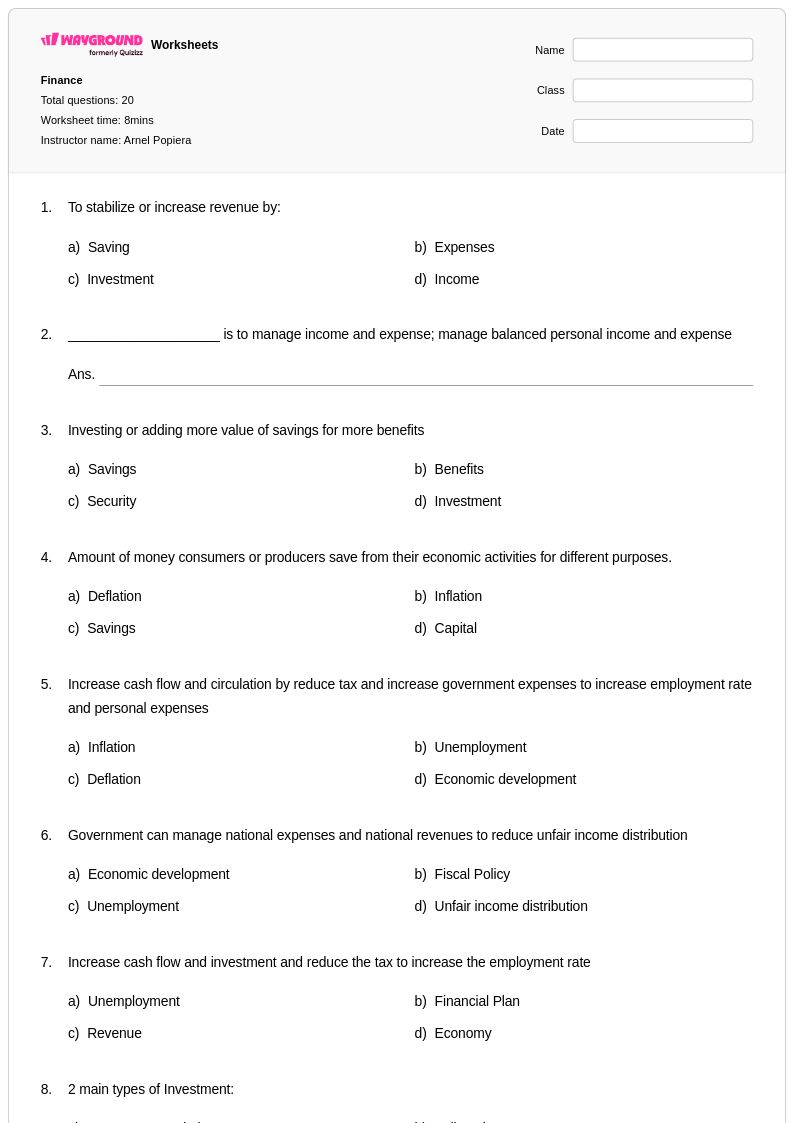
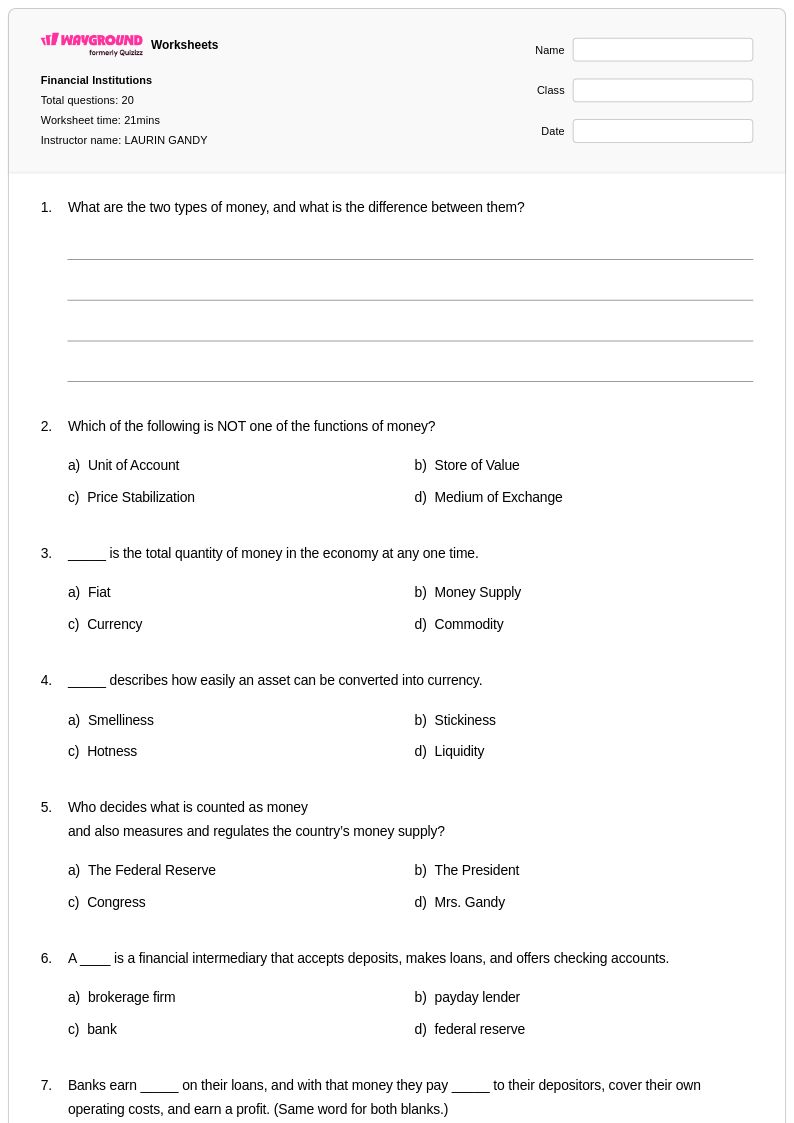
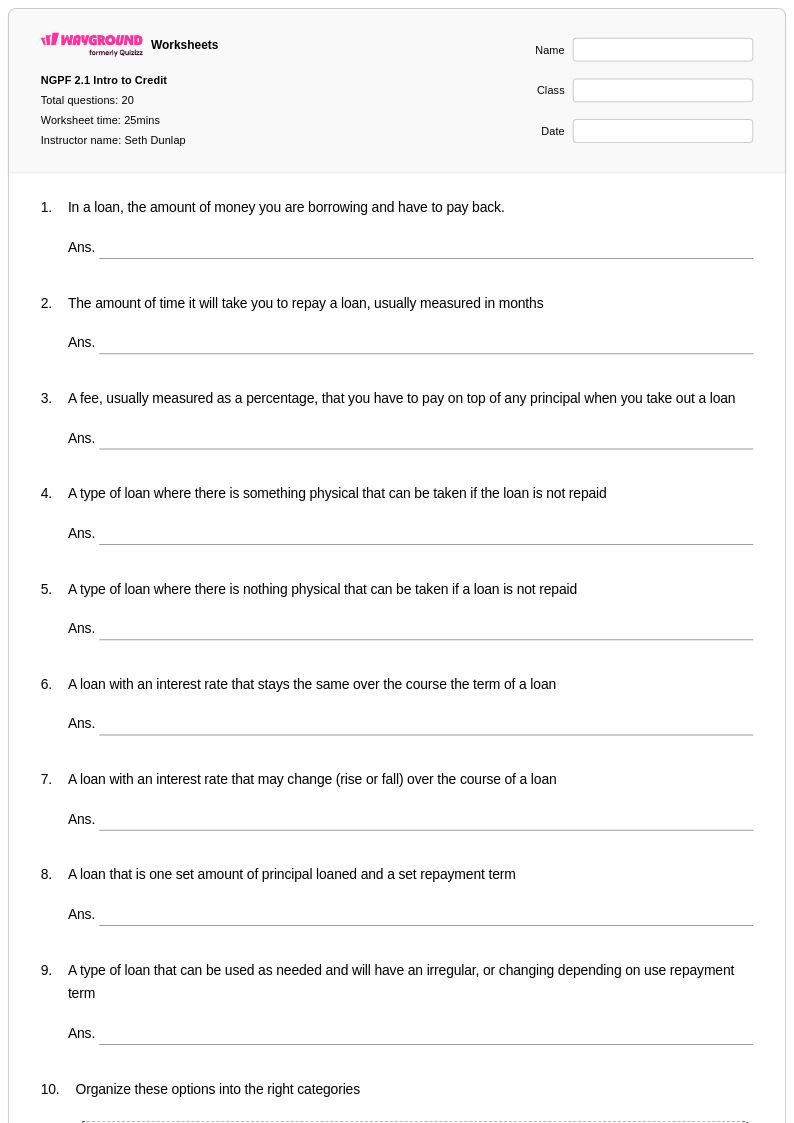
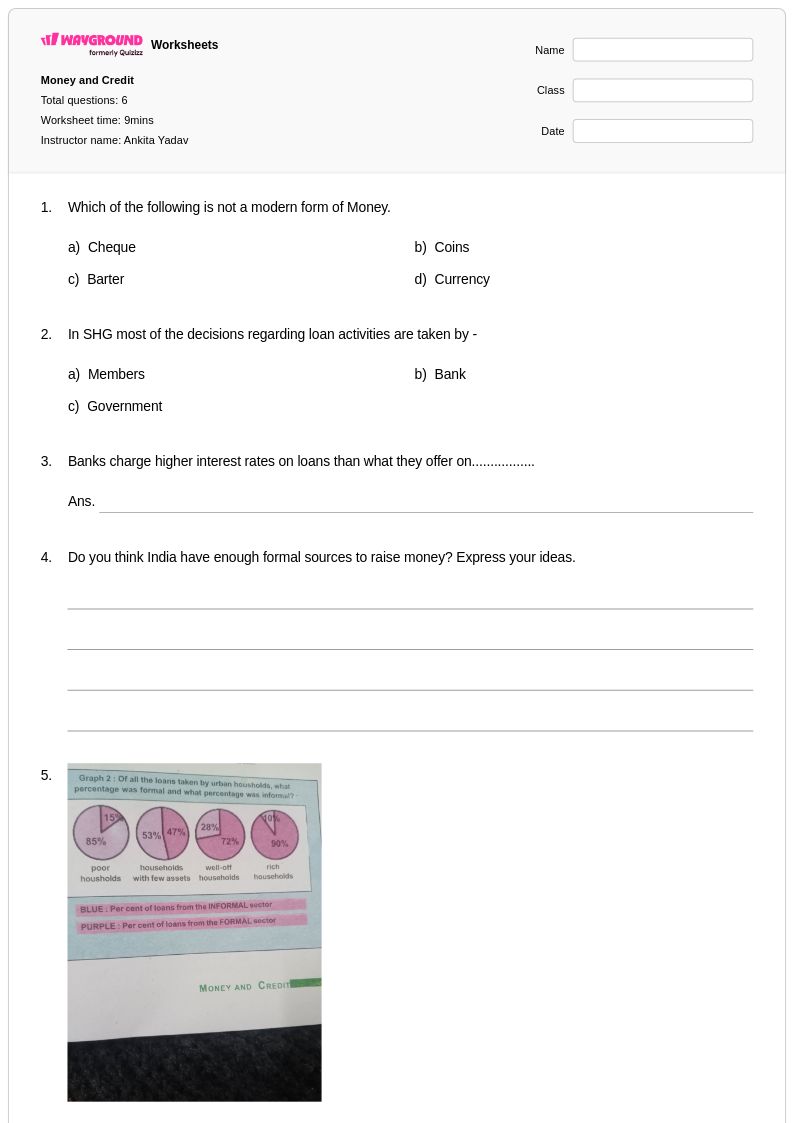
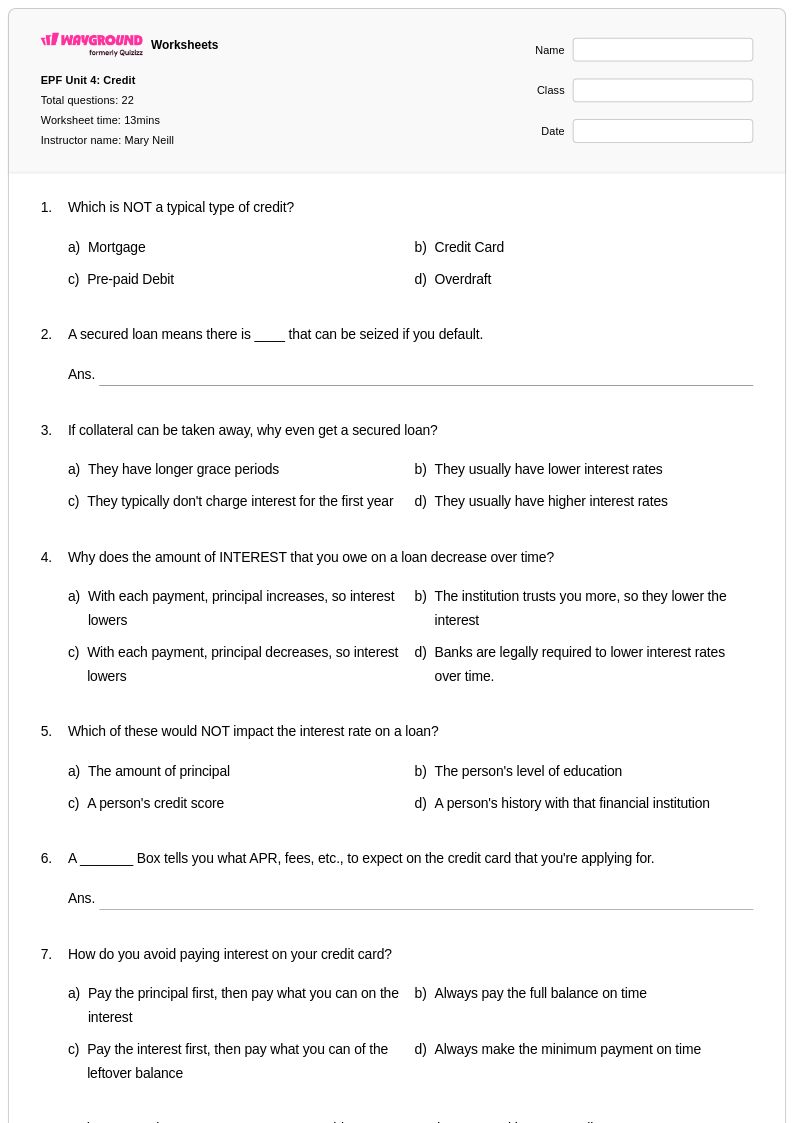
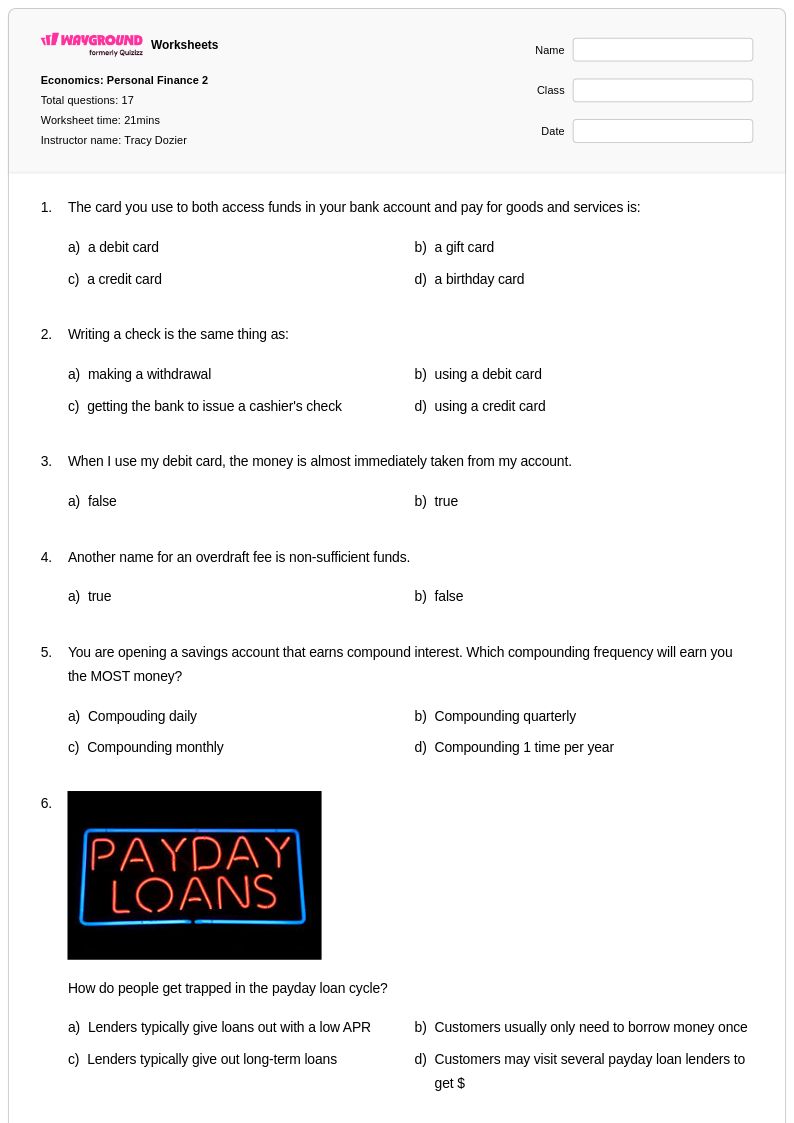
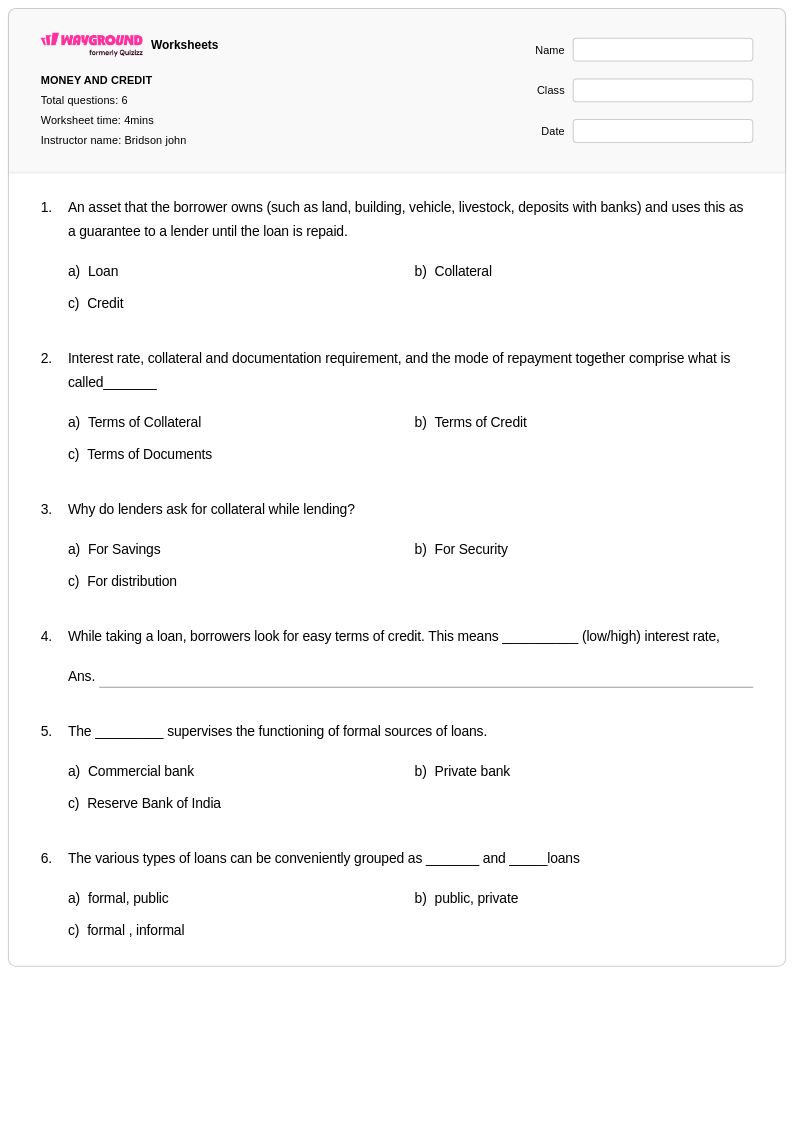
Types of loans worksheets for Year 9 students available through Wayground provide comprehensive coverage of essential financial literacy concepts that form the foundation of economic understanding. These carefully designed educational resources help students distinguish between secured and unsecured loans, understand the mechanics of mortgages, auto loans, personal loans, and student loans, while developing critical analytical skills needed to evaluate loan terms, interest rates, and repayment structures. The practice problems guide students through real-world scenarios involving loan calculations, comparing different lending options, and understanding the long-term financial implications of borrowing decisions. Each worksheet includes detailed answer keys that support both independent study and classroom instruction, with free printable materials that make these valuable resources accessible to all educators seeking to strengthen their students' financial decision-making capabilities.
Wayground's extensive collection of teacher-created loan worksheets draws from millions of educational resources specifically developed by classroom professionals who understand the complexities of teaching economic concepts to ninth-grade students. The platform's robust search and filtering capabilities enable educators to locate materials that align with state and national economics standards while providing differentiation tools that accommodate diverse learning needs within the classroom. Teachers can easily customize these printable and digital pdf worksheets to target specific learning objectives, whether focusing on basic loan terminology for remediation or advanced compound interest calculations for enrichment activities. This flexibility supports comprehensive lesson planning while ensuring that students receive targeted practice with loan concepts that will serve them throughout their academic careers and future financial decisions, making complex economic principles accessible through structured, standards-aligned educational materials.
FAQs
How do I teach different types of loans to students?
Start by grounding students in the core distinction between secured and unsecured loans before introducing specific categories such as personal loans, mortgages, auto loans, student loans, and business financing. Use real-world scenarios to help students connect loan types to life decisions they will actually face. Comparing interest rates and repayment terms across loan types is an effective way to build analytical thinking alongside content knowledge.
What exercises help students practice understanding types of loans?
Practice problems that ask students to evaluate loan options for realistic scenarios, such as choosing between loan products for a car purchase or comparing student loan repayment plans, are highly effective. Calculation-based tasks involving monthly payments and total interest paid over time reinforce both mathematical skills and financial reasoning. Worksheets that pair scenario analysis with structured reflection questions help students internalize the long-term implications of borrowing decisions.
What misconceptions do students commonly have about loans?
A common misconception is that a lower monthly payment always means a better loan, when in fact a longer repayment term often results in significantly more interest paid overall. Students also frequently confuse the principal balance with the total cost of borrowing, overlooking how interest compounds over time. Another error is assuming all loans function the same way, without recognizing how collateral requirements, credit score impact, and default consequences differ across loan types.
How can I differentiate loan types instruction for students at different skill levels?
For students who need additional support, begin with concrete, visual comparisons of two loan types before expanding to the full range of categories. More advanced students can be challenged with multi-step problems that require calculating the total cost of a loan over its full term and comparing it against alternatives. On Wayground, teachers can apply reduced answer choices for students who need lower cognitive load, or enable Read Aloud for students who benefit from audio support, without other students being affected.
How do I use Wayground's types of loans worksheets in my classroom?
Wayground's types of loans worksheets are available as printable PDFs for traditional classroom use and in digital formats for technology-integrated environments, giving teachers flexibility depending on their instructional setup. You can also host the worksheet as a live quiz on Wayground, which allows you to monitor student responses in real time and identify gaps in understanding quickly. Each worksheet includes a complete answer key, making them practical for independent practice, guided instruction, or assessment.
How do types of loans fit into a broader financial literacy curriculum?
Loans are a foundational financial literacy topic because borrowing decisions affect budgeting, credit health, and long-term wealth building. Teaching loan types gives students the vocabulary and analytical framework to evaluate real financial products they will encounter as adults, from car financing to federal student aid. This topic connects naturally to adjacent concepts such as interest rates, credit scores, and economic factors that influence lending, making it a strong anchor unit within a personal finance or economics course.