Free Printable The Digestive System Worksheets for Year 4
Explore Year 4 digestive system worksheets and printables through Wayground that help students learn how food travels through the body with engaging practice problems, free PDF downloads, and complete answer keys.
Explore printable The Digestive System worksheets for Year 4
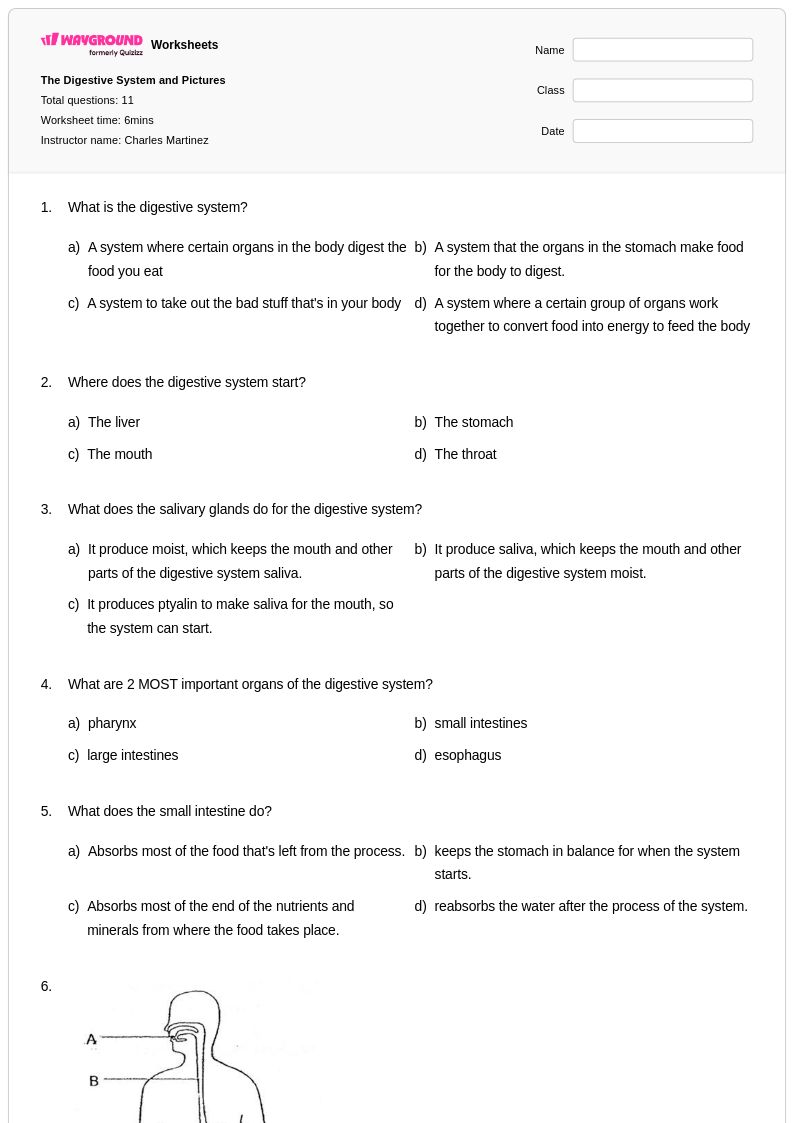
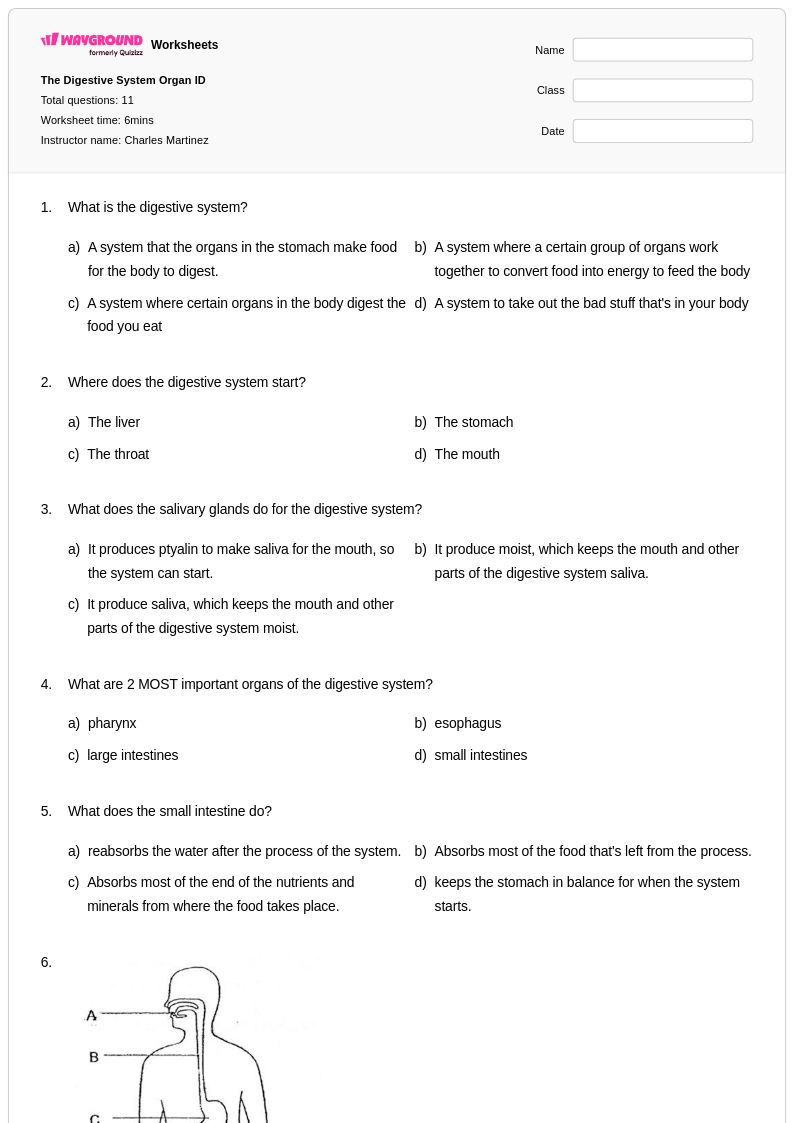
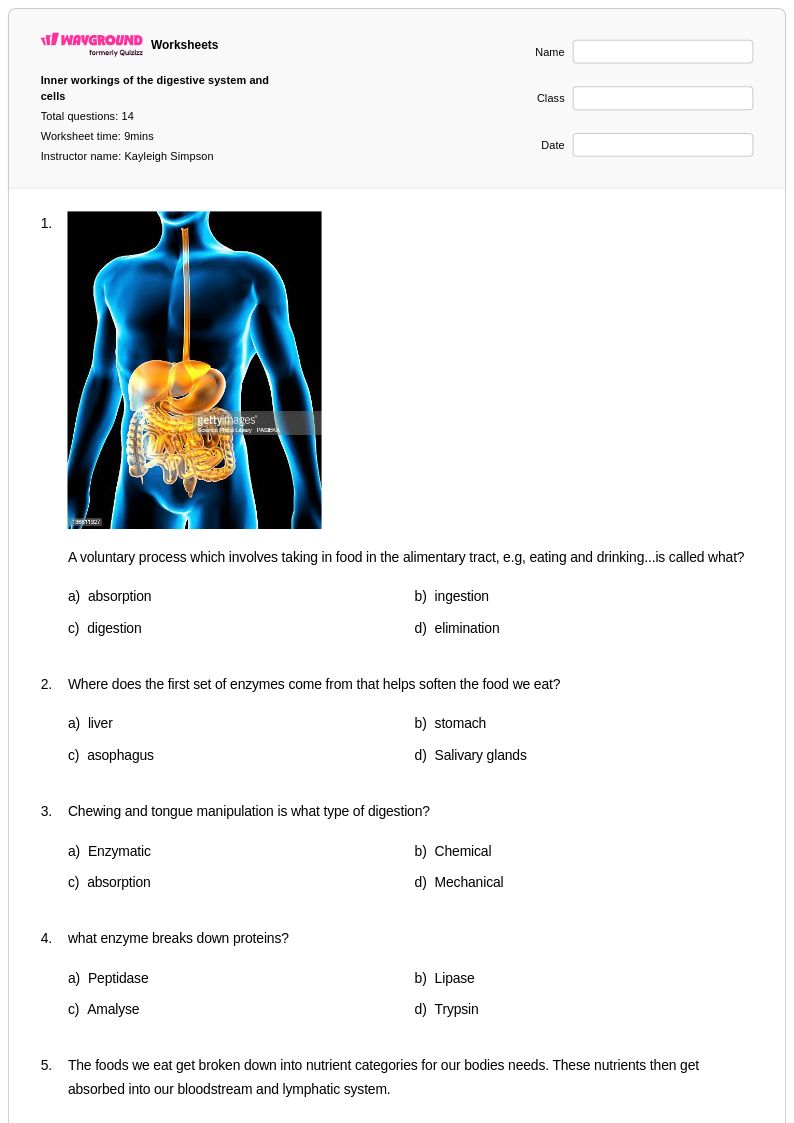
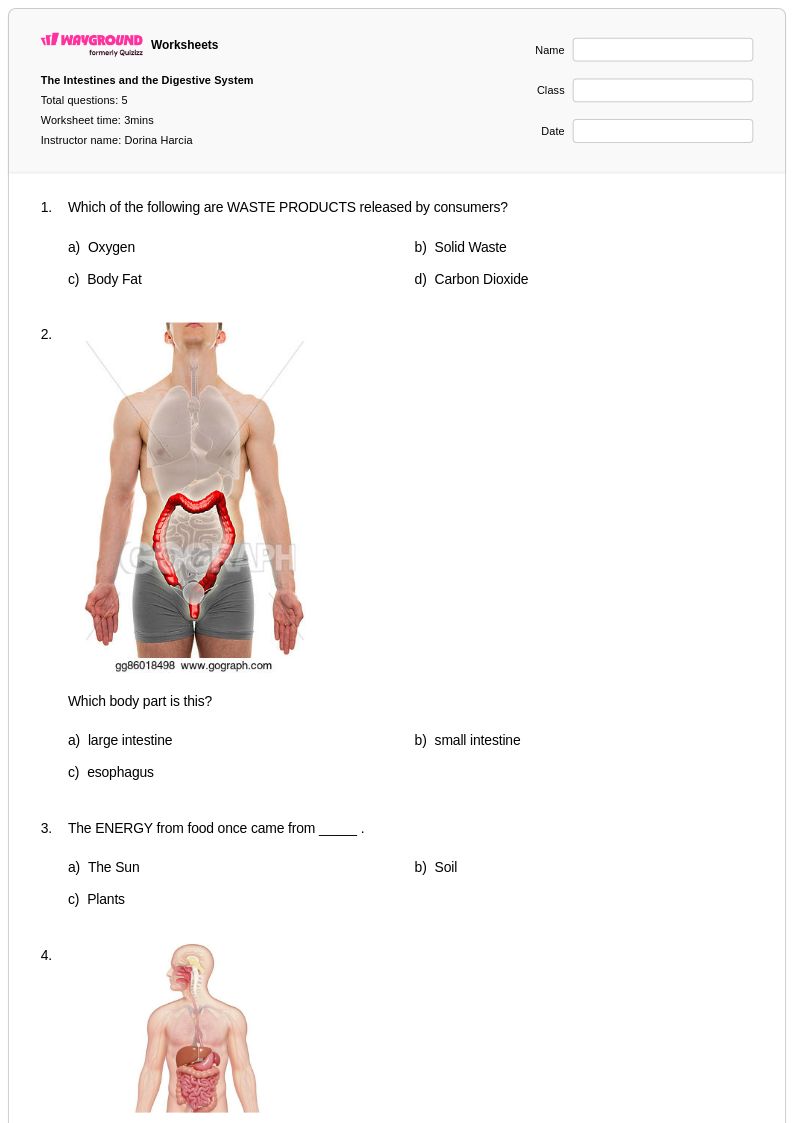
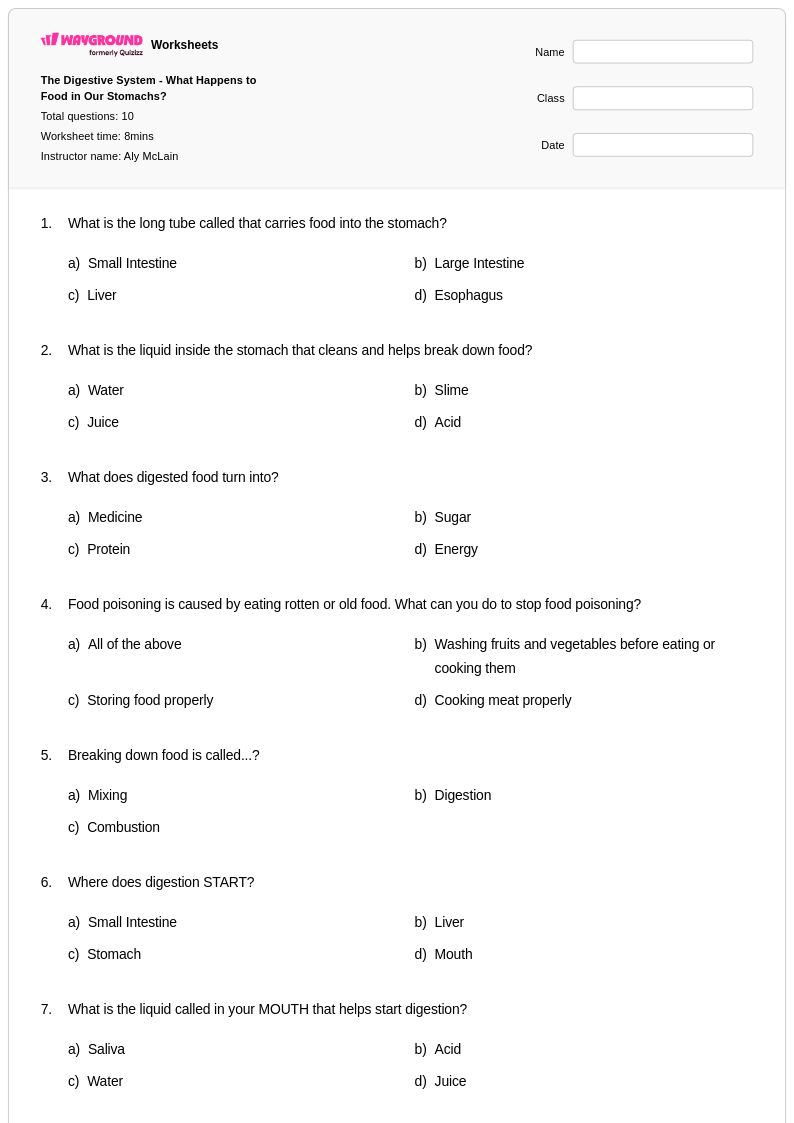
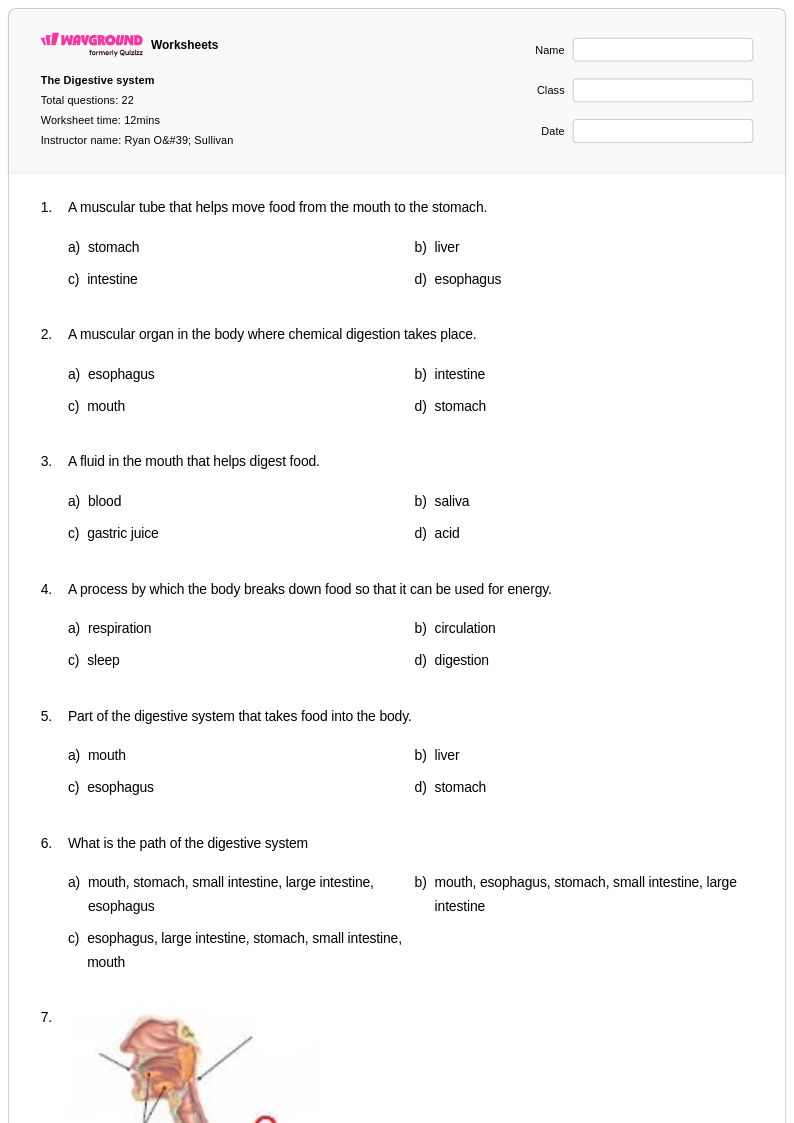
The digestive system worksheets available through Wayground (formerly Quizizz) provide Year 4 students with comprehensive practice materials that build foundational understanding of how the human body processes food and nutrients. These carefully designed printables focus on key anatomical structures including the mouth, esophagus, stomach, small intestine, and large intestine, while teaching students about the sequential process of digestion from initial food breakdown through nutrient absorption. Each worksheet collection includes detailed answer keys and offers free access to practice problems that reinforce vocabulary, sequencing skills, and scientific observation abilities essential for elementary science mastery. Students engage with age-appropriate content that connects digestive system functions to everyday experiences, making abstract biological concepts concrete and memorable through hands-on learning activities presented in convenient PDF format.
Wayground (formerly Quizizz) empowers teachers with millions of educator-created resources specifically designed for digestive system instruction, featuring robust search and filtering capabilities that align with state and national science standards for Year 4 curricula. The platform's differentiation tools allow educators to customize worksheet difficulty levels and content focus areas, ensuring that both struggling learners and advanced students receive appropriate challenge levels during skill practice sessions. Teachers can seamlessly integrate these materials into lesson planning for initial instruction, targeted remediation, or enrichment activities, with flexible access to both printable and digital formats that accommodate diverse classroom technologies and learning environments. The comprehensive collection supports systematic progression through digestive system concepts while providing educators with reliable, standards-aligned resources that enhance student engagement and deepen conceptual understanding of human body systems.
FAQs
How do I teach the digestive system to students?
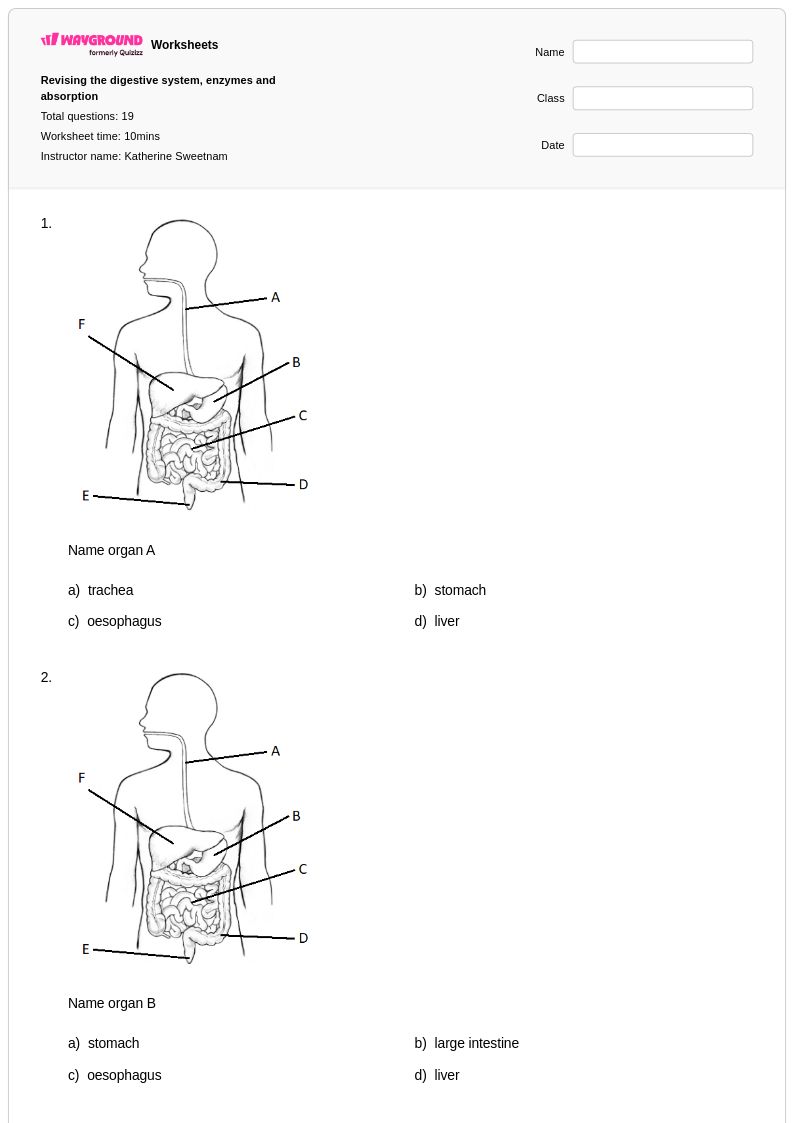
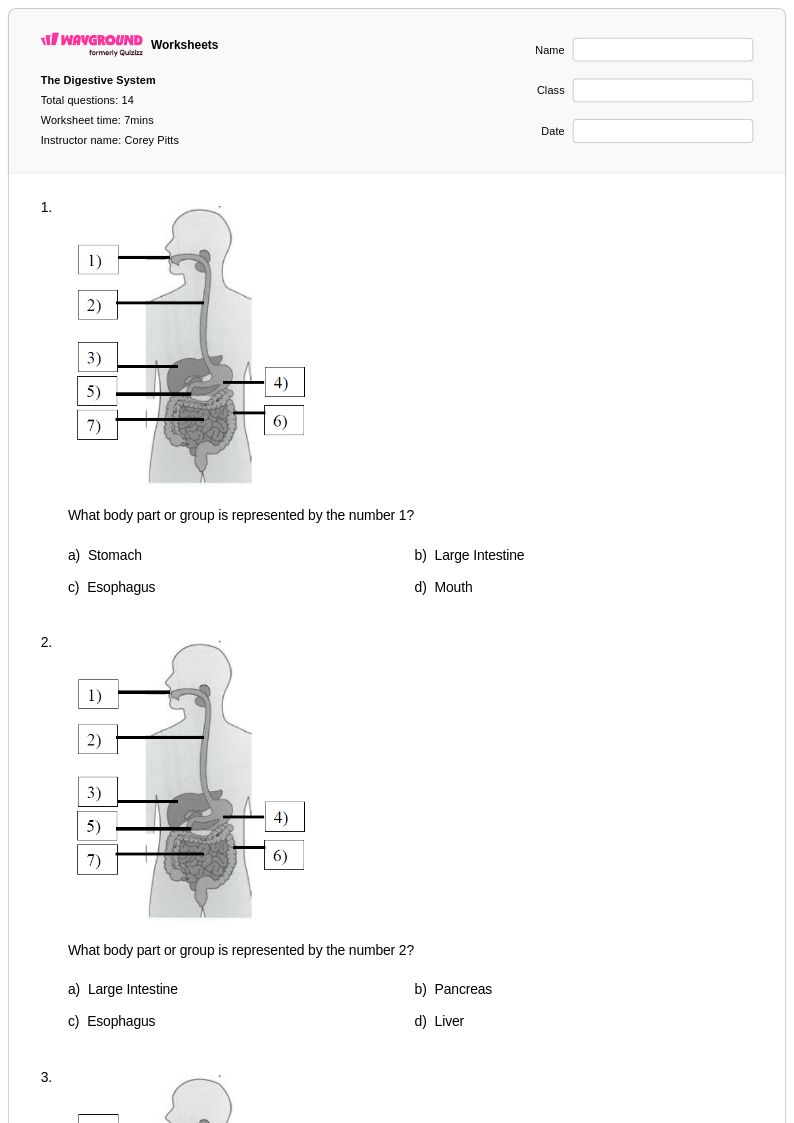
Effective digestive system instruction typically begins with the physical journey of food, tracing the path from the mouth through the esophagus, stomach, small intestine, and large intestine before moving into the biochemical processes like enzyme action and nutrient absorption. Connecting each organ to its specific function helps students build a mental map rather than memorizing isolated facts. Using labeled diagrams alongside process-based questions reinforces both anatomical identification and conceptual understanding of how mechanical and chemical digestion work together.
What exercises help students practice the digestive system?
Practice exercises that ask students to trace the path of a specific nutrient or food type through the digestive tract are particularly effective because they require applying knowledge of multiple organs and processes in sequence. Enzyme-function matching tasks, fill-in-the-blank diagrams, and short-answer questions about peristalsis and absorption mechanisms give students repeated exposure to key vocabulary in context. Wayground's digestive system worksheets include detailed practice problems covering enzyme functions, nutrient absorption, and the complete journey from ingestion to waste elimination.
What mistakes do students commonly make when learning about the digestive system?
One of the most frequent misconceptions is that digestion happens primarily in the stomach — students often underestimate the small intestine's role as the primary site of nutrient absorption. Students also commonly confuse mechanical digestion with chemical digestion, treating them as the same process rather than understanding how they work simultaneously. Another common error is conflating enzyme names with the organs that produce them, particularly around pancreatic enzymes and their role in the small intestine rather than the stomach.
How do I use Wayground's digestive system worksheets in my classroom?
Wayground's digestive system worksheets are available as printable PDFs for traditional classroom use and in digital formats for technology-integrated learning environments, including the ability to host them as a quiz on Wayground. Teachers can use them for direct instruction support, independent practice, remediation of challenging concepts like enzyme specificity and peristalsis, or enrichment activities that extend beyond basic anatomical identification. Each worksheet includes a complete answer key, making them practical for self-assessment and independent learning as well as teacher-led review sessions.
How can I differentiate digestive system instruction for students with different learning needs?
When using digital formats on Wayground, teachers can apply individualized accommodations to specific students, including extended time per question, read-aloud support for students who need text read to them, and reduced answer choices to lower cognitive load during assessments. These settings can be configured per student and reused across future sessions without other students being notified, making differentiation seamless during whole-class activities. For print-based instruction, pairing simplified diagram activities with more complex process-analysis tasks allows teachers to scaffold content across ability levels.
How do I connect the digestive system to other body systems in my lessons?
The digestive system intersects directly with the circulatory system, since absorbed nutrients pass through the intestinal walls into the bloodstream for distribution throughout the body, making it a natural bridge topic. Teachers can also connect it to the endocrine system through discussions of digestive hormones like gastrin and secretin, or to the muscular system through the mechanics of peristalsis. Building these cross-system connections helps students understand the digestive system not as an isolated unit but as part of the integrated functioning of the human body.