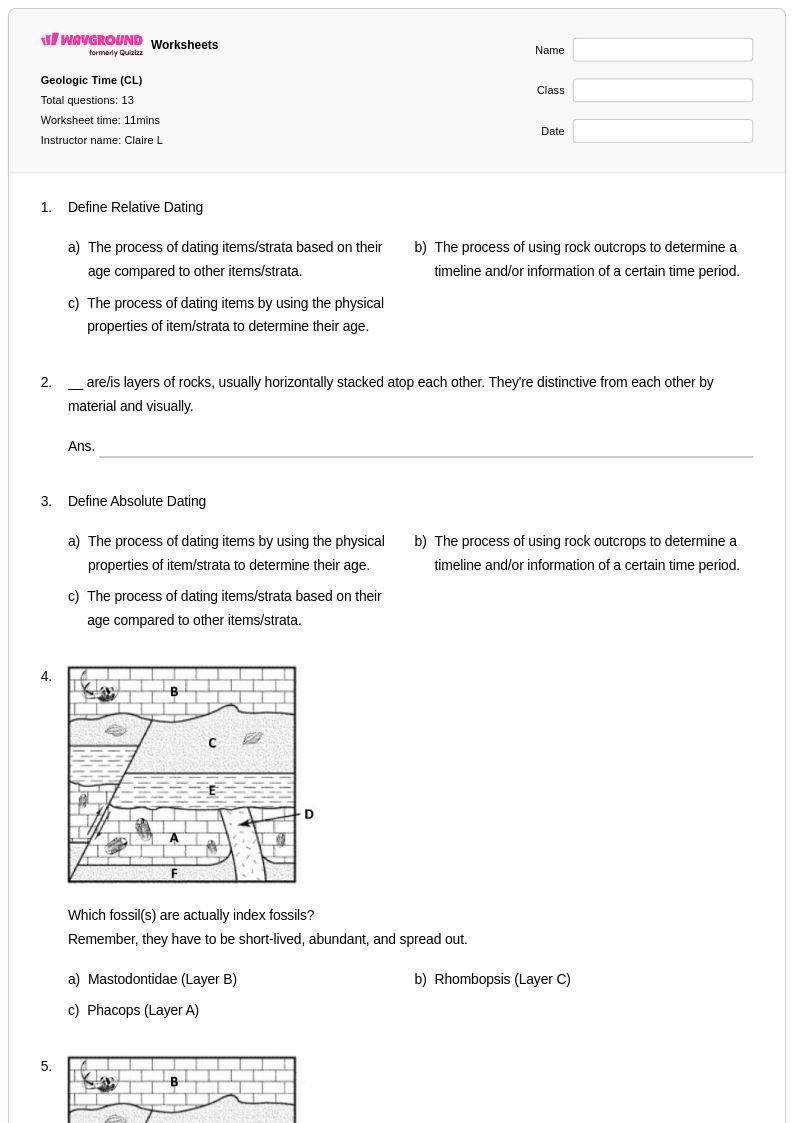
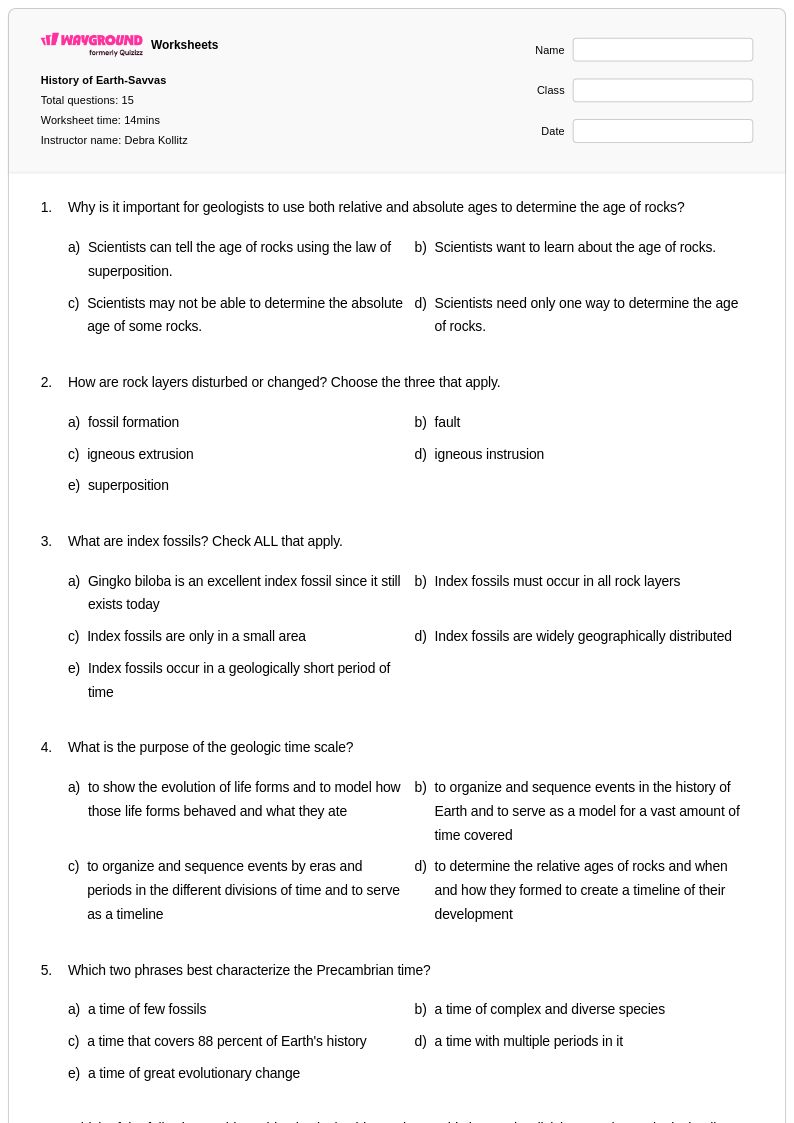
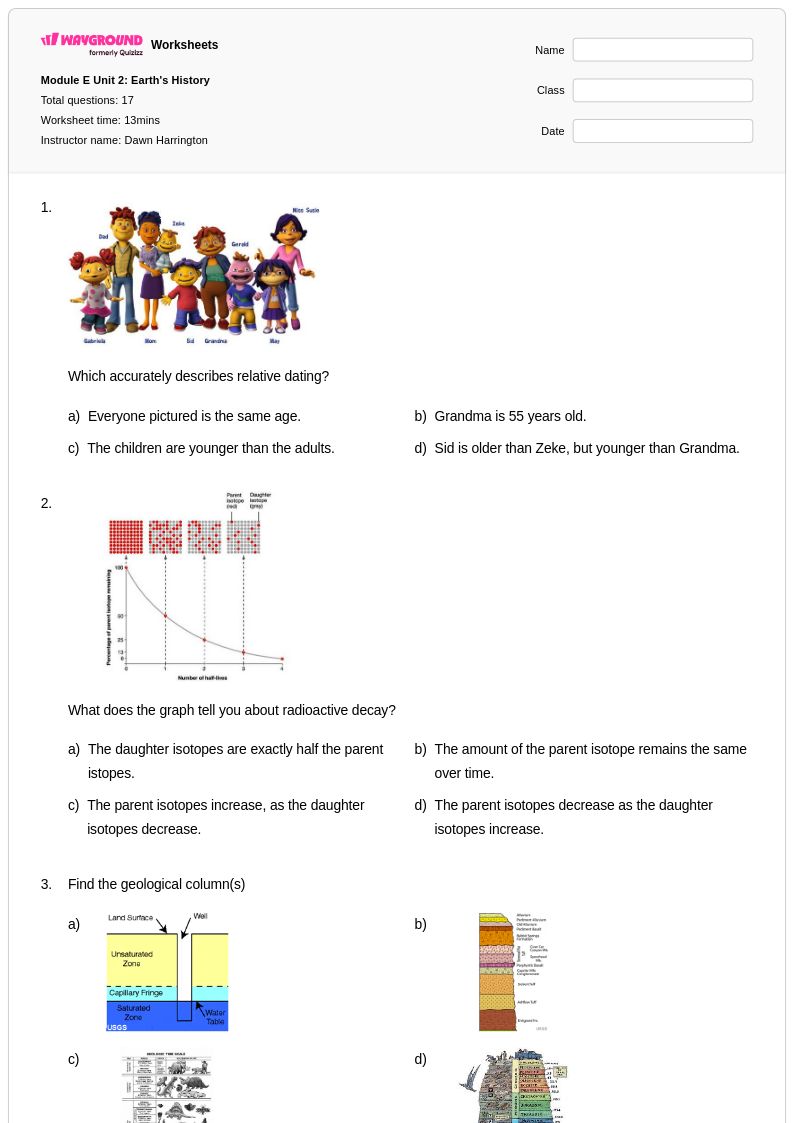
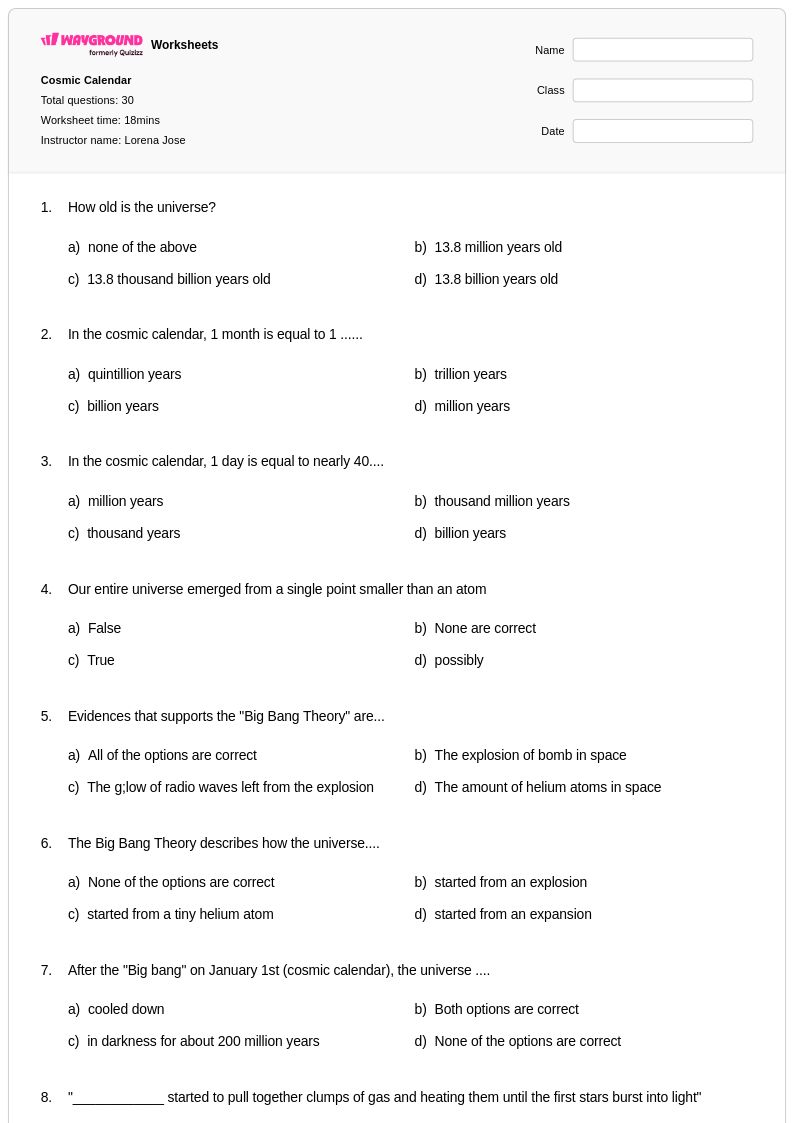
Explore Year 8 chemistry timeline worksheets and printables that help students learn the historical development of chemical discoveries through engaging practice problems, free PDF downloads, and comprehensive answer keys.
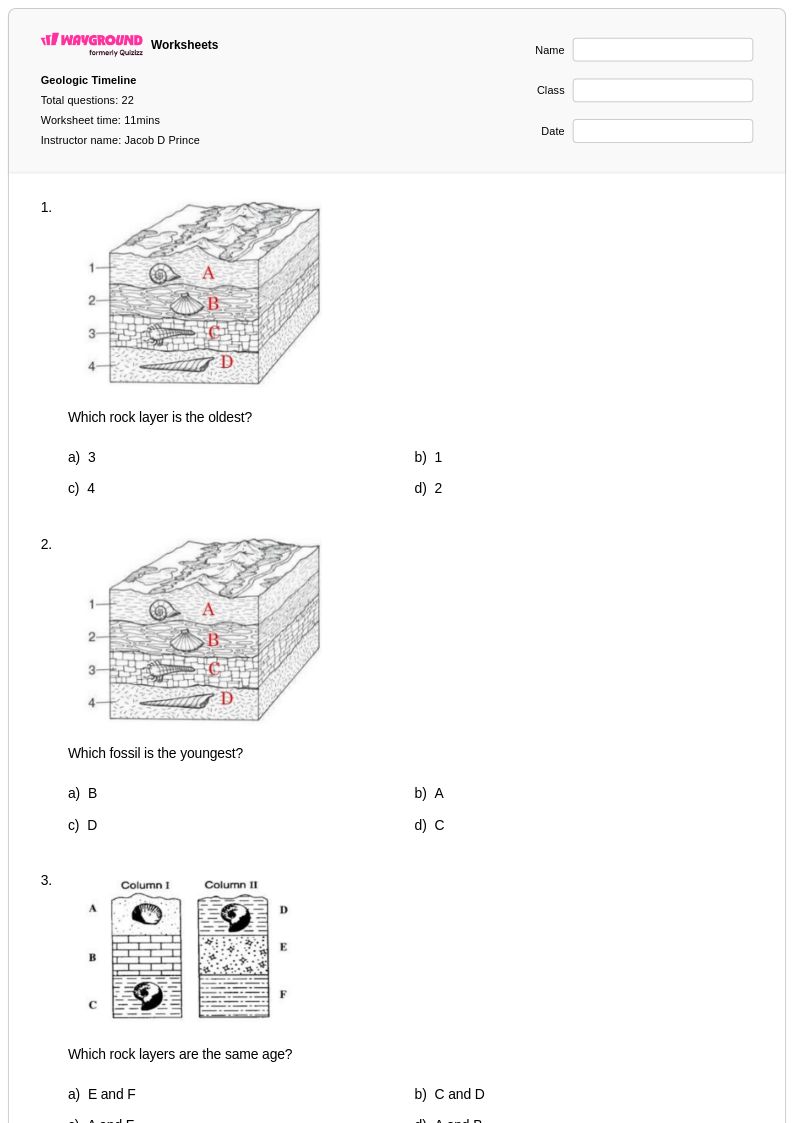
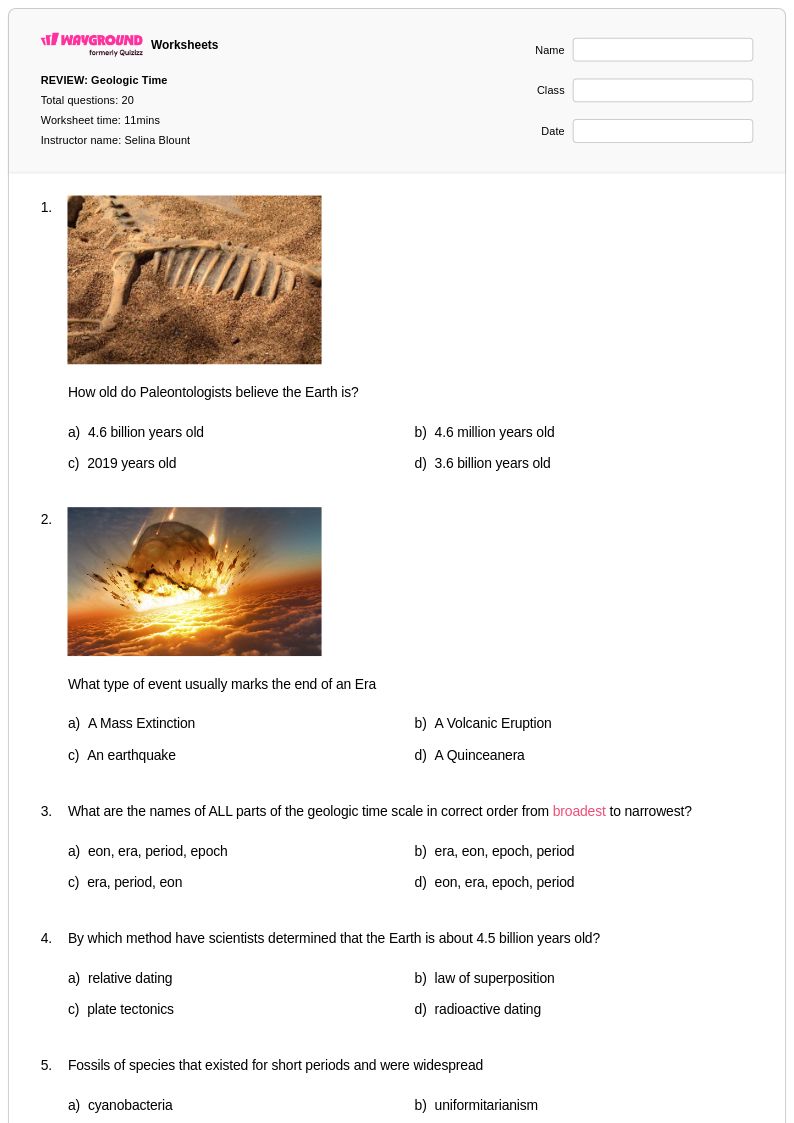
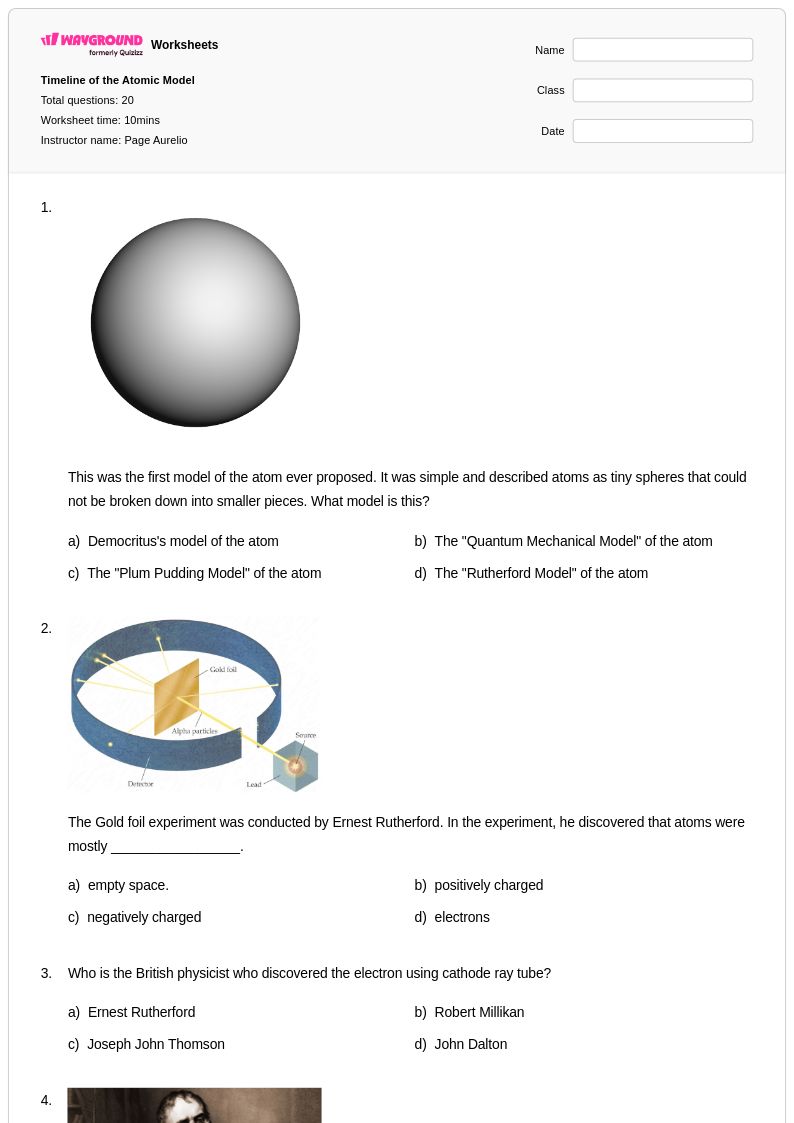
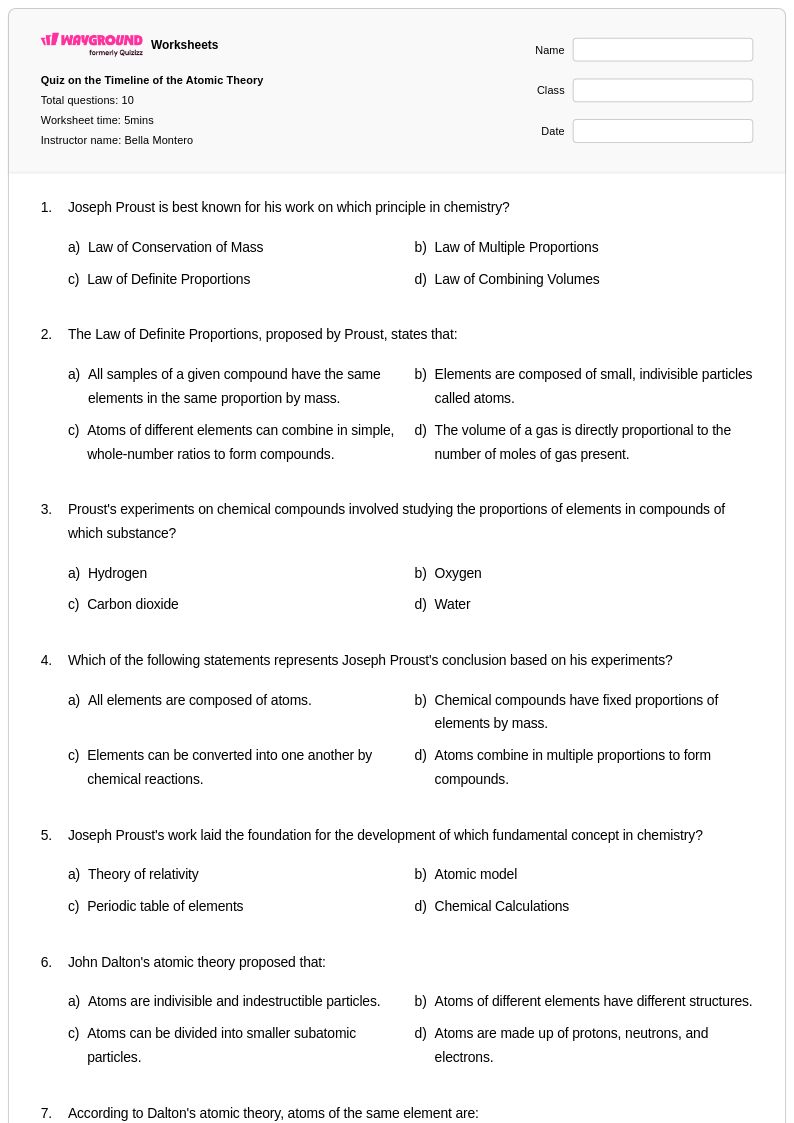
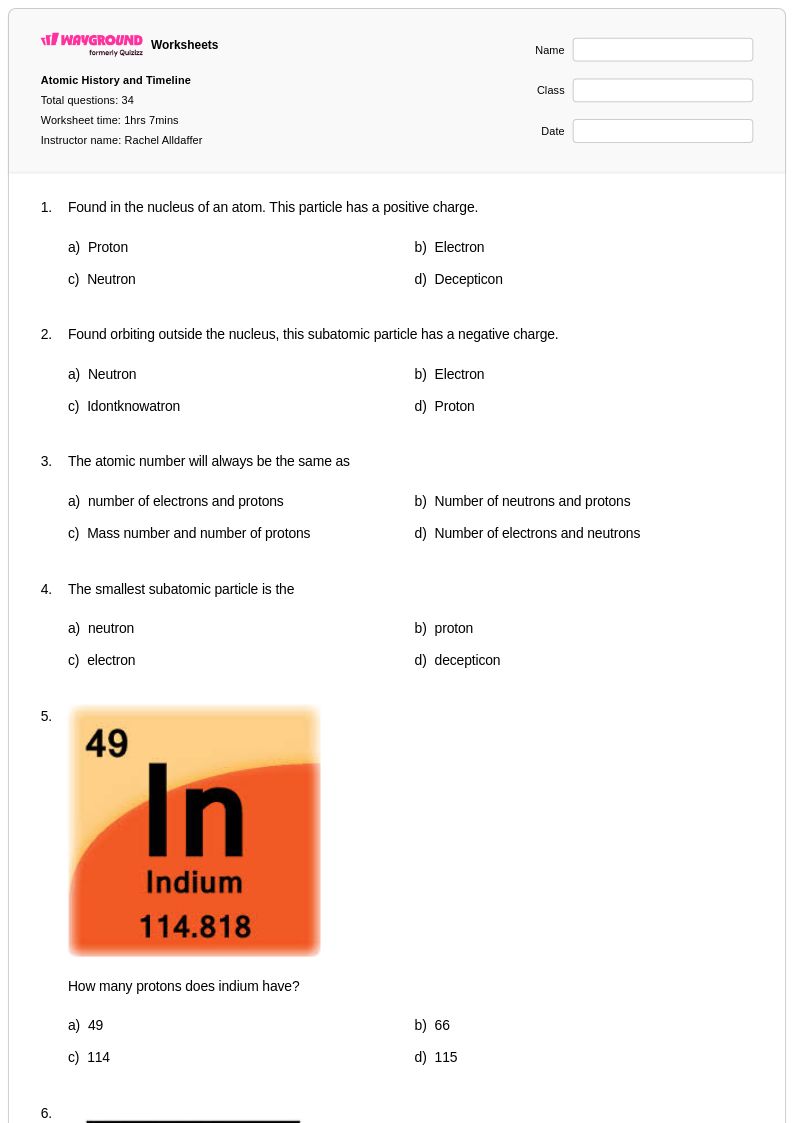
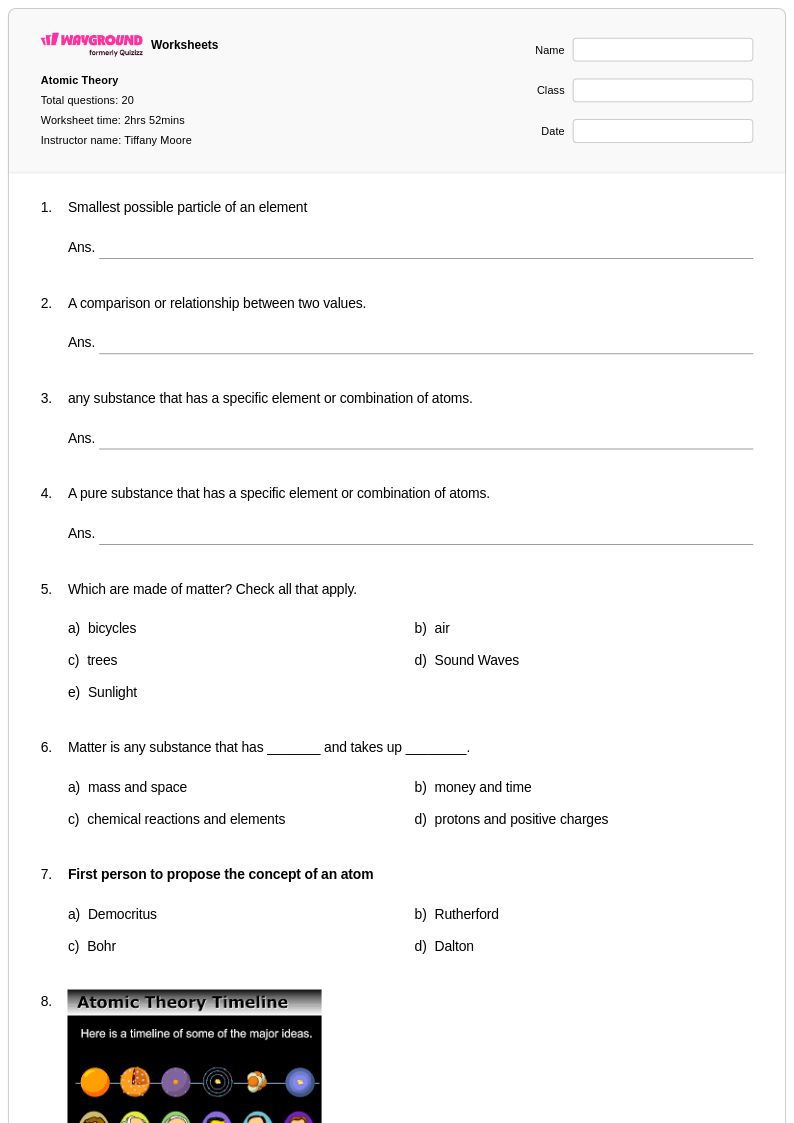
Year 8 chemistry timeline worksheets available through Wayground provide students with a comprehensive framework for understanding the historical development of chemical knowledge and scientific discoveries. These carefully crafted educational resources help students visualize the progression of chemistry from ancient alchemical practices to modern molecular theory, strengthening their ability to connect scientific concepts across different time periods. The worksheets feature practice problems that require students to sequence major chemical discoveries, identify key scientists and their contributions, and analyze how historical developments led to current understanding of atomic structure, chemical bonding, and the periodic table. Each printable resource includes detailed answer keys that support independent learning and self-assessment, while the free pdf format ensures easy access for both classroom instruction and home study.
Wayground's extensive collection of teacher-created chemistry timeline worksheets draws from millions of educational resources specifically designed to meet Year 8 science standards and learning objectives. The platform's robust search and filtering capabilities enable educators to quickly locate materials that align with specific curriculum requirements, whether focusing on particular time periods, scientific discoveries, or historical figures in chemistry. Teachers can easily customize these digital and printable worksheets to accommodate diverse learning needs through built-in differentiation tools, making them ideal for remediation with struggling students or enrichment activities for advanced learners. The flexible pdf format supports seamless integration into lesson planning, allowing educators to use these timeline resources for skill practice, assessment preparation, or as supplementary materials that reinforce the chronological development of chemical science concepts.
FAQs
How do I teach students to read and interpret timelines in the classroom?
Effective timeline instruction begins with teaching students how to identify the scale of time being represented, whether decades, centuries, or millennia, and how to read intervals accurately. Teachers should model how to extract meaning from a timeline by asking analytical questions such as 'What caused this event?' and 'How did this development influence what came next?' Starting with familiar content, such as a class timeline or a well-known historical sequence, helps students build the skill before applying it to more complex subject matter like the history of scientific discovery.
What kinds of exercises help students practice chronological thinking and timeline skills?
The most effective practice exercises include sequencing tasks where students arrange events in order, gap-fill timelines where students must place missing events, and comparative timelines that ask students to analyze cause-and-effect relationships across a period. In the context of chemistry history, practice problems that connect events such as Lavoisier's conservation of mass or Mendeleev's periodic table to their broader scientific context help students move beyond memorization toward genuine chronological reasoning. Repeated exposure through varied formats builds both accuracy and the habit of thinking sequentially.
What common mistakes do students make when working with timelines?
A frequent error is treating all events on a timeline as equally spaced in time when the scale indicates otherwise, leading students to misread the relative distance between events. Students also tend to list events without explaining relationships, reducing a timeline to a rote memorization task rather than an analytical tool. In subject-specific timelines, such as the history of chemistry, students often struggle to connect individual milestones to the broader narrative, missing the cumulative nature of scientific progress.
How do I use Wayground's timeline worksheets in my classroom?
Wayground's timeline worksheets are available as printable PDFs for traditional classroom use and in digital formats for technology-integrated learning environments, giving teachers flexibility depending on their setup. Teachers can also host worksheets as a quiz directly on Wayground, which enables interactive digital engagement for students. Each worksheet includes comprehensive answer keys, supporting both independent student work and teacher-led review. The platform's search and filtering tools allow teachers to quickly locate timeline resources aligned to their specific curriculum standards and learning objectives.
How can I differentiate timeline worksheets for students with different learning needs?
Wayground supports several built-in accommodation tools that teachers can apply at the individual student level without disrupting the rest of the class. For students who need additional support, teachers can enable Read Aloud so questions and content are read to students, reduce the number of answer choices to lower cognitive load, or grant extended time per question. Adjustable font sizes and reading themes are also available for accessibility. These settings are saved and reusable across future sessions, making differentiation sustainable over time rather than a one-off adjustment.
How do timeline worksheets support learning in science classes specifically?
In science classrooms, timeline worksheets help students understand that scientific knowledge is cumulative, built incrementally through discoveries that depend on and respond to earlier findings. Chemistry timeline worksheets, for example, guide students through milestones such as the development of atomic theory and the construction of the periodic table, helping them see why each breakthrough mattered in its historical moment. This contextual understanding deepens conceptual retention compared to learning isolated facts and supports students in recognizing how scientific thinking evolves over time.