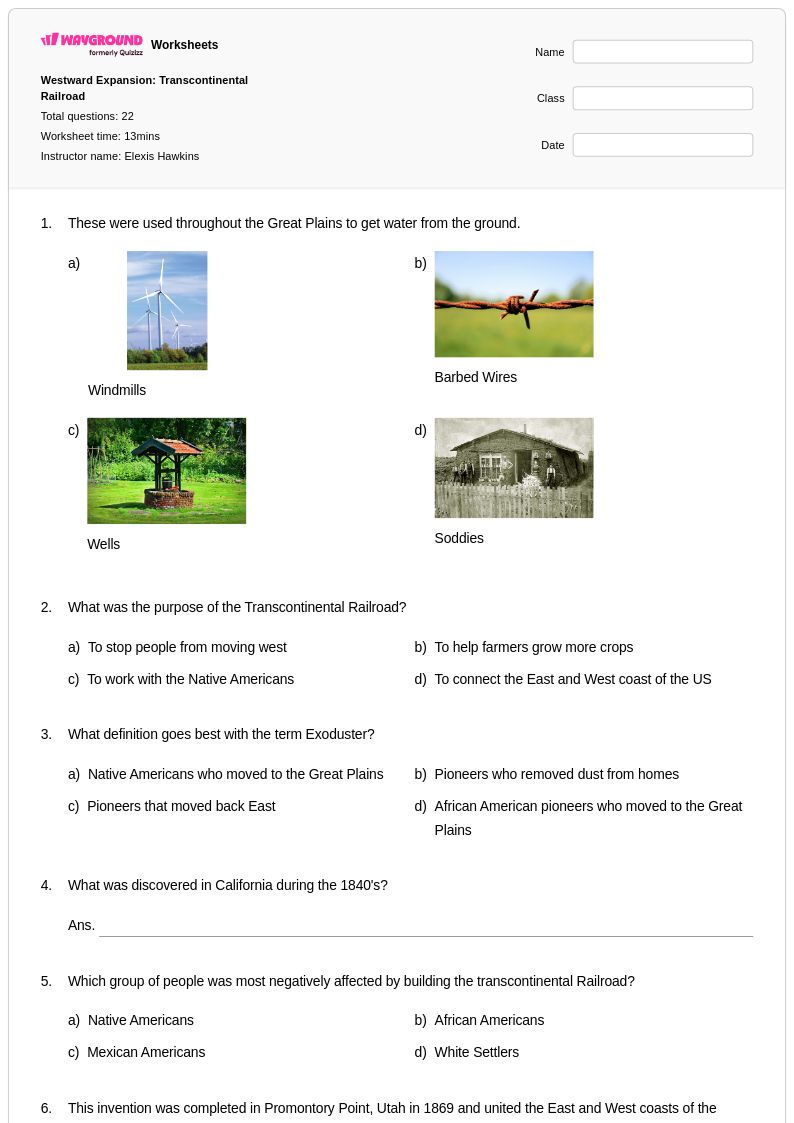
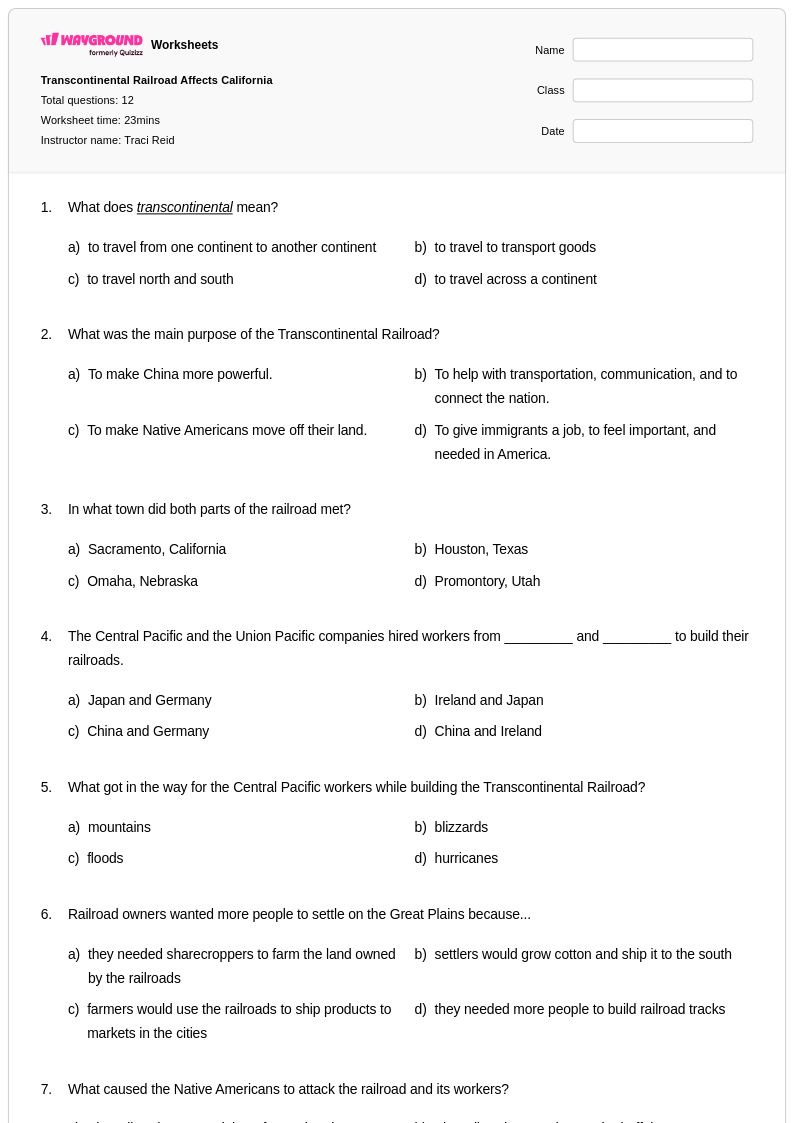
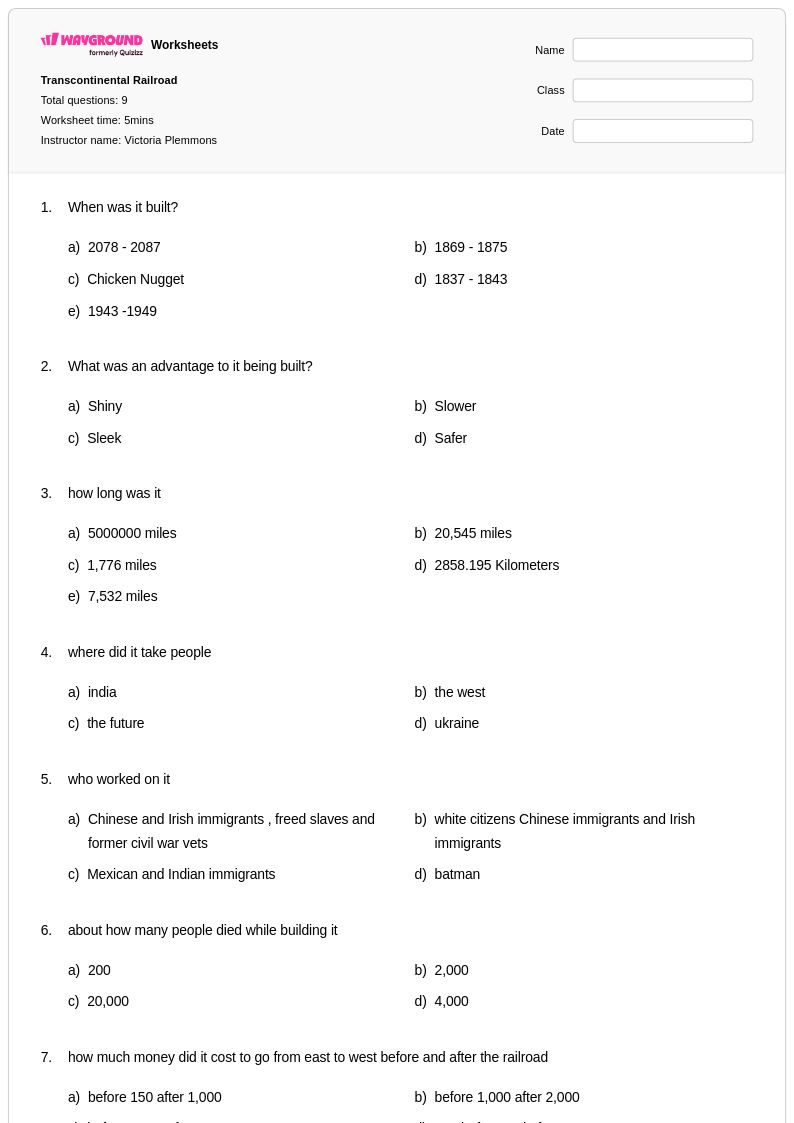
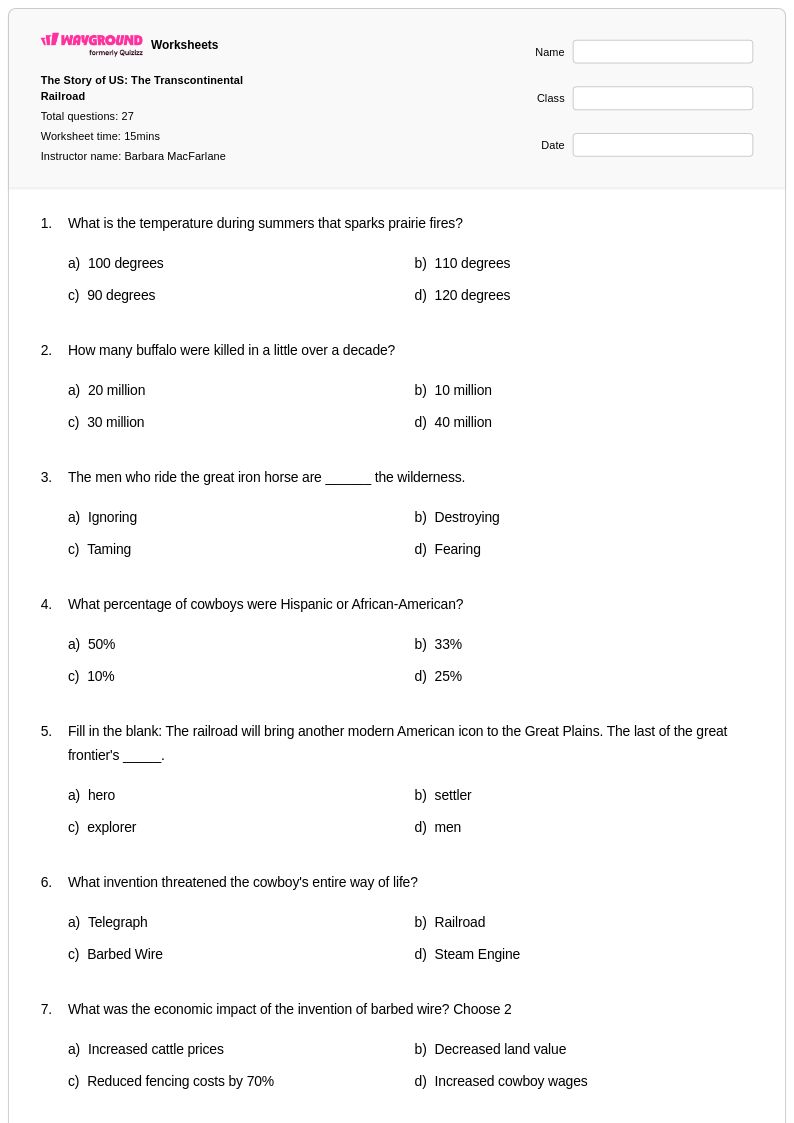
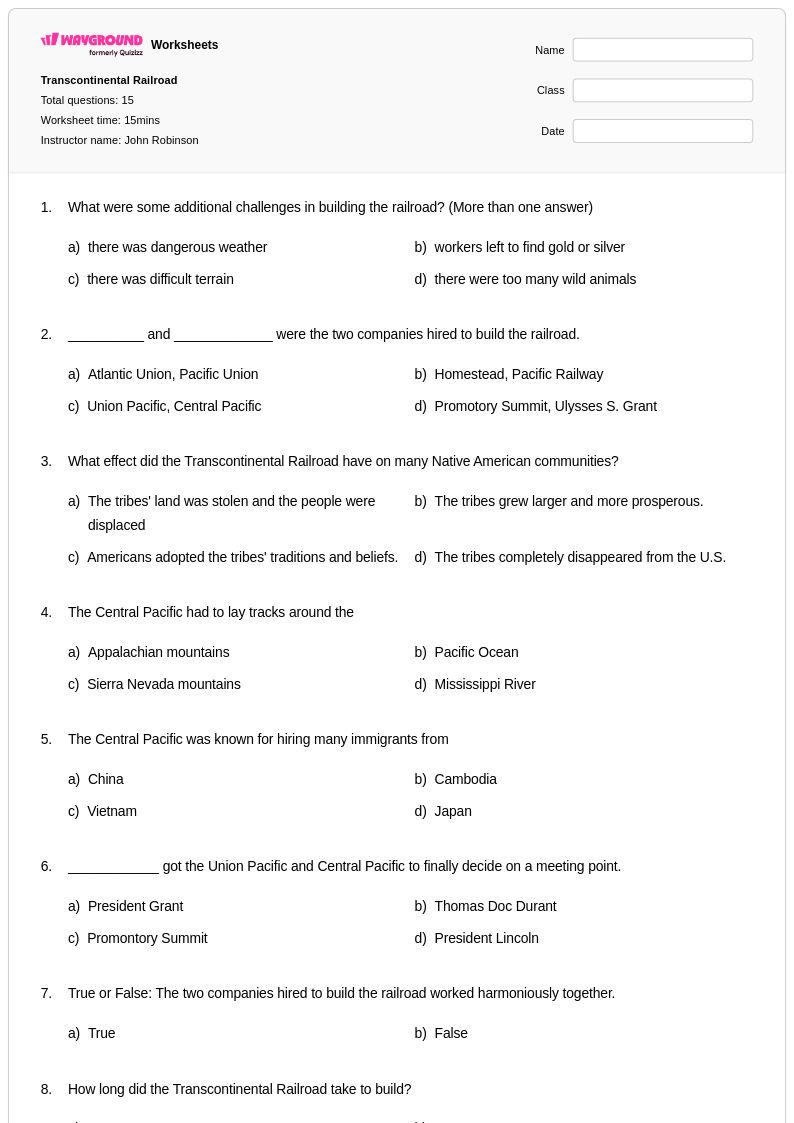
Explore Wayground's free Transcontinental Railroad worksheets and printables that help students understand this pivotal moment in U.S. History through engaging practice problems, interactive activities, and comprehensive answer keys.
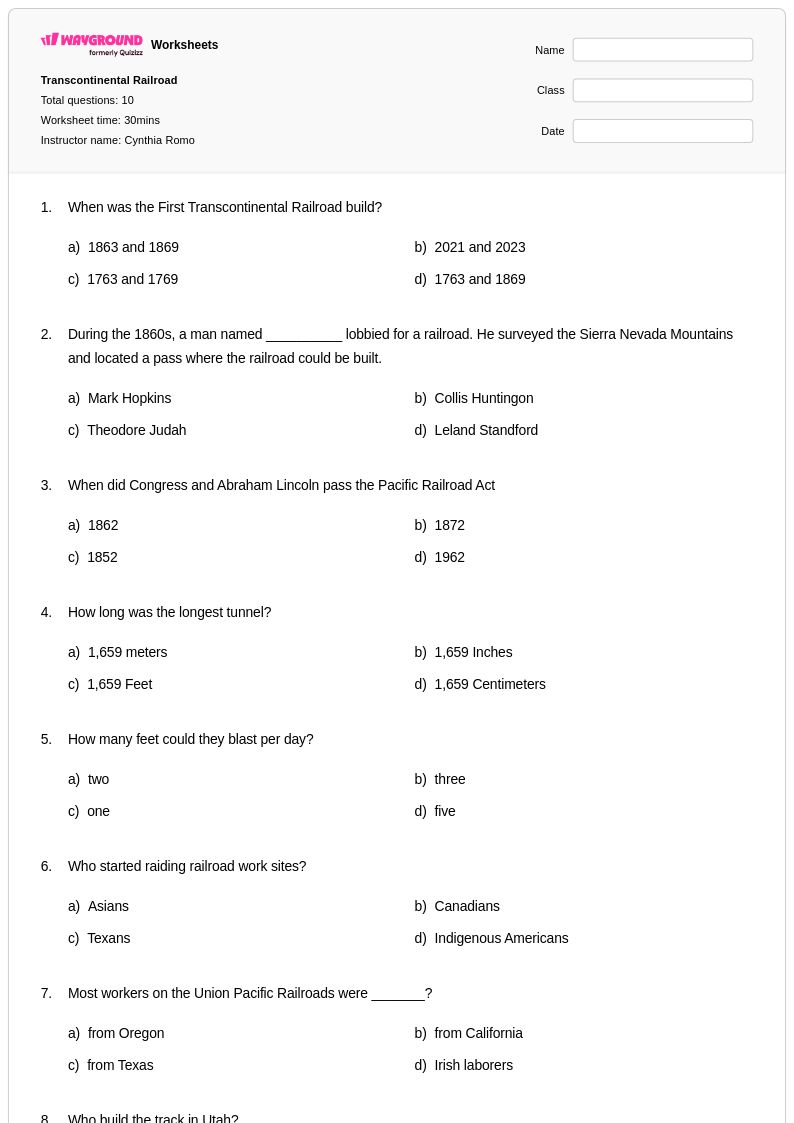
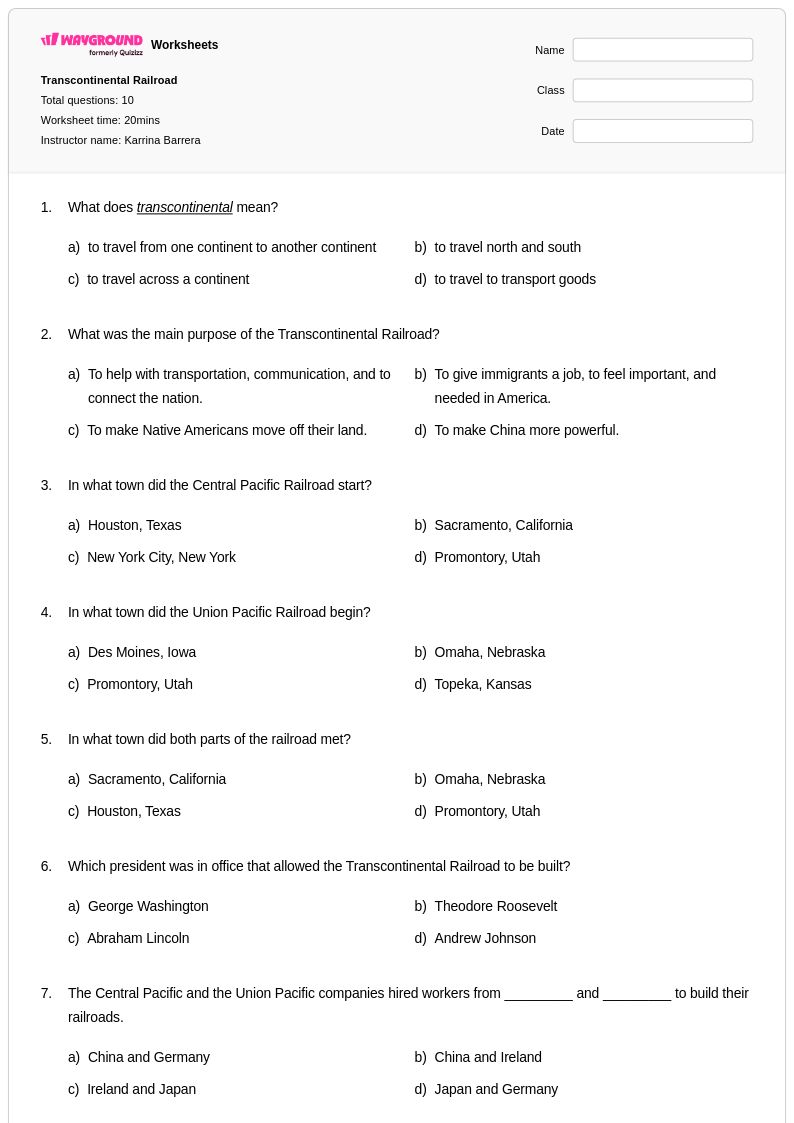
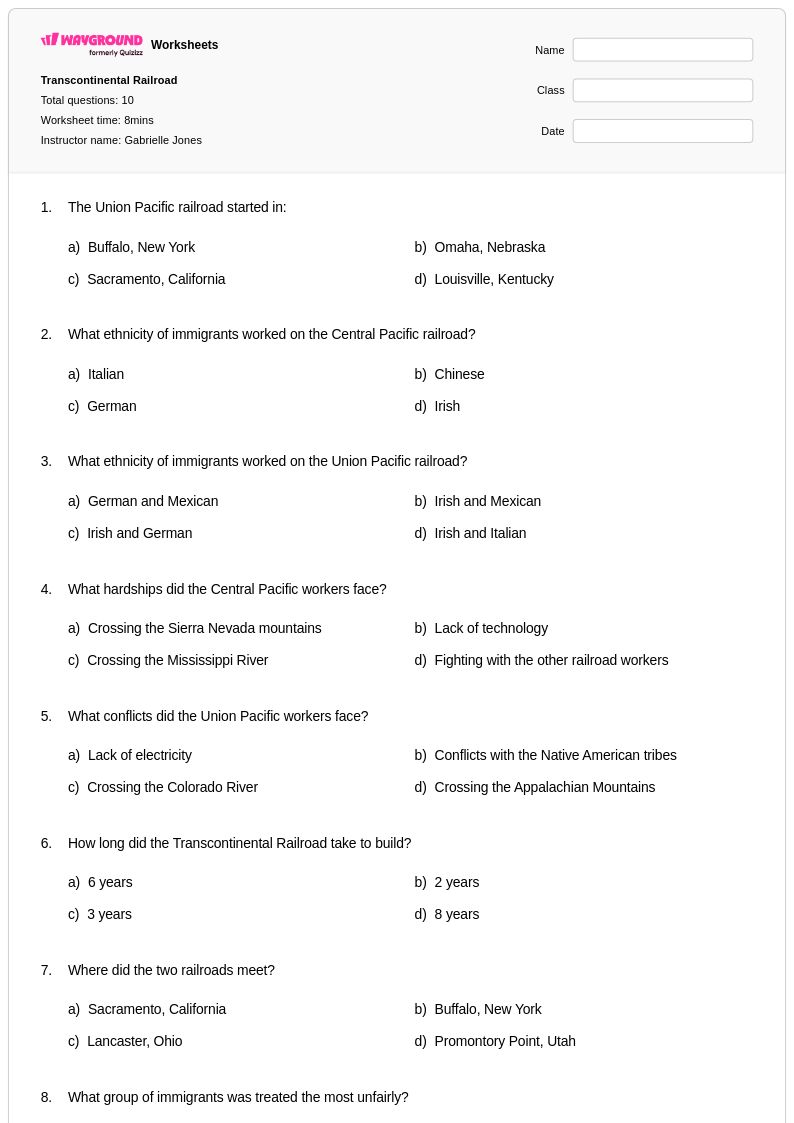
Transcontinental Railroad worksheets available through Wayground (formerly Quizizz) provide students with comprehensive practice materials that explore one of America's most transformative infrastructure achievements. These educational resources strengthen critical thinking skills as students analyze the economic, social, and political factors that drove the construction of the first transcontinental railroad from 1863 to 1869. The worksheets feature practice problems that examine the roles of the Central Pacific and Union Pacific railroad companies, the diverse workforce including Chinese and Irish immigrants, and the geographic challenges of building across the American continent. Each printable resource includes detailed answer keys that help educators assess student understanding of key concepts such as the Pacific Railway Act, the meeting at Promontory Summit, and the railroad's impact on westward expansion and Native American communities.
Wayground (formerly Quizizz) supports educators with millions of teacher-created resources focused on transcontinental railroad instruction, offering robust search and filtering capabilities that help teachers quickly locate materials aligned with specific learning objectives and state standards. The platform's differentiation tools enable teachers to customize worksheet difficulty levels and content focus areas, ensuring appropriate challenges for diverse learners while maintaining academic rigor. These free pdf resources are available in both printable and digital formats, providing flexibility for classroom instruction, homework assignments, and remote learning environments. Teachers utilize these comprehensive collections for lesson planning, targeted remediation of historical thinking skills, enrichment activities for advanced students, and regular skill practice that reinforces understanding of this pivotal period in American industrial and transportation development.
FAQs
How do I teach the Transcontinental Railroad to middle or high school students?
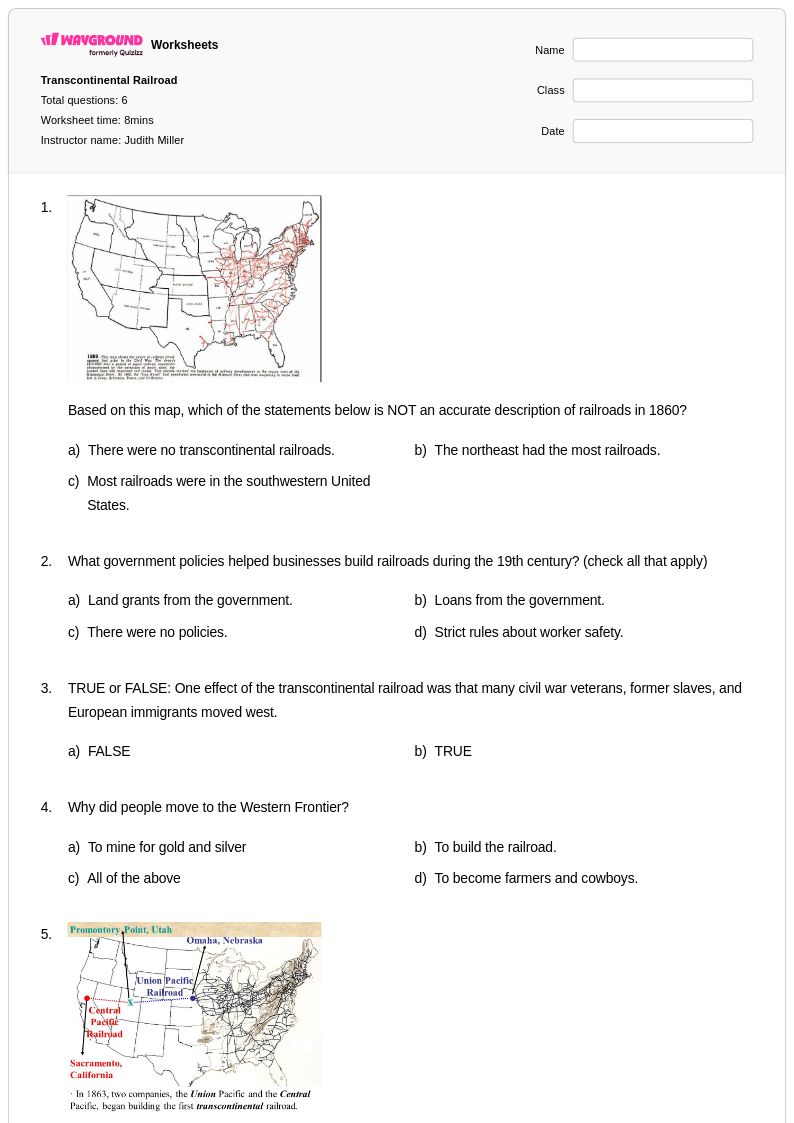
Effective instruction on the Transcontinental Railroad begins with the economic and political context of the Pacific Railway Act before moving into the construction timeline from 1863 to 1869. Teachers often use primary sources and map activities to show how the Central Pacific and Union Pacific routes converged at Promontory Summit, Utah. Connecting the railroad's completion to westward expansion, displacement of Native American communities, and immigrant labor gives students a fuller picture of its historical significance.
What worksheets help students practice their understanding of the Transcontinental Railroad?
Practice worksheets that ask students to analyze the roles of the Central Pacific and Union Pacific companies, identify key legislation like the Pacific Railway Act, and assess the contributions of Chinese and Irish immigrant workers are especially effective. Map-based and timeline activities reinforce the geographic and chronological dimensions of the project, while cause-and-effect exercises help students connect the railroad's construction to broader outcomes such as westward expansion and economic growth.
What common mistakes do students make when learning about the Transcontinental Railroad?
Students frequently conflate the Transcontinental Railroad with a single company rather than understanding it was built by two competing railroad companies working from opposite ends. Many also underestimate the role of Chinese immigrant laborers in completing the Central Pacific's portion, or overlook the hardships and discrimination that workforce faced. Another common misconception is treating the railroad's completion as an unambiguous triumph, without accounting for its devastating impact on Native American communities and the buffalo-dependent ecosystems of the Great Plains.
How can I use Transcontinental Railroad worksheets in my classroom?
Transcontinental Railroad worksheets on Wayground are available as printable PDFs for traditional classroom use and in digital formats for technology-integrated or remote learning environments, and can also be hosted as an interactive quiz directly on Wayground. Teachers can use them for direct instruction support, formative assessment, homework assignments, or targeted remediation of historical thinking skills. Each worksheet includes a complete answer key, making it easy to review student work and identify gaps in understanding.
How does the Transcontinental Railroad connect to broader U.S. History standards?
The Transcontinental Railroad is a central topic in U.S. History standards covering Reconstruction, westward expansion, industrialization, and immigration. It provides a concrete case study for analyzing how government policy, private industry, and diverse labor forces shaped national development. Teachers can use it to address standards related to the impact of technology on society, economic growth, and the conflicts between expansion and Native American sovereignty.
How do I differentiate Transcontinental Railroad instruction for students at different levels?
For students who need additional support, simplified reading passages with guided questions help build foundational knowledge of key figures and events before tackling analysis tasks. Advanced students benefit from document-based questions that ask them to evaluate competing historical perspectives on the railroad's legacy. On Wayground, teachers can apply accommodations such as read-aloud support, reduced answer choices, and extended time to individual students, ensuring every learner can access the material without disrupting the rest of the class.