
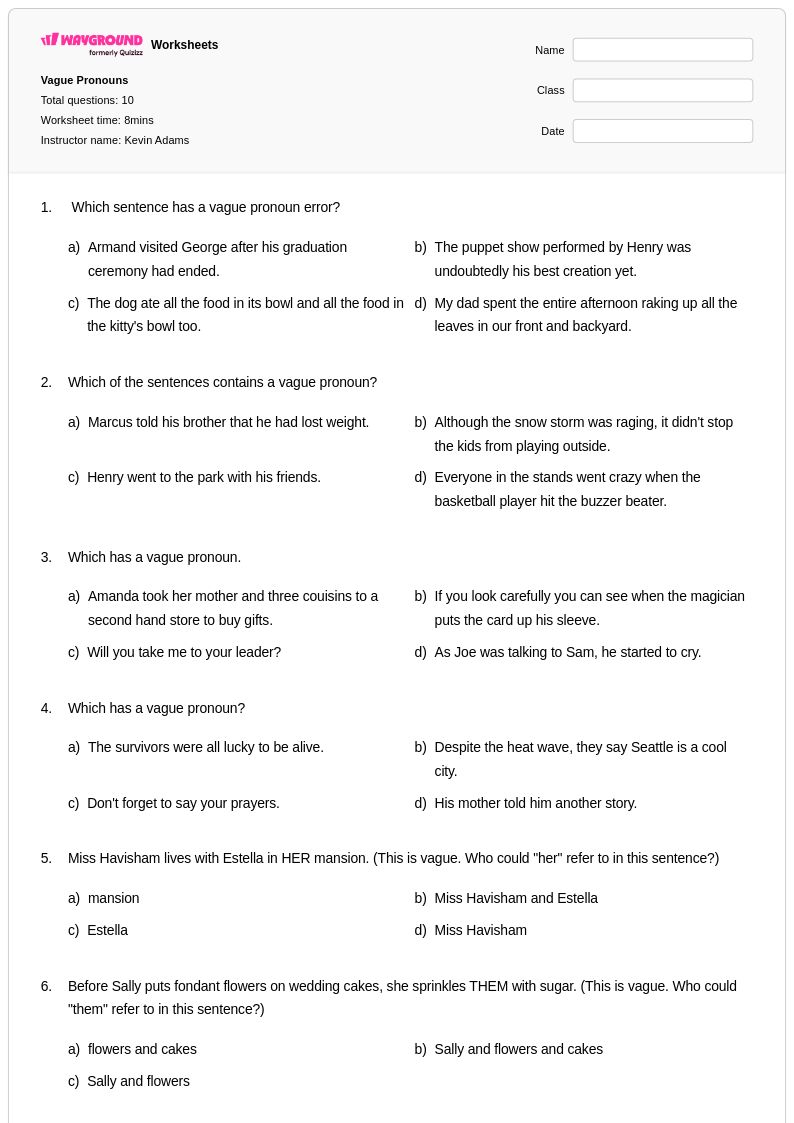
10 Q
6th - Uni
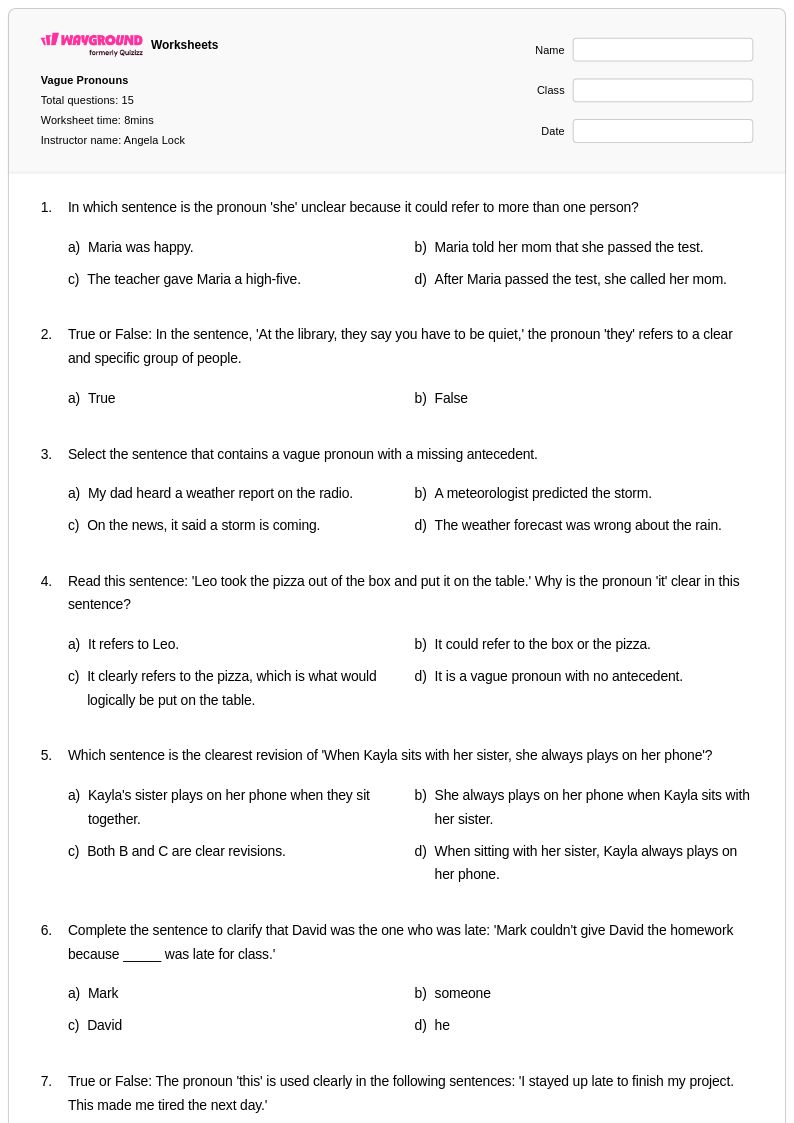
15 Q
6th - Uni
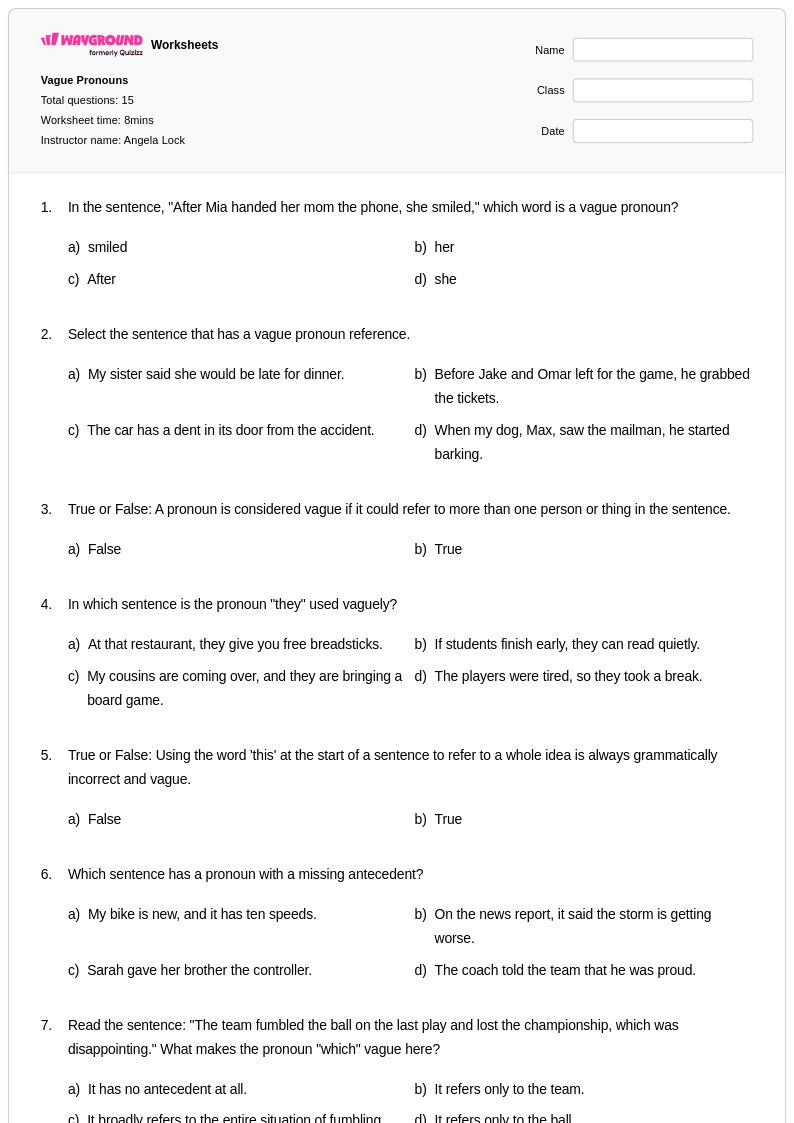
15 Q
8th - Uni
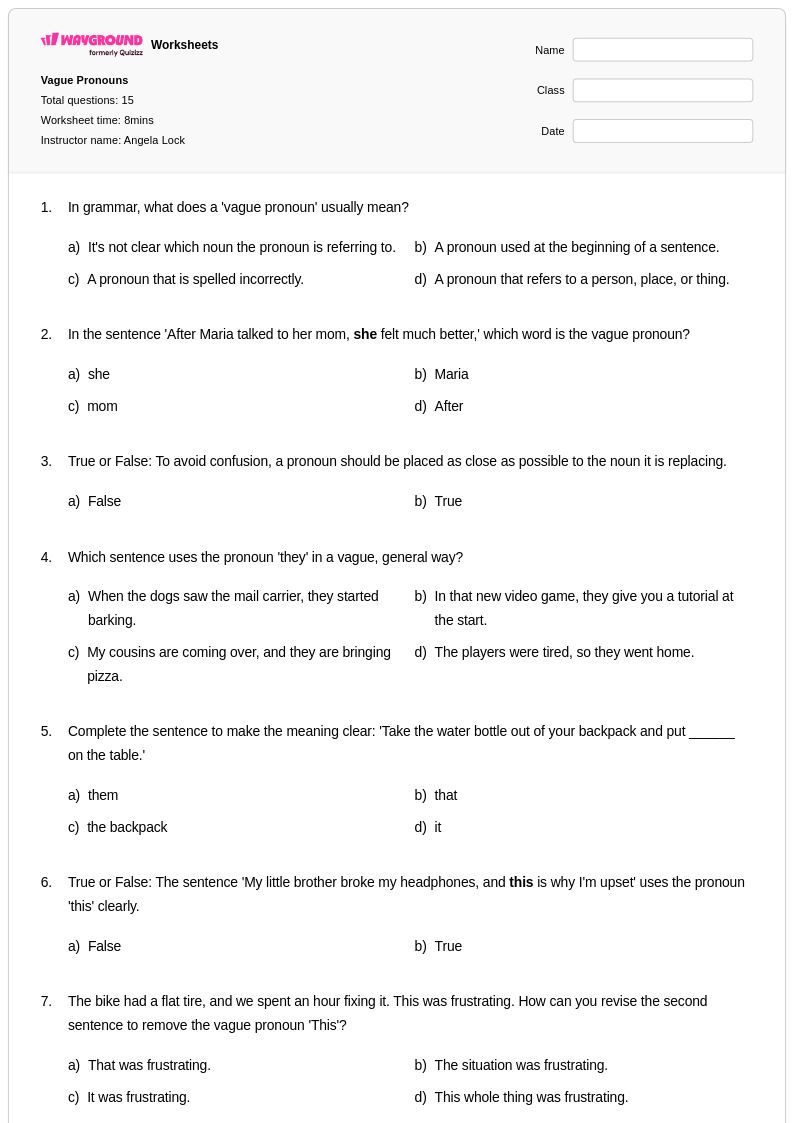
15 Q
7th - Uni
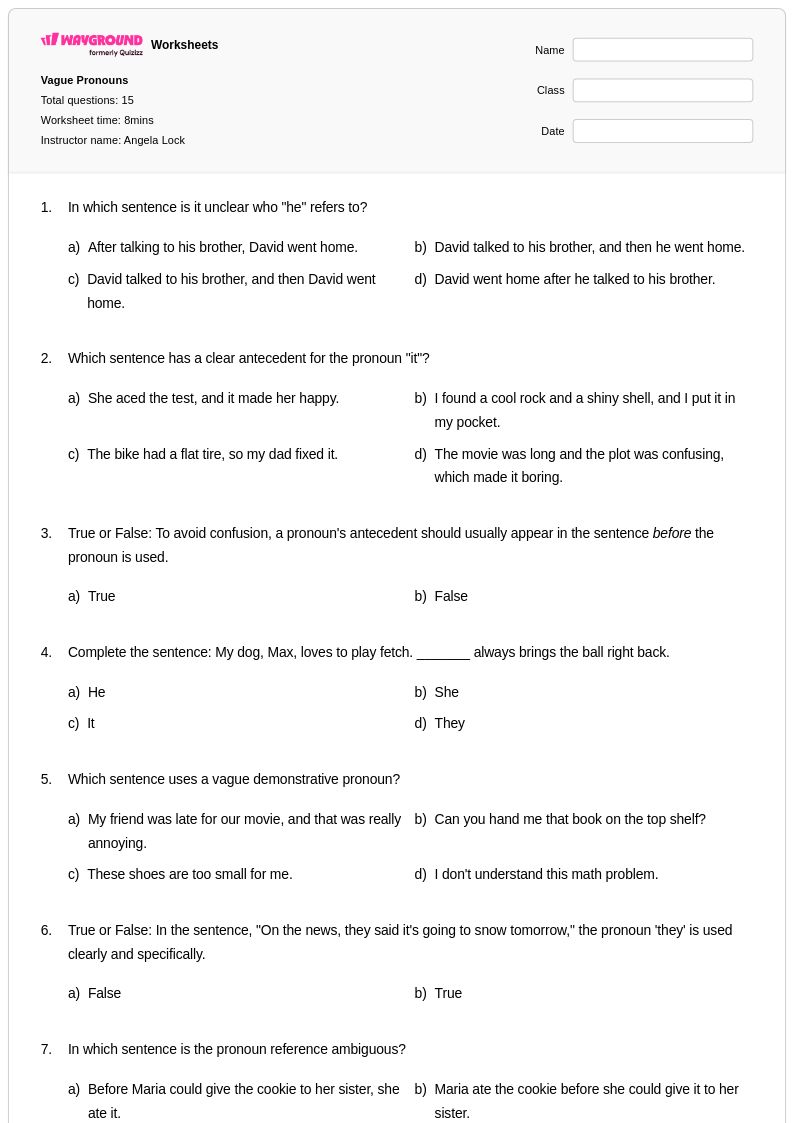
15 Q
8th - Uni
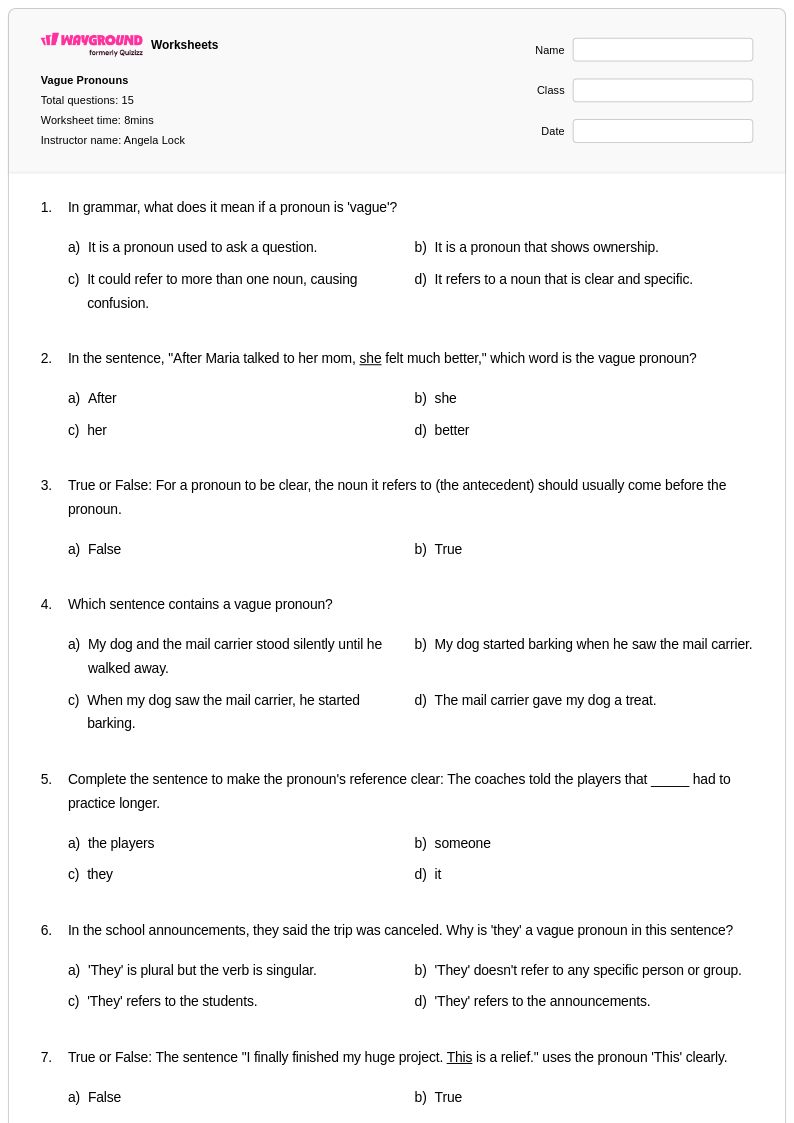
15 Q
6th - Uni
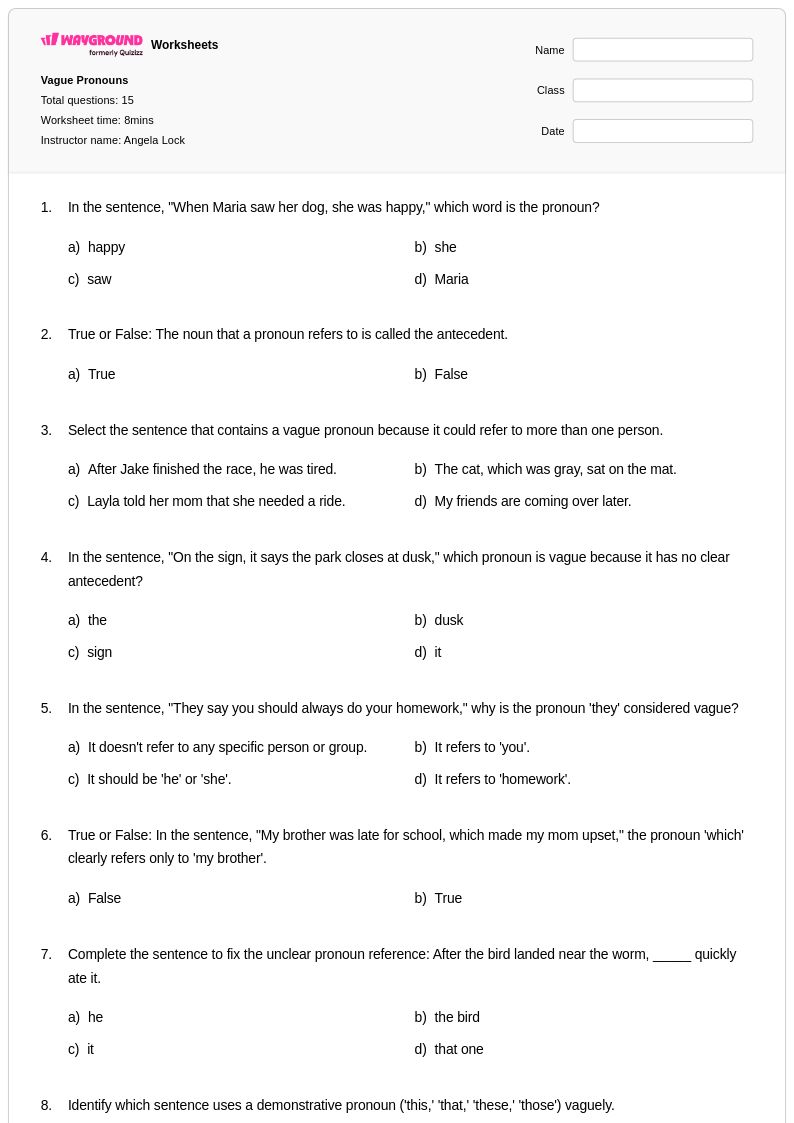
15 Q
6th - Uni
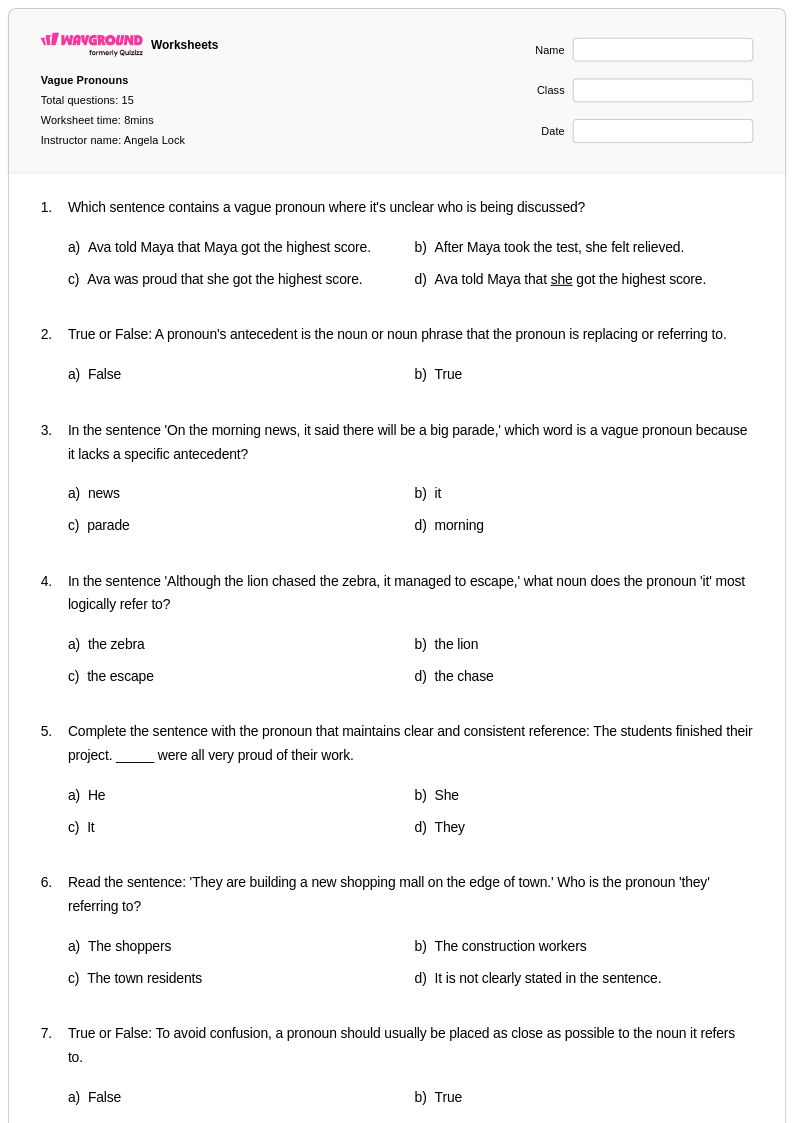
15 Q
7th - Uni
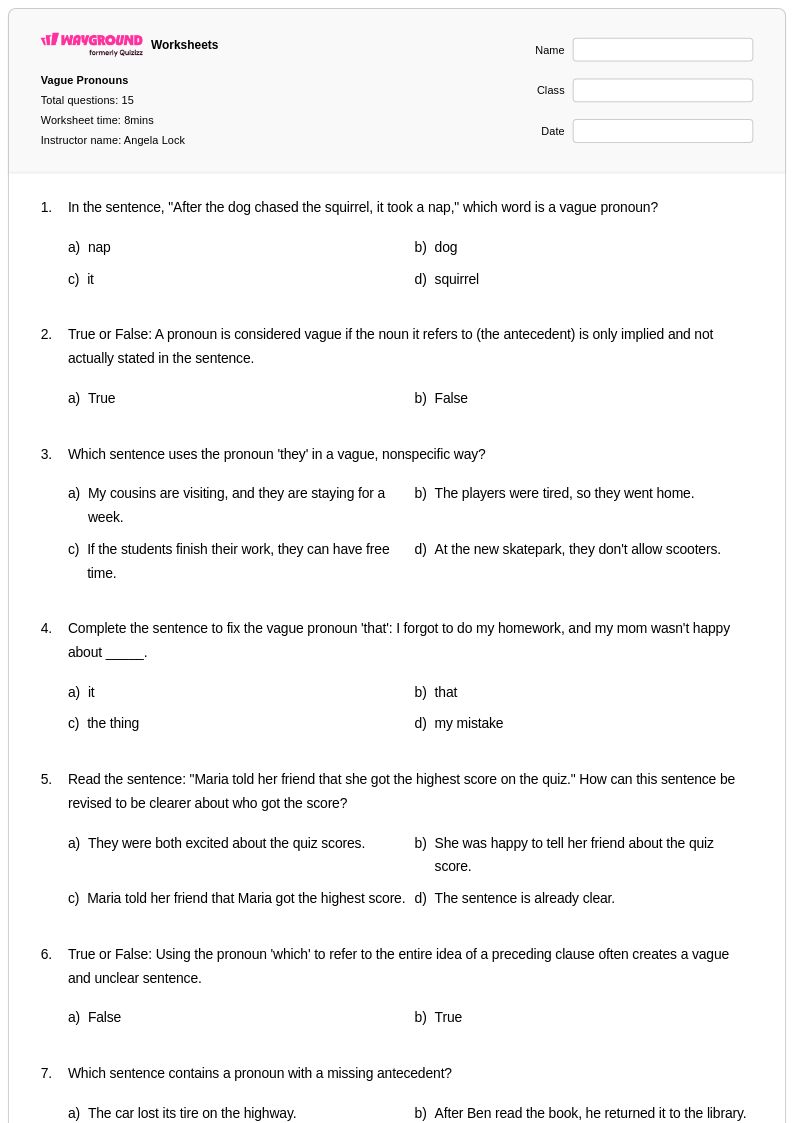
15 Q
8th - Uni
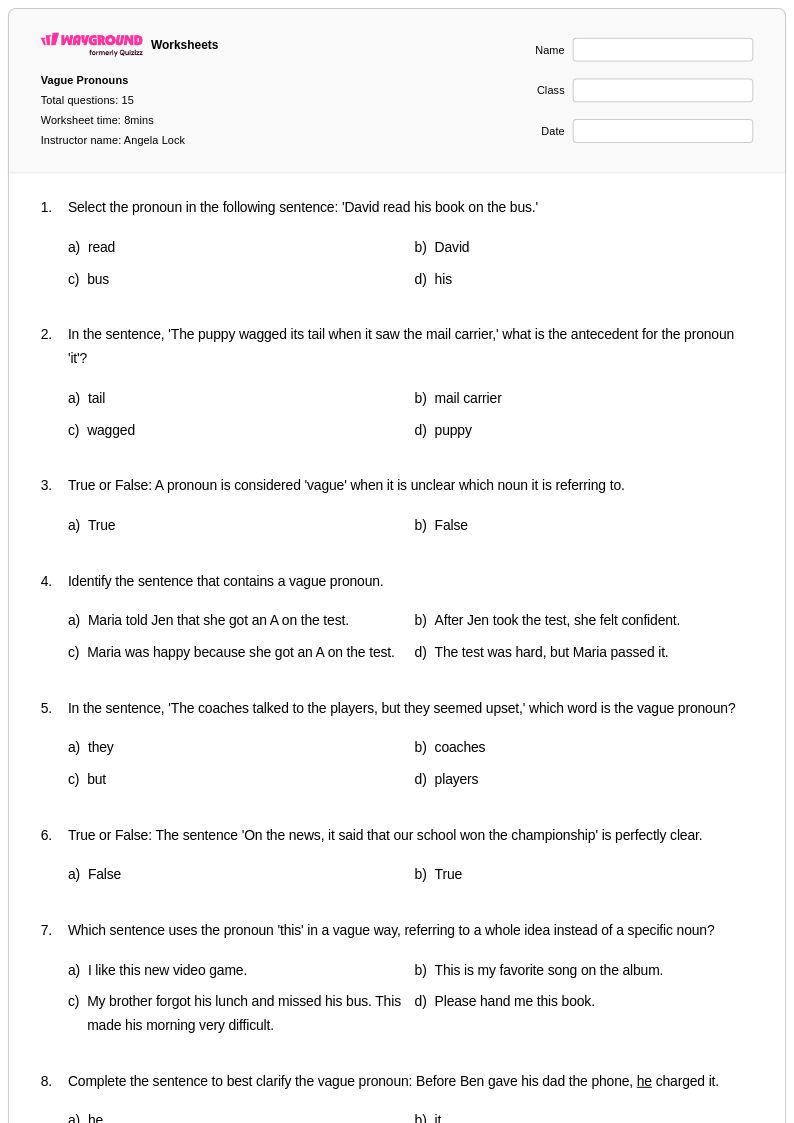
15 Q
7th - Uni
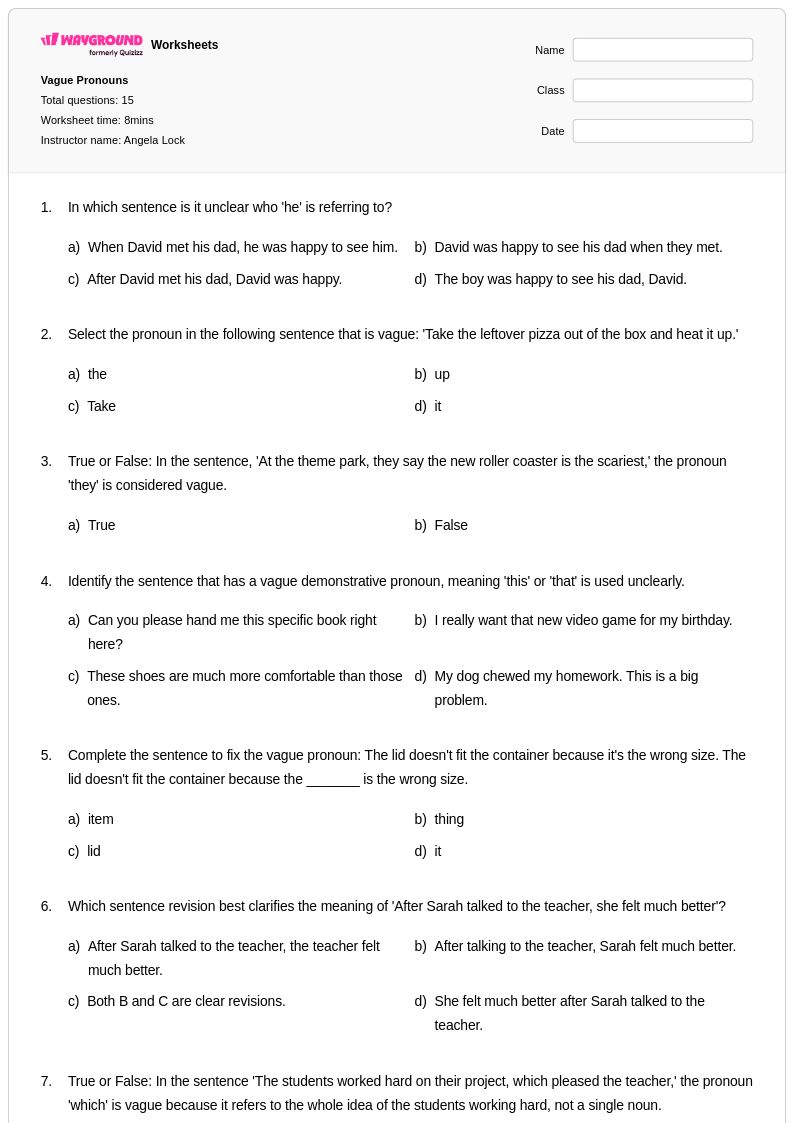
15 Q
7th - Uni
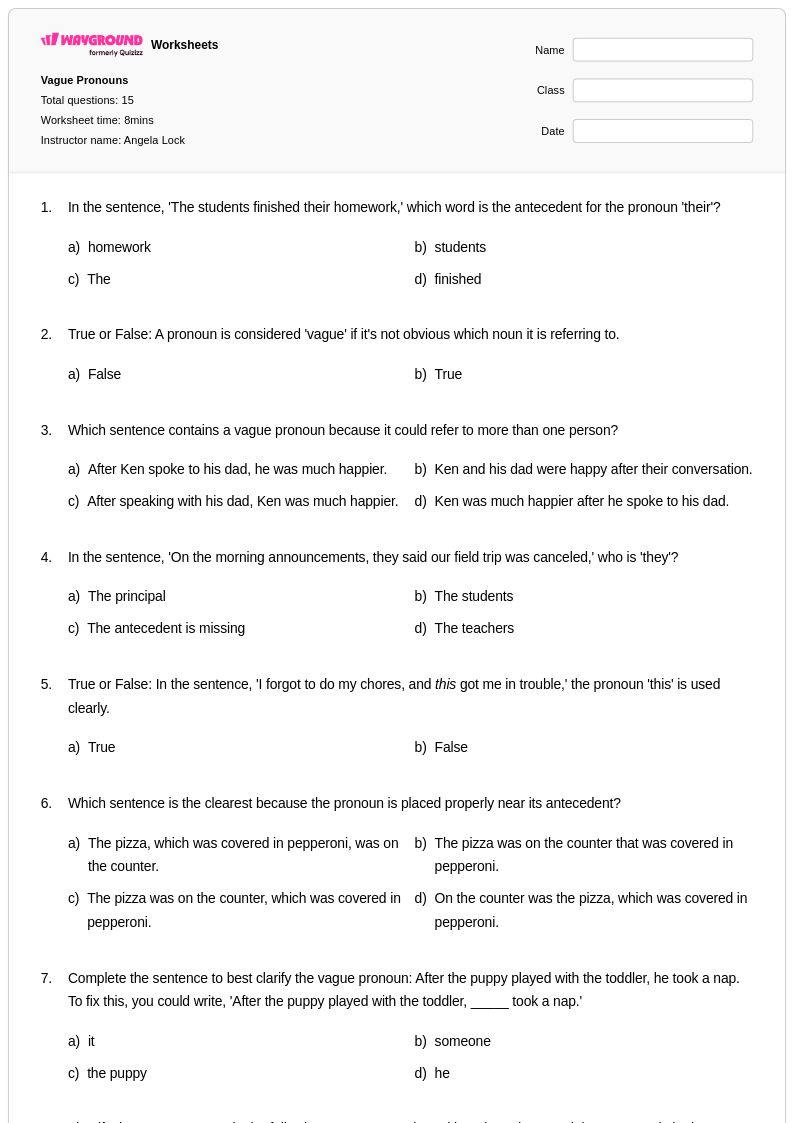
15 Q
6th - Uni
15 Q
7th - Uni
15 Q
7th - Uni
15 Q
6th - Uni
15 Q
8th - Uni
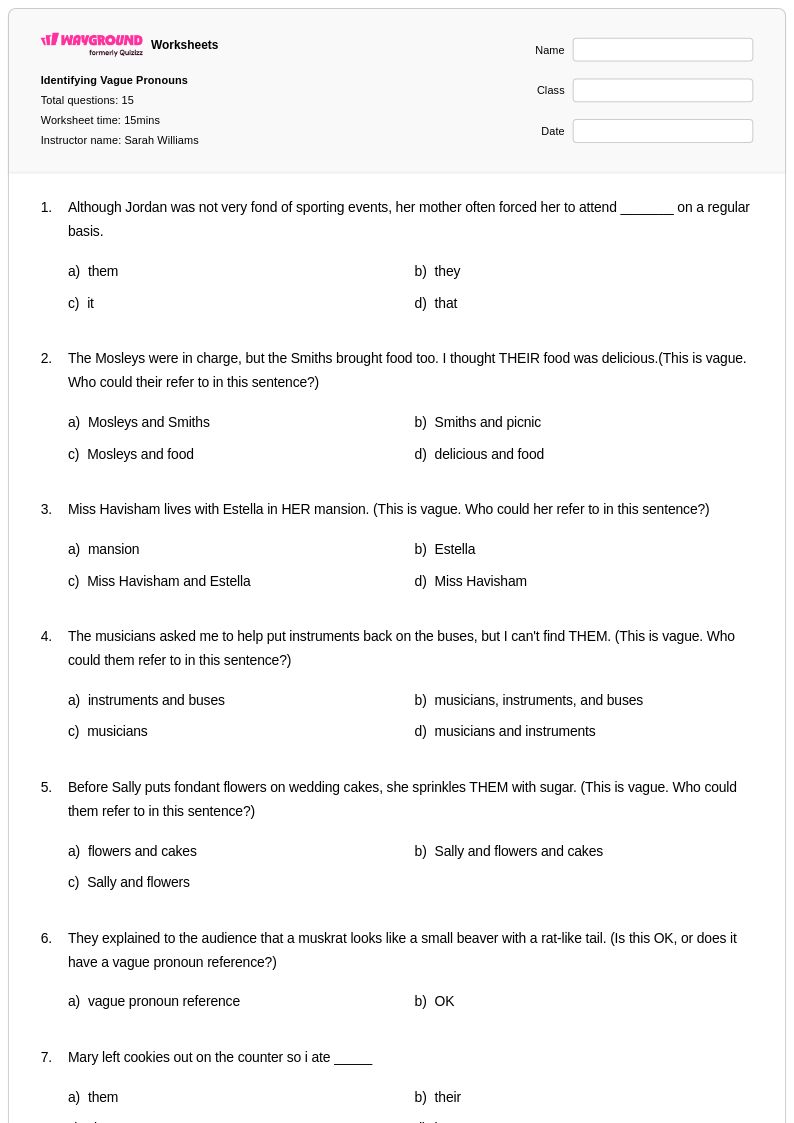
15 Q
6th - Uni
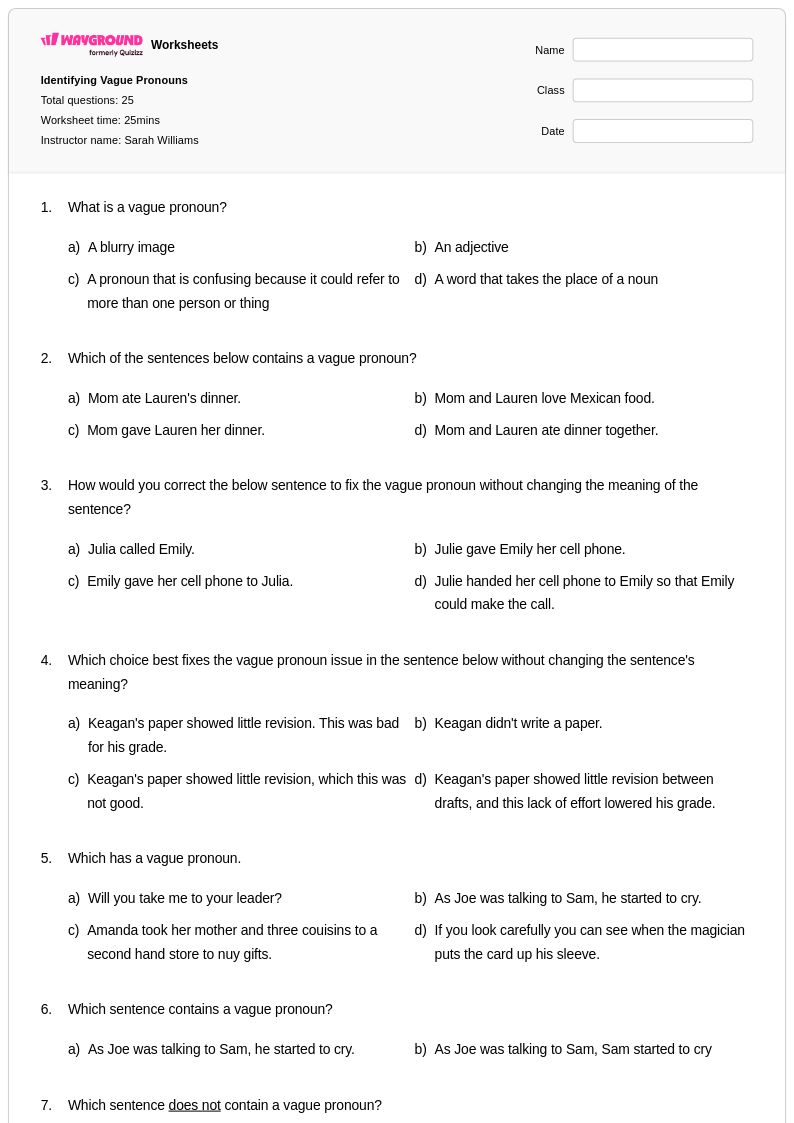
25 Q
6th - Uni
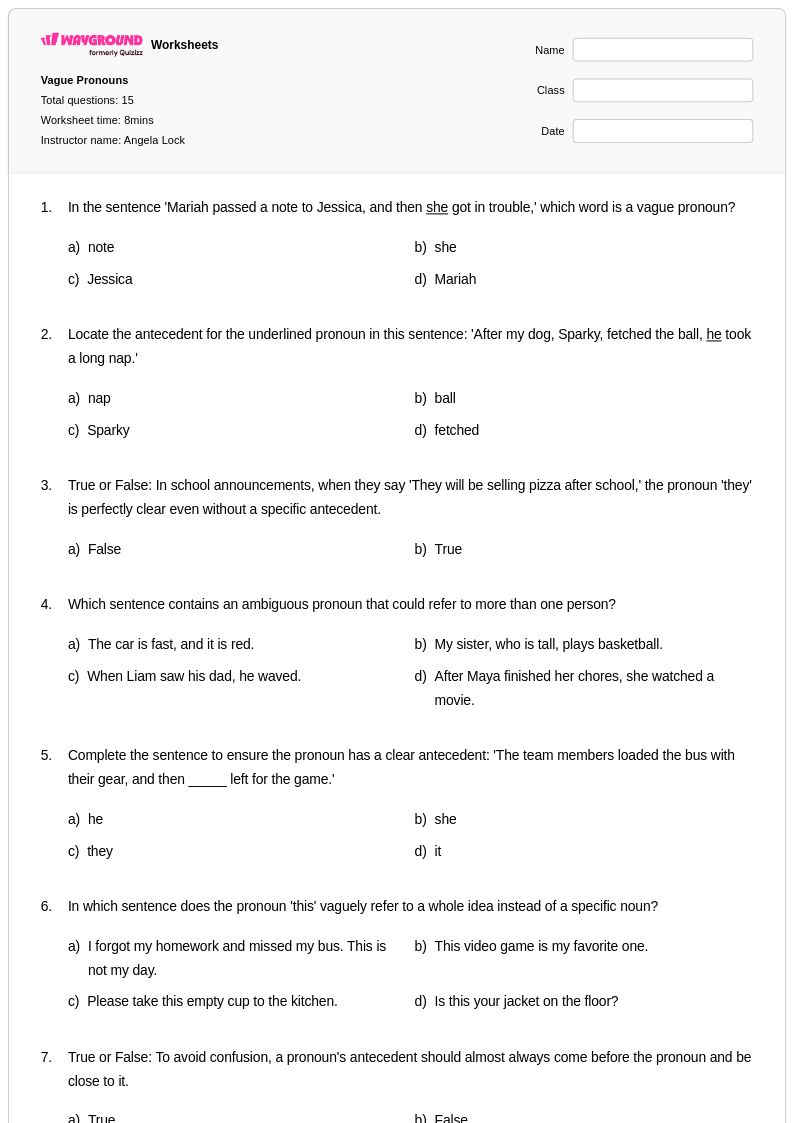
15 Q
7th - Uni
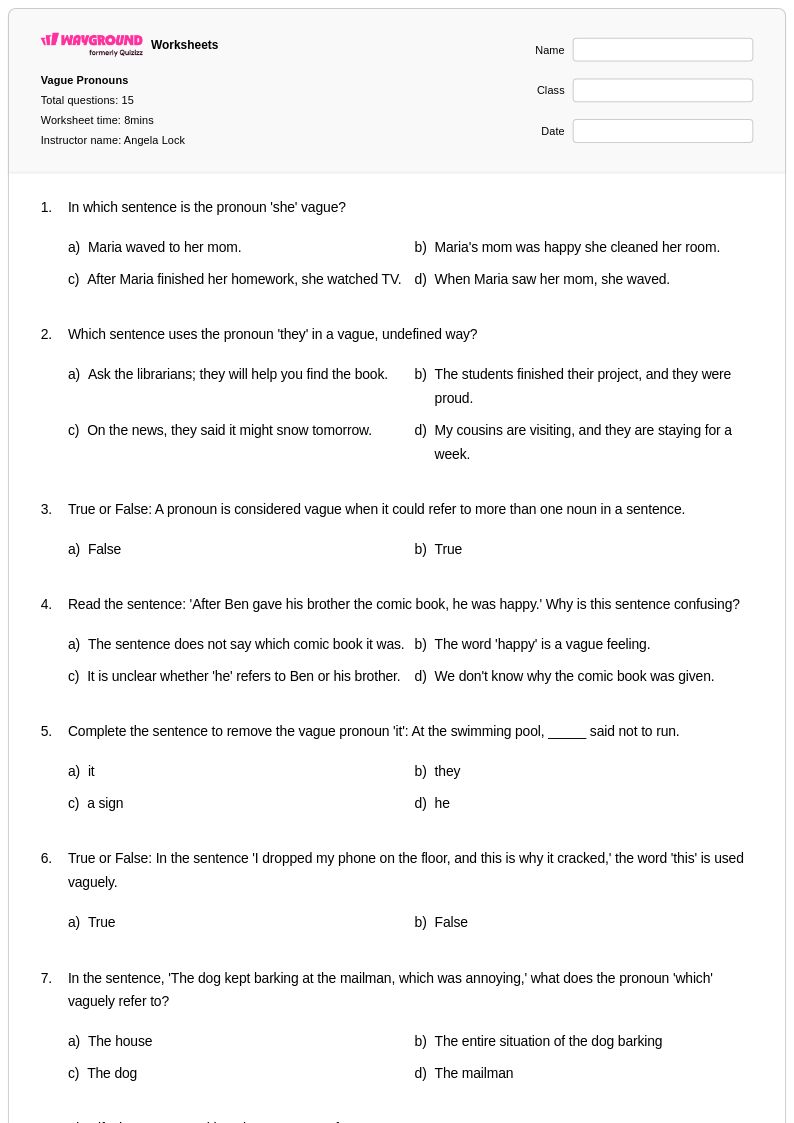
15 Q
6th - Uni
15 Q
6th - Uni
15 Q
6th - Uni
15 Q
8th - Uni
15 Q
8th - Uni
Explore Other Subject Worksheets for year 10
Explore printable Vague Pronouns worksheets for Year 10
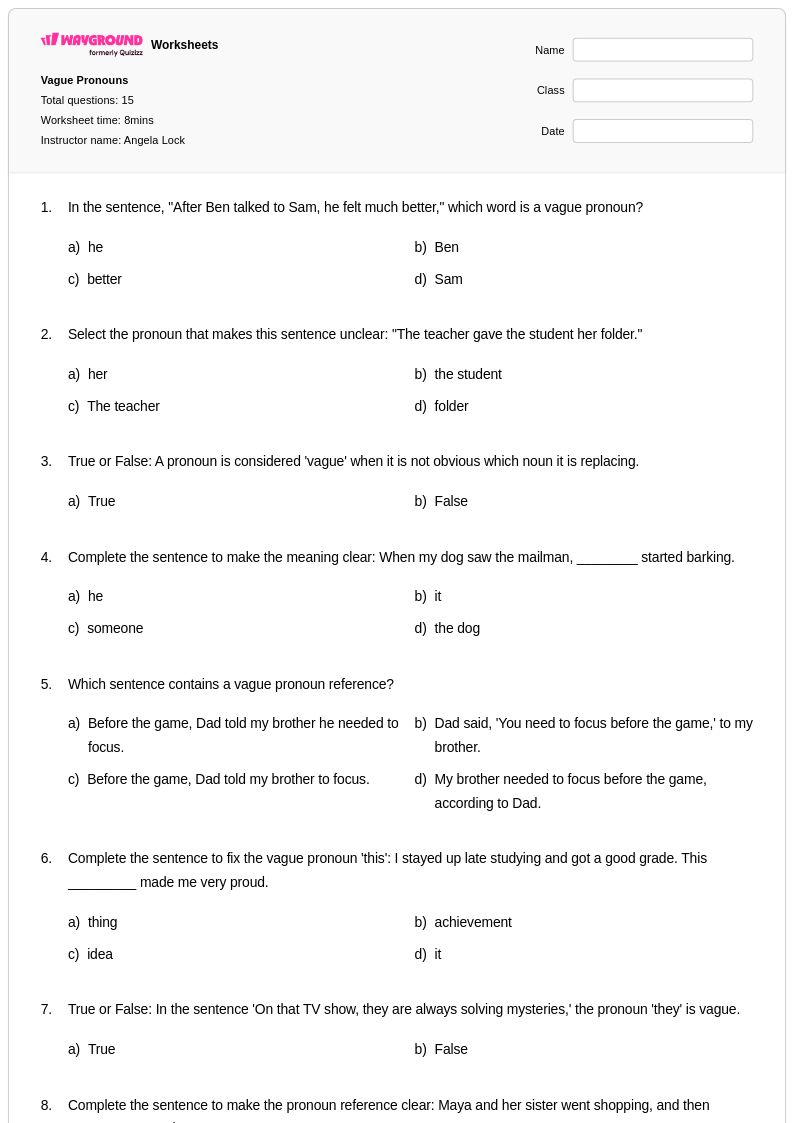
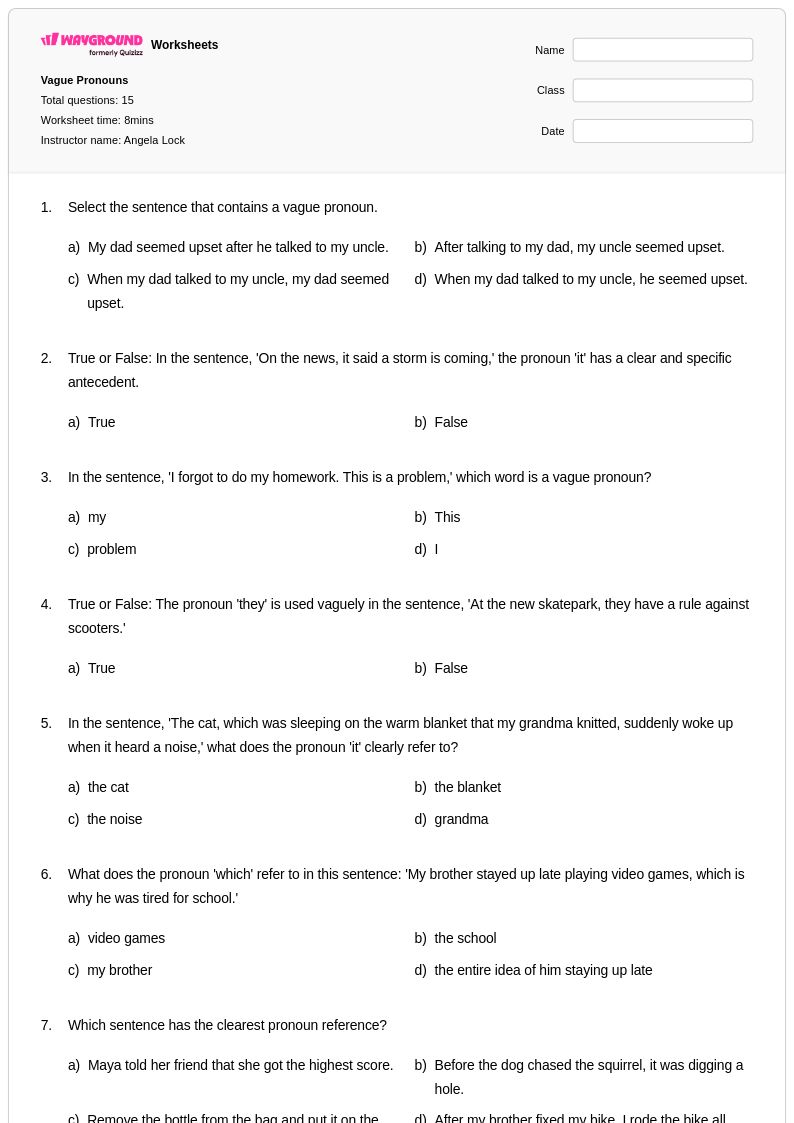
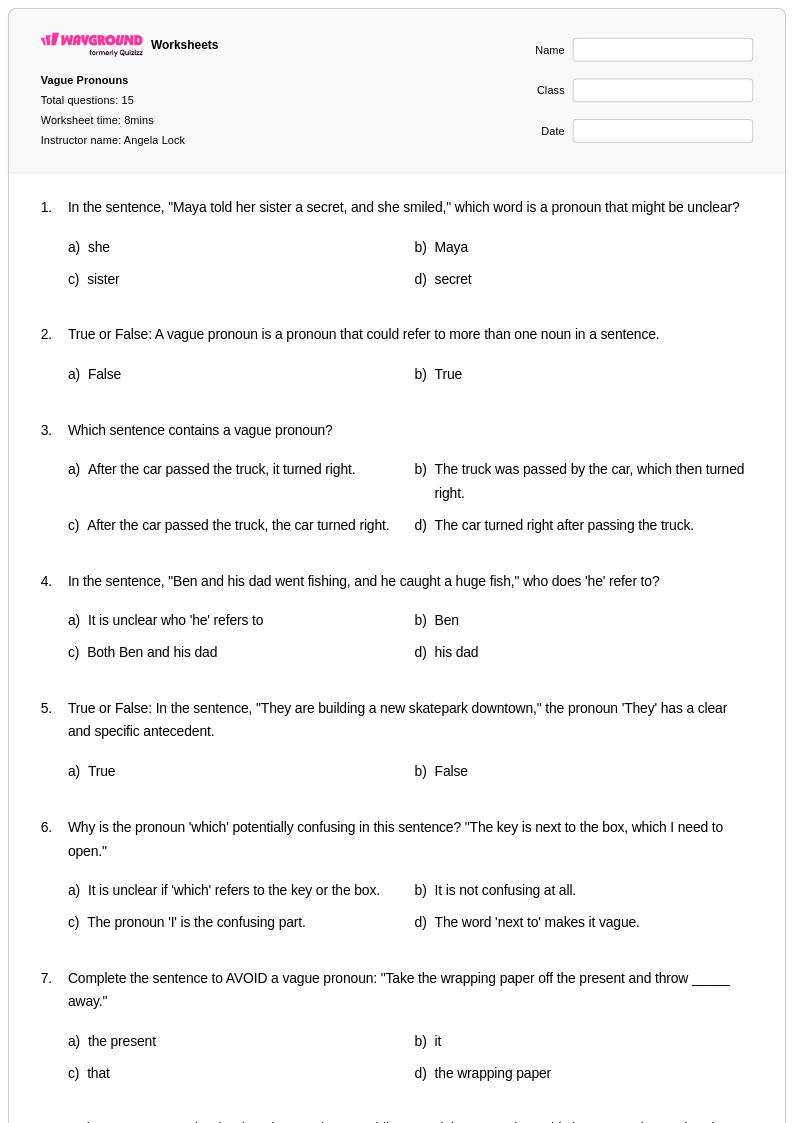
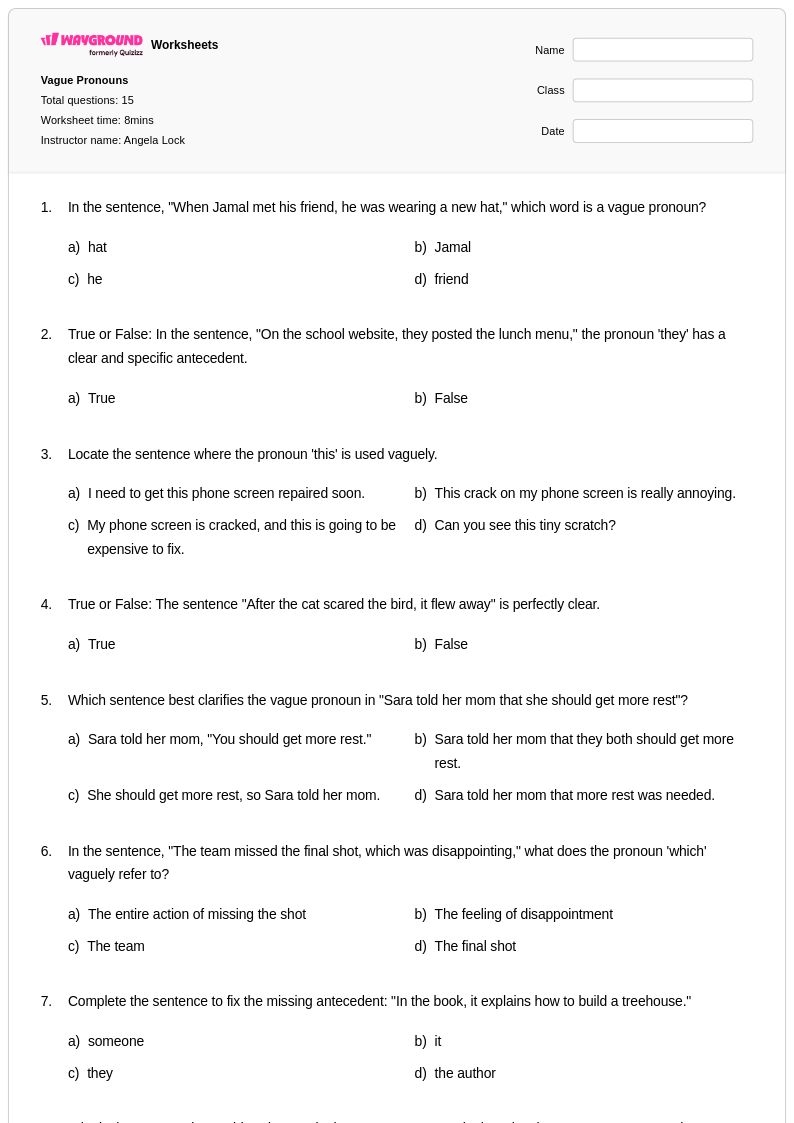
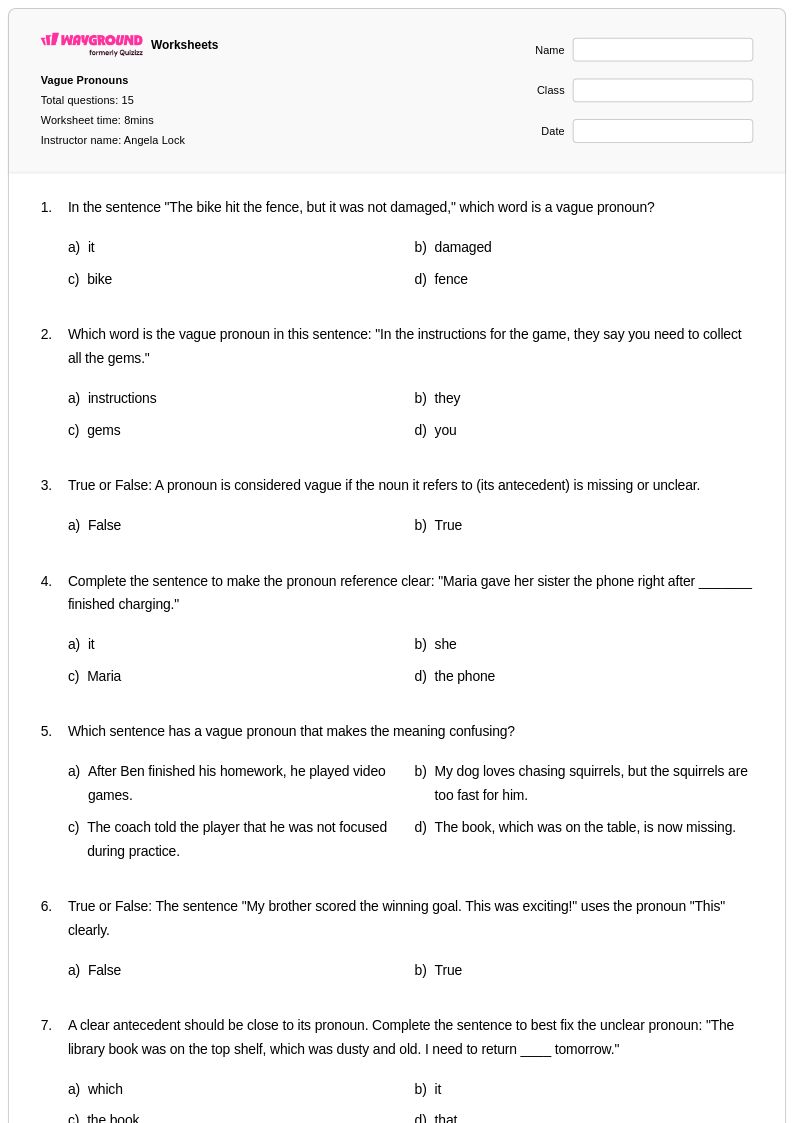
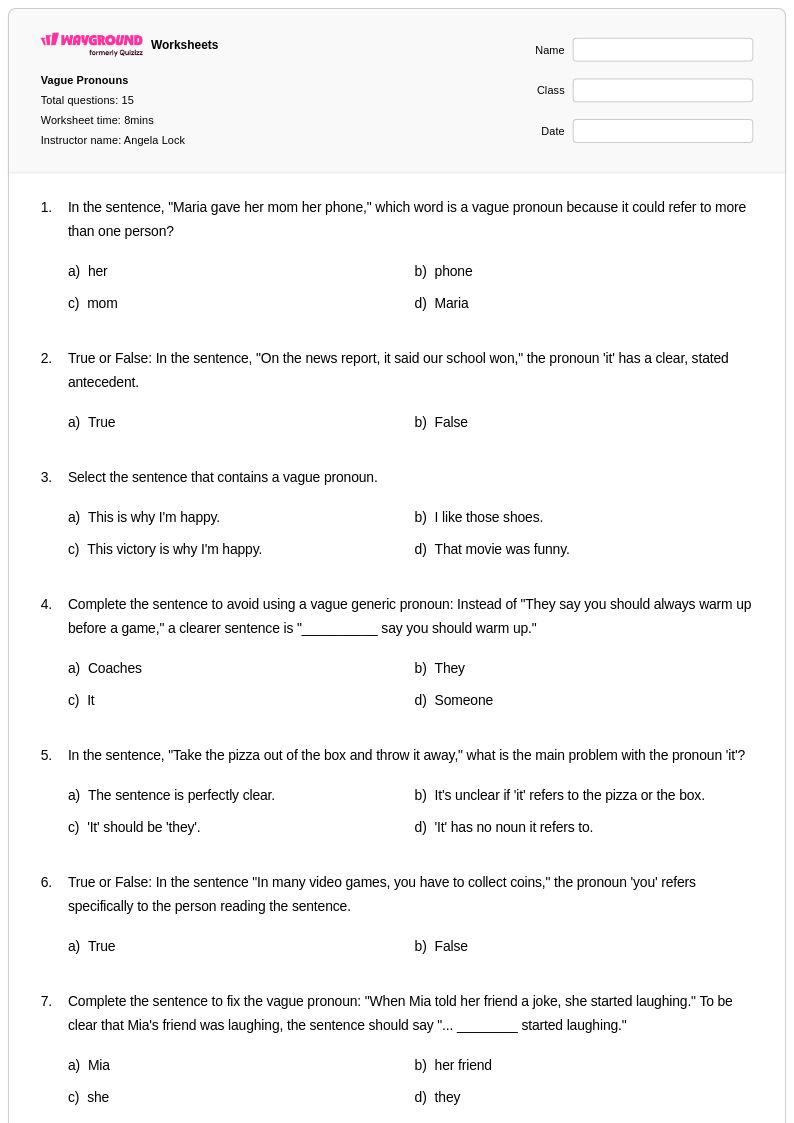
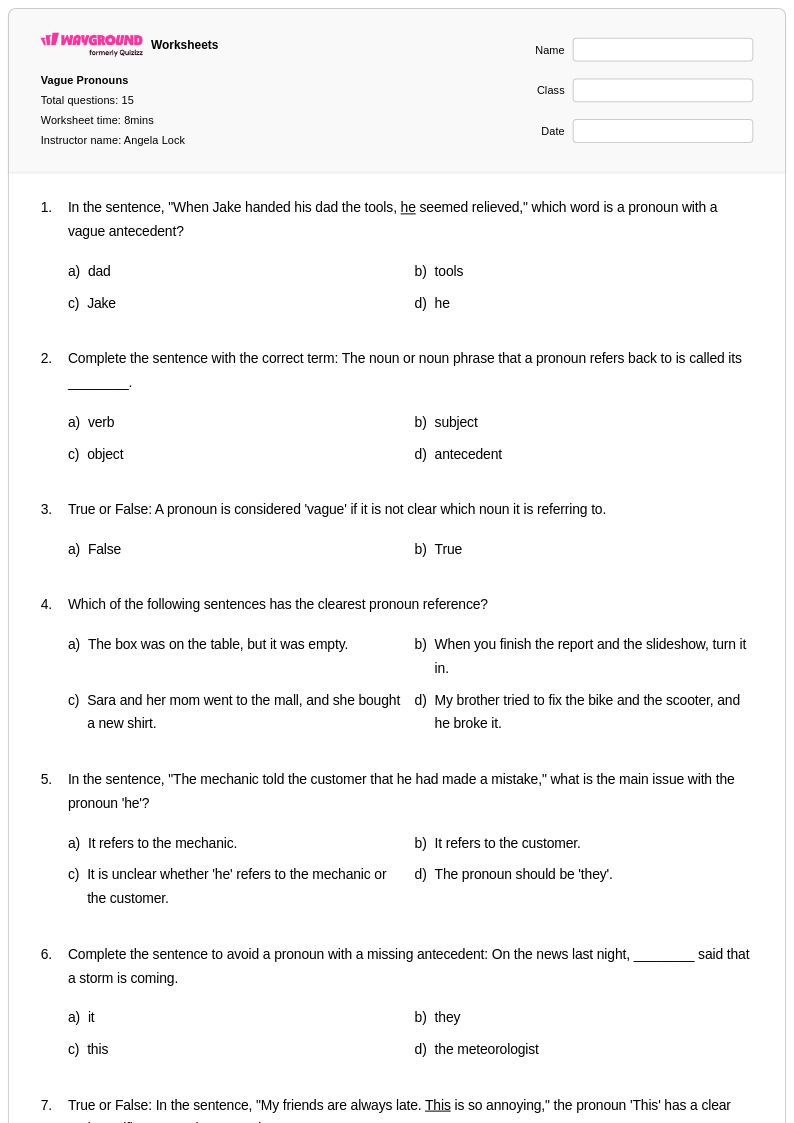
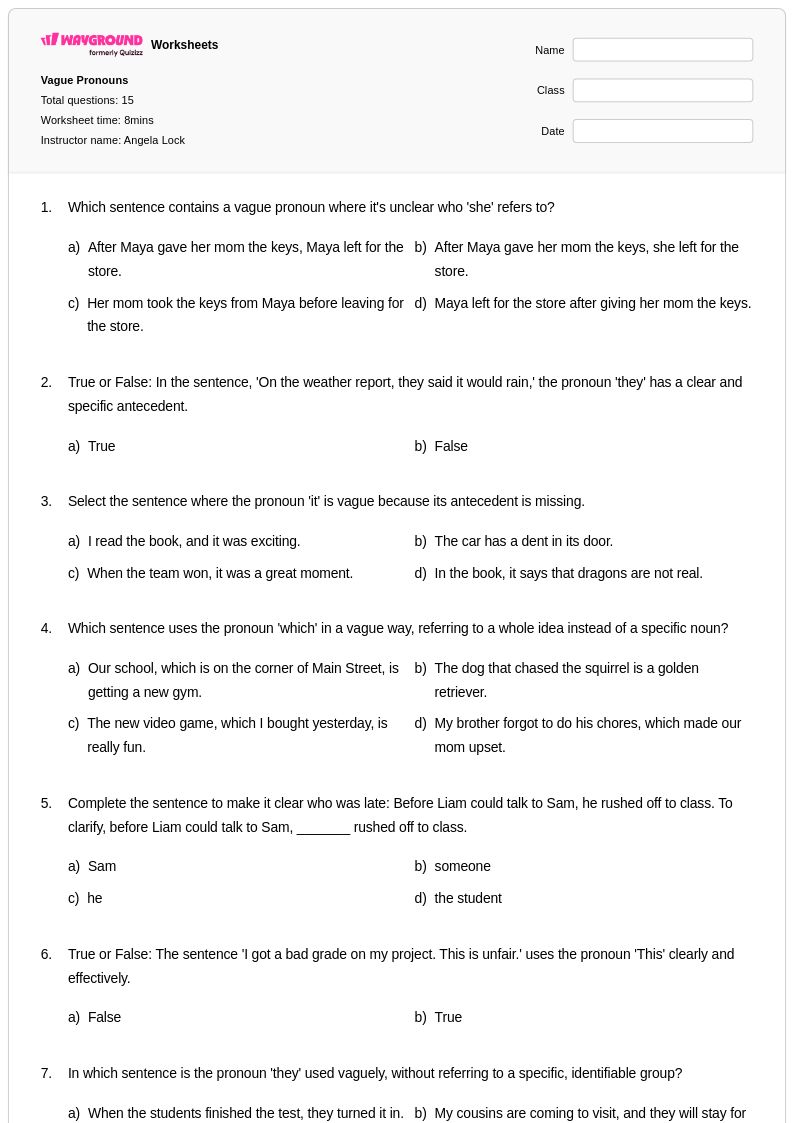
Vague pronouns present a common yet critical writing challenge for Year 10 students, as unclear pronoun references can confuse readers and weaken the effectiveness of written communication. Wayground's comprehensive collection of vague pronoun worksheets addresses this essential grammar concept by providing targeted practice problems that help students identify ambiguous pronoun references and revise sentences for clarity. These free printable resources focus on strengthening students' ability to recognize when pronouns like "it," "they," "this," and "that" lack clear antecedents, while also teaching effective revision strategies to eliminate confusion. Each worksheet includes detailed answer keys that guide students through the process of analyzing pronoun clarity, making these pdf resources invaluable for both independent practice and classroom instruction as students develop more sophisticated writing skills.
Wayground, formerly Quizizz, empowers educators with millions of teacher-created resources specifically designed to support grammar instruction and writing development at the high school level. The platform's advanced search and filtering capabilities allow teachers to quickly locate vague pronoun worksheets that align with curriculum standards and match their students' specific learning needs. Teachers can easily customize these materials to provide differentiated instruction, whether they need additional practice for struggling writers or enrichment activities for advanced students. Available in both printable pdf format and interactive digital versions, these resources streamline lesson planning while offering flexible options for in-class activities, homework assignments, and targeted remediation sessions that help students master this essential component of clear, effective writing.
FAQs
How do I teach students to identify vague pronoun references in their writing?
What exercises best help students practice correcting vague pronouns?
What are the most common mistakes students make with pronoun references?
How do I differentiate vague pronoun instruction for struggling writers versus advanced students?
How can I use Wayground's vague pronouns worksheets in my classroom?
At what point in a writing unit should I introduce vague pronoun lessons?