
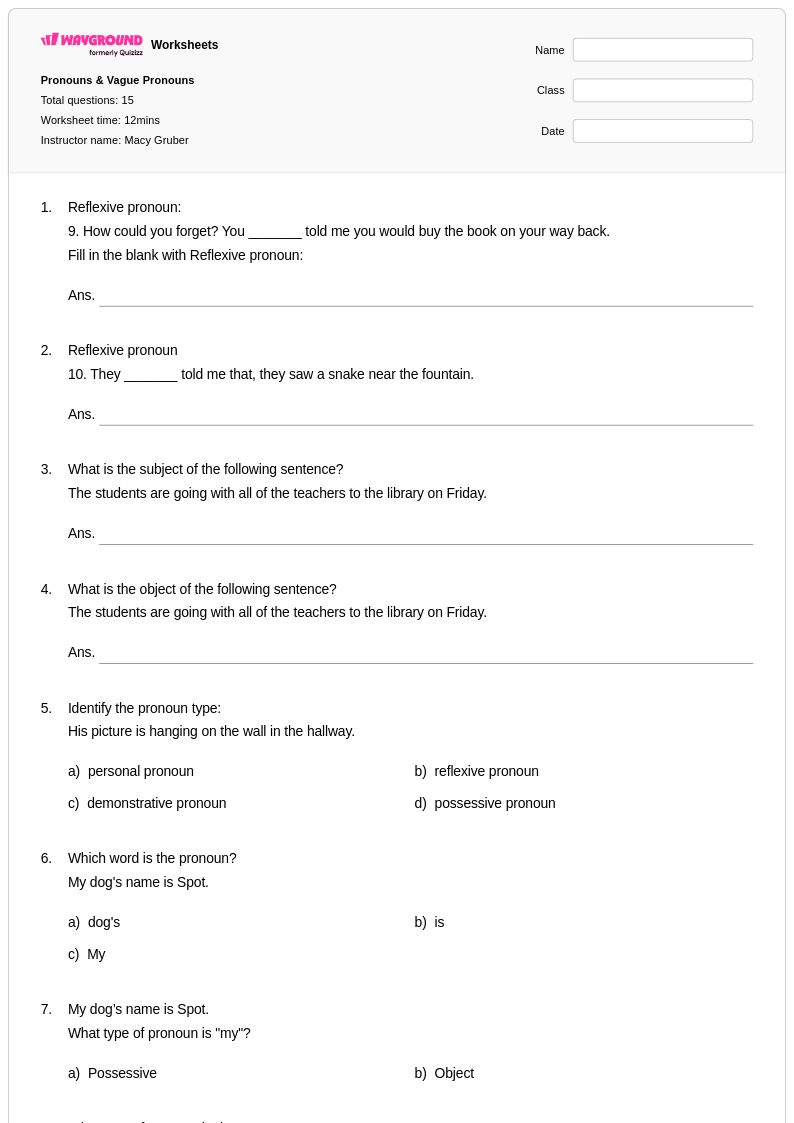
15 Q
6th - 8th
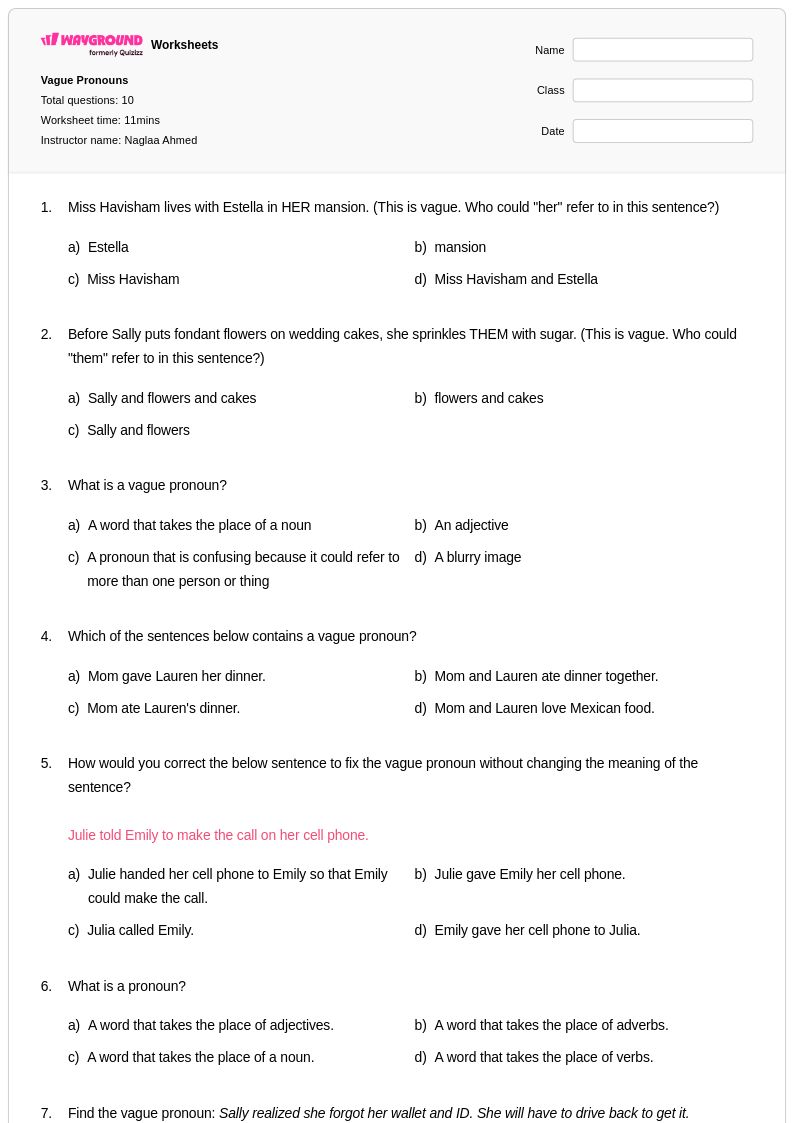
10 Q
6th - 8th
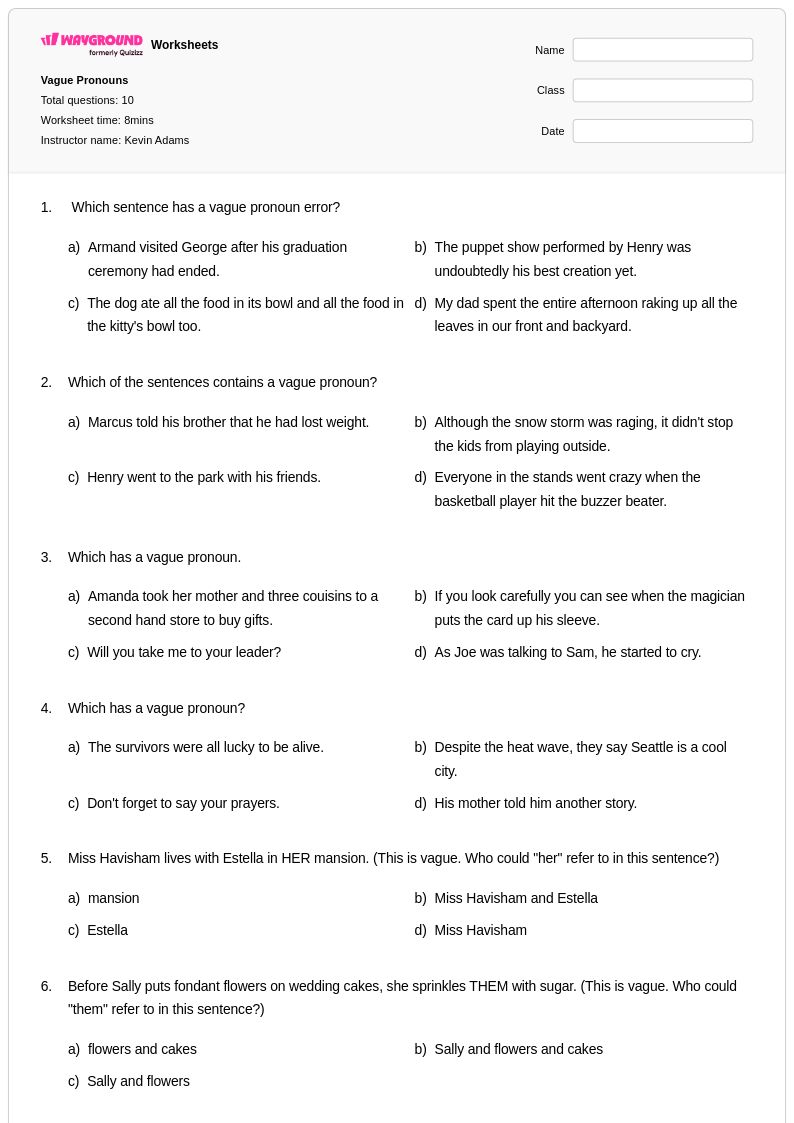
10 Q
6th - Uni
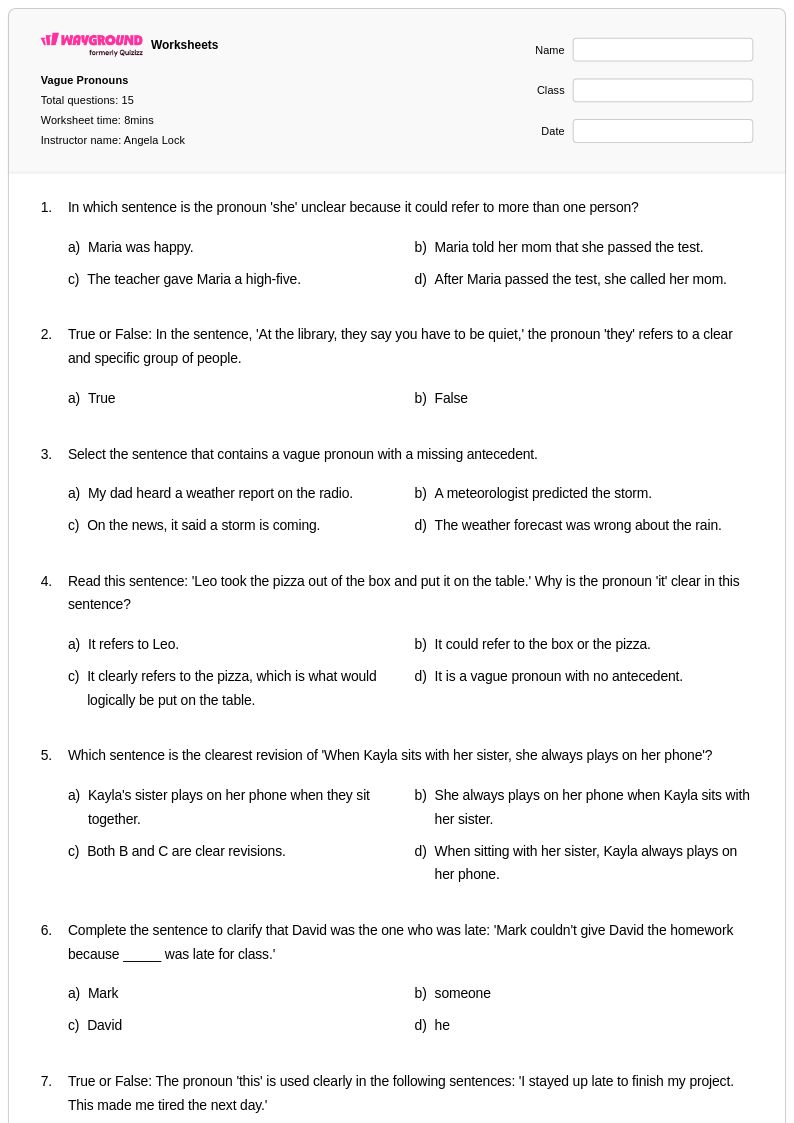
15 Q
6th - Uni
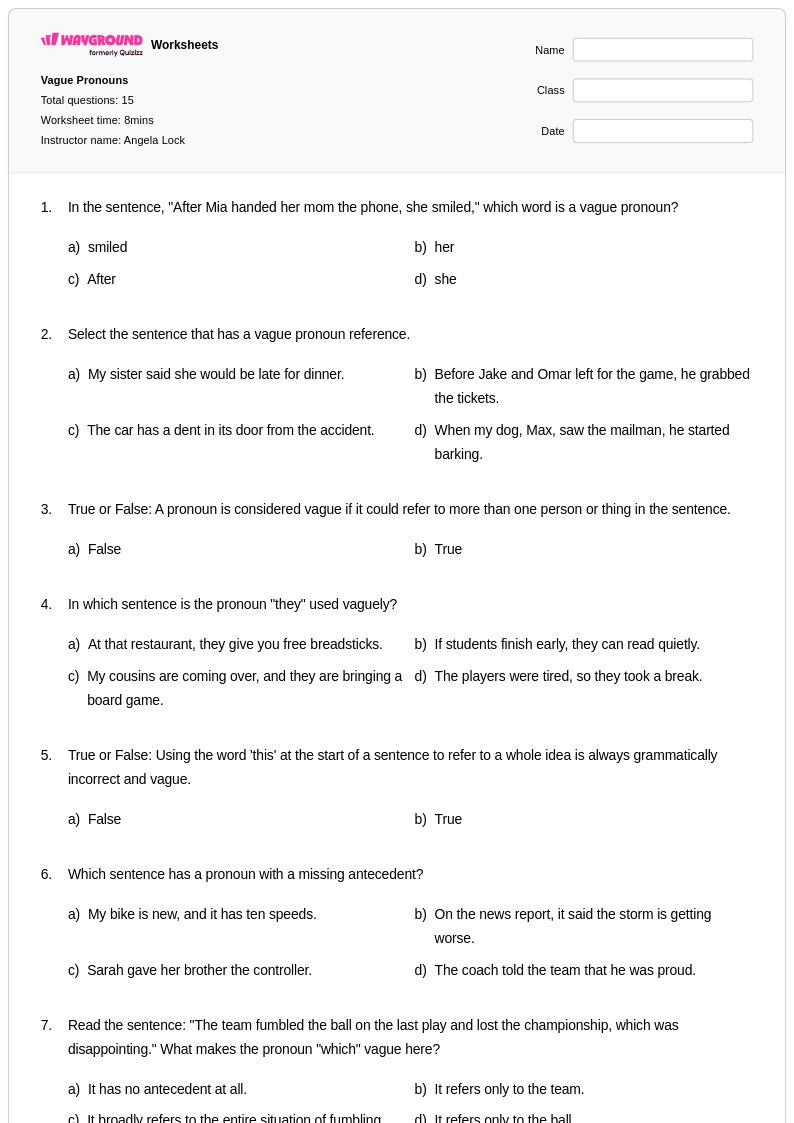
15 Q
8th - Uni
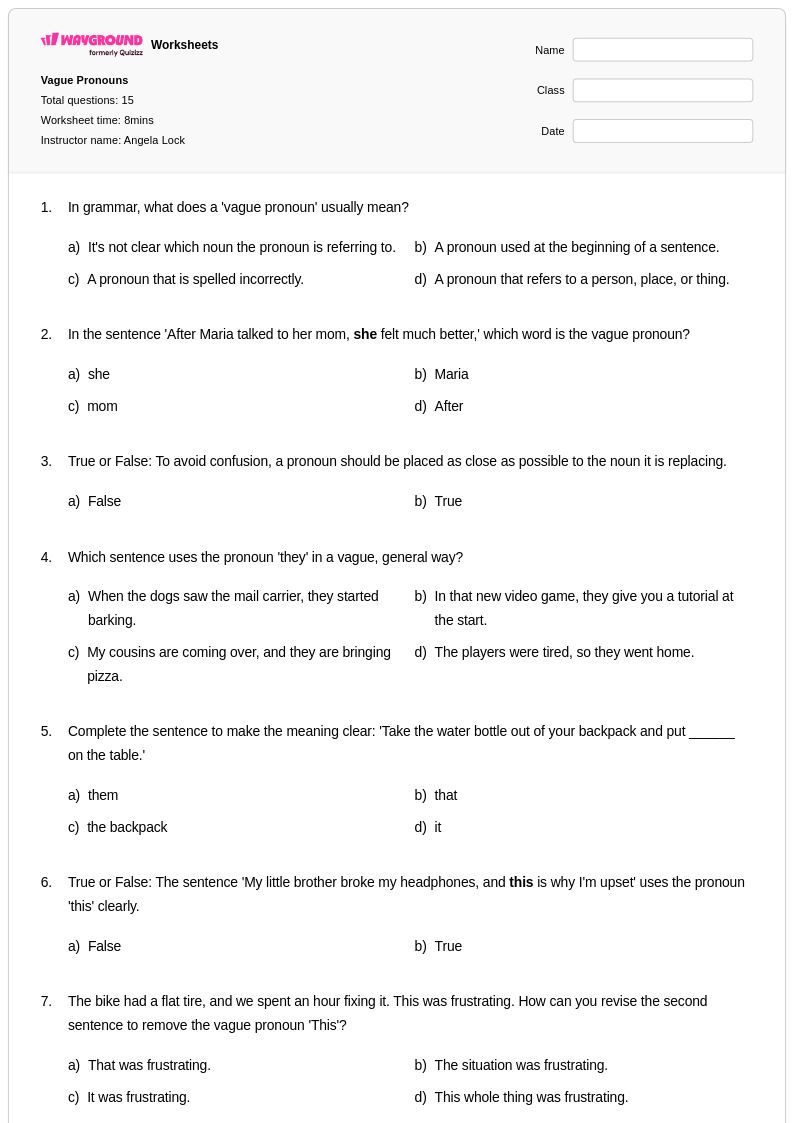
15 Q
7th - Uni
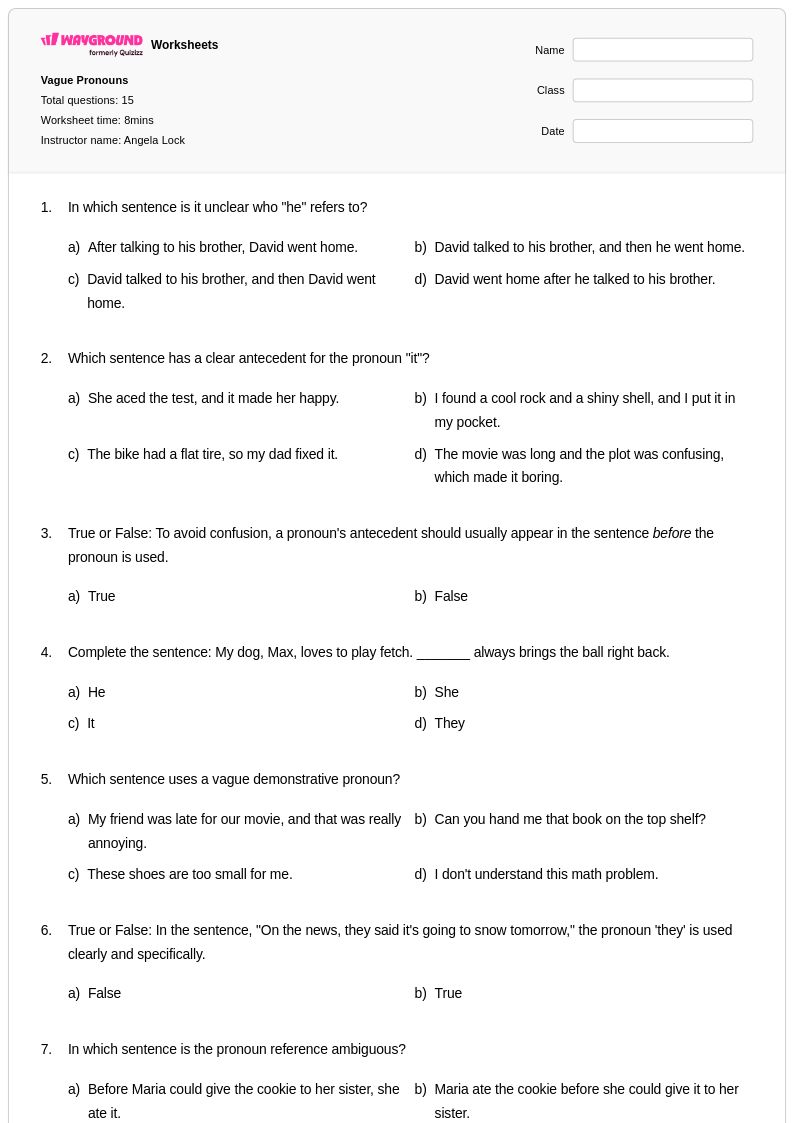
15 Q
8th - Uni
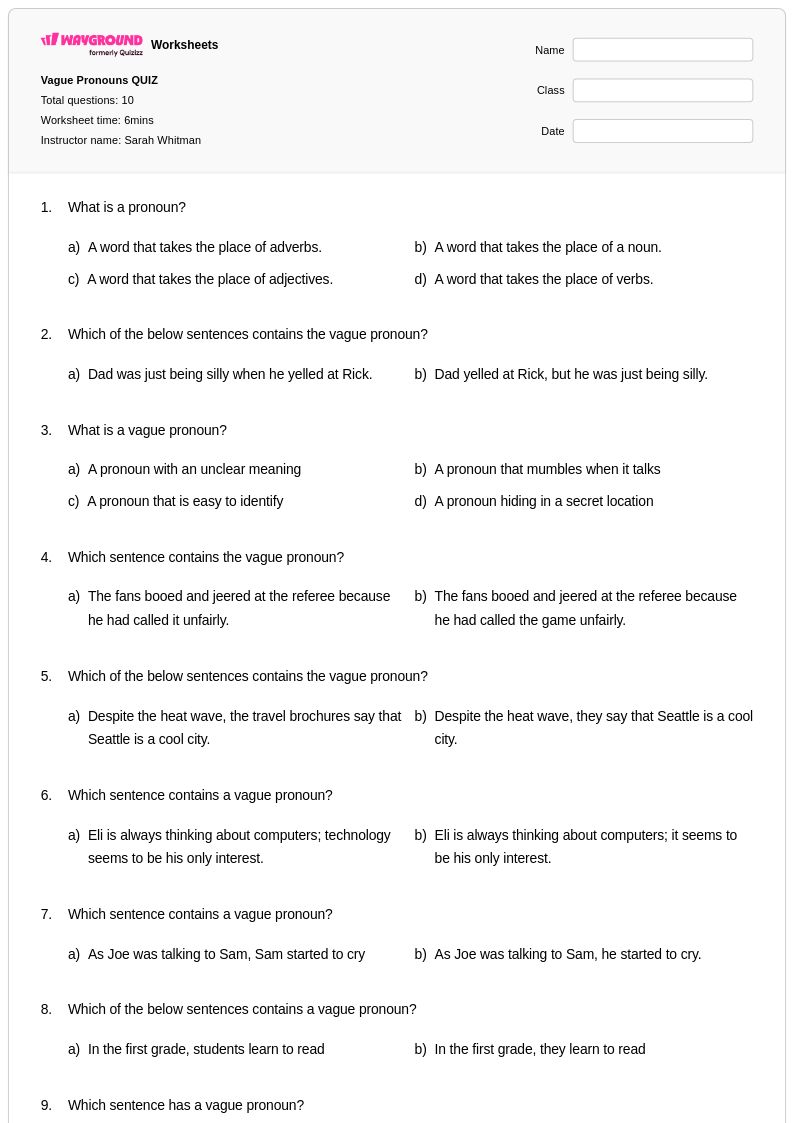
10 Q
6th - 8th
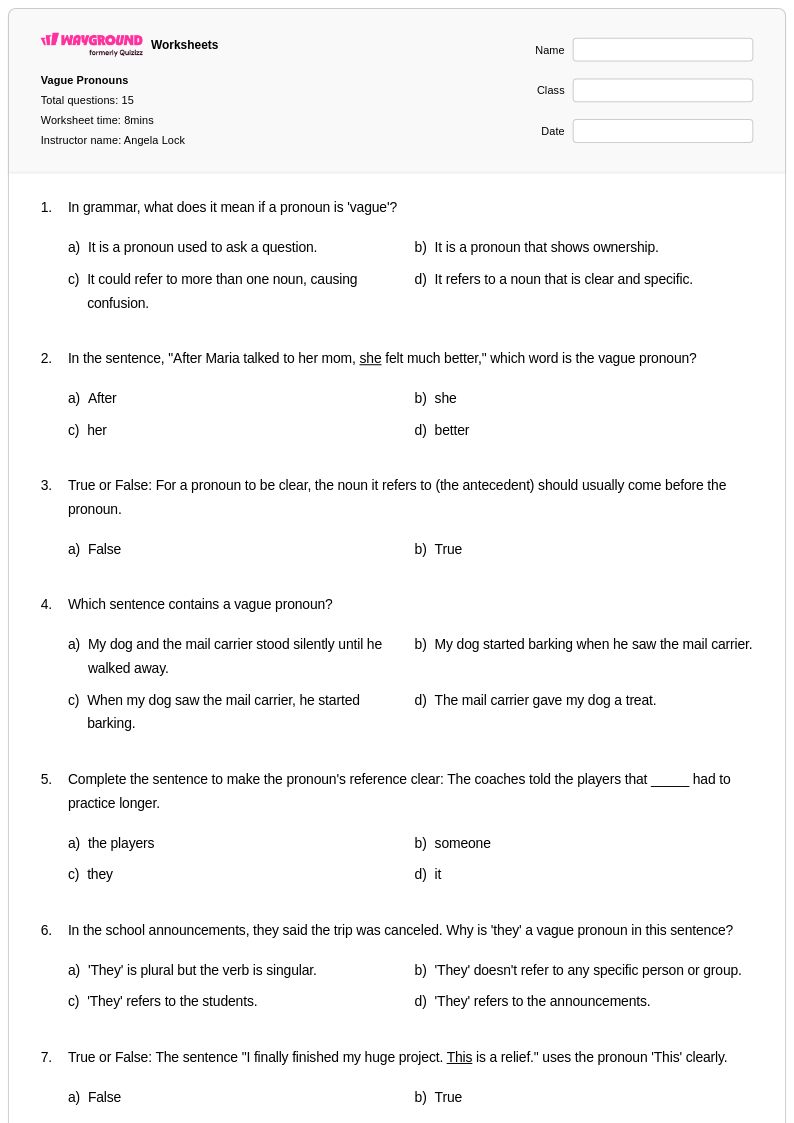
15 Q
6th - Uni
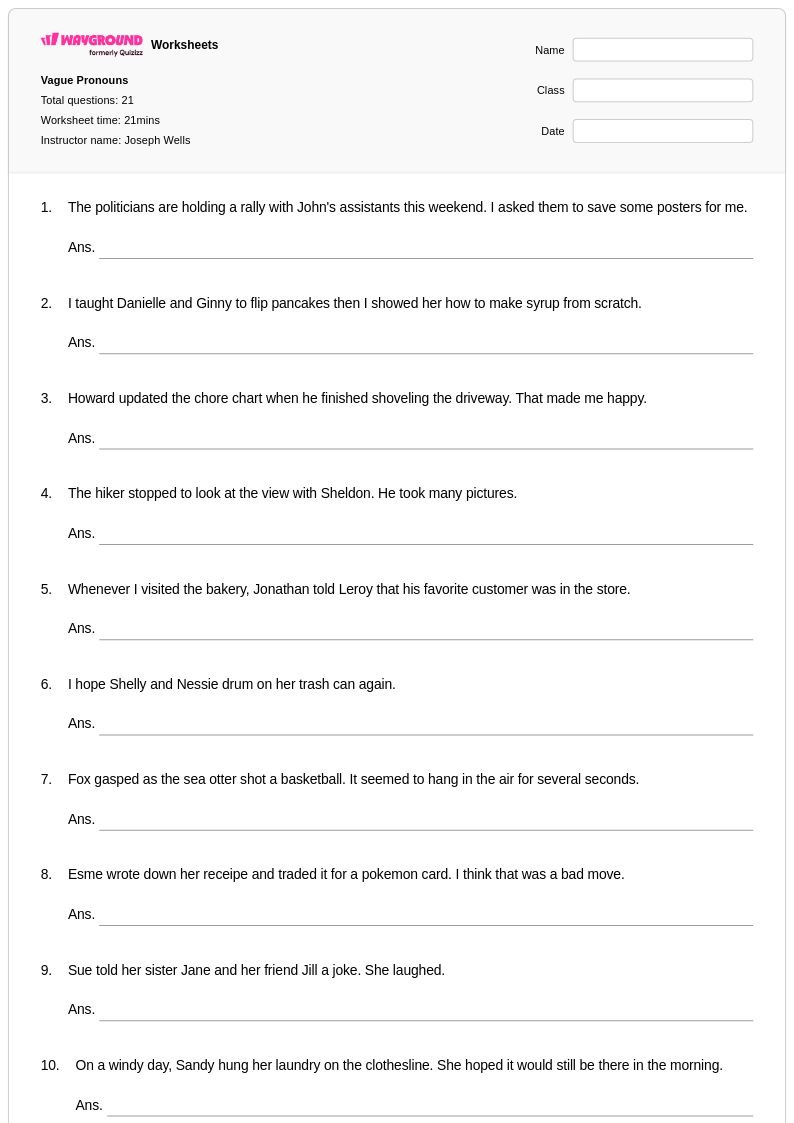
21 Q
6th - 8th
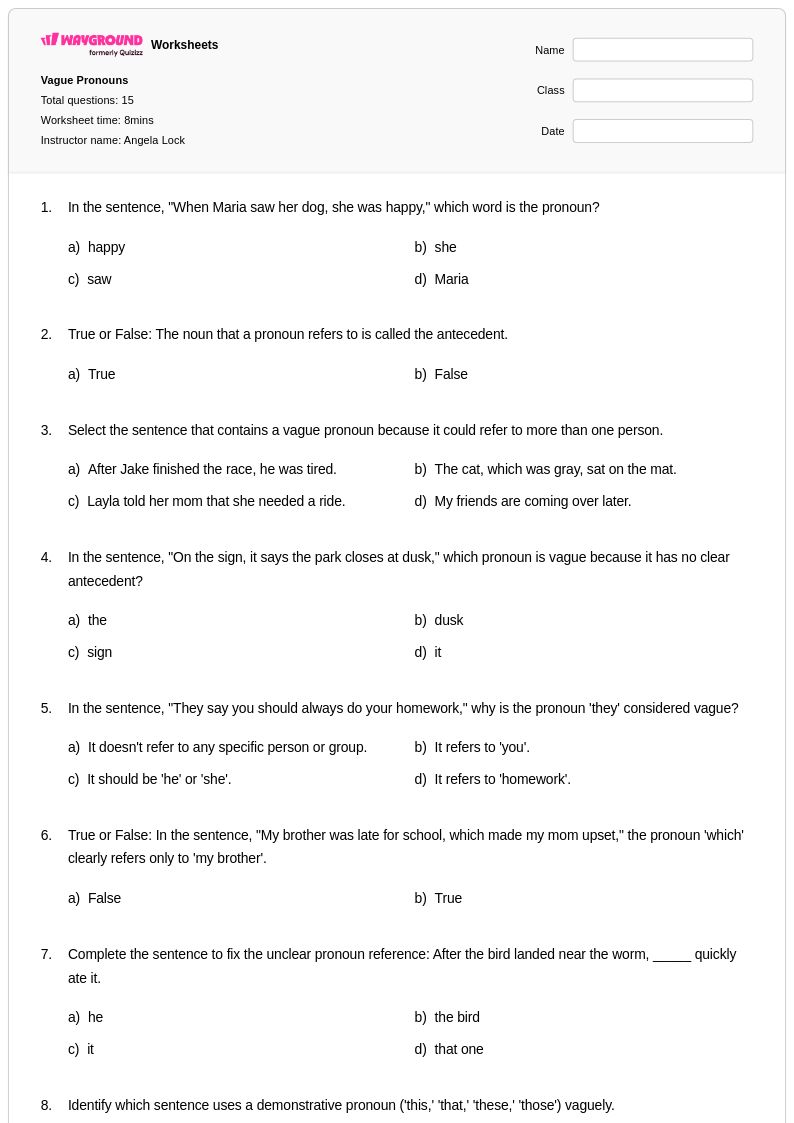
15 Q
6th - Uni
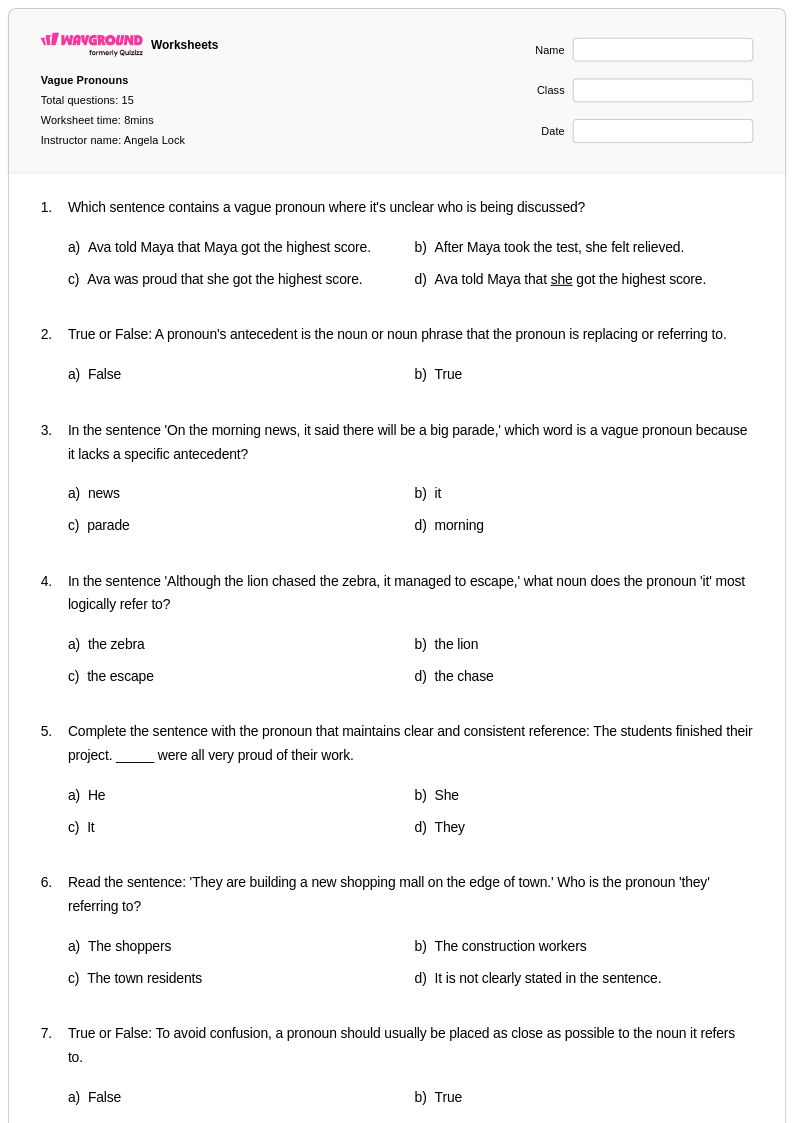
15 Q
7th - Uni
15 Q
8th - Uni
15 Q
7th - Uni
15 Q
6th - Uni
15 Q
7th - Uni
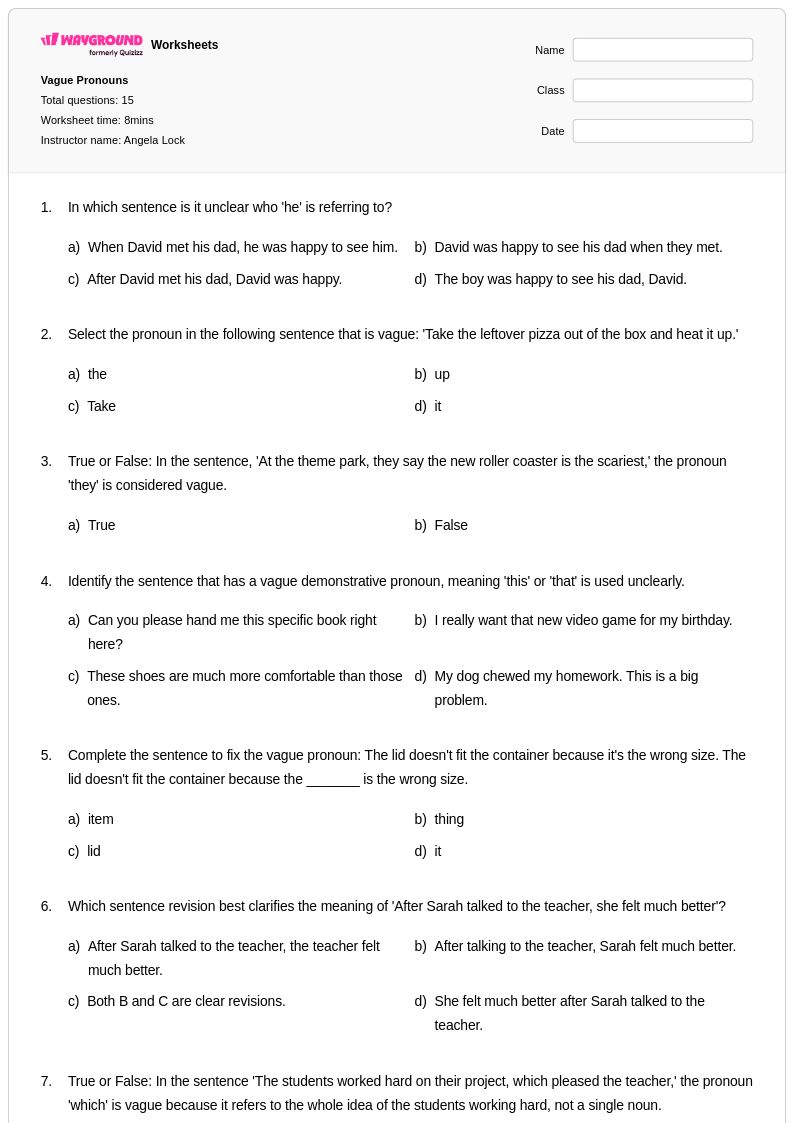
15 Q
7th - Uni
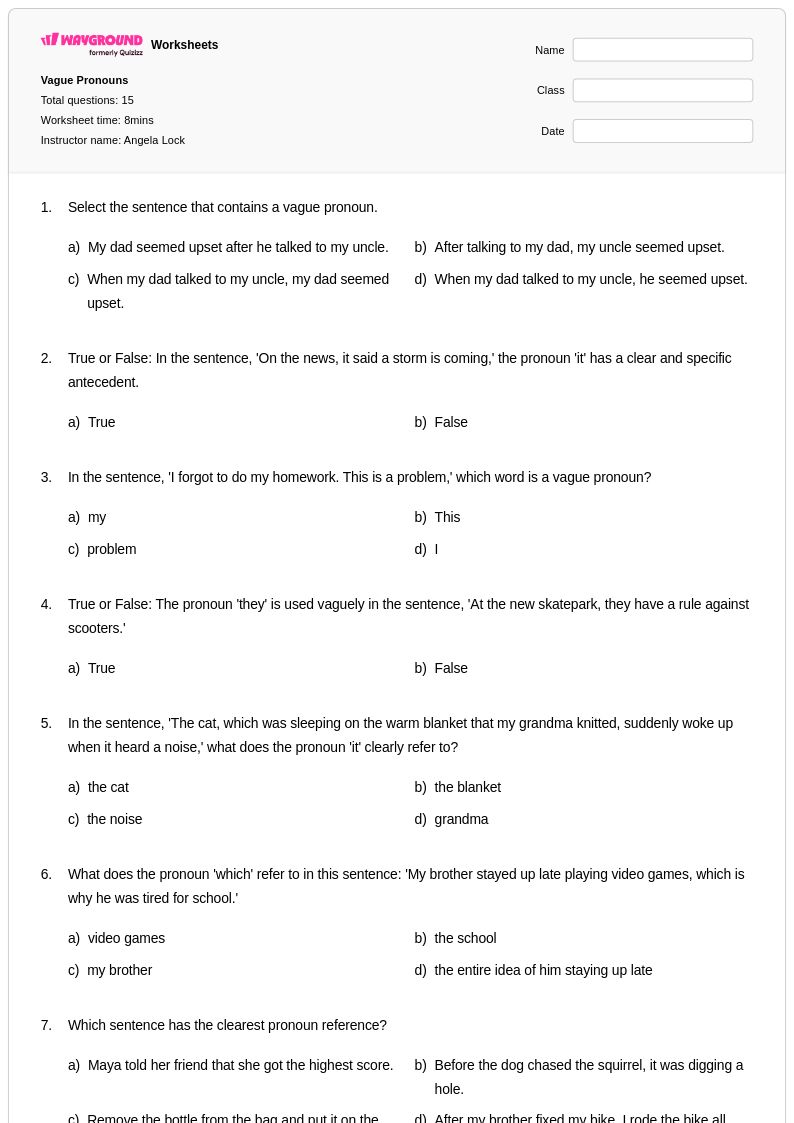
15 Q
7th - Uni
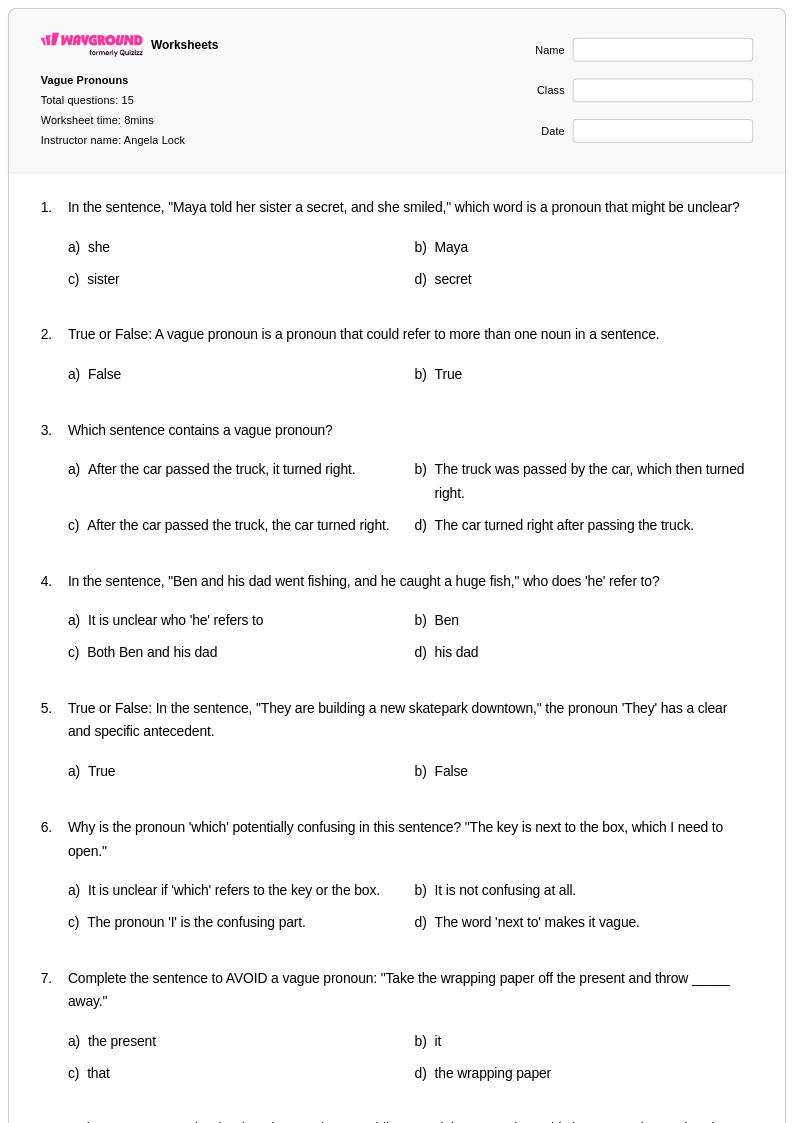
15 Q
6th - Uni
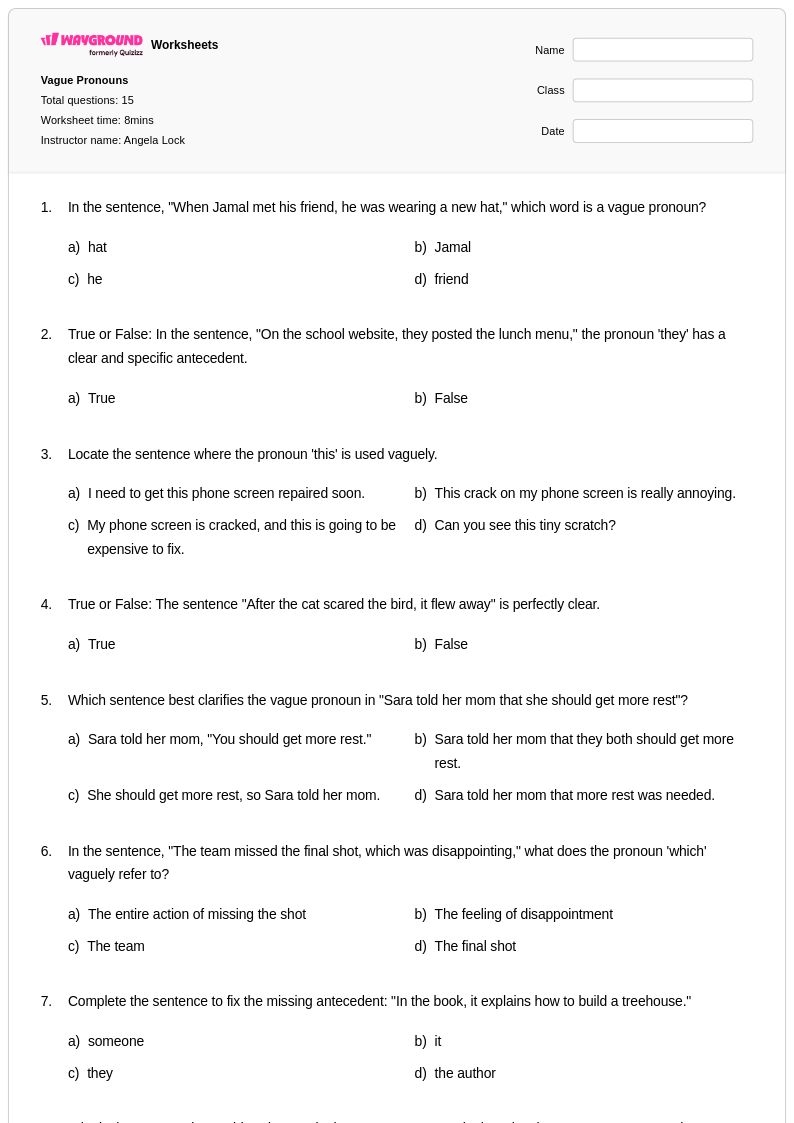
15 Q
8th - Uni
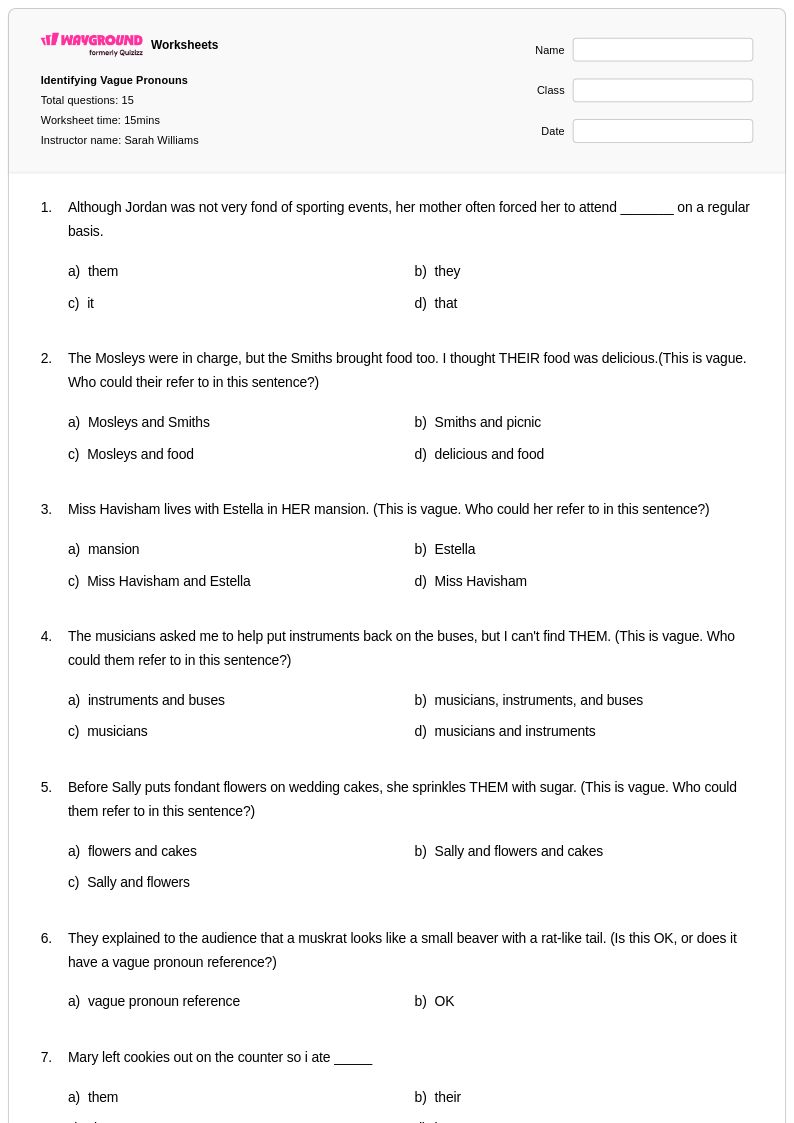
15 Q
6th - Uni
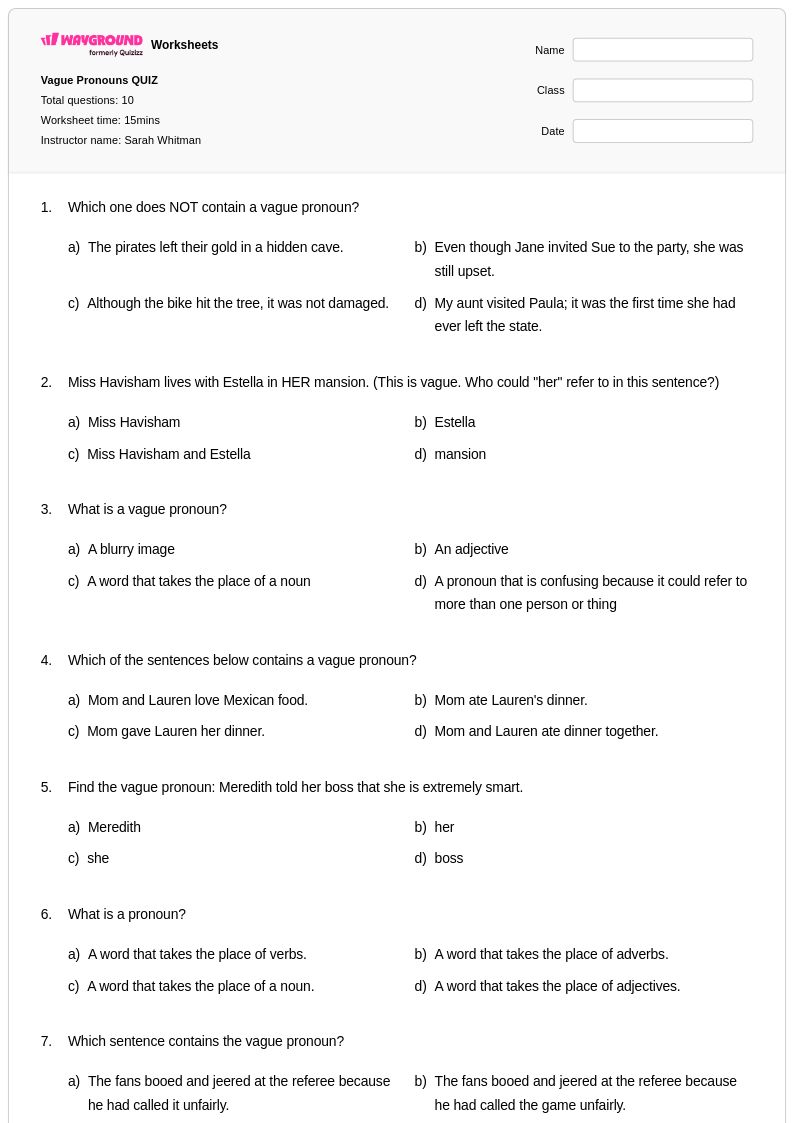
10 Q
6th - 8th
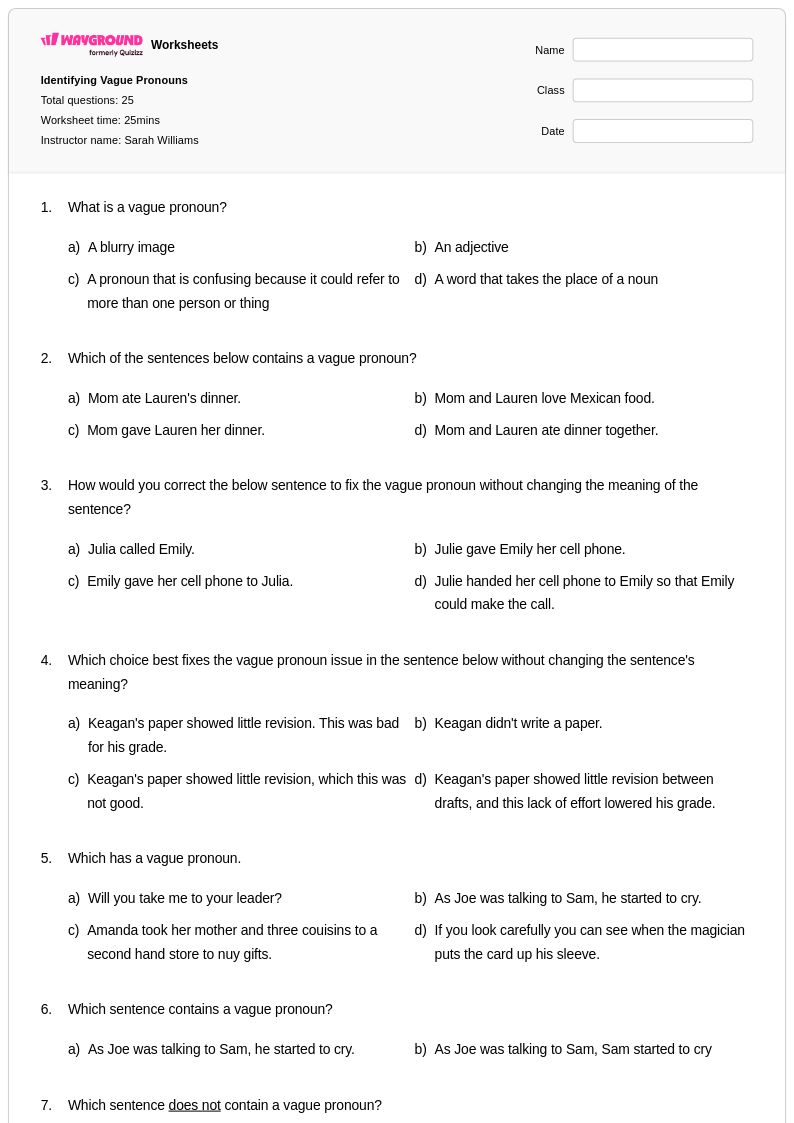
25 Q
6th - Uni
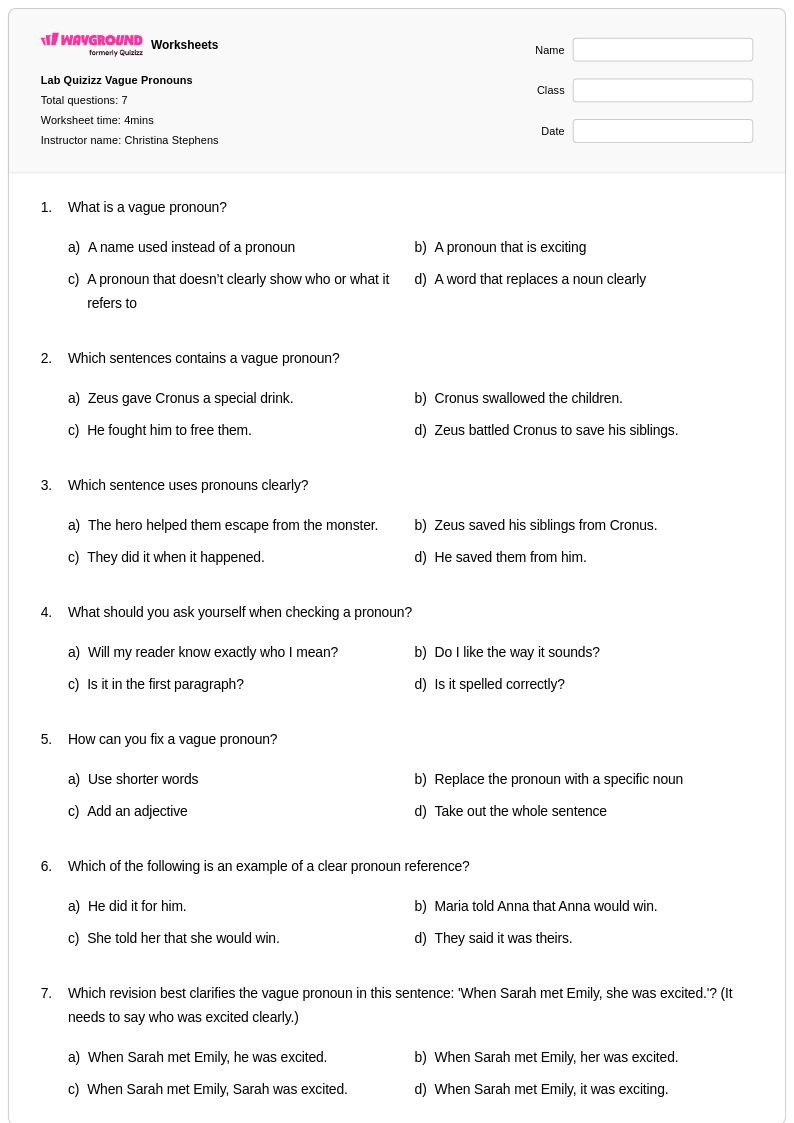
7 Q
6th - 8th
Explore Other Subject Worksheets for year 8
Explore printable Vague Pronouns worksheets for Year 8
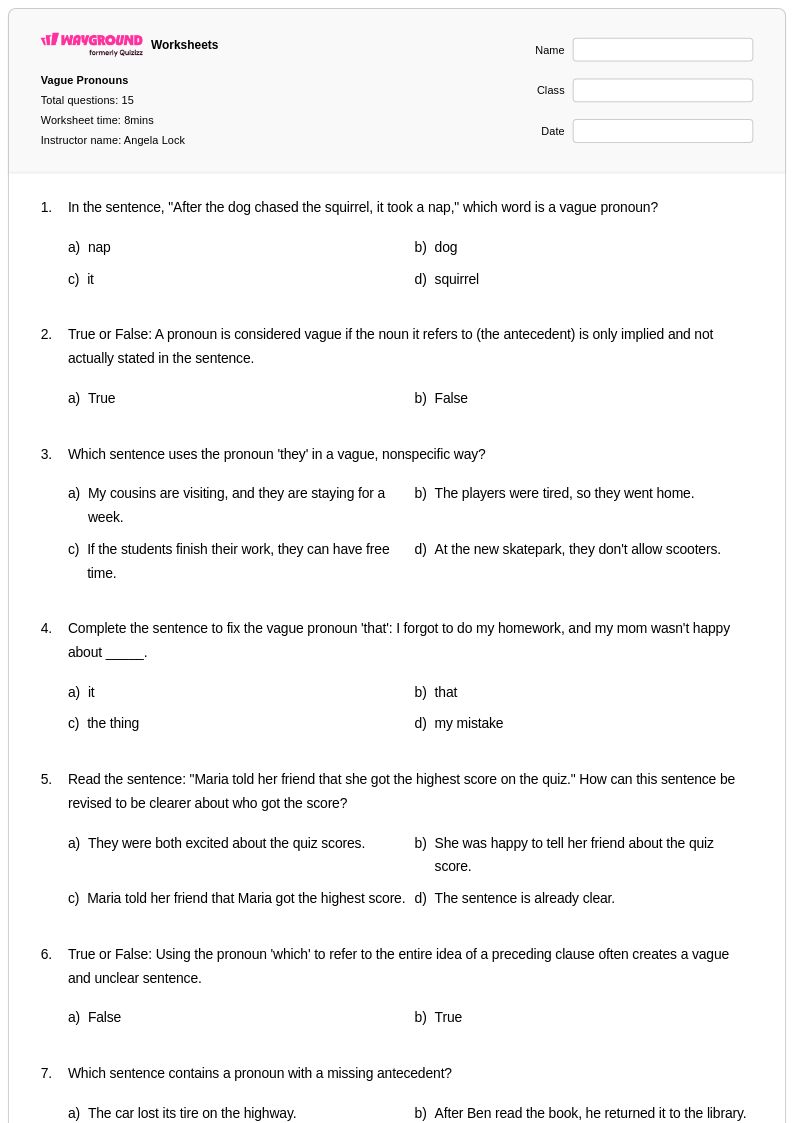
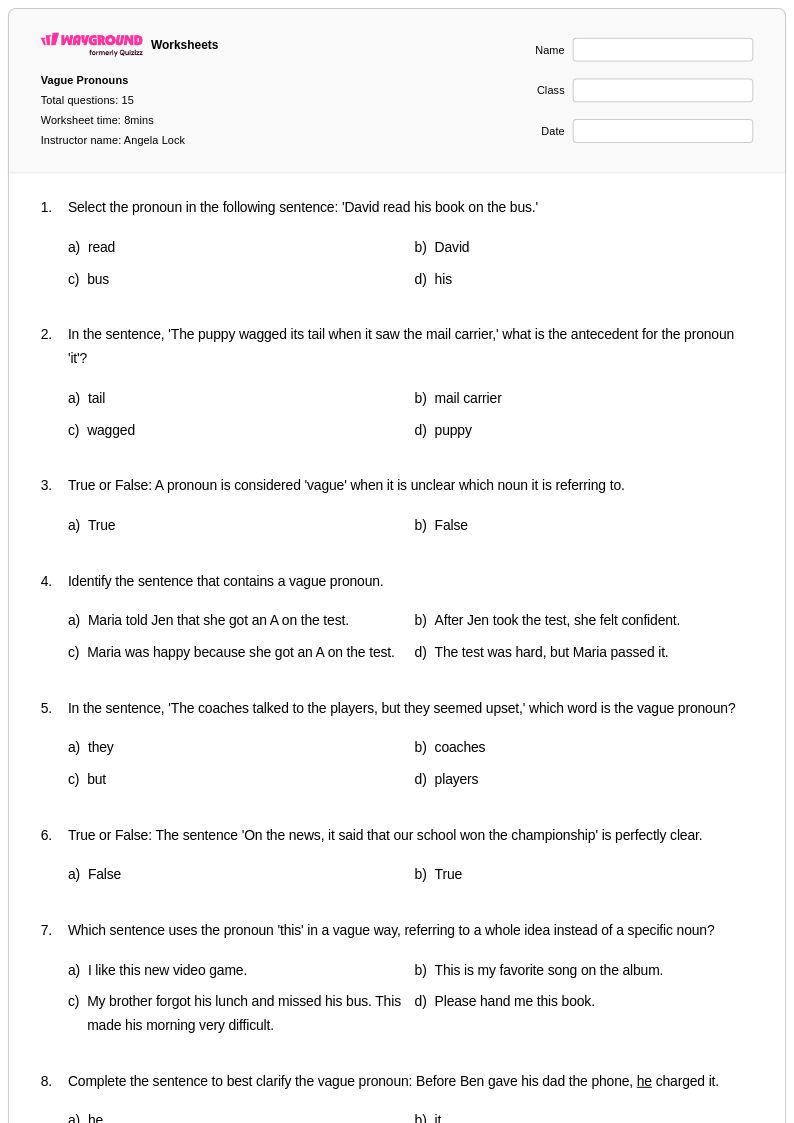
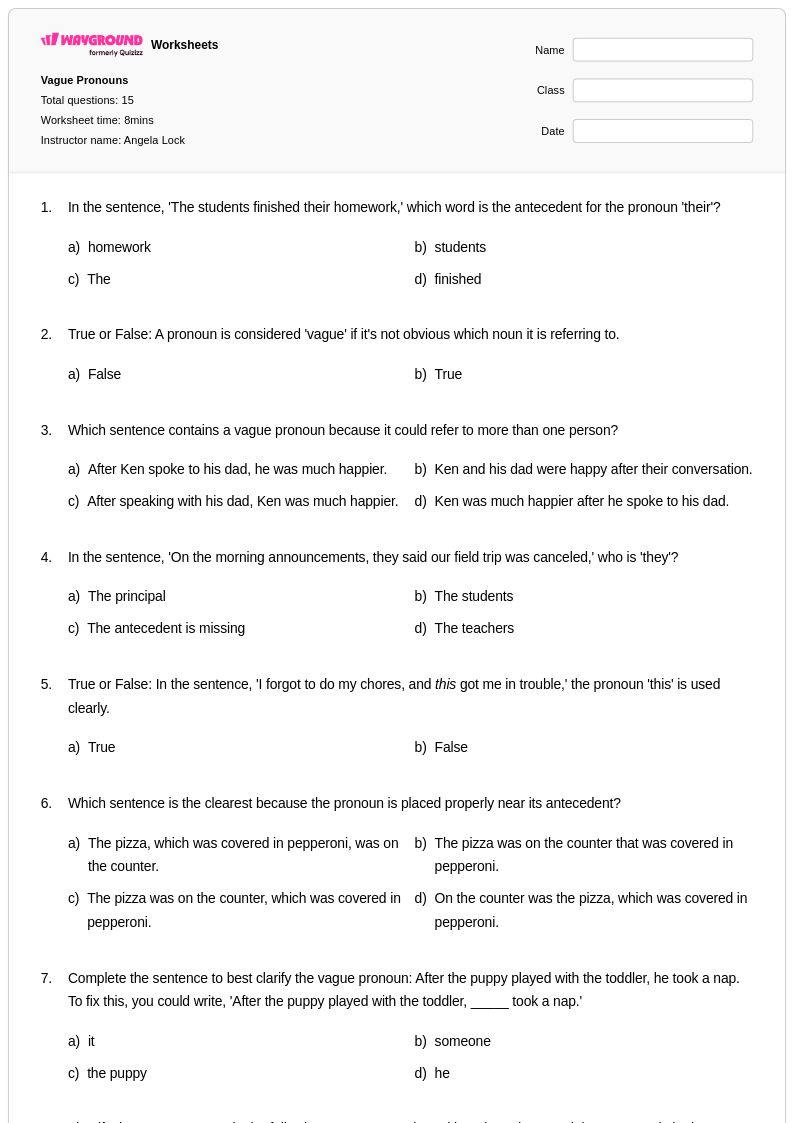
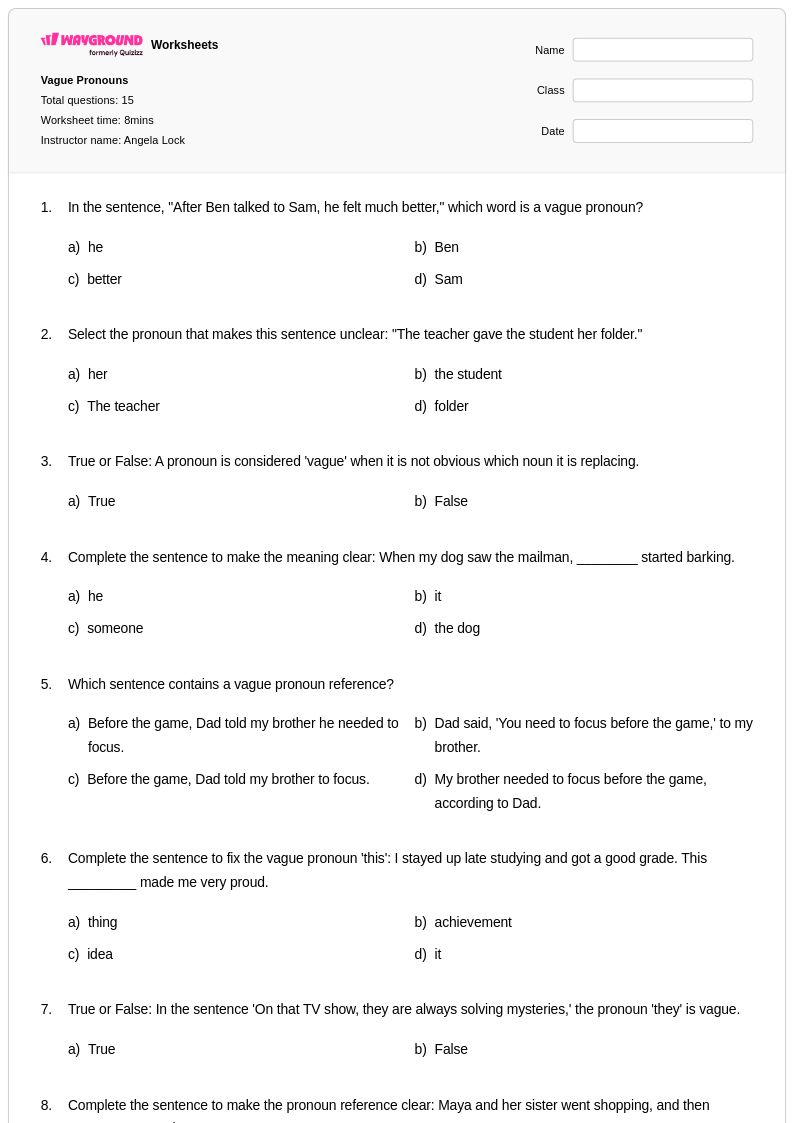
Vague pronouns present a significant challenge for Year 8 students as they develop more sophisticated writing skills and learn to communicate with greater precision and clarity. Wayground's comprehensive collection of vague pronoun worksheets helps students identify and correct unclear pronoun references that can confuse readers and weaken their written communication. These expertly designed practice problems guide students through recognizing when pronouns like "it," "this," "that," and "they" lack clear antecedents, teaching them to revise sentences for improved clarity and coherence. Each worksheet includes detailed answer keys that explain why certain pronoun uses create ambiguity and demonstrate effective revision strategies, while the free printable pdf format ensures teachers can easily incorporate these essential grammar exercises into their lesson plans and homework assignments.
Wayground's platform, formerly known as Quizizz, empowers educators with millions of teacher-created resources specifically focused on pronoun clarity and reference skills, featuring robust search and filtering capabilities that allow teachers to locate grade-appropriate materials aligned with language arts standards. The platform's differentiation tools enable teachers to customize worksheet difficulty levels and select specific types of vague pronoun errors to target, whether students need foundational practice identifying unclear references or advanced work with complex sentence structures. Available in both printable and digital formats, these resources support flexible classroom implementation for initial skill instruction, targeted remediation for struggling writers, and enrichment activities for advanced students ready to tackle sophisticated pronoun usage challenges in their academic writing.
FAQs
How do I teach students to identify vague pronoun references in their writing?
What exercises best help students practice correcting vague pronouns?
What are the most common mistakes students make with pronoun references?
How do I differentiate vague pronoun instruction for struggling writers versus advanced students?
How can I use Wayground's vague pronouns worksheets in my classroom?
At what point in a writing unit should I introduce vague pronoun lessons?