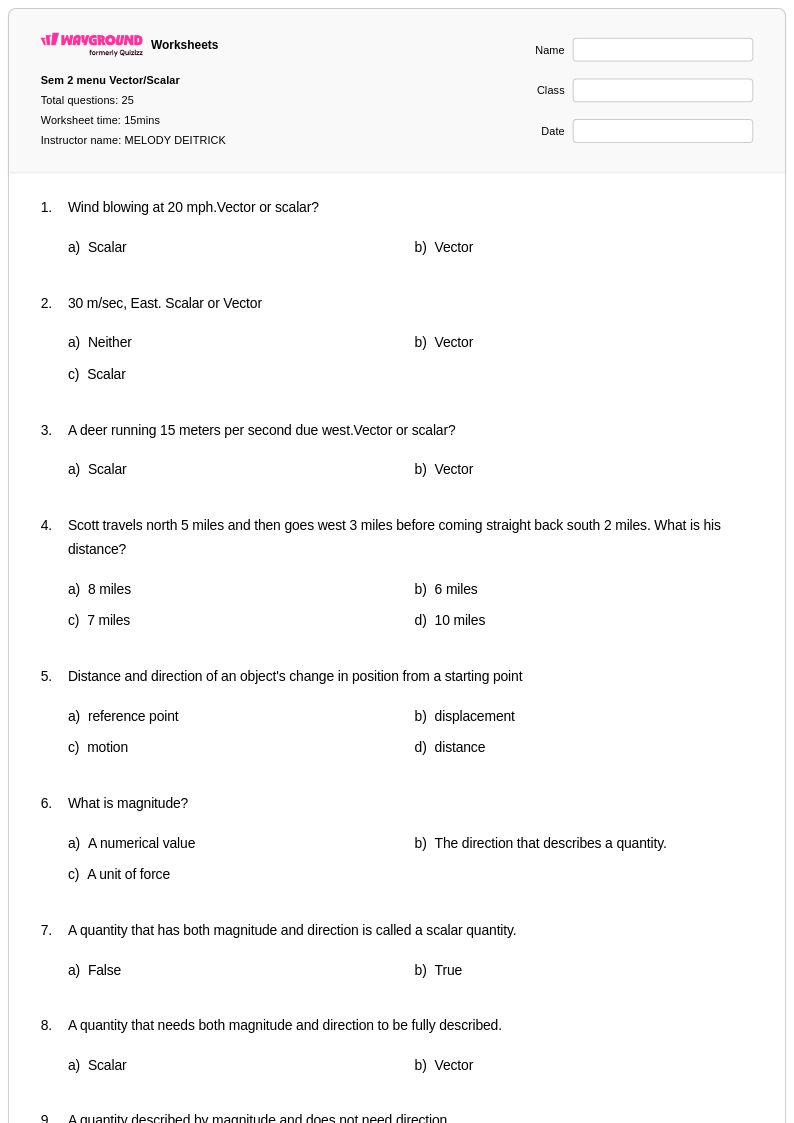
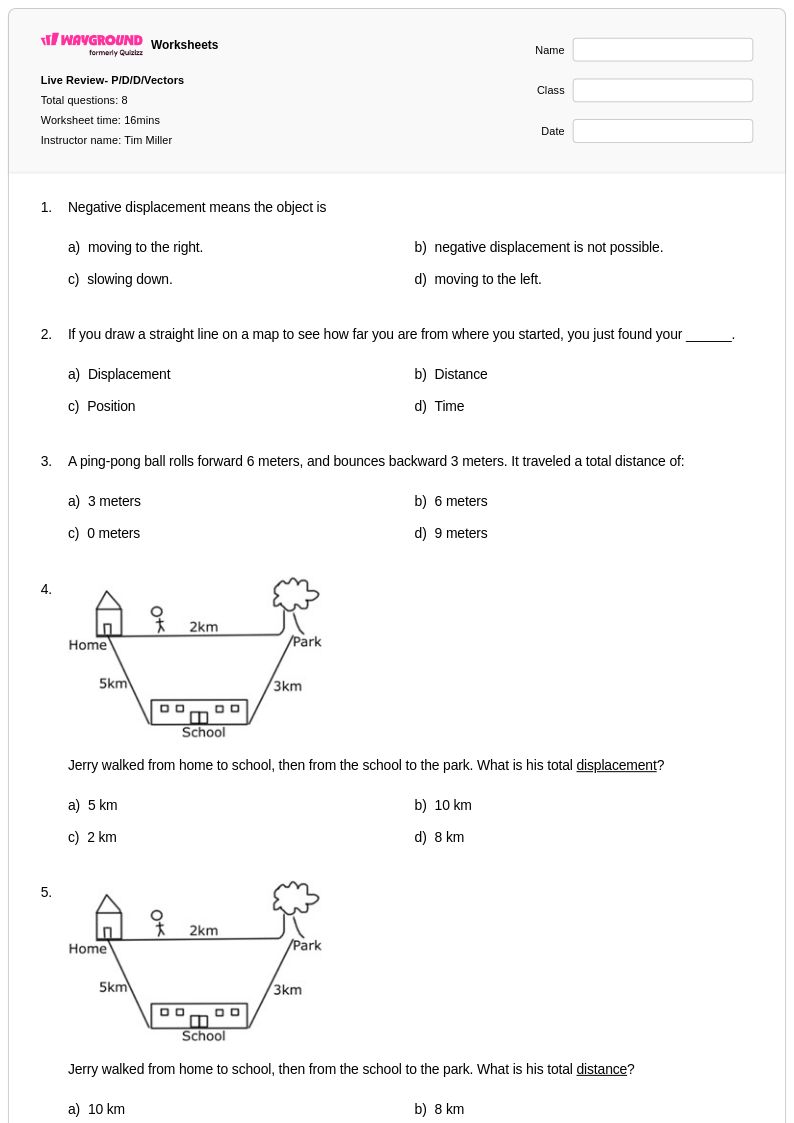
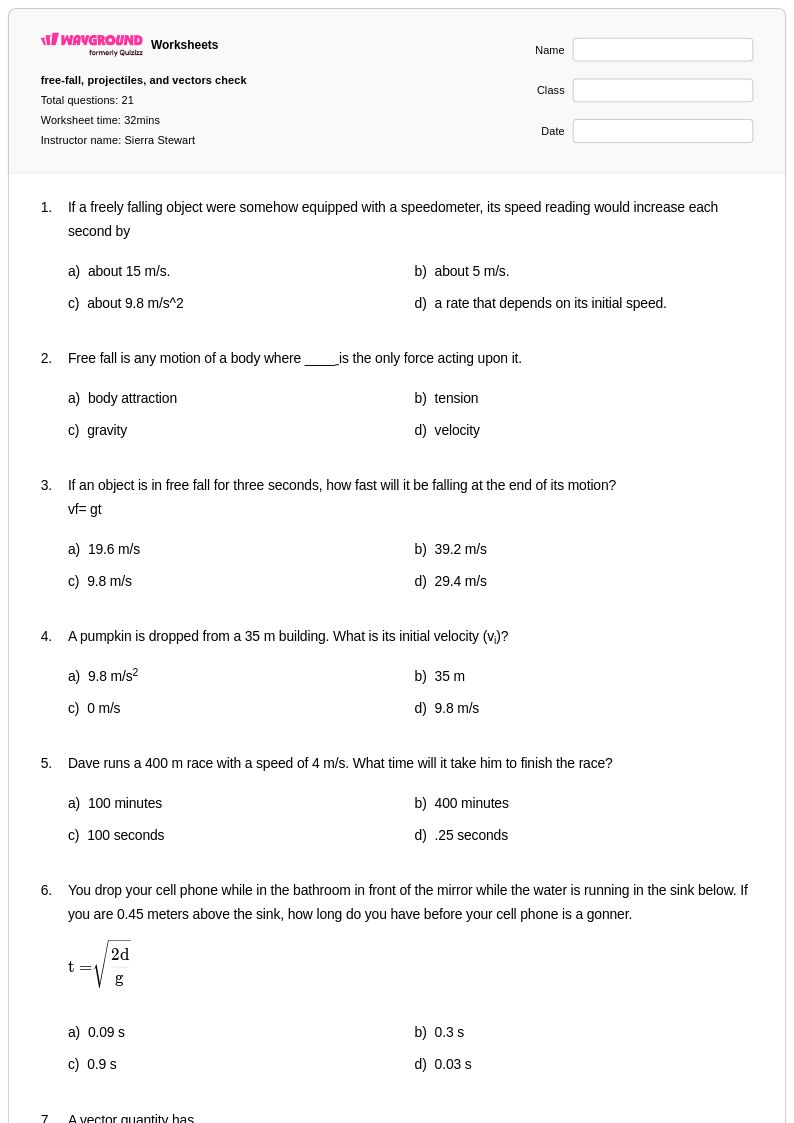
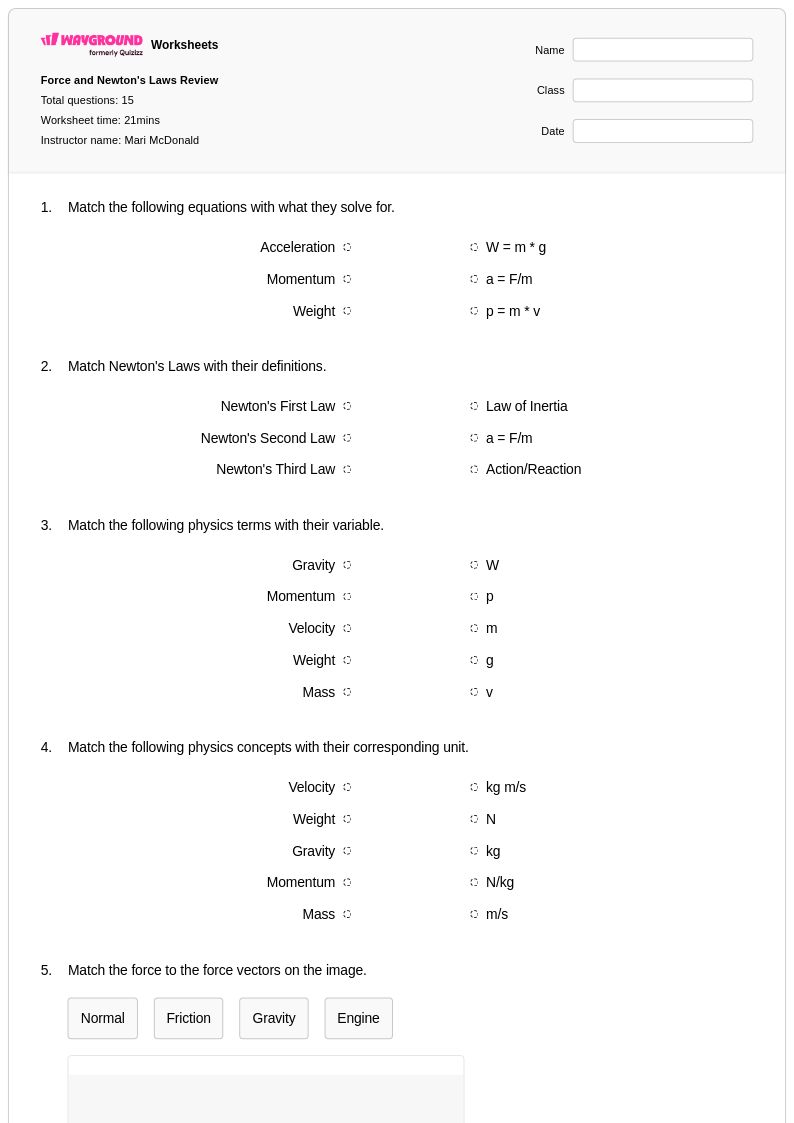
Year 9 vectors worksheets from Wayground provide comprehensive printables and practice problems to help students master vector concepts, complete with answer keys and free PDF downloads for effective physics learning.
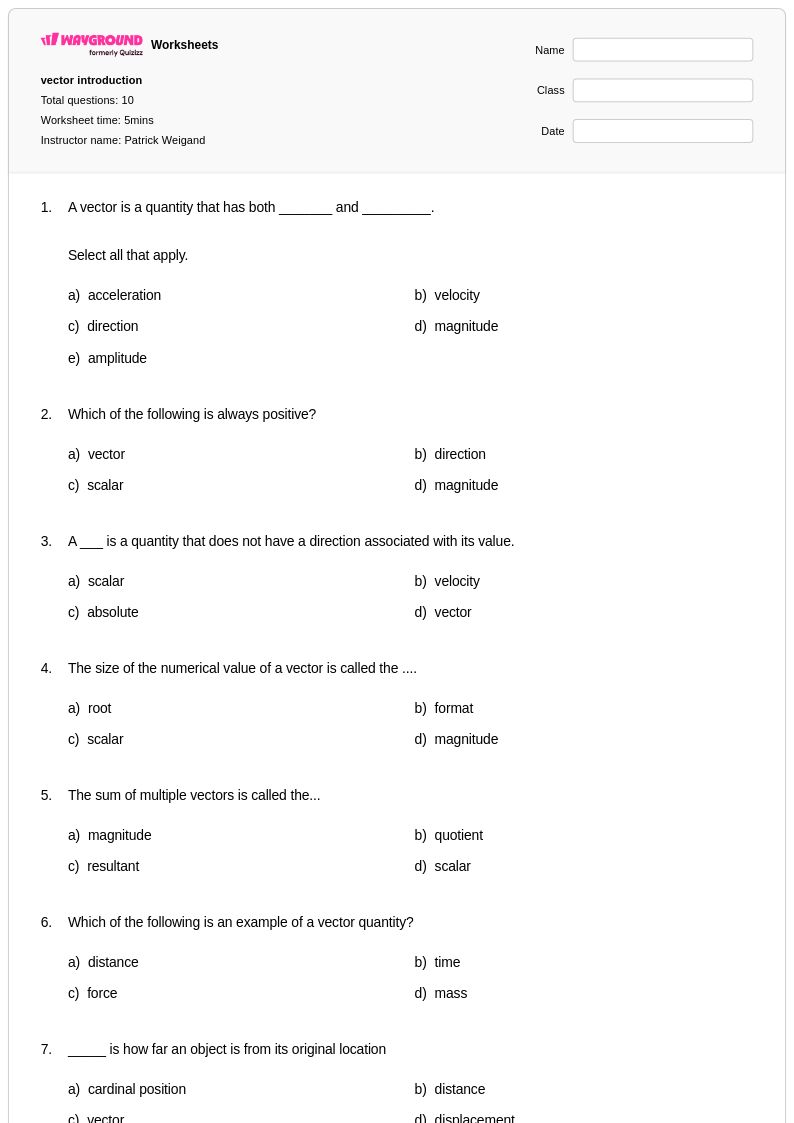
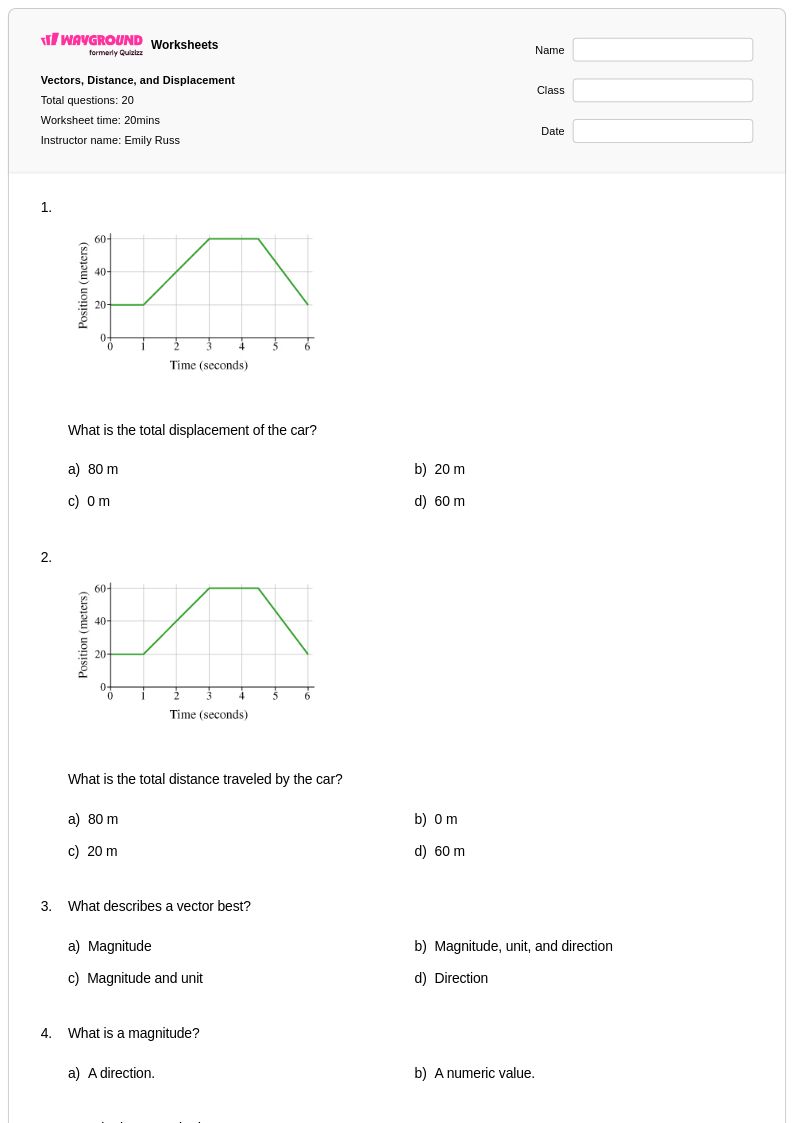
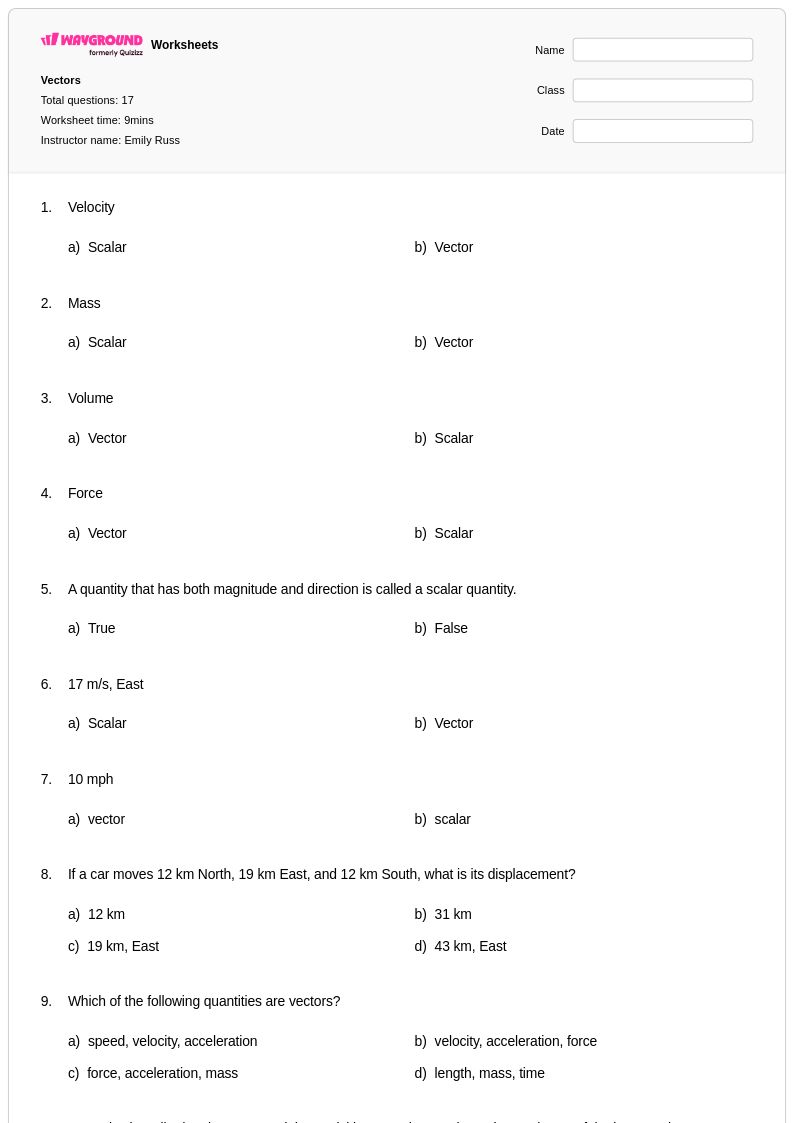
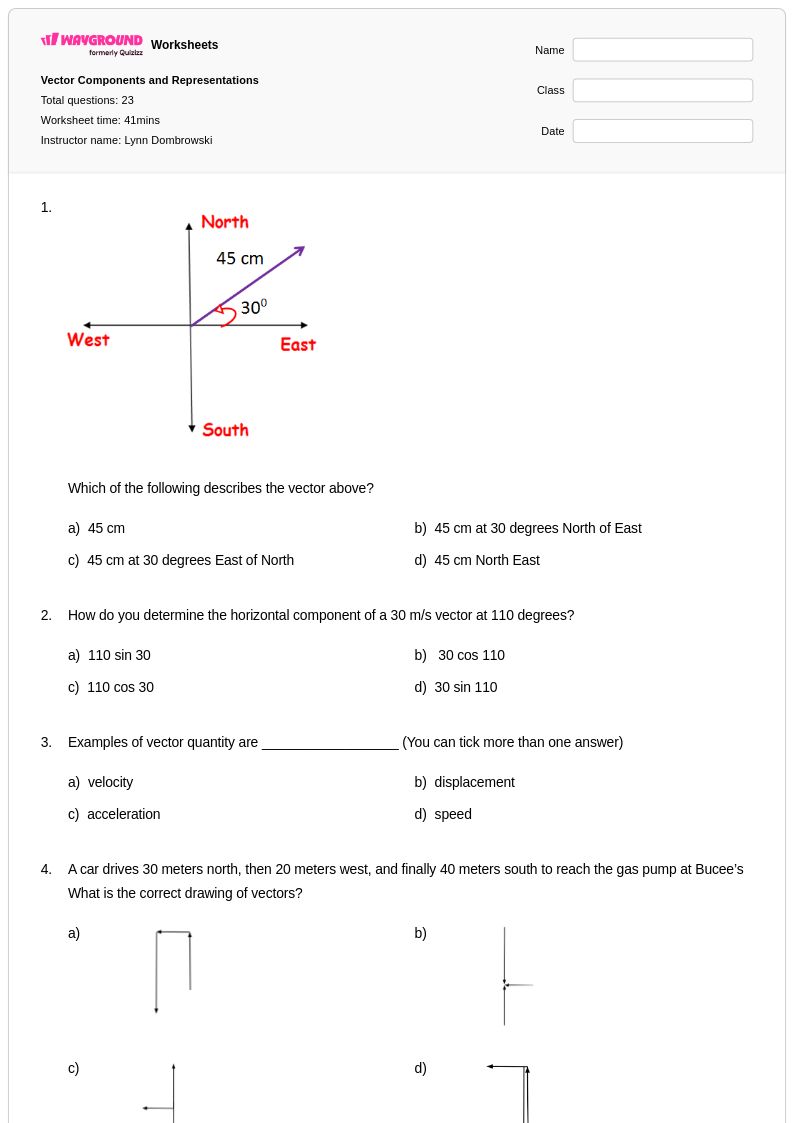
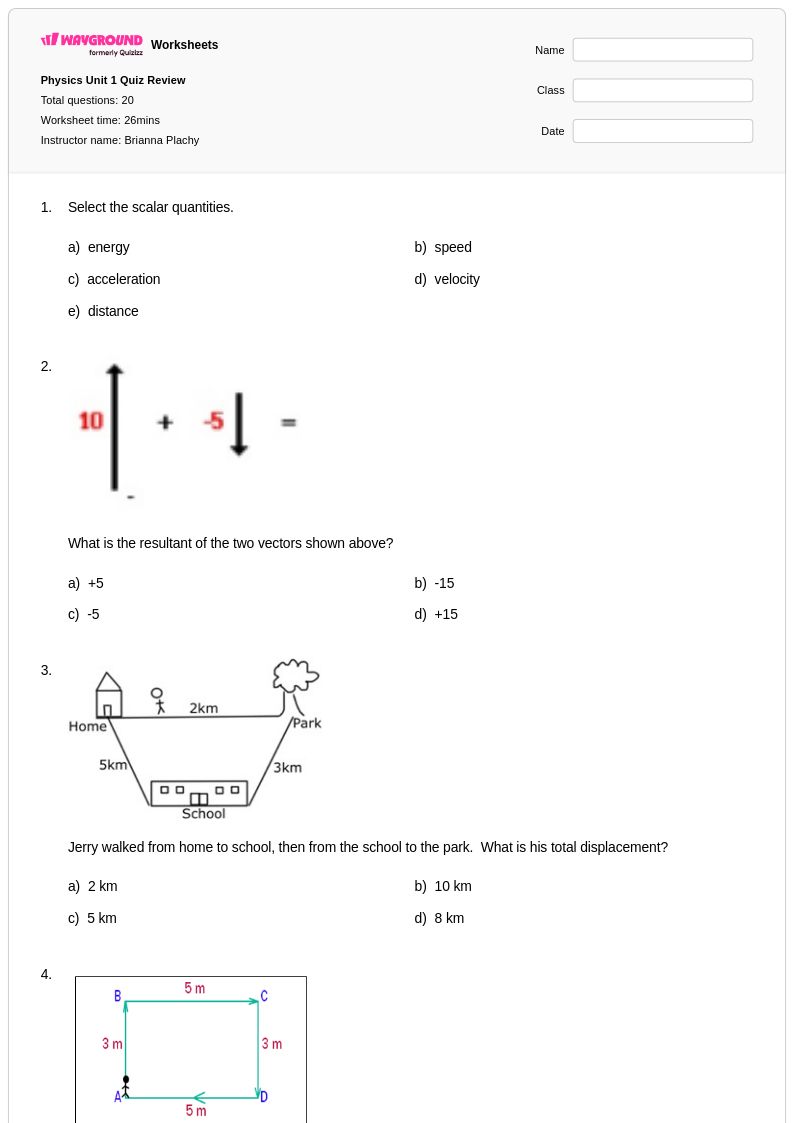
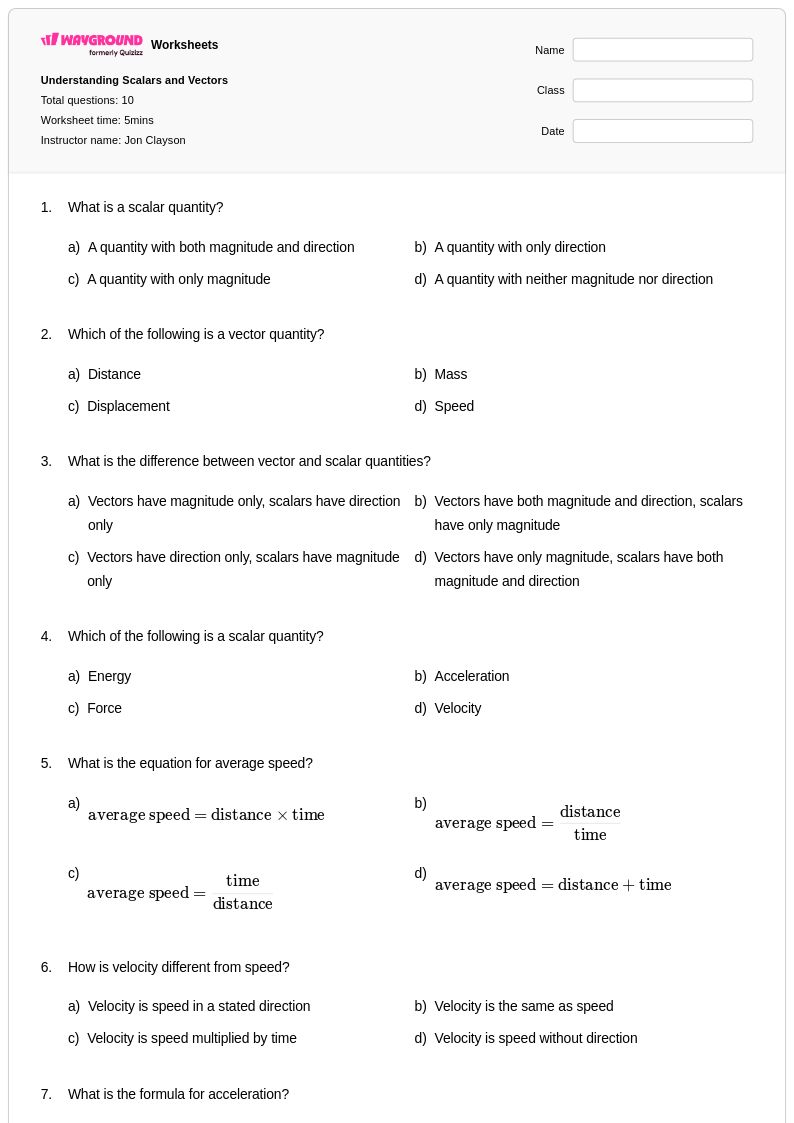
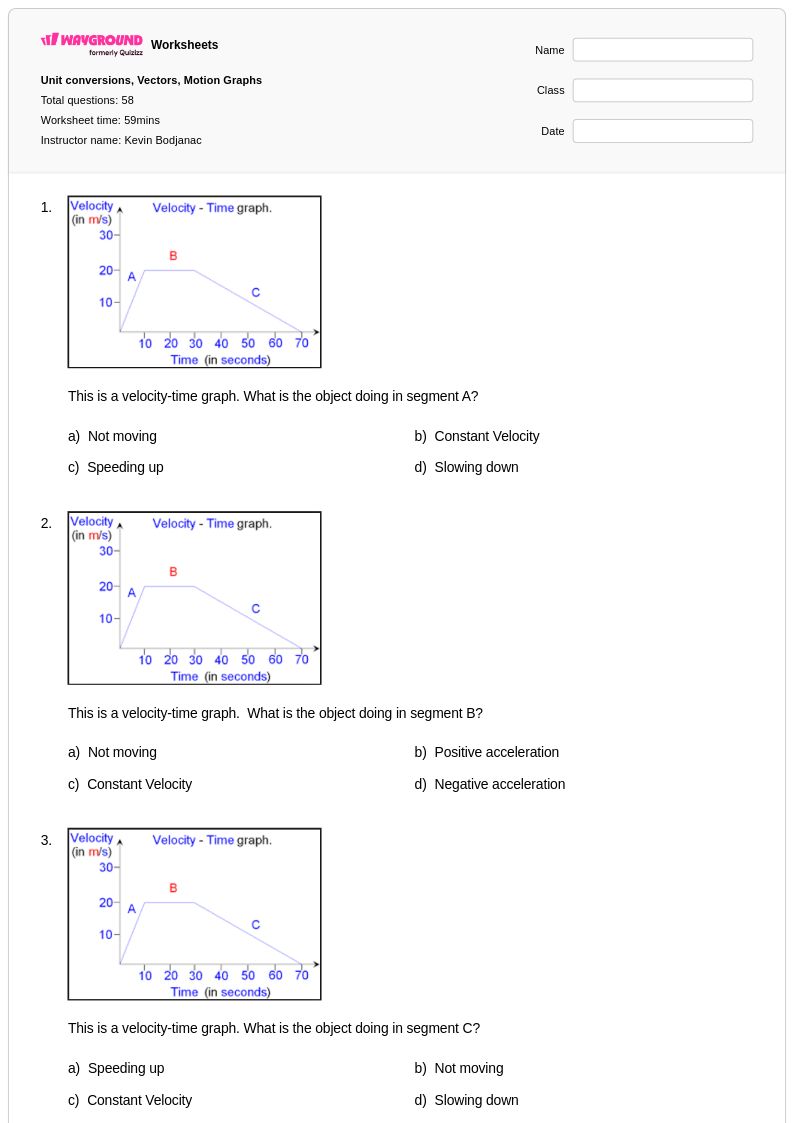
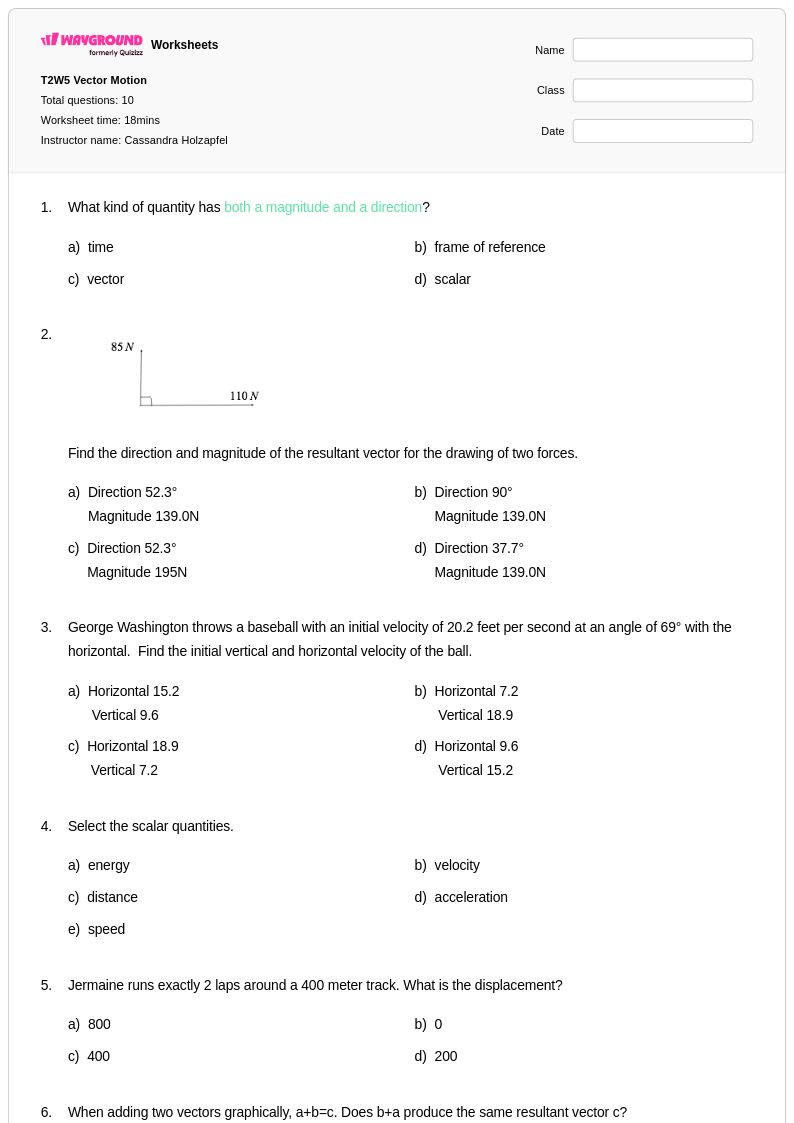
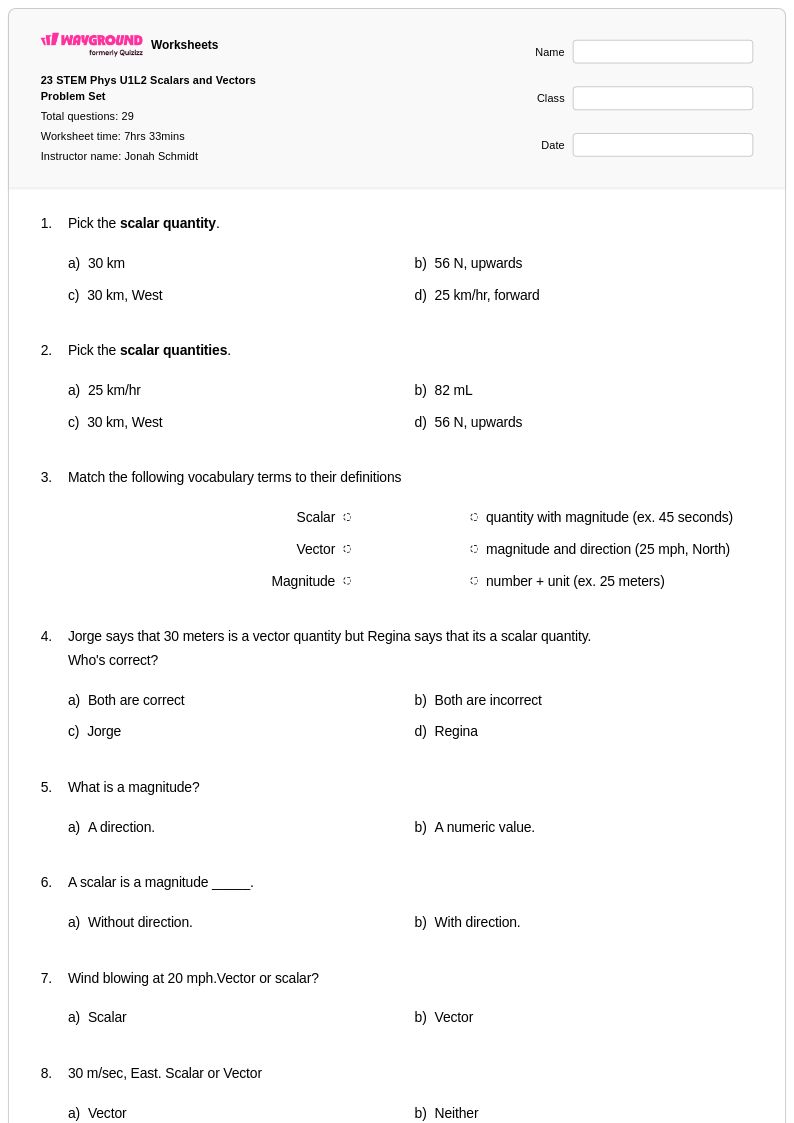
Year 9 vectors worksheets available through Wayground (formerly Quizizz) provide comprehensive practice opportunities for students developing fundamental understanding of vector quantities and operations. These expertly crafted worksheets strengthen essential skills including vector representation using magnitude and direction, graphical addition and subtraction of vectors, component analysis, and real-world applications in physics scenarios such as displacement, velocity, and force problems. Each worksheet collection includes detailed answer keys that support independent learning and self-assessment, while the free printable format ensures accessibility for both classroom instruction and home practice. Students work through carefully sequenced practice problems that build conceptual understanding from basic vector notation through complex multi-step vector calculations.
Wayground (formerly Quizizz) empowers educators with millions of teacher-created vector resources that streamline lesson planning and differentiated instruction for Year 9 physics students. The platform's robust search and filtering capabilities allow teachers to quickly locate worksheets aligned with specific curriculum standards and learning objectives, while customization tools enable modification of existing materials to meet diverse classroom needs. Available in both printable pdf format and interactive digital versions, these resources support flexible implementation across various teaching environments and learning preferences. Teachers utilize these comprehensive worksheet collections for targeted skill practice, remediation support for struggling learners, and enrichment activities that challenge advanced students to apply vector concepts in increasingly sophisticated problem-solving contexts.
FAQs
How do I teach vectors to students who struggle with the concept of direction and magnitude?
Start by grounding the concept in real-world examples students already intuitively understand, such as displacement versus distance or wind speed versus wind velocity. Use visual vector diagrams with arrows to make magnitude (length) and direction (angle) concrete before introducing component notation. Once students can sketch and interpret vector arrows accurately, transition to algebraic methods like breaking vectors into x- and y-components using trigonometry. Building this visual-to-algebraic bridge is the most effective sequence for students who initially find the direction component abstract.
What exercises help students practice vector addition and subtraction?
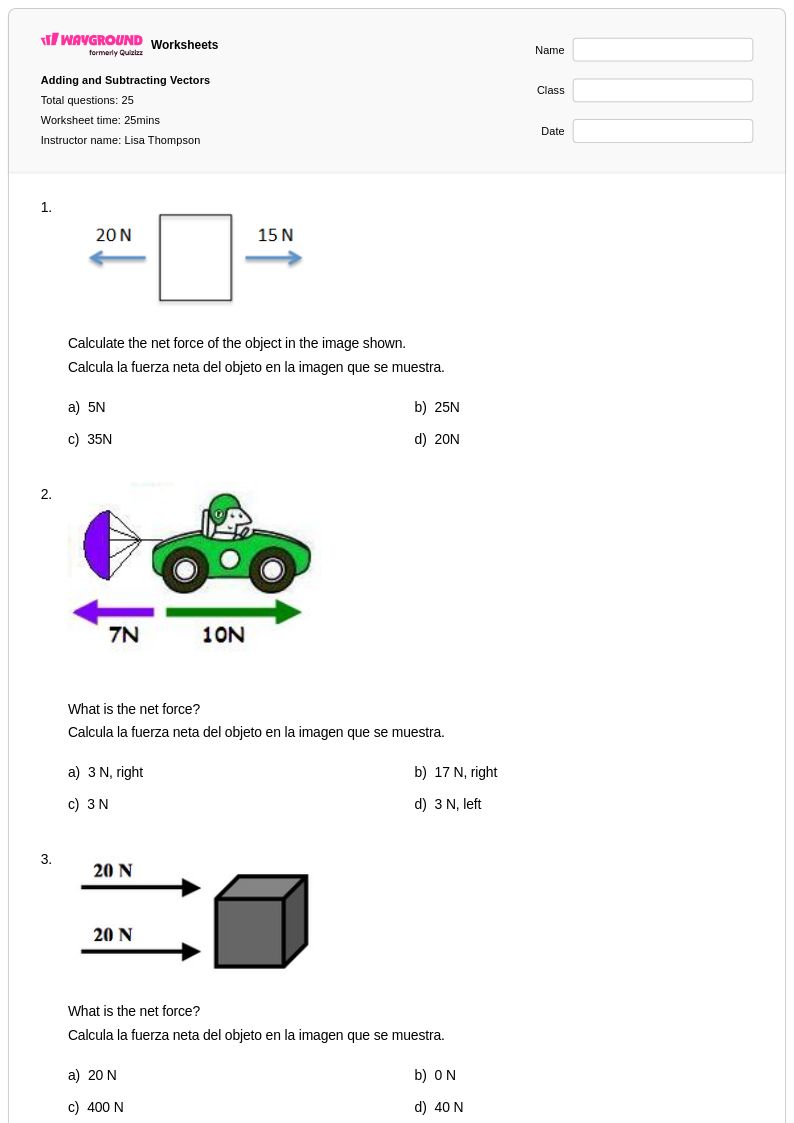
The most effective practice exercises combine graphical methods, such as tip-to-tail diagrams and parallelogram construction, with component methods that require resolving vectors and summing components algebraically. Students should work through problems that ask them to find resultant vectors in both two-dimensional and three-dimensional contexts, starting with vectors along axes before introducing angled vectors. Worksheets that present the same problem using both graphical and component approaches help students verify their answers and deepen conceptual understanding. Applied problems involving force diagrams and kinematics keep practice meaningful and connected to broader physics content.
What mistakes do students commonly make when working with vectors?
The most common error is treating vectors like scalars, particularly when adding them — students frequently add magnitudes directly without accounting for direction. A related mistake is incorrectly applying trigonometry when resolving components, often confusing which component uses sine versus cosine depending on the reference angle. Students also commonly neglect to assign proper signs to components in different quadrants, which causes cascading errors in resultant calculations. Explicitly requiring students to draw a diagram before computing and to label component signs is the most reliable way to reduce these errors.
How can I differentiate vector worksheets for students at different skill levels?
For students just beginning, focus on vector diagrams, simple head-to-tail addition, and single-quadrant problems before introducing trigonometry. Intermediate learners benefit from component-method problems involving two-dimensional motion and basic force analysis. Advanced students can be challenged with three-dimensional vector calculations and applications in kinematics or equilibrium problems. On Wayground, teachers can apply individual accommodations such as reduced answer choices to lower cognitive load for struggling students or enable Read Aloud for students who need audio support, while other students continue with default settings uninterrupted.
How do I use Wayground's vectors worksheets in my classroom?
Wayground's vectors worksheets are available as printable PDFs for traditional classroom use and in digital formats for technology-integrated environments, including the option to host them as a quiz directly on Wayground. Teachers can assign worksheets as in-class practice, homework, or exam review, with each resource including detailed answer keys and step-by-step solutions to support independent student work and efficient grading. The platform's search and filtering tools allow you to quickly locate materials aligned to your curriculum standards, whether you need introductory vector diagrams or advanced component-method problems.
How do vectors connect to other physics topics students will encounter?
Vectors are foundational to nearly every major area of physics, making early mastery essential for long-term student success. Kinematics relies on vector representation of displacement, velocity, and acceleration; dynamics requires vector addition when analyzing net force and equilibrium; and fields such as electric and gravitational force are fully vector quantities. Students who cannot confidently resolve vectors into components or find resultants will struggle systematically across these topics. Treating vector worksheets as foundational skill-building rather than a standalone unit pays dividends throughout the course.