Free Printable Verb -Ing Rules Worksheets for Year 4
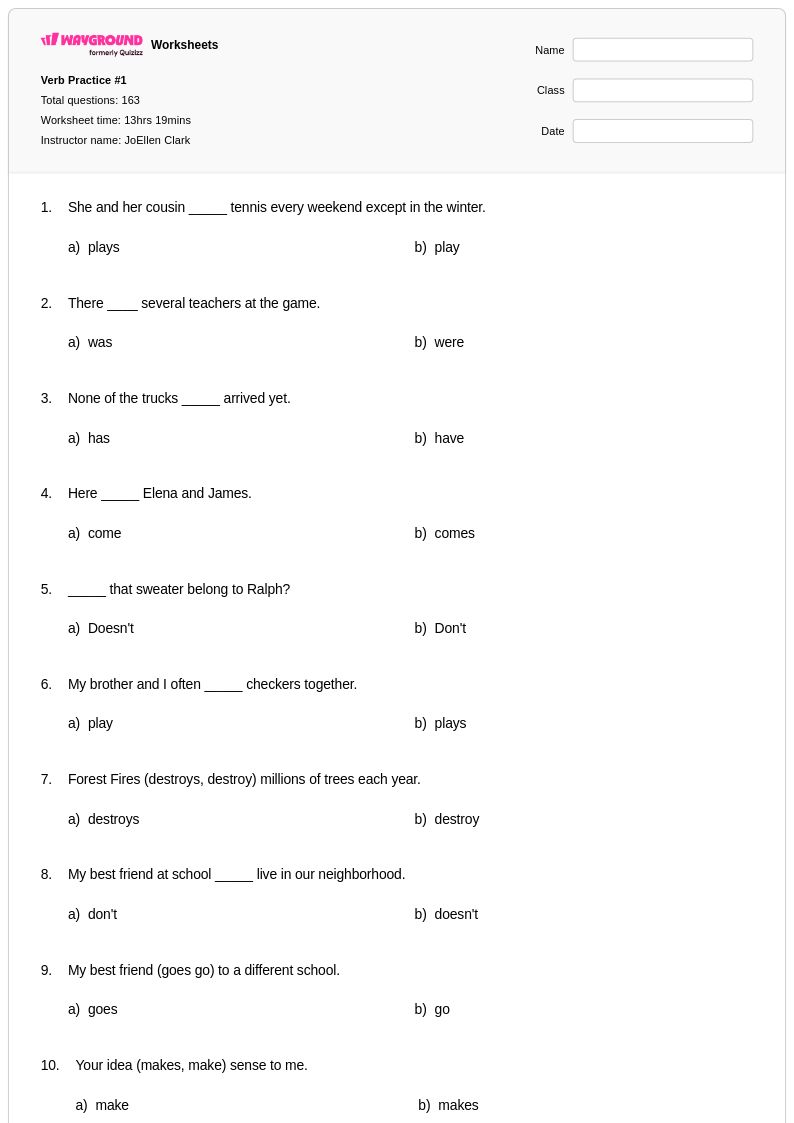
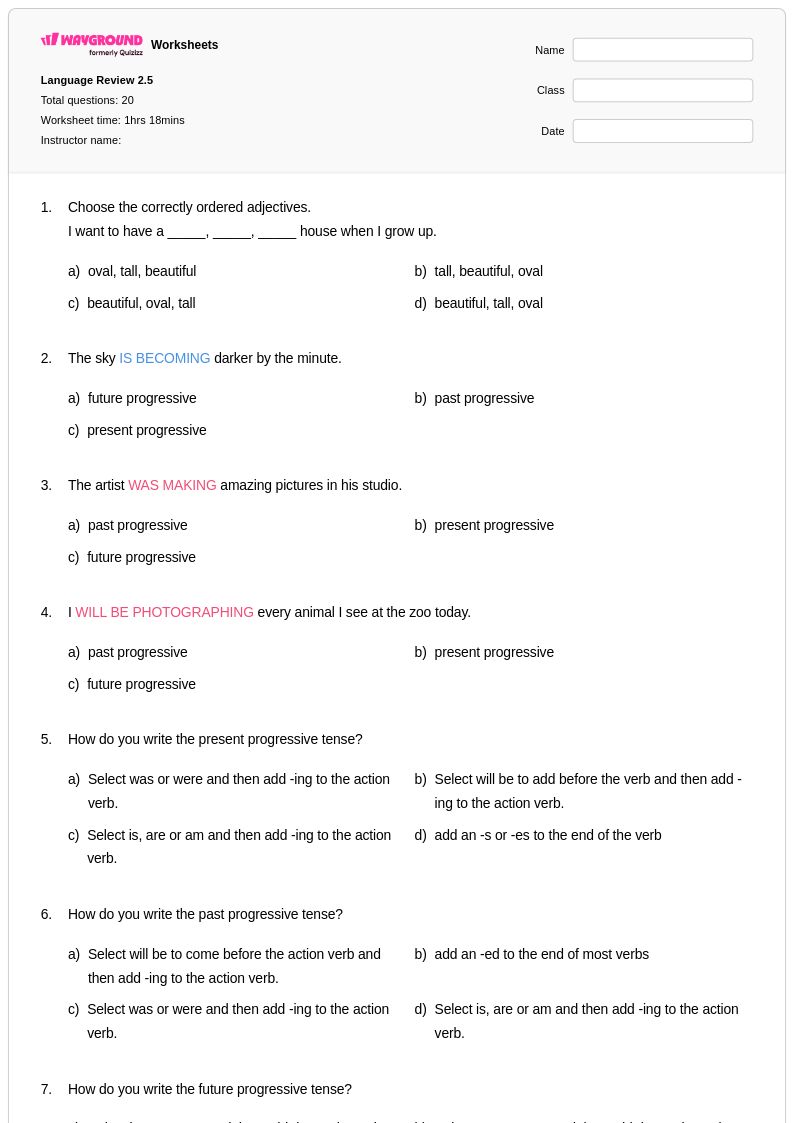
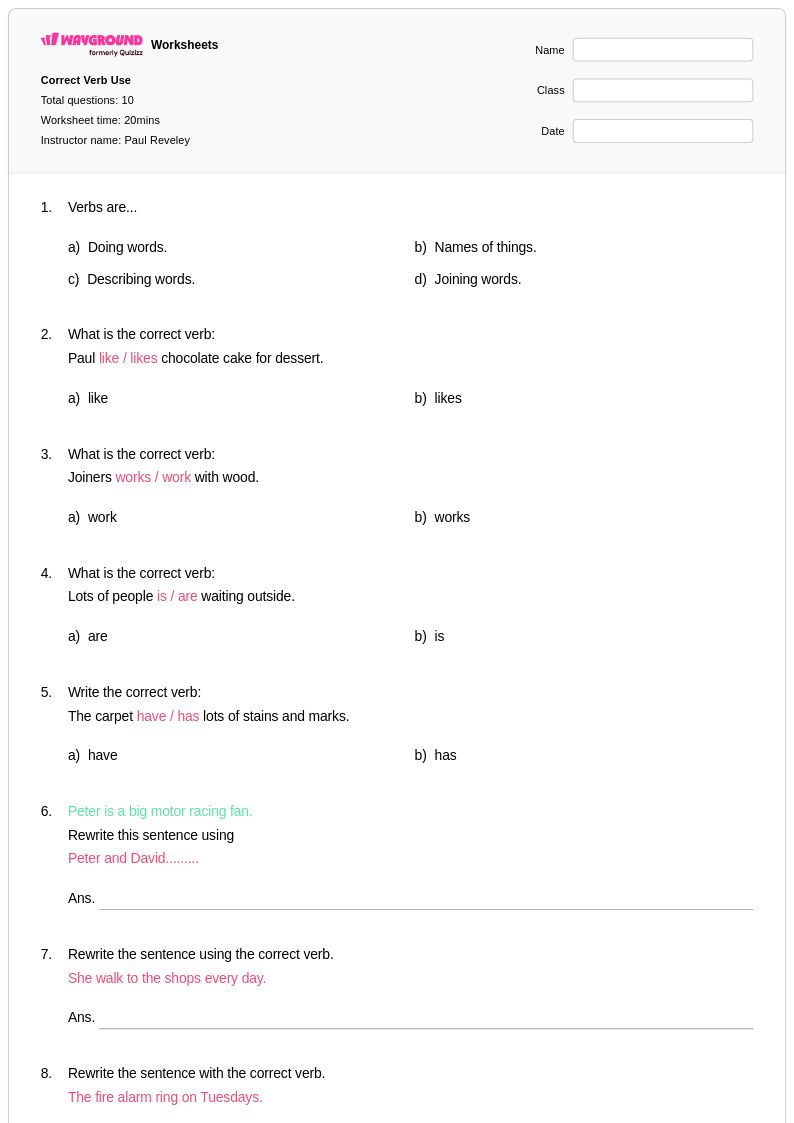
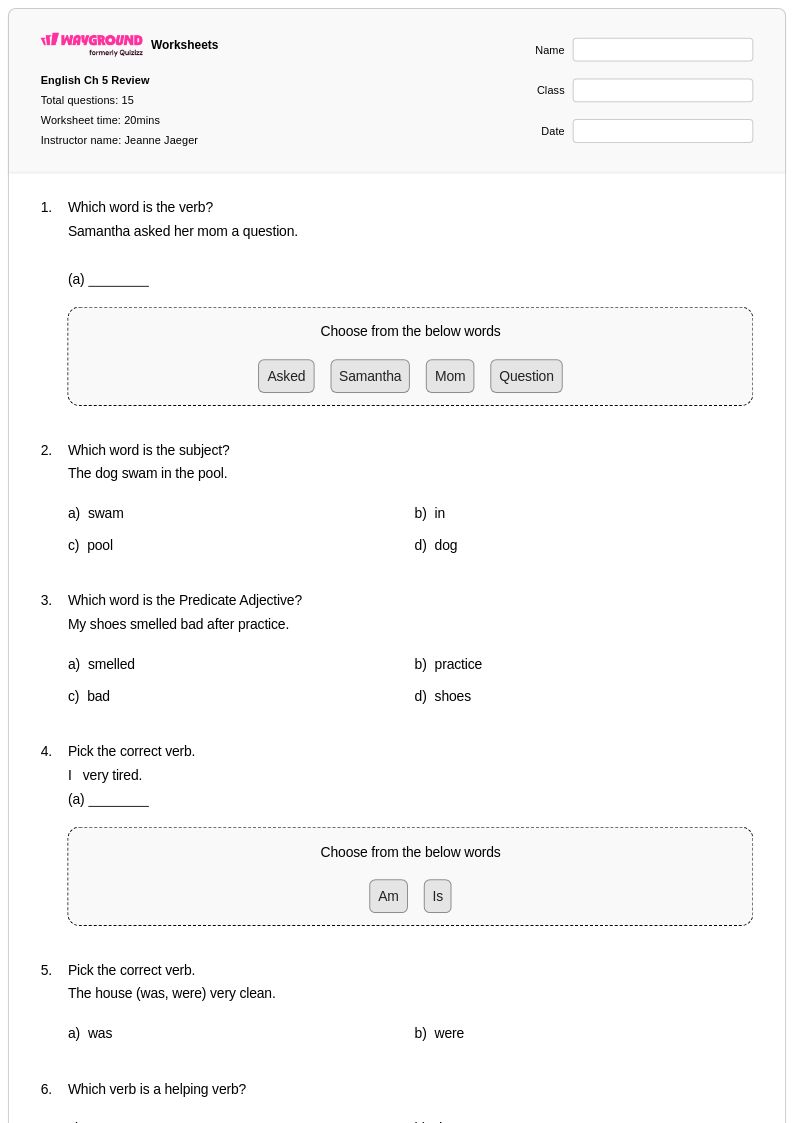
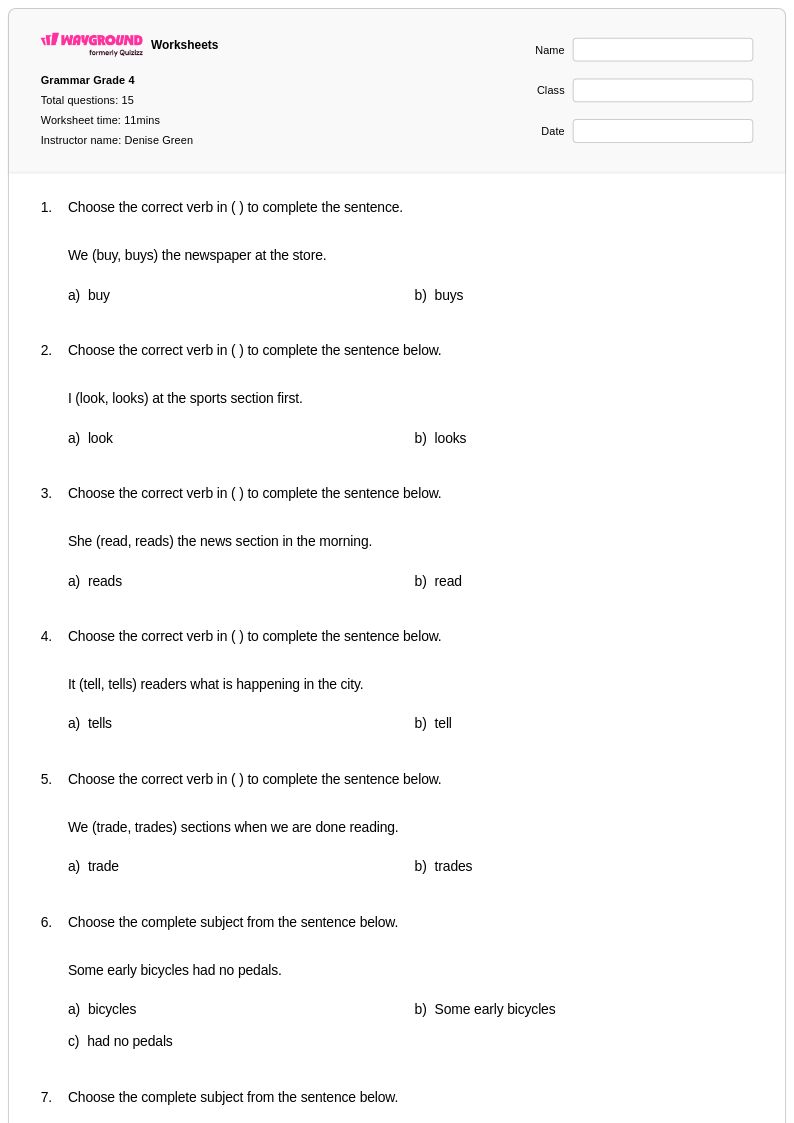
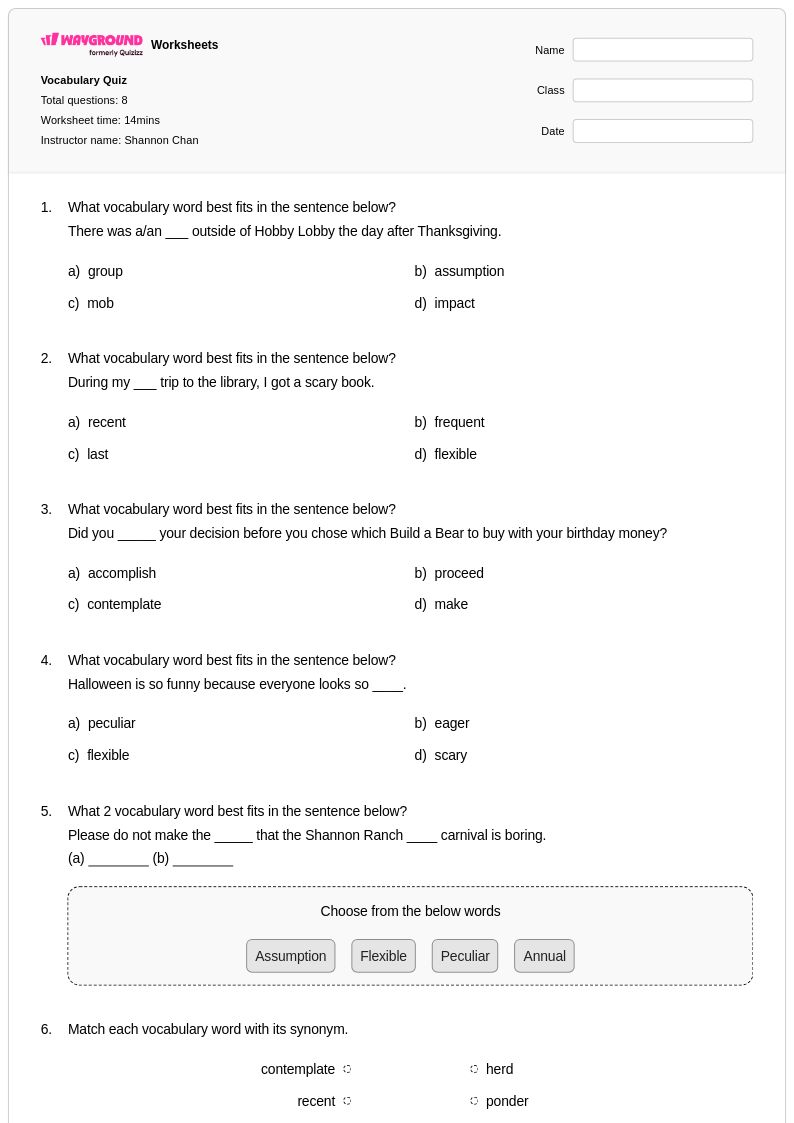
Year 4 verb -ing rules worksheets provide free printables and practice problems to help students master when to double consonants, drop silent e, and apply other spelling patterns when adding -ing endings, complete with answer keys.
Explore printable Verb -Ing Rules worksheets for Year 4
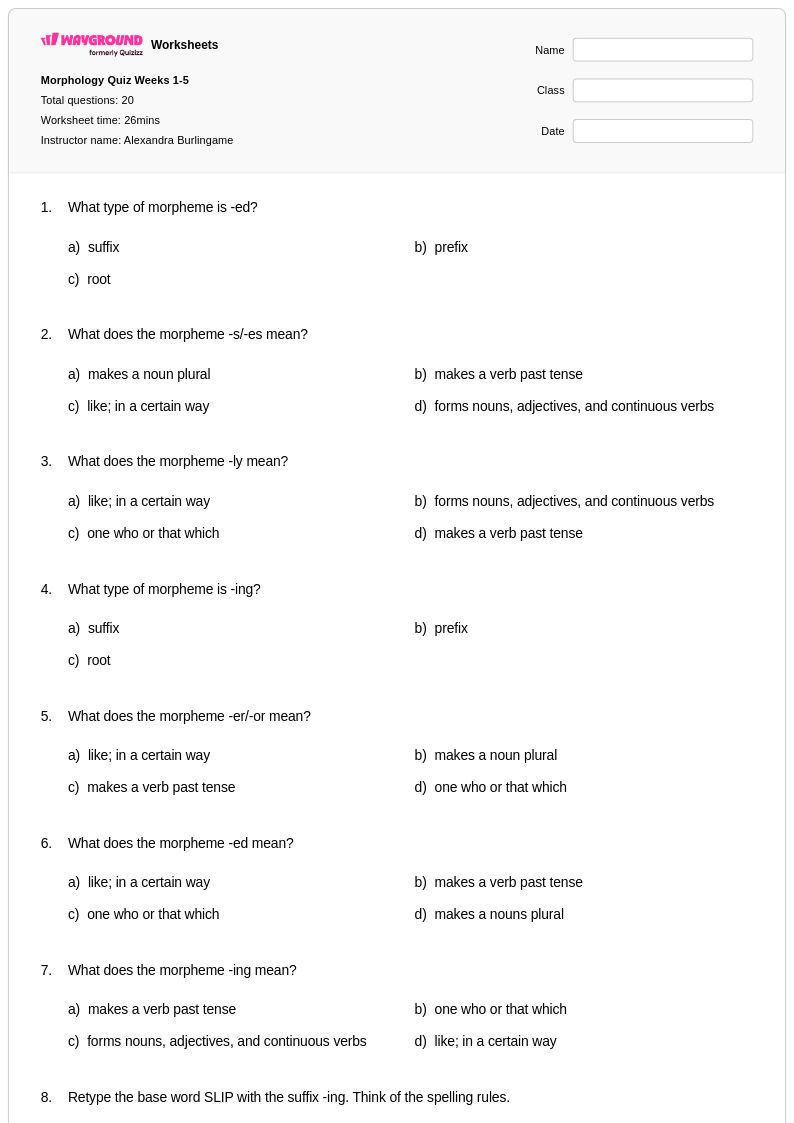
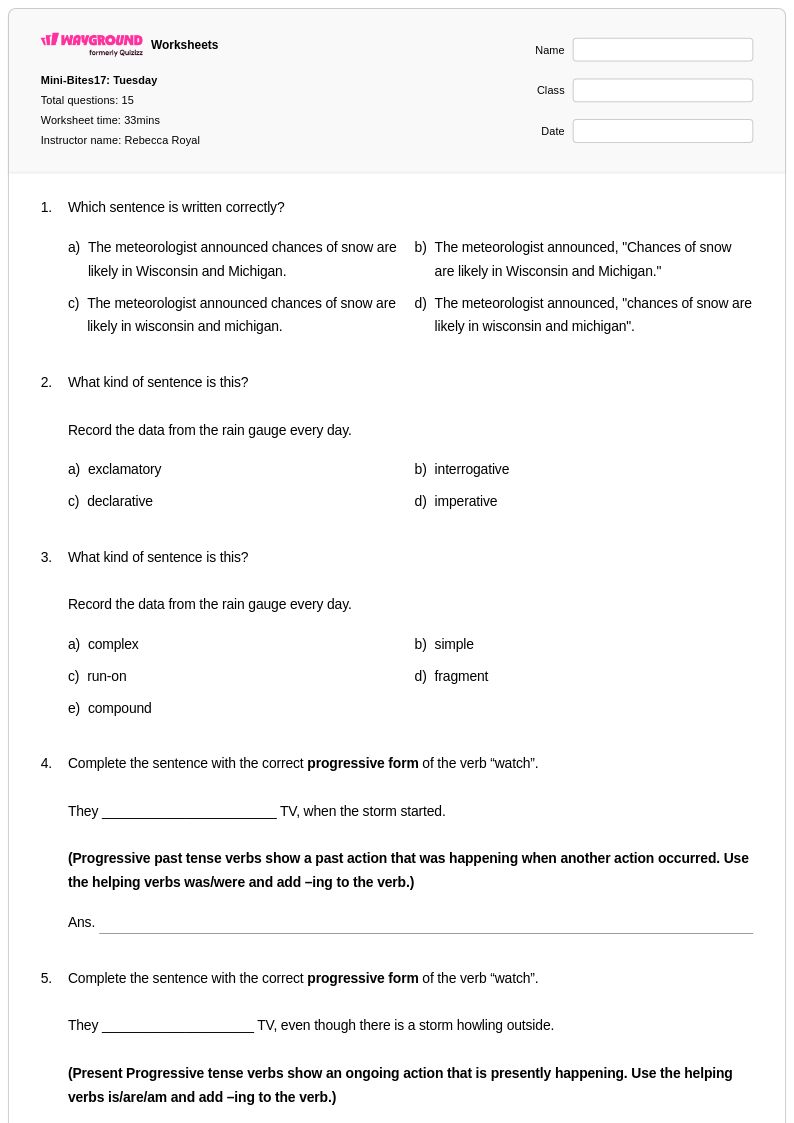
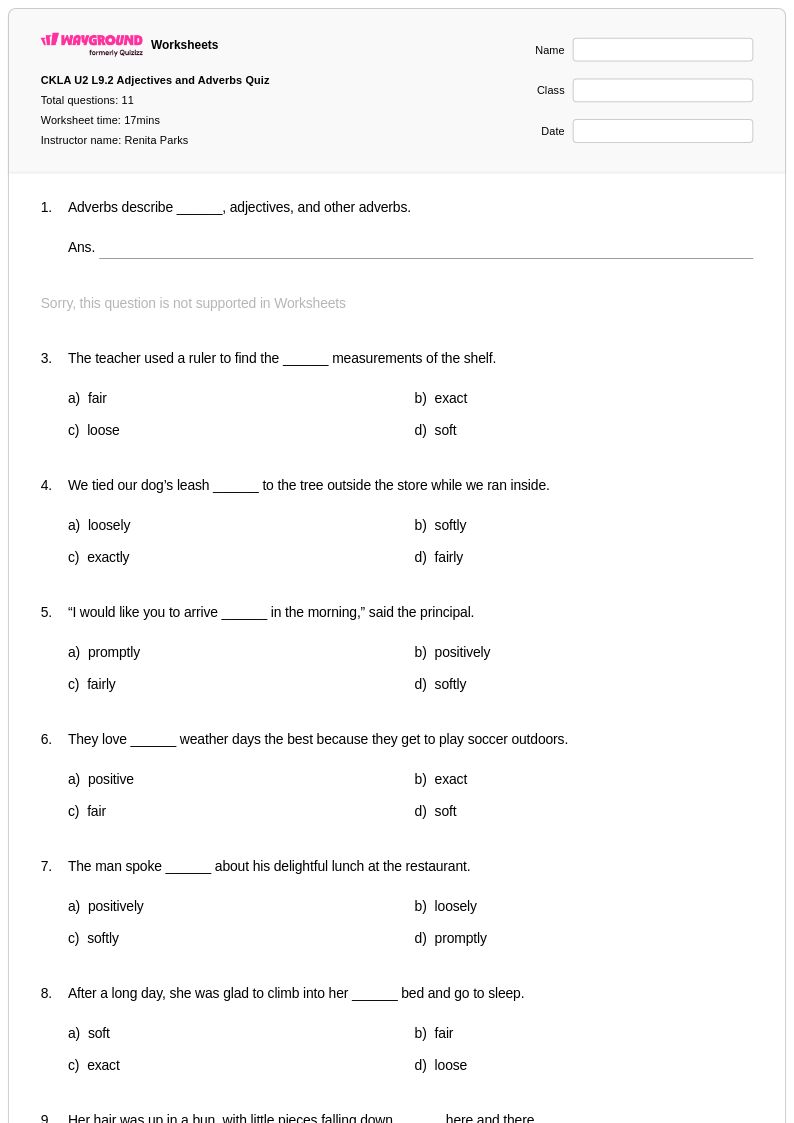
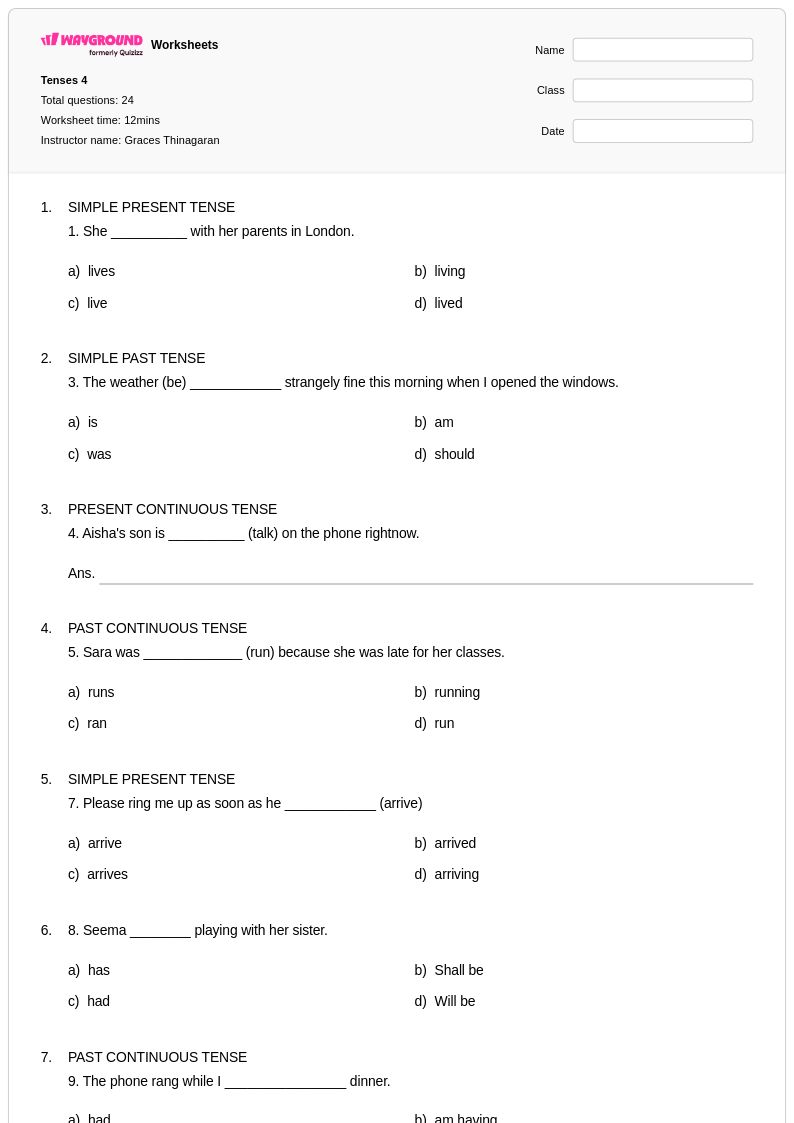
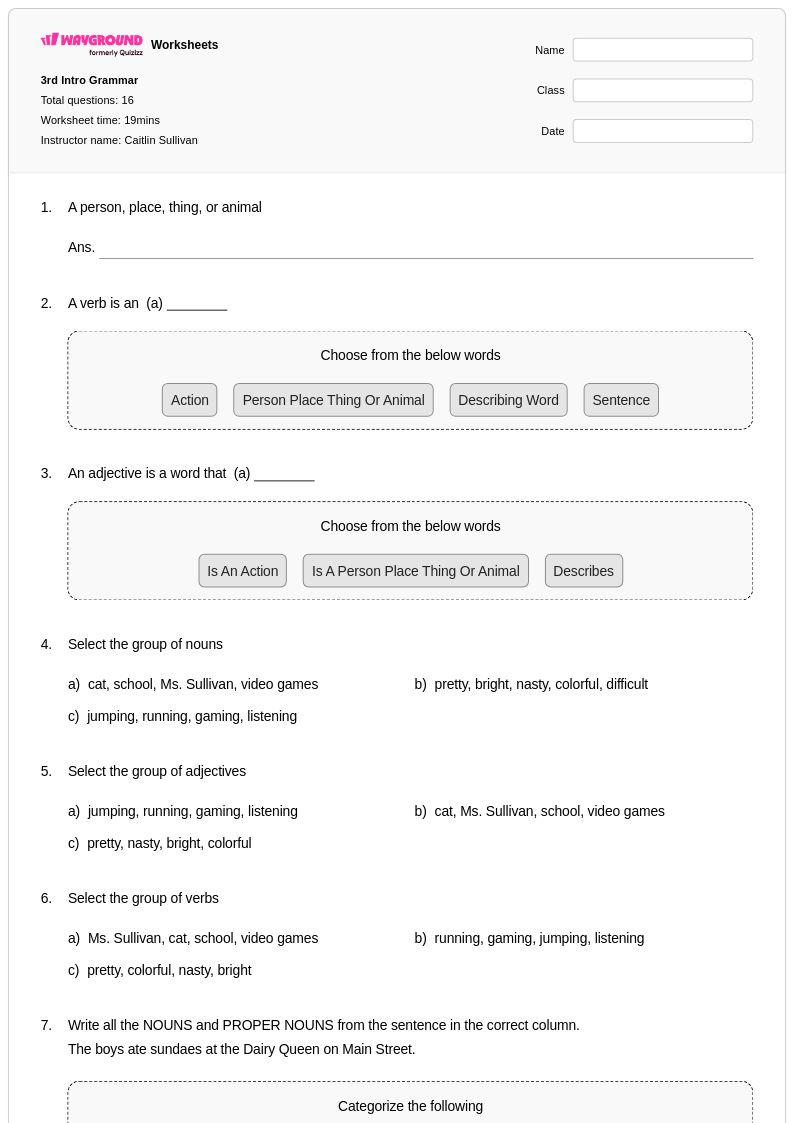
Verb -ing rules worksheets for Year 4 students available through Wayground (formerly Quizizz) provide comprehensive practice with the essential spelling patterns that govern adding -ing endings to base verbs. These carefully designed printables target the three fundamental rules fourth graders must master: simply adding -ing to most verbs, dropping the silent e before adding -ing to words ending in e, and doubling the final consonant in short vowel words before adding -ing. Each worksheet collection includes detailed answer keys and offers systematic practice problems that help students recognize patterns, apply rules consistently, and build confidence with these critical grammar and mechanics skills. The free pdf resources progress logically from basic applications to more complex examples, ensuring students develop both accuracy and automaticity with verb inflection patterns.
Wayground (formerly Quizizz) empowers teachers with millions of educator-created verb -ing rules resources that streamline lesson planning and support differentiated instruction for Year 4 grammar and mechanics objectives. The platform's robust search and filtering capabilities allow teachers to quickly locate worksheets aligned with specific standards and skill levels, while built-in customization tools enable educators to modify content for individual student needs or classroom requirements. These comprehensive worksheet collections are available in both printable pdf formats for traditional paper-and-pencil practice and digital formats for interactive learning experiences, making them ideal for remediation sessions, enrichment activities, and regular skill practice. Teachers can efficiently assess student progress, identify areas needing additional support, and provide targeted instruction using the extensive library of verb inflection resources designed specifically for fourth-grade learners.
FAQs
How do I teach verb -ing spelling rules to students?
Start by grouping verbs into clear spelling categories: words that double the final consonant (run → running), words that drop the silent e (make → making), and words that add -ing without any change (play → playing). Teach one rule at a time with abundant examples before introducing the next, and use visual anchor charts so students can reference the patterns independently. Repeated exposure through structured practice helps students internalize the decision-making process rather than memorizing isolated examples.
What exercises help students practice adding -ing to verbs correctly?
Sorting activities work especially well — have students categorize verbs by which spelling rule applies before they write the -ing form. Sentence-completion exercises and gap-fill tasks reinforce the rules in context, helping students apply the patterns in real writing rather than in isolation. Progressing from single-syllable verbs to multisyllabic words ensures students build confidence gradually while encountering the full range of patterns they will encounter in written English.
What mistakes do students commonly make when adding -ing to verbs?
The most frequent error is failing to double the final consonant in short-vowel, single-syllable verbs, resulting in misspellings like 'runing' instead of 'running.' Students also frequently forget to drop the silent e before adding -ing, writing 'makeing' instead of 'making.' A third common misconception is overgeneralizing the doubling rule to verbs ending in w or y, such as writing 'snowing' as 'snowwing.' Explicit instruction on the conditions that trigger each rule, followed by targeted practice, is the most effective way to address these patterns.
How do I differentiate verb -ing rules instruction for struggling learners?
For students who struggle with spelling decisions, reduce cognitive load by focusing on one rule at a time and providing a decision-tree reference card. On Wayground, teachers can enable accommodations such as reduced answer choices for individual students, which limits the number of options displayed and makes the task more manageable without changing the learning objective. The Read Aloud feature is also available for students who benefit from hearing questions read to them, and extended time can be applied per student so each learner works at an appropriate pace.
How do I use Wayground's verb -ing rules worksheets in my classroom?
Wayground's verb -ing rules worksheets are available as printable PDFs for traditional classroom use and in digital formats for technology-integrated or distance learning environments. Teachers can assign worksheets as independent practice, homework, or formative assessment, and can also host them as a quiz directly on Wayground to track student performance in real time. Each worksheet includes an answer key, so teachers can provide immediate feedback without additional preparation time.