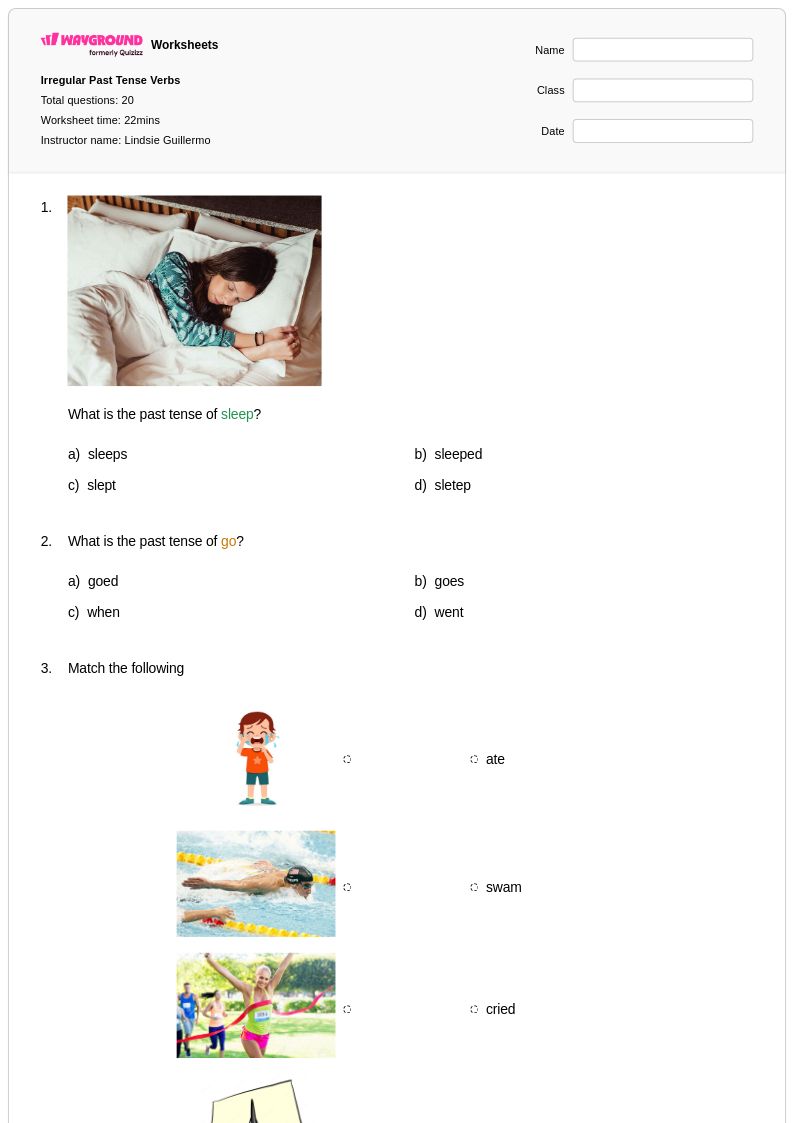
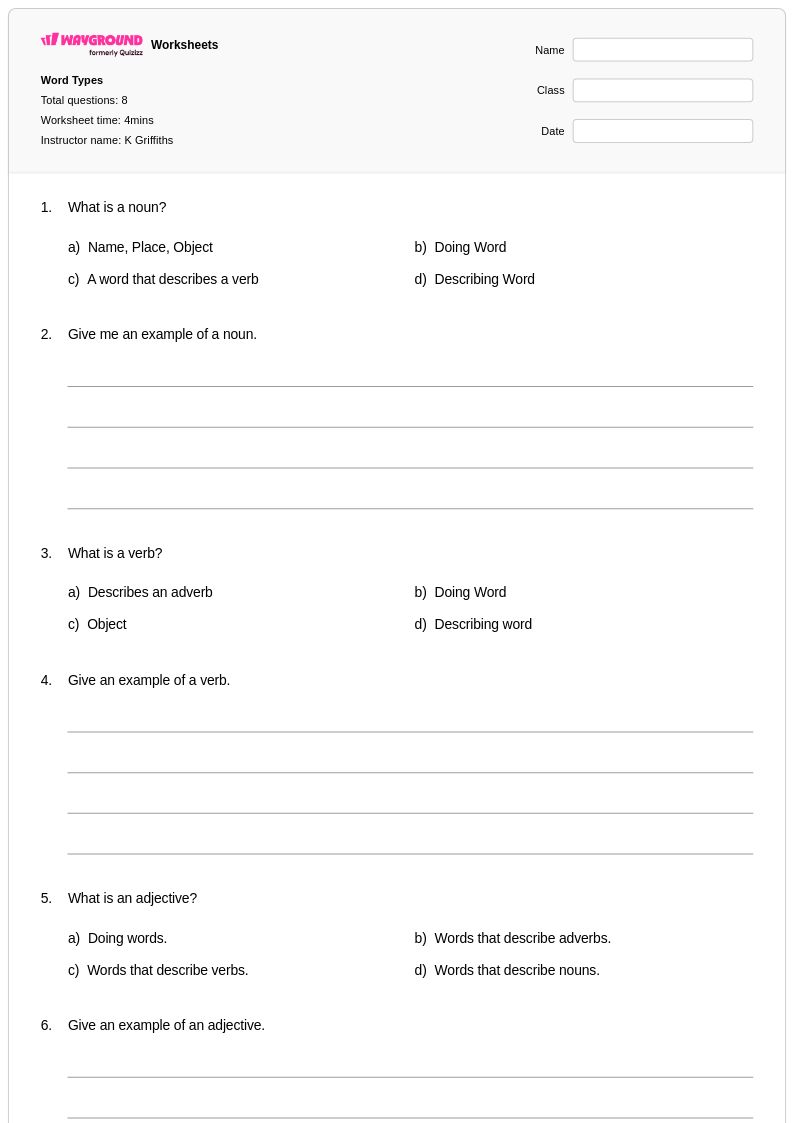
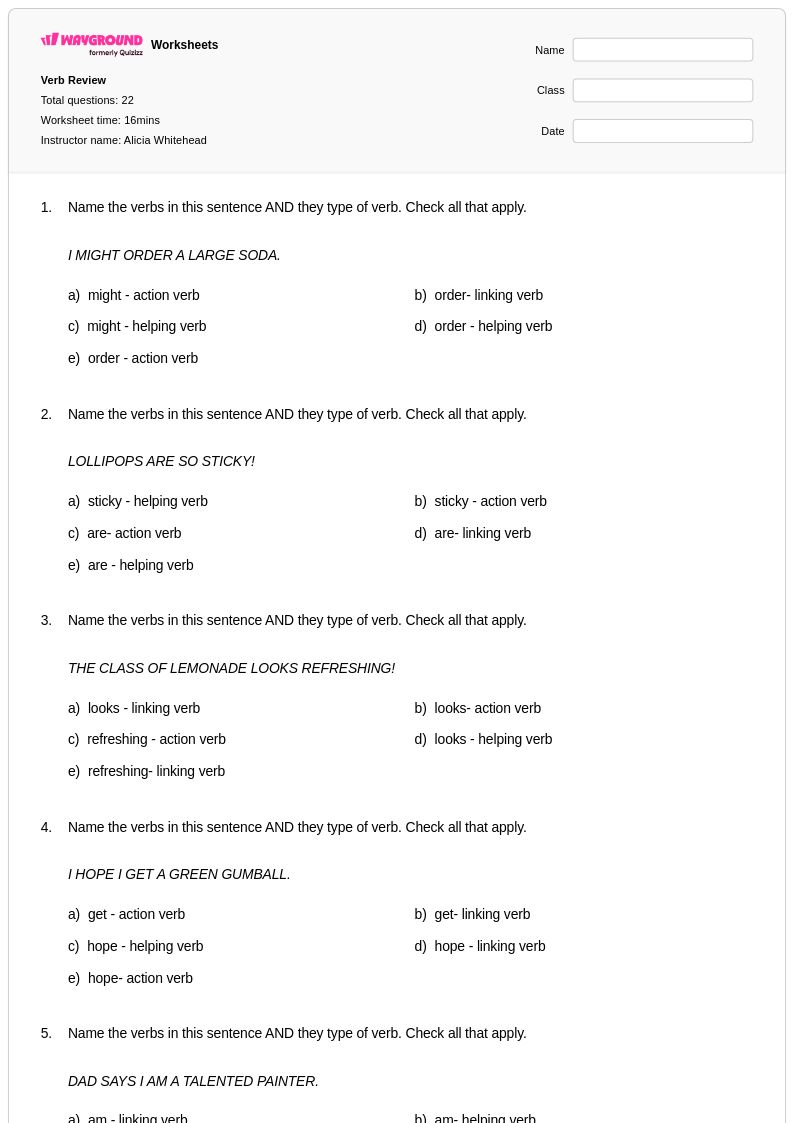
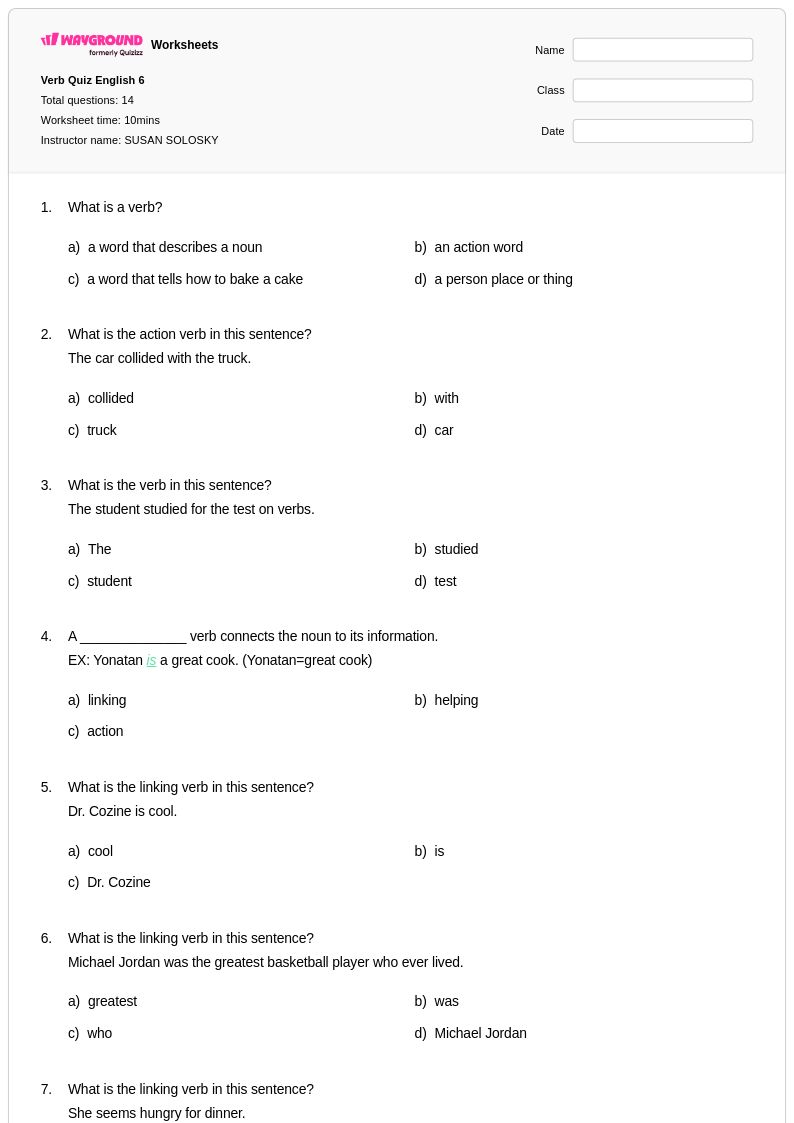
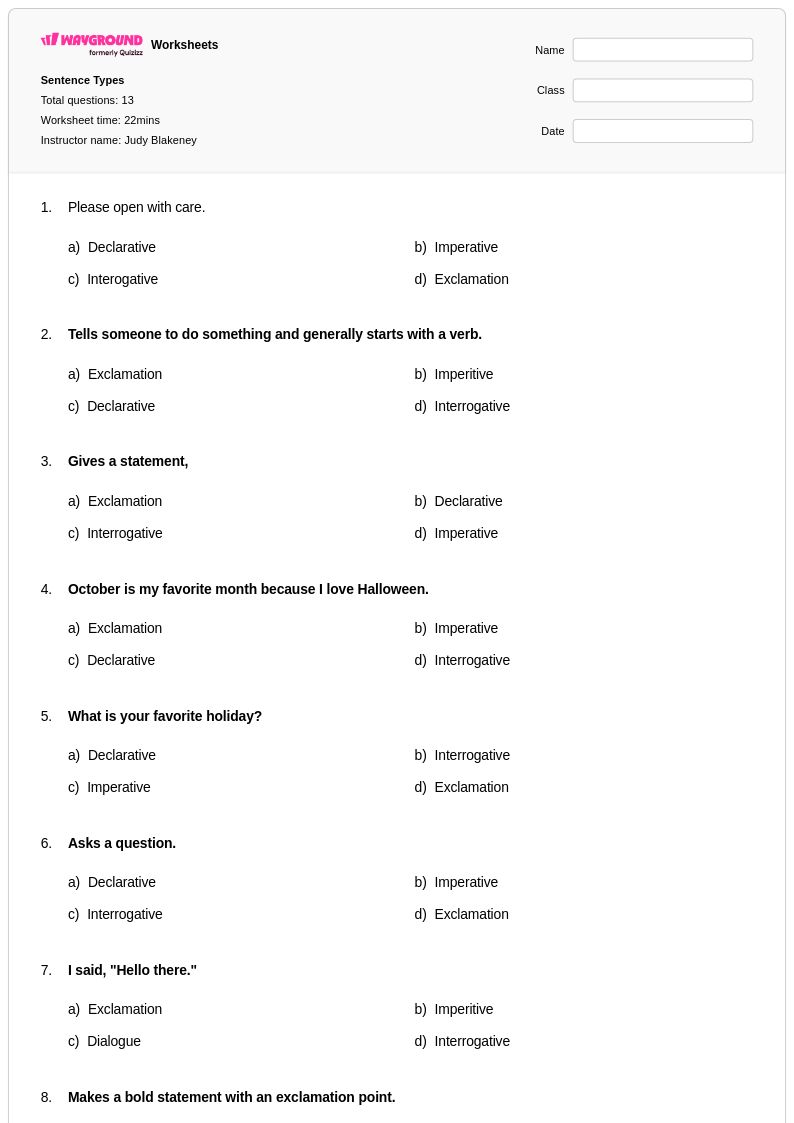
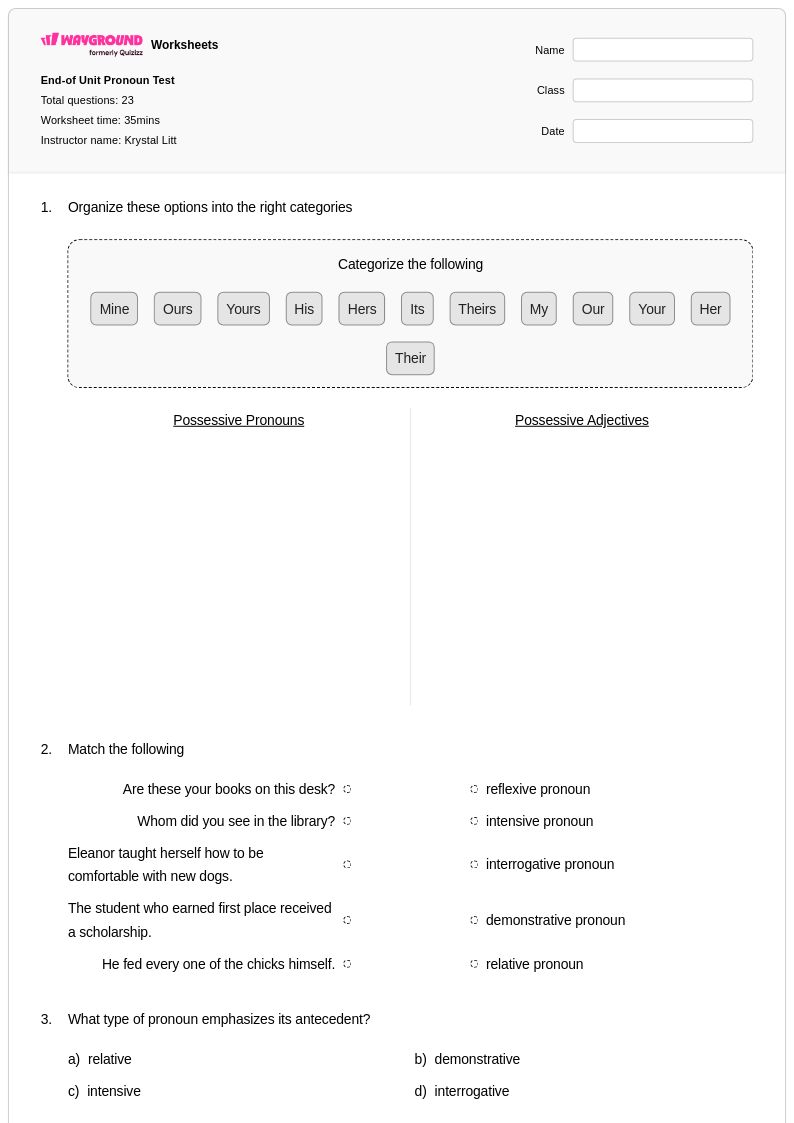
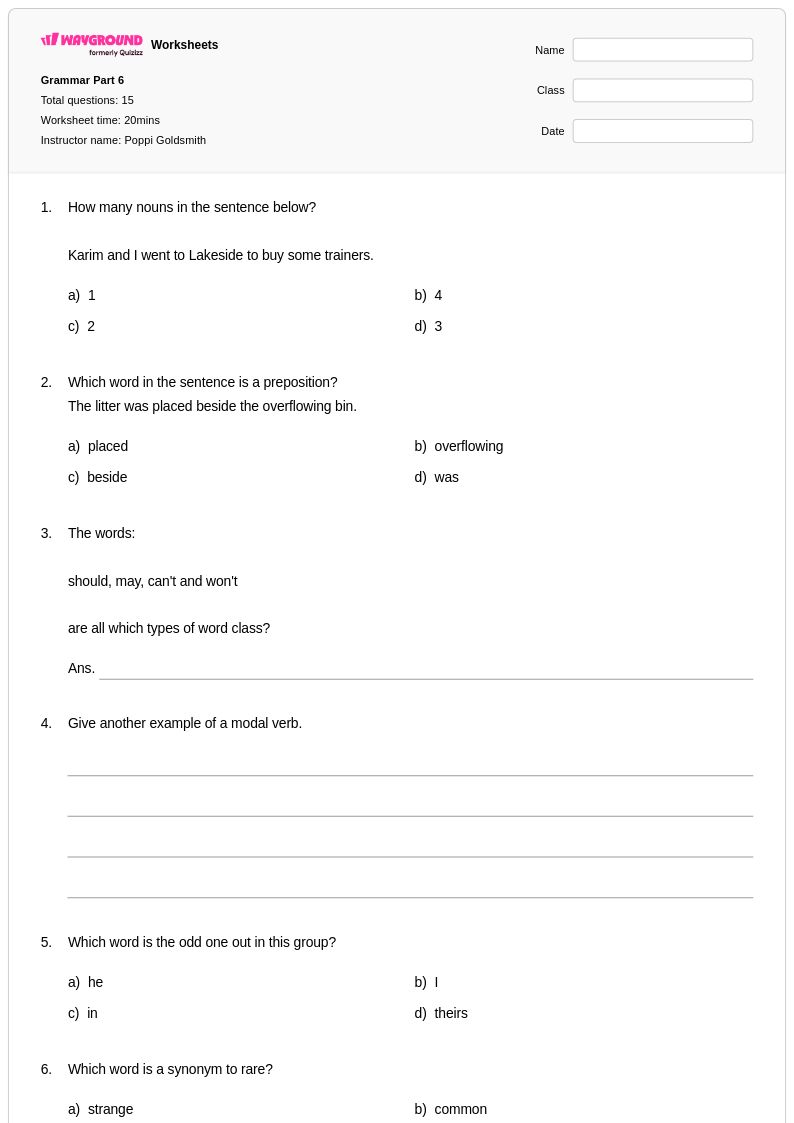
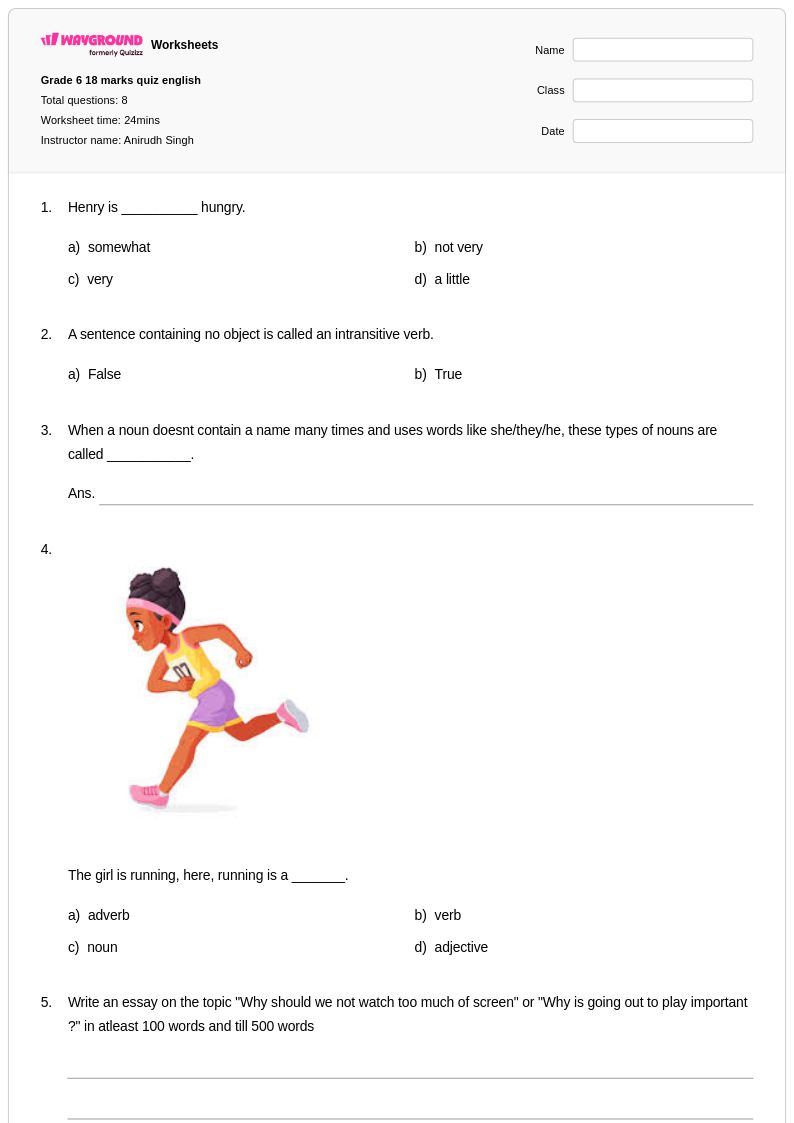
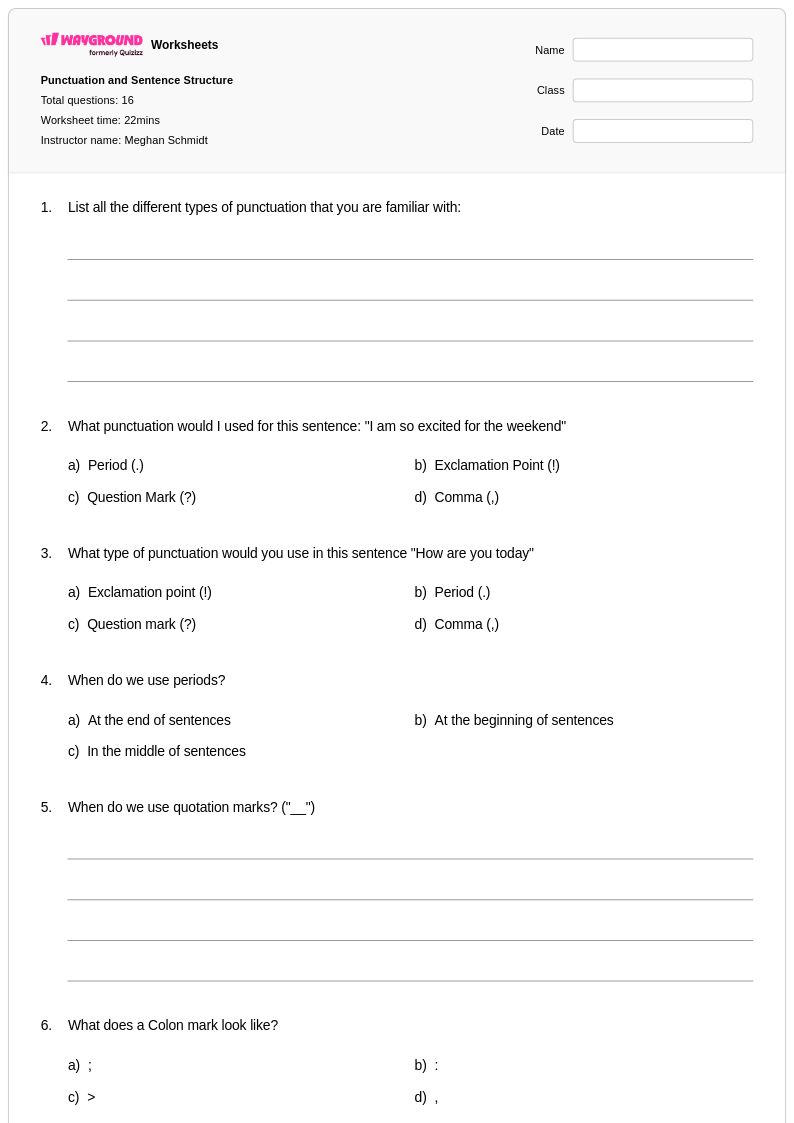
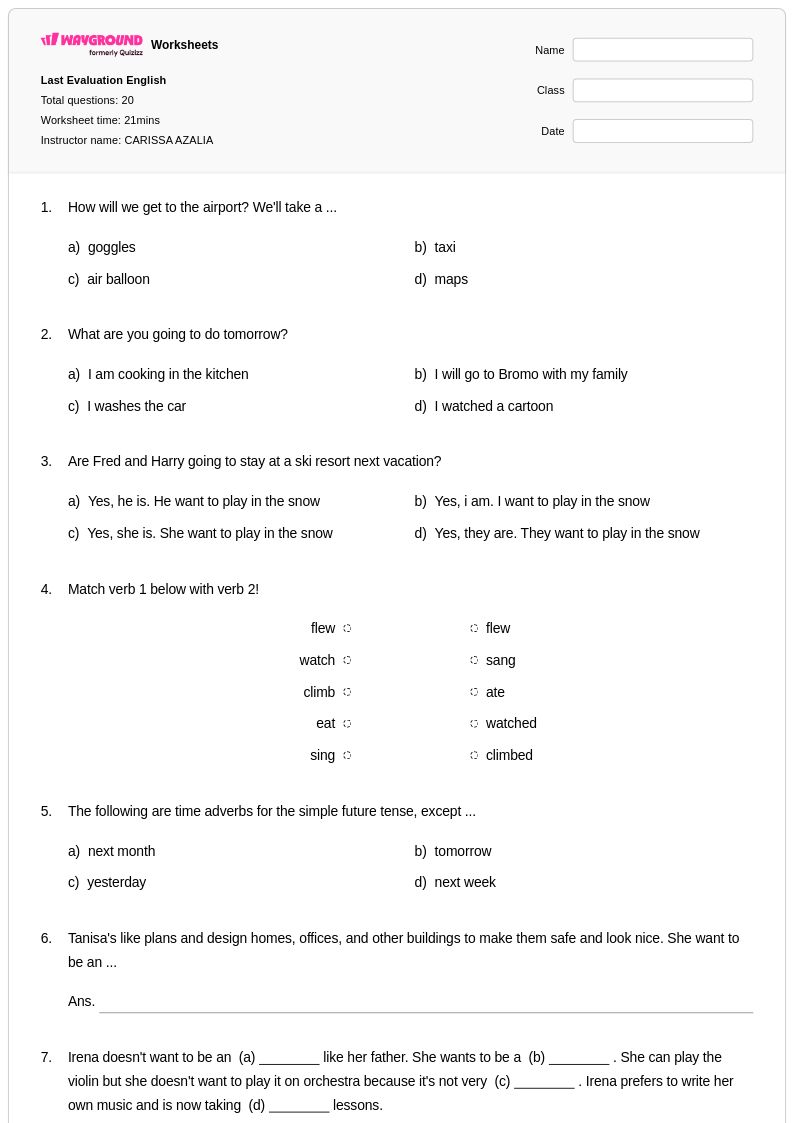
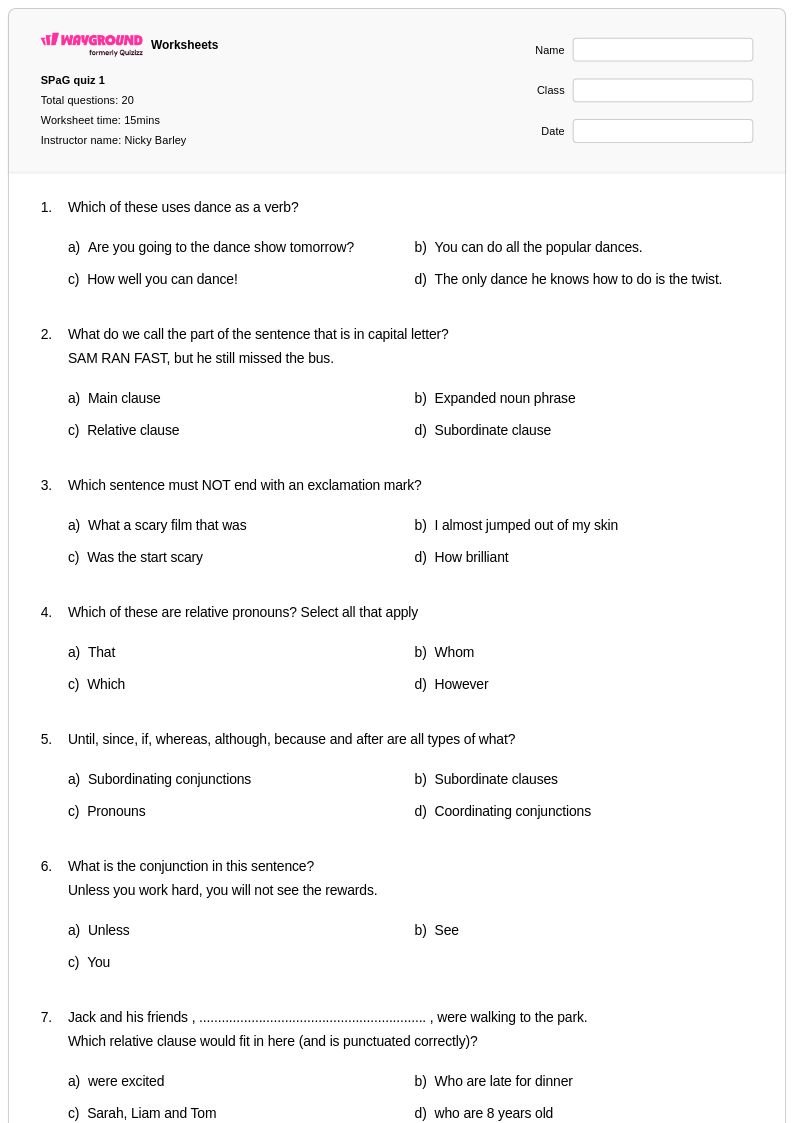
Explore our free Year 6 verb types worksheets and printables that help students master action verbs, linking verbs, and helping verbs through engaging practice problems with complete answer keys.
Explore printable Verb Types worksheets for Year 6
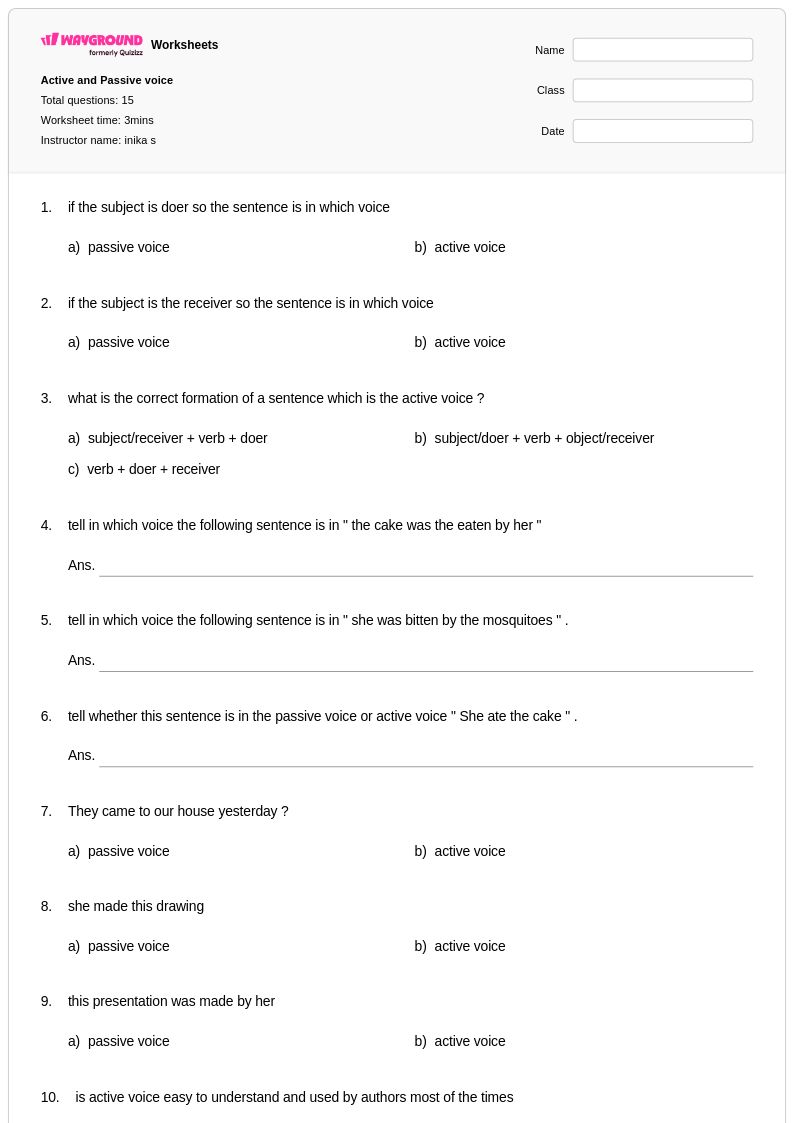
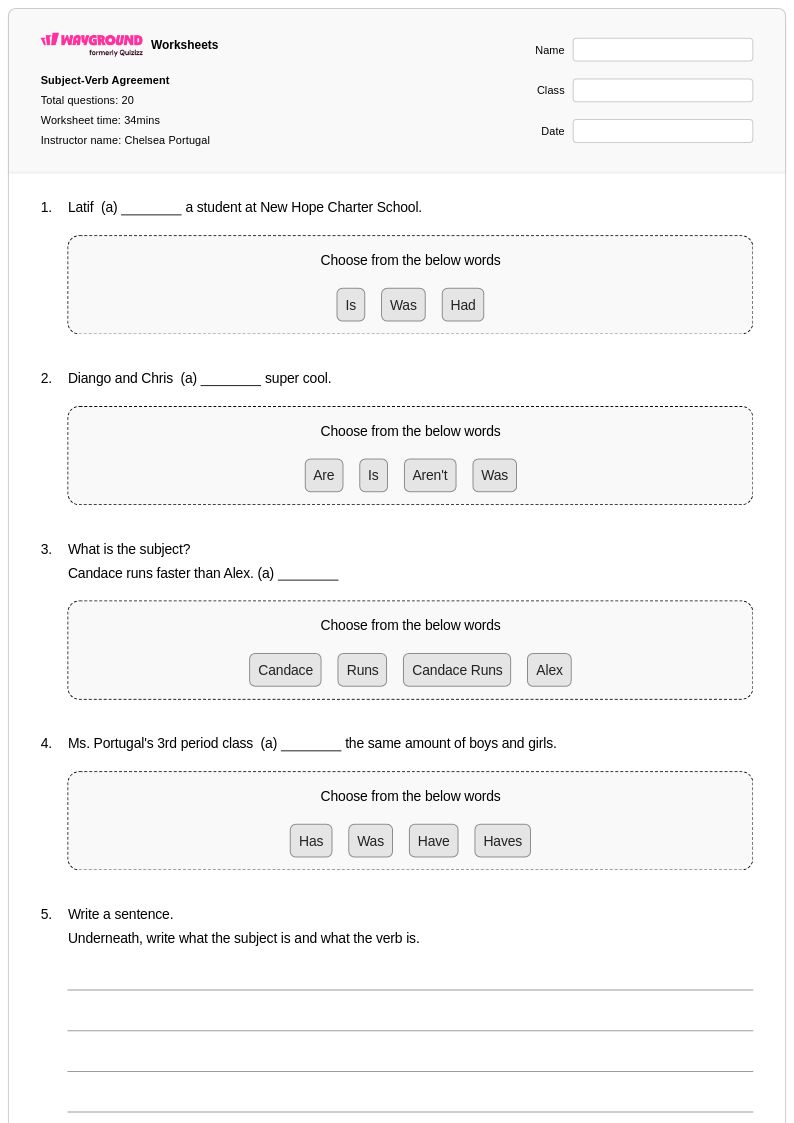
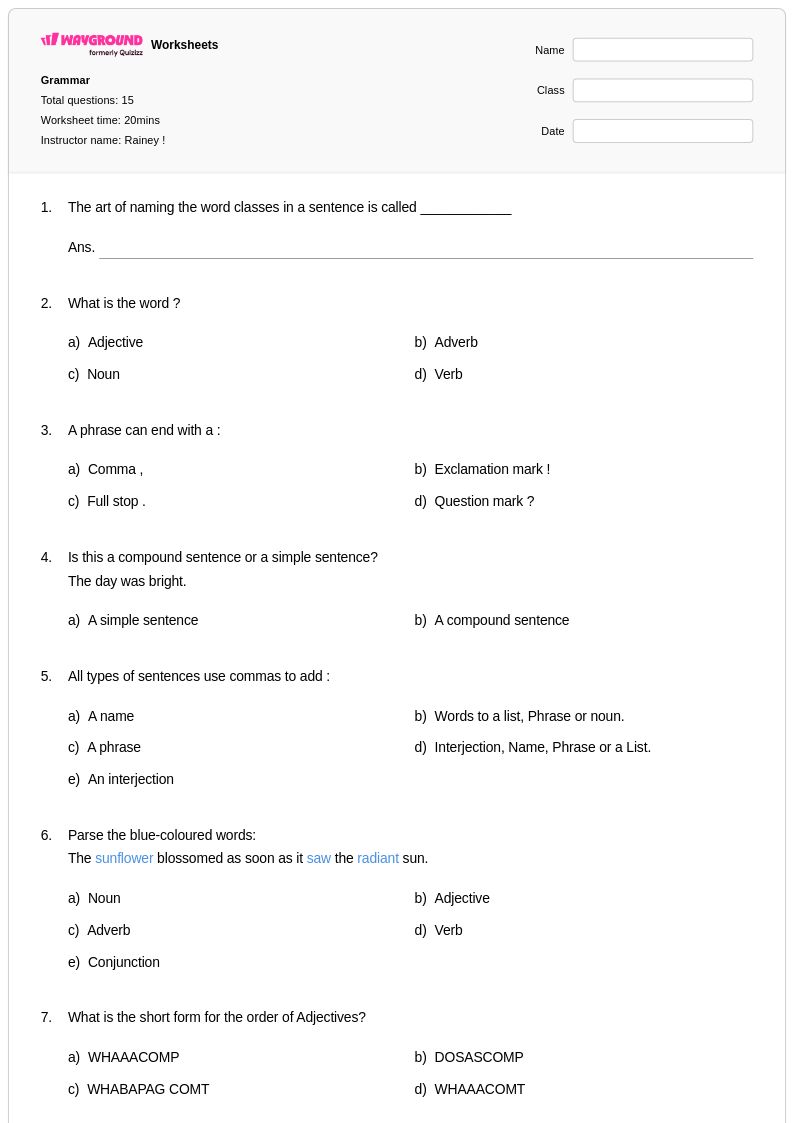
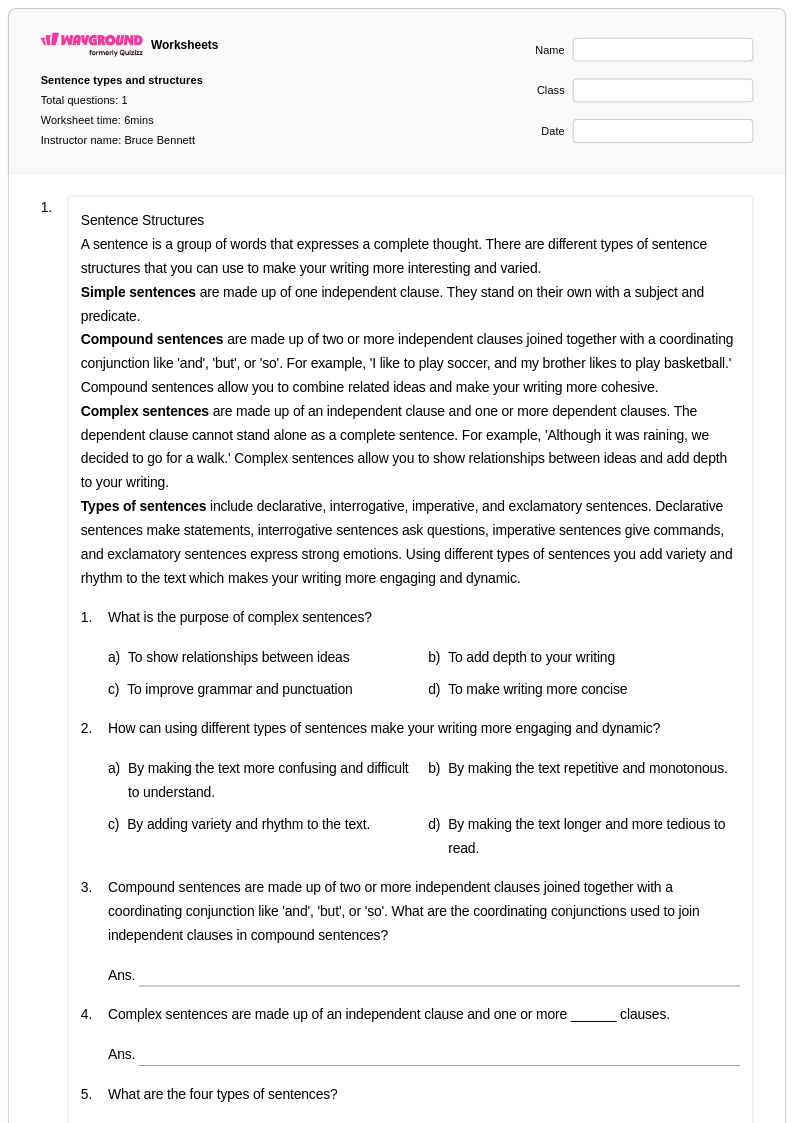
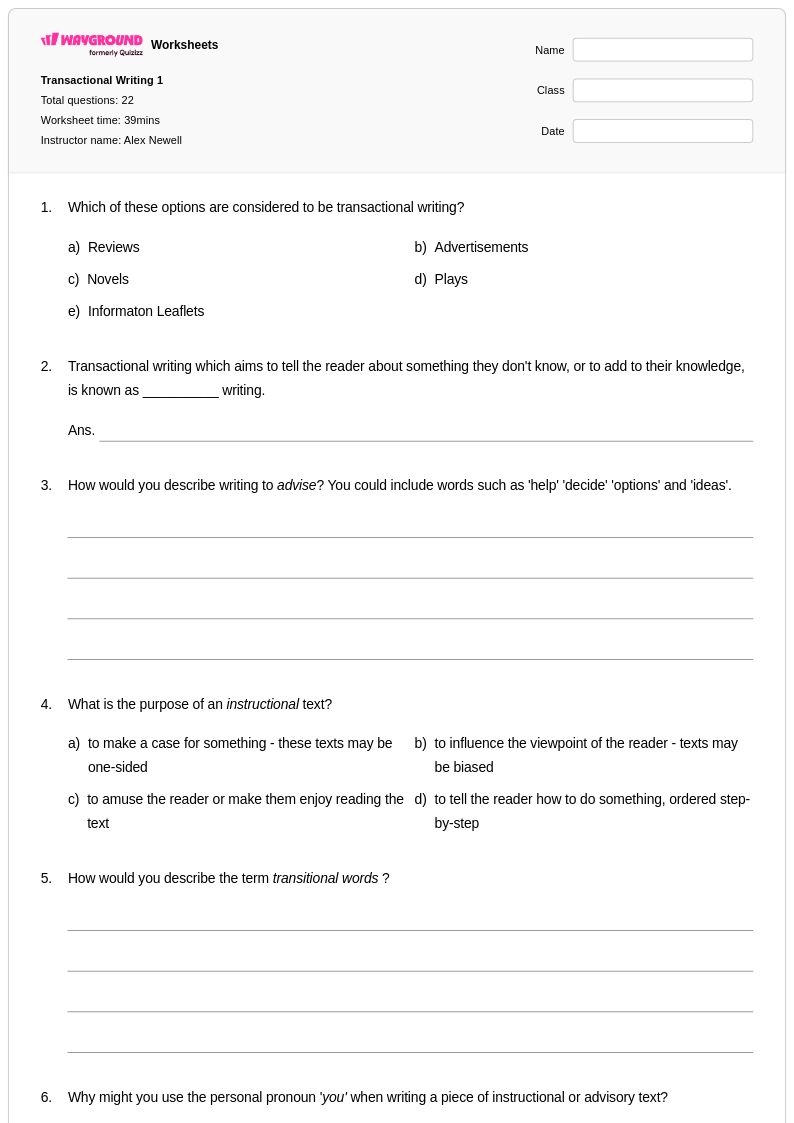
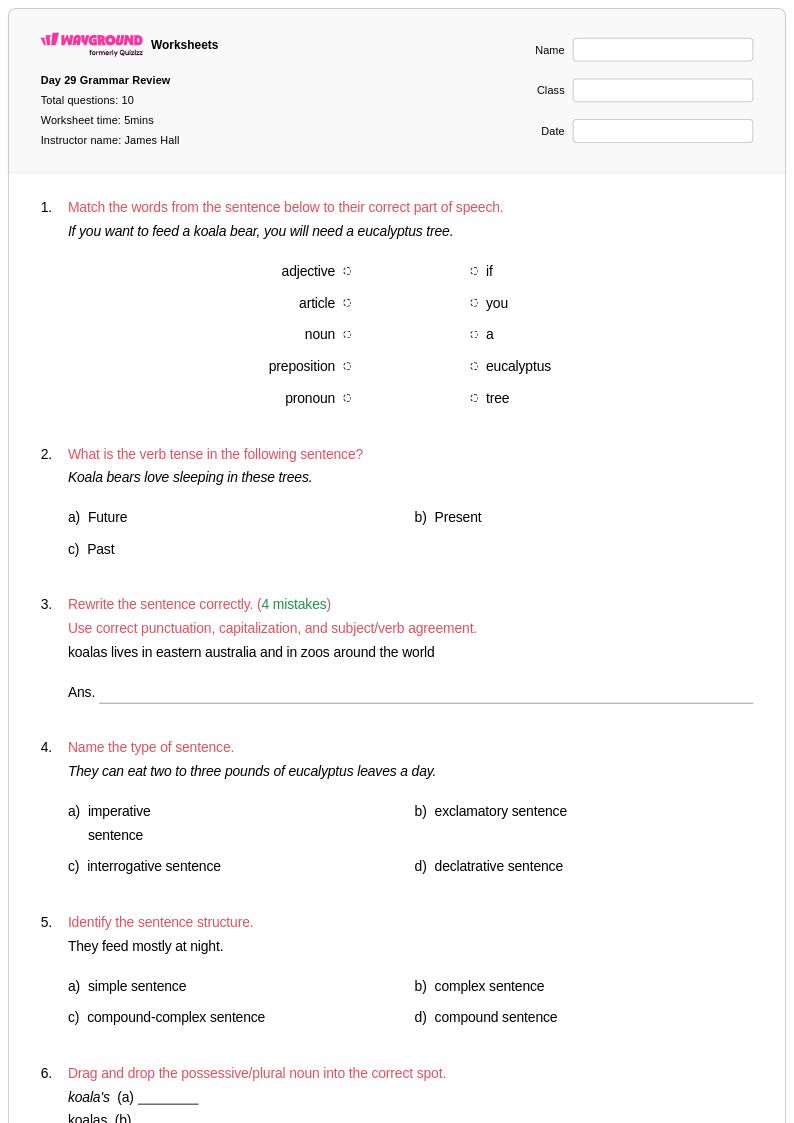
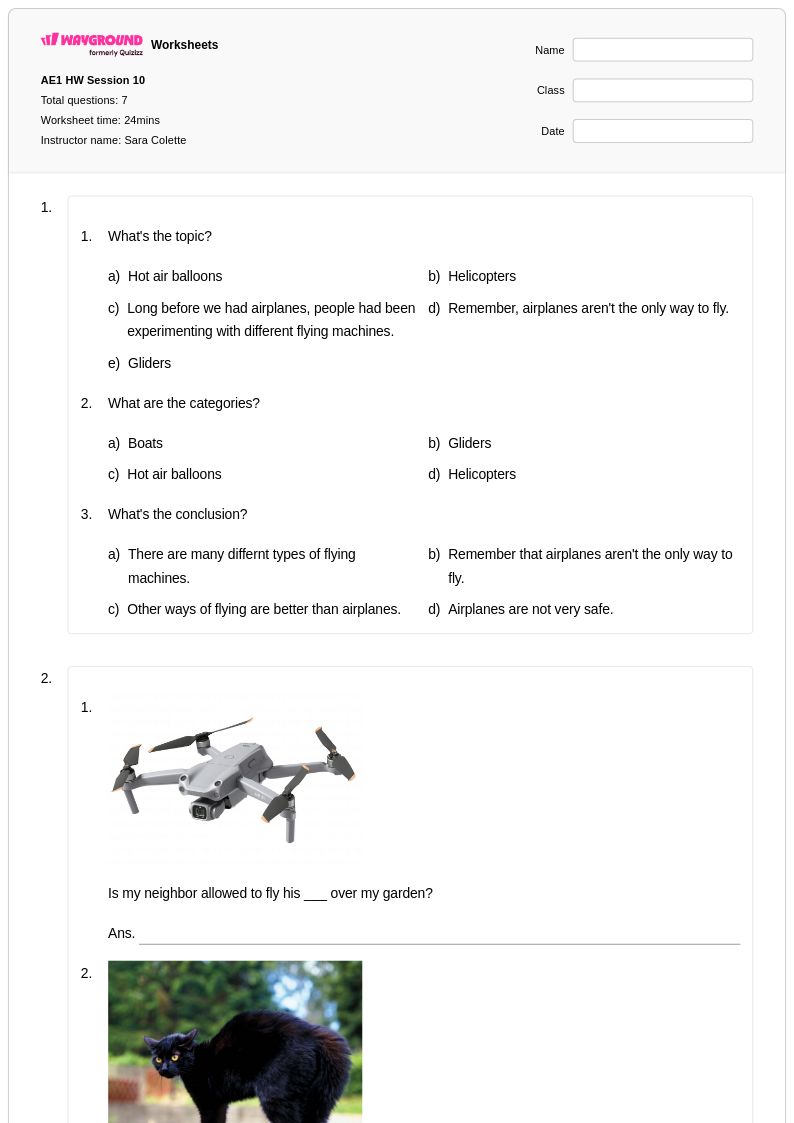
Verb types worksheets for Year 6 students available through Wayground (formerly Quizizz) provide comprehensive coverage of the essential verb categories that sixth-grade learners must master to develop sophisticated writing and communication skills. These expertly designed resources focus on helping students identify, categorize, and properly use action verbs, linking verbs, and helping verbs within various sentence structures and contexts. The worksheets strengthen critical grammar skills through targeted practice problems that challenge students to distinguish between physical and mental action verbs, recognize state-of-being verbs, and understand how auxiliary verbs function to create different tenses and moods. Each printable resource includes detailed answer keys that enable independent learning and self-assessment, while the free pdf format ensures accessibility for both classroom instruction and home practice.
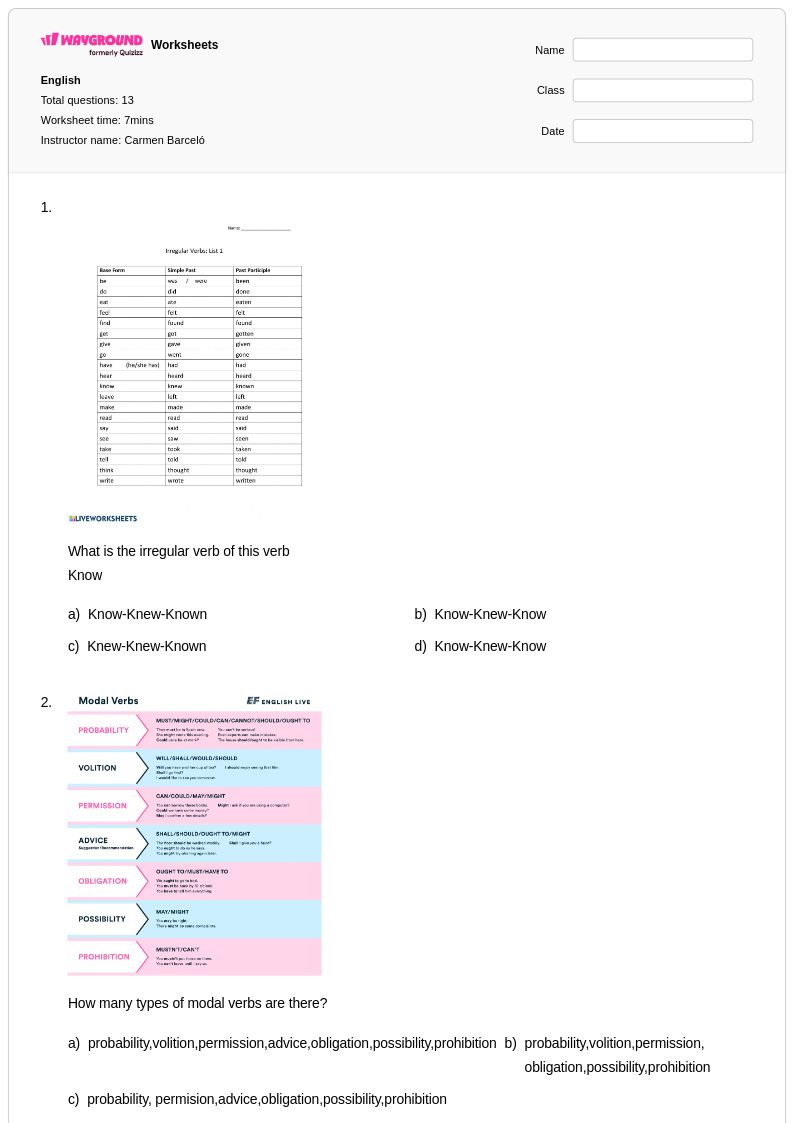
Wayground (formerly Quizizz) supports educators with an extensive collection of millions of teacher-created verb types worksheets specifically aligned with Year 6 English language arts standards and learning objectives. The platform's robust search and filtering capabilities allow teachers to quickly locate resources that match their specific instructional needs, whether focusing on irregular verbs, modal verbs, or transitive and intransitive verb distinctions. These differentiation tools enable seamless customization for diverse learning styles and ability levels, supporting both remediation for struggling students and enrichment opportunities for advanced learners. Available in both printable and digital formats, including downloadable pdf versions, these comprehensive worksheet collections streamline lesson planning while providing flexible options for skill practice, formative assessment, and targeted grammar instruction that builds the foundation for more complex language arts concepts.
FAQs
How do I teach the different types of verbs to students?
Start by anchoring instruction around the three core verb categories students encounter most: action verbs, linking verbs, and helping verbs. Teach each type in isolation first, using sentence-level examples before asking students to distinguish between them in mixed practice. A reliable sequence is to introduce action verbs, then linking verbs using the substitution test (replacing the verb with 'is' or 'seems'), and finally helping verbs as modifiers that change tense or mood. Consistent exposure through sentence identification tasks reinforces recognition before application.
What exercises help students practice identifying verb types?
Sentence-sorting tasks, where students classify underlined verbs by type, are among the most effective exercises for building verb recognition. Cloze activities that require students to fill in the correct verb form also reinforce the distinction between helping and linking verbs in context. For irregular verbs specifically, conjugation drills and error-correction exercises help students internalize forms that don't follow standard patterns. Worksheets that present verbs in full sentences rather than in isolation give students the grammatical context they need to make accurate distinctions.
What mistakes do students commonly make when identifying linking verbs vs. action verbs?
The most frequent error is misclassifying sensory and state-of-being verbs as action verbs because they appear to describe something happening. Words like 'feels,' 'looks,' 'appears,' and 'grows' can function as either linking or action verbs depending on context, which students often miss. For example, 'She feels cold' uses 'feels' as a linking verb, while 'She feels the fabric' uses it as an action verb. Teaching students to apply the substitution test — replacing the verb with a form of 'to be' — helps them identify linking verb usage reliably.
Why do students struggle with irregular verbs, and how can I help them?
Students struggle with irregular verbs because there is no consistent spelling or phonological rule to apply — each verb's past tense and past participle must be memorized individually. Common errors include over-regularizing irregular forms (writing 'goed' instead of 'went') or confusing past tense with past participle (using 'I seen' instead of 'I have seen'). Repeated low-stakes practice, such as conjugation drills and sentence correction tasks, is the most reliable instructional approach. Grouping irregular verbs by pattern (e.g., sing/sang/sung, ring/rang/rung) can reduce the memorization burden.
How do helping verbs affect meaning in a sentence?
Helping verbs, also called auxiliary verbs, work alongside a main verb to indicate tense, mood, voice, or possibility and cannot be removed without changing the sentence's meaning. For instance, 'She is running' signals ongoing action, while 'She was running' shifts the timeframe to the past. Modal helping verbs such as 'can,' 'might,' 'must,' and 'should' further modify meaning by expressing degrees of certainty, obligation, or permission. Students need explicit instruction on how helping verbs function as a unit with the main verb rather than as standalone words.
How can I use Wayground's verb types worksheets in my classroom?
Wayground's verb types worksheets are available as printable PDFs for traditional classroom use and in digital formats for technology-integrated or blended learning environments, giving teachers flexibility in how they assign and collect student work. Teachers can also host worksheets as a live quiz on Wayground, making them suitable for whole-class instruction, independent practice, or formative assessment. Each worksheet includes a complete answer key, reducing prep time for teachers who need ready-to-use materials across multiple verb type subtopics, including action verbs, linking verbs, helping verbs, and irregular verbs.
How do I differentiate verb types instruction for students at different skill levels?
For students who need additional support, reduce the number of verb categories introduced at one time and provide sentence-level scaffolding, such as a word bank or a reference chart listing common examples of each verb type. On Wayground, teachers can apply accommodations such as reduced answer choices to lower cognitive load for individual students, or enable Read Aloud so that questions and sentences are read to students who struggle with decoding. Advanced learners benefit from open-ended tasks that ask them to write original sentences using specified verb types or to analyze how changing the verb type alters meaning.