
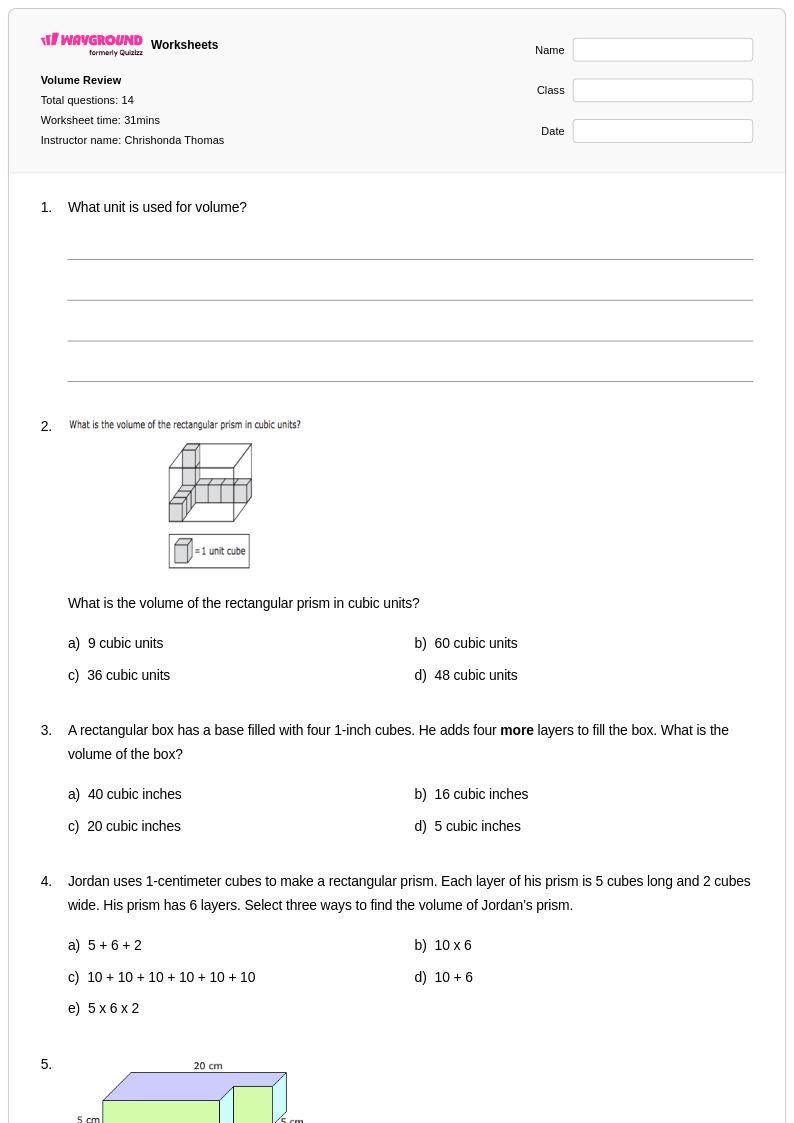
14Q
5th
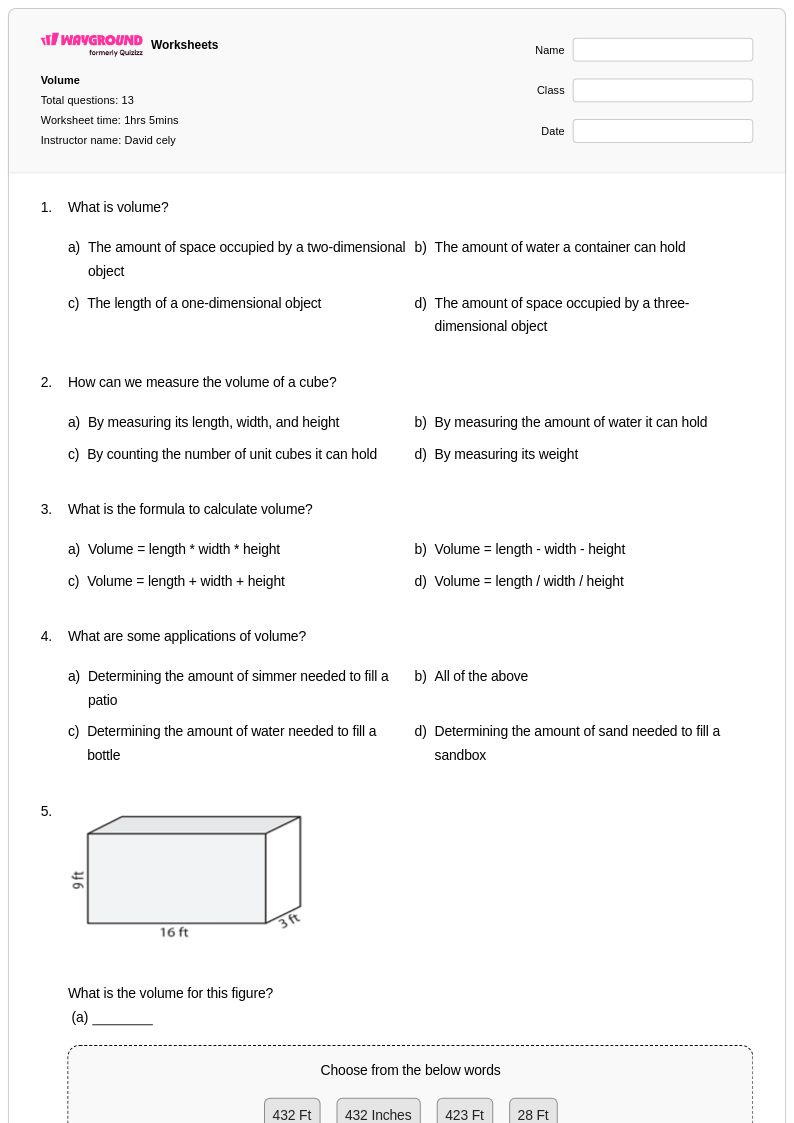
13Q
5th
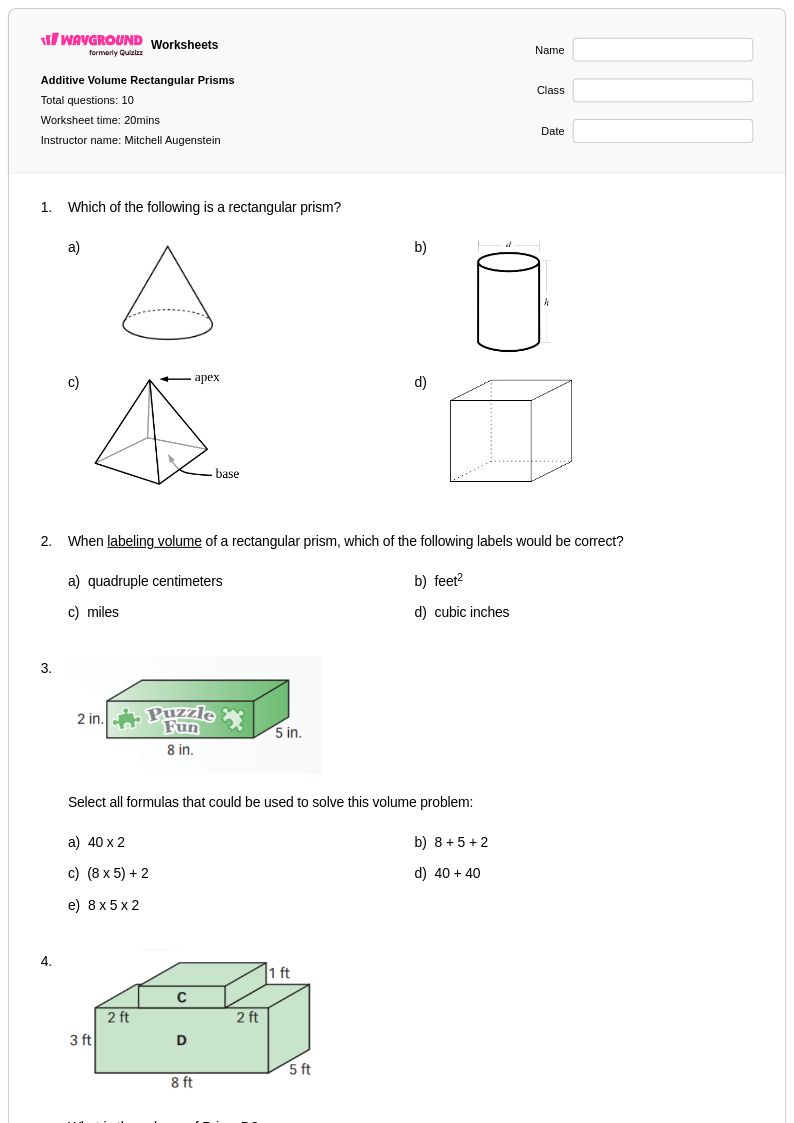
10Q
5th - 6th
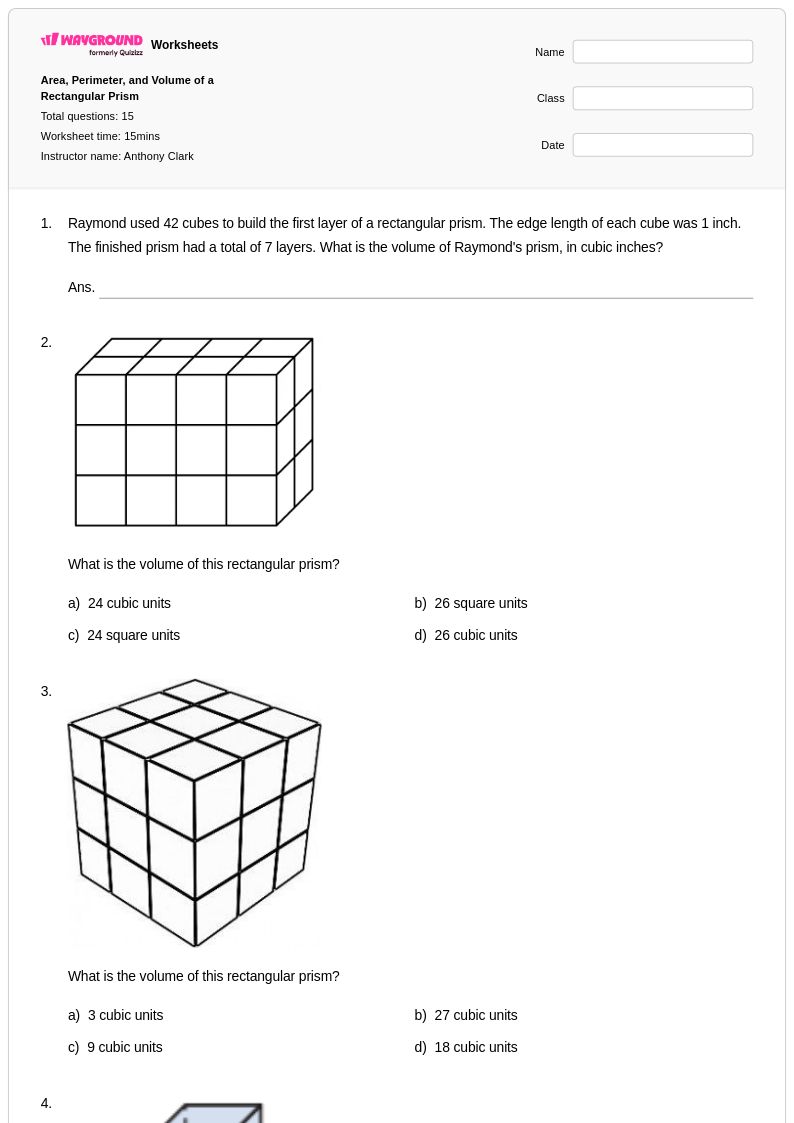
15Q
5th - Uni
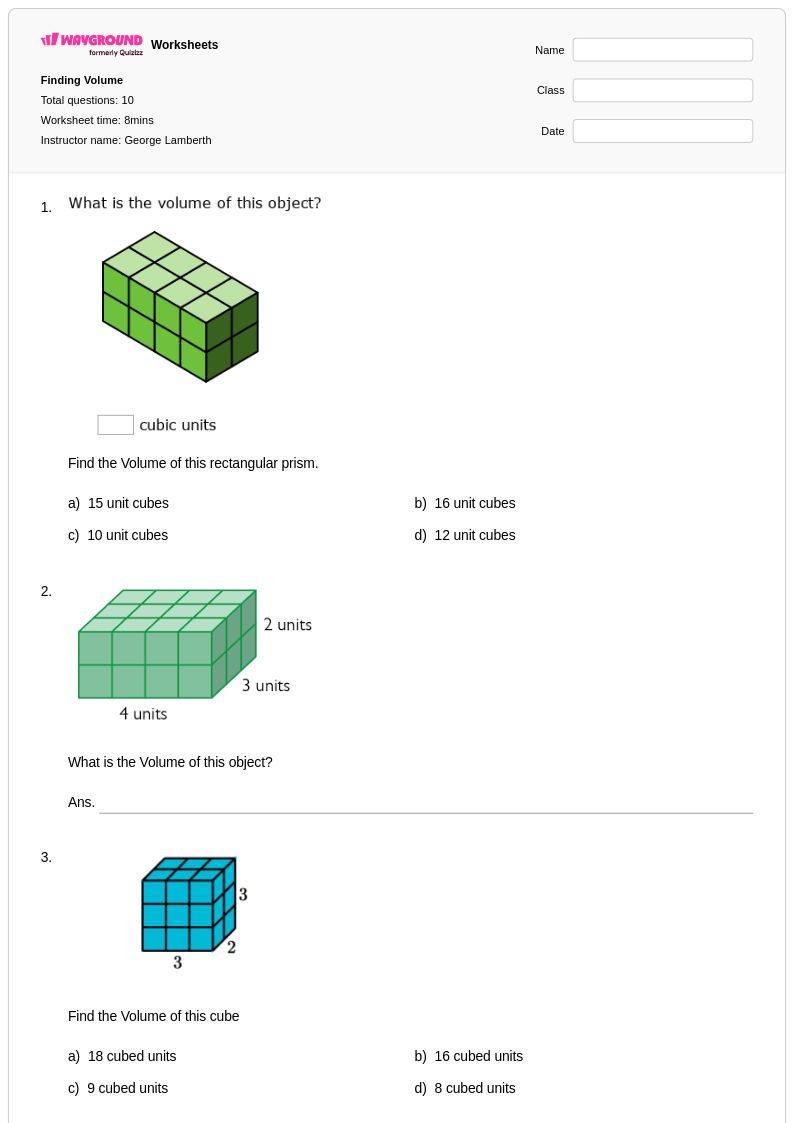
10Q
5th
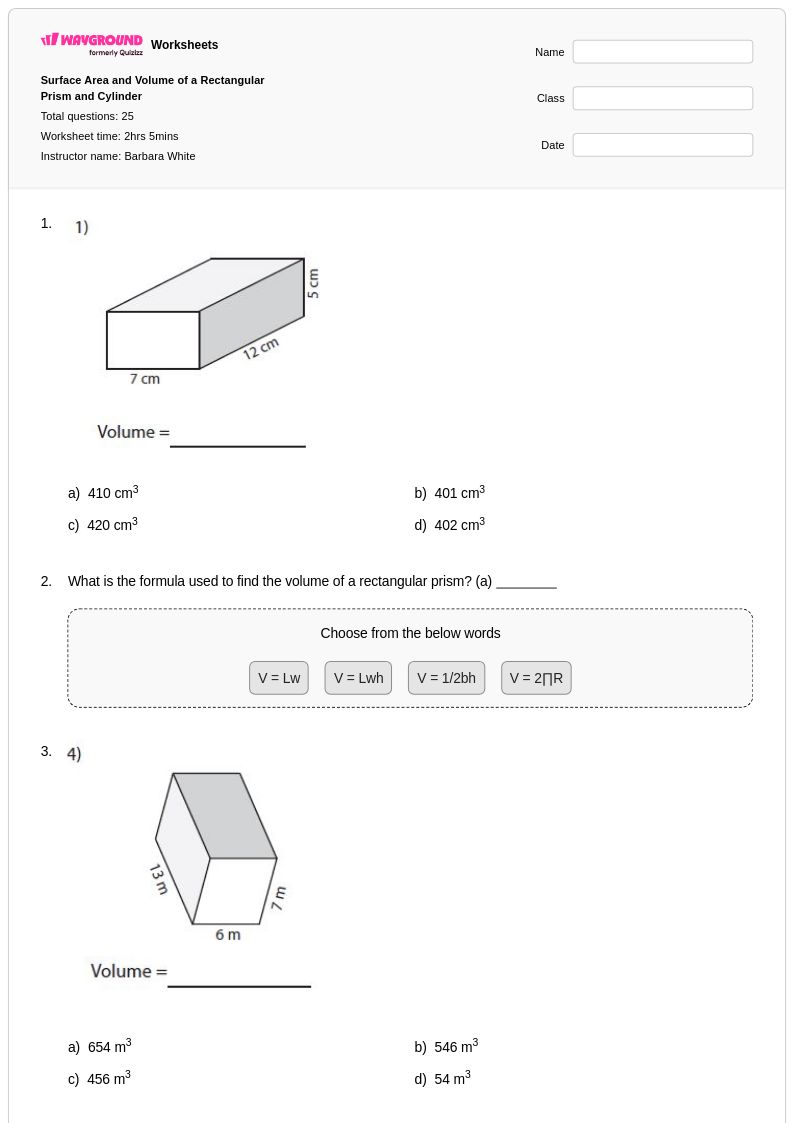
25Q
5th - 8th
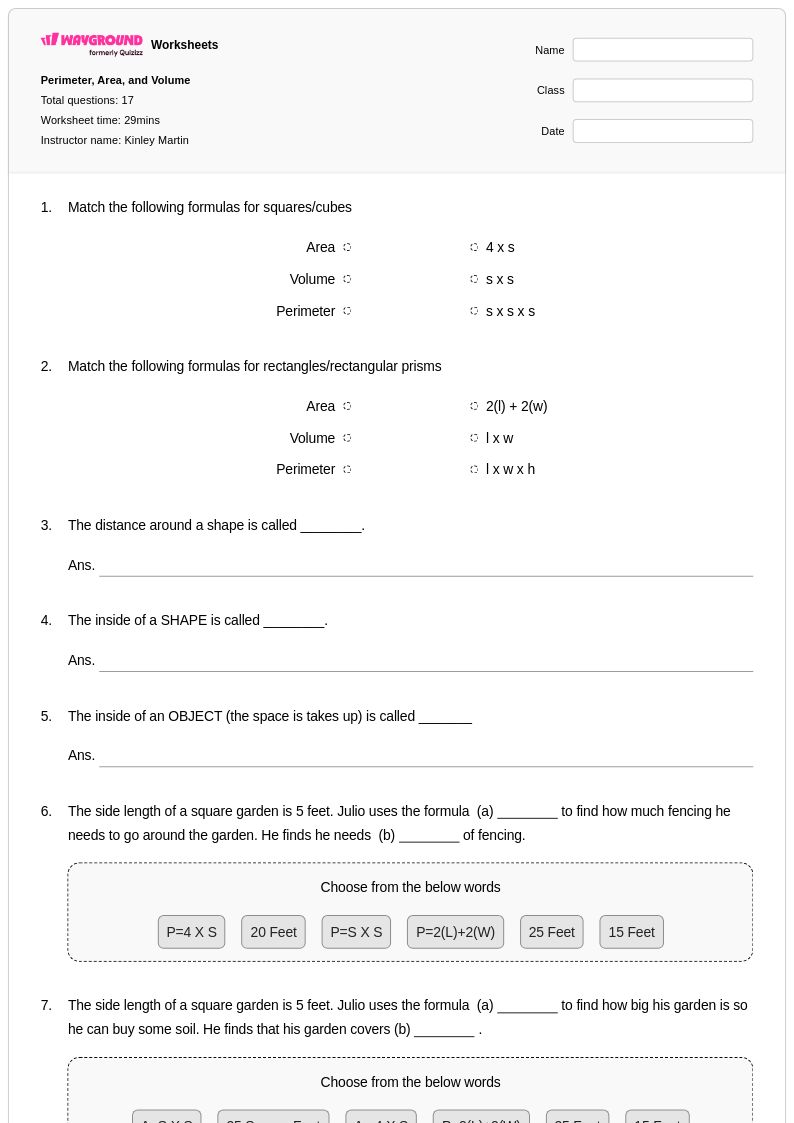
17Q
5th
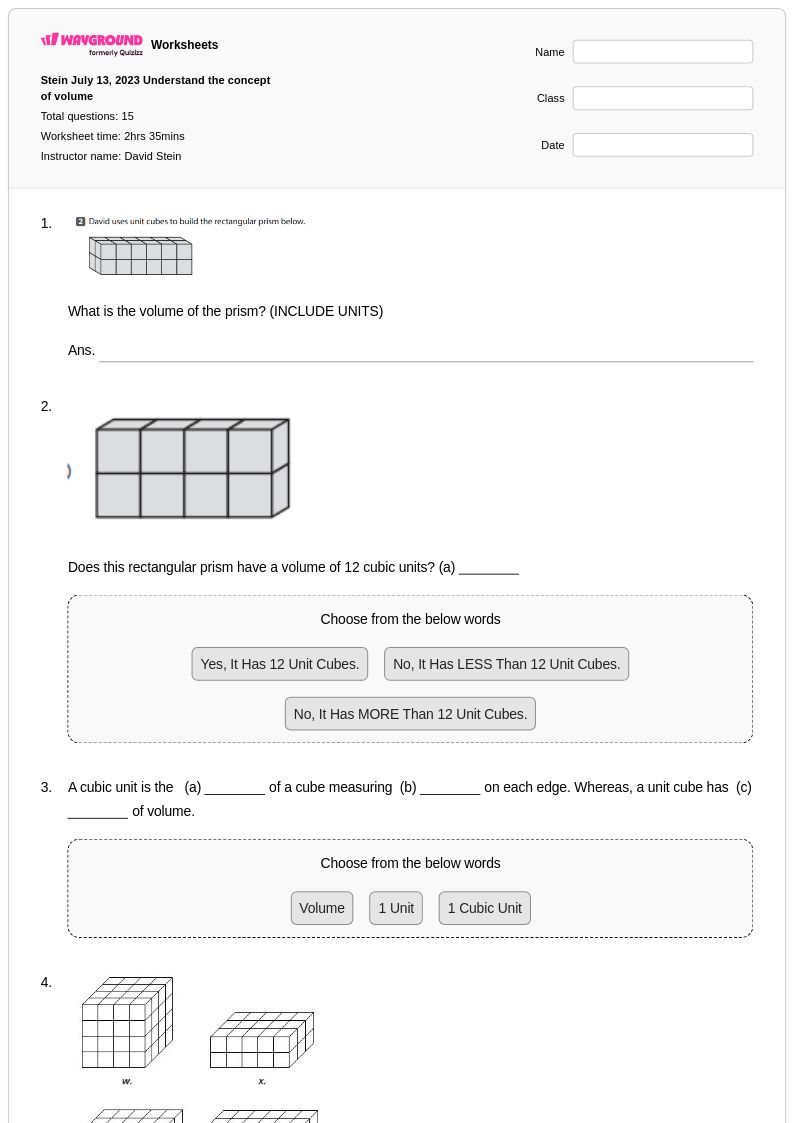
15Q
5th
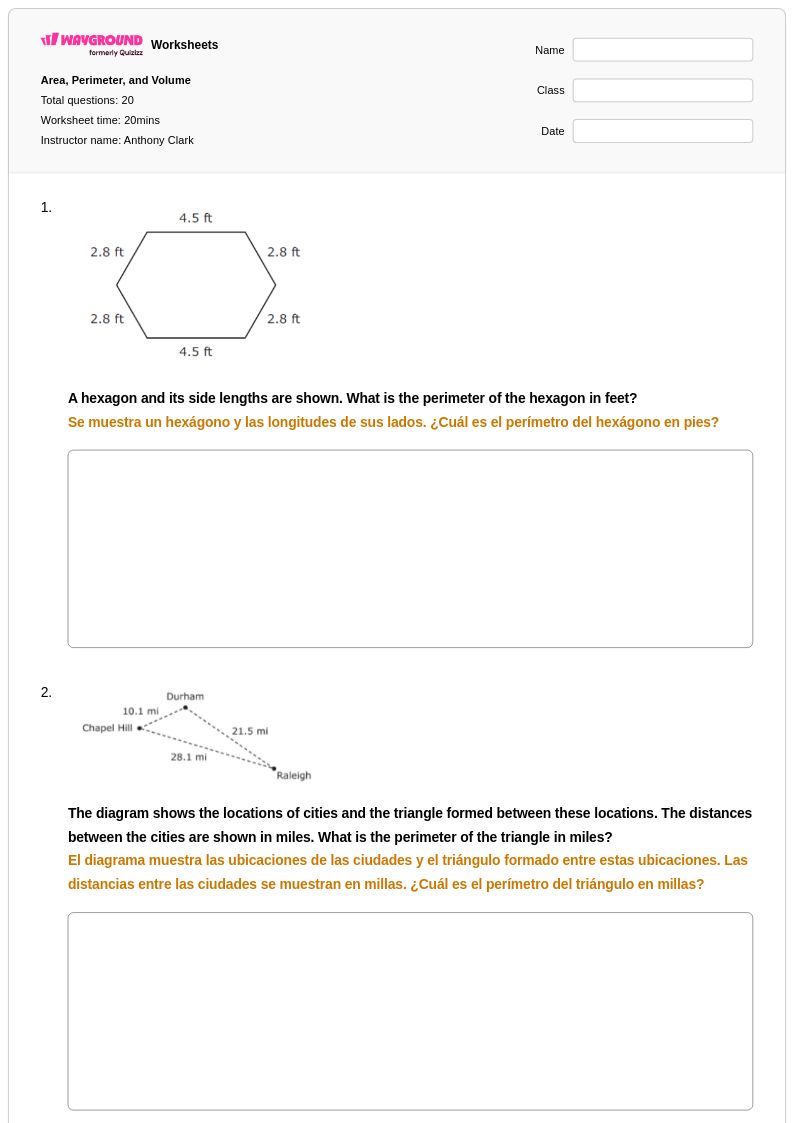
20Q
5th - Uni
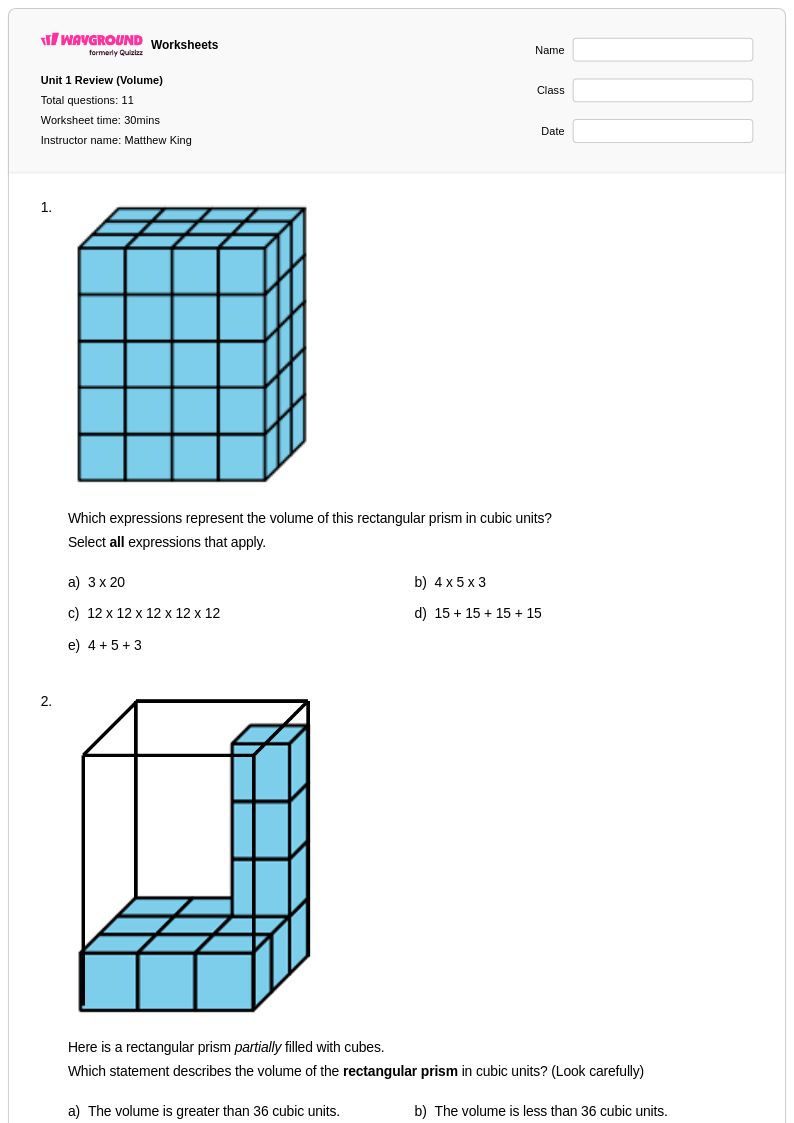
11Q
5th
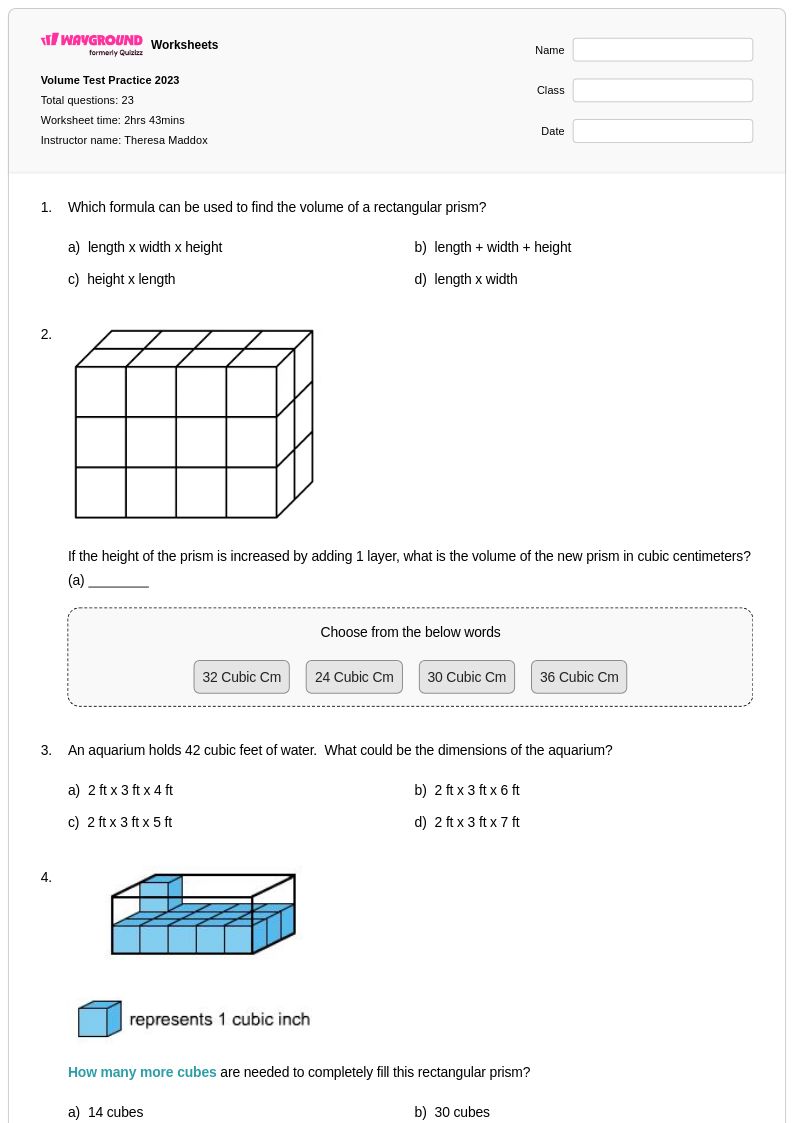
23Q
5th
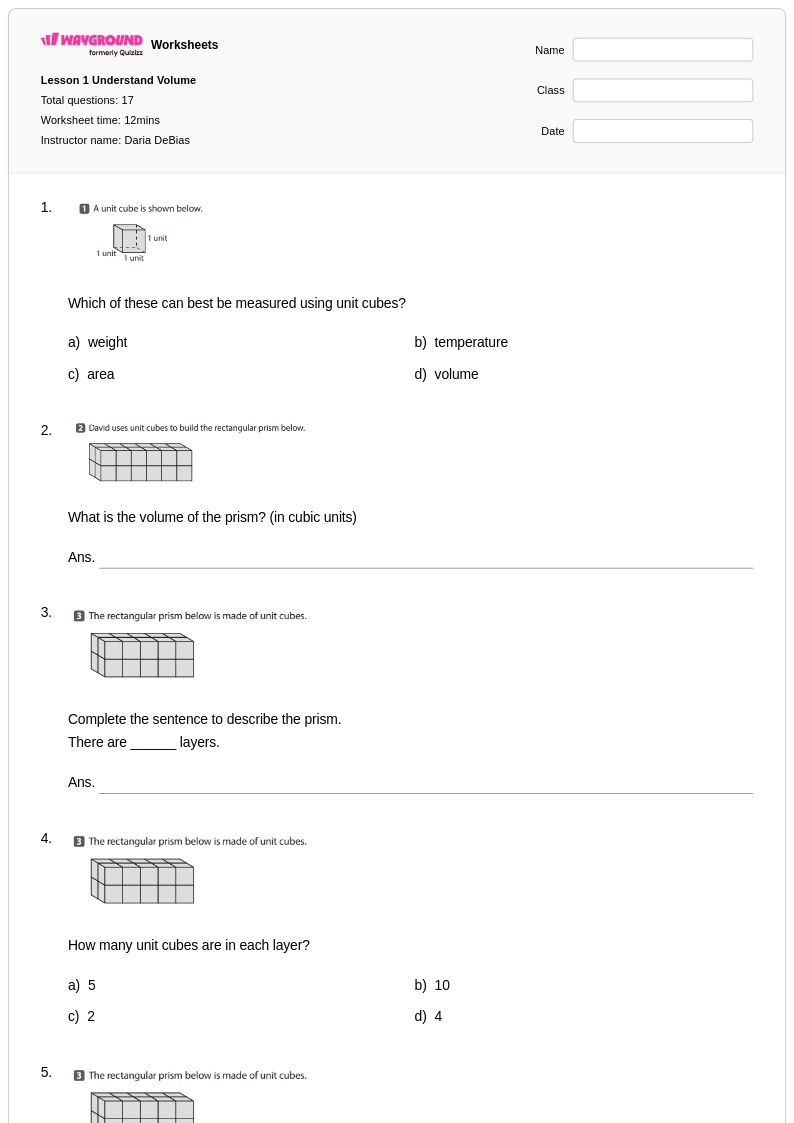
17Q
5th
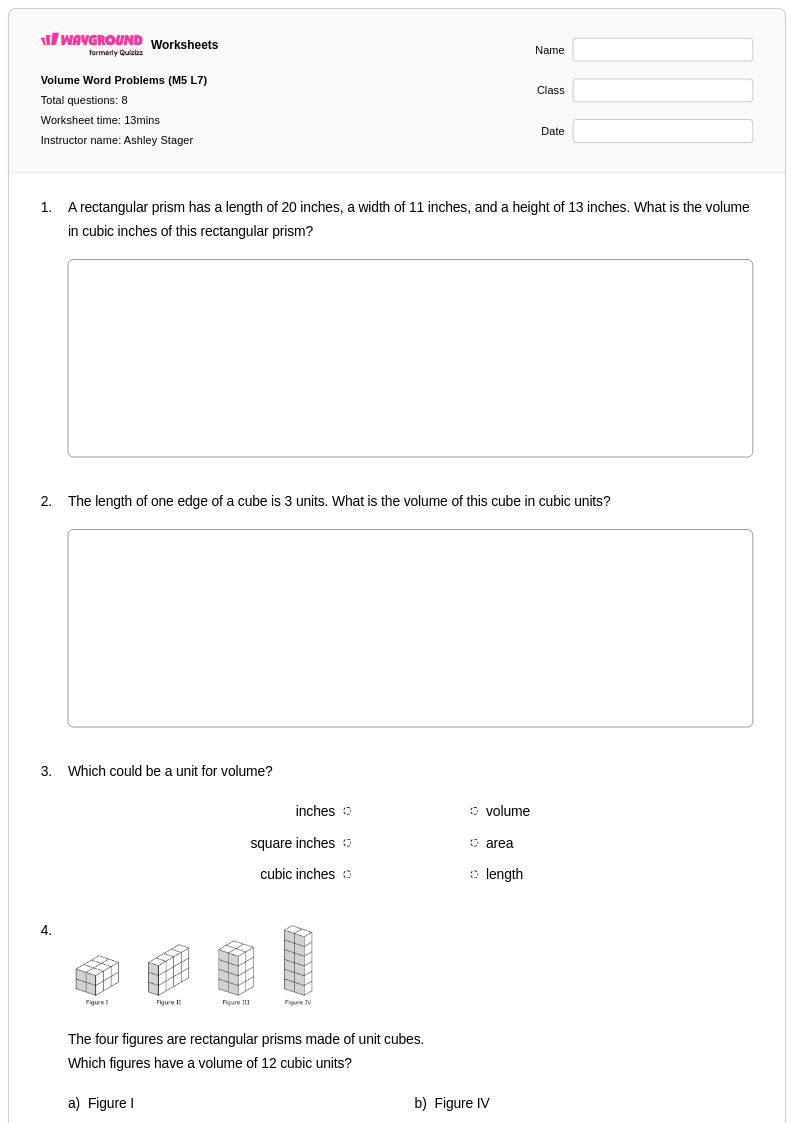
8Q
5th
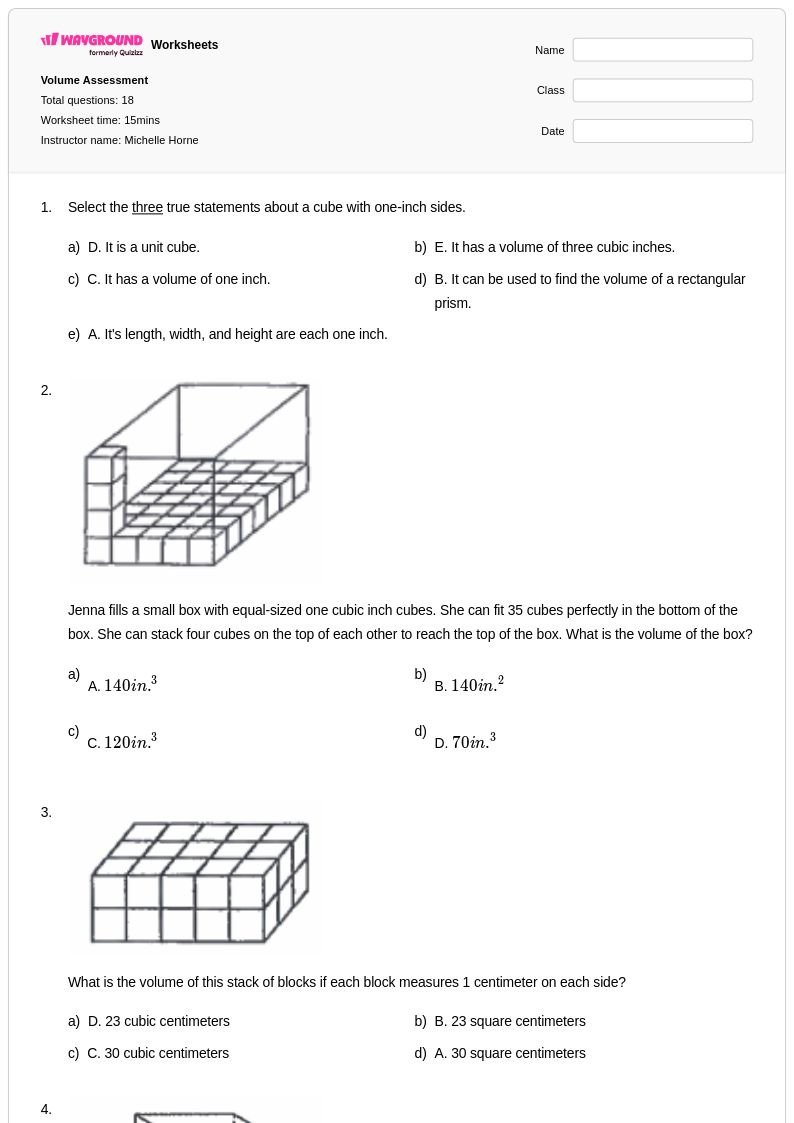
18Q
5th
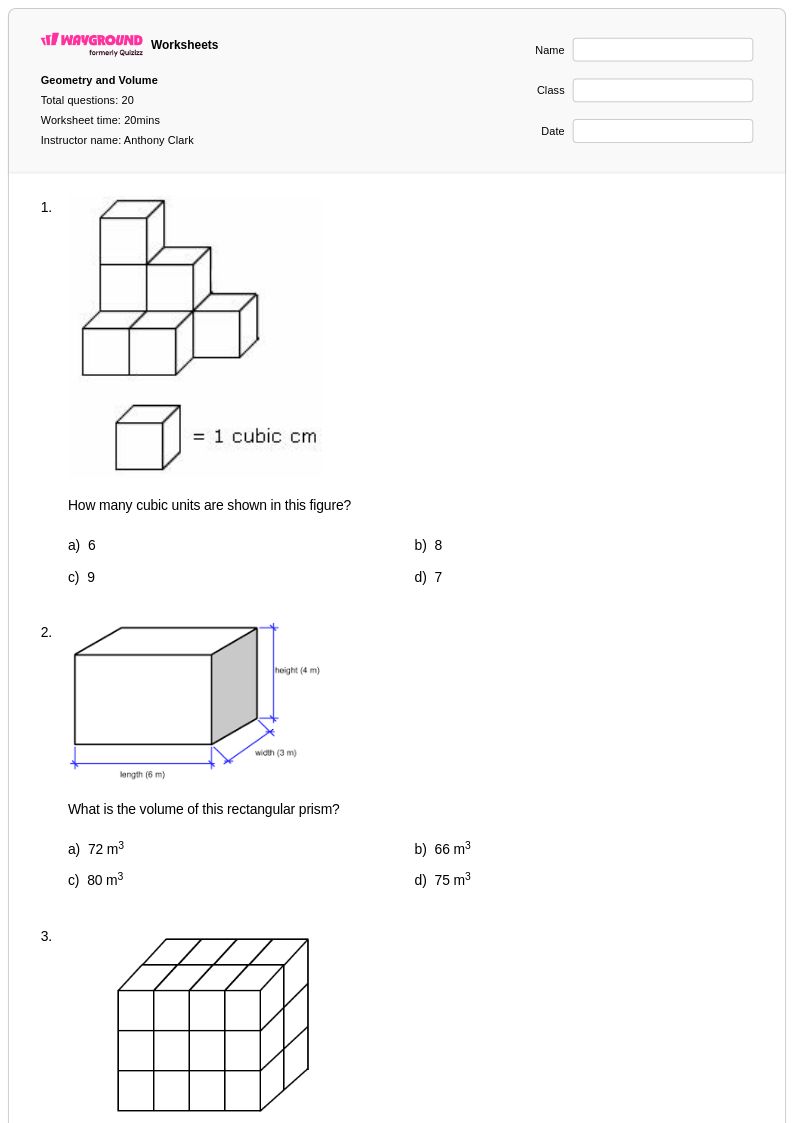
20Q
5th - Uni
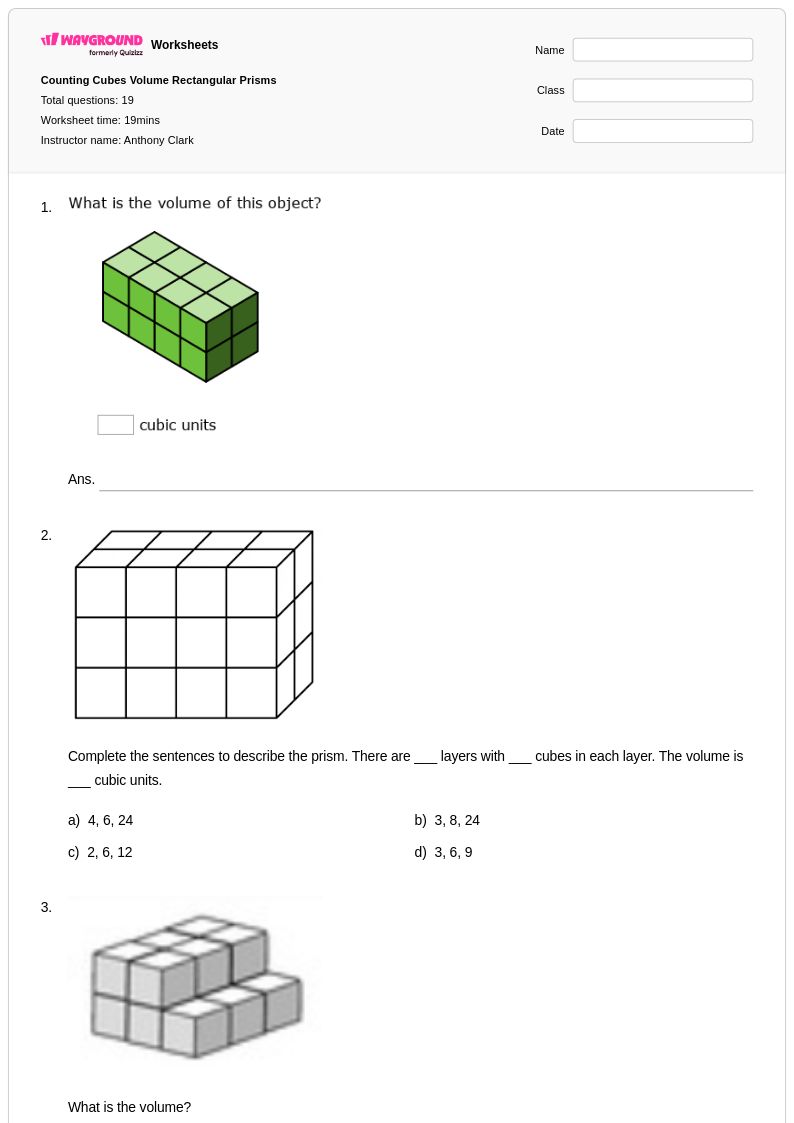
19Q
5th - Uni
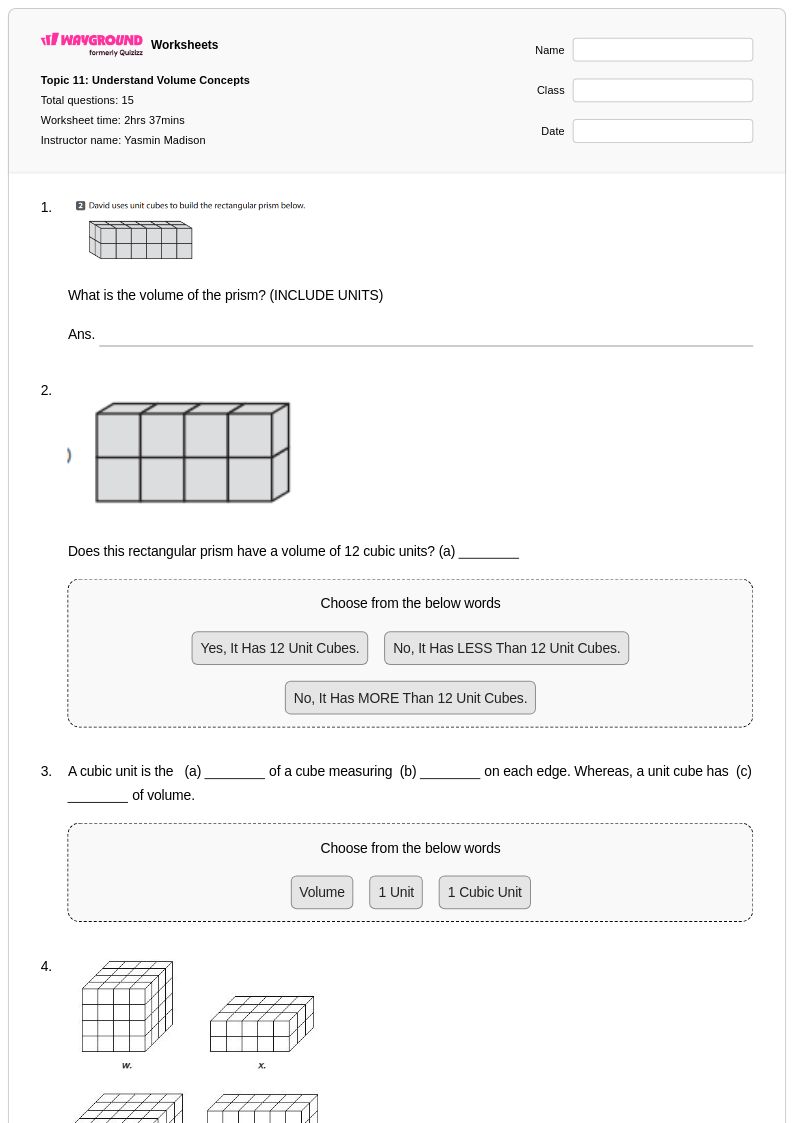
15Q
5th
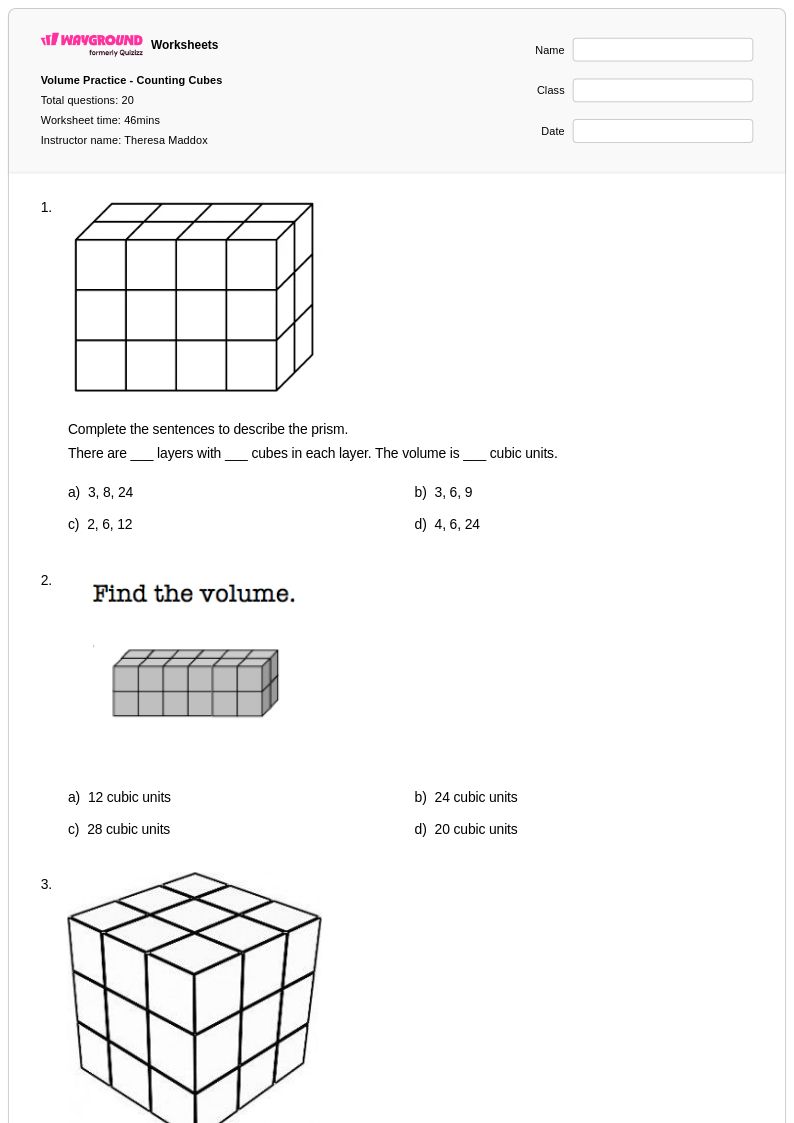
20Q
5th
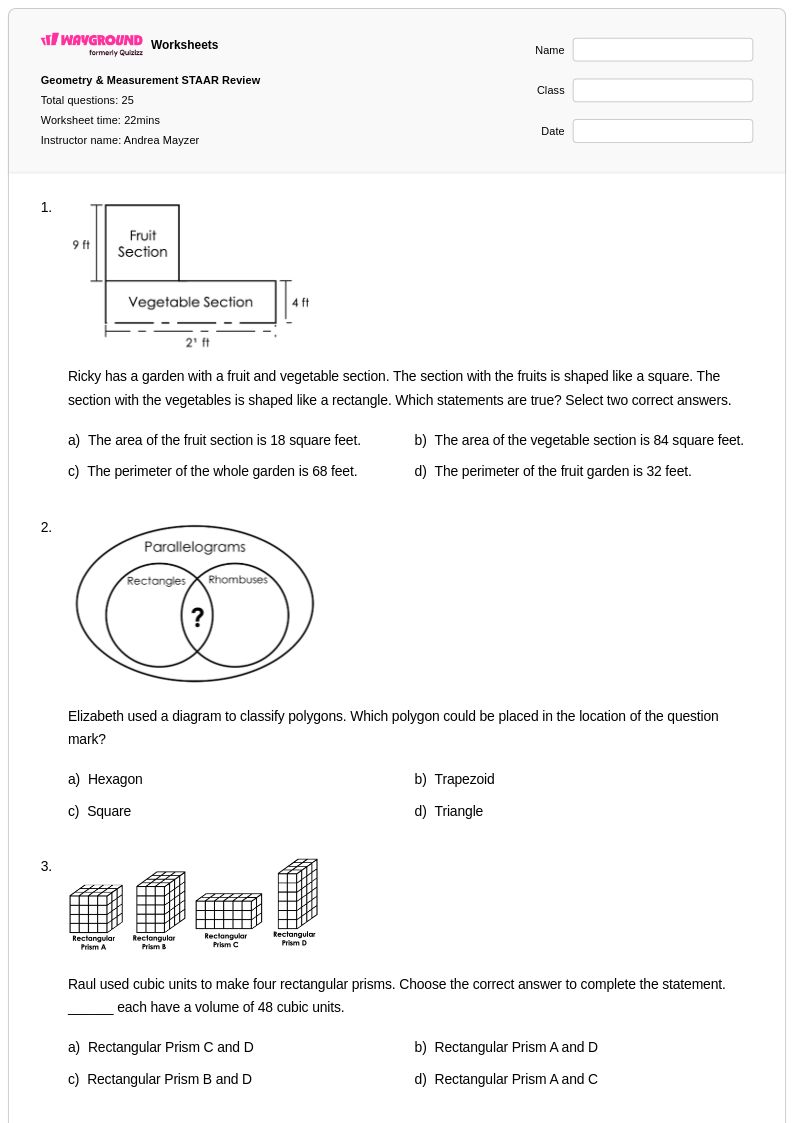
25Q
5th
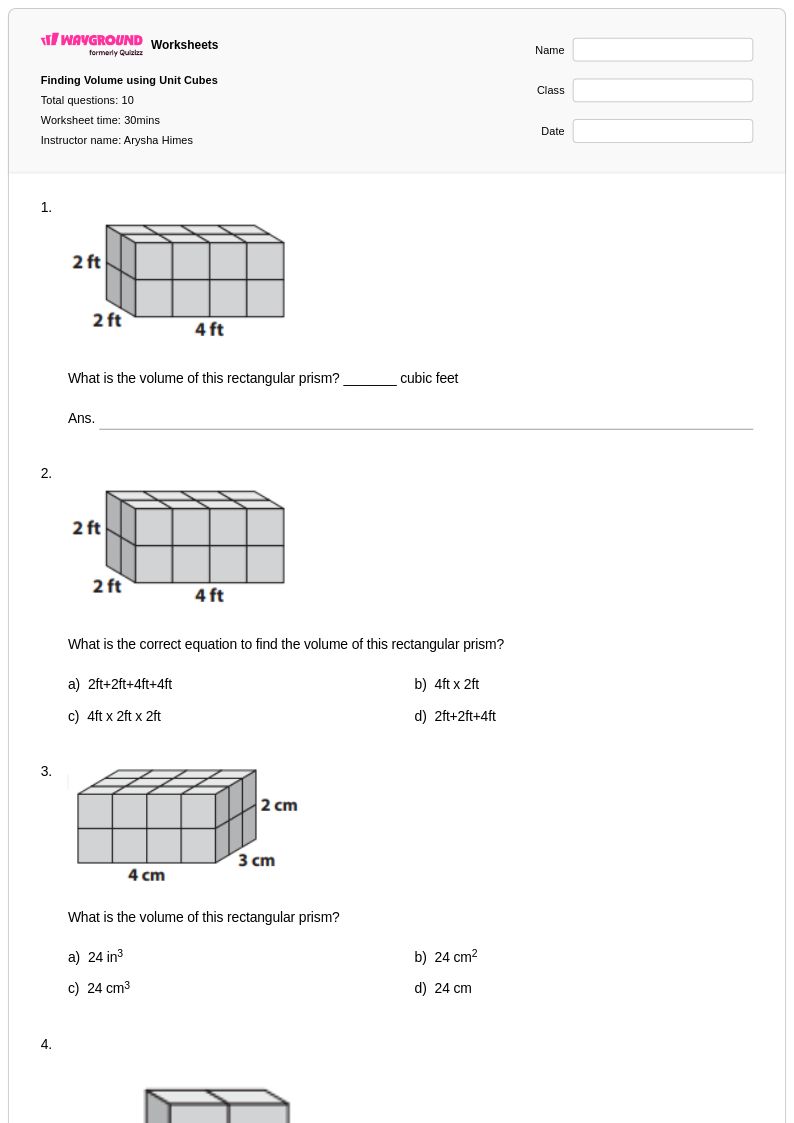
10Q
5th
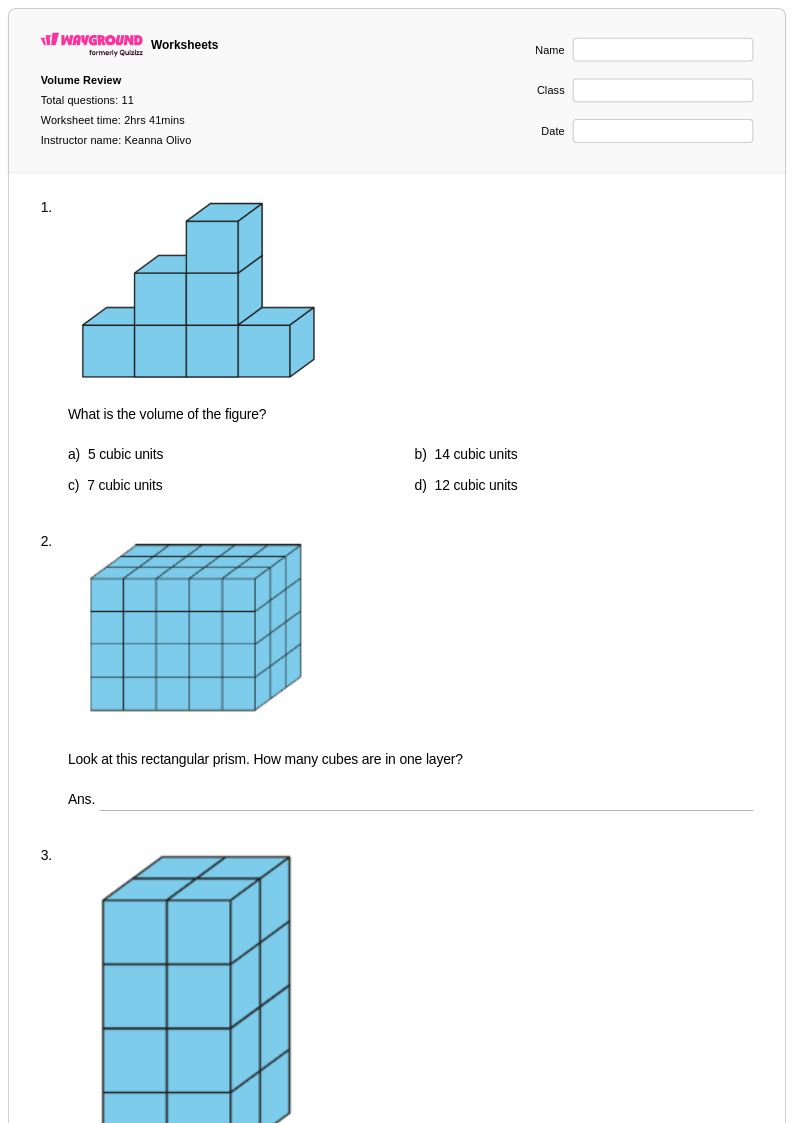
11Q
5th
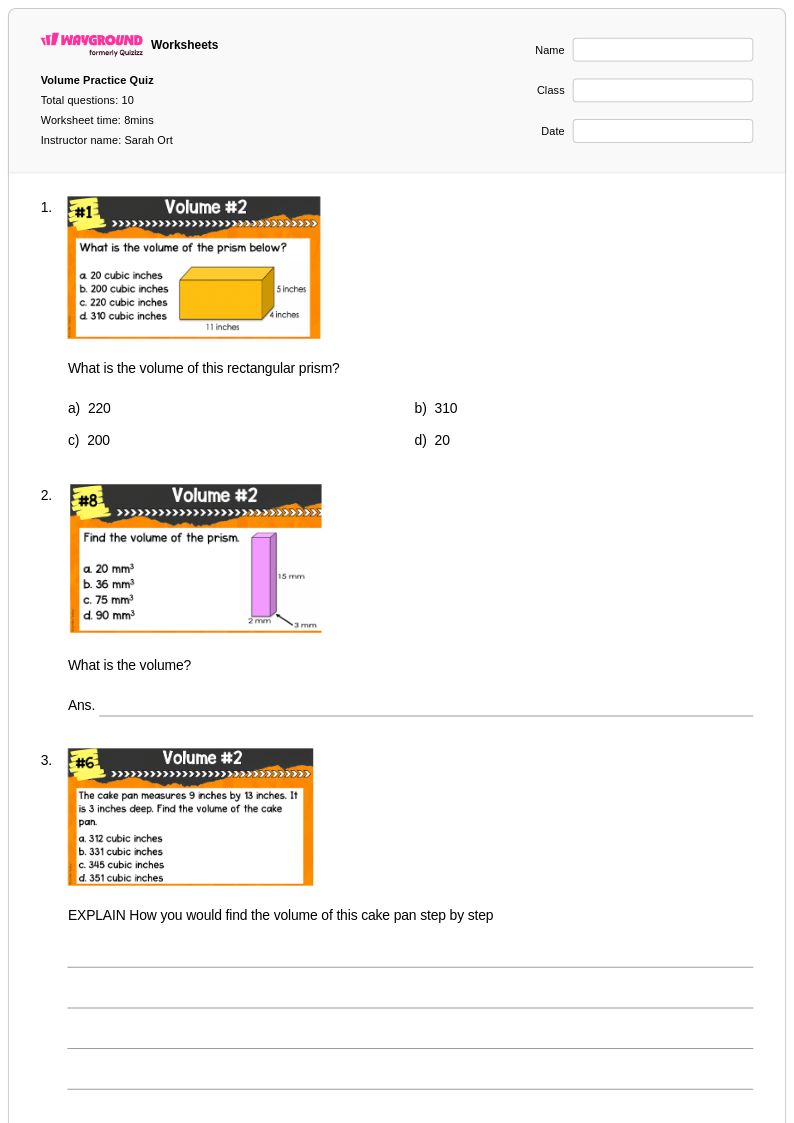
10Q
5th
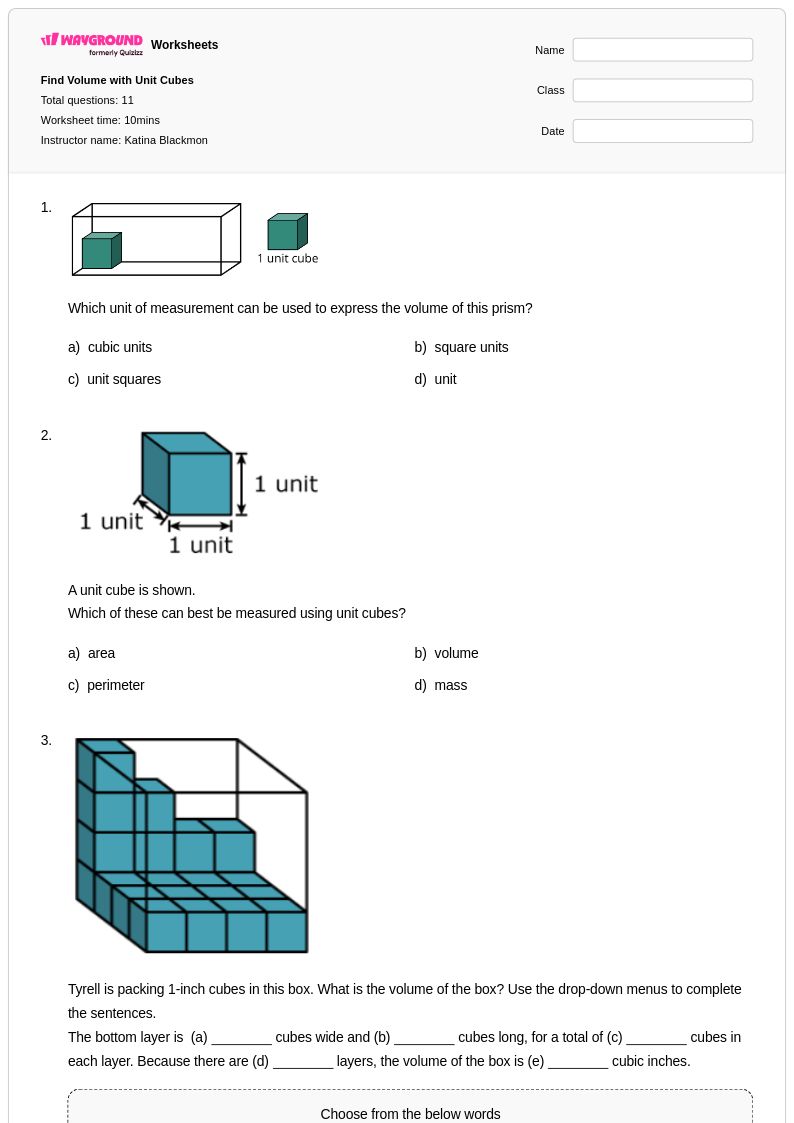
11Q
5th
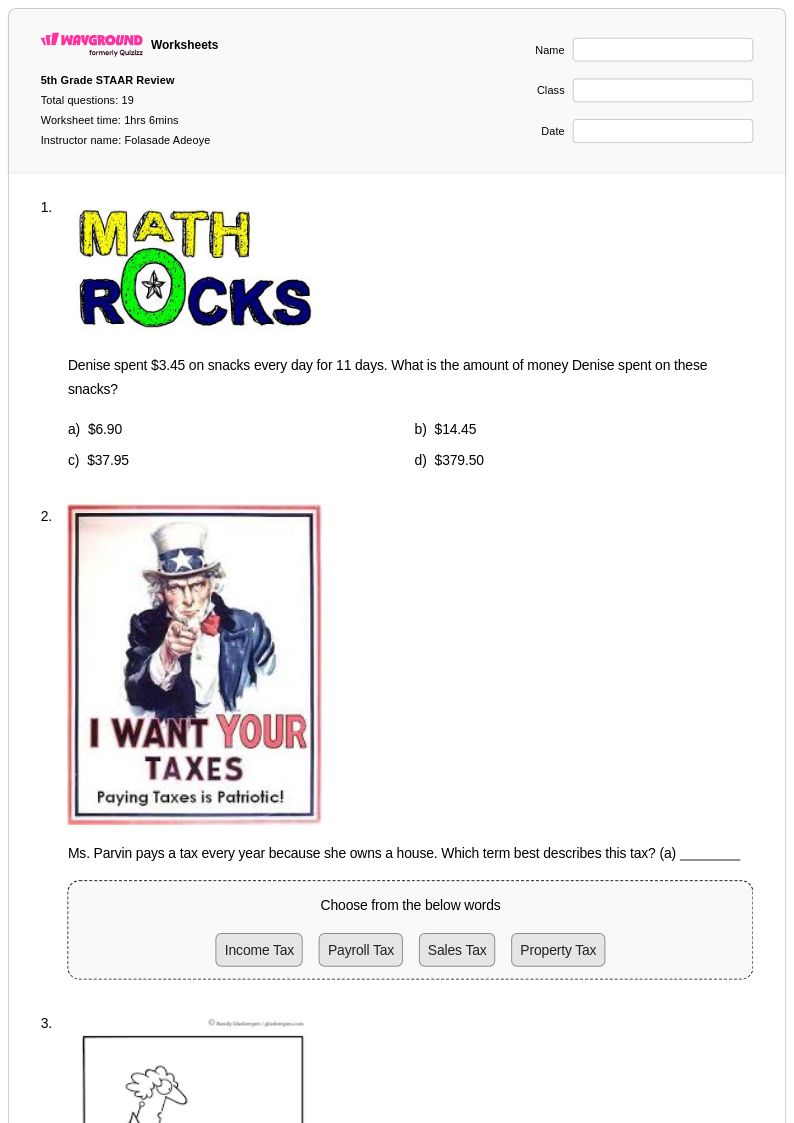
19Q
5th
Explorar Volume of a Rectangular Prism hojas de trabajo por grados
Explore otras hojas de trabajo de materias para year 5
Explore printable Volume of a Rectangular Prism worksheets for Year 5
Year 5 volume of a rectangular prism worksheets available through Wayground (formerly Quizizz) provide comprehensive practice for students learning this fundamental three-dimensional measurement concept. These carefully designed worksheets focus on helping fifth-grade students master the formula length × width × height while developing spatial reasoning skills essential for advanced geometry. The collection includes diverse practice problems that guide students through calculating volume using whole numbers, understanding cubic units, and visualizing how changing dimensions affects total volume. Each worksheet comes with a complete answer key, making them valuable resources for both independent practice and guided instruction, while the free printable format ensures accessibility for all classrooms and home learning environments.
Wayground (formerly Quizizz) empowers educators with millions of teacher-created worksheet resources specifically designed for volume of rectangular prism instruction, featuring robust search and filtering capabilities that allow teachers to quickly locate materials aligned with Year 5 mathematics standards. The platform's differentiation tools enable instructors to customize worksheets based on individual student needs, whether for remediation of basic multiplication skills or enrichment through complex multi-step volume problems. Teachers can seamlessly switch between printable pdf formats for traditional paper-based learning and digital formats for technology-integrated classrooms, while the extensive collection supports comprehensive lesson planning with materials suitable for initial concept introduction, skill practice, and assessment preparation. This flexibility allows educators to provide targeted instruction that builds student confidence in calculating rectangular prism volume while accommodating diverse learning preferences and classroom environments.