Free Printable Weather Instruments Worksheets for Year 8
Year 8 weather instruments worksheets from Wayground provide comprehensive printables and practice problems that help students master meteorological tools, featuring free PDF resources with detailed answer keys for effective science learning.
Explore printable Weather Instruments worksheets for Year 8
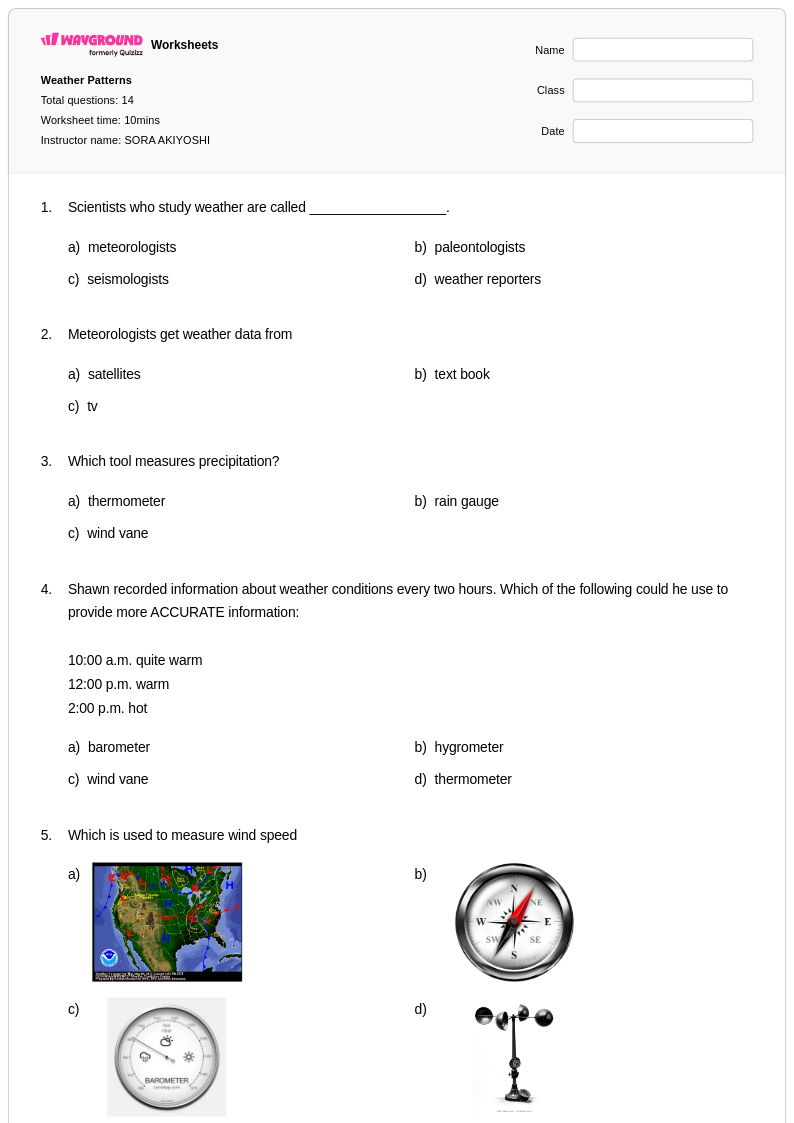
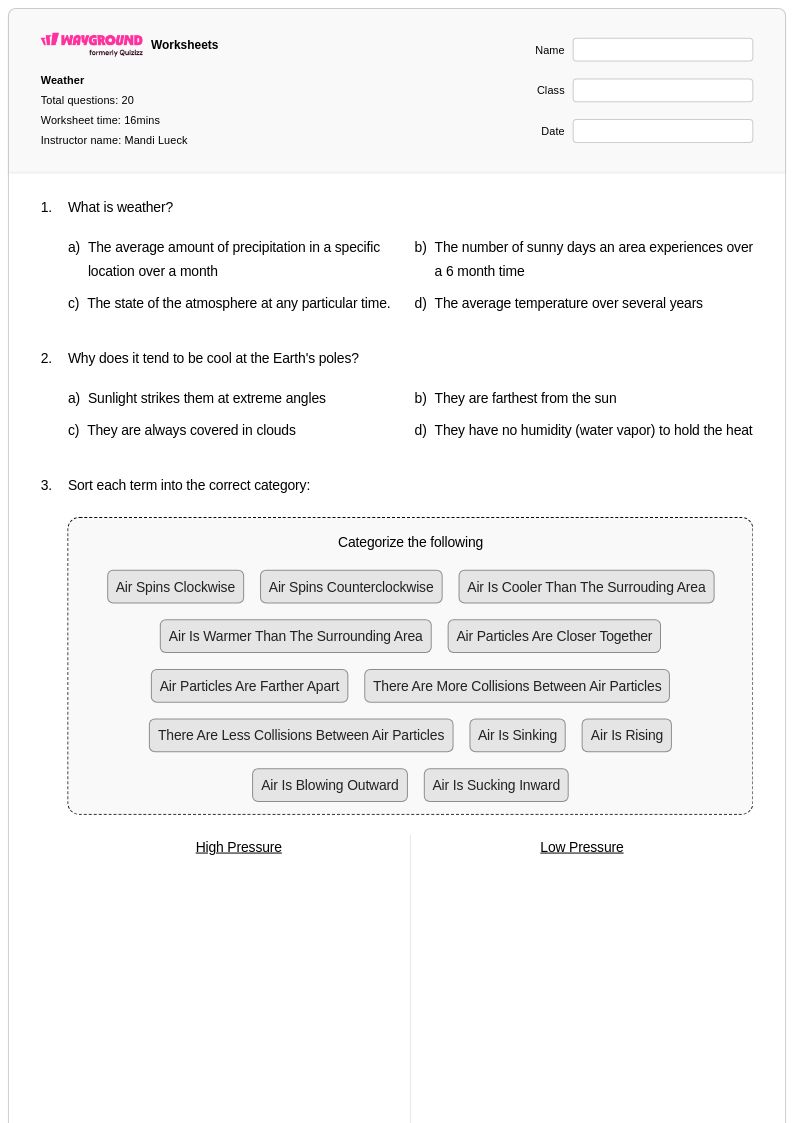
Weather instruments worksheets for Year 8 students available through Wayground (formerly Quizizz) provide comprehensive practice with the essential tools meteorologists use to measure and monitor atmospheric conditions. These expertly designed worksheets strengthen students' understanding of barometers, thermometers, anemometers, hygrometers, rain gauges, and weather vanes, helping eighth graders master how each instrument functions and what specific weather variables they measure. The collection includes detailed practice problems that challenge students to interpret data from multiple instruments, analyze weather patterns, and make predictions based on instrumental readings. Each worksheet comes with a complete answer key and is available as free printables in convenient pdf format, allowing students to develop critical thinking skills while learning to read and interpret meteorological data accurately.
Wayground (formerly Quizizz) supports science educators with millions of teacher-created weather instruments resources specifically aligned with Year 8 Earth and Space Science standards. The platform's robust search and filtering capabilities enable teachers to quickly locate worksheets that match their specific curriculum needs, whether focusing on individual instruments or comprehensive weather monitoring systems. These differentiation tools allow educators to customize content for various learning levels, providing targeted remediation for struggling students and enrichment opportunities for advanced learners. Available in both printable pdf and interactive digital formats, these weather instruments worksheets streamline lesson planning while offering flexible options for classroom instruction, homework assignments, and skill-building practice sessions that reinforce students' understanding of meteorological measurement techniques.
FAQs
How do I teach students to identify and use weather instruments?
Start by introducing each instrument alongside its specific function — a barometer measures air pressure, a thermometer measures temperature, an anemometer measures wind speed, a hygrometer measures humidity, and a weather vane indicates wind direction. Use real or model instruments for hands-on exploration before moving to labeled diagrams and identification exercises. Connecting each tool to observable weather changes (e.g., a dropping barometer often signals an incoming storm) helps students build conceptual understanding, not just memorization.
What exercises help students practice reading and interpreting weather instrument data?
Effective practice involves having students interpret sample readings from multiple instruments simultaneously and draw conclusions about current or predicted weather conditions. Worksheets that present instrument readings alongside weather scenarios challenge students to connect data to real-world atmospheric patterns. Tasks that ask students to compare readings over time, such as tracking barometric pressure across several days, reinforce how meteorological tools contribute to weather forecasting.
What common mistakes do students make when learning about weather instruments?
A frequent misconception is confusing the instruments that measure similar-sounding variables — students often mix up barometers (air pressure) and hygrometers (humidity), or conflate anemometers (wind speed) with weather vanes (wind direction). Another common error is treating instrument readings as isolated facts rather than understanding how multiple readings work together to describe atmospheric conditions. Students also sometimes misread scales, particularly on analog barometers or thermometers, so practice with labeled diagrams and realistic readings is essential.
How can I differentiate weather instruments instruction for students at different levels?
For students who need additional support, focus first on a core set of instruments (thermometer, barometer, rain gauge) before introducing the full range. Wayground supports per-student accommodations including reduced answer choices to lower cognitive load, read aloud for students who need audio support, and extended time settings — all configurable per student without notifying the rest of the class. Higher-level students can be challenged with data interpretation tasks that require them to synthesize readings from multiple instruments to make weather predictions.
How do I use Wayground's weather instruments worksheets in my classroom?
Wayground's weather instruments worksheets are available as printable PDFs for traditional classroom use and in digital formats for technology-integrated environments, including the option to host them as a quiz directly on Wayground. Teachers can use them for direct instruction, independent practice, homework, or remediation sessions. Each worksheet includes a complete answer key, making it straightforward to assess student comprehension and support self-directed review.
How do weather instruments connect to weather prediction and climate concepts?
Each weather instrument measures a specific atmospheric variable that, in combination with others, allows meteorologists to identify patterns and make forecasts. For example, a rapid drop in barometric pressure combined with rising humidity often precedes precipitation. Teaching students to interpret instrument readings in context — rather than in isolation — builds the foundational data literacy skills they need for broader units on weather systems and climate science.