
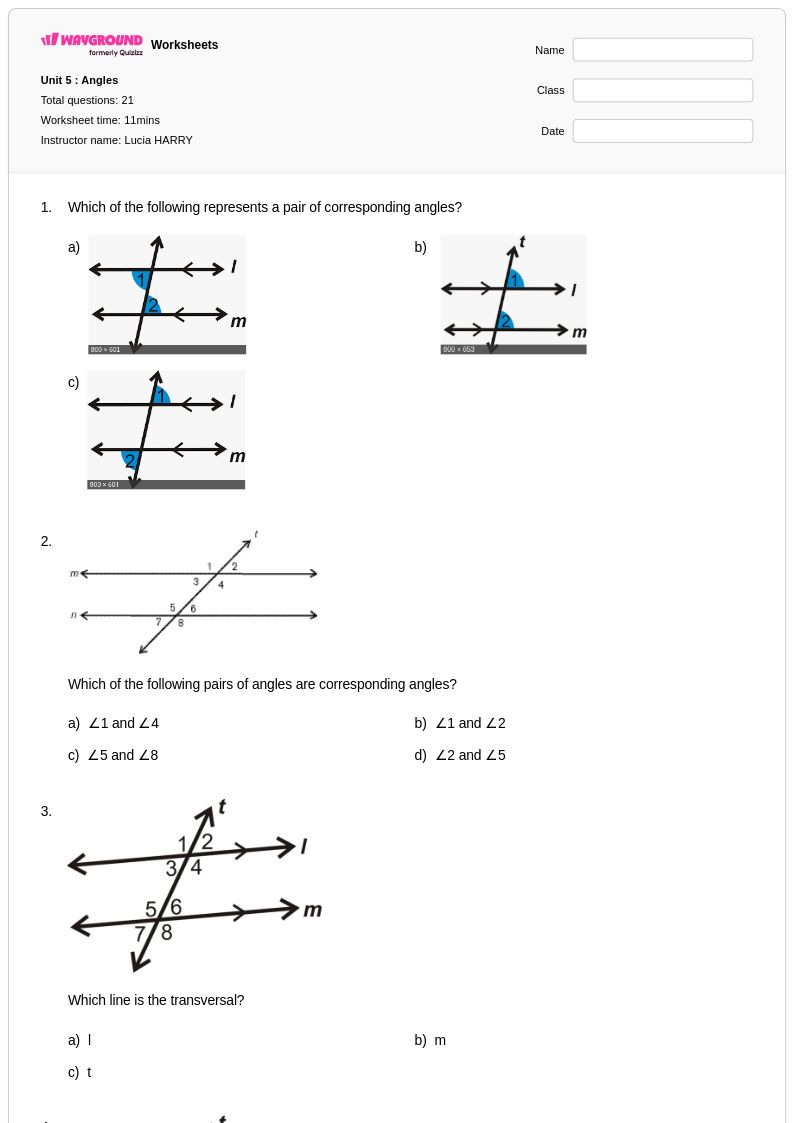
21 Q
7th - 9th
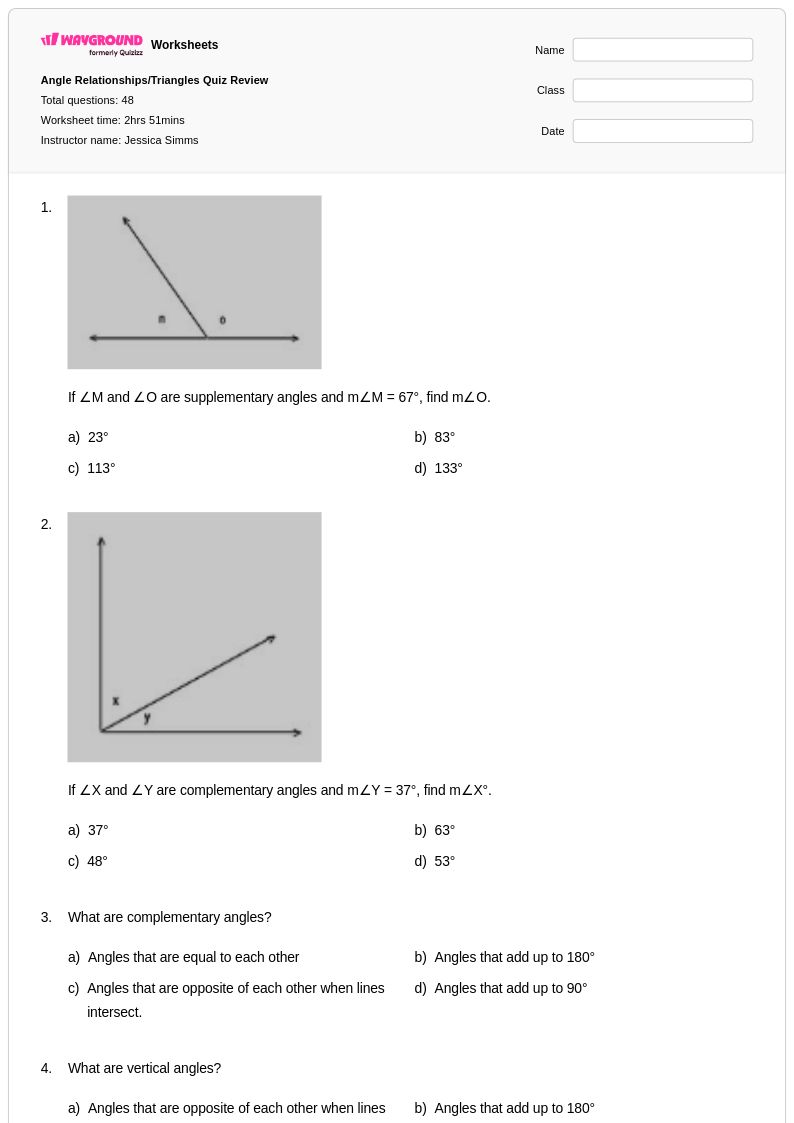
48 Q
7th - 9th
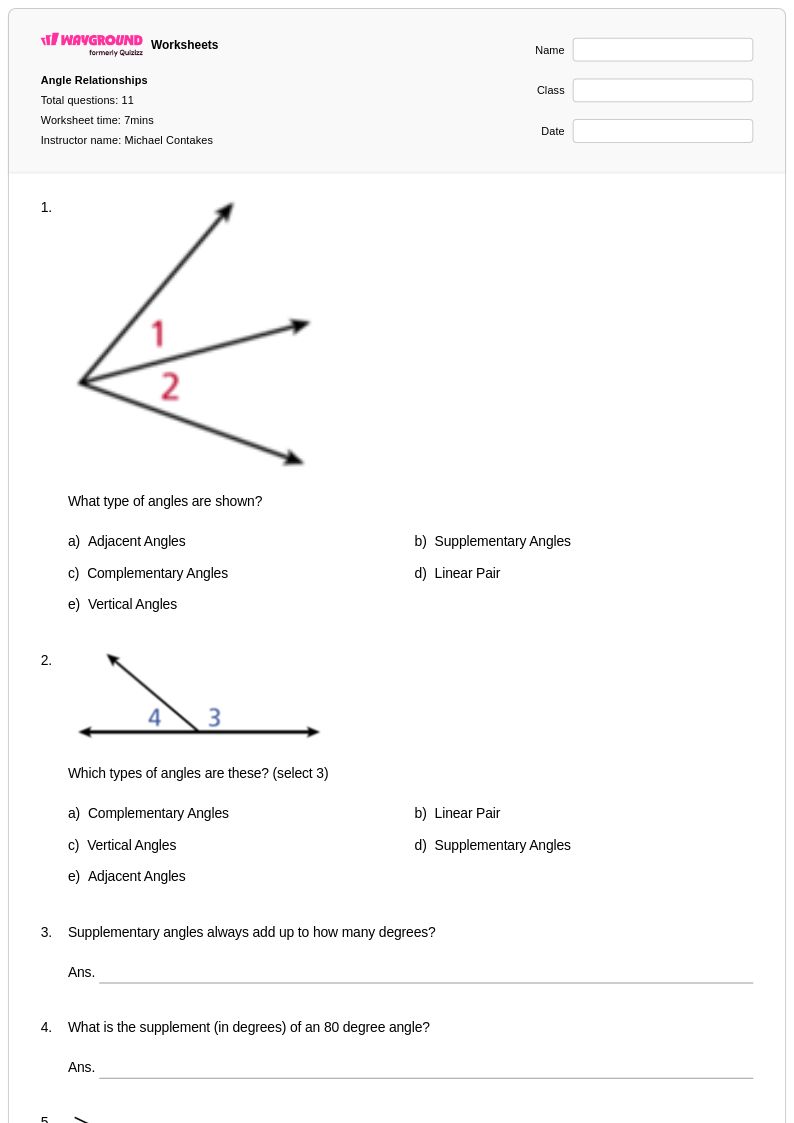
11 Q
7th - 8th
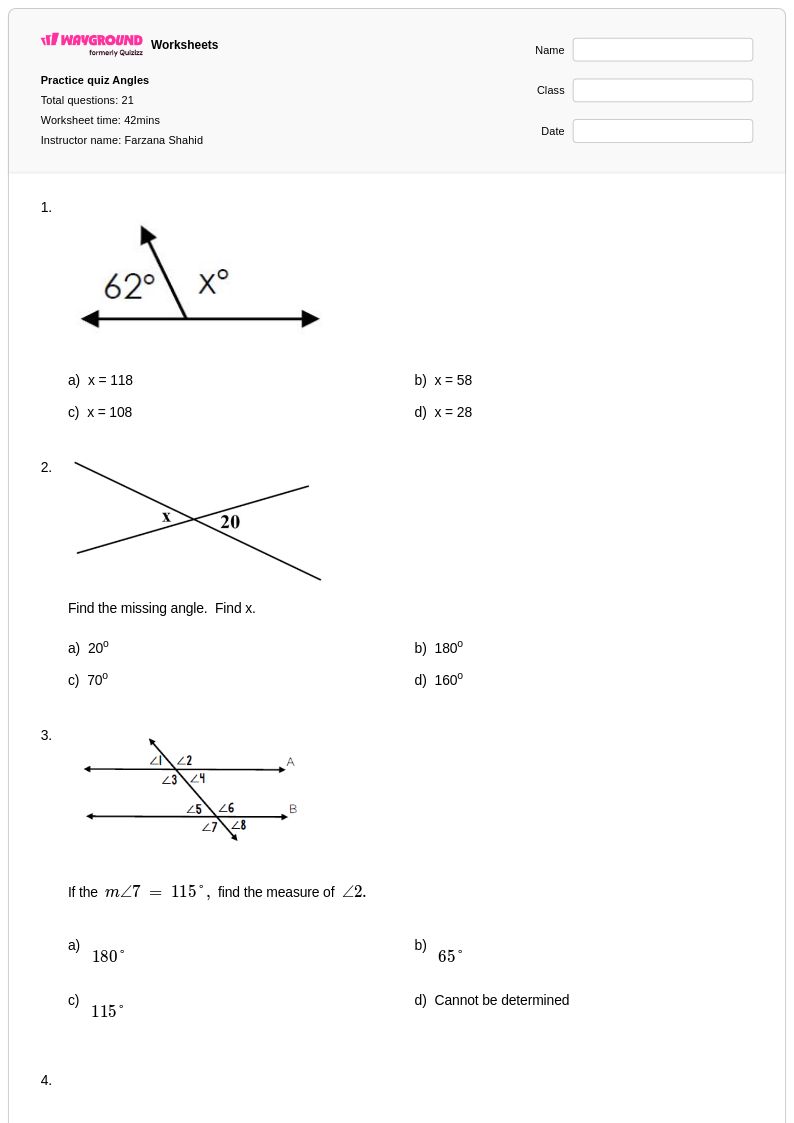
21 Q
7th
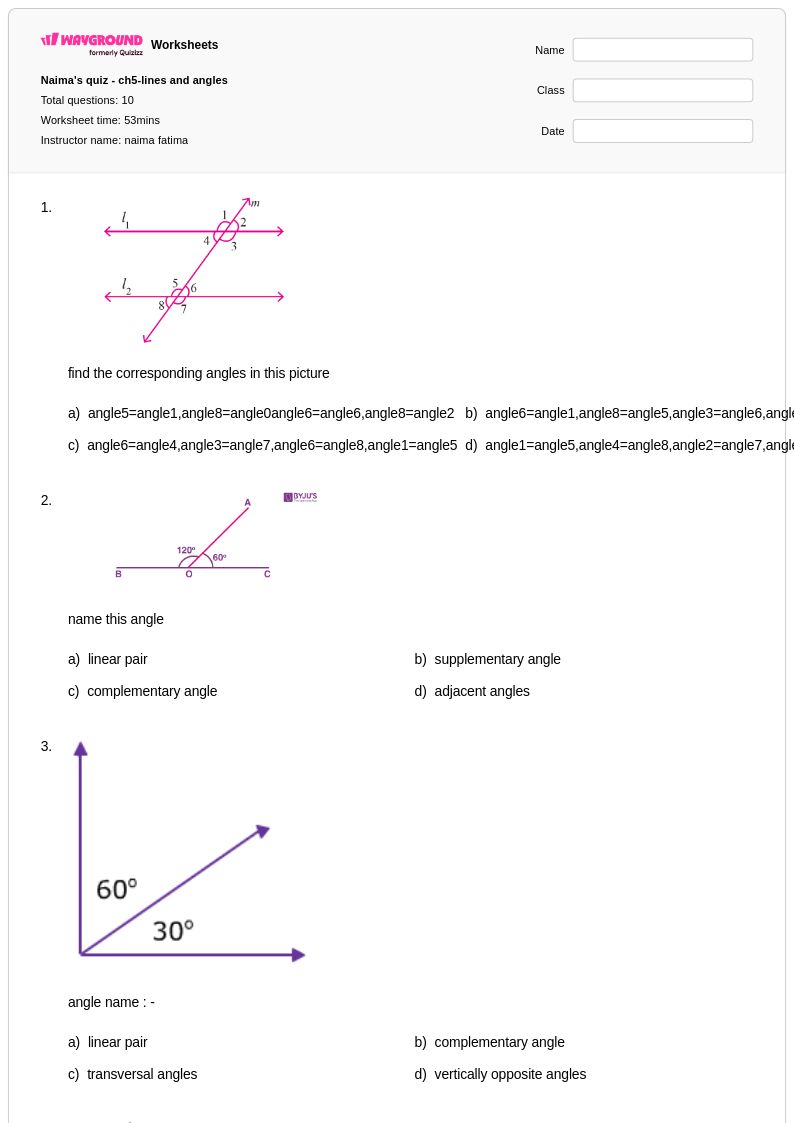
10 Q
7th
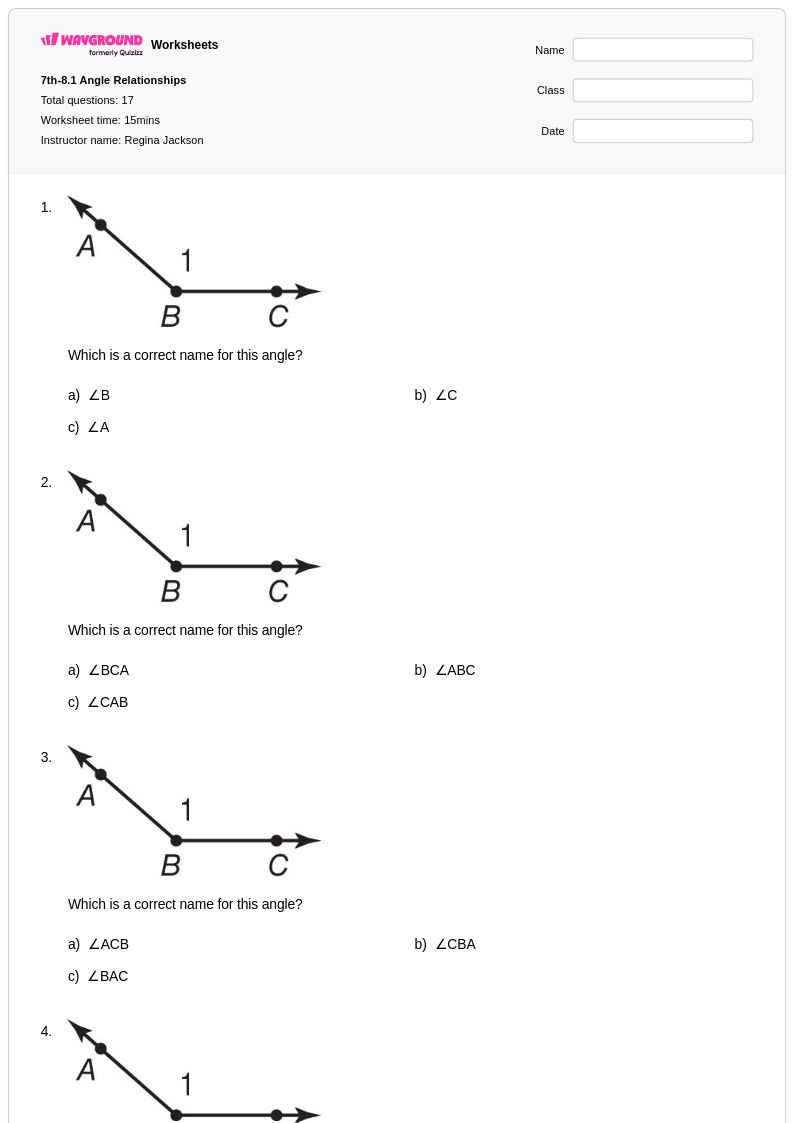
17 Q
7th
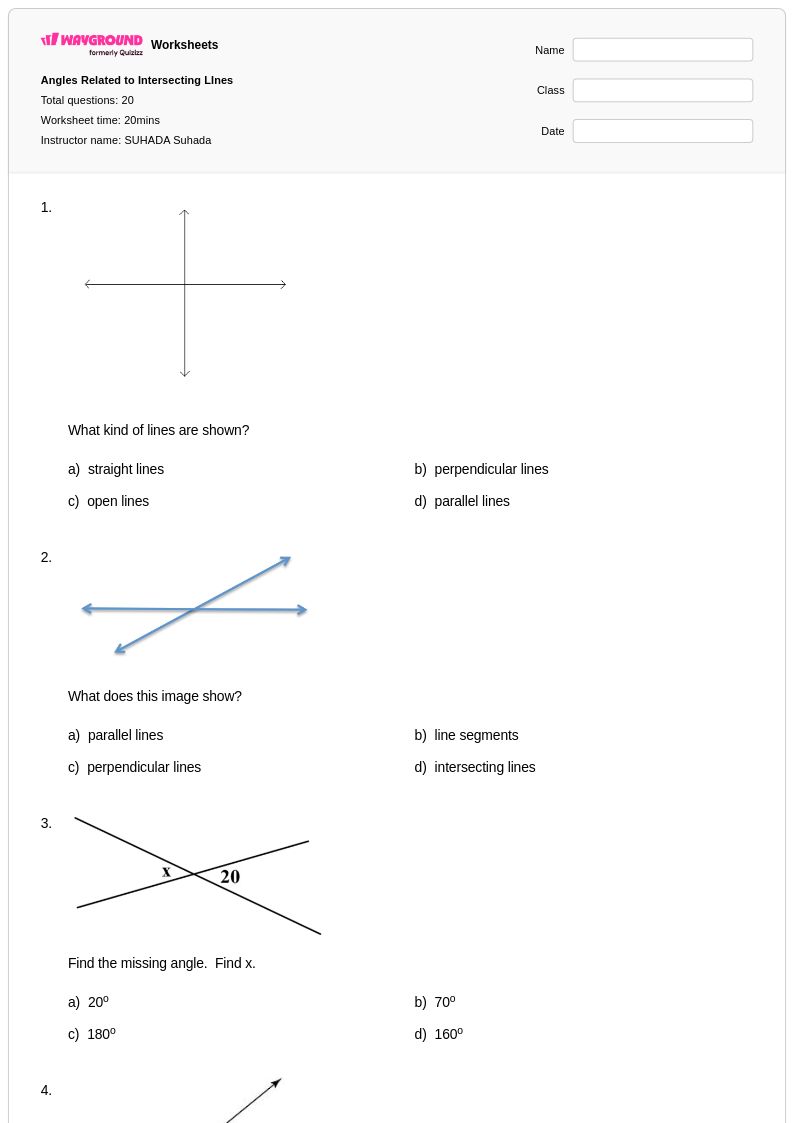
20 Q
7th
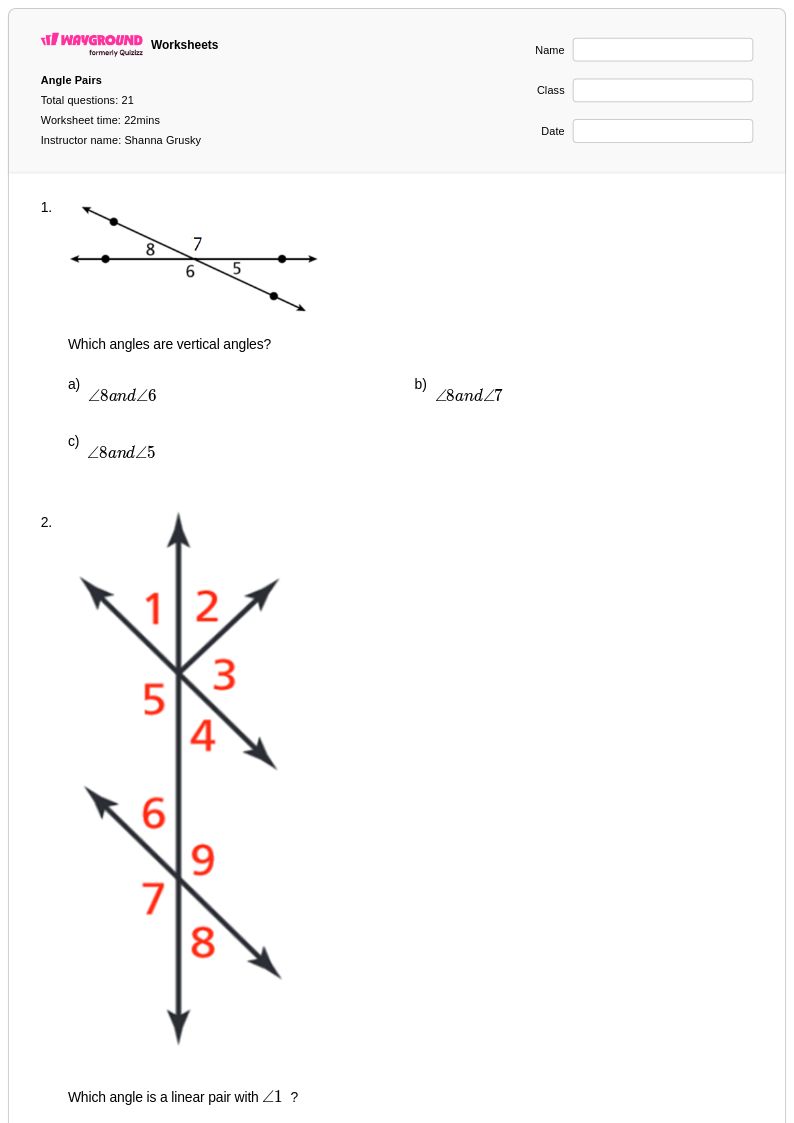
21 Q
7th
25 Q
7th - 12th
22 Q
6th - 10th
17 Q
7th
25 Q
5th - 10th
42 Q
8th
52 Q
7th
12 Q
7th
20 Q
6th - 9th
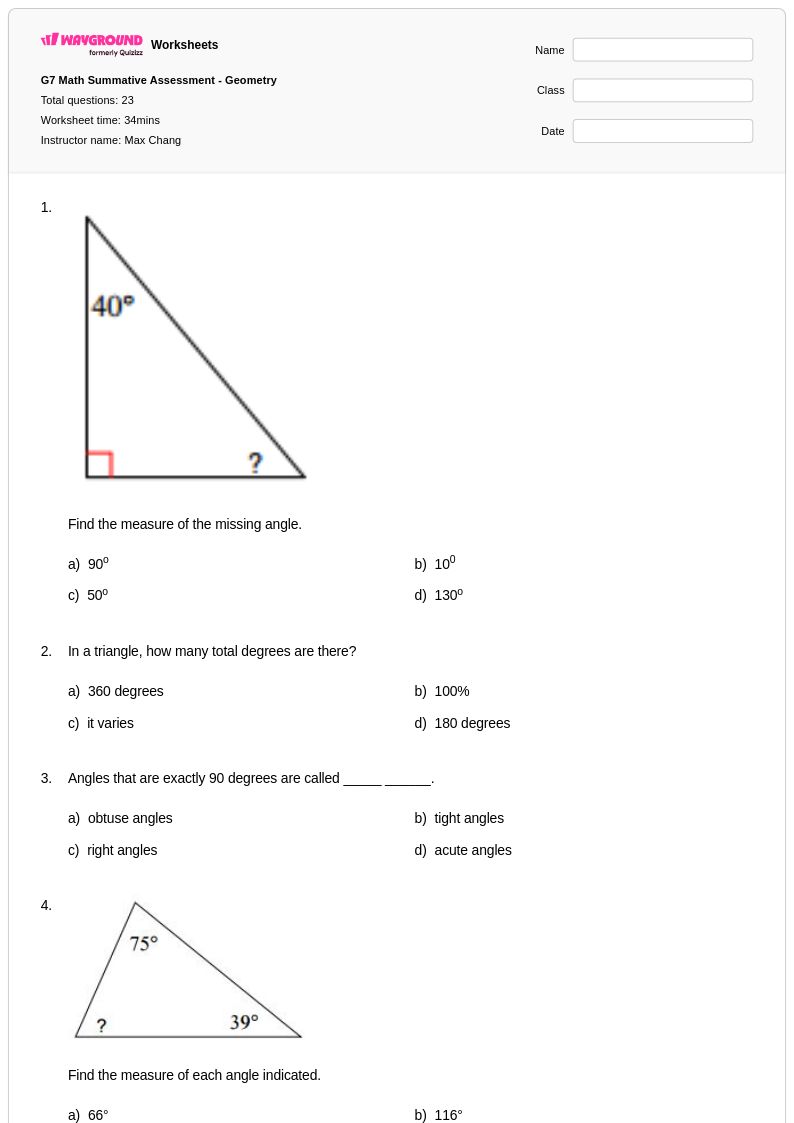
23 Q
7th
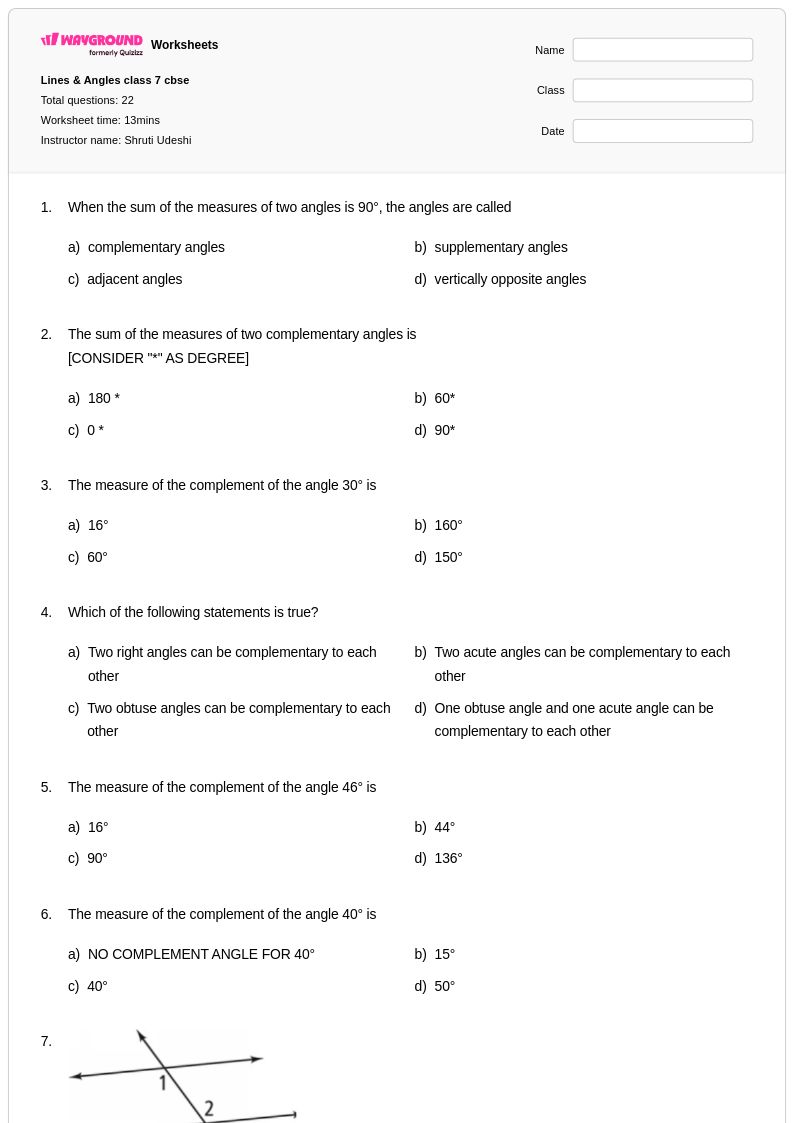
22 Q
7th
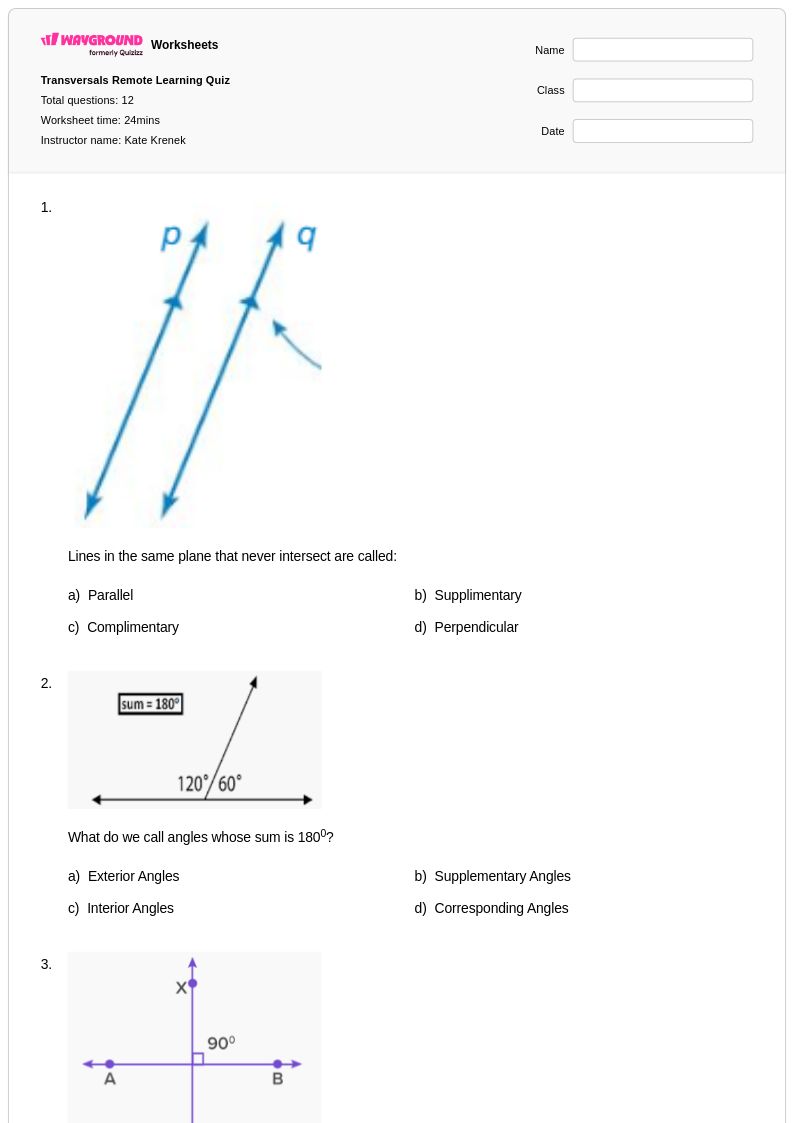
12 Q
7th - 8th
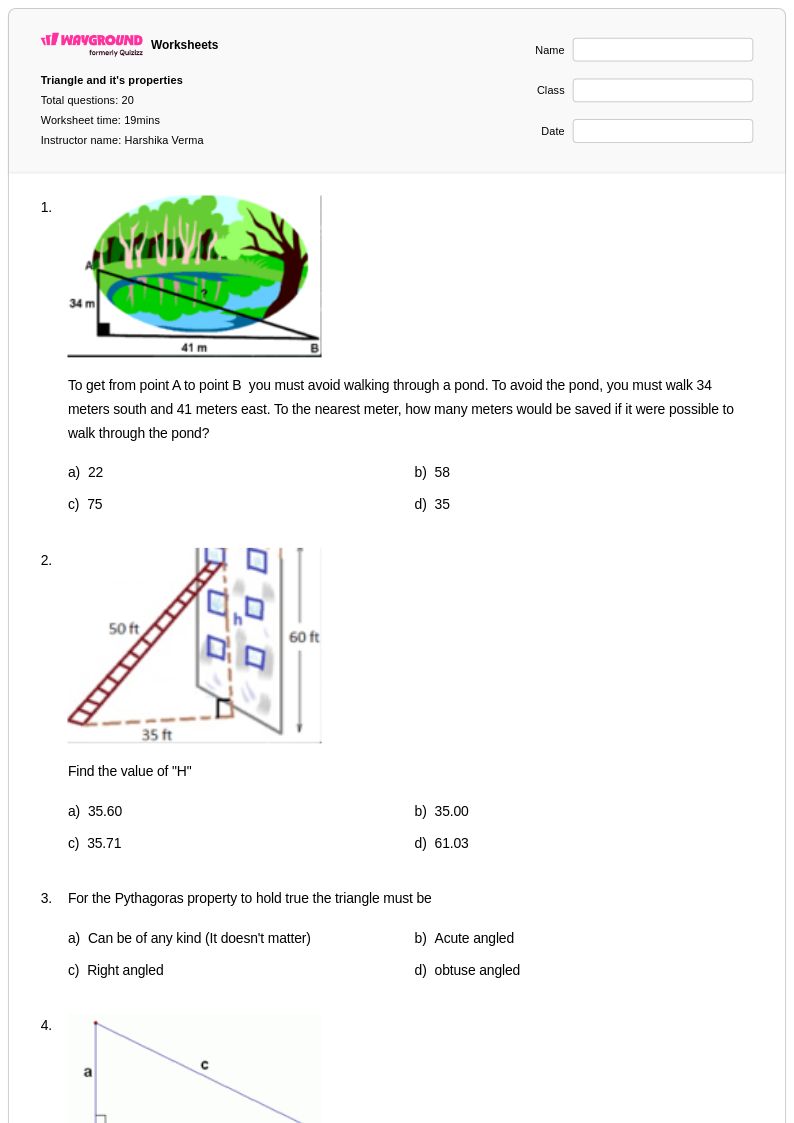
20 Q
7th
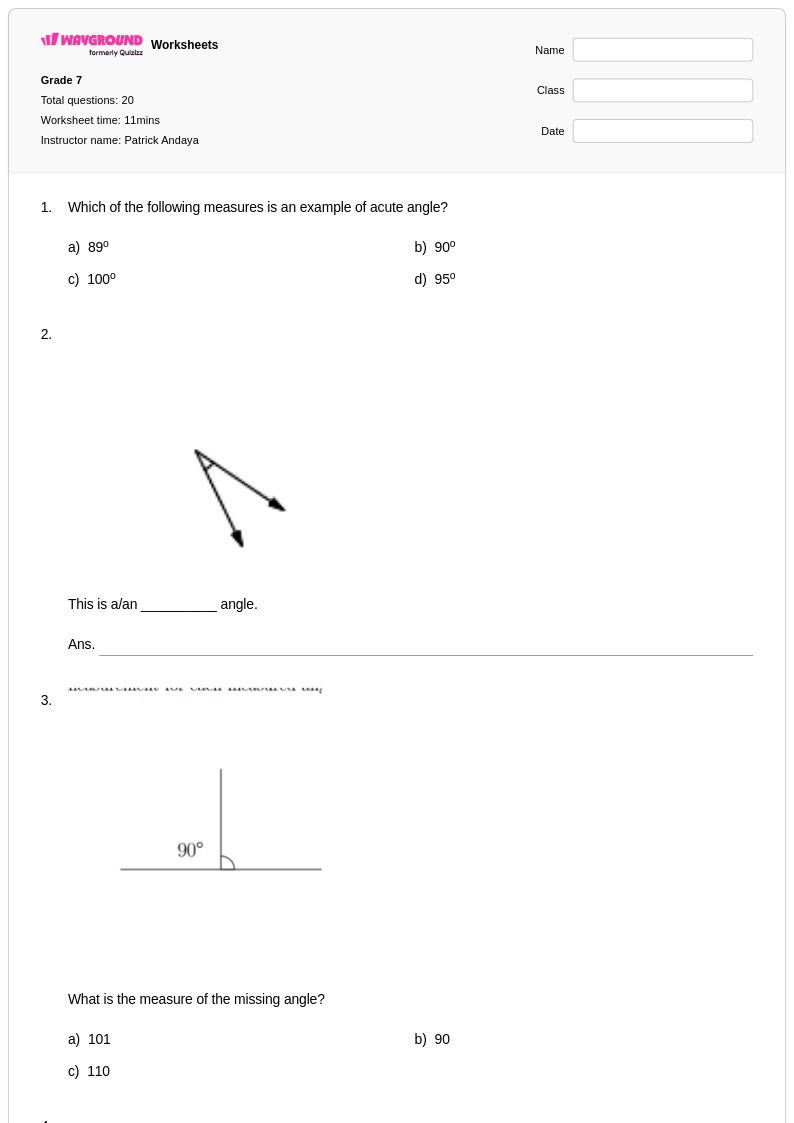
20 Q
7th
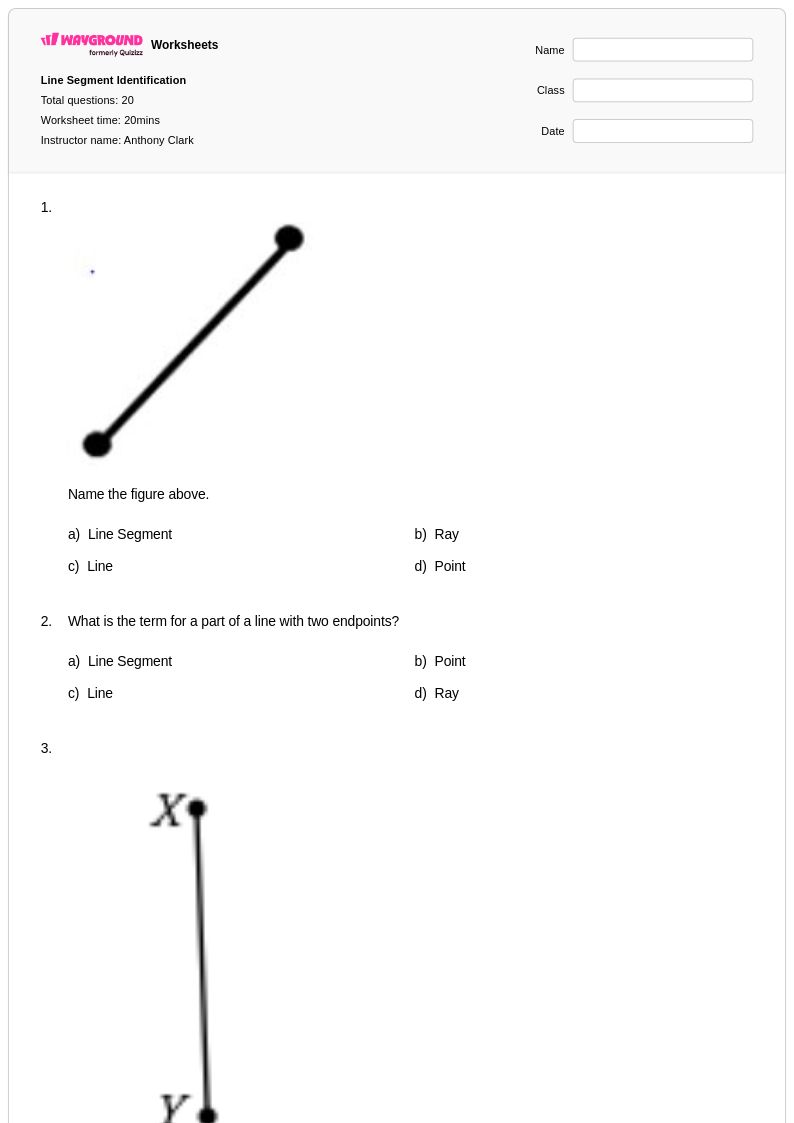
20 Q
4th - Uni
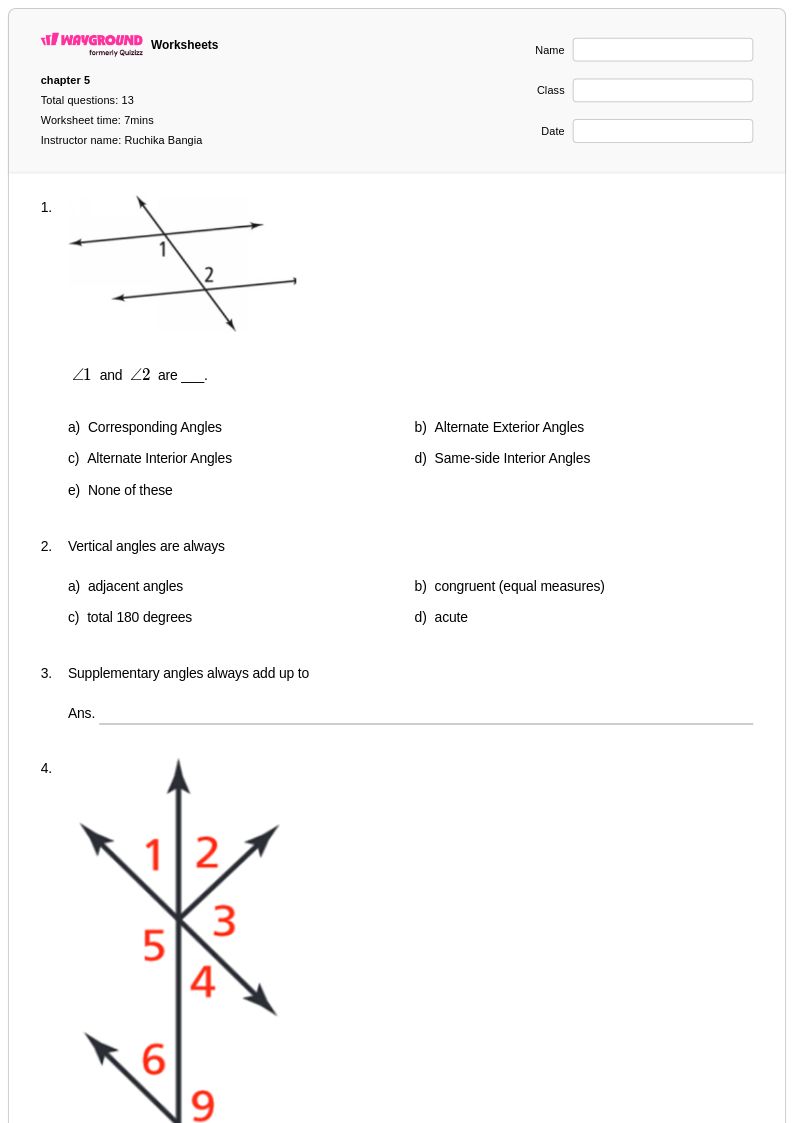
13 Q
7th
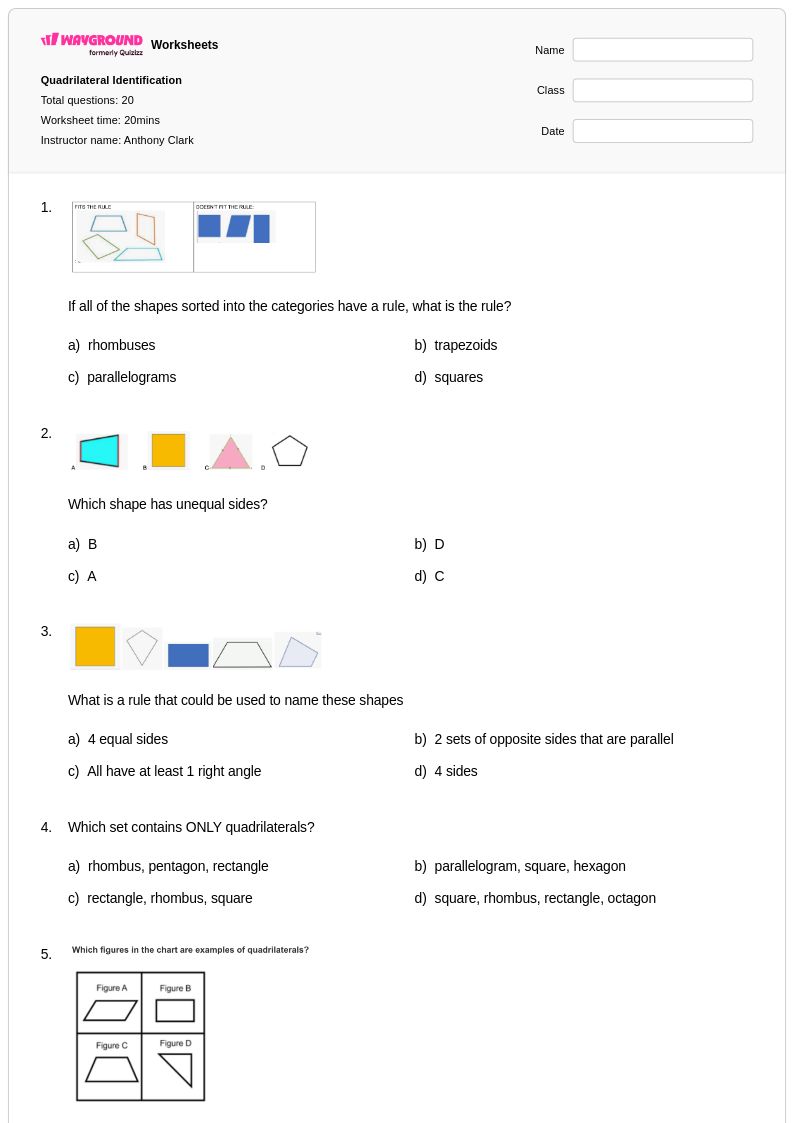
20 Q
3rd - Uni
Explore Other Subject Worksheets for class 7
Explore printable Angle Identification worksheets for Class 7
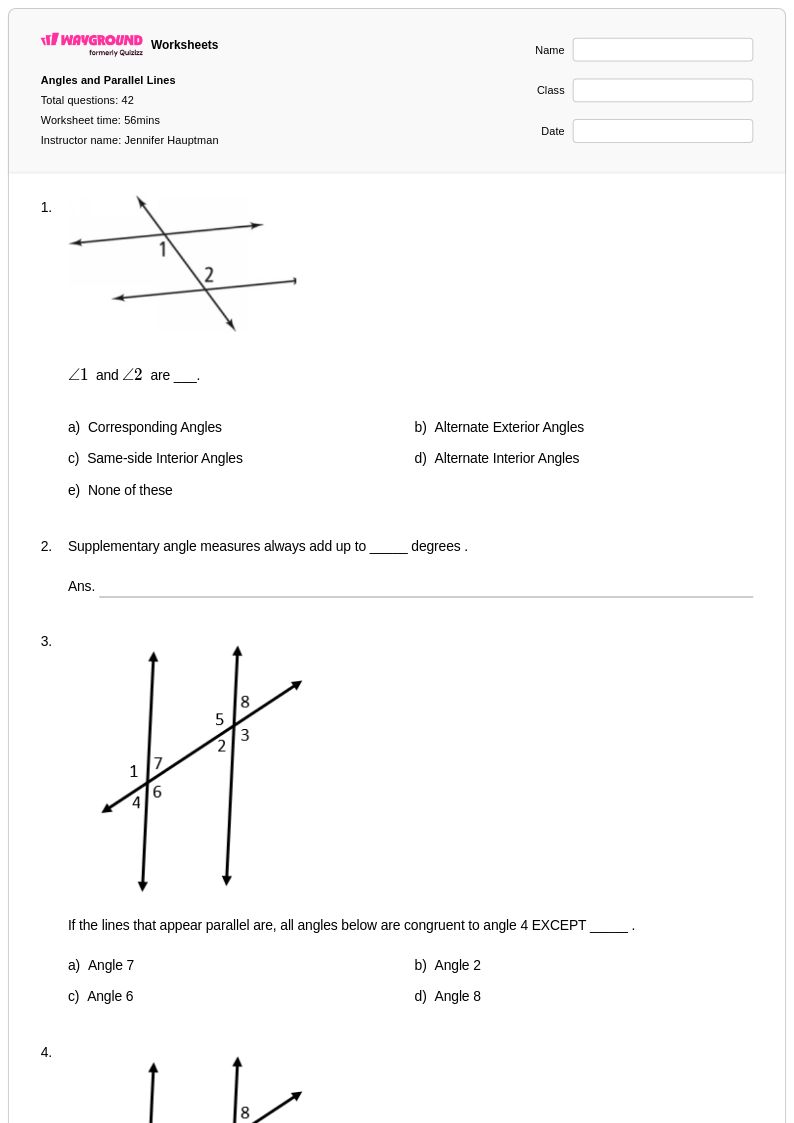
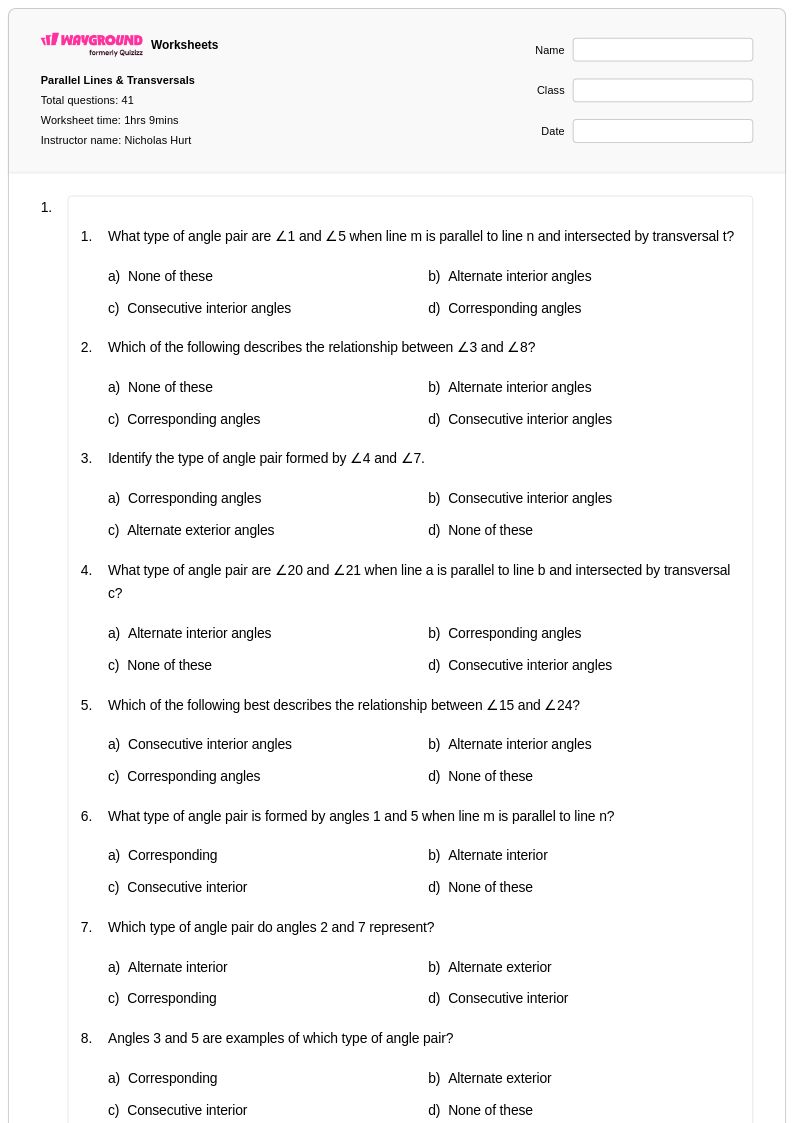
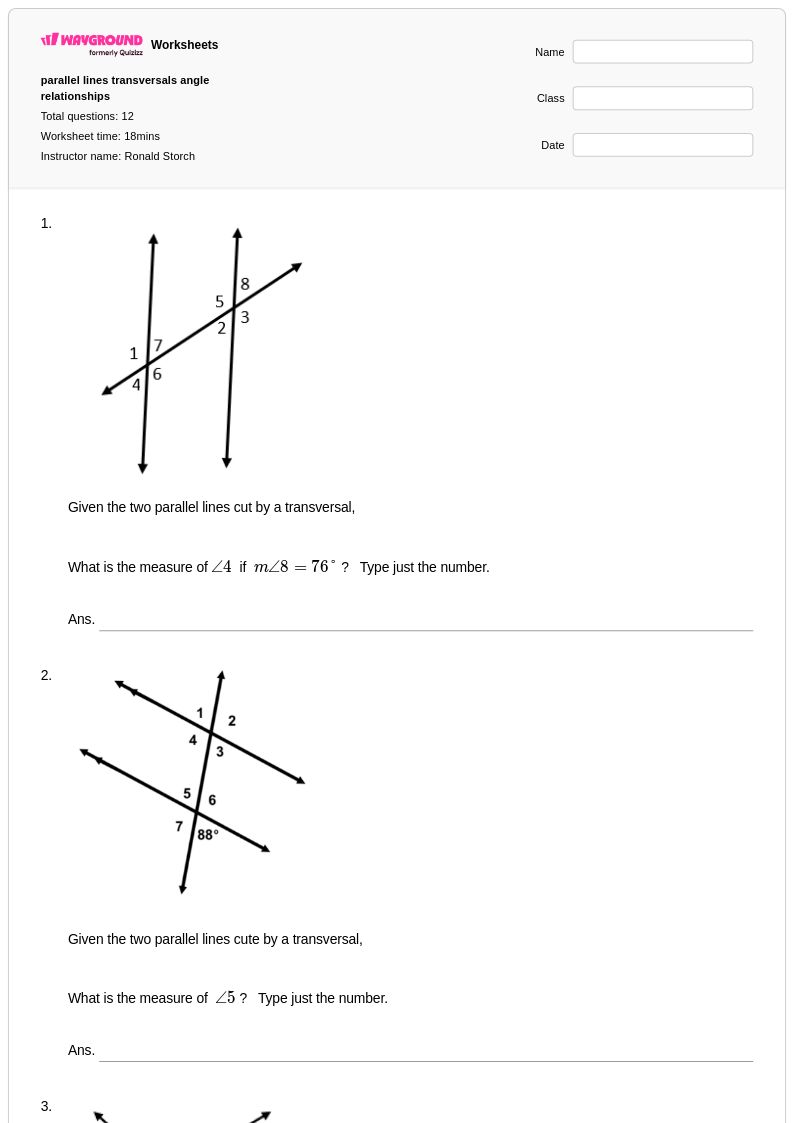
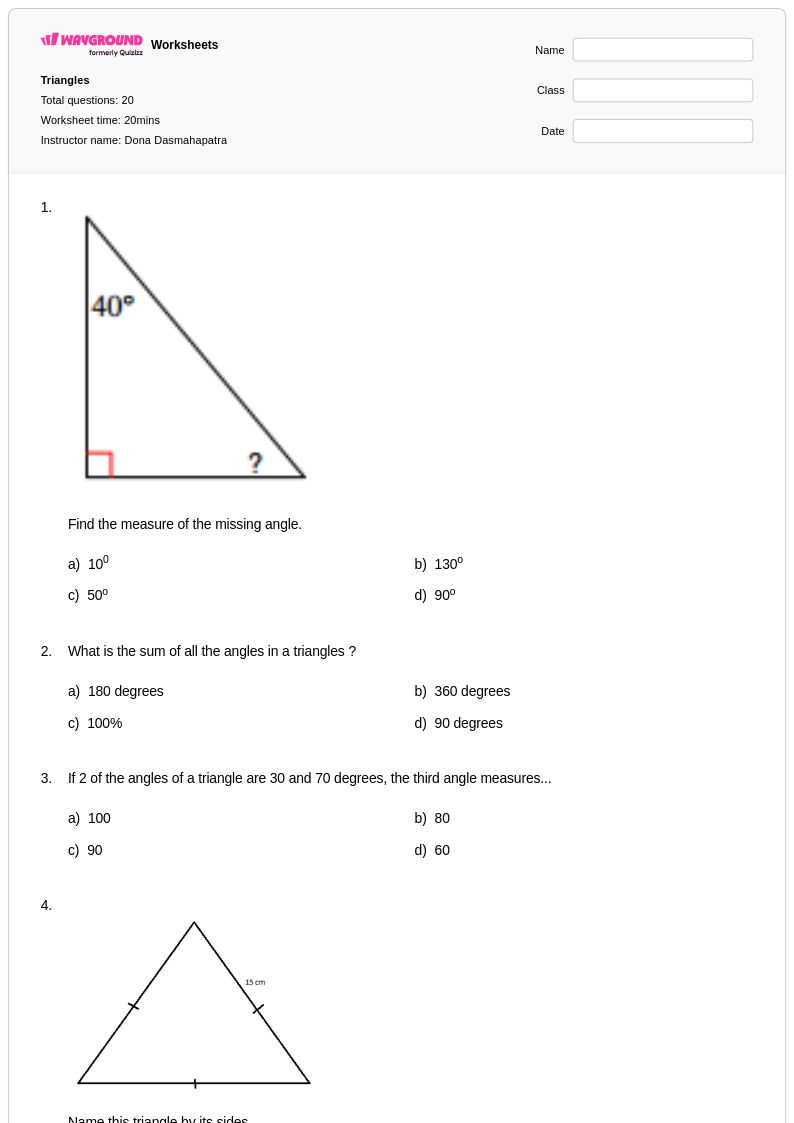
Angle identification worksheets for Class 7 mathematics through Wayground (formerly Quizizz) provide comprehensive practice opportunities for students to master the fundamental skill of recognizing and classifying different types of angles. These carefully designed practice problems help seventh-grade students develop their geometric reasoning abilities by working with acute, obtuse, right, straight, and reflex angles in various contexts. Each worksheet collection includes detailed answer keys that enable both independent study and guided instruction, while the free printable pdf format ensures easy access for classroom and homework use. Students strengthen their visual discrimination skills and mathematical vocabulary as they work through problems that require them to identify angle types, measure angles using protractors, and distinguish between complementary and supplementary angle relationships.
Wayground (formerly Quizizz) supports mathematics educators with millions of teacher-created angle identification resources that streamline lesson planning and provide targeted skill practice for Class 7 students. The platform's robust search and filtering capabilities allow teachers to quickly locate worksheets aligned with specific curriculum standards, while differentiation tools enable customization based on individual student needs and learning levels. These versatile resources are available in both printable and digital pdf formats, making them ideal for traditional classroom instruction, remote learning environments, and blended educational approaches. Teachers can efficiently address varying skill levels within their classrooms by selecting from basic angle recognition exercises for remediation or more complex geometric reasoning problems for enrichment, ensuring that every seventh-grade student receives appropriate challenge and support in developing their angle identification proficiency.
FAQs
How should I teach angle identification in Grade 7?
What exercises help seventh graders practice angle identification?
What mistakes do Grade 7 students make with angle types and relationships?
How can I assign a Grade 7 angle identification worksheet on Wayground?
How does Grade 7 angle identification align with Common Core?
How can I differentiate Grade 7 angle practice?
What angle skills are typically taught in Grade 7?