
20 Q
6th - Uni
19 Q
6th - Uni
24 Q
7th
10 Q
4th - Uni
15 Q
6th - Uni
20 Q
5th - Uni
20 Q
6th - Uni
20 Q
3rd - Uni
12 Q
5th - Uni
33 Q
6th - 8th
20 Q
7th - 10th
13 Q
7th - Uni
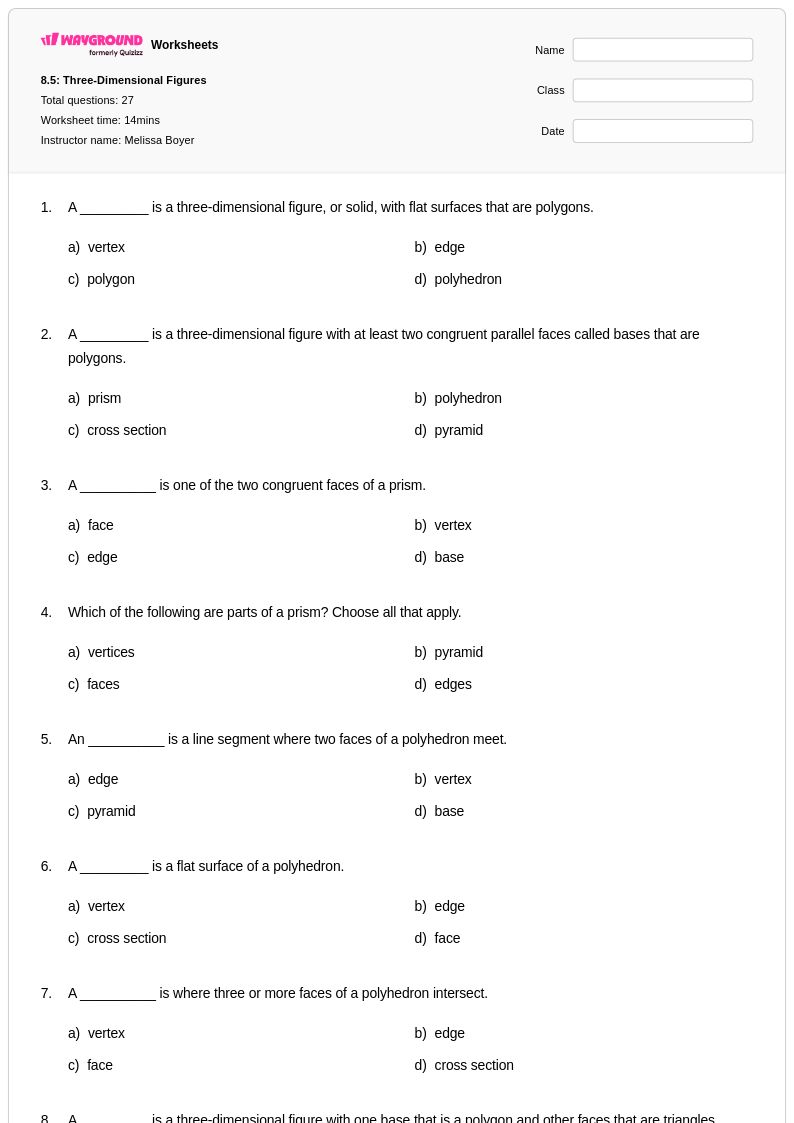
27 Q
7th
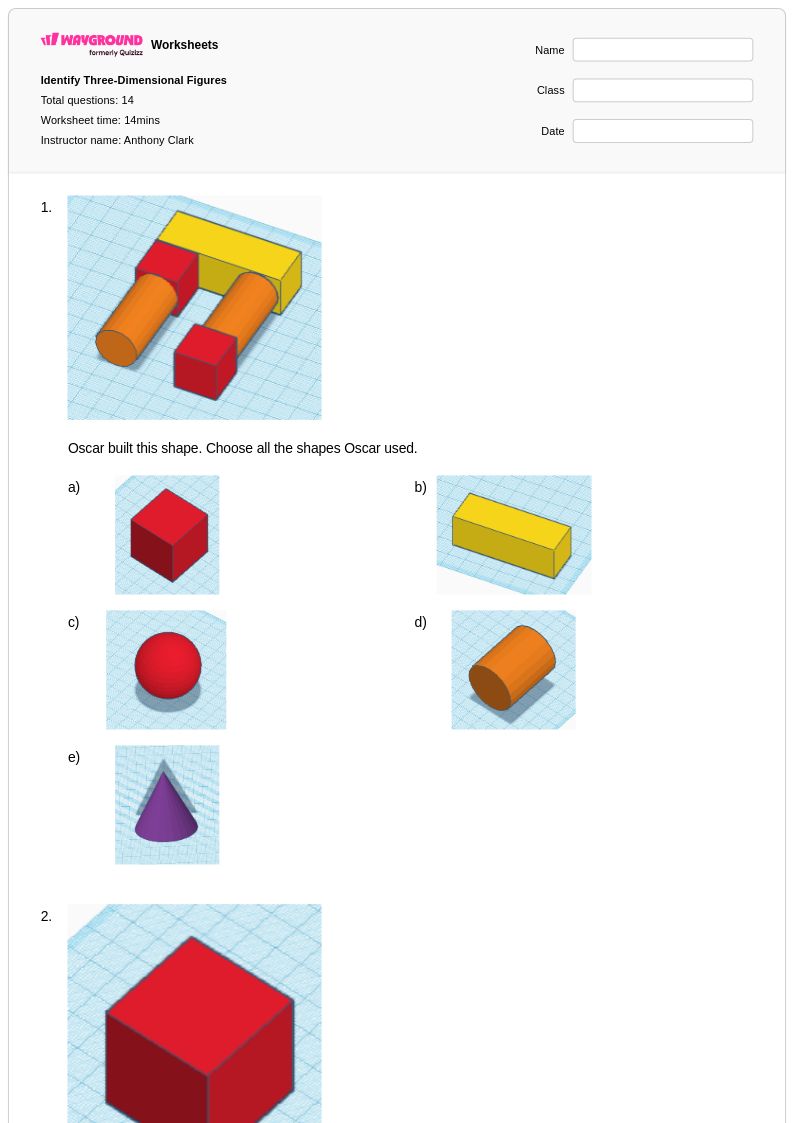
14 Q
4th - Uni
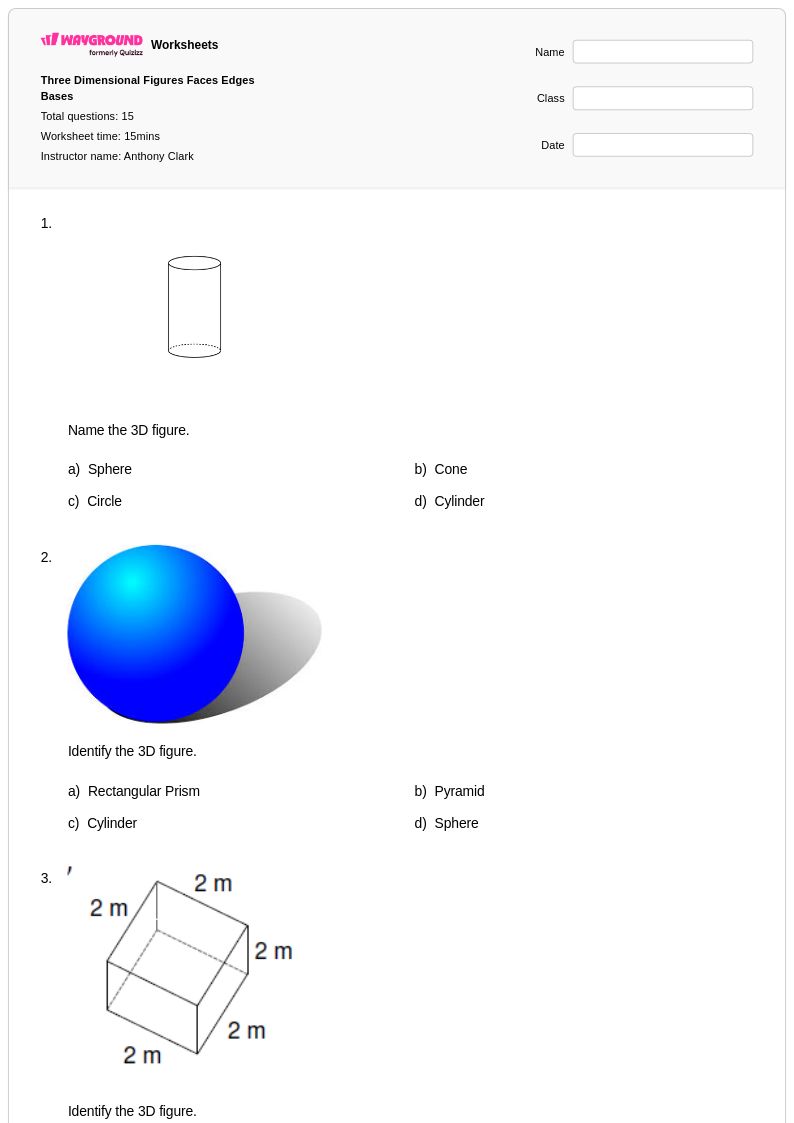
15 Q
5th - Uni
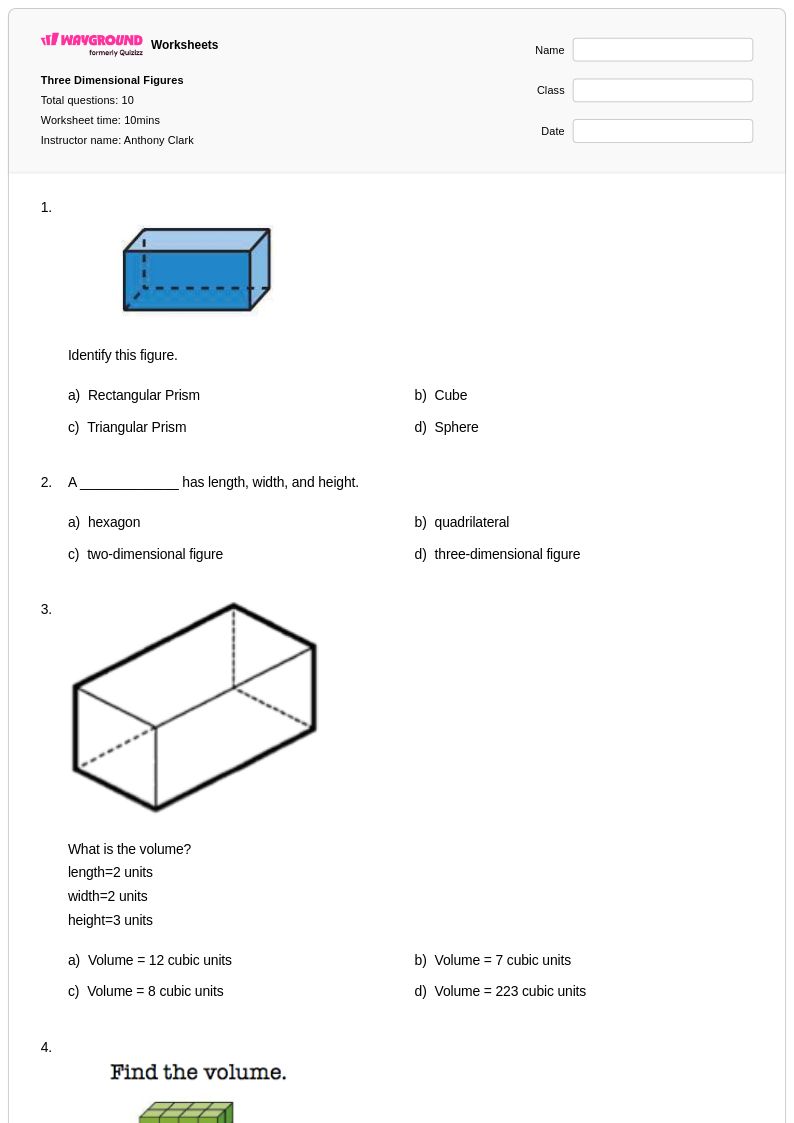
10 Q
4th - Uni
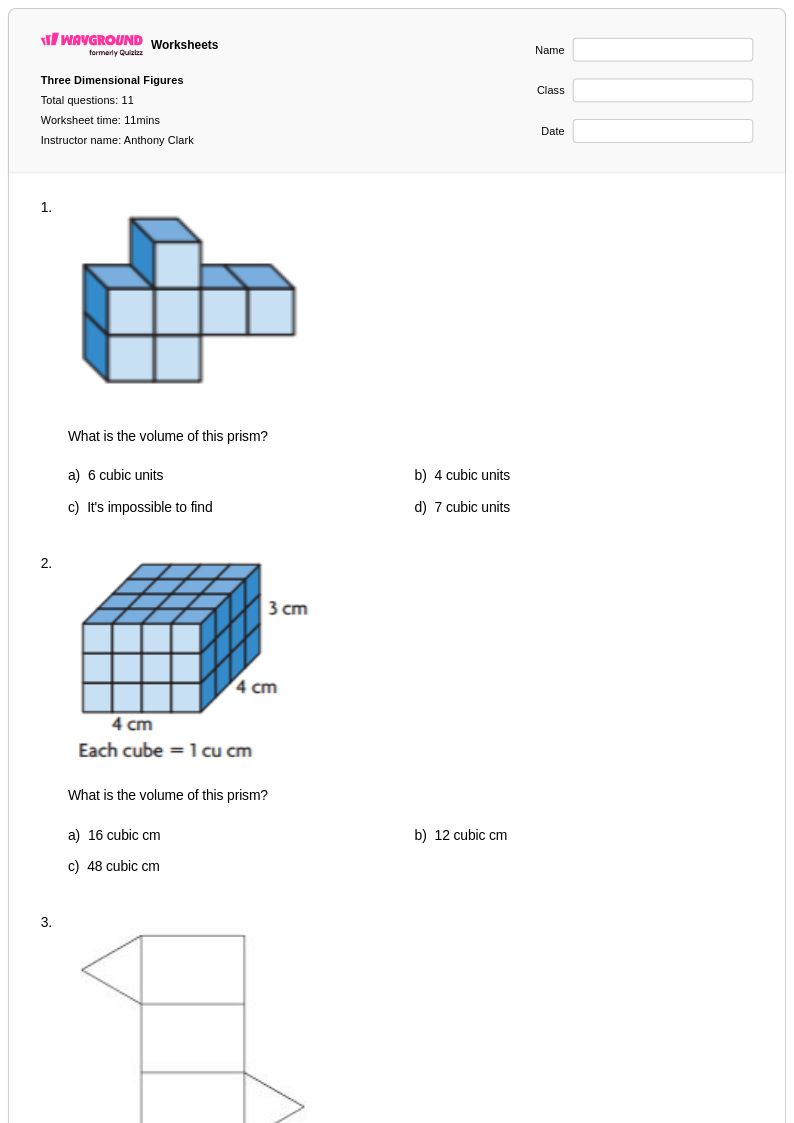
11 Q
4th - Uni
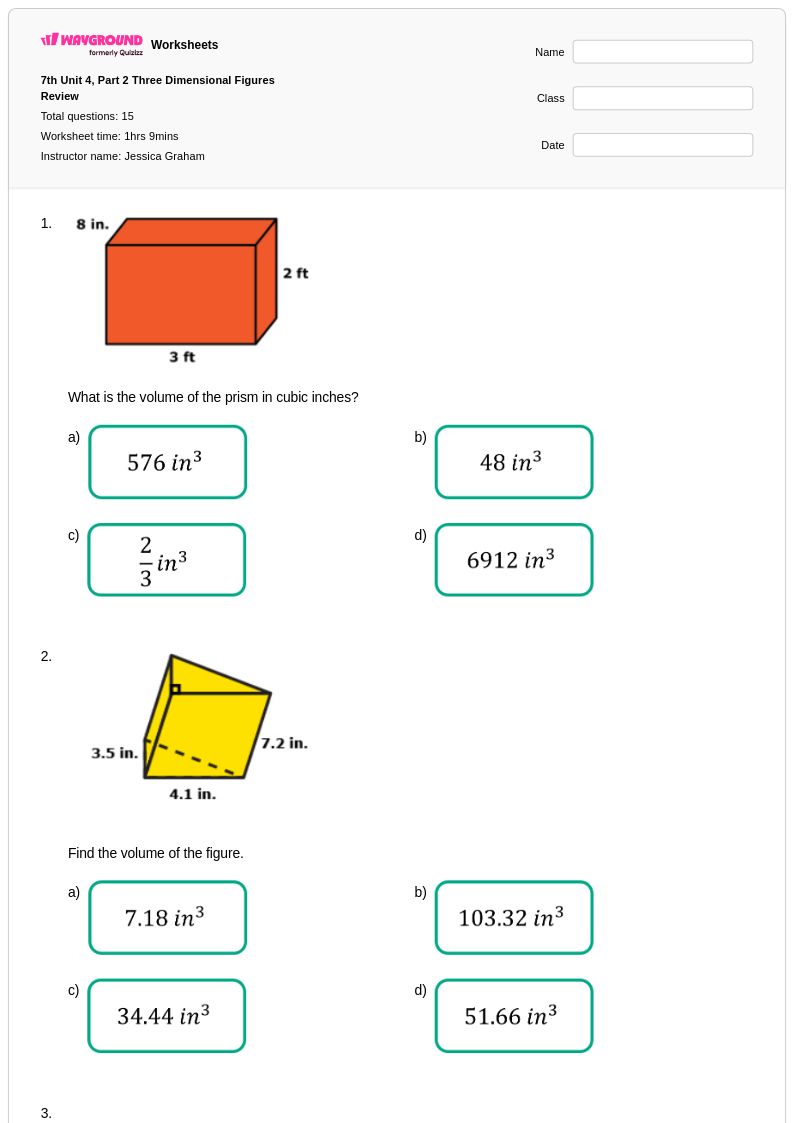
15 Q
7th
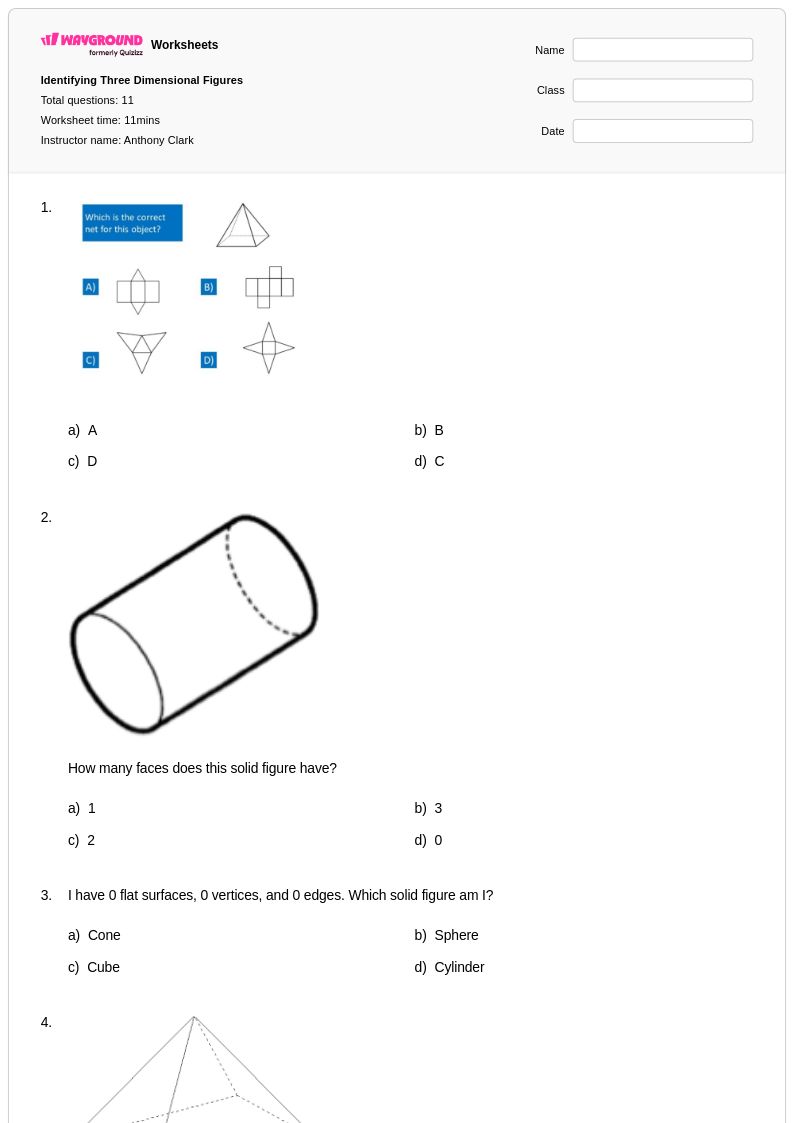
11 Q
4th - Uni
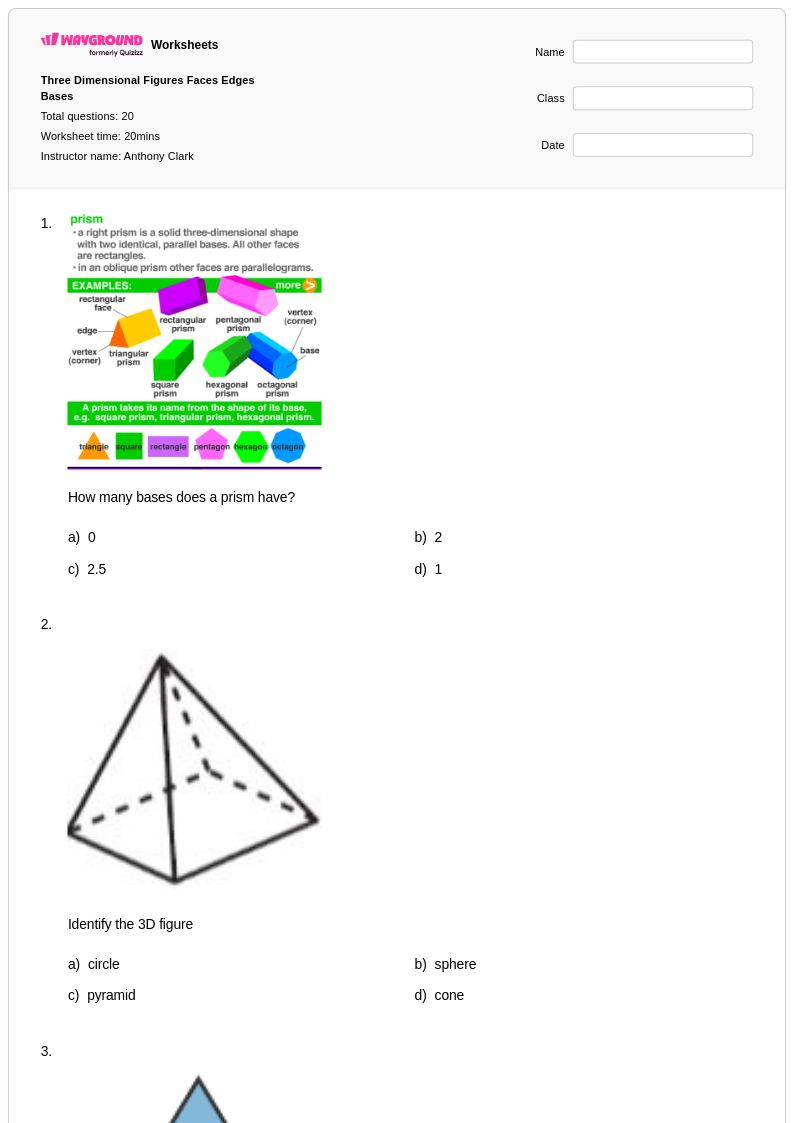
20 Q
5th - Uni
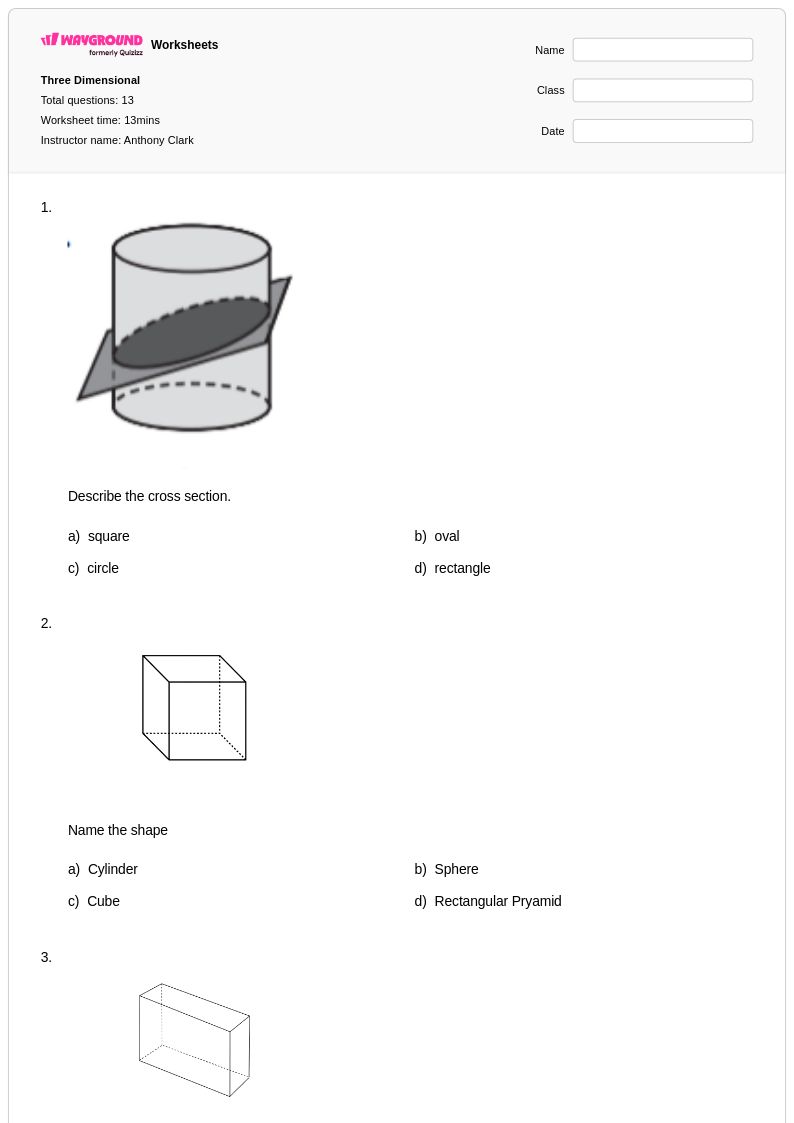
13 Q
5th - Uni
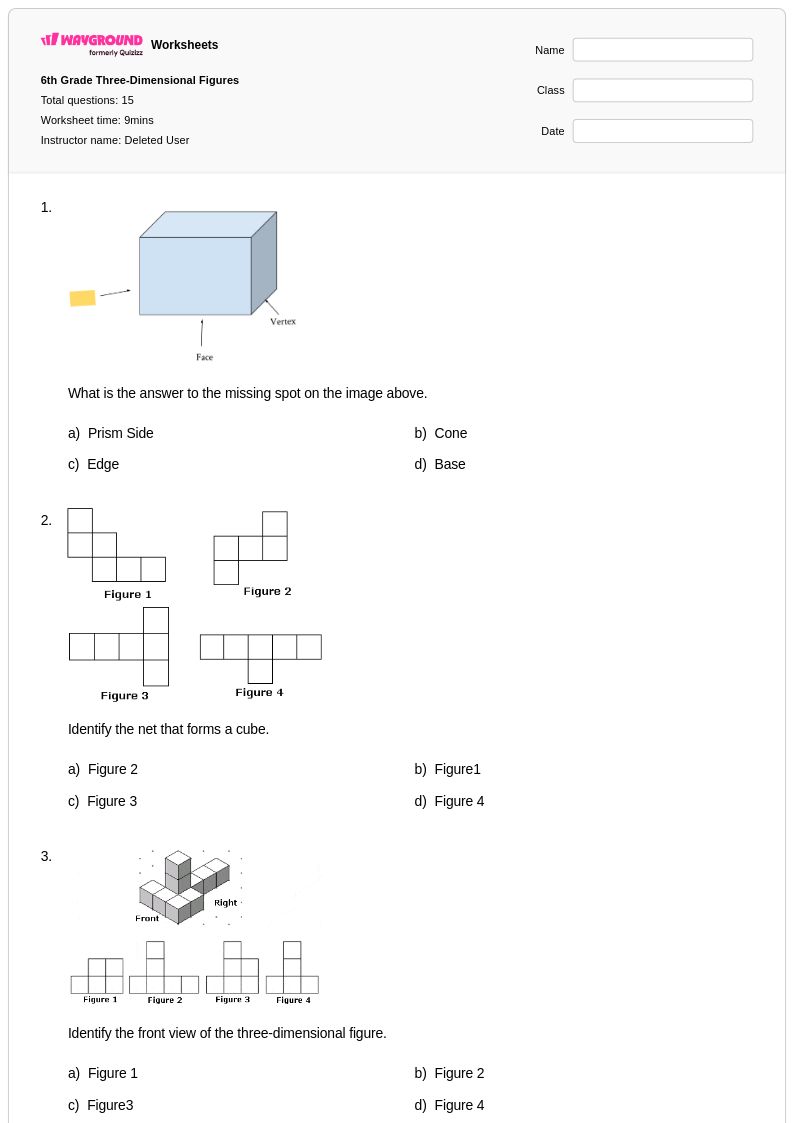
15 Q
6th - 7th
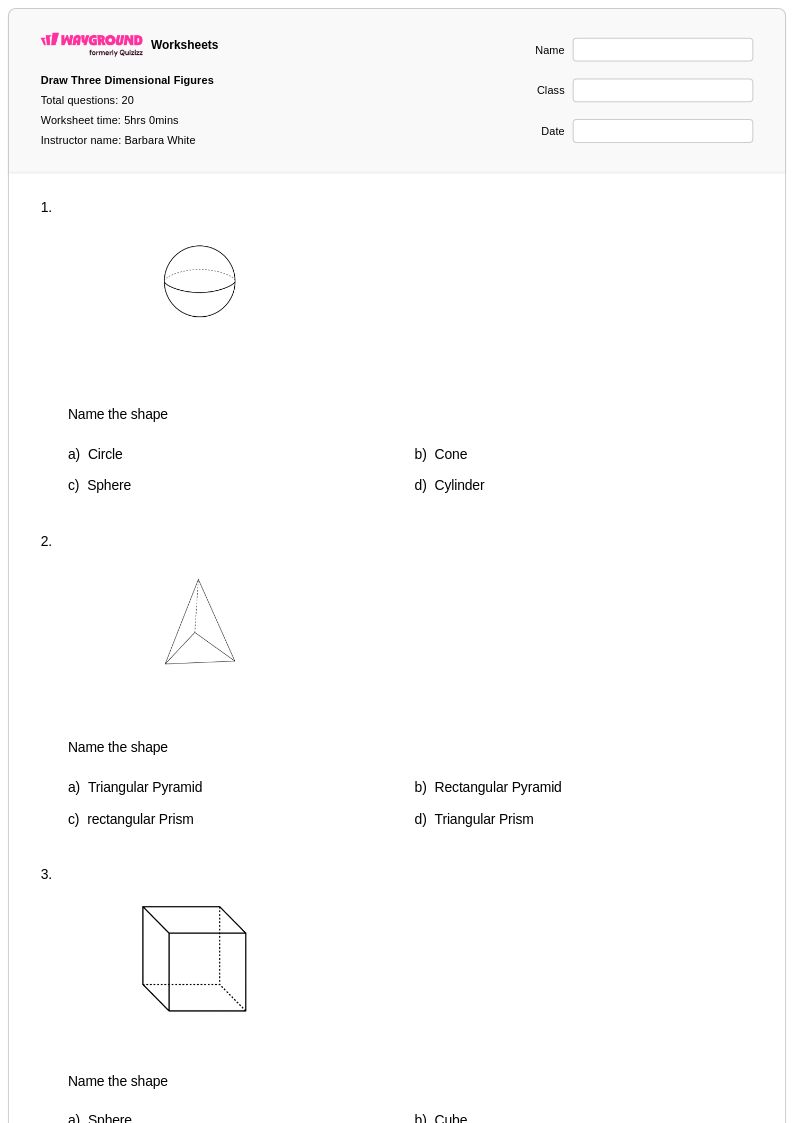
20 Q
7th - 8th
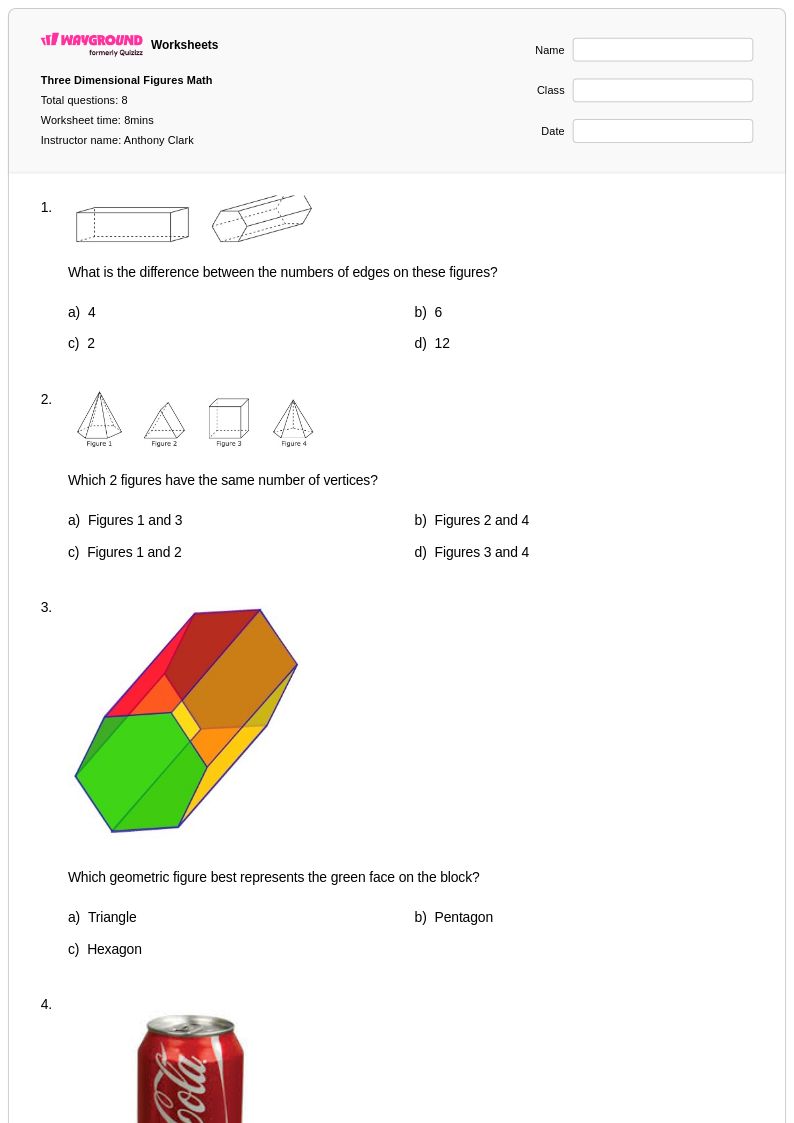
8 Q
3rd - Uni
Explore Three-dimensional Figures Worksheets by Grades
Explore Other Subject Worksheets for class 7
Explore printable Three-dimensional Figures worksheets for Class 7
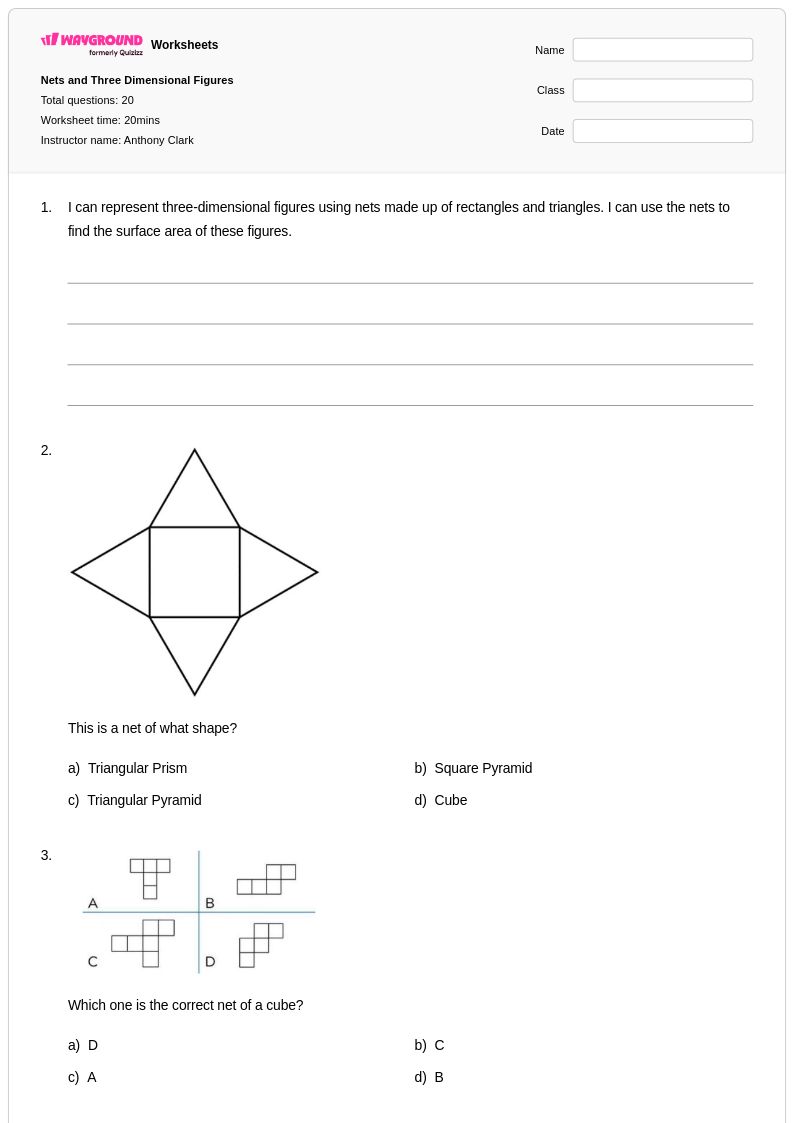
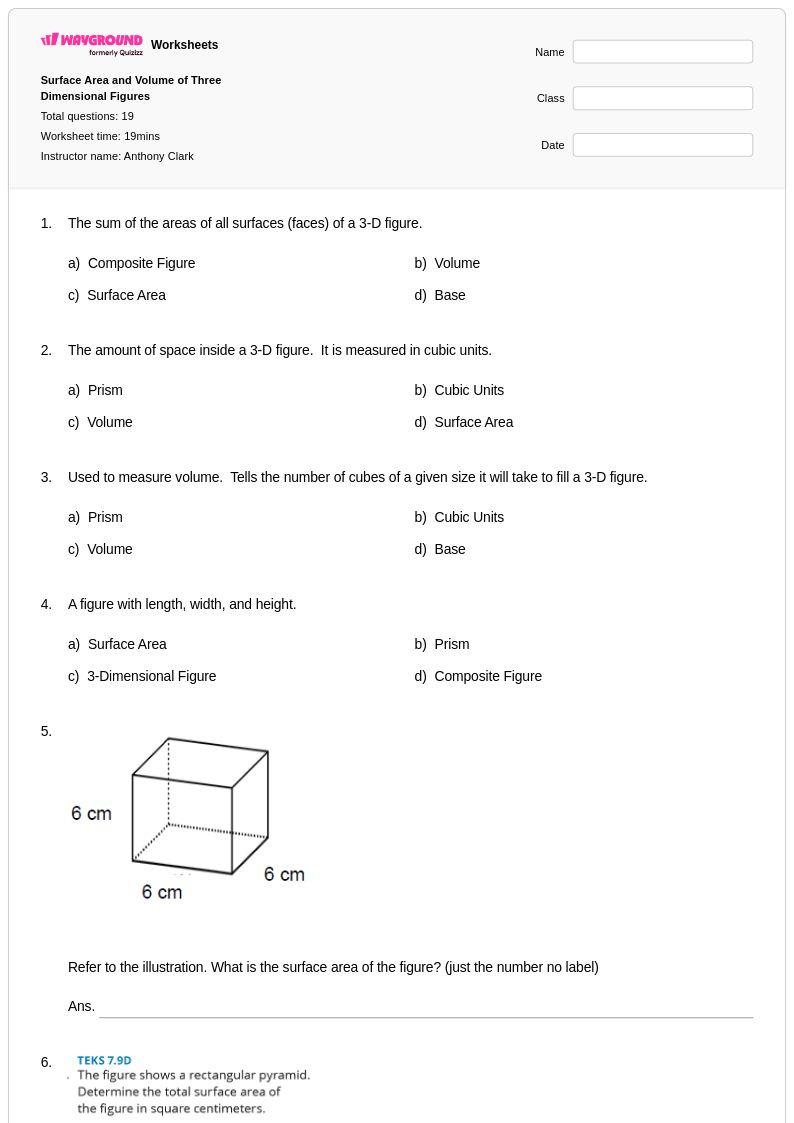
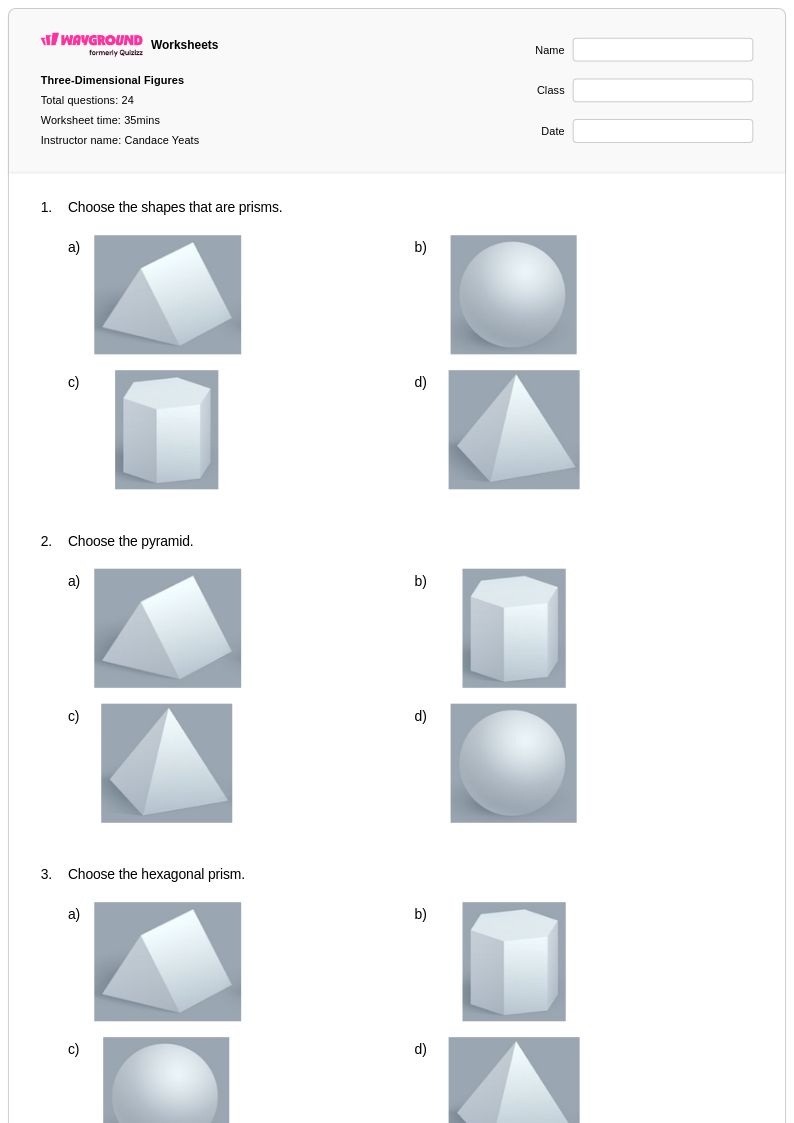
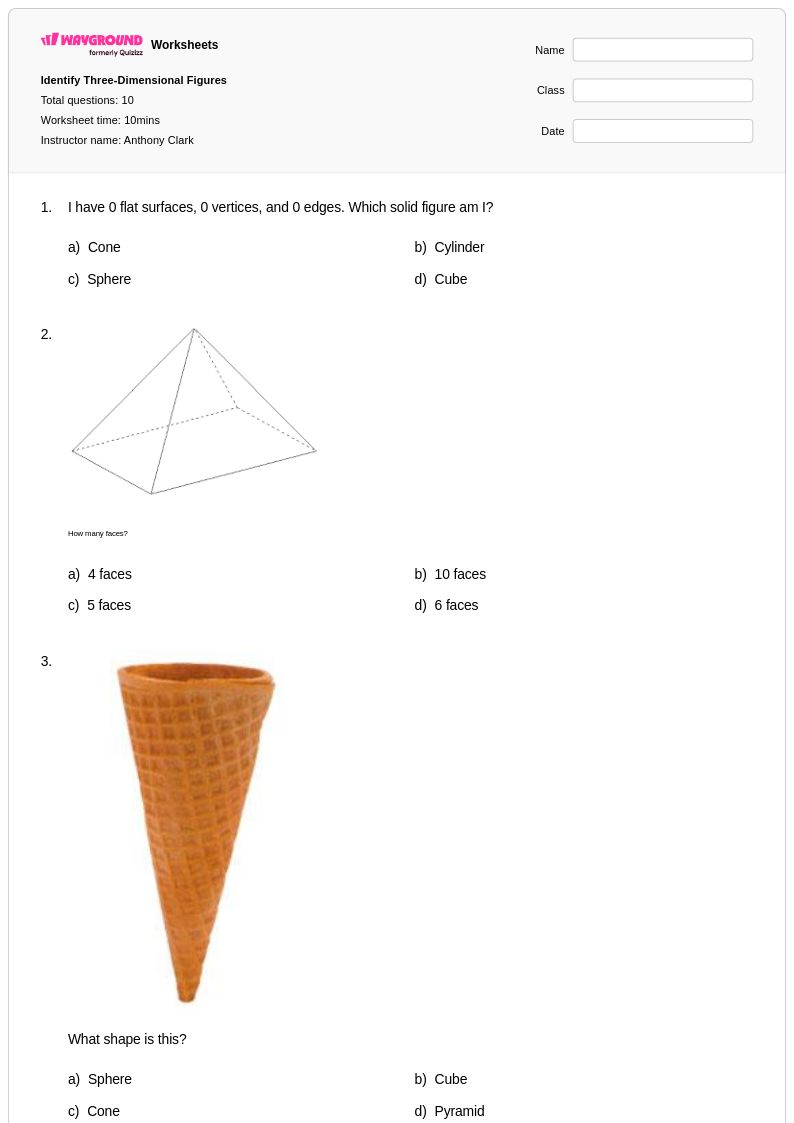
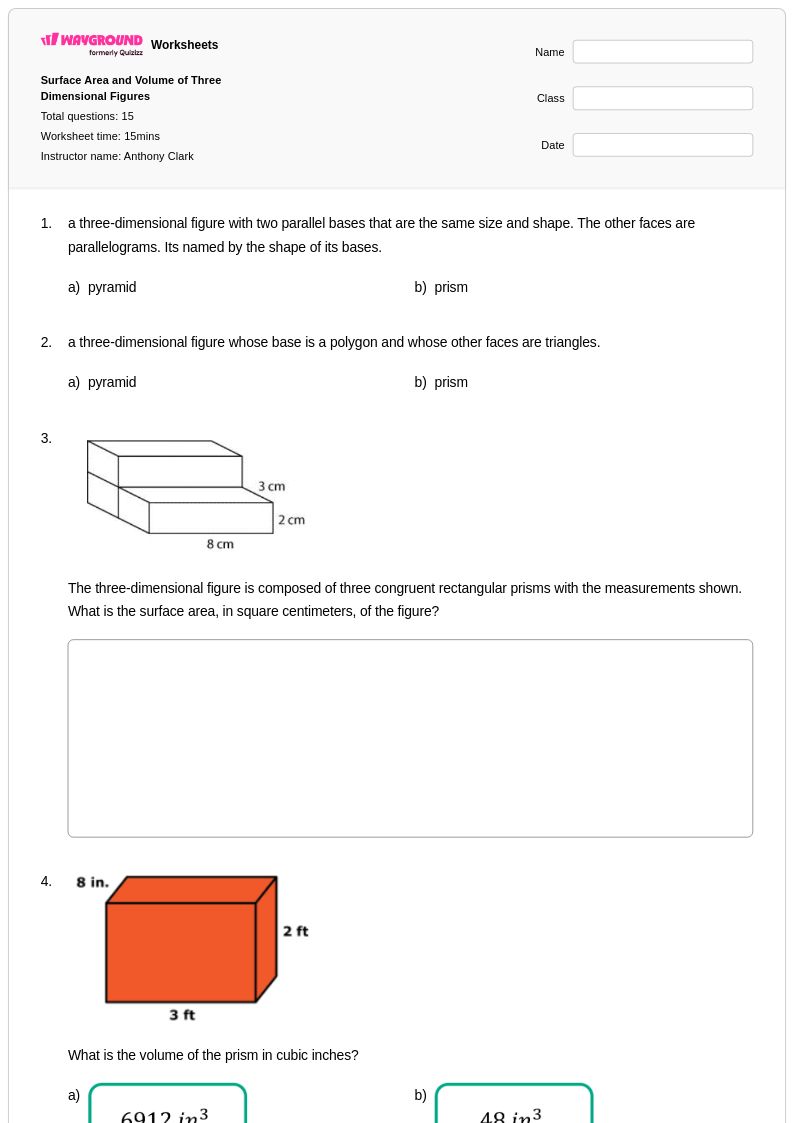
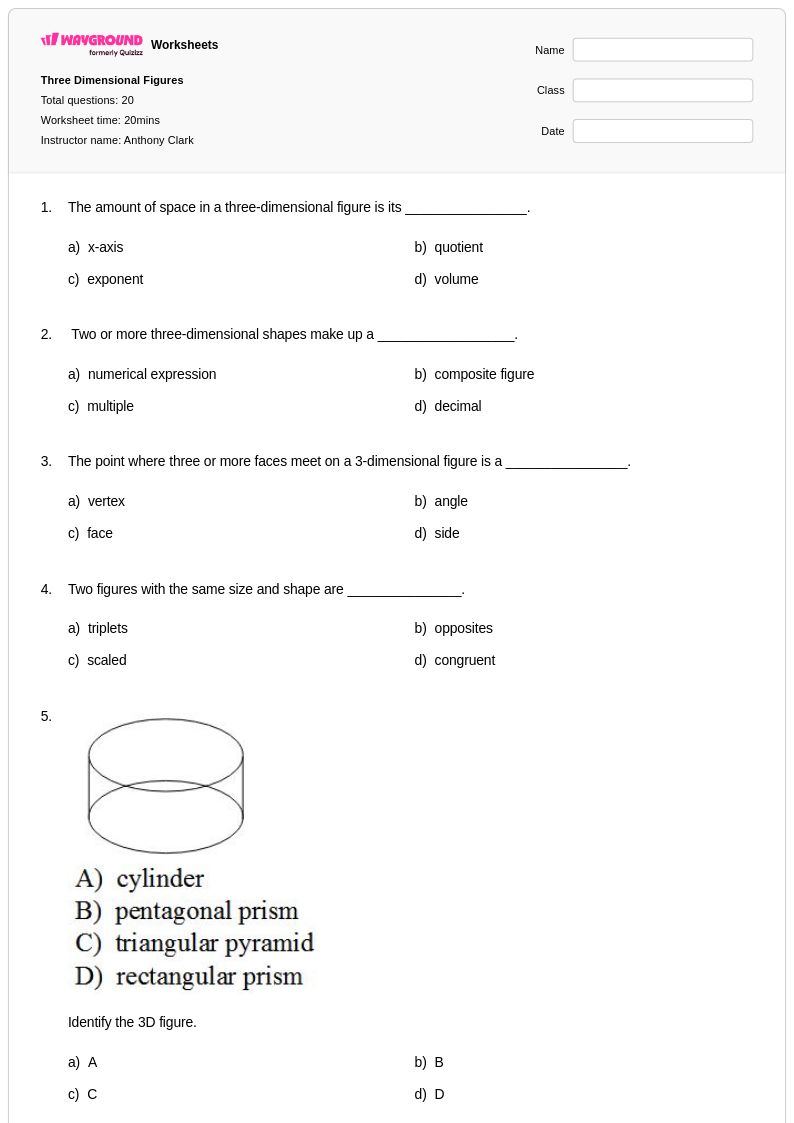
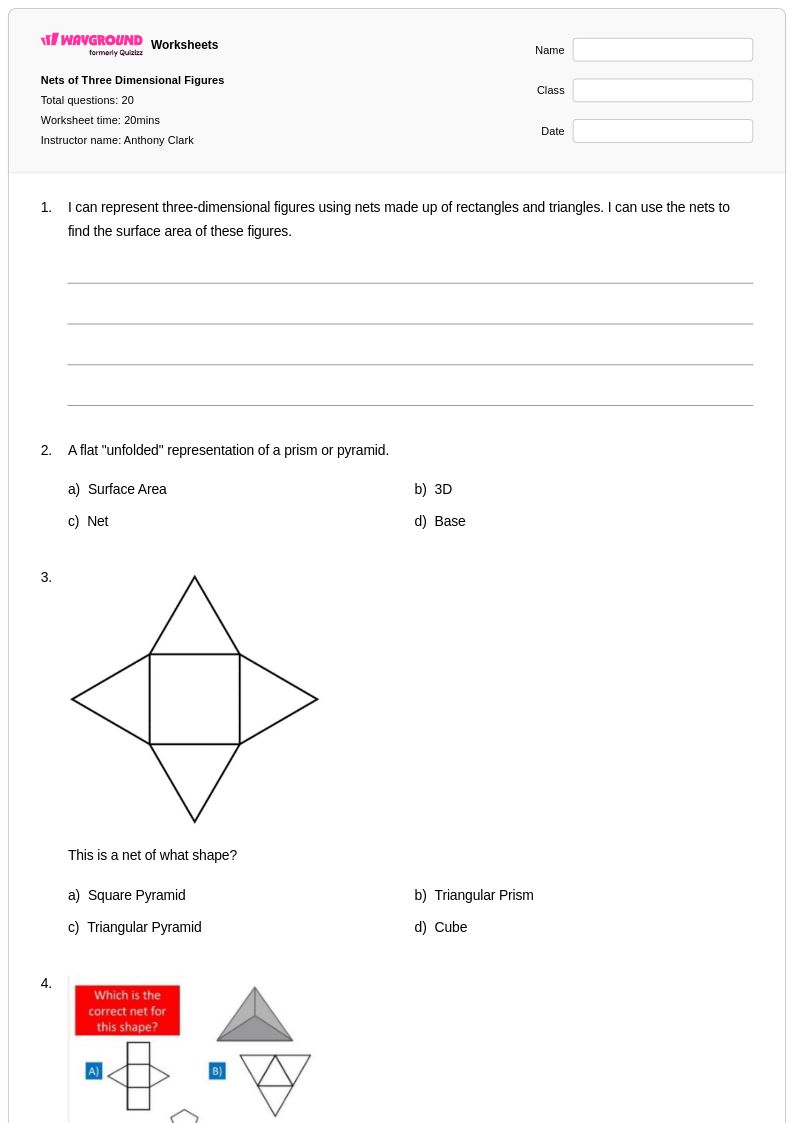
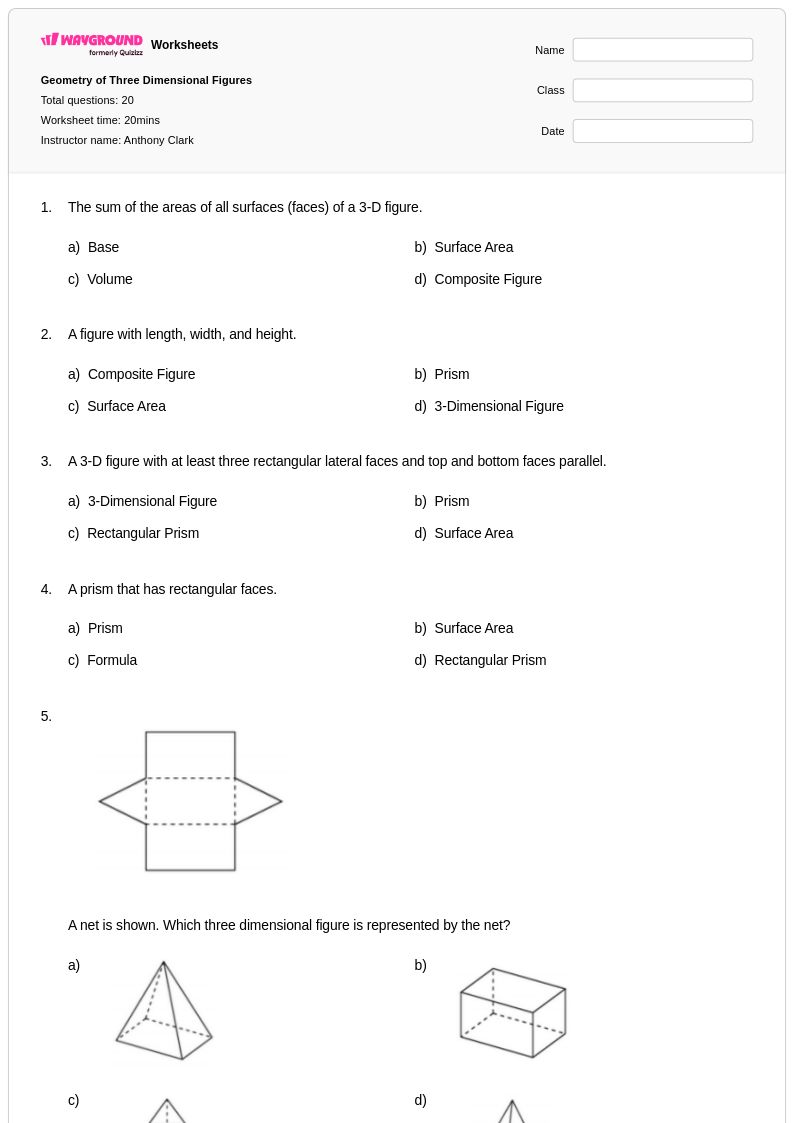
Three-dimensional figures worksheets for Class 7 students available through Wayground (formerly Quizizz) provide comprehensive practice with spatial reasoning and geometric visualization skills essential for middle school mathematics. These expertly designed resources help students master fundamental concepts including identifying and classifying 3D shapes such as prisms, pyramids, cylinders, cones, and spheres, while developing proficiency in calculating surface area and volume using appropriate formulas. Each worksheet collection includes detailed practice problems that progress from basic shape recognition to complex multi-step calculations, supported by complete answer keys that enable independent learning and self-assessment. Teachers can access these free printables in convenient PDF format, making it simple to distribute targeted practice materials that reinforce classroom instruction and support diverse learning needs.
Wayground's extensive library contains millions of teacher-created three-dimensional figures worksheets specifically aligned with Class 7 mathematics standards, offering educators powerful search and filtering capabilities to locate precisely the right materials for their instructional goals. The platform's robust differentiation tools allow teachers to customize worksheet difficulty levels, modify problem types, and adjust content complexity to meet individual student needs, whether for remediation of foundational concepts or enrichment of advanced spatial reasoning skills. These versatile resources are available in both printable and digital formats, enabling seamless integration into traditional classroom settings, hybrid learning environments, and remote instruction scenarios. Teachers can efficiently plan targeted skill practice sessions, create focused review materials for assessments, and provide supplementary practice that strengthens students' understanding of geometric relationships in three-dimensional space.