
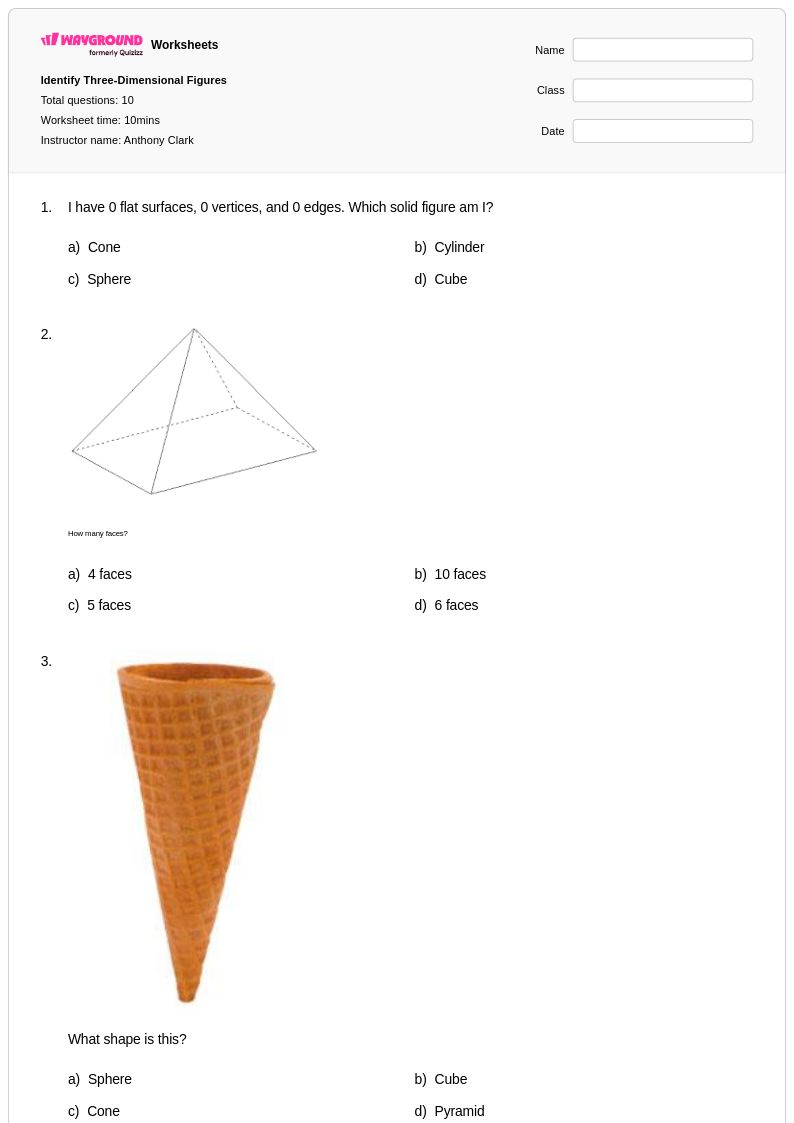
10 Q
4th - Uni
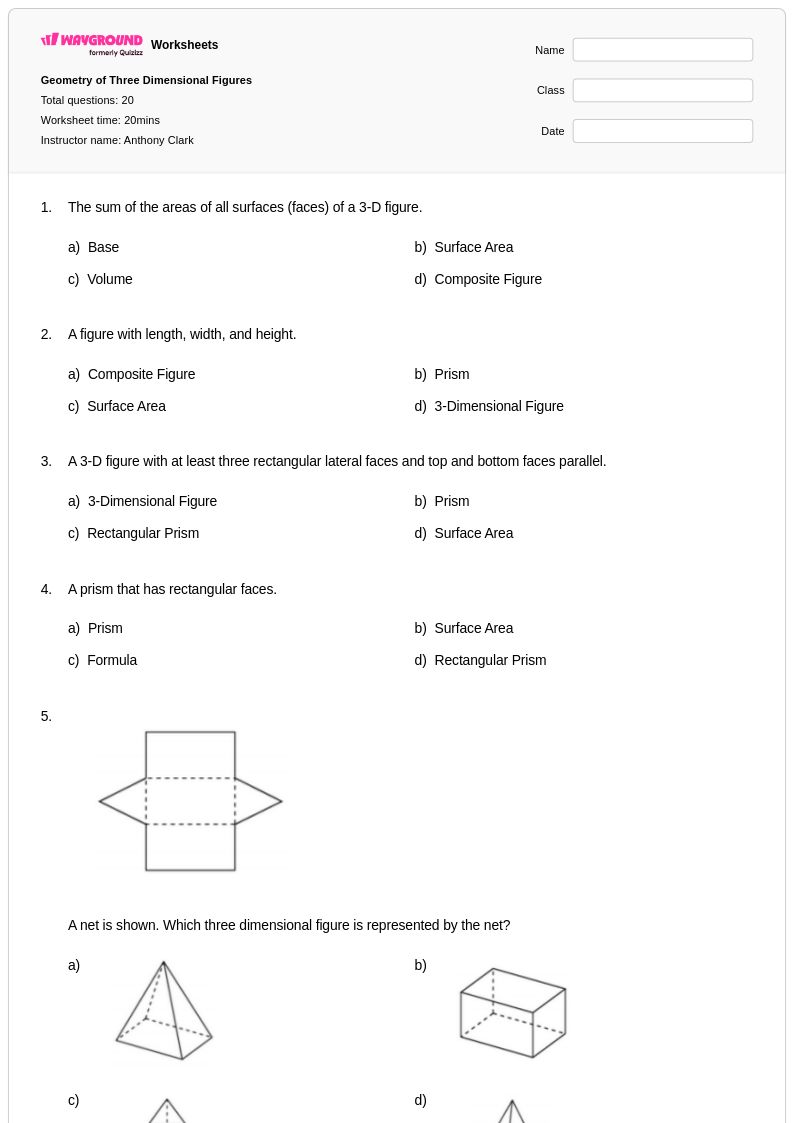
20 Q
3rd - Uni
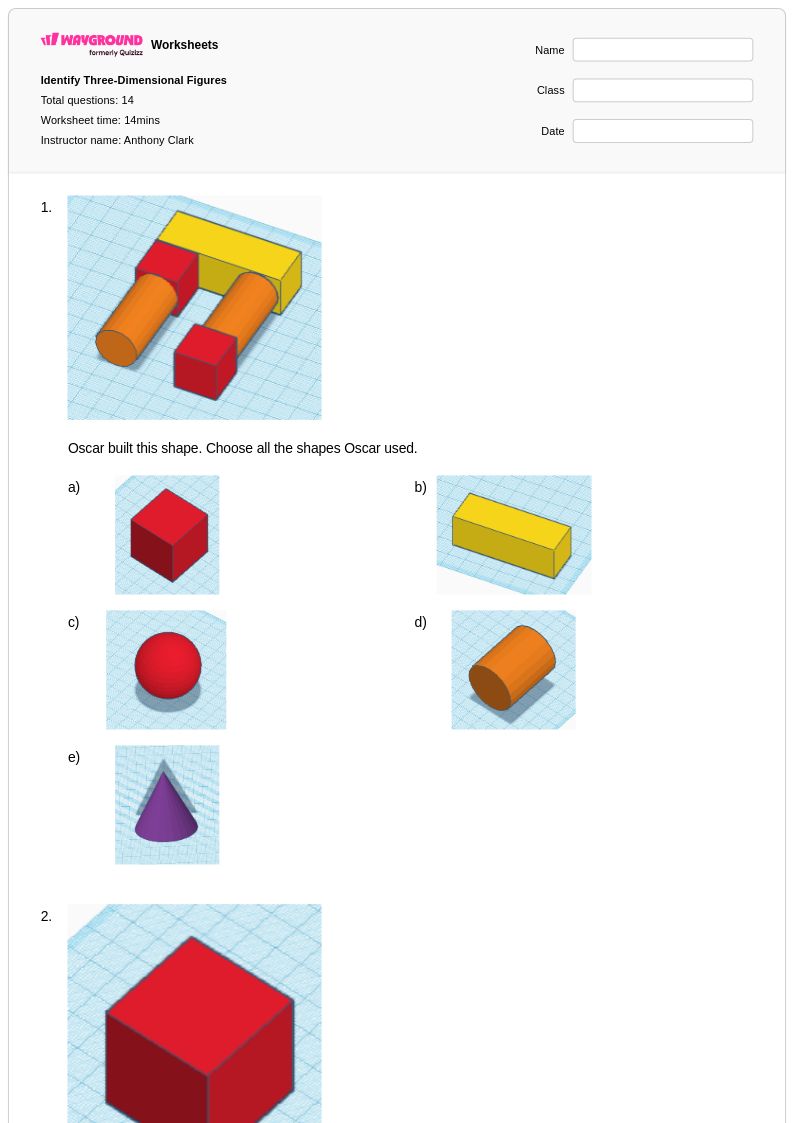
14 Q
4th - Uni
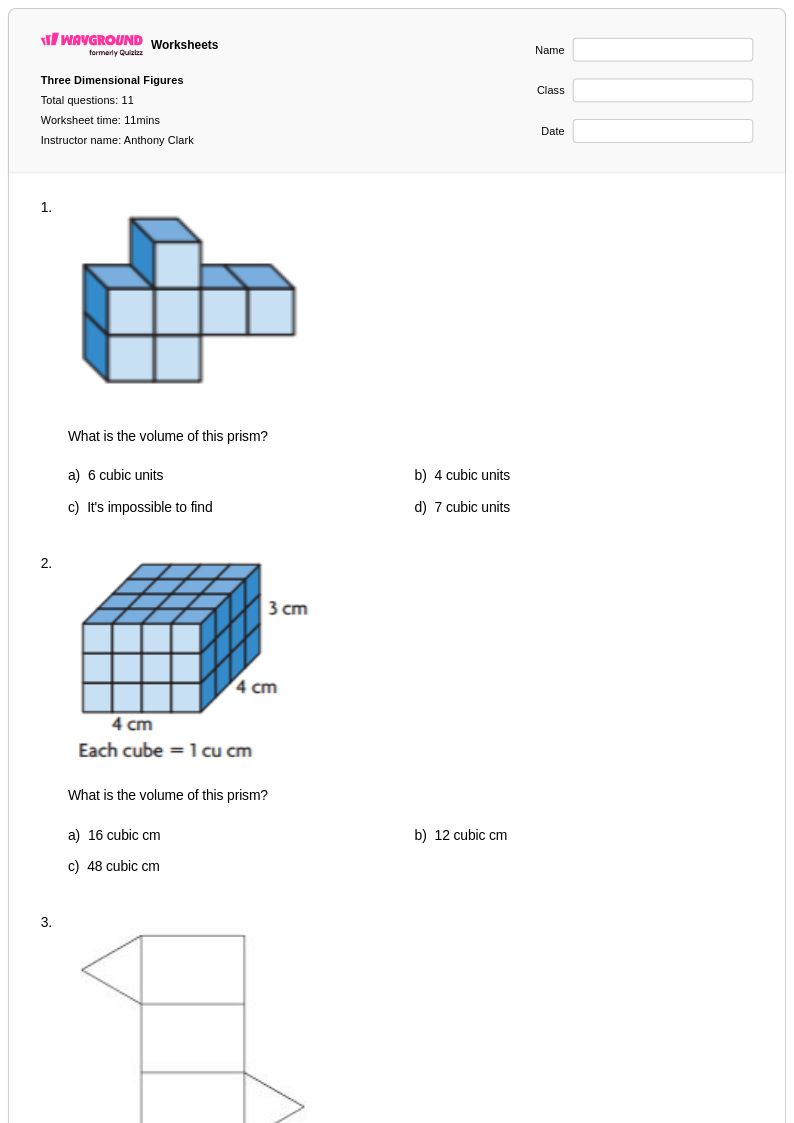
11 Q
4th - Uni
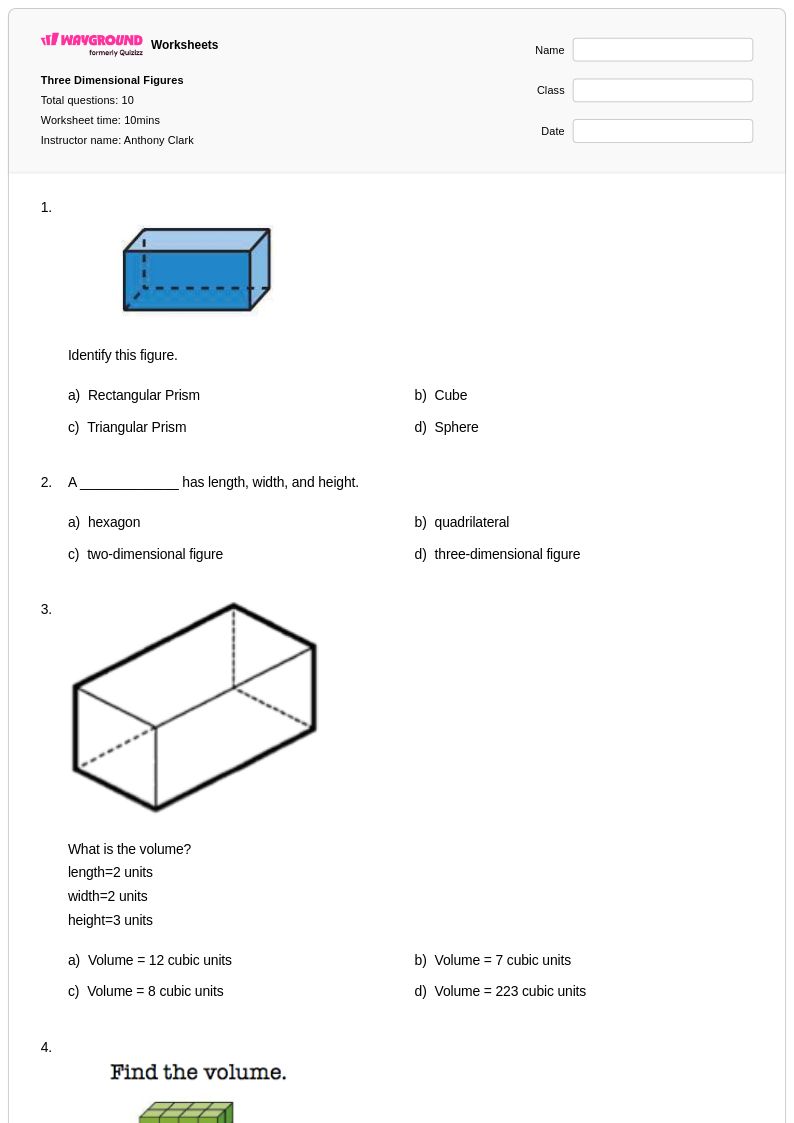
10 Q
4th - Uni
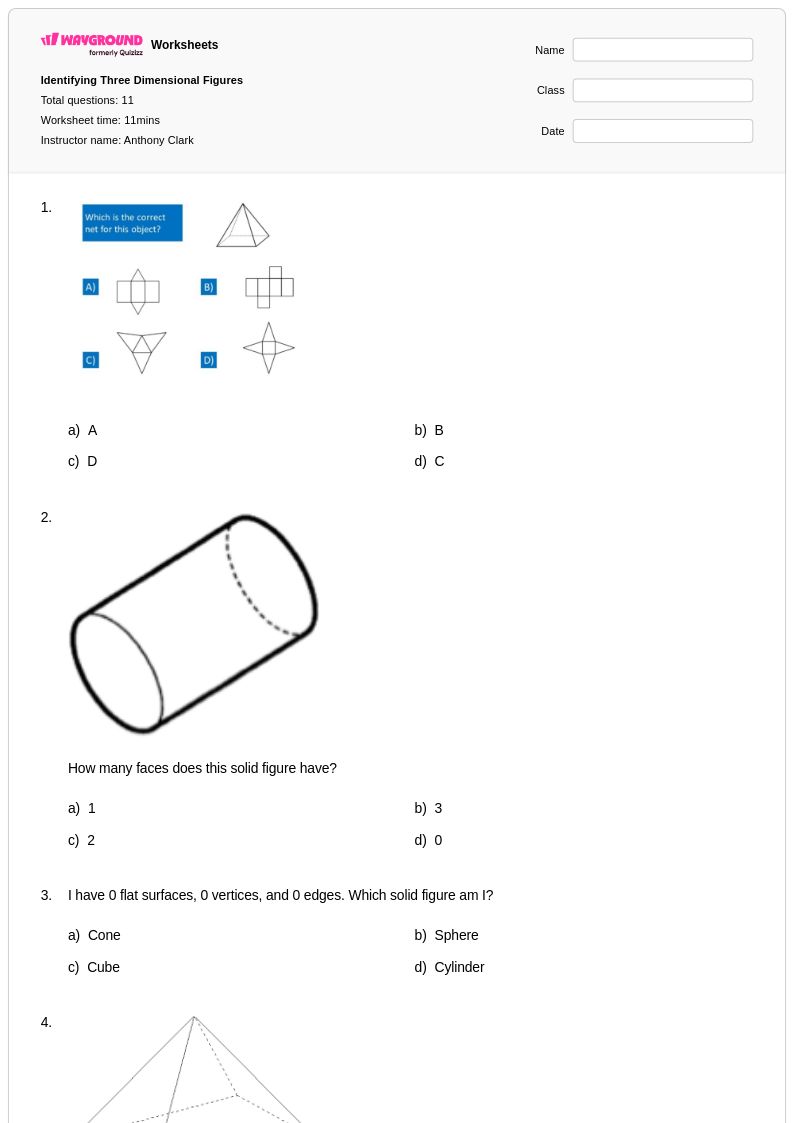
11 Q
4th - Uni
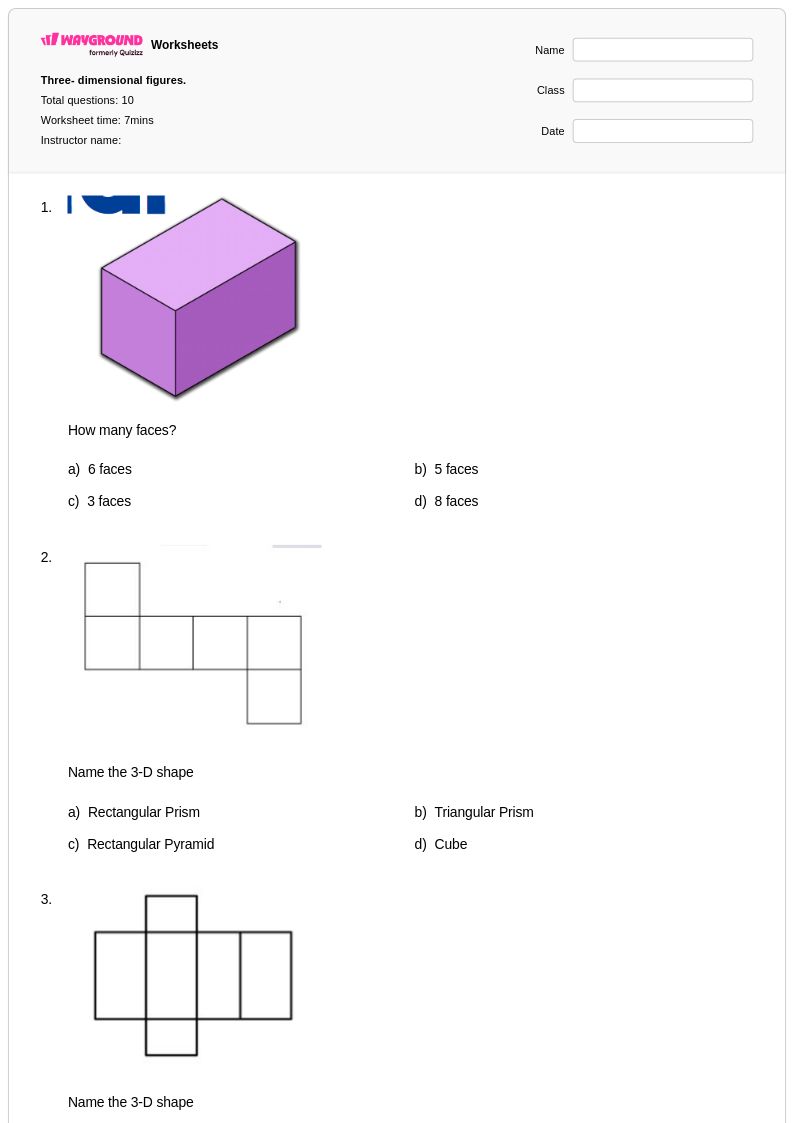
10 Q
4th - 5th
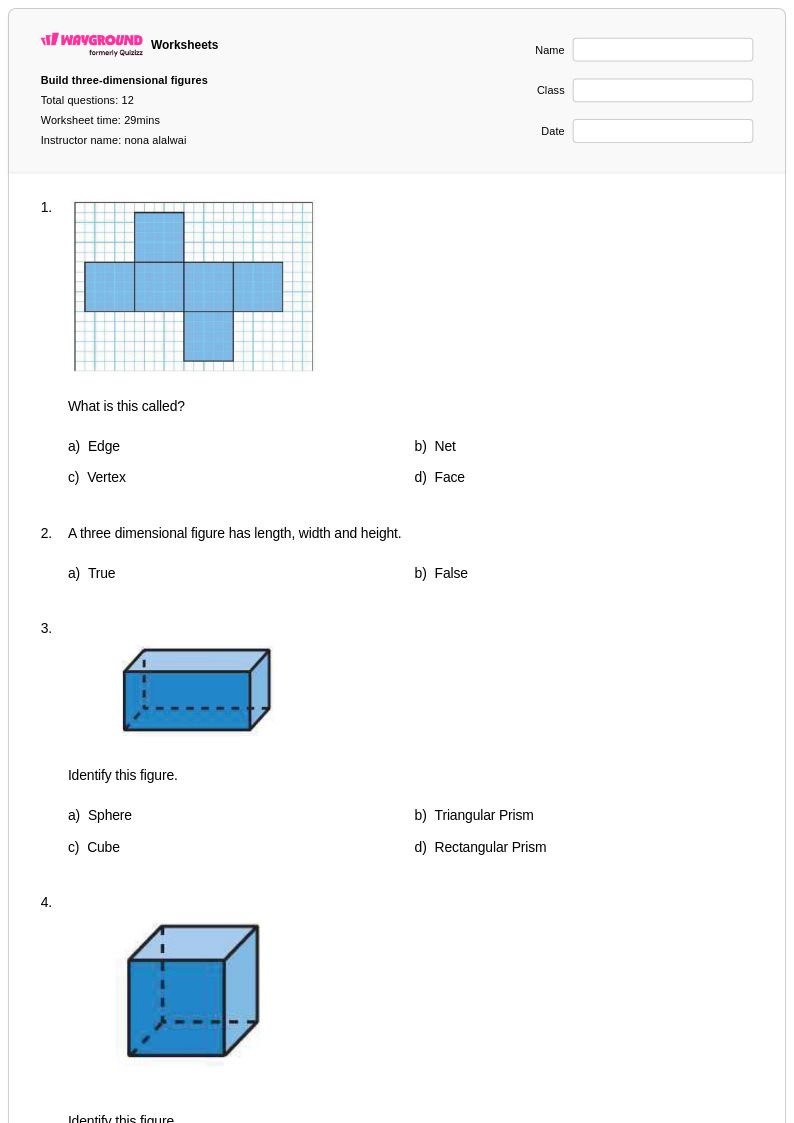
12 Q
4th
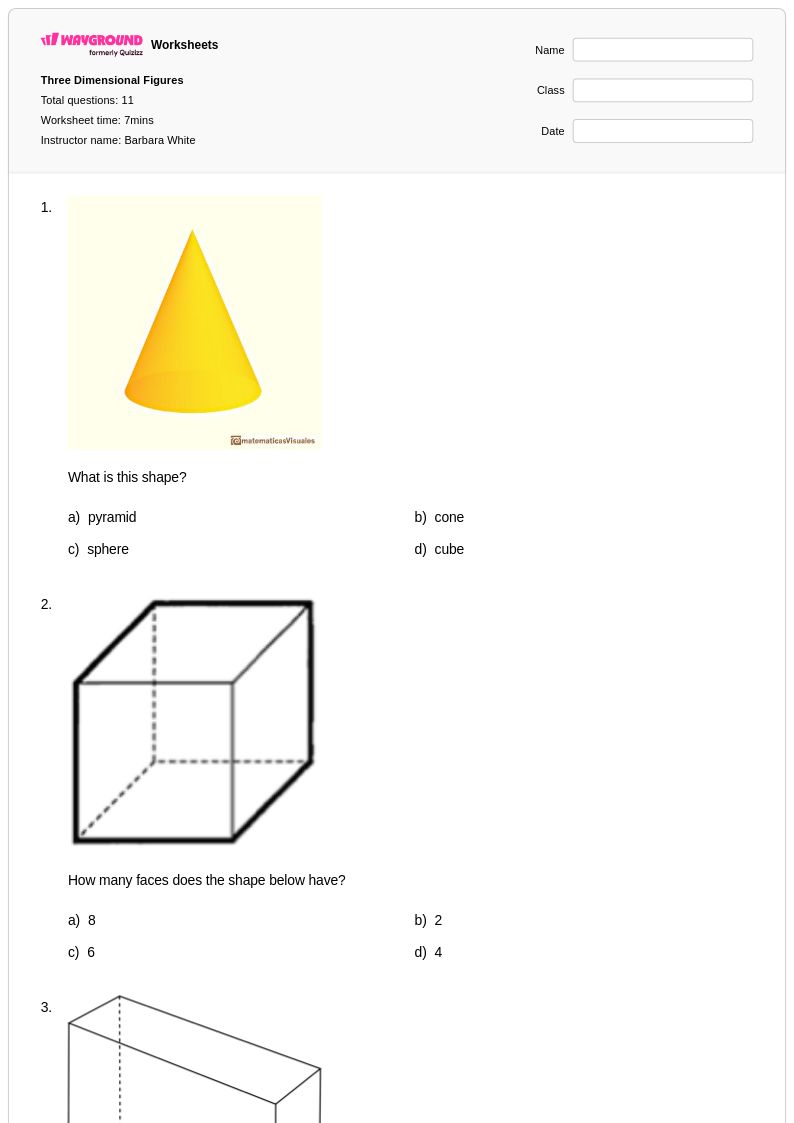
11 Q
3rd - 4th
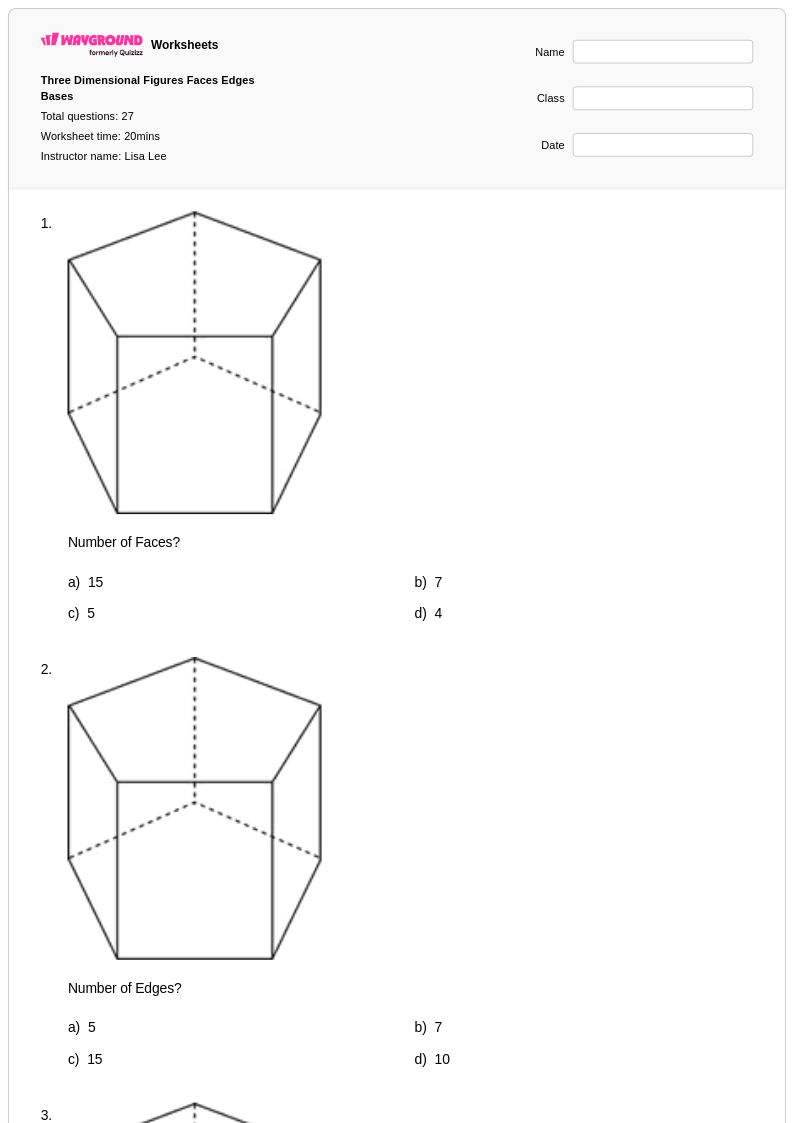
27 Q
3rd - 6th
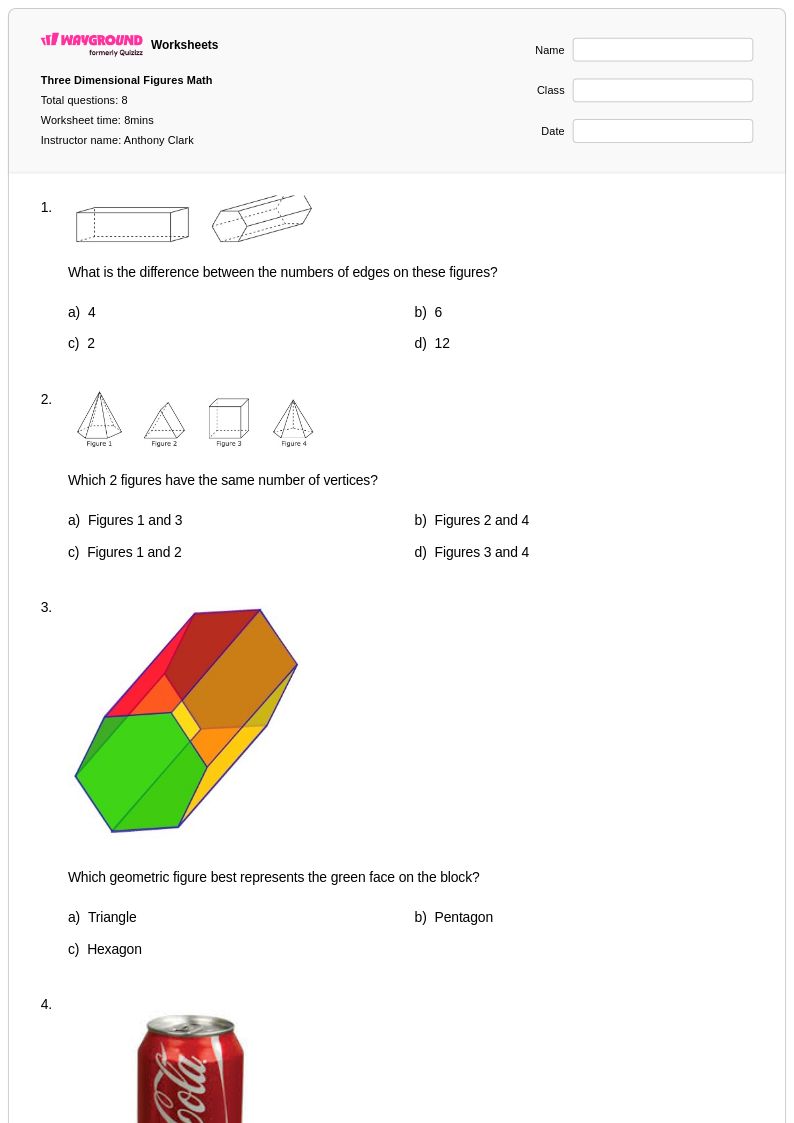
8 Q
3rd - Uni
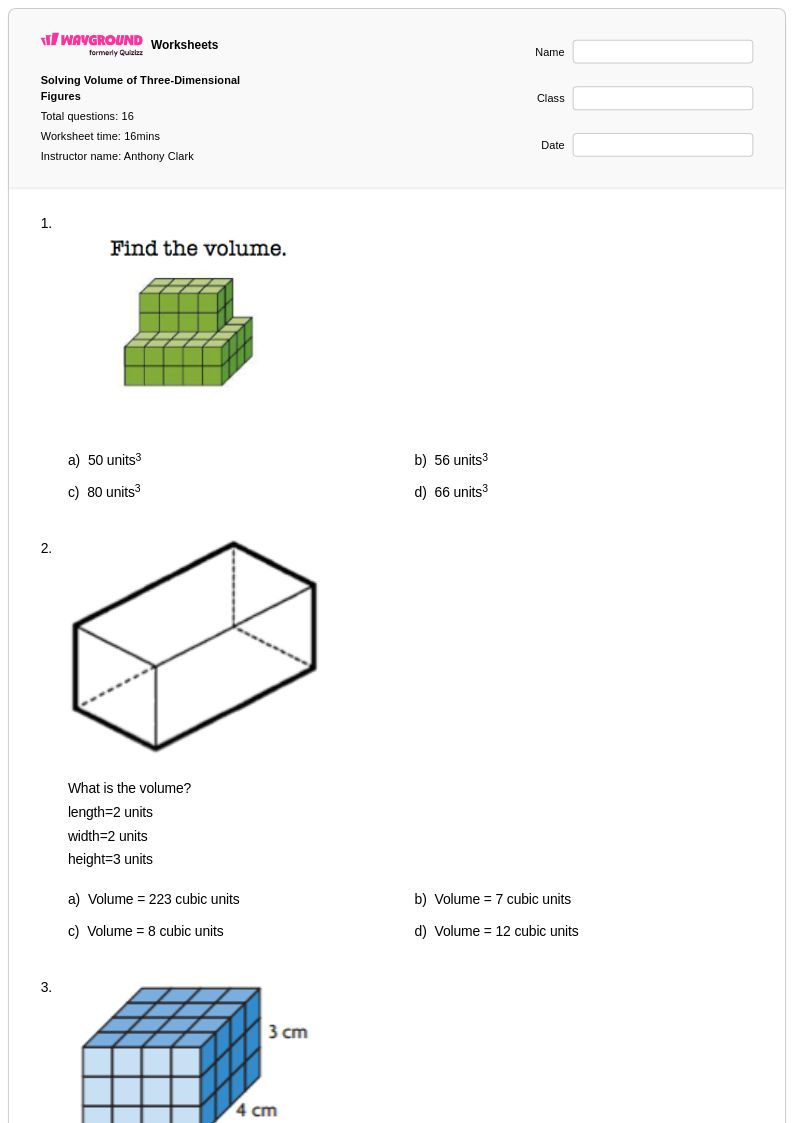
16 Q
4th - Uni
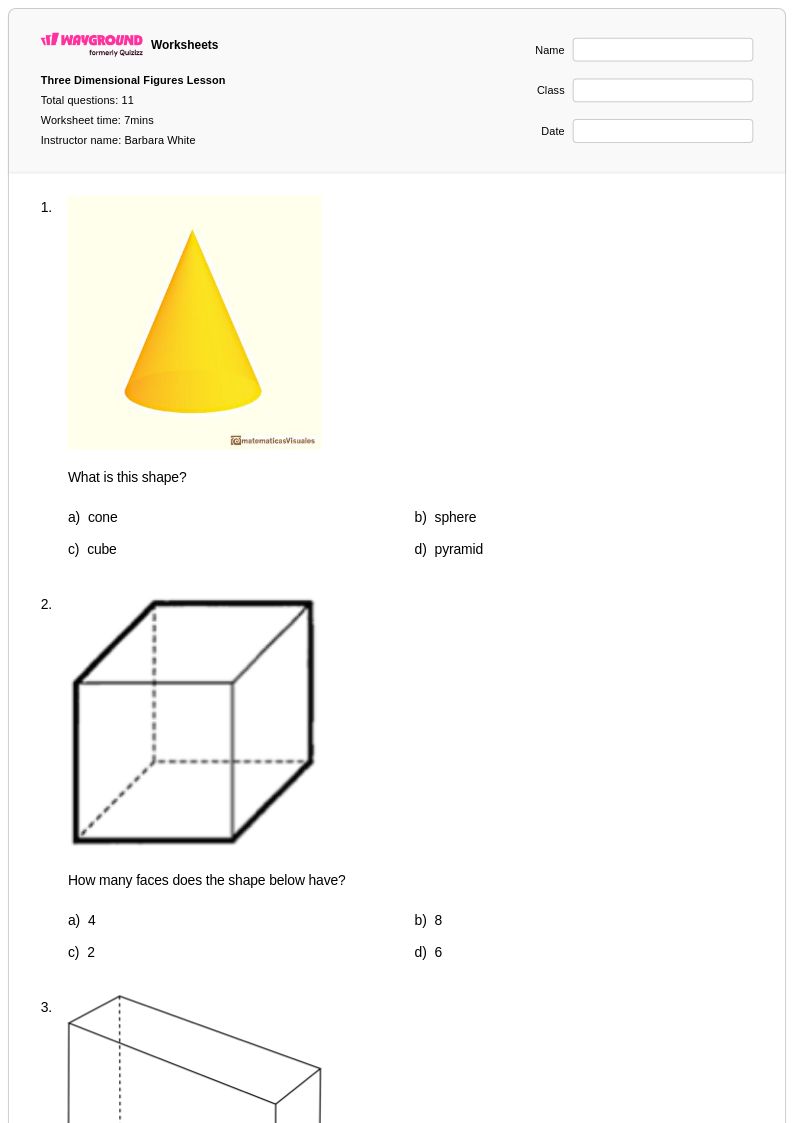
11 Q
3rd - 4th
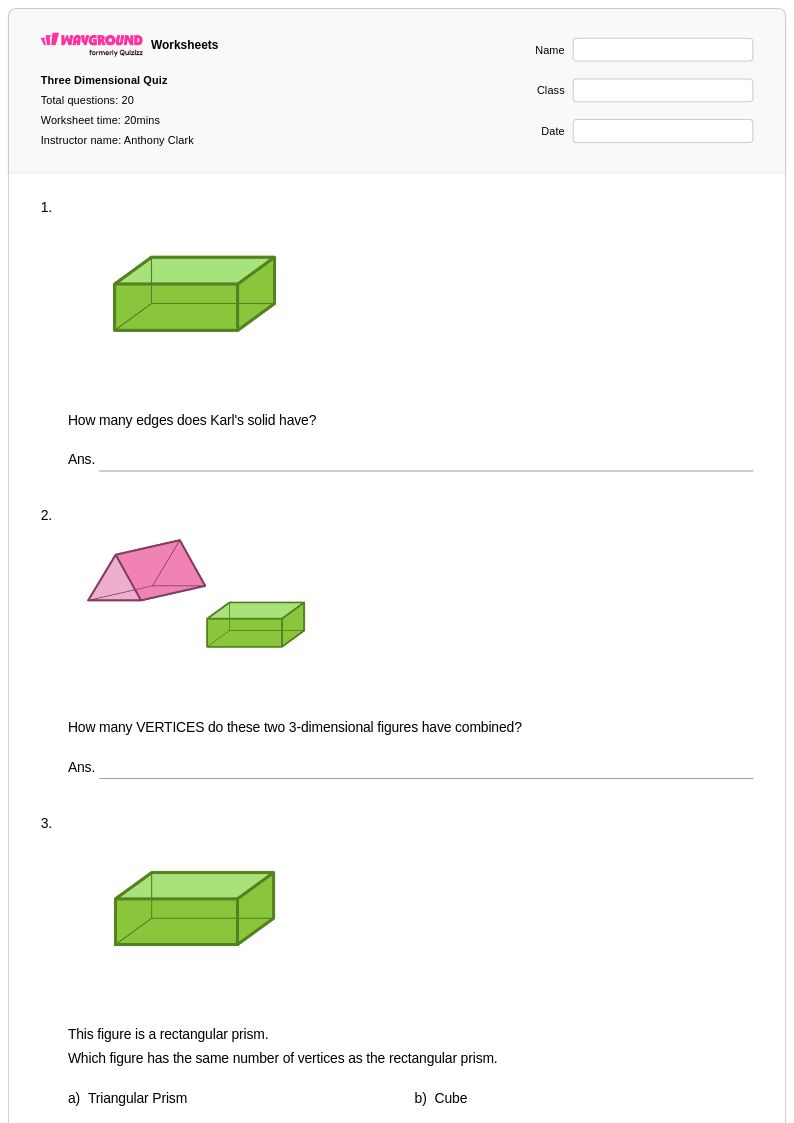
20 Q
1st - Uni
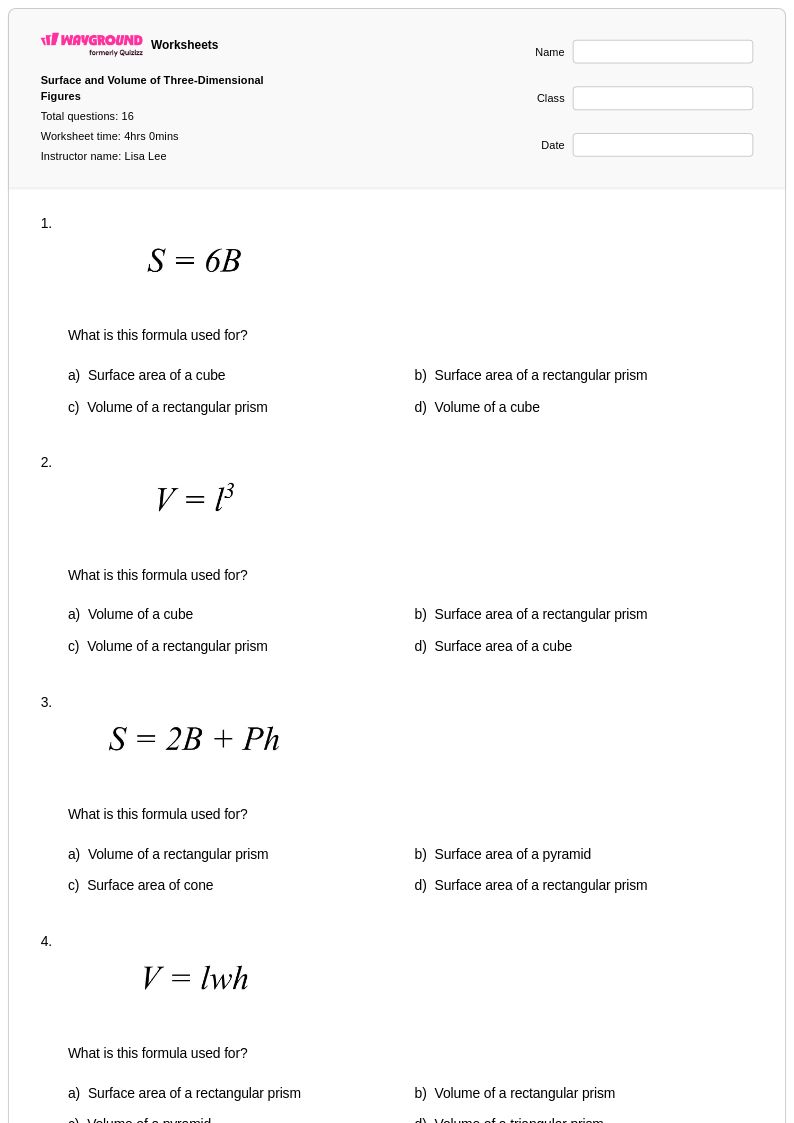
16 Q
4th - 9th
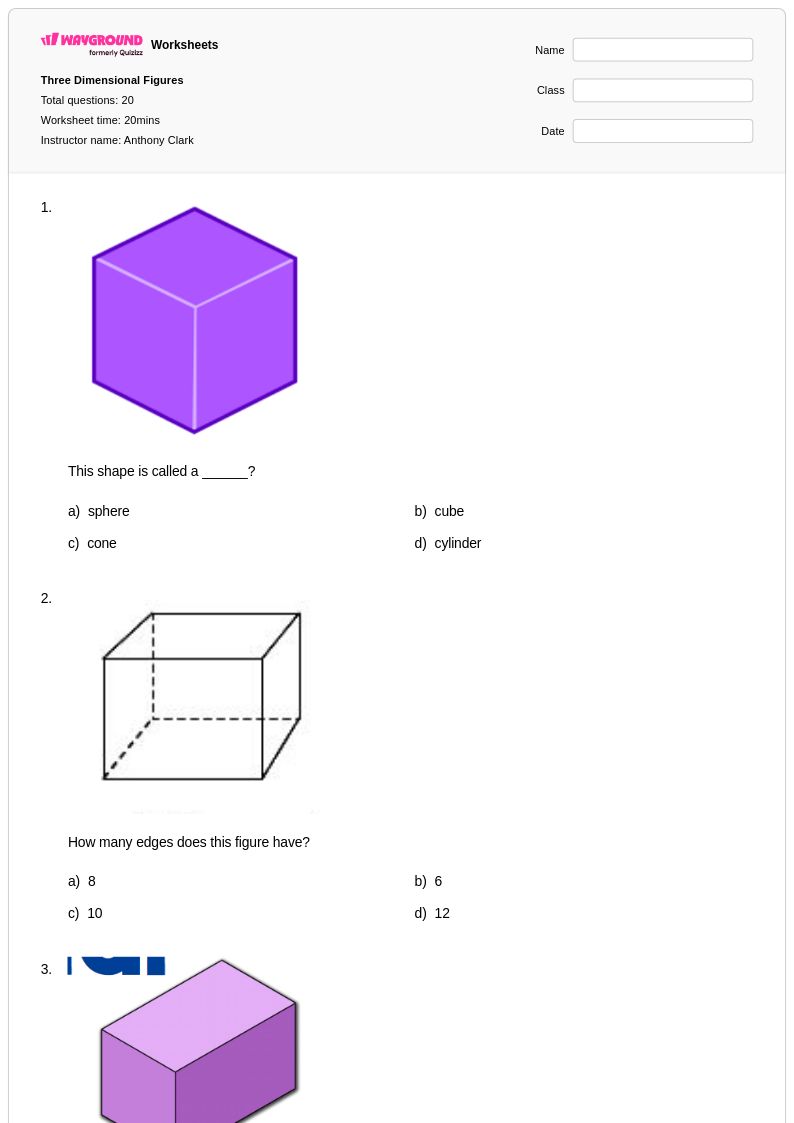
20 Q
4th - Uni
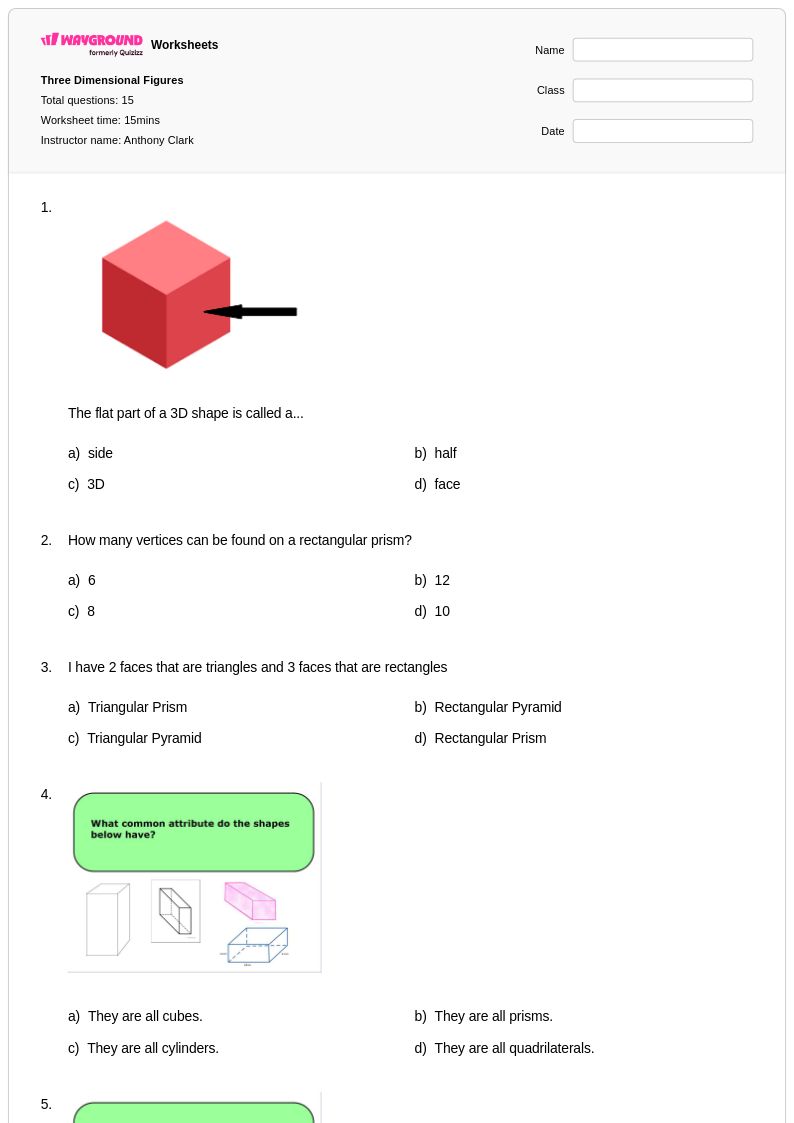
15 Q
4th - Uni
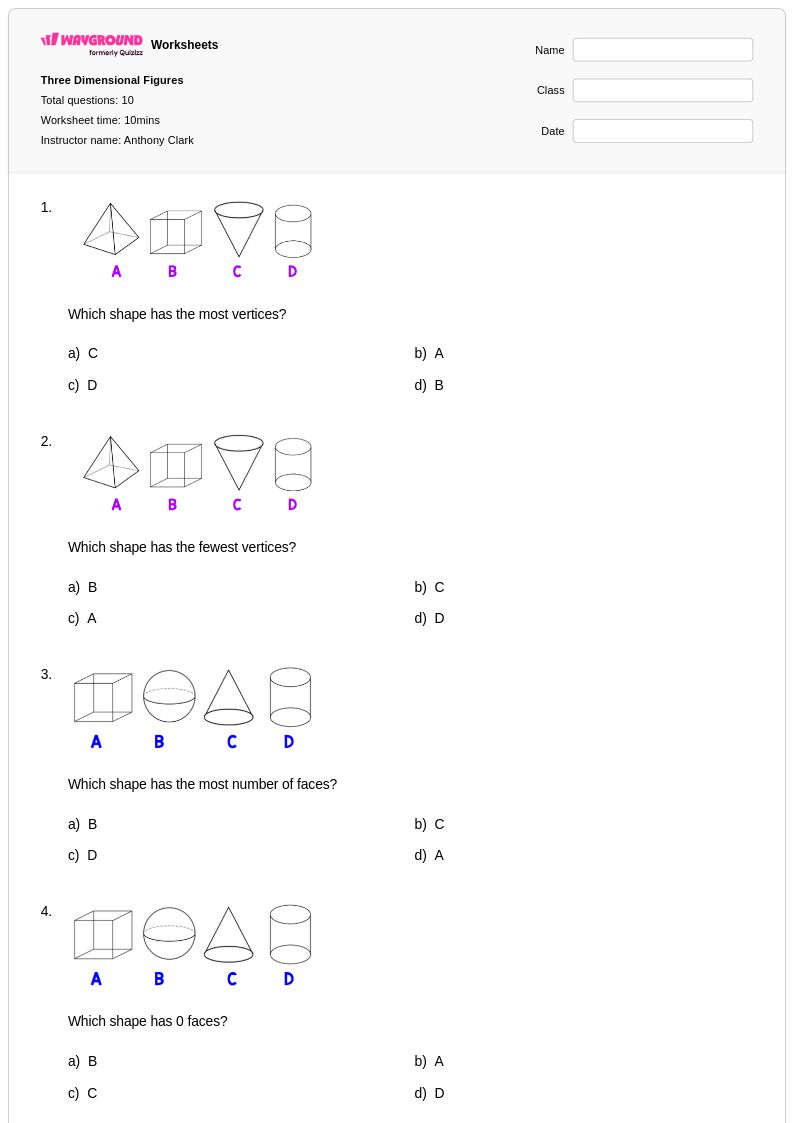
10 Q
4th - Uni
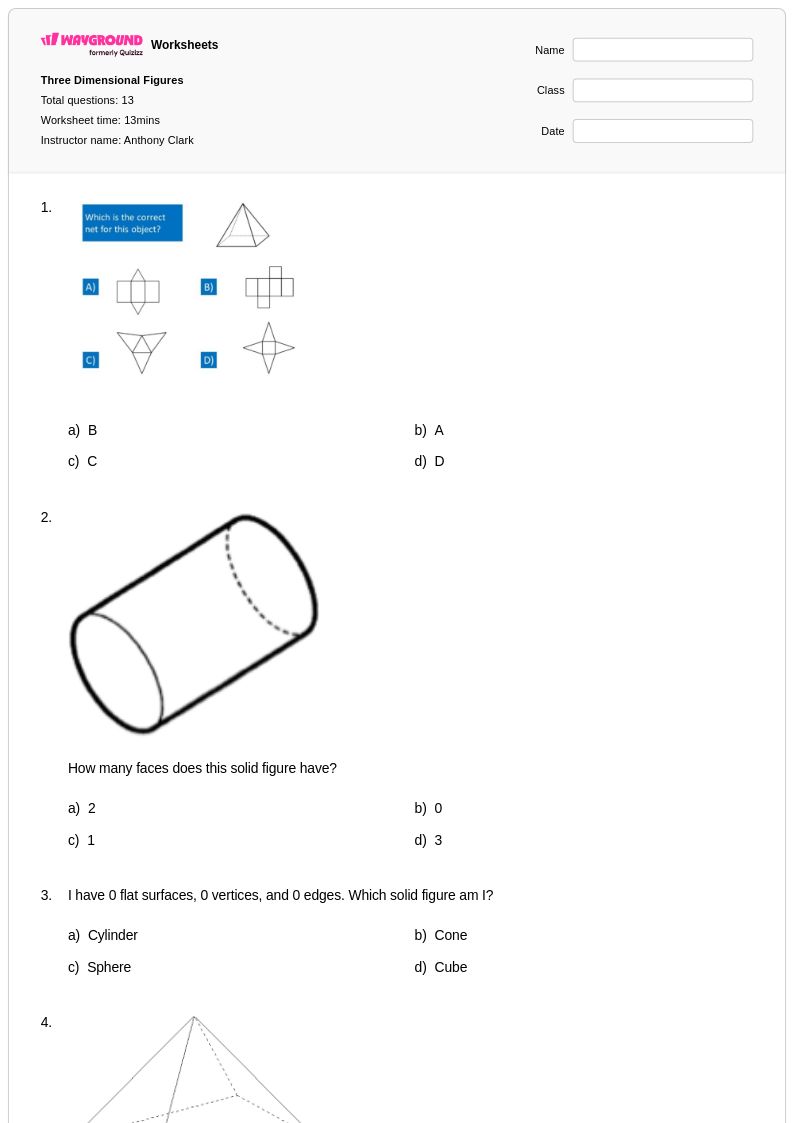
13 Q
4th - Uni
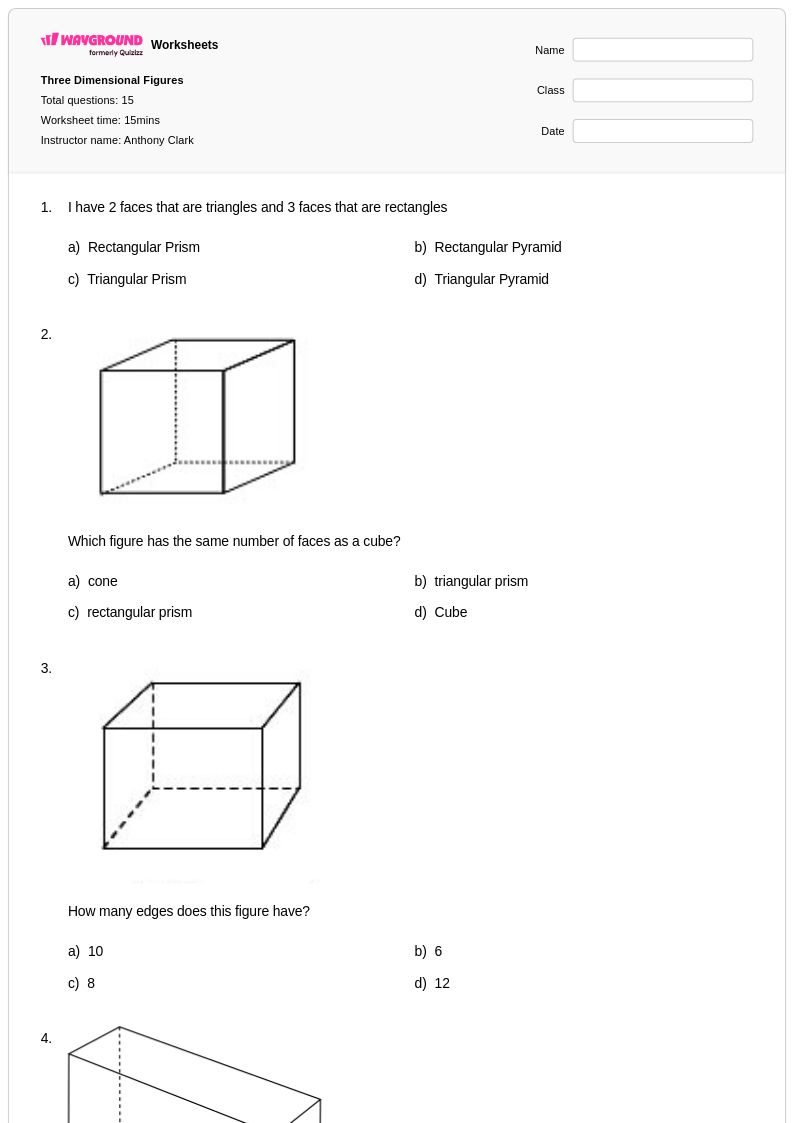
15 Q
4th - Uni
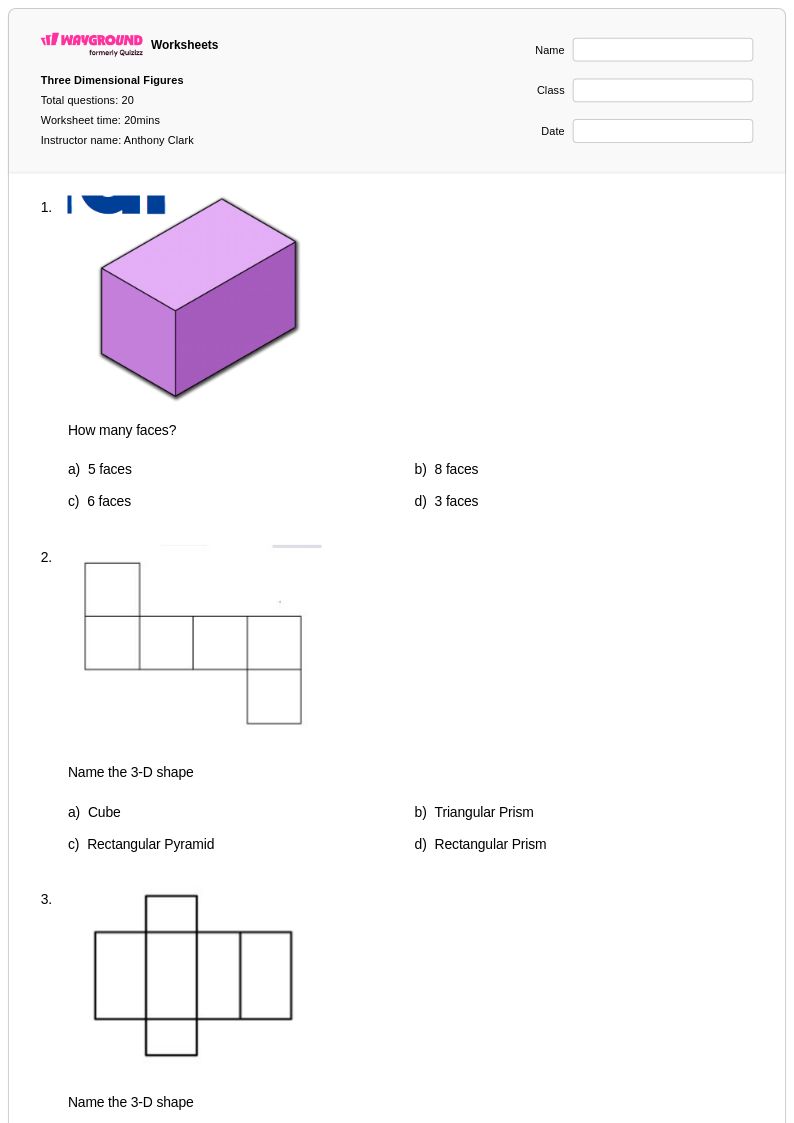
20 Q
4th - Uni
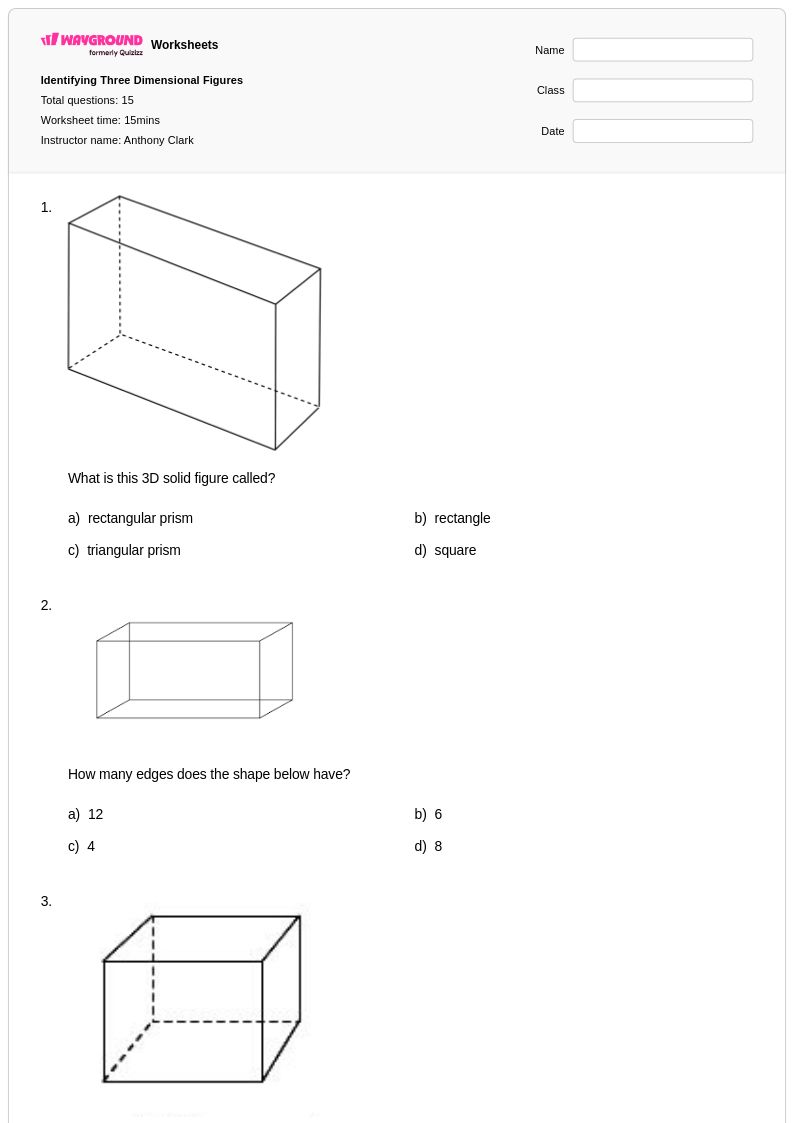
15 Q
4th - Uni
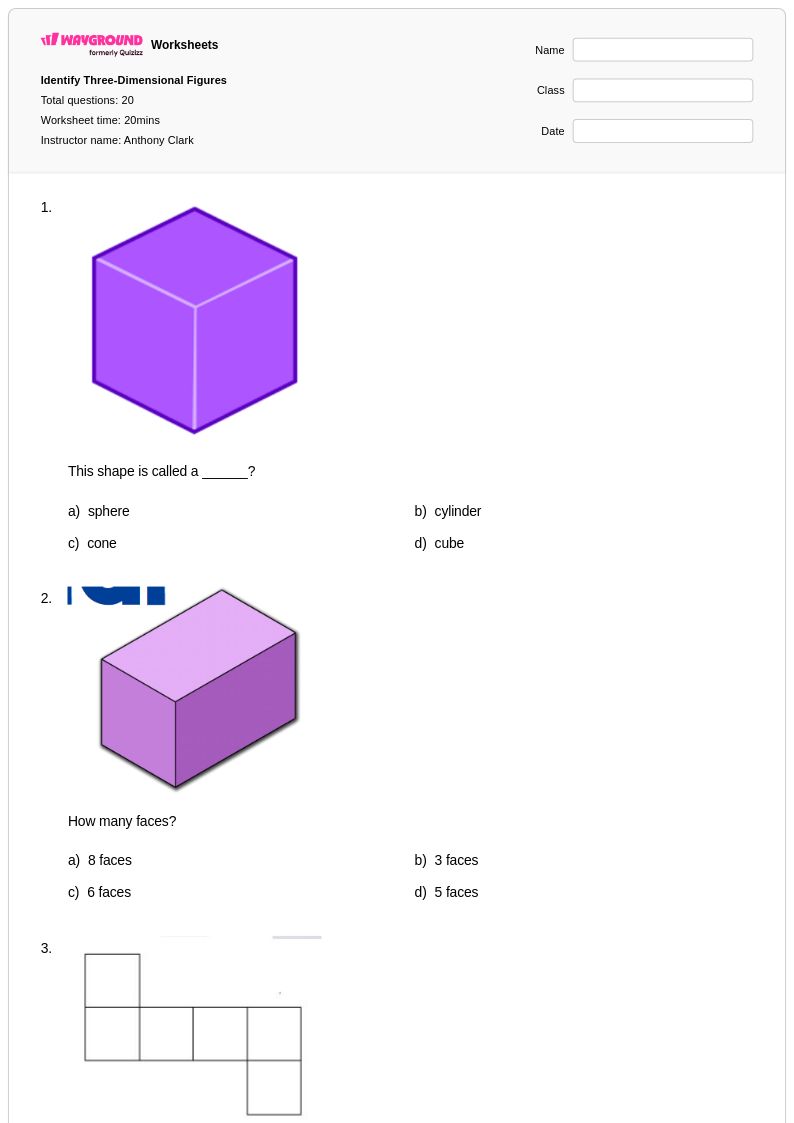
20 Q
4th - Uni
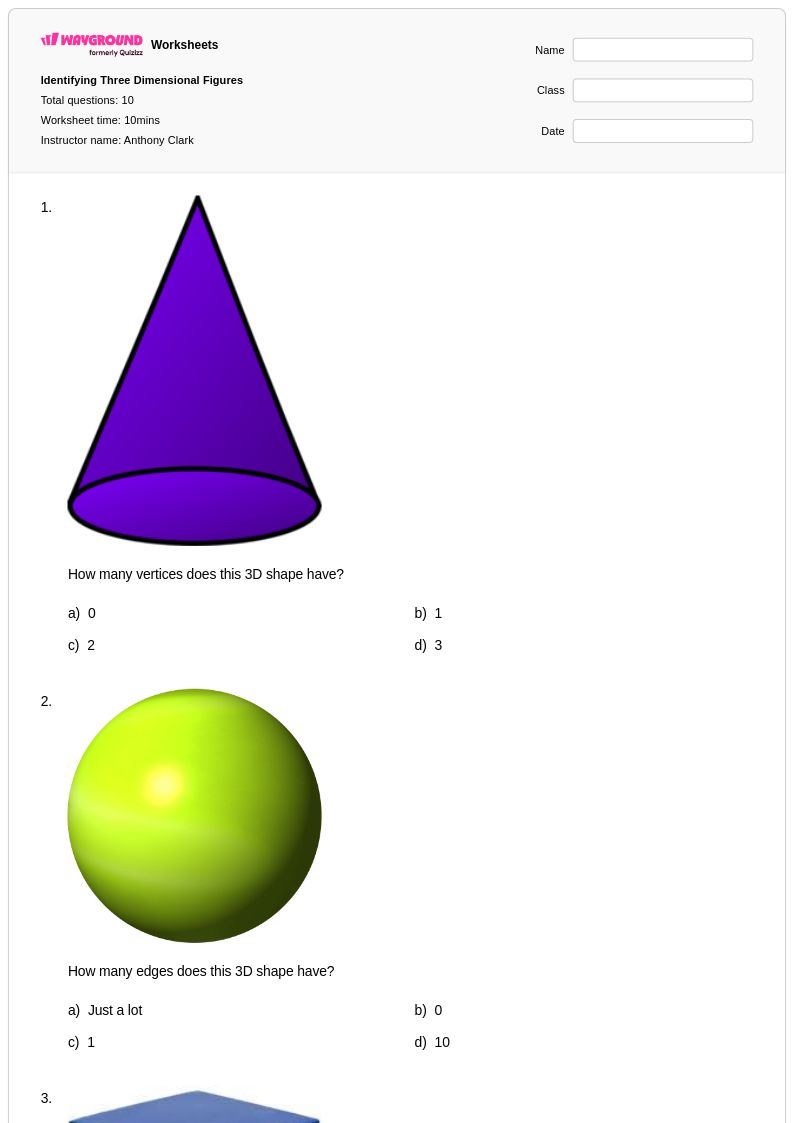
10 Q
4th - Uni
Explore Three-dimensional Figures Worksheets by Grades
Explore Other Subject Worksheets for class 4
Explore printable Three-dimensional Figures worksheets for Class 4
Three-dimensional figures worksheets for Class 4 students available through Wayground (formerly Quizizz) provide comprehensive practice opportunities for developing spatial reasoning and geometric visualization skills. These carefully designed printables help fourth-grade learners identify, classify, and analyze solid shapes including cubes, rectangular prisms, cylinders, cones, spheres, and pyramids. Students strengthen their understanding of geometric properties by examining faces, edges, and vertices while building connections between two-dimensional shapes and their three-dimensional counterparts. Each worksheet collection includes detailed answer keys and offers systematic practice problems that progress from basic shape recognition to more complex spatial relationships, ensuring students master foundational concepts before advancing to higher-level geometric thinking.
Wayground (formerly Quizizz) empowers teachers with an extensive library of millions of teacher-created three-dimensional figures resources that streamline lesson planning and differentiated instruction for Class 4 mathematics. The platform's robust search and filtering capabilities allow educators to quickly locate worksheets aligned with specific curriculum standards and learning objectives, while customization tools enable seamless adaptation of materials to meet diverse student needs. Teachers can access these geometric resources in both printable pdf formats for traditional classroom use and digital formats for interactive learning experiences, making it effortless to provide targeted remediation for struggling learners or enrichment activities for advanced students. This flexibility supports effective skill practice across varying instructional contexts, from whole-group lessons to individualized intervention sessions.