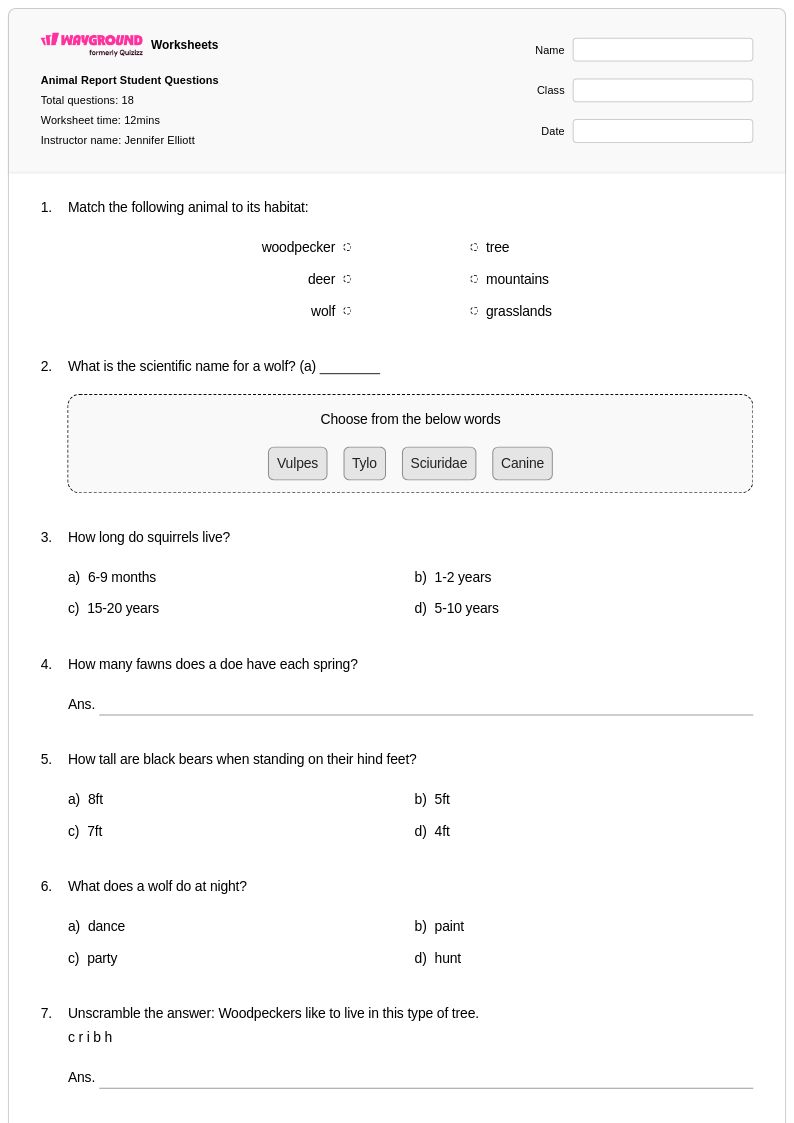
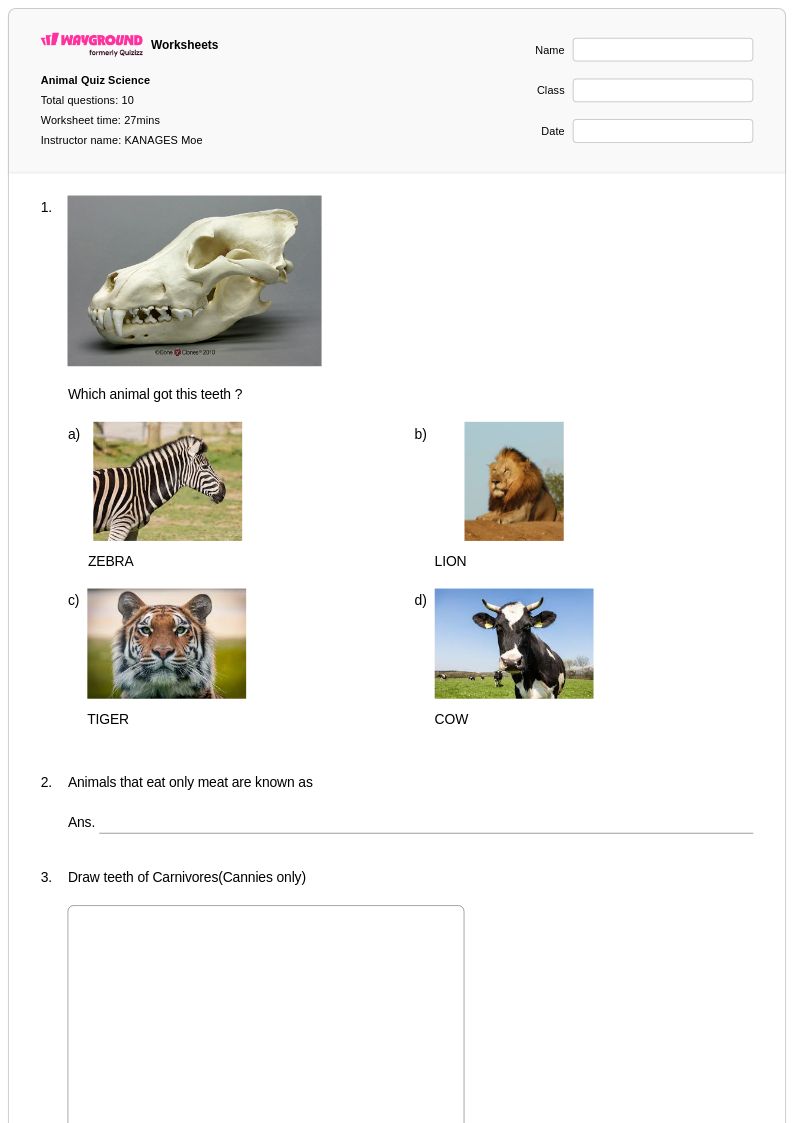
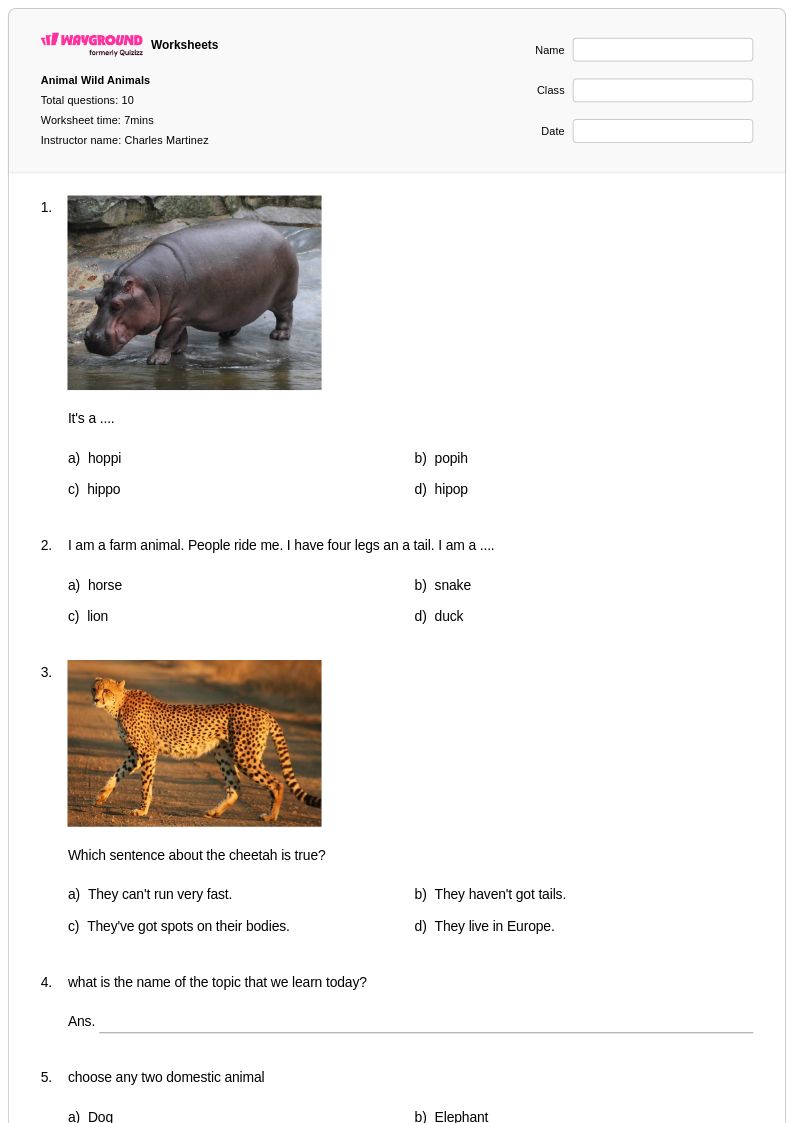
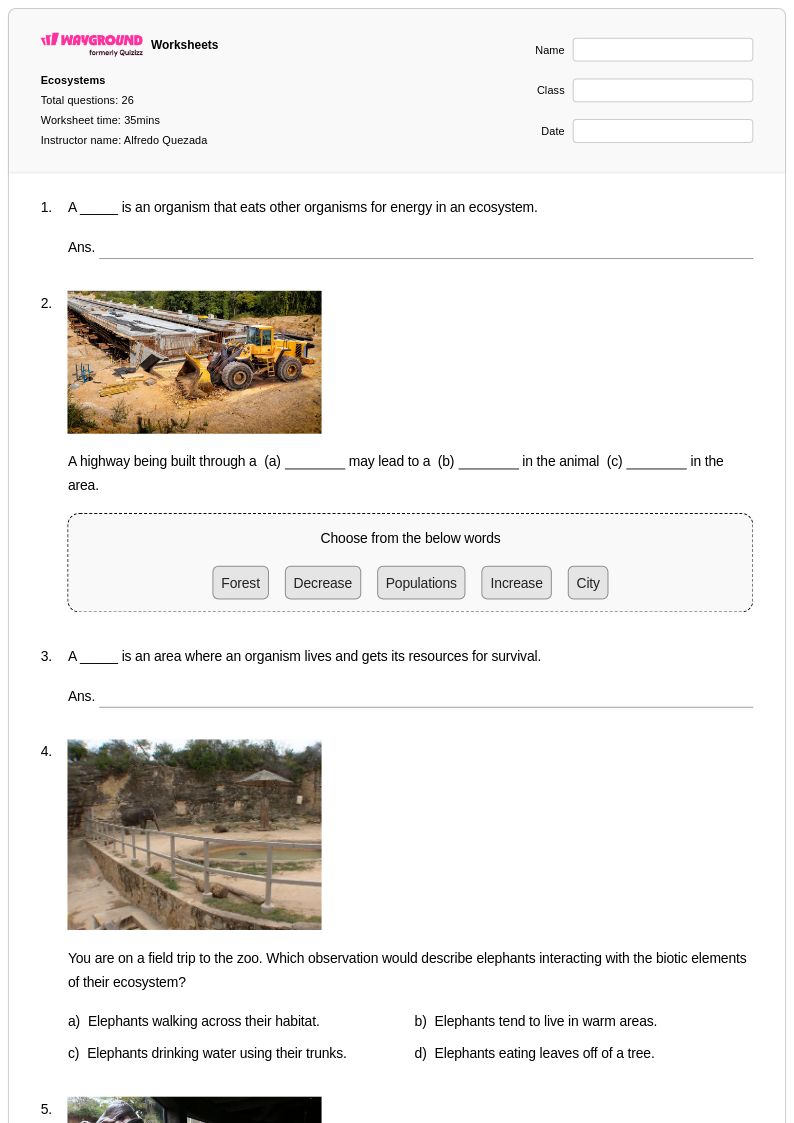
Free Printable Animal Observation Worksheets for Class 2
Enhance Class 2 students' animal observation skills with our free printable Life Science worksheets featuring engaging practice problems, detailed answer keys, and downloadable PDF activities that help young learners develop scientific inquiry abilities.
Explore printable Animal Observation worksheets for Class 2
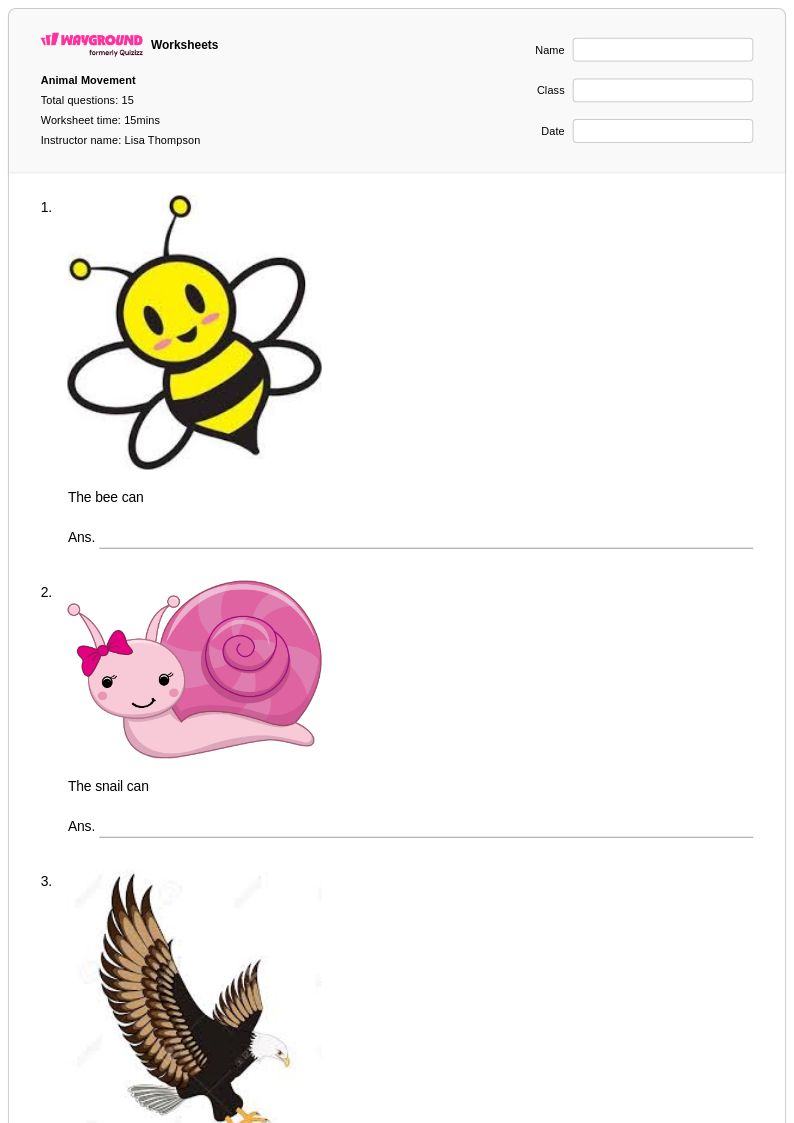
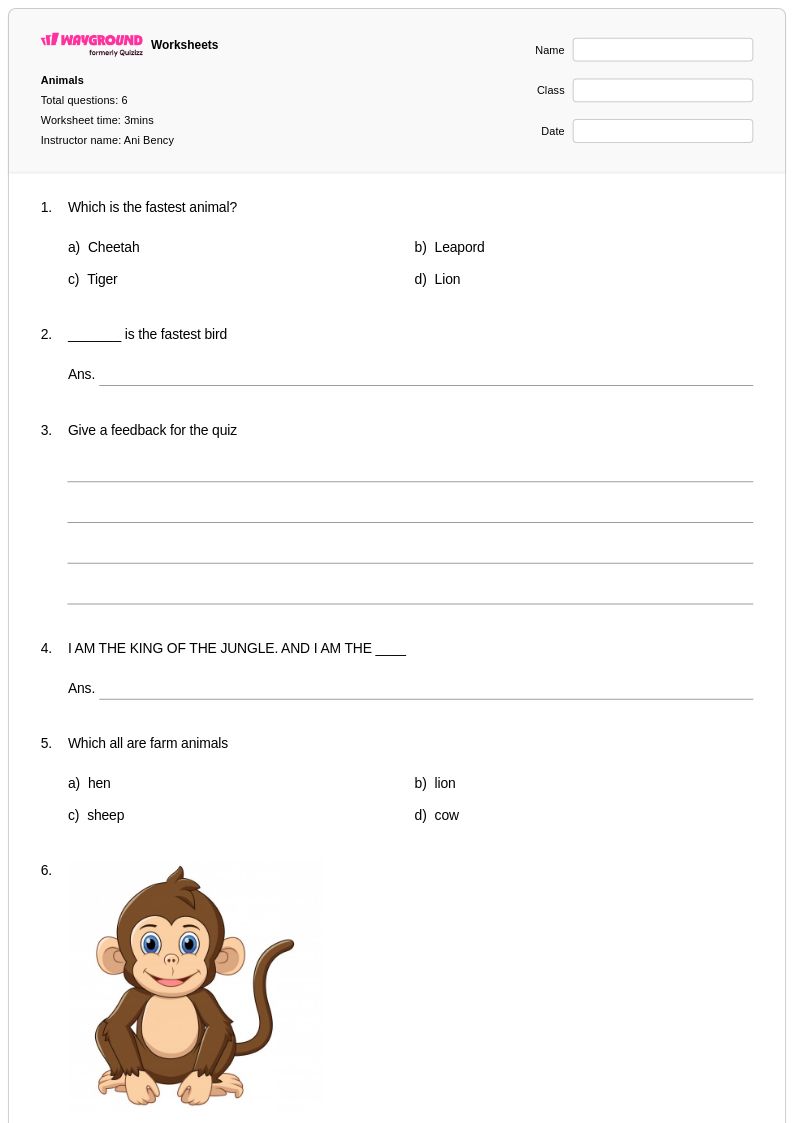
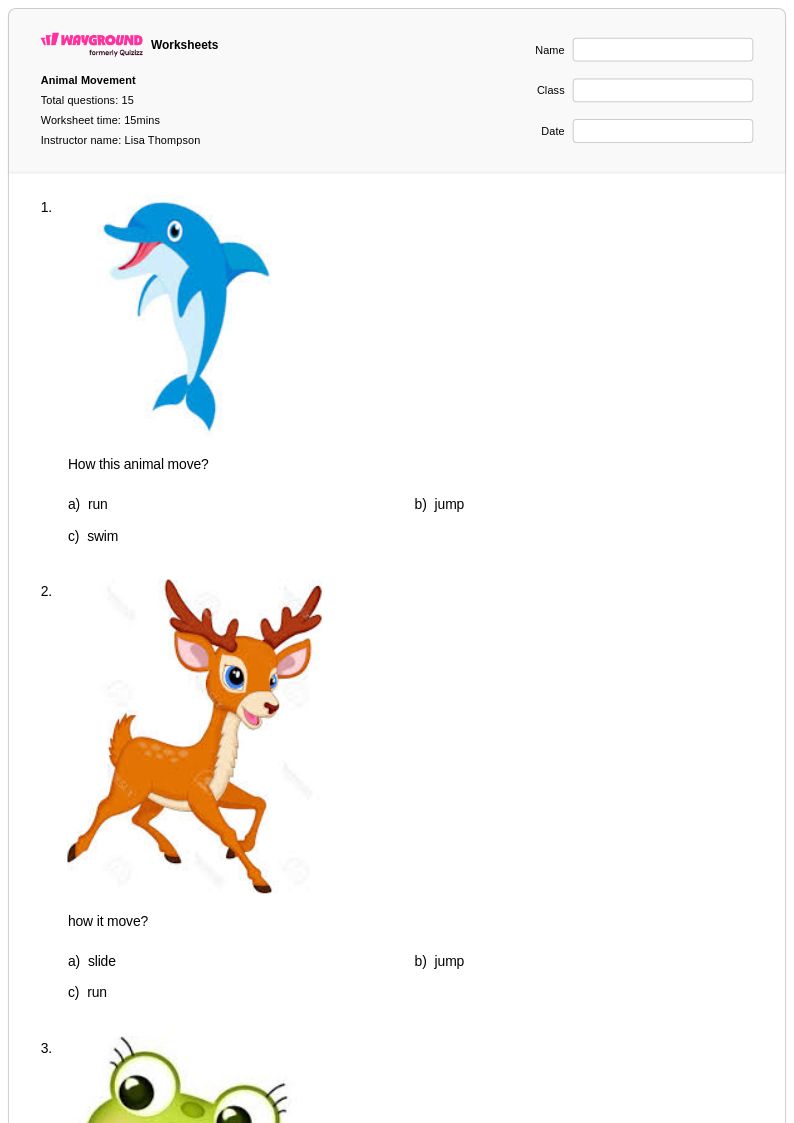
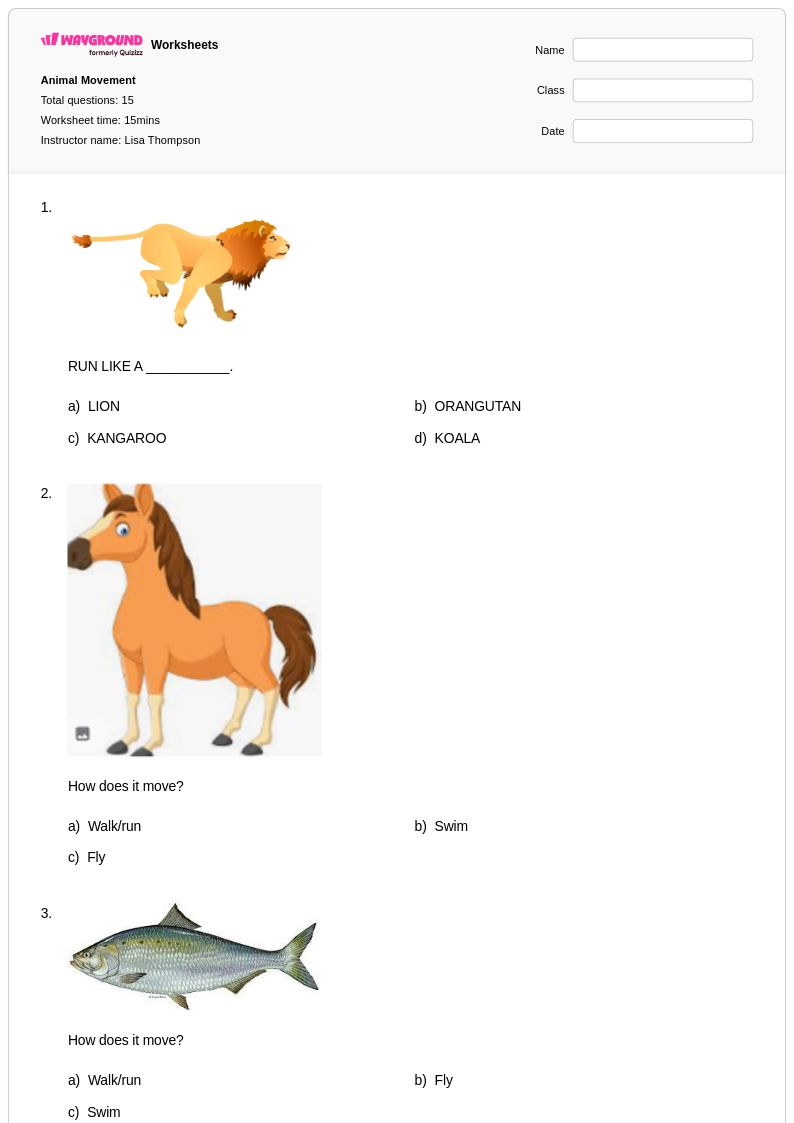
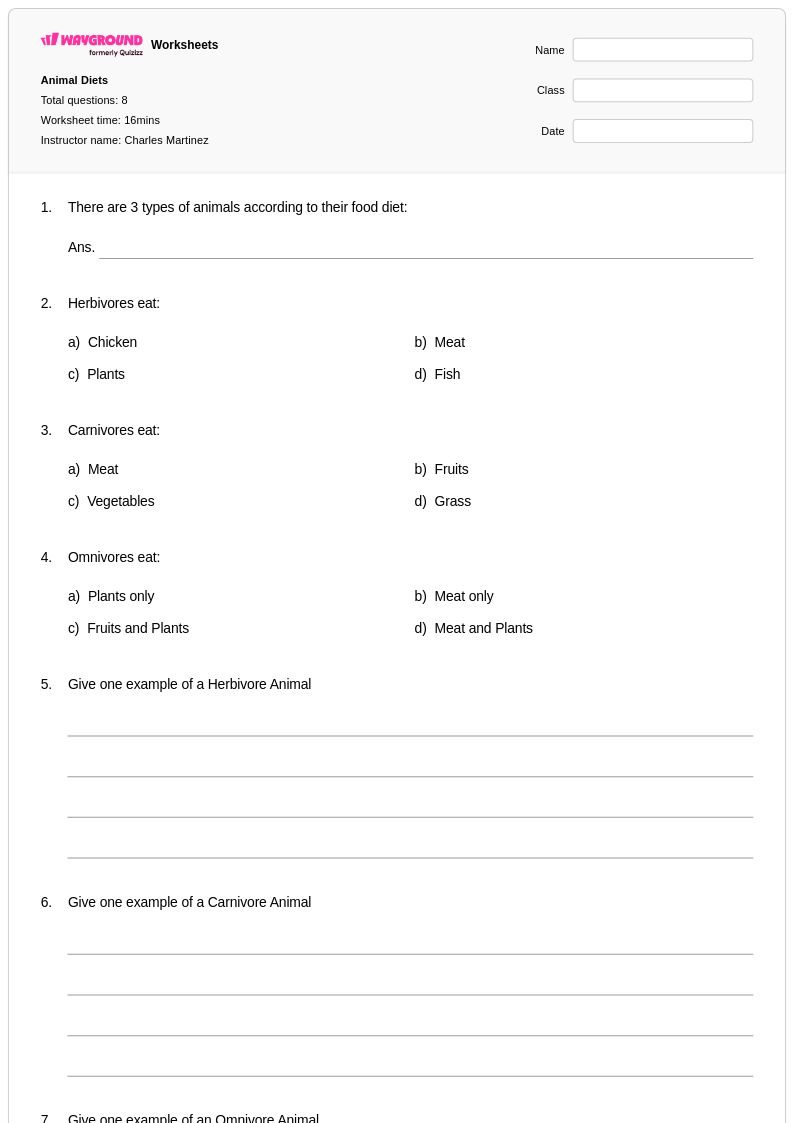
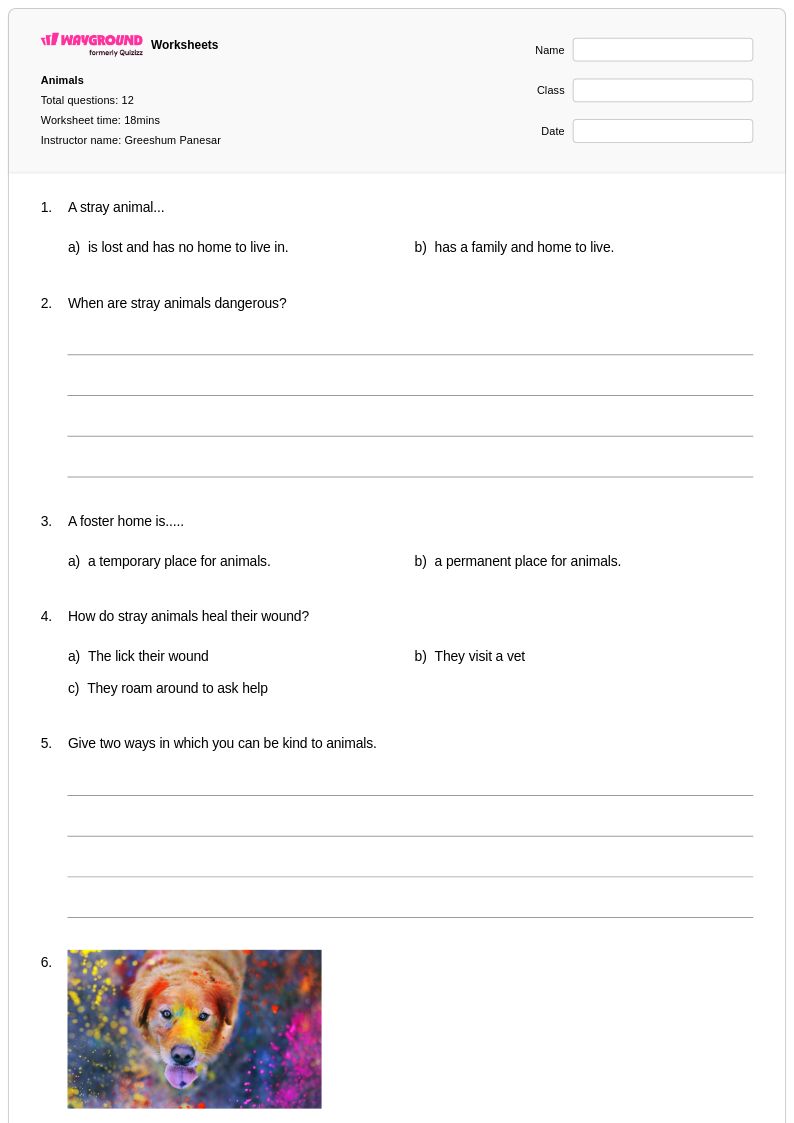
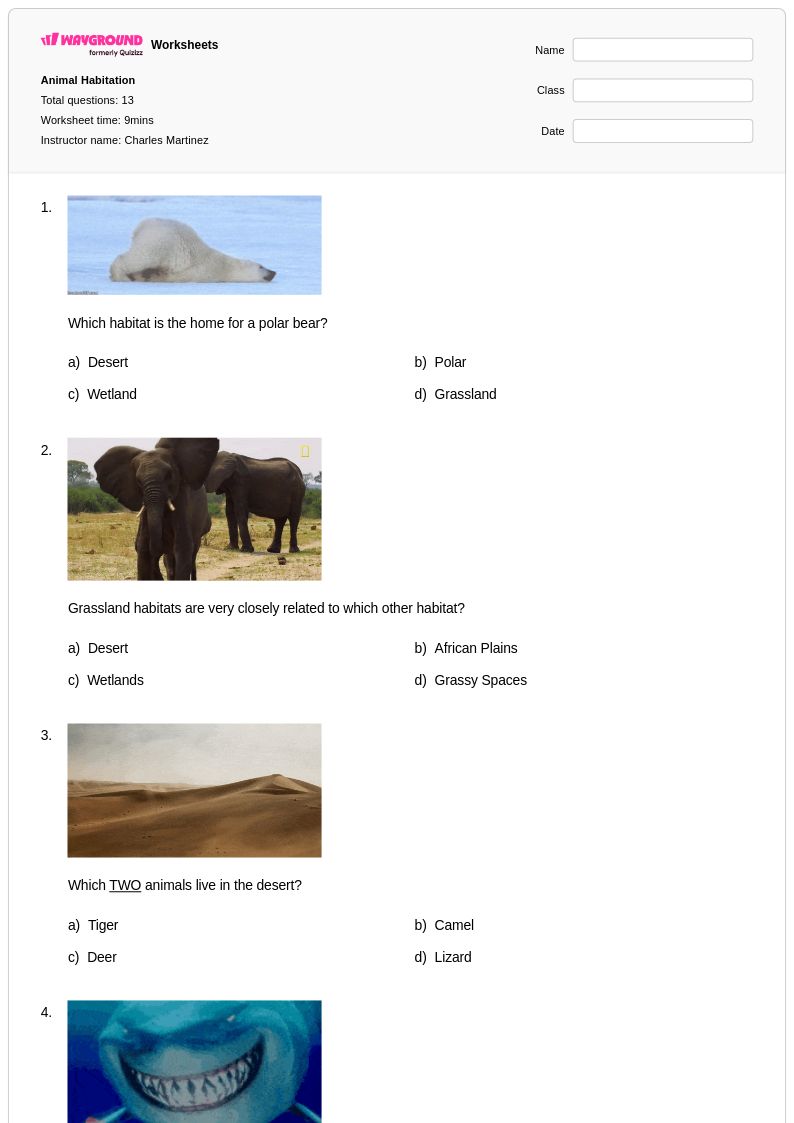
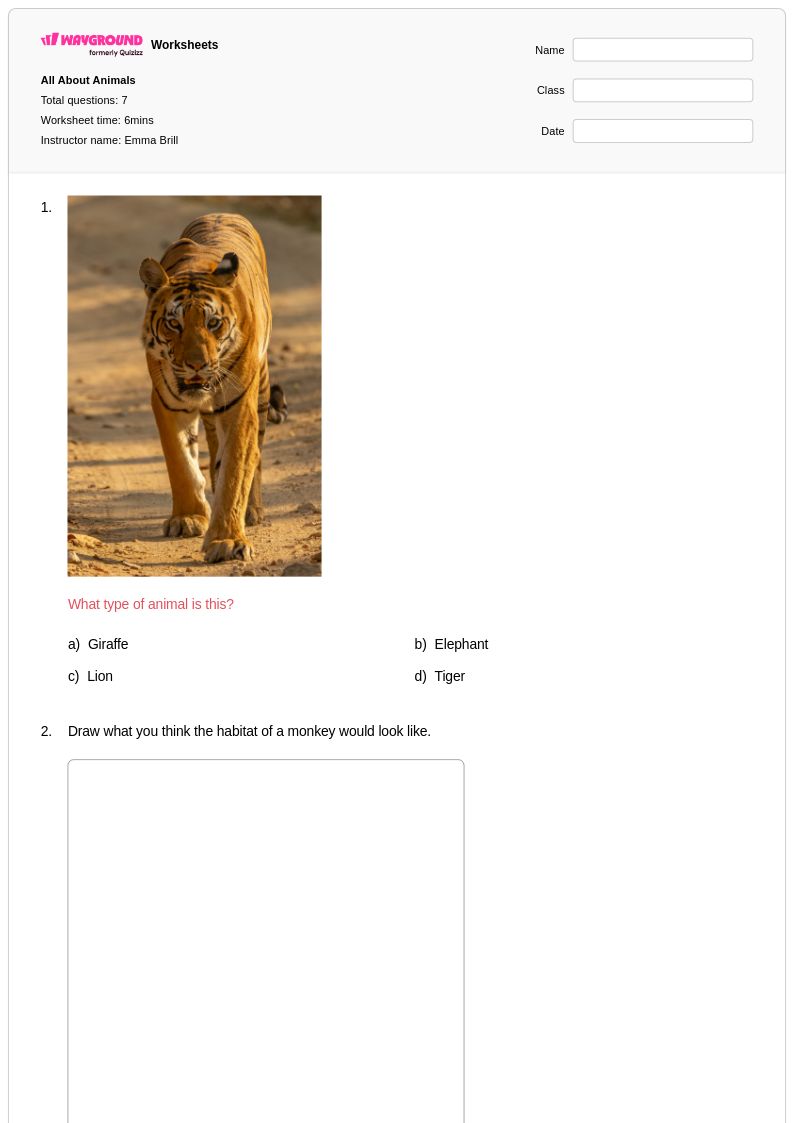
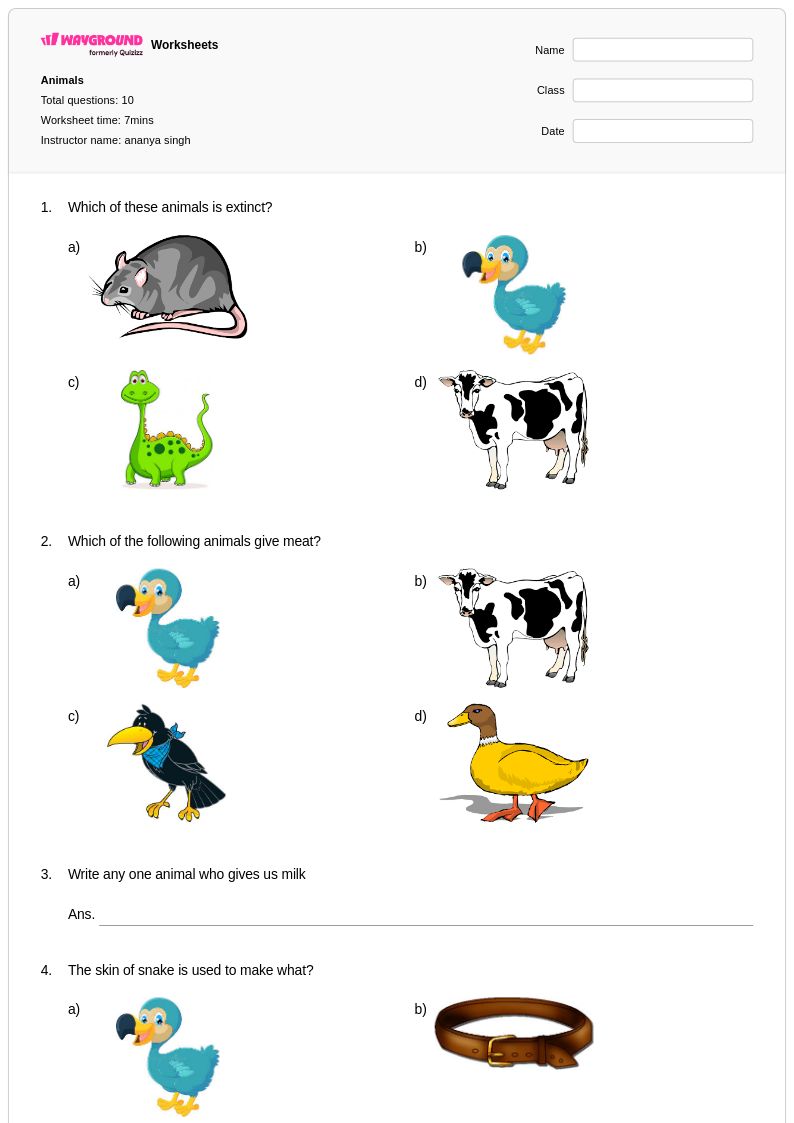
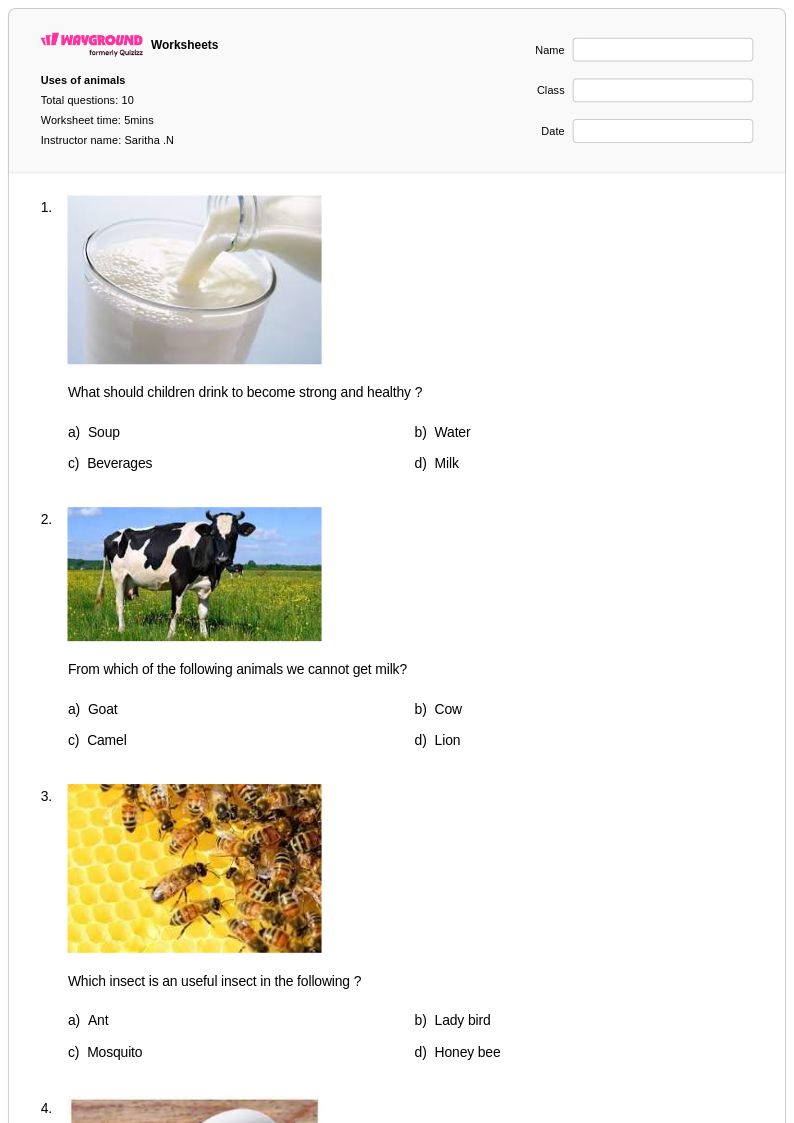
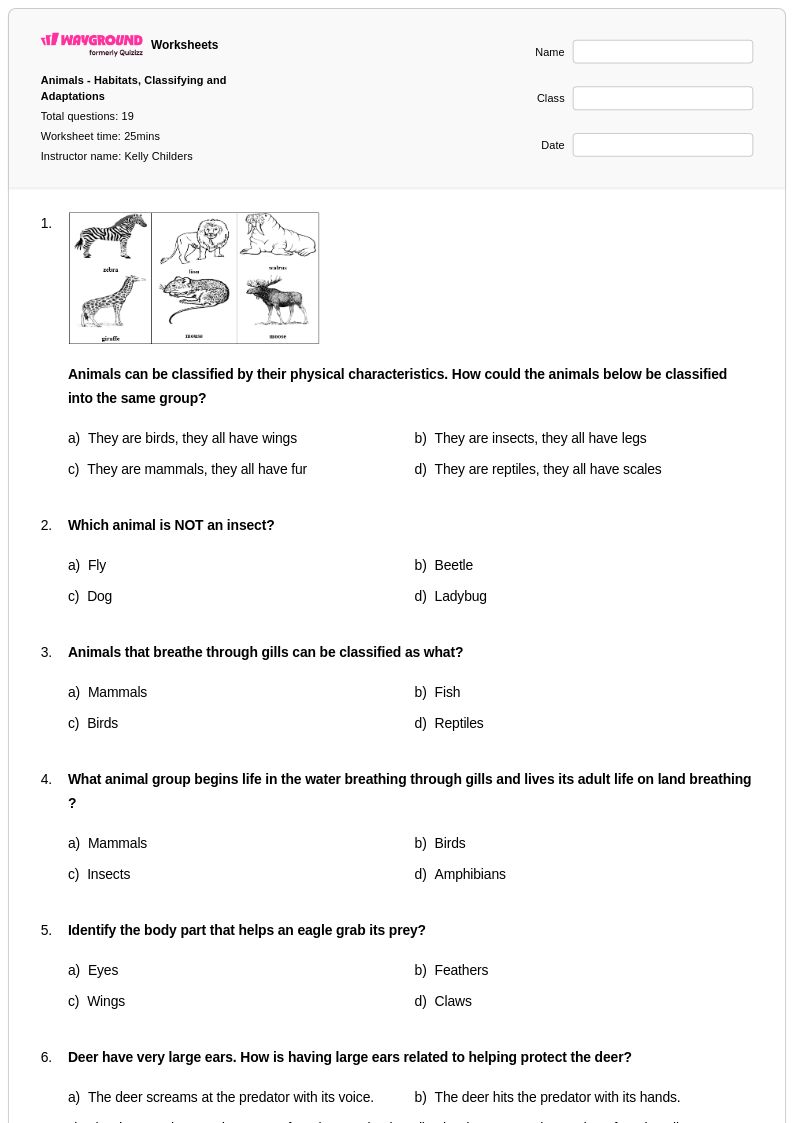
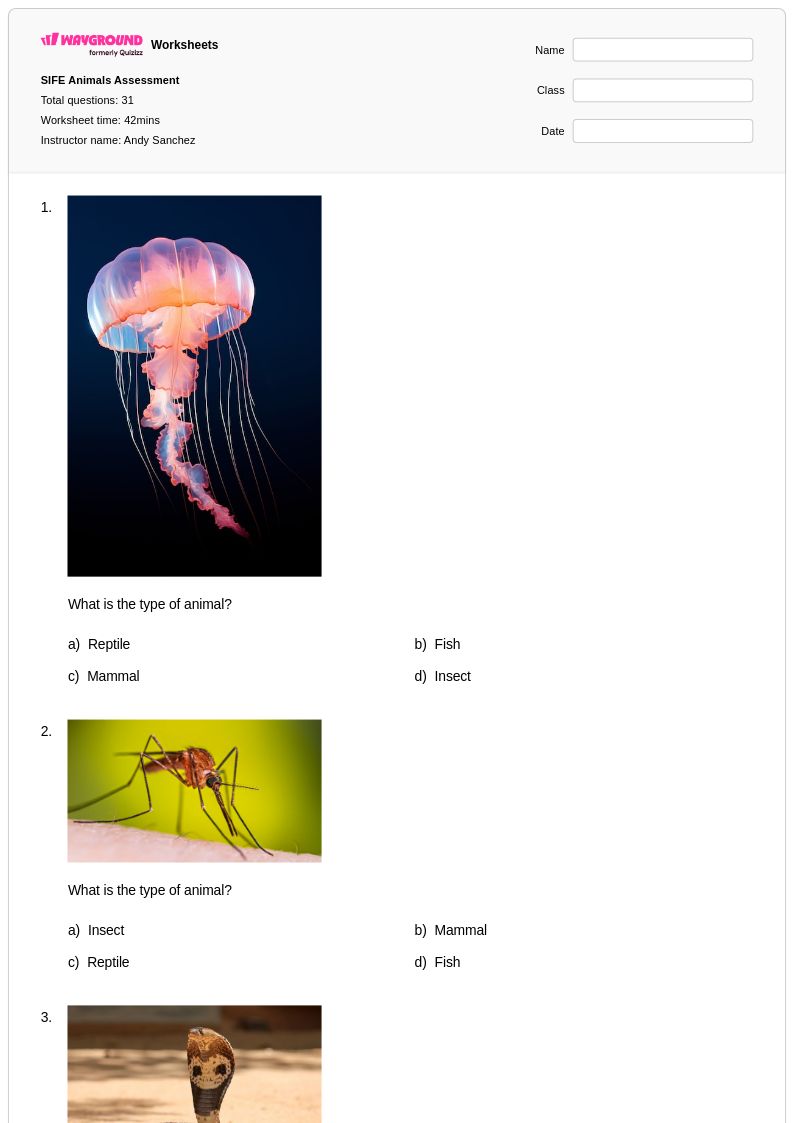
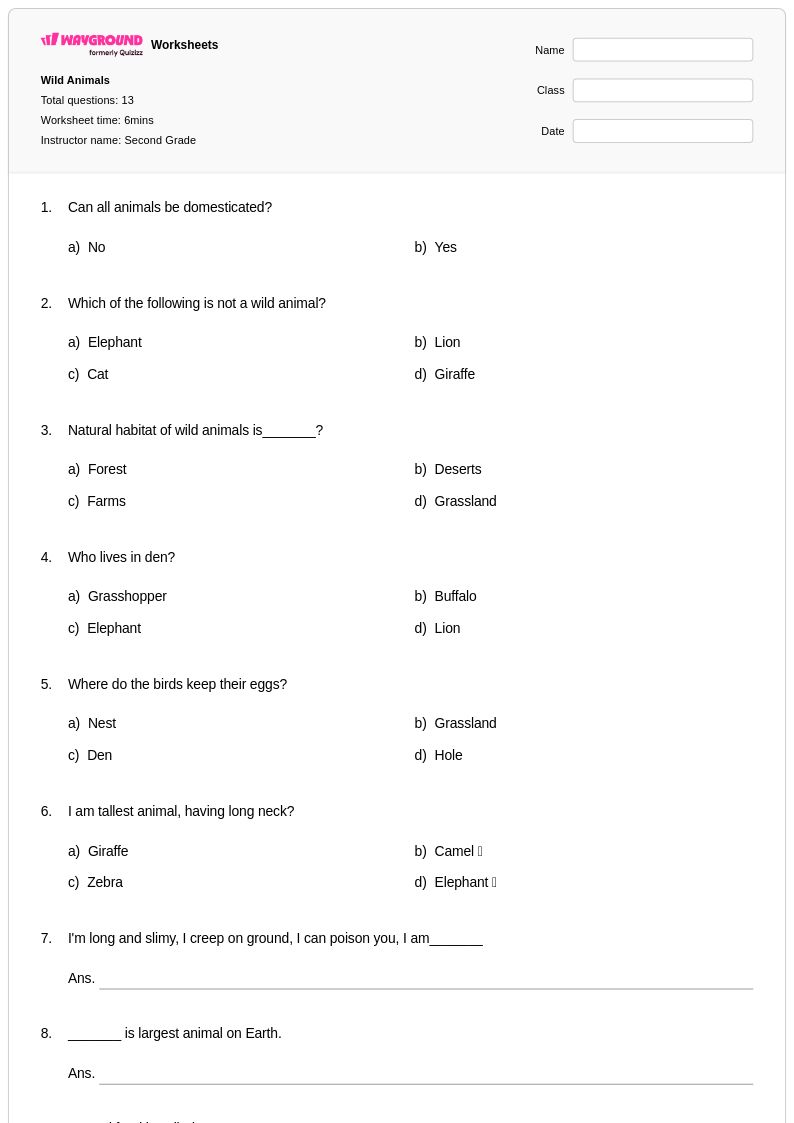
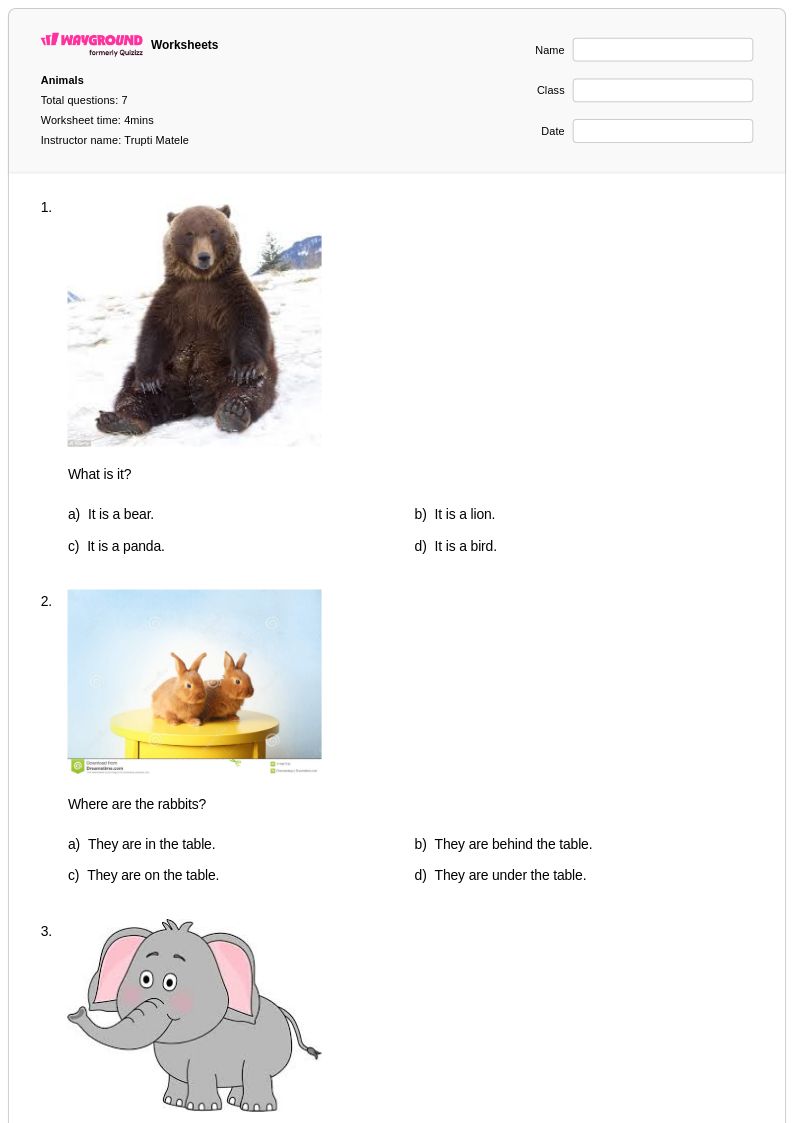
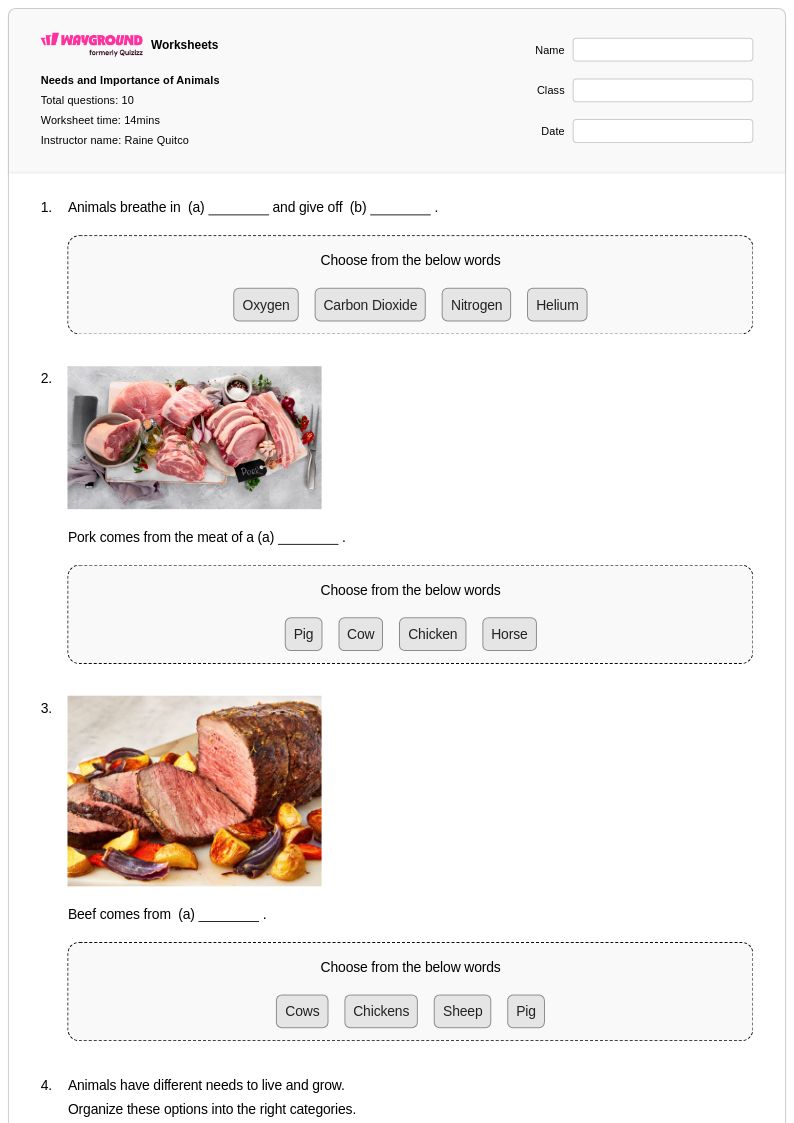
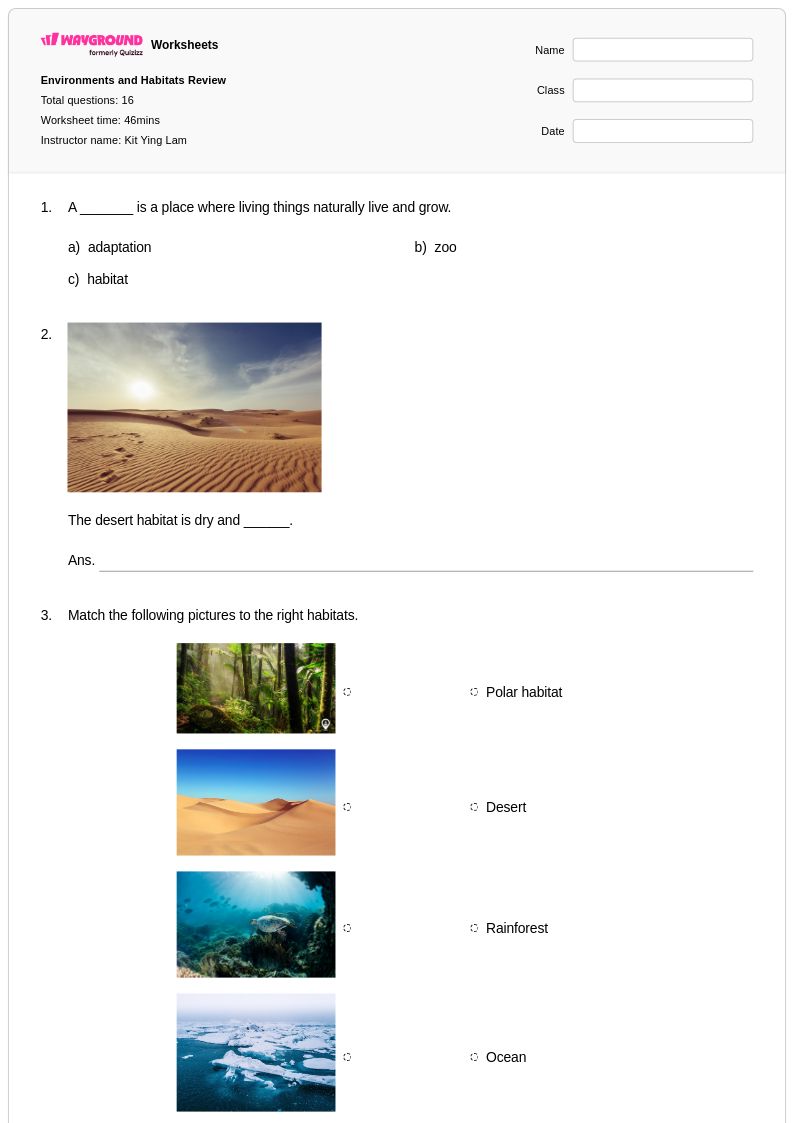
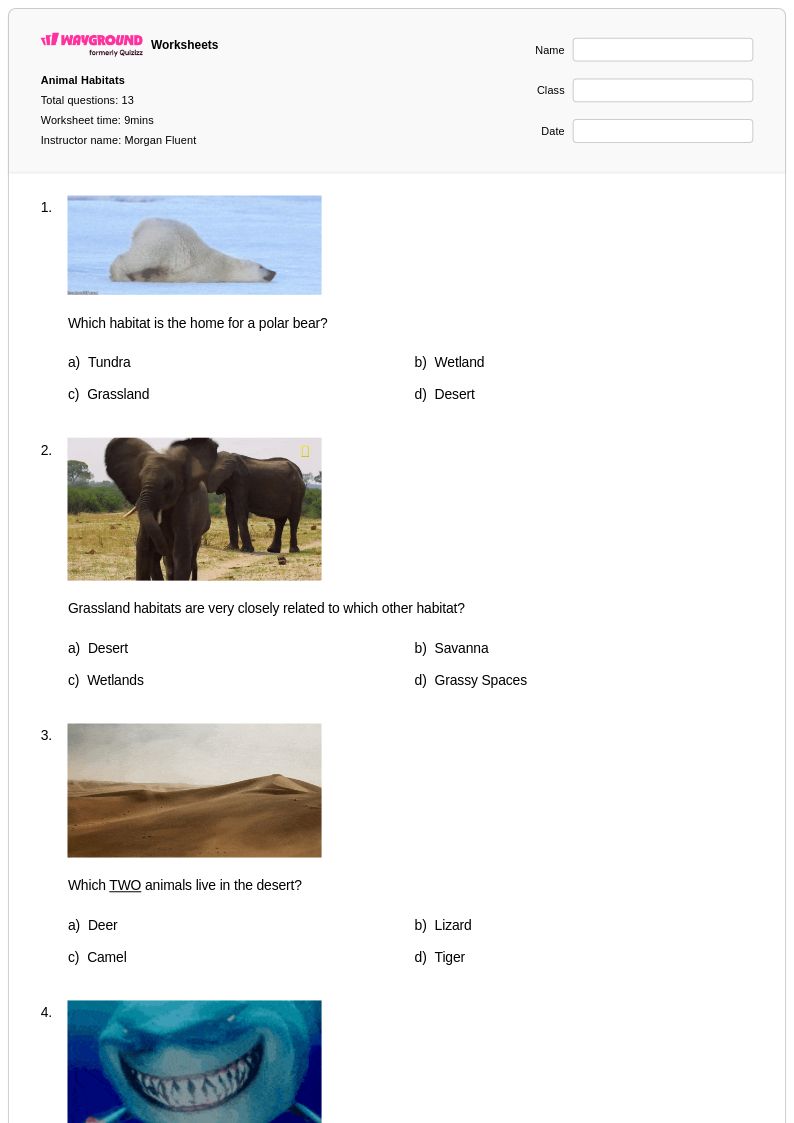
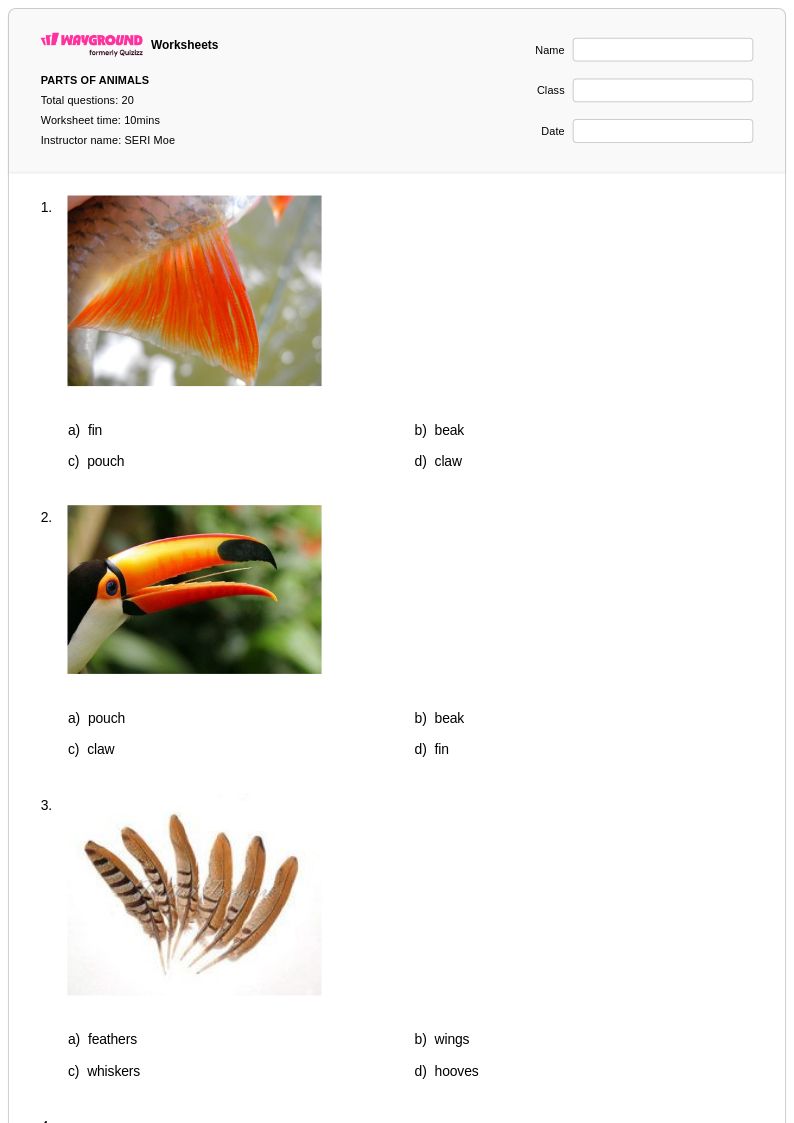
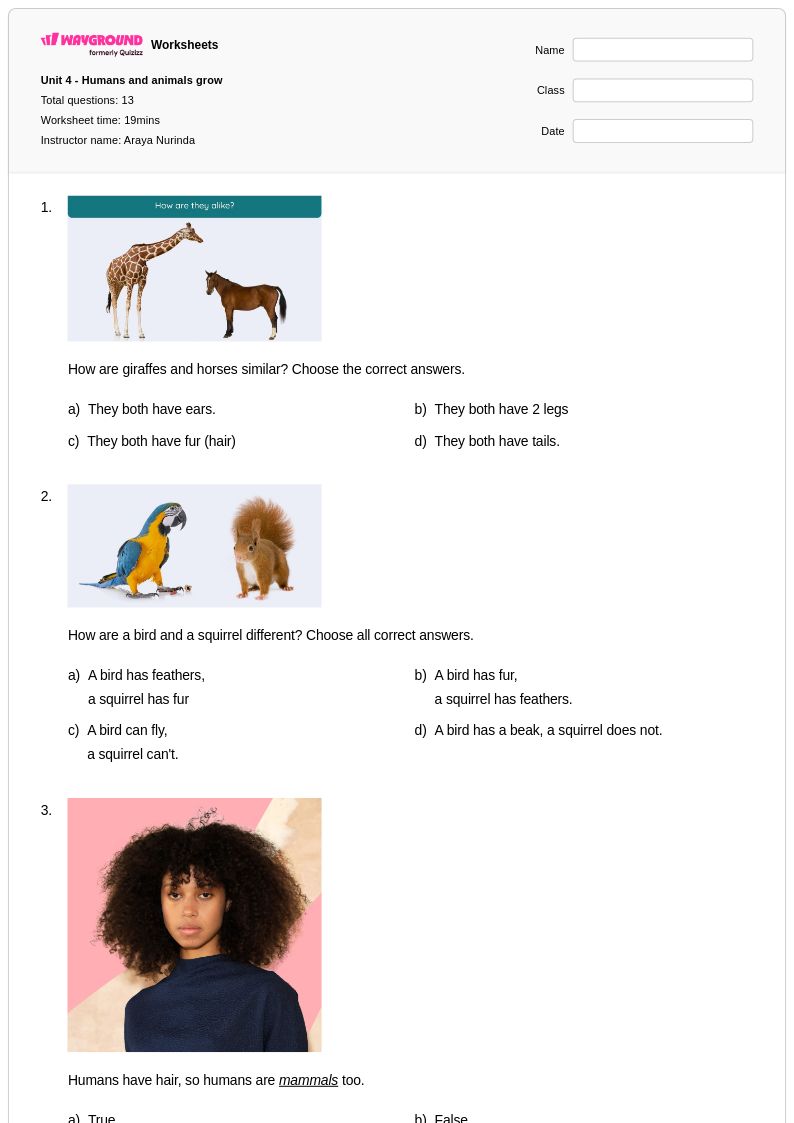
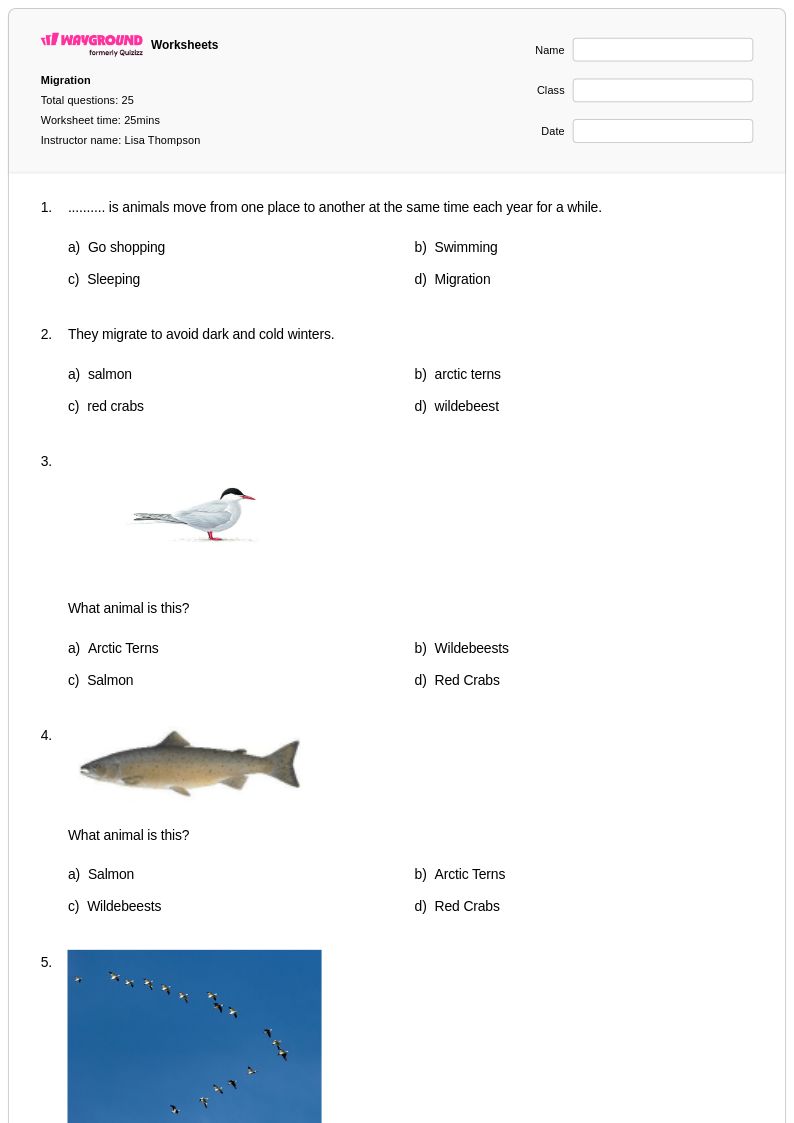
Animal observation worksheets for Class 2 students available through Wayground (formerly Quizizz) provide young learners with structured opportunities to develop critical scientific thinking skills while exploring the fascinating world of living creatures. These comprehensive printables guide second-grade students through systematic observation techniques, teaching them to record detailed information about animal characteristics, behaviors, and habitats using age-appropriate methods such as drawing, simple data collection, and basic comparative analysis. The worksheets strengthen essential life science competencies including pattern recognition, descriptive writing, and scientific vocabulary development, while each resource includes a complete answer key to support both independent practice and guided instruction. Students engage with free practice problems that encourage careful observation of pets, wildlife, and classroom animals, building foundational skills in scientific methodology through hands-on learning experiences presented in accessible PDF format.
Wayground (formerly Quizizz) empowers educators with an extensive collection of teacher-created animal observation resources specifically designed for Class 2 life science instruction, drawing from millions of professionally developed materials that undergo rigorous quality standards. The platform's advanced search and filtering capabilities enable teachers to quickly locate worksheets aligned with specific curriculum standards and learning objectives, while built-in differentiation tools allow for seamless customization to meet diverse student needs and ability levels. These flexible resources are available in both printable and digital formats, including downloadable PDFs that facilitate classroom distribution and remote learning scenarios, making them invaluable for lesson planning, targeted skill remediation, and enrichment activities. Teachers benefit from the platform's comprehensive organizational features that streamline the process of selecting appropriate observation exercises, tracking student progress, and adapting content for individual learners or small group instruction.
FAQs
How do I teach animal observation skills to young scientists?
Teaching animal observation starts with guiding students to slow down and notice details systematically rather than casually. Have students focus on one attribute at a time, such as physical characteristics, movement patterns, or feeding behaviors, before combining observations into a full profile. Structured recording tools, like observation worksheets, help students build the habit of documenting evidence rather than relying on memory, which is foundational to scientific inquiry.
What exercises help students practice animal observation?
Effective practice exercises include recording behavioral patterns over time, comparing physical traits across species, and noting habitat preferences in both wild and controlled settings. Worksheets that ask students to sketch what they observe alongside written descriptions strengthen both attention to detail and scientific communication. Practice problems that require students to distinguish between observation and inference are especially valuable for developing rigorous scientific thinking.
What mistakes do students commonly make when recording animal observations?
The most common error is confusing observation with interpretation, for example, writing 'the bird is angry' instead of 'the bird is flapping its wings rapidly and vocalizing.' Students also tend to record only the most obvious features and overlook subtler details like coloration patterns, limb proportions, or behavioral frequency. Worksheets that explicitly prompt students to separate factual observations from inferences help correct this pattern early.
How can I differentiate animal observation activities for students with varying ability levels?
For students who need additional support, reduce the number of observation categories on the recording sheet so they can focus deeply on one or two attributes without cognitive overload. Advanced students can be challenged to form hypotheses based on their observations and design follow-up questions for further investigation. On Wayground, teachers can apply accommodations such as read aloud, reduced answer choices, and extended time to individual students without disrupting the rest of the class.
How do I use animal observation worksheets in my classroom?
Animal observation worksheets on Wayground are available as printable PDFs for traditional classroom use and in digital formats for technology-integrated or remote learning environments. Teachers can also host the worksheets as a quiz directly on Wayground, making it easy to assign, monitor, and review student responses in one place. Each worksheet includes a complete answer key, so students can self-check their work and teachers can streamline grading.
How do animal observation activities support broader science skills?
Animal observation is a gateway to core scientific competencies including data collection, hypothesis formation, and evidence-based reasoning. When students practice observing systematically, they internalize the scientific method in a concrete, engaging context rather than as an abstract set of rules. Over time, these skills transfer directly to laboratory work, field studies, and any science domain that requires careful, unbiased documentation.