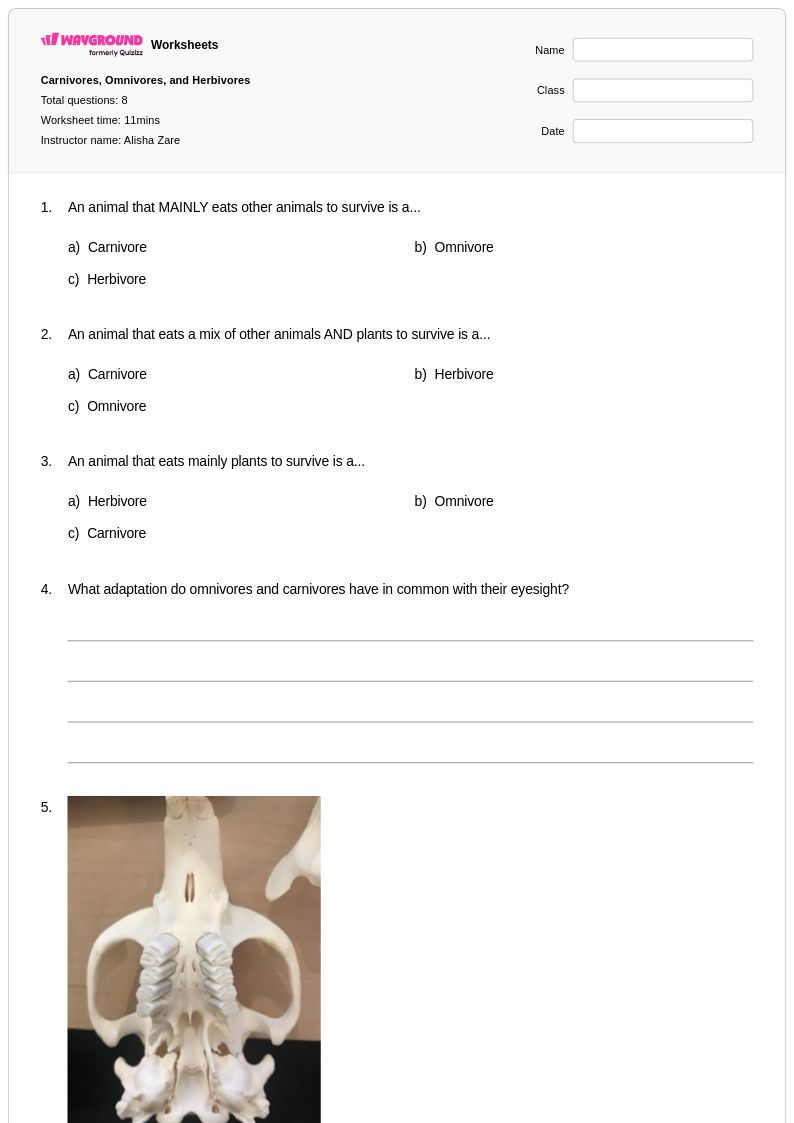
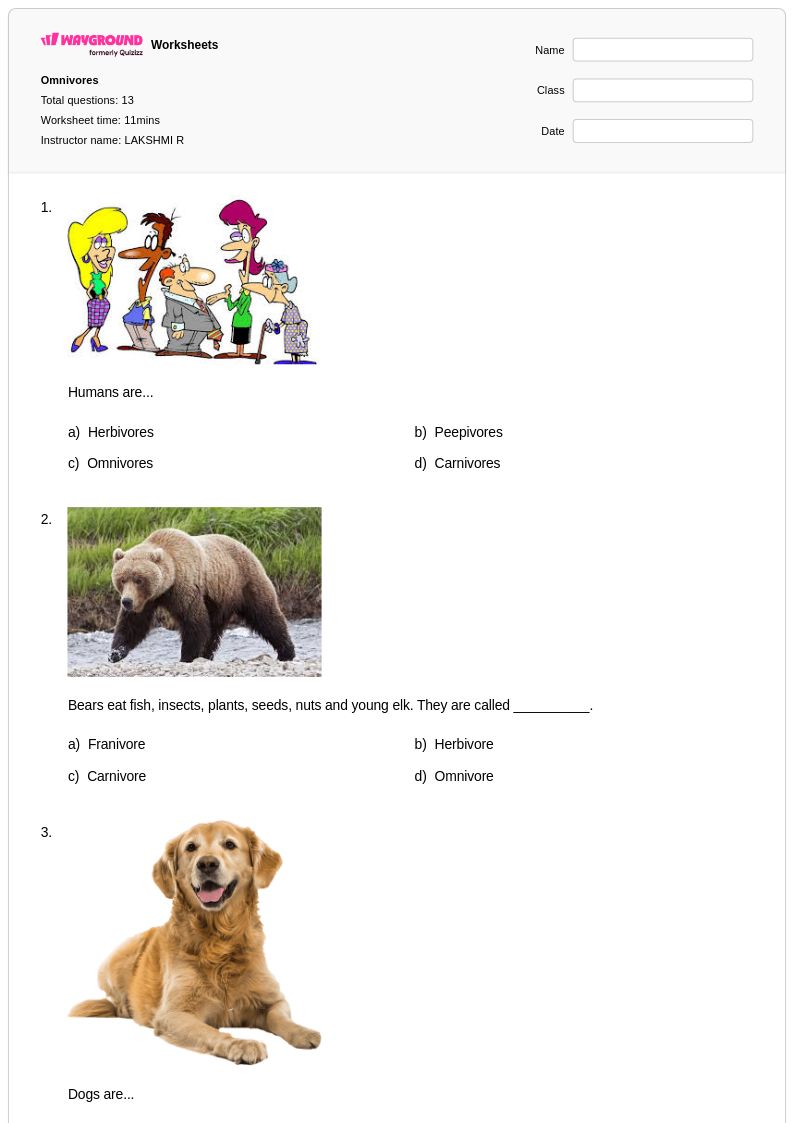
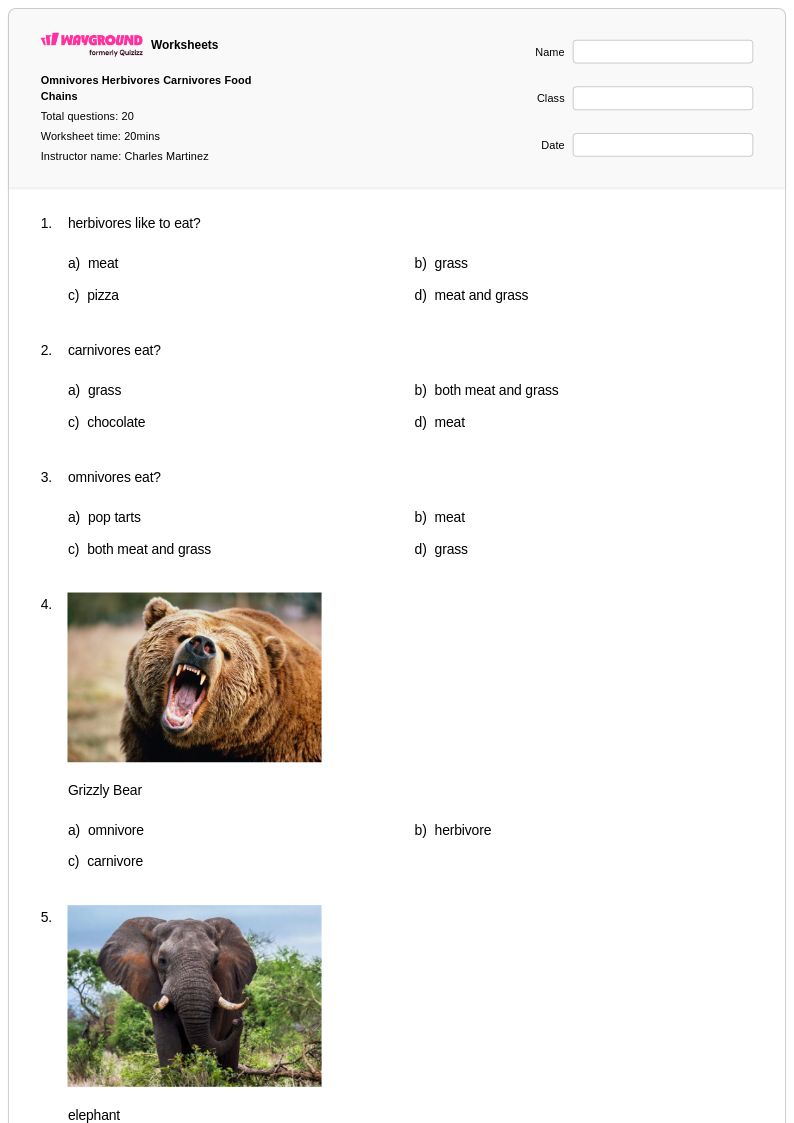
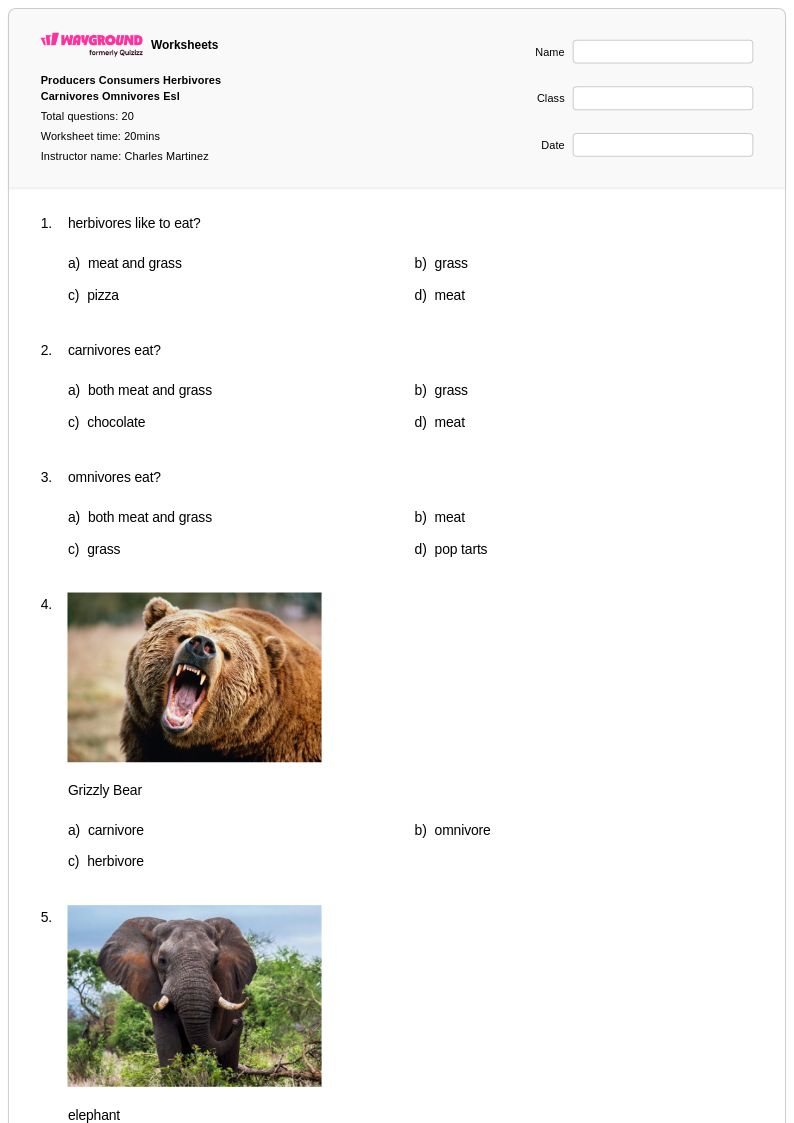
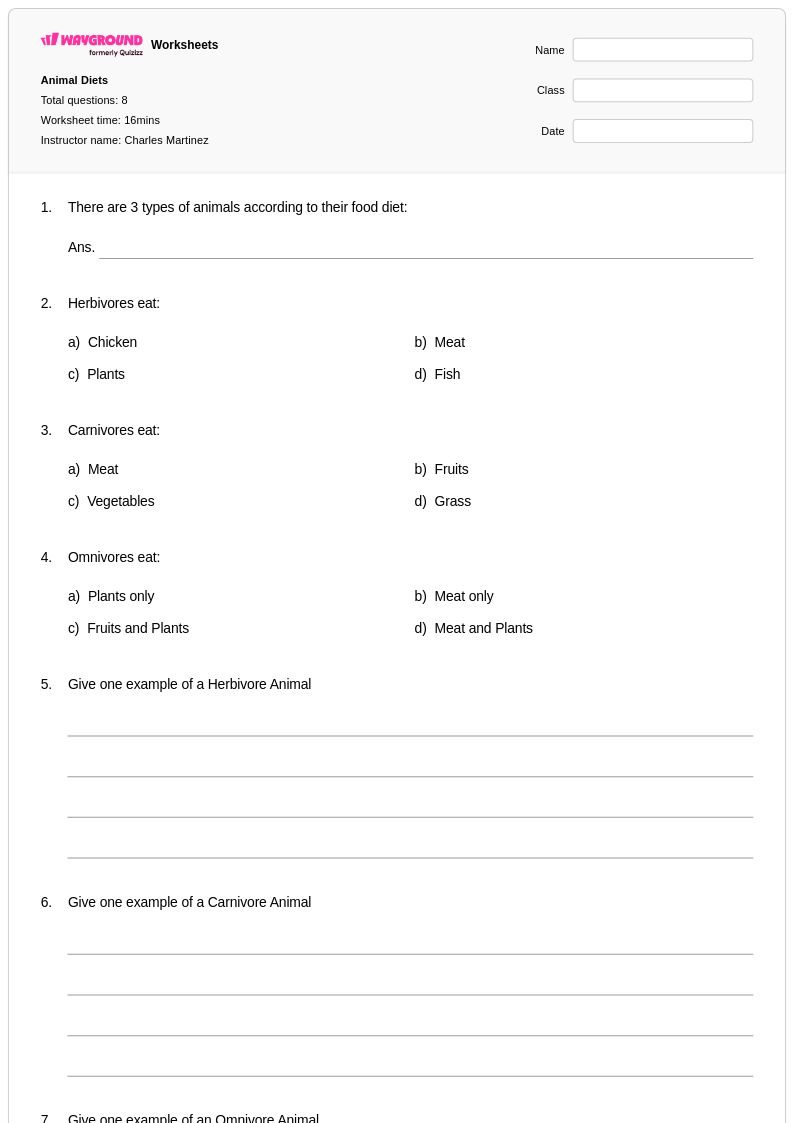
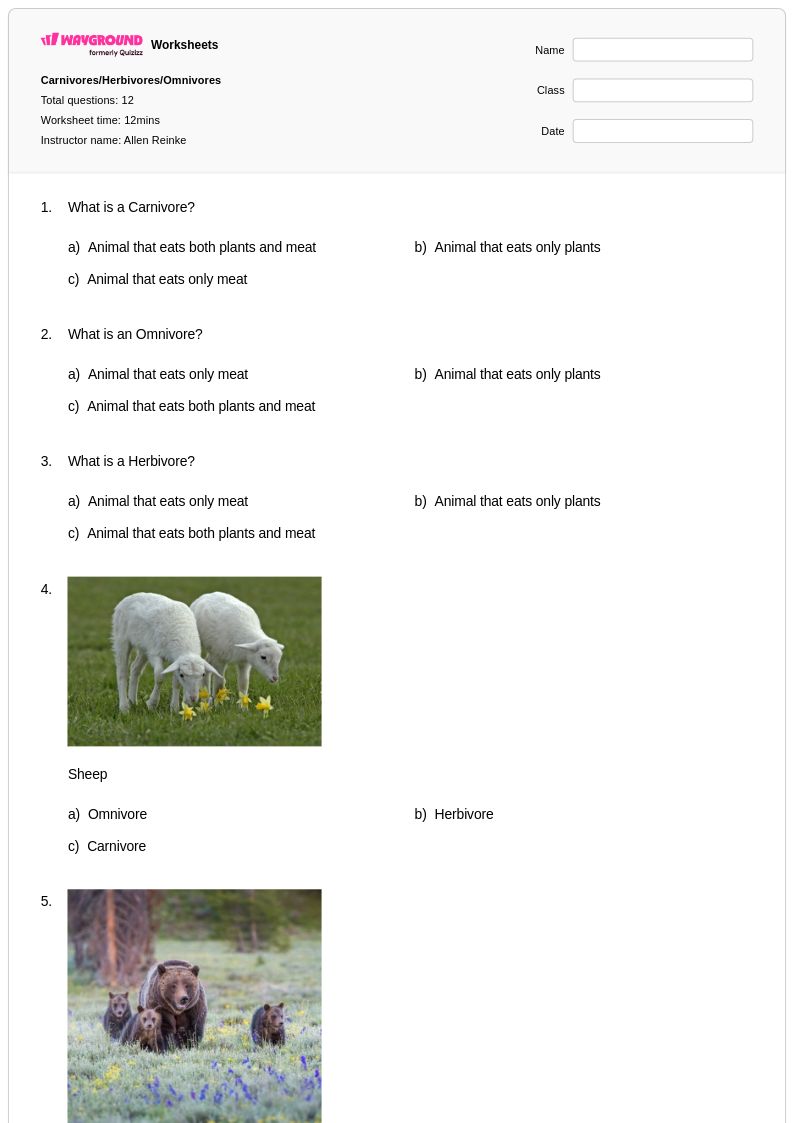
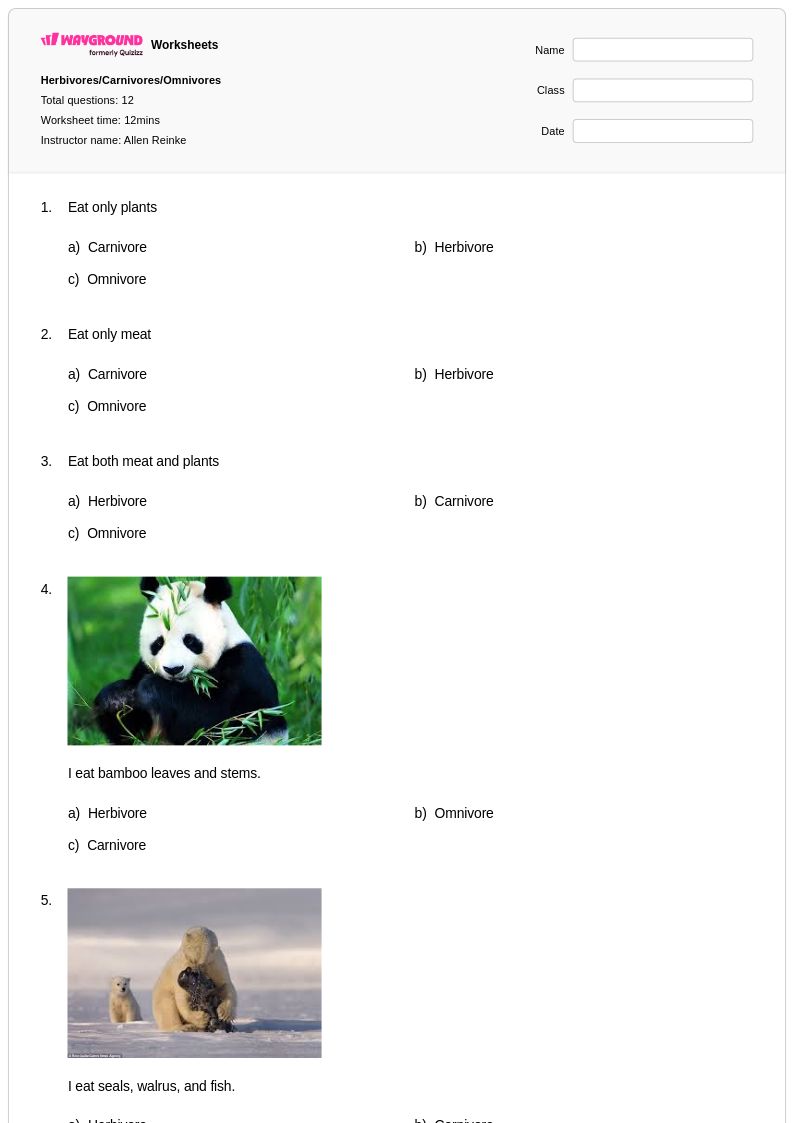
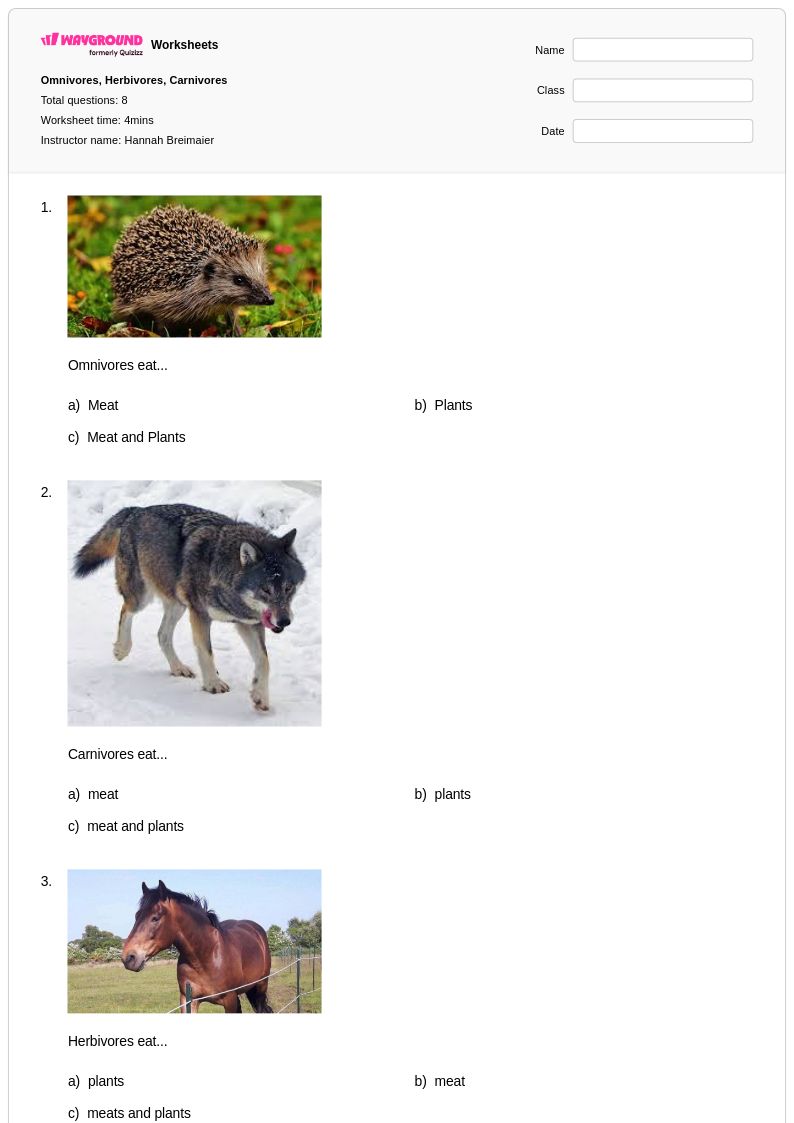
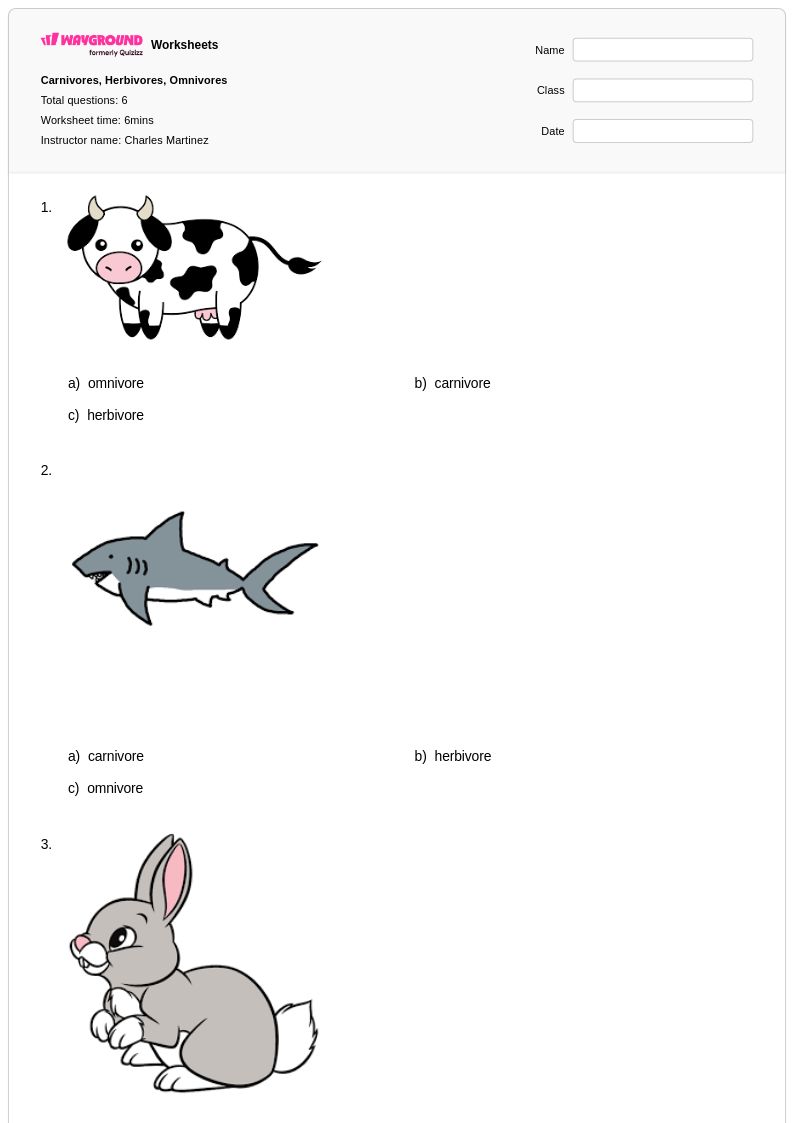
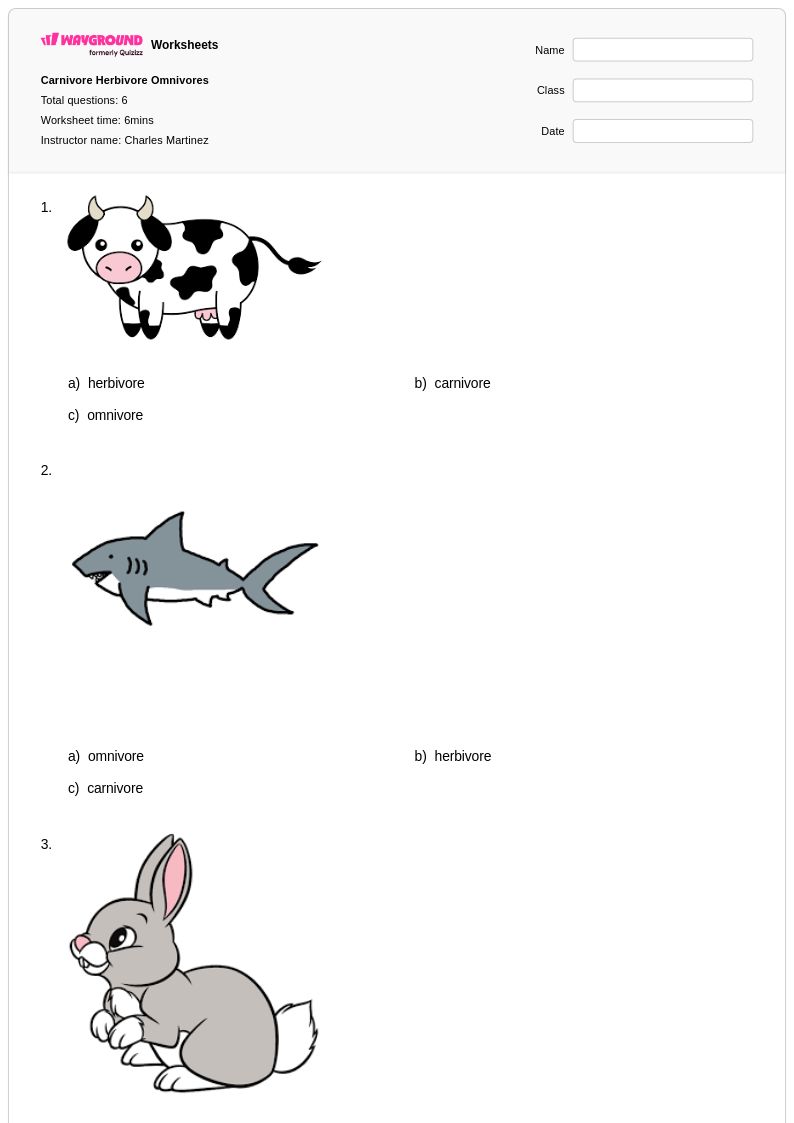
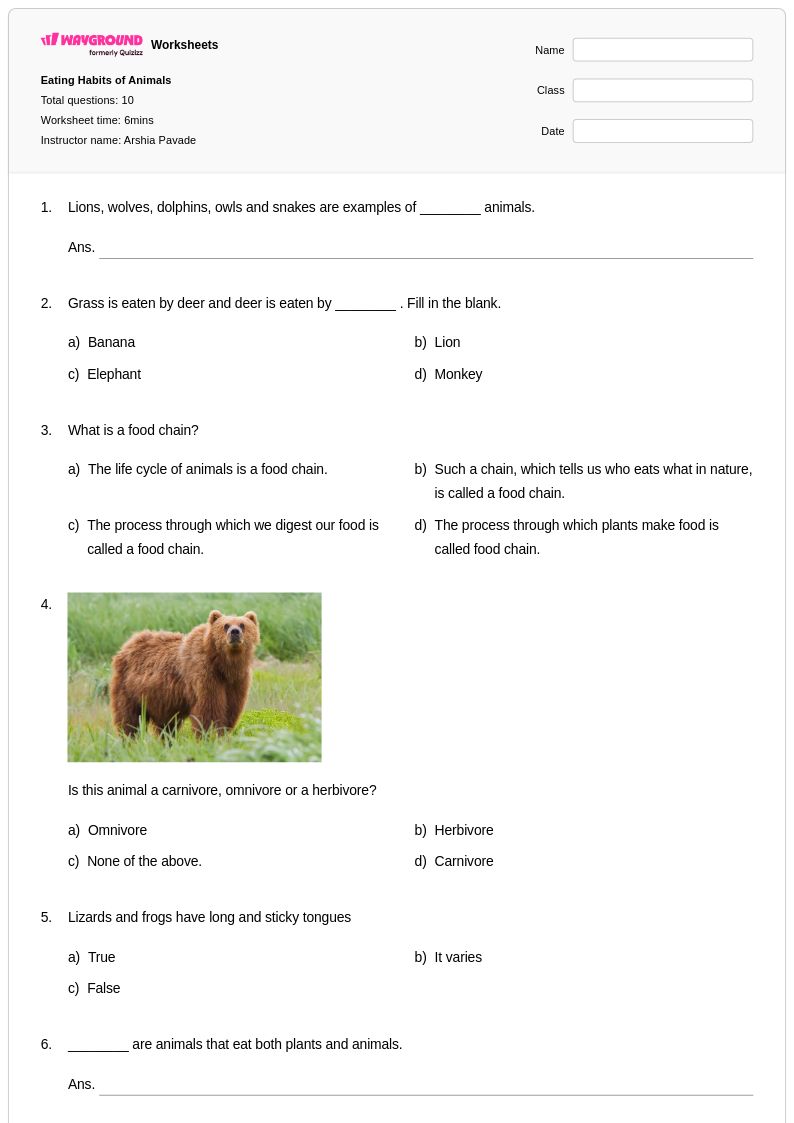
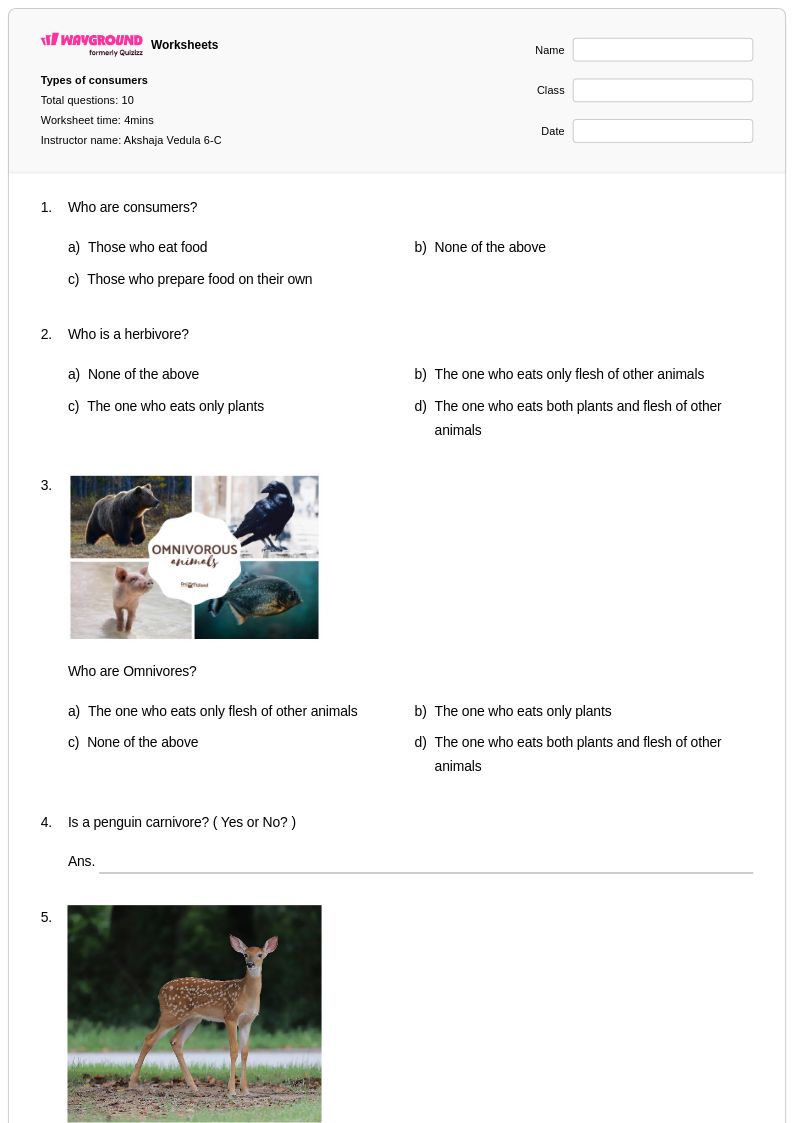
Explore free Class 2 omnivores worksheets and printables from Wayground that help students learn about animals that eat both plants and meat through engaging practice problems with answer keys.
Explore printable Omnivores worksheets for Class 2
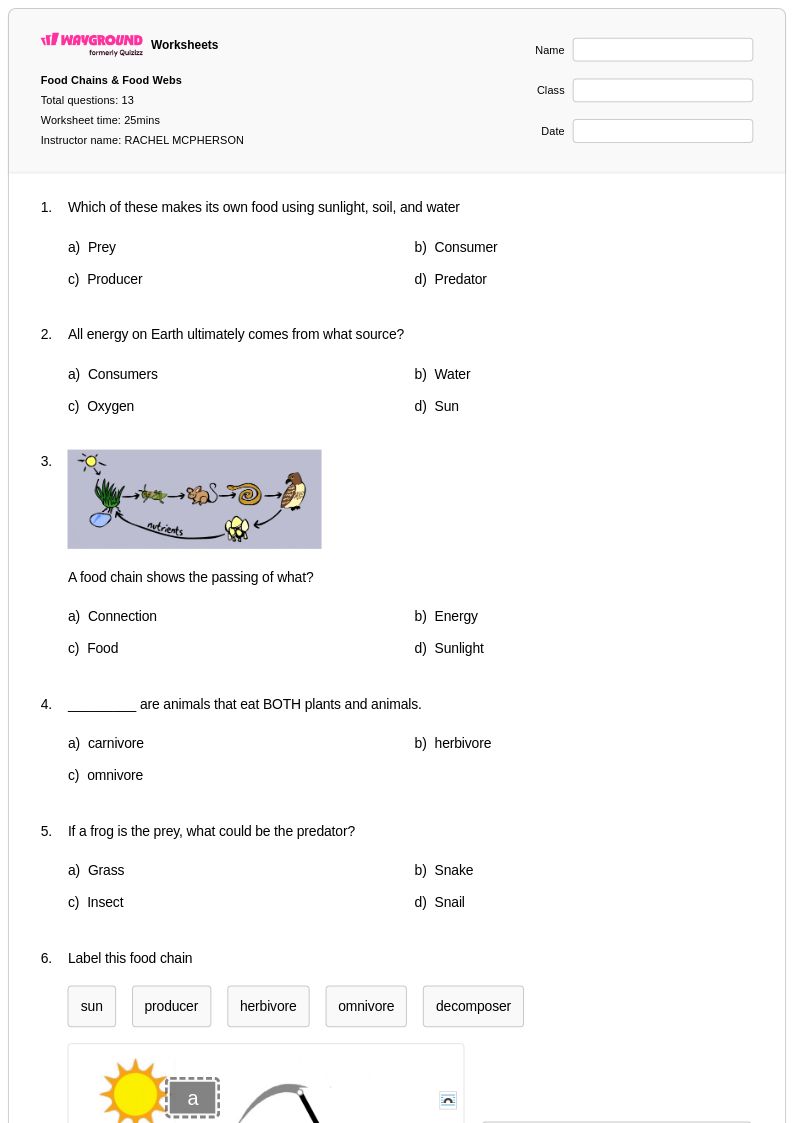
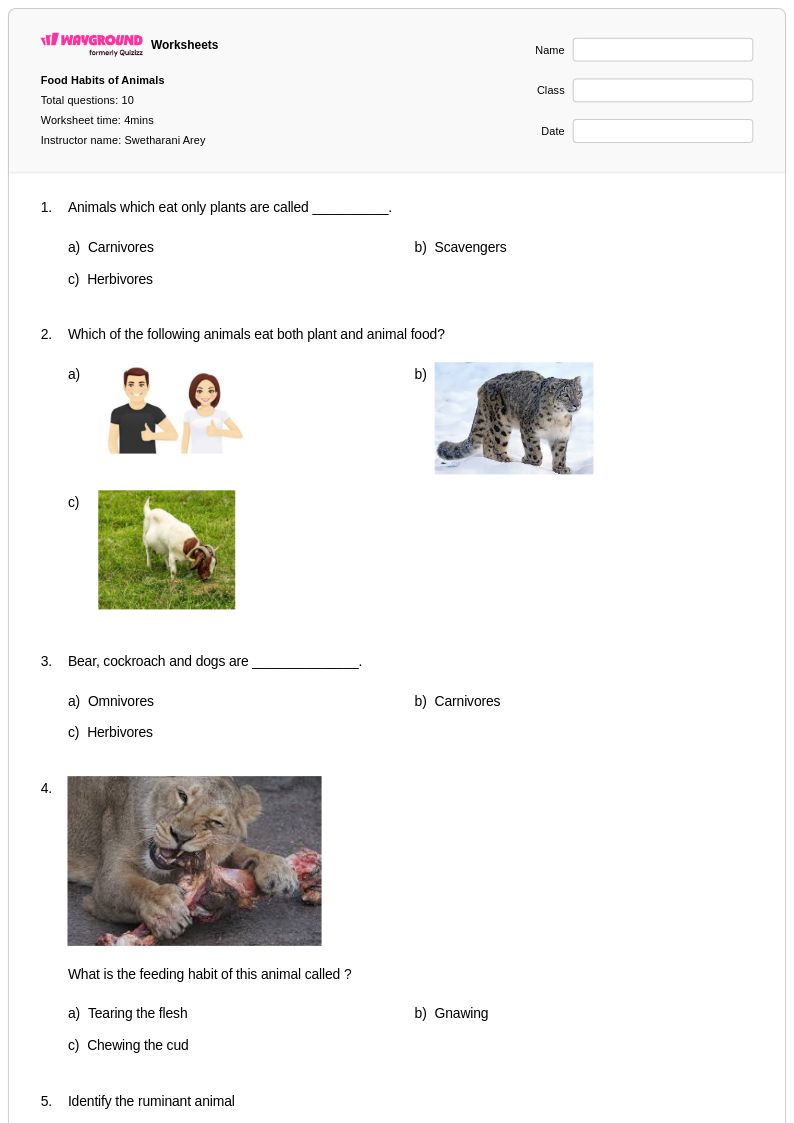
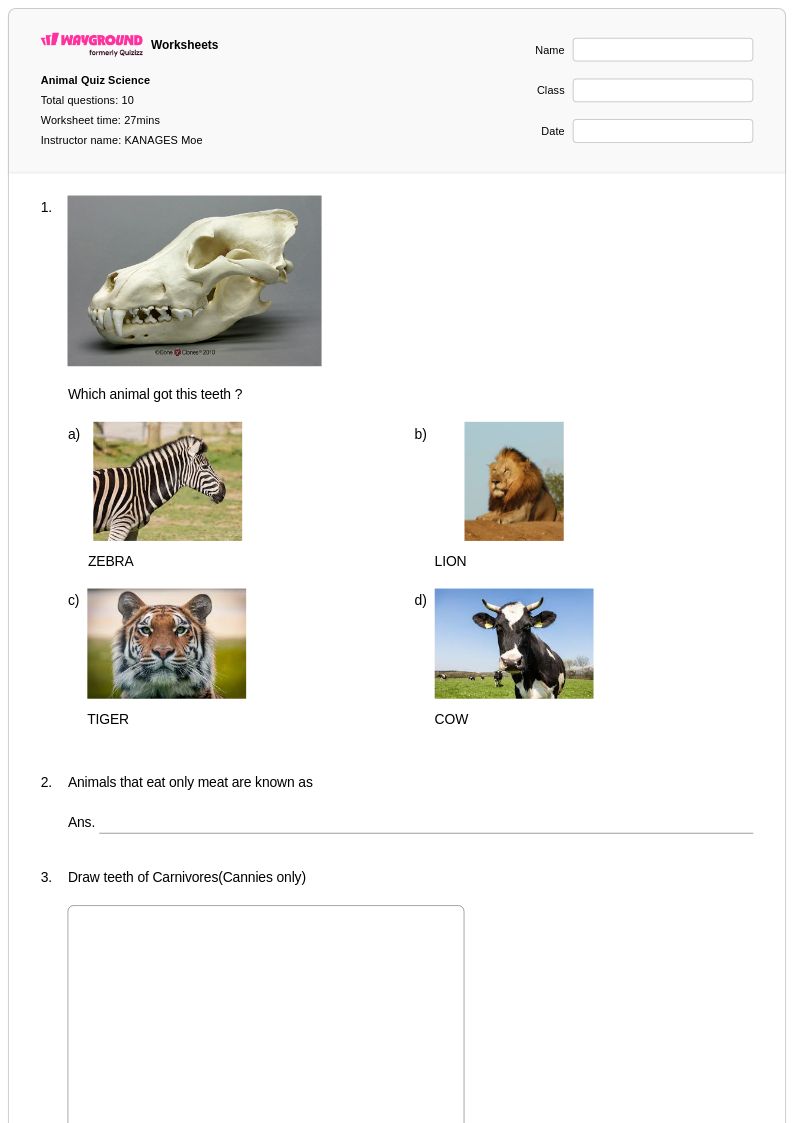
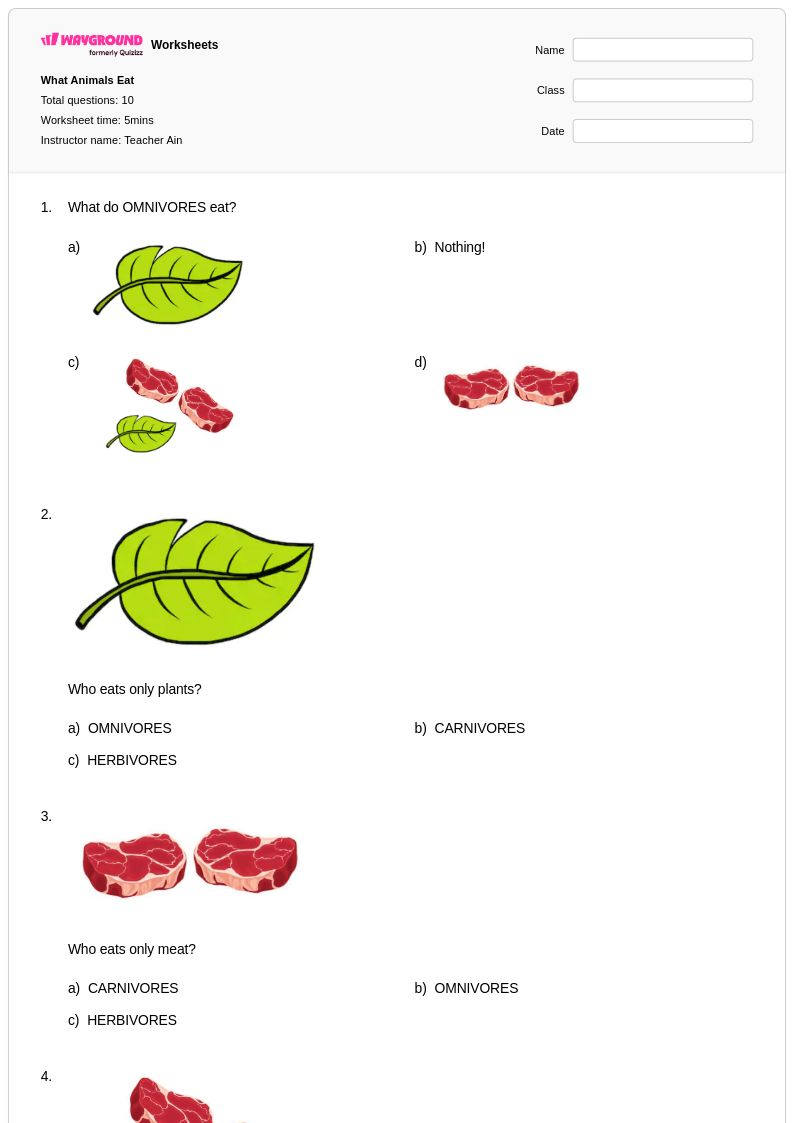
Omnivores worksheets for Class 2 students available through Wayground provide young learners with engaging opportunities to explore animals that eat both plants and other animals. These educational resources strengthen fundamental life science skills by helping students identify omnivorous animals, understand their dietary habits, and recognize how these creatures fit into food chains and ecosystems. The comprehensive collection includes practice problems that challenge students to categorize different animals based on their eating behaviors, matching activities that connect omnivores to their food sources, and observation exercises that develop scientific thinking skills. Teachers can access free printable materials complete with answer keys, making lesson preparation efficient while ensuring students receive immediate feedback on their understanding of this essential biological concept.
Wayground's extensive library, built from millions of teacher-created resources, offers educators exceptional support when teaching about omnivores and related life science topics. The platform's robust search and filtering capabilities enable teachers to quickly locate grade-appropriate materials that align with curriculum standards, while differentiation tools allow for seamless customization to meet diverse learning needs within the classroom. These omnivore worksheets are available in both digital and PDF formats, providing flexibility for various teaching environments and learning preferences. Whether used for initial skill practice, targeted remediation for struggling students, or enrichment activities for advanced learners, these carefully curated resources help educators deliver comprehensive instruction about animal diets and ecological relationships that second-grade students can readily understand and apply.
FAQs
How do I teach students the difference between omnivores, herbivores, and carnivores?
Start by anchoring the lesson in familiar animals — bears, humans, and raccoons are effective examples of omnivores that students already know. Use a sorting activity where students classify animals by diet, then examine the physical traits associated with each group, such as tooth shape and digestive structure. Connecting dietary classification to ecosystem roles helps students see why the distinction matters beyond simple labeling.
What are good practice activities for students learning about omnivores?
Effective practice activities include classifying lists of animals by diet type, matching animals to the plant and animal foods they consume, and analyzing diagrams of teeth or digestive systems to infer feeding behavior. Worksheets that ask students to explain why a varied diet is advantageous in a given habitat push beyond recall into applied understanding. These tasks build the vocabulary and reasoning skills needed for broader life science units on food webs and ecosystems.
What misconceptions do students commonly have about omnivores?
A frequent misconception is that omnivores eat equal amounts of plant and animal matter, when in reality the ratio varies widely by species and season. Students also sometimes confuse occasional opportunistic feeding with true omnivory, or incorrectly classify humans as carnivores based on meat consumption alone. Addressing these errors explicitly during instruction — and using counter-examples — helps students develop a more precise understanding of dietary classification.
How do omnivores fit into food web lessons?
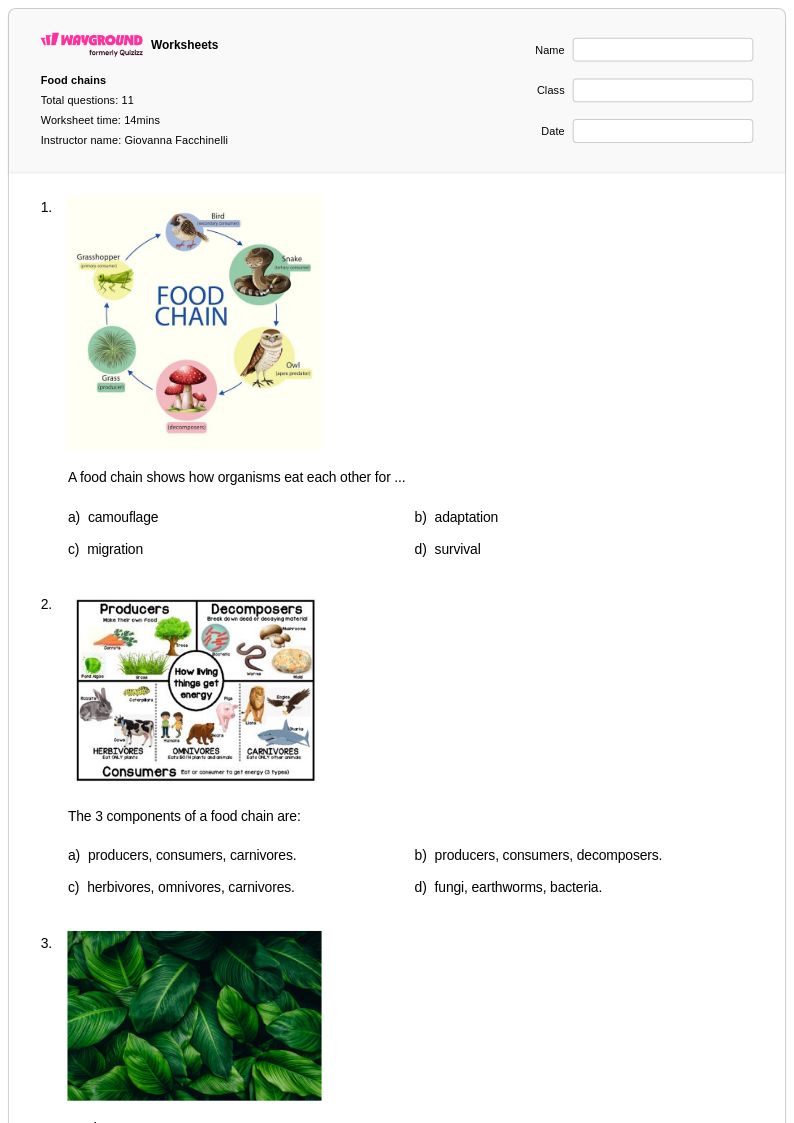
Omnivores are a critical teaching point in food web units because they occupy multiple trophic levels simultaneously, which makes food web diagrams more complex and realistic. Teaching omnivores in the context of food webs helps students understand energy transfer, predator-prey dynamics, and ecological flexibility. Emphasizing that omnivores can shift their diet when food sources change also introduces the concept of ecosystem resilience.
How can I use Wayground's omnivore worksheets in my classroom?
Wayground's omnivore worksheets are available as printable PDFs for traditional classroom use and in digital formats for technology-integrated or remote learning environments, and teachers can also host them as a quiz directly on Wayground. Each worksheet includes a complete answer key, reducing prep time and making them practical for independent practice, homework, or formative assessment. For students who need additional support, Wayground's accommodation tools allow teachers to enable read aloud, extended time, or reduced answer choices on an individual basis without disrupting the rest of the class.
How do I differentiate omnivore lessons for students at different ability levels?
For students who need scaffolding, start with concrete, familiar examples and provide visual supports like labeled diagrams or word banks before moving to classification tasks. Advanced students can be challenged to research less familiar omnivores, compare adaptations across species, or construct their own food web diagrams that accurately position omnivores. On Wayground, teachers can apply individual accommodations such as read aloud or reduced answer choices to specific students, allowing the same worksheet to serve the full range of learners in one class.